Skip to content
  • Home
  • Subscribe / donate
  • Events calendar
  • News
    • Local
    • National
    • Israel
    • World
    • עניין בחדשות
      A roundup of news in Canada and further afield, in Hebrew.
  • Opinion
    • From the JI
    • Op-Ed
  • Arts & Culture
    • Performing Arts
    • Music
    • Books
    • Visual Arts
    • TV & Film
  • Life
    • Celebrating the Holidays
    • Travel
    • The Daily Snooze
      Cartoons by Jacob Samuel
    • Mystery Photo
      Help the JI and JMABC fill in the gaps in our archives.
  • Community Links
    • Organizations, Etc.
    • Other News Sources & Blogs
    • Business Directory
  • FAQ
  • JI Chai Celebration
  • JI@88! video

Recent Posts

  • Sharing her testimony
  • Fall fight takes leap forward
  • The balancing of rights
  • Multiple Tony n’ Tina roles
  • Stories of trauma, resilience
  • Celebrate our culture
  • A responsibility to help
  • What wellness means at JCC
  • Together in mourning
  • Downhill after Trump?
  • Birth control even easier now
  • Eco-Sisters mentorship
  • Unexpected discoveries
  • Study’s results hopeful
  • Bad behaviour affects us all
  • Thankful for the police
  • UBC needs a wake-up call
  • Recalling a shining star
  • Sleep well …
  • BGU fosters startup culture
  • Photography and glass
  • Is it the end of an era?
  • Taking life a step at a time
  • Nakba exhibit biased
  • Film festival starts next week
  • Musical with heart and soul
  • Rabbi marks 13 years
  • Keeper of VTT’s history
  • Gala fêtes Infeld’s 20th
  • Building JWest together
  • Challah Mom comes to Vancouver
  • What to do about media bias
  • Education offers hope
  • Remembrance – a moral act
  • What makes us human
  • המלחמות של נתניהו וטראמפ

Archives

Follow @JewishIndie
image - The CJN - Visit Us Banner - 300x600 - 101625

Tag: politics

Issues close to heart

Issues close to heart

Policy priorities of Claire Rattee, the BC Conservative Party candidate in the riding of Skeena, include mental health and addictions, low-income housing, emergency weather shelters, economic development, and antisemitism. (photo from conservativebc.ca)

There is not much of a Jewish community in Kitimat, but Claire Rattee hopes that, if she is elected to the legislature in the northwest riding of Skeena this month, she will be able to raise the visibility.

Rattee originates from the Lower Mainland and moved to Kitimat 13 years ago. She served a term on Kitimat city council, ran twice for the federal Conservatives and is now seeking to be elected as the Conservative MLA for the sprawling riding, which encompasses Terrace, as well as Kitimat, and smaller communities along the Alaska border and in the interior of the region. The constituency has a history of swinging between parties. It has been won in the past two elections by Ellis Ross, who was elected as a BC Liberal and is leaving provincial politics to run federally as a Conservative. The Liberal party became BC United and subsequently folded its campaign. Rattee said the decision to unite the right-of-centre campaign was felt palpably in her door-to-door campaigning.

“We were already looking very good here in this riding at that point,” she said. “But that definitely changed things significantly.… Now, it’s essentially just going to be a two-way race between myself and the NDP candidate.”

Rattee is running against Terrace city councilor Sarah Zimmerman, who was nominated as the BC NDP candidate in June.

Close to Rattee’s heart are policies around support for people experiencing addictions.

“In my later years of high school, I basically had some problems with drugs … where I was in active addiction and my family was obviously trying to help me to get out of that and, eventually, I decided that I was ready,” she told the Independent.

Rattee turned 19 in treatment and then thought a change of environment would be helpful. After moving to Kitimat, she became an entrepreneur and sought to get involved in the community. 

“Obviously, with my background, I’ve got a lot of passion for addressing the issues of mental health and addictions,” she said. “The lack of treatment facilities in this region is extremely frustrating for me, just based on the experiences that I went through.” 

Low-income housing and emergency weather shelters for people experiencing homelessness are also priorities. Economic development in the region is an issue she championed on council, she said, and she wants the area recognized as the economic driver it is in the province.

Rattee’s parents converted to Judaism around the time she was born, she said, but sent the kids to Christian schools.

“We are not Orthodox,” she said. “My father ran a sort of church service and we had about 50 people that were a part of that organization and my father still runs Bible study every Saturday and I try to partake in that via Zoom when I can.”

Asked to clarify if she considers herself Christian or Jewish, Rattee said that she and her three siblings consider themselves Jewish.

“It’s a little bit confusing,” she said. “Not to get into the weeds on it too much, but I would essentially consider ourselves converts. My father was raised Catholic but he converted to Judaism when I was born and so we follow Torah, we respect the Talmud, but we’re not Orthodox.” Her mother also converted, she said, but returned to Christianity after the parents separated.

Rattee said she is proud that her party has released a “comprehensive antisemitism strategy.” The proposal, unveiled Sept. 20, calls for the adoption of the International Holocaust 

Remembrance Alliance’s definition of antisemitism; linking funding for universities to accountability on student safety, including that of Jewish students; launching an investigation into Samidoun, a Vancouver-based group with ties to extremism; increased provincial funding for JWest, the redevelopment of the Jewish Community Centre of Greater Vancouver; and an inquiry into the BC Teachers’ Federation on issues of Israel and Palestine, among other commitments.

“Particularly right now in this political climate, we’re seeing a significant rise in antisemitism,” said Rattee. “We’ve been very clear from the outset, our party leader has been clear from the outset, that we stand with the Jewish people, we stand with Israel.” 

Format ImagePosted on October 11, 2024October 9, 2024Author Pat JohnsonCategories LocalTags BC Conservatives, BC election, Claire Rattee, elections, politics
Seniors advocates honoured

Seniors advocates honoured

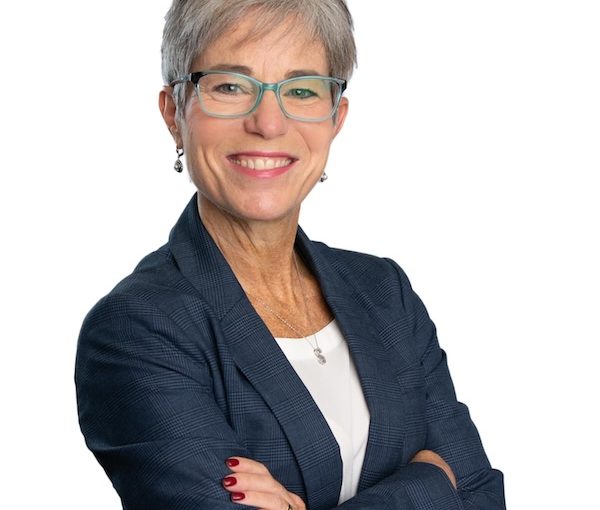
Isobel Mackenzie, left, and Selina Robinson will be honoured at Jewish Seniors Alliance’s AGM Nov. 3.

The Jewish Seniors Alliance of Greater Vancouver’s annual general meeting on Nov. 3 will serve as an opportunity to welcome the organization’s first-ever executive director, Jeff Moss, and to honour two prominent women in provincial politics who have been dedicated to seniors throughout their careers: Selina Robinson and Isobel Mackenzie.

JSA chair Tammi Belfer will introduce Moss, whose hiring marks a significant change in the alliance’s 21-year history. The shift, she said, will enable the board of directors to focus on policy-making and high-level planning, while collaborating with the new executive director and staff on implementation. 

“This transition is a gradual process, and I want to extend my heartfelt thanks and appreciation to each board member for their years of unpaid work,” said Belfer. “Together with our executive director, we can now strategically plan every event, raise much-needed funds, and improve and expand our services to our ultimate clients – the seniors of Greater Vancouver, the Lower Mainland, and the entire province.”

Moss told the Independent that he is looking forward to his first AGM as executive director, a job he started in July, and that, in his new position, he plans to recognize the past and look ahead to the future of the “modern, inclusive and dynamic charity.”

“I am pleased to work alongside our incredible community partners, with the support of our generous donors, a committed board and motivated staff,” he said. “I look forward to continuing to build on our strong reputation for positively impacting the lives of lonely and isolated seniors.”

Belfer praised Moss as JSA prepares for its move away from an operational board, noting that the coming year will not be an easy one, but it will be exciting.

“Jeff and I form a great partnership and I hope, together, we bring the name and extreme value of JSA to the forefront of all seniors. This population is growing and the need is increasing. Vancouver and BC can count on us to be there for seniors. We are seniors stronger together,” she said.

“Jeff’s caring nature and strong management skills are the exact combination we need for our first executive director,” she added. “When he reaches out to you, make a point of meeting with him – you are in for a treat.”

Robinson, who has been the member of the legislative assembly for Coquitlam-Maillardville since 2013, is not running for reelection on Oct. 19. She made the decision to retire for several reasons (jewishindependent.ca/the-aftermath-of-resignation) and is in the final stages of writing a memoir, which is set for release in November.

Before gaining a seat in the legislature, Robinson worked as a family therapist and was a city councilor in Coquitlam for two terms. Her career includes having been associate executive director of Vancouver’s Jewish Family Service Agency. As an MLA, she served as opposition critic on seniors, mental health and addictions, and other issues. In government, she served as minister of municipal affairs and housing, and as British Columbia’s finance minister. She was minister of post-secondary education and future skills until earlier this year.

“Representing people in my community and being their voice in government has been the greatest honour, and having JSA acknowledge that work warms my heart,” Robinson told the Independent. “Thank you, JSA, for being such great partners.

“Jewish Seniors Alliance understands that, in order to have a strong community, you need to make sure that the community has what it needs,” she said. “JSA engages Jewish seniors to provide them with services and supports, and to better understand their needs so that they can advocate for resources to better meet those needs.”

Mackenzie – who is nominated for a term this year on JSA’s board of directors – served for 10 years under both Liberal and NDP governments as the province’s first seniors advocate, before her retirement earlier this year. Her efforts won her widespread plaudits and dispelled initial skepticism concerning the effectiveness of the new office.

In a piece for the Orca in March, shortly after it was announced that Mackenzie would leave her role as seniors advocate, political commentator Rob Shaw wrote, “She left widely respected by all sides at the legislature, inside the Ministry of Health and even amongst the seniors care groups she has occasionally clashed with in her reports.

“Mackenzie’s work highlighting care hour shortages in long-term care homes, first-bed refusal policy problems, partners split up in assisted living, consent and admission concerns, and the underperformance of private long-term care facilities using public funding have all led to government reforms. She created a useful and relevant database on care homes. And she’s still fighting for a hike to the Shelter Aid for Elderly Renters (SAFER) rates.”

In the 1990s, long before she became the province’s seniors advocate, Mackenzie was chief executive officer of the provincial nonprofit Beacon Community Services, where she led a new model of dementia care that has become a national best practice, and established safety accreditation for home-care workers.

Jewish community member Dan Levitt is the new provincial seniors advocate, taking over from Mackenzie. 

The JSA AGM on Nov. 3 will be held at Congregation Beth Israel, starting at 5 p.m. Dinner tickets are $75 and attendees are requested to RSVP by Oct. 20 to [email protected] or 604-732-1555. 

Anyone who has made a donation to JSA of $18 or more in the past 12 months is considered a member in good standing and is eligible to vote at the AGM. 

Sam Margolis has written for the Globe and Mail, the National Post, UPI and MSNBC.

Format ImagePosted on October 11, 2024October 9, 2024Author Sam MargolisCategories LocalTags Isobel Mackenzie, Jeff Moss, Jewish Seniors Alliance, JSA, politics, Selina Robinson, seniors
Relations at low ebb: Shamir

Relations at low ebb: Shamir

Claudia Goldman, left, presents Bev Corber with the Claudia Goldman Award for Excellence in Leadership. (photo by Pat Johnson)

Diplomatic relations between Israel and Canada have never been worse, according to Israel’s envoy to Toronto and Western Canada. 

“The relationship between Israel and Canada is at an all-time low,” said Idit Shamir, consul general of Israel for Toronto and Western Canada. “Canada, according to many, has abandoned Israel, the only democratic ally they have in the region.”

Speaking via remote video link to the opening event of the Vancouver branch of CHW (Canadian Hadassah-WIZO) Sept. 22, Shamir cited, among other things, the Canadian government’s legitimizing of Hamas information, rather than Israeli government sources, when commenting on the conflict.

“Many times, they have been proven as mistaken,” said Shamir. “Not as many times, they have taken the time to correct themselves.”

Canadian Jews are asking themselves if there is a future for their families in Canada, the envoy said. 

“This is a question that I don’t think was asked here before Oct. 7, and that’s very, very sad,” said Shamir.

Israelis and Canadians alike were shocked by the alarming spike in antisemitism in Canada and worldwide in recent years, but especially in the past 12 months, she said. 

Shamir addressed concerns about the climate on university campuses and even in public elementary and secondary schools. She spoke just after the controversy erupted over an officially sanctioned Toronto public school field trip to what evolved into an anti-Israel rally. 

Making Jews unwelcome on campuses will have negative repercussions for the entire society, she said.

“Jews have been instrumental in the university system here, and pushing them out is going to have a serious impact on the future of Canada,” she warned.

Regrettably, Shamir said, Canada has been the launchpad over the years for several negative developments, including Israel Apartheid Week, which began at the University of Toronto before spreading internationally, and, more recently, the concept of “anti-Palestinian racism,” which was adopted as policy by the Toronto and District School Board. The idea, she said, paints any expression that is critical of the prevailing Palestinian narrative as racist.

“When you see that happening already at the elementary school level, we can imagine the depth of indoctrination that is going on in the universities,” said Shamir.

On the positive side, the consul general said, opinion polls indicate that most Canadians support Israel. 

“Most Canadians can understand that … we didn’t choose this war,” she said. “We are fighting a war for our survival, for the survival of the only Jewish democracy and country in the world. And now we understand more than ever the need for a safe haven for Jews.”

Among the 101 hostages remaining in captivity, Shamir said, the Israeli government believes more than half remain alive. The body of Judy Weinstein Haggai, a dual Canadian-Israeli citizen who is known to have been killed, remains in Gaza.

“The hostages are the utmost priority,” Shamir said, “releasing the ones who are alive and returning the bodies of those who are not.”

She linked the Gaza conflict to wider geopolitical issues, pointing to Iranian-backed forces launching missiles from Lebanon, Iraq and even Yemen. She was speaking before Iran launched more direct attacks on Israel Oct. 1.

“We cannot forget that Iran is behind this, and we can see that rockets are coming from Iranian-sponsored sources in places we would not have imagined,” she said.

In response to these challenges, the consul general called for unity among the Jewish community and its allies, stressing the need for resilience and solidarity.

Noting that “Jews are coming together and becoming a united force to be reckoned with in Canada,” Shamir said members of the Jewish community must remain vigilant and continue to fight antisemitism and support Israel.

The envoy lauded CHW’s long-standing efforts to empower women and children, provide health care and assist displaced Israelis.

“It’s a labour of love that touches hearts and changes lives every single day,” she said.

The CHW Vancouver event, held at the Richmond Country Club, benefited the Michal Sela Forum, an Israeli organization dedicated to preventing domestic violence through innovative technology and collaboration.

photo - Toby Rubin, president of CHW Vancouver, presents the inaugural Dolly Jampolsky Volunteer Extraordinaire Award to Jampolsky
Toby Rubin, president of CHW Vancouver, presents the inaugural Dolly Jampolsky Volunteer Extraordinaire Award to Jampolsky. (photo by Pat Johnson)

Longtime CHW leaders Beverley Corber and Dolly Jampolsky were the honourees. Corber received the Claudia Goldman Award for Excellence in Leadership, and Jampolsky received the inaugural Dolly Jampolsky Volunteer Extraordinaire Award. Sylvia Cristall and Claudia Goldman were inducted into the CHW Lillian Freeman Society by Lisa Colt-Kotler, national chief executive officer of CHW, who spoke at the opening and interviewed the consul general. Toby Rubin, president of CHW Vancouver, emceed the event. 

Format ImagePosted on October 11, 2024October 10, 2024Author Pat JohnsonCategories LocalTags Canada, Canadian Hadassah-WIZO, CHW, Idit Shamir, Israel, politics
Eby talks about record, plans

Eby talks about record, plans

BC Premier David Eby says election is “about the values of who we are as a province and how we move forward on the big issues of our time.” (photo from news.gov.bc.ca)

David Eby, the incumbent BC premier and leader of the New Democratic party, assured Jewish voters that, if reelected Oct. 19, his government would have their backs.

Speaking with the Jewish Independent, Eby said the loss of Selina Robinson as a cabinet minister and then as a New Democrat caucus member earlier this year was a blow, but that his government is committed to the issues that are important to Jewish British Columbians.

“It was really tough for our caucus and for our government to lose Selina,” Eby said. “She was a major contributor to our team. It’s hard to really quantify that kind of emotional feeling that a lot of people on our team have around the loss, of not having her being part of our team going forward. But it hasn’t slowed down our work and our commitment to the overall Jewish community and our efforts to fill the role that she did as a critical bridge between our caucus and the broader Jewish community.”

Eby and his party have been working with community agencies to fight antisemitism and to increase security for Jewish institutions, he said. 

“We’ve been working closely with a number of Jewish organizations to identify ways that we can provide support in this incredibly challenging time where we see this rise in antisemitism and some really disturbing behaviour targeting Jews, everything from the horrific arson attack [against Schara Tzedeck Synagogue] to slurs that people are enduring in the street,” he said. “From increasing support for security for synagogues and Jewish community centres, mandatory Holocaust education deployment, making sure that that is a reality in our schools in the province, we’re working on that together.”

He also cited British Columbia as “having the strictest standards around hate crimes” and promised that prosecutors will ensure that hate crime cases make it to court.

“We’re going to continue to do that work,” he said.

Speaking just days before the official start of the campaign period, Eby predicted that affordability, particularly around housing, will emerge as a top concern for voters. 

“The availability of housing in the province, regardless of where, is a huge issue for so many people,” said Eby. “It’s a drag on our economy that we’re not providing adequate housing for people.”

Young people who cannot afford to own a home are questioning whether they have a future in the province, he said.

“I really think that housing will be, if not the issue, certainly one of the main issues, because there’s a fairly bright line between ourselves and the BC Conservatives on this issue,” Eby said. “They [the Conservative party] appear to think that people are best left to the market when it comes to housing, that government does not have a role to play in initiatives like using public lands to build more attainable housing or restricting the excesses of platforms like Airbnb or people buying vacant homes as an investment.”

Eby pointed to a recent report that said rental costs have increased across Canada by 5% while in British Columbia they have fallen by 5%.

“We are finally starting to see rents come down across the province,” he said. “The most recent report shows that we’re on the right track and we can’t stop now.”

Eby cited climate change as a topic where his party and the Conservatives have diametrical opinions. 

Last week, Eby announced that his party is now committed to eliminating the consumer carbon tax, a sudden reversal of an environmental policy that was first implemented by the BC Liberal government in 2008. While the NDP have altered course, putting them on the same side as the Conservatives on the future of the tax, Eby positions the shift as an affordability issue in a time of economic pressures for consumers and went on the offensive against what he characterizes as the BC Conservative leader John Rustad’s climate change denial.

“John Rustad has taken the very bizarre position that climate change is not real,” Eby said. “It is bizarre, but it’s also dangerous for British Columbians. Will a premier who doesn’t believe that climate change is real protect your community from floods or forest fires, make the necessary investments around infrastructure for protecting communities right across the province?”

Other issues likely to take centre stage in the campaign are the related topics of mental health, addiction and homelessness.

“A lot of people want to see the folks that they see suffering on the sidewalks in our communities get the care they need,” Eby said. “And they are also feeling anxious when people with mental health, brain injury, chronic addiction are banging on the hood of their car, or engaging in petty theft or, in some cases, quite dramatic and awful violent incidents.”

The upheaval among the opposition parties – with the folding of the BC United campaign and the unification of right and centre-right candidates under the Conservative banner – in some ways did not come as a surprise to Eby, he said.

“We were expecting a unified right-wing vote,” he said. “The surprise for me was really that the unification came around the far-right side of the political spectrum and not the centre-right side that the BCU [BC United party] represented.”

Eby said he has been reaching out to former BC United supporters who he said “feel quite abandoned.”

“I know these are people who don’t see themselves in a party where the leader is a climate change denier and who supported anti-vaccine convoys as they were rolling up their sleeves to get vaccinated,” he said. “I know those aren’t the values of British Columbians.”

He said former BC United supporters are sending emails, letters and donations, telling Eby, “I never thought I’d vote NDP but this time I will.”

Eby is asking those who do not feel comfortable in the BC Conservatives “to lend us their votes this election.”

The concept of “lending” a vote was employed by the late federal NDP leader Jack Layton in the 2011 Canadian election when that party made unprecedented breakthroughs, winning more than 100 seats and forming the official opposition for the first and only time. Asked if that was a deliberate echo of his former federal leader, Eby suggested this moment in BC politics is unique.

“I’m not asking for a commitment of lifelong fealty from these voters,” Eby said. “I want to prove myself as committed to British Columbians and their priorities and doing our best to address the big challenges. This election, in my opinion, has become less and less about partisan politics and more about the values of who we are as a province and how we move forward on the big issues of our time, whether we do it together and united as a province that welcomes everybody and ensures that we’re stronger together or whether we start to divide ourselves along culture war lines and use internet conspiracy theories as a compass for deciding how we address certain issues.”

Format ImagePosted on September 20, 2024September 18, 2024Author Pat JohnsonCategories LocalTags antisemitism, BC election, BC NDP, climate change, David Eby, democracy, housing, politics, safety
Greens seek breakthrough

Greens seek breakthrough

BC Green Party leader Sonia Furstenau wants to “make sure we have a province that is centred around well-being, that is centred around everybody’s basic needs being met and is centred around creating communities where everybody can thrive.” (photo from facebook.com/SoniaBCGreens)

Sonia Furstenau is hearing from Jewish voters that they feel abandoned. The BC Green Party leader wants to rebuild trust between the Jewish community and the province’s elected officials, she said.

“Trust comes from relationships, it comes from understanding and it comes from people really being reliable,” Furstenau told the Jewish Independent. “I think we have shown that we are committed to approaching the work we do from a place of building relationships.”

The Green leader, who hopes to exponentially expand her two-member caucus in the legislature in the Oct. 19 election, reflected on what she has heard from Jewish British Columbians recently.

“I’ve had many conversations in the past month with members of the Jewish community who have expressed to me … that people feel abandoned, that people are concerned about growing incidences of antisemitism,” she said. “It’s a recognition of the need to continue conversations and stay connected.

“But, at a provincial policy level, it’s education, education, education,” Furstenau said. “I know that the premier has made a commitment to [mandatory] Holocaust education and I think that is important and necessary. I want to expand that. We need every student in BC to graduate with a very firm and reliable fact-based understanding of 20th-century history. We need people to be able to withstand the disinformation that is now becoming so dominant in discourse, political and otherwise.” 

To address the challenges, Furstenau said students need to be equipped against disinformation so that they can navigate the contemporary world with a solid grounding in history and what it means to be an engaged citizen in a democracy. That means understanding the Holocaust in the context of the 20th century, she said, but also in the context of the antisemitism that has existed for centuries.

“The key piece is that we are building an informed and inclusive community here in BC that does not tolerate hatred or discrimination or racism of any kind,” she said.

As much as she wants voters to consider policies or issues, Furstenau is urging British Columbians to think first and foremost about representation. 

“When we go into the ballot box, we’re not voting for a party or a premier,” she said. “We’re voting for the person who is going to be our voice in the legislature.”

She is asking people to take seriously “the question of who is going to be the best representative for me in my community,” she said.

“We have a first-past-the-post system,” she said. “We elect, in this case, 93 representatives to the legislature and, in the best-case scenario, we have a diversity of voices and viewpoints and ideas and we have a legislature where people can find the capacity to work together and across party lines.”

In addition to a number of independent candidates, likely including a few incumbents made politically homeless by the suspension of the BC United party’s campaign, Furstenau hopes voters will consider Green candidates and elect enough members who do not belong to either of the two largest parties to result in a minority government.

“What I think would be an ideal outcome in this election is [a scenario where] no single party has all of the power,” she said, “that we have a legislature with a diversity of voices and representation and we are seeding the conditions where we’re working collaboratively, finding common ground and focusing on solutions for people.”

Furstenau is knocking on doors and the issue she hears about most from voters are affordable housing, cost-of-living, access to reliable health care and climate change.

“When people talk about housing, of course they talk about the fact that we have a growing homelessness crisis in this province,” she said. “The vast majority of people that I talk to about this want to see solutions so that we don’t have people who are living without homes in our communities. That’s a really key piece and some of the politicization and rhetoric that we are already hearing in this election misses the mark, as far as I’m concerned. We can solve this. We can make sure that nobody in our community is living without housing, and we should. For us, the key thing is that British Columbia could be the best place on earth to live. It’s a beautiful place, it’s full of extraordinary people, it’s got an enormous amount of richness and diversity and what we want … is to ensure that everybody here has the best chance to have a good life in British Columbia.”

The coalescence of right and centre-right candidates is not a positive development for democracy, in Furstenau’s view. 

“I don’t think that having fewer choices on the ballot is a good thing,” she said. “I think, in a democracy, more choice is better. I think this was an unfortunate loss for the people of BC and I think that suggesting that we should have concentration of political parties and fewer political parties is the wrong direction. We just have to look south of the border to see where that leads us. I was disappointed by the decision that Kevin Falcon and a small number of people apparently made to fold an entire political party. That’s not the kind of leadership that we need right now and it’s not an approach to democracy that we need right now.”

Barring unforeseen developments, there are three main parties to choose from, and Furstenau hopes for a Green electoral breakthrough.

“We are determined to elect the biggest Green caucus in history,” she said. “We have six or seven key ridings where we see that possibility.” In addition to her own riding of Cowichan Valley, she cites other Vancouver Island ridings as possible pickups, including Saanich, Courtenay-Comox, Esquimault and Victoria-Beacon Hill, as well as West Vancouver-Sea to Sky, which the party narrowly lost last election, and opportunities in the Kootenays.

“We’ve built our platform around the idea of well-being, that when we have a society that is rooted in the well-being of its citizens, of its communities and its natural world, we get to a place where we don’t have the kind of conditions to create more hatred and more discrimination,” Furstenau said. “We know that political parties will scapegoat groups of people, including Jewish people. We know that, when people don’t feel safe and secure, we get into political discourse that is dangerous and so our response to that is let’s make sure we have a province that is centred around well-being, that is centred around everybody’s basic needs being met and is centred around creating communities where everybody can thrive and we have to be focused on that and that’s what we are doing.”

Format ImagePosted on September 20, 2024September 18, 2024Author Pat JohnsonCategories LocalTags antisemitism, BC election, BC Greens, climate change, democracy, education, health care, politics, Sonia Furstenau

Education a key issue

Students across British Columbia have returned to the classroom. On university campuses, the activism that had roiled those spaces during the last academic year has returned to a boil. Jewish students are facing more of the horrible same.

Even public high schools are not immune, with reports of harassment of Jewish students and inappropriate comments by teachers and other students.

About a year ago, the government of British Columbia announced that Holocaust education would become a mandatory part of the Grade 10 curriculum. This came as a surprise to many people, who were shocked that it is still possible for a student to graduate from the public education system in this province without encountering anything about the Holocaust. To be clear, this is probably not usually the case, but what a student learns about that dark history has been left to the discretion of teachers.

Starting next year, that will no longer be the case. Students will have to study the Shoah. This is a positive development in many ways. Holocaust education is an entry-point to critical discussions about human rights, dignity, oppression, genocide, totalitarianism and a vast range of crucial topics. 

From a Jewish perspective, at a time of increasing antisemitism, this is especially welcome. The dangerous potential of unchecked antisemitism is, of course, the ultimate and unique lesson of the Holocaust. Sensitizing young citizens to this message is an important part of addressing anti-Jewish racism. 

The curriculum is still in development and we trust that educating about the Holocaust will be done in the context of a larger history of antisemitism. It would be a mistake to let students conclude that antisemitism is a product exclusively of a different place (Germany) and time (1933 to 1945). The Holocaust, students must understand, was part of a much longer trajectory of anti-Jewish racism and it must not be seen as anomalous in this larger context.

While there was much satisfaction at the announcement that this history would become mandatory in the curriculum, there is cause for concern.

When dealing with issues of extraordinary sensitivity – gender, race, sexuality, religion, treatment of historical events – parents, elected officials and the broader society depend on the ability and integrity of teachers to deliver this content in appropriate ways. This is where we have reasonable apprehensions. 

While it is the government that mandates curriculum content, it is obviously teachers who deliver it. The teachers’ union, the British Columbia Teachers’ Federation, has a long history of disseminating anti-Israel materials and adopting biased approaches to the issues of Israel, Palestine and the conflict there.

This year, a group of (mostly Jewish) educators applied to the BC Teachers’ Federation to create a specialist group to help equip teachers to educate on the Holocaust. Astonishingly, the BCTF rejected the application for recognition – a recognition that is, apparently, almost rubberstamped for most other topic areas – without any suitable explanation. Given the history of the BCTF on this subject, many people have understandably come to their own conclusions about what was behind this rejection.

By the nature of their roles, teachers have a vast amount of leeway in transmitting information. The government will set out learning outcomes and expectations for this component, but the potential for inappropriate messaging in individual circumstances is great. Off the top of our heads, for example, we can imagine teachers equating the Holocaust to contemporary events and universalizing beyond the edges of what is reasonable given the uniqueness of the Holocaust in the context of antisemitism throughout the ages.

Not only does the government need to create a curriculum for the subject matter, it might do well to consider a curriculum for teachers to address appropriate and inappropriate ways of addressing the topics raised, including comments from students who have seen the inescapable propaganda accusing Israel of “genocide” and equating Israelis with Nazis.

In just over a month, British Columbians will elect a new government. Whichever party forms government will necessarily have to find a way to work with British Columbia’s teachers to ensure the useful delivery of this curriculum material.

When candidates call or knock on your door, it would be good to remind them that Holocaust education is an important issue for you (as are many other issues, addressed in the story here). Let them know that ensuring this new component of the curriculum is handled appropriately is something you will be watching for as a new government – NDP, Conservative or, given the bizarre upheavals in politics recently, some other group – sets course on this important initiative. 

Posted on September 13, 2024September 11, 2024Author The Editorial BoardCategories From the JITags antisemitism, BC Teachers' Federation, BCTF, curriculum, education, Election, history, Holocaust education, politics, racism

World political theatre

Israel’s Prime Minister Binyamin Netanyahu visited Washington this week, coincidentally in the aftermath of US President Joe Biden’s decision to not seek reelection. There is certainly no shortage of topics on their minds – and there are doubtlessly some unspoken subtexts. Given that one man is now officially in the final months of office and the other seems likewise approaching an end, the significance to each man’s country of a tête-à-tête is inevitably minimized. 

This was hardly the only theatre happening in recent days. The Bibi-Biden meeting took place days after the International Court of Justice declared that Israel has perpetrated a “de facto annexation” and is preventing Palestinians from exercising their right to self-determination.

The decision by the World Court, as it is known, is “advisory,” rather than “binding,” which is effectively neither here nor there, since Israel will probably do whatever it chooses anyway. And so it should.

This is not to say the court’s decision is meaningless. But its impacts are not at all what the court or those trumpeting this decision think they are.

To be clear: the court is not wrong. Palestinians are experiencing human rights violations in the West Bank and East Jerusalem. They are being prevented from fulfilling their right to self-determination – for reasons well beyond Israel’s control, though Jewish settlements and other Israeli government decisions make a prospective Palestinian state more difficult to realize.

Two things, though, can be true at the same time. Palestinians are experiencing these violations. But, Israel will, and should, ignore the court’s ruling. The ICJ opinion was a political, rather than a judicial, expression, the culmination of a concerted campaign by some of the most despotic regimes in the world. Israel did not participate in the hearing, choosing not to legitimize the process. The decision deserves to be dismissed.

Likewise, the world should largely ignore a related provocation by Israel’s parliament.

The Knesset last week, for the first time, effectively voted against a two-state solution. The vote, which called the idea of a Palestinian state an “existential danger” to Israel, was every bit as much a political act as the ICJ decision. In fact, they are basically two sides of the same coin. The Knesset vote was a slap (along right-left party lines) against those who would presuppose an independent Palestine in the absence of what would be inevitably long and complex negotiations. 

The entire situation is a tragedy. The tragedy of the ICJ decision is, first and foremost, for the United Nations broadly, the World Court specifically and the millions, if not billions, of people worldwide whose legitimate need for human rights and a global voice for justice is diminished by the politicization of the ICJ. It is another nail in the coffin of the United Nations’ legitimacy.

Nawaf Salam, the chief judge who released the decision, is a two-time candidate for prime minister of Lebanon, having run with the imprimatur of the anti-Zionist and antisemitic terror group Hezbollah. His presence in this role is a mere illustration of a toxicity that has permeated some branches of the UN, not least the evidence that employees and leaders of UNWRA, the UN branch responsible for Palestinian refugees, were involved in the atrocities of Oct. 7. All of this is inevitable when a global parliament operating on democratic principles is made up primarily of autocratic member-states.

We must step back, though, and make a defence of the world body. Danny Danon, Israel’s former UN ambassador, who has undeniable Likud bona fides, is both a critic of the UN’s failures and a staunch defender of the necessity of its existence. He knows better than almost any other pro-Israel voice of the good work the UN does on too many fronts to abandon it. The idea of the UN is too important to terminate just because it is, in practice, falling woefully short.

Perhaps the best way to think of all these developments is as theatre. Like Netanyahu’s trip to Washington, the Knesset vote against a Palestinian state, the ICJ decision and all the hoopla around these events are just performances and, as Shakespeare said, all the people merely players. Only when all parties commit to laying the foundations for whatever form peace and coexistence might take, rather than simply making dramatic pronouncements, can substantive, positive change become reality. 

Posted on July 26, 2024July 25, 2024Author The Editorial BoardCategories From the JITags Binyamin Netanyahu, geopolitics, Joe Biden, politics, United Nations, World Court

Upheaval, good and bad

The French elections Sunday resulted in a hung parliament, with no party coming close to forming a working majority in the lower house. Given the choices French voters faced, this may be the best possible outcome.

The results were a surprise. The far-right National Rally, led by Marine Le Pen and founded by her father on neo-fascist roots, was widely anticipated to win. This would have been a long-dreaded victory for far-right extremism in Western Europe.

Dissatisfaction with the moderate President Emmanuel Macron was a significant factor, but the failure of the president’s party also reflects a larger trend across Europe toward the political extremes and away from the centre. This shift forced French voters into what, for many, was an unpalatable choice. Sunday’s election was the second round in a two-part process, the first round having eliminated many of the Macron-aligned candidates and forcing voters to choose between Le Pen’s party and a coalition of centre-left and far-left parties.

While Le Pen attempted to convince many French that her party had abandoned its antisemitism roots, the far-left leader Jean-Luc Mélenchon, in some ways, has taken up the antisemitic baton. He has repeatedly picked fights with the main French Jewish communal agency, employed what many hear as antisemitic dog whistles and condemned Macron’s acknowledgement of the complicity of some French people during the Holocaust, including in the notorious Vel’ d’Hiv Roundup of Jews. He has even dug up the ancient allegation that Jews crucified Jesus. So long are the litany of Mélenchon’s affronts to Jews that indications are that many Jews, possibly a plurality, opted for the far-right in Sunday’s vote. Additionally, many Jews apparently felt betrayed by the urging of Macron and other ostensibly moderate French leaders to support the left-wing bloc over the right-wing bloc.

Imagine Jews feeling it was safer to vote for a party born in fascism than a leftist bloc that includes individuals who don’t even make pretenses that they reject antisemitism. 

This sense of being squeezed from all sides is not a new or unfamiliar discomfort for French Jews, who have been abandoning that country for years. Terror attacks, often perpetrated by radicalized individuals originating or descended from former French colonies in North Africa and other Muslim-majority countries, have undermined what sense of security Jews had there. A litany of shocking crimes has occurred in the past two decades, including grisly antisemitic murders, a mass shooting at a kosher grocery store and, last month, the gang rape of a 12-year-old Jewish girl by perpetrators hurling antisemitic slurs.

Coincidentally, just three days before the French elections, a general election in the United Kingdom provided a dramatically different message.

In the previous election, the Conservatives, then under Boris Johnson, crushed the Labour Party, which was led by Jeremy Corbyn, a vocal anti-Israel voice and someone many British Jews perceive to be antisemitic. An internal party investigation and a government watchdog group denounced “a culture within the party which, at best, did not do enough to prevent antisemitism and, at worst, could be seen to accept it.”

While the Conservative government elected in 2019 stumbled from one disaster to another through a succession of failed party leaders and prime ministers, the Labour Party underwent what may prove to have been one of the most profound rehabilitations in modern political history.

The new Labour Party leader, Sir Keir Starmer, now the prime minister, promised he would “tear antisemitism out of our party by the roots.” 

The party undertook an intensive process purging those accused of creating the antisemitic culture – and Corbyn himself was ousted from the party (though he was easily reelected as an independent in his longtime constituency).

After one of their worst defeats in generations an election earlier, the Labour Party emerged July 4 with one of the most whopping landslide victories in British history. 

Among the 400 or so Labourites who will sit in the 650-seat House of Commons when the new government convenes, there are almost certain to be some who will demonstrate recidivist antisemitic tendencies. It will be up to the new prime minister and his team to demonstrate clearly and quickly that this sort of rhetoric and behaviour will not be accepted. 

The uplifting message is not so much that the Labour Party won the election – we can agree or disagree on their policies and approaches. The nearly miraculous thing that has happened is that a democratic party has provided an example for reasonable politicians everywhere of how to pull a movement that had been dangling over a dangerous ledge of extremism back to a reasoned and tolerant position.

The fact that such a rehabilitation is even possible, let alone achievable by a single determined leader in a mere couple of years, should be a message of profound hope to people who value tolerance and inclusivity and who oppose antisemitism.

Perhaps we have too much naïve optimism. But it is worth clinging to.

If Starmer’s efforts at cleaning up the antisemitic mess he was left with proves successful in the long-term, people in democracies around the world should be flocking to Labour Party headquarters to find out how it’s done. 

Posted on July 12, 2024July 10, 2024Author The Editorial BoardCategories From the JITags antisemitism, elections, extremism, France, politics, United Kingdom
Tory leader woos Jews

Tory leader woos Jews

BC Conservative leader John Rustad speaks with an audience member at a June 20 event at Schara Tzedeck Synagogue. (photo by Pat Johnson)

It has been 96 years since the Conservative party won a provincial election in British Columbia. The last time a Conservative was elected to the BC Legislature was a 1978 by-election. So, the rapturous reception BC Conservative leader John Rustad and several of his local candidates received from a mostly Jewish crowd at Schara Tzedeck Synagogue recently may have been a phenomenon unseen in generations.

Public opinion polls over the last year have consistently put the BC Conservatives in second place, ahead of the BC United party, which was known as the BC Liberals before a rebranding last year. The four sitting Conservative MLAs, including Rustad, were all initially elected as BC Liberals and later crossed the floor. 

The June 20 event was convened by Saul Kahn, a Jewish community leader who acknowledged he has not been politically active before. The synagogue, he noted, was a venue and the Conservatives’ presence there did not represent an endorsement.

Rabbi Andrew Rosenblatt, Schara Tzedeck’s senior rabbi, said he would welcome any politicians who want to meet and answer questions from the community. He noted that the event took place three weeks to the day after an arson attack on the synagogue and said the Jewish community is deeply concerned about developments in education in the province at all levels – primary, secondary and post-secondary. 

Rustad, the MLA for Nechako Lakes, an enormous riding sprawling across central British Columbia, lamented the situation.

“We shouldn’t need to have security,” he said, noting that churches and other institutions rarely even have to consider the issue. “We’ve allowed antisemitism to take root. We are not standing up and saying it’s wrong. It starts in our schools.”

Anybody who is promoting hate in the province should be criminally charged, he said, and, if they are not Canadian citizens, the federal government should consider deporting them.

Schools should be “teaching kids how to think not what to think,” said Rustad, and he promised to rescind the provincial government’s policy on sexual orientation and gender identity, commonly called SOGI. While promising to remove SOGI, Rustad pledged to support all students and pursue anti-bullying policies.

The leader, who has been in the legislature since 2005 and served in cabinet under premier Christy Clark, promised to go through all material in the education system “with a very critical eye” toward issues of ideology, gender and the environment. He said he assumes the BC Teachers’ Federation will fight back on issues like SOGI, which he calls the “sexualization of our children,” but said some of the things being taught in school could not be put on television or said in the legislature.

The party leader condemned anti-Israel protesters on BC university campuses.

“How is it that this is OK?” he asked. “People do not have the right to incite hate.”

He floated the possibility of holding back funding or otherwise putting pressure on universities to respond to this sort of activism.

Rustad condemned the province’s approach to addiction, saying that safe supply is “creating the next generation of addicts.” He called for long-term care and supports that help people get off drugs. 

“I don’t think it’s OK as a society to say it’s OK for them to live on the street,” said Rustad. 

Addressing the physical addiction is one thing, he added, but providing supports so that people coming off substances do not fall back into old habits and relationships must be part of the recovery process.

Rustad would like the province to gain the sort of autonomy over immigration that Quebec has been granted, “not from the perspective of saying people can’t come, but identifying those with the skill sets we need,” he said.

Housing construction needs to be ramped up and immigrants who can work in those sectors need to be encouraged, he said. Likewise, the province should be working with post-secondary institutions overseas to address issues of credentials before new Canadians move so that people can integrate smoothly into the economy when they arrive.

The foreign buyers’ property tax allows British Columbians to, he said, point at others and say “they are the problem” for high housing costs.

The province’s new densification policies overrule municipalities’ official community plans, he said. These “sound great” in terms of housing, said Rustad, but do not consider sewers and other infrastructures.

Dallas Brodie, the Conservative candidate taking on BC United leader Kevin Falcon in Vancouver-Quilchena, shared her “Israel coming-of-age story.” She had practised law for 10 years and served as a legal aid criminal defender for young offenders before getting into broadcasting. She intended to do legal analysis but broadened her scope to become a producer for CBC in Toronto and Ottawa and later for CKNW talk radio in Vancouver. She noted a media double standard in which, for example, if a pro-Israel speaker were booked, management would demand equal time for an anti-Israel voice. The process became so onerous, she said, “you just stop covering the topic of Israel altogether.”

Eventually, Brodie became host of a weekly program on the University of British Columbia campus station CITR, which she refers to as a “viper’s nest of Marxist thought.” There, she said, she was told not to say the word “Israel” on the air because it is upsetting to people. This UBC connection put Brodie in touch with staff at the campus Jewish organization Hillel, who included Brodie on trip to Israel that she says presented a balanced introduction to the region.

“Even the Palestinian perspective was presented to us,” she said.

The next year, she participated in March of the Living, where participants visit the Nazi death camps.

Running for the provincial legislature, Brodie said some people suggested that including her strong support for Israel in her political biography might hurt her chances, but she insisted on including it.

“My party more than supports my position and stands firmly and strongly behind me,” she said. “I will never go wobbly.”

Vancouver-Langara Conservative candidate Bryan Breguet, an economist who teaches at Langara College, noted that his institution became “internationally famous” last fall after a colleague (later fired) celebrated the atrocities of Oct. 7.

Breguet reflected on a recent incident in which a Burnaby public school teacher engaged in a “thought experiment,” asking students whether Israel had a right to exist. He questioned what the public reaction would have been to a thought experiment asking whether slavery should or should not have been abolished.

Breguet said he traveled to Israel in 2007 and was shocked to see the separation barrier in the process of construction. What shocked him, he said, was that the wall “hadn’t been built decades earlier.”

John Coupar, the party’s candidate in the newly created riding of Vancouver-Little Mountain, cited his 12 years of experience as an elected Vancouver park commissioner and his efforts to save the Bloedel Conservatory. 

He condemned the provincial government’s “failed experiment to legalize drugs” and called for “treatment, recovery and safe streets.”

He addressed antisemitism and condemned the governing New Democrats for their choice of candidate to run in the riding he is contesting.

“Your community is suffering deeply,” he said, before criticizing the governing NDP who he says “doubled down” by nominating Vancouver city councilor Christine Boyle as the NDP candidate in Little Mountain, “the only councilor to vote against IHRA [the adoption of a working definition of antisemitism] not once but twice.”

“This is absolutely appalling to me,” Coupar said.

A question from the audience addressed concerns that a failure to unite Conservative and BC United voters could result in a reelected NDP government. Rustad said discussions to fuse the parties, or to form some sort of electoral alliance, were unsuccessful, a failure Rustad placed on the other party.

He claims his party’s polling and analysis suggest that, if the two parties merged under the Conservative banner, the election would result in a six-seat majority for the Conservatives while, if they coalesced under the BC United banner, the NDP would win by 20 seats.

The election is on Oct. 19. 

Format ImagePosted on July 12, 2024July 10, 2024Author Pat JohnsonCategories LocalTags BC Conservatives, British Columbia, Bryan Breguet, Dallas Brodie, democracy, elections, John Coupar, John Rustad, politics

Who are the cynical ones?

The Islamic Revolutionary Guard Corps is the world’s foremost state sponsor of terror. The IRGC’s Quds Force (“Quds” meaning “Jerusalem,” to note the ultimate priority of the corps’ aims), is effectively the international terrorism arm of the Iranian government and military.

Ottawa finally got the message. Last week, the Government of Canada designated the IRGC a terrorist entity under Canadian law. 

“The Canadian Jewish community has persistently called for this decisive action against the IRGC, recognizing its role in promoting violence and instability globally, including through its support for terrorist groups targeting Jews and others,” said a statement from Shimon Koffler Fogel, president and chief executive officer of the Centre for Israel and Jewish Affairs. “While we applaud this step, it is disappointing that it took so long for the government to act on its commitment.” 

Iran has destabilized (the word seems profoundly modest) Lebanon, by backing Hezbollah, the terror group that has wreaked havoc by upending that country and turning it into a staging ground for attacks on Israel, and Syria, by supporting Bashar al-Assad, the strongman who has waged war on his own people for more than a decade. Terrorism by the Iranian regime has prevented Iraq from becoming a functioning state. Tehran’s long arm has also terrorized individuals and organizations in the large Iranian diaspora. In 2020, the IRGC shot down Ukrainian International Airlines Flight 752, killing all 176 passengers and crew, including 55 Canadian citizens and 30 Canadian permanent residents.

And still Canada’s government did not take the seemingly simple step of calling the IRGC what is so clearly is.

In 2020, the US State Department estimated that Iran was supplying Hamas and other Palestinian terror groups with $100 million per year in training and military and financial support. An Israeli source put that number, by 2023, at $350 million.

Part of the intelligence catastrophe of Oct. 7 was an apparent assumption by Israeli intelligence that Hamas did not have the capacity to organize as complex an attack as it did against Israel that day. This was a tragic intelligence failure on many fronts, but it was certainly a failure in Israel’s massive underestimation of the extent and complexity of what Hamas was capable of, thanks directly to the IRGC. 

Canada is grappling with the fact that foreign actors have meddled in our politics, with China and Russia the prime suspects in this still-shrouded issue, but Iran has certainly had its fingers in our pie. The Iranian regime is also suspected of laundering money through Canada.

Iranian-Canadian human rights activist Nazanin Afshin-Jam addressed a parliamentary committee this month, putting a fine point of who we’re dealing with, not only internationally but domestically in Iran as well.

“Any time you have seen video footage of women in Iran being beaten and dragged screaming into police vans because of not properly wearing a hijab or of Christians arrested for worshipping in underground churches or Kurds being gassed or children being executed or peaceful protesters being intentionally shot at, blinded, raped or tortured, these are all the acts of the IRGC and its paramilitary subgroup, the Basij,” she said.

So why did Canada act now?

The announcement came less than a week before a pivotal byelection in Toronto. Voters in the riding of St. Paul’s, a Liberals stronghold since 1993 and considered one of the party’s safest seats in the country, went to the polls Monday.

The riding has one of the largest concentrations of Jewish voters – about 15%, which may not seem a lot but is 15 times the national Jewish population average and enough to swing a tight race, certainly. Another 1,500 of so residents list Farsi as a mother tongue and those, presumably Iranian-Canadians, know as well as anyone what the IRGC is capable of.

The very suggestion that a Canadian government would make a crucial, long-delayed decision like this based on crass political motivations is almost beyond the imagination.

Asked point blank by a reporter whether the decision was linked to the byelection – which many suggested could have existential implications for Prime Minister Justin Trudeau’s political career – Trudeau seemed to glass over and deliver a robotic reply.

Canada, he said, has already been “extremely preoccupied with the activities of the murderous regime in Tehran.” His government, he said, has “been working very, very hard on this for years.” He suggested that the delay was based on concerns for Iranian-Canadians and their families back home.

We are glad our government has taken this step. We are also revolted at the very suggestion that the decision could have been motivated by political expediency. It is unfathomably cynical – but who are the cynics? Is it reporters and commentators who accused the government of politicizing this move? Or is it a cadre of political advisors and elected officials who calculated that a few Jewish voters in midtown Toronto could save the prime minister’s hide if they were just thrown a bone?

We may never know exactly. But, if that was Liberals’ calculation, it failed. Conservative candidate Don Church upended tradition and won the riding. Liberals and others are still poking through the entrails to divine the wider implications for Canadian politics. 

Posted on June 28, 2024June 27, 2024Author The Editorial BoardCategories From the JITags Canada, Election, IRGC, Islamic Revolutionary Guard Corps, politics, St. Paul’s, terrorism

Posts pagination

Previous page Page 1 … Page 7 Page 8 Page 9 … Page 35 Next page
Proudly powered by WordPress