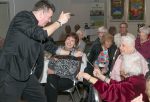
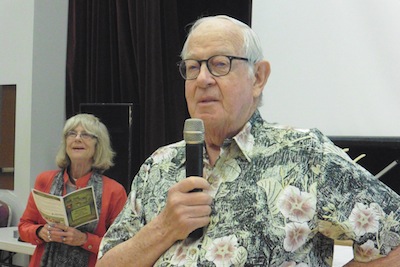
Magician Stephen Kaplan entertains at last month’s Empowerment session. (photo from Jewish Seniors Alliance)
On March 21, the Jewish Seniors Alliance, in partnership with Temple Sholom Seniors, once again brought the community a magical program of laughter.
In the program, which was the second in the 2017/18 JSA Snider Foundation Empowerment
Series with the theme Laughter and Music: Feeding the Soul, magician Stephen Kaplan delighted the audience of more than 100 people with his energy, sense of humour and enthusiasm.
Kaplan introduced himself as “the Maestro of Magic” and, as such, he said he conducts the magic that is within us all. Combining interactive entertainment with jokes and surprises is what he loves to do – and he does it so well.
The audience was shrieking with laughter and wonder. How did he guess that Heather’s first boyfriend’s name was Peter? How did he guess that Lila was thinking of the city Winnipeg? And how did he guess that the card that Bonny picked was a seven of diamonds? Did he really guess all that? It doesn’t matter. As a finale, he took a section of the Vancouver Sun, tore it into pieces and, within seconds, put it back together.
Gyda Chud, his preschool teacher, introduced him beautifully. Was she the one who instilled the charm and magic in him? Kaplan made sure that every one of the attendees left the program with a big smile.
The afternoon began with greetings from Bill Gruenthal, Arthur Gutman told some jokes and led the audience in Passover songs, and Ken Levitt, JSA president, encouraged people to join the JSA, if they hadn’t already.
Two more Empowerment sessions on the theme Laughter and Music are coming up: Perla’s Music Workshop on April 17 with Congregation Beth Israel, in conjunction with the Jewish Family Services’ Seniors Lunch program; and Music for Our Hearts and Songs We Love on June 25, with the Kehila Society in Richmond. For more information, visit jsalliance.org or call 604-732-1555.
Tamara Frankel is a board member of Jewish Seniors Alliance.
Matthew Gindin takes a pause in his talk, The History of Jewish Humour. (photo from Jewish Seniors Alliance)
On Nov. 24, the first session of the 2017-18 Empowerment Series started with a bang. Almost 80 people came out to launch the series’ season, which has the theme of Laughter and Music: Feeding the Soul. This first meeting was co-sponsored by Jewish Seniors Alliance and Sholem Aleichem Seniors of the Peretz Centre for Secular Jewish Culture, and it took place at the centre.
Featured speaker Matthew Gindin spoke on the topic The History of Jewish Humour. Gindin is a journalist, lecturer and teacher, and a regular writer for the Jewish Independent.
Gyda Chud, coordinator of Sholem Aleichem Seniors and vice-president of JSA, began the session by introducing JSA president Ken Levitt, who spoke briefly about JSA, and urged those who hadn’t yet joined, to become supporters and members.
Gindin began his talk by posing the questions, Why speak of Jewish humour; why do these words go so well together? He then proceeded to answer the question.
Jews have been over-represented in the comedy scene. At one time, they comprised 75% of the comics in America, while they were less than three percent of the population, he said.
Humour has a long tradition in Judaism dating back to biblical times. The name Yitzchak, Isaac, means “he will laugh,” explained Gindin. The prophet Elijah said that two jesters in the marketplace already had a place in the World to Come because they made people laugh. Reb Nachman of Bratzlav, the founder of the Chassidic movement, preached about the importance of happiness. Sigmund Freud also spoke of happiness and humour in his book Jokes and Their Relation to the Unconscious.
Jews are known for making fun of themselves, said Gindin. They have used humour as a means of preparing for things that could go wrong. It was a method of coping with the many negative experiences in their lives. He pointed out that this type of humour was mainly a product of Ashkenazi culture.
Gindin described several different types of humour. For example, jokes about assimilated Jews trying to fit into non-Jewish society, Chassidim telling jokes about themselves, Jewish folk humour, jokes told under Nazism and communism in order to relieve tension, and jokes about Israeli life. An example of folk humour can be found in Sholem Aleichem’s glossary of his stepmother’s curses. For example: “May you grow so rich that your wife’s second husband never has to work for a living.”
In the United States, Jewish humour became popular in theatres and comedy routines starting in the Borsht Belt, said Gindin. Much of this humour was self-deprecating. The comedians focused on such themes as Jewish-gentile differences, Jewish family dynamics, the stereotype of the Jewish mother, Jewish professions, the diminished role of the rabbi. An example is a joke about waiting for Moshiach (Messiah) – “at least it’s steady work.”
Gindin told many stories and had the audience in stitches. He then asked if there were questions or comments and if anyone had any good stories. The audience responded with many amusing jokes of their own.
Chud thanked Gindin and commented on how well he wove the theme of humour into its time and places and how well he explained how the words Jewish and humour went together. She then invited everyone for coffee and dessert.
The second session in this season’s Empowerment Series will take place on Jan. 24, in cooperation with Jewish Community Centre Seniors and will feature the film Broadway Musicals, A Jewish Legacy. This documentary, by Michael Kantor, narrated by Joel Grey, explores the unique role of Jewish composers and lyricists in the creation of the modern American musical.
There will be three more sessions on the Laughter and Music theme: March 21, with Temple Sholom seniors; April 17 with Beth Israel seniors, in conjunction with Jewish Family Services’ lunch program; and June 25, with Kehila Society in Richmond. For more information, visit jsalliance.org.
Shanie Levin, MSW, worked for many years in the field of child welfare. During that time, she was active in the union. As well, she participated in amateur dramatics. She has served on the board of the Jewish Federation of Greater Vancouver and is presently on the executive of Jewish Seniors Alliance and a member of the editorial committee.
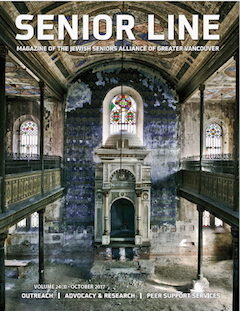
Jewish Seniors Alliance of Greater Vancouver publishes its own magazine, Senior Line, three times a year.
During the 20th century, thanks to advances in medicine, technology and quality of life, average life expectancy in the Western world increased by 30 years. Adults of the retiring age are now the fastest-growing segment of the population. The 2016 Canadian census showed more seniors (5.9 million) than school-age children (5.8 million). And the majority of these seniors are healthy and active, willing and able to share their knowledge and experience with the wider world.
Unfortunately, many people still apply the same negative stereotypes to older folks as we did decades ago: wrinkled, grumpy, fragile, forgetful, out of touch with reality, a burden and so on. Although “wrinkled” is mostly true, the rest is not, overall. We, society at large, need to change our views and policies towards the elderly, and how we treat the senior population.
“The most pressing issues seniors face are loneliness and isolation, retaining financial independence, staying involved and being physically active,” Ken Levitt, president of the Jewish Seniors Alliance of Greater Vancouver (JSA), told the Independent. He added to that list the lack of affordable or subsidized housing for seniors, inadequate nutrition, and the need to successfully manage personal health problems. He talked about protecting seniors from financial predators, including greedy relatives and unscrupulous investment counselors.
“This broad scope of issues affects all seniors, not just Jewish,” he said, “And the solutions should be all-encompassing, on the federal level. Poverty is a symptom of a greater problem, and we must address the cause. What we do now is just patchwork, temporary solutions.”
JSA does what it can to ease seniors’ problems, given the limits of its budget. It has about 400 registered members and publishes its own magazine, Senior Line, three times a year. “The articles deal with issues and challenges relating to seniors,” Levitt explained. “These issues are not only discussed, but we make recommendations for their amelioration.”
The alliance also offers outreach programs, advocacy and research into the problems of seniors, and peer support services. “JSA advocates senior issues through a number of organizations, including the Council of Senior Citizens Organizations of B.C., the B.C. Health Coalition and the B.C. Poverty Reduction Coalition,” said Levitt.
About JSA’s peer support services, Levitt said, “We have 150 trained volunteers in the peer support services. Each one of them undergoes 55 hours of special training – 11 five-hour sessions. These volunteers offer friendly visits to seniors who are lonely. They answer phone calls. They can’t solve all the problems by themselves but they can help others to solve a variety of problems. They help those in need to reconnect with community. They provide bereavement support, when necessary. That they are seniors themselves adds credibility to their recommendations.”
Of course, there is always more to be done. “We have more demands for our services than we can meet,” said Levitt. “If we secured more funding, we could train more volunteers and expand the peer support services. We could hire more staff.”
He added, “We could, perhaps with a partner agency, create something similar to the Cumming Centre in Montreal. It is a dedicated community centre for seniors. Such a centre could offer comprehensive services, recreational and social programs, and rehabilitation after a stroke. It could offer a wide range of programs for persons with Parkinson’s, aphasia, arthritis, mental illness, etc. The aim would be restorative and maintenance or prevention.”
JSA is engaged in networking to start something similar in Vancouver. “We don’t have to start all these programs at once. We can start small and build up from there,” said Levitt. “Bits and pieces of such programs are already in place at different locations and organizations – we should concentrate them in one place. But, to establish such a centre in Greater Vancouver, there would need to be more cooperation amongst agencies, a willingness to share their services and resources.”
JSA’s funding comes from a variety of sources, from private donations and foundations, plus government grants. About 10% of its funding comes from the Jewish Federation of Greater Vancouver.
Shelley Rivkin, Federation’s vice-president of planning, allocations and community affairs, said that 14% of Federation’s allocations go to seniors. “We fund agencies, not individuals,” she said. “In 2016, all our partner agencies received an increase in their allocation as a result of an increase in the overall campaign. The increase to seniors was approximately two percent, which was consistent with the other increases…. Federation funding for seniors goes to the following agencies: Jewish Family Services Agency (JFSA), contribution toward their seniors department; JCC [Jewish Community Centre of Greater Vancouver], contribution toward the JCC seniors programs [and] we also cover the rent for the JCC L’Chaim program; Kehila [Society], contribution toward their seniors wellness program and the Richmond bus, which takes Richmond seniors to programs; and JSA, contribution toward their advocacy and peer counseling programs.”
Rivkin added, “We provide JFSA with funding for financial support to clients, including assistance with food vouchers and rents. A growing number of those clients are seniors.”
She explained that, while 14% of the funds “are specifically directed toward programs serving seniors, approximately 30% of our funding goes to social services. Seniors who are recipients of social services benefit through these programs also.”
And Federation is trying to help local seniors who face poverty. “According to the 2011 National Household Survey,” Rivkin said, “there are approximately 4,500 seniors in our community, and 16% of them have been identified as living below the low-income cut-off. The majority of them are older, unattached women. We are looking at issues of seniors and poverty through the Food Security Task Force and we intend to hold a forum on seniors in 2018 to gather community priorities.”
Olga Livshinis a Vancouver freelance writer. She can be reached at olgagodim@gmail.com.
The Oct. 29 Jewish Seniors Alliance Fall Symposium on Preparing for End-of-life Transitions drew 160 participants to the Peretz Centre for Secular Jewish Culture. (photo by Alan Katowitz)
The Oct. 29 Jewish Seniors Alliance Fall Symposium on Preparing for End-of-life Transitions drew 160 participants to the Peretz Centre for Secular Jewish Culture. Several aspects of the topic were discussed, with Dr. Sue Hughson speaking on the importance of advance care planning, and Rabbi Philip Bregman presenting some of the Jewish perspectives to be considered.
JSA president Ken Levitt opened the afternoon, welcoming attendees and encouraging them all to become supporters or members of JSA, if they weren’t already. He then introduced Gyda Chud, JSA vice-president, who moderated the symposium, and introduced each speaker.
Hughson has been practising veterinary medicine since 1990. She has been involved in social activism in various forms over the years and currently serves as past president of the British Columbia Humanist Association. Along with her duties on the national board of Dying with Dignity Canada, she is co-chair of the DWDC Vancouver chapter. One of DWDC’s stated purposes is to “educate Canadians about all of their legal end-of-life options, including the constitutional right to medical assistance in dying … and the importance of advance care planning.”
Hughson began by pointing out that talking about dying won’t kill you and that supporting end-of-life choices is pro-choice not pro-death. She outlined the various documents that should be completed in order to plan, in advance, for orderly outcomes. Some of the documents that need to be completed are an advance directive; a representation agreement; and an enduring power of attorney. These documents should be easily accessible – keep them in the freezer, for example. If they are in a safety deposit box, they will not be easily accessed. She also suggested bringing them to the hospital so that the staff is aware of your wishes. These issues should be discussed well in advance with family and close friends so that everyone involved is cognizant of the planning.
In British Columbia, said Hughson, we have the right to a second opinion, the right to refuse treatment, the right to end our own life and the right to assisted death (if a person qualifies).
There are a number of organizations that can help expedite the planning. One is Nidus, another is Dying with Dignity. They have a lot of information on their websites and are also accessible by telephone. Other helpful aids are estate lawyers and financial planners.
One point about the representation agreement, she pointed out, is that there are two forms: No. 9 is the form for capable adults and No. 7 is for those unable to complete it on their own. In this type of agreement, you are outlining your choices, so that, should you become incapable, those acting on your behalf can carry out your wishes. You can register your documents with Nidus. It is interesting to note that eight out of 10 doctors have done advance care planning because they see the importance of doing so.
Bregman was senior rabbi at Temple Sholom from 1980 to 2013. He has been Jewish chaplain at the University of British Columbia since 2013 and serves as executive director of Hillel BC. He explained the importance in Judaism of having an ethical will, where you record the beliefs and ideas that you want to pass on to future generations. This has been a practice in Judaism for thousands of years, he said.
An ethical will can be written on paper or take the form of a video. Bregman emphasized how important it is to have the discussion about end-of-life with your family: what you want to happen regarding funeral arrangements, burial, etc. If the dying person avoids the issues because they think their family is afraid to discuss them, the dying person may feel isolated.
Bregman explained that the Vidui is said at the deathbed if the dying person is unable to say it themselves. It is a prayer asking God for forgiveness. He stated that people usually die at night or early morning, and he thinks it may be because they wish to be alone. But he has experienced what he called the awesome feeling of being present at the moment of death and being aware of the soul leaving the body. The tradition of naming children after a departed relative stems from the idea of the continuation of the neshamah (soul) in a new being, he explained.
The rabbi emphasized the importance of organ donation as helping with life. It is not against Jewish tradition, he said, and is accepted even by the Orthodox. He said people should talk with the Chevra Kadisha (Burial Society) to learn more about the traditions surrounding the preparation of the body for burial. For example, in order to be kosher, the coffin must be biodegradable. There must also be holes in the coffin for a quicker return to nature. We are, after all, only burying the vessel, the neshamah has already departed.
To a question about cremation, Bregman replied that, in Judaism, nothing should be done that is disrespectful to the body and burning is considered disrespectful by most rabbinical authorities. Regarding leaving your body to science or a postmortem, he said it is important to specify that the body be returned for Jewish burial, otherwise it will be cremated. Finally, he stated how important it is to make funeral arrangements in advance, how helpful that is for the family and, again, he encouraged everyone to become an organ donor and help save a life.
Chud then thanked the speakers and invited everyone to partake of the refreshments. A video of the entire event, as well as the PowerPoint by Jack Micner, an estate lawyer who was unable to speak at the symposium due to unforeseen circumstances, will be available on the Jewish Seniors Alliance website.
Shanie Levin, MSW, worked for many years in the field of child welfare. During that time, she was active in the union. As well, she participated in amateur dramatics. She has served on the board of the Jewish Federation of Greater Vancouver and is presently on the executive of Jewish Seniors Alliance and a member of the editorial committee.
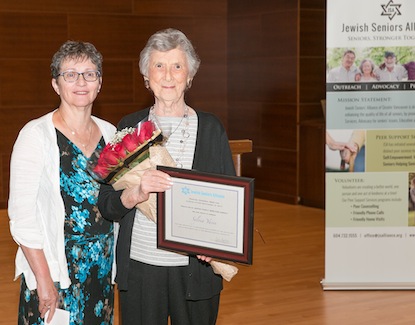
Karon Shear was one of the volunteers honoured at the Jewish Seniors Alliance AGM on Sept. 14. (photo by Alan Katowitz courtesy of Jewish Seniors Alliance)
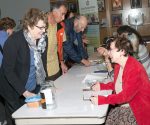
The annual meeting of the Jewish Seniors Alliance was held on Sept. 14 at Congregation Beth Israel. The business meeting was followed by a dinner and awards ceremony.
The business portion of the evening was called to order by JSA president Ken Levitt. Prior to the presentation of committee reports, a number of organizations offered greetings. A d’var Torah was delivered by Beth Israel’s Rabbi Jonathan Infeld, who emphasized that, according to Jewish law, we are not to cast aside seniors as they are at the heart of the community. And both Ezra Shanken, chief executive officer of the Jewish Federation of Greater Vancouver, and Gudrun Langolf, acting president of the B.C. Council of Senior Citizen Organizations (COSCO), also said a few words.
Following the approval of the agenda and the minutes of last year’s AGM, Larry Meyer delivered the treasurer’s report. He outlined the various funding sources of JSA – government, corporate and private grants, as well as the $18 annual fee from members/supporters. He also listed the programs this money supports, such as peer counseling, Senior Line magazine, the fall symposium, the spring forum and the Empowerment Series, as well as the website, jsalliance.org.
Pamela Ottem, chair of the Peer Support Program, outlined the various aspects of the service. Peer counselors are required to take 55 hours of training prior to being assigned a client. They are given ongoing support in their work by Grace Hann, who is also the trainer, and Charles Leibovitch, who is a social worker. It takes 15 hours of training to become a Friendly Visitor. These volunteers visit shut-ins and lonely seniors; another part of the program is friendly phone calls and service information and referral. The peer support program has 56 trained volunteers serving 70 seniors.
The JSA’s Ambassador Program, whose goal is to raise awareness of elder abuse, started with a one-year grant and has been incorporated into the other offerings. Hann, Leibovitch and some of the volunteers make presentations to other seniors groups about their activities.
Binny Goldman reported that JSA has 596 members/supporters, of whom 320 are individual members, 150 are members of the Most Russian Bridge group and 21 are from affiliate organizations.
Debbie Rozenberg, left, and Sylvia Yasin. (photo by Alan Katowitz courtesy of JSA)
In Levitt’s president’s report, he briefly reviewed the activities of the JSA, emphasizing that the organization would not exist if it were not for the active involvement of its volunteers. He pointed out that the peer support program alone, if it were carried out by paid staff, would cost much more than JSA’s total budget. He thanked everyone, both staff and volunteers, who have worked so hard and contributed so much over the past year.
Marilyn Berger presented the report of the nominations committee. She read out the slate for the coming year and moved for acceptance. Two former board members were mentioned, Edith Shier, who has passed away and was the previous editor of Senior Line, and Milton Adelman, who has retired from the board but was for many years the treasurer of JSA. Levitt then called for the adjournment of the business part of the evening and everyone was invited to move to the tables for dinner, volunteer recognition and musical entertainment.
Jazz singer Jill Samycia entertained the approximately 150 dinner guests, after which came the awards presentations to volunteers. As has become JSA’s custom, several organizations were asked to nominate senior volunteers who have spent time and energy enhancing the goals of their organizations.
Karon Shear, who was coordinator and administrator of JSA from 2005-16, was nominated by JSA. Her service to seniors, and enthusiastic marketing, played a vital role in the development and growth of the organization. In presenting her with the award, Serge Haber described her as the heart and soul of JSA. He spoke of the countless hours she spent, off the clock, on weekends, working at home; how she produced the Senior Line magazine basically on her own for a time.
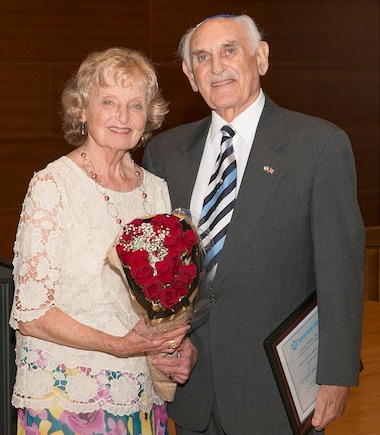
Nassa and Arnold Selwyn. (photo by Alan Katowitz courtesy of JSA)
Sylvia Yasin was nominated by the Jewish Family Service Agency. Yasin has volunteered for many years with the Jewish Food Bank and was instrumental in creating relationships with various groups and individuals and obtaining ongoing donations of supplies for school-aged children. She was presented with her award by Debbie Rozenberg, who noted that Yasin began volunteering while still working full time. Yasin has been involved with the Terry Fox Run and with ORT. Among other things, she organized the gift wrapping in shopping malls that raised funds for ORT. She also helps set up and clear for the seniors lunches at the Kehila Society and is still involved with the Jewish Food Bank.
Nassa and Arnold Selwyn were nominated as a couple for their longtime volunteerism at Congregation Beth Israel. Infeld talked about Arnold’s singing for the congregation and Nassa’s beautiful sewing of the parochet (ark curtain) and the siddur covers. Together they bring holiness into the world, said the rabbi. Both of them act as greeters and have been part of many other committees. They are also active in the general community and are part of Showtime, an entertainment group of seniors.
All of the honourees expressed their thanks and appreciation to JSA and the nominating organizations. The message to all was, volunteer whenever you can and wherever you can – it will bring you feelings of fulfilment and joy.
Samycia performed again, during dessert, and a number of the guests got up and danced to the music. The evening ended with a draw for door prizes.
Barbara Bronstein and Larry Shapiro were co-chairs of the event.
Tamara Frankel is a member of the board of Jewish Seniors Alliance. Shanie Levin, MSW, worked for many years in the field of child welfare. During that time, she was active in the union. As well, she participated in amateur dramatics. She has served on the board of the Jewish Federation of Greater Vancouver and is presently on the executive of JSA and a member of the editorial committee.
Contrary to popular belief, life as an older person is neither dull nor uneventful. We have experienced many things but have yet to see or hear it all.
A few years ago, my husband and I visited New York. We were in the process of checking into the hotel when our daughter arrived to greet us. The hotel clerk immediately shifted his attention to her. He explained how the elevator worked, how we could access hotel amenities, gave her the room keys and wished her a pleasant stay. In less than five minutes, blatant ageism had rendered my husband and me invisible, mute and incapacitated by age. Although we have endured strangers calling us dear, darling and sweetie in loud voices, the hotel episode left us stunned.
In his article “Ageism: I hope I (don’t) die before I get old,” Dan Levitt, adjunct professor at Simon Fraser University, defines ageism as “the stereotyping and discriminating against individuals or groups based on their age.” Ageist attitudes result not only in individual discrimination but they can also be found at the core of the design and implementation of services, programs and facilities for the elderly.
Lillian Zimmerman, in her 2016 book Did You Just Call Me an Old Lady?, takes a two-pronged approach to aging. First, she examines how medical interventions, technology and social programs have improved the quality of life for older people. Second, she cleverly unmasks the difficulties faced by an aging population living in a youth-obsessed culture and how these obstacles are reinforced and perpetuated.
Currently, the over-65 age groups are the fastest-growing population segments in Canada. The press has dubbed this “the Grey Tsunami.” Although many components are involved in reinforcing ageism and ageist attitudes, Zimmerman identifies language as one of the main preservers.
“Words are among the most insidious communication devices contributing to ageist attitude formation – tsunamis are catastrophes that bring death and destruction,” she writes. “As a metaphor for aging, it is simply not acceptable. We are now responsive and sensitive to demeaning and derogatory language. We need to take ageism out from the closet and ‘out it’ for what it is: a general dislike of older people. The list of unacceptable social attitudes should now read racism, sexism and ageism.”
Having a keen sense of humour is a highly desired quality. Throughout history, we have employed humour as a coping mechanism, a stress reliever and a route to gain social advantages. It is also used as a tool to manufacture “others,” and for them to appear less worthy and less capable. These jokes, whether narratives, cartoons or greetings, can be extremely hurtful and insulting. If heard often enough, they will become “alternative facts” and have the capacity to further cement negative stereotypes. Zimmerman cites a study of more than 4,000 jokes that found many in which older people were depicted as incompetent, forgetful, sexually frustrated, impotent males and infirm. As previously mentioned, ageism has not until recently been openly examined, so it is possible that the “jokesters” are not aware of imbedded ageist content.
The Ontario Human Rights Commission, in its research document Ageism and Age Discrimination, states that the first step to combat this derogatory ism is to “raise public awareness about its existence and to dispel common stereotypes and misperceptions about aging.”
Levitt concurs and goes a step further by citing a Slovenian project that has already been operationalized: “The Simbioza project’s goal is to improve e-literacy in seniors by young people volunteering to teach computer skills. Such a program is a win-win situation, as it puts technology in the hands of the elderly and instils social responsibility in the millennials.”
To quote Bob Dylan, “but times are a-changin’.” There is hope for the future. Through raising awareness of ageism and refusing to accept ageist discourse, the grips are loosened. The Ontario Human Rights research paper states, “The Supreme Court of Canada has made it clear that it is no longer acceptable to structure systems in a way that assumes that everyone is young and then try to accommodate those who do not fit this assumption. Rather, age diversity that exists in society should be reflected in design stages for policies, programs, services, facilities so that physical, attitudinal and systemic barriers are not created.”
Rita Rolingis an executive of Jewish Seniors Alliance and a member of JSA’s Senior Line editorial committee. This article was originally published, as “We will not go quietly into the night,” in Senior Line, vol. 24 (2), which can be downloaded at jsalliance.org.
Caviar and Lace entertain the audience at the final Empowerment Series session of the season. (photo by Stan Shear)
The fourth and final session of this season’s Jewish Seniors Alliance Snider Foundation Empowerment Series was held in partnership with Kehila Society in Richmond and the Jewish Museum and Archives of British Columbia on June 26. About 150 people came out to Beth Tikvah Synagogue for what was called A Day in the Life of Israel.
The theme of the season was “Eating Our Way Through Jewish History: Food, the Doorway to Our Culture” and the lunch, catered by Stacey Kettleman consisted of hummus, falafel, pita, Israeli salad, couscous, and cake for dessert.
After lunch, everyone moved to the sanctuary, where JSA president Ken Levitt welcomed everyone, reiterating the new JSA motto, “Seniors, stronger together.”
Michael Schwartz of the Jewish Museum reflected on the JSA-JMABC partnership for this season’s series featuring Jewish food, and introduced the guest artists.
Caviar and Lace, featuring Saul Berson and Michele Carlisle, were superb. Carlisle on keyboard and Berson on clarinet, saxophone and flute, got everyone moving, clapping and singing to Hebrew and Yiddish melodies. There were renditions of “Hinei Ma Tov” in two parts and “Heiveinu Shalom Aleichem.” The concert ended with a medley of wedding songs.
Toby Rubin of Kehila Society thanked the guest musicians and everyone for coming. It was a fitting end to a great season, which started in November 2016 with Sholom Aleichem Seniors of the Peretz Centre for Secular Culture, and was followed by the second session in January with JCC Seniors and the third at the Unitarian Centre in April.
Shanie Levinis a member of the Jewish Seniors Alliance board.
The Jewish Seniors Alliance Spring Forum featured Dr. Saul Isserow, left, and Dr. Larry Goldenberg. (photos by Binny Goldman)
“If I had known I was going to live so long, I’d have taken better care of myself” – Eubie Blake
Approximately 120 people attended the Jewish Seniors Alliance Spring Forum on May 7 at the Peretz Centre for Secular Jewish Culture. Called Ask the Doctors, it featured Dr. Saul Isserow and Dr. Larry Goldenberg, who were ready to answer the audience’s many questions.
JSA president Ken Levitt welcomed the crowd, thanked them for giving up a sunny gardening day to attend the workshop and support the JSA, whose new motto is “Seniors, Stronger Together.” He explained that, in joining together and striving for common causes, we are stronger.
Jewish Seniors Alliance first vice-president Gyda Chud, left, president Ken Levitt at the JSA’s Ask the Doctors forum on May 7. (photo by Binny Goldman)
Gyda Chud, first vice-president of JSA, introduced Isserow, who is the director of cardiovascular health at Vancouver General Hospital and of cardiology services at the University of British Columbia Hospital, as well as the medical director of Vancouver Coastal Health’s Healthy Heart Program, among other things. She also introduced Goldenberg, whose many credentials include the founding of several programs, such as the Vancouver Prostate Centre, where he is director of development and supportive care, and the Canadian Men’s Health Foundation; he is also a professor in the department of urologic sciences at UBC. Goldenberg was inducted into the Order of British Columbia in 2006, awarded the Order of Canada in 2009 and received the Queen’s Diamond Jubilee Medal in 2012.
Isserow’s topic was How to Stay Away from the Chevra Kadisha (the Jewish Burial Society). He started his talk with humour – saying that the man who asks the best question will win a finger up his tuches (bum) by Goldenberg, referring to a prostate exam – and used humour throughout to make the sad facts of aging more palatable.
Using slides to illustrate his points, Isserow stated that hardening of the arteries starts when we are young. He likened the process to a bagel, which begins to harden on the perimeter. When the blockage reaches the centre of the “bagel,” that is when the heart attack occurs. To keep things in perspective, he described life as “a sexually transmitted disease with 100% mortality.”
He discussed many risk factors: age, obesity, genetics, hypertension and smoking. He strongly suggested that diet and exercise could halt or reverse immediate risks but, unfortunately, there are no reliable warnings and heart attacks come out of the blue.
Movement is strongly encouraged, said Isserow. Just walking 10 minutes a day is a start to reducing the risk of diabetes and obesity. Walking one hour a day can reduce the risk of heart disease by 35%, he said, and the Mediterranean diet of fresh vegetables and fruit, healthy fats and whole grains, can improve health by 27%.
Isserow presented studies showing that aspirin reduces heart disease significantly. Although statins may be necessary, there are possible side effects, such as aches and pains, he said. He ended his talk by saying that health is up to the individual: walk once a day, eat well and take medications as required, when the risk is high.
Goldenberg said that one reason men die 4.4 years younger than women is the “I will not, cannot, Sam I am” syndrome, paraphrasing lines from the children’s book Green Eggs and Ham by Dr. Seuss. Many men are unwilling to reduce their drinking, smoking and/or poor eating habits, he said.
The government is trying to develop expertise in communicating effectively with men about their health, connecting with them in a way that creates the space, freedom and encouragement for positive changes in their health awareness, attitude and behaviours, said Goldenberg.
Doctors are increasing awareness with the slogan of “precision, prevention and preemptive,” he said, recommending precision and personalized communication in telling men what you want them to hear. Get males to engage in their health discussions, he suggested.
In an effort to increase engagement, Goldenberg initiated the website dontchangemuch.ca. He gave a few examples of small changes that would help: ordering half a salad and half fries, parking the car further away from your destination and walking an extra block or two.
He also referred to the Canadian Men’s Health Foundation’s youcheck.ca, “a health awareness tool built specifically for men,” according to its homepage, and he spoke of “manopause” – aging and a lower level of testosterone lead to a lower libido, crankiness, fatigue and the onset of heart and bone disease. Low testosterone has an impact on the body but there is no consensus as to solutions, said Goldenberg. Doctors need to monitor any symptoms that seem worrying, he said, adding that men need women to guide them and to emphasize that their behaviour can be changed.
An active question period followed. In no particular order, some of the responses included the following.
Aspirin can reduce blood clotting, as can diet and exercise. If you are doing all things right but your CT scan shows calcified plaque, then focus on diet, exercise and statins. People should have a base line for everything – having a colonoscopy or, for men, a test for PSA (prostate-specific antigen) levels, for example – and be aware of family history.
Tiredness could be the result of sleep disturbance, low mood or loneliness, but heart health should be checked. Beta blockers can cause fatigue because of a reduction of blood flow.
Stress management is critically important and stress levels can be related to many things: mental and physical well-being and reduction of cholesterol. Sex is healthy for overall well-being.
After the session ended, Larry Shapiro, second vice-president of JSA, presented the doctors with tokens of appreciation. Continuing with the humour that had been present all afternoon, he said, “Vive la différence!” referring to the many differences between men and women and their approaches to health.
Chud said she had seen a sign in the Weinberg Residence saying, “Never live in a community where there are no doctors,” and she wanted to add “a community without Drs. Isserow and Goldenberg.”
Stan Shear videotaped the forum, and JSA staff and volunteers deserve kudos for putting it all together.
Binny Goldmanis a member of the Jewish Seniors Alliance of Greater Vancouver board.
Grace Haan, JSA Peer Support trainer and supervisor, and Charles Liebovitch, JSA Peer Support coordinator, at the March 8 Food and Film Empowerment session. (photo by Binny Goldman)
The screening of Dough at the March 8 Food and Film session of the JSA Snider Foundation Empowerment Series continued the 2016-17 series’ theme of “Eating our way through Jewish history: Food, the doorway to our culture.”
Presented in partnership by the Jewish Seniors Alliance and the Jewish Museum and Archives of British Columbia, this latest session took place at the Unitarian Centre.
JSA president Ken Levitt greeted those gathered, taking the opportunity to introduce the alliance’s new motto – “Seniors, stronger together.” He emphasized the comma in the phrase, as it had been the topic of much discussion. He also credited me for the motto’s origin.
Gyda Chud, convener of this third session of the food-related Empowerment Series, said she was happy to see so many women in the audience as the event took place on International Women’s Day. Chud was wearing a scarf commemorating the World March of Women that took place in Montreal in 2000.
Michael Schwartz, JMABC coordinator of programs and development, noted how women were responsible for the existence of many organizations in the province. He stressed the importance of families contributing their own pieces of history to the museum to help future generations know the community’s origins and its past. And he asked audience members to become members of the museum, the benefits of which include receiving The Chronicle, which will keep them up-to-date on the museum’s events and research. One upcoming event, he said, is the Supper Club, which will take place at the Peretz Centre for Secular Jewish Culture, where the museum is housed. He concluded, “Without further a dough we hope you enjoy the movie Dough.”
Dough depicts the desperation that sometimes drives people together. Widowed and finding it hard to manage, Nat Dayan is desperate to save his London bake shop from closing – his grandfather had opened Dayan and Son 60 years ago. Customers are getting scarce, moving away or dying, and Nat’s son, a lawyer, is not interested in continuing the family business or helping it survive. In addition, competition is becoming a concern, with a shop next door that is selling baked goods, as well as groceries, and Nat’s apprentice has left to work for them.
Struggling to keep his kosher bakery open, Nat hires Ayyash, the teenage son of his cleaning lady. Ayyash has been selling drugs to help support his mother and himself and, when Ayyash accidentally drops cannabis into the challah dough mix, sales at Dayan and Son soar. Long lines appear and the closing of the shop seems far off.
A warm and special friendship develops between the Muslim boy and the Jewish baker, as Ayyash and his mother go to live at Nat’s when their home floods. A line in the film – Fiddler on the Roof meets West Side Story – helps describe what we see developing.
Tragedy is averted when a fire set by a competitor, instead of destroying the shop as well as Nat’s dream forever, serves to bring them closer together with mutual aspirations of continuing to exist. Dayan and Son survives with the “son” being Ayyash. The theme is an especially moving one – overcoming racial prejudice and bringing about closeness through the will for openness, acceptance and understanding, which can be found in unexpected places.
Chud thanked the delighted audience and invited all to enjoy baked goods – though not the cannabis-filled ones in the movie. The JSA staff worked hard to bring this event to the public, and Stan Shear was invaluable for all his technical work.
May we “break bread” together in the future. B’tayavon, b’shalom.
Binny Goldmanis a member of the Jewish Seniors Alliance of Greater Vancouver board.
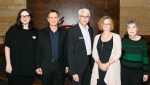
Left to right: Nina Krieger (Vancouver Holocaust Education Centre), speaker Mark Wolynn, Richard Fruchter (Jewish Family Service Agency), Nicky Fried (Congregation Beth Israel) and Shanie Levin (Jewish Seniors Alliance of Greater Vancouver). (photo by Rhonda Dent Photography)
On Feb. 15, Mark Wolynn, director of the Family Constellation Institute, spoke to an audience of almost 1,000 people at Congregation Beth Israel on the topic Understanding Intergenerational Trauma: How Inherited Family Trauma Shapes Who We Are and How to End the Cycle. The crowd sat in rapt silence as he unfolded his own story and the stories of some of the people his therapeutic approach has helped.
Introduced by Rabbi Adam Stein, assistant rabbi at Beth Israel, and Richard Fruchter, chief executive officer of the Jewish Family Service Agency, Wolynn quipped upon taking the stage, “The last time I stood at a synagogue pulpit was at my bar mitzvah.”
Wolynn said his work on intergenerational trauma has particular relevance for those who have survived genocide and war, such as First Nations people, refugees and Jews. His efforts to understand the effects of trauma began when, as a young man, he found himself going blind. He had “the bad kind of central serous retinopathy,” he said, “the five percent kind where it can lead to becoming legally blind.”
Plagued by grey blotches and blurs distorting his vision, Wolynn said he was terrified. He tried a litany of alternative medical cures, which didn’t help, and headed off on a quest for enlightenment.
After marathon meditation sessions and audiences with several gurus, Wolynn said he waited for hours for a satsang (sacred meeting) with a swami in Indonesia. When he finally made it to the front of the line, the guru looked at him for a moment and said, “Go home and make peace with your parents.” It wasn’t until he heard the same message from the next guru he visited that Wolynn returned home to begin his journey into healing his relationships with his family.
Years later, after making both personal and scientific study of the impact of family dynamics and inherited trauma (and healing his blindness), Wolynn has emerged with a persuasive vision of the role that unaddressed trauma can have in our lives – even if the trauma happened in previous generations, and even if you didn’t know about it. “Many of us spend our whole lives believing we are the source of our own suffering when we are not,” he said.
Wolynn presents his findings in terms of epigenetics, the study of how life experience can turn on or off certain genes. He points to findings in both humans and animals showing that the children of traumatized parents react with stress, fear or aversion to stimulus that traumatized their parents, even if the children themselves have no previous negative exposure to the trigger. “We think the effects – the alteration in the genes – may last for three generations,” he said.
Wolynn described several case studies in which patients had symptoms that could be addressed only after patients understood their source in something that had been done to (or by) a mother or grandfather. Wolynn challenged the audience to ask themselves what their greatest fear was and to put it into words, explaining that this was a clue to their “trauma language,” which could, in turn, be used “like breadcrumbs” to lead them back to the unrecognized traumas in their past.
Wolynn laid out a series of steps for uncovering intergenerational traumas and healing the brain. He also shared stories of his use of visualization, ritual and family communication to free both adults and children from chains they didn’t fasten themselves.
Alan Stamp, clinical director of counseling at JFSA, a co-sponsoring agency of Wolynn’s talk, told the Independent, “What Mark is doing is putting a new spin on how to get to the heart of it and resolve the difficulty. The past is alive in the present.”
Stamp said he knows of two people who attended a follow-up training session offered by Wolynn in Vancouver after the public lecture, and who have had success applying Wolynn’s method clinically; one of them being a counselor at JFSA. “It works,” said Stamp.
JFSA offers counseling for a wide variety of issues, and Stamp is hoping that attendees at Wolynn’s talk will be inspired to pursue healing, through JFSA or elsewhere.
JFSA, the Jewish Seniors Alliance of Greater Vancouver, Congregation Beth Israel and the Vancouver Holocaust Education Centre partnered to bring Wolynn to Vancouver, and the talk was additionally sponsored by the Lutsky families and Rabbi Rokie Bernstein. Banyen Books hosted Wolynn the day after his talk at the synagogue.
Matthew Gindinis a freelance journalist, writer and lecturer. He writes regularly for the Forward and All That Is Interesting, and has been published in Religion Dispatches, Situate Magazine, Tikkun and elsewhere. He can be found on Medium and Twitter.