Skip to content
  • Home
  • Subscribe / donate
  • Events calendar
  • News
    • Local
    • National
    • Israel
    • World
    • עניין בחדשות
      A roundup of news in Canada and further afield, in Hebrew.
  • Opinion
    • From the JI
    • Op-Ed
  • Arts & Culture
    • Performing Arts
    • Music
    • Books
    • Visual Arts
    • TV & Film
  • Life
    • Celebrating the Holidays
    • Travel
    • The Daily Snooze
      Cartoons by Jacob Samuel
    • Mystery Photo
      Help the JI and JMABC fill in the gaps in our archives.
  • Community Links
    • Organizations, Etc.
    • Other News Sources & Blogs
    • Business Directory
  • FAQ
  • JI Chai Celebration
  • JI@88! video

Recent Posts

  • Eby touts government record
  • Keep lighting candles
  • Facing a complex situation
  • Unique interview show a hit
  • See Annie at Gateway
  • Explorations of light
  • Help with the legal aspects
  • Stories create impact
  • Different faiths gather
  • Advocating for girls’ rights
  • An oral song tradition
  • Genealogy tools and tips
  • Jew-hatred is centuries old
  • Aiding medical research
  • Connecting Jews to Judaism
  • Beacon of light in heart of city
  • Drag & Dreidel: A Queer Jewish Hanukkah Celebration
  • An emotional reunion
  • Post-tumble, lights still shine
  • Visit to cradle of Ashkenaz
  • Unique, memorable travels
  • Family memoir a work of art
  • A little holiday romance
  • The Maccabees, old and new
  • My Hanukkah miracle
  • After the rededication … a Hanukkah cartoon
  • Improving the holiday table
  • Vive la différence!
  • Fresh, healthy comfort foods
  • From the archives … Hanukkah
  • תגובתי לכתבה על ישראלים שרצו להגר לקנדה ולא קיבלו אותם עם שטיח אדום
  • Lessons in Mamdani’s win
  • West Van Story at the York
  • Words hold much power
  • Plenty of hopefulness
  • Lessons from past for today

Archives

Follow @JewishIndie
image - The CJN - Visit Us Banner - 300x600 - 101625

Tag: JSA

A forum on rethinking aging

A forum on rethinking aging

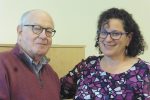
Gyda Chud of Jewish Seniors Alliance with forum speaker Dan Levitt of Tabor Village. (photo by Binny Goldman)

On Sunday, Nov. 6, 175 people gathered at the Peretz Centre for Secular Jewish Culture for the Jewish Seniors Alliance of Greater Vancouver’s fall symposium, featuring Dan Levitt and his unique approach to residential living.

Ken Levitt, president of JSA, spoke briefly about the seniors organization, after which Gyda Chud, co-convener, greeted the crowd and introduced the Three Amigos, Yom Shamash, Ian St. Martin and Steve Glass, a musical trio who urged attendees to join in as they sang and played songs which included “Bei Mir Bistu Sheyn” – and Chud thanked the musicians with “bei undz bistu sheyn,” “in our eyes you are nice.”

Shanie Levin introduced Levitt.

“In continuing the theme of our Empowerment Series, ‘Thriving until 120,’ we have invited Dan Levitt, executive director of Tabor Village, an elder-care facility affiliated with Fraser Health Authority,” she said. “Levitt is also an adjunct professor in the gerontology department at Simon Fraser University, whose insights and leadership on seniors’ care are sought after in Canada, the U.S., Europe and Asia.”

Levitt challenges societal attitudes towards aging by introducing new approaches to residential living. The goal of his talk – Rethinking Aging: Not the Traditional Nursing Home Grandma Lives In – was to start a conversation that reframes elderhood as an exciting stage in human growth and development.

Levitt would like people to discard the stereotypes of aging that have been emphasized by the media. He wants people to remove the word “still” when praising someone who looks good at 75, to refrain from showing surprise at the ability of someone to work at 80, and for people to maintain high expectations as they age.

He cited an experiment in which each of the residents on the first floor of a seniors residence were given an African violet to water, while second-floor residents were told of a doll that was left in the care of the staff and that, together, they had to make sure it didn’t get lost. On follow up, it was discovered that those who were given the individual responsibility to care for the plants thrived, requiring less medication, and their moods were uplifted, whereas those with the collective responsibility did not fare as well.

Levitt said the idea of individual responsibility has been introduced at Tabor Village and the residents are flourishing, as they expect more of themselves and feel increased self-worth. Levitt mentioned one occasion, where a resident remembered her recipe for pancakes and proceeded to make pancakes from scratch for 20 diners. She then approached Levitt, saying: “You didn’t think I could do it, right?” He had to agree, as he looked around the spotless kitchen. She had not only cooked and served the food, she had cleaned up afterwards.

Statistics show that an average of nine medications are given to seniors in British Columbia. Some of these are chemical restraints – anti-psychotic medications – just to alter behavior and make the residents easier for staff to deal with.

One alternative method that has proven effective is music therapy, said Levitt. This therapy enables non-verbal residents to sing their thoughts when speech has failed.

Alive Inside is an experiment by Dan Cohen, which introduced iPods into a seniors home. Listening to the music, each with their own earphones, non-verbal residents experienced an unprecedented improvement. They readily responded to familiar music, singing along. Some were even able to hold a conversation afterward, saying the music gave them hope and happiness inside. Subsequently, a program called Music and Memory was instituted.

In addition, many residences have introduced computer classes, which benefit many residents.

Breaking old policies is indeed difficult but must be strived for, said Levitt. There are many books, videos and films on the subject of dementia and the stigma that is often associated with it. Still Alice and Glen Campbell: I’ll Be Me are two examples.

Levitt listed off some “super seniors”: one who had climbed Mount Kilimanjaro at age 90; another who golfed and had come close to beating the pros at age 90; and Olga Kotelko, who ran races, breaking records and winning medals into her 90s (she died in 2014).

There are many experimental and successful programs being carried out, said Levitt. One is Hogeweyk in Amsterdam, a village built and devoted to seniors with dementia. A small Ontario town, Penetanguishene, has recreated a village similar to Hogeweyk and relatives of the residents are reportedly pleased with how happy those living in this community are; residents are able to shop and walk to the market, for instance. In Florida, Miami Jewish Health Systems is seeking to create a similar program – Green House Project focuses on helping companies and individuals convert or build residential homes where every room would have a shower. These residences, which exist in several states in the United States, can provide a high level of care for those who do not wish to be in a nursing home.

Levitt ended his talk with a quote from Margaret Mead: “Never doubt that a small group of thoughtful, committed citizens can change the world. It is the only thing that ever has.”

Chud thanked Levitt for teaching the audience to think differently, and noted that the success of the event was made possible by the dedicated help of JSA’s office staff. A video taken by Karon and Stan Shear can be found at jsalliance.org.

Binny Goldman is a member of the Jewish Seniors Alliance of Greater Vancouver board.
Format ImagePosted on November 18, 2016November 15, 2016Author Binny GoldmanCategories LocalTags aging, JSA, residential living, seniors
JSA celebrates another year

JSA celebrates another year

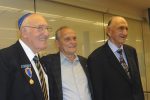
At the recent Jewish Seniors Alliance annual general meeting, three volunteers were honored: Ralph Jackson, left, Bill Gruenthal, centre, and Milt Adelson. (photo by Binny Goldman)

The word used in praising or thanking someone in Hebrew is hodaya. Our foremother Leah said, “I will praise,” after the birth of her son and names him Judah (Yehuda), and todah comes from the same verb. On Sept. 15, the Jewish

Seniors Alliance of Greater Vancouver held its annual general meeting to say todah to its members and the community for helping it achieve its goals for the past year.

JSA president Marilyn Berger, along with Marshall Berger, opened the meeting, which took place at Congregation Beth Israel, with O Canada and Hatikvah, followed by a minute of silence for those members who died during the year.

Ezra Shanken, chief executive officer of the Jewish Federation of Greater Vancouver, spoke of connecting Greater Vancouver’s Jewish communities with organizations like JSA, which is playing a vital role in seeing that seniors can stay in their homes, and can live well into their “golden” years without fear of neglect.

Dan Ruimy, member of Parliament for Pitt Meadows-Maple Ridge, said that his trip to Israel reinforced his desire to get in touch with his Jewish roots. He said we need to work together to support Israel as well as our own local communities.

Adolf Zilbershtein, head of Most-Bridge Russian Jewish Seniors, works at connecting his 60 members to their Jewish roots, and integrating them into the larger Jewish community. He thanked JSA for the $1,500 grant Most-Bridge received and wished everyone a healthy 5777.

JSA treasurer Larry Meyer explained it is an ongoing effort to keep the books balanced, as grants are not constant, but that JSA maximizes the use of federal, provincial, municipal and private donations so that its programs, such as peer-support services, can continue to flourish.

Pam Ottem, chair of JSA’s peer support and senior counseling program, reported that the program is so well-known that there is a waiting list of people wanting to avail themselves of the vital service and those who wish to take the counseling course, which is offered at no cost. Thanks were expressed to Grace Hann and Charles Leibovitch who lead the program.

Lyle Pullan, membership chair, shared that there were 36 new members, 48 life members, 439 individuals, 128 Most-Bridge members and 20 affiliates. He encouraged attendees to pay their $18 membership fee and search out new members.

In her final report, Berger acknowledged the accolades she had received and the assistance of her “troika,” as she handed the gavel over to Ken Levitt. Bev Cooper was presented with a certificate in appreciation of her outstanding work.

Serge Haber, head of the nominating committee, read the slate of incoming board members and then welcomed Levitt as incoming president.

Levitt, in saying farewell to Berger, lauded her, stating that she had brought the care and concern of the needs of the community to each meeting, and that she will be a great role model for him to follow. Noting that Berger demonstrated every day her commitment to Yiddishkeit, Levitt presented her with a gift from JSA.

The dinner reception, which 185 people attended in the synagogue’s ballroom, was convened by Larry Shapiro and Barbara Bronstein and emceed by Jack Altman, who proved once more to be a master of wit and words, able to ad lib at will.

Three volunteers were honored for their time and service to others.

The first volunteer was Ralph Jackson, nominated by Royal Canadian Legion Shalom Branch 178. Jackson had served in many capacities and has now assumed the presidency. His twin granddaughters, in introducing the man they love as their grandfather, proudly announced that, although he turned 90 in August, Jackson still loves to dance and enjoy life.

He actually texts them on his iPhone and, occasionally, they even respond. Being of service to others has been a major part of Jackson’s life, including being president of the War Vets for many years – he can often be spotted selling poppies in November. Jackson said he truly appreciated the honor and sincerely thanked the legion and JSA for the evening.

Bill Gruenthal, nominated by the Jewish Museum and Archives of British Columbia, was introduced by Prof. Chris Friedrichs, who said seniors don’t suddenly wake up overnight and find themselves to be seniors but that they are part of a growing and giving community maturing along the way. Gruenthal was treasurer of Temple Sholom, where he also formed a 60-plus club. Born in Netanya and a staunch supporter of Israel, anyone traveling the forests of Israel will see the trees planted by Jewish National Fund because of Gruenthal. In thanking everyone for the honor given him, Gruenthal said he was especially glad that family had flown in from out of province for the AGM, making it a family reunion.

Before Levitt introduced the honoree nominated by JSA, Milt Adelson, who was treasurer of JSA for eight years, Beth Israel Rabbi Jonathan Infeld encouraged and praised JSA for doing all that it does for the Jewish community, and he encouraged everyone to heed the call to help when hearing the sound of the shofar this year.

In speaking of Adelson, Levitt said that stepping down from being JSA treasurer has allowed Adelson to take the many steps he takes daily, walking 8.5 miles a day – he counts his steps in miles and not kilometres. One of Adelson’s lesser-known feats is holding the record for the most French fries consumed at the Aristocratic restaurant. Adelson was also treasurer for L’Chaim Adult Day Centre and proudly advocates for people to “walk the talk,” and walk it with vigor. Saying that he is a doer, Adelson thanked JSA for honoring him, adding that no one can say no to Haber, a statement to which many can attest.

Because some of the dinner crowd had not been present at the AGM, Levitt again made a presentation to Berger for her dedication and service to JSA. He presented her with a collage of photos taken during her tenure as president – called “The Many Faces of Marilyn” – which was put together by Karon Shear and Jennifer Propp.

The salmon dinner was catered by Susie Siegel of Nava Creative Kosher Cuisine. Then, as part of the entertainment, Jackson serenaded his wife of 62 years with “Because of You,” which melted the hearts of the many romantics in the room. Lorraine Smith further tugged at people’s heartstrings by playing and singing special Jewish favorites.

The evening ended with wishes for a peaceful, productive and prosperous year ahead, and thanks to the conveners of the dinner, Shapiro and Bronstein, and to the office staff. The work of the many volunteers behind the scenes was also acknowledged. The video of the event, taken by Stan Shear, can be seen at jsalliance.org.

If it takes a village to raise a child, it takes community commitment and support to make sure that the world in which the child lives is secure and safe into its senior years.

Binny Goldman is a member of the Jewish Seniors Alliance of Greater Vancouver board.
Format ImagePosted on September 30, 2016September 28, 2016Author Binny GoldmanCategories LocalTags JSA, seniors

A call to community seniors

Recently, I met an old friend. During our conversation over coffee, he asked if I was still involved with the Jewish Seniors Alliance of Greater Vancouver. “Of course,” I said. With a funny look on his face, he said, “You are putting a lot of time into this work.”

His remark and the look irritated me quite a bit, and I said, “Joe, you are probably 10 years younger than I am, you have your wife and children near you, you are a lucky man. You are also financially independent. It may be possible that you are not aware and possibly don’t care about what is happening around you – you are complacent.”

Let me bring Joe – and you – up to date.

There are several hundred elders in our community who are poor, lonely, marginalized or abused. JSA is making every possible effort to find these isolated individuals in order to help them.

In its outreach and advocacy programs, JSA is contributing to the well-being of countless elders with our educational programs. We reach out to these people through our two forums and four Empowerment Series sessions yearly; through our Senior Line magazine, which is published three times a year and contains current, relevant and well-research articles; and by means of our website, which not only informs but entertains.

And Joe, why should your indifferent attitude change? You are OK and you believe that JSA has nothing to offer you. But, there are hundreds of seniors giving of their time and wisdom to help other seniors. Something else you should know Joe – sooner or later, almost every senior needs help.

At our annual general meeting in September, JSA will be honoring a few individuals selected by their organizations for their extensive volunteer work for Vancouver’s seniors. And Joe, please note that JSA’s events are cost-free and are not fundraisers. Our outreach programs have a preventive focus, so that people like us remain functioning and enjoying a healthy life for as long as possible.

And Joe, if you think that this is all, let me tell you about our Peer Support Program, which JSA started almost four years ago.

Our two professionals have trained more than 100 senior volunteers to be peer counselors: to give emotional support, to conduct weekly visits at seniors’ homes and to make weekly phone calls. The peer counselor takes a 55-hour training course, and the callers and visitors take a 17.5-hour training course.

These trained volunteers come from every walk of life and different cultural backgrounds, and they speak many languages. They have a clean police record and they sign a confidentiality agreement. Their commitment to JSA is for at least one year. To date, we have more than 50 volunteers servicing more than 150 families.

JSA also provides referrals to seniors and their families, enabling them to access benefits and services offered by the municipal, provincial and federal governments. JSA’s bereavement support program helps seniors, either individually or in a group setting.

Last year, JSA trained 11 seniors to be ambassadors for creating awareness of senior abuse in homes and institutions. They talk to individuals or groups of seniors, and more than 300 seniors have benefited so far from this program.

Frankly, Joe, I shudder at the thought of what would happen if JSA were unable to provide these unique services in our community. We are in contact with 5,000 seniors, and we are doing our best to inform, educate and entertain them.

Seniors have the untapped power to help themselves politically. Unfortunately, this power is being wasted by either disinterest or failing to act. Only 650 to 700 seniors have chosen to be members of JSA, although it costs a mere $18 a year.

JSA must exist, grow and be able, with the support of the community, to provide these services. However, community involvement and financial support and interest are crucial. Without volunteers, nothing would be possible!

How about you Joe? You are not involved in anything right now – perhaps it is about time to start giving of yourself to our community?

Serge Haber is president emeritus of Jewish Seniors Alliance of Greater Vancouver. A version of this article was originally published in the June issue of the organization’s magazine, Senior Line.

Posted on August 19, 2016August 18, 2016Author Serge HaberCategories Op-EdTags advocacy, JSA, seniors, volunteering

Why should we volunteer?

Why do we volunteer? As a volunteer myself, I never gave this topic much thought until the editorial committee of Senior Line determined to feature volunteering in an upcoming edition.

A volunteer is someone who offers their service of their own free will or without being asked. Most people who volunteer do so because they are making a contribution to society or to a selected part of society. Some volunteer because of values that have been instilled in them or are part of their heritage, or because of the examples that others have set.

Volunteers are the backbone of every not-for-profit organization that exists. They run the gamut of everything that an organization does: sit on boards of directors, raise funds for the operation of the organization, plan and chart the future of the organization, visit seniors who are shut-ins or visit the sick and infirm. These are but some of the ways that volunteers make an enormous contribution.

My interest in volunteering likely came from observing my parents while growing up in what was considered rural Surrey in the late 1940s and 1950s. Both were involved in the Royal Canadian Legion and the Newton Athletic Club. I became involved in a number of organizations that included the B.C. Association of Social Workers, Habonim Dror Camp Miriam, the Performing Arts Lodge, Congregation Beth Israel and, more recently, Jewish Seniors Alliance. My motivation? To use my experience in supervision, management and organizational development. What could I do to make a difference? It was important for me to believe in the purpose and direction of the organization and how I could fit in. I have never wanted to be a spectator but an active contributor to the positive evolution of an organization and, of course, to the services they provide.

Norman Franks represents the quintessential volunteer. Franks is a native Vancouverite whose family has a long history in the city. During his student days at the University of British Columbia, he served as president of Hillel House. At the invitation of brothers Jeffrey and Peter Barnett, who helped pioneer the establishment of Variety Club in Vancouver, Franks became a member. He agreed with the purpose of Variety and, perhaps more important, identified with them because of being the parent of a severely challenged child.

Franks also has been involved with State of Israel Bonds, as executive director and as volunteer, he was involved with Project Isaiah, the Louis Brier Jewish Aged Foundation, Vancouver Talmud Torah and the Mountain View Cemetery Restoration Committee. He has served on the board of Beth Israel and, for the past nine years, has served as parnass, helping with the administration of the congregation. Franks works for the personal satisfaction he gets from the task at hand. In his own words, “I feel blessed and volunteering is my way of showing gratitude.”

Courtney Cohen, 27, sets the standard for younger people who demonstrate a passion for volunteering. In 2013, while brainstorming with Lynne Fader, co-executive director of the Kehila Society of Richmond, Rose’s Angels was born. Cohen’s inspiration comes from her late grandmother, Rose Lewin, who she describes as “the most compassionate and selfless person I have ever known.”

Rose’s Angels is a yearly event that provides a special package to assist people who live in poverty. Agencies that received packages this year included the Jewish Food Bank, Chimo Outreach, Richmond Family Place, Turning Point Recovery and many others. The decision of what to include in the packages was based on what the agencies’ clientele needed, such as non-perishable food, toiletry items and warm socks, toques, gloves and scarves. Donations came primarily from individuals and, on Feb. 14, more than 40 volunteers recruited by Cohen gathered at Richmond Jewish Day School to assemble and deliver a total of 400 care packages and 750 warmth bundles. Cohen said she measures success by “knowing others are benefiting from our care packages and the satisfaction felt by all volunteers and donors.”

Elayne Shapray, z’l, represented a special class of volunteers for her courage and for her convictions. She was a registered nurse by profession and graduated from the Jewish General Hospital in Montreal. In her own words, “Volunteering was always in my blood and I had the luxury of not having to work. I wanted to give back to the community. I got more from volunteering.” Shapray had an enviable record for the volunteering she undertook: Planned Parenthood, palliative care at Vancouver General Hospital, helped start L’Chaim Adult Day Centre, UBC Women’s Resources, served on the boards of Jewish Family Service Agency and Beth Israel – it was Shapray who initiated the annual coat drive at BI 22 years ago.

At age 39, she was diagnosed with multiple sclerosis, but she never disclosed her malady to the organizations she volunteered with so she would not receive any special treatment. Her days as an active volunteer ended about two years ago. Her most recent diagnosis was progressive secondary MS and, from 2011, she had been in the media about the “right to choose,” physician-assisted dying. She will be remembered for her caring, involvements and beliefs.

Larry Shapiro is a “wild and crazy guy.” He is energetic, entertaining and fun to hang out with. He and his wife, Dianne, moved to Vancouver from Montreal more than two years ago to be closer to family. In Montreal, he was involved with civil

defence, Zionist causes and his Masonic lodge. He became an advocate for his very independent late mother’s well-being, ensuring all her needs were being met.

As a new Vancouverite, it was important for him to meet new friends and to become involved. Initially, he joined Oakridge Seniors’ Centre, where he now sits on the board of directors. Shortly thereafter, he met Serge Haber, the founder of JSA, who invited him to volunteer as a peer counselor. After meeting the program’s trainer, Grace Hann, Shapiro entered the 55-hour training program. Today, he has five seniors with whom he is in regular face-to-face contact, and he is now on the executive committee of JSA.

Shapiro has some thoughtful insights about seniors who may feel isolated, lonely and possibly depressed, and believes that interaction with seniors in need requires more than mere physical care. He noted, “Listening is important and it is something not all of us do well. People have a story to tell and they want to relive their lives through storytelling even if it’s repetitive. I have seen the positive effects that peer counseling can make. It is often an instantaneous and spontaneous return to normalcy because it involves another person who listens and cares unconditionally.”

Do volunteers make a difference? Re-read this article and you will know the answer.

Ken Levitt is a vice-president of the Jewish Seniors Alliance of Greater Vancouver and a former chief executive officer of Louis Brier Home and Hospital. A longer version of this article will be printed in a forthcoming Senior Line.


Posted on May 13, 2016May 11, 2016Author Ken LevittCategories Op-EdTags Jewish Seniors Alliance, JSA, volunteering
Applicable knowledge

Applicable knowledge

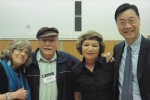
Left to right: Gyda Chud (co-chair), Serge Haber, Jackie Weiler (co-chair) and Dr. Kendall Ho. (photo by Binny Goldman)

Jewish Seniors Alliance of Greater Vancouver’s annual spring forum – this year with the topic An App a Day Keeps the Doctor Away – drew a large and curious crowd to the Peretz Centre for Secular Jewish Culture on April 3.

JSA president Marilyn Berger welcomed attendees and thanked pianist Stan Shear for opening the forum. Shear would add the harmonica and his voice to his later performance, but first shared that his wife, Karon Shear, JSA coordinator, had suggested the opening song, “Accentuate the Positive, Eliminate the Negative,” by Johnny Mercer, as she thought it embodied the message JSA tries to instil in its approach to helping others.

Berger then surprised the audience by introducing Dan Ruimy, who is the Liberal member of Parliament for Pitt Meadows-Maple Ridge, where he owns and operates Bean Around Books and Tea.

photo - Dan Ruimy, Liberal Party of Canada MP for Pitt Meadows-Maple Ridge
Dan Ruimy, Liberal Party of Canada MP for Pitt Meadows-Maple Ridge. (photo by Binny Goldman)

Ruimy said that living in Maple Ridge doesn’t give him much opportunity to meet many Jews, so it was only on a recent trip to Israel as a parliamentarian that he rediscovered his Jewish roots. He said he was especially happy, honored and touched to talk to a group of his “compadres,” referring to those gathered at the forum. He said that seniors have given their life, blood sweat and tears to the building of Canada and he hopes to help the government become better equipped to meet the needs of seniors.

JSA is run by volunteers, said Berger – from peer support to education programming to advocacy – and its membership is diverse. As she called upon Larry Shapiro to introduce the forum’s keynote speaker, Dr. Kendall Ho, she noted that Shapiro had been volunteering with JSA since his arrival in Vancouver from Montreal. Smiling, Shapiro denied he had volunteered to be part of JSA, but rather had been shlepped in – and now would have to be hauled away from doing what he loves.

A practising emergency physician at Vancouver General Hospital, Ho is founding director of Digital Emergency Medicine within University of British Columbia’s department of emergency medicine. He praised the creativity of the day’s topic title – An App a Day Keeps the Doctor Away – which was penned by Berger. Ho said he was turning to mobile apps as a way of helping patients help themselves. There are many new ones in the market, he said, that can help people achieve better health and even strive for excellent health. Some of these apps are free.

Mobile technology can also supply life-saving information and provide immediate access to life-saving help. About the use of such technology by seniors, Ho gave some of the statistics from a recent study: 63% use wearable data for monitoring, 76% read online reviews to select a doctor, 74% book online appointments and pay bills, 73% of doctors use mobile devices to share information, 61% are interested in 3-D printing for prosthetic and hearing aids, and 57% use cutting-edge devices.

In choosing an app, Ho advised asking yourself the following questions: Is this a worthy tool and how effective is it? Is this technology good for me? Is it safe? Is my privacy/identity protected? Is it easy?

Ho demonstrated how easy it is to download a free app and encouraged the audience to download it as he went through the procedure step by step.

Of the available free apps, he recommended:

  • Canadian Red Cross’ First Aid app, which helps users maintain their life-saving skills
  • Medisafe Medication Reminder, available for a free trial period, which helps people manage the pills they have to take, including sending an alarm to their phone or watch as a reminder
  • MindShift, which was developed in British Columbia to track the symptoms of anxiety and offers ways in which to cope with anxiety
  • BellyBio Interactive Breathing, for relaxation
  • Instant Heart Rate, monitors users’ heart rate
  • Sleeptime, detects users motion while they’re sleeping, and can be programmed to allow you to complete your dream, as it can detect when you are in REM
  • My Fitness Pal, a calorie counter and diet plan, and one of Ho’s personal favorites – it helped him lose 10 pounds.

Ho also suggested some important websites: healthlinkbc.ca to connect to a nurse or a health professional, myehealth.ca to get the results of a blood test (deleted after 30 days) and medlineplus.gov (research) for basic health information written in everyday language.

He advised the audience to ask their medical advisor which apps would work best for them, and to discuss results with the medical professional, so as not to cause themselves unnecessary anxiety by misinterpreting the data.

There are sensors available now, he said, such as wristbands, orthotics, helmets that detect concussions, a UV patch, a wand that monitors hydration (for cyclists) and T-shirts with sensors in the fabric.

Patient engagement, said Ho, is the blockbuster “drug” of the century. Using these types of technology, 88% of patients feel engaged in their health care. Using wearables shows a reduction of cardiac-related deaths and there is a 76% reduction in overall mortality when a patient is involved in his or her own health care.

Ho said that studies show that two out of three seniors 65 and over want to use technology to support their own health and access outcome-related data. Seniors now are tech savvy, he said.

Ho would like to see the use of health-related technology spread to the entire province; involve doctors, nurses, patients, governments and tech companies; be studied for its benefits, patient satisfaction and safety; and be further developed, with new sensors and devices over time.

The audience was reluctant to allow Ho to end his talk. Nonetheless, event co-chair Gyda Chud, who along with Jackie Weiler convened the forum, stepped in to ask if there were any questions for the doctor.

Ho was visibly moved when Al Stein said he would be forever grateful to Ho, as Ho had saved his life when he was having a cardiac problem and was admitted to emergency. Others who had been similarly helped thanked Ho fervently, as well.

Questions included whether there was an app for drug interaction and, yes, there is, but only for professionals. Attendees were also concerned that apps would reduce the amount of time doctors would spend with them. Ho said that apps were there to help both patients and doctors, but there was still the need for the right doctor to guide patients on their health journey.

It is safe to say that many in the audience felt that Ho would be the best guide and that the best mobile app would be Ho.

Chud thanked Ho, coining a slogan that Ho enjoyed: “Beat the stats, use more apps.”

Barbara Bronstein and Shapiro organized the refreshments, which Chud provided, and countless volunteers were everywhere from set-up to shalom. Karon Shear and Rita Propp also were integral to the whole event, while Stan Shear not only performed but, with son David, recorded the proceedings. The video can be found at jsalliance.org.

Binny Goldman is a member of the Jewish Seniors Alliance of Greater Vancouver board.
Format ImagePosted on April 15, 2016April 13, 2016Author Binny GoldmanCategories LocalTags Dan Ruimy, emergency medicine, JSA, Kendall Ho, seniors, technology
Reduce, reuse, recycle

Reduce, reuse, recycle

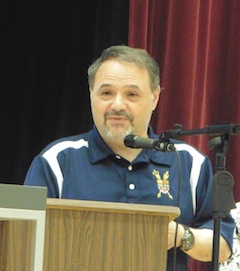
Prize winner Irene Behrmann, left, and speaker Ranka Burzan. (photo by Binny Goldman)

On March 3, 75 people attended the Jewish Seniors Alliance Snider Foundation Empowerment Series workshop Don’t Agonize, Organize/Downsize, led by author and professional organizer Ranka Burzan, founder of Solutions Organizing Simple.

Rev. Dr. Steven Epperson of the Unitarian Church of Vancouver welcomed those gathered at JSA’s headquarters, telling the crowd he enjoyed having a Jewish organization as part of his community’s centre. He shared that, over the years, he has dealt personally and professionally with life-changing events in his church members’ lives: marriages, births, health setbacks, deaths. He said these difficult times are especially hard if no plans have been made in advance for the transitions.

JSA president Marilyn Berger pointed to her walker when introducing Burzan, and said this reflected her home, too, as the walker held a coffee cup, papers and other items. Berger spoke of Burzan’s work to assist people with the physical and emotional demands of transition and change, and said she looked forward to learning some pointers that would help her and others.

When Burzan asked the crowd how many of them were organized, a few hands went up. When she asked how many of them would like to be organized, everyone’s hands shot into the air. According to her, time is wasted searching for things like keys, scissors, staples, papers, which leads to time spent being overwhelmed with frustration and not able to start the task we set out to do.

Change is very difficult and we are afraid of it, she said. We procrastinate, we stress, we start but do not finish tasks, we hold onto things given to us, because of guilt.

Quoting Gandhi – “You must be the change you want to see” – Burzan illustrated that it is up to us to initiate change, and proceeded to give tips on how to do so.

She said, ask yourself these questions: Do I like where I live and with whom? Do I like what I am doing in my job? Do I need this item or do I just want it around emotionally?

Then – listen to your answers.

We only use 20% of what we own, she said. The other 80% we keep, just in case – our children, grandchildren, friends or neighbors may want it. Some people rent storage to keep those “just in case” items, she said.

Commit five to 15 minutes of time, she continued, recommending that people set a kitchen timer and stay with the planned task until the time has elapsed.

Simple tools – such as boxes, bags, tape, markers – gathered before the task is started will aid in its accomplishment. She advised people to start with a small area to sort, like a junk drawer or purse. This will give the boost of confidence needed to carry it and other tasks through to completion.

To show how simple it can be to discard things within a planned five-minute period, Burzan had someone pass around a small wastebasket into which she asked people to toss any unwanted item from a purse or pocket. Serge Haber wryly remarked he would prefer a truck sent to his house to help him get rid of items there rather than a tiny wastebasket, which caused a ripple of understanding laughter in the audience. And, indeed, the wastebasket rapidly filled up and its contents were tossed – proving that it can be quite easy to throw something away: a theatre stub, an old gum wrapper, a cash receipt.

Burzan said the benefits of organizing are multiple: higher productivity, less stress, more free time to enjoy socializing or working; feeling the pleasure of knowing that others might be benefiting from your accumulated clutter, that the discarded “trash” might be treasure for someone else.

Clutter is a barrier to life, she said, and it creates guilt. We keep things because of emotional attachment. We start projects – scrapbooks, for example – that go untended. But if, after three months we have not completed a project, it should be discarded, she said.

So, ask yourself what’s holding you back. Start organizing when your energy level is highest during the day. Consider what would you take with you in the event of a fire. Ask for help – from family and positive-thinking friends who can help you reach your goal. Burzan pointed to her friend and assistant, Mara Lees, without whom she said she could not accomplish as much in her own day.

After Burzan’s talk, Empowerment Series chair Gyda Chud highlighted the lecture’s key points and thanked the speaker. She then invited the crowd to enjoy bite-size noshes while mulling over which bite-size portions of change they will attempt at home.

Complementing the workshop session was a talk by archivist Alysa Routtenberg of the Jewish Museum and Archives of British Columbia, who spoke of the JMABC’s work in collecting hundreds of thousands of items documenting the history of Jews and Jewish life in the province. The JMABC provides material for research, mounts exhibitions and stores family memories. Routtenberg asked attendees to not throw away their personal family treasures before checking with the JMABC (604-257-5199 or [email protected]), as there may be items that would enrich their collection, such as letters, photographs, pins and medals.

To those planning to promptly put to use what they had learned at Burzan’s session, this was a most welcome request. We walked away with our minds full of ideas, knowing that we needed to start now, before we procrastinated, so that we could reduce, reuse and recycle and see the results – a rewarding experience.

A raffle basket donated by Burzan containing her cleaning tips, tools and one of her books was won by Irene Behrmann. Karon Shear, Rita Propp and volunteers Bev Cooper, Jackie Weiler and Jennifer Propp contributed to the event’s success, and Stan Shear filmed it. The video can be viewed and more information about JSA can be found at jsalliance.org.

Binny Goldman is a member of the Jewish Seniors Alliance of Greater Vancouver board.
Format ImagePosted on March 25, 2016March 24, 2016Author Binny GoldmanCategories LocalTags archives, downsizing, JMABC, JSA, organizing, Ranka Burzan
Giving is a way to live well

Giving is a way to live well

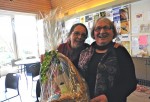
Graduates of the Jewish Seniors Alliance peer support program, and teachers. (photo by Binny Goldman)

On June 11, I walked into a room filled with givers – of themselves. It was the special occasion of the graduation ceremony of the fifth class of peer counselors, which took place at the Peretz Centre for Secular Jewish Culture.

They were 13 men and women of various ages who had met as strangers and quickly become an extended family of friends. Through 11 weekly five-hour sessions in which interactive role-playing was used, they were taught how to listen, comprehend and use their newly acquired techniques.

Charles Leibovitch, coordinator of peer support services, warmly welcomed those gathered – family and friends of those receiving certificates and members of the board of the Jewish Seniors Alliance of Greater Vancouver. He introduced himself and Grace Hann, trainer and supervisor of the peer counseling program, then credited the founder of JSA, president emeritus Serge Haber, for being instrumental in initiating the program and working diligently to ensure that it thrived through continuous and crucial funding issues to meet the ongoing needs of our growing senior community.

Leah Deslauriers, coordinator of seniors at the Jewish Community Centre of Greater Vancouver, informed the audience of the many and varied activities open to all people (Jewish or not) at the centre for a nominal fee. She encouraged all to visit and partake in yoga, swimming, card playing and just general socializing. Expressing the wish for further partnering with the JSA, she extended a mazel tov to the graduates.

Barb Kirby of Community Resource Network said that, in both a personal and professional capacity, she had seen many gaps in the care of seniors over the years. “One of the greatest gaps we see is lack of support causing social isolation of seniors and that is why your job is so important. Your training and expertise provides a lifeline to those who truly are in greatest need,” she said.

“They say it takes a village to raise a child. I believe it take a village to care for the elderly and it takes a special kind of person to care for the elderly. You are that caring voice or the person sitting next to someone who truly needs a caring human connection or to go one step further to help get the further supports they might need.” One individual, organization or government cannot do it alone, said Kirby. “Speaking up, sharing knowledge and best practices will help make our communities a safer, more enjoyable place for those who need our support.”

She thanked Haber and JSA president Marilyn Berger “for providing all the invaluable services to bring awareness through education and support to our communities.”

Becky Herrmann of Angels There For You noted that people want to be needed, sought after and validated. She recommended the book Give to Live, and said there were no side effects to giving of oneself, urging everyone to try doing so. Larry Shapiro, one of the graduates, countered with, “There are side effects, but no negative ones.” Herrmann later presented each of the graduates with a gift.

Shapiro spoke next, sharing with the audience that, having completed the course, he felt prepared to go out and serve as a counselor. He proceeded to give a little history of peer support counseling in British Columbia, which has been present since the 1980s, addressing social isolation and other daily issues affecting seniors. Shapiro felt the course had taught him empathy, as well as the skills and techniques necessary to offer others methods of self-help.

Fellow graduate Neveen Hossameldin said that, as an immigrant, what one missed most were the friendships left behind, and that she didn’t have another 55 years to forge new ones. Yet, after 55 hours as part of this group, she had indeed made new, lasting friendships. Hossameldin appreciated that Haber had told the class that they were not working for JSA but were part of JSA. Echoing what others had said, she praised Hann for making the sessions pleasurable and warm.

Hann, laughing, said that since Shapiro had stolen a good chunk of her speech, she would just thank JSA and its founder, Haber, who deserved a special tribute for his vision, without which the program would not exist. She underscored that self-absorption kills empathy, that focusing on ourselves makes our world contract whereas giving to others broadens our world.

Leibovitch spoke of the ongoing need for peer support services and of the graduates who go out in the community to help combat the loneliness he sees daily. He said that phone calls to the office are often by those who have been guided by others to use the peer services, and that this essential, relevant help has become very valuable in the community. Karon Shear, coordinator of JSA, and Rita Propp were thanked for their constant commitment to excellence and giving of themselves.

Haber said, “Don’t do unto others what you don’t want others to do unto you,” a teaching found in other religions as well. Giving of yourself – so necessary both to the giver and the receiver – helps to alleviate loneliness, isolation and perhaps even remove the tarnish from the gold quite often present but hidden in the “golden years.” JSA is very proud of this program, he said, adding that he, too, had taken the course to familiarize himself with what was being offered and that he, too, had learned to really listen and hear what was being said. He concluded with the wish that all the graduates would go out and spread good will.

Certificates were handed out along with a rose to each graduate, as was a hug from both Hann and Leibovitch.

Ruby Boychuk, one of the graduates, presented Hann with a bouquet of yellow roses, explaining that yellow roses symbolized love and appreciation.

Family and friends proudly took photos of the celebration, while Stan Shear took a video that will be posted on the JSA website. Refreshments shared by all helped bring the evening to a close, leaving a sweet taste in our mouths and in our hearts. Mazel tov, graduates. Mazel tov, JSA.

Binny Goldman is a member of the Jewish Seniors Alliance of Greater Vancouver board.
Format ImagePosted on June 26, 2015June 25, 2015Author Binny GoldmanCategories LocalTags Jewish Seniors Alliance, JSA, peer counseling, peer support

We walk a little taller

Karon Shear, left, and Marilyn Berger. (photo by Binny Goldman)

Moshe Feldenkrais is quoted as saying, “When you know what you are doing, then you can do what you want!” How appropriate that some of us who spent the two nights of the Passover seders sitting at the table – or reclining, as directed – were now being taught to sit properly.

On April 13, about 50 people gathered at the Oakridge Seniors Centre (OSC) to attend an event co-hosted by Jewish Seniors Alliance of Greater Vancouver to learn the helpful movements of the Feldenkrais Method.

Alexandra Henriques, manager of OSC, graciously welcomed the audience and called upon JSA president Marilyn Berger, who said how impressed she was with the surroundings and the newsletter put out by OSC, and said she would come back to sample some of the lunches being offered at the centre. Berger then acquainted those gathered with the aims of JSA, mentioning its advocacy for the betterment of the quality of life for seniors and the peer-counseling courses being offered.

photo - Feldenkrais instructor Vita Kolodny
Feldenkrais instructor Vita Kolodny. (photo by Binny Goldman)

Berger then introduced Vita Kolodny, a nurse and a movement educator, who gently eased the audience through the mindful movements that can be used to ease back pain. By a quick questioning of the audience, we learned that almost all in attendance had suffered from back pain at one time or another.

We all sit so much during the day, doubling the stress placed on our back compared to when we stand, Kolodny explained. That is why we may prefer to stand when experiencing back pain.

Kolodny led those gathered through the correct way of positioning our bodies and ways of strengthening the skeletal muscles. It is important to reeducate our brains to the new ways of sitting by repeating the movements we learned, slowly and with awareness of how our whole body participates, with a rest in between the exercise.

A question was asked by Lou Segal: “Is it better to train one’s body to sit in the new and correct way, even while resting, so it becomes our natural way of sitting?” The answer was yes.

Dr. Norman Doidge’s book The Brain’s Way of Healing was recommended reading if attendees cared to learn more about neuroplasticity and the Feldenkrais Method.

Some constructive and supportive suggestions were made during the demonstration. For example, sit forward in a chair with feet flat on the floor. A pillow may be placed behind your back, remembering to maintain the arch in your back. As well, it helps to sit on an armless chair, stool or exercise ball while maintaining good balance.

Gyda Chud of JSA thanked Kolodny, using her penchant for alliteration, saying “Vita was vital, vivacious and vibrant in her presentation,” echoing the feelings of the audience, all of whom were visibly sitting upright, already making the changes suggested by Kolodny that afternoon.

Not only were our hearts smiling – as suggested in the theme – but our spines were, as well.

Discussions followed over dessert and hot drinks.

Berger, in thanking “the gregarious Gyda Chud and our ever incredible Karon Shear,” reminded everyone of the JSA Spring Forum on April 26, which will take place at the Jewish Community Centre of Greater Vancouver. The theme is YOLO: You Only Live Once.

So, let’s live it tall!

Binny Goldman is a member of the Jewish Seniors Alliance of Greater Vancouver board.

Format ImagePosted on April 24, 2015April 23, 2015Author Binny GoldmanCategories LocalTags Alexandra Henriques, Feldenkrais, Gyda Chud, Jewish Seniors Alliance, JSA, Karon Shear, Lou Segal, Marilyn Berger, Oakridge Seniors Centre, OSC, Vita Kolodny
JSA forum on mental health

JSA forum on mental health

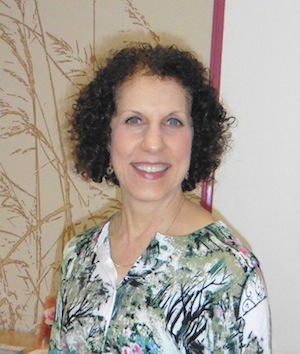
At the recent Jewish Seniors Alliance of Greater Vancouver fall symposium, left to right: Peggy Casey, Lorilee Mallek, Nora Paul, Mark Godfrey and Grace Hann. (photo by Binny Goldman)

A capacity crowd of 175 gathered at the Peretz Centre for Secular Jewish Culture on Sunday, Oct. 26, to learn more about mental health and wellness, the topic of this year’s Jewish Seniors Alliance of Greater Vancouver fall symposium.

JSA president Marilyn Berger opened the session by asking the audience to rise in the name of mental health and to honor the soldiers who had lost their lives that week in Canada. This was followed by O Canada, led by Barbara Bronstein and Debbie Cossover, with Claire Cohen joining them in the singing of Hatikvah, and Marshall Berger accompanying on piano.

Gyda Chud introduced herself and co-convener Bev Cooper, and proceeded to inform those in attendance of the various projects that are JSA’s main concerns: advocacy, Senior Line Magazine, peer support counseling and the Empowerment Series. She went on to explain that the day’s topic had been chosen by attendees at past events, via the evaluation cards they had filled out citing this issue as a particular interest.

Cooper introduced the first speaker and the panel moderator, Dr. Penny MacCourt, past president of the B.C. Psychogeriatric Association, who admitted that she, too, will become a senior this summer.

MacCourt said that mental health is often equated with mental illness but that they are not the same thing. She emphasized the need to teach people ways in which to cope in the face of adversity; to help moderate the impact of stress, and facilitate social and emotional well-being. We as a society need to provide supportive living shelters, and continuous inclusiveness and access to such services, she said.

Help should be provided to those in need to maintain self-esteem and achieve effective coping strategies, she added, as these are the “protective factors” that can ease or ward off risks, including social isolation, limited income, loneliness, challenging life transitions, and lack of meaningful activity.

Dr. Martha Donnelly spoke next. At one time the director of the division of geriatric psychiatry at the University of British Columbia and a leader in the development of guidelines for geriatric mental health practice, she outlined some “red flag” symptoms of depression: appetite disturbance, loss of weight, early morning wakefulness, lower energy, and wishing life were over. The highest rate of suicide is in the senior years, she said.

One of Donnelly’s patients, Don Carroll, a very young 82, offered the audience a glimpse into his former work life, which included being an instrumental part of TV shows such as Mr. Dress Up and The Friendly Giant, and his subsequent descent into a depression from which he could not emerge on his own. With Donnelly’s continuing help, Carroll has returned to being an outgoing, fun, contributing person; a difficult journey for him, his supportive wife, Nancy, and family. It took resolute determination on all their parts to get Carroll to where he is now – off any medication and sharing with others his belief that one can heal with the correct diagnosis, therapy, doctor and support, to regain the ability to rely on oneself. The process was slow, including group therapy, daily exercise, medication and “thought catching,” tossing out negative thoughts before they take hold.

Grace Hann, who is currently working with JSA as a trainer and supervisor of peer support services, acknowledged JSA president emeritus Serge Haber for his vision to initiate the peer services as a vital project of JSA.

Hann is president of Senior Peer Counseling of British Columbia and on the YWCA board of the Community Action on Elder Abuse Project. She explained that it takes a peer to fully comprehend the feelings one is experiencing, such as loss of a loved one, age-related challenges, relocation, family discord – all situations that need empathy, which she described as “echoes of another person in ourselves.”

Hann called upon three graduates of JSA’s program to do role-playing, one of the methods used in the 55-hour course in peer counseling. They performed skits depicting examples of exchanges between clients and counselors at Week 1 and in Week 54. It showed the process through which the trainees had gone and from which they had grown from the initial expectations of their own abilities and finally gaining the knowledge and understanding of how to deal with the challenges clients face, such as loss of vision, a loved one and/or freedom and independence.

Trainees are taught to not use JAR: judgment, advice or rescue. Rather, counselors employ the three Es: empowerment, empathy and emotion. Both clients and counselors have benefited from the interactive sessions, said Hann, noting that there is a waiting list.

Hann then introduced a special guest, Tanja, 91, who, when Denmark was invaded by the Germans, secretly and at high risk to herself, helped Jewish adults and children escape to Sweden. Tanja shared that one of her most gratifying moments was witnessing the uniting of a mother with her child in a kindergarten when the war was over. She also shared that, many years later, here in Canada, when she was ill with cancer and reached out for help, she received empathy and understanding. Tanja was given a standing ovation by those attending, many of whom had been moved to tears listening to her.

The symposium came to a close with Berger thanking the speakers, presenting them with gift certificates. She made special mention of the co-conveners as well as JSA coordinator Karon Shear and the entire symposium committee for putting together such a successful event.

Refreshments and discussions followed. The audience left with much to contemplate but assured in the knowledge of where and to whom to turn should the need arise.

Binny Goldman is a member of the Jewish Seniors Alliance of Greater Vancouver board.


Format ImagePosted on November 7, 2014November 5, 2014Author Binny GoldmanCategories LocalTags Barbara Bronstein, Bev Cooper, Claire Cohen, Debbie Cossover, Grace Hann, Gyda Chud, Jewish Seniors Alliance, JSA, JSAGV, Marilyn Berger, Marshall Berger, Martha Donnelly, Penny MacCourt
By adapting our habits, we can live safely at home for longer

By adapting our habits, we can live safely at home for longer

From left: Leah Deslauriers, Devorah Goldberg, Lisa de Silva, Donna Cantor, Julie Hirschmanner and Charles Leibovitch, with Debbie Sharp in front. (photo by Karon Shear)

All of us fervently wish that, as the years gather, we will be able to gracefully embrace and be embraced by them. On Jan. 22, an overflow crowd at the Jewish Community Centre of Greater Vancouver Dayson Boardroom learned how to do just that.

Shanie Levin, Jewish Seniors Alliance of Greater Vancouver (JSA) coordinator of the event, called Aging in Place, welcomed everyone. Co-hosted with the JCC Seniors, the session – which was moderated by Donna Cantor, senior outreach counselor at Jewish Family Service Agency – featured a panel of experts on the subject.

The first to speak was Debbie Sharp, field supervisor for the United Way’s Better at Home program, which offers support by paid staff and unpaid volunteers for seniors 55 and older who want to remain at home while aging, with the ability and dignity to do so. The United Way offers programs that are funded by the B.C. government in up to 68 communities across the province, and can offer help in a range of non-medical services on a sliding fee scale. Some programs are even offered at no charge.

The specific services offered reflect the different needs of each community, explained Sharp. Among those offered are yard work, minor home repair, light housekeeping, grocery shopping, friendly visiting, snow shoveling, and transport to appointments. The program is intended to help seniors  play an active role in their communities and continue living at home surrounded by family and friends.

The next panelist was Julie Hirschmanner, occupational therapist at Vancouver Coastal Health, who listed ways in which seniors can stay at home safely. VCH can provide the services of health-care providers such as nurses, physiotherapists, occupational therapists, and care managers to help with bathing. Hirschmanner recommended equipment that would make each step of aging easier – grab bars and raised toilet seats, for example – and general advice. In stressing that prevention is the best tool seniors themselves can use, she listed certain hazards we tend to overlook in prevention of falls: rushing to get things done, rising too quickly from a seated position, getting overtired, carrying too much in both hands so being unable to use rails, climbing onto furniture to reach for things, wearing slippers with no backs (hence, no support), dimly lit areas, incorrect or overuse of medication, and clutter in pathways or stairs. She also reminded attendees that people can call 911 if they have fallen and cannot get up, and highly recommended a medical-alert bracelet if one lives alone.

The JSA’s Charles Leibovitch spoke about the many important services offered by JSA peer support counseling graduates, who have passed an intensive 11-week training course. This program, initiated by JSA and set up by Leibovitch in 2011, offers peer counseling, in which trained individuals are matched up with clients requiring the service; friendly home visits, which involve a trained graduate visiting the home of a senior, usually one who is too frail to venture out on their own, and assisting them with shopping, light errands, banking or getting to medical appointments; Shalom Again friendly phone calls, where the loneliness and isolation of individuals is alleviated by someone keeping in touch with them on a daily, weekly, bimonthly or monthly basis. It is important to allow time for conversation, some socialization and perhaps even to encourage a slow reintroduction into community activities. These services are at no cost to the client receiving them.

There have been three graduating peer-counseling classes, with about 13-15 graduates in each. A new class is underway and there are 30 clients at present, with a waiting list. The clients are matched with the counselors, and followed up by Leibovitch and Lynne Moss, his assistant, after the initial introduction. The client also receives Leibovitch’s cellphone number to be used if anything urgent arises. Cantor remarked that she has met many happy clients of these match-ups.

Lisa de Silva, a private occupational therapist, spoke next. Her four staff offer the services required pre- and post-surgery, and can be booked as needed, and not on an ongoing basis, as this type of care can be quite costly – though it may be covered partially by Blue Cross or another insurance provider. De Silva and her staff also offer general at-home care services – and, between them, they speak four different languages, which may be helpful to non-native-English-speakers in times of stress.

The last presenter, Devorah Goldberg, is an interior designer. Specializing in design for seniors, she incorporates function and beauty, using ergonomics to ensure that each client has a home best suited to his or her needs. Her suggestions include cupboards built lower down, no gas stove, labeling items or color-coding them so they are easily identifiable, sensor lamps beside the bed, a large dial phone with numbers (and even the faces) of dear ones for speed dialing, grab bars in the bathtub and by the toilet, extra shelves to house toiletries within easy reach, and no soft sofas (as it is too difficult to stand up once seated).

JCC Seniors coordinator Leah Deslauriers, who contributed her wonderful sense of humor throughout the presentations, thanked the panelists and presented each of them with a token of appreciation on behalf of the organizers and attendees. Many questions were asked during the presentations, which showed the audience’s keen interest in the topics that were being discussed.

Binny Goldman is a member of the Jewish Seniors Alliance of Greater Vancouver board.
Format ImagePosted on February 28, 2014April 11, 2014Author Binny GoldmanCategories LocalTags Aging in Place, Better at Home, Charles Leibovitch, Debbie Sharp, Devorah Goldberg, Donna Cantor, Jewish Seniors Alliance of Greater Vancouver, JSA, Julie Hirschmanner, Leah Deslauriers, Lynne Moss, Shanie Levin, United Way, Vancouver Coastal Health

Posts pagination

Previous page Page 1 … Page 7 Page 8
Proudly powered by WordPress