קנדה: “זה הבית שלי”

פעם שנייה: סוכן כפול עיראקי-ישראלי לשעבר נלחם למנוע שוב את גירושו לתוניסיה. (צילום: Amy Keus)

סוכן כפול לשעבר של שירותי הביטחון של עיראק בתקופת הרודן סאדם חוסיין, וכן של “המוסד” הישראלי, חוסיין עלי סומדייה, מנסה למנוע את גירושו לתוניסיה בפעם השניה. סומדייה (53) יליד עיראק שמחזיק גם באזרחות תוניסאית (ששם נולד אביו), הגיש ערעור לבית המשפט הפדרלי של קנדה. זאת, לאחר ששרותי ההגירה המקומיים הפקיעו את תושבות הקבע הקנדית שלו. כשהכוונה היא בעצם לגרשו בשלב השני שוב לתוניסיה.

סומדייה עבד עם מנגנון הביטחון הסודי העיראקי לשעבר – המחובראת, במהלך שנות השמונים, עת למד באנגליה. הקשר עם המחובראת נוצר בעקבות היכרותו של סומדייה עם בניו של הדיקטטור העיראקי: עודאי וקוסאי חוסיין. הוא מסר מידע נרחב למחובראת שהביא בין היתר לחשיפת כשלושים וחמישה איש ובני משפחותיהם. לדברי סומדייה הוא הוטרד מהעובדה שהוא עובד בעצם “למען המפלצת סאדם ומכונת ההרג שלו”, ולכן החליט לחצות את הקווים ולהתחיל לעבוד עם “המוסד” הישראלי. סומדייה טען אז כי במסגרת עבודתו עבור “המוסד”, הוא אסף מודיעין על השגרירות של עיראק בבריסל, וכן ריגל אחרי חברי הארגון לשחרור פלסטין. בגלל שחשש לשלום משפחתו שוב חצה את הקווים וחזר לעבוד עם המוחבראת, עד שב-1990 עזר אומץ וברח לקנדה וביקש מקלט מדיני כאן.

שלטונות ההגירה הקנדיים לא רצו שסומדייה ישאר בקנדה בטענה שיש סבירות גבוהה שבעבודתו כסוכן, חשף לא מעט אנשים למעשי עינויים ואפילו הוצאה להורג. בעצם מדובר בפשעים שהוא ביצע נגד האנושות. לפיכך לאחר שנים של הליך משפט ארוך שכלל ערעורים אין ספור של סומדייה שכולם נדחו, הוא גורש לבסוף לתוניסיה ב-2005.

סומדייה טען שברגע נחיתתו בתוניסיה הוא נעצר על ידי רשויות החוק המקומיים. הוא הובא לחקירות קשות שכללו מעשי אלימות ועינויים. לאחר כשנה הצליח סומדייה לברוח מתוניסיה לאג’יריה, עבר דרך אמסטרדם והציג לרשויות בהולנד מסמכים מזוייפים של בקשת מקלט מדיני בקנדה. לאור זאת ההולנדים העניקו לו דרכון חרום וכך טס בחזרה לקנדה בקייץ 2006. מאז שוב עניינו נדון בבית המשפט בזמן שרשויות ההגירה מסרבות להעניק לו תושבות קבע, לאחר שעשה שימוש במסמכים מזוייפים. לאחר שנה (ב-2007) רשויות ההגירה הסכימו עם טענתו של סומיידה שאם הוא יגורש שוב לתוניסיה, צפויה סכנה לחייו. עם זאת ב-2016 החליטו ברשויות ההגירה לבדוק שוב את התיק שלו, לאחר שהושמעו טענות שהמידע שמסר על כך שכביכול עונה בתוניסיה אינו אמין (ובו בזמן שתוניסה לא משמשת עוד הבסיס של הארגון לשחרור פלסטין). סומדייה לא וויתר והגיש שוב ערעור על עמדת הממשלה האומרת, כי לא נשקפת סכנה עם יגורש לתוניסיה. הוא טען לעומת זאת כי כאחד ששיתף פעולה עם ישראל נשקפת לו סכנת חיים ממשית, אם יחזור למדינה ערבית כלשהי. לעיתון הטורונטו סאן אמר סומדייה: “המילה “המוסד” היא המילה הכי מפחידה והשנואה ביותר בעולם. כל אחד יודע שמי שקשור למדינה היהודית, יעשה לו לינץ’ על ידי ההמון ברחובות של כל עיר ערבית אליה יגיע”.

בינתיים בעת שהותו בקנדה במשך כשלושה עשורים הספיק סומדייה להתחתן בפעם השלישית, ויש לו כבר שלושה ילדים. המשפחה גרה כיום בהמילטון (במחוז אונטריו) והוא אף מחזיק בחברת בנייה. בראיון לעיתון הנשיונל פוסט אמר סומדייה: “אלו היו עשרים ושמונה שנים. יש לי את החיים שלי, יש לי את המשפחה שלי, יש לי את העסק שלי. מיקמתי את עצמי כאן בקנדה. זה הבית שלי”.

BDS’s lacrosse to bear

Before a soccer match with Maccabi Tel Aviv last week, the Hungarian football team Ferencváros Torna Club paid tribute to István Tóth in what is being heralded as a meaningful move against a creeping antisemitism that has permeated the European sporting world among other spheres.

Tóth was a Ferencváros Torna player and coach in the 1940s before joining the anti-Nazi resistance and saving hundreds of lives, including Jews who he helped escape detention and probable death. Tóth was captured and executed in 1945.

Last week’s game in Budapest was dedicated to Tóth’s memory.

North Americans who were swept up (or bemused) by global soccer mania at the height of the World Cup last weekend can almost appreciate the depths of feeling the sport evokes in much of the world. National feelings – and other high emotions – understandably permeate fan expressions. What is more baffling from afar is the manner in which antisemitism has seeped into the culture of European sport. Among other manifestations, fans from some teams will ridicule or intimidate those of opponents by implying the players or their supporters are Jews. In one instance, fans plastered a town with images of Anne Frank in the opposing team’s uniform. Elsewhere, fans suggested the opponents lacked foreskins. It’s difficult to wrap one’s mind around: that accusations of Jewishness have been used as a tool of intimidation on a playing field. The closest analogy, perhaps, might be the example more common in North American sports, in which opponents are accused of homosexuality. But, with Europe’s history of antisemitism, and the alarming growth of extremist politics across the continent, this hints at a deeper problem. This is why the Budapest event, which was coordinated with the assistance of World Jewish Congress, was as significant as it was. It was an official statement against antisemitism in sport and a testament to a hero of the Holocaust era.

Meanwhile, in a sports competition some distance away, a variant form of political activism, not unrelated to antisemitism, was playing out.

The BDS movement has been trying to isolate Israel in social, economic and cultural spheres. Athletes from Iran and countries with other Israel-hating governments have thrown matches rather than legitimize the Zionist entity, or athletes have refused to shake hands with Israeli competitors. There are even groups urging a boycott of the next Eurovision song contest because, as Israel’s Netta Barzilai was the 2018 victor, Israel will be the host country for next year’s round.

The latest attempt at a boycott, though, comes with a happy ending – and a Canadian twist.

The Iroquois Nationals lacrosse team recently arrived in Israel to participate in the World Men’s Lacrosse Championships. Soccer may be “the world’s game” and hockey may be where many Canadians’ invest our emotional energies, but lacrosse is, officially, our national game. (In a bow to popular demand, Parliament some time ago declared hockey our national “winter” sport and lacrosse our national “summer” sport, but details.) While many Canadians have an almost religious devotion to hockey, the Iroquois refer to lacrosse as “the Creator’s Game.”

The Iroquois team arrived at Ben-Gurion airport with indigenous passports. A few years ago, the team was forced to forfeit their games when the host country, the United Kingdom, refused to accept their travel documents. Israel, on the other hand, welcomed the Iroquois passports after interventions from the Government of Canada and the Canadian embassy in Israel.

While diplomats and respected figures like Irwin Cotler intervened to help, the BDS movement tried to prevent the team from attending. It was a particularly nasty effort, since the Iroquois invented the game. It may have been in this very fact that the BDSers smelled a potential symbolic victory, no matter how offensive the impact would have been on the individual players and the tournament more broadly had the First Nations team – one of the sport’s powerhouses – been excluded. And, as is often the case with the BDS movement, their success would have hurt Arabs as much as anyone. The Iroquois Nationals will lead a coexistence lacrosse clinic for Arab and Jewish young people.

There is a history of friendship, however unlikely, between the Iroquois and Israelis, both indigenous in their homelands. Earlier this year, the Seneca Nation, one of six groups that comprise the Iroquois Confederacy, celebrated Yom Ha’atzmaut, Israel’s Independence Day, issuing a proclamation stating that “the Seneca Nation and the state of Israel share in common a passion for freedom and a willingness to fight for and defend our sovereignty and our shared right to be a free and independent people.”

The lacrosse tournament, which brings together 46 teams in the largest-ever such event, culminates this weekend. It may not elicit the rapturous fandom we saw last weekend in the World Cup. But we certainly have our sentimental favourites.

Consul general speaks with JI

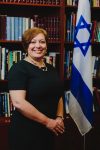
Consul General Galit Baram was in Vancouver last month. (photo from Consulate of Israel)

Galit Baram, consul general of Israel to Toronto and Western Canada, was in Vancouver last month.

“The visit was very good,” she told the Independent in a phone interview. “It included some political meetings and an academic meeting and I addressed the Jewish community and I attended the Negev Dinner of the JNF…. I had the opportunity to see the city, which is beautiful, and the weather was nice.”

Baram will be returning to Vancouver in November, when the late Dirk Pieter and Klaasje Kalkman will be honoured as Righteous Among the Nations for the assistance they provided to Jews during the Holocaust. The ceremony will be held in conjunction with Yad Vashem Canada and the Jewish Federation of Greater Vancouver.

Baram’s June meetings explored the opportunities of expanding cooperation between Israel and British Columbia in innovation and entrepreneurship.

“I believe that there is great potential in economic cooperation between Israel and British Columbia,” she said.

The provincial government, she said, “is making its initial steps now…. There is interest, there is curiosity, there is awareness of what Israel has to offer in innovation, in the medical field. When it comes to pharma, when it comes to cybersecurity, Israel is a leading country in the international arena in many of these fields.

“We had very good relations with the previous government and we hosted a mission … in November of 2016, a mission that was led by then-minister of finance [Michael] de Jong; there were representatives of different business sectors in British Columbia…. [It] is our intention to work very closely with the current government as well.”

The change in the federal government in 2015 also hasn’t affected Canada-Israel cooperation. On May 28, in Montreal, François-Phillippe Champagne, minister of international trade, and Eli Cohen, Israel’s minister of the economy and industry, announced the signing of the modernized Canada-Israel Free Trade Agreement.

Cohen spent two days in Canada, said Baram, adding, “I hope that Minister Champagne will soon reciprocate and visit Israel as well.

“I believe this is very important to have visits on such a high level … because I believe that governments can contribute greatly to bringing countries together. But we have to remember that, at a certain point, governments have to take a step back and leave it up to the business sector and the private sector to build bridges and to bring the countries together, but, as governments on both sides, Israel and Canada, we do as much as we can in order to strengthen and broaden our bilateral relations.”

Baram also sees the possibility of building a groundwork for peace in Israel through business and trade.

“I believe that economic mobility plays an integral role in bringing communities together,” she said, “and we are watching with pride the growing high-tech sector in the Israeli-Arab community, especially in the Greater Haifa area, in cities such as Nazareth…. We would like to see more Israeli-Arab students concentrating on science, concentrating on business, in business management and innovation and entrepreneurship.

“When it comes to building social bridges between Israelis and Palestinians, not necessarily Jews and Arabs, there are many activities that concentrate on that … and they are conducted by civil societies in Israel and it is heartwarming to see that. I would like to mention the activity of an organization such as Save a Child’s Heart … [which] brings children to Israel [for cardiac care] from Arab countries, from the Middle East, from Muslim countries in general, and they do wonderful, wonderful things in building bridges…. Another example I can give you is the upcoming visit of Dr. Yossi Leshem, one of Israel’s greatest experts on bird migration – he is going to be in Vancouver towards the end of August and he will be accompanied by his friends from [elsewhere in] the Middle East, and they are going to present beautiful regional projects in a conference that will be held in Vancouver…. Two other organizations that I would like to mention … are Ultimate Peace, that organizes Frisbee tournaments for youth … and another project, by Danny Hakim – Budo for Peace – teaches martial arts to Israeli Jews and Arabs, Palestinians, Jordanians and others, and they have instructors coming to Israel from Japan and from other countries…. I believe that such organizations can do so much good for Israeli society in general, for the Palestinians and for neighbouring countries in the Middle East.”

Of course, there are significant obstacles to peace, not the least of which are the ongoing altercations at the Gaza border.

“When it comes to the situation on the Gaza border, we are facing some very serious challenges,” admitted Baram. “It is an uphill battle. We see that there is sometimes a deterioration, sometimes the situation stabilizes a little bit and then there is another deterioration, the situation changes constantly.

“There are many, many challenges on a daily basis that are facing not only IDF [Israel Defence Forces] soldiers and the Palestinian civilian populations, but also the civilian population on the Israeli side of the border. Sometimes there is a tendency to forget about them but there are families, there are entire communities, that raise their children on the Israeli side of the border and because of this intifada of burning kites and balloons, they have to deal with arson cases on a daily basis, with a loss of crops and forest in the south of Israel, and it’s heartbreaking to see that because so much work has been put into making the desert bloom, especially in those regions.”

She added, “The one very disappointing thing for me to see as a former director of the department for Palestinian affairs was the fact that the Kerem Shalom border crossing that was built in the first place to enable trucks to enter Gaza was burned down by Hamas activists and by other terrorists and it’s a shame to see that because so much money was invested in that, so much effort was done in order to make trade between Israel and the Palestinian Authority, and especially Gaza, easier and simpler for us but especially for the civilian population in Gaza. And it’s difficult to see a civilian population that is being held captive by a terror organization…. Of course, there is awareness of the situation in Israel and understanding that the main enemy that has to be dealt with is definitely Hamas and not the people of Gaza.”

As for the Canadian government’s initial statements after the violent March of Return protests – in which Canada admonished Israel, saying its “use of excessive force and live ammunition is inexcusable,” and called “for an immediate independent investigation to thoroughly examine the facts on the ground” – Baram said, “I would like to mention that, after Hamas started attacking Israel, [with] renewed rocket attacks to the south of Israel, there were statements that were released by Prime Minister [Justin] Trudeau and by Minister of Foreign Affairs [Chrystia] Freeland condemning Hamas for this activity and I believe we should concentrate on these statements.”

And Canada’s reluctance to move its embassy to Jerusalem?

“When it comes to Jerusalem,” said Baram, “we believe that all countries should move their embassies to the capital of Israel and the capital of Israel is Jerusalem. Every sovereign country has the right of defining and choosing its own capital and we believe that we don’t have to prove over and over again the story connecting the people of Israel and the land of Israel, between the people of Israel and its eternal capital, Jerusalem.”

With respect to the almost 40,000 Eritrean and Sudanese asylum seekers in Israel, Baram said, “We have to remember that the first Western country that these people from Africa, from Eritrea, from Sudan, asylum seekers, work migrants – define them as you wish – the first Western country they encounter is Israel. And, several years ago, many of them came to Israel…. This is never an easy issue to deal with because the personal stories are very emotional and very difficult, and these people, many of them have been through terrible ordeals, until they reached Israel.

“The issue of migration in general … is an issue that is dealt with in Europe and in other parts of the world,” she said. “In the Middle East, for example, the issue of Syrian refugees is a very big issue that many countries deal with and, now, Syrian refugees, for example, are coming knocking on the doors of European countries, as well, but this is a problem that many Middle Eastern countries have dealt with for quite awhile, a long time now.

“With the African refugees or asylum seekers or work migrants, definitely a solution must be found in order to protect them, protect their rights. On the other hand, we have to keep the sovereignty of the state of Israel and we cannot allow floods of refugees entering Israel because we have to think about our population and … providing an answer that would satisfy all parties involved. This is not easy,” she said.

And neither is Israel’s relationship with Diaspora Jews always easy.

“When you look at Israeli society, you see that the public debate in Israel is very heated and emotional,” said Baram. “This is how we do things in Israel. People are very opinionated … they don’t hide their views and opinions, and I think this is wonderful. This is the strength of Israeli democracy.”

She recalled a statement made by Israeli President Reuven Rivlin about a year ago. “He talked about the four tribes of Israeli society, and he referred to secular Jews, to Orthodox Zionists Jews, to the ultra-Orthodox community in Israel and to Israeli Arabs…. And he called for these four tribes to join hands to discuss the future of Israeli society for the benefit of the country. Later on, he added the fifth tribe … and I believe this is very important to mention that the fifth tribe is Diaspora Jews because Israel is the homeland of the Jewish people…. I am actually very encouraged when I visit Jewish communities throughout Canada and people ask me sometimes challenging questions … about the nature of Israel and about the nature of Israeli society, and what should be done and what is done correctly, or what should be corrected in Israel. I encourage that and I welcome it, because it shows love and devotion and interest in Israel.

“And I encourage people to come visit Israel and express their opinions and to keep us Israeli diplomats on our toes … and I thank Jewish communities for participating in this ongoing discussion. I think this is vital not only for Israel by the way – this ongoing discussion is vital for Diaspora Jews as well.”

To participate in and to follow some of that discussion, follow the consulate on Facebook and Twitter.

Raising funds for basics

Phillipa Friedland is trying to raise funds to sustain basic facilities at the Population and Immigration Authority in B’nei Brak, where thousands must go to renew or obtain visas to remain in the country. (photo from gofundme.com/restrooms-for-refugees-israel)

When she left Vancouver for Israel more than a year-and-a-half ago, Phillipa Friedland, 54, became involved in social activism. Today, she is trying to raise funds to sustain basic facilities like toilets and seating at the Population and Immigration Authority (PIBA) in B’nei Brak, where thousands must go to renew or obtain visas to remain in the country. The Independent interviewed Friedland recently to find out more about her involvement.

Jewish Independent: When did you learn about the work of the Population and Immigration Authority?

photo - Phillipa Friedland
Phillipa Friedland (photo courtesy)

Phillipa Friedland: I met an Eritrean refugee at the passport office when my daughter Eli and I lived in Israel in 2014, and we became friends. At the end of February, the Israeli government abruptly closed the South Tel Aviv PIBA office and left a note in Hebrew, not the first language of any refugees, stating that the PIBA office had moved to B’nei Brak, to a very large, barren parking lot in an industrial part of the city. I went with my friend to hand in his form and he waited in line six times, just to hand in the paper.

JI: You’re not happy with the facilities PIBA is providing. Why?

PB: The B’nei Brak municipality refuses to provide shade, toilets, water or seating for those who wait in line. Once refugees gain entry, there are ablution facilities and seating. However, there are approximately 40,000 refugees and the only places to apply for or renew visas are in Eilat and B’nei Brak. Knowing that thousands of people would converge on these centres, the government should have done infrastructural planning to accommodate such numbers.

Activists at the site have confided that, since the government closed the detention centres and refugee prison, they are using PIBA as a “soft” place to repel the refugees. They can no longer threaten them with prison or repatriation to a third African country, since these negotiations fell apart when it was revealed that these are not safe-haven countries for refugees. So, the goal is for the refugees to become so frustrated and disheartened by the visa process that they will voluntarily leave.

JI: How many asylum seekers are using PIBA in B’nei Brak, and where are they from?

PB: Most Sudanese have left Israel, so most of the PIBA users are from Eritrea. Some days, there are over 1,000 people there, though, in recent days [in late May], the number has dropped dramatically, as more refugees are given visas. Families are provided with six-month visas and single men are given two-month visas. They are required to take off work and are not paid when they leave to wait for a visa. By contrast, in many countries, a visa application can be obtained online.

JI: Are these asylum seekers also refugees, or a mixture of both?

PB: The Israeli government says they are all economic migrants. It has granted asylum to 11 people – a very poor showing for a country of refugees ourselves. The government … considers them infiltrators. In fact, the education minister declared openly on public TV that the migrants are infiltrators. It stuns me that a nation that promised to never forget has an education minister that has forgotten the persecution the Jews experienced.

JI: What are you doing at PIBA?

PB: After visiting the PIBA in B’nei Brak, I was compelled to take action. I was reviled by apartheid South Africa, and taught about the perils of discrimination and racism for 15 years at the Vancouver Holocaust Education Centre. I could not just watch quietly.

I decided to sponsor two toilets for a month in the barren parking lot where the refugees line up. These cost $600 per month. I also bought 10 benches, seating for only 50 people. Unfortunately, this is all that I could personally afford.

The toilets were so direly needed that, after three days at the site, I paid additional fees to have them emptied, as the company I lease them from only empties them once a week. Myself and an Eritrean lady, Sabrina, clean them when we are on-site, replenish the toilet paper and spray them with toilet spray.

I realized that I could not sustain this expense every month on my own, as I am an immigrant and earn a salary commensurate with working in a nonprofit organization. So I decided to start a GoFundMe Campaign called “Restrooms for Refugees.” So far, I have raised [almost $3,000]. The Good People Fund run by Naomi Eisenberg in New Jersey is donating $1,800 over three months. [gofundme.com/restrooms-for-refugees-israel]

The B’nei Brak site has been running very effectively thanks to amazing Eritrean volunteers who ensure the lines run smoothly and that people get a turn. One of them is Michael, who left Eritrea after 15 years in forced military conscription; he had 10 years still to complete. His back has many scars from being tortured in the military. He left his wife and four children behind and hopes to come to Canada, where his brother is living.

JI: What do you want Jewish Vancouverites to know about this? Why is it important to you personally, and why should it be important to us?

PB: I believe that, as Diaspora Jews, we have rose-coloured glasses on when it comes to Israel. I love and support Israel, however that does not mean I support racist and discriminatory government policies. Eighteen Jewish U.S. Democratic senators spoke out about Israel’s refugee policy and 400 rabbis, pilots, teachers and other groups spoke out vehemently against the deportation policy the government was adopting. Since Israel first accepted and then rejected the UN’s offer to Israel regarding the refugees, there has been no new Israeli policy. The refugees essentially live in limbo, renewing their visas and being treated with no dignity.

I believe we should treat everyone with dignity. I know that, being such a small country, Israel cannot open its doors to an unlimited number of people. However, those strangers within our Jewish borders should be treated with care, as commanded 37 times in the Torah.

Lauren Kramer, an award-winning writer and editor, lives in Richmond. To read her work online, visit laurenkramer.net.

Archeological cliff-hanger

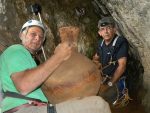
Dr. Yinon Shivtiel, left, and Dr. Danny Syon inside the cave where large wine jars, a cooking pot and other pottery more than 2,000 years old were salvaged two weeks ago in a joint operation of the Sefad Academic College, the Israel Antiquities Authority (IAA), the Israel Cave Research Centre and the Israel Cave Explorers Club. (photo by IAA from Ashernet)

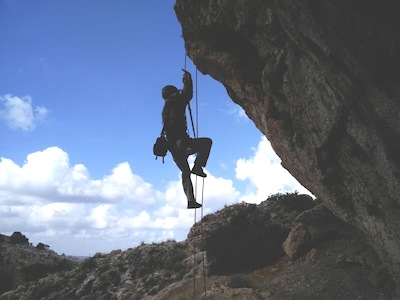
photo - The pottery was found in a cave high on a sheer cliff, under an overhang
The pottery was found in a cave high on a sheer cliff, under an overhang. (photo by IAA from Ashernet)

In 2017, Dr. Yinon Shivtiel, a speleologist and senior lecturer at Sefad, conducted a survey in Western Galilee, aided by the Israel Nature and Parks Authority, to locate caves that served as shelters and hiding places. He discovered a cave high on a sheer cliff, under an overhang, which contained ancient pottery vessels. “As a first impression,” said Dr. Danny Syon, senior archeologist with the IAA, “the finds seem to date to the Hellenistic period: between the third and first centuries BCE…. We assume that whoever hid here escaped some violent event that occurred in the area. Perhaps by dating the vessels more closely, we shall be able to tie them to a known historic event. It is mind-boggling how the vessels were carried to the cave, which is extremely difficult to access. Maybe an easier way that once existed disappeared over time?”

פורום הישראלים בקנדה

פורום אתר תפוז (בבעלות חברת אורנג’ הולדינגס) עבור הישראלים בקנדה ממשיך להיות עמוס בשאלות רבות, ובמידע רב הנדרש עבורם. כיום 15,309 איש עוקבים אחר נעשה בפורום. תפוז מפעילה בנפרד פורום עוברים לקנדה שעוסק בענייני הגירה. כיום 11,369 איש עוקבים אחר הנעשה בפורום הזה.

לפי תפוז הפורום עבור ישראלים בקנדה הוא “הבית לישראלים הגרים במדינה השנייה בגודלה בעולם, למי שמעוניין לדעת על החיים כאן, ולאלו שבדרך. זה המקום ליצירת קשרים ומתן מידע לישראלים הרבים החיים ברחבי קנדה. מסעדות, עבודה, מגורים ובילויים – הבמה פתוחה לכל נושא שמעניין אתכם ויהפוך את הפורום והחיים פה ליותר מעניינים. לאלו מכם שנמצאים בדרך, בחבלי ההגירה לקנדה, אנחנו מבקשים תשעיינו במאגרי הקישורים, המאמרים ובדף השאלות הנפוצות ותבדקו שם את המידע, כיוון שאם שאלתכם כבר נענתה שם, תקלו על הפורום מחזרה על עצמו. הפורום הזה ששואף לתמוך בקהילה גדולה של חברים, מבוסס על סובלנות ועזרה הדדית, וכמה דברים אינם מקובלים בו: אין כאן מקום לניגוח בנושא השהייה בחו”ל, לא יתקבלו כאן הטפות מוסר. הודעות מעין אלה, ובמיוחד אם יכתבו בשפה בוטה – ימחקו בשלב ראשון ויחסמו בשלב השני. התקפות אישיות על גולשים או חשיפה של פרטים אישיים על גולשים ע”י גולשים אחרים, לא יתקבלו כאן. הודעות כאלה ימחקו וכותביה יחסמו. הפורום פתוח לכל הגולשים המעוניינים להשתתף בו ולכולם ניתנת זכות ביטוי שווה. הודעות המשתיקות גולשים אחרים מכל סיבה אף הן אינן רצויות כאן. יש להקפיד על התייחסות בכבוד לכל משתתף/ת בפורום, ללא התבטאויות פוגעות במזיד, קללות וכדומה. נא לשמור על שפה נקייה ונעימה בפורום. כמו בכל קהילה, גם כאן יש מקום לידיונים וחילוקי דעות. אנא שמרו על דיון ענייני ובוגר. השתדלו לנסח את דעותכם בצורה סובלנית, תרבותית, חיובית ובונה, גם כשאתם נסערים”.

בין השאלות שהועלו לדיון בפורום לאחרונה: היבטים פסיכולוגים בגידול ילד מחונן, הגירה לקנדה, מעבר לארה”ב, מחפשים ספרים ישראלים בוונקובר, כיצד ניתן לצפות בערוצים ישראלים בחו”ל, רואי חשבון בטורונטו, ספרי ילדים ונוער מחפשים בית חם, מה דעתכם על הילודה בקנדה, הבדיקות הבטחוניות לקבלת כרטיס פי.אר, שבוע בטורונטו עם הרכב – היכן מומלץ לשהות, הוצאת רישיון נהיגה, האם יש מגבלות גיל להגירה, המלצות על סוכן נדל”ן במונטריאול, ישראלים בקולונה, המנטליות בקנדה, בית ספר יהודי בטורונטו, לימודי פסיכולוגיה בקנדה, האם יש סיכוי ששער הדולר הקנדי ירד, דמי ניהול בבניינים, מס על הכנסה, אתר לחיפוש דירות להשכרה, יציאה מישראל עם דרכון זר, מערכת הבריאות הציבורית בקנדה, מיסוי כפול וביטוח לאומי, מכירת בית בישראל, אפשרות לרילוקיישן ועוד.

אתר תפוז מפעיל גם פורום להשקעות נדל”ן בקנדה. מדובר בפורום חדש יחסית שנפתח ביולי אשתקד, ומספר העוקבים שלו עומד על 1,241 איש. בין השאלות שהועלו לדיון בפורום זה: חוזה שכירות אחיד בטורונטו, משקיעים זרים בנדל”ן בטורונטו, קניית בית והשכרה לדיירים, הזדמנויות להשקעה, עתיד בקנדה, השקעות בקנדה לא מובילות לאזרחות קנדית, מה העדיפות של קנדה על ארה”ב, השקעה של אזרח קנדי, מה התשואה שאפשר להשיג על נדל”ן בקנדה, האם יש הגירה חיובית כל כך שמצדיקה השקעה בנדל”ן, האם המיסוי של 15% על השקעות בנדל”ן לזרים לא מוחק את היתרון, קרן פנסיה קנדית תסכים להתחייב לאזרח ישראלי לפנסיה, מה דין הבנקאות בקנדה בייחס לתיירים, כיצד מובטחת ההשקעה על שם המשקיע ובאיזה אופן כדאי להשקיע בקנדה.

Negev Dinner helps Israeli children

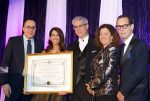
Left to right: Ilan Pilo, Michelle Pollock, Dr. Neil Pollock, Wendy Eidinger Spatzner and David Goldman. (photo by Robert Albanese)

Vancouver supporters of the Jewish National Fund (JNF) gathered in their finery at the Four Seasons Hotel Vancouver on June 3 to celebrate Israel’s 70th birthday and pay tribute to philanthropists Neil and Michelle Pollock.

Michelle Pollock is a former lawyer, the immediate past president of the board of the Jewish Community Centre of Greater Vancouver, and has co-chaired the Jewish Federation of Greater Vancouver annual campaign’s women’s division for six years, as well as supporting Jewish education, among many other causes. Dr. Neil Pollock is chief surgeon and medical director of Pollock Clinics. He has undertaken teaching missions to Rwanda, Congo and Haiti, as well as being involved in philanthropy at home and abroad.

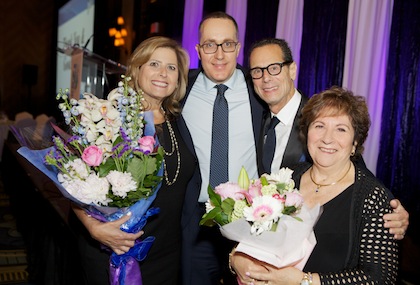
photo - Bernice Carmeli, dinner co-chair, with Ilan Pilo, David Goldman and Ilene-Jo Bellas
Bernice Carmeli, dinner co-chair, with Ilan Pilo, David Goldman and Ilene-Jo Bellas. (photo by Robert Albanese)

JNF Pacific Region president David Goldman welcomed the crowd – who had to pass a few dozen protesters on their way into the hotel – and introduced the evening’s emcee, Michael Nemirow, a friend of the Pollocks, who is also involved in various community organizations and activities. “I’ve done the math, and we have around 11 hours of speeches and entertainment for you this evening, but we’ll try to compress it into three,” Nemirow said, eliciting laughter from the crowd.

After Maurice Moses led the audience in O Canada and Hatikvah, B.C. Lt.-Gov. Janet Austin took the stage. She praised JNF for its work in the “restoration and preservation of the Jewish homeland,” which covers everything from ecological to social to security initiatives. Austin also commented about the Pollocks, highlighting Neil Pollock’s work in Rwanda to prevent the spread of HIV.

Galit Baram, consul general of Israel for Toronto and Western Canada, focused her remarks on the 70th anniversary of Israel, “the only democracy in our region, a bastion of democracy.” She described its strengths in the areas of human rights, medicine, multiculturalism and technological innovation. She said Israel is led by people “both on the right and on the left who love their country with all their hearts” in the face of multiple existential threats. “We rely on our friends who share common values, and Canada, our ally, is among them,” she said.

photo - Honourary chairs Jodi and Alex Cristall
Honourary chairs Jodi and Alex Cristall. (photo by Robert Albanese)

“The success of Israel did not happen in a vacuum,” said Baram, citing JNF as a key organization in supporting the state, one in whose name every Israeli has a tree planted. She also spoke of JNF’s contributions in a multitude of activities, including supporting soldiers with post-traumatic stress disorder and her “personal favourite,” the building of a protected playground in Sderot in an area that has suffered shelling from Hamas and other militant groups. Baram thanked Canadians for the warm welcome and open arms with which Israeli diplomats are welcomed in the country.

After Hamotzi, chanted by the Kollel’s Rabbi Avraham Feigelstock, Ilene-Jo Bellas, former president of the JNF Pacific Region (2012-2015), was presented with the JNF Bloomfield Award by local shaliach Ilan Pilo. He described Bellas as an indefatigable servant for Israel who “bled blue and white,” a portrayal she affirmed as fact after taking the podium.

The video on the work of the JNF was introduced by JNF Canada president Wendy Eidinger Spatzner, who explained that the First Zionist Congress established a fund to purchase land in Israel and that this fund became JNF. She talked about JNF’s extensive work to “build the infrastructure of Israel,” noting that it affects the daily lives of “pretty much every Israeli citizen.”

photo - Honourary chairs Jodi and Alex Cristall
Honourary chairs Jodi and Alex Cristall. (photo by Robert Albanese)

Rabbi Dan Moskovitz then led everyone in Birkat Hamazon, before Vancouver TheatreSports performed a series of improv skits centred on the Pollocks’ life as a married couple.

The keynote speaker of the dinner was Doron Almog, a former major general in the Israel Defence Forces, who received the Israel Prize for lifetime of achievement. He discussed his role as founder of ALEH, the charity for children with developmental disabilities that the Pollocks chose to support with monies raised from the evening.

Almog spoke on the theme of commitment, as experienced throughout his life and in the work he has done for children. He shared the story of the death of his brother, a tank operator who died after being injured, left behind by his fellow IDF soldiers. Almog subsequently swore to never leave behind an injured soldier.

Almog’s son Eran, who was named after his fallen uncle, was born with a combination of autism and developmental problems, and a psychiatrist told the family that he would probably never speak, remaining at the cognitive age of an infant. “This son became the greatest teacher of my life, he taught me more than anyone about life, about commitment,” said Almog.

After his son died, Almog went to see how children like Eran are treated “in the only Jewish state in the world.” What he saw horrified him: “The first thing you saw is the stink; distorted, terrified faces; shameful things. What the hell are these places, why are they being punished more?”

photo - Keynote speaker Maj. Gen. (Res.) Doron Almog, founder of ALEH, right, with local businessman and philanthropist Gary Segal
Keynote speaker Maj. Gen. (Res.) Doron Almog, founder of ALEH, right, with local businessman and philanthropist Gary Segal. (photo by Robert Albanese)

Almog discovered that such children were objects of shame in Israeli society. Golda Meir, prime minister of Israel from 1969 to 1974, had a granddaughter with Down syndrome who, as an adult, gave interviews to the press, said Almog. In these interviews, he continued, “she said, ‘Golda never visited me, Golda never loved me, Golda told my mom, “Never mention the prime minister of Israel having a retarded granddaughter.”’ Yigal Alon [deputy prime minister of Israel, 1968-1979] had a beautiful child who, at age 5, was taken away from the kibbutz she was born in and sent away to Scotland and he never spoke about her. And inside me I heard my son screaming, ‘My dear father, I will never complain to the media, you can send me away to Scotland and never speak of me, but, if you do that, you do not deserve even the title of “father” or even the title of human. I am the ultimate test of commitment,’ he said to me, the echo box of your bleeding brother.”

After Almog left the military, he established the village of ALEH, “a paradise where the children can have a full life. We broke the walls of stigma and shame and stereotypes.”

ALEH Jerusalem, a multi-service home for children with disabilities, now receives help from more than 450 volunteers from all over the world. Some of them, said Almog, are children of Nazis, who say they are coming as atonement for Hitler’s decision to kill people with disabilities. “The social chain is always measured by its weakest link,” said Almog, receiving a standing ovation.

After a video explaining more about ALEH, there was a video tribute to the Pollocks introduced by their children, Josh, Elliot and Shoshana. The Pollocks said a few words, after which Goldman and Pilo wound up the celebration.

Matthew Gindin is a freelance journalist, writer and lecturer. He is Pacific correspondent for the CJN, writes regularly for the Forward, Tricycle and the Wisdom Daily, and has been published in Sojourners, Religion Dispatches and elsewhere. He can be found on Medium and Twitter.

Stand up, be counted

Canada’s behaviour at the United Nations last week is being analyzed and found wanting by many Canadian Zionists. Canada abstained from a vote on a resolution that condemned Israel in a one-sided manner for the recent violence at the Gaza border.

The four-page resolution denounced the “excessive, disproportionate and indiscriminate force by the Israeli forces.” The resolution passed 120-8, with 45 countries, including Canada, abstaining.

An American amendment that would have condemned Hamas for sending rockets at Israeli targets was defeated 78-58, with 26 abstentions. Canada voted in favour of the failed amendment.

According to Canadian Jewish News, Canada’s ambassador to the UN, Marc-André Blanchard, said the abstention was due to the resolution’s failure to explicitly name Hamas.

“Hamas has been oppressing Palestinians. Hamas and other terrorist groups have been inciting violence and hatred and this should be clear in the resolution. The resolution explicitly names Israel, while failing to name any other groups involved,” Blanchard said.

The question, then, is why Canada did not vote against, rather than abstain, as Shimon Koffler Fogel noted.

“Ironically, Ambassador Blanchard’s explanation of the vote made the most compelling case for why Canada should have joined with the U.S., Australia and Israel in voting against the resolution,” said Koffler Fogel, chief executive officer of the Centre for Israel and Jewish Affairs.

The larger issue is that the United Nations, created with such idealism and optimism after the Holocaust and the Second World War, has become beholden to ideological blocs dominated by dictatorial regimes. In a world with no shortage of humanitarian catastrophes, the General Assembly’s time and resources are wasted with obsessive attention on Israel.

Additionally sad is that the superb, irreplaceable work done by so many subsidiary agencies of the UN suffers by association with the actions of the General Assembly.

Some have suggested, in light of the UNGA silliness, that democratic countries should withdraw and form their own alternative UN-type organization. Whatever value that might have, walking away is not the right choice. Canada and other countries with common sense foreign policies should remain as a voice of reason.

Which is all the more reason why our choice to remain silent on the latest anti-Israel resolution is the wrong one. If we are going to serve as best we can in a flawed assembly, the least we can do is stand up and be counted.

Terror infrastructure discovered

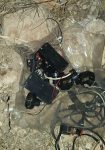
Some of the terror weapons found by Israel Security Agency (ISA) personnel. (photos by ISA via Ashernet)

photo - Terror weapons found by Israel Security Agency (ISA) personnelIn recent months, the ISA, Israel Defence Forces and Israel Police have uncovered a large and active terrorist infrastructure that operated in the Nablus area on the West Bank from October 2017 until late April 2018, when more than 20 members of the group were detained by Israeli security forces. Most of the group’s members belonged to Hamas; some had extensive experience in terrorist operations, including the production of explosives. ISA investigations found that the group intended to carry out several attacks in various Israeli cities. Among the items seized were improvised explosive devices, including one weighing 10 kilograms; materials for the production of explosives; weapons; and instructions for the manufacture of bombs and explosive materials.

Traveling with family

Levinsky Market (photo by Daniel Dodek)

The decision to travel with your family to Israel is a big one. It’s so expensive and the long distance requires going for at least two weeks to make it worthwhile. My husband and I debated for years on the merits of taking our children on such a trip. Finally, our daughter’s bat mitzvah convinced us it was time. At nearly 13, she would get a lot out of it, and our 11-and-a-half-year-old son seemed ready as well. To mitigate jet lag, I traveled a week early with the kids to London, England, where we laid low, staying with friends and taking in a few sights. We then met my husband in Jerusalem.

photo - Michelle Dodek with Max and Naomi
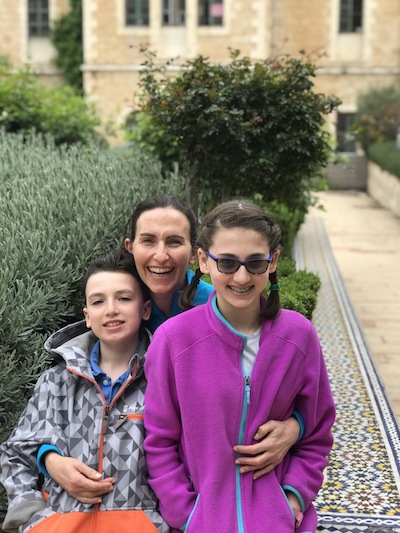
Michelle Dodek with Max and Naomi. (photo by Daniel Dodek)

The morning after we arrived, we went on a walking tour. Our guide, Dvir, specializes in tours of the Old City, which must be done on foot. Not only did he take us to all of the highlights, find us the best food in the Old City and explain the geopolitics of Jerusalem but, also, he knew where to find all of the clean toilets. And our children surprised us with the knowledge they had gleaned from their years of Jewish education, enriching our experience, as well. That day, we walked more than 13 kilometres, helping us sleep well and rid us of any jet lag that might have been lingering.

The next day, we returned to the Old City to buy special gifts of Judaica, and managed to pick up plenty of beautiful treasures for ourselves. We finally found use for our son’s bargaining skills, which had previously only been used to negotiate things like screen-time and treat consumption.

One of the best decisions we made was to stay in apartments. With two preteens, the need for food sometimes comes fast and furious. Knowing breakfast was in the fridge and we could make nutritious snacks to take along with us every day contributed enormously to the success of our trip. The other element that made it the best vacation we’ve ever had with our children was the planning my husband did, combining some days with a tour guide and other days with age-appropriate activities. Since neither of us is interested in driving in Israel, he also worked our plans around all the different kinds of transit. Our centrally located lodging enabled us to walk many of the places we wanted to go.

photo - Daniel and Max Dodek enjoy the beach
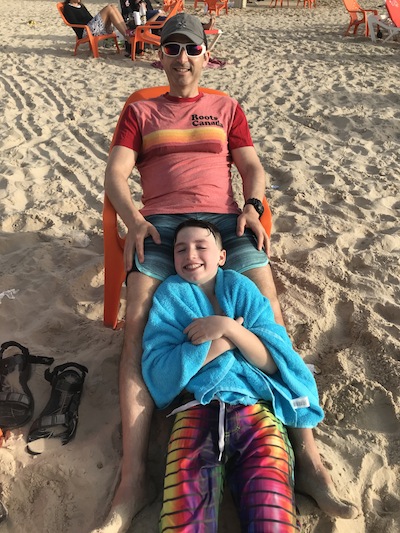
Daniel and Max Dodek enjoy the beach. (photo by Daniel Dodek)

We were invited by a friend, who was also visiting Israel with her family, to join their tour one morning of an agriculture reserve called Neot Kedumim. Near Modi’in, the site is of archeological significance and takes visitors back to biblical times through the landscape, agriculture and activities. Our experience included tree-planting, za’atar-grinding, pita-making, cooking and pulling water up from a cistern. My husband’s dream now is to spend his birthday working as a shepherd there. Another morning, with the same friends, was spent in fierce competition at the Tower of David doing something called the Amazing Race. It was good fun and educational, too.

We ventured one windy day to Ein Gedi and did a hike. Luckily, before driving to Masada, we discovered that, when it’s too windy for the cable car to run, Masada is closed. However, the Dead Sea was open for business as usual and, while we took in the experience of the mud and the floating, we also loved the variety of people from around the world visiting the waters.

In Jerusalem, we loved the green spaces like Station One. Formerly a train station and tracks, it is beautifully landscaped and is perfect for cycling, so we rented bikes. The public art in Israel makes the parks and streets even more interesting. Markets are favourites when we travel and Machane Yehuda did not disappoint. We returned there a number of times to buy Israeli essentials like halva, rugelach and dates, as well as more mundane food like fruit, vegetables and bread. The dinner scene is like the best food court in the world.

photo - Max Dodek dressed as Aaron Chelouche, founder of Neve Tzedeck, and Noam Rumsack, the guide
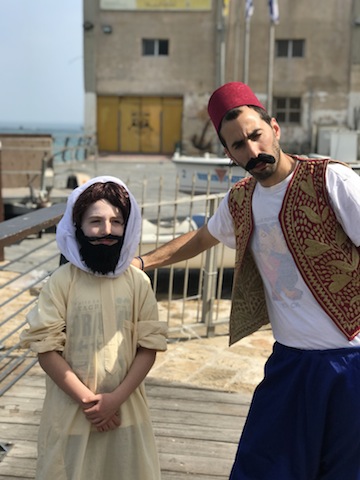
Max Dodek dressed as Aaron Chelouche, founder of Neve Tzedeck, and Noam Rumsack, the guide. (photo by Daniel Dodek)

We all enjoyed the food in Israel. Gone are the days when every corner had falafel, fly-covered shawarma and pizza with corn and tuna. You can still find those delights in a few places but, these days, no matter what you like to eat, you can find it in Israel (except on Shabbat or holidays in Jerusalem). Keeping kosher for Passover, once the holiday began, was certainly easier than we find it in Vancouver.

Two days before Passover started, we took the bus from Jerusalem to Tel Aviv. Comfortable, cost-effective and an experience in Israeli culture, the bus took only 45 minutes. Our lovely apartment in Tel Aviv was in an area in transition. Just over a block from the beach and a short walk from Shuk HaCarmel (where we went almost daily), the location was excellent. We were able to walk to many places, including Sarona (the market is like an upscale Granville Island), Shenkin (shopping), the Tachana (eclectic Israeli items) and Neve Tzedeck (artists and fancy touristy stores). We ended every day relaxing at the beach on the powdery sand.

The seder was delightful at my cousin’s house in Ramat Hasharon. Seeing my secular Israeli cousins argue over the tunes and forget the words occasionally showed us that they observe Passover similarly to how we celebrate it. The only difference was that they served twice as much food as I do, including seven types of meat. The food was almost as unreal as the traffic jam at 12:30 a.m., as people left their respective seders.

Other excellent parts of our trip included a fun and informative walking tour of Jaffa. Our guide, Noam, dressed in Turkish garb of 1905 – and, for awhile, our son dressed up as well, beard and all. We spent a day in Ramat Aviv, between the Museum of the Diaspora (Beit Hatfutsot) at Tel Aviv University and the Palmach Museum, just down the road. All of us took full advantage of the many types of exercise equipment in the public parks all around Tel Aviv and rode bikes along the Yarkon River, in addition to enjoying the lively promenade (Tayelet) along the ocean. One day, we took a fabulous full-day private tour up north to Akko, Haifa and Caesarea. The guide enabled us to get the most out of the day.

When we saw the family dynamic start to go sideways, we split up. Our ability to keep good snacks handy and to make sure everyone got enough outdoors time each day made everything we were able to see and do a wonderful experience for all of us. I would recommend a trip to Israel to anyone.

Michelle Dodek is a freelance writer living in Vancouver who spent enough time in Israel in her youth to speak sufficient Hebrew to communicate with taxi drivers and vendors in the shuk.