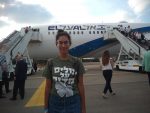
The draft: a dad reflects

February 2015

Collected the mail this morning. A few flyers and bills. And my son’s draft notice. A quick double take. A flashback to my son playing with plastic dinosaurs. Then I texted my wife, “It’s here.”

A few hours later, my son came home. “How was school? There’s a letter for you on the table.” Opening it, and with a surprising degree of nonchalance, he said, “My call-up.” As if going into the army was an ordinary occurrence. “Ah, yeah. It’s here.”

A few days later, I asked D if I could post a picture of his call-up on Facebook. “Dad, you can’t post this stuff. It’s, like, confidential.” Duh. Of course.

May 2015

Picked my son up from Jerusalem. He was there for a series of pre-army tests. He couldn’t stop talking about the cute chayelet (army girls). Teenagers!

October 2015-January 2016

D interviewed for various roles in different divisions. None of interest. He wants something air force-specific. My wife and I helped him with a letter to the IAF manpower division. Emphasized

his aircraft knowledge. His love of plane simulators. (How many times did we catch him “flying” instead of doing his homework?) His flying lesson (a 17th birthday gift).

February-March 2016

Silence.

April 2016

The air force came knocking. Another interview. Another psychometric test. D felt he aced this one (pun intended).

May 2016

Text message from the Israeli Air Force. Accepted. Not the specific role he wanted but within his window of satisfaction. Excitement. Trepidation. The air force is the darling of the military. Best conditions. High-tech environment. Much to my son’s amusement, I don’t really understand what he’ll be doing.

July 2016

D called me at the office. Draft date pulled in. “Dad, we need to change our holiday plans – three weeks and I’m in.” New York will have to wait. Improvising, we quickly made other travel arrangements. A week later, we were in northern Italy. My son a reluctant traveler. He’d rather be home with his friends sharing the excitement of the draft.

August 2016

Took D for a buzz cut. His beautiful golden locks. Gone. I also had a buzz cut. My less beautiful grey locks. Gone. Solidarity.

We threw a draft bash. Lots of friends and family. I toasted: “We are celebrating your draft … into the world’s best air force…. I can’t tell you how proud we are…. You obtained a role – and I still don’t get it – that is meaningful and challenging, with great responsibility and opportunity. Embrace it. Be safe and strong. Keep us safe and strong. D, sweet child of mine. May God make you like Ephraim and Menashe … and establish peace for you.”

Draft day, 2016

We traveled in two cars. My wife. Our daughter. My mother-in-law. D’s friends. His girlfriend. And, of course, the cadet. We arrived at the induction centre at 0800 hours. Despite living in Israel for more than 22 years, I’m still amazed by the informality. Sometimes disguised as chaos. My Canadian self still says lines. Order. Please. Excuse me. The security appeared to be in disarray. Then I remembered I’m on an army base. Umm … can’t get more secure than that.

Hundreds of young recruits. Balagan. Israeli flags waving overhead. Old ladies passing out amulets with the prayer for the Israeli army. Sephardi grandmothers spraying water into the crowd to wash away the evil eye.

Much too quickly my son’s name was called. Won’t forget the apprehensive “I guess it’s my turn” look on his face. Nor the tears flowing from my wife’s almond-shaped eyes. Nor the tears flowing from my daughter’s green eyes. Nor my mother-in-law’s “shouldn’t there be peace by now?” hunched and saddened look. I took D aside. Covered his head with my hand. Recited the blessing for a son. Then, like at a beach party, his friends hoisted him on their shoulders. Carried him forward. Innocence. Bravado. Another generation coming of age in Israel.

He walked the final distance alone. Oversized backpack. Buzz cut. Excitement. Trepidation. Then disappeared into the military transport and his next three years. Actually, two years and eight months, but who’s counting.

Bruce Brown has been living in Israel for a long time and is the proud father of two Sabras, one currently a sergeant in the Israeli Air Force.

Israel’s assets versus liabilities

Israel’s beauty is a definite asset. (photo by Cynthia Ramsay)

During the month of Elul, as we approach Rosh Hashanah, which this year falls on Sept. 9, Jews traditionally practise a kind of spiritual stocktaking. These are days when we look inward – assessing what happened to last year’s dreams, asking pardon for the wrongs we have committed and hoping, by repentance, charity and prayers, to be written into the Book of Life for the coming year.

I doubt if you would find many people in Israel who would say that 5778 was a particularly good year. The facts speak for themselves – no progress in the peace process, international isolation and antisemitism. These are the liabilities, and they are not figments of the imagination – they are real, and have led to a fall in the general morale.

But what is there to put in the assets column? There must surely be something to balance the account. Otherwise, why are there olim (immigrants) who stay on year after year, new ones motivated to come, and Israelis who go on trying to find solutions for seemingly insoluble problems, both on the personal and the national planes?

There were times during the last year when I was tempted to despair. But, even as I said the words, I knew I wasn’t fooling anyone, least of all myself. Because the positive things I have found in Israel I know cannot be duplicated anywhere else in the world.

First, I have found a family – the whole house of Israel. How wonderful to walk the streets and know that everyone is your brother or sister. Of course, just like in a real family, there are times that this same sibling is rude or aggressive and you react with bitterness towards their manners, opinions, behaviour. But, while you feel free to criticize them, let a stranger do it and you jump to their defence.

You argue that they live under continual tension, are wearied from fighting five wars and from the ongoing hostilities; that they have lost many dear ones and must always be prepared to cope with terrorist attacks. And, while you are explaining them and defending them – just like in a real family – you know even more that you love them.

With this realization comes another. You know that, if you are ever sick or in need, you are among people who care about you. There is nowhere else in the world where people take so much responsibility for one another, who care so much, become involved so much.

Nor is there any other country in the world where the youth are so magnificent. At an age when teenagers elsewhere may be sowing their wild oats and are their parents’ despair, our boys and girls are putting on uniforms and quietly devoting the fun years of their lives to serving their country. There is no fanfare or extraordinary praise. They do it as a duty, conscientiously, modestly. They are Israel’s riches that no inflation can ever devalue; they are our hopes and our future.

Israel is a unique ethnic mosaic. It has taken in Jews of every background, language and social level; it has provided a home for the homeless; a refuge for the persecuted. It doesn’t ask an immigrant, “What are you bringing to us – what skills, what capital?” Those who bring little or nothing are no less welcome. Israel, as a whole, really cares.

And it is a beautiful country, no matter where you travel. Haifa, seen at night from Mt. Carmel, is diamonds scattered on black velvet. The Galilee – terraced rows of grey-green olive trees and lush vegetation of date-palms. Cosmopolitan sidewalk cafés in Tel Aviv. Scarlet sunsets over the Dead Sea and deep indigo twilight over Eilat. And Jerusalem – our eternal city – the special, spiritual, abiding jewel in our crown.

Yet, that is not all. There are so many more things you could add. Really, there is no end to them. It is a country of enormous achievement – in agriculture, in science, in high-tech, in the arts. It is a country where every festival – religious or secular – is celebrated, to a greater or lesser degree, by the whole population. With all their troubles, Israelis are a spontaneous people who don’t need expensive entertainment. They can have a wonderful time singing around a campfire, having a backyard barbecue or dancing in the streets.

Thinking it over, you realize that the assets column far outweighs the liabilities column. And then you ponder the fact that, even if the opposite were true, Israel, with and without the blemishes, is yours.

Happy New Year to us all.

Dvora Waysman is the author of four books, one of which, The Pomegranate Pendant, has been made into the movie The Golden Pomegranate. Her latest novel is Searching for Sarah. Australian-born, she has lived in Jerusalem for 47 years.

הסוכן הכפול לשעבר של עיראק

סוכן המוסד לשעבר: “עזרתי לישראל לחשוף את תוכנית הגרעין של סוריה” – חלק שני. (צילום מחוסיין עלי סומדייה)

המשך הראיון עם הסוכן הכפול לשעבר של עיראק, ולאחר מכן של המוסד, חוסיין עלי סומדייה (53), שגר בקנדה ומנסה למנוע את גירושו בשנית לתוניסיה.

ב-2016 רשויות ההגירה החליטו בפעם נוספת לבדוק את תיק של סומיידה, בין היתר בטענה שלא כל המידע שנמסר להם מדוייק. הרשויות הגיעו למסקנה שבאקלים הפולטי הנוכחי לא יעונה לו כל רע בתוניסיה, ואף אחד לא יזכור את עברו. זאת בין היתר, לאור העבודה שתוניסיה לא משמשת עוד הבסיס של הארגון לשחרור פלסטין. סומדייה לא וויתר והגיש כאמור ערעור על עמדת הממשלה. הוא ממשיך לטעון כל הזמן כי כאחד ששיתף פעולה עם ישראל נשקפת לו סכנת חיים ממשית, אם יחזור למדינה ערבית כלשהי. סומדייה: “המילה המוסד היא המילה מפחידה ביותר והשנואה ביותר בעולם. כל אחד יודע שמי שקשור למדינה היהודית, יעשה לו לינץ’ על ידי ההמון ברחובות של כל עיר ערבית אליה יגיע”.

ספר לי מדוע הגעת בשנות ה-80 לאנגליה?

ב-1982 עת הייתי בן 17 נסעתי ללימוד באוניברסיטת סלפורד במנצ’סטר. באותם ימים אבי, עלי סומדייה, שימש שגריר עיראק בבלגיה. בחופשות הייתי מגיע לבריסל ונשאר ללון עם המשפחה.

הקשר עם המחובראת נוצר בין היתר בעקבות היות סומדייה בן השגריר. הוא מסר מידע למחובראת שהביא בין היתר לחשיפת כשלושים וחמישה איש ובני משפחותיהם. לדברי סומדייה כפי שצוטטו בעיתון הקנדי “הוא הוטרד מהעובדה שהוא עובד בעצם למען המפלצת סאדם ומכונת ההרג שלו, ולכן החליט לחצות את הקווים ולהתחיל לעבוד עם המוסד”. עוד טען כי במסגרת עבודתו עבור המוסד הוא אסף מודיעין על השגרירות של עיראק בבריסל, וכן ריגל אחרי סורים ופלסטינים.

מה הביא אותך בעצם לעבוד עם המוסד?

תחילה עבדתי עם המוחבראת אך לא יכלתי לסבול עוד את מה שהעריץ סאדם חוסיין עשה בעיראק. יכלתי לכן לפעול כנגד עיראק עם האיראנים, הסורים או הישראלים. עוד בתור ילד הדמות האידאלית עבורי הייתה של המרגל הישראלי בסוריה – אלי כהן שעשה היסטוריה, ורציתי להיות כמוהו. החלטתי שישראל היא האופציה הטובה ביותר עבורי וזה אכן מה שעשיתי. כמובן שעובדת היותו של אבי שגריר עזרה לי מאוד.

איך יצרת קשר עם המוסד באירופה?

ב-83 ביקרתי בשגרירות ישראל בלונדון ויבקשתי לדבר עם נציג המוסד. לאחר מספר ימים יצרו עימי קשר שני אנשי המוסד. יוסף שכמובן הוא שם בדוי, עמו נפגשתי בלונדון. וכן מי שהיה אחראי עליו אדם מבוגר יותר שדיבר ערבית במבטא עיראקי, שהגיע הישר מישראל. שני אנשי מוסד אחרים עשו לי בחינה בבית מלון בבריסל, בו נוהגו לשהות צוותי האוויר של אל על. במשך כחמש שעות שאלו אותי הרבה מאוד שאלות. ניסו לבדוק את איי. קיו שלי, הזיכרון, הדימיון, ידע במספרים ועוד.

איך התחלת לעבוד עימם?

לאחר שעברתי את הבחינה מונה לי מפעיל אחד בשגרירות ישראל בלונדון שנקרא מוריס, ומפעיל נוסף בשגרירות ישראל בבריסל שנקרא דניאל. אני קיבלתי את הכינוי אסד סייפי ובכל פעם שהתקשרתי לאחת מהשגרירויות, הם העבירו מייד את שיחת הטלפון לאחד המפעילים. הפגישות בלונדון התקיימו במלון באזור המרכז העמוס בתיירים, לא רחוק מהחנות של סלפריג’ז באוקספורד סרייט. ואילו בבריסל נפגשנו בקפה שהיה במרחק כעשר דקות הליכה ממגורי השגרירות העיראקית. אף פעם לא נפגשנו במנצ’סטר ששם למדתי וגרתי. כך שהייתי נוסע ברכבת ללונדון או שכאמור נפגש עימם בזמן החופשות שלי בבריסל.

Challenges improve life

Israeli judo master Arik Zeevi will speak at FEDtalks Sept. 16. (photo from JFGV)

When we’re faced with a challenge, most of us are naturally cautious. But, says Israeli judo master Arik Zeevi, if you have a passion for something, go for it, explore it and, even if you fail, “you will always be proud that you took the challenge.”

Zeevi, who will be one of four keynote speakers at this year’s FEDtalks Sept. 16, advises in a 2014 TED Talk, “Go for the challenge because, I personally think that, by taking a challenge, that is the best way to grow, to improve your life.”

In that TED Talk, Zeevi shares the story of his experience at the 2001 World Judo Championship. Having trained intensely for two years and becoming a national hero in Israel – and with his journey to the championship being filmed by a team of videographers – Zeevi was “knocked out” (in judo terms, his opponent “threw [him] by ippon”) two minutes after setting foot in the ring.

Undaunted by losing the world championship match, Zeevi, a lightweight, registered to fight in the open match in which fighters of any weight could spar. Friends and colleagues warned him to back out, and the Israeli media fretted over what injuries he might sustain. But, Zeevi beat one opponent, a second, then a third; the fourth knocked him down. Though he failed to win the gold medal, he took the silver – and set a precedent. In the years that followed, having witnessed Zeevi’s success, more and more lightweights competed in the open category, and also won medals. The match morphed into its own championship event.

Zeevi won many judo medals in his time, and he is the 2000, 2003, 2004 and 2012 European champion. He is currently ranked eighth in the world, though he retired from fighting in 2012. Today, Zeevi is an inspirational speaker whose main income comes from talking to companies about what he calls “the similar worlds of sports and business.”

“It is all related,” he told the Jewish Independent, “excellence in sport and excellence in life.”

Zeevi also heads the nonprofit Israeli Foundation for Olympic Excellence (IFOE), which hires and funds Olympic coaches who identify, support and train Israeli children and youth they hope have Olympic potential.

“We scout kids who have talent, we try to nurture them and connect them to the sport that is right for them,” said Zeevi. “You could be Michael Phelps, but unless you’re living next to a swimming pool, you’ll never know.

“The biggest problem in Israeli sport,” he said, “is that all sports are coached by amateurs in private clubs. The coaches are getting income according to the numbers of kids, putting quantity over quality. Professional coaching is rare.”

Zeevi grew up in a tough neighbourhood in Bnei Brak and knows what it is like to have few opportunities.

“My coach was very young, and he was like an older brother to me,” said Zeevi. The coach played a role for Zeevi that he is now trying to play for others. “He pushed me to discover myself,” explained Zeevi. “Around 12, I became very serious. Before that, I was just trying to be part of something. At 12, I got my first invitation to train on the national team. My coach was a Soviet Georgian guy – they are fighters, warriors. By 13 or 14, I was already very big, and he pushed me to fight bigger guys. When 15, I won the championship against seniors over 21. He did a great thing for me, pushing me like that. When you find an athlete, you have to challenge them.”

It is the appreciation for what sports did for him that motivates Zeevi to make high-level training available to more young people. “I really believe in sports as education,” he said. “It is the best way to stimulate mental skills, and it teaches you how to deal with stress, failure, difficulty.”

Zeevi himself has three children. His daughter won the Israeli championship in gymnastics, and his middle son is into basketball and judo. Zeevi said his son has also taught him the lesson that sometimes pushing is not what brings success. “The more I push him forward, the more he goes backward,” he said, “so I have to take a gentler approach. The most important thing is just to be there for them. Then they will succeed.”

While in Canada, Zeevi will also be visiting a judo club in Toronto, which is run by an Israeli friend from his training days. There, he will be giving a master class for advanced fighters before he returns to Israel for Yom Kippur.

FEDtalks, which launches the Jewish Federation of Greater Vancouver’s annual campaign, is being held this year on Sept. 16, 7 p.m., at the Vancouver Playhouse. For tickets and more information, visit jewishvancouver.com.

Matthew Gindin is a freelance journalist, writer and lecturer. He is Pacific correspondent for the CJN, writes regularly for the Forward, Tricycle and the Wisdom Daily, and has been published in Sojourners, Religion Dispatches and elsewhere. He can be found on Medium and Twitter.

Soap factory discovered

Uri Geller holds a water or oil jug that was found during the construction of a new museum dedicated to his activities. (photo by Dilila Bar-Ratson courtesy Ashernet)

During the construction of a new museum in the Old City of Jaffa, dedicated to the activities of Uri Geller, an illusionist, magician, television personality and self-proclaimed psychic, a 19th-century Ottoman-era soap manufacturing factory was discovered. The museum will go ahead as planned, with the addition of the newly discovered factory.

The site was well-preserved and comprised troughs for mixing raw material, cauldrons, storage facilities and water cisterns. It was of particular interest because soap made from olive oil was recorded as having been produced in Israel for more than a thousand years. Making olive oil-based soap took just over a week to prepare in large vats. The contents would then be poured onto lime-covered trays to cool and solidify for about another week before being cut into bars. It would take another two months approximately for the soap to completely harden before being wrapped in paper and offered for sale.


הפרשה המורכבת והמסתורית

סוכן המוסד לשעבר: “עזרתי לישראל לחשוף את תוכנית הגרעין של סוריה” – חלק ראשון. (צילום מחוסיין עלי סומדייה)

לאחרונה שני עיתונים מרכזיים ‘הטורונטו סאן’ ו’הנשיונל פוסט’ דיווחו בהרחבה על הסוכן הכפול לשעבר של עיראק, ולאחר מכן של המוסד, חוסיין עלי סומדייה (53), שגר בקנדה ומנסה למנוע את גירושו בשנית לתוניסיה. הפרשה המורכבת והמסתורית משהו על סוכן כפול תמיד מעלה את רף העניין אצל הקוראים, שברובם המוחלט אינם יודעים מה היא האמת ומה שייך לפרי הדמיון, בסיפורים יוצאי דופן מעין אלה.

חשבתי שכדאי לשמוע על קשריו ועבודתו של סומדייה עם המוסד ממקור ראשון, אך לא הצלחתי למצוא מידע על פרטי ההתקשרות עימו. לבסוף מצאתי באתר בית המשפט הקנדי המידע על התיק המתנהל בעניינו, ושם פורסם גם שמו של עורך דינו, ג’רארד וויל מטורונטו, שמתמחה בנושאי הגירה ופליטים. עו”ד וויל הוא זה שמסר לי את האימייל של סומדייה וכך נוצר הקשר בינינו. הוא אגב קורא לעצמו כיום סם סומדייה. בתגובה לבקשתי לראיין אותו כתב לי: “אסכים להתראיין ובתנאי שלא מדובר באחד מכלי התקשורת הערבים”. מדוע? שאלתי וסומדייה השיב בשיחת טלפון מהמילטון (במחוז אונטריו) ששם הוא גר: “עבורם אני בוגד, כלב או כל שם גנאי אחר – כיוון שעבדתי עם הישראלים”. זו גם הסיבה לטענתו שאם יגורש שוב לתוניסיה הם ידאגו לחסלו. ב-2005 עת גורש לראשונה לשם הוא עונה לטענתו ולבסוף הצליח לברוח שוב לקנדה. “לכן”, הוא מוסיף: “אני מתקשה להבין כיצד השלטונות הקנדים כל כך נאיבים ולא מבינים מה יעלה בגורלי אם אגיע למדינה ערבית כשלהי”.

לפי הפרסומים בעיתונות הקנדית בתקופת הרודן סאדם חוסיין בשנות ה-80, סומדייה שגר באנגליה, שימש סוכן כפול של מנגנון הביטחון הסודי העיראקי לשעבר – המחובראת, ולאחר מכן סוכן של המוסד. הוא יליד עיראק ומחזיק גם באזרחות של תוניס, שבה נולד אביו, חוסיין סומדייה, ששימש שגריר עיראק בבלגיה תחת סאדם חוסיין.

סומדייה שמנסה כאמור בכל כוחו למנוע מהשלטונות הקנדיים את גירושו בשנית לתוניסיה, הגיש ערעור לבית המשפט הפדרלי של קנדה. זאת, לאחר ששרותי ההגירה הפקיעו את תושבות הקבע הקנדית שלו. כשהכוונה בשלב השני בעצם היא לגרשו שוב לתוניסיה.

“הסוכן הכפול” הגיע לקנדה לראשונה ב-1990 לאחר שברח מהשלטון העיראקי וביקש מקלט מדיני. שלטונות ההגירה לא הסכימו שהוא ישאר בקנדה בטענה שיש סבירות גבוהה שבעבודתו כסוכן, חשף לא מעט אנשים למעשי עינויים ואולי אף להוצאה להורג. ובעצם מדובר בפשעים שהוא ביצע נגד האנושות. לפיכך לאחר שנים של הליך משפט ארוך שכלל ערעורים רבים מציד סומדייה שנדחו, הוא גורש לבסוף לתוניסיה ב-2005. סומדייה טען אז שברגע נחיתתו בתוניסיה הוא נעצר על ידי רשויות החוק. הוא הובא לחקירות קשות שכללו מעשי אלימות ועינויים. לאחר כשנה הוא הצליח לברוח מתוניסיה לאלג’יריה, עבר להולנד והציג לשגרירות הקנדית בהאג מסמכים מזוייפים לבקשת מקלט מדיני בקנדה. על בסיס המסמכים הוענק לו דרכון חרום וכך טס בחזרה לקנדה בקייץ 2006. מאז שוב עניינו נדון בבית המשפט, בזמן שרשויות ההגירה מסרבות להעניק לו תושבות קבע, לאחר שעשה שימוש במסמכים מזוייפים. לאחר שנה (2007) רשויות ההגירה הסכימו עם טענתו שאם יגורש שוב לתוניסיה, אכן צפויה סכנה לחייו. “לטורונטו סאן” אמר סומדייה כי המאבקים הקשים בשלטונות ההגירה עלו לו הרבה, ובין היתר גרמו לגירושים שלו.

Impacts of nation-state

Canada’s identity has evolved dramatically since the Second World War. First, the country’s self-image changed from an Anglo orientation as a member of the British Empire-cum-Commonwealth to a concept of “two founding nations,” which included the recognition of bilingualism and biculturalism as pillars of our identity. No sooner had that change been digested than we broadened the definition of Canadianness to incorporate multiculturalism and then, very belatedly, we have recently come to recognize the important place of indigenous Canadians and to attempt to reconcile our peoples with the history of injustice and cultural genocide perpetrated against First Nations.

Not all countries are given to this sort of evolving self-identity. Israel, in very different ways but over the same period, has struggled to define itself in a manner that reflects both its founding premise and its demographic and cultural realities. For several decades, the country has debated the question “who is a Jew?”; a riddle that goes to the heart of the nation’s identity in part due to the Law of Return, which grants citizenship to any Jew. But the place of non-Jewish citizens – both in the state of Israel and, more problematically, in the territories occupied in 1967 – has confounded the country as it struggles to be both a democratic country and one particularly founded as the homeland of the Jewish people.

This matter was brought to a head (again) recently by a law passed by the Knesset dealing with the country’s Jewish identity.

In practical terms, the “nation-state law” has little impact. If an Israeli didn’t follow the news, they would probably not notice any change in their daily life. The law is mostly symbolic. It enshrines the Jewish calendar as official, declares Jerusalem the country’s capital, codifies what was already the practical reality in terms of Jewish iconography in Israeli national symbols, such as the Star of David on the flag and the menorah on the national shield. But, it also explicitly downgrades the Arabic language, mother tongue of 22% of the country’s population, from official language to one with a “special status.” That doesn’t mean that Arabic (or English) will be erased from street signs or other official places, but it is a calculated poke in the eye to the country’s largest minority population – people who have struggled for decades to adapt themselves to their status as non-Jewish citizens of the Jewish state.

Critics, particularly on the left, have condemned the law as the triumph of Jewishness over democracy in the continuing struggle over the country’s identity as a Jewish and democratic state. Some claim that the accusation of “apartheid” has now been proven and codified. Competing New York Times op-eds by Ronald Lauder, head of World Jewish Congress, and Naftali Bennett, Israel’s minister of Diaspora affairs, took diametrically opposing positions on the law.

The law’s enemies perhaps did themselves no favours during a mass rally in Tel Aviv nearly two weeks ago, when Palestinian flags were prevalent and some participants seemed to be promoting a one-state resolution.

The controversy is the culmination of several years of debate over the law, or variations on the theme. Prime Minister Binyamin Netanyahu defended the final bill, which passed the Knesset overwhelmingly.

“We enshrined in law the basic principle of our existence,” he said. “Israel is the nation state of the Jewish people, that respects the individual rights of all its citizens. This is our state – the Jewish state. In recent years, there have been some who have attempted to put this in doubt, to undercut the core of our being. Today we made it law: this is our nation, language and flag.”

The prime minister’s words are accurate enough. He acknowledges the fundamental and perhaps irreconcilable tug between “the nation state of the Jewish people” and one that “respects the individual rights of all its citizens.” And he is correct that the law enshrines what was already the de facto reality.

He is also not far off the mark in stating that some have tried to put in doubt Israel’s identity as a Jewish state – there are calls in the Middle East and elsewhere for a unitary state between the Mediterranean and the Jordan River, a concept that would effectively eliminate Jewish national self-determination. Yet, this is perhaps the most specious of Netanyahu’s arguments. Yes, there are those would see the Jewish state destroyed. But these voices are no more mainstream nor prevalent than they have been in recent years.

The law is red meat for Netanyahu’s core supporters and those to their right. It is a provocation – and an unnecessary one – that even the prime minister claims has no real, practical impact.

However, it does have an impact – and one that is perhaps not unintended. The law makes non-Jewish citizens of Israel feel isolated and demoralized and it strengthens the case of those inside and outside Israel who condemn the country for inequality and favouritism.

Vancouverite to serve in IDF

Vancouverite Maya Gur-Arieh was among the 57 soon-to-be-enlisted Israel Defence Forces lone soldiers who landed at Ben Gurion Airport on Aug. 15. (photo by Gil Zohar)

A happy crowd of approximately 2,000 people – family and friends, along with eight members of the Knesset and assorted officials – arrived at Ben Gurion Airport in Israel at 6 a.m. on Aug. 15 to welcome the second plane of Nefesh b’Nefesh olim (immigrants) and returning citizens to touch down this summer. On board were 239 newcomers, including olim hailing from British Columbia, Ontario, Quebec, and 24 American states.

The reception at Terminal 4, a hangar adjoining the tarmac, festooned with banners, featured hora dancing, shofar blowing, tears of joy and shouts of “welcome home” and “mazal tov.” The newcomers varied from babies to retirees, including 30 families, 90 children and three sets of twins. But it was the 57 soon-to-be-enlisted Israel Defence Forces lone soldiers, wearing T-shirts emblazoned in Hebrew with “Ascending to an army uniform,” who garnered most of the accolades.

Among these future IDF soldiers was Maya Gur-Arieh, 18, who was born in Ashkelon but moved with her family to Vancouver when she was six months old. Keen to enlist for the past 24 months, she told the Jewish Independent, “I’m really happy I’m here. I’m really looking forward to my service. I really recommend Garin Tzabar.”

The program, affiliated with the Hebrew Scouts Movement in Israel and largely funded by the Ministry of Immigrant Absorption, facilitates service in the IDF and provides a support system for Israelis and Jews from the Diaspora serving in the army who do not have at least one parent living in Israel.

Lone soldiers receive a higher basic salary from the IDF, as well as financial assistance from the Ministry of Immigrant Absorption and the Ministry of Housing. Lone soldiers in combat units receive a monthly salary of NIS 3,100 ($1,200 Cdn), according to the Garin Tzabar website, and they are given help with housing and the right to extra time off, including 30 days per year to visit family overseas.

Gur-Arieh said she attended four Garin Tzabar programs in San Francisco, at her own expense, in anticipation of joining Zahal, the Hebrew acronym for the IDF.

In heading to Israel, she is following a Gur-Arieh family tradition, she said – her two older sisters both served as lone soldiers, one as an artillery instructor and the other as a combat engineering instructor. Both became officers, she said with pride. One of her sisters is making a career in the IDF.

Gur-Arieh doesn’t know where she will be serving since she hasn’t done the battery of physical and psychological tests that all draftees must complete before being assigned to a unit. Like her sisters, she, too, would like to be an instructor in a combat unit.

Until she is drafted, Gur-Arieh – whose surname means lion cub – will be living at Kibbutz Kissufim on the Gaza periphery. Asked about the tensions in the south and the rockets, mortars and incendiary balloons and kites from Gaza that have targeted her adopted home, she was nonplussed.

Founded in 2002, Nefesh b’Nefesh has assisted in bringing 57,000 Jews to Israel from Canada, the United States and Britain. The organization currently assists 3,200 soldiers in its lone soldier program.

The Aug. 15 Nefesh b’Nefesh charter flight was paid for by Heidi Rothberg of Denver, Colo.

Gil Zohar is a journalist based in Jerusalem.

Benefits from being bilingual

Dr. Carmit Altman of Bar-Ilan University. (photo by Carmit Altman)

“Anna,” a preschooler in the Israeli city of Bat Yam, was thought to be cognitively impaired because testing her in Hebrew showed her cognitive skills lagging behind her classmates. But, when retested in her home language, Russian, she was found to be normal. About half of all Israeli children speak a different language at home than in school, making Israel possibly the world’s best “laboratory” for researching the still little-understood phenomenon of growing up with two or more spoken languages.

One important Israeli discovery is that comparing bilingual kids like Anna to monolingual children is like comparing apples to pears, according to Bar-Ilan University Prof. Sharon Armon-Lotem. For two decades, her lab has studied language-acquisition processes of Israeli preschoolers from English-, Russian- and Amharic-speaking homes.

Roughly 20% of children entering first grade in Israeli secular public schools come from immigrant homes in which the dominant language is not Hebrew. The largest cohort is Russian-speakers, numbering about 1.2 million out of an overall Israeli population of 8.7 million.

Adding more than a million Israeli households where Arabic, Yiddish or African languages are spoken, the percentage of bilingual children climbs to as high as 50% of the general population, Armon-Lotem told Israel21c.

To evaluate bilingualism properly, one must understand that children who grow up speaking two or more languages in everyday life are not using the same brain processes as do monolingual children learning a second language in school, note Armon-Lotem and other Israeli experts. And, if bilingual children like Anna initially have a smaller Hebrew vocabulary, they have better syntax and concept-generation skills in both languages. Overall, they develop language no differently than monolingual peers, unless they have developmental language disorder (DLD).

DLD, estimated to affect five to seven percent of both monolingual and bilingual children, causes dramatic delays in language acquisition not related to other impairments. DLD might manifest differently in each of a child’s two languages, but usually shows up as difficulty with word retrieval and grammar. Since these same phenomena can happen in typically developing bilingual children as they learn the majority language, bilingual children with and without DLD are often misdiagnosed.

Armon-Lotem emphasized that bilingualism does not lead to impairment. From 2009 to 2013, she led a network of researchers from 26 European and five non-European countries in formulating standards for characterizing typical bilingual development and identifying atypical bilingual development in more than 30 language pairs. Research by Natalia Meir in Armon-Lotem’s lab was the first to show that it is possible to disentangle typical and impaired language development, and with 90% accuracy.

“We’ve made a lot of progress in this area in Israel,” said Prof. Joel Walters, professor emeritus of linguistics at Bar-Ilan and now chair of the department of communication disorders at Hadassah Academic College in Jerusalem, which hosts hundreds of specialists at its annual conference on communication disorders in multilingual and multicultural populations.

Walters’ study of the processes underlying how the brain merges two or more languages into a single utterance is informed by recent brain imaging of bilinguals. One of his focuses is “codeswitching,” when a bilingual speaker starts a sentence or word in one language and switches to the other.

“Codeswitching was once thought of as a random phenomenon but actually it’s very systematic and occurs in sentences, phrases and even within words,” Walters told Israel21c. An English-Hebrew bilingual child might tell her sister “muzi,” merging the English word “move” with the Hebrew “zuzi,” for example.

Walters and two co-authors recently published in the International Journal of Bilingualism about their study of Russian-Hebrew bilingual 6-year-olds asked to retell a Russian story to a Hebrew-speaking puppet, a Hebrew story to a Russian-speaking puppet and a codeswitched story to a bilingual puppet. The children were also asked to respond to conversational questions asked in Russian, Hebrew and codeswitched speech about holidays and activities at home and in preschool. In both tasks, the children did more codeswitching from Russian to Hebrew, “because that’s the language of school and street and that’s the language that will help them integrate socially.” However, in children with impaired language development, the directionality is not as predictable, said Walters.

As Israeli researchers formulate better ways of evaluating and treating bilingual children with DLD, Armon-Lotem is planning to establish a global database of voice files sent from clinicians and preschool teachers who work with bilingual children in different language pairs. Data scientists at Bar-Ilan will use new methods in machine learning and big data to better identify existing markers of DLD and possibly find new markers.

Am I Russian or Israeli?

Carmit Altman of Bar-Ilan’s School Counseling and Child Development Programs studies the social impact of growing up bilingual, looking at family language policy – what language parents want their child to speak and how they enforce that preference.

One of her group’s frequently cited studies, published in 2014, examined the language policy of 65 Israeli families raising their children in Russian. They found three main approaches: parents with a strict policy of speaking only Russian at home; parents who don’t forbid Hebrew at home and sometimes encourage it; and those who actively promote both Hebrew and Russian at home for speaking and reading. They predicted that the strictest language policy would result in the best performance in Russian but the middle group performed just as well. Children from this group also showed an advantage in Hebrew in tasks predictive of future Hebrew literacy skills. “In syntax, all the kids did better in Hebrew than in Russian, with no group differences,” Altman said.

Altman’s lab also studies how bilingual children and their parents perceive their children’s language abilities, and their sociolinguistic identity and preferences. They invented a “magic ladder” scale on which preschoolers can attach happy and sad magnet faces to rate their agreement with statements such as “I speak Hebrew well.”

Parents of both English-Hebrew and Russian-Hebrew bilingual children think their children prefer Hebrew, but the kids say they prefer their home language, Altman found. And, while the kids consider themselves hyphenated Israelis, their parents consider them totally Israeli.

There were also differences in performance perception. “In Russian-Hebrew families, both children and parents think the children perform similarly in Russian and Hebrew. In English-Hebrew families, children feel they perform better in English, while parents think the children have similar abilities in both languages,” said Altman.

In collaboration with Armon-Lotem, Altman’s group is developing tools to help researchers understand these differences and to help preschool teachers detect which bilingual children may need a DLD evaluation.

Advantages of bilingualism

The ability to speak more than one language is widely accepted as beneficial in ways from the practical (business, academics, travel) to the medical (possibly delaying symptoms of dementia). When Altman was doing a post-doc in New York, she and her husband spoke Hebrew to their children at home. She feels that raising kids bilingually “is a gift you can give your child for life” and that cross-generational communication is one strong motivation for doing so.

“Having more than one language and more than one culture is definitely a huge advantage in life,” agreed Armon-Lotem.

It is less clear whether bilingualism sharpens “executive functions,” such as shifting attention and inhibiting instructions, as was believed in past decades.

“In one study, we found that English-Hebrew bilingual children with DLD show an advantage in executive function over monolingual children with DLD,” said Armon-Lotem. “But we didn’t find the same in Russian-Hebrew bilinguals. We might be able to find cognitive advantages for certain populations at certain age ranges and within certain tasks.”

Armon-Lotem and her colleagues are beginning to study bilingualism in children with autism and Down syndrome, and will provide tools to help bilingual preschool children, including Eritrean asylum-seekers in Jerusalem, tell coherent stories in Hebrew and their home language.

Israel21c is a nonprofit educational foundation with a mission to focus media and public attention on the 21st-century Israel that exists beyond the conflict. For more, or to donate, visit israel21c.org.

Golden discovery

A Hellenistic-era golden earring, discovered in the Givati Parking Lot in the City of David National Park. (photo from IAA courtesy Ashernet)

A Hellenistic-era golden earring, featuring ornamentation of a horned animal, was discovered in the Givati Parking Lot in the City of David National Park encircling the Old City walls. The discovery was made during archeological digs carried out by the Israel Antiquities Authority and Tel Aviv University. According to the researchers, “It is unclear whether the gold earring was worn by a man or a woman, nor do we know their cultural or religious identity, but we can say for certain that whoever wore this earring definitely belonged to Jerusalem’s upper class. This can be determined by the proximity to the Temple Mount and the Temple, which was functional at the time, as well as the quality of the gold piece of jewelry.”