Need earth-friendly policies

We are now well into the Hebrew month of Elul, which provides an incentive for heightened introspection, a chance to practise teshuvah, changes in our lives, before the Days of Awe, the Days of Judgment, the High Holidays of Rosh Hashanah and Yom Kippur. The shofar is blown every morning (except on Shabbat) in synagogues during the month of Elul to awaken us from slumber, to remind us to consider where we are in our lives and to urge us to consider positive changes.

How should we respond to Elul today? How should we respond when we hear reports almost daily of severe, often record-breaking, heat waves, droughts, wildfires, floods and storms; when July 2019 was the hottest year since temperature records were kept in 1880; when 18 years in this century are among the 19 hottest years and 2014, 2015 and 2016 successively broke temperature records; when polar ice caps and glaciers are melting far faster than projections of climate experts; when climate scientists are warning that we could be close to an irreversible tipping point when climate change could spiral out of control with disastrous consequences, unless major changes are soon made; when we appear to also be on the brink of major food, water and energy scarcities; and when, despite all of the above, so many people are in denial, and almost all of us seem to be, in effect, rearranging the deck chairs on the Titanic as we approach a giant iceberg?

Israel is especially threatened by climate change since, among other dangers, a rising Mediterranean Sea could inundate the coastal plain, which contains much of Israel’s population and infrastructure; and the hotter, drier Middle East projected by climate experts makes terrorism and war more likely, according to military experts.

It is well known that one is not to shout fire in a crowded theatre – except if there actually is a fire. The many examples of severe climate change indicate that the world is on fire today. Therefore, we should make it a priority to do all that we can to awaken the world to the dangers and the urgency of doing everything possible to shift our imperiled planet onto a sustainable path.

We should urge that tikkun olam (the repair of the world) be a central focus in all aspects of Jewish life today. We should contact rabbis, Jewish educators and other Jewish leaders and ask that they increase awareness of the threats and how Jewish teachings can be applied to avert impending disasters. We should write letters to editors, call talk shows, question politicians and, in every other way possible, stress that we can’t continue the policies that have been so disastrous.

As president emeritus of Jewish Veg, formerly Jewish Vegetarians of North America, I want to stress that shifting toward a vegan diet is something that everyone can do right away. It would significantly reduce greenhouse gas emissions and it would be consistent with Jewish teachings on preserving human health, treating animals with compassion, protecting the environment, conserving natural resources, and helping hungry people.

The afternoon service for Yom Kippur includes the book of Jonah, who was sent by God to Nineveh to urge the people to repent and change their evil ways to avoid their destruction. Today, the whole world is Nineveh, in danger of annihilation and in need of repentance and redemption, and each one of us must be a Jonah, with a mission to warn the world that it must turn from greed, injustice and idolatry, so that we can avoid a global catastrophe.

Richard H. Schwartz, PhD, is professor emeritus, College of Staten Island, president emeritus of Jewish Veg and president of Society of Ethical and Religious Vegetarians. He is the author of several books, including Judaism and Vegetarianism and Who Stole My Religion? Revitalizing Judaism and Applying Jewish Values to Help Heal Our Imperiled Planet, and more than 250 articles at jewishveg.org/schwartz. He was associate producer of the documentary A Sacred Duty: Applying Jewish Values to Help Heal the World.
Still loyal if vote Democrat

The Aug. 29 Jerusalem Post had an article, “Pipko to Post: Jewish Democrats are walking away,” which argued that “The Democrats have changed and so should [Jewish] support for them.” It is part of an effort carried out by Republicans before every presidential election to make Israel a wedge issue, to convince Jews to switch to supporting Republicans.

Polls have found that most Israelis also believe that U.S. Jews should support President Donald Trump and other Republicans, largely because of what they perceive as their strong support for Israel. In his efforts to get U.S. Jews to change their political allegiance, Trump has stated about Jews that, “In my opinion, you vote for a Democrat, you’re being very disloyal to Jewish people, and you’re being very disloyal to Israel.”

Despite these opinions and statements, in the same Aug. 29 issue of the Post was the article “Trump vs. Gallup: Report shows Jews will vote Dem,” which indicated that a very strong majority of U.S. Jews (roughly 75%) are very likely to continue to vote for Democrats.

As an American who made aliyah about three years ago, after living in the United States for 82 years, I would like to discuss why U.S. Jews generally vote for Democrats and, in doing so, are, I believe, loyal to Jews, Israel and Jewish values.

A major reason is that Trump, along with virtually all U.S. Republican politicians, denies climate change, an existential threat to Israel, the United States and, indeed, the world. Trump and virtually all Republicans are doing everything possible to support the fossil fuel industry and weaken efforts to reduce greenhouse gas emissions. Research from Columbia Law School, Harvard Law School and other sources revealed more than 80 environmental rules and regulations on the way out under Trump.

Another important reason that most Jews vote for Democrats is that many of Trump’s policies are contrary to basic Jewish values of kindness, compassion and concern for the disadvantaged, the stranger and the poor. Rather than improving Obamacare, which provided health insurance to tens of millions of Americans, Trump supported legislation that would result in as many as 32 million Americans losing their health insurance and making others pay higher premiums.

Also, instead of rebuilding America’s crumbling infrastructure, rated a D+ by the American Society of Civil Engineers, Trump and Republican legislators pushed through a tax bill that overwhelmingly benefits the wealthiest Americans and highly profitable corporations. This will greatly increase the U.S. national debt, giving the Republicans an excuse to try to carry out their longtime desires to cut programs Americans depend on, including Social Security, Medicare and Medicaid.

Most Jews also disagree with the views and policies of Trump and other Republicans on many issues, including immigration, civil rights, gun control, church-state separation, judicial appointments, diplomacy and the Iran nuclear agreement.

While a significant majority of Israelis approve of the United States getting out of the Iran nuclear deal, the results of that action remain to be seen. A strong majority of military, nuclear and strategic experts believe that the pact is the best approach to curbing Iran’s nuclear weapons ambitions. Among the negatives of Trump’s decision is that European and other nations have been alienated, America’s credibility in keeping agreements has been reduced and the potential for war and terrorism may have increased.

Then there is the issue of Trump’s character. As the New York Times’ conservative columnist Bret Stephens, a former chief editor of the Jerusalem Post, wrote in a recent article, Trump’s character involves “lying, narcissism, bullying, bigotry, crassness, name-calling, ignorance, paranoia, incompetence and pettiness.” Do we really want to honour such a person and make him a role model for our children and grandchildren?

Jews who vote Democrat generally support Israel, but they believe that, while it will be difficult to obtain, largely due to Palestinian positions and actions, Israel needs a resolution to its conflict with the Palestinians in order to avert continued and possibly increased violence, effectively respond to its economic, environmental and other domestic problems, and remain both a Jewish and a democratic state. They view Trump’s statements and actions with regard to Israel in terms of that belief.

American Jewish Democratic party supporters recognize that Trump’s recognition of Jerusalem as Israel’s capital, his movement of the U.S. embassy there and his other supportive policies and actions with regard to Israel are good for Israel’s morale, but they do not believe it makes peace more likely or terrorism less likely.

Of course, Jerusalem is the capital of Israel, always has been and always will be. But, almost all of the nations of the world will only acknowledge this if it is part of a comprehensive, sustainable resolution of the Israeli-Palestinian conflict. Trump’s shift of the U.S. embassy to Jerusalem has totally alienated the leadership of the Palestinian Authority, which now rejects a U.S. role in forging peace with Israel. Trump’s decision would have made sense as the capstone of a final peace agreement with the Palestinians, but its timing seems counterproductive, alienating many nations, adding impetus toward anti-Israel violence and reducing prospects for a negotiated resolution of the Israeli-Palestinian conflict.

The price that Israel will have to pay for Trump’s support should also be considered. Most analysts believe that it was pressure from Trump that convinced Israeli Prime Minister Binyamin Netanyahu to cancel the visit by the two U.S. congresswomen, a decision that received widespread criticism, even from strong supporters of Israel, including AIPAC.

It is very significant that, of the 36 Jewish Congress members, 34 are Democrats.

Israel may also suffer significantly by Trump and other Republicans making Israel a wedge issue, harming the important bipartisan support of Israel, in efforts to convince Jews to vote Republican.

Another factor is the major increase in antisemitic acts since Trump became president, which many people believe is due to his failure to sufficiently condemn white nationalists and other bigots.

In light of all these considerations, I believe that U.S. Jews are correct in supporting Democratic politicians and, in doing so, are being loyal to Jews, Jewish values and Israel.

Richard H. Schwartz, PhD, is professor emeritus, College of Staten Island, president emeritus of Jewish Veg and president of Society of Ethical and Religious Vegetarians. He is the author of several books, including Judaism and Vegetarianism and Who Stole My Religion? Revitalizing Judaism and Applying Jewish Values to Help Heal Our Imperiled Planet, and more than 250 articles at jewishveg.org/schwartz. He was associate producer of the documentary A Sacred Duty: Applying Jewish Values to Help Heal the World. A version of this article was originally published in the Jerusalem Post.
Photos inspire a dream

“Curiosity,” photo by Liron Gertsman.

One of the most important issues we should be grappling with nowadays is the preservation of our habitat. At the forefront of the nature preservation movement are photographers and one of them is Liron Gertsman, a young, award-winning local nature photographer whose solo show, Essence of Earth, is at the Zack Gallery until Sept. 22.

The show is sponsored by Esther Chetner.

“Eldad Goldfarb, executive director of the Jewish Community Centre of Greater Vancouver, approached me about this upcoming sponsorship opportunity, aware of my own concern about climate change and my passion for photography,” Chetner told the Independent. “Though I’ve traipsed parts of the globe enjoying the wonders that photo details can deliver, I’m not at all technically trained nor technologically nimble…. I recognize the remarkable quality of Liron’s images, and see value in making his work accessible to others.”

Calling Gertsman a “rising star,” Chetner said, “Encouraging this type of exquisite work is another way to help people appreciate our natural world more deeply and then, hopefully, to work toward preserving such essential global health and diversity. The more we see and appreciate about our natural environment, the more we will all be inclined to proactively protect it.

“Jewish values are quite aligned with environmental stewardship, and so having Liron’s work displayed at the JCC seems like an appropriate fit.”

Part of the proceeds of the exhibit will benefit the gallery, and another part will go to the Nature Trust of British Columbia.

“There are several charities concerned with nature preservation in B.C.,” Gertsman said, “but I like the Nature Trust because they purchase land specifically to build and maintain a treasury of wild areas.”

The 19-year-old photographer is passionate about preservation. (See jewishindependent.ca/tikkun-olam-through-photos.)

photo - Liron Gertsman has loved nature and photography all his life
Liron Gertsman has loved nature and photography all his life. (photo by Ian Harland)

“I’ve loved nature and taking photographs all my life,” he told the Independent. “Recently, I started moving toward doing it professionally, like giving photography workshops or guiding people on their bird-watching expeditions.”

His photographs are like a guided tour. “I want people to witness nature,” he said. “I want to share with them what I see, even if they can’t travel themselves.”

To cover some of his costs, he has, at times, formed partnerships with companies and organizations.

“I choose companies focused on nature conservation,” he explained. “They would subsidize some aspects of my trip, or sometimes an entire trip, in exchange for photo use and social media marketing, usually through my Instagram account, which has close to 50,000 followers.”

For instance, in May and August of this year, Gertsman partnered with Ocean Outfitters, an ecotourism company based in Tofino.

“They are Tofino’s first carbon-neutral ecotourism company, and they have committed to donating $200,000 a year for multiple years towards restoration of the Tranquil Watershed,” he said.

Gertsman’s photos at the Zack Gallery are full of life and colour. His birds seem to soar through the gallery space. His landscapes are like windows, looking out into the British Columbia wilderness. Stars twinkle in the night sky. Pink crags reflect in the still surface of the lake. Waterfall gurgles across the boulders. Owls hide in the grass, and gulls skim over the rippling wavelets. But the beauty and serenity of his images filled me with apprehension. Could we lose all of this gorgeousness? The night after I visited his show, I had a dream, and Gertsman’s imagery figured heavily in my dreamscape.

* * *

“What is it, Grandpa?” a girl asked.

“A picture archive,” the old man replied.

“But it’s not a memory crystal.”

“No, it’s from the 21st century, an antique. Two hundred years old,” he said, inserting an outmoded device into a slot of his com-link and opening the files. Hundreds of pictures appeared on his screen. Nature, when it flourished.

“Oh,” his granddaughter said with interest. “What are those?”

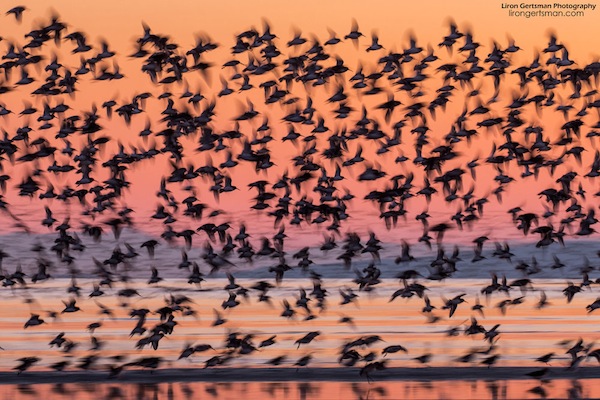
“Birds,” he whispered reverently. In the image, hundreds of small dark bodies hurtle across the peachy sky, their wings pumping so rapidly, the image blurred.

“Like a hologram in a museum?”

“Yes. Only they were alive. Flying.”

“But why is the wall pink? Why would they paint it pink?”

photo - “Sandpiper Sunset,” by Liron Gertsman
“Sandpiper Sunset,” photo by Liron Gertsman.

The old man glanced at the wall of the cave that housed the archives. Nobody lived on the surface of the earth anymore. Nobody could survive the toxic environment. People inhabited underground caverns such as this one and, mostly, they didn’t bother painting the walls. There were few resources anymore.

“It’s not a wall, it’s the sky,” he said. He had been very young when the last of humanity had moved underground, but he still remembered the sky. Scientists said that, in a few more generations, they could live outside again, but he wasn’t sure his granddaughter would last that long. He certainly wouldn’t.

“Our teacher said the sky should be blue,” the girl insisted.

“The sky could be any colour. This is probably sunset.”

“What is sunset?” She had never seen the sun.

He sighed, but, before he could explain, her gaze had skipped to another image.

“It looks like a fountain,” she marveled, “but what are these green blobs?”

The old man winced. “Trees. Bushes. It’s not a fountain. It’s a waterfall.”

Her finger zeroed in on another image. “I know,” she said triumphantly. “These are dogs. Strange dogs, though.”

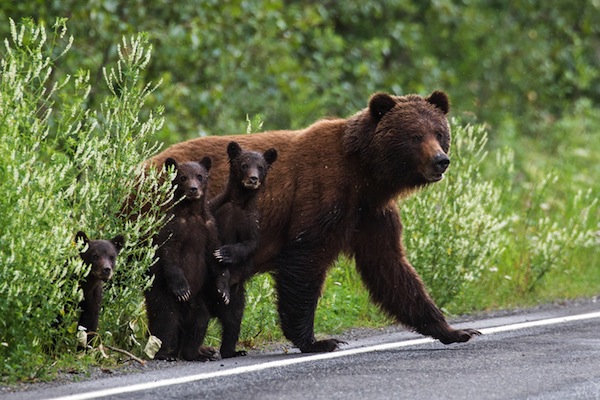
“These are not dogs. These are bears. The mother bear is….” He contemplated the animals on the screen, trying to remember his own textbooks. He had never seen a living bear either. “I think she is as big as I am,” he said at last. “Maybe bigger. And the little bears are probably your size.”

“So huge?” She eyed him with doubt. “They lived outside, too?”

He nodded.

“I don’t think I’d like it outside,” she said. “Everything is different. I like it better here.” She climbed off her chair and started to leave. “We have everything here.” She went out into the corridor. “I think it’s all fairy tales anyway,” she called back.

The old man remained still, staring at the closed door with sadness.

* * *

Essence of Earth opened at the Zack Gallery. To see more of Gertsman’s work, visit lirongertsman.com or instagram.com/liron_gertsman_photography.


Olga Livshin is a Vancouver freelance writer. She can be reached at olgagodim@gmail.com.

Parrot invaders

(photos from Ashernet)

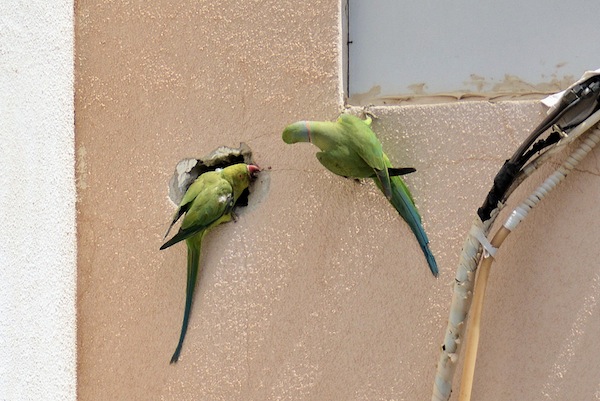
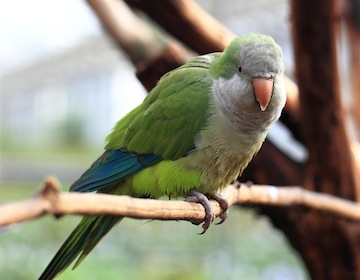
A few years ago, the sight of a parrot in the Israeli sky was a rare event but invasive species have arrived, causing agricultural and other damage and threatening native biodiversity. Brought to the Middle East and Europe as pets, escaped or released parrots have established numerous wild populations across the area. ParrotNet – a European and Middle East network of scientists, photo - a monk parrotpractitioners and policymakers dedicated to research on invasive parrots, their impacts and the challenges they present – has concluded that measures to prevent parrots from invading new areas are paramount for limiting future harm. According to lead researcher Dr. Assaf Shwartz of the Technion in Haifa, “Today in Israel there are more than 200 populations of parrot species originating in South America and India…. These populations are growing every year and, today, there are more than 10,000 ring-necked parakeets and monk parakeets in Israel.”

Erice Dee joins Vines festival

Erica Dee curated the show Weaving Voices, which takes place Aug. 9 at CRAB Park at Portside. (photo from Vines Art Festival)

Weaving Voices features Jewish community member Erica Dee, Tonye, Miss Christie Lee, Janelle Reid and Sara Cadeau, with instrumentalists Sean Mitchell and Jonny Tobin. The performance at this year’s Vines Art Festival on Aug. 9 is based on Dee’s singing workshop, Sing for the Soul.

Dee has been offering the group singing classes over the past two years. “This has been one of my favourite projects I have ever created and it has inspired me to write a whole new album and live performance,” Dee told the Independent. “Sometime in 2020, I will release this new project with a new name and it is very different from anything I have performed. It will be a live, multi-sensory experience that is meant for listening rooms and theatres, or parks. And I will activate the spaces with my singing workshop prior to the show and then include the participants in my live performance. I won’t share the name yet, but it does include my family’s name in it.”

Dee’s cultural heritage includes Jewish and Italian roots, and jazz on both sides of the family. Her paternal grandparents are Evelyn Stieglitz (z’l) and Murray Landsberg, who she described as “the sweetest Jewish couple, who met in the Bronx in the 1930s. They were 13 and 15 and they were together until my grandmother past away a couple years ago. My father, Paul Landsberg, is a prolific jazz guitarist, who started his career teaching at Berklee College of Music in Boston, Mass. My mother, Rita Marie, was born to Rita Shirley Dallesandro and Jim Smith. Rita Shirley’s brothers, Frankie and Arthur, started a jazz big band in the ’50s called the Dellasandro’s, where they played saxophone and clarinet.”

Born Erica Dee Landsberg in Boston, Mass., Dee goes by only her first and middles names. She grew up “in the mountains of the Sinixt Territory (Nelson, B.C.). My mother, father, sister and I moved to the Kootenays in 1989 because my father helped start Selkirk College’s music program.”

Expressing her gratitude at being a Canadian citizen, Dee said she first moved to Vancouver in 2005, a couple months after graduating high school. “I followed my passion,” she said, “as I had already been performing and writing and I was ready to move to the big city to expand my artistry. I also followed my heart here, after falling deeply in love with a female DJ and producer who was running Vancouver’s only lesbian bar at the time.”

Dee is a vocalist, DJ, writer and producer. She released her first recording, Golden Mixtape, a combination of remixes and original work, in 2011. Her debut album, New Skies, came out in 2016.

“I am firstly a singer,” she said, “which means I get to connect to my instrument (aka my body) in such a deep and intimate way. I usually have some burst of inspiration come to me, whether it’s a hook, or a bass line, or a drum beat. Then I spend time developing the tone, feeling and resonance. Words usually come after, as I find when I add words to my art, it brings it into the mind and I like to stay in the body for as long as possible.

“As far as production goes, I have been producing music for over 10 years and have yet to release something that is completely self-produced. I use production as another way to get my ideas out, using drum pads, keys and programs like Logic and Ableton, and then eventually collaborate with other musicians and producers to complete the creation.

“Recently,” she added, “I have been creating on a loop pedal, which has taken my artistry to a completely new level. I started DJing when I was 20, when I realized that I could be my own band mate, and started touring a performance where I would sing and MC over top of my DJ sets, fusing together the music that I love and moves me with my originals and remixes.”

Dee collaborates a lot, both in performances and in the creation of new work. Her bio notes that she has “supported and toured with artists such as Lil’ Kim, Mos Def, Quest Love, A Tribe Called Red and Bad Bad Not Good.” Past guest artists have included Snotty Nose Rez Kids and Desiree Dawson.

“I love the magic that happens when artists share space together,” she explained. “Each person is unique, with their own experience, tone, voice, stories and inspirations. It activates every part of my soul to witness artists coming together in this way, harmonizing, improvising, and the dynamics of different voices coming in and out of the music. I always say, sometimes just having another person in the room is enough, without a word shared. I can feel every piece of music they have absorbed since their creation lighting up the space. It is truly is my favourite part about being an artist.”

For the Vines Art Festival show, Dee said, “I have brought together a group of such powerful artists…. Each of these artists shares their stories and truth in such a real and accessible way.”

Dee said she is honoured to be part of the festival, as she really connects to its core values. Part of the festival’s mission is to offer “platforms for local artists and performers to create with and on the land, steering their creative impulses toward work that focuses on the environment – whether a deep love of nature, sustainability, or climate justice.”

“Growing up, I spent a lot of time outside and I find a lot of my inspiration in nature,” said Dee. “I attended Waldorf School as a kid, where I learned how to use my hands to connect and create with the natural world in a sustainable way.

“Since then, I have always had a very strong connection and appreciation for the land I occupy. Wherever I travel, I always take the time to educate myself on whose land I am on and acknowledge that within my show. I use my platform to share information about the social and environmental issues that I feel are important – I actually got fired from a festival in Calgary for speaking about the pipeline and how much harm it will cause to indigenous communities.”

For the performance at Vines, Dee shared that there is going to be “an extra special element.”

Of that element, she said, “I have never done this before and I am so excited. During the first time I sat down with Heather [Lamoureux, the festival’s artistic director], I had a vision and I am really looking forward to bringing it to life!”

Weaving Voices on Aug. 9 takes place at CRAB Park at Portside, at 7 p.m. Other Jewish performers in the festival include mia susan amir, Ariel Martz-Oberlander and Rabbit Richards, and it features more than 80 artists overall, performing at parks throughout the city. Every event is free admission and more information can be found at vinesartfestival.com.

שינויים ניכרים באזורים הארטקטיים

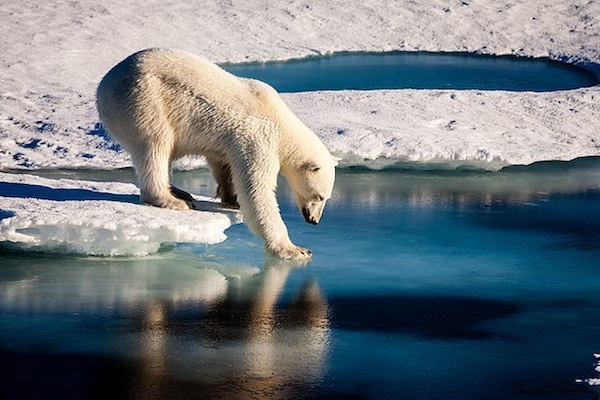
(Mario Hoppmann/NASA)

חוקרים בכירים ארה”ב: הקרח באזורים הארקטיים של קנדה החל להפשיר שבעים שנה לפני התחזיות

משלחת מאוניברסיטת אלסקה (בפיירבנקס) מצאה שינויים ניכרים בתוואי הקרקע הקפואה באזורים הארטקטיים של קנדה, במהלך שלוש עשרה שנים: בין אלפים ושלוש לאלפיים ושש עשרה. לפי הממצאים בנוסף לנסיגת שכבת הקרח נוצרו גם גבעות נמוכות, שחסמו את הרוח ואפשרו לצמחייה להכות שורש

שכבת האדמה הקפואה באזורים הארקטיים בקנדה החלה להפשיר שבעים שנה שנה לפני הזמן הצפוי. על כך מצביעים הממצאים של משלחת חוקרים בכירה שהגיע לאזור. לדבריהם התופעה מעידה על כך שכדור הארץ מתחמם בקצב הרבה יותר מהיר מכפי שצפו בתחזיות השונות. חברי המשלחת מאוניברסיטת אלסקה שבארצות הברית, אמרו כי הופתעו מאוד מהמהירות שבה גרמו עונות הקיץ החמות במיוחד לערעור השכבות העליונות של גושי הקרח התת־קרקעיים.

זה היה מדהים אמר לסוכנות החדשות הבינלאומית רויטרס, ולדימיר רומנובסקי, גיאו־פיזיקאי חבר במשלחת של האוניברסיטה. זה סימן לכך שהאקלים כיום חם הרבה יותר מאשר היה אי פעם – במהלך חמשת אלפים השנים האחרונות. החוקרים פרסמו את ממצאיהם המעניינים והיוצאי דופן בכתב העת המדעי גיאופיזיקל רייסרץ’ לטרס.

לפני מספר שבועות פורסמו הממצאים האלה ברבים- לקראת פסגת משבר האקלים שהתקיימה בבון שבגרמניה. האירוע הבינלאומי אורגן על ידי האו”ם וגורמים נוספים. זאת במטרה להגביר את המאמצים המשותפים למצוא פתרונות בנושא הכל כך מסובך. כידוע כל מדינות המערב תומכות ברעיון כי כדור הארץ מתחמם לפי ממצאים של המדענים השונים. ורק נשיא ארה”ב הנוכחי, דונלד טראמפ, מתכחש לממצאים אלה.

המאמר התבסס על ניתוח נתונים שהחוקרים אספו בביקורם האחרון באזור לפני כשלוש שנים. ובמקביל הוא מתבסס גם על סקירות אקלימיות מאז שנת אלפיים ושלוש ועוד היום. הצוות השתמש במטוס ששודרג במיוחד כדי לבקר בנקודות מרוחקות ביותר, בהן תחנת מכ”ם מתקופת המלחמה הקרה, שנמצאת במרחק של יותר משלוש מאות ק”מ מכל יישוב אנושי. כצפוי החוקרים לקחו על עצמם סיכונים גבוהים בביקור באזורים מרוחקים אלה. לדברי החוקרים ממש בנחיתה לקרקע נגלה לעיניהם נוף שונה לחלוטין על פני הקרקע הארקטית, שאותה ראו בביקורים קודמים לפני כעשור שנים.

הנוף הפך לים גלי של גבעות, שקעים צרים ובריכות. הצמחייה שבעבר היתה מעטה החלה לצמוח בכמות גדולה בחסות המקלט שסיפק הנוף מהרוחות הבלתי פוסקות. החוקרים הרגישו מצד אחד סיפוק מקצועי על כל מה מצאו, ומצד שני הרגישו תחושה שהאסון ממשמש ובא. הם ציינו כי המראה הזכיר להם אדמה חרוכה אחרי הפצצה.

זו תופעה המזכירה לי מכרה הפחם, אמרה אחת החוקרות הבכירות במשלחת. סביר למדי שתופעה זו משפיעה על אזורים נרחבים יותר ממה שאנו מעריכים. ואת זאת החוקרים יבדקו בהמשך. החוקרים חוששים ליציבות שכבת האדמה הקפואה בשל הסכנה שהפשרה מהירה תשחרר כמות נרחבת של גזים, שיביאו להאצה משמעותית של ההתחממות הגלובלית

לפי הערכות של האו”ם גם אם המחויבויות הקיימות בהסכם פריז משנת אלפיים וחמש עשרה, להפחתת פליטות גזי החממה, ייושמו במלואן העולם עדיין רחוק מאוד ממניעת הסכנה – שתהליכים דומים של היזון חוזר יביאו להאצת ההתחממות של כדור הארץ.

נוכח אזהרות המדענים כי טמפרטורות גבוהות יותר יגרמו להרס רב בחצי הכדור הדרומי, ויהוו איום על יכולת הקיום של העולם המתועש בחצי הכדור הצפוני, ארגוני סביבה נתלים במאמר שפרסמו החוקרים כהמחשת הצורך בהפחתת פליטות גזי החממה. הפשרת האדמה הקפואה היא אחת מהנקודות המצביעות על משבר האקלים, אמרה ג’ניפר מורגן מארגון גרינפיס אינטרנשיונל.

Aiming for carbon neutrality

Jeff Golfman’s Raw Office helps “businesses save money and be more eco-friendly in their supplies.” (photo from Raw Office)

Jeff Golfman has been working on ways to preserve nature since he was a boy. “I can trace it back to my time going to camps in the summertime and just really connecting with nature and with the human impact we have on the planet,” said Golfman, who went to B’nai Brith Camp in Kenora, Ont., and also spent one summer at Camp BB in Pine Lake, Alta., in addition to spending time at family cottages.

“Initially, it was just seeing people leaving garbage at campsites and leaving garbage in the wilderness. That really bothered me as a kid. It really stuck with me. That’s where it started, really. For me, wanting to be concerned about the legacy and what we leave behind, in terms of … how we show up on the planet and what we leave when we’re gone.”

Born in Vancouver, Golfman grew up in Winnipeg and is now living in Toronto. He started Winnipeg’s blue box recycling program in 1990 and then began researching how to make paper without trees, eventually getting patents to make tree-free paper, which is now available in big box stores like Staples, Office Depot and Office Max. About five years ago, he turned his attention to developing and sourcing product for his recently launched online office supply store, the Raw Office (rawoffice.ca).

“We help businesses save money and be more eco-friendly in their supplies,” he told the Independent. “It just made sense to do business with purpose…. It wasn’t so much that my passion was to save the world. It was more like I asked myself, ‘What is logical?’ And, to me, it’s logical that we’d want to do good while making commerce at the same time.”

While Raw Office’s current client base is 80% American, the company does business all across Canada, including in Vancouver, Calgary, Winnipeg, Toronto and Montreal.

“We’re using artificial intelligence and data to come into businesses and make recommendations for them on how they can make better informed decisions,” said Golfman. “Most people, when they go shopping, basically just browse and shop, and add to their cart and check out. It’s a lot of manual work to do that. What we do is put together a custom-made, curated program for each and every business that we come into. So, we’re really a one-of-a-kind program for each and every client we work with.”

Golfman’s company helps clients increase their use of recycled material for starters. Leading by example, Raw Office is currently the only office supply company that is 100% carbon neutral.

“What we practise and help businesses to do is to make an improvement from where they are today,” said Golfman. “It’s not about 100% or nothing. It’s about making an improvement. On average, the companies that have chosen to work with us are saving 30% financially and are getting 200% eco-improvement.

“I can’t speak to the tax benefit just yet, because everything is so new and is a moving target. We’re doing this outside of the political system, to help business be carbon neutral at no extra cost, which I think is the ideal scenario.”

While many companies are working toward going carbon neutral, no other large international player has cracked the office supply sphere. “There are other companies doing eco-friendly office supplies, but the ones we’ve found are not national and international in scope like we are,” said Golfman. “They are usually regional players and niche players.”

Raw Office has teamed up with the Bonneville Environmental Foundation and are buying carbon offsets to support landfill-to-gas projects, with 83,000 products on their website that show their individual environmental footprint.

“They are basically going into the landfill and pulling methane out of the landfill, and repurposing that for power and energy, and helping us reduce our emissions,” explained Golfman. “So, in a nutshell, we’re buying offsets and not charging our customers … banking that into the cost of working with us.”

By eliminating the bricks-and-mortar storefront of a conventional business, Raw Office is able to pass on the savings and offer carbon-offset products that cost 20-30% less.

“We are a technology-based company,” said Golfman. “We don’t hold inventory. We do drop shipping. It’s very similar to other tech companies that have been able to disrupt industries and reduce costs.”

Anyone can buy from Raw Office, but the bigger the company, the bigger the savings and planet impact. “We add a whole bunch of value to larger businesses that have multiple locations,” said Golfman. “A lot of the companies we work with are larger, with dozens or hundreds of locations. Most of our customers are like that, but we add value to all companies.

“One thing we do that is really uniquely for larger companies is the curated program and, also, we have these really great approval processes that allow managers and owners to approve of items and orders. And, we have these really cool features that allow the bookkeepers to integrate into their accounting software more easily.”

Meanwhile, Golfman is also working to create enhanced environmental and financial reports for his customers.

With products made all over the world, Raw Office offers complete transparency, with each product showing the country of manufacture and an eco-score.

“The eco-scoring system we created takes into account the country of manufacturing, eco-certifications and things like that,” said Golfman. “So, you’ll know, with transparency, if you’re buying something that’s made in Canada or overseas…. We make that really clear. If you had a preference for local manufacturing, you can do that on our website using filters … or, if you had a preference for some other country, we can do that, too. It’s all part of the search functionality.”

In his free time, Golfman volunteers with the nonprofit Green Kids, which he founded and of which he is board president.

“It’s an environmental theatre,” he said. “We do live theatre for children. We tour schools across Canada, all the way from Victoria, B.C., throughout Vancouver, Manitoba and Ontario. To date, 1,400,000 Canadian children have seen the Green Kids show.”

Golfman also runs a health blog, called, “The Cool Vegetarian,” where he interviews people about healthy eating and lifestyles.

Rebeca Kuropatwa is a Winnipeg freelance writer.

Mixing abstract, nature

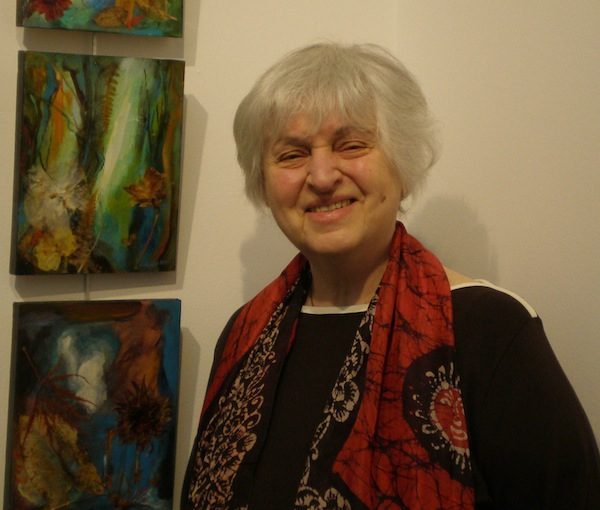
Sidi Schaffer’s current exhibit, In Partnership with Nature, is at the Zack Gallery until March 3. (photo by Olga Livshin)

Sidi Schaffer’s art has gone through several different incarnations. At the beginning of her career, in postwar Romania, she adhered to a realistic approach. “For several years, the central images of my work were people,” she said in an interview with the Independent.

After her family immigrated to Israel, she continued her studies and received her art education degree. “At that time, I fell in love with the Impressionists, especially Cezanne, and started painting more landscape and still life,” she said. “I tried to catch the essence, the light and beauty of my surroundings. Even my palette changed.”

The next stage in her artistic development came after she immigrated to Canada in 1975. It was as if every country triggered a twist in her artistic road. “I needed to establish new roots and master new challenges,” she recalled. “In 1980, I went back to school to study printmaking at the University of Alberta. They told me: ‘Paint abstract, throw away realism.’ I followed my teachers’ good advice … and totally immersed myself in abstraction. I simplified my work; my focus became my inner world, my feelings and my emotions. The art-making process became a sacred ritual.”

But pure abstraction didn’t hold her interest for long. Her abstract compositions acquired random elements of realism. “I tried to make my works integrated, bring together abstract and figurative,” she said. “I tried to express the concept of unity between the internal and the external, between the spiritual and the physical.”

Her current show, In Partnership with Nature, which opened at the Zack Gallery on Jan. 31, combines her inclination towards abstraction, her love of nature and her ability to bridge the realistic and the spiritual in her paintings. It also highlights her innate optimism. The show is airy, uplifting and charming, the works prompting a quiet gladness in viewers.

It’s about flowers, but in an oblique, complex way. “I love flowers,” said Schaffer. “Nature is my biggest inspiration. When it surrounds me, I feel alive, free, and in awe of all its beauty and miracles.”

For years, she has been drying flowers between pages of books. “I have piles of those books in my house,” she said. “I always wanted to preserve the flowers’ beauty, even after the original bloom. I have been doing it since I was a young girl…. In autumn, I also dry leaves with their amazing colours and abstract designs. Nothing is more beautiful. Sometimes, I pick a flower just to remind me of a place and time.”

A few years ago, Schaffer decided to try and incorporate those dried flowers and leaves into her art. “I wanted to make them the subject matter,” she said. “Every picture in this show, except one, has one or more dry flowers or leaves in them.”

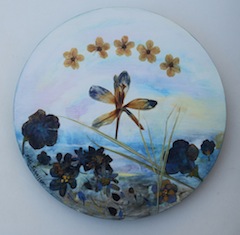
photo - “Grace into Focus 1” by Sidi Schaffer is part 1 of a triptych
“Grace into Focus 1” by Sidi Schaffer is part 1 of a triptych. (photo from Sidi Schaffer)

All of the images in the exhibit are mixed media. She experimented with acrylic and oil paint, with old prints and new drawings, with collage. The dried leaves or flowers form the heart of the compositions.

“I wanted to give them importance,” she explained. “Some of the landscapes in this show look fantastic, because dry leaves play the part of trees. Some abstract collages were like memory boxes for me, with layers. There are dry petals there, and lettering and musical notes.”

Schaffer’s collaboration with the elements of nature tends towards whimsical. Flower petals float on the visual breeze. Mundane dandelions turn into exotic palm trees. Waves of musical notation sparkle with rainbow colours.

“I played with the images,” said the artist. “I didn’t take myself seriously when I prepared this show.”

Schaffer said every image in the exhibit started with an idea. “But I never knew how it would come out,” she said. “It’s a process, a discussion between me and the flowers. Sometimes, it is a struggle. I look at the flowers and they supply more ideas. This one flower I had, I put it on the painting and the petals came off. I left them off, incorporated into the image.… From a flash of excitement to the end result, each image reflects my emotional journey. By the time I finish a painting, it seldom resembles my original starting point. What is important for me is the visual poetry, the relationship of form, space, colour and light.”

Schaffer’s exploration into creative possibilities is nourished by her rich inner life. Before her retirement, she taught art and painted commissions, but never, for example, something made specifically to harmonize with anyone’s living room décor.

“I paint what is inside of me,” she said. “I don’t paint for anyone’s sofa. I enjoy the hours I spend in front of my canvas. It is an intense emotional outlet and, when I’m finished, I feel happy, but, at the same time, drained and vulnerable.”

In Partnership with Nature is at the Zack until March 3.

Olga Livshin is a Vancouver freelance writer. She can be reached at olgagodim@gmail.com.

Climate crisis a top priority

Teen activists talk with Vancouver Mayor Kennedy Stewart at a climate-strike action on Dec. 7. (photo from Rebecca Hamilton)

“It’s going to be our future, so it’s up to us to take it into our own hands and show that, even if we can’t vote, we can still make a difference in our communities and the world,” Malka Martz-Oberlander told the Jewish Independent when she and fellow activist and friend Rebecca Hamilton met with the paper to discuss recent – and future – efforts to draw awareness to the climate crisis.

The two high school students are part of the group Sustainabiliteens, which was inspired by Swedish climate activist Greta Thunberg. Last year, Thunberg started monthly school strikes, stating that preparing for a future that won’t have a livable climate was pointless. The strikes, called “Fridays for Future,” have spread to at least 270 countries, including Canada.

Inspired by Thunberg, strike action took place at Vancouver City Hall on Jan. 16, the day that Vancouver city council unanimously passed a motion put forward by Councilor Christine Boyle (OneCity) to declare a climate emergency. Similar motions have been adopted in other cities, including London, Los Angeles and Oakland, but Vancouver is the first in Canada to do so.

“Climate change is already impacting the people of Vancouver and will continue to. We need to respond to this crisis urgently and compassionately with a path towards a more equitable society,” said Boyle in a release. “Adequately addressing the climate emergency won’t be easy, but we are a smart city, capable of doing difficult things.”

Hamilton was an organizer of the strike at City Hall, and the groups Force of Nature and Extinction Rebellion Vancouver also supported the action. There was a previous school walkout and strike for the climate on Dec. 7, said Martz-Oberlander. She and Hamilton are among a growing number of Metro Vancouver teens coming together in what Martz-Oberlander describes as a “shared passion for climate justice.”

“With some of my friends, it’s just doom and gloom,” said Martz-Oberlander. “There’s this sense of this is all going to happen and no one can do anything, so why do anything? It’s out of our hands, we’re just kids…. But there’s also a lot of people that I know who are hopeful and see the bigger picture.”

“When I ask kids about the climate crisis,” said Hamilton, “they say that they think it’s a real problem and they’re scared. But the world around us doesn’t recognize what’s happening with the same sense of urgency that we feel. We are living in a confusing and weird time. On the one hand, we understand the science, we’re being told the scientific facts that we’re in a crisis. We’re being told these very conflicting messages, and there’s this dissonance. So what am I supposed to believe? The world is just going as normal, but why are you telling me then that we’re in this crisis and everything needs to change? I think that’s really frustrating. Me, personally, every day I’m frustrated by that.”

Both Martz-Oberlander and Hamilton grew up in the Vancouver Jewish community and say their Jewish values inform their activism. Martz-Oberlander’s family has been involved with Congregation Or Shalom since before she was born, and Hamilton grew up going to Temple Sholom.

“In the Torah, it talks about needing to pass down this world better than we got it,” said Martz-Oberlander. “That’s the concept of l’dor v’dor, ‘from generation to generation.’ The Jewish teaching that really influenced me is the sense of responsibility towards future generations.”

“Camp Miriam was most important to me in cultivating my Jewish identity,” said Hamilton. “I think it played a huge role in what I’m doing and why I care about it. The focus on youth agency, being told we could create change. It’s tikkun olam – environmentalism and climate justice is the most important way to try and help other people and create a more just world.”

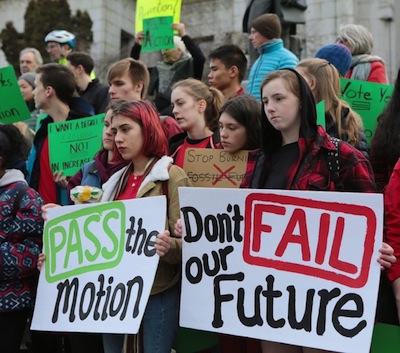
photo - On Jan. 16, students walked out of school to be at Vancouver City Hall to raise awareness of the climate crisis and support Councillor Christine Boyle’s motion to declare a climate emergency
On Jan. 16, students walked out of school to be at Vancouver City Hall to raise awareness of the climate crisis and support Councillor Christine Boyle’s motion to declare a climate emergency. (photo from Rebecca Hamilton)

Both teens avoid the word “climate change,” preferring instead to talk of the “climate crisis” or “climate emergency” and the need for “climate justice.”

“Climate change doesn’t sound urgent enough,” said Martz-Oberlander. “It’s an emergency.”

“I prefer climate emergency or climate crisis,” said Hamilton, who cites Jewish writer and activist Naomi Klein as an important influence on her thinking. “It’s not about preventing this catastrophe but about healing the foundation of our world. The climate crisis is a manifestation of these unjust worldly systems which exploit nature, animals and people, so fixing that manifestation will also mean fixing those systems.”

Hamilton and Martz-Oberlander were inspired to join the climate-strike movement after it came to Canada with a strike in Sudbury, Ont., led by 11-year-old Sofia Mather.

“I feel like I have been concerned about climate change my whole life,” said Hamilton, “but I began to want to do something when I realized that nothing else really matters if we live on a dead planet.”

Hamilton and Martz-Oberlander are currently preparing for a Canada-wide school strike on May 3, and have a local action planned for Feb. 15.

Matthew Gindin is a freelance journalist, writer and lecturer. He is Pacific correspondent for the CJN, writes regularly for the Forward, Tricycle and the Wisdom Daily, and has been published in Sojourners, Religion Dispatches and elsewhere. He can be found on Medium and Twitter.

World’s craze for sand

The World in a Grain: The Story of Sand and How It Transformed Civilization by Vince Beiser is a finalist for the 2019 PEN/E.O. Wilson Prize for Literary Science Writing. The award is given to a “book that exemplifies literary excellence on the subject of the physical or biological sciences and communicates complex scientific concepts to a lay audience.”

At the core of PEN America is the ideal of freedom of speech, “recognizing the power of the word to transform the world.” For his entire career, Beiser has been trying to change the world with his writing and, with The World in a Grain, he educates readers about the phenomenal importance of sand in making thousands of things, from concrete to glass to fibre-optic cables, and how dependent on it we are. So valuable is sand that people steal it and even kill for it, and our unbridled use of it, in concrete in particular, might just kill the planet.

To bring these harsh realities to light, Beiser adeptly and engagingly – sometimes with humour – mixes empirical evidence, scientific explanations, interviews with people directly connected to or affected by sand mining, profiles of relevant historical figures and his own commentary, as well as some factoids, which he calls “Interludes.” He comes to the not-surprising-but-disheartening conclusion that there’s only one solution: “human beings have to start using less sand. For that matter, we have to start using less of everything.”

Beiser dedicates the book to his wife, Kaile, and their children, Adara and Isaiah. While they live in Los Angeles, he grew up here. The Jewish Independent interviewed him about his upbringing, his career and, of course, his book.

JI: Could you tell me where you were born, how you ended up in Vancouver, and how your parents’ involvement in social causes influenced your choice of profession?

VB: I’m from a venerable Vancouver family, though I wasn’t born there. My grandfather’s family – the Landos – came over from England around the turn of the 20th century, first to Prince Rupert and then to Vancouver, where they worked in the fur business, of all things. My mother [Roberta] and her siblings were all born and raised in Vancouver – mostly in the same house where she still lives! My brothers and I were all born in the U.S. (myself in New York City), where my father [Morton] was working. We moved to Vancouver when I was 10, and I grew up there until I took off to college in California. I come back just about every summer.

My parents were always very engaged with the world, and the idea of trying to make it a better place – my father as a mental health researcher, and my mother mainly through her work with all kinds of arts and cultural organizations. We did a lot of traveling as well, which really opened my eyes to just how lucky we were and how much less so are so many other people. Meanwhile, I also had an uncle, Vancouver native Barry Lando, who was a highly decorated producer at 60 Minutes, so I grew up watching his shows and hearing about his adventures all over the world. I never consciously thought that I wanted to have a job like that, but it certainly made an impression.

JI: What role does Jewish culture and/or Judaism play in your life and work?

VB: I’m proud to be a Jew, and that heritage has definitely had an impact on my professional life. Knowing our long and brutal history of oppression helped sharpen my desire to work for social justice, to do what I can to help right, or at least bring attention to, wrongs wherever I find them. I started my career in Jerusalem, covering the First Intifada as a freelancer for both Israeli and Palestinian publications. Later, I wound up working for an Israeli magazine, The Jerusalem Report, first in Eastern Europe covering the wars in the former Yugoslavia, and later as their New York correspondent. I’ve probably written more about Jews and Jewish issues than anything else except sand!

JI: What took you from Vancouver and how did you establish yourself in Los Angeles?

VB: I went to college at the University of California at Berkeley – I really wanted to get to the States, which I thought was a much more exciting place than then-sleepy little Vancouver. From there, I spent years traveling and working all over the world, first as a hitchhiking backpacker, and later as a freelance journalist (there’s often not a lot of difference between the two lifestyles). I spent several years in the Middle East and then Eastern Europe, then came back to the U.S., where I bounced around from New York to San Francisco to Las Vegas (that’s right, I lived in Las Vegas). I was living in San Francisco when I met a delightful young woman living in L.A. I was doing a lot of work in L.A. at the time, writing for the L.A. Times Magazine and other places, so had an excuse to visit her often and, well, 17 years later we’re married, with two kids and a mortgage and the whole package.

JI: In an interview you did with David Simon, you talk about journalism, fiction and film, and Simon comments that no one reads anymore. What are your thoughts on that, on the state of journalism and your decision to write a book?

VB: These are dark days for the business of journalism, of course, with local newspapers dying off en masse and money drying up for those that are left, thanks to the internet. Most of my career has been spent writing for magazines, and a terrifying number of the ones that I’ve written for over the years have disappeared or been reduced to emaciated shadows of their former selves – The Village Voice, Spin, Rolling Stone, US News & World Report, and on and depressingly on.

book cover - The World in a Grain
The World in a Grain can be purchased on Amazon and at other bookstores.

But, contrary to what everyone expected with the advent of the internet and the Twitterization of discourse, people do still read, at length and in numbers. There are plenty of long, deep articles published online that attract hordes of eyeballs – the trick no one has cracked yet is figuring out how to make money off of them. Oddly, the book industry is still doing relatively well; most people still seem to prefer physical, paper books to reading something of that length on a screen. So, moving from magazines into book writing is not only something I’ve always wanted to do – it’s also a tactical move aimed at keeping me solvent. I’m branching into movies and TV for the same reason. If you’re going to survive as a freelance journalist in the 21st century, you’ve got to tell your stories and get paid every which way you can.

JI: Can you describe how the topic of sand first came to you, why it piqued your interest and about the path to the book’s publication?

VB: I’m a full-time freelancer, so I’m always hustling for stories, which involves trawling through a lot of obscure publications. One day in early 2015, I stumbled across a story on a little environmental website from which I learned two things. One, sand is the most-consumed natural resource on earth after air and water; that alone made me sit up and take notice. Two, that there is so much demand for the stuff that we are inflicting tremendous environmental damage all over the world to get it, stripping bare riverbeds and beaches and, in some places, people are even being murdered over sand. Like most people, I had never even thought about sand as a commodity, let alone one so important people might be killed over it.

I thought this all sounded crazy but, with a little research, I found it was true. The violence, I discovered, is by far the worst in India. So, I convinced Wired magazine to send me to India, where I reported a feature on the murderous ‘sand mafias’ that bedevil that country. The piece came out in spring of 2015 and got a great response from readers. I knew by then there was much, much more to the story – a book’s worth, I figured. That summer, I spent a few days alone on a tiny property we own on Gabriola Island pounding out a book proposal. My agent in New York sold it almost right away to the folks at Penguin Random House, and I was off to the races.

JI: How would you describe your level of optimism about the future?

VB: Really depends on the day, or hour. But I’ve got kids growing up in this world, so I don’t have much choice but to hope for the best!