Skip to content

  • Home
  • Subscribe / donate
  • Events calendar
  • News
    • Local
    • National
    • Israel
    • World
    • עניין בחדשות
      A roundup of news in Canada and further afield, in Hebrew.
  • Opinion
    • From the JI
    • Op-Ed
  • Arts & Culture
    • Performing Arts
    • Music
    • Books
    • Visual Arts
    • TV & Film
  • Life
    • Celebrating the Holidays
    • Travel
    • The Daily Snooze
      Cartoons by Jacob Samuel
    • Mystery Photo
      Help the JI and JMABC fill in the gaps in our archives.
  • Community Links
    • Organizations, Etc.
    • Other News Sources & Blogs
    • Business Directory
  • FAQ
  • JI Chai Celebration
  • JI@88! video
image - Weizmann Canada Physics Tournament 2025
image - The CJN - Visit Us Banner - 300x600 - 101625

Recent Posts

  • Vrba monument is unveiled
  • Music to build bridges
  • A better future possible
  • Anne Frank exhibit on now
  • Human rights in sport
  • Telling the story of an icon
  • Crawl bigger than ever
  • JCC Maccabi in Toronto
  • A way to meet fellow Jews
  • Time to include
  • Add Jewish joy to the mix
  • Reminder of humanity’s light
  • From the archives … editorials
  • Year-round holiday recipes
  • מדוע עזבתי את ישראל ואינני חושב לחזור ארצה
  • OJC hosts Oct. 7 memorial
  • A journey beyond self
  • Antisemitism a problem
  • Young man is missed
  • Orr action sparks complaint
  • Prison sentence for hate
  • Etgar Keret comes to Vancouver
  • New fall lecture series
  • Series explores music
  • Doc on Zapiro screens Nov. 6
  • Joy of shared existence
  • Community milestones … October 2025
  • MAID vs Jewish values
  • Cheshvan a great month, too
  • Bull, bear or bubble?
  • From the archives … a coin, etc.
  • מדוע האנטישמיות הולכת וגואה בעולם
  • New bio gives Vrba his due
  • Joy brighter than ever
  • When approaches differ
  • New leadership at the JCCV

Archives

Follow @JewishIndie

Tag: environment

Enhancing nature activities

Enhancing nature activities

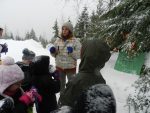
Inbal Len Nenner holds the attention of campers on Cypress Mountain during JCC Camp Shalom’s winter session last month. (photo from JCC Camp Shalom)

When Inbal Len Nenner arrived in Vancouver last year from Israel, she fell in love with the natural environment, as well as its people. “I met the nicest people in the world,” she said.

When JCC Camp Shalom met Nenner by chance at the Jewish Community Centre of Greater Vancouver, she spoke about her work with Israeli children, where she created a special program called Children’s Tribe. Inspired by ancient tribal traditions, it focuses on group-building activities for children and youth and connects them to nature.

photo - Arts and crafts are a big part of JCC Camp Shalom, no matter what the season
Arts and crafts are a big part of JCC Camp Shalom, no matter what the season. (photo from JCC Camp Shalom)

This type of programming was of interest to Camp Shalom, as it has always focused on nature education and teaching values that foster appreciation and respect for the environment. So, during the two weeks of JCC Camp Shalom’s 2016 winter session, Nenner volunteered to work with all age groups.

During the winter camp, Nenner created many activities, including a quest for Big Foot at Cypress Mountain, where campers learned to follow tracks in the snow, and a “tribe day,” where the youth campers (grades 4-7) became the Spirit Eagle Tribe – each child had a role to fulfil, learned a job and shared with others. Meanwhile, with the younger campers (preschoolers), Nenner ran a Chanukah storytelling session, during which the children had the chance to dress up and play some of the roles in the story. The highlight of the week was a camp-wide celebration of Chanukah as in biblical times, which included booths and activities such as ceramics, dance and Olympic games.

Nenner’s goal in her work is to develop creative thinking in children and to show them the positive effect of making social connections in a group. This aligns exactly with JCC Camp Shalom’s values, so the camp could not have been more excited to give Nenner a chance to demonstrate her craft. During her time as a volunteer, the campers laughed and played, and created an environment that fostered positive self-image and growth.

“Inbal quickly became part of our Camp Shalom team and was loved by the campers and staff alike,” said Ben Horev, JCC Camp Shalom director.

Nenner has since returned to Israel, but JCC Camp Shalom is taking the necessary steps to ensure that she will return to the JCC in the spring. Not only did she enjoy her experience with the camp, but she was an amazing asset to the camp program, translating the camp’s values into meaningful activities from which the children grew and learned in an experiential way.

For more information about JCC Camp Shalom and its programming, contact Horev at [email protected].

Format ImagePosted on January 13, 2017January 11, 2017Author JCC Camp ShalomCategories LocalTags camp, children, environment, JCC
Beef versus legumes

Beef versus legumes

If the entire population of the United States changed their diet from a beef-heavy plan to one based on chicken, it would be possible to feed 120 to 140 million more people with the same resources. (photo from wis-wander.weizmann.ac.il)

How much does a steak really cost? Or chicken nuggets, or a plate of hummus? New research by Prof. Ron Milo and Alon Shepon of the plant and environmental sciences department of the Weizmann Institute of Science, together with Prof. Gideon Eshel of Bard College in New York, took a look at the figures – including the environmental costs – of the different foods we eat. The research appeared in Environmental Research Letters.

The data for the study came from figures for cattle and poultry growing and consumption in the United States. To compare, the researchers calculated the nutritional value of each – usable calories and protein – versus the environmental cost. The latter included the use of land for fodder or grazing and the emission of greenhouse gases in both growing the food and in growing the animals themselves.

Chickens, according to the study, produce much more edible meat per kilogram of feed consumed, and they produce their meat faster than cattle, meaning more can be grown on the same amount of land. For every 100 calories and 100 grams of protein fed to beef cattle, the consumer ends up with around three calories and three grams of protein. For poultry, that figure is about 13 calories and 21 grams of protein.

The researchers then asked what would happen if the entire population of the United States were persuaded to change their diet from a beef-heavy plan to one based on chicken. Their answer: it would be possible to feed 40% more people – 120 to 140 million more people – with the same resources.

What would happen if the same population was persuaded to adopt an entirely plant-based diet? That is, instead of using land to grow cow or chicken feed and then eating the animals, to use that land to grow nutritional crops – mainly legumes, including peanuts, soya, garbanzos and lentils. These can supply all of a person’s nutritional requirements, except vitamin B12, which can be obtained from nutritional yeast.

A separate study, published in Environmental Science and Technology – “Environmentally optimal, nutritionally aware beef replacement plant-based diets,” by Milo, Shepon, Gidon Eshel and Elad Noor – suggests that an extra 190 million people could eat off the same environmental resources in this way.

“If we changed our diet, we would change the environmental price we pay, with every meal,” said Shepon. “Eating a plant-based diet can both meet our nutritional requirements and save on land use, as well as the release of greenhouse gases into the atmosphere and excess nitrogen from fertilizers into the water supply. These are real costs that we all bear, especially when people eat beef.”

Milo’s research is supported by the Leona M. and Harry B. Helmsley Charitable Trust; Dana and Yossie Hollander, Israel; and the Larson Charitable Foundation. Milo is the incumbent of the Charles and Louise Gartner Professorial Chair.

For more on the research being conducted at the Weizmann Institute, visit wis-wander.weizmann.ac.il.

Format ImagePosted on December 16, 2016December 15, 2016Author Weizmann InstituteCategories IsraelTags environment, health, science, vegetarian

Greens’ true colors?

Voters in the United Kingdom – well, in England and Wales, at least – have decided to quit the European Union. The referendum last week turned British politics, and world economic markets, upside down.

The potential for a Scottish withdrawal from the United Kingdom is again front and centre. More than this, politicians and commentators worldwide are extrapolating the vote’s meaning across Europe and North America to try to comprehend the potential impacts of a coalescence of disgruntled, anti-elitist, populist, nativist and xenophobic tendencies. Already, the result seems to have given licence to some people to act out on xenophobic hatred, with numerous incidents of verbal and physical assaults against visible minorities reported across Britain in just the couple of days following the referendum.

Among those who supported the losing “Remain” campaign are some who threaten to move to Canada. This is a default for Americans and now, apparently, Brits who dislike the democratic outcomes in their own countries. The Canada strategy is much talked about but rarely executed. Ironically, people from countries that move toward exclusionary practices and tightened immigration policies assume that Canada is an uncategorically welcoming place that would greet them with open arms. On Canada Day, of all times, we should take it as a compliment that our reputation is one of haven and acceptance.

And yet … while Europe may be aflame with xenophobia and demagoguery, Canada is not immune to strains of something nasty. The current example comes from none other than Canada’s Green party.

For a movement that ostensibly subscribes to the precept of thinking globally and acting locally, the policy resolutions for the party’s August convention are starkly parochial. Only two items proposed for consideration approach foreign affairs issues – and both attack Israel.

One resolution calls for the party to join the BDS movement to boycott, divest from and sanction the Jewish state. More hypocritically still, the Green party is seeking to have the Jewish National Fund of Canada’s charitable status revoked. That a Green party would target one of the world’s oldest and most successful environmental organizations is symptomatic of something irrational in the mindset of those who promulgated the resolution. Whether it advances to the convention floor – and what happens then – will tell us a great deal about the kind of people who make up the Green Party of Canada.

In a world where human-made and natural catastrophes seem unlimited, from the entire population of Green party members across Canada, only two statements of international concern bubble to the surface – and both are broadsides against the Jewish people.

Elizabeth May, the party’s leader and sole MP, said she opposes both resolutions but, since the determination of policy is made on the basis of one member one vote, there is a limited amount she can do. She met last week with Rafael Barak, Israel’s ambassador to Canada, and said the Green party’s support for Israel’s right to exist is “immovable.”

We’ll see.

Posted on July 1, 2016June 29, 2016Author The Editorial BoardCategories From the JITags anti-Israel, antisemitism, BDS, boycott, Elizabeth May, environment, Green party, Jewish National Fund, JNF, politics

Healing one’s self, the earth

Born to Ukrainian Orthodox survivors of the Holocaust, Dr. Eva Pip knows all too well the long-lasting effects of war. Her parents were imprisoned in labor and concentration camps as punishment by the Nazis for harboring Jews on their farm.

“My mother was never a fully functional human being again,” said Pip. “She had a number tattooed on her arm that she was always trying to conceal. She felt that, if someone saw it, they’d think less of her. Her greatest fear was of being sent back.

“She had terrible nightmares for the rest of her life. At least once a week, she would scream in her sleep, as though she was being murdered. I’d have to run to wake her up. She had a lot of old injuries and scars, and an improperly healed collar bone and breast bone.”

photo - Dr. Eva Pip
Dr. Eva Pip (photo from Eva Pip)

Pip’s mother came to Winnipeg by train from Halifax. Her mother did not choose to come to Canada; it was simply where that week’s ship from Germany happened to have been bound. The previous week’s ship went to Australia.

Several years later, Pip’s mother was able to sponsor her husband to come to Canada. He could not get out of Germany when the war ended and the forced labor camp in which he was held was disbanded, as he was wounded and not yet medically fit to be cleared to come to Canada. He finally came in 1949.

Pip was born the next year though her parents never wanted a child. The war had taken the humanity and warmth from them and they found it difficult to cope with basic daily life.

“In many ways, both of my parents were like children,” said Pip. “They could not make decisions, they could not take proper control of their lives, they constantly lived in some past world before the war had happened.

“There must be thousands and thousands of these silent casualties that are not recorded or even recognized. This damage did not stop with the people who personally experienced war atrocities. It affected their children, too, such as myself, who grew up in essence without parents to love and nurture them, to teach them, to respect them as human beings that they have brought into the world.

“My parents never once hugged or kissed me. We had very little food to eat. Often, we ate out of garbage cans. My mother made my clothing out of scraps and bits because she could not afford to buy me anything. My father did not want to support us, although he lived with us.”

Pip’s father worked as a painter for a billboard company, Universal Signs, which was owned by Max Gardner – who was Jewish and who Pip said took pity on her family – until he retired at the age of 66.

“The Gardners were our benefactors,” said Pip. “They gave us their old furniture for our home and did many kind things to help us out. They almost adopted me.

“Our next door neighbors on Manitoba Avenue in Winnipeg’s North End happened to be the parents of Dr. Harry Medovy [a well-known pediatrician and academic]. Although he had already left home long before we arrived, his mother was very kind to us and often shared her home-made Jewish holiday food with us.”

Later on in life, Pip has, in turn, helped out with various Jewish women’s and seniors organizations.

Growing up in a home that did not encourage friendships, Pip developed a very rich interior life, and found empathy and compassion for other beings in her North End environment.

“I developed a passion for nature, for the earth, and felt incredible sadness at what was happening to our environment,” she said. “I felt the hardships of the creatures around me that had even less than I did. I could feel their voicelessness and powerlessness from those who could kill on a whim and who were unmoved by the suffering and injustice we inflict on the companion spirits God gave us to accompany us during our brief time on this earth.”

This view led Pip to her career choice. She wanted to speak for those who could not and to raise awareness of how damaging and destructive people’s actions are for our planet.

Regarding any desire to have a family of her own, Pip said, “You cannot miss something that you have not had. I have lived alone all my life. The advantage of this is that spiritual development becomes a much more important life path, without the distractions of family and its problems and demands.

“My work became my family. I obtained my PhD from the University of Manitoba in 1977. At that time, being a woman in science was hard. I was able to go to university only because the National Research Council supported me with scholarships. I worked very hard and got good grades.”

Pip taught at the U of M for three years before transferring over to the University of Winnipeg, where she has been teaching for 37 years. This year, Pip is retiring, though by no means does she intend to spend her days resting. She plans to continue writing and publishing pieces on the environment and working in her large rural garden.

Pip grows most of her own food because she knows it will be clean and free of chemicals.

“I’ve always loved tomatoes,” she said. “That interest has grown into my trying to preserve heritage varieties, as these are rapidly disappearing and are an irreplaceable part of our collective culture. I also grow heritage potatoes and heritage varieties of flowers, giving away much of what I cannot eat. I also harvest wild foods on my land.”

Instead of having a cottage, which Pip views as harmful for the environment, she buys land of ecological value and donates it to wildlife preservation institutions. She has donated most of her land to the Manitoba Habitat Heritage Corporation.

“I hope there is never such a monstrous exhibition of human cruelty and vice in our world again [as was the Second World War],” said Pip. “I hope we never again have millions of damaged human beings in the aftermath. I hope we can make peace with each other, that we can recognize that we are all equal, that we do not look down on each other and pretend we are better, that we do not rob each other of our right to life and right to God, and that we make peace with our Mother Earth.

“For these things to happen, human nature needs to change, our values and our dollar worship need to change. I fear that it will be too late by the time we and our leaders realize this. When it is time for me to hand in my dinner pail, I wish to face God and feel confident I have done a good day’s work.”

Rebeca Kuropatwa is a Winnipeg freelance writer.
Posted on June 17, 2016June 16, 2016Author Rebeca KuropatwaCategories NationalTags environment, habitat, Holocaust, war
Measuring footprints

Measuring footprints

Ben-Gurion University of the Negev’s Dr. Meidad Kissinger is doing collaborative work with colleagues in British Columbia. (photo by Zach Sagorin)

Five years ago, Vancouver set the goal of becoming the greenest city in the world by 2020. According to the 2014/15 update to the Greenest City 2020 Action Plan, as well as research being conducted at the University of British Columbia in collaboration with Ben-Gurion University of the Negev, there is a long way yet to go.

Nonetheless, Dr. Meidad Kissinger told the Jewish Independent, “I really like Vancouver. It’s, in a way, a second home.”

Kissinger is the head of the Negev Centre of Sustainability and a faculty member in the department of geography and environmental development at BGU. He completed his PhD in urban and regional planning at the School of Community and Regional Planning at UBC and returned last summer for a research leave that continues to this coming summer.

“UBC is a great place … there is a lot of interest in issues that I am engaged with around sustainability science and ecology economics,” he said. In addition, “it was important that the family would decide where to go, and Vancouver felt comfortable.”

Not needing to teach or focus on other administrative tasks while he’s here, Kissinger said, “My time here is focusing on research. My own goals are reading a lot, thinking a lot, writing a lot.” He is working on a book while at UBC, as well as engaging in projects with colleagues here.

On one project, Kissinger is collaborating with researchers from UBC and Kwantlen University on a study of local food systems, looking at the potential of the Lower Mainland to produce its own food. It’s similar to a project in Israel, he said, which questions “what is the ability of the state … to produce its own food.”

Kissinger is also researching urban “metabolism,” which “looks at the flow of resources into a city and looks at the city as a living organism, and asks questions of what is being consumed, who is consuming it and what is being emitted,” he explained.

He is also studying interregional sustainability, which considers sustainability from a global perspective. “Any country, including a huge country like Canada, depends on resources from other [places],” he said, giving the example of Canadian food consumption (mostly vegetables and fruits) from California. “When looking at the world from an interregional level,” he said, “you understand that there are linkages between the tomato that you are eating here to the drought in California. These are kind of the interactions. It’s common sense.”

The problem is, he said, “We don’t take these things into account and we don’t measure them.” He did acknowledge, however, that there is an “increasing understanding that we need to look at interactions between the human system and the natural system.”

Using 2006 data, Kissinger and colleagues Jennie Moore and William Rees of UBC’s School of Community and Regional Planning applied interregional analysis to Vancouver’s “metabolism” to see whether there was validity to Vancouver’s claim that it is the greenest city in the world. “Now, we haven’t completed research yet,” he said, “but I suspect that what we will find is that maybe there are some incremental improvements in certain parts but when you are looking overall, the metabolism of this region has just continued to increase over the years. So, there is a major gap between the political arguments and what actually the research tells us.”

“Urbanization has both positive and negative environmental implications,” write the three colleagues in the Journal of Environmental Management (2013). “On the one hand, cities are nodes of consumption that depend utterly on a constant flow of materials and energy from around the world in order to function…. On the other hand, the economies of agglomeration (lower costs due to proximity of related activities) and the economies of scale (lower costs due to higher volumes) associated with the city’s high population density and concentration of economic activity contribute to a significant ‘urban sustainability multiplier.’… Furthermore, the sheer wastefulness of many cities implies major opportunities for energy and material conservation. It follows that, in the 21st century, cities are an appropriate focus for research into ecologically necessary, socially acceptable and politically feasible ways of reducing the overall human load on the world’s ecosystems.”

In analyzing Vancouver’s “bottom-up ecological footprint,” the study examined the “energy and material consumption using locally generated data” on areas such as water, food, transportation and buildings. It found Vancouver’s total ecological footprint in 2006 to be “an area approximately 36 times larger than the region itself.”

Kissinger explained to the Independent in an email that his research largely culminates in “analyzing the socio-biophysical systems and what authorities/institutions at different scales can do” to reduce the ecological footprint. On a personal level, people need to consider their consumption in general, he said, “and particularly of food, with emphasis on minimizing animal products.”

Research collaboration such as that of Kissinger at UBC is rare. “There is hardly any Canadian-Israeli research collaboration,” he said. “Very different from what you have between Europe and Israel, between the U.S. and Israel. Even between China, India and Israel, there is more than what you have between Canada and Israel, which is … something that needs to be changed. Saying that, again, I’m working this year with Canadians, here in this part of the world, and with colleagues in Toronto, and so I do find that it is possible and I like to work with Canadians.”

The reason for the relative lack of collaboration is largely financial, said Kissinger. It has nothing to do with factors such as the boycott, divestment and sanction movement against Israel, for example.

“I’m aware that there are attempts to undermine Israel in the world for different reasons,” he said, but “I’m working with colleagues here, I’m working with colleagues in European universities.”

He added, “It’s one thing to put pressure on Israel to change policy, and I wish this is something that hopefully will be done. It is a different thing to do what BDS is doing…. I don’t think this is the way.”

He tried to explain how such actions are seen from the Israeli side. “I guess it happens to any society when it feels that it’s being attacked, it’s being under pressure from outside,” he said. “It [tries] to push the pressure away and at least appear unified and I think it is very natural.… So, when you are looking at Israeli media … it will try to resist [external pressure] and try to show how everyone is against us, instead of reflecting inside and looking at what is wrong with what we are doing. This is kind of the other side of this external pressure. It’s complicated.”

Zach Sagorin is a Vancouver freelance writer.

Format ImagePosted on April 15, 2016April 13, 2016Author Zach SagorinCategories LocalTags ecology, environment, Kissinger
Oil spill heightens urgency

Oil spill heightens urgency

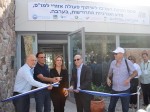
A ribbon-cutting ceremony to inaugurate the new Regional Collaboration Centre for Research and Development and Renewable Energy near Eilat. (photo from Jewish National Fund via jns.org)

The worst oil spill in Israel’s history was the unplanned backdrop for a recent international conference on green energy held in Eilat, the country’s southernmost city. A busy port and popular resort city located at the northern tip of the Red Sea, Eilat is at the epicentre of the Jewish state’s renewable energy industry.

The Eilat-Eilot Green Energy Sixth International Conference and Exhibition, held Dec. 7-9, was the culmination of six events that comprised Israel Energy Week and offered participants from around the globe a concentrated encounter with the emerging world of alternative energy in Israel. The conference focused on challenges facing the renewable energy industry, including storage and supply of electricity, development of methods to manage electricity flow and financing to advance projects.

It also focused on the key role renewable energy plays in the southern Arava, a stretch of Negev Desert from the Dead Sea to the Gulf of Aqaba in which Eilat and the Hevel Eilot Regional Council are located. This arid, sun-drenched area is Israel’s main locale for sustainable development and functions as an international showcase for Israeli innovation in the field of green energy.

“Renewable energy, with an emphasis on solar, is a major focus of our municipal activity and plays a key role in the region as a whole,” Meir Yitzhak Halevi, the mayor of Eilat, told conference attendees. “The city of Eilat and the Hevel Eilot Regional Council, which together account for 13 percent of Israel’s land area but less than one percent of the country’s population, have recognized the potential offered by the sunlight and open space that exist here in such abundance, and are concentrating on renewable energy as a catalyst for regional growth.”

According to Udi Gat, head of the Hevel Eilot Regional Council, the area has already reached nearly 60 percent daytime energy independence and in eight months will generate nearly 100 percent of the energy consumed each day in the southern Arava. By 2020, the municipality and regional council anticipate that the area will be completely energy-independent and free of fossil fuel and carbon emissions.

“We want to generate more electricity, even beyond the needs of Eilat and the regional council. We want to help the country produce electricity from an inexpensive source – the sun – and to be Israel’s electricity storehouse or ‘bank,’” Gat said.

The importance of achieving energy independence was conveyed to the conference in a dramatic way when, four days prior to the start of the gathering, an oil pipeline ruptured during maintenance work at a construction site about 12 miles north of Eilat. Five million litres of crude oil spilled out and fouled an estimated 250 acres of scenic desert, including a nature reserve. Delicate coral reefs beyond the nearby shoreline were also threatened.

Read more at jns.org.

Format ImagePosted on January 9, 2015January 8, 2015Author June Glazer JNS.ORGCategories IsraelTags Eilat, Eilot, environment, green energy, Israel, oil spill

Posts pagination

Previous page Page 1 … Page 9 Page 10
Proudly powered by WordPress