Skip to content
  • Home
  • Subscribe / donate
  • Events calendar
  • News
    • Local
    • National
    • Israel
    • World
    • עניין בחדשות
      A roundup of news in Canada and further afield, in Hebrew.
  • Opinion
    • From the JI
    • Op-Ed
  • Arts & Culture
    • Performing Arts
    • Music
    • Books
    • Visual Arts
    • TV & Film
  • Life
    • Celebrating the Holidays
    • Travel
    • The Daily Snooze
      Cartoons by Jacob Samuel
    • Mystery Photo
      Help the JI and JMABC fill in the gaps in our archives.
  • Community Links
    • Organizations, Etc.
    • Other News Sources & Blogs
    • Business Directory
  • FAQ
  • JI Chai Celebration
  • JI@88! video

Recent Posts

  • Sharing her testimony
  • Fall fight takes leap forward
  • The balancing of rights
  • Multiple Tony n’ Tina roles
  • Stories of trauma, resilience
  • Celebrate our culture
  • A responsibility to help
  • What wellness means at JCC
  • Together in mourning
  • Downhill after Trump?
  • Birth control even easier now
  • Eco-Sisters mentorship
  • Unexpected discoveries
  • Study’s results hopeful
  • Bad behaviour affects us all
  • Thankful for the police
  • UBC needs a wake-up call
  • Recalling a shining star
  • Sleep well …
  • BGU fosters startup culture
  • Photography and glass
  • Is it the end of an era?
  • Taking life a step at a time
  • Nakba exhibit biased
  • Film festival starts next week
  • Musical with heart and soul
  • Rabbi marks 13 years
  • Keeper of VTT’s history
  • Gala fêtes Infeld’s 20th
  • Building JWest together
  • Challah Mom comes to Vancouver
  • What to do about media bias
  • Education offers hope
  • Remembrance – a moral act
  • What makes us human
  • המלחמות של נתניהו וטראמפ

Archives

Follow @JewishIndie
image - The CJN - Visit Us Banner - 300x600 - 101625

Tag: environment

The tough choices

The value of ahavat ha’beriot, the love of God’s creations, is open to broad interpretation. The animal world, the environment, as well as other people, can all fall under this crucial tenet of Judaism.

Like positive values and most good things, of course, this is easier in theory than in practice. We all want a clean environment and a better world, but we also want the convenience of automobiles, abundant and varied food, and the panorama of disposable consumer goods that we associate with the “good life.”

Awareness is, on the one hand, the most important factor in social change. On the other hand, it can overwhelm us to learn the full scope of our impacts on the world. Leave aside the huge looming catastrophe of climate change and consider for a moment the impact of a single, almost universal item of clothing: the cotton T-shirt.

Some bumper sticker wisdom urges us to “live simply, that others may simply live.” We do not always think of our wardrobe when considering our carbon footprint. Yet, after housing, food and transportation, for many people, clothing is one of the largest expenditures. Since voting with our wallets is one important way of making change, it is worth considering the impacts of our wardrobe choices. And what we wear on our backs says more about us than merely our fashion sense. It speaks (whether we know it or not) about our views on the environment and matters like child labour and fair wages.

To this end, one might think that a basic T-shirt would be a good choice. Yet it can take up to 2,700 litres of water to produce the cotton required for this simple garment, according to the World Wildlife Federation. Caring for the T-shirt over its lifespan takes further resources: each load of laundry takes more than 150 litres of water. Throwing it in the dryer (with a full load) consumes even more energy resources than the washing machine – about five times as much. Hanging it instead on a clothesline would reduce the shirt’s carbon footprint by one-third, but who remembers those? (Walk down a back lane in Vancouver a generation ago, and clotheslines snaked across almost every yard.) That few of us would be prepared to make this comparatively small shift indicates the glacial – to use an ironic term in the context – pace of human change in a time of rapid change in the environment.

Our food choices are even heavier with impacts. Researchers at institutions including the Weizmann Institute of Science calculated the use of land area, water and nitrogen fertilizer in animal food production. Potatoes, wheat and rice require half to one-sixth of the resources needed to produce pork, chicken, dairy and eggs in a calorie-for-calorie comparison. (Beef takes as much as five times the resources as chicken.)

Livestock for food are estimated to create about 20% of greenhouse gas emissions while using vast amounts of agricultural and water resources. Reducing or giving up meat consumption results in a huge reduction in resources. Producing a kilogram of protein from beef requires about 18 times more land, 10 times more water, nine times more fuel, 12 times more fertilizer and 10 times more pesticide than producing a kilogram of protein from kidney beans. But, again, many people love a steak or roast chicken and giving up these pleasures is not on the agenda.

This is not to instil hopelessness that even our simplest choices are leading to environmental disaster. Rather, it is to be aware of the power of small changes to have significant results.

We can extrapolate the outsized impacts of larger choices. When faced with the realities of carbon fuels on our environment (and health), most of us will not choose to sell our cars. But we might use them more judiciously. Or buy a more fuel-efficient vehicle. And, when it comes to making big political decisions that impact our environment and health, we might consider that, on balance, we should be moving toward investing in alternatives to fossil fuels, not pouring public or private billions into perpetuating deleterious and nonrenewable resources. We may not go cold turkey on gasoline and oil overnight, but our discrete choices should be leading incrementally in the right direction, not the wrong one.

Posted on April 27, 2018April 25, 2018Author The Editorial BoardCategories From the JITags climate change, environment, Judaism
Climate change heats up Israel

Climate change heats up Israel

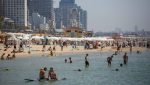
Israelis and tourists enjoy the beach in Tel Aviv on a hot summer day. (photo by Miriam Alster/FLASH90 via Israel21c)

A new study says that, by 2100, climate changes will extend the summer season in the eastern Mediterranean – an area that covers Israel, Egypt, Jordan, Syria, Lebanon and southern Turkey – by two full months. Winter, the rainy season, will shorten from four to two months.

The study, published in the International Journal of Climatology, was overseen by Prof. Pinhas Alpert and conducted by Assaf Hochman, Tzvi Harpaz and Prof. Hadas Saaroni, all of Tel Aviv University’s School of Geosciences.

“Pending no significant change in current human behaviour in the region, the summer is expected to extend by 25% by the middle of the century (2046-2065) and by 49% until its end (2081-2100),” Hochman said. “The combination of a shorter rainy season and a longer dry season may cause a major water problem in Israel and neighbouring countries.”

Other serious potential consequences include increased risk of brushfires, worsening pollution and altered timing and intensity of seasonal illnesses and health hazards.

“One of the main causes of these changes is the growing concentration of greenhouse gases emitted into the atmosphere as a result of human activity,” said Hochman.

The research team is currently exploring the possibility of establishing a multidisciplinary regional centre for climate adaptation.


Format ImagePosted on April 13, 2018April 11, 2018Author ISRAEL21CCategories IsraelTags climate change, environment, Israel, science
מדד השחיתות

מדד השחיתות

מדד המדינות המושחתות בעולם: קנדה במקום השמיני וישראל רק במקום השלושים ושתיים. (צילום: Cynthia Ramsay)

בימים האחרונים התפרסם מדד המדינות המושחתות בעולם לשנת 2017. המדד כולל מאה ושמונים מדינות שנסקרו, ומיקומן נקבע על פי השחיתות במגזר הציבורי, באמצעות שלושה עשר מקורות מידע משנים עשר מכוני מחקר עצמאיים ובלתי תלויים.

מהתוצאות עולה כי קנדה נמצאת במקום השמיני והגבוה בקרב המדינות הכי פחות מושחתות. ואילו ישראל איך לא לאור פרשות השחיתות הרבות שמאפיינות אותה, ובעיקר את ראש הממשלה, בנימין נתניהו, נמצאת מאחור במקום השלושים ושתיים.

להלן העשירייה הראשונה של המדינות הכי פחות מושחתות: ראשונה – ניו זילנד, שנייה – דנמרק, שלישית – פינלנד, רביעית – נורבגיה, חמישית – שוויץ, שישית – סינגפור, שביעית – שבדיה, שמינית – קנדה, תשיעית – לוקסמבורג ועשירית – הולנד.

העשירייה השנייה: אחד עשרה – בריטניה, שתיים עשרה – גרמניה, שלוש עשרה – אוסטרליה, ארבע עשרה – הונג קונג, חמש עשרה – איסלנד, שש עשרה – אוסטריה, שבעה עשרה – בלגיה, שמונה עשרה- ארצות הברית, תשעה עשרה – אירלנד ועשרים – יפן.

העשירייה השלישית: עשרים ואחד – אסטוניה, עשרים ושתיים – איחוד האמירויות הערביות, עשרים ושלושה – צרפת, עשרים וארבעה – אורגוואי, עשרים וחמשה – ברבדוס, עשרים וששה – בהוטן, עשרים ושבעה – צ’ילה, עשרים ושמונה – איי בהאמה, עשרים ותשעה – פורטוגל ושלושים – קטאר.

אחריהן במקום השלושים ואחד טיוואן, במקום השלושים ושתיים ישראל, במקום השלושים ושלושה ברוניי, במקום השלושים וארבעה בוטסואנה ובמקום השלושים וחמשה פולין.

ערים מתקדמות הופכות אשפה למשאב: ונקובר פועלת להיות העיר הירוקה בעולם

ערים רבות בעולם פועלות בשנים האחרונות לחסוך את העלות הגבוהה של סילוק פוסלת האשפה, הנוצרת בהן מדי יום בכמויות ענק. הן פועלות להפחית את כל צורות הפסולת שלהן, ולהשתמש בפסולת עד כמה שאפשר כמאשב, כך שהיא תהפוך לחומר גלם אחר. כך מדווח אתר הידען מישראל המפרסם מידע בתחום המדע והטכנולוגיה.

הערים בעולם הופכות למאוכלסות יותר וראשי הערים מחוייבים לשאת באחריות למצוא ולפתח פתרונות להרי הזבל שנוצרים בהן. הנוף העירוני הוא כיום הסביבה, שבה מתרכזים האתגרים הכרוכים בניהול חיים אנושיים מורכבים. בערים מתבזבות כמויות גדולות של אנרגיה, פחמן דו-חמצני, מזון, מים, מרחב וזמן. העירייות יכולות לפתור מספר בעיות בעת ובעונה אחת, ולהבטיח לתושבים, הפחתה משמעותית של חלק מהפסולת, תוך הפיכתה למשאב בעל יתרונות כלכליים.

כיום אין בהזרמת הפסולת למי הביוב פתרון סופי ויש להפחית מראש את הפסולת שנוצרת בערים, ולהשתמש בחלק גדול ממנה, לשימושים יעילים יותר. פעילות זו נקראת “כלכלה מעגלית”.

באתרי הטמנה האשפה של ונקובר לוכדים את גז המתאן הנפלט מהאשפה הרבה, ובחום שנוצר משריפתו משתמשים לחימום חממות בסמוך להם, בהן גדלות עגבניות. זו דוגמא טובה של יצור אררגיה חיובית מאשפה.

ונקובר שפועלת להיות העיר הירוקה ביותר בעולם, מחלקת לתושבים מיכלים נפרדים לאשפה רגילה, לפסולת אורגנית (כמו שאריות מזון, ענפים וגזם), לפסולת זכוכית, פסולת נייר, פסולת פלסתיק ועוד. עיריית ונקובר שמצפה מאזרחי העיר שיפעלו בהתאם עם הפסולת לסוגייה כמתבקש, שולחת מעת לעת פקחים לבדוק שזה אכן נעשה.

מן הפסולת האורגנית העירייה מפיקה את גז המתאן, וכן מוצרים מוצקים שיכולים לשמש לדישון הקרקע. לפתרונות אלה מספר יתרונות בעת ובעונה אחת: הם חוסכים לעיר הוצאות על אנרגיה, הם מפחתים משמעותית את הצורך בהטמנת פסולת באתרי האשפה וכן הם מועילים לענף החקלאות.

Format ImagePosted on March 21, 2018March 14, 2018Author Roni RachmaniCategories עניין בחדשותTags Canada, corruption, environment, Israel, Vancouver, waste reduction, הסביבה, הפחתת פסולת, השחיתות, ונקובר, ישראל, קנדה
Eat bugs to repair the world?

Eat bugs to repair the world?

Burgers made with insect protein, and no meat. (photo from Eran Gronich)

While the thought of eating insects or worms may sound outlandish or disgusting to many of us, there is growing support for doing just that.

In less than 25 years, the world will have nine billion people living on it. As things stand, there is not enough space or resources to support conventional protein production – beef, chicken, fish, etc. – for that many people. One solution that has been brought to the fore is that we can start eating insect protein. And now, the Israeli company Flying Spark is raising capital to make this a reality.

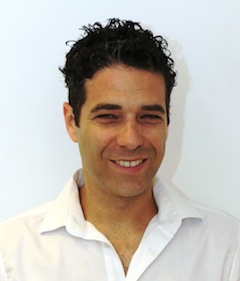
Leading the charge is Eran Gronich, a serial entrepreneur, and his partner, entomologist Dr. Yoram Yerushalmi.

“When I was looking for my next project, looking into all kinds of ideas, start-ups, etc., I came across a TED Talk in which this university professor was talking about the world having nine billion people by 2040,” said Gronich. “He was talking about all the damages of livestock farming – causing global warming, [using] 70% of growing seed, oceans over-fished…. He was saying the best solution is switching to insect consumption … and, I don’t know why, but I was fascinated. I started to learn about it…. When I realized I don’t know anything about insects, I found my partner, Dr. Yerushalmi, and together we started Flying Spark.”

They chose the larva of fruit flies to work with because it has a number of benefits, such as high values of protein, iron, calcium and magnesium. Its fat is unsaturated and, unlike some other insects, a fruit fly has no cholesterol.

The fruit fly uses less than one percent of water and land resources, has hardly any waste and 100% of the larva can be used. The lifespan of the larva is only six days and it multiplies 15 times in that time.

As it’s a vegetation-eating fly, it is a safe insect to use. No antibiotics, hormones or additives are used in the growing process, and the insect does not share any diseases with human beings.

photo - Flying Spark’s Eran Gronich
Flying Spark’s Eran Gronich. (photo from Eran Gronich)

Gronich and Yerushalmi’s project was chosen as the winner of a mass accelerator challenge in Boston. “We spent four months in Boston working on accelerating the growth of the company,” said Gronich. “We raised some money there from investors and sent it to Israel. We developed the farming and ecosystem technology around farming the larva, reducing the cost.

“In the food lab, we developed the process that’s basically taking the larva and turning it into high-quality, 70% protein powder and high-quality oil. Also, we worked on all kinds of applications and the functionality of the protein powder. We made all kinds of products just to prove the point that you can make almost anything out of our materials – bread, pasta, cereal, cakes, whatever. And, also, achieve meat replacement, even milk, with more protein than cows.”

As it turns out, the larvae will be fed by fruit surpluses, which, according to Gronich, exist everywhere. “They are in every country and also throughout the supply chain – surplus that the farmer or grocery chain has,” he said. “It’s good food, but doesn’t look so good anymore. So, we developed this formula – based on feeding software – to calculate the right percentage … to get the nutritional diet needed.”

Gronich is working with several major food manufacturers, trying out various applications, with varying degrees of success.

According to Gronich, the product is not kosher and his market is not yet in Israel, though he does have some Israeli and Jewish backers. One of his backers is the Strauss Group, which invested money and provides support with offices, labs and a lot of technical support for marketing and networking with institutions worldwide.

“For Strauss, it’s a financial investment,” said Gronich. “Strauss believes insects will be a part of the human diet in the near future and decided to invest in the best company.”

Another important collaboration in which Flying Spark is involved is with IKEA. “IKEA, eight months ago, [invited] all kinds of start-ups to apply for special programs focused on making the world a better place, especially sustainability aspects. Thirteen hundred companies applied from about 80 countries around the world; they chose 10. We were lucky enough to be one of those 10 companies. So, we started a three-month program. My partner is in Sweden right now, in the IKEA centre, and the goal of the program in the end is to have a product made from our material in the IKEA restaurant.”

Gronich is currently working on designing Flying Spark’s first production facility in Israel, with operations scheduled for the end of 2018. “Now, we are raising three and a half million dollars to build the facility, which will be in Ashdod,” said Gronich.

While selling the product to the Western world is a bit tricky, in the Eastern world or in South America, insects are eaten regularly. So, heading east with their product is an obvious choice.

As for the West, Gronich said, “Now, people from Western countries … when I’m explaining to them about the larva – about how it cleans itself and its nutritional value – people understand it. They get that it is one of the best sources of protein. If you’re comparing it to shrimp or other kinds of seafood, it looks much better. It definitely looks much better than a dead chicken. And millennials are very much aware of what they put into their bodies, and aspects of food and farming, so it’s easier.”

Flying Spark was very happy with their positive reception in Boston. There, more than 85% of millennials told them they had no problem tasting it. And, when they gave people samples, the reaction was positive.

“Now, we’re working with companies that have heard about us through PR,” said Gronich. “Multinational companies approached us and the conversations with them have all been focused on nutritional value – source of the protein, they don’t care about it…. We call it the industrial approach. We’re not serving the insect in its original form. We’re turning it into a white powder and are selling it to regular, traditional food manufacturers – and there is a need for this product.”

Rebeca Kuropatwa is a Winnipeg freelance writer.


Format ImagePosted on October 27, 2017October 25, 2017Author Rebeca KuropatwaCategories WorldTags environment, Eran Gronich, Flying Spark, IKEA, insects, Israel, science

Climate a Jewish issue

The World Health Organization has labeled climate change “the greatest threat to global health of the 21st century.” As a physician, it is difficult to ignore such a dramatic statement.

Climate change is real. The sea levels are rising, temperatures are increasing, more violent storms are becoming the norm. As Canadians, we are seeing consequences of climate change even more than other countries. Last year, Fort McMurray in Alberta was almost destroyed by a massive forest fire. This year was the worst year in British Columbia’s history for forest fire damage. (While climate change is not the sole cause of these events, it is known to be a contributing factor.)

Our glaciers are shrinking, as anybody who has visited the Athabasca Glacier in the Rockies can confirm. Temperatures in the Yukon and Northwest Territories are rising faster than in most other parts of the world. Traditional indigenous life in the north is being made much more difficult by the shortening of winter and the melting of the permafrost.

Climate change is also a Jewish issue. When the environment is changing so dramatically that human lives and well-being are at stake, Jewish values tell us that we must take action.

Pikuach nefesh (the saving of a life) is a fundamental Jewish principle. Climate change is believed to share some responsibility for present-day wars and loss of life, including the conflict in Syria. The World Health Organization predicts that 250,000 people will die each year between 2030 and 2050 due to the effects of climate change. Is it not incumbent upon us as Jews to try to mitigate these effects in line with the pikuach nefesh principle?

Climate change is a complex issue. Many people find it too complicated and too overwhelming, such that they are paralyzed into inaction. So what we can do about it?

In line with Jewish practice, the first response should be educating ourselves about the issues. There are many articles and books about the subject. One of the most compelling authors for me is Bill McKibben. He has written a book called Eaarth (Henry Holt and Company, 2010) in which he describes how the earth is changing, such that it is becoming a new and unfamiliar place.

Fossil fuels are the main culprits. Weaning ourselves off coal, oil and natural gas is paramount. Substituting sources of renewable energy such as solar, wind, tidal and geothermal is crucial.

On a society level, we can try to prevent further construction of oil and gas pipelines, and further development of the LNG (liquified natural gas) industry in northeast British Columbia. We can elect members of the Legislative Assembly and of Parliament who share our concerns.

On a personal level, we can drive less, fly less, use hybrid or electric vehicles, and support public transportation. We can eat less meat, as the cattle industry is a major contributor to increased greenhouse gases. We can consume less, recycle more and compost more.

Everybody can do something to help mitigate the effects of climate change. Doing nothing is no longer an option.

I take inspiration from the talmudic Choni, otherwise known as the Circle-maker.

One day, Choni was walking on the road and saw a man planting a carob tree. Choni asked the man, “How long will it take for this tree to bear fruit?”

The man replied, “Seventy years.”

Choni then asked the man, “And do you think you will live another 70 years and eat the fruit of this tree?”

The man answered, “Perhaps not. However, when I was born into this world, I found many carob trees planted by my father and grandfather. Just as they planted trees for me, I am planting trees for my children and grandchildren so they will be able to eat the fruit of these trees.”

This week, as we are sitting in the sukkah, let us contemplate the fragility of our planet, and strive to make the earth a more secure place for our children and grandchildren.


Larry Barzelai is a Vancouver-based family physician, who has a special interest in geriatrics. He administers the annual Public Speaking Contest organized by the Jewish Federation of Greater Vancouver. He is a member of the board of CAPE (Canadian Association of Physicians for the Environment).

Posted on October 6, 2017October 5, 2017Author Larry BarzelaiCategories Op-EdTags climate change, environment, health, Judaism
Israel joins the fruit-fly fight

Israel joins the fruit-fly fight

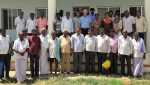
Biofeed’s Nimrod Israely, top centre, with mango growers in Karnataka, India. (photo from Biofeed via Israel21c)

Shortly before Indian Prime Minister Narendra Modi’s visit to Israel in early July, Indian diplomats in Israel heard about a revolutionary no-spray, environmentally friendly solution against the Oriental fruit fly (Bactrocera dorsalis) made by Biofeed, a 10-employee ag-tech company. They invited Biofeed to be one of six innovative Israeli companies meeting with Modi and Israeli Prime Minister Binyamin Netanyahu.

The company’s founder and chief executive officer, Nimrod Israely, who has a PhD in fruit-fly ecology, told the two leaders that Biofeed’s product can protect Indian farmers against fruit flies like the Iron Dome system protects the people of Israel against missiles. The Oriental fruit fly has been decimating 300 fruit species in India and in 65 other countries in Asia, Africa and the Americas and is considered to be the most destructive, invasive and widespread of all fruit flies.

Biofeed’s lures, hung on trees, contain an organic customized mix of food, feeding stimulants and control or therapeutic agents delivered by a patented gravity-controlled fluid release platform. Attracted by the odour, the fly takes a sip and soon dies – without any chemicals reaching the fruit, air or soil.

The launch of Biofeed’s first-in-class attractant for female Oriental fruit flies results from 15 years of development of the core platform and more than a year of development and testing in Israel and Karnataka, India. Mango farmers on four Indian orchards saw an overall decrease of fruit-fly infestation from 95% to less than five percent.

“We were hoping to bring a solution that will replace spraying and increase productivity by 50%,” Israely told Israel21c. “I am excited by the results, demonstrating the future potential for some farmers to bring about 900 times more marketable produce to market.”

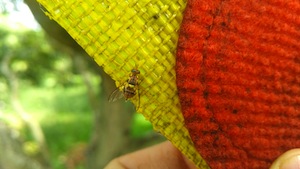
photo - A fruit fly feeding in a Biofeed lure
A fruit fly feeding in a Biofeed lure. (photo from Biofeed via Israel21c)

One farmer in the Biofeed pilot explained that previously he had used a trap that attracted only male fruit flies, with limited success. “If you cut 25 fruits, we were getting only one good fruit; 24 were infected,” he said.

K. Srinivas Gowda, president of the 70,000-farmer Karnataka Mango Growers Association, wrote in a letter presented to Modi and Netanyahu that he “would like to have this [Biofeed] technology implemented to all the mango farmers through the government of India. This technology can be used to develop pest-free zones in the mango-growing belts in India.”

The pilot project started after Biofeed won a Grand Challenges Israel grant last year from the Israel Innovation Authority and the Foreign Ministry’s international development agency, Mashav.

“We don’t have the Oriental fruit fly in Israel. However, until now there was no solution for this problem. So, we took the challenge and chose to focus on India,” Israely said. The company worked with Kempmann Bioorganics in Bangalore to carry out the trial.

Biofeed’s products are used in many Israeli fruit orchards against the Mediterranean fruit fly and other common pests, including the olive fruit fly and the peach fruit fly (Bactrocera zonata).

“Bactrocera zonata is the number two pest in India. There are three main pests in India, so now we’ve given, within two years, a solution for the two most devastating fruit flies in India and in other parts of the world,” said Israely.

“We are the only company in the world with a solution for those two pests and both solutions are harmless to the environment,” he added. “We estimate the annual market potential of these two pest segments to be well over $1 billion.”

The Biofeed platform is effective with as few as 10 units per hectare and for a period of nearly a year before the dispenser needs replacing.

Biofeed, founded in 2005, also has a formula targeting mosquitoes that bear viruses such as Zika.

“Evolution has given insects an elaborate sense of smell, which they utilize to find mates, food, egg-laying sites and more,” Israely told Israel21c last year. “The company has developed a liquid formula that ‘knows’ how to tie different kinds of smells to other materials, as the need arises. The result is a special ‘decoy’ that draws the target insect through smell. The decoy is slow-released from a device over the course of a year. The insect is drawn to the decoy, feeds off it and dies shortly after.”

Headquartered in Kfar Truman, Biofeed sees the future of agriculture in developing countries such as India and China.

“We want to bring something that is extremely easy to use: you don’t need tractors, you don’t need to remember to spray once a week, you don’t need to put yourself in danger with sprays, there’s no safety equipment. This is something that can make a dramatic change in agriculture and human health,” said Israely.

For more information, visit biofeed.co.il/enhome.

Israel21c is a nonprofit educational foundation with a mission to focus media and public attention on the 21st-century Israel that exists beyond the conflict. For more, or to donate, visit israel21c.org.

Format ImagePosted on September 15, 2017September 14, 2017Author Abigail Klein Leichman ISRAEL21CCategories WorldTags ag-tech, agriculture, environment, farming, India, Israel, science, technology, tikkun olam

Remembering gratitude

My family sat outside a museum, sharing snacks with some family friends. Their family’s preschooler offered us freeze-dried mangoes. My boys, great fans of fruit and veggies, had a mixed reaction to this novelty. As my twins ate their apples, I asked where they got these freeze-dried things.

“Oh,” our friend rolled her eyes. “I couldn’t live without Trader Joe’s.”

We had just returned from a trip to visit family in northern Virginia, near Washington, D.C. This is where I grew up, but it has changed enormously. It’s much more crowded, busy and wealthy than it was when I was a kid. It’s true that if you brave the traffic, you can buy nearly anything in its stores. Sometimes, I’m dazzled by the huge number of choices there. It’s a wide array of fresh, prepared (and sometimes even healthy) food. It’s sometimes expensive, but choice isn’t limited.

We have plenty of choice in Winnipeg, and I’m especially happy in the summer here. Whenever I can make them, I eat salads every day (a habit courtesy of spending a year on kibbutz in Israel) and we eat lots of fresh, local foods. Even so, the choices available in a very big, affluent metropolitan area can be overwhelming. When I expressed my amazement to one of my brothers, he said that, of course, I could get anything if I just ordered it from Amazon.

I didn’t get into the details of Amazon’s smaller selection in Canada, the huge distances and smaller population in our country, or the expense of doing this. I just nodded and indicated that, if we needed mango, I’d just get a fresh one.

Why is this issue in a Jewish newspaper? Our liturgy, the prayers and blessings we say at services, include multiple ways to be grateful. We’re grateful for food, for being able to get up in the morning, for not being sick, for being who we are, for peace … the list is a long one. To be honest, most people seem to say these things by rote. However, if you do go through the prayers and think about them, it’s a series of pretty meaningful things.

Teaching kids to be grateful has offered me a chance to remember to be grateful, too. When my husband and I model a “thank you, Mommy or Daddy, for this nice meal you made,” my kids learn to say thank you, too.

There are the more rare prayers – for rainbows and seeing the queen – but there’s also often a chance to say the Shehechiyanu, which is for joyous occasions and new foods. One of my boys nearly crowed the Shehechiyanu on this trip as he sat at the dinner table with all his grandparents with him at once. Then, without prompting, both boys thanked their New York City relatives for driving to see them, too.

It’s remarkable how easy it is to forget to be grateful. We often take things for granted. For instance, isn’t it amazing to have accessible fresh food that one can afford? We don’t have to go far to find Canadians who are hungry, or who live in remote places and don’t have this option.

What about clean water? Electricity? Internet? Affordable housing? The list could go on. It is a Jewish thing to acknowledge gratitude for what we have. It’s also a Jewish thing to do our best to give to those less fortunate and who need help.

It’s said that travel is broadening – and it sure is, I ate a lot on our trip! It also helps us see our daily experiences and lives better. My parents’ neighbourhood in Virginia is full of “tear downs” – perfectly decent, smaller houses that are purchased, demolished and a new “custom” home built in its place. Sure, the 1950s-era home might be dated, but the constant building, improving and affluence of the area means that old farmland becomes subdivided and all the farm stands disappear. The newly built urban homes, within a short walk of where I grew up, start selling at more than $1 million US.

So, some might say, “What’s wrong with having more? How about spending money if you have it? Doesn’t everybody need a bigger house?” (Or freeze-dried mangoes?) Practising the traditional art of reciting these prayers, the ones that encourage gratitude, help us be better at thanking G-d, our families and our communities for what we have. Reciting a prayer might remind us that being able to buy a fresh mango is a pretty good thing on its own. Even further, being grateful for what we have received might encourage us to help others with less.

It’s true that some people have more money and, therefore, can afford to spend it – but how many bedrooms and bathrooms does your family really need? Wouldn’t it be better to spend some of it on helping others have one meal a day? Housing? Clean water? Educational opportunities?

Sometimes thinking “small” – about square footage or fancy foods, for instance – really means thinking big, and helping taking care of many more in the world who have a lot less.

Joanne Seiff, a regular columnist for Winnipeg’s Jewish Post and News, is the author of a new book, From the Outside In: Jewish Post Columns 2015-2016. This collection of essays is available for digital download, or as a paperback from Amazon. See more about her on joanneseiff.blogspot.com.

Posted on July 21, 2017July 19, 2017Author Joanne SeiffCategories Op-EdTags environment, gratitude, Judaism, tikkun olam
Population growth & nature

Population growth & nature

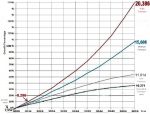
The four lines in this diagram are projections based on four levels of fertility of the general population. In 2059, there could be more than 20 million people in the state of Israel. However, if the birthrate drops to the replacement level of 2.1 children per woman during her lifetime, in 2059, it would be only about 10 million. (image from population.org.il)

While by no means unique to Israel, with less space than most to work with, it is happening a little faster there – population overload. While some feel it is too late to do anything to alleviate the problem, one growing group of Israelis is putting its energy into making a bid to re-educate the public about the need for stabilization, as opposed to growth.

One of the leaders in the group is Prof. Alon Tal, chair of the department of public policy at Tel Aviv University (TAU). Tal was born and raised in North Carolina before making aliyah after high school, at the age of 20.

“I’m an activist trapped in the body of an academic,” he quipped. “For many years, I fought it, but I tried very hard to stay an advocate for environmental interests in the country.”

A father to three daughters, Tal decided to move to Israel, as it seemed like a unique and exciting place, and he wanted to take his Jewish identity seriously.

“In Israel, every year, we take open spaces and turn them into houses, highways and commercial centres,” he told the Jewish Independent. “We live in a small country. We have the responsibility to give quality of life, to find a better way. We’re not meeting our responsibility to our great land.”

Tal is at the forefront of Israeli leaders calling on the Israeli government to adopt a policy that stabilizes the population.

“We have to cancel financial payments to families with more than two children,” he said. “We should not be encouraging it [larger families]. It means that we need to strengthen the status of women in the communities, like in the Orthodox communities. We need to make contraception available free of charge, [grant] basic rights of women to abortion, by removing some of the strings attached…. We need a policy that [aims for] stability, rather than maximum growth.”

While most Israeli Jews are raised with the fear that the Arab population will outgrow the Jewish one, Tal is trying to make people aware that there are lower fertility levels being seen in most populations, including Arab ones, while Jewish are on the rise.

A main thrust to all this need for change, Tal said, is the alarming rate of vanishing nature.

“To me, it’s very clear,” he said. “Israel’s wildlife is disappearing. It’s happening faster than I thought it would. If we had 10,000 gazelles 15 years ago, there are only about 2,500 now and they were just declared endangered by the International Union for Conservation of Nature (IUCN). Pretty much, when you go through that report, you can see everything is on the decline. One-third of mammalian species are described as endangered or extinct. It’s a horrible thing that Israel is letting this happen. I don’t want anyone to [be able to say] they didn’t know this was going on.”

When the Independent contacted Tal to be interviewed for this article, he was en route to the official opening of a new museum at TAU – Israel’s Museum of Natural History.

Tal has helped write new laws and has also been involved, indirectly, with Israel’s National Nature Assessment Program (NNAP). Recently, the first State of Nature report came out, explaining how construction and agricultural development have introduced some invasive species to Israel – to the extent that several bird species in southern Israel can no longer survive.

NNAP has established a program that operates out of the new museum, as part of a joint initiative with Jewish National Fund Israel, the Environmental Protection Ministry, and Israel Nature and Parks Authority. Its mission is to promote proper land management based on the science of open areas with Israel’s biological diversity in mind.

“It’s not a policy thing,” said Tal. “We want to save wildlife, set aside land, create ecological corridors, stop hunting and stabilize population growth.”

Although Tal acknowledged that the need to do these things is not news to many people, he is adamant that it must continuously be communicated in different ways to get to the tipping point of producing change.

“I was on television three times this week,” he said. “Every time I’m there, I mention what’s going on. I’m doing what I can do. Everyone needs to make a contribution.

“This is really about a change in Israel’s cultural DNA. We were raised on maximum population growth. We now have to stabilize. We have to tell people that, if we want to be responsible for other species that means we have to stop the incredible hemorrhaging of open spaces. If we don’t, then there won’t be any more nature.”

Tal plans to keep meeting with every willing influential person in order to educate enough people to swing the pendulum towards restoring nature. He anticipates that the new museum will be helpful in this regard.

“In order to change something, you have to know,” said Tal. “You have to look at the habitats, species logs, and take measures there. Anybody who considers Israel a promised land or has an emotional attachment to this holy place – Christian, Muslim, Jewish – we all share this responsibility. Just like how I make contributions for the Amazon rainforest, because I understand how it affects me. If you have an initiative you feel connected to, you should support it. Come to Israel and get involved, go on vacation and get involved, write letters to Israel’s decision-makers letting them know you expect the Jewish state to be a responsible trustee of its nature.”

For more information, visit population.org.il.

Rebeca Kuropatwa is a Winnipeg freelance writer.

Format ImagePosted on July 21, 2017July 21, 2017Author Rebeca KuropatwaCategories IsraelTags Alon Tal, environment, population growth, science, sustainability, TAU, Tel Aviv University

How to slow climate change

President Donald Trump has received well-deserved condemnation from, among others, leaders of many nations, many governors, mayors, environmentalists, corporate chief executive officers and Jewish and other religious organizations for withdrawing the United States from the 2015 Paris climate change pact that was agreed to by all the 195 nations that attended, including Israel, Canada and the United States. How should Jews respond to the U.S. withdrawal?

First, Jews should become very familiar with the issues involved. Ten important climate-related factors are:

  1. Science academies worldwide, 97% of climate scientists and 99.9% of peer-reviewed papers on the issue in respected scientific journals argue that climate change is real, is largely caused by human activities and poses great threats to humanity. All 195 nations at the December 2015 Paris climate change conference agreed that immediate steps must be taken to combat climate change.
  2. Every decade since the 1970s has been warmer than the previous decade and all of the 17 warmest years since temperature records were first kept in 1880 have been since 1998. The year 2016 was the warmest globally since 1880, breaking the record held before by 2015 and previously by 2014, meaning we now have had three consecutive years of record temperatures.
  3. Polar icecaps and glaciers worldwide have been melting rapidly, faster than scientific projections. This has caused an increase of elevation in oceans worldwide, with the potential for major flooding.
  4. There has been an increase in the number and severity of droughts, wildfires, storms and floods.
  5. California has been subjected to so many severe climate events (heat waves, droughts, wildfires and mudslides when heavy rains occur) recently that its governor, Jerry Brown, stated, “Humanity is on a collision course with nature.” California serves as an example of how climate change can wreak havoc.
  6. Many climates experts believe that we are close to a tipping point due to feedback loops, when climate change will spiral out of control, with disastrous consequences, unless major positive changes soon occur.
  7. While many climate scientists think that 350 parts per million (ppm) of atmospheric CO2 is a threshold value for climate stability, the world reached 400 ppm in 2014 and the amount is increasing by two to three parts per million per year.
  8. While climate scientists hope that temperature increases can be limited to two degrees Celsius (3.6 degrees Fahrenheit), largely because that is the best that can be hoped for with current trends and momentum, the world is now on track for an average increase of four to six degrees Celsius, which would result in great human suffering and significant threats to human civilization.
  9. The Pentagon and other military groups think that climate change will increase the potential for instability, terrorism and war by reducing access to food and clean water and by causing tens of millions of refugees fleeing from droughts, wildfire, floods, storms and other effects of climate change.
  10. The group ConservAmerica, formerly known as Republicans for Environmental Protection, is very concerned about climate change threats. They are working to end the denial about climate threats by the vast majority of Republicans, but so far with very limited success.

Second, Jews should consider Judaism’s powerful teachings that can be applied to environmental sustainability. These include:

  • “In the hour when the Holy One, Blessed be He, created the first man, he took him and let him pass before all the trees in the Garden of Eden and said to him: ‘See my works, how fine and excellent they are. Now, all that I created, I created for your benefit. Think upon this and do not corrupt or destroy my world. For, if you destroy it, there is no one to restore it after you.” (Midrash: Ecclesiastes Rabbah 7:28)
  • Genesis 2:15 indicates that the human role is to work the land but also to guard and preserve it. Jews are mandated to be shomrei ha’adama, guardians of the earth, co-workers with God in working for tikkun olam, healing and repairing the world.
  • Judaism teaches: “Who is the wise person? The one who considers the future consequences of his or her actions.”
  • The Jewish sages expand Deuteronomy 20:19-20, prohibiting the destruction of fruit trees in wartime to build battery rams to overcome an enemy fortification, to make a general prohibition against unnecessarily destroying anything of value.

Jews should be on the forefront of efforts to help avert a climate catastrophe. We should try to significantly reduce our individual carbon footprints by recycling, using efficient light bulbs and other items, eating less meat, reducing our use of automobiles by walking, biking, sharing rides and using mass transit, when appropriate, and in other ways. We should support efforts to increase efficiencies of automobiles and other items, shift to renewable sources of energy and make societal steps that reduce greenhouse emissions.

We should try to arrange programs on climate change at synagogues, Jewish centres and other Jewish venues, write letters to editors, speak to family members, friends, neighbours and co-workers, and take other steps to increase awareness of the seriousness of climate threats and how applying Jewish values can help reduce them. We should do everything possible to reduce climate change and to help shift our imperiled planet onto a sustainable path.

Richard H. Schwartz, PhD, is professor emeritus, College of Staten Island, president emeritus of Jewish Veg and president of the Society of Ethical and Religious Vegetarians. He is the author of several books, including Judaism and Vegetarianism and Who Stole My Religion? Revitalizing Judaism and Applying Jewish Values to Help Heal Our Imperiled Planet, and more than 250 articles at jewishveg.org/schwartz. He was associate producer of the documentary A Sacred Duty: Applying Jewish Values to Help Heal the World.

Posted on June 16, 2017June 15, 2017Author Richard H. SchwartzCategories Op-EdTags climate change, environment, Judaism, Trump
Hoping to revive Dead Sea

Hoping to revive Dead Sea

Twenty-five swimmers from around the world crossed the Dead Sea on Nov. 15. (photo from EcoPeace)

On Nov. 15, some two dozen swimmers made the seven-hour trek across the Dead Sea, starting from the Jordanian side and swimming to the Israeli.

The demise of the Dead Sea is not news. According to the group EcoPeace Middle East – a Jordanian, Palestinian, Israeli environmental peace-building organization – the sea has receded by 25 metres in the last three decades and has lost a third of its surface area. Yet, hope remains.

The recent event’s initiator and a participant swimmer, Oded Rahav, stated in an EcoPeace press release, “If it’s possible to do the impossible, like swimming across the Dead Sea, then it’s possible to save the Dead Sea. We are not just interested in raising awareness, but creating real action to benefit the Dead Sea.”

Co-sponsoring the event with EcoPeace was Tamar Regional Council in Israel.

“A group of Israeli swimmers approached EcoPeace last spring with an idea to do a first-ever event – to swim across it [the Dead Sea]!” said Mira Edelstein, project coordinator of EcoPeace’s Jordan River Rehabilitation and Save the Dead Sea projects. “Not only were they looking for an idea to follow their previous success in topping a Guinness record – swimming from Cyprus to Israel – they also sought a way to raise awareness about the need to save the Dead Sea.

“They, naturally, turned to EcoPeace, as we’re the only regional environmental organization in the Middle East working on the issue of the rehabilitation of the River Jordan, which is in direct correlation with saving the Dead Sea. We gladly took on co-organizing the event and worked hard to make it happen, especially in getting permission from the Jordanian army to ‘sail’ across the border in the middle of the sea, starting from the Jordanian side.”

photo - The Dead Sea swim team
The Dead Sea swim team. (photo from EcoPeace)

There were 25 swimmers from all over the world who participated, including from Israel, Palestine, South Africa, New Zealand, Greece, Spain and Denmark. They had to swim with a full-face snorkeling mask because of the water’s extreme salinity and they also had to adapt their swimming style because of the water’s high density. It was a life-risking venture and the swimmers were accompanied by a medical team, as EcoPeace notes in the press release: “A drop in the eye causes severe irritation, and chance swallowing of its water can be fatal if not treated immediately.”

The event generated an unprecedented amount of media attention and EcoPeace hopes this will help its ongoing efforts to get local decision-makers to take action on the issue.

“We’re also being approached by several other organizations to do other cross-border events – bicycle event, music event, art event, etc. – and we’ll review all of them to see which is more feasible and which will give us the best results,” said Edelstein, who was born and raised in New York and made aliyah in 1993. She now lives in Gan Yavne, which is near Ashdod. She joined EcoPeace in 2004.

“Personally, as an environmentalist but also a general nature lover, the Dead Sea is such a pearl of nature with so many unique qualities found nowhere else on this earth, that it would be a tragedy to lose it,” she told the Independent. “This is a man-made catastrophe and we must work as hard as possible to reverse it.”

Edelstein explained that the threats to the Dead Sea are coming from two directions.

“First is from the north,” she said. “Historically, the main inflow to the Dead Sea has been the Lower Jordan River. And, with the diversion of more than 95% of the Jordan River’s water by Israel, Jordan and Syria, leaving a meagre five percent to reach the Dead Sea … no wonder the Dead Sea is shrinking – by more than a metre a year.

“EcoPeace is working extremely hard to rehabilitate the Lower Jordan River back to at least a third of its historic flow, not only for the river’s own integrity – this is the holy Jordan River! – but we’re doing this for the Dead Sea as well.

“Second is from the south – from both Israeli and Jordanian mineral industries. These industries are using the most simple, antiquated, water-intensive technology to harvest minerals from the Dead Sea: evaporation. Unfortunately, both industries have no incentive to change their extraction technology, because they do not pay a penny for the amount of water they use.”

EcoPeace is working to change this; however, discussions about extracting minerals using systems based on desalination technologies (reverse osmosis) have come to a standstill, as they cost money, while evaporation is free.

“They claim they are studying them (these technologies), but have concluded that they’re very expensive,” said Edelstein. “Our point is exactly that – that until they will be forced to pay for the amount of water they use, any kind of change will be expensive.”

With the Israeli mineral industry’s contract with the state on its last leg, Edelstein is hopeful that a new contract will include putting a price on the Dead Sea’s water.

“EcoPeace is working very hard to get a bill passed through the Israeli parliament wherein the Dead Sea Works [part of the company ICL Fertilizers] will need to pay for the amount of water they use,” she added.

“Both of these actions together, that EcoPeace is working on, will help stabilize the Dead Sea. The Dead Sea will not yet be completely saved or restored, but we understand we first need to halt its destruction and [then] to work on stabilizing it.”

While there was a plan to draw water from the Red Sea to the Dead Sea, the original mega-project, which the World Bank was studying for more than a decade, has been deemed unfeasible. The present-day Red Sea-Dead Sea canal project “is different than the original one,” said Edelstein. “This project is based on a water swap between Israel and Jordan, which also includes a component for Palestinians to get more water from Israel.”

With both the Jordanian and Israeli governments working closely, mainly on furthering the canal project, EcoPeace applauds the joint efforts, but does not see the project as the solution.

“I do believe that the Dead Sea is high on the public agenda,” said Edelstein. “It’s not difficult to find information on the issue. Our website is being upgraded and we’ll soon have updated information to share, but recent news articles are a good place to begin.”

For more information about EcoPeace, which was formerly called Friends of the Earth Middle East, its Dead Sea and other projects, visit foeme.org.

Rebeca Kuropatwa is a Winnipeg freelance writer.

Format ImagePosted on January 13, 2017January 11, 2017Author Rebeca KuropatwaCategories IsraelTags Dead Sea, environment, Israel

Posts pagination

Previous page Page 1 … Page 8 Page 9 Page 10 Next page
Proudly powered by WordPress