The traveling Hebrew school

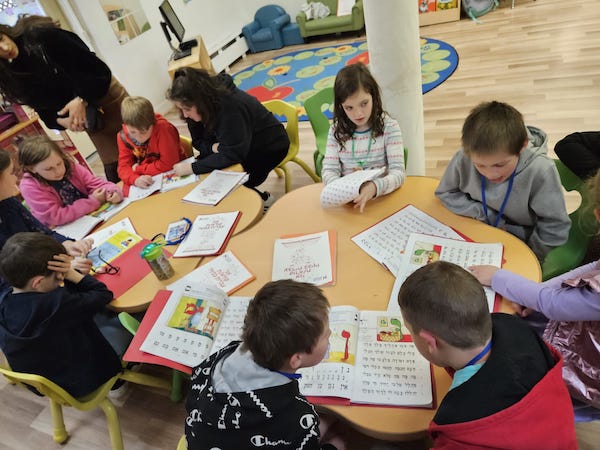
B.C. Regional Hebrew Schools currently serves more than 120 children – in Langley, Port Coquitlam, Vancouver and Whistler/Squamish. (photo from B.C. Regional Hebrew Schools)

It’s late Monday evening when Rabbi Dovid Rosenfeld loads a half dozen plastic containers of canvases, crayons, crafts and children’s Hebrew workbooks into his minivan. As directors of British Columbia Regional Hebrew Schools, he and his wife Chaya make the two-hour-long commute between Vancouver and Whistler every week so that Hebrew school parents don’t have to. “We’re the only ones crazy enough to do this,” he laughed.

When Erin Silverstein moved to Whistler from Ontario a few years ago with three children under 10, the village boasted one of North America’s largest ski resorts, glacier-capped peaks and exceptional mountain biking trails – but no Jewish community.

“Our biggest concern was that there weren’t other Jewish families and our children wouldn’t receive a Jewish education,” Silverstein said.

With Vancouver’s skyrocketing cost of living, many families have moved far beyond the city limits to small towns and suburbs. While running a summer camp and Hebrew school for Chabad Lubavitch of British Columbia in Vancouver, Rabbi Rosenfeld met families who’d left the city but returned for camp each year.

“They’d ask me, What can we do for a bat mitzvah? How can we keep our children Jewishly engaged?” he said. “Jewish families kept moving to the outlying areas but lacked access to basic Jewish resources.”

Then, in 2018, the Rosenfelds met a former Hebrew school teacher from Langley, some 50 kilometres southeast of Vancouver, and offered to fill the vacancy she left at a weekly Hebrew program for 18 local children. When the rabbi walked into the Langley program sporting a beard and a fedora, three families walked out. Six months later, they were all back.

“I think those families who stayed saw their children having positive Jewish experiences, making Jewish friends, and connecting to their traditions; they must have passed on the message,” Rabbi Rosenfeld said.

Dovid and Chaya Rosenfeld and an ever-expanding team of teachers and volunteers pack up the B.C. Regional Hebrew Schools program week after week and bring it to rented classrooms in remote communities.

“At every location, there are dozens of moving parts to keep in mind,” Chaya Rosenfeld said. “It’s immensely gratifying when the program comes together.”
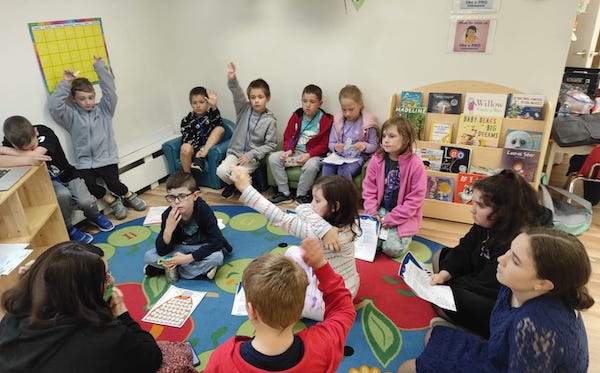
photo - Rabbi Dovid and Chaya Rosenfeld and an ever-expanding team of teachers and volunteers pack up the B.C. Regional Hebrew Schools program week after week and bring it to rented classrooms in remote communities
Rabbi Dovid and Chaya Rosenfeld and an ever-expanding team of teachers and volunteers pack up the B.C. Regional Hebrew Schools program week after week and bring it to rented classrooms in remote communities.(photo from B.C. Regional Hebrew Schools)

Today, their traveling classroom serves 25 children in Langley, 50 children in Port Coquitlam, 25 children in central Vancouver and 22 children in Whistler and neighbouring Squamish – more than 120 children in all. Chaya Rosenfeld has often found that Jewish families who had lived alongside one another for years met for the first time when their children joined Hebrew school.

“There had never been any centre for the Jewish community in these towns, so we saw whole communities come together for the first time,” she said. Within three years of opening their program in Port Coquitlam, the parents and grandparents they’d met there asked for a permanent home for their community.

In November 2022, Rabbi Mottel and Nechama Gurevitz opened Chabad of Coquitlam to serve the growing community. “It started with Hebrew school, but it’s become a real community,” Rabbi Gurevitz said. Already, the couple hosts Shabbat meals for 40 local Jews and a weekly Torah class alongside the Hebrew school.

Since the opening of the Whistler location, a group of parents has asked Rabbi Rosenfeld for a weekly Torah class of their own, and many are eager to volunteer, creating a centre of Jewish community life in the once-Jewishly-isolated town.

The parent body is as diverse as Canadian Jewry at all four locations. Yet, they share a common desire to share elements of their Jewish identity with the next generation.

“We were so excited when the Hebrew school opened here,” said Julie Persofsky, whose three children attended the Whistler location this past year. “All of a sudden, our kids are getting a Jewish education alongside peers their age; it’s been wonderful.”

Like other parents here, Persofsky is delighted to see her children look forward to Hebrew school, learn Hebrew and deepen their Jewish knowledge. “It’s incredible to see them come home with crafts they’ve made, and they’re able to share their own ideas when we practise our Jewish traditions,” she said. “At the seder table this year, they all used seder plates they made in school – that was meaningful for them.”

Dan Anolik, who moved to Squamish with his wife and young daughter shortly before the 2022-2023 school year, is grateful that his child has Jewish friends.

“Moving here was tough for my daughter,” he said. “She didn’t know other Jewish kids here; she felt like the only Jew in town. When she first stepped into the Hebrew school classroom, she saw the morah teaching and doing crafts, it looked familiar, and it was like a load came off her. She jumped right in, and all three of us shed a little tear of joy.”

Moments like these make supporting B.C. Regional Hebrew Schools a source of pride for Vancouver-based philanthropist Steven Silber, a trustee of the Arnold and Anita Silber Family Foundation. “When you see the children’s faces when they’re in their classrooms, you realize it’s a blessing everyone should get to experience,” said Silber.

To find out more about B.C. Regional Hebrew Schools or to become a supporter, contact Rabbi Dovid and Chaya Rosenfeld at info@lubavitchbc.com or 604-266-1313.

– Courtesy B.C. Regional Hebrew Schools
Volunteer from your home

Looking for a new mitzvah to take on, while making a difference in the lives of Israeli teens? Consider joining Israel Connect, a program where local adult volunteers connect, one-on-one via Zoom, with Israeli high school students who want to improve their English conversation and reading skills. The program starts on Oct. 15 and is organized by Chabad Richmond, in partnership with the Israeli Ministry of Education. It entails a commitment of 60 minutes once a week.

There are currently 24 local volunteers participating in Israel Connect as tutors/mentors, and Chabad Richmond is looking to increase that number, since the need in Israel continues to grow.

“We’re looking for volunteer retirees, seniors or any adults who have some free time to join the Israel Connect program. No previous tutoring or teaching experience is necessary and the curriculum is provided,” said Shelley Civkin, local program coordinator. “If you’re an adult fluent English speaker, you have basic computer skills, and you own a computer with a camera, that’s all you need.”

Volunteers do not need to speak Hebrew and can tutor from home. Basic training and technical support are available. Time preferences of volunteer tutors/mentors will be coordinated beforehand and sessions take place in the morning between 7 and 11 a.m. Vancouver time, any day between Sunday to Thursday.

“Israel Connect asks for a minimum commitment of one school year, in order to ensure consistency for the students,” said Civkin.

“It’s a very practical way for community members to support Israel and build bridges between diaspora Jews and Israelis,” said Rabbi Yechiel Baitelman of Chabad Richmond. “You’ll be doing a mitzvah, while investing in Israel and its young people. Plus, proficiency in English will give them an advantage in accessing post-secondary education and getting better jobs.”

Israel Connect is one of the largest external providers of services to Israel’s Ministry of Education, slowly removing the most significant barrier to social and economic mobility. Partnering with the Israeli Ministry of Education, the program targets teens from less advantaged neighbourhoods in Israel.

“Most volunteers really enjoy helping their Israeli students and develop a lasting bond with them. It often goes beyond simply tutoring the curriculum, and turns into friendship and mentorship,” said Civkin. “This kind of one-on-one tutoring makes a huge difference in their lives, both educationally and personally. It gives them a feeling of confidence that they can converse in English without being judged or marked. It’s incredibly satisfying to know that you’re doing something concrete to help Israeli students better their lives.”

The curriculum consists mainly of a tour of Israel, focusing on the wealth of historical, cultural and biblically significant cities and sites. It’s not uncommon for both the students and the tutors to learn something new about Israel at each lesson.

Civkin said several tutors have visited their students on trips to Israel and keep in touch beyond the school year. “Life is all about building relationships and Israel Connect is the perfect way to do that,” she said.

To volunteer, or for more information, contact Civkin at 604-789-5806 or civie1956@gmail.com. For anyone who can’t participate as a tutor, Chabad Richmond welcomes financial support for Israel Connect, which covers overhead costs like technical support, staffing and other administrative costs. To support the program, call Chabad Richmond at 604-277-6427 or email admin@chabadrichmond.com.

– Courtesy Chabad Richmond

VHA’s new principal

“Children want to be heard and validated for what makes them unique at all ages, just like us adults. The old adage that children should be seen and not heard is exactly the opposite of what we need from kids today,” Ellia Belson told the Independent.

photo - Ellia Belson, principal of Vancouver Hebrew Academy
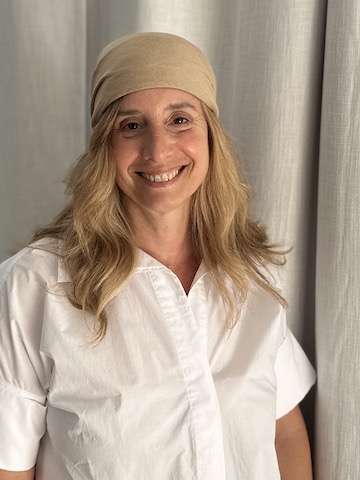
Ellia Belson, principal of Vancouver Hebrew Academy (photo from Ellia Belson)

Belson is the new principal of Vancouver Hebrew Academy. She comes to VHA from King David High School, where she was the director of Jewish life, and has also taught at Vancouver Talmud Torah. “The experience gives me insight into the learning process and what motivates children to learn at different stages of their lives,” she said. “While a child in Grade 2 will be motivated by classroom activities, by the time they are 11, they are already starting to differentiate themselves from their parents and looking for ways to express their individuality.”

Belson takes over from the team of Ian Mills, Shannon Brody and Rivki Yeshayahu, who supported VHA while the school “looked for a principal who can lead an Orthodox Jewish school in such a unique city as Vancouver,” said Leslie Kowarsky, VHA board president. Prior to this trio, Rabbi Barak Cohen was principal for a year, after having taken the helm from Rabbi Don Pacht, who served as the school’s head for 17 years.

“We are thrilled to have secured Ellia Belson as our new principal,” said Kowarsky, noting that Belson has a master’s in special education from the University of British Columbia. Belson attained her teacher certification and bachelor’s from Simon Fraser University, and her resumé also includes Judaic studies for teachers from Bais Rivkah Seminary and Touro College in New York and Hebrew University in Israel, as well as other education training. In addition, she has more than 10 years’ experience at Energex Energy Management Systems Inc., a company started by her husband Rami.

“She is a Vancouver native, and many of our families remember fondly that her father, Sol Pavony, was himself the founding principal of what was then Vancouver Torah Academy,” said Kowarsky. “Mrs. Belson is already hard at work and is available to any prospective parents seeking an Orthodox Jewish education for their child.”

Belson’s education philosophy is focused on student-centred and inclusive learning.

“Students need multiple modes of learning to stay engaged and motivated. By providing students with multiple avenues to the curriculum and by offering choices, students feel a sense of control over their learning,” she explained. “For instance, a student might choose to read a storybook, a news article or a Gemara text to express their analysis on how one’s actions will have consequences. Then, they might choose to express this through writing, art or a PowerPoint. By recognizing a child’s individual learning style and offering different ways to access the information, you can provide opportunities for enrichment and academic achievement.”

For the coming year, Belson said the focus will be “on increasing our school spirit and joy for learning. We will be offering a new Judaic curriculum for Hebrew and Torah learning. We will be implementing a social-emotional program for all the classrooms, with opportunities for teacher growth through additional professional development. In addition, classes will enjoy extra teacher supports for those who need it.

“We want to emphasize the positives of our Judaism through experiential learning while keeping parents in the loop with consistent streams of communication coming home,” she said. “Our view is that a child’s academic and social learning happens as a team, which includes parents, students and teachers. We need to work together to reach our goals.”

VHA is also working towards expanding its existing daycare to open spots for infants and toddlers, “as there is a huge demand,” she added.

Belson’s ties to VHA are many. As Kowarsky noted, Belson’s father was the first principal of VHA’s predecessor, Torah Academy, which was started under the auspices of Rabbi Yitzchok Wineberg, head of Chabad Lubavitch BC.

About that family connection, Belson said, “It is an incredible feeling of responsibility to our VHA community. He was my mentor in every way and my inspiration for what a person should be. Humble, wise, attentive, full of love for every person – he was a true educator and authentic to his beliefs.”

While Belson herself was too old to attend VHA by the time it started – she attended VTT as a child – all four of her kids attended VHA.

“Each of our Jewish schools has a lot to offer our children and each has its own emphasis and values,” she said. “At VHA, the feeling is for living a Jewish life that is accepting of who you are no matter where you come from, your socioeconomic status or your level of religiousness. At VHA, the emphasis is on being your best self, with kindness to others and a cultivating a strong Jewish identity. Having a place to be accepted, whether Orthodox or not, was very important to me then and now.

“VHA has historically been a school known for its academic excellence and many of its alumni are, today, successful doctors, lawyers, teachers and rabbis. I took on this position,” she said, because “having no Orthodox school for our children would have far-reaching consequences to our wider Vancouver Jewish community.”

Belson concluded, “I’m excited and positive about contributing to VHA’s sense of excitement for learning. I think we have a bright future and an opportunity to implement modern teaching strategies within our ancient traditions.”

Educating differently

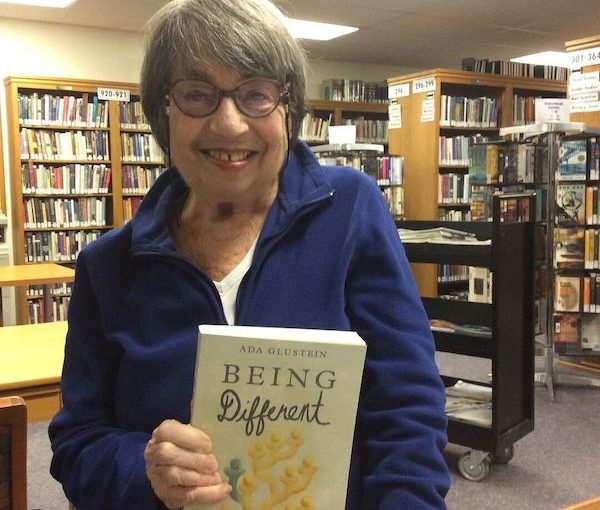
Ada Glustein’s passion for learning and teaching shines through in her self-published memoir Being Different. (photo from Ada Glustein)

Duke’s father would beat him. Tien, a refugee from Cambodia, had witnessed unimaginable violence. Louise was in and out of foster care because her father had drug addictions and her mom was emotionally unstable.

These are just a few of the countless children Ada Glustein encountered in her time as a teacher. Many of her young charges – she taught kindergarten mostly – faced harsh conditions at home and adult-sized problems. She shares her and their experiences with kindness and compassion in her memoir Being Different: From Friday Night Candles to Compassionate Classroom, which she self-published last year. She dedicates the book to her “parents, grandparents and ancestors whose struggles and strengths brought them to Canada, where at last they found their place to call home.” She also writes, “To my children and grandchildren, whose journeys bring the hope for a future of respect, social justice and belonging for all.”

While Glustein was born and raised in Ottawa, her Jewish Orthodox grandparents and parents came from Russia, from an area that became Ukraine. Part 1 of Being Different – Where I Am From: Stories of Home and Community – is about Glustein’s family and her early years. “Though my parents considered themselves to be modern,” she writes, “to me they seemed to live in a world caught between the old and the new.”

From her perspective, her father believed she asked too many questions and her mother fretted too much over her safety. But they came from a different time and place, more traditional and more dangerous. “My family comes from a place where the grass is greener somewhere else. Any place that is not Eastern Europe, not within the Pale of Settlement. Any place to leave behind the pogroms and the poverty, the losses of children who died in childbirth or wasted away from consumption. I do understand the silence,” she writes.

“But I also understand the richness of life’s difficult experiences and their inevitability. To allow those experiences to touch me, even to hurt me, helps me to live a full human life, to live with the reality of how things are.”

Part 1 of Being Different is about Glustein’s efforts to understand her place and who she is within her family. Part 2 – Where Do I Belong? Lessons at School – takes that exploration of identity and differentness into the broader world, where Glustein has to confront Christmas plays, lecherous older men, peer dynamics and a mix of teachers with different approaches, among other life lessons. In Part 3 – Becoming a Teacher: Finding My Way Home – we see how Glustein translates what she has learned into being an educator. And, honestly, if only every teacher could be like Glustein – not because she is perfect, but because she cares, and is continually learning.

Glustein graduated from Ottawa Teachers’ College, completed her bachelor of education at the University of British Columbia and her master of arts at Simon Fraser University. She taught for many years – in Ottawa, Toronto and Vancouver – and also became a faculty associate and sessional instructor at SFU, where she taught teachers. After she retired, she became a member of two writing groups and has had several of her works published. Being Different won a silver medal for Canada-West Region, non-fiction, in this year’s Independent Publisher Book (“IPPY”) Awards, and deservedly so.

Being Different is charming and heartbreakingly honest, written in short, crisp chapters, giving it a sense of immediacy. It is a call for all of us to be more patient with one another, to keep an open mind and to understand the impact our actions have on other people, especially children. In her openness about her own imperfections and missteps, Glustein is also asking us to be kind to ourselves. A more accepting and inclusive world begins with us, after all.

Being Different will be engaging to any reader – it will foster many a childhood memory – but should be a must-read for anyone interested in becoming an educator. It is available on Amazon.

Connecting from heart

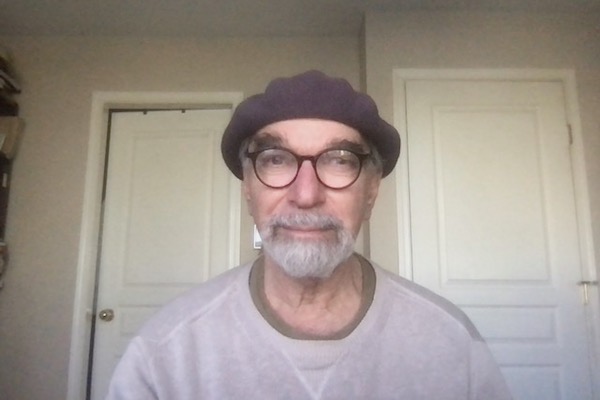
Zelik Segal teaches an ongoing, free class in Nonviolent Communication. (photo from Zelik Segal)

We’ve all had an experience in which someone is short-tempered with us for no apparent reason, or doesn’t respond to us as we would like. We have a choice in that moment to react in kind or to pause, understanding that they may be having a bad day, or are dealing with chronic pain, or any number of things that have little or nothing to do with us. In situations like these, something called Nonviolent Communication (NVC) might come in handy.

In a nutshell, NVC teaches how to observe a conflict with objectivity, in place of subjective evaluations of right and wrong or appropriate and inappropriate. It also teaches how to sort out your own feelings and understand what needs of yours are in play, then how to determine what action might fulfil your needs in a conflict without taking away from the needs of the other person or people.

Want to experiment with that process? Zelik Segal teaches an ongoing, free class in NVC in Vancouver that helps people who are experiencing conflict and are ready to address it. It could be a marital problem or an ongoing argument with a friend or family member.

Segal took his first course in NVC in 2012 and has been facilitating and practising for the past six years; he is working on his certification. Segal began studying NVC after he retired from 18 years as a bus driver with Coast Mountain Bus Company. Prior to that, he worked as Lower Mainland regional coordinator for the B.C. Head Injury Program, under the ministry of health.

“When coming into a group to teach NVC, I also experience learning together and creating community that feeds my soul,” Segal told the Independent. “And having the good fortune to have discovered this jewel of living a more rewarding life, I like to share my good fortune with anyone else willing to learn.”

Segal calls himself an “empathy coach.” As such, he sometimes helps NVC students unravel difficult situations in their lives.

“Teaching NVC is the most immediate and direct way I can fulfil the talmudic statement from Rabbi Tarfon, who said, ‘You are not responsible to complete the task (of repair, tikkun olam), nor are you free from doing your part.’”

Segal recognizes that NVC is not always effective in resolving conflict and that it can take a lot of patience to sort through complex situations. He told the Independent that it did, however, change his life.

“While my connections to people and activities have remained the same as they were before I began to practise NVC, the way I connect and experience these connections are significantly different and far more satisfying,” he said. “I have learned to apply my learning to my marriage, to my employment as a bus driver prior to my retirement, to my retirement, to family and to my own self.”

Psychologist Marshall Rosenberg developed NVC in the 1970s. In part, it was his reaction to the bullying he went through in school because of his Jewish surname. In his book Nonviolent Communication: The Language of Life, he states that bullying is a “tragic expression of unmet needs.”

Segal further explained that Rosenberg’s nine categories of needs are safety, sustenance, love, empathy, community, creativity, recreation, meaning and autonomy.

Rosenberg became famous for creating dialogue between people around the world who were involved in violent conflicts, including Israelis and Palestinians. Trainers in NVC today are continuing his work.

“While NVC teaches the use of compassionate understanding to achieve resolution of conflict, it supports the use of force in situations where there is a threat to life, where the other party is unwilling or unable to enter into conversation and presents a threat,” said Segal.

Rosenberg suggested that, in times of conflict, people respond by defending themselves, attacking the other or withdrawing from the situation, sometimes even experiencing complete collapse, explained Segal.

“Learning that emotions are rooted in previous learning and part of a complex, unconscious process in the brain and directly rooted in the degree to which needs are fulfilled, one can then respond with curiosity and reflection in place of old patterns of reaction,” he said.

Segal sees NVC as a way to practise Judaism’s emphasis on social justice and “apply many of the maxims expressed by the rabbis in Pirkei Avot [Ethics of Our Fathers],” he said.

If you have questions about NVC or are interested in Segal’s classes, you can contact him at zelik@telus.net. Rosenberg’s books are available online and the Centre for Nonviolent Communication, which he founded, offers international training and certifies individuals as trainers: cnvc.org.

“NVC is about connecting with ourselves and others from the heart,” it says on the centre’s website. “It’s about seeing the humanity in all of us. It’s about recognizing our commonalities and differences and finding ways to make life wonderful for all of us.”

Cassandra Freeman is a freelance writer living in Vancouver.

Jews and superheroes

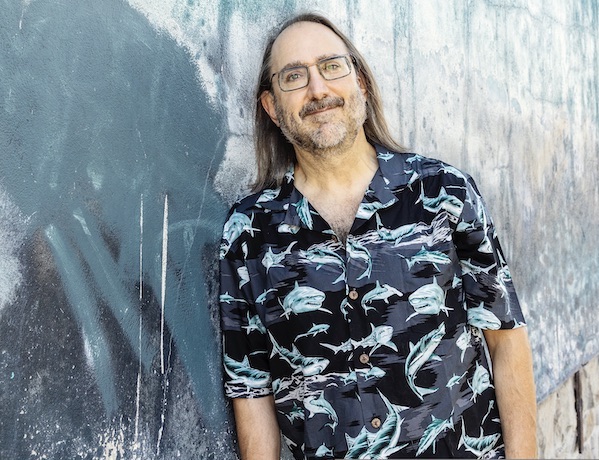
Mark Leiren-Young (photo from Mark Leiren-Young)

From a neurotic gentleman who dresses like a bat, to a wise-cracking human spider, to a Super-Mensch appearing in the bulrushes, not to mention a green golem – it is impossible to escape the Jewish influences of comic superheroes, says Mark Leiren-Young, a creative writing instructor at the University of Victoria.

Put another way, Leiren-Young told the Independent, “It would be simpler to name the iconic comic superheroes who were not shaped by Jewish immigrants. It’s a very small list: Wonder Woman and Shazam. That’s it.  That’s all of them.”

In his classes, Leiren-Young and his UVic students examine and analyze the origins of the classic superheroes, almost all of whom were created by Jewish immigrants in the United States. In the first half of the 20th century, these creators were working in comics at least in part because they were not allowed to get jobs in advertising or journalism at the time. In other words, Jews were permitted to do the low-class work that “proper people” would not consider.

Superman, Batman, Spider-Man, Green Lantern, the Flash, Dr. Strange and numerous others on the superhero roster were all products of Yiddishkeit, according to Leiren-Young, whose classes on the DC Universe and the Marvel Universe are among the most popular electives at the university.

“One of the things that fascinated me when I did a deep dive into this – all of these Jewish creators were creating characters who were not shy about their religion, though there were none who overtly identified as Jewish. For example, Spider-Man’s sense of humour is absolutely Borscht Belt humour. It is Stan Lee’s humour,” he said, referring to the character’s creator. “Now, you’re seeing the actor playing Spider-Man (Andrew Garfield) saying he just assumed he was a Jewish character. That’s how he reads.”

The perceived Jewishness of the early manifestations of comic superheroes was not lost on the Nazis. In 1940, a copy of Look magazine, featuring a two-page segment on how Superman would end the war, made its way to the desk of Das Schwartze Korps, the weekly publication of the SS, in Germany. The Nazis attacked Superman’s creator, writing, “Jerry Siegel, an intellectually and physically circumcised chap who has his headquarters in New York, is the inventor of a colourful figure with an impressive appearance, a powerful body, and a red swim suit who enjoys the ability to fly through the ether.

“The inventive Israelite named this pleasant guy with an overdeveloped body and underdeveloped mind ‘Superman.’ He advertised widely Superman’s sense of justice, well-suited for imitation by the American youth. As you can see, there is nothing (they) won’t do for money!”

The Nazis, led by Joseph Goebbels, their chief propagandist, were concerned about Superman’s sense of justice, Leiren-Young contends. The effects of the German invective against Superman and his creators carried over to these shores as well, with DC Comics being picketed by American Nazis in 1940.

“The creators of Superman were living in a Jewish section of Cleveland and were emphatically impressed with the idea of social justice,” Leiren-Young said.

The Superman-going-to-war spread in Look magazine preceded another daring Jewish-inspired comic – Captain America punching Hitler – that would be published in 1941, before the United States entered the war.

The Jewish creators of Superman and Captain America essentially were going to war and defining Hitler as the enemy before any American troops were involved, Leiren-Young explained.

“Captain America was created to punch Hitler. He looks like a nerdy Jew until he gets the super serum and then turns into the All-American Hero, which also created protests from the American Nazi Party. These were controversial because there were still so many Americans who were really not keen on the United States going to war,” said Leiren-Young.

Such imagery continued after the war. In the 1961 comic “The Death of Superman,” for example, the setting for the trial of Lex Luthor, Superman’s archenemy, strongly resembles the trial of Adolf Eichmann in Israel.

In another postwar Jewish connection, the scientist who invented Captain America in the comic series looks increasingly like Albert Einstein as the story progresses.

Leiren-Young developed an interest in comics at an early age, “raiding” his uncle’s collection after Shabbat dinners. “He had everything, but for me it was all about the DC Comics. I remember there were all sorts of different comics, but a lot of DC superheroes,” said Leiren-Young, who has more than 15,000 comic books in his collection.

In 2014, when Swerve magazine asked writers across Canada to name the most influential book they read as a youth, Leiren-Young responded, “I’ve written a few stories about how and why I fell in love with comics, but I never imagined that having a collection of 15,000-plus comics would launch my career as a television writer or become a job qualification for teaching certain university classes,” he tells his students.

Leiren-Young has written and/or developed animated shows for Netflix, BBC Kids, ABC, Teletoon and other broadcasters. He has also written for BBC’s live-action CGI superhero series Ace Lightning, and his other cartoon credits include scripts for ReBoot, Transformers: Beast Wars, RollBots, Class of the Titans and Pucca.

Beyond his classes and comics, Leiren-Young is a playwright, author, journalist, filmmaker and performer. The Hundred-Year-Old Whale, a film he wrote and directed, received the 2017 Writers Guild of Canada award for best documentary. His memoir, Never Shoot a Stampede Queen, won the 2009 Stephen Leacock Memorial Medal for Humour.

Leiren-Young recently gave a talk about comic superheroes at Victoria’s Congregation Emanu-El and hopes to address a Vancouver audience about the subject in the near future. His knowledge and enthusiasm for comics extends well beyond the confines of a standard newspaper article. He recommends Up, Up and Oy Vey by Simcha Weinstein, Stan Lee: A Life in Comics by Liel Leibowitz and Is Superman Circumcised? The Complete Jewish History of the World’s Greatest Hero by Roy Schwartz for further reading on the subject.

Sam Margolis has written for the Globe and Mail, the National Post, UPI and MSNBC.

Improv conference held here

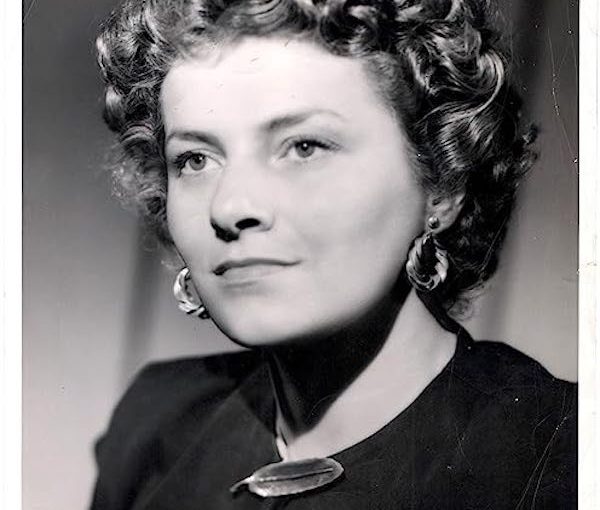
Viola Spolin is widely thought to be the mother of modern improvisation. (photo from amazon.ca)

If you thought that improv was only for entertainment, think again. This summer’s applied improvisation conference at Granville Island will showcase some of the world’s best applied improvisation coaches, trainers and facilitators.

The conference will be hosted by the Applied Improvisation Network in partnership with the Improv Centre, formerly Vancouver Theatresports.

Avril Orloff is one of four Jewish community members on the Vancouver conference planning committee. She told the Independent that there will be more than 30 workshops offered, from improv in education and health care to using it to navigate difficult conversations, increase confidence, build community and address humanitarian issues.

“The hard part will be choosing among all the great offers,” she said.

Conference dates are July 27-30, with July 25-26 called “Learning Journeys” before the conference proper, where people can sign up to do a deep dive into particular topics for a half or full day.

“Another highlight is the Open Space sessions on the final day, which is a marketplace of ideas where anyone can offer a workshop on any topic they’re particularly interested in,” said Orloff. “Open Space is a great lab for people who want to test out new ideas, processes and games, or put out an ask to anyone who’s willing to answer.”

Orloff dived into applied improv in 2022 and fell in love with it.

“The weekly classes and open space sessions were a bright spot in my life during the pandemic,” she said. “They expanded my outlook beyond the confines of the immediate moment and made me feel connected during a time of isolation.”

Since then, she has used applied improv techniques more and more in her work as a facilitator, starting with the online “connection cafés” she hosted during the pandemic, and now in person.

Avi Dolgin is another community member on the planning committee. He said they are expecting 200 delegates with a dozen or so who are local but the majority from elsewhere in Canada, as well as from the United States, Europe and Asia.

Dolgin sees improv as a profound way of unlocking human potential. Now retired, he uses improvisation to teach Bibliodrama at Or Shalom.

“In my life, an improvisation mindset encourages me to greater spontaneity, unexpected creativity and a greater willingness to help others in their ideas,” he said.

Carol Ann Fried, an inspirational speaker and consultant who lives in Vancouver, is also on the conference committee. She is presenting an applied improv workshop alongside Sarah Fisk and Matt Weinstein.

“Now that many people – but not all – are meeting again in person, the need to conduct ‘hybrid meetings,’ where some are in person and others are online, has arisen,” she said. “This split format is difficult, in part because it is hard for people to interact with each other. Our session attempts to address this issue with specific structures and activities to engage people in a hybrid setting, that are based in the values of improv, and that can be used in any work context.”

Well-known improviser Colin Mochrie will be one of the keynote speakers at the conference. Mochrie is most famous for appearing in the television show Whose Line Is It Anyway for the last 30 years.

Jewish community member David Diamond is the other keynote speaker. He will be giving a demonstration of Theatre for Living, with three audience members. Based on Augusto Boal’s Theatre of the Oppressed and Diamond’s lifelong interest in physics, Theatre for Living uses improvisation to create scenes that stimulate community dialogue and calls for change, in particular cross-sectoral understanding.

Applied Improvisation Network (AIN) was created in 2002 to bring together professionals with a keen interest in the study, practice and teaching of applied improvisation. Initially, a group of 30 or so improvisers gathered for the first conference in San Diego. Today, AIN is a global community of more than 8,000 participants online and across numerous regional and local groups.

Ed Reggi is AIN’s president and another member of the Jewish community. Reggi, who lives in St. Louis, Mo., told the Independent that there has always been a Jewish presence in the organization, from its founding to the present day.

Reggi said he takes his inspiration from Viola Spolin (1906-1994), who is widely thought to be the mother of modern improvisation. Spolin was the daughter of Jewish immigrants from Ukraine. Spolin’s father, Make Mills, had escaped pogroms in Ukraine to come to the United States. Her grandfather stayed in Ukraine and died at the hands of Stalin’s troops after the Soviets took his farm.

Much of Spolin’s work and success comes from her body of experience around recreational play. She studied under Neva Boyd, who was a sociologist, and documented recreational games, dance and activities that came over from Europe, Reggi said.

“Of course, Viola’s son, Paul Sills, watched his mother developing her Theatre Games and he took them over to the University of Chicago, where he worked with Mike Nichols, Elaine May, Ed Asner, Alan Alda and Avery Schreiber and so many more.”

Sills went on to create the Second City in Chicago, now North America’s oldest improvisation theatre institution, where Saturday Night Live stars Gilda Radner, John Belushi, John Candy, John Belushi, Dan Aykroyd, Eugene Levy and Catherine O’Hara made their debuts.

Reggi is excited about attending the conference here in July.

“I think, because this conference is happening in Vancouver, I expect more Jewish presence. Last year, we were in Ávila, Spain, after two years of being halted by the pandemic. I am thrilled to be coming back together in person again.”

For more information about the conference, go to appliedimprovisationnetwork.org/vancouver-conference-2023.

Cassandra Freeman is a freelance writer living in Vancouver.

Theatre that educates

Wendy Kout’s play Survivors is based on 10 real-life stories of young people’s Holocaust experiences. (photo by Peter Nadler)

Last year, Victoria-based Bema Productions and the Victoria Shoah Project collaborated on a pilot project: a nine-performance tour to middle and secondary schools of Survivors, a Holocaust-themed play by Wendy Kout. The success of the tour, which reached more than 1,100 students and 500 adults in the Victoria area, has led the organizations to broaden their reach throughout Vancouver Island, Metro Vancouver and other Western provinces beginning this autumn.

“Following our pilot tour in Victoria, we were asked to cover the Western provinces, and I happily accepted the challenge,” said Zelda Dean, the director of the play. “We will be touring to 30 schools on Vancouver Island in October 2023. In the fall of 2024, we will tour on the Mainland and in Alberta. Saskatchewan and Manitoba will be toured in 2025 – 150 performances in total will be presented.”

Citing a 2018 Canadian survey produced by the Azrieli Foundation, Yad Vashem, the United States Holocaust Memorial Museum and the Claims Conference, the Victoria organizers offer compelling reasons why Holocaust education is necessary today, particularly (but not only) for youth. According to the survey, 52% of millennials cannot name a concentration camp or ghetto; 62% of millennials did not know that six million Jews were killed in the Holocaust; 22% of millennials haven’t heard or are not sure if they have heard of the Holocaust; and 23% of all Canadians believe that substantially fewer than six million Jews were killed (two million or fewer) during the Holocaust, while another 24% were unsure of how many were killed.

“I have been alarmed at the ongoing rise in antisemitism for some years and have been looking for a suitable educational play. I had previously produced a play by Wendy and loved her work,” said Dean, regarding the selection of Survivors.

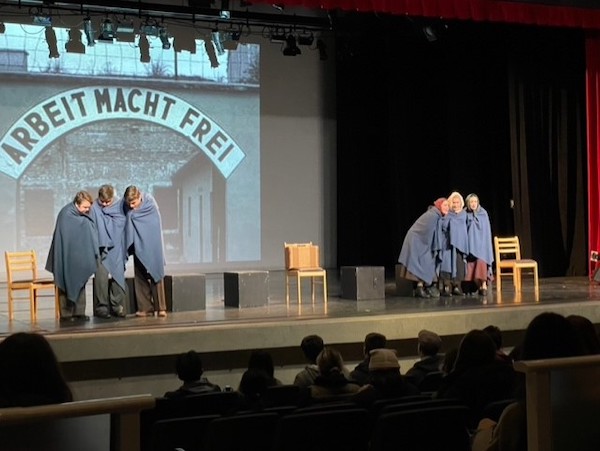
The intention of the one-hour play, suitable for those from Grade 6 to adulthood, is to provide a vehicle to teach lessons from the Shoah to younger audiences. Based on 10 real-life stories of young people’s Holocaust experiences, the play hopes to enable students to recognize the short- and long-term causes and effects of prejudice, discrimination and, ultimately, genocide. It also aims to foster critical thinking and bring the importance of human rights and social justice advocacy to the forefront.

Survivors goes through the chronological history of the Holocaust by enacting the experiences of Jewish children and teenagers from Europe. The young cast of six professional actors portrays the survivors, starting at innocence and continuing through the terrifying rise and rule of bigotry, xenophobia and violence, before they immigrate to America.

The play includes the true stories of a teen who watched her boyfriend being taken away to a concentration camp, a girl who was separated from her parents and relocated to England through the Kindertransport and a boy whose family struggled to escape to China.

Dean credited the young actors in the production for their diligence and dedication to their parts. “I put a casting call out and was delighted that a large number of very skilled young actors tried out for the roles. Those who were cast were tasked with doing considerable research into the Holocaust prior to rehearsals starting,” she said.

Survivors was originally commissioned and developed by CenterStage Theatre in Rochester, N.Y., in 2017, when Kout was asked to write a Holocaust play about survivors who had immigrated to the city. Shortly thereafter, while watching neo-Nazis march in Charlottesville, Va., Kout expressed the feeling that she was not simply writing an historical play but also a “warning play.”

The Victoria production in November and December 2022 – which played in school auditoriums, theatres and libraries, and had four public performances – was the first international tour of the play. There are other tours currently on both coasts of the United States, with Kout, along with the New York company that developed Survivors, creating a documentary on how the play came to be.

“Sharing the history of the Holocaust with students provides an important historical example of the dangers of allowing hatred and intolerance to take hold within a society,” said former B.C. minister of education Rob Fleming about the Victoria tour.

Additionally, several students who saw the play offered their input concerning how the performance affected them.

“I want to continue to learn more about the Holocaust and people’s stories. I’ve read [Elie Wiesel’s] Night and seen this play but other than that I haven’t heard many personal stories, so I’d like to learn more,” said one.

“I learned once again that I should not judge others selfishly based on race, religion, appearance or prejudice, and I will try to [remember that] whenever I meet new people from now on,” contributed another.

The organizers are looking for financial support to fund the upcoming Western Canadian tours.

“Over $450,000 is required to offer this powerful educational play to so many students, and we are actively fundraising to individuals, corporations, foundations, etc. We are running a campaign inviting folks to sponsor a school in their area for only $500,” Dean explained.

For more information about the play and to contribute, visit holocausttheatre.com or email info@holocausttheatre.com.

Sam Margolis has written for the Globe and Mail, the National Post, UPI and MSNBC.

Prevention is ultimate goal

World Elder Abuse Awareness Day will be marked with a community-wide event hosted by Jewish Family Services, in partnership with many other agencies. (photo from nvrc.ca)

According to a World Health Organization study, half the world’s population bears a prejudice against the elderly. Jewish Family Services in Vancouver, which shares that statistic on its website, notes that roughly 17% of people over the age of 60 worldwide are victims of elder abuse. The agency also notes that about 20% of Canadians believe older people are a burden on society, and that approximately 80% of Canadian seniors report discrimination in health care.

On June 15, at 10 a.m., JFS will host a free community-wide event in recognition of World Elder Abuse Awareness Day (WEAAD) in the Jewish Community Centre of Greater Vancouver’s Wosk Auditorium. Rights Don’t Get Old: Let’s Unite Against Elder Abuse will cover what can be done to prevent – what many recent studies have shown to be – a growing problem. Featured speakers include Michael Lee, MLA for Vancouver-Langara and shadow minister for Indigenous relations and reconciliation; Isobel McKenzie, British Columbia’s seniors advocate; and Linda Youk of Seniors First BC.

“A very important element of elder abuse is that it can happen to anyone,” said Cindy McMillan, director of programs and community partnerships at JFS. “We shouldn’t make assumptions about who is at risk and who is not. Awareness that it exists, and that there are supports out there … is what June 15 is all about.”

For JFS, “a nonprofit that supports up to 1,200 seniors annually to live at home safely and with dignity, elder abuse prevention, detection and response is an essential part of support,” she said. “This year, following several years of COVID, and subsequent isolation of many older adults, I felt it was very timely to bring the community together to create more awareness around this issue.”

Elder abuse comprises varying forms of mistreatment, the most commonly reported being neglect, followed by emotional and financial abuse. Physical abuse is also prevalent, with 8.8% of abused seniors experiencing physical violence, according to data provided by JFS. Elder abuse can occur in numerous settings, including within the home, at care facilities and in the community. Most reported cases involve family members, with adult children and spouses being the most common perpetrators.

A Statistics Canada report released in 2019 stated that nearly one in five seniors had experienced some form of abuse. A report from the Office of the Seniors Advocate in British Columbia, using data from 2017 to 2021, found a 49% increase in neglect and self-neglect, an 87% increase in reported physical abuse and a 49% increase in financial abuse over that five-year period.

Neglect is often underreported, both because of a lack of awareness as to what constitutes neglect and the potential stigma associated with the admission of neglect, explained McMillan. Neglect can manifest in different ways, such as providing insufficient food and water, failing to administer medication, leaving an older adult in dirty and unsafe living conditions, and not seeking medical attention for the elderly person when it is needed.

Financial abuse, or the exploitation of older adults for monetary gain, can have serious ramifications. Despite numerous laws in place to prevent it, B.C. seniors lose an estimated $50 million annually because of financial abuse, with only one in five cases reported.

WEAAD was launched in 2006 by the International Network for the Prevention of Elder Abuse and the World Health Organization at the United Nations.

“JFS has always been involved in WEAAD, primarily through our Better at Home program, where we have partnered with different community organizations to have smaller events that promote awareness,” said McMillan. “Our involvement stems from our connection with the Marpole Community Response Network, who is at the forefront of providing information and education on elder abuse.”

Better at Home is a JFS-coordinated program, administered by the United Way, which helps seniors in Kerrisdale, Oakridge, Marpole, Southlands and Dunbar with non-medical, day-to-day tasks such as housekeeping, transportation, grocery shopping, visits and handyperson repairs. The program’s objective is to assist seniors so that they can continue to live independently in their own homes and remain connected to their communities.

This year’s June 15 event will have numerous resource tables located in the atrium of the JCC. Among the groups presenting are the Alzheimer Society of British Columbia, JQT Vancouver, Kerrisdale Oakridge Marpole Community Policing Centre, L’Chaim Adult Day Centre, ASK Friendship Society and ReAct Adult Protection Program of Vancouver Coastal Health.

In a statement to the Independent, JFS said it “was very grateful to have partners like the Jewish Federation, the JCC, the Better at Home Program and Seniors First BC coming together to put on such an important event.”

To register for Rights Don’t Get Old: Let’s Unite Against Elder Abuse, visit jfsvancouver.ca. Refreshments will be provided.

Sam Margolis has written for the Globe and Mail, the National Post, UPI and MSNBC.

Talking about antisemitism

The administration of U.S. President Joe Biden released its National Strategy to Counter Antisemitism recently. Unveiled by First Gentleman Doug Emhoff, Jewish husband of Vice-President Kamala Harris, the strategy rests on four main pillars: to increase awareness and understanding of antisemitism, including its threat to America, and broadening appreciation of Jewish American heritage; to improve safety and security for Jewish communities; to reverse the normalization of antisemitism and counter antisemitic discrimination; and to build cross-community solidarity and collective action to counter hate.

Canadian officials at the federal and provincial levels have also convened summits on the subject and introduced a range of strategies and programs to confront the problem. This recognition at the highest levels is crucial. As antisemitism has increased in North America and Western Europe, elected officials have overwhelmingly, with some notable exceptions, said and done the right things.

In his remarks at the launch of the U.S. strategy, Emhoff called for a “whole-of-society” approach to the problem. And this short reference is vital. Governments have been grappling with the rising problem of antisemitism and some other allies, organizations, antiracism activists and commentators have addressed it, but there is not a larger societal conversation about it.

We have not seen much discussion of antisemitism beyond the Jewish community the way we have seen contemporary popular engagement with, for example, anti-Black racism, as witnessed through the Black Lives Matter movement; women’s equality, as addressed through many approaches, including #MeToo; and Indigenous issues, most recently in Canada with the Truth and Reconciliation Commission.

The arc of the moral universe is long, but it bends toward justice, as Martin Luther King Jr. said. There has been hard-won progress in the six decades since the milestones of the Black Civil Rights Movement. But, sadly, most white people only became more engaged in recent years, as outrage over police-involved shootings and similar injustices became top stories. These spurred conversations at dinner tables, in work lunchrooms, boardrooms and among friends.

We have seen similar leaps forward in awareness and discussion around issues faced by Indigenous peoples in Canada, and those exchanges have likewise taken place at the person-to-person level, involving Indigenous and non-Indigenous people, but also as importantly, between non-Indigenous people themselves.

The #MeToo movement and a greater openness to talking about violence against women and gender equality are other cornerstones of social change in the past few generations.

Perhaps no single example of progress is more stunning than attitudes toward LGBTQ+ people, which has gone from literal criminal prohibition to a level of social acceptance in less than a single average lifetime. This, too, is a result of connecting at the personal level. Legislation and leadership from elected officials, clergy, journalists and commentators and other thought leaders have been important. But the thing that has the most power to change hearts and minds is hearing personal stories from people affected and hashing out moral questions among friends.

While other forms of discrimination and bias have been confronted to varying degrees, antisemitism is on a precarious upswing, but the public dialogue has yet to begin.

There is no single explanation for why this is so, but one undeniable characteristic of antisemitism is the trope of “Jewish power.” In the simplest formulation, if Jews are powerful, why would activists and antiracism advocates devote resources to this cause? This is especially true in the context of the larger discussion on race currently taking place, which emphasizes power versus powerlessness.

There are other reasons. Canada’s Jewish community is comparatively tiny and overwhelmingly concentrated in Toronto and Montreal. People in other parts of the country might not know many Jews – and knowing members of a minority community has been shown to be the likeliest prerequisite to overcoming prejudice (though it is by no means foolproof, of course).

Another factor is that, even for non-Jews who know Jewish people, those Jews may not be comfortable opening up about discrimination and oppression they have faced. Too often, Jews have been told, implicitly or explicitly, that they are not disadvantaged but privileged, that the Jewish people’s time as the victim du jour is passed. Complicating the discussion is the chasm of miscommunication and misunderstanding between Jewish and non-Jewish Canadians on issues relating to Israel and the centrality of the cradle of Jewish peoplehood in the hearts of nearly all Jews, regardless of affiliation, ideology or other differences.

As is the case with other minority groups, it should not be left to Jewish people to fight the discrimination against them and its associated manifestations. But it is, for the most part. Jews need to be prepared to start these conversations, and this involves educating ourselves, so that we can better articulate what are often painful and vulnerable personal relationships with discrimination.

Governments and Jewish agencies are doing what they can to confront antisemitism. Ordinary people, chatting with friends and colleagues, need to help bring this work to an interpersonal level. In an environment where Jewish experiences with discrimination are often actively mocked, this is a tall order. But it is even more reason we need to share our experiences and ideas more broadly – to start more discussions.