Skip to content
  • Home
  • Subscribe / donate
  • Events calendar
  • News
    • Local
    • National
    • Israel
    • World
    • עניין בחדשות
      A roundup of news in Canada and further afield, in Hebrew.
  • Opinion
    • From the JI
    • Op-Ed
  • Arts & Culture
    • Performing Arts
    • Music
    • Books
    • Visual Arts
    • TV & Film
  • Life
    • Celebrating the Holidays
    • Travel
    • The Daily Snooze
      Cartoons by Jacob Samuel
    • Mystery Photo
      Help the JI and JMABC fill in the gaps in our archives.
  • Community Links
    • Organizations, Etc.
    • Other News Sources & Blogs
    • Business Directory
  • FAQ
  • JI Chai Celebration
  • JI@88! video

Recent Posts

  • Legal help for students
  • Revisiting myth of Lilith
  • Wrong person rebuked
  • Canada’s mixed messages
  • Questions for museum
  • Symposium on antizionism
  • Making soccer political
  • CJPAC lauds Pulver’s impact
  • City recognizes Vrba’s legacy  
  • Organ donation saves lives
  • Theodore’s March premiere
  • A healing Shabbaton
  • Supplying healthy food
  • A chime of metal tags
  • Yellowknife seder a first
  • Ishai energizes, unifies
  • A Lag b’Omer to remember
  • Expanding the healing
  • Hannah Senesh – a unique hero
  • Community milestones … May 2026
  • Sharing her testimony
  • Fall fight takes leap forward
  • The balancing of rights
  • Multiple Tony n’ Tina roles
  • Stories of trauma, resilience
  • Celebrate our culture
  • A responsibility to help
  • What wellness means at JCC
  • Together in mourning
  • Downhill after Trump?
  • Birth control even easier now
  • Eco-Sisters mentorship
  • Unexpected discoveries
  • Study’s results hopeful
  • Bad behaviour affects us all
  • Thankful for the police

Archives

Follow @JewishIndie
image - The CJN - Visit Us Banner - 300x600 - 101625

Luxury in Jerusalem

Luxury in Jerusalem

Merom Yerushalayim’s new condominiums. (photo by Gil Zohar)

Having recently acquired Toronto’s troubled 65-storey Trump International Hotel and Tower, now rebranded as the St. Regis Toronto, Joseph Waldman – one of the principals of the city’s Rothner Highgates Group – has set his sights on Jerusalem.

The Antwerp-born developer and his partner, Ricky Rothner, are looking to Merom Yerushalayim (Jerusalem Heights), a project of 218 luxury condominiums located on Malchei Israel Street at the highest point in central Jerusalem.

Notwithstanding that the Holy City is awash with unsold luxury apartments and unfinished high-end towers, Waldman and Rothner, together with their Jerusalem partner Shmuel Narkiss, have found a niche market. They’re targeting Charedim, a segment of Israeli society stereotypically characterized as having low economic status. With only 34 of the 172 units in Phase I left unsold and the unit owners occupying their homes since Passover, the Merom Yerushalayim project has succeeded beyond expectations.

Prices start at NIS 35,000 ($12,500 Cdn) per square metre. Who are the purchasers of these more than $1 million homes? They’re equally divided between North Americans and Europeans with a smattering of Israelis, said Merom Yerushalayim’s sales manager Yehuda Eagle, who fluently banters with clients in Hebrew, Yiddish and English.

Designed by Jerusalem’s Braidman Agmon Architects, the project adds seven residential buildings to five historic buildings, which are being preserved and given new functions. The derelict Schneller Orphanage, with its distinctive Bavarian onion-dome cupola, is slated to become a museum of Jewish heritage. Another 19th-century structure will be refurbished as a synagogue and a third as a yeshivah for teenage boys.

Of the seven new residential buildings, five have been completed. Two are eight floors high. Three were built to a height of five storeys, pending a zoning-density change to permit an additional three levels. The housing blocs are clustered together and nearly four-fifths of the historic compound has been set aside as green space. Parking is underground.

Waldman hedges about the schedule of the final two buildings. While a huge hole has been excavated for them, construction will depend on sales, he said.

Acknowledging that he will keep a condominium for his family’s use, Waldman told the Jewish Independent, “Try not to write about me. I’m a simple guy. I don’t want kavod [honour].”
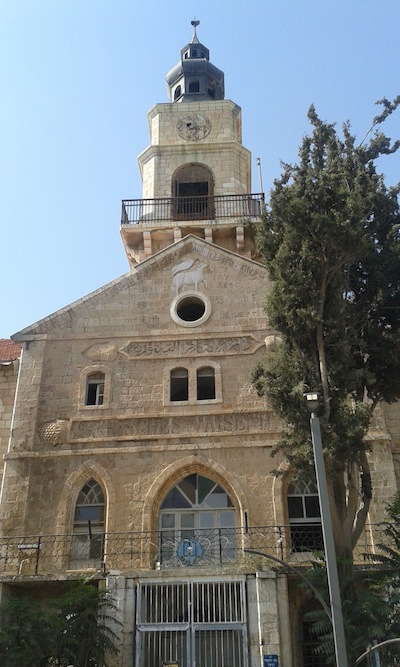
photo - The Schneller Orphanage is slated to become a museum of Jewish heritage
The Schneller Orphanage is slated to become a museum of Jewish heritage. (photo by Gil Zohar)

The Schneller Compound has a storied past. In 1860, Johann Ludwig Schneller (1820–1896), a Lutheran missionary from Basel, Switzerland, established the orphanage for nine survivors of the Druze massacre of 10,000 Maronite Christians in the mountains of Lebanon. By the next year, the orphanage had taken in 40 boys, and soon also began accepting girls. For eight decades, the Syrisches Waisenhaus (Syrian Orphanage) flourished, expanding to include an institution for the blind and a vocational school. It provided both academic and vocational training to orphaned boys and girls from Palestine, Syria, Egypt, Ethiopia, Armenia, Turkey, Russia, Iran and Germany. By the end of the 1800s, it had become the largest compound outside of the Old City.

During the Second World War, British Mandate officials interned and deported the orphanage’s German staff. The sprawling site was turned into the largest Allied ammunition dump in the Middle East. In March 1948, with Britain quitting Palestine, the base was seized by the Zionist military organization Haganah. Following statehood, and until 2008, it served as an Israel Defence Forces camp.

When the Israeli army redeployed to bases in the Negev, the state-owned property was put up for sale by the Israel Lands Authority and ultimately purchased by the Rothner Highgates Group. Before construction could begin, the Israel Antiquities Authority (IAA) carried out salvage digs – and archeologists discovered a winepress and bathhouse that served Rome’s 10th Legion Fretensis.

While Charedim have opposed other archeological digs, these excavations were carried out without incident.

“This is an excellent example of many years of cooperation and deep and close ties with the Charedi community,” said IAA Jerusalem district archeologist Amit Re’em. “The general public is used to hearing of the clashes between the archeologists and the Orthodox community around the issue of the graves, but is unaware of the joint work done on a daily basis and the interest expressed by the ultra-Orthodox sector. The Israel Antiquities Authority is working to instil our ancient cultural heritage in this population, as it does with other sectors.”

Respecting Merom Yerushalayim’s Charedi character, the project’s marketing wing, Sun-Chen, sends out a weekly Hebrew-language commentary on the Torah portion. Rothner Highgates’ promotional video depicts preparations for Shabbat and, towards the end of the advertisement, it says that the development is “20 minutes from the Kotel, three minutes from Geula. Close to the centre, close to the heart. Merom Yerushalayim. The best of two worlds.” It also describes it as “country living in the heart of Yerushalayim.”

Luxury competition

In 2011, Montreal billionaire Rabbi Hershey Friedman and a group of Canadian investors bought the heavily-indebted Azorim Investment Development and Construction Co. Azorim recently completed Boutique HaNevi’im on the Street of the Prophets near downtown Jerusalem. The seven-storey project includes 87 luxury apartments and a boutique hotel. The promotional video features Friedman standing on the roof terrace looking out over the golden Dome of the Rock citing, “If I forget thee, O Jerusalem, let my right hand wither.” (Psalms 137:5)

Gil Zohar is a journalist based in Jerusalem.



Format ImagePosted on August 25, 2017August 22, 2017Author Gil ZoharCategories IsraelTags development, Israel, Jerusalem, Joseph Waldman, Merom Yerushalayim, real estate, Rothner Highgates
נגד השנאה והגזענות

נגד השנאה והגזענות

למזל בודדים השתתפו בהפגנת ארגוני הימין הקיצוני נגד ההגירה לקנדה, ביום שבת מול בית עיריית ונקובר. מולם עמדו כארבעת אלפים אזרחים שהגיעו למחות נגדם. (צילום: Cynthia Ramsay)

ראשי הקהילה היהודית בקנדה פרסמו בימים האחרונים הודעות פומביות המגנות נחרצות את השנאה והגזענות בקנדה, ארה”ב וספרד. זאת לאור האירועים האחרונים שהתרחשו בצפון אמריקה ובאירופה.

יו”ר מועצת המנהלים של הפדרציה היהודית של אזור מטרו ונקובר, קרן ג’יימס אמרה בהודעתה: “אנו מקפידים להביע גינוי נגד כל הביטויים של אפליה, שנאה, גזענות, שנאת זרים, הומופוביה ואנטישמיות בחברה שלנו. הם מאיימים על החברה הרב-תרבותית שלנו שהיא מסבירת פנים, אוהבת ומגוונת. ובמיוחד הם מתנגדים למחויבות שלנו לקבל ולהכליל שהם הערכים שהקהילה היהודית תמיד דוגלת בהם. אנו מביעים דאגה עמוקה ביותר מהאירועים שאורגנו על ידי הארגונים התומכים בעליונות הגזע הלבן והמתנגדים להגירה, בונקובר. צריך שיהיה ברור שאנו מגנים בצורה חד משמעית את העצרת הגזענית הזו. הקהילה שלנו יודעת היטב, כי כל ביטויי השינאה המכוונים למיעוטים בסופו של דבר מאיימים על החברה כולה. צריך לגלות אפס סובלנות לכל הביטויים הגזעניים בחברה שלנו. עלינו לזכור שקנדה אינה חסינה מאתגרים של אפליה, שנאה, גזענות, שנאת זרים, הומופוביה ואנטשימיות. בואו נעבוד ביחד כדי להבטיח שכולם ירגישו רצויים בעיר שלנו”.

מנכ”ל הפדרציה היהודית של אזור מטרו ונקובר, עזרא שנקן, אמר בהודעתו: “אני חייב קודם כל לנצל הזדמנות זו כדי לגנות את אירועי האלימות בשרלוטסוויל ובספרד בשבוע שעבר. אני בטוח שאתם מזדעזעים כמוני על השנאה והגזענות, הרצח חסר הטעם של הת”ר הייר בשרלוטסוויל ושל שלושה עשר האנשים בספרד, כאשר עשרות נוספים נפצעו. אפשר להרגיש זאת בקלות גם בקנדה, בזמן שאנו מתגאים כל כך במרקם הרב תרבותי של ארצנו, ואנחנו גם מתחלחלים מעצרות שנאה כמו זו שהייתה בשרלוטסוויל. למרבה הצער אנו לא חסינים לגמרי וכפי שאתם יודעים התקיימה עצרת של הימין הקיצוני ביום שבת האחרון מול בניין עיריית ונקובר. הפדרציה שלנו בשותפות עם המרכז לענייני היהודים וישראל בקנדה פרסמנו הודעה המגנה את עצרת הימין הקיצוני. אנו תמיד נשמיע את קולנו במחאה כאשר אנחנו רואים גזענות ושנאה, ואנו גם שמחים לראות שגם ראש העיר של ונקובר, גרג רוברטסון, היה קולני בהתנגדותו ואמר כי לשנאה ולגזענות אין מקום בעיר הזו”.

למזל בודדים השתתפו בהפגנת ארגוני הימין הקיצוני נגד ההגירה לקנדה, ביום שבת מול בית עיריית ונקובר. מולם עמדו כארבעת אלפים אזרחים שהגיעו למחות נגדם. כוחות מתוגברים של המשטרה נכחו במקום והם תארו את האירועים “כידידותיים”. בסך הכל רק חמישה מפגינים נעצרו על ידי המשטרה ושניים נוספים הובלו אל מחוץ לאזור ההפגנה.

מנכ”ל המרכז לענייני היהודים וישראל בקנדה, שמעון פוגל, אמר בהודעתו בין היתר את הדברים הבאים: “אנו מזועזעים מן הדימויים העולים משרלוטסוויל. תצוגה של נאצים והתומכים בעליונות של הגזע הלבן מזעזעת ומגעילה, את כל בני הרצון הטוב. עבור הקהילה שלנו, ובמיוחד עבור ניצולי השואה זה במיוחד צורם ומזכיר לנו את הרגעים האפלים ביותר בהיסטוריה שלנו. עבור אלה שמחוץ לקהילה היהודית, שרלוטסוויל צריכה לשמש תזכורת נחרצת לכך שהאינטישמיות היא אמיתית, הרסנית וקשורה קשר הדוק עם צורות אחרות של גזענות ושנאה. הקהילה היהודית מכירה היטב את השפעת השנאה הזאת. גם במדינה פלורליסטית כמו קנדה, היהודים נותרו הקהילה הדתית הממוקדת ביותר לפשעי השאה. ברור שאנו לא חסינים, אבל אנחנו לא לבד. קנדה היא בין המקומות הטובים ביותר בעולם להיות בו יהודים. יש לזכור שהמצב הביטחוני שלנו בקנדה לא השתנה גם היום”.

Format ImagePosted on August 23, 2017August 21, 2017Author Roni RachmaniCategories עניין בחדשותTags antisemitism, Canada, Charlottesville, Ezra Shanken, Gregor Robertson, Jewish Federation, Vancouver, אנטישמיות, גרג רוברטסון, הפדרציה היהודית, ונקובר, עזרא שנקן, קנדה, שרלוטסוויל
Shibli: a model Israeli town

Shibli: a model Israeli town

Ruth Wasserman Lande is one of the four speakers at FEDtalks, the kickoff event of the Jewish Federation of Greater Vancouver’s annual campaign, on Sept. 13. (photo from Ruth Wasserman Lande)

In her “day job,” Ruth Wasserman Lande is deputy director-general of the Federation of Local Authorities in Israel, a position in which, among other things, she seeks out the best practices of municipal governments around the world and shares them with cities and towns in Israel. As a “volunteer, extracurricular” side gig, she is involved in a pilot project that could have massive implications for Israel’s cohesion, security, economic and social advancement and the place of minorities within the country.

She and a group of volunteers – many of them, like her, alumni of the Wexner Foundation’s Israel fellowship at Harvard University’s Kennedy School of Government – are turning a disadvantaged Bedouin village in the north of Israel into a model community that can be replicated across the country.

Improving the economic conditions and the integration of non-Jewish citizens into the Zionist project is crucial for Israel’s future, Wasserman Lande said in a telephone interview with the Jewish Independent, and the Bedouin population is critical to this undertaking. She will speak about the project and its potential impacts at FEDtalks, the kickoff event of the Jewish Federation of Greater Vancouver’s annual campaign, next month.

The town of Shibli Um El-Ghanem has a population of 6,700, all of whom are Muslim Bedouins and many of whom serve in the Israel Defence Forces or alternative civil service. Bedouins in the country’s north have a long history as “exemplary citizens,” going back to service in the War of Independence, she said.

“The potential impact of the 180,000 Bedouins in the north is far larger than their absolute number, and the country’s strategic alliance with them since the establishment of the state has been, and remains, key to its national security interests,” Wasserman Lande has written. The pilot project will “serve as a positive example to others in the village who do not serve in the IDF, as well as other minorities, who find themselves in the crossroads between different vectors which threaten to draw them away from moderate integration into Israeli society.”

Wasserman Lande notes that Egypt’s poor treatment of its Bedouin population is to blame for some of the anti-government unrest in Sinai, while Israel’s comparative success in integrating Bedouins has dissuaded many in that community from becoming attracted to extremist movements. Success in this pilot project is integral, she contends, to cementing Bedouin allegiance to Israel and providing an example to other minority communities.

The project is a multi-pronged effort to identify and address challenges and opportunities within the town. It includes the establishment of a centre for scientific excellence, as well as a regional centre of United Hatzalah, the first aid brigade created and run by Charedi Jews, which is often first on the scene at emergencies, providing basic medical care until the arrival of Magen David Adom. It also includes the creation of a Bedouin Heritage Visitors Centre, which will represent northern Bedouin culture and heritage.

A regional industrial park serving Jewish and Arab communities in the Lower Galilee is intended to provide opportunities for employment and growth.

In analyzing the untapped assets of the town, Wasserman Lande and her team identified tourism as a potential source of economic growth. Shibli is located at the base of Mount Tabor, which is home to two important churches – one Catholic and one Orthodox Christian – and is located in a place of immense natural beauty. The churches attract 500,000 pilgrims a year, but the area has done little to maximize the economic potential of these visitors. When the model is replicated in other towns, she said, economic assets unique to each place will be identified.

Shibli was selected to test the model because it ticked many boxes, one of which was the cooperation of the local authorities, including a mayor who is a dual Canadian-Israeli citizen. It is also notable that the town is on Israel’s demographic and geographic periphery and is socioeconomically disadvantaged.

While there are tangible components to the project, there are also capacity-building aspects that target less visible obstacles to the success of communities like Shibli. The central government, through its various ministries, allocates significant financial resources to local communities, but some are better than others at doing the administrative work required to access funding and use it efficiently. While public aid may be available, Wasserman Lande said, obtaining it often depends on “being able to speak to the right people, open the right doors, do the right follow-up.” Successful use of funds also depends on confronting nepotism and a lack of transparency in some communities. Part of the project is to develop skills in local leadership.

Wasserman Lande sees the entire undertaking as a Zionistic one.

“The vision is Zionistic, my drive and incentive is Zionistic,” she said. “I’m thinking, what is good for my country? It is very important for my country strategically that this particular population is aligned with its interests.”

If successful, the project will advance the Zionist project within Israel and abroad, she said.

“That will create, if it’s a success story, a model formulation for other minorities,” said Wasserman Lande. “It will also be a flagship against BDS [the movement to boycott, divest from and sanction Israel] across the world as a beautiful, successful model formulation in a completely Muslim village. In a little bit of a later stage it can even serve as a potential bridge – a people bridge – between Israel and the Saudi Arabian Bedouins, Egyptian Bedouins … but we are not there yet. Furthermore, it will empower and enhance the Bedouins themselves, first and foremost those that live in that particular village.… That is something very, very special.”

Prior to beginning this project and her position as deputy director-general of the municipal authority, Wasserman Lande was an advisor to the late former president of Israel, Shimon Peres. From him, Wasserman Lande learned something that she said has served her well in this undertaking.

“I will say only one thing [about Peres]: he didn’t think that anything was impossible,” she said. “It was an inspiration for me. That’s really the driving force behind this whole project because I can definitely say from the bottom of my heart that it is very challenging.”

Wasserman Lande will be one of four speakers at FEDtalks on Sept. 13 – for tickets, visit jewishvancouver.com/fedtalks2017. The Independent has invited all four speakers to be featured in advance of the event. Next week: Rabbi Joseph Telushkin.

Format ImagePosted on August 18, 2017August 16, 2017Author Pat JohnsonCategories LocalTags annual campaign, FEDtalks, Israel, Jewish Federation, peace, tikkun olam
Celebration of Venice

Celebration of Venice

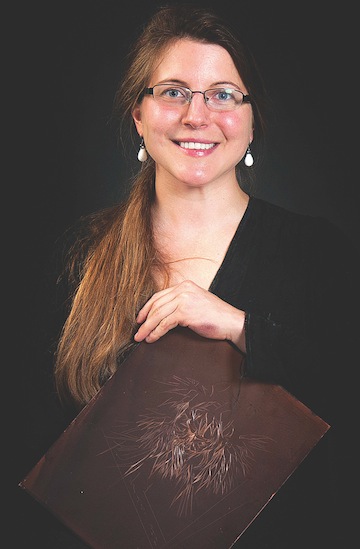
Artist Iza Radinsky at Zack Gallery. (photo by Olga Livshin)

Just over 500 years ago, in 1516, the Venetian Republic forcibly moved 700 Venetian Jews to an island, the abandoned site of a 14th-century foundry. In doing so, they created the first ghetto. The word ghetto means “foundry” in the old Venetian dialect.

photo - Rachel Singel
Rachel Singel (photo from Rachel Singer)

The Venetian ghetto had two access bridges, both guarded at night, and boats also patrolled the canals. Despite the isolation and other restrictions, the republic was relatively tolerant. Inside the ghetto, Jews were free to practise their religion and traditions; they were not forced to convert, as was the case in Spain and many other places throughout Europe. The ghetto became known as a place of study and scholarship, and its population grew from 700 in 1516 to more than 6,000 a hundred years later. The area – which existed until 1797, when Napoleon conquered the republic and gave equality to all citizens – remains a centre of Jewish culture.

Many Jewish and Italian organizations in North America and Europe have commemorated the 500th anniversary of the Venetian ghetto in some way. Here in Vancouver, Zack Gallery, in conjunction with Il Museo at the Italian Cultural Centre, are presenting Stories from the Stones of Venice: The Art of Rachel Singel and Iza Radinsky. The exhibit was the brainchild of Singel, an artist, printmaker and assistant professor at the University of Louisville, in Kentucky.

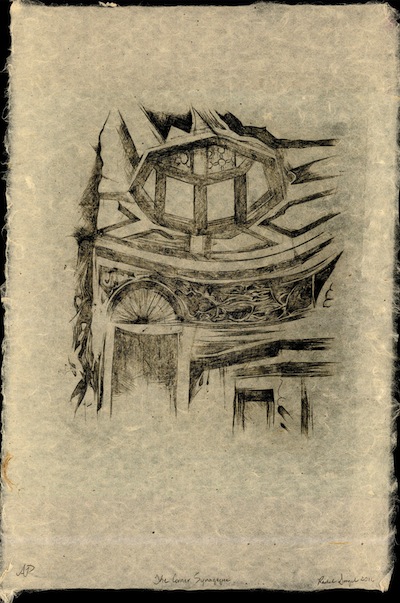
“The year 2016 marked the 500th year since the establishment of the Jewish ghetto in Venice,” she said in an email interview with the Jewish Independent. “To honour the historical anniversary and the influence of this uniquely urban space, I worked onsite in Venice for two months to create a series of etchings illustrating the buildings, structures and streets of the ghetto.”

That was not Singel’s first visit to Venice. “I first went to Venice in 2012 for an artist residency,” she said. “I have had the opportunity to return to Venice every year since. My artworks have been increasingly influenced by Venice and its fragile state…. The last two years, I have also brought my students to the Scuola Internazionale di Grafica Venezia.”

photo - “The Corner Synagogue” by Rachel Singel
“The Corner Synagogue” by Rachel Singel. (photo from Rachel Singer)

Singel has exhibited her 10 ghetto prints at the international school and at the Jewish community centre in Louisville.

“Each of the 10 images seeks to call attention to the Venetian ghetto’s importance, not only as an architectural complex within the confines of Venice, but also its worth internationally. Its structures are resonantly symbolic, representing the community’s resolute will to survive and prosper in what was an exceedingly hostile social environment.”

When Singel heard about the exhibition that was being planned at Il Museo – The Venetian Ghetto: A Virtual Reconstruction 1516-2017, which opened on July 25 – she looked into the possibility of engaging with their event. “I reached out to the Zack Gallery director, Linda Lando, about exhibiting my prints at the JCC,” Singel said.

Lando liked the idea of a Venice exhibition, but 10 small prints were not enough to fill the Zack, so Lando invited Radinsky, a local artist, to exhibit her paintings of Venice in the same show.

“Linda Lando saw five of my paintings of Venice before,” Radinsky said. “She asked me if I had more and if I would like to participate in a two-artist show together with Rachel Singel. I was happy to.”

Radinsky’s 14 large paintings and Singel’s prints form the Zack exhibit.

“I love Venice,” Radinsky said. “I first visited it in 2006, with my 86-year-old father. I was awed by the city. It was as beautiful as in the old masters’ paintings I admired as a child in the museums of Moscow and St. Petersburg, even better. Afterwards, every time I go to Europe, I visit Venice. It draws me. It’s quiet there, no cars. People walk and gondolas float on the canals. Nothing artificial, just earthy colours, red roofs, water and sky – and reflections in the canals.”

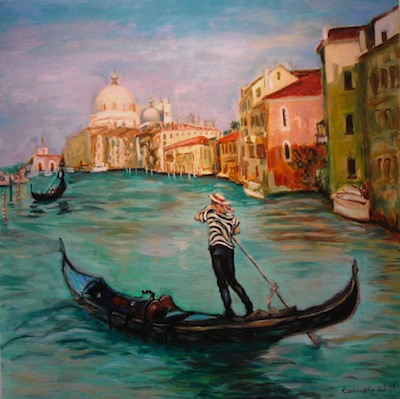
photo - “Gondolier” by Iza Radinsky
“Gondolier” by Iza Radinsky. (photo from Iza Radinsky)

In her paintings, gondolas and gondoliers look as intrinsic to the ancient city as the sunlight and shadows, the unique water streets and multiple bridges of Venice. The muted colours coalesce into one another, creating combinations that have no names. The sky and the water blend together, weaving one fantastic, living canvas.

“Venice is built on water,” Radinsky explained. “Because of the dampness, it’s hard to maintain the paint of the outside walls of the buildings. The paint often flakes off, and green mold grows close to the water. But gondolas – those look luxurious. Lots of gilt and bright colours, golden ornaments and lush fabrics and cushions for the passengers. Every gondola is an amazing piece of art. In the past, gondolas were part of the Venetian fleet. They could ram into an enemy ship, and their sharp iron bows could cut like knifes. Now, they are tourist attractions, and gondoliers are very friendly and knowledgeable. They wear special hats and traditional striped shirts. They have to study long and hard to learn manoeuvring in the narrow canals. They have to pass an exam and get a licence.”

The artist’s eyes glowed with enthusiasm as she talked about her beloved Venice. “I’ve been there four times already and I want to go again,” said Radinsky.

Stories from the Stones of Venice opened at Zack Gallery on July 27 and continues until Sept. 3.

Olga Livshin is a Vancouver freelance writer. She can be reached at [email protected].


Format ImagePosted on August 18, 2017August 16, 2017Author Olga LivshinCategories Visual ArtsTags antisemitism, ghetto, history, painting, Venice, Zack Gallery
Charlottesville a turning point?

Charlottesville a turning point?

(photo by Ryan M. Kelly via cbc.ca)

Last weekend, in Charlottesville, Va., hundreds of white supremacists, Ku Klux Klanners, neo-Nazis and other racists and antisemites rallied and brought violence to the hometown of Thomas Jefferson.

The images that emerged are bone-chilling. Men (mostly) carrying torches, swastikas and Confederate flags, screaming the ugliest epithets imaginable against African-Americans, gays and Jews. When the city of Charlottesville eventually ordered the racists to disperse (the racists were authorized to rally until things got violent), one of them got in his car and rammed it through a crowd of counter-demonstrators, killing one young woman and injuring many. The violence could have been infinitely worse, it should be noted, as scores of racists in battle fatigues were seen carrying combat weapons on their way to the rally, as is their Second Amendment right in that open-carry state.

Anyone who spent any time on social media or watching cable news in the succeeding days knows that the events and the issues raised by the rally and the preceding march through the University of Virginia have been assessed from multiple angles. The delayed and impotent response of President Donald Trump has been singled out as among the more worrying aspects.

The president of the United States responded by blaming “many sides” for the violence, an appalling equivocation that diminishes the office even further than the depths to which he has debased it in the past eight months. Items of Trump paraphernalia, notably “Make America great again” caps, were prominent among the racist ralliers and some commentators think the president’s remarks were tempered so as not to upset a political base that includes the very worst elements in American society.

David Duke, the former head hood of the KKK, said the rally was a step toward fulfilling Trump’s promises and, after Trump’s bland statement on events, Duke crowed that, essentially, his guy is in the White House. Meanwhile, Maxine Waters, an African-American congresswoman and outspoken critic of Trump, dubbed it the White Supremacists’ House.

The American Civil Liberties Union advocated for the right of the racists to express themselves and, while Canada has different laws and customs around this, we would not contest the idea of racists expressing themselves peacefully, primarily because suppression can metastasize bad ideas the way mold grows in darkness. The answer to bad speech, we have been arguing in this space for decades, is not no speech, but more speech. Indeed, many Americans and others have been motivated by their revulsion at events in Charlottesville to recognize the racial and cultural problems it represents, and have engaged in the civil discourse on the side of good.

We admit, though, that free speech works best when decent people are in leadership. So, for instance, when white supremacists and neo-Nazis rally and murder, a U.S. president should arouse the country’s best instincts as the leading voice for unity in diversity and basic human decency. That didn’t happen after Charlottesville.

Also, police preparations may have been inadequate. When African-Americans have peacefully marched in recent years, militaristic counter-measures have been put in place, as in Ferguson, Mo., after the shooting death of Michael Brown. In Charlottesville, gun-swinging, fatigue-festooned, swastika-waving white people were met with limited police presence, to the extent that they were permitted to physically attack counter-protesters.

An additional factor – perhaps the only one not adequately hashed over – is the subdued reaction to the antisemitism permeating the event. The poster for the rally featured a Magen David about to be smashed by a sledgehammer. A recurring chant at the rally, premised on the idea of white culture being subsumed, was “You will not replace us … Jew will not replace us!” Seig heil salutes and chants of “blood and soil,” a Nazi slogan, were part of the show.

The president notwithstanding, most American leaders have condemned the racism of the event, but condemnations of antisemitism in particular have been far less prominent in the aftermath. Hopefully, people feel that their statements against bigotry encompass antisemitism; less optimistically, perhaps there is a feeling that, while other forms of hatred are anathema to American ideals, displays of antisemitism are less surprising and, therefore, less requiring of explicit denunciation. This is something that needs further consideration and discussion.

If, as former president Barack Obama was fond of saying (quoting Dr. Martin Luther King, Jr.), “the arc of the moral universe is long but it bends toward justice,” Charlottesville may turn out to be a positive turning point in a long and tragic history of racism, antisemitism and xenophobia in America. Optimists among us hope that the political awareness of erstwhile apathetic Americans will be awakened by the sight of torch-wielding Nazis in American streets – and spurred to action by the fact that this reality doesn’t elicit swift and strong condemnation from the most powerful person in the country and, indeed, in the world.

As Canadians, we have our own shameful history of racism and antisemitism to reckon with and should not allow ourselves any smugness when assessing our neighbour’s current spasm of hate. The passing of German-Canadian Holocaust-denier and Nazi-sympathizer Ernst Zundel this month in Germany – to which he was extradited in 2005 and convicted for inciting racial hatred – and a scan of Canadian web commenters around these subjects remind us that we remain far from some bigotry-free beacon to the world.

Still, it is only when these things are out in the open that they can be challenged and debunked. So, as debilitating as it may be to see and hear these ugly ideas and actions, it gives us the opportunity to counter them – if, unlike the president of the United States, we choose to do so sincerely.

Format ImagePosted on August 18, 2017August 16, 2017Author The Editorial BoardCategories From the JITags antisemitism, Charlottesville, Nazis, racism, Trump, United States
Trump equivocates

Trump equivocates

Format ImagePosted on August 18, 2017August 16, 2017Author Steve GreenbergCategories WorldTags antisemitism, Charlottesville, Nazis, racism, Trump
Difficult to be a good father

Difficult to be a good father

Menashe Lustig (Menashe), director Joshua Z. Weinstein and Ruben Niborski (Rieven). (photo by Federica Valabrega courtesy of Mongrel Media)

On a sidewalk crowded with people moving at the pace of a typical New York City day, nobody stands out. Eventually, a man appears in the back of the frame who gradually attracts our attention. There’s nothing extraordinary about him except he’s a bulky man, and he’s labouring more than anyone else in the summer heat. He’s wearing a white shirt with the sleeves rolled up, black vest and tzitzit, and our initial impression is of an overgrown child. It’s the perfect introduction to Menashe, and Menashe.

We have the sense that writer-director Joshua Z. Weinstein’s camera could have followed any face in the crowd. That’s an unusual feeling to have in a fiction film, but there are more than eight million stories in the naked city, after all. The effect, though, is to imbue Menashe, from the outset, with the requisite naturalism for a riveting, Yiddish-language character study of a working-class Chassid on the margins of both his religious community and society at large.

The motor of the film is Menashe’s ham-fisted determination to raise his adolescent son, Rieven, by himself in the months following his wife’s premature death. His tenacity is understandable, for the boy and Jewish songs and scripture are Menashe’s only interests.

The religious leader, the ruv, while not unsympathetic, maintains that Rieven be raised in a “proper home” with a father and a mother. Given the unhappiness of his first, arranged marriage, Menashe (beautifully played by Menashe Lustig) is in no hurry to remarry. So, the boy lives with Menashe’s annoyingly self-assured brother-in-law, Eizik (the excellent Yoel Weisshaus), and his family in a nice home instead of at Menashe’s no-frills walk-up apartment. Rieven doesn’t mind, but it’s a continuing affront to Menashe’s self-respect and sense of responsibility.

Menashe is an exception among the many films about Orthodox Jews in that it does not involve a tug-of-war between tradition and the modern world, or the conflict between secularism and faith. The central dynamic in Menashe is class, which gives the viewer an unusual angle from which to view the ultra-Orthodox community. This film scarcely visits a yeshivah and the Chassidim with the long coats like Eizik, which are so familiar to us, are supporting characters – although it is plain that they are at the centre of community life.

Menashe, for his part, can’t get no respect. He works in a grocery market, a job with no status (regardless of how exceedingly moral he is) and low pay. There’s a picaresque scene where he’s enticed into having a 40-ouncer of cheap beer in the back of the store with a couple of Hispanic co-workers. Though the language barrier prevents Menashe from bonding with them past a certain point, he seems more comfortable in his own skin in their company than with the Jews in his circle and their judgments and expectations.

Our sympathies are with Menashe, of course, as they’d be with any single parent struggling to make ends meet and get a little ahead. But he’s far from perfect, and that smart move by Weinstein is what elevates the picture to the level of pathos.

Menashe is short-tempered, stubborn, perpetually late, fond of the occasional drink(s) and always playing catch-up. He’s the last to recognize that his character flaws, along with his circumstances, make him the biggest obstacle to establishing a stable life with Rieven.

Menashe is rife with the small truths of life – every father disappoints his son at some point, and vice versa – and the amusing, unexpected moments that occur every day. It’s a warm, generous film that doesn’t shy from sentimentality but doesn’t insult its audience, either. Ultimately, it introduces us to a memorable character whose resilience is, in its way, inspiring. Menashe is a small film, but it’s a special one.

Menashe opened Aug. 11 at Fifth Avenue in Vancouver. It is rated PG for thematic elements, and is in Yiddish with subtitles.

Michael Fox is a writer and film critic living in San Francisco.

Format ImagePosted on August 18, 2017August 16, 2017Author Michael FoxCategories TV & FilmTags Joshua Z. Weinstein, New York, ultra-Orthodox
Anger over flag-raising

Anger over flag-raising

Kids4Peace at Camp Solomon Schechter. (photo from k4p.org)

Camp Solomon Schechter (CSS), located outside of Olympia, Wash., was mired in controversy earlier this summer, after it temporarily flew a small Palestinian flag alongside the large American, Canadian and Israeli flags that usually wave above the camp. The flag was hoisted to welcome a delegation from Kids4Peace, which included Palestinian Muslim and Christian children. The children had come to the Jewish summer camp to foster friendship and understanding.

According to a source at the camp, the decision to raise the Palestinian flag was not a political one, but was intended as an expression of the mitzvah of welcoming guests (hachnassat orchim).

The 13 children from Kids4Peace, whose visit inspired the incident, spent five days at the camp, where they attended Jewish prayers every day and learned about Zionism and Israel. Founded in Jerusalem in 2002, Kids4Peace is “a global movement of youth and families dedicated to ending conflict and inspiring hope in divided societies around the world,” according to its website. The organization works with more than 500 Palestinian, Israeli and North American youth.

“It provided an opportunity for many American Jewish campers to meet a Palestinian for the first time, and to recognize that there are Palestinian partners who want to work – together – for peace,” Kids4Peace Northwest regional director Jordan Goldwarg wrote on the Kids4Peace blog about the camp visit. “It provided an opportunity for Palestinian Kids4Peace participants to experience American Jewish life and to gain a deeper understanding of why a strong, stable Israel is so important for Jews the world over.”

The flag incident was first publicized on the Mike Report, an amateur news blog hosted out of Seattle by right-wing, pro-Israel activist Mike Behar, who was highly critical of the actions of CSS. The news of the raising of a Palestinian flag sparked intense criticism online and among some parents and alumni, including many British Columbians connected to the camp. The apology subsequently issued on the CSS Facebook page was met with so many hostile comments that the page itself was taken offline for a time.

The incident attracted attention in American Jewish papers, as well. Tablet’s Leil Leibowitz, who acknowledged that, on one level, the flag raising was a “sweet gesture,” nevertheless wrote a fiery op-ed accusing CSS of addressing “the Israeli-Palestinian conflict in a mindless, morally preening way, treating it not as something concrete but as a collection of grand symbolic gestures,” and suggesting that training children on such empty theatrics would set them up to join “fringe anti-Israel groups” as adults.

In a letter sent to parents and supporters following the visit, the camp wrote: “For the sake of a teachable moment, we did raise the Palestinian flag as a sign of friendship and acceptance. It was met with uncertainty by some campers and staff, especially the Israeli’s [sic], but all understood that the message of hope for peace by flying the Israeli flag alongside helped develop empathy. Still we plan to take down all the flags for Shabbat since there is no peace and also to relieve the sadness and anger that some feel by the site [sic] of the flag.”

The letter also said the camp remains “unabashedly pro-Israel and we are celebrating Israel alongside our new friends.”

“Camp Solomon Schechter is a proud Zionist and pro-Israel camp,” a subsequent statement said. “We honour the Israeli army and Israeli people on a daily basis at CSS. Our goal was to create a safe space for all, and begin dialogue among the next generation.”

The camp’s executive director, Sam Perlin, and co-board president, Andy Kaplowitz, also issued a statement responding to the depth of the negative responses from some members of the community: “Camp Solomon Schechter regrets raising the Palestinian flag alongside U.S., Canadian and Israeli flags … we neglected to foresee in such actions the serious political implications and, for that lapse in judgment, we are deeply sorry.”

Kids4Peace released an official statement, saying that, “To some, the Palestinian flag evokes the failure of past negotiations, continued hostility toward Israel and a feeling that there is no partner for peace.

“At the same time, the Palestinian youth who came to camp are precisely those peace leaders who are reaching out to work with Israelis to counter incitement and build a new future on a foundation of mutual respect and understanding. These Muslim and Christian youth are also part of the Palestinian people, and they deserve only admiration and support.”

The statement also noted, “Unfortunately, most Americans and Israelis never encounter any pro-peace Palestinian voices. Instead, their perspectives are shaped by painful past experiences and media portrayals that reinforce negative views. But it is wrong to view all Palestinians as enemies of Israel or the Jewish people. That’s why Kids4Peace came to camp in the first place.”

Both the Israeli and American governments have flown Palestinian flags in gestures of welcome or goodwill. The White House flew the Palestinian flag when Palestinian President Mahmoud Abbas met with U.S. President Donald Trump earlier this year. Israel lifted its ban on flying the Palestinian flag in 1993 and there were Palestinian flags flown at the Knesset in 2013, when a Palestinian delegation visited. Likewise, at a ceremony thanking all those who helped douse the wildfires in Israel’s north in 2016, the Palestinian flag was flown at an Israeli air base, next to the flags of Turkey, Russia and Greece.

Matthew Gindin is a freelance journalist, writer and lecturer. He writes regularly for the Forward and All That Is Interesting, and has been published in Religion Dispatches, Situate Magazine, Tikkun and elsewhere. He can be found on Medium and Twitter. This article was originally published by CJN.

Format ImagePosted on August 18, 2017August 16, 2017Author Matthew GindinCategories LocalTags camp, Camp Solomon Schechter, Israeli-Palestinian conflict, Kids4Peace, peace
IDF colonel visits Vancouver

IDF colonel visits Vancouver

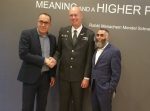
Left to right: Ilan Pilo, Jewish National Fund, Pacific Region; Col. Adam Susman, Israel Defence Forces defence attaché to Canada; and Rabbi Shmulik Yeshayahu of the Ohel Yaakov Community Kollel. (photo from Community Kollel)

While acknowledging that the situation in the Middle East is constantly changing, Col. Adam Susman told those gathered at the Ohel Yaakov Community Kollel on July 18 that the biggest threat to Israel is Iran, “as it has been for years.”

Susman, who is the Ottawa-based Israel Defence Forces (IDF) defence attaché to Canada, was in Vancouver at the invitation of the Jewish National Fund of Canada, Pacific Region.

Born in the United Kingdom, Susman moved to Moshav Sde Nitzan in southern Israel at the age of 3, according to JNF’s website. He joined the IDF’s Givati Brigade in 1987 and became a battalion commander after serving as head of the anti-ballistic and training branches. In 2005, he was appointed commander of Hanegev infantry brigade and chief of staff of the Sinai division, protecting Israel’s southern border. In 2009, he became commander of the Dan district in Home Front Command, working to ensure the safety of civilians in the metro Tel Aviv area. Prior to his appointment as the defence attaché to Canada in 2014, Susman was head of the International Military Cooperation Department of the IDF General Staff.

Rabbi Shmulik Yeshayahu of the Community Kollel was the emcee of the Vancouver event. “It is fitting to have this meeting during the weekly Torah portion of Matot-Masei,” he said in his opening comments. “In this parashah, a portion of the Jewish people stays behind on the way to the Holy Land, preferring to farm on the other side of the Jordan River rather than go in and fight for the land. They stayed there while the rest of the tribes fought and, later, they joined them. In Judaism, we have great respect for those who risk their lives to protect other people, and especially our homeland.”

Before introducing Susman to those gathered, Ilan Pilo, executive director and Jerusalem emissary of JNF Canada, Pacific Region, presented a brief video about JNF’s activities throughout Israeli history. He then invited the president of Royal Canadian Legion’s Shalom Branch, Ralph Jackson, to speak. Jackson, who introduced himself as “the only Jew in the Scots Guards during World War Two,” presented a donation of $5,000 to Susman for Beit Halochem, a nonprofit that cares for disabled Israeli veterans.

Leonard Shapiro, Shalom Branch vice-president, noted how the branch was formed during a time of great prejudice, when Jews needed their own veterans organization. “It has been a long time now since we’ve gone to war, however, thank God. We don’t get many new members. If anyone here would like to join and support our organization and activities, you don’t have to have been in the army, you just need to be over 18 and not have committed any horrible crimes. Little ones, OK,” he joked.

Susman shared a bit about himself and his experience in the Givati Brigade, which was the most highly decorated brigade in the 2014 conflict, a fact no doubt known to the many IDF veterans in the audience.

Susman is one of 16 Israeli attachés around the world – a small number that, he said, was due to Israel never having been part of a military coalition with another country. He outlined the ties between the Israeli and Canadian militaries, the chief threats to Israel today and the IDF’s response.

“There is cooperation between the IDF and the Canadian military strategically and practically,” he said. “The relations between the IDF and the Canadian military are good.”

Asked if the change of Canada’s federal government to the Liberals from the Conservatives had had any effect on that relationship, Susman said it had not.

Turning to the situation in Israel’s own region, he emphasized the lack of stability.

“The Middle East is an interesting neighbourhood, always changing – what I tell you today may not be true tomorrow,” he said.

“The biggest threat is Iran, as it has been for years,” he continued. “[Mahmoud] Ahmadinejad took every opportunity to say that Israel should disappear from the map of the world. The main threat they’ve posed has been building Hezbollah – without Iran, it would be a small organization. In recent years, Hezbollah has been fighting in Syria and they’ve lost a lot of people, but they’ve also gained a lot of operational experience. They have also steadily increased in rocket capabilities and can now reach Eilat.”

Susman said that Syria had previously been a big threat to Israel, but that’s no longer the case, due to its civil war and ISIS, as well as the reduction of the country’s chemical weapons by Western countries.

Hamas in Gaza is the next biggest threat, he said, noting that it is also supported by Iran. “They only exist to fight,” he said. “They are not building up Gazans as they claim. A good example is the tunnel found during 2014 Protective Edge, kilometres of resources that could [have been used] for clinics and schools. Gaza is a piece of cheese, there is 80 metres between the top and the water table, dotted with tunnels. That’s a major challenge.

“The Sinai is also a security problem,” he added. “Nobody controls it, and so everybody is in there. There was no Egyptian military following the peace agreement, so that’s the result. The MFO (Multinational Force and Observers) was created to survey the Sinai and, by the way, there are many Canadians in it.

“Some people say the IDF is a military that has a country,” quipped Susman. “We are strong, and we are good at finding solutions.”

Susman cited Iron Dome as an example. The IDF initially divided Israel into 157 zones with two missile interceptors for each missile. That was successful, he said, but each missile cost $70,000 so that intercepting one fired missile cost $140,000. Therefore, the IDF sought improvements. Israel was divided into 254 zones, he said, and each one had only one missile interceptor per fired missile. This system has a 90% success rate stopping missiles, which is still not good enough in Susman’s view. “We will improve yet further,” he said.

During the question-and-answer period, an audience member commented, “You said Iran is the biggest threat against Israel but you didn’t say what Israel is doing against Iran.”

“That’s right,” replied Susman without further explanation, eliciting laughter from the crowd.

The evening ended with the singing of “Am Yisrael Chai,” led by Yeshayahu.

Matthew Gindin is a freelance journalist, writer and lecturer. He writes regularly for the Forward and All That Is Interesting, and has been published in Religion Dispatches, Situate Magazine, Tikkun and elsewhere. He can be found on Medium and Twitter.

Format ImagePosted on August 18, 2017August 16, 2017Author Matthew GindinCategories LocalTags Community Kollel, Hamas, IDF, Iran, Israel, Jewish National Fund, JNF, security, Shalom Branch, veterans
“Hacking” community

“Hacking” community

Kara Mintzberg, left, and Dana Troster at the Community Hackathon. (photo from Jewish Federation of Greater Vancouver)

On a sunny Sunday, June 25, 40 Jewish young adults gave up a day at the beach and devoted themselves to building a better community. And three teams within this group saw their ideas chosen to be developed and piloted.

Led by Jewish Federation of Greater Vancouver’s young adult program Axis, the goal of the Community Hackathon is a more connected community whose members design the programs and services they wish to see. This is the second phase of the project, which began in January, when a core group of Jewish young adults convened for a pre-Hackathon workshop focused on improving the Jewish experience for young adults and young parents.

“Jewish Federation has demonstrated that they are committed to engaging the next generation of Jewish leaders,” said Bryan Hack, chair of the Axis steering committee. “We’ve seen that in how they’ve included young adult engagement as a key element of their 2020 Strategic Priorities and in creating opportunities like the Community Hackathon, that are platforms for the involvement and leadership of young Jewish adults.”

Jewish Federation is one of only three organizations in North America to host a Community Hackathon. They received a grant from the PresenTense Group and the Covenant Foundation to facilitate the program and to fund the ideas generated through it.

The Community Hackathon was a full-day event at the Museum of Vancouver. Participants used design thinking to generate and prototype project ideas to tackle this challenge: “How to identify what people find meaningful in Jewish connection and then respond with appropriate experiences, infrastructure and communication.” Using this question as a framework, participants worked collaboratively in smaller teams to come up with tangible and sustainable solutions. They were led through the process by a facilitator from UpStart, an organization committed to being an engine for Jewish innovation.

Three of the teams will see their ideas piloted, using seed grants of $2,500 US each plus training and mentorship from UpStart and local coaches over the months to follow. The selected proposals were:

Shabbat Share (Adina Goldberg, Elliot Cheng, Jonathan Polak, Rebecca Denham, Bryan Hack and others), with the idea to create crowdsourced Shabbat dinners;

Shmooz (Rebecca Shaw, Gabby Switzer, Ali De Levie, Courtney Cohen, Kathleen Muir and Tamir Barzelai), which proposes the creation of a personalized interface that represents current events in the community, along with opportunities and a directory in a consolidated format with map and calendar capabilities; and

Treehouse Mentorship (Simone Landa, Lia Hershkovitz, Shayna Goldberg, Genna Cohen, Noah Kass and Dave Elezam), which will connect established Jewish mentors and community leaders with young professionals and newcomers to Vancouver to build a stronger community.

For more about Axis and to become involved, visit axisvancouver.com.

Format ImagePosted on August 18, 2017May 19, 2021Author Jewish Federation of Greater VancouverCategories LocalTags community-building, Hackathon, Jewish Federation, technology

Posts pagination

Previous page Page 1 … Page 431 Page 432 Page 433 … Page 669 Next page
Proudly powered by WordPress