Skip to content
  • Home
  • Subscribe / donate
  • Events calendar
  • News
    • Local
    • National
    • Israel
    • World
    • עניין בחדשות
      A roundup of news in Canada and further afield, in Hebrew.
  • Opinion
    • From the JI
    • Op-Ed
  • Arts & Culture
    • Performing Arts
    • Music
    • Books
    • Visual Arts
    • TV & Film
  • Life
    • Celebrating the Holidays
    • Travel
    • The Daily Snooze
      Cartoons by Jacob Samuel
    • Mystery Photo
      Help the JI and JMABC fill in the gaps in our archives.
  • Community Links
    • Organizations, Etc.
    • Other News Sources & Blogs
    • Business Directory
  • FAQ
  • JI Chai Celebration
  • JI@88! video

Recent Posts

  • Sharing her testimony
  • Fall fight takes leap forward
  • The balancing of rights
  • Multiple Tony n’ Tina roles
  • Stories of trauma, resilience
  • Celebrate our culture
  • A responsibility to help
  • What wellness means at JCC
  • Together in mourning
  • Downhill after Trump?
  • Birth control even easier now
  • Eco-Sisters mentorship
  • Unexpected discoveries
  • Study’s results hopeful
  • Bad behaviour affects us all
  • Thankful for the police
  • UBC needs a wake-up call
  • Recalling a shining star
  • Sleep well …
  • BGU fosters startup culture
  • Photography and glass
  • Is it the end of an era?
  • Taking life a step at a time
  • Nakba exhibit biased
  • Film festival starts next week
  • Musical with heart and soul
  • Rabbi marks 13 years
  • Keeper of VTT’s history
  • Gala fêtes Infeld’s 20th
  • Building JWest together
  • Challah Mom comes to Vancouver
  • What to do about media bias
  • Education offers hope
  • Remembrance – a moral act
  • What makes us human
  • המלחמות של נתניהו וטראמפ

Archives

Follow @JewishIndie
image - The CJN - Visit Us Banner - 300x600 - 101625

תופעה חדשה בקנדה

תופעה חדשה בקנדה

(צילום: חברת אאורה דולס)

בטורונטו – העיר הגדולה והעכשווית ביותר בקנדה מתחיל טרנד חדש בתחום המין: בית בושת שהזונות “שיעבדו” בו הן בובות עשויות סיליקון מתקדם, שנראות די אנושיות.

חברת אאורה דולס התכוונה לפתוח בראשית החודש את בית בושת עם הבובות הראשון בטורונטו, בשכונת נורת’ יורק. אך בשלב זה לאור התנגדות תושבי המקום, הצליח חבר מועצת העירייה, ג’ון פיליון, לעצור את הפרוייקט ורשיון ההפעלה בוטל בשלב זה. אאורה דולס תאלץ מעתה לחפש מקום אחר לבית הבושת שלה. בכל מקרה בטוח שבמוקדם או במאוחר מקום שמספק שרותי מין עם בובות יופעל טורונטו, כי קשה כידוע למנוע טרנדים חדשים שכאלה ובעיקר כאשר מדובר בתחום הסקס.

לאאורה דולס יש בשלב זה שש בובות: אנה (ממוצא יפאני) – שמתוארת באתר האינטרנט של החברה “כסקסית, רומנטית וספונטנית”, אריקה (קנדית-צרפתית) – המתוארת באתר “כצעירה, היפה והמתוקה”, הרפר (קנדית-אירית) – המתוארת באתר “כנערה המושלמת של השכן”, יסמין (קולמביאנית) – המתוארת באתר “כארוטית עם פני המלאך”, סקאלט (אמריקנית) – המתוארת באתר “כחלום האמריקני המוחלט” ויוקי (קוריאנית) – המתוארת באתר “כחפה מפשע, הכנועה והשובבה”. בהמשך החברה תפעיל בובות נוספות של נשים וכן גם בובות של גברים. המחירים של שירותי הבובות: חצי שעה 90 דולר, שעה 120 דולר, שעתיים 240 דולר, שלוש שעות 360 דולר וארבע שעות 480 דולר.

באתר החברה מוסבר מדוע שירותי מין עם בובות כל כך חשובים לנו: “מדובר בדרך חדשה ומרגשת להגשים את צרכי הלקוחות ללא מגבלות והגבלות אשר שותף אמיתי יכלול להעמיד. הלקוחות יוכלו לממש את כל הפנטזיות שלהם ולהגיע לחוויה מינית אולטימטיבית, ללא בושה או שיפוט על ידי אחרים”. עוד מציינים בחברה כי הבובות יעברו תהליך חיטוי קבוע על ידי העובדים כדי לשמור על בריאות הלקוחות”.

מטבע הדברים לא כולם מקבלים בשימחה את פתיחת בית הבושת החדש שבשלב זה כאמור פעילותו הוקפאה. אחת מתושבות נורת’ יורק אמרה לאחד העיתונים המקומיים בטורונטו: “בהתחלה חשבתי שמדובר בבדיחה. עבורי זה סוג של עסק שלא מתאים לסביבה שלנו”. חבר המועצה פיליון מציין כי קיבל פניות מהורים רבים ששאלו אותו בפשטות: “כיצד נסביר זאת לילדים שלנו?” הוא מוסיף: “לא הייתי רוצה לראות שירות כזה בשום מקום וזה סוג של דברים שאנשים צריכים לעשות בבתיהם. אבל אם מסתכלים מנקודת מבט של המיקום, זה צריך להיות הרחק מבית ספר ומאזור בו מסתובבות משפחות רבות עם ילדיהן”.

באאורה דולס מגיבים על התנגדויות לפתיחת בית הבושת שלהם: “אנו מאמינים שהשירות שלנו יכול להועיל דווקא לאלה שסובלים מבעיות של חרדה חברתית, וכן אף לרסן את הסחר במין. כיוון שמדובר בקונספט חדש ובלתי מוכר מובן כי הדבר יעורר חששות והתנגדות. אולם ככל שנמשיך אל תוך העידן המודרני של הטכנולוגיה, עלינו להיות פתוחים לרעיונות וקונספטים חדשים – כל עוד הם בטוחים לכולם. אנו מקווים שהקהילה שלנו תהיה מוכנה להסתגל לשינויים אלה בראש פתוח, כיוון שאף אחד לא יפגע או יהיה מושפע לרעה משירות זה. כמובן, שתמיד זה יהיה נושא שנוי במחלוקת אבל אנחנו מאמינים כי התכונות החיוביות של השירות עולות בהרבה על אלה השליליות”.

בישראל ניתן להשיג בובות סקס בעיקר באמצעות רכישה מאתרי האינטרנט שונים. בין האתרים שמציעים למכירה בובות סקס מסוגים שונים: שופ שישים ותשע, רדול קנדה, אלי אקספרס ועליבאבא.

Format ImagePosted on September 20, 2018Author Roni RachmaniCategories עניין בחדשותTags Aura Dolls, brothel, John Filion, Toronto, אאורה דולס, בית בושת, ג'ון פיליון, טורונטו
Oslo Diaries: peace possible

Oslo Diaries: peace possible

Left to right: Yitzhak Rabin, Yasser Arafat and Shimon Peres after the three received the Nobel Peace Prize in Oslo in 1994. (photo by Saar Yaacov via VIFF)

It’s almost painful to be reminded of how close Israelis and Palestinians were to achieving peace 25 years ago with the Oslo Accords. Yet, Mor Loushy, co-director of The Oslo Diaries with partner Daniel Sivan, hopes that the documentary inspires audiences to believe that peace is possible. After all, the impossible almost happened in the 1990s, so why not in the future?

The Oslo Diaries screens as part of the Vancouver International Film Festival, which runs Sept. 27-Oct. 12. The film is based on the personal diaries of the Israeli and Palestinian negotiators in the initially secret peace talks that unofficially began in 1992 in Oslo, Norway, after the late-1991 Madrid Conference – at that time, it was illegal for the two sides to communicate. Those meetings, which eventually became public and official, led to the signing of the Oslo Accords in Washington, D.C., in 1993.

The narrative of The Oslo Diaries comprises archival footage, reenactments and interviews, including the last interview former prime minister and president of Israel, Shimon Peres – who was foreign minister during Oslo and a signatory of the accords – gave in his life. It takes viewers through an abridged version of the negotiations and offers insight into the leadership and compromise that was needed to reach an agreement.

That leadership and the prospects for peace took a literally fatal blow when Israeli prime minister Yitzhak Rabin was assassinated on Nov. 4, 1995. Binyamin Netanyahu, who, the documentary shows, was fierce in his opposition to the peace accords – passionately addressing rallies at which supporters held signs calling for Rabin’s death – was elected prime minister in 1996. The documentary ends with the start of his victory speech: “Dear supporters, friends, the state of Israel is embarking on a new path today.”

The Oslo Diaries is the third film Loushy and Sivan have worked on together; Censored Voices and Israel Ltd. being the other two. The couple is based in Santa Monica, Calif., for a year, after which they and their two children, ages 3 and 6, will return to Tel Aviv. Loushy was born and raised in Tel Aviv and Sivan, born in Haifa, moved to Tel Aviv when he was 18. The Jewish Independent spoke to Loushy by phone recently, in advance of her arrival in Vancouver to participate in VIFF.

While The Oslo Diaries does an admirable job of attempting to present the material without commentary, the filmmakers’ political perspective does come through, in particular with Netanyahu being depicted as the bad guy, so to speak.

“First of all, we never hide our opinion,” said Loushy. “We’re from the left-wing, or part of it. We stand behind our views and, if someone from the right-wing would have made that specific film, it would have been a completely different one. But, what ‘film’ is about, I don’t think that there is an objective film. Every cut that I make in the film, it’s a decision. But, I think that it’s really more important for us to keep it balanced, and we fought a lot about it, we had a lot of discussions about it.”

Given the reactions she has received, Loushy said, “I think that this film is completely not right- and left-wing – this is a film about peace. And I do feel, from the screenings around the world, that it’s past this boundary of camps, on the one hand. On the other hand, in Israel, the situation is difficult: we are divided, there are camps … and our government is the most right-wing government that we ever knew. Every day, there is a new anti-democratic law that passes, and it’s frightening.”

About making the documentary, she said, “We’ve hit such a rock bottom that someone needs to stop for a moment, and it’s part of my duty as a civilian and as a filmmaker to say, OK, let’s talk…. We’ve forgotten about Oslo, and most of the people don’t even know the story behind the code name ‘Oslo.’ Let’s talk for a moment, let’s really see what happened there and what really was there – not from the news or from secondary sources, but from the first sources, the people that were there. Listen for a moment. What exactly happened there? What went wrong?”

She said people have forgotten about the negotiations and that reminding people about them will help. “It gives hope for the future,” she said. “We were that close, we can do it again, it’s not impossible. You just have to stop for a moment and think, what kind of future do we want to leave our children? Do we want the same, as in the present, a future of wars … so many people that are being killed every day, that’s what we want for ourselves? Or do we need a reminder for a second of the place we could have gone to, for the places we can get to? We just need a strong leader that’s going to take us there. And I think that this film does an incredible job of putting this discourse again on the table because, in the past three or four rounds of elections, the word ‘peace’ … [and the prospect of] ‘negotiation’ is no longer on the table, and this is such a crazy thing.”

When asked how much blame she attributes to Netanyahu for the breakdown of the peace process, Loushy said, “It’s a very complex answer because it’s not one answer. I think that he had a lot to do with the peace breakdown but he was not the only one. The people voted for him and, when people voted for him, they knew what they were voting for – it was obvious he was not going to continue with the peace process. So, I think it was the people and I think that, yes, he had an essential part, saying, ‘I believe in the holy grail,’ [in Greater Israel]. This is his belief, and I think he succeeded in that,” she said, citing figures indicating that the number of settlers has quadrupled since 1993.

Loushy said Netanyahu has claimed that “the West Bank is just a part of Israel, and [he] wants more and more settlements, [so] that also the left-wing people right now are saying, OK, how can we resolve it? That there is an unresolved situation because of the settlers.”

Both fanaticism and fear are contributing to the situation, she said, “although I do believe that most of the people want peace, believe in peace, [and] are just too scared to give it a chance.

“And that’s where this film comes in, saying, listen: first of all, the whole Palestinian leadership was interviewed for this film. I was a guest in Ramallah in all of the high places in the Palestinian leadership – there is a partner. He [Palestinian Prime Minister Mahmoud Abbas (Abu Mazen), who was also one of the signatories of the Oslo Accords, for the Palestinian Liberation Organization] wants to talk to us. He wants a solution. I believe it in all of my heart that the Abu Mazen government wants peace.

“So, there is the Palestinian leadership that was interviewed for this film, and I do believe there is a chance, but that people are just too scared and [the film’s purpose is to help people] to remember exactly what happened.”

While the filmmakers interviewed several Israelis who were involved, they could not get access to Netanyahu. “We wanted to [interview him],” said Loushy, “but Netanyahu doesn’t give any interviews to the press…. You see Yitzhak Rabin – in all of the archives, Yitzhak Rabin is giving interviews every other day… [Netanyahu] is connecting through Twitter, and that’s it. He doesn’t give interviews to the press.”

The Oslo Diaries premièred at the Jerusalem Film Festival and there have been screenings all over Israel, said Loushy, who noted the diversity of audiences, which have included secular and observant Jews. “This is amazing,” she said, to have people from both sides sitting together in the theatre. “People want the discourse, want to talk about it again. Of course, every screening, [when there’s] someone shouting at me, I know I did my job…. I made somebody think about something he hasn’t thought [about] before.”

The Jewish Independent is VIFF’s media partner for the Vancouver screenings of The Oslo Diaries, which take place Sept. 28 and 29, and Oct. 12. The documentary is a Canadian co-production, co-produced by Ina Fichman (Intuitive Pictures); Radio-Canada is also listed as one of the film’s sponsors. All of the post-production was done in Montreal, said Loushy, “and we loved it.”

For the full VIFF schedule and tickets, visit viff.org.

Format ImagePosted on September 14, 2018September 12, 2018Author Cynthia RamsayCategories TV & FilmTags Israeli-Palestinian conflict, Mor Loushy, Oslo Accords, peace, Vancouver International Film Festival, VIFF
Divine Sparks at the Zack

Divine Sparks at the Zack

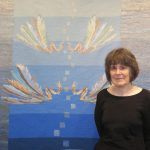
Barbara Heller’s exhibit, Divine Sparks, is at the Zack Gallery until Oct. 8. (photo by Olga Livshin)

Barbara Heller’s new solo show at the Zack Gallery, Divine Sparks, could be divided into three distinct themes, each one representative of a world culture: the Sephirot, the Mudras and the Future Reliquaries. Each of the three resonates with one of three religions, Judaism, Hinduism and Christianity, respectively, but Heller, a master weaver, sees divine sparks everywhere. Her tapestries, big and small, invite gallery guests to contemplate what unites us, no matter our ethnicity or religious affiliation.

Symbolism infuses Heller’s images, starting with the centrepiece of the show, “Tzimtzum,” or “Transcendence.” The large tapestry is a stylized ladder. The midnight blue rungs at the bottom coalesce into a dead bird, but the higher your eyes travel, the lighter the colours become. Two pairs of wings punctuate the climb of colours from dark indigo to white radiance.

“The ladder has many interpretations,” Heller told the Independent. “It can be a metaphor for our life, a liminal space between birth and death…. For me, the rungs are stepping stones on the path of spiritual attainment, of transcendence.”

Heller has shown this tapestry at several exhibitions already, to great acclaim. Recently, it won the American Tapestry Alliance Award.

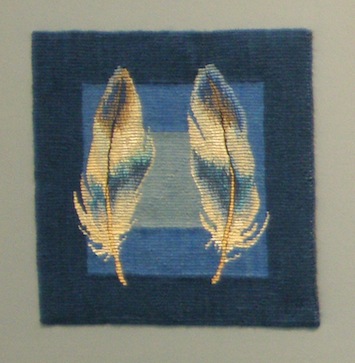
photo - Barbara Heller made a series of small tapestries of her feather collection, Sephirot, specifically for the Zack show
Barbara Heller made a series of small tapestries of her feather collection, Sephirot, specifically for the Zack show.

“Originally, I wanted to display this tapestry with real feathers piled along the bottom,” the artist said about “Tzimtzum.” “I have amassed many beautiful feathers, and friends kept bringing me more, but I discovered it was almost impossible to send real feathers anywhere. I displayed the tapestry in Poland a couple years ago, and they told me that real feathers have to be quarantined for weeks before being allowed into the country. And they can’t be from endangered species. I wasn’t sure about that.”

Since the plan involving the real feathers fell through, Heller made a series of small tapestries of her feather collection, Sephirot, specifically for the Zack show.

“I already had lots of yarn died blue for the ‘Tzimtzum,’” she said. She called the series Sephirot after the kabbalah’s spiritual qualities of understanding, wisdom, love and judgment, among others.

“Some of the feathers are almost photographic,” she said. “In the others, I played with colours and sparkles.”

The second series in the show, Mudras, obtained its name from the hand gestures prevalent in Hinduism, Asian dancing, yoga and meditation.

“Typically, mudras are used as a way to direct energy flow in the body,” Heller said. “According to yoga, different areas of the hand stimulate specific areas of the brain. By applying light finger pressure to these areas of the hand, you can ‘activate’ the corresponding region of the brain. In addition, hand mudras also symbolize various feelings and emotions.”

Heller’s Mudras is a series of small, uniform-sized round images of various hand gestures. The hands are woven of golden yarn and appliquéd to dark-green fabric with a vague “computer motherboard” pattern. Parts of real electronics – wires, chips, connectors – are incorporated into the design of every gesture, as if to emphasize the similarities between computer circuits and the neuron circuitry in our brains.

“I collect old electronics and take them apart, and use them in my weaving,” said Heller. “This series was fun to make.”

The other series, Future Reliquaries, is an older one. Also depicting hands embedded with parts of electronic devices, it reflects humanity’s developing love affair with technology.

Several tapestries of the series are rather large. In each one, a human hand in golden yarn stands out from the background of an ancient traditional pattern. “Different tapestries sport different patterns: from Persia, Indonesia, Turkey, Navajo,” Heller said.

Like in the Mudras series, the interlaced computer piece are symbolic of our interconnection with machines.

Heller wrote: “This series deals with three apparently separate but, in my mind, connected histories: weaving, computing and religion. Weaving is a binary system of up/down, just as computing is a binary system of on/off…. Religion is not only a store of faith; it is a store of history and social values…. Today, we are creating a new religion. We are worshipping the technology.”

Heller’s tapestries contemplate the future status of today’s electronic remnants in the context of ancient fabrics. “As holy relics were housed in reliquaries, often made of gold and gems, I’m trying to populate my tapestries with the future relics – the computer chips and wires.”

Beside the large hands, there is also a selection of tiny ones, where each miniscule woven hand is linked to topics such as keys or clocks, science or beauty, birth or death.

Heller’s exhibit is part of larger happenings in Vancouver this month – a symposium of the Textile Society of America. The symposium takes place Sept. 19-23, and many galleries around the city besides the Zack are displaying textile or weaving exhibitions to coincide with it.

As a well-known local artist, Heller has been one of the event organizers from the beginning. “We have a wealth of local textile artists, and about 400 people are coming to the symposium from all over the world,” she said.

The planning for the symposium began three years ago. “We made sure that the hotel reservations were available on the dates that didn’t include Yom Kippur,” she said. “Unfortunately, a year ago, the hotel informed us that they had to change our reservation dates.”

So, now, the first day of the symposium falls on Yom Kippur, as other reservations were not available, and the society has posted an apology on its website.

The Zack Gallery offers a bus tour of three textile exhibitions in the city on Sept. 20. To learn more about the tour and to register, visit jccgv.com/art-and-culture/gallery. For more about Heller, visit barbaraheller.ca.

Divine Sparks opened on Sept. 6 and continues until Oct. 8.

Olga Livshin is a Vancouver freelance writer. She can be reached at [email protected].

Format ImagePosted on September 14, 2018September 12, 2018Author Olga LivshinCategories Visual ArtsTags art, Barbara Heller, spirituality, tapestry, Zack Gallery
Never Still kicks off season 36

Never Still kicks off season 36

Alexa Mardon is part of the creative team of Never Still, which is at the Firehall Sept. 26-29. (photo by Ben Didier)

It is fitting that Firehall Arts Centre is launching its 36th (double chai) season with a new work by Jewish community member Vanessa Goodman, artistic director of Action at a Distance Dance Society.

Never Still is described as “a highly physically piece that dives into the distinctions and overlap between three different systems of circulation: global water cycles, communication technology and fluids within the body.”

“The initial ideas for Never Still really began to emerge in 2013, when I made two separate works inspired by similar themes. Both dealt with our relationship to water, either in our environment or our bodies,” Goodman told the Independent. “On a very basic level, we are all between 50% to 70% water, depending on our age, and the earth’s surface is covered by roughly 70% water. There is some nice symmetry and, the deeper I dug into these themes, the more they revealed. Social, political, personal, environmental – no matter where I went with these themes, it checked all the boxes of what inspires my work.

“For me, it was just a matter of time before I began to focus on these ideas as a full-length. But it wasn’t until 2015, when I met Scott Morgan (Loscil) through Small Stage, where we first collaborated together, that I could imagine this work growing into what it is today. Each project requires the right collaborators to bring it to life.”

Goodman’s research began in 2016 during a creative residency in New Brunswick hosted by Connection Dance Works. “Loscil and I also made Floating Upstream that same year, a shorter piece that explored these ideas and worked out some staging concepts,” said Goodman. “In 2017, I continued the research through a local choreographic residency at EDAM.

“I always knew I wanted this to be a group piece and, in the spring of last year, I finally had the whole performing team together: Shion Skye Carter, Stéphanie Cyr, Bynh Ho, Alexa Mardon and Lexi Vadja. The work would also not be complete without my longtime collaborator, lighting designer James Proudfoot, who is a master of painting space with light.”

Sound and projection design for Never Still is by Loscil, with costumes by Lloyd clothing. EDAM’s Peter Bingham is listed as the piece’s creative mentor.

While the work has evolved since conception, Goodman said, “There’s not necessarily one element I can point to that’s different. When I began working on this piece, it was just me alone in the studio imagining all the elements, so being able to work with five incredible dance artists, lighting, sound and projections definitely pushes everything forward quite rapidly.

“It is always exciting how a work takes shape in each unique venue, too. Ideas that you may have thought would work sometimes don’t and other new elements reveal themselves, so it’s important to stay flexible. The work is constantly evolving, even through the final performances. That is one of the many exciting parts of live art: it is constantly being transformed by those who inhabit it.”

This idea ties in perfectly with the themes explored in Never Still.

“On a molecular level, liquid water is never truly still, which acts as a beautiful metaphor for dance. It offers myriad avenues to explore anatomically and thematically,” said Goodman.

About Never Still, she said, “I feel like it’s very easy in a developed urban setting to take water for granted and overlook its true value, so, if anything, parsing so many different aspects of water with this piece has helped me appreciate it that much more.”

The work also considers the “inherent conflict or dichotomy of water.” By way of explanation, Goodman said, “The most obvious textural example is water’s often-violent reaction to shifts in temperature, from the crack of ice to the vapour rising from a roiling boil. On a larger scale, the effects of flooding and drought, which, on one hand, represent polar opposites, often share conflict and devastation.”

Echoing these concepts, Firehall artistic producer Donna Spencer said in the release for Never Still, “We are living in an increasingly polarized culture. And it is our role as artistic creators to encourage audiences to consider, through what they are seeing on stage, how inextricably linked we all are in finding our way through these challenging times.”

Firehall’s programming this season, she added, “is about choices – the ones we make, the ones we think we should make but don’t, and the influences around us that colour that decision-making. Live performance allows us to experience a unique and powerful collective sharing of emotions and information that resonates through our day-to-day lives long after we have left the theatre, and indeed may influence the choices we make in the future.”

Never Still runs Sept. 26-29, 8 p.m., at the Firehall, with a talkback after the Sept. 27 show. For tickets (from $20), visit firehallartscentre.ca.

Format ImagePosted on September 14, 2018September 12, 2018Author Cynthia RamsayCategories Performing ArtsTags dance, Donna Spencer, Firehall Arts Centre, Vanessa Goodman
Animated therapy session

Animated therapy session

David Fine and Alison Snowden wrote, directed and animated the National Film Board of Canada animated short Animal Therapy. (photo by John Bolton)

They’re baaaack! And with another funny – and thought-provoking – National Film Board of Canada animated short. Jewish community member David Fine and wife Alison Snowden, who co-created the NFB’s Oscar-winning Bob’s Birthday 25 years ago, have returned to the genre with Animal Behaviour.

Animal Behaviour, which screened at the Toronto International Film Festival earlier this week, will be part of the Vancouver International Film Festival’s True North Shorts program, The Curtain Calls, on Oct. 1 and 8. There are further screenings scheduled for other festivals across Canada.

The 14-minute short, produced by Michael Fukushima, executive producer of the NFB’s animation studio, is written, directed and animated by Fine and Snowden, who are currently based in Vancouver. In addition to countless other projects, the pair also created, and contributed in many capacities to, the adult animated series Bob and Margaret, which was based on Bob’s Birthday.

“We had worked in series and missed making a personal film and doing the animation ourselves, directly,” Fine told the Independent about what motivated Snowden and him to make another animated short. “We really thought it would be nice to get back to the type of filmmaking we started our career with and our producer, Michael, had suggested that he would be keen to see any ideas from us and we happened to have one, so we thought, why not have a go. It’s very different to make a personal film like this than a series.”

The couple humorously tackled some of the issues of being middle age in Bob’s Birthday. In Animal Behaviour, they explore – also with much humour – some of the pros and cons of following our natural instincts versus doing what is socially acceptable. They do so using the vehicle of a weekly group therapy session led by Dr. Leonard Clement, a Labrador retriever.

Lorraine, the leech, has attachment issues and experiences panic attacks; Todd, the pig, has an eating disorder and suffers from insecurity; Cheryl, the mantis, hasn’t had a lasting relationship, and the fact that she has 1,000 kids is the lesser of her two main problems; Linda, the Tabby cat, has obsessive compulsive disorder and doesn’t ever feel clean enough, despite constantly licking herself; and Jeffrey, the blue jay, has some serious guilt issues as a result of something he did when he was a very young bird. The members of the group seem to know one another well and there is a rhythm to their session. Then walks in Victor, the ape, with his anger issues, who believes that everyone else is an idiot and that people in therapy are navel-gazers who just need to get on with their lives.

photo - In Animal Therapy, Victor aggressively takes issue with Dr. Clement’s approach to therapy
In Animal Therapy, Victor aggressively takes issue with Dr. Clement’s approach to therapy. (photo from NFB)

“The notion of going to therapy to change seems like a tall order, so we thought it would be fun to look at therapy and have a character who comes in and questions its validity,” explains Fine in an NFB interview online. “At the same time, we’re careful not to go for the low-hanging fruit or make fun of the process. We don’t want to answer the question (‘Is therapy valid?’), we want to pose the question and start the discussion.”

“It was quite a difficult script to write,” says Snowden in the NFB interview. “We thought it would be easy, because it’s in one room, there’s one conversation, but there are so many possibilities with all the animals, and if we did it wrong it would get boring.

“At first, there were a lot of characters, but you couldn’t get attached to any of them, so we honed it down. Really, it’s about the ape and Dr. Clement – that’s the showdown. Then they all came together. The others are in the room, they’re observers, and they’re there for comedy. But the key characters are those two and their drama.”

“From idea to final film was probably about five years,” Fine told the Independent, “but there was a development period, which was sporadic and took time to get to the green light. Once in production, it took about 2.5 years to make, in terms of pure working time.”

About working in animation, Fine said, “We like controlling every frame and effectively being both directors and actors, because we pose and make the characters act. We also love working with voice actors and then being able to edit the track in a way you can’t really do in live action. It’s really about all the nuance and control, which is so much fun.”

The creative process starts with the writing, he said, “with the idea and the script,” which they “work to refine…. After that, the voice record was key. We interviewed about 300 voices to cast this group. All the actors are Vancouver-based, which we are very proud of.”

Among the credits, thanks are given to the animation programs at Capilano and Emily Carr universities, and the film is dedicated “to the wonderful doctors, nurses and staff at Vancouver General Hospital.”

“During the production, near the end, Alison was struck with a very sudden, serious health crisis and was in intensive care and recovery for five months,” explained Fine. “VGH saved her life, so, when we were finally able to finish the film together, it was very important to us to make that dedication to show our appreciation.”

For tickets to The Curtain Calls and the full film festival schedule, visit viff.org.

Format ImagePosted on September 14, 2018September 12, 2018Author Cynthia RamsayCategories TV & FilmTags Alison Snowden, animation, David Fine, health, National Film Board, NFB, Vancouver International Film Festival, VIFF
Ayalon speaks at TWU

Ayalon speaks at TWU

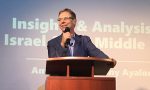
Danny Ayalon speaks at Trinity Western University on Aug. 30. (photo by Chloe Heuchert)

On Aug. 30, Danny Ayalon spoke at Trinity Western University. Ayalon, a former deputy foreign minister of Israel and former ambassador of Israel to the United States, is the founder of The Truth About Israel website. The event at Trinity was sponsored and co-organized by the TWU Alumni Association with Natalie Hilder, a former political aide at Parliament of Canada, who hosted and introduced the talk.

Ayalon’s presentation, Insights and Analysis of Israel and the Middle East, was thought-provoking. He described the outstanding issues and argued that peace could be attained if both sides would come together for a resolution. Throughout the interactive lecture, Ayalon mentioned Judaea and its importance in our modern day.

Ayalon has served as an advisor to three Israeli prime ministers: Binyamin Netanyahu, Ehud Barak and Ariel Sharon. In 2002, he was selected as Israel’s ambassador to the United States, a role he occupied until 2006, playing a significant part in the Road Map for Peace, a plan to resolve the Israeli-Palestinian conflict. He later became involved with Nefesh b’Nefesh, which facilitates aliyah by North American Jews, and then he joined the Yisrael Beiteinu political party, being elected as a member of the Knesset in 2009 and bein//g appointed as deputy foreign minister in Netanyahu’s government of the time; he wasn’t a candidate in the next election.

The lecture at TWU began with Ayalon explaining how Israel strives – and is obligated – to bring about peace. He spoke about the peace treaty with Egypt in 1979. President Anwar Sadat, he said, offered Israel an olive branch in 1977 by speaking at the Knesset to identify strategies for peace, which led to Israel’s decision to give up the Sinai Peninsula, an area almost three times the size of the state of Israel. Israel and Egypt have a mutual respect and fight together against Hamas and ISIS, said Ayalon.

Israel also made peace with Jordan, he said. The mid-1990s agreement gave Jordanians land and water and, today, the Israel-Jordan border is peaceful because the governments work together on certain matters, said Ayalon.

Not all peace discussions have gone according to plan, however, and Ayalon described the Oslo negotiations of the early 1990s and the 1993 agreement that was reached, but which was ultimately unsuccessful. The parties would meet again at Camp David in July 2000 and Ayalon was there. He shared some of his firsthand experiences from the discussions, recalling how Israeli prime minister Barak offered Palestinian Authority chairman Yasser Arafat Gaza and half of Jerusalem but to no avail. Ayalon also spoke about the unsuccessful attempt at peace that occurred in 2008 between prime minister Ehud Olmert and PA president Mahmoud Abbas. Again, he said, both sides could not come to an agreement even though Israel offered land.

Ayalon said the ways in which Israel strives for peace are not broadcast on the news, but are, instead, ignored in a way. The major headlines are about Israel’s alleged war crimes, he said, but this not the truth. Israelis fear for their lives every day, he said, because of the bomb attacks and other hostile actions of Hamas, who use their own people as human shields.

“There are 22 Arab countries and Israel is one state, and makes up only [a miniscule part] of the entire Middle East,” said Ayalon. “This is not a war about territory or natural resources but of elimination and extinction.”

When it comes to the United Nations, Israel is outnumbered. There are 193 member countries, with 120 voting against Israel, he said. While some of these countries are bowing to the pressure against Israel in order to keep themselves safe, Ayalon said the result is that many resolutions against Israel are made by the UN, so that Israel has little chance on the international front.

He went as far back as UN Resolution 181 in 1947, which called for the partition of Palestine into Jewish and Arabs states. The Arabs rejected the agreement and denied that Jews had any right to the land. To this day, Ayalon said, Palestinian schools use their curriculum to teach children that Israel is theirs. He said, in order for peace to become a real possibility, the truth must be established – curricula, media and the way in which children are brought up need to change before peace can be achieved.

Chloe Heuchert is a fifth-year history and political science student at Trinity Western University. She was involved in the early stages of the planning for the lecture.

Format ImagePosted on September 14, 2018September 30, 2018Author Chloe HeuchertCategories LocalTags Danny Ayalon, Israel, Israeli-Palestinian conflict, peace, speakers, Trinity Western University, TWU

Tweets raise questions

Dimitri Lascaris, chair of the board of Canadians for Justice and Peace in the Middle East (CJPME), last week tweeted what is being condemned as a blatantly antisemitic swipe at two Jewish members of Parliament.

Despite CJPME’s name, the messaging from the group doesn’t indicate that the “justice and peace” they seek will be particularly just or peaceful for Jewish residents of the Middle East. What happened last week should clarify where the group – or at least its leader – stands.

“Apparently,” Lascaris tweeted, “Liberal MPs Anthony Housefather and Michael Levitt are more devoted to apartheid Israel than to their own Prime Minister and their own colleagues in the Liberal caucus.” The tweet was a bit of a non sequitur. Lascaris had posted on a different platform about a B’nai Brith Canada rally in Toronto, after which two women who had attended the event posted a video saying that Prime Minister Justin Trudeau should face the death penalty. Weirdness all around, certainly, but how Lascaris connected this incident with two Liberal MPs is an open question. Ultimately, whatever link there may be is irrelevant in the bigger context.

Accusing Jews of dual loyalties, of being “others” who are not fully of a society, is an age-old charge almost universally accepted as antisemitic at its core. Encouragingly, politicians of every stripe (as well as plenty of other Canadians) have tweeted or otherwise made clear their dismay at Lascaris’s comment.

The next move is up to members of the organization. If the members of CJPME reject their chair’s remarks and remove him from his role, they will have demonstrated that they understand something about justice. If not, Lascaris and the group he represents should be snubbed by elected officials and anyone with a genuine interest in peace and justice.

* * *

Another interesting tweet came from Tory Senator Linda Frum last week, in response to the announcement that Trudeau would issue an apology for the Canadian government’s refusal in 1939 to allow the MS St. Louis, carrying 907 Jewish refugees, to land in Canada. Forced to return to Europe, 254 of the passengers were murdered in the Holocaust.

“I’ve made this warning before: if Trudeau’s apology for Canada’s rejection of the ‘voyage of the damned’ compares Jews fleeing the Nazis to the contemporary crisis of illegal economic migrants, he will require an apology for his apology. Think carefully,” tweeted Frum.

Thinking carefully is indeed what everyone involved should do.

Leaving aside the criticism about the merits of historical apologies, which we have addressed in this space previously, Frum makes a useful point. To be heartfelt, the apology should stand on its own merits as the voice of a nation genuinely regretful about a scar on our national honour. The apology – scheduled for the week in November that marks the 80th anniversary of Kristallnacht – should be about the St. Louis, its passengers, the victims of Canada’s decision and perhaps the broader lesson of what was not done to aid the mortally endangered Jews of Europe. It should not be taken out of context through the universalizing of the story. That the passengers on the ship were Jews is absolutely critical to understanding the history of the St. Louis and our country’s history of institutionalized antisemitism.

At the same time, what is the point of these apologies, or any commemoration of a past wrong, if we do not learn and apply the lessons to the choices we make in our world today? There is a fine line to walk in respecting the individuality of the St. Louis, on the one hand, and ensuring that the apology and associated discussion results in positive changes in our approach to current and future issues we must confront.

Regrettably, Frum threw an additional wrench in the works with her use of the term “illegal economic migrants.” This is apparently a reference to the concern that some in her party and elsewhere have that the migrants who are entering Canada via the United States from Latin America are not legitimate refugees fleeing persecution or danger, but rather people simply seeking to advance the wealth and condition of their families. While it is fair to bring attention to the illegal crossings, it seems odd for a Conservative (or a conservative) to imply that there is something particularly disagreeable about a person seeking economic advancement, either through migration or other means.

That aside, the apology will almost certainly be welcomed by most Jewish Canadians. It will be an opportunity for Canadians to remember – and, for those who do not yet know, to learn – this history. Once we as a country have made what small penance we possibly can for this tragedy, there will be time to consider how contemporary events can be informed by what we learn from thinking about the St. Louis and its passengers. That is part of the purpose of this entire exercise.

Posted on September 14, 2018September 12, 2018Author The Editorial BoardCategories From the JITags antisemitism, B'nai B'rith, B’nai Brith Canada, Canada, Dimitri Lascaris, Linda Frum, St. Louis

Do you know your priorities?

During the months of Elul and Tishri, when we’re in the midst of the High Holiday season, things are busy. Kids are in (and out) of school and activities, parents are facing the fall rush of activities in their own work lives. Things are rushed. However, if you’re going to synagogue and have even a moment to reflect, you’re being asked to examine yourself. What have you done right this year? What’s gone wrong? What could you do better?

Some years, I’m thinking about my failings, or I get mesmerized by the long list of things that one could do wrong when we list the confession of sins. Other years, I’m so concerned by holiday meals or my kids’ behaviour that I sing along, but my focus is not really on the most important holiday tasks at hand.

Recently though, I got to thinking about this a different way. Instead of focusing exclusively on how we’ve gone wrong, or how we could do better, I wondered, of all the things in the world to fix, what are my top priorities? How could I focus on a few things that are most important?

When we wish people happy new year, we often wish them a happy and healthy year. It’s hard to work towards happiness – and, to be honest, I’m not sure I’d know when I got there. Working on health seems like a given to some people, and is completely ignored by others. What does it mean? Well, for some it means taking medicines, or being able to afford their medicines. For others, it might mean exercise or better food choices, or even being able to purchase healthy foods.

We also mention, in Jewish tradition, an effort to strengthen our commitment to Judaism. Maybe that means going to services more, doing more mitzvot (commandments) or doing more to help others. It might mean offering your kids tools so that they can learn about their faith. For some, it means helping others get to Jewish events – offering a ride, for instance, if the person is unable to drive or walk – or making them feel included and valued when they get there.

People also may have big holiday meals with family and friends. This can be wonderful, and trying. I’ll be the first to admit that sometimes family gatherings force us to confront things that we’d rather not deal with. (Maybe it’s an uncle’s politics or a child’s misbehaviour, or the aging of a beloved parent.) Do you prioritize family? Do you commit to supporting and caring for your family, both those related by blood and those who you choose? Are you willing to travel long distances to see relatives? What about your family friends, those to whom you choose to feel related?

Awhile ago, I was chatting with someone about all my uncles and aunts. She expressed wonder at how many relatives I had. It took me a bit to realize what she meant. Where I grew up, in Virginia, just outside of Washington, D.C., many families had moved to work in the U.S. capital. It meant that they weren’t near their families, so we created extended families. All those aunts and uncles were close friends with my parents. I played with kids at those folks’ houses, ate dinner at their holiday tables and learned from them about what it was to be part of a loving family. Our Jewish customs varied, our DNA was different, but our effort included everyone.

The person I spoke with seemed alarmed and uncomfortable with the fact that I called all these people who weren’t blood relatives aunt or uncle. Yet, it was a time and place when many people didn’t live near family.

Some families had been decimated by the Holocaust, so it seemed entirely logical to us. In our circle, there were people who didn’t have grandparents – they had died in Europe. Some had no cousins, either. This was true among people I knew as a kid, and continues to be true. In my husband’s family, for example, I know people who lost many relatives and whose family structures, even in 2018, continue to resonate with that trauma.

This extended family friend concept is also related to our priorities. For me, personally, it’s key, and I choose to continue this practice. Why reinforce alienation for those who lack supportive extended family? My kids have a “tante” who made quilts for their beds and sends them gorgeous handmade gifts. She’s not my blood relative, but we’re part of her family. And we serve as honourary aunt and uncle for a 2-year-old in Montreal, as well.

Recently, I received an email that pointed out the Winnipeg Jewish Federation’s priority action areas for fall 2018, and I loved it. This action document lists many of our community’s Jewish concerns and priorities – many of which, no doubt, are similar to the Vancouver Jewish community’s concerns and priorities.

The Winnipeg Federation document is a good start. While some may think that the points are ambitious, other aspects are simply part of how a community – an extended family – should act. We should care about others, full stop. We should try to include everyone in Jewish life regardless of what they can afford. While it may seem like an enormous goal to “mitigate poverty,” it’s easy to pick an apple tree in the neighbourhood and donate the fruit to the food bank. Nor is it a big deal to bring your kids to visit an older person to help reduce their isolation.

Instead of focusing on the enormity of the individual points, we can instead point to our priorities for the new year. For instance: it improves our health to attend gatherings, socialize and engage in learning in multi-age settings.

I don’t know about expecting happiness, but we can adjust our priorities to include health, well-being and Jewish supports for one another. This is possible – and, to borrow Theodor Herzl’s phrase: “If we will it, it is no dream,” so make your priorities and dream bigger. It’s well worth considering. Happy 5779, everybody!

Joanne Seiff writes regularly for CBC Manitoba and various Jewish publications. She is the author of three books, including From the Outside In: Jewish Post Columns 2015-2016, a collection of essays available for digital download or as a paperback from Amazon. See more about her at joanneseiff.blogspot.com.

Posted on September 14, 2018September 12, 2018Author Joanne SeiffCategories Op-EdTags Federation, High Holidays, Judaism, lifestyle, Rosh Hashanah

Change can’t happen in a day

Judaism is an aspirational religion that, while accepting the reality of failure, believes in the human capacity to transcend and achieve levels of excellence in our everyday lives.

“You shall be holy, for I the Lord God am holy.” (Leviticus 19:2) “You shall be to me a kingdom of priests and a holy nation.” (Exodus 19:6) These are but two of the more potent examples of the aspirational quality of our tradition and its immense respect for the capacity inherent within the human being. As beings created in the image of God, there is nothing that we cannot do, a factor which created a tradition defined by commandment and expectation.

A significant manifestation of this future is the commandment of teshuvah. We expect people to honestly assess the content and the quality of their lives, regret and admit their failures, and commit to embarking on a new direction. This expectation is brought to a climax during Yom Kippur, where the Vidui (Confession), which lies at the nucleus of the Yom Kippur liturgy, places before us the realities of our sins and challenges us to honestly confront what we have done with our lives.

It is, therefore, deeply troubling to recognize the profound failure of Yom Kippur as a force for change. The passion, seriousness and devotion that accompany many of us throughout Yom Kippur peters out into a form of amnesia during the break-fast meal, as we return to our behaviour of yesterday.

Yom Kippur is a synagogue success story. More people show up than on any other day, pounding their hearts with great devotion as they cry out, “Ashamnu.” (“We have sinned.”) However, Yom Kippur’s impact on Jewish life seems to be marginal.

This is not a new phenomenon. It may be the meaning behind Isaiah’s critique of the Jewish people and their fast days: the people indeed fast, “starve their bodies” and “lie in sackcloth and ashes,” however, this is not the fast day that God desires, but rather a day in which we “unlock fetters of wickedness and untie the cords of the yoke and let the oppressed go free.” (Chapter 58) To paraphrase Isaiah, the quality of repentance is not judged by what one does on Yom Kippur, but by what one does afterwards.

The problem with Yom Kippur in the synagogue is that it is too complete and comprehensive. It creates the myth of putting all of one’s life and behaviour up for judgment, where we confront every one of our failings and repent for them all. The list of sins in the Vidui is too extensive to have any impact on the life of a real person. For a prayer, and within the isolated environment of the synagogue, it is fine. As a force for facilitating change in real life, the comprehensive nature of our service makes it impossible to be a significant factor in everyday life.

Change, growth and improvement are rarely radical epiphanies, but are rather slow and gradual processes. As Maimonides in his Guide for the Perplexed teaches us, radical transformation away from that to which one is accustomed is impossible. (3:32) According to Maimonides, God and the Jewish tradition had immense patience with the idolatrous, slave mentality of the people who came out of Egypt and did not require them to accept or adopt either beliefs or practices that were radically different from that to which they had grown accustomed. We must do the same both with ourselves and with others.

If Yom Kippur is to be the force our tradition aspires it to be, it must cease to be the culmination of the process, and instead serve as its beginning. The purpose of the all-inclusive lists cannot be to ask an individual to review all of his life, but to create a menu from within which every individual can find one dimension, one quality that they can commit to working on.

Yom Kippur must cease to be a forum for New Year’s declarations and instead become a catalyst for a new culture among the Jewish community, a culture that fosters individual responsibility, reflection and a commitment to being a teshuvah person. As a teshuvah person, one commits to the ongoing and difficult path of constantly aspiring more from oneself. As a teshuvah person, one neither views oneself as an ideal, nor fools oneself into believing in overnight conversions.

Our tradition teaches us, “It is not for you to complete the task, neither are you free to desist from it.” Nowhere is this saying from The Ethics of the Fathers more relevant than in the task of building a life of value. This year, let us take teshuvah out of the synagogue, disconnect Yom Kippur from its myriad rituals and place it at the foundation of our everyday lives.

Rabbi Dr. Donniel Hartman is president of the Shalom Hartman Institute and author of the 2016 book Putting God Second: How to Save Religion from Itself. Articles by Hartman and other institute scholars can be found at shalomhartman.org.

Posted on September 14, 2018September 12, 2018Author Donniel Hartman SHICategories Celebrating the HolidaysTags Judaism, lifestyle, self-help, Yom Kippur
Bridging the future

Bridging the future

Petach Tikvah’s Calatrava bridge. (photo from Ashernet)

Petach Tikvah’s Calatrava pedestrian bridge and glass walkway was designed by architect Santiago Calatrava, who also designed Chords Bridge at the western entrance to Jerusalem. The Petach Tikvah bridge, erected in 2005, connects the Beilinson hospital complex with a shopping mall and a central park. Situated some 11 kilometres east of Tel Aviv, Petach Tikvah continues to expand to accommodate its increasing population and its appeal to high-tech, pharmaceutical and distribution companies. Today, the city, with its population of more than 240,000 individuals, ranks as the fifth biggest city in Israel, and has one of the larger percentages of religious Jews in the country. However, while some 70,000 religious Jews are served by about 70 synagogues of various sizes, there are more than 300 schools in the city that serve children of all religious and non-religious affiliations.


Format ImagePosted on September 14, 2018September 12, 2018Author Edgar AsherCategories IsraelTags development, Israel, Petach Tikvah

Posts pagination

Previous page Page 1 … Page 362 Page 363 Page 364 … Page 667 Next page
Proudly powered by WordPress