Spring. Every year, it returns like a miracle and Israel is carpeted with wildflowers. There are nearly 3,000 types of wild plants in this tiny land, a wonderful profusion, among the most abundant on earth. Israel boasts a variety of different ecological systems – deserts and marshes, high mountains, dense forests and open fields, with wildflowers to suit each habitat.
Wildflowers are protected in Israel and nature reserves prohibit the picking of any flowers, even the most common, which helps them to propagate over wider areas. In turn, this brings the sunbirds, which feast on their nectar.
The Song of Songs, which we read every Passover, is a most beautiful love poem. King Solomon wrote it as a dialogue between a young shepherd and his beloved: “Rise up, my love, my fair one and come away / For lo, the winter is past / The rain is over and gone / The flowers appear on the earth / The time of singing is come / And the voice of the turtle is heard in the land.”
The flowers he refers to, nitzanim, still carpet the fields – shiny red poppies flaunting scarlet beauty in the grass.
In Jerusalem Forest, delicate cyclamens bloom in the crevices between the rocks. Called Solomon’s Crown (in Hebrew), they lift their pink, cream or lilac heads on slender stalks. Clumps of wild violets, the dew shimmering like diamonds, add their touch of magic.
Israel’s rainy season, mid-October to late March, leaves a bequest of green. Sharon Valley is dotted with tulips and narcissus. “I am the rose of Sharon, a lily of the valleys” – it is believed that King Solomon was referring to the magnificent black tulips of the Galilee.
In spring, even the weeds in Israel are pretty – the milk vetch, which is a thistle, adds purple blooms to the roadside. The rockrose is abundant in forest glades and the orange ranunculus bursts into bloom. Like its velvety cousin, the anemone, it is a protected wildflower in Israel.
The perfume of daffodils – which suffused the winter – still wafts on the breeze and the white, cream, yellow and blue noses of lupins are pushing through the soil. Oleanders are in bud, growing wild by the banks of the River Jordan and near streams in Galilee, promising a burst of summer beauty. And the blue statica reminds us that we, too, have a Mediterranean coast like the famed Riviera. This lovely sea plant flowers from mid-spring to mid-summer, when its corolla drops off and only the sepal remains.
Who says Israel has almost no natural resources? When you see the splendour in the grass of the land’s spring glory, the wildflowers glowing like jewels, you’ll echo the poet’s words: “Had I but two loaves of bread / I would sell one of them / And buy white hyacinths to feed my soul.”
Dvora Waysman is a Jerusalem-based author. She has written 14 books, including The Pomegranate Pendant, which was made into a movie, and her latest novella, Searching for Sarah. She can be contacted at [email protected] or through her blog dvorawaysman.com.
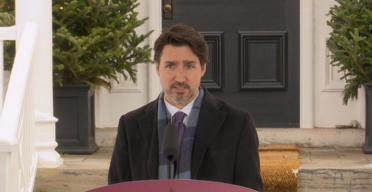
הממשלה הקנדית מגבירה מאמצים כדי למנוע את התפשטות נגיף הקורונה שמשפיע קשות על החיים כאן. ראש הממשלה, ג’סטין טרודו קרא שוב לקנדים שנמצאים בחו”ל לחזור הביתה לפני שיהיה מאוחר מדי. זאת כיוון שקנדה סגרה את הגבולות שלה כמו מדינות אחרות. בעשרים ואחד בחודש נסגר הגבול בין קנדה לארצות הברית, לאחר תיאום ממושך עם הממשל האמריקני. הגבול נסגר בשלב זה לחודש ימים ומעתה רק סחורות יכלו לעבור בין שתי המדינות השכנות.
קרוב לשלושה מיליון קנדים חיים כיום מחוץ למדינה ולא ידוע כמה מהם מעוניינים לחזור הביתה. טרודו מזכיר להם שוב לחזור לקנדה כל עוד אפשר כאשר חלון האפשרויות הולך ונסגר. למי שמתקשה כספית לרכוש כרטיס טיסה – הממשלה מציעה הלוואות של עד חמשת אלפים דולר לעזור להם. הקריאה להחזיר את הקנדים נשמעת בקול רם לאור הגידול המשמעותי במספר החולים והמתים בעולם, מווירוס הקורונה. בקנדה מספר החולים כבר חצה את השניים עשר אלף.
טרודו אומר לקנדים: “אם אתם בחו”ל, הגיע הזמן שלכם לשוב הביתה. אם רק הגעתם, עליכם לבודד את עצמכם למשך שבועיים. ולבסוף כל הקנדים, עד כמה שניתן, צריכים להישאר בבית. ביחס לאזרחי קנדה שנמצאים כעת מחוץ למדינה אני יודע שהחדשות האלו יעוררו חששות”.
כחלק מהמגבלות שהטילה קנדה בכדי להיאבק בהתפשטות וירוס הקורונה, הוחלט שכל מי שמרגיש סימפטומים הקשורים לנגיף הקוביד-תשעה עשר, לא יוכל להיכנס לקנדה. בנוסף, חברות התעופה הונחו למנוע כניסה ועלייה למטוס של כל מטייל שנראה כי סובל מסימפטומים של הנגיף.
בד בבד, ראש הממשלה טרודו אמר כי הממשלה בקנדה תתמוך באזרחים קנדיים שנמצאים כעת בחו”ל באמצעות תכנית מיוחדת שתכסה את העלויות של החזרתם לקנדה, או שתשלם על הצרכים הבסיסיים של אזרחים קנדיים בזמן שהם ממתינים לשוב ארצה.
ראש הממשלה טרודו הדגיש כי הממשלה הפדרלית בוחנת צעדים נוספים למניעת ההתפשטות, ובין היתר שוקלת אמצעים קיצוניים יותר כמו החלת חובה אזרחית לבידוד עצמי. טרודו: “נקטנו במספר צעדים עוצמתיים ואנחנו לא מסירים אף אופציה מהשולחן. אנחנו בוחנים באופן יומי את הצעדים הבאים שאנחנו עלולים לקחת או שלא כדאי שניקח, והשיחות בנושאים אלה נמשכות”. טרודו עצמו היה בבידוד בביתו באוטווה הבירה לאחר שאשתו סופיה טרודו לקתה בקורונה, לאחר שביקרה בבית קנדה בלונדון בריטניה.
בין ארה”ב לבין קנדה יש את אחת ממערכות הסחר הבילטרליות הגדולות ביותר בעולם והכלכלות שלהן שזורות זו בזו. הגבלה קפדנית על תנועה בין הגבולות תיצור בעיות משמעותיות עבור תעשיית הרכב, כמו גם להובלת מזון ותרופות. לדברי נשיא ארה”ב, דונלד טראמפ, סגירת הגבול בין קנדה לארה”ב בהסכמה הדדית ובאופן זמני לתנועה לא חיונית, לא תשפיע על המסחר בין שתי המדינות. טרודו הוסיף: “הממשלות שלנו מכירות בחשיבות המכרעת לשמירה על קווי האספקה בין שתי המדינות, המבטיחים שמזון, דלק ותרופות מצילות חיים יגיעו לאנשים החיים משני צדי הגבול. קווי האספקה, כולל משאיות עם סחורות, לא יושפעו מהצעדים החדשים”.
טרודו שחשף חבילת סיוע למשק, לעסקים, גופים קטנים ולמרבית העובדים שהופכים למובטלים, בגובה של יותר משמונים ושניים מיליארד דולר. סכום הסיוע צפוי לגדול משמעותית ככל שהמשבר הבריאותי והפיננסי ימשכו. כבר ידוע על יותר מחצי מיליון תושבים שפנו לקבל דמי אבטלה, לאחר שאיבדו את מקום עבודתם. צפוי שגם מספר המובטלים יגדל משמעותית לאור משבר הקורונה, כאשר המדינה הולכת ונסגרת לכל פעילות.
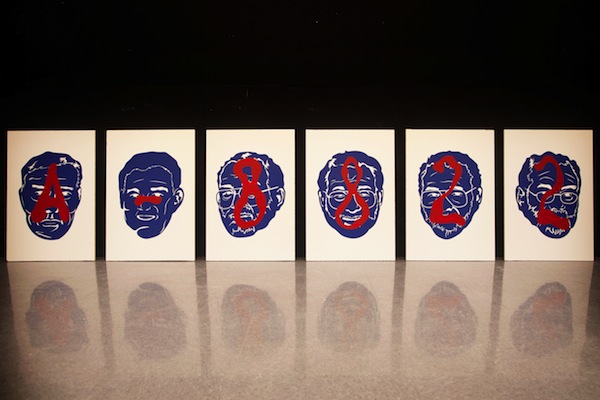
Much of artist Seth Book’s work has been influenced by his maternal grandfather, who was a Holocaust survivor, including “A Series I Don’t Want to Continue” – “One work to symbolize each character tattooed on his arm, and each million Jewish people that were massacred,” explained Book. (photo from Seth Book)
“My art began as solely for the enjoyment of creating work that was esthetically pleasing, but it has since changed to serve a didactic purpose and to provide awareness to social issues and histories that are important to me and my family,” Seth Book told the Independent. “A significant part of my work is to keep the legacy of my grandfather, survivors, and Jewish history alive.”
Book is a member of the third generation. “My mother’s father was a Holocaust survivor, originally from Romania. He went through a few camps, Auschwitz being one of them. Since seventh grade, I have completed a significant amount of research on his story, directly with him while he was alive, as well as after his passing, and, like many other survivors, he had an unbelievable journey,” explained Book, whose work will be on display at Art Vancouver April 16-19, in the unlikely event that the spread of COVID-19 is under control by then and the fair is allowed to take place.
“His presence in my early life has been extremely impactful on the way I live and see the world,” said Book of his grandfather, “and this is what has influenced my art. I truly believe that, in school, work and life in general, I have gotten my tenacity, conscientiousness and resilience from my zaide. As I learned more about his life and what he fought so hard to build for my family, he became a strong source of motivation and drive to succeed in my life. I still uncover bits and pieces about his life after the Holocaust.”
While his art for the past few years has been primarily concerned with his grandfather, the Holocaust, survivors in general, and present-day antisemitism, Book said the past year has been “transformational.”
“My connection to my grandfather allowed me to begin my work at this starting point relative to my own history,” he said, “but it has since expanded to include broader focuses, such as the current generation living on the legacies of survivors, as well as generational trauma and current events affecting the global Jewish community.”
Book, who works at a branding agency doing graphic design and writing copy for clients, is set to finish his bachelor of fine arts degree at the University of British Columbia. His coursework has allowed him to learn about and use many different mediums, he said, “including drawing, digital media, photography, painting and metalwork.”
Born in Vancouver, Book has lived in the Dunbar area his entire life. He attended Vancouver Talmud Torah from preschool to Grade 7, and then went to St. George’s School for his secondary education. He continued his involvement in the Jewish community via Temple Sholom, he said, “where I participated in the confirmation class in 10th grade and then taught at the Sunday school in 11th and 12th grade. I was also lucky enough to travel to Israel with my family on the Temple Sholom trip after my bar mitzvah.”
He was well-versed in diverse media long before his university years.
“Growing up, I was always interested in creativity: building structures, doing crafts, colouring, and especially playing with LEGO,” he said. “I recall being hilariously picky with colours and colouring inside the lines when drawing with other kids as early as preschool; I always find it funny to this day how much it bothered me as a toddler to see other toddlers using odd colour combinations or messy drawing.
“This interest in art was then supplemented by Colette Leisen’s art class all throughout VTT – it was probably my favourite in elementary school. This carried on into various art classes in high school, including drawing, animation, graphic design, ceramics and painting.”
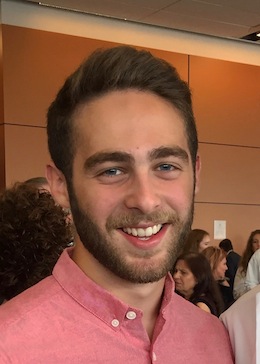
Seth Book (photo from Seth Book)
Book said it is hard to define his artistic style because he has always been interested in finding new mediums and approaches. But he has less need for such definition since he began university. Since then, he said, “I have been able to let go of that and continue exploring what interests me rather than being labeled as a ‘painter’ or a ‘photographer.’ I always find that different mediums have such an incredibly unique ability to succeed in accomplishing a piece better than others. In other words, certain mediums are more effective than others in conveying certain ideas or concepts for varying projects. That being said, I try to use the best option I can for each work, trying not to limit myself in expertise. I can always try and learn! I did not work with metal until late 2019, and have already created two works using it, and I am very satisfied with how they turned out.”
Book, who has a background in business management in addition to his art training, said he first heard about Art Vancouver through a summer internship program he took part in a couple years ago, and has kept in close contact with the team there since. “I have loved working with the organizers and enjoyed attending the event every year,” he said. “I quite like the efforts they make to advance the art scene in my hometown and can’t wait to be a part of it as an artist this time.”
Hopefully, he will get that chance, but, even if Art Vancouver is canceled or postponed because of COVID-19, Book is an emerging artist whose works will available at other venues at other times.
He was able to tell the Independent about two pieces he was planning on bringing to the art fair. While he had not firmly decided on all the pieces yet, he said, “I selected the works from my portfolio which I have found to be the most striking, the works that I have received most compliments about, as well as the works which I feel represent my wide practice the best when shown together.”
One of those creations is called “A Series I Don’t Want to Continue,” which comprises six digitally rendered vinyl decals adhered to six two-foot-by-three-foot melamine sheets.
“A series opens an idea and simultaneously closes it,” reads the work’s description. “The values in between the first and last work tell a story or convey some sort of meaning through the relationships formed with the works in between.”
It continues, “A series of works in any media all relate to one another through consecutive nature. Labeling a group of entities as part of a series can bind them together, locking them out from further creation or reproduction. This is where the concept of my work integrates itself reflexively within the format of a series work. Through this work, I explore the contained value of past events, and particularly the Holocaust, in relation to my grandfather’s story.
“When he passed away, the evaluation of his extreme tenacity and hard work to establish our family and provide futures for generations to come was recognized more than ever. ‘Never again,’ the words that often cross our mind, could not be stronger upon recounting the horrors he endured. Never again, but also never forget. These events happened. They must be taught and preserved, but they are contained, and must never grow…. One work to symbolize each character tattooed on his arm, and each million Jewish people that were massacred. There will not be a seventh work in this series.”
The other piece that Book wanted to bring for sure to Art Vancouver is called “Untitled Crowd (The Stars, The Blues, The Ashes).” The 22-inch-by-30-inch ink-on-paper work is also related to the Holocaust. The description reads, in part, that the Nazis’ attention to detail was “dual-edged.”
“On one hand,” it notes, “they kept extremely particular and accurate data records of the prisoners murdered. Ironically, on the other hand, the attention to human detail was nonexistent. When Jewish people were funneled through various camps, they were stripped of their belongings and identities. They were nothing but a number.”
In “Untitled Crowd,” Book writes, “I attempt to discuss this specific lack of attention and elimination of one’s person. Each work is a recreation of real people who either survived or perished during the Holocaust. In order to illustrate the lack of respect and attention given to these unfortunately abused people, I spent a specifically short time on depicting them in the piece. Each face was dedicated about six minutes, to correspond with the six million lives lost. The faces are all overlapping with one another to represent not only the crowds of people who were murdered and their brutal living conditions, but also the morphing of individuals into a mess of numbers and bodies rather than human beings.”
The piece’s three parts carry added symbolism. “The first work is done with shades of mustard yellow to signify the yellow stars Jewish people were forced to use as identification, and the shades are more distinct in overlapping to show not all identity had yet been lost,” writes Book. “The second work is completed with shades of blues to represent the blue-striped pyjamas prisoners wore, and the difference in tone decreases to create a more homogenized look as they lost identity. The final work uses the greyscale to convey the ashes of those perished, and the gaining age of survivors around the world.”
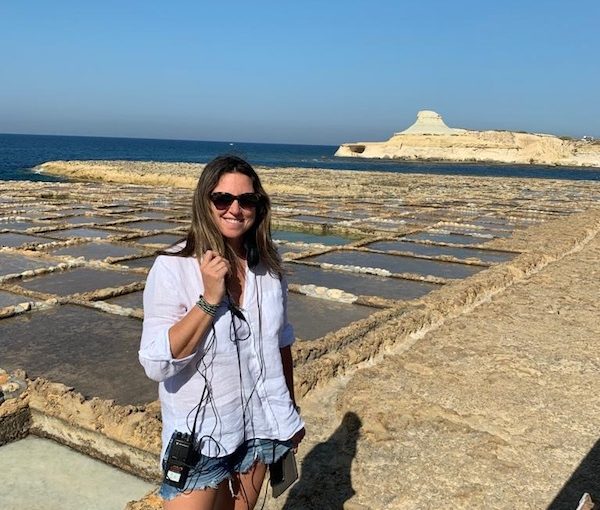
Courtney Hazlett in Malta, one of the many places she has visited to record her Netflix program Restaurants on the Edge. (photo from marblemedia and OutEast Entertainment)
For producer Courtney Hazlett, traveling around the world for her new Netflix series, Restaurants on the Edge, has been an unforgettable, rewarding experience.
The premise of the show is to take struggling restaurants that have incredible locations with breathtaking views but ordinary or subpar food, and turn them around. A team of experts – chef Dennis Prescott, designer Karin Bohn and restaurateur Nick Liberato – come in and transform the establishments into magical eateries. The show is co-produced by marblemedia and OutEast Entertainment, which is a company run by Hazlett and her husband, Steven Marrs.
“We go around the world with a team of experts and, in a positive way, find restaurants that aren’t living up to the beauty of their location and help change that,” said Hazlett, who is also the show’s creator. “We change the décor, menu and business model. We want to add menu items that speak to that destination.”
Hazlett, who lives in Los Angeles, came up with the idea for the program while eating outdoors at a restaurant in Venice, Calif.
“We often go to places where the better the view, the worse the food,” she told the Independent. “That was the seed. I thought, we can go around the world, find restaurants that aren’t living up to the beauty of their location and help change that. My initial impression was, because of the spectacular view, restaurant owners felt they didn’t have to go all out with the food. But that wasn’t the case. It’s not that they aren’t trying, it’s just that a lot of restaurant owners are in over their head.”
In helping decide what changes needed to be made in each restaurant, Hazlett said they first went to social media to see what people were saying about the establishment. They looked at reviews on Tripadvisor and Yelp and read the comments patrons made.
“What I was most passionate about was the storytelling aspect,” she said. “We went out and met people who lived there. In some ways, the story of community shows up on the plate.”
Since it’s being aired on Netflix, it must be a global show, Hazlett explained. “We had to show as many corners of the earth as we could. It’s a lot of globetrotting.”
In Season One, released on Netflix in Canada last week, on March 14, the team traveled to Malta, Hong Kong, Tobermory (located in Ontario four hours north of Toronto), Costa Rica, Austria and St. Lucia.
Hazlett said Tobermory looked like the Caribbean, with gorgeous blue and green water, underground caves, cliffs and ancient forests. Tobermory is almost completely surrounded by water, with Lake Huron on one side and Georgian Bay on the other. The team chose to make over a seasonal restaurant called Coconut Joe’s.
“The owner was a sweet guy who was struggling with the business,” she said. “He loves to travel and wanted to make a restaurant inspired from his travels. That main inspiration was palm trees, and he wanted to have menu items reflecting any place you would find a palm tree. He had about 30 items on the menu – from Thai to Caribbean food, all over the place. The décor was tiki but not in a good way. The restaurant owner’s busy season is only eight weeks of the year because it’s so far north. Since we filmed the episode in the busy season, he had to shut it down one and a half of those weeks in June.”
The designer’s goal was to transform Coconut Joe’s from tacky tiki to chic tiki. The chef’s goal was to celebrate local food as well. At the end of the restoration, the owner was grateful and thrilled with the results.
Season Two, also released on March 14 in Canada, brought the team to seven more destinations, including wine country in British Columbia’s Okanagan Valley. There, they chose to transform the Outboard Waterfront Pub.
“The owners of the restaurant are such an integral part of the story we tell and, in this case, we were thrilled to include a father-daughter team, Campbell and Anne Stewart,” Hazlett said. “Campbell is hoping to retire sooner rather than later and leave the restaurant in Anne’s hands, and Anne, when we filmed, had an infant. So they’ve got a lot on their plate.”
Hazlett said she has always loved food and cooking. Born and raised in Pittsburgh, she earned a degree from Tulane University and a master’s degree in journalism from Columbia University. She went on to work at People magazine and OK! magazine, then was a correspondent for MSNBC, covering pop culture for MSNBC, as well as Today, Morning Joe and more, before running entertainment teams for NBC News Digital.
“Around 2012, I started producing,” said Hazlett, who moved from New York City to Los Angeles. “Then I started to develop content and, in 2014, created the production company OutEast Entertainment. ABC just ordered a medical drama pilot from us called Triage; it’s directed by Jon Chu, who directed the upcoming film In the Heights.”
Although Hazlett is Jewish and raises her children Jewish, she was born Christian.
“What happened is my mom never knew her father and, later in life, found out he was Jewish, and it unlocked something in me,” she explained. “Growing up, I always gravitated towards Judaism. My husband of eight years [Marrs] was a lapsed Catholic and we both converted. For us, as we started to lean into the Jewish traditions, it became such a centring force for our family. Over time, we started to keep Shabbat and celebrate Jewish holidays. We wanted our kids to grow up Jewish – they go to religious school and we are super-active in our temple. Converting became an easy choice for both of us and it made a lot of sense.”
In keeping with her Jewishness, Hazlett would love to find a location and restaurant in Israel. “Next season, I would love to film in Israel and other Jewish places,” she said.
Hazlett admitted it was a lot to ask an owner to close down his or her restaurant while her crew did renovations, especially if the restaurateur had a cash flow problem. “But, on the flip side, being on Netflix is great advertising for them,” she said, adding that they don’t compensate the restaurants, but they do pay for the cost of the makeovers. “In fact, I received notes from the restaurant in Malta that he has had more than 2,000 people reach out to him because of the show. That’s a lot of new customers!”
Alice Burdick Schweiger is a New York City-based freelance writer who has written for many national magazines, including Good Housekeeping, Family Circle, Woman’s Day and The Grand Magazine. She specializes in writing about Broadway, entertainment, travel and health, and covers Broadway for the Jewish News. She is co-author of the 2004 book Secrets of the Sexually Satisfied Woman, with Jennifer Berman and Laura Berman.
Does it seem like people are behaving more kindly this week? Maybe it’s the sunshine. But maybe it’s the realization, amid all the alarming news and concerns over the spread of coronavirus, that we are all, truly, in this together.
We live in particular times that may be defined – especially as exemplified by some political leaders and their followers – as uncharitable, xenophobic, chauvinistic, mean-spirited and self-interested. These attitudes have been demonstrated, among other ways, in the attitudes of many people toward migrants from other places. These ideas trickle down to the way we treat one another – in traffic, in online interactions, in schools and workplaces, in voting – behaving in ways that take into consideration only (or mostly) our own well-being at the expense of the well-being of others. There are magnificent exceptions, of course, everyday acts of kindness and gestures of humanity great and small. But our age, it can probably be agreed, includes a lot of pettiness, intolerance and plain old snark.
Our parents or grandparents understood the meaning and necessity of sacrifice for the greater good. The communal effort during the Second World War, on the home front and among those serving, was a generationally defining undertaking. While wars, sadly, have continued, in our corner of the world, the burden has fallen on an increasingly smaller number of people – those families with members in the service. But, for at least a generation of North Americans, we have not been called upon for an unavoidable collective sacrifice for the greater good. Again, this is not to say that many people are not sacrificing for the greater good – individuals are devoting themselves to causes greater than themselves, including climate change, but they are doing so by choice. They may be driven by desperation, fear, environmental justice or other motivations, certainly, but, ultimately, it is voluntary.
Then along comes a virus with apparently incalculable potential to cause illness and death and we realize that we are not so separate after all. While they have resisted on issues like climate change, governments worldwide have stepped up (some of them more slowly and irresponsibly than others) and taken seriously the science that predicts grave consequences if we do not take urgent actions now. And individuals, in the first days of what will be an unprecedented period of unknown duration, appear surprisingly amenable to following government-issued restrictions on behaviour for the hope of long-term health, not only for themselves but for those who are more vulnerable due to age or underlying health conditions.
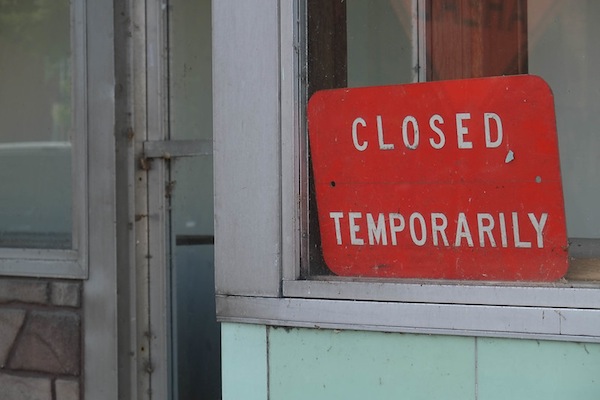
There is nothing good about a global pandemic. But good things happen when people act in unity to advance collective well-being. Individuals and groups have responded with astonishing immediacy when called upon to act. Places of public meeting, including restaurants and cafés, have faced the painful but unavoidable truth that they have to temporarily change their service model. This will have untold economic and social impacts as staff are displaced, with concentric circles as these workers lose purchasing power and these realities ripple through the economy, already suffering multiple unknowns and slowdowns.
In our community, synagogues and communal organizations have adopted stringent and unprecedented measures, many canceling live services and opting for alternative venues like online learning.
We witness the immediacy of these factors’ economic ripples. As our community cancels public events, advertisements are understandably pulled from our newspaper. As a result, we have made the choice to cancel an additional issue next month, and not publish for two weeks, April 10 and 17, rather than the scheduled one-week hiatus. We will have a healthy Passover issue on April 3 and we urge you to support our work and celebrate the holiday by considering advertising or inserting a greeting message in that issue or in the ones resuming April 24 and after.
In the meantime, as we come together to confront this very serious challenge, we are reminded, as Temple Sholom’s Rabbi Dan Moskovitz writes in this week’s issue writes in this week’s issue, we do not do so as Canadians or Chinese or Italians or Israelis. We are people living in different places who face the same pathogens and the same reality.
In Jewish tradition, the value of pikuach nefesh, of saving a life, overrides almost every other consideration. Among other things, this suggests that we should view our current situation through a slightly altered lens. While all of us should be doing everything we are advised to avoid getting the virus, we should be doing so not only, perhaps not primarily, for our own health, but in order to prevent us transmitting it to another person. For many of us who are younger or do not have underlying health concerns, COVID-19 could be a very unpleasant inconvenience. For others we know and love, it could be far more serious.
The top advice we have received is to wash hands with soap frequently and thoroughly, and also to stay home to avoid physical contact as much as possible. Some people are suggesting we treat these days like Shabbat. Spend time with family. Read books. Take a walk. Engage in passive activities. Turn off electronics for a time to avoid the noise of the world which, at this time, is particularly loud.
And be kind to one another. If you know of a senior or other person whose health could be endangered by going out, do their shopping. See what else they might need. Call your family and friends. Set up a virtual dinner party or a play date for your kids. Since you’re not spending money on restaurants and theatre, consider donating to charity and arts organizations.
This is all good advice. But we suspect, given some unscientific observations of kindness and communal care in the last few days, that most of us already know what to do.
Yesterday, I cried in my car. You shouldn’t worry – I was parked at the time. I share this not for sympathy or even empathy. I share this because these are harrowing times, we all feel the tremendous weight of worry:
For ourselves, if we are relatively young, we know the vast majority of cases are mild to moderate, but some aren’t.
For our aged parents, if we still have them.
If we are older, we worry, as the danger increases with age, though, interesting to me, I have found among many of our elders a rationalism and calm that, if I wasn’t freaking out so much worrying about them, I would take comfort in.
For some, the worry is compounded, as they are beyond our reach in other cities or countries.
For our children, as normalcy evaporates. I told my children the other night, as we canceled plans for our son’s birthday party at the movies, that they will tell their own children how they survived the pandemic of 2020. And they will. The vast, vast majority of all of us, even the aged, will survive this. But we will be forever changed by it – I hope for the better.
For our city and country, as it attempts to “flatten the curve.” I long for the days when that phrase was most often rendered in my head as I looked in the mirror at my belly or hips.
I’d say that I worry for our world, as this pandemic is truly global, but the sweep of this virus is so vast that I can’t wrap my head around the whole world experiencing this crisis all at once.
If ever we needed a reminder that there are no true borders, that what happens here effects people over there and vice versa, this is an example.
Refugee crises. Climate change. Economic disparity. And, now, a pandemic. We are all connected.
There are no Chinese COVID-19 victims, or Italian or Israeli or Iranian or American or Canadian – there are just people living in different parts of the world all with the same fears, uncertainty, worries and prayers for healing. Just people, just human beings – there is nothing so different about any of us – except perhaps age, which is only a matter of time – that protects any of us more than the rest of us.
That’s why I cried in my car, and I share it with you because I learned from that cathartic cry that it is OK to be scared, it’s OK to cry. Not because I did it, and I don’t want to be the only one crying in my car, where the kids can’t see me, but because I felt a lot better after – and you might, too.
There was a cartoon that was being passed around on the internet, I guess we call that a meme. It was of a couple looking at their computer and the caption was, as the man turned to his wife over his shoulder, “That’s odd: My Facebook friends who were constitutional scholars just a month ago are now infectious disease experts….”
I thought it was funny.
I know very little about the science of all of this, though I am trying to keep up. British Columbia’s Dr. Bonnie Henry and Dr. Patty Daly and their teams are incredible in their competence and expertise, but I know almost nothing about science that is helpful here. But I do know a little bit about prayer.
What I would like to offer, what I think might be of help, is the power of prayer. Not to change God, not to change the course of this virus. Though this is a natural evil, I do not think it is punishment from God or within God’s control. My faith doesn’t work like that.
I want to suggest and teach for a moment the power of prayer not to change God, but to change each of us.
Sarah Hurwitz writes in her book Here All Along about the power of prayer. She describes a form of Chassid prayer called hitbodedut. The word, which sounds a bit like the last name of one of the former Democratic presidential candidates, refers to a practice of self-secluded Jewish meditation popularized by Rebbe Nachman of Breslov (1772-1810).
The practice, as he taught, is an unstructured, spontaneous and individualized form of prayer and meditation through which each individual establishes a close, personal relationship with God through a free-flowing monologue. Where some people go out into the woods and make a primal scream, Jews, at least Jews who are students of this practice, go out into the woods and kvetch.
Not only kvetch, but thank and question and plead and wonder and acknowledge. You unload your thoughts and angst without stopping to think or formulate them. You just talk to God. It’s a stream-of-consciousness practice that takes some practise, but, like the cry in my car, it can be incredibly cathartic and remarkably revealing of your inner thoughts and feelings.
It’s not unlike the famous Jewish folk story of the young uneducated shepherd who comes to the synagogue to pray. Not knowing the prayers of the established liturgy, he sits in the back row and sings the alphabet over and over again. (Maybe he was also washing his hands?) The men of the synagogue confront him: “Why do you disturb our prayers with your gibberish?”
The boy explains, “I don’t know the prayer. But I wish to thank God for my sheep and the stream, for the warmth of the sun and the silver moon that keeps me company when I sleep. I am singing the alphabet and surely God can put the letters in the correct order to make the prayers.”
In this worrying and frightening time, give voice, actual voice, to your thoughts and feelings, your fears and your anxieties. Not to change God, not to stop the virus, but to change yourself. To give you insight and courage, and patience and perspective, and confidence and hope, and calm and gratitude. In doing so, you might just find your prayers, not those in the siddur (prayerbook) but the prayers that are deep in your soul. Go out into the woods – they tell us the virus is not as communicable outside – and talk to God.
Rabbi Abraham Joshua Heschel taught: “Those who honestly search, those who yearn and fail, we did not presume to judge. Let them pray to be able to pray and, if they do not succeed, if they have no tears to shed, let them yearn for tears, let them try to discover their heart and let them take strength from the certainty that this, too, is a high form of prayer.”
Talk to God, cry to God, be silent with God, it’s all prayer, and it all helps. I know it is helping me; I pray that it will help you.
Rabbi Dan Moskovitz is senior rabbi at Temple Sholom and author of The Men’s Seder (MRJ Publishing). He is also chair of the Reform Rabbis of Canada. His writing and perspective on Judaism appear in major print and digital media internationally.
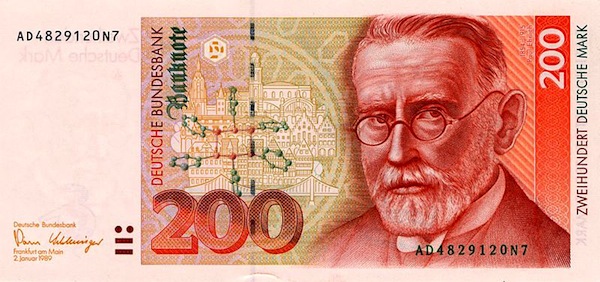
During the Nazi regime, all references to the great physician-chemist Paul Ehrlich were suppressed. In the 1990s, he was featured on the German 200-mark bill. (photo from the internet)
In the 17th century, the Netherlands was a country of great tolerance, having welcomed the Jews driven out of Spain and Portugal, including renowned physicians. Not coincidentally, this was the Dutch Golden Age, a time of breathtaking advances in the arts and sciences. It was there that the first microscopes were invented. To the eyes of Antoni van Leeuwenhoek in the town of Delft in the 1670s were revealed a veritable zoo of subvisible microorganisms previously inconceivable to even the most fevered imagination.
Throughout the 18th century and well into the 19th, there was speculation among medical men about the possible relation of microorganisms to disease. Certain varieties of these tiny beings seemed to appear in the organs or blood of patients with certain diseases. But there were endless questions: Could these creatures, so primitive, come into being by themselves (“spontaneous generation”)? Were they the cause of disease or were they the product of the diseased body? Could a pathogenic microbe of one disease transform into that of another disease? In diseases known to be infectious, were microorganisms the culprits, transmitted from a diseased body to a healthy one, there to germinate?
A breakthrough heralding the Heroic Age of the “microbe hunters” came in 1840 with the publication of Pathological Researches by the Bavarian medical doctor Jacob Henle, a descendant of rabbis. Using technologically advanced microscopes and deductive analysis of case histories, Henle declared to the medical world: “Contagion is matter endowed with individual life which reproduces itself in the manner of animals and plants, which can multiply by assimilating organic material and can exist parasitically on the sick body.”
A year later, the Polish-German Jew Dr. Robert Remak published the first of his observations that cells – of any living organism, including microbes – can arise only by division of parent cells. Thus, Remak helped put to rest the concept of “spontaneous generation.”
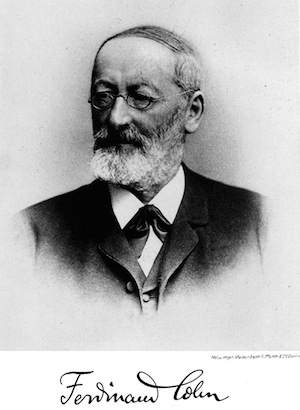
Microbe hunter Ferdinand Cohn in the front piece of one of his books. (photo from the internet)
Humankind’s war against transmittable diseases accelerated dramatically in the second half of the 19th century. In the German city of Breslau (today Wroclaw, Poland) the botanist-microscopist Dr. Ferdinand Cohn published his Bacteria, the Smallest Living Organisms in 1872. As the undisputed master of the classification of subvisible life, Cohn elucidated that, while a microorganism of one disease may undergo various transformations, it remained the microorganism of that specific disease and not of another.
Robert Koch, a student of Henle and a protégé of Cohn, of Protestant background, discovered the tuberculosis bacterium and elucidated the mysterious life cycle of the anthrax bacillus.
Such dramatic advances led to the discovery of links in the chain by which the various pathogenic microorganisms are transmitted, and then to measures to break those links: cholera by drinking water contaminated by sewage, sleeping sickness by the tsetse fly, childbed fever by the contaminated hands of doctors and midwives, malaria (literally “bad air” in Italian) by mosquitoes.
To such defensive measures were added an arsenal of aggressive weapons. In Berlin in the 1890s, the Jewish doctor Paul Ehrlich was instrumental in developing serums. The watery part of the blood (after coagulation) of an animal that has fought off a toxin-producing disease such as diphtheria contains powerful antitoxins that can be injected into a diphtheria patient. A brilliant and imaginative chemist, Ehrlich pioneered techniques for selectively staining specific microorganisms to distinguish them under the microscope. This principle inspired him to develop the world’s first chemotherapeutic agent – the arsenical compound Salvarsan, known popularly as the “magic bullet,” which homed in on and destroyed the spirochetes of syphilis. (Ehrlich’s coreligionist Albert Wassermann developed the blood test for the disease.)
A general optimism prevailed as the new century dawned that humankind would soon be free of all serious infectious disease. But there was a missing piece in the puzzle.
It had been known since ancient times that people who survived a given disease were wholly or partially immune from an attack by the same disease. In 1798, the English physician Edward Jenner showed that deliberate inoculation with the pustules of relatively benign cowpox (vaccination, from the Latin vacca, cow) protected the person from attack from the far more virulent and deadly smallpox.
Among the great triumphs in the war against transmissible disease was the development of a new kind of vaccination by the French chemist Louis Pasteur, a devout Catholic. Pasteur showed how inoculating a patient with killed or attenuated (weakened by drying or other techniques) pathogens such as rabies activated the natural immune system against a subsequent all-out attack by the fully virulent disease.
But here was the rub. Unlike the microorganisms of tuberculosis, cholera, diphtheria, syphilis and so many other diseases, no one had ever seen the agents of smallpox and rabies. Pasteur speculated that they were microorganisms beyond the range of the most powerful microscopes.
Around the turn of the 20th century, the Dutch microbiologist Martinus Beijerinck showed how the fluid of an infected plant, after being strained through the finest filter, was able to infect healthy plants. This was an important breakthrough, but Beijerinck erred in assuming the culprit wasn’t composed of solid matter. He called it virus, Latin for poison.
That no one had seen a virus made the fight more difficult. Between 1918 and 1920, as the Spanish flu claimed more lives than all the battlefields of the Great War in the preceding four years, the medical profession mistakenly attributed it to an opportunistic bacterium, visible under the microscope.
The limit of what could be seen was dramatically pushed back with the invention of the electron microscope in the early 1930s, by which viruses, hundreds of times smaller than bacteria, were exposed to the light of day. It appeared that Pasteur was right after all in postulating that the agent of rabies was a microorganism.
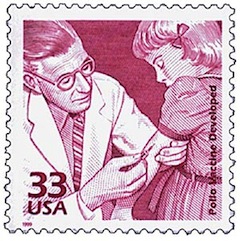
One of several U.S. postage stamps commemorating the polio vaccines of Jonas Salk and Albert Sabin. (image from the internet)
But not quite. Research later in the century showed that viruses – unlike living entities (organisms) – can’t multiply or reproduce on their own. Viruses turned out to be packets of genetic material – DNA or RNA – that penetrate, commandeer and destroy living cells in order to multiply.
Poliomyelitis, the dread crippler caused by an enterovirus, was checked in the 1950s (and is now virtually eradicated worldwide) thanks to two vaccines developed independently by the American Jewish medical doctors Jonas Salk and Albert Sabin. (The virus was cultured using the foreskins of circumcised babies.)
AIDS, hepatitis, SARS, Ebola and now corona – new virulent viruses keep emerging. And the weapons to fight them – vaccines, tests, serums, pharmacological “magic bullets” – are in the enduring spirit of the great Jewish microbe hunters.
Dr. Frank Heynick is the author of Jews and Medicine: An Epic Saga (KTAV Publishing House, 2002, still in print). There are some 500 publications of his in the United States and Europe, ranging from academic to popular-scientific, many on the history of medicine and allied fields, including the crucial Jewish role. He lives in New York and has taught the history of medicine at New York University.
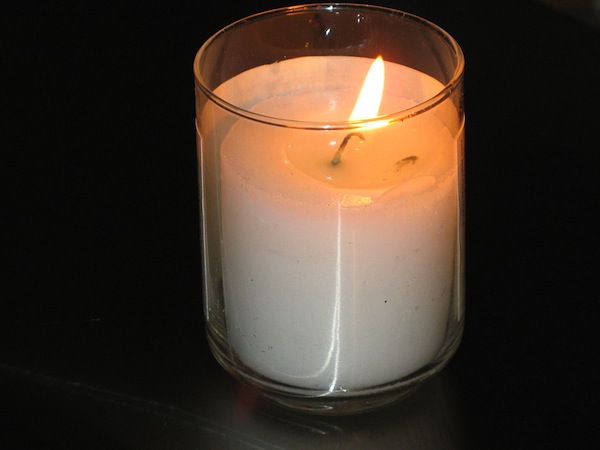
Was it really 17 years ago that my sweet, beloved father, Sidney Civkin, passed away? The long row of empty Yahrzeit candles in my closet confirms it. The date was March 13, 2003. Dad was 86 years old. It was indisputably the saddest day of my life.
If you have a good one, you’ll know that there is something unique about a father-daughter relationship. There are secrets and bonds that no mother-daughter relationship can come close to. Don’t ask me why, I just know it’s true.
It’s no secret that my sister Linda and I spent more time with our father in the last three years of his life than we had up until that point – and he was always a very present, involved father. He’d been suffering with end-stage renal failure and was on dialysis for those last few years. And we were his primary caregivers, since our mother was not well by that point.
Our dad often said that, ironically, those were the best years of his life – precisely because he got to spend so much time with Linda and me. He loved to just hang out with us. Whether we were sharing a meal, having a coffee at Granville Island, or sitting in the den shmoozing, he was all in. Flattering to think that he loved our company above everything else.
There was no one who didn’t have an opinion about our father. Some knew him as argumentative, loud and assertive. Others remember him as compassionate, caring and erudite. I knew him as all of those things, and loved him more for it. He was my secret-keeper, my biggest fan, my adoring, supportive father. If anyone has ever loved me unconditionally, it was him.
Dad adored his work (he was an ear, nose and throat surgeon); devoured books; loved to golf; loved to cook; and took great enjoyment in playing bridge with his buddies. But, most of all, he loved his family. And he had a quirky, magnificent sense of humour. He was playful, outspoken and hardworking. And he adored off-colour jokes.
Dad was born in Winnipeg (“the Old Country”) in 1916, served in the Canadian Army as a medical officer, then moved to Vancouver in 1949, determined to escape the brutal prairie winters. He set up his medical practice in New Westminster and, even though we lived in Vancouver, he continued to make the commute for the next 37-odd years. He loved the small-town feel of New Westminster, his working-class patients and his colleagues. He’d found his place as a well-respected doctor who spent his life helping others.
I’ll never forget the night Dad passed on. My life shattered, not just momentarily, but for a few years. I was 47 years old, single, and I’d just lost my best friend. I know that sounds odd, but our relationship was everything to me. I grieved as though I’d invented the concept. I felt like no one’s heart could be broken quite like mine. It wasn’t just an emotional pain. It was intensely physical for me. In the blink of an eye (it wasn’t really, because he had been sick for three years, but death never seems inevitable, even in the very second before it happens), my world splintered into a billion pieces. I was inconsolable.
My grief consumed me, at home and at work. The mere thought of my father set me to tears. It was like a floodgate had not merely opened, but exploded. Seventeen years later, I still think of my father regularly, but the tears are no longer a daily occurrence. Yet, I still can’t believe he’s no longer here with us, physically. He certainly is in spirit. They say that, when the soul leaves the body, it can still connect with loved ones, except it’s in a spiritual way. And we have lots of that. Naturally, I miss the physicality of giving my dad a hug and kiss. I miss looking at his smiling face. But we still connect mightily and often. I can feel his presence in my dreams and, when I see or hear particular things, I just know it’s my dad sending me a message. I know he’s always checking in on me, looking out for how I’m doing.
Grief is a funny thing. It ebbs and flows. It intrudes at the most inopportune times, and announces its presence with a deafening blast. It creeps into your consciousness when you least expect it, and always takes its sweet time getting comfortable. Grief never gets an invitation – it always just crashes the party. Grief never gets easier; it just gets different. The edges blur, the points soften, but the tangible sense of loss never goes away. Seventeen years later, at age 64, I still feel like an orphan.
There is much truth to the adage by Maya Angelou: “People will forget what you said, people will forget what you did, but people will never forget how you made them feel.” My father always made me feel loved and supported. His pride in me was a source of great comfort. Naturally, there were times when he said or did things that angered or upset me, but they never eclipsed his unconditional love for me. I have always been sure of that.
If I had to distil my dad’s legacy into a nutshell, it would be this: be kind to people and help them when you can. Give graciously of your heart, and always try to do the right thing. It’s a tall order. But I’m up for the challenge. Thank you, Dad, for everything.
Shelley Civkin is a happily retired librarian and communications officer. For 17 years, she wrote a weekly book review column for the Richmond Review. She’s currently a freelance writer and volunteer, including with Chabad Richmond.
A group of nine Jewish boys from Toronto was in Vancouver recently, courtesy of Chai Lifeline Canada. (photo from CLC)
A group of nine Toronto boys, aged 10-15, recently enjoyed a three-day, all-expenses-paid trip to Vancouver, courtesy of Chai Lifeline Canada, a national charity that supports the families of children or parents who suffer from serious illnesses.
The boys – each of whom has a sibling or parent who is sick – were invited on the trip as a diversion to their family challenges and as an opportunity to bond with other kids in similar situations. Students of seven different Toronto schools, the boys didn’t previously know one another, but came back from the Feb. 28-March 2 trip with strong, new friendships, said Chai Lifeline caseworker Shmuel Rosenberg.
Welcomed by the Vancouver Jewish community, the boys arrived in the city to a group of local boys handing out care packages and then joined them for an excursion to a trampoline park.
A special Shabbat was hosted by Congregation Schara Tzedeck, where the Toronto boys had the opportunity to bond with more of the local community and experience a walking tour of the city, led by Schara Tzedeck’s Rabbi Andrew Rosenblatt. Other weekend highlights included skating on the top of Grouse Mountain and hiking amid spectacular views.
Based in Toronto, with an office in Montreal, Chai Lifeline Canada has nearly 600 volunteers helping more than 2,000 family members nationally. The organization provides dozens of free initiatives to help give children stability and their families a sense of normalcy. Initiatives include counseling, tutoring for children missing extended periods of school, family retreats, sibling programs similar to that of Big Brothers, Big Sisters, and summer camps for kids. For more information, visit chailifelinecanada.org.
בזמן שווירוס הקורונה ממשיך להשתולל ולהשפיע על החיים בקנדה, הפדרציה היהודית של אזור מטרו ונקובר הוציאה הודעה לחברי הקהילה.
לדברי מנכ”ל הפדרציה עזרא שנקן, יש חשיבות עליונה לשמור על הבריאות של כולם בקהילה היהודית. הוא מוסיף כי אמנם הרבה השתנה בימים האחרונים והמצב הוא חסר תקדים וגם נזיל ביותר, אך חשוב להזכיר כי על פי פרסומי המרכז לבקרת מחלות – הסיכון לקנדים מהווירוס נותר נמוך.
שנקן אומר כי הפדרציה תמשיך לעקוב אחר המלצות רשות הבריאות בכל מה שקשור להחלטות לגבי אופן פעילותה, מאירועים קהילתיים ועד לסביבת המשרדים שלה. וכן בדפוסי העבודה עם השותפים שלה. הפדרציה נמצאת בקשר שוטף עם רשויות הבריאות, והיא השתתפה בשיחת ועידה שניהלו הפרמייר של מחוז בריטיש קולומביה, שר הבריאות של המחוז וד”ר בוני הנרי, עם ראשי הקהילות השונות.
הממשלה הפדרלית וקצין בריאות הציבור הראשי של בקנדה הודיעו על שורת צעדים חדשים, כולל מגבלות נרחבות יותר לטיסות, והמליצו לאנשים להגביר את ההתרחקות החברתית ולהימנע ממפגשים לא חיוניים.
כל אירועי הפדרציה היהודית בוטלו עד לסוף חודש מרץ. הפדרציה תבחן את המצב כאשר המלצות חדשות יועברו על ידי רשויות הבריאות.
הנהלת הפדרציה מאפשרת כיום למרבית העובדים שלה לעבוד מהבית, ומקיימת יותר ויותר פגישות באמעוות הטלפון או בווידאו.
הפדרציה מעדכנת את התוכנית העבודה העסקית שלה להמשך הדרך. כך שאפשר יהיה לסמוך על הארגון לאור התפתחויות נוספות עקב וירוס הקורונה.
זה הזמן בשנה בו ארגונים קהילתיים רבים מנהלים אירועים לגיוס תרומות. הפדרציה נערכת לדבר עימם בימים הקרובים, על תוכניותיהם השונות ובודקת כיצד ניתן לעזור להם.
מספר טיולים בינלאומיים מאורגנים הושפעו מהקורונה, והמצב מסובך עקב הגישות השונות בהן נוקטות מדינות שונות, כאשר מגיעים מטיילים ממקומות שונים בעולם. לכן צעדת החיים נדחתה. גם נסיעת בית הספר התיכון המלך דוד לישראל נדחתה. הפדרציה הבטיחה לעזור בסיוע כספי לבית הספר כדי לתכנן מחדש את הטיול. במקביל מתבצעת עבודה עם השותפים בישראל כדי להתמודד עם הסדרי הדחייה והמשמעויות הכספיות.
הסוכנות היהודית הודיעה כי היא היא מבטלת את הסיורים בצפון ישראל, ונציגיה, לאחר שישהו בבידוד בן שבועיים בישראל, יחזרו למשפחותיהם לקראת חג הפסח. הפדרציה עוזרת לקרן הקיימת בהליך הטיפול להחזרת הנציגים מישראל לוונקובר.
וירוס הקורונה משפיע על אנשים בקהילה היהודית ובכלל בדרכים שונות ומשונות. האיגוד העברי להלוואות חופשיות של ונקובר הכין תוכנית חירום, להלוואות של עד אלפיים דולר, כדי לענות על צרכיהם של מי שהושפעו כלכלית וצריכים עזרה כספית דחופה.
הפדרציה היהודית נמצאת בהליכי תקשורת קבועים עם בעלי עניין מקומיים, ארציים ובינלאומיים כדי לקבל תשובות, בנושאים השונים לאור הבעיות שנוצרו על ידי וירוס הקורונה. זאת כדי לקבל החלטות מידיות, לשתף את חברי הקהילה היהודית במידע ולספק תמיכה למי שזקוק לה. בפדרציה מדגישים כי הארגון מחוייב להבטיח שהליכי התקשורת שלה, הפעולות והמעשים פתוחים ושקופים לכל.
בפדרציה רואים בכל מידע בנוגע לניקיון והגיינה חשיבות עליונה. לכל אחד מחברי הקהילה יש תפקיד להפיץ מידע מדוייק ואמין בנושא וירוס הקורונה. במקרה הצורך למי שזקוק לעזרה, יש לבדוק את האתרים של הרשויות השונות ומערכת הבריאות של המחוז.
בתי כנסת רבים וארגונים קהילתיים אחרים פעילים מאוד בתחום האינפרומציה במצב מיוחד זה, שנוצר נוכח התפשטות וירוס הקורונה. למי שקשור לארגונים אלה מומלץ לבדוק את המידע שהם מספקים כל העת בנושא.