Skip to content
  • Home
  • Subscribe / donate
  • Events calendar
  • News
    • Local
    • National
    • Israel
    • World
    • עניין בחדשות
      A roundup of news in Canada and further afield, in Hebrew.
  • Opinion
    • From the JI
    • Op-Ed
  • Arts & Culture
    • Performing Arts
    • Music
    • Books
    • Visual Arts
    • TV & Film
  • Life
    • Celebrating the Holidays
    • Travel
    • The Daily Snooze
      Cartoons by Jacob Samuel
    • Mystery Photo
      Help the JI and JMABC fill in the gaps in our archives.
  • Community Links
    • Organizations, Etc.
    • Other News Sources & Blogs
    • Business Directory
  • FAQ
  • JI Chai Celebration
  • JI@88! video

Recent Posts

  • Zionism wins big in Vegas
  • Different but connected
  • Survival not passive
  • Musical celebration of Israel
  • Shoppe celebrates 25 years
  • Human “book” event
  • Reclaiming Jewish stories
  • Bema presents Perseverance
  • CSS honours Bellas z”l
  • Sheba Promise here May 7
  • Reflections from Be’eri
  • New law a desecration
  • Resilient joy in tough times
  • Rescue dog brings joy
  • Art chosen for new museum
  • Reminder of hope, resilience
  • The national food of Israel?
  • Story of Israel’s north
  • Sheltering in train stations
  • Teach critical thinking
  • Learning to bridge divides
  • Supporting Iranian community
  • Art dismantles systems
  • Beth Tikvah celebrates 50th
  • What is Jewish music?
  • Celebrate joy of music
  • Women share experiences 
  • Raising funds for Survivors
  • Call for digital literacy
  • The hidden hand of hate
  • Tarot as spiritual ritual
  • Students create fancy meal
  • Encouraging young voices
  • Rose’s Angels delivers
  • Living life to its fullest
  • Drawing on his roots

Archives

Follow @JewishIndie
image - The CJN - Visit Us Banner - 300x600 - 101625

Helping during the pandemic

Helping during the pandemic

COVIDhelp Vancouver founders Imaan Jiwa, left, and Riva Siddiqui. (photo from COVIDhelp Vancouver)

An all-female team of Vancouver-area university students has created a platform to link people who may be more likely to succumb to COVID-19 with volunteers who can help them with essential tasks.

COVIDhelp Vancouver was launched by the University of British Columbia’s Imaan Jiwa and Riva Siddiqui shortly after the coronavirus was declared a pandemic in the spring. Soon thereafter they were joined by Jewish community member Rebecca Baron, who came on board as director of outreach communication.

The organization’s objective is to assist anyone they can, i.e., seniors and the immune-compromised, with such activities as grocery shopping, dog walking and the delivery of medicines. Volunteers also provide companionship for those who have been isolated as a result of the virus, through both online and socially distanced chats.

The students have provided a few ways for volunteers and clients to connect: the internet, telephone and a mobile app.

“We are trying to get to as many people as we can and create a platform to support our community,” Baron told the Jewish Independent. “This service is intended for anyone who needs support during this time, whether they are seniors, people with compromised immune systems, those who have recently returned from abroad, single parents, students unable to travel back home, frontline workers, or anyone else.”

As for her own involvement, Baron credited Vancouver Talmud Torah. “It taught me a lot about chesed [loving kindness] and helping people in the community,” she said.
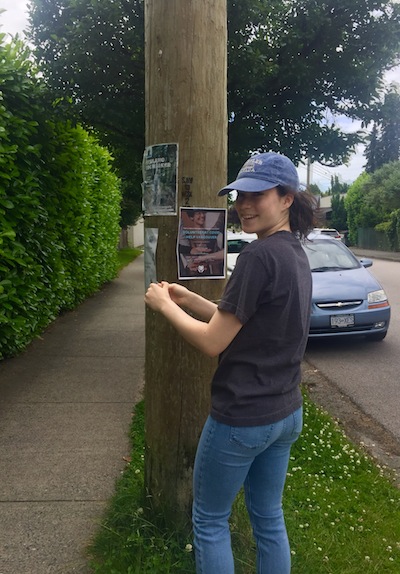
photo - COVIDhelp Vancouver’s director of outreach communication, Rebecca Baron, tapes a poster to an electricity pole to spread the word about the group’s services
COVIDhelp Vancouver’s director of outreach communication, Rebecca Baron, tapes a poster to an electricity pole to spread the word about the group’s services. (photo from COVIDhelp Vancouver)

Currently a third-year student in UBC’s Global Resource Systems Program, with a focus on global health and nutrition, Baron’s contributions to the community and beyond have been recognized. In 2017, she was the inaugural recipient of Temple Sholom’s Teen Tikkun Olam Award for her research on air quality and her efforts to address gender inequality in the sciences. That same year, she was one of the 18 young people honoured by the Jewish Independent with a JI Chai Award, receiving it for her science research and promotion, as well as her extensive and varied volunteer work.

Besides uniting volunteers with people in need, Baron’s other current pursuits include improving global literacy and advancing education for girls to ensure that all women receive equal opportunity in the workforce.

At present, there are more than 40 volunteers who have accomplished more than 30 tasks, and the COVIDhelp Vancouver team expects those numbers to grow.

The services offered are free, but the client has to arrange for payment of groceries and other goods. They can do this by paying the supplier directly or by ensuring the volunteer has the funds, pre-paying the helper via an e-transfer or PayPal payment, with cash as a last resort.

“All necessary precautions are maintained,” Baron said. “Our volunteers wear masks, use gloves and hand sanitizers and maintain social distance.”

She noted, “The current senior demographic in Vancouver makes up more than 15% of our entire population and this includes our grandparents, neighbours, great-aunts and -uncles. Those who are more likely to become severely ill or require intensive care might also experience a higher level of social isolation. The effects are compounded for those who don’t have access to technology platforms or have limited experience navigating the web. To help them stay connected, feel involved, purposeful and less lonely, we have created a COVID helpline. Now, all they have to do is dial our number and help will be on the way.”

COVIDhelp Vancouver stresses that all volunteers and users must adhere to health and hygiene requirements. Volunteers are screened before any client’s contact information is released.

Both founders of COVIDhelp Vancouver, Jiwa and Siddiqui, are masters of business management candidates at UBC. Jiwa, who just finished a bachelor’s degree in psychology, has a strong interest in the connections between social entrepreneurship and technology. For her part, Siddiqui hopes to create stronger pillars in society by strengthening social connections.

Other members of the team include volunteer coordinator Aimee Gray, who is completing her BSc in psychology at the University of Victoria and who also has an interest in learning about growing businesses, and Camryn Pederson, a UBC psychology student who wants to destigmatize mental illness and bolster community ties through volunteerism.

Those who wish to volunteer can do so by downloading the Zelos Team Management app on an iPhone or Android device, register as a volunteer and join the COVIDhelp Vancouver workspace. Volunteers should be healthy, display no symptoms of COVID-19, have not traveled or been in contact with anyone ill within the past 14 days and be practising social distancing.

Anyone who wants to spread the word by printing posters can download them from COVIDhelpvancouver.com.

Anyone who needs services should call 778-280-8686, leave a name and number and provide as much information about their request(s) as possible.

Sam Margolis has written for the Globe and Mail, the National Post, UPI and MSNBC.
Format ImagePosted on July 10, 2020July 9, 2020Author Sam MargolisCategories LocalTags coronavirus, COVID-19, COVIDhelp, Imaan Jiwa, Rebecca Baron, Riva Siddiqui, tikkun olam, UBC
Survivor retained hope

Survivor retained hope

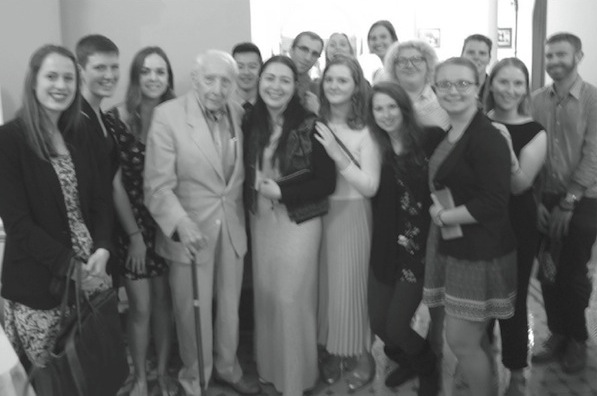
A photo of George Pal with the class of 2016 I-witness Field School, which can be found in his recently released memoir, Prisoners of Hope.

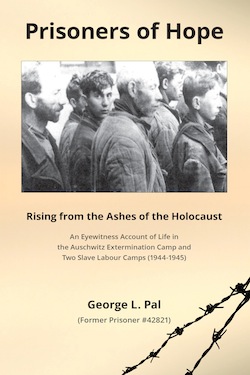
Shoah survivor George Pal introduced the printed and electronic versions of his memoir, Prisoners of Hope: Rising from the Ashes of the Holocaust, to a Zoom audience on June 30.

His eyewitness account describes life at Auschwitz, where Pal, now 94, was interned in 1944-45 as prisoner #42821. The book is the result of the warm response to his presentations given through the University of Victoria’s I-witness Field School, a program that explores “the ways in which the Holocaust is memorialized in Central Europe, to build an understanding of how the lessons of the Holocaust are relevant in today’s world.”

His story demonstrates how rapidly upheaval can occur in a person’s life. Pal’s hometown of Mukachevo, now in Ukraine, found itself, by turns, under the rule of Czechoslovakia, Hungary, Germany and Russia – all within the first half of the century. “At the age of 17, I already had lived in several different countries, without ever having left town!” Pal observes.

The memoir’s title conveys Pal’s steadfast spiritual resistance to the horrors and brutality that he endured. He believes that many of his fellow concentration camp inmates shared this resolve. Eventually, he was “liberated” by the Russian army, and traveled back to Mukachevo, where he was reunited with his mother and sister. His mother had been interned in a ghetto in Budapest, while his sister had survived a concentration camp.

Pal soon moved to Budapest. A decade later, that city was invaded by the Soviet Union. By then a married engineer with two children, Pal went to Austria. Ultimately, he found asylum in Canada, where he became the dean of engineering at Mohawk College in Hamilton, Ont. There, he learned English. He already spoke Czech, German, Hungarian, Hebrew and a smattering of Russian. In 2006, he moved to Victoria. His journey has been one of patience, perseverance, love and hope.

image - Prisoners of Hope book coverThe release of his memoir proves timely, as nations worldwide explode in public protests urging their governments and police to confront their histories of systemic racism. Pal’s heartfelt plea reiterates the famous refrain “never again.”

“Having survived one of the most monstrous events in human history, I believe that it is my duty to testify. This is crucial especially because Nazi sympathizers and followers continue to exist throughout the world,” he writes.

In May 2019, Pal began working with Vancouver editor Lisa Ferdman, whom he credits for “her consummate skill and insight.” Her recent work as editor includes The Nazi’s Granddaughter: How I Discovered My Grandfather Was a War Criminal by Silvia Foti, soon to be released by Regnery Publishing, in Washington, D.C.

“It was an honour to assist Pal in sharing his story with a wider audience,” Ferdman affirmed.

The book launch featured Prof. Helga Thorson of the University of Victoria’s department of Germanic and Slavic studies; Shoshana Litman of the Victoria Storytellers’ Society; and a video-recorded conversation with Pal.

“For the past 10 years, George has shared his story in my Holocaust studies courses at UVic. In this way, he has affected the lives of countless students, who now carry his story with them as they face their own experiences of a world still struggling with racism, antisemitism and genocide – 75 years after the Shoah,” Thorson said.

“George’s stories of resilience offer concise glimpses of experiences few of us have endured. His writing helps us begin to understand the tremendous perils of unchecked racism in a very personal way,” Litman, Canada’s first ordained maggidah (female Jewish storyteller), reflected.

In one of the later chapters, Pal states: “I have often been asked, ‘Do you hate the Germans?’ My emphatic answer is always, ‘No! If I were to blame the entire German people for everything that happened to me, my family and all those who did not survive, I would be making the same mistake that the Nazis made in blaming the Jews for all of Germany’s woes.’ Such generalizing, or demonizing, is dangerous.”

Sam Margolis has written for the Globe and Mail, the National Post, UPI and MSNBC.
Format ImagePosted on July 10, 2020July 9, 2020Author Sam MargolisCategories BooksTags George Pal, Holocaust, I-Witness Field School, memoir, Prisoners of Hope, Shoah, Victoria
Honouring community

Honouring community

In her recently published book, Shalom Uganda: A Jewish Community on the Equator, Vancouverite Janice Masur writes about her life in Kampala, Uganda, where she moved as a child of 5 and stayed until the age of 17 in 1961, leaving just before Uganda achieved independence in 1962. The small Jewish community of Kampala has been all but forgotten, its history mostly undocumented and lost to time.

JI: How did the idea for this book come about, and when did you begin researching and writing it?

photo - Janice Masur
Janice Masur (photo courtesy)

JM: The idea originated in a modern East African history class I attended at Simon Fraser University. I began writing in 2005, traveling to interview octogenarians and nonagenarians, who [earlier in their lives] had arrived in Kampala. They included Holocaust survivors, individuals who might otherwise have gone to Kenya but could not afford to pay the required head tax, and those who arrived on work contracts of two to four years.

JI: Why was it important for you to try to capture the history of Jewish life in Kampala?

JM: I wanted to both document and honour my small Jewish community on the equator, an imploded star vanished in the diasporic galaxy. While many people are familiar with the Abayudayah who, in 1921, converted to Judaism in passive rebellion against British rule, my community is almost completely forgotten. There’s not even a cemetery to mark the existence of 23 secular families who, without a rabbi, Torah or synagogue managed to create a small, cohesive, but unreligious community. There is a great paucity of research literature on this topic and I have been told that, presently, Shalom Uganda is likely the only scholarship devoted to the Jewish community in Kampala.

JI: How did spending some of your formative years in Kampala leave a lasting imprint on your life?

JM: To this day I love mangos, and growing up in Kampala has made me feel comfortable in the company of all ethnic groups. This long-forgotten colonial world included boarding school attendance and, though much-hated, this education provided me with some excellent life lessons.

JI: Do you have any inclination to return to Uganda to visit or live?

JM: I have not had the courage to return yet, and think that perhaps memories are best left to glitter in the distance. I know that the town is much more densely populated and built up now than it was when I left, and that the red murram country roads are in ill repair.

image - Shalom Uganda book coverJI: Who do you believe will benefit most from reading this book?

JM: My intent is to place this book in all major libraries worldwide. It seems that all who have read Shalom Uganda so far seem to have learnt a new fact, enjoyed the memoir or want to tell me how their life was or wasn’t similar to mine. So, I believe that the book will be well read among a Jewish following or among scholars thirsting for information about Jewish history and life in far-flung places last century. I hope others enjoy reading my writing effort. It is a relief to have the story out in the open.

Lauren Kramer, an award-winning writer and editor, lives in Richmond. To read her work online, visit laurenkramer.net.

Format ImagePosted on July 10, 2020July 9, 2020Author Lauren KramerCategories BooksTags Disapora, history, Janice Masur, memoir, Shalom Uganda

Hospitality & social distancing

Last weekend, one of my kids and I decided to make bourekas. Made with filo dough, ours were stuffed with two fillings: spinach and cheese, and mushroom and cheese. They were such a success that the family ate all of them in a couple days.

We marveled at how hard it was to make the filo dough into the perfect triangles we remembered, as my sister-in-law’s family holiday events often feature these. Her family is part Turkish and no Jewish holiday would be complete without some of her specialities.

We won’t be eating Aunt Jenn’s bourekas any time soon, however. She lives (with the rest of our families) in the United States and the border’s closed. Even if it were open, it’s not a safe time to travel, due to the pandemic. But, my son and I really miss her and, in our recent cooking foray, we realized that she has a lot of filo dough skills!

If you’re like us, you may be reminiscing about birthday parties or neighbourhood block parties, a backyard barbeque with friends, or even a big family get together at a picnic shelter. It seems like a really crucial part of our Jewish identities is wrapped up in food and feeding others and making them feel welcome. It’s modeled first in Abraham and Sarah’s tent, as they welcome strangers, wash their feet and feed them, but most of us have friends and family who continue to show us how to do the mitzvah of hachnasat orchim, welcoming guests.

Back in March, when our family realized that we would be home schooling for some time to come, we moved around the dining room furniture. We fit in two side tables as desks for the kids. We shifted the dining room table so that the four of us have ample room. It was the first time in my married life (22 years) that we didn’t have extra chairs at the table, “just in case” we had guests.

This definite lack of company sometimes feels sad and lonely. I’m not the only person struggling with this. However, some of the COVID-19 research seems to indicate that the virus isn’t spread via socially distanced street protests (with masks) but rather, at parties. That’s it – when we gather to eat and drink, when we forget to social distance or when we mingle with others for extended periods, we have a greater risk of getting sick.

Where does this leave us? A much less commonly known part of Jewish tradition is that of “giving people space.” Whether it’s the time that married couples spend apart each month, among those who observe the family purity laws, or the notions around tzinut (modesty) or treating your body with respect (as a temple, in fact), these aren’t the most commonly observed Jewish mitzvot these days. The notion of “space” as part of Jewish time is not very popular. However, this is precisely what I thought about as I took a long walk with my twins and one of our dogs.

It was hot. My kids know to hold hands when crossing a street and to stick close to me, but, on summer days in Winnipeg, we may stretch out a bit on the sidewalk. There’s one kid trying to catch a bug on the grassy boulevard, while another one wanders along beside me, chatting about dinosaurs. Our Gordon Setter mix, attached by a sturdy leash, doesn’t let that stop her when she sees a squirrel or bunny, and my arm shoots out across the walkway. You can imagine it – we take up room.

Our streets are wide. Most Winnipeggers aren’t wearing masks to take a walk because it’s rarely necessary to be anywhere near others unless they are relatives. When I see someone coming, I call everyone together. We gather closer to social distance from whomever is passing.

On this morning, the first adults who passed us, strangers who went by one at a time, made no effort to social distance, they didn’t greet or acknowledge us. I herded all four of us to the side, quickly. It is somehow always my job each time to create social distance. (I’ll note here that these adults were in the 60-and-up category. None of them was a young adult, the age group blamed in the media for being lax when it comes to taking care during a pandemic.)

By the time a third person came by, I was wary, already organizing kids and dog to swerve into someone’s front walk way. To my surprise, this person saw what I was doing. She smiled and walked in an arc onto the grass to give us room. I thanked her, we chatted briefly. We all smiled. I was so grateful.

Then something struck me. True hospitality is anticipating someone’s needs and graciously trying to meet those needs. Hospitality doesn’t have to be about feeding others or welcoming them in. Yes, we need to feed those who are less fortunate but, probably, we don’t need to insist on cooking for other gatherings personally in order to provide everybody food and drink.

Also, welcoming and greeting others, treating them graciously, doesn’t require bringing anyone into our houses (or, in Abraham’s case, a tent). It might mean ceding the sidewalk, smiling and saying hello to others as you pass – at a distance. It might include trimming your hedge so that there’s room on that sidewalk for a wheelchair or stroller to pass.

These are Jewish concepts: in protecting a life, treating bodies respectfully and giving others the right amount of space, we practise a kind of hospitality. This means caring about others and anticipating their needs.

So, please, when you see that mom with several kids, a person using a wheelchair, someone carrying a heavy load or someone pushing a double stroller on the sidewalk, give way and step aside. It’s the right – and the kind, hospitable – thing to do.

Joanne Seiff has written regularly for CBC Manitoba and various Jewish publications. She is the author of three books, including From the Outside In: Jewish Post Columns 2015-2016, a collection of essays available for digital download or as a paperback from Amazon. Check her out on Instagram @yrnspinner or at joanneseiff.blogspot.com.


Posted on July 10, 2020July 9, 2020Author Joanne SeiffCategories Op-EdTags coronavirus, COVID-19, hospitality, Judaism, lifestyle
Summer salads for lazy days

Summer salads for lazy days

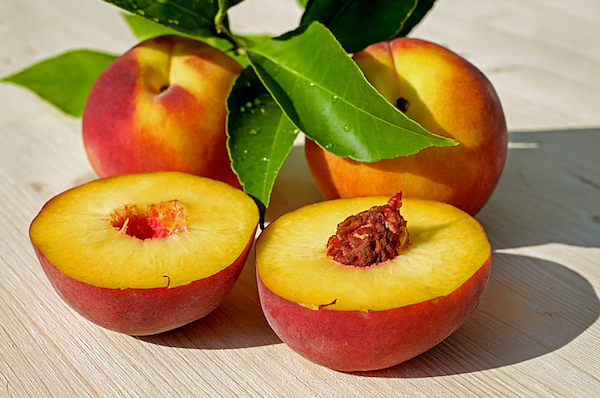
A peach salad not only looks pretty, it’s like a cold culinary shower on a hot day. (photo from pickpik.com)

Recently, I was food-shamed. Not for binge eating. Or for eating too much junk food. But for not eating enough vegetables. Guilty as charged. But seriously? In my own defence, I have a gut (or at least part of one) that doesn’t play nicely in the sandbox with all vegetables. Truth to tell, it can be somewhat of a bully.

Just to set the record straight, I wasn’t always veggie averse. A few short years ago, I could wolf down Caesar salads, corn on the cob and sautéed kale like nobody’s business. It’s mostly a distant memory now, though. But I can still share the love, even if I can’t eat all the food.

Being a bit of a COVID weeny, I’m not entirely comfortable going out to restaurants yet, so I continue to make do at home. Until recently, when the beautiful fresh veggies and fruits started showing up at the party, my fallback positions were fish, chicken and beef; the occasional pasta dish. It was getting a tad dull. So I’m thrilled that I now can eat lighter and fresher.

Here are a few of my favourite lazy summer salads. Nobody likes easy recipes quite like I do. My rule of thumb is this: if a recipe calls for a foodstuff or piece of equipment that a) I’ve never heard of, or b) I don’t know how to pronounce, there’s no way on earth I’m trying it. Hence, lazy-girl recipes are my specialty. The following are not only super-healthy, but they’ll hit the spot on days when you just don’t feel like cooking for real. And what better time to take advantage of all the fresh seasonal fruits and veggies available everywhere in Vancouver? This first salad not only looks pretty, it’s like a cold culinary shower on a hot day.

PEACHY SUMMER SALAD

peaches, diced
Roma tomatoes, diced
can of corn niblets, drained
red or sweet onion, finely diced
fresh mint or basil, chopped or cut chiffonade
blueberries

Throw together a vinaigrette from olive oil and balsamic vinegar and, voilà, you’ve got yourself a refreshing, easy salad that’s a surefire crowd-pleaser. If, however, you’re a card-carrying carnivore like me, you might want to follow it up with an eight-ounce ribeye chaser.

Another summer fave is Sunomono salad. It’s a cold Japanese salad made of rice vermicelli noodles swimming in a rice wine vinegar dressing, if you will. You can add almost about anything to jazz it up, but, being a purist, I only like to throw in some thinly sliced English cucumber and maybe a bit of shredded carrot. If you crave protein, imitation crab will jack it up a notch. There are a variety of recipes for the dressing, but this is my no-fail go-to.

SUNOMONO SALAD

3/4 tsp salt
3/4 cup rice wine vinegar
1/2 cup sugar
small squeeze of lemon juice
few drops of soy sauce
rice vermicelli noodles

Shake the first five ingredients together in a jar, then pour it over cooked and rinsed, cold rice vermicelli noodles. Don’t add too much dressing to each bowl, as it’s quite concentrated – just add enough to cover the noodles. Leftovers can stay in the fridge for a day or two. Sunomono is obviously too flimsy to be a main dish, but it makes a great starter or side dish and goes with everything, particularly fish. Think of it as a Japanese palate cleanser.

For a heartier salad that can double as a main dish (depending on your appetite), I’m a big fan of cold orzo salad. Since this salad is pasta-based, it’s much more filling than just a bowl full of veggies or fruit. And, with the bold-flavoured ingredients, it’s got a depth to it that belies its simplicity.

COLD ORZO SALAD

8 oz orzo pasta
1/2 cup pitted Kalamata olives, roughly chopped (or more, to taste)
4 oz baby spinach (split in two bunches)
6 oz feta cheese, roughly crumbled
1/4 cup pine nuts, lightly toasted on the stove or in the toaster oven (optional)
1/4 cup red onion, finely chopped (optional)
3 tbsp olive oil
1 tbsp balsamic vinegar (or less, to taste)
1 tbsp red wine vinegar (you can substitute lemon juice or regular vinegar)
salt and pepper to taste

  1. Cook the orzo eight to 10 minutes for al dente, or a bit longer if you like it softer. Drain and rinse with cold water.
  2. Puree half the spinach and one tablespoon of the olive oil in a blender. Put cooled orzo in a big bowl and stir in the pureed spinach/olive oil mixture until the orzo is well-coated with the spinach puree.
  3. Roughly chop the other half of the spinach. Lighty mix the chopped spinach, feta cheese, pine nuts, Kalamata olives and red onion in with the orzo.
  4. Make the dressing in a small jar by combining the remaining two tablespoons of olive oil with the balsamic vinegar and the red wine vinegar. Put the lid on the jar and shake it to mix well, or whisk it all together in a small bowl. Pour over orzo mixture and gently mix till it’s all incorporated.
  5. Chill the salad for at least an hour before serving to let the flavours meld.

To round out your meal, buy or make a simple rosemary focaccia. I make one from scratch (in a cast-iron pan) that’s to live for. Sure, it’s easier to buy one, but, if you really want to dazzle your dining companion(s), I suggest putting in the extra effort. Believe me, the effort/reward ratio is huge.

I found my recipe online at flavorthemoments.com/one-hour-rosemary-focaccia-bread and the only things I leave out are the garlic and parmesan, but it’s up to you. You could also add chopped Kalamata or green olives to it, but keep in mind it calls for coarse kosher salt sprinkled on top, so it’s already high in sodium. The focaccia turns outs camera-ready gorgeous and tastes heavenly straight out of the oven, dipped in EVOO (extra virgin olive oil). I mean, who doesn’t love fresh bread? With the hot weather right around the corner (that’s the optimist in me), now might not be the best time to bake bread, but that’s your call. If you ask me, it’s totally worth it.

So, give yourself a break, throw together a salad for dinner and call it a day. If your spouse, partner or you are still hungry after all that, do what I do – order in pizza.

Shelley Civkin, aka the Accidental Balabusta, is a happily retired librarian and communications officer. For 17 years, she wrote a weekly book review column for the Richmond Review. She’s currently a freelance writer and volunteer.

Format ImagePosted on July 10, 2020July 9, 2020Author Shelley CivkinCategories LifeTags Accidental Balabusta, food, fruit, recipes, salads
A grape holiday revival

A grape holiday revival

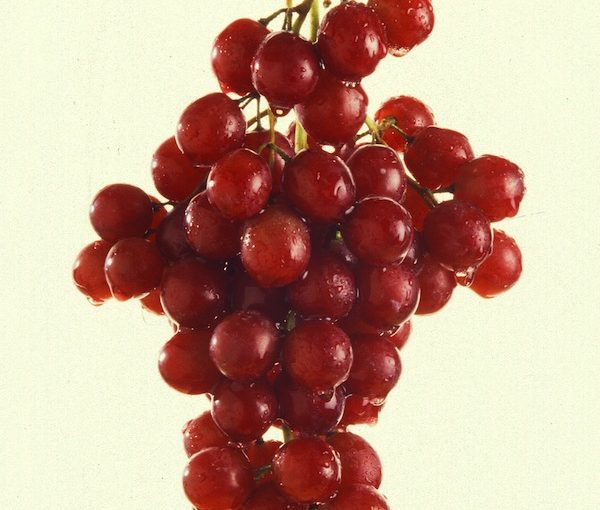
(photo from commons.wikimedia.org)

Most of us are familiar with the spies who were dispatched by Moses to “spy” out the land of Canaan – they cut down a branch with a cluster of grapes on a staff and carried it back. Grapes were part of the summer harvest in ancient Israel. In fact, there was a holiday called Feast of First Fruits and Wine because grapes were the first major crop to ripen. It was not mentioned in the Bible, but in the Dead Sea Scrolls. It was celebrated on the third day of Av (July 24 this year), with Israelites bringing grapes to the Temple. So, here are some grape recipes in case you want to celebrate this little-known holiday.

VINEYARD CHICKEN
(I found this in an Empire Kosher recipe brochure many years ago. It makes eight servings.)

2 4-to-4.5-pound roasting chickens
2 lemons, cut in half
1/4 cup Dijon mustard
4 tsp ground ginger
salt and pepper to taste
2 tsp dry basil
2 tsp your favourite herb
6 peeled, quartered onions
4 cups chicken broth
1 cup orange juice
4 cups seedless red and green grapes
1/4 cup chopped fresh basil or cilantro

  1. Preheat oven to 425°F.
  2. Rinse and pat dry chickens. Squeeze half lemon over each chicken. Place two lemon halves inside each chicken.
  3. Combine Dijon mustard, ginger, salt, pepper and herbs in a bowl to make a paste.
  4. Rub mixture over each chicken and place rest in each cavity. Put chickens into a large roasting pan. Scatter four onions in the pan. Roast 30 minutes.
  5. Meantime, combine giblets, neck, two onions, chicken broth and orange juice in a saucepan. Simmer 25 minutes.
  6. Reduce oven to 375°F. Strain broth and add 1.5 cups to roasting pan. Roast 15 minutes and baste. Repeat three more times. Remove chicken, let rest 15 minutes and cut into serving pieces.
  7. Remove lemons, return chicken pieces to roasting pan, spoon juices and onions over chicken. Scatter grapes over chicken and add remaining broth. Cover and bake 15 minutes.
  8. Serve on a large platter with grapes and juices and sauce. Garnish with fresh basil or cilantro.

MIDDLE EASTERN ORANGE BLOSSOM FRUIT BOWL
(six servings; pareve)

1 fresh pineapple, peeled, cored and cut into slices then quarters from each slice
2 large peeled, sectioned oranges
2 cups seedless red or green grapes
1/4 cup orange blossom flower water or orange-flavoured liqueur
1/4 cup slivered almonds
confectioners sugar
cinnamon
mint sprigs

  1. In a bowl, mix pineapple pieces, orange sections, grapes and orange flower water. Cover and refrigerate two hours.
  2. Put nuts into a small frying pan. Cook and stir until toasted. Remove to a small bowl.
  3. Arrange fruits on a large platter. Sprinkle with confectioners sugar, cinnamon and toasted nuts. Garnish with mint sprigs. Serve cold.

GRAPES IN BRANDY
(five to six servings; dairy)

3/4 cup honey
3/8 cup brandy
1 tbsp lemon juice
1 pound seedless red and green grapes, without stems
1 cup sour cream
lemon peel curls

On the day before serving, mix the honey, brandy and lemon juice. Place the grapes in a large bowl and pour the mixture over them. Cover and refrigerate overnight.

The next day, divide the fruit mixture into serving dishes, champagne glasses or any unusual glass. Spoon sour cream on top of each. Garnish with lemon peel curls.

Sybil Kaplan is a journalist, lecturer, book reviewer and food writer in Jerusalem. She created and leads the weekly English-language Shuk Walks in Machane Yehuda, she has compiled and edited nine kosher cookbooks, and is the author of Witness to History: Ten Years as a Woman Journalist in Israel.

Format ImagePosted on July 10, 2020July 9, 2020Author Sybil KaplanCategories Celebrating the HolidaysTags chicken, Feast of First Fruits and Wine, food, grapes, Judaism, kosher, recipes
Three fave kosher fruit pies

Three fave kosher fruit pies

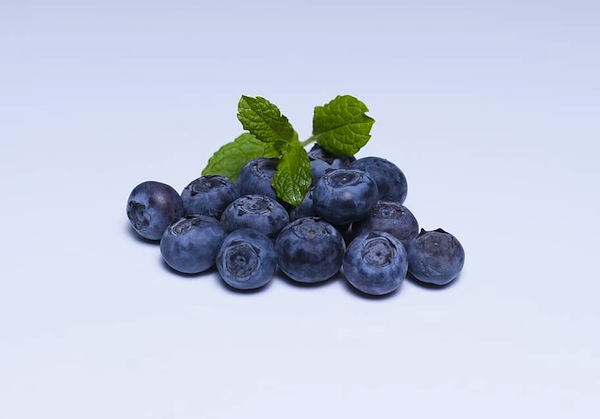
Blueberry Bottom Pie is garnished with blueberries and fresh mint. (photo from pxfuel.com)

When I think of summer, I think of fresh fruit. When I think of fresh fruit, I think of pies. Early pies may have originated with Egyptian cakes and ancient Greek pasties filled with fruit. According to Wikipedia, Medieval England had sweet pies, but they were called tarts, and fruit pies were unsweetened, because sugar was a rare and costly “symbol of wealth.” Also according to Wiki, a pie could have a number of items as its filling, but a pastry would have only a single filling. Fruit pie recipes began appearing in the 15th century. Here are recipes for three of my favourite fruit pies.

PEACH PIE

1 1/2 pounds seeded, sliced peaches
1 cup sugar
2 tbsp unsalted butter or margarine
2 tbsp flour
2 large eggs
pinch nutmeg
nine-inch crust (bought or homemade)

  1. Preheat oven to 350°F. Prepare a nine-inch pie plate with dough.
  2. In a bowl, mix together sugar, butter or margarine, flour, eggs and nutmeg.
  3. Arrange peaches in piecrust. Pour batter over them. Crimp edge of crust.
  4. Bake 50 to 55 minutes or until just set.

BLUEBERRY BOTTOM PIE

2 packages vanilla pudding
1 1/4 cups milk or non-dairy creamer or soymilk
1 1/2 cups pureed blueberries
1/2 tsp cinnamon
2 tsp grated lemon rind
1 baked nine-inch pie shell
3 1/2 cups kosher whipped topping
blueberries and mint leaves for garnishes

  1. Check to make sure which vanilla pudding dissolves with non-dairy creamer or soymilk. Combine one package pudding and a quarter cup milk or non-dairy creamer or soymilk, blueberries and cinnamon. Cook until mixture comes to a full boil. Pour into crust and chill.
  2. Prepare remaining pudding and milk or non-dairy creamer or soymilk. Add one teaspoon lemon rind. Pour into bowl, cover with plastic wrap and chill about one hour.
  3. Fold in one cup whipped topping to refrigerated mixture and spoon over blueberry layer.
  4. Combine remaining whipped topping with remaining lemon rind and spoon over filling. Freeze one hour or refrigerate three hours.
  5. Garnish with blueberries and mint leaves before serving.

FAUX CHERRY COBBLER
(Cobblers generally have a dough-like topping dropped on top of fruit. This cobbler is more like a pie).

2 cups pitted cherries
1 cup sugar
1 cup flour
1 1/2 tbsp baking powder
1 cup milk or soymilk
2 1/2 tbsp melted butter or margarine
brown sugar

  1. Preheat oven to 350°F. Grease a square baking dish.
  2. Combine flour, sugar and baking powder in a bowl. Add milk and melted butter or margarine. Pour into a greased baking dish.
  3. Scatter pitted cherries over batter. Sprinkle the top with brown sugar. Bake for about an hour.

Sybil Kaplan is a journalist, lecturer, book reviewer and food writer in Jerusalem. She created and leads the weekly English-language Shuk Walks in Machane Yehuda, she has compiled and edited nine kosher cookbooks, and is the author of Witness to History: Ten Years as a Woman Journalist in Israel.

Format ImagePosted on July 10, 2020July 9, 2020Author Sybil KaplanCategories LifeTags baking, blueberries, cherries, dessert, food, fruit, kosher, peaches, recipes
Successful launch of Ofek 16

Successful launch of Ofek 16

(photo from Ashernet)

On July 6, using a Shavit-2 rocket, Israel successfully launched the Ofek 16 reconnaissance satellite into Earth’s orbit. The first Israeli satellite (Ofek 1) was launched in 1988. Investment in this field produces strategic defence systems, but also innovations that assist industries in coping with various technological obstacles. Israel is one of 13 countries in the world with full space capabilities (launching satellites), alongside the United States, Italy, France, Japan, India, the United Kingdom, Ukraine, China, Russia, Iran, North Korea and South Korea.

Format ImagePosted on July 10, 2020July 9, 2020Author Edgar AsherCategories IsraelTags astronomy, Israel, science

Thank you to all who contributed to the July 10/20 issue!!!

image - image - Thank you to all who contributed to the July 10/20 issue ad from paper

Posted on July 10, 2020July 9, 2020Author The Editorial BoardCategories From the JITags JI, journalism, philanthropy
טרודו לא יתערב

טרודו לא יתערב

נשיא ארה”ב, דונלד טראמפ ,וראש ממשלת קנדה, ג’סטין טרודועניין בחדשות
(Shealah Craighead, 2018)

ראש ממשלת קנדה, ג’סטין טרודו, לא יתערב הליך המשפטי שמתנהל בבית המשפט העליון של מחוז בריטיש קולומביה בוונקובר, להסגרת סמנכ”ל הכספים של ענקית התקשורת הסינית וואווי וסגן יו”ר מועצת המנהלים, מנג וואנג’או, לארה”ב. הליך ההסגרה צפוי להימשך עוד חודשים ארוכים ואולי שנים. נקבעו כבר דיונים בביהמ”ש לראשית שנה הבאה שיכללו את טענות ההגנה שנשיא ארה”ב, דונלד טראמפ, התערב בהליך ההסגרה משיקולים פוליטיים. פרסום הספר החדש שמסעיר את ארה”ב “החדר שבו זה קרה” של היועץ לביטחון לאומי לשעבר של טראמפ, ג’ון בולטון, מחזק את טענות ההגנה בנושא.
טרודו הגיב למכתב של חברי פרלמנט ודיפלומטים קנדים לשעבר שנשלח אליו בשבוע שעבר, ובו הם מציעים ששר המשפטים הקנדי, דיוויד למטי, יתערב בתהליך ההסגרה וישחרר את וואנג’או. כך שמקביל סין תשחרר את שני הקנדים שהיא מחזיקה בהם כבר יותר משנה, היזם מייקל ספאוור והדיפולמט לשעבר מייקל קובריג, שמואשמים בריגול. מעצר הקנדים נועד להפעיל לחץ על קנדה לשחרר את וואנג’או. ממשלת סין לא חוסכת שום הזדמנות להתקיף את קנדה ובעיקר את טרודו לאור מעצרה של וואנג’או.
טרודו אמר בתגובה למכתב כי קנדה לא תיכנע ללחץ של הסינים באמצעות מעצרם של הקנדים אותו הוא מכנה “סיטואציה נוראית”, וכי אסור לקנדה: “לתת למדינות לחטוף קנדים כדי להשיג את מבוקשן מאוטווה”. טרודו הוסיף כי שיחרור וואנג’או כדי לתפתור בעייה קצרת טווח תסכן אלפי קנדים שנוסעים לסין וברחבי העולם, בעקבות כך שממשלת קנדה תודיע למדינות העולם, שאפשר להשפיע על מדיניותה על ידי מעצר של אזרחיה באופן אקראי.
טרודו ממשיך לתמוך בעצמאות מערכת המשפט והתביעה הקנדית, בזמן שמתנהל הליך הסגרת וואנג’או לארה”ב, לאחר שנעצרה בוונקובר בסוף אלפיים ושמונה עשרה לבקשת האמריקנים. לאור מעצרם של שני הקנדים טרודו ציין כי קנדה “פתוחה לכל פעולה נגד סין כל עוד שלא תסכן קנדים אחרים בעתיד”.
וואנג’או (בתו של מייסד וואווי הביליונר רן זנפיי) שוהה בוונקובר בביתה המפואר, בתנאים מגבילים שנקבעו ע”י ביהמ”ש, לאחר שהפקידה ערבות של עשרה מליון דולר. במהלך היום היא יכולה להסתובב בתחומי העיר בלבד כאשר צמיד אלקטרוני מוצמד לרגלה, ביחד עם אנשי ביטחון (במימונה).
לטענת משרד המשפטים האמריקני וואנג’או העקפה את הסקנציות האמריקניות על איראן, ועשתה עימה עסקים באמצעות חברת מדף מהונג קונג בשם סקאי.קום. זאת תוך שהיא מציגה מצג שווא לבנקים האמריקנים שסקאי.קום כביכול היא חברה נפרדת מוואווי. כתב תביעה האמריקני כנגד וואווי, וואנג’או ובכירים נוספים בחברה, כולל עשרים ושלוש עבירות פליליות. בהן: הונאת ארבעה בנקים להסוות קשרים עם מסחריים עם איראן, גניבת סודות מסחריים וטכנולוגיות מחברת טי. מובייל, זיופים, הלבנת הון, ניסיונות לשיבוש חקירה והשמדת ראיות. לדברי האמריקנים הפעילויות הבלתי חוקיות של וואווי ומנהליה נמשכו למעלה מעשור.
ביהמ”ש בוונקובר קבע לפני כחודש שהעברות שמיוחסות לוואנג’או בארה”ב תקפות גם בקנדה, ולכן הליכי הסגרתה לארה”ב גם כן תקפים. ביולי ואוגוסט תציג התביעה מסמכים נגד הנתבעת ובספטמבר ההגנה תגיב עליהם. בראשית פברואר שנה הבאה ידון ביהמ”ש בטענות ההגנה שיש לבטל את הליך הסגרת וואנג’או, כיוון שהופרו זכויותיה, עת עצרה בשדה התעופה של ונקובר. ההגנה טוענת עוד שהתביעה האמריקנית הטעתה את ביהמ”ש בנוגע לעובדות הקשורת למעצרה. עוד טוענת ההגנה כאמור שטראמפ, משתמש במעצרה של וואנג’או כקלף מיקוח במלחמת הסחר שלו עם סין, והוא ציין כי יתערב לשיחרורה אם זה יביא להסכם טוב יותר עם הסינים. ההגנה תיעזר בספרו החדש של בולטון שבאחד מפרקיו מצויין כי בארוחת חג המולד לאחר שוואנג’או נעצרה, ציין טראמפ לכאורה על הלחץ שזה יצר על הסינים, תוך שהוא מכנה את וואנג’או “איוונקה טראמפ של סין”. בסוף אפריל ביהמ”ש בוונקובר צפוי להכריע אם תוסגר וואנג’או לארה”ב.

Format ImagePosted on July 3, 2020June 30, 2020Author Roni RachmaniCategories עניין בחדשותTags Canada, China, Huawei, Meng Wanzhou, trade, United States, ארה"ב, וואווי, מאנג וואנז'ו, סחר, סין, קנדה

Posts pagination

Previous page Page 1 … Page 257 Page 258 Page 259 … Page 664 Next page
Proudly powered by WordPress