Skip to content
  • Home
  • Subscribe / donate
  • Events calendar
  • Business Directory
  • FAQ
  • News
    • Local
    • National
    • Israel
    • World
    • עניין בחדשות
      A roundup of news in Canada and further afield, in Hebrew.
  • Opinion
    • From the JI
    • Op-Ed
  • Arts & Culture
    • Performing Arts
    • Music
    • Books
    • Visual Arts
    • TV & Film
  • Life
    • Celebrating the Holidays
    • Travel
    • The Daily Snooze
      Cartoons by Jacob Samuel
    • Mystery Photo
      Help the JI and JMABC fill in the gaps in our archives.
  • Community Links
    • Organizations, Etc.
    • Other News Sources & Blogs
  • JI Chai Celebration
  • JI@88! video

Recent Posts

  • Federation now across BC
  • Israel fighting for its existence
  • Deal strengthens Iran
  • Patriotic belonging diminishes
  • A campaign to engage
  • Upstanders’ first live event
  • Responding to Carney
  • Having your own home
  • Music a family tradition
  • Musical to warm heart
  • Community milestones … June 2026
  • Sharing her passion for Israel
  • Or Shalom reopens its doors
  • JFS from past to future
  • Need holistic approach
  • Sharing stories, advice
  • Journalist shares fears
  • Skills to live together
  • Road to independence
  • Cutting grass with scissors
  • Zionism as a solution
  • Deceit, desire & the divine
  • Reclaiming sacredness
  • Creative project ideas
  • Summer squares and cobbler
  • Thou shalt … summer commandments
  • Legal help for students
  • Revisiting myth of Lilith
  • Wrong person rebuked
  • Canada’s mixed messages
  • Questions for museum
  • Symposium on antizionism
  • Making soccer political
  • CJPAC lauds Pulver’s impact
  • City recognizes Vrba’s legacy  
  • Organ donation saves lives

Archives

Follow @JewishIndie
image - CJN box ad Rockowers 2026

Category: Op-Ed

A yearly reminder to return

Family friends in their 80s just came over to visit. It was perhaps their first time at our house in a year or so. They’ve been busy. They had a family member move back to Winnipeg, there’s been a pandemic and, well, we’ve been busy, too, with kids on summer break, work obligations, visits from relatives, and home renovation.

When they first visited, our new (to us) historic home was empty. While the house had great character, original workmanship and many good points, it also needed a ton of work. We’ve had it all, from asbestos and electricity to plumbing, insulation, and so many other repairs. It didn’t have a single bathroom that worked.

When they walked in today, they said, “Oh wow!  It looks like you’re home!  It looks like you really live here now.” My kids then took our friends on a grand tour. They were amazed and impressed by all that’s happened. They saw such big improvements and wanted to know what we’d done ourselves, what our contractors had completed, and when and how it had happened. It was wonderfully reassuring, and also strange. We hadn’t realized how long it had been.

I couldn’t pin down when last they’d visited, even though I looked at the calendar. Then I also noticed that it’s Elul, the Jewish month where we’re supposed to wake ourselves up. We hear the shofar each day if going to morning minyan, a way to remind ourselves that Rosh Hashanah and Yom Kippur are coming. We need to look inward, do teshuvah, which is usually translated into English as repentance. Another way of understanding this word is to read it as return.

I have heard sermons or read things that entreat me, as a Jewish person, to start repenting – it’s time to apologize, repair relationships and become a better person. We need the reminder that repairing relationships and apologizing for things we’ve done wrong is important all the time. It’s also a specific ritual to prepare for the High Holidays.

Even as we enter this teshuvah season, I’m thinking of that other definition, the notion of return. Our household has been working hard to cope, in good humour, through an entire year of living through a house under renovation.

We’re lucky – we have a home! It’s mostly been warm and comfortable. Still, we’re all sleeping in temporary places. I’ve had my clothing “organized” in a laundry hamper for the entire year. We’ve had times with one functional bathroom and no kitchen. During this year, there have been days when getting to my chest of drawers or my oven has been an impossibility. We’ve moved and lost things multiple times. We’ve had days without water or heat. Other times, my kids are going to sleep or practising piano or doing homework with contractors working and making noise in the background.

When I see the house through my friends’ eyes, it’s a huge undertaking. This renovation is, in some ways, helping return this home to its best self. When it’s complete, we will have opened up windows and doors that were closed off for 40-some years or more. Things will be safe, full of warmth, light and air, with electricity that’s up to code and even the installation of a much-needed structural beam.

Seeing this house change through my friends’ eyes made me think about this return concept. When we return to ourselves, and hear our inner voice again, it means several things. Our teshuvah/return helps us be the best we can be. First, perhaps we’ve lost our way, but, as the morning liturgy reminds us, we were created in the divine image. It’s like an old house. We have good bones! Maybe we need to do some upkeep, work to stay up to date. Returning to our best selves might require us to listen, pay attention to our gut feelings, do some renovation.

Also, the teshuvah or returning work might be different from year to year. To make a new year a fresh start, we might well have to return to our core values and strengths, open up disused spaces that had been blocked off in ourselves. Sometimes, we start by apologizing to ourselves, too. We all underestimate how far we’ve come and how much we’ve grown and changed. I know our family is guilty of forgetting how much we’ve dealt with over the last year. Although we do remind each other of the changes we’ve experienced, change feels like the only constant right now, as walls move, windows and doors are repaired, and the light comes in again. Through this, we never know which piece of furniture will need moving or what we’ll have to clean (again) because of construction dust.

It’s also about being grateful. Having a kitchen to cook in this summer has been a celebration. How lucky it is to have all this garden produce and to have a place to cook it in. So many don’t have a kitchen or a garden. Maybe they lost it to fire or a bombing. Every day, I feel grateful even as I’m exhausted by my new garden’s potential zucchini and squash crop.

This return work must be grounded in a bigger reality. More than one person has remarked to me that they couldn’t do what we’re doing. In context, though, I’m not sure it’s such a big deal to renovate an old house. People are fleeing wildfires, losing their homes and families, and suffering from war, famine and disease across the world. Living in the middle of a renovation doesn’t feel like too much. It’s a privilege to have a home and have the resources to undertake this repair.

When I’m considering my gut feelings, I know I have high (perhaps unreasonable) expectations of myself and others. I suspect others may approach self-improvement this way, too. Perhaps the biggest teshuvah is remembering that we return to ourselves, while understanding that others might be elsewhere on this path … and that’s OK. Wishing you everything good as we begin 5784!

Joanne Seiff has written regularly for CBC Manitoba and various Jewish publications. She is the author of three books, including From the Outside In: Jewish Post Columns 2015-2016, a collection of essays available for digital download or as a paperback from Amazon. Check her out on Instagram @yrnspinner or at joanneseiff.blogspot.com.

Posted on September 1, 2023September 2, 2023Author Joanne SeiffCategories Op-EdTags High Holidays, Judaism, lifestyle, teshuvah

The first step is the to-do list

Yesterday, I shared my to-do list with a friend via email. She responded with “Ahh! I’m tired just reading this!” What I didn’t mention is that I had to do all this plus other chores, thrown in, which I had either forgotten to write down or were such household habits that I didn’t list them. For many caregivers who work and manage households, this sounds familiar. It’s the list that is the first step. Write it down. Name the obligation. Then release yourself from trying to remember it all. Finally, cross it off the list later.

This isn’t a new phenomenon. Studies have shown how much of this organizational and emotional labour falls to women. For example, a recent National Public Radio piece from the United States covered research by economists, which showed that women (mothers) were almost always contacted by schools first, no matter which parent was designated as the “first contact” on the emergency form. The social media chatter that followed remarked on how female medical residents or surgeons, working hours away from their children’s schools, were still called first even though the primary caretaker was the father. In the study itself, one economist described the mental load of planning ahead for “if the school called” and how women’s workload could be managed in such situations. She noted that, even though her husband was the vice-president of the Parent Teacher Association, the school always called her first.

In economic terms, women then self-select for lower paying, more flexible work simply to manage these challenges, resulting in lower income and fewer opportunities for career growth. Societal obligations placed mostly on women create a lifelong effect on earning power and household income.

This morning, as I bake bread, make chicken broth in two slow cookers, write this article and air out the house with fans because of an unexpected drop in temperatures due to a rainstorm, I time everything to fit into the hours between when I drop kids off at 9 a.m. and pick them up at noon for their half day of camp. This is, of course, not a specifically Jewish problem, but aspects of it are in our house.

We have twin 12-year-olds, with both kids doing b’nai mitzvah lessons at the same time. These kids come with different challenges. Like all learners, they may need different supports to master chanting trope. Amid the meltdown tears last night, it became clear that what was necessary was for each kid to have 15 minutes to practise separately every day with me. As the crying continued – and I include myself in the crying – my partner tried to help.

This is when you might wonder why all this falls to me, and you’d be right to ask. My partner told us that the year before his bar mitzvah involved a lot of crying. He was so overwhelmed that he quit playing drums at school, because he couldn’t manage both things. His mother had been given no Jewish education. She couldn’t read Hebrew and didn’t know the prayers. His father worked late every day, coming home at 11 p.m. My twins’ dad was truly on his own, with a cassette tape. He never learned the trope and struggled with short-term memory issues. Mastering his bar mitzvah portion took him a long time. As an adult, he never gained some of these prayer skills. A demanding job means now is not the time for him to catch up. The obligation’s all mine.

We’ve now been married for 25 years and I just learned last night about this tough path my husband took towards bar mitzvah. By comparison, I had supportive parents with some Jewish literacy, plus we attended services regularly. I was self-directed as a learner. Mastering everything for my bat mitzvah was interesting and challenging but not a struggle. I continued learning through university and graduate school and beyond, as I continue to study Talmud when I can. We chose a bilingual Hebrew/English elementary school for our kids partially because it would make bar mitzvah study easier for them.

Few people see what my lists of work and household obligations look like. I tell even fewer people about fitting in 20 minutes of Daf Yomi, a page of Talmud every day. When I mention the Talmud study, I’ve been asked why I bother. The minutiae of discussions of Jewish law that rabbis conducted so long ago is of no interest to most. Sometimes, if the person wants to know why, I explain that I learn things about Jewish tradition, history and daily life from these debates.

I also admit to myself that I find some reassurance in these pages. Although the specifics might have been different, life’s minutiae is pretty much the same. The rabbis struggled over multiple daily tasks, relationships and household concerns in many of the ways I do. They sweated the details, even if they didn’t do them all personally.

If everything works out, in June 2024, my kids will step up to the bimah (pulpit) and become bar mitzvah boys, which is a huge lifecycle event. Between now and then, practising with them will be another part of my to-do list. Good study habits mean you do a little every day until, suddenly, you learn something new. Just like my lists, nothing is insurmountable if you name it, take it step by step, and cross it off the list when the task is complete.

Like many women, I get bogged down by the minutiae. I wish I could share more of the household labour and emotional load. Even men who try to assume more of these tasks have to struggle against the societal expectations our culture wields. Step by step, we make change in our lives, our lists and our expectations for one another. It’s not a sprint. You can’t cram the night before to pass this exam. Life is a series of chores, moments, obligations and, well, joys.

Early this morning, I leashed up the dog while I sang the first Haftorah blessing aloud. I try to put the melody into the twins’ heads while donning my shoes and raincoat as I head out. Each step makes a difference to hopefully hit one very big milestone ahead.

Joanne Seiff has written regularly for CBC Manitoba and various Jewish publications. She is the author of three books, including From the Outside In: Jewish Post Columns 2015-2016, a collection of essays available for digital download or as a paperback from Amazon. Check her out on Instagram @yrnspinner or at joanneseiff.blogspot.com.

Posted on August 18, 2023August 21, 2023Author Joanne SeiffCategories Op-EdTags culture, Judaism, lifestyle, parenting, social commentary, Talmud, women

IDF incursion into Jenin

As in the instance of many complicated issues, we cannot begin a discussion of specific issues without providing background and context. Earlier this month, the Israel Defence Forces entered Jenin, located in what many Jews call Judea and Samaria. This portion of the originally mandated territory is in Area A under the governing authority of the Palestinian Authority in accordance with international agreements called the Oslo Accords.

This agreement was voluntarily implemented by Israel because the accords were never signed by the PA, then under the leadership of the now-deceased Yasser Arafat. At that time, there was the international aspiration that there might be a two-state solution to the Israeli-Palestinian conflict. Under the agreement, the disputed territory occupied by Israel after three wars was divided into three areas. Area C, the largest piece, was essentially vacant land with little population and was solely under Israeli governance. Area B was under joint Israel-PA governance. Area A, which was the most populated and had all-Arab cities, was under sole PA governance. Jenin is one of those cities.

Under the accords, Israel retained overall responsibility for security, including responsibility for maintaining security for all borders.

Over the years, Israel made a number of offers to the PA to resolve differences. The PA declined to consider any of them. They insisted on a return to 1948 Armistice borders and independent statehood with their own armed forces. Based on Israel’s experience with Gaza and Lebanon, this was unacceptable to Israel.

The goodwill toward Palestinians that was evidently held by an important element of the Jewish population seems mostly to have been forfeited over time. An appreciation has grown that there is no acceptable solution for the Arab side that would allow for a viable Jewish state. Consequently, for many, the idea of a two-state solution is no longer feasible.

Meanwhile, the PA has maintained a hostile attitude to Israel, educating young Arabs to hate Jews and to aspire to murder them, and paying the families of deceased and jailed terrorists substantial pensions. Many suicidal activists have been incentivized in their actions by these awards for their families. These payments are a part of the PA budget.

Further, popular support from the Arab population has shifted from the PA to the terrorist organizations headquartered in Gaza and in Beirut, Lebanon. Elections for PA leadership have continually been postponed to avoid the takeover by Hamas that occurred in Gaza. Hezbollah controls the government of Lebanon. Both these entities are now financed by Iran, which has publicly announced their intention to eradicate the Jewish state.

The situation has been aggravated by the increasing incapacity of current leadership. PA President Mahmoud Abbas is reportedly in ill health. There is now competition as to who will replace him. This has caused further internal conflict, which has impaired PA functioning. Measures aimed at controlling terrorist operations or crime gangs would not encourage popularity.

With this background, we can turn to consideration of the Jenin event.

While there is theoretical cooperation with the PA on security matters, more and more it has fallen to Israeli forces alone to carry out this task. Although the PA claims statehood, more and more it has failed to build the infrastructure required. Particularly over the last two years, security in the major Palestinian centres under their jurisdiction has been lacking. Crime is rife and terrorist organizations have used the vacuum to establish a network aimed at destroying Israel, financed primarily by Iran.

In recent months, Israel has suffered 58 attacks having their origins in Judea and Samaria. Often, the perpetrators escape to hide in sanctuaries established within the Arab population centres in the region. Arms and monies have been smuggled into that area from Jordan. One diplomat from Jordan has been arrested and charged in this regard.

The IDF exercise involving a brigade-strength force is likely the first of a number that will try and establish a return to law and order in Area A, in Judea and Samaria. Remarkably, the IDF was able to carry out its mission in densely populated Jenin while avoiding any civilian casualties. Sadly, there were two IDF fatalities.

The failure of the PA to carry out its responsibilities leaves Israel with no alternative. Even with the IDF’s efforts, many of the terrorists in this specific area escaped. Four locations in the local network were disrupted, one of them located in a mosque basement. Arms caches were removed along with funds that were found, which were being used to finance terror activities. Almost 100 operatives were arrested and 18 were killed – all were combatants.

The situation indicates that this is only the first of similar necessary exercises to discourage attacks on innocent civilians. We will probably see this not only in Jenin but in other population centres in the region. We may see the program carried out despite efforts by many parties around the world seeking to vilify the Jewish state.

Max Roytenberg is a Vancouver-based poet, writer and blogger. His book Hero in My Own Eyes: Tripping a Life Fantastic is available from Amazon and other online booksellers.

Posted on July 21, 2023July 20, 2023Author Max RoytenbergCategories Op-EdTags history, IDF, Israel Defence Forces, Israeli-Palestinian conflict, Jenin, Oslo Accords

Sharing the load as a team

The greatest triumph of our summer so far is moving 10 cubic yards of gravel. Obviously, there’s a story in this! When we moved to our present house, we knew that the landscaping (along with the plumbing, electricity, insulation, boiler and more) needed work. A previous owner created rock-filled beds in both the front and backyards. This wouldn’t have been our chosen landscaping technique, but, when we moved in, these beds had so many weeds and enough scattered rock that it would be hard to remove them, so we chose to improve on what was here already.

We found an advertisement offering an entire dump truck’s worth of (slightly used) gravel for a low price. I made bad geology jokes about “new” versus “used” gravel after that, but we called them up. Soon after, we received two huge piles of gravel in our driveway, dumped efficiently by a Hutterite colony that found they had too much on hand. We had saved cardboard and put it down to kill weeds. Then the cardboard was covered with the slightly dusty and dirty (used) gravel.

The first pile of gravel, for the front of the house, was moved by the end of May long weekend. Through trial and error, I found a successful system that one mom (me) and twins (age 12) could manage. It involved using beach sand buckets and plastic flowerpots. Each person filled up two of these, and we pretended to do weightlifting as we marched from the pile to the landscape bed, over and over. My much larger partner filled a heavy wheelbarrow full of gravel with a shovel and moved it instead. We also had help from a kind neighbour who loaned us a second garden cart, which could be operated by the twins if (and only if) they cooperated.

The backyard gravel pile took longer. It wasn’t in the way as much, not as publicly in view and, well, some of our enthusiasm for the project had worn off. We finally moved it all into the backyard by mid-July. There are, of course, people who hire landscapers using Bobcats, or workers with multiple wheelbarrows, but we did the physical labour, for free, as a team. It worked for us. As neighbours commented on the hardworking “mama and twins” and the disappearing piles, we felt proud of our efforts.

This gravel experience reminded me of other Jewish traditions around summer, with Tisha b’Av coming. This day of mourning, where we remember the destruction of the Temple in Jerusalem, has a lot of upsetting stories attached to it. One reason the rabbis give about why the Temple was destroyed is “sinat chinam” or “baseless hatred.” In other words, there was so much infighting between Jewish factions that it caused the Romans to be able to destroy Jerusalem and the Temple.

The Roman Empire was big and powerful. Probably there were many reasons its leaders wanted to conquer more territory, including Jerusalem and the Temple. Yet, the talmudic rabbis give multiple examples of how individuals’ bad behaviour resulted in the fall of the entire Jewish world. Was every single one of these painful stories of bad behaviour completely historically factual? Well, maybe not. It’s hard to say from here.

Regardless, the personal stories of hatred remain powerful thousands of years later. I thought of this stuff as we trudged back and forth with our little buckets of stones. I also nearly joked with my children about Sisyphus, forced to push his rock uphill for eternity, as they occasionally complained, but Sisyphus was Greek, not Roman, and I didn’t want to mix metaphors while hauling gravel.

What I found most interesting about moving the gravel, or cleaning up construction messes as a family, is that, after initial grumbling, we all settle down into a rhythm together. We put in the work. We all pull in the same direction and, well, with all four of us working, things get done.

This struck me as the absolute opposite of sinat chinam, or baseless hatred. We are faced so often with hard tasks – as individuals, as families, in neighbourhoods or in the wider Jewish community. Not every task is physical labour either. It’s easy to fall apart and bicker over everything instead of finding a common cause and working efficiently together. However, if we search for what we have in common, including big goals, it’s amazing what we can accomplish.

Jewish people are like everyone else – we’re all very different individuals, prone to disagreement and conflict. Some of us will avoid haircuts, washing clothes, eating meat and then fast on Tisha b’Av. Others may skip those rituals altogether. Whatever we do or don’t do for Jewish holiday observance, we also might forget that we have things in common, too. If we choose to pull in the same direction to make changes about things that matter to us, we can do it.

I’m not claiming to know what matters for all of us or how to fix it, because in my mind, that, too, is part of our work. The work we have to do together, as people who care about one another, as part of a larger community. Perhaps identifying common goals is a hard part of our task, too.

This summer, my family moved gravel. It wasn’t world peace and it didn’t end homelessness or poverty. It was just a step closer to restoring our character home, which needs so much more done to it. Each time I see my family working together, wiping up endless drywall dust or moving small stones, I think about how much we accomplish and build as a family “team” and how proud I am to be a part of this one.

As community members, we’ve also got a “team” and, together, we can do so much to improve the world if we pull in the same direction. If we base our efforts in love, we can find common ground and work together. It might not bring about the rebuilding of the Temple in Jerusalem (and not everybody even yearns for that) but it might make the world we live in a much better place in the meanwhile.

Joanne Seiff has written regularly for CBC Manitoba and various Jewish publications. She is the author of three books, including From the Outside In: Jewish Post Columns 2015-2016, a collection of essays available for digital download or as a paperback from Amazon. Check her out on Instagram @yrnspinner or at joanneseiff.blogspot.com.

Posted on July 21, 2023July 20, 2023Author Joanne SeiffCategories Op-EdTags history, Judaism, lifestyle, Talmud, Tisha b'Av

A life of light and of shade

The quality of our lives seems to contain alternating waves of good and bad, hard and soft, light and shade. If we are lucky enough to appreciate that this is the nature of existence, we can bear much better with the shady parts of our lives. We can have faith that, whatever challenges we are facing, no matter how painful, the good times will roll around again. And the good times can be so good, so full of richness, pleasure, joy, lightness and brightness, that they are worth the price we may ultimately have to pay for the good fortune we have the luck to be earning.

The dilemma is that sometimes we do not realize that what we are passing through are the bright times, the good times, the best times. That often comes only with retrospection.

I remember that I left home at the age of 18 to spend a year of work and study in Israel. I did not think to ask for the permission of my parents, I just made my plans and informed them of those plans. I never thought to do otherwise, and I was never questioned. I saved up the money I needed from the odd jobs I performed as I wended my way through my high school years. I applied for the assignment, gathered my pennies and off I went, traveling across the globe.

I was a part of a group, but I felt very much alone. I remember that, being alone, on the ship sailing across the ocean, my mind brimming full of speculations about the nature of the world. I wrote incessantly about that on every scrap of paper I could find.

I have some of those scraps in a file I have kept to this day. So much of it, seems to me today, to be a load of nonsense. The gist of it was that I was a solitary sailor afloat on the sea of life and that life was incredibly sweet. I was full of wants. I wanted to find a true companion. I wanted a country of my own. I wanted to save the world. I was going to do it all myself if I had to. At the time, I could read it all in the palm of my hand, and it was all going to happen. I was totally free from obligations, except those that I chose to lay upon myself – and included in those was responsibility for creating the perfect world. All of us are heroes in our own eyes, and we have to try as hard as we can to live up to that image of ourselves.

How was that not the most superlative moment of my life to that date? I had not the merest clue as to the nature of the importance of those moments in my existence. I was unconsciously writing an agenda for my life.

I am no different from others, and all of you have had those moments in your lives, those moments whose importance is only appreciated by you with the passage of time and the gleanings of experience.

I remember holding a child of mine in my arms, and feeling like I would burst with joy. I remember when I was leaving my first job, hearing that my superiors were frantic about who they could find to fill the hole I was leaving. I remember when I realized that I had succeeded in resolving a dilemma that would yield years of success at a seemingly impossible task that I had taken on. I remember the instant when I recaptured the love of my heart after 50 long years of disappointment when I had not found the companionship I longed for. I remember the moments when I began to understand what elements of my behaviour prevented my Bride from feeling the depth of my love for her. All these events, which cast other parts of my life in the shade where they belonged, I could only truly appreciate in retrospect. The thrill they yield when I recall them I relive over and over again. So it must be for so many of you, when you recall your own experiences.

Surely there are lessons to be learned by sentient beings from these experiences. Don’t they help us, when we find ourselves in periods when there is shade all around us, know that the moments we hope for and will cherish all the days of our lives will surely arrive for us if we carry on? Just as day follows night, won’t our turn at good fortune arrive if we put in the necessary effort to survive what may seem to us to be the worst of times, and if we are lucky enough to have the good health and fortune to do so? Isn’t that the secret, that we try, and try again, to confront the challenges we face, and we never, never, give up?

Max Roytenberg is a Vancouver-based poet, writer and blogger. His book Hero in My Own Eyes: Tripping a Life Fantastic is available from Amazon and other online booksellers.

Posted on July 7, 2023July 6, 2023Author Max RoytenbergCategories Op-EdTags aging, gratitude, lifestyle, memoir, memory, mental health

Eating locally and Jewishly

My family enthusiastically eats huge salads at dinnertime in the summer. We love to celebrate the fresh local lettuce and other vegetables we receive from our community-supported agriculture (CSA) share. A CSA is a membership/subscription service that allows farms to directly market to customers. A CSA membership pays the farmer in advance to buy seeds and cover other costs. In exchange, the member gets a share of the farm’s products. Most CSAs are for vegetables in season. There are also many other sorts of CSAs, including for grain, meat, cheese, eggs, and more.

We’ve had a farm share nearly every summer for more than 20 years. Some weeks, our share is huge, full of delicious seasonal delights. Perhaps we get tomatoes, basil, peppers and eggplant at the height of summer, or enormous heads of springtime lettuce. This membership model depends on relationships between the farmer, the customers and the growing season, with a bit of luck sprinkled in. Sometimes, the CSA enables us to experience the challenges of a farm’s drought or flood. Other years, we’ve eagerly distributed rhubarb, beets, or squash around our neighbourhood when we’ve been overwhelmed with produce.

We also buy a “freezer lamb” and a quarter of beef (a quarter of a steer), along with farm-raised chicken. This is where our “eat local” mantra conflicts with traditional Jewish practice. Everyone used to depend on local butchers. Having a kosher butcher nearby meant eating local foods that were butchered according to the laws of kashrut. As modern health regulations and slaughterhouses developed, small-scale butchers, including local kosher butchers, became less common. Now, it’s nearly impossible to get fresh kosher meat anywhere outside of large urban areas with a big Jewish population.

In the Jewish community of Winnipeg, where we live, the city’s kosher butchers were well-known. According to historians Arthur Chiel, Allan Levine and Rabbi Moishe Stern, there was even a congregation here, Beth Judah, or “the Butcher’s Shul,” from 1937 to 1971. The butchers, and their Retail Kosher Butchers’ Association, had a lot of power in the 1930s and 1940s, occasionally running into conflicts with Winnipeg’s rabbis.

Given this history, it’s sad that there are no longer any kosher butchers here. A few years ago, a newcomer shochet (butcher) friend from Hungary collaborated with the Winnipeg Chabad. They butchered turkeys to provide fresh kosher meat. It was a difficult proposition, even though the provincial regulators tried to help. We were one of the families who tried to support him by buying a kosher-butchered turkey. It didn’t become an ongoing business venture.

Jewish diets worldwide have been shaped by what’s available locally, what’s affordable and how to make it kosher or maybe just “kosher style.” Traditional or noteworthy food choices change over time. Our diets are influenced by our families and communities of origin, even beyond issues of kashrut. Whether our relatives came to Canada from Russia, Ethiopia or Yemen, kashrut is part but not all of our cultural food choices.

As a younger married couple, we ate lots of local fruits and vegetables, even growing some ourselves. A few years after we married, we heard scary family news. My husband’s first cousin was younger than we were, but her (also young) husband had been rushed to the hospital for an emergency medical procedure. He had serious blockages in his arteries that needed immediate intervention. We lived far away and weren’t sure how to help. We discussed it over dinner and formulated a plan.

The family of this “cousin-in-law” kept kosher. He ate a steady diet of Eastern European specialities. Lots of holiday meat meals, plenty of dairy, very well-cooked vegetable side dishes. Salads were heavy on fattening dressings. This young guy also ate well. (Jewish grandmothers approved!) We looked at the summertime salads and vegetarian meals in front of us – as undergraduates, we attended Cornell University, in Ithaca, N.Y., where the famous Moosewood Collective has specialized in vegetarian cuisine for many years. I ordered a bunch of Moosewood cookbooks to be sent to this cousin’s house with a get well note.

Twelve years ago, we gathered in Florida for a family vacation meal. I was pregnant with twins and surrounded by this couple’s young kids. We heard that the medical intervention probably saved his life. They changed their diet entirely to be more “heart healthy.” The cookbooks helped.

Integrating a foodie’s enthusiasm with locally produced, healthy foods with Jewish practice can result in discord, though. I’ve been told that the “only way” to get some special items is to arrive at the farmer’s market early on Saturday morning. There’s no alternative if I’m going to synagogue instead. I shrug and suggest that they consider other sales venues, too. At the same time, my choice of locally raised (but not kosher-butchered) meat results in divisions around the Shabbat table, too, as some people won’t eat at my house, even if I only serve vegetarian foods to them.

For those whose level of kashrut is very strict, some won’t eat fresh berries or broccoli due to the chance of ingesting a bug, which would not be kosher. My husband is a biology professor who studies bugs. We’ve had some interesting conversations about this. One of our favourite consultations involves a busy Chabad rabbi and his wife who run wonderful youth programming. Occasionally, they send my professor husband photos of insects to ask, “What is this?” and “How should I get rid of it? Should I throw away the flour?” as they manage their kosher home.

Embracing ethical food choices can be an important expression of one’s Jewish practice. It goes beyond kashrut, whether it’s choosing to donate to Mazon Canada (the Jewish response to hunger) or foodbanks, growing a garden or buying local produce. We express our values through what we eat, as well as care for our health and the earth. That effort feels like an important (and Jewish) thing to do. Finally, the Israeli thing to do would be to wish you a hearty appetite or b’tayavon! May you enjoy whatever you eat!

Joanne Seiff has written regularly for CBC Manitoba and various Jewish publications. She is the author of three books, including From the Outside In: Jewish Post Columns 2015-2016, a collection of essays available for digital download or as a paperback from Amazon. Check her out on Instagram @yrnspinner or at joanneseiff.blogspot.com.

Posted on July 7, 2023July 6, 2023Author Joanne SeiffCategories Op-EdTags environment, Judaism, kashrut

Witnessing as relationship

We’re experiencing a transformation in Winnipeg – one that holds hands with truth and reconciliation. Recently, a statue of Queen Elizabeth II, newly restored, was put back on a plinth in front of the Manitoba Legislature. The media showed it, fixed and shiny, and reported on the cost of repair. The next day, it was vandalized again.

Two years ago, on Canada Day, protesters knocked down two statues, those of Queens Victoria and Elizabeth II. The statue of Queen Victoria was too damaged to repair; its pedestal was covered with the protesters’ red handprints, like the blood of all the Indigenous children lost. It was both vandalism and art installation, a painful reminder of the clash between colonialism and Indigenous suffering in our country.

This struggle is ongoing and Winnipeg spells it out through violence, poverty and discrimination. Much of the time, the discrimination appears invisible to those who don’t witness it, but it’s there. I’ve admired the strength of one Indigenous activist, Vivian Ketchum, who described being followed around in a drugstore on June 11, 2023, by a security guard – an older woman, she didn’t hesitate to discuss this fact with the much younger security guard and then resolved the issue with the manager. A day later, the CBC featured a story that also included Ketchum, this time describing how, when an Indigenous woman goes missing, the friends and family must go looking for her themselves because, even after reporting, the police don’t appear to be listening or helping.

Being a witness is something I’ve been learning as I study Daf Yomi, a page of Babylonian Talmud a day. In Gittin, the Tractate about divorce, there’s an extended discussion among the rabbis about the get (a Jewish divorce document), how it should be written, delivered and witnessed for a valid divorce. It turns out that practically anyone can write the document, but the divorce is not valid unless specific parts are personalized, delivered and witnessed in front of the right people. The witnesses and the act of witnessing the document being signed are the important parts.

As a writer, it doesn’t matter what I write if no one reads and “witnesses” it. Having an audience offering the right kind of respect or interest matters for those who produce content. The written word, on its own, doesn’t automatically have importance. It’s the relationship between the readers and the words that matters.

This notion of “being in relationship” is also part of what it means to be a treaty people, bound by the agreements made between Indigenous peoples and Canadian settlers. Relationships are a two-way stretch. It takes work on both sides to change and make a difference.

Here’s a personal example of “being in relationship.” Years ago, I had a traumatic experience with a close long-time friend. The friend ghosted me. She disappeared, without explaining why. It caused harm. I spent years trying to reach out, apologize and mend things. I couldn’t understand what had happened. I was deeply hurt.

Eventually, I realized that it takes two people to be friends. One person cannot do it on her own. A friendship is a relationship. If only one person is relating, there is no friendship. This realization enabled me to stop trying to fix things. Instead, I mourned the loss and moved on. To my surprise, about 15 years after this “break up,” this friend sought my forgiveness. We’ve worked towards a new relationship ever since. It will never be the same, but we’re both trying.

Although this wasn’t a marriage breakup, it contained enough parallels that it helped me gain a deeper understanding of failed relationship and the need for Jewish rituals to cope with it. The Jewish rituals around divorce and the giving or receiving of a get are far from perfect. They are deeply flawed in the ways that men can maintain power and control over their wives – only men can give women a divorce in this religious model. Yet, for many, the ritual has deep value.

In Winnipeg, there are individual efforts to make relationships and try to push reconciliation forward. It’s a difficult process. It’s not happening with enough speed. Like other relationships in our lives, it takes work. We must fix broken systems to acknowledge the ongoing racism around us. When the government mended the statue of Queen Elizabeth and erected it back on the Manitoba Legislature grounds, it wasn’t done with the necessary relationship work in place. Almost immediately, the statue was labelled with spray painted words like “Colonizer” and “Killer.” While some find this disgraceful vandalism, others see it as no less than the truth. Queen Elizabeth reigned over Canada during a time in which residential schools still held control over many Indigenous peoples, harming and sometimes killing their children and families.

If we’re in relationship with others, we have to be open to seeing others’ worldviews. This is only possible when we witness others’ needs and stand ready to serve others as part of a bigger community. Yes, someone needs to write a get, a Jewish divorce, but, without appropriate witnesses, it cannot become a valid divorce. When we witness others’ needs at their most painful moments, giving them validity, together, we’re in a meaningful relationship.

In past years, the Winnipeg Canada Day celebration at the Forks included fireworks. After the news about the deaths of so many children at residential schools, the Forks changed its Canada Day focus. While there are still July 1 events at the centre of our city, they’re now more attached to Indigenous practices and meaning. This year, elders will open the event with a ceremony and a sacred fire. The day’s activities will be full of diverse cultural programming. Instead of fireworks, there’s a drone show, with 100 drones, to honour Indigenous teachings and tell stories about the stars.

It takes healing, ritual and forgiveness to get through serious trauma or to mend fractured relationships. Canada Day is still an important part of who we are as a country. Standing witness is an essential part of Jewish practice. Remembering how we Canadians got here, as a treaty people, in a relationship, can make our celebration more meaningful for everyone.

Joanne Seiff has written regularly for CBC Manitoba and various Jewish publications. She is the author of three books, including From the Outside In: Jewish Post Columns 2015-2016, a collection of essays available for digital download or as a paperback from Amazon. Check her out on Instagram @yrnspinner or at joanneseiff.blogspot.com.

Posted on June 23, 2023June 22, 2023Author Joanne SeiffCategories Op-EdTags First Nations, reconciliation, relationships, Winnipeg

Recipes for special moments

As my kid peered over the counter, straining to see into the mixer bowl, I had a moment that I hope I will always remember. “Egg chemistry is amazing!” I commented, as he asked what cream of tartar did and we read the label together. Then, as the mixer churned faster than I could ever do by hand, we saw soft peaks and medium peaks pass into stiff peaks. We were ready to drop globs of this air-filled sugar mixture onto the baking sheets, ready to turn egg whites into crunchy meringues.

It’s after Shavuot. There’s Winnipeg’s glorious spring all around us, as well as the remains of a delicious lemon custard pie (like key lime pie, if you’re wondering, but with lemons) in the refrigerator. Since some of the Shavuot dairy desserts use egg yolks, we were left with the practical gift of the whites and the magical meringues that followed.

I live with a science professor and twins who won their school science fair this year, but I wouldn’t call myself good at science. However, moments like these, whipping egg whites with one of my kids, make me think back to my high school chemistry teacher, Tuvia. Tuvia grew up in New York and settled on a religious kibbutz in Israel. He had an impressive beard and was probably in his 40s when he taught our Grade 11 class of North Americans, living on secular Kibbutz Beit HaShita in 1989-90. He had limited access to supplies or facilities when it came to doing experiments. I got the sense that teaching our class took time out of his regular work schedule. Even so, he captured the joy and neat magic of how basic chemistry worked.

Due to a sickness that caused a lengthy absence, I was behind in his class. I got to visit his family at their kibbutz with another classmate or two. From what I remember, I sat at his kitchen table to do make-up work. His wife offered us snacks. Kids played outside, running through the sprinklers on the well-tended paths, surrounded by flowers.

Tuvia offered us a good grounding in chemistry but also a window into what an Israeli religious kibbutz settlement looked like, simply by inviting us home to help us catch up on our schoolwork. This was something our year abroad program wasn’t offering. More than 30 years later, that memory is a valuable one. Tuvia, if you’re out there in our “connected by Jewish geography” world – thank you for being such a good teacher.

On social media at this time of year, it’s common to see lots of weddings and other celebrations. Family picnics, parties and graduations fill up many people’s schedules. My household’s not immune: this month, we’ve got a big school play, three birthdays, an end-of-year elementary school event, a milestone wedding anniversary and more. I joked with a friend that it’s like somebody pushed a “GO” button. Everybody’s running around like crazy.

Many people (likely extroverts) get a lot of joy from the big occasions. Turns out that I’m one of those people who can do without the big events. The pandemic reminded me that, if I had to avoid gathering in large groups forever, I probably wouldn’t mind. There’s a lot of pressure to “return to normal” right now, even though COVID still exists. But, even if it didn’t, I am one of those who didn’t really find “normal” large social events all that easy before.

The gift that I’ve received instead is this amazing joy in the small things every day. In sitting outside in the shade, watching one kid construct mysterious imaginary fairy worlds while the other one doggedly coaxes along things he has built, like his solar rover. I loved starting our garden, where we all dug in the earth together, tucking in our seedlings and seeds, and feeling such hopeful enthusiasm for what will grow and for the growing season’s potential.

We have lots of specific, prescribed blessings in Jewish tradition to help us find that everyday gratitude and joy. There’s the brachah (blessing) for seeing a rainbow, for a thunderstorm, or even for seeing a king. I don’t always remember the blessings at the right moment, but, in the end, I’m not sure it matters. The prompt to recognize these things, express gratitude and sense the wonder of the world is still there.

Along with making meringue magic and planting in the sunshine this past weekend, I heard some hard news, too. One friend from university, a single mom who lives far away, age 49, is facing a new diagnosis of lung cancer. Another faraway friend, dear to my heart, is soon to enter palliative care and hospice. This bad news just about derailed me. There were moments to cry. Yet, I grasped hold of the sunshine, the airy bits of sugar and egg, the time weeding and digging in the earth, and, instead of tears, two kid drawings and a note filled with love went out in the mail today to my friend entering hospice.

Very few things are as tidy as basic math or chemistry problems. Food chemistry, like making meringues, is just about the most predictable experiment I know. Those recipes are like the ritual prayers for seeing moments of wonder. To me, recipes, like their religious ritual equivalent, perhaps express a purely rote way to acknowledge wonder in the everyday. I am holding onto that recipe for wonder with both hands as I head forth through this warm season of celebration. Sometimes, a “recipe” for complete healing after surgery removes cancer or a prayer for a peaceful send off to Olam HaBa (the next world, the place some believe we go after death) is all we can do. In the meanwhile, it’s a good time to eat those crunches of sugar and air – but only after we clean the dirt from our fingernails and race through the sprinklers to another summer day.

Joanne Seiff has written regularly for CBC Manitoba and various Jewish publications. She is the author of three books, including From the Outside In: Jewish Post Columns 2015-2016, a collection of essays available for digital download or as a paperback from Amazon. Check her out on Instagram @yrnspinner or at joanneseiff.blogspot.com.

Posted on June 9, 2023June 8, 2023Author Joanne SeiffCategories Op-EdTags baking, cooking, Judaism, lifestyle, parenting

Beauty in indrawn breath

An indrawn breath. What are the things that cause your eyes to widen, that are such a surprise, good or bad, that they literally take your breath away? There may not be many things that do that to you, but they do leave an impression. I have found it important to mark them.

Myself, I prefer the happy surprises. When that person you have been dreaming about every night pops the question, that can take your breath away. Perhaps even better, someone you never dreamed of appears before your eyes, sweeps you off your feet and whisks you to a place that never existed before. Your feet rise from the ground and, amazingly, you are bodiless, and it can go on and on, even for a lifetime! Eventually, you have to breathe again, but now you are in a new world, and things have changed forever. Am I raising your expectations too high? Why not ask for the moon? It happened to me.

How about when a new life is born. Then, suddenly, there is an indrawn breath, and a cry – the world has changed forever for all those concerned. And there will be many ups and downs. Try to enjoy the ups as much as you can!

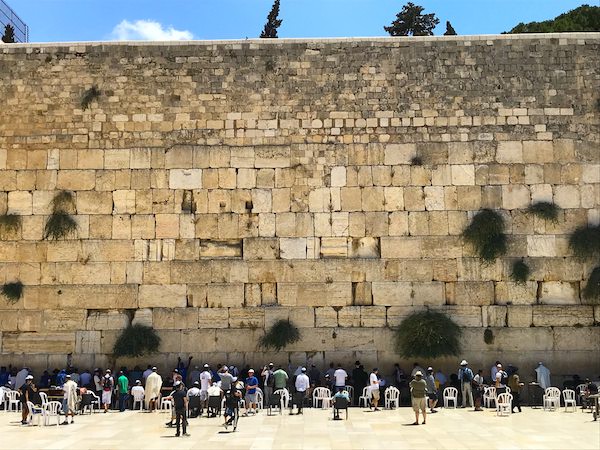
I remember coming upon an iris in a garden, the colour was blue-black. It took my breath away. The beautiful delicacy of an orchid, its shape, colours – that does it for me every time. A piece of music can pierce me to the very core and set me weeping, so that I find it almost impossible to breathe. A summer day in a vineyard, the clouds advancing to attenuate the summer heat, the blush of air on my skin from a gentle breeze as I hide in the shade of a massive tree – I hold my breath and hug myself. When I stand with my fingers brushing the weathered stone of the ancient Wall in Jerusalem, I can feel the thrum of the centuries rumbling under my skin and my body shakes uncontrollably in resonance with the events I am heir to; I feel myself gasping for air, I am transported.

Let me take you into my confidence. I am intoxicated with life, totally drunk and out of my skull. The tsunami of sensory input coursing through the coruscations of my cortex from my eyes, ears, skin, not to mention my taste buds and my gut, have me in a constant state of arousal. And I haven’t even mentioned sex. I kid you not.

The tiny tiptoeing of an insect on my skin brings me to full alert. I wonder where it thinks it is going, what it sees, feels. Will it bite, just feed on my exfoliations, or is it exploring to find a friend? As it crawls across my arm, I contemplate the feel of my muscles when they propel me down the street. I sometimes am impelled to break into a run just to experience the pump of my heart and the puff of my lungs. What a rush to be alive!

Talk about taste and what it does to my senses: the sweet and bitter of wine, the acridity of a cigar, the shock of a shot of single malt, and that’s just the stuff designed to kill brain cells. What about salt and vinegar, spiced meats and garlic, onions and, a favourite, caraway seeds?

There is no bland for me. How about a rib steak, medium rare, seared so the exterior is caramelized, adding salad with a sharp vinaigrette? How about battered cod, with French fries and lots of ketchup? Does this sound like a sensible low-cal diet for an old fogey like me? Let’s not mention desserts, enjoyed in moderation even though I am diabetic. The sight of one in a French restaurant is sometimes enough to excite me to breathlessness. I haven’t mentioned that I love a tart apple pie.

I have experienced Yellowknife at 40-below, with a wind, and the desolate airport tarmac, in scenic Mauritania, at 45˚C, the juicy humidity (with body melting like ice cream) of the Congolese jungle and the aridity (feeling like a dried-up leaf) of Darfur. I know when I am fortunate in passing my time in a temperate climate. Just being in a pleasant place is something I can never take for granted.

And, for a bit of something else, I know what it is to try to survive in the hurley-burley of a chaotic business environment. I have learned to appreciate the joys of single-tasking after being in situations where I have felt like a 10-armed paperhanger, working against time. And more? Believe me, you would not necessarily enjoy seeing your name on the front page of a newspaper or your face on the TV news. Talk again about the indrawn breath.

But it is our human relationships that top it all for me. There is nothing like the right one, or the wrong one, to get us breathing like a steam engine, testing the resistant capacities of our vascular systems. It surely takes the cake for the height of experience. When your moment arrives, and you feel that sense of communion with another person, just smiling at each other across a small space, you feel the need to pinch yourself to prove that the instant is really real. I don’t know about you, but I have to take a really big breath to try and keep calm. I feel I could burst with the ecstasy of the experience, because I can remember the misery of those other so-lonely times. Oh, yes, I can.

Welcome to Life.

Max Roytenberg is a Vancouver-based poet, writer and blogger. His book Hero in My Own Eyes: Tripping a Life Fantastic is available from Amazon and other online booksellers.

Posted on June 9, 2023June 8, 2023Author Max RoytenbergCategories Op-EdTags aging, lifestyle

Honouring others in death

There’s nothing like a tree stump to put things in context. I walk the dog in an area full of mature trees and wildlife. Tucked in a bend of a river, we’ve got a lot of trees here. However, this enormous tree had died. I contemplated its huge stump and growth bands. My impatient dog pulled me towards her usual routine, so I didn’t manage to count the rings to learn just how long it lived, but likely it has existed since long before settlers claimed this land.

One gift I’ve gained from living in Winnipeg, where more than 15% of our population is Indigenous, is a better connection to and respect for the earth and living things. In my urban daily walks with the dog, I’ve seen woodpeckers, ducks, geese, hawks, deer, fox, and more. I’m filled with awe by the wild natural world around us and the contexts offered by Canada’s First Peoples.

However, I’ve also seen the traumas played out through what Canada has done to its Indigenous population. There are unhoused people nearby, living in camps along the riverbank in all kinds of weather. On a warm day, I saw a woman on the ground. I thought she was sleeping and went on my way. Then I struggled, wondering if I should have called for help. Perhaps it was an overdose or something worse. At the time, I promised myself that if she were still there when I returned, I would call for help. The whole walk, I debated whether it was better to involve police or not. Indigenous Canadians aren’t always treated fairly by law enforcement. She was gone by the time I returned. I felt relief because I hadn’t been forced to make a decision. Would sleeping on the ground in an area that was her people’s ancestral land result in an arrest or accusation of criminal behaviour?

This situation, of not being sure if a call to the police was safe, came to mind when hearing the latest news reports regarding the deaths of four women in Winnipeg. These women’s remains were left in multiple garbage bins in May 2022, according to police reports. Some of these dumpsters were sent to Prairie Green landfill on May 16. Jeremy Skibicki is accused of killing these Indigenous women: Rebecca Contois, Morgan Harris, Marcedes Myran and a fourth woman, unidentified, who Indigenous leaders have named Mashkode Bizhiki’ikwe, or Buffalo Woman.

Some of Contois’s remains were found at Winnipeg’s Brady Road landfill in June 2022; her remains were in at least two dumpsters, one of which was spotted before being picked up by the dump truck. The police didn’t find the other women’s remains and declined to do a search for them, saying it would be dangerous and expensive. They have arrested the man they think committed the crimes and said they didn’t need to find the bodies to press charges. Public outcry, along with the families’ voices, forced the government to do a feasibility study regarding a search of the Prairie Green landfill, which has now been released. It says it could take up to three years and $184 million to search for their remains.

Like many Manitobans, I was horrified by how this has unfolded. The idea that these women’s bodies should remain in the trash rather than have a proper, culturally sensitive burial, is abhorrent. I couldn’t imagine why anyone needed a feasibility study to determine that their remains should be found as soon as possible. I, like many others, couldn’t understand why a search didn’t commence immediately in June 2022. I wouldn’t be alone in saying that it seems as though the decision to not recover the bodies promptly seemed inherently flawed and racist.

Unfortunately, this isn’t a new situation. Jewish tradition is rich with historic detail. The Babylonian Talmud, codified by about 500 CE, has already described what to do about it. Even a kohain (priest), who normally must avoid the dead to avoid becoming “defiled” (unable to do Temple sacrifice, during the days when there was a Temple in Jerusalem) is commanded in the Talmud to bury any dead person he finds abandoned on a road. This is called a meit mitzvah. Today, it’s considered a special and important mitzvah (commandment) for all Jews to uphold: if we discover a dead person with no next of kin, we must do the right thing. We must tend to that dead person with respect and bury them properly.

In the Babylonian Talmud Tractate Sotah, on page 45b, we learn that we’re responsible for burying bodies that we find. We must find body parts and bury them together. There’s a rabbinic discussion about what the proper rituals and procedures are “if he was strangled and left in a garbage heap.”

Walking by that enormous tree stump with its yearly growth rings reminds me that we have only a set time here on earth to do the right thing. Jewish tradition teaches us to be upstanding while we’re here. The families who lost their loved ones in these awful crimes deserve to have their rituals around death observed. These include a proper burial and send off of their loved ones’ spirits. Deuteronomy 16:20 reminds us “Justice, justice shall you pursue.” That sometimes requires us to dig at a landfill, i.e. a modern-day garbage heap, to pursue it.

It’s sometimes expensive and hard to do the right thing. It’s even more expensive and harder to correct an error like this one, when someone believes certain bodies on a trash heap are somehow less valuable or important. The police force took an unacceptable approach – to stall, and then find excuses for why we shouldn’t treat every person equally, and value every life taken.

Joanne Seiff has written regularly for CBC Manitoba and various Jewish publications. She is the author of three books, including From the Outside In: Jewish Post Columns 2015-2016, a collection of essays available for digital download or as a paperback from Amazon. Check her out on Instagram @yrnspinner or at joanneseiff.blogspot.com.

Posted on May 26, 2023May 25, 2023Author Joanne SeiffCategories Op-EdTags burial, ethics, First Nations, indigenous, injustice, Judaism, justice, murder, racism, women

Posts pagination

Previous page Page 1 … Page 12 Page 13 Page 14 … Page 56 Next page
Proudly powered by WordPress