Skip to content
  • Home
  • Subscribe / donate
  • Events calendar
  • Business Directory
  • FAQ
  • News
    • Local
    • National
    • Israel
    • World
    • עניין בחדשות
      A roundup of news in Canada and further afield, in Hebrew.
  • Opinion
    • From the JI
    • Op-Ed
  • Arts & Culture
    • Performing Arts
    • Music
    • Books
    • Visual Arts
    • TV & Film
  • Life
    • Celebrating the Holidays
    • Travel
    • The Daily Snooze
      Cartoons by Jacob Samuel
    • Mystery Photo
      Help the JI and JMABC fill in the gaps in our archives.
  • Community Links
    • Organizations, Etc.
    • Other News Sources & Blogs
  • JI Chai Celebration
  • JI@88! video

Recent Posts

  • Or Shalom reopens its doors
  • JFS from past to future
  • Need holistic approach
  • Sharing stories, advice
  • Journalist shares fears
  • Skills to live together
  • Road to independence
  • Cutting grass with scissors
  • Zionism as a solution
  • Deceit, desire & the divine
  • Reclaiming sacredness
  • Creative project ideas
  • Summer squares and cobbler
  • Thou shalt … summer commandments
  • Legal help for students
  • Revisiting myth of Lilith
  • Wrong person rebuked
  • Canada’s mixed messages
  • Questions for museum
  • Symposium on antizionism
  • Making soccer political
  • CJPAC lauds Pulver’s impact
  • City recognizes Vrba’s legacy  
  • Organ donation saves lives
  • Theodore’s March premiere
  • A healing Shabbaton
  • Supplying healthy food
  • A chime of metal tags
  • Yellowknife seder a first
  • Ishai energizes, unifies
  • A Lag b’Omer to remember
  • Expanding the healing
  • Hannah Senesh – a unique hero
  • Community milestones … May 2026
  • Деньги до зарплаты на карту Займ до зп онлайн за 5 минут 2026
  • Микрокредит онлайн в Казахстане Микрозайм в Акшамат

Archives

Follow @JewishIndie
image - The CJN - Visit Us Banner - 300x600 - 101625

Category: World

Helping Save a Child’s Heart

Helping Save a Child’s Heart

Left to right, panelists Dr. Tommy Gerschman, Dr. Thuso David and Randi Weiss at the screening of A Heartbeat Away in Vancouver on Nov. 2. (photo by Cynthia Ramsay)

More than 4,400 children from 55 countries in the developing world have received life-saving heart surgeries because of the efforts of volunteers associated with Save a Child’s Heart Foundation. Thousands more have been saved by doctors trained by the organization’s volunteers.

The Israel-based organization is aiming to expand its reach in British Columbia. A screening of the film A Heartbeat Away in Vancouver on Nov. 2 shared the anxious, sometimes tragic and often uplifting stories faced by medical volunteers associated with the agency.

Marni Brinder Byk, executive director of Save a Child’s Heart Canada, introduced the film and moderated a panel discussion afterward. She explained that when Vancouverite Lana Pulver joined the national board of the organization, it presented an opportunity for more on-the-ground activities in the city.

Save a Child’s Heart (SACH) has another strong Vancouver connection. Vancouverite Randi Weiss recently moved back after spending several years in Israel, where she served as a full-time volunteer with SACH.

The foundation is committed to saving children’s lives by improving the quality and accessibility of cardiac care. Israeli medical experts, and some from other countries, provide free, life-saving surgeries to children from developing countries and also train surgeons and medical teams from those countries, helping them build their own skills.

Entirely as volunteers, SACH doctors travel to Africa, Asia, Eastern Europe and other parts of the Middle East to assess potential candidates. A few less urgent cases are treated on the spot, while more serious cases are transported to Israel, where the child and a parent can spend weeks or months during surgery and recovery. A new home, accommodating 61 patients, family members and medical staff, recently opened near the Wolfson Medical Centre in Holon, where the Save a Child’s Heart medical facilities are based.

The film depicted the heartbreaking choices doctors are forced to make during their trips abroad, as young patients whose cases are simply too advanced for an encouraging prognosis have to be rejected. But the film also follows the story of Julius, a kindergarten-age boy from Tanzania, as he travels to Israel and gets a fresh lease on life after a harrowingly complicated surgical procedure.

Weiss said that about half the kids SACH treats are from the Palestinian Authority or other places in the Middle East. About 40% are from African countries, including Ethiopia and Tanzania, she said, while others come from Romania, Moldova and wherever there is a need not being met.

Weiss was joined on the panel after the film’s screening by Dr. Thuso David, a pediatrician from Botswana who arrived in Vancouver in early August to continue his training at B.C. Children’s Hospital. He noted that, in many African countries, there are few medical specialists, so a complex medical issue like congenital or acquired heart disease is rarely treated.

Dr. Tommy Gerschman, another Vancouverite, was also on the panel. He volunteered as a medical intern for SACH in Israel a decade ago.

Save a Child’s Heart Canada was founded in Toronto in 1999 by the late A. Ephraim “Eph” Diamond. Brinder Byk said that SACH’s annual budget is about $6 million US, about one-sixth of which is provided by Save a Child’s Heart Canada. The Canadian contingent has also stepped up in a big way to help fund a new wing at the Wolfson Medical Centre designated especially for SACH’s use.

“We have a lot to be proud of as Canadians, that we will be helping that many more children and training that many more doctors,” said Brinder Byk. “The children of Israel are also going to benefit because, if they live in the catchment area of the Wolfson Medical Centre, they will be able to use their services as well.”

Format ImagePosted on December 1, 2017November 29, 2017Author Pat JohnsonCategories WorldTags healthcare, Israel, SACH, Save a Child's Heart, tikkun olam
Chabad rabbis gather in N.Y.

Chabad rabbis gather in N.Y.

The “class photo” at the recent Kinus Hashluchim. (photo from Chabad Lubavitch)

Twelve Chabad Lubavitch emissaries to British Columbia joined 5,600 rabbis and communal leaders from all 50 U.S. states and 100 countries, hailing from as far away as Laos and Angola, Ghana and Uzbekistan, at the International Conference of Chabad Lubavitch Emissaries (Kinus Hashluchim), which took place Nov. 16-20 in Brooklyn, N.Y.

photo - Rabbi Falik Schtroks at the “class photo”
Rabbi Falik Schtroks at the “class photo.” (photo from Chabad Lubavitch)

The annual event, the largest Jewish gathering in North America, is aimed at reviving Jewish awareness and practice around the world. The rabbis – each embracing multiple roles and responsibilities – explored relevant issues, and learned from professionals and colleagues with years of experience. The topics covered ran the gamut of their concerns: combating antisemitism, stemming the tide of assimilation, understanding troubled relationships, inclusion, and a conference within the conference for rabbis who serve students on college campuses, ensuring a lasting impact on the next generation of communal leaders.

This year’s conference brought added significance as the world marks 50 years since the Rebbe – Rabbi Menachem M. Schneerson, of righteous memory, considered the most influential rabbi in modern history – initiated the Mitzvah Campaigns, an historic undertaking that took Judaism beyond the institutional walls, impacting millions of Jews with no or minimal Jewish engagement. The conference included a visit to the Rebbe’s gravesite in the New York City borough of Queens.

Additional highlights were the “class photo,” where thousands of rabbis posed for a group picture in front of Chabad Lubavitch world headquarters in Brooklyn. There was also a gala banquet, where the rabbis were joined by admirers, supporters and layleaders from their respective communities for a sit-down dinner, which set a record for being the largest in New York.

The conference serves to connect Chabad Lubavitch emissaries with one another. This gives the participants, especially those going back to far and isolated outposts, an exhilarating send-off, coupled with the sense that they are not alone.

Representing British Columbia were rabbis Yitzchak Wineberg, Yechiel Baitelman, Binyomin Bitton, Avraham Feigelstock, Mendy Feigelstock, Shmuly Hecht, Meir Kaplan, Mendy Mochkin, Dovid Rosenfeld, Falik Schtroks, Levi Varnai and Schneur Wineberg.

Format ImagePosted on December 1, 2017November 29, 2017Author Chabad LubavitchCategories WorldTags Chabad, Judaism
Women lead way to peace

Women lead way to peace

Yael Deckelbaum is using her musical talents and connections to help Israelis and Palestinians press for peace. (photo from Yael Deckelbaum)

Yael Deckelbaum is using her musical talents and connections to help lead thousands of Israeli and Palestinian women to peacefully press for the end of the fighting between their two peoples via March for Hope.

Deckelbaum’s celebrity status in Israel and around the world – through performances with known local artists and bands such as Shlomo Artzi and Machinah, as well as her career with Habanot Nechama and solo albums – helps draw a crowd. Her involvement in the cause began when she joined forces with Daphni Leef, an Israeli activist for social justice.

“I’d sit with her and tell her she’s a better person than I am,” said Deckelbaum. “She was always talking about how we have to change things in Israel – going around in many places in Israel, meeting people, listening to them and trying to learn … what’s wrong and trying to fix things. I decided to take a caravan, go through Israel, sell CDs, maybe bring a sound system, perform … see people from a different angle. Daphni decided to join me. From this idea, it became 20 people, two caravans … a journey we did for 45 days in 40 different places across Israel.”

They met many Israelis from various cities and villages, and Deckelbaum gained a new perspective. Everywhere they went, she would sing and Leef would speak to the people after every show.

“That’s when I decided I would dedicate myself, using music as an instrument, toward change … not just be an instrument for supporting my existence … but to spread a message and how I believe this world should be. [It] was a big turning point in my path,” Deckelbaum told the Independent.

A year later, one of Deckelbaum’s friends shared an email about Women Wage Peace.

“A lot of times, us musicians, we get invited, we go, sing and leave,” said Deckelbaum. “We feel good about it. But, this time, I felt like I had to meet them. A few days later, I was sitting at a table with women from Women Wage Peace. They told me about this march they were planning – a group of mothers who, in the period of military operation, were experiencing terror at home, fear … mothers sitting at home, knowing their sons are somewhere and not knowing if they’d come home from war.

“One of the founders told me she said to herself that she would never forget this feeling of terror, that she can’t sit anymore and do nothing about it. She urged us to do something radical, extreme, because something had to change. She couldn’t live with the feeling of helplessness anymore.”

At one point, Women Wage Peace fasted for 50 days outside the prime minister’s house, demanding a mutual agreement between Israel and Palestine be made.

“They told me they were already connected with Palestinian women who feel the same,” said Deckelbaum. “And then, on Oct. 19, 2016, 1,000 Palestinian women marched with us together in the Dead Sea [area] – the lowest place of the earth. I started to cry, as it touched me in a deep place.

“Many years ago, I had this vision of women marching together … not something I can explain…. Then, I met these women [who] told me about this, and it was coming true. And, it has an energetic meaning that it happened in the lowest place on the earth – women marching to the belly of the earth. So, I cried and offered to give my music to the cause.”

Deckelbaum invited more artists to join and sing, and became the march’s artistic director. She began with songs like “Give Peace a Chance” and “Hallelujah,” and then wrote originals herself. “The melody and the lyrics just came,” she said. “And the ‘Prayer of the Mothers’ was born, directed by Astar Elkayam.”

Deckelbaum was inspired by a message that had been sent to march organizers by Leymah Gbowee. Gbowee is a Liberian woman who led a women’s peace movement, which helped bring an end to the Second Liberian Civil War in 2003, after 13 years of fighting.

“I felt something very real is happening, that I have a chance to do this,” said Deckelbaum. “I put it into the song clip, so you can hear her speaking. And she sang, ‘As the world we live in, peace is possible / Only when women of integrity and faith stand up for the future of their children.’”

This year, Women Wage Peace planned a second march, dubbed, “The Journey to Peace,” which started in the south of Israel near the Gaza border on Sept. 24 and ended in Jerusalem. Other events have followed, and will continue, throughout Israel. The peak of it was on Oct. 6 in Jaffa/Tel Aviv, with a march that Deckelbaum helped organize, “colourful with dancers, musicians, and drummers – happy and hopeful,” she said.

On Oct. 8, there was an event in the desert with Palestinian women. The previous year, 1,000 Palestinian women came. This year, there was twice that number, and the hope is that, each year, it will grow.

“These are the miracles we’re all waiting for – peace between Israel and Palestine, and between and within ourselves and amongst us as people,” said Deckelbaum. “Women Wage Peace isn’t only about making peace with Palestinian women. It’s about making peace between all kinds of women in our society and different places.”

Deckelbaum learned there is a global women’s revolution. She heard of a march in Washington, D.C., in which she participated, and another in Zurich, at which she was invited to sing.

After the video of “Prayer of the Mothers” was released, more marchers all over the world were set into motion. Deckelbaum is now working on a project called Women of the World Unite.

“I believe that women from all over the world are sharing this message, a hope for peace – a message that’s inclusive of all human beings,” she said. “We need women to be more involved in managing the ways of the world – not only by raising children, but also by engaging in the system and how things will work.”

The Jewish Independent spoke over the phone with Deckelbaum when she was in Switzerland doing concerts with an ensemble of religious and secular Jewish, Muslim and Christian women called Prayer of the Mothers Ensemble. It involves 14 women, carrying the message of female empowerment, revolution, evolution and peace.

Rebeca Kuropatwa is a Winnipeg freelance writer.

Format ImagePosted on November 24, 2017November 23, 2017Author Rebeca KuropatwaCategories WorldTags Israel, Israeli-Palestinian conflict, peace, women, Yael Deckelbaum
Giro d’Italia’s “Big Start” in Israel

Giro d’Italia’s “Big Start” in Israel

Sylvan Adams, 58, is funding the construction of the Middle East’s first Olympic velodrome, slated to open in Tel Aviv in May 2018. (photo from margolin-bros.com/en/project/Velodrom)

In Europe, the Giro d’Italia bicycle race ranks in status with baseball’s World Series or hockey’s Stanley Cup. Since the beloved Italian sports extravaganza’s initial race in 1909, the multi-stage race has never started outside Europe – until now. Next May, the annual event’s starting flag will be waved in the Holy City, thanks in big part to Sylvan Adams – the Montreal billionaire now living in Tel Aviv who himself is a competitive bicycle racer.

Adams, 58, is funding the construction of the Middle East’s first Olympic velodrome, slated to open in Tel Aviv in May 2018, in time for the Israel-based initial part of the 23-day Giro d’Italia. The Israeli team is all but guaranteed to receive one of four wildcard invitations for the race.

The bike-racing stadium, called simply the Velodrome, is part of the National Sports Centre being built by the Tel Aviv Foundation, by Mazor-First Architects. Located on Bechor Shitrit Street in the Hadar Yosef neighbourhood, the complex will gentrify a once-impoverished area. Budgeted at $11 million, the 7,100-square-metre biking facility will be jointly owned by the Olympic Committee of Israel and the Tel Aviv Municipality.

Adams, who made aliyah in December 2015, is honorary president of the organizing committee of the race’s “Big Start” in Jerusalem.

The three-week Giro is widely considered the most beautiful of cycling’s three Grand Tours, ahead of the sporting leviathan of the Tour de France and Spain’s lower-key Vuelta a España. Ministers from Israel and Italy met at Jerusalem’s Waldorf Astoria Hotel in September to sign an agreement that the opening three stages of next year’s Giro will be held in Israel.

Like the other Grand Tours, the modern editions of the Giro d’Italia normally consist of 21 daylong segments (stages) over a 23-day period that includes two rest days. All of the stages are timed to the finish, each stage’s time added to the previous. The rider with the lowest total time is the leader of the race and gets to don the coveted pink jersey, called maglia rosa, worn by the leader of the general classification.

Adams, who has until recently been publicity shy, today lives in a penthouse overlooking the Mediterranean and Tel Aviv’s sea-side bicycle path. A two-time world outdoor cycling champion in his age category, his most recent title was won at the World Masters Championship, held in Manchester, England, in November 2015. Adams, who began cycling competitively more than two decades ago, is a six-time Canadian and 15-time Quebec champion. He won four gold medals at two Pan-American meets, and a total of five golds at the 2009 and 2013 Maccabiah Games.

His dream is to turn Tel Aviv into “the Amsterdam of the Middle East,” i.e. a city as bike-friendly as the Dutch capital. He believes something similar can be done in Tel Aviv, where traffic congestion and a parking shortage are reaching a crisis, as more and more motorists come in from “satellite” cities.

“Petach Tikva, for example, is eight kilometres from the heart of Tel Aviv. That can take an hour to drive some mornings. By cycling, it is 20 to 30 minutes,” he said.

Adams first visited Israel nearly four decades ago. He and his wife of 33 years, Margaret, a native of London, England, met while volunteering on a kibbutz.

Now retired, Adams has given up his involvement with the family business, Iberville Developments Ltd., the real estate giant founded after the Second World War by his father, Marcel Adams, a Romanian-born Holocaust survivor. The younger Adams was its chief executive officer and his son Josh, one of his four children, is now running the company, one of the largest owners of commercial properties in Quebec.

Gil Zohar is a journalist based in Jerusalem.

Format ImagePosted on November 17, 2017November 15, 2017Author Gil ZoharCategories WorldTags cycling, Giro d’Italia, Israel, Italy, Sylvan Adams
Recalling a lost aunt

Recalling a lost aunt

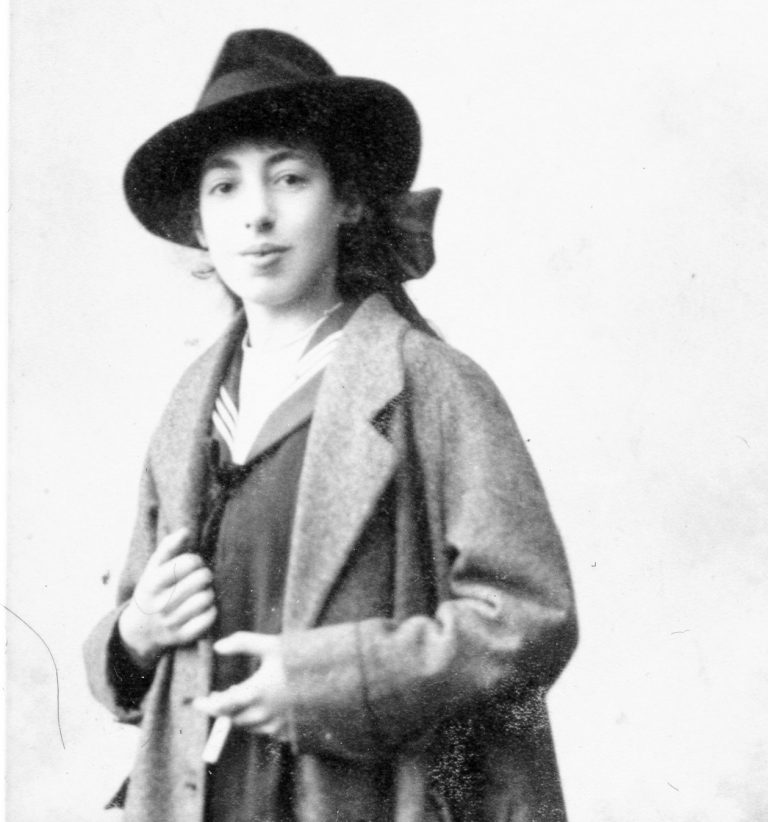
Rosetta van Dam, circa 1920. (photo from Louise Sorensen)

The Dutch Holocaust Memorial of Names has provided the opportunity to write and have published a piece about a person named on the memorial. I contributed stories about six of my murdered relatives, and wrote one of those stories in English, about my Aunt Rosa.

photo - Rosetta van Dam, circa 1920Rosetta van Dam (1904-1942), or Ro, was my mother’s younger sister. She was the first in the family to be deported and murdered, on Aug. 3, 1942, in the first Auschwitz gas chamber, at the age of 38. She had responded to the Nazi call to report for “labour in Germany.”

Ro lived in Rotterdam at the family home on Bergweg 99, where I was born and where she had her own room on my grandparents’ floor. Ro was totally withdrawn and had virtually no social life. She always wore a girl scout uniform, with heavy wool knee-high socks and sandals. She likely would have preferred men’s clothing but it was totally taboo at the time for women to dress in that way.

Ro’s voice was very deep and I believe now that she may have been transsexual or, in any event, a lesbian. I was told that my grandparents had been dragging her to a number of doctors, of course with no result. She ended up a virtual hermit, usually disappearing to her room. I think she did some secretarial work, perhaps for my grandparents’ business.

From 1929 to 1936, we lived in the same Rotterdam house. As a toddler and preschooler, I was too young to understand my aunt, but was curious and eager to please her.

Several years ago, I visited Auschwitz and learned that Ro never reached the Birkenau gas chambers because they were not yet in operation on Aug. 3, 1942. I was informed of this while standing in that very gas chamber, the only one that had not been destroyed, feeling deeply sad about my aunt.

Louise Sorensen was born in the Netherlands in 1929, where she lived with her parents and older sister. In May 1940, when the Nazis occupied Holland, they lived in a suburb near Amsterdam. Two years later, the Nazis ejected them from their home and the family was forced into the Amsterdam ghetto. By January 1943, they were separated and hidden in various locations throughout the country until the Canadians liberated them on April 17, 1945. Sorensen immigrated to Vancouver in 1959; her Danish husband has passed away and she has two sons and three grandsons. She has been active with the Vancouver Holocaust Education Centre since its inception: she was a board member for 10 years and has been speaking in schools and to other audiences for about 30 years. This article also appeared in VHEC’s Zachor.

Format ImagePosted on November 3, 2017November 1, 2017Author Louise SorensenCategories WorldTags Amersterdam, Holocaust, memorial, Netherlands, Rosetta van Dam
Netherlands builds memorial

Netherlands builds memorial

A bird’s-eye view of the Holocaust Memorial of Names to be built in Amsterdam. (photo from holocaustnamenmonument.nl)

More than 70 years after the Second World War, a memorial in Amsterdam will be erected with the names of all the Dutch Holocaust victims. This will finally provide the Netherlands with a tangible memorial where the 102,000 Jewish victims and 220 Sinti and Roma victims can be commemorated individually and collectively.

Up to now, no memorial in the Netherlands has listed each individual Holocaust victim by name. For surviving relatives, a place to commemorate family members is invaluable. In addition, a memorial listing the more than 102,000 names serves as a reminder to current and future generations of the dangers of racism and discrimination.

Between 1933 and 1945, the Nazis murdered an estimated six million Jews and hundreds of thousands of Sinti and Roma. Of the 140,000 Jews who lived in the Netherlands in 1940, 102,000 did not survive the war.

Not all Jews were murdered in the gas chambers of the extermination camps Auschwitz-Birkenau, Treblinka, Belzec, Majdanek, Chelmno and Sobibor. Many were murdered in mass executions or died as a result of sickness, hunger, exhaustion or slave labour. The Dutch Holocaust Memorial of Names commemorates all these victims.

Designed by Polish-Jewish architect Daniel Libeskind, whose studio is headquartered in New York City, the Dutch Holocaust Memorial of Names will be located in the heart of the Jewish Quarter of Amsterdam. The memorial consists of the four Hebrew letters that make up the word zachor, to remember. When visitors enter the memorial, they find themselves in a labyrinth of passageways flanked by two-metre-tall brick walls that convey the message, “In memory of.” Inscribed on each of the 102,000 bricks is a name, date of birth and age of death, in such a way that the name of each victim can be touched.

In combination with the highly reflective geometric forms of the steel letters, the brickwork connects Amsterdam’s past and present. A narrow void at the point where the brick walls meet the metal forms makes it appear that the steel letters float, symbolizing the interruption in the history and culture of the Dutch people.

Anyone can adopt a name on the memorial by donating 50 euros. For more information, visit holocaustnamenmonument.nl.

Format ImagePosted on November 3, 2017November 1, 2017Author Dutch Holocaust Memorial of NamesCategories WorldTags Amsterdam, Daniel Libeskind, Holocaust, memorial, Netherlands
Eat bugs to repair the world?

Eat bugs to repair the world?

Burgers made with insect protein, and no meat. (photo from Eran Gronich)

While the thought of eating insects or worms may sound outlandish or disgusting to many of us, there is growing support for doing just that.

In less than 25 years, the world will have nine billion people living on it. As things stand, there is not enough space or resources to support conventional protein production – beef, chicken, fish, etc. – for that many people. One solution that has been brought to the fore is that we can start eating insect protein. And now, the Israeli company Flying Spark is raising capital to make this a reality.

Leading the charge is Eran Gronich, a serial entrepreneur, and his partner, entomologist Dr. Yoram Yerushalmi.

“When I was looking for my next project, looking into all kinds of ideas, start-ups, etc., I came across a TED Talk in which this university professor was talking about the world having nine billion people by 2040,” said Gronich. “He was talking about all the damages of livestock farming – causing global warming, [using] 70% of growing seed, oceans over-fished…. He was saying the best solution is switching to insect consumption … and, I don’t know why, but I was fascinated. I started to learn about it…. When I realized I don’t know anything about insects, I found my partner, Dr. Yerushalmi, and together we started Flying Spark.”

They chose the larva of fruit flies to work with because it has a number of benefits, such as high values of protein, iron, calcium and magnesium. Its fat is unsaturated and, unlike some other insects, a fruit fly has no cholesterol.

The fruit fly uses less than one percent of water and land resources, has hardly any waste and 100% of the larva can be used. The lifespan of the larva is only six days and it multiplies 15 times in that time.

As it’s a vegetation-eating fly, it is a safe insect to use. No antibiotics, hormones or additives are used in the growing process, and the insect does not share any diseases with human beings.

photo - Flying Spark’s Eran Gronich
Flying Spark’s Eran Gronich. (photo from Eran Gronich)

Gronich and Yerushalmi’s project was chosen as the winner of a mass accelerator challenge in Boston. “We spent four months in Boston working on accelerating the growth of the company,” said Gronich. “We raised some money there from investors and sent it to Israel. We developed the farming and ecosystem technology around farming the larva, reducing the cost.

“In the food lab, we developed the process that’s basically taking the larva and turning it into high-quality, 70% protein powder and high-quality oil. Also, we worked on all kinds of applications and the functionality of the protein powder. We made all kinds of products just to prove the point that you can make almost anything out of our materials – bread, pasta, cereal, cakes, whatever. And, also, achieve meat replacement, even milk, with more protein than cows.”

As it turns out, the larvae will be fed by fruit surpluses, which, according to Gronich, exist everywhere. “They are in every country and also throughout the supply chain – surplus that the farmer or grocery chain has,” he said. “It’s good food, but doesn’t look so good anymore. So, we developed this formula – based on feeding software – to calculate the right percentage … to get the nutritional diet needed.”

Gronich is working with several major food manufacturers, trying out various applications, with varying degrees of success.

According to Gronich, the product is not kosher and his market is not yet in Israel, though he does have some Israeli and Jewish backers. One of his backers is the Strauss Group, which invested money and provides support with offices, labs and a lot of technical support for marketing and networking with institutions worldwide.

“For Strauss, it’s a financial investment,” said Gronich. “Strauss believes insects will be a part of the human diet in the near future and decided to invest in the best company.”

Another important collaboration in which Flying Spark is involved is with IKEA. “IKEA, eight months ago, [invited] all kinds of start-ups to apply for special programs focused on making the world a better place, especially sustainability aspects. Thirteen hundred companies applied from about 80 countries around the world; they chose 10. We were lucky enough to be one of those 10 companies. So, we started a three-month program. My partner is in Sweden right now, in the IKEA centre, and the goal of the program in the end is to have a product made from our material in the IKEA restaurant.”

Gronich is currently working on designing Flying Spark’s first production facility in Israel, with operations scheduled for the end of 2018. “Now, we are raising three and a half million dollars to build the facility, which will be in Ashdod,” said Gronich.

While selling the product to the Western world is a bit tricky, in the Eastern world or in South America, insects are eaten regularly. So, heading east with their product is an obvious choice.

As for the West, Gronich said, “Now, people from Western countries … when I’m explaining to them about the larva – about how it cleans itself and its nutritional value – people understand it. They get that it is one of the best sources of protein. If you’re comparing it to shrimp or other kinds of seafood, it looks much better. It definitely looks much better than a dead chicken. And millennials are very much aware of what they put into their bodies, and aspects of food and farming, so it’s easier.”

Flying Spark was very happy with their positive reception in Boston. There, more than 85% of millennials told them they had no problem tasting it. And, when they gave people samples, the reaction was positive.

“Now, we’re working with companies that have heard about us through PR,” said Gronich. “Multinational companies approached us and the conversations with them have all been focused on nutritional value – source of the protein, they don’t care about it…. We call it the industrial approach. We’re not serving the insect in its original form. We’re turning it into a white powder and are selling it to regular, traditional food manufacturers – and there is a need for this product.”

Rebeca Kuropatwa is a Winnipeg freelance writer.


Format ImagePosted on October 27, 2017October 25, 2017Author Rebeca KuropatwaCategories WorldTags environment, Eran Gronich, Flying Spark, IKEA, insects, Israel, science
Promoting sanitation

Promoting sanitation

A handwashing workshop in the village of Chamba, Himachal Pradesh, India. Sydney Kamen started SOAP in 2012, with the goal of cutting in half the number of children under the age of 5 who die around the world from diarrhea and respiratory infections. (photo from Sydney Kamen)

Every year, 1.8 million children under the age of 5 die from diarrhea and respiratory infections. This number could be cut in half with proper sanitation and handwashing – which is precisely the goal of a 20-year-old Jewish woman from Washington, D.C., Sydney Kamen.

Kamen is working to achieve this target via the nongovernmental organization SOAP (So Others Are Protected), which she established in 2012.

“If you reduce the number of cases and number of deaths, then you reduce the burden on the international public health system … and that funding can go elsewhere to build infrastructure, etc.,” Kamen told the Independent. “It’s inspiring to me to think about the incredible impact one simple solution could have on a global scale.”

Raised in a Reform Jewish home that stressed community service, Kamen is a junior at Dartmouth College, majoring in geography with a minor in global health and ethics.

“When I was in middle school,” she said, “I was in a club and it was about girls’ education. We partnered with this school in Kenya. Once a week, we’d Skype with them and get to know each other. That was my first exposure to the different life experiences of my age group around the world…. It became girls’ and women’s health later, which really segued into this world of global health and wealth disparities … which then led me to the field of development, where I am now.”

In high school, Kamen joined a team of college students in rural Thailand to study marginalized, at-risk youth on the Thailand-Myanmar border.

“What does a white, Jewish girl from Georgetown know about not having access to clean water or not having access to sanitation?” said Kamen. “Nothing at all. So, this was a very eye-opening experience for me.”

Kamen stayed with a host-family in which the mother worked as a nurse clinician at a small rural health clinic. The host-mom explained how frustrating it was to see so many kids coming into the clinic with diarrhea and respiratory infections, but not being equipped to help – there was not enough access to sanitation.

In this remote community, which was, in a sense, an unofficial refugee camp, the people repurposed many things made from plastic and found ways to reuse many items. So, when Kamen came to them with the idea of repurposing unused shards of soap from local hotels, the idea was well-received.

“When I first arrived in Thailand, I was staying at a hotel, getting acclimated,” said Kamen. “I used to always bring home the soap, shampoo and conditioner. And then, I was exposed to this disparity and was told that, no, they don’t have soap. I thought, this is a problem … perhaps with a very simple solution. Simple things are sometimes the hardest things to identify, just because they are so simple.

“It’s something that took some time to come together. It was something I felt strongly about and it was an issue that I saw as a grave injustice. I think access to sanitation is a human right. Of course, this is not something unique to rural Thailand, it’s a global problem – lack of access to sanitation is a huge problem.

“I saw this as something well worth exploring. I came home and started talking to people in Washington about it … and it all came from that. It was definitely a collaborative effort and it’s something that’s very important. You can’t make big changes alone. It’s all about the collaborative group effort.”

Kamen made the link between the hotels and the community and created a win-win situation. The hotel reduced its disposal costs and the community created a business from the repurposed soap. So far, 13 communities and 14 hotels have joined the project and each community has their own way of making it work.

“It’s all about community ownership,” said Kamen. “That’s very important to me. Some communities recycle it one way and do different things with it, and others do other things.”

Once the hotel reaches a sufficient amount of collected soap, the shards are transported to SOAP’s partner communities who then recycle the shards by melting and reshaping them. Ultimately, the product is used to promote sanitation and handwashing in the communities.

Besides providing a platform to support sustainable economic growth and financial independence, this initiative is also helping train women in business, building cooperatives, as well as offering the women some funds to learn about sanitation and how to clean the soap bars. This allows them to become health ambassadors of a sort in the community.

To date, more than 50,000 bars of soap have been distributed.

As for Kamen, while she hopes to one day work full-time on the project, her current goal, she said, is to “learn my place in this field and how to do it to the best of my ability … and to do so humbly and mindfully. Something I’ve become hyper-sensitive to as a student is the ‘white saviour complex’ … and I’m fearful of it becoming a part of my efforts, as I see [it] very prominently in other development initiatives.

“In school,” she added, “my hope is to become aware and knowledgeable of these practices as much as possible. But, my role now is to support the partnerships that have already been made.

“The thing is, it’s a very simple solution to a very large problem. This soap model, if you will, is very mobile. It’s easily tailored to meet community needs, which is very important to me. I want it to be a self-ownership type of thing, where communities support each other and do it themselves. It’s not a hand out. It’s not some white young American going over and teaching people how to wash their hands because there’s this ‘primitive’ divide.”

Interest in Kamen’s idea is growing in general, but most important to her is that one of her partner communities has reached out, saying they want to establish something like this in the community next door.

“It was their own initiative, not something I sought out to implement, which, to me, is the whole point,” said Kamen. “Hopefully, the ownership is assumed by the people who need it and the people who benefit from it. That’s all that matters to me.”

Recently, Kamen was named one of the 15 recipients of the Diller Teen Tikkun Olam Awards.

“I was incredibly honoured and excited,” she said. “The kind of support that award offers is incredible and generous. At the same time, as wonderful as this attention is, I think it’s important you do something good with it. It feels great, but it’s easy to get caught up in the accolades and what other people see and want for you.

“I really wanted to take advantage of this opportunity to share this story, but, also, I want to encourage my peers to learn about some of these global issues and think more deeply about our actions – especially those interested in development or international volunteerism.”

In her international development studies, Kamen found out that the U.S. military is one of the largest humanitarian actors in the world. As a Dartmouth student, she had the opportunity to become a reserve officer training corps cadet, which she opted to take to learn about the army.

“I grew up with the image of the military being a bunch of uneducated white guys who were trigger-happy and oil-hungry … which is not the case,” said Kamen. “This was the image I grew up with culturally.

“I figured it was time to learn the system from the inside and to humanize it. You can read all about the military and army in books, and you can talk to people about it, but why not try and understand it through experience? So, I joined the program with the hope of learning how it works and learning how they train future generations of leaders.

“I’ve been a part of it for just over two years now, and love what I’ve learned. The whole experience has been very humbling. I’ve learned about patriotism and what it means to serve, especially from my peers. But, I haven’t signed my contract yet, and that’s something I’m thinking about.”

For more information about SOAP, visit the NGO’s website, soothersareprotected.org.

Rebeca Kuropatwa is a Winnipeg freelance writer.

Format ImagePosted on October 20, 2017October 19, 2017Author Rebeca KuropatwaCategories WorldTags sanitation, Sydney Kamen, tikkun olam
Blogging about food, farm life

Blogging about food, farm life

While food blogger Molly Yeh loves vegetables, she said she feels she has “more to contribute in the world of cake.” (photo by Chantell Quernemoen)

Blogger Molly Yeh, 28, is the daughter of a Jewish mother and a Chinese father. She grew up in a Chicago suburb in a house with great cooking by her mom and great music by her dad, giving her a lasting love and appreciation for both arts, even though it is food that has become her profession.

An accomplished percussionist, Yeh first pursued her musical passion, enrolling in Juilliard School in New York.

“What I discovered when I got to New York was how amazing the restaurant scene there was,” she told the Independent. “That really inspired me to get into food and tasting new things. I started cooking as well. I’d call my mother and ask her to send recipes … and I started baking a lot.”

When she started her blog, it was somewhat an extension of her diary. “I basically just used it as a scrapbook of adventures around the city and hanging out with friends and stuff,” she explained. “It quickly became clear that I only wanted to blog about food. So, I started doing recipe development and learning about food harvest and such. And then, four years ago, I moved from New York to the border of North Dakota and Minnesota, where my husband grew up. He’s a fifth-generation farmer.

“When we first moved here, I had a lot of time on my hands. I didn’t know that many people, I was working at the bakery in town…. But, other than that, I just worked on my blog a bunch and turned it into something that could become a business.

“It became my full-time job and then I also wrote my book, Molly on the Range, which includes a lot of the recipes from my upbringing in Chicago, to my time spent in New York, and then a lot of the recipes that I learned when I moved to where I live now.”

As a kid, Yeh had a penchant for starchy cuisine like challah and rugelach. At home, they marked both the major Jewish holidays as well as Christmas but, Yeh stressed, “I am Jewish. It’s an important part of my life.”

Her mom cooked Ashkenazi and Chinese food. “When she first married my dad, she took a dumpling- and dim sum-making class,” recalled Yeh. “So, I grew up with a stack of recipes she got from that class. Those sort of became the traditional recipes we’d make. On Christmas, we’d make our own Chinese food, and those were the recipes I grew up with.”

Yeh met her now-husband at Juilliard. He was a trombonist and they shared many of the same school friends. They began dating after they both graduated.

“In school, he was the quiet studious type,” said Yeh. “I was more the loud partier type. But, after we graduated, we started hanging out a bunch and I thought he seemed pretty cool. After a few years of dating and living in the city, we were both kind of ready for a slower pace of life … ready to be closer to family.”

Yeh joked that, when they went to visit the farm on which her husband spent his childhood, she told him, “OK. I’m moving here, whether you’re with me or not. I love it here! Let’s do it.”

Looking back, Yeh said, “It was a pretty easy decision, because we were just kind of ready after five or six years of living in New York City, going out every night, trying new restaurants every night and going to concerts and parties…. I was just ready to cook in a nice, big, sunny kitchen and have a garden, and not have to choose between 100 different pizza places. He grew up on the farm with a good relationship to it, but, because he was also playing trombone, he never saw himself going into farming full-time.

“But, both of us, while we were at Juilliard, separately made the decision that we didn’t want to be in an orchestra full-time,” said Yeh. “When you make that decision, there are still so many options for how you can have music in your life. We both like doing lots of different things, not just music.

“When the opportunity to farm came up, he felt strongly about carrying on the family tradition and keeping the farm in the family. None of his cousins or sister expressed an interest in taking over the family farm, so I think that there was big pull for him to come back and make sure it was carried on through the generations.”

The main crops they grow are sugar beets, wheat, soybeans and navy beans.

Yeh is an avid diary keeper, so when she learned that having a diary online was possible and that it was easy to put photos with it, she jumped at the idea of starting a blog. These days, her blog is primarily about food, but much of it is about travel, too.

“I share a lot of recipes that are influenced by Jewish cuisine, Israeli cuisine, and also cuisine in this area, in the upper midwest,” she said. “I also have recipes influenced by my Chinese heritage. I try to do recipes you wouldn’t really find anywhere else and recipes that tell a story, that are meaningful to me.

“I also just like keeping it in a diary format, so talking about what’s happening on the farm and my life these days.”

Yeh loves baking cakes, mostly because she gets to decorate them and they become edible art. She also likes making food that is celebratory, that people might bring to a party or share with others.

“I don’t think it’s totally a blog for everyday food,” she said. “It’s definitely a blog for recipes you might enjoy on a weekend, at a party, or when you’re splurging. I love making food that’s inspired by food I’ve had in Israel, because it’s so delicious and also healthy. I make a lot of hummus and salads, but I don’t blog that much about salads. I feel like I have more to contribute in the world of cake.”

Most of Yeh’s followers hail from English-speaking countries – from the United States, England, Canada, Australia, Germany and Israel.

“I love keeping the blog,” said Yeh. “Even if it wasn’t my job, I’d still keep it up. I see myself doing the blog forever. But, the landscape is always changing. Right now, people want more video. I can see videos really help people learn recipes, so that’s something I’m starting to get into.

“The book was really a great experience. I’m working on a smaller book right now. As long as it has to do with making food and being creative, then I’ll be excited about it. Who knows what form that will take on in the future?

“I want to give a shout out to the few blog friends in Vancouver. I’ve always wanted to do the cruise that goes from Vancouver up to Alaska. Vancouver just seems like the coolest place ever. One day, I’ll visit.”

To learn more about Yeh and her endeavours, visit mynameisyeh.com.

Rebeca Kuropatwa is a Winnipeg freelance writer.

Format ImagePosted on October 20, 2017October 19, 2017Author Rebeca KuropatwaCategories WorldTags baking, blogs, food, Molly Yeh

CHW marks 100 years

Canadian Hadassah-WIZO (CHW) has been a driving force in the Jewish community for 100 years. Known to many simply as Hadassah, CHW has rebranded in the last decade to be recognized for its full range of activities, using its acronym to also exemplify the work it does for children, healthcare and women in Israel.

Jewish Canadians can take great pride in the many initiatives that have come from the fundraising and determination of CHW women who have helped build the state of Israel.

One of the keystone projects CHW supports is the Hadassim Children and Youth Village, located east of Netanya. Founded in 1947 for European Jewish refugee children, it is one of the largest residential schools in Israel. The school has evolved over the years to house children as young as age 6 who could not safely remain in their homes. These children live in family units, cared for by foster parents who maintain contact with biological parents when appropriate.

With the world refugee crisis, there has been somewhat of a return for Hadassim to its original purpose. As an example, because of antisemitism, more than 60 teens from France have sought refuge at Hadassim through the Na’aleh program, according to CHW national executive director Alina Ianson.

The program, she said, “is an opportunity for Francophone youth to continue their education in their native language. The Na’aleh program has become increasingly important due to the rise of antisemitism, causing many European teenagers to seek out safety and security. CHW Hadassim gives teenagers freedom: freedom to learn, freedom to live, freedom to be Jewish. CHW Hadassim gives teenagers a home again.”

Over the past 100 years, Israel has grown from the dream of a homeland to a high-tech powerhouse. Nonetheless, pressing social issues, particularly for women and children, still exist. Healthcare has changed dramatically but the need for support is arguably more critical because, while there are more life-saving technologies, they can also be quite expensive. For this reason, CHW continues to be as relevant as ever, national president Debbie Eisenberg told the Independent.

Eisenberg highlighted the CHW Vancouver connection. “Four of CHW’s past national presidents have called Vancouver home,” she said. “These visionary past national leaders include Naomi Frankenberg, z”l, Judy Mandelman, Rochelle Levinson and Claudia Goldman. Throughout our 100 year history, CHW has certainly changed the very fabric of Israeli society by supporting essential programs and services for children, healthcare and women in Israel,” she added.

Current Vancouver centre president Stephanie Rusen is proud to head an organization that has made and continues to make such an impact on the lives of people in Israel. Rusen believes that the focus for Vancouver in CHW’s centennial year is the Hadassim Youth Village partly because it exemplifies everything that CHW does right. Those most vulnerable in Israeli society find a home at Hadassim and grow up to meet their potential as active, contributing members of Israeli society.

“CHW Hadassim has been improving the lives of children and families for the last 70 years,” said Rusen. “Many of the children who come to CHW Hadassim are escaping prejudice, persecution, and even violence. Thanks to our generous supporters, as well as the funds raised at last year’s tribute gala, the Claudia Goldman Dormitory Hey at CHW Hadassim was renovated and is now home to 60 students. These children now have a safe place to call home. CHW Vancouver proudly supports CHW Hadassim.”

Rusen has presided over many local changes in how CHW operates. The previous chapter-based format has given way to an organization that plans citywide programs for all ages and interests, while continuing its efforts to fund its projects in Israel. The local annual kick-off event was held on Sunday at the Shaughnessey Golf and Country Club. Entitled “Heroes Among Us,” the event honoured three local women, ranging in age from the mid-20s to mid-80s, who have made a difference in various aspects of the Metro Vancouver community: Courtney Cohen, Lori Yelizarov and Helen Coleman.

For more information on how to become involved with the activities of CHW, visit their website at chw.ca (look for Vancouver centre) or call the office at 604-257-5160.

Michelle Dodek is a freelance writer living in Vancouver.

Posted on September 22, 2017September 21, 2017Author Michelle DodekCategories WorldTags CHW, Hadassah, Hadassim, healthcare, women, youth

Posts pagination

Previous page Page 1 … Page 15 Page 16 Page 17 … Page 33 Next page
Proudly powered by WordPress