Skip to content
  • Home
  • Subscribe / donate
  • Events calendar
  • News
    • Local
    • National
    • Israel
    • World
    • עניין בחדשות
      A roundup of news in Canada and further afield, in Hebrew.
  • Opinion
    • From the JI
    • Op-Ed
  • Arts & Culture
    • Performing Arts
    • Music
    • Books
    • Visual Arts
    • TV & Film
  • Life
    • Celebrating the Holidays
    • Travel
    • The Daily Snooze
      Cartoons by Jacob Samuel
    • Mystery Photo
      Help the JI and JMABC fill in the gaps in our archives.
  • Community Links
    • Organizations, Etc.
    • Other News Sources & Blogs
    • Business Directory
  • FAQ
  • JI Chai Celebration
  • JI@88! video

Recent Posts

  • Zionism wins big in Vegas
  • Different but connected
  • Survival not passive
  • Musical celebration of Israel
  • Shoppe celebrates 25 years
  • Human “book” event
  • Reclaiming Jewish stories
  • Bema presents Perseverance
  • CSS honours Bellas z”l
  • Sheba Promise here May 7
  • Reflections from Be’eri
  • New law a desecration
  • Resilient joy in tough times
  • Rescue dog brings joy
  • Art chosen for new museum
  • Reminder of hope, resilience
  • The national food of Israel?
  • Story of Israel’s north
  • Sheltering in train stations
  • Teach critical thinking
  • Learning to bridge divides
  • Supporting Iranian community
  • Art dismantles systems
  • Beth Tikvah celebrates 50th
  • What is Jewish music?
  • Celebrate joy of music
  • Women share experiences 
  • Raising funds for Survivors
  • Call for digital literacy
  • The hidden hand of hate
  • Tarot as spiritual ritual
  • Students create fancy meal
  • Encouraging young voices
  • Rose’s Angels delivers
  • Living life to its fullest
  • Drawing on his roots

Archives

Follow @JewishIndie
image - The CJN - Visit Us Banner - 300x600 - 101625

Category: News

Ready to welcome refugees

Ready to welcome refugees

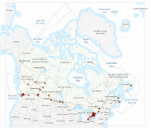
As of Nov. 24, the Government of Canada was processing 4,511 applications for privately sponsored Syrian refugees (not including Quebec, which has its own procedure). The map shows communities where private sponsors have submitted an application. (image from cic.gc.ca/english/refugees/welcome)

Vancouver’s Jewish community is mobilizing to welcome refugees from Syria. The federal government has announced that 25,000 Syrian refugees will come to Canada before the end of February. While most of those will be government-sponsored, groups of Canadians, including many in the Jewish community, are leaping at the opportunity to be a part of the resettlement project.

The Jewish Federation of Greater Vancouver has signed a memorandum of understanding with the Anglican church to streamline the process. The federal government has a number of sponsorship agreement holders, which are established, experienced groups that are engaged in aiding refugees on an ongoing basis. To expedite the process, the Jewish community is primarily working through the partnership with the Anglican Church of Canada so that synagogues and other Jewish groups that may want to sponsor can do so efficiently.

“The Anglican diocese, rather than setting up a separate relationship with each of the synagogues, proposed that there be one memorandum of understanding with the Jewish community,” said Shelley Rivkin, Federation’s vice-president for planning, allocations and community affairs. “We will be the holder of the memorandum of understanding so the synagogues will raise the funds and issue a tax receipt. The funds will then come to us and be in a restricted account and, as those funds are distributed, they will go directly through us so that the diocese is not having to deal with multiple parties.”

Or Shalom Synagogue has already raised two-thirds of the funds necessary to sponsor three families. Natalie Grunberg, a member of the Or Shalom Syrian Refugees Initiative, said they are expecting their sponsored refugees as early as January. The group has launched a series of events, including a concert of Syrian music, to raise awareness and money for the project. The federal government estimates the cost of sponsoring a refugee family for a year to be about $30,000, but Vancouverites involved in the process are working on an assumption of about $40,000, based on housing costs here.

Or Shalom is working through existing partnerships they have built over the years. Rather than going through the Anglican church, they are working with the United Church of Canada. Grunberg acknowledged that some in the Jewish community have differences with the United Church’s stand toward Israel, but the priority was to expedite the refugee sponsorship process and they believed working through existing relationships would be most effective.

Grunberg is noticeably proud of her congregation’s efforts so far.

“We’re a very small synagogue and we’re sponsoring three families,” she said.

Through existing relationships with the Syrian community here, Or Shalom will focus their sponsorship efforts on reunifying families that already have some members in Metro Vancouver and also on members of the LGBT community.

Temple Sholom is also rallying for refugees. Almost immediately after announcing the idea during the High Holidays, the synagogue raised enough money to sponsor one family.

“We’ve now decided to sponsor a second family,” said Rabbi Dan Moskovitz.

He acknowledges that there have been some anxieties among his congregation about bringing Syrian refugees here.

“I met with every person that voiced that concern to me,” he said. “I met with them personally. We talked about it. We talked about the people that we are bringing in – they were concerned about terrorists coming across – we talked about the difference between private sponsorship, as we are doing, and what we’ve been seeing in Europe with refugees flooding across borders … that we were sponsoring families with young children, that our sponsorships were family reunification, so they would have real roots here in B.C., particularly in Vancouver. We acknowledge the fears but at the same time we also recognize that this is a crisis and that the Jewish tradition teaches us quite clearly to love the stranger. Israel is doing things for refugees on the Syrian border right now with their hospitals and we had to do our part.”

Moskovitz cites Torah as the basis for his enthusiasm.

“Thirty-six times in the Torah, in the Bible, it says to love the stranger because you were once strangers in the land,” he said. “The Jews were once refugees ourselves and this goes all the way back to the land of Egypt and the slavery of the Israelites under Pharaoh, where we were running for our lives; in that case from the famine, according to the biblical story, and the Egyptian people welcomed the Jewish people, welcomed us in and gave us food and shelter and we lived there for 435 years, according to the Bible. From that and so many other times in the Bible, the most often-repeated commandment in all of Jewish tradition is to love the stranger, to love the immigrant; love the stranger, because that was you once.”

More modern Jewish history is also a factor, he added.

“We are largely still here even though throughout our history people have tried to destroy us because at critical times in our history some people took us in,” said Moskovitz. “We like to think we did it all by ourselves and there is no doubt that there is a tremendous resiliency of the Jewish people but, at the same time, we have been the beneficiary of others sheltering us at times of mortal danger.”

Congregation Beth Israel has created a task force to look into possibly sponsoring a Kurdish Syrian refugee family. Executive director Shannon Etkin said the group will analyze the resources available within the congregation community to provide for a family beyond the minimum requirements set out by the federal government.

Other synagogues, organizations and individuals who may not have the resources to directly sponsor a refugee or family are being encouraged to support on-the-ground efforts by the Joint Distribution Committee, which is aiding refugees in Turkey and Hungary. This support is being organized by the Jewish Federation of Greater Vancouver.

“They’re doing a lot of direct aid for women and children and also doing some work with frontline responders,” Rivkin said.
Format ImagePosted on December 11, 2015December 9, 2015Author Pat JohnsonCategories LocalTags Anglican Church, Beth Israel, Dan Moskovitz, Jewish Federation of Greater Vancouver, Natalie Grunberg, Or Shalom, refugees, Shannon Etkin, Shelley Rivkin, Syria, Temple Sholom, United Church of Canada
New Chabad houses

New Chabad houses

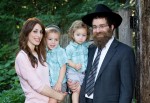
Chabad Nanaimo Rebbetzin Blumie and Rabbi Bentzion Shemtov with their children. (photo from Chabad Lubavitch BC)

All around the world, Chabad houses welcome Jews of all ages and stages to participate in a variety of activities from social Jewish identity gatherings to serious Torah study. According to chabad.org, “4,000 full-time Chabad emissary families direct more than 3,300 institutions.” Traveling in China and yearning for a Shabbat dinner? Nine cities have Chabad houses. Thailand has four, Sweden has three and even Armenia has a chief rabbi in the capital city, Yerevan.

This fall, two new areas locally are being served by Chabad because the organization saw a need. In early September, just in time for the High Holy Days, Rabbi Mendel Mochkin, his wife Miki and their three young children arrived in West Vancouver to begin their outreach work on the North Shore, as well as in Squamish and Whistler. The rabbi had spent time in Vancouver in 2008 and again in 2011 so, when he was asked to return by Rabbi Yitzchak Wineberg, executive director of Chabad Lubavitch BC, Mochkin jumped at the chance to start his own Chabad House in British Columbia.

photo - Chabad of North Shore Rabbi Mendel and Rebbetzin Miki Mochkin
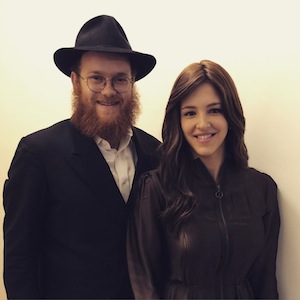
Chabad of North Shore Rabbi Mendel and Rebbetzin Miki Mochkin. (photo from Chabad Lubavitch BC)

“I love it here. I feel very privileged to have moved here and to raise my family here,” said Mochkin about his new home. “I love every day, meeting new people, starting new programs.” He said his wife is also working hard to start programming for women. Miki Mochkin hosts, for example, Chabad’s Loaves for Love, which is a women’s circle; participants meet in her home and make challah as a group. The couple also hosts people every week for Shabbat meals, which is not an easy task, considering their own children are ages 3, 2 and 1.

The programming is not only out of their home. With a wide geographical area spanning the Sea-to-Sky corridor, Rabbi Mochkin said they have big plans for the winter. On the North Shore, they had a menorah lighting and festive food at Lonsdale Quay on Dec. 9 and they have a weekend planned at the Pan Pacific hotel in Whistler Dec. 11-12 to celebrate Chanukah, as well.

Even more freshly arrived in the province is Rabbi Bentzion (Bentzi) Shemtov and his wife, Blumie. They and their 3-and-a-half- and 2-year-old children are still adjusting to life in Nanaimo. They arrived in Victoria on Oct. 20, where they stayed briefly with her brother, Rabbi Meir Kaplan, who is the Chabad rabbi in that city. On Nov. 10, they moved fully into their house and they hosted their first Shabbat meal with guests just over a week later. Shemtov spoke with the Jewish Independent as he was driving to meet Nanaimo’s mayor to confirm plans for a Chanukah party at city hall along with a menorah lighting scheduled for Dec. 8.

“In the past, my brother-in-law has driven up to Nanaimo to light the menorah. He was there for half an hour and then he’d take it down and move on. This year, it will be a real Chanukah party, with hot latkes inside city hall,” said Shemtov.

Although he’s been in town just a few weeks, he has already met quite a few people who are Jewish.

“Every time I walk into a grocery store, someone new approaches me and tells me that they’re also Jewish and that there are no other Jews in Nanaimo,” Shemtov said. He estimated that, in the central Vancouver Island area, which is his new turf and includes Parksville and Qualicum Beach, there are between 1,000 and 1,500 Jewish residents. There are Jews but no Jewish community.

As they plan programs in Nanaimo and the surrounding area, the Shemtovs will serve as the only full-time, functioning Jewish presence. “We were worried that, at first, there wouldn’t be enough to do but the response has been so amazing, far beyond what we had imagined,” said the rabbi. “There is a need and a thirst for a Jewish connection.”

As did Miki Mochkin, Blumie Shemtov started a Jewish women’s circle in her home. The first session, called The Miracle of Oil, was on Dec. 1 and it was filled to over-capacity. Her husband explained that his wife had “bought supplies for 15 to be safe but she had over 20 women register.”

While neither new Chabad family know each other, they have a great deal in common. All four adults grew up in homes that were Chabad houses. They also all have siblings who are running Chabad houses around the world. Once married, members of Chabad are eligible to go out and fill a need for a Jewish presence. The Mochkins have siblings in places as far apart as St. Petersburg, San Francisco and St. Denis, just north of Paris, the neighborhood from which the recent Paris attacks were organized. For the Shemtovs, there are siblings in Pu Dung, China, and, notably, Malmo, Sweden. “My brother-in-law just received the unfortunate title of most persecuted Jew,” explained Bentzi Shemtov. “He lives in Malmo, Sweden, and he has reported over 600 hate crimes against him, but there are Jews who need him there so he stays.”

For more information on either North Shore or Nanaimo Chabad, visit their websites: chabadnorthshore.com and jewishnanaimo.com, respectively.

Michelle Dodek is a freelance writer living in Vancouver.


Format ImagePosted on December 11, 2015December 9, 2015Author Michelle DodekCategories LocalTags Chabad, Mochkin, Shemtov
Going from brokenness to wholeness

Going from brokenness to wholeness

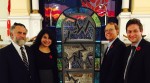
From left to right, Julius Maslovat, Carmel Tanaka, MP Murray Rankin and MLA Rob Fleming at the Victoria Holocaust Remembrance and Education Society’s annual Kristallnacht Commemoration on Nov 9. (photo from Victoria Hillel)

The following remarks have been slightly modified from the original welcoming and closing addresses given at the Victoria Holocaust Remembrance and Education Society’s annual Kristallnacht Commemoration, which took place at Congregation Emanu-El on Nov 9.

Shalom and welcome. Thank you all for coming to share in this evening of remembrance and resiliency. It is a dark Monday night in November, but you have chosen to be here. That is a statement in itself, and we thank you for taking part in tonight’s program.

We are remembering Nov. 9, 1938, a tragic night of destruction that carried on into the next day and was a portent of things to come. Remembering events such as these, as painful as they are, is vital. We don’t need to dwell on them so much as we need to draw on them for the lessons they can offer us.

Rabbi Harry Brechner of Congregation Emanu-El reminded me recently that one of our congregants, Steffi Porzecanski, may her memory be forever blessed, was a witness to the Night of Broken Glass. She lived in Berlin at the time. She would talk about how you couldn’t walk on the streets afterwards without feeling and hearing pieces of glass crunching under your feet. By the end of the destruction, some 1,000 synagogues had been burned, windows smashed, Jewish property damaged, ritual objects and cemeteries desecrated and some 30,000 Jews sent to concentration camps.

Sometimes, words are not sufficient in the face of epic horrors. Rabbi Leo Baeck, who also lived in Germany during this period, and who was eventually sent to Theresienstadt concentration camp in 1942 but did ultimately survive, wrote a prayer some years before for Jews to read at Yom Kippur. This prayer was eventually banned by the Nazis. Near the end of the prayer, he says: “We are filled with sorrow and pain. In silence, will we give expression to all that which is in our hearts in moments of silence before our G-d. This silent worship will be more emphatic than any words could be.”

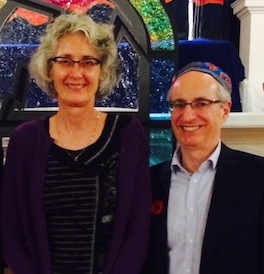
photo - Elisheva Gray, left, and Micha Menczer
Elisheva Gray, left, and Micha Menczer. (photo from Victoria Hillel)

This is where we would like to begin tonight – allowing the silence to speak. I ask you to join me in just looking around our sanctuary and at our windows. All of the colors and nuances of our magnificently crafted windows can’t be fully appreciated at night, but they are, nevertheless, beautiful windows. At our early morning service on Thursdays, those of us who come are often treated to an extraordinary light show, as the soft, morning light gently begins touching on the blue glass.

We have all experienced the sound of breaking glass. Can we even begin to imagine the quiet and tranquility being shattered by the sound of window glass suddenly crashing to the ground and breaking into a thousand pieces, as happened in synagogues throughout Germany and Austria, beginning on that November night in 1938. The only reason? Because we were Jews. How would we feel if we witnessed that happening here, in our sanctuary, in our community, to these very windows?

As a symbol of our desire to work together in unity, to respect one another’s differences and to strive for a community that has tolerance and respect at its centre we will rebuild a window together tonight, a window resembling one of our very own windows.

While we are blessed to live somewhere where we haven’t had to witness an event like Kristallnacht, we also must be realistic of the need to remain vigilant and caring for one another in a world where such events have taken place and could, potentially, take place again. The more fractured and fragmented our world becomes, the more vital it is for us to come together, to put our differences aside and see each other on that most human level, stripped of labels and roles and categories. We may all pick our fruit from different trees, but we all share the same garden.

Tonight, as we commemorate the tragic events of that fateful November night and all that followed in its wake, we also recognize the strength and resilience of our people, the courage of the survivors, and we look towards the future with hope for a world where no group is targeted for attack, as the Jews were on the Night of Broken Glass and in the years that followed.

We are truly honored to have Holocaust survivors with us tonight, as well second- and third-generation descendants, representatives of political leadership, law enforcement agencies, faith groups and persons targeted for their sexual orientation, religious or political beliefs, participating in this symbolic reconstruction and in our candlelighting ceremony.

Our candlelighters will light seven candles. Six of them represent the six million lives lost in the Shoah. The seventh candle represents the many other persecuted victims of the Shoah. It is also our candle of hope.

Closing remarks

I’d like to thank our wonderful planning committee, our readers, volunteers and musicians for their hard work and dedication. Thank you, as well, to Rabbi Harry for his help and for his words. We are, again, especially honored and deeply grateful to our survivors, descendants of survivors and everyone who helped us with our candlelighting and our window building, especially Julius Maslovat (child Holocaust survivor), the b’nai mitzvah children from Congregation Emanu-El, local grandchildren of Holocaust survivors, MP Murray Rankin, Rabbi Harry of Congregation Emanu-El, Very Rev. Ansley Tucker, Constable Rae Robirtis from Victoria Police Department and Carmel Tanaka (Victoria Hillel director, granddaughter of Holocaust survivors and interned Japanese-Canadians).

The many problems out there in the world sometimes seem too big and too overwhelming for us to solve. Rebuilding our window here tonight may seem small in comparison to the challenges that face us in the wider world. But tonight, as we gathered to remember a difficult chapter from our past, it is our hope that, together, we injected a little more shalom into the world.

In Hebrew, every word has a three-letter root from which other words are formed. From the same root for the word shalom, peace, comes the word shalem, whole, and shlemut, wholeness. Each time we inject more shalom into the world, we are, in essence, diminishing brokenness and creating more wholeness. A little shalom goes a long, long way.

Our window may be fragile, but it is full of possibility. The cracks are a necessary reminder of our vulnerability. They are the scars that must be there, reminding us of our past, reminding us of the Night of Broken Glass.

A window allows us to look in – in this case, looking into the past, back to Nov. 9, 1938. And a window allows us to look out. What is that world that we, as individuals and as a community, want to see when we look out? A window also shows us our reflection. Who do we see looking back at us? Who do we want to see?

Elisheva Gray is a member of the Victoria Holocaust Remembrance and Education Society and is on the planning committee for the Kristallnacht Commemoration in Victoria.

Format ImagePosted on December 11, 2015December 9, 2015Author Elisheva GrayCategories LocalTags Emanu-El, Hillel, Holocaust, Kristallnacht
New chef at Weinberg

New chef at Weinberg

Shane McNeil, formerly of Bridges Restaurant, is the new executive chef at Weinberg Residence. (photo from Weinberg Residence)

For the Weinberg Residence’s recently hired executive chef Shane McNeil, formerly of Bridges Restaurant, his new job is about more than just cooking great-tasting kosher food.

“What I love about cooking is that it puts a smile on people’s faces, which gives me a lot of satisfaction. My philosophy on cooking is simple: use the freshest ingredients possible, local when available, and let the ingredients speak for themselves. I tend to use a nice light seasoning or sauce, so the quality of the ingredients really stands out,” explained McNeil, who began at the Jewish seniors home in September 2015. “I also like to check in with the residents pretty much every day. Getting that regular feedback from them is really important, as it helps me become a better chef and gives me the pleasure of knowing that I’m a bright spot in their day.”

McNeil’s lifelong passion for cooking began as a young man in Toronto, where he attended George Brown College’s Chef School, which counts several internationally recognized chefs among its graduates. He then relocated to Vancouver, where he excelled under the tutelage of local talents, chefs Scott Kidd and Chef Dino Gazzola of Raincity Grill and Bridges Restaurant.

photo - Shane McNeil’s incorporation of classic French culinary techniques with contemporary flair showcases the fresh, local and seasonal ingredients of the West Coast
Shane McNeil’s incorporation of classic French culinary techniques with contemporary flair showcases the fresh, local and seasonal ingredients of the West Coast. (photo from Weinberg Residence)

McNeil’s culinary acumen has already begun to have a considerable impact at the Weinberg Residence. His roasted sablefish with orange-ginger glaze and green-beans almondine, his Italian beef stew with garlic mashed potatoes and roasted corn and his sockeye salmon farfale with ratatouille are all garnering praise. His incorporation of classic French culinary techniques with contemporary flair showcases the fresh, local and seasonal ingredients of the West Coast.

“The food is absolutely delicious. He’s an excellent chef who’s open to suggestions. He made a polenta lasagna the other night that was absolutely wonderful and he makes the best cheese sandwiches I’ve ever tasted!” said resident Sheila Cantor.

The residence executive is also pleased. “We are extremely grateful and very excited to have such an exceptional chef on our team and we look forward to this exciting enhancement to our hospitality offering,” said Vanessa Trester, gerontologist and leader of the Weinberg.

To share the good news with the community about the new dishes being served at the Weinberg Residence, if you, your spouse or family member is considering assisted living or multi-level care, the Weinberg is currently offering a complimentary lunch when you book a tour. To make a reservation, call Trester at 604-267-4722.

Format ImagePosted on December 11, 2015December 9, 2015Author Weinberg ResidenceCategories LocalTags seniors, Shane McNeil, Vanessa Trester, Weinberg Residence
Fighting for a recovery

Fighting for a recovery

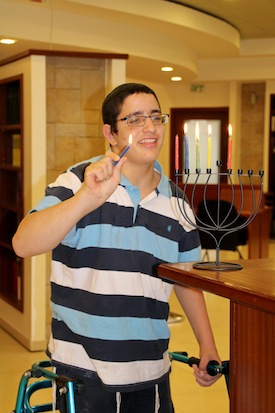
Classmates congratulate Oz Attal, second from the left, after he completed Alyn Hospital’s Wheels of Love bike-a-thon. (photo from Canadian Friends of BTJ)

This Chanukah, Boys Town Jerusalem is celebrating its own miracle. Student Oz Attal is taking an active role in the school-wide celebrations. Just over three years ago, the then-12-year-old boy was hit by a bus as he was coming home from day camp. With severe head and internal injuries, he was in a coma for six weeks. The moment he regained consciousness, he began an intense, painstaking struggle to regain his function and independence. Today, pushing a walker, 16-year-old Oz (Hebrew for “strength”) has rejoined his class at Boys Town.

photo - Oz Attal participated in the school’s Chanukah celebrations this year
Oz Attal participated in the school’s Chanukah celebrations this year. (photo from Canadian Friends of BTJ)

“There wasn’t a day that Boys Town wasn’t there for Oz,” recalled his mother, Yael. “Rabbi Meir Linchner, dean of students, and principal Rabbi Elimelech Yaakov were at our side in the hospital almost immediately after the accident. Once Oz was conscious, the school sent a steady flow of classmates to visit him regularly. Even when Oz entered the Alyn Pediatric Rehabilitation Centre for what would become nearly a three-year stay, several teachers voluntarily came each week to tutor him. Although he could barely communicate, Oz clearly felt strong and loved.”

Watching Oz dart through Boys Town’s halls – and stairs – his mother noted that, two years ago, the doctors declared that her son would never walk again. Although Oz needs a walker for support, he cuts himself no slack when heading indoors or outdoors with his class. “Yet, with traumatic brain injury (TBI), no one can know the extent of the permanent injury,” she said. “For now, Oz’s left side is weak, and his hand shakes. Sadly, he has no long-term memory and no control over what he may say, yet he understands the academic material quite well. Most crucial, he has iron motivation.”

Last year, Oz began coming to Boys Town several hours, one day a week, accompanied by his mother. At the start of the school year, Linchner informed her that, for the four days that Oz is not in treatment at Alyn Hospital, he can return to his 11th-grade class, where Linchner himself is the main instructor. The classroom was then moved to a lower floor. “At first, I stayed at Oz’s side in class and also helped him manoeuvre his way through the halls between classes,” she explained. “Very soon, Rabbi Linchner informed me that BTJ had made arrangements for a ‘shadow’ to accompany Oz for the year and relieve me.” (At home, Oz’s seven siblings await her.)

Tears filled Oz’s eyes when he first took his seat in class, Linchner recalled. “His 36 classmates received him with love and extreme patience. They are now learning an invaluable lesson in how to give of themselves.”

Recently, the entire class joined Oz in a moment of triumph when he pedaled to the finish line of Alyn Hospital’s Wheels of Love bike-a-thon. Waving signs that said, “Oz the King!” his classmates and teachers heartily cheered for him.

“Oz has been blessed with an extraordinary family and a fierce will to live,” Linchner said. “For us, his teachers and classmates, it’s an honor to be a part of the miracle of Oz’s life.”

Format ImagePosted on December 11, 2015December 9, 2015Author Canadian Friends of BTJCategories IsraelTags Boys Town, Jerusalem, Oz Attal
סערת דונלד טראמפ

סערת דונלד טראמפ

דבריו החמורים של המועמד הרפובליקני לנשיאות בארה”ב, דונלד טראמפ, בגנות המוסלמים, מעוררת תגובות נזעמות גם בקנדה. (צילום: Gage Skidmore via wikimedia.org)

סערת דונלד טראמפ מגיעה גם לקנדה: פוליטיקאים קוראים להחרימו וחברי מועצות בערים קוראים להסיר את שמו מהמגדלים

דבריו החמורים של המועמד הרפובליקני לנשיאות בארה”ב, דונלד טראמפ, בגנות המוסלמים, מעוררת תגובות נזעמות גם בקנדה. טראמפ אמר השבוע במסגרת קמפיין הבחירות שלו שיש לאסור על המוסלמים להיכנס לארה”ב, בין אם כמהגרים או כתיירים. טראמפ מוביל עדיין בסקרים מול שאר המועמדים של המפלגה הרפובליקנית, אך הביקורת נגדו במפלגה ומחוצה לה, בארה”ב ומחוצה לה, רק הולכת וגדלה. טראמפ באימרותיו השנויות במחלוקת והפרובוקציות שלו נמצא במסלול הנכון להפוך לאחד האישים השנואים בעולם.

שר החוץ של קנדה, סטפן דיון, אמר בנוגע לטראמפ: “מעולם לא קרה בקנדה מה ששמענו כעת בארה”ב מטראמפ. אנחנו לא יכולים לקבל דבר כזה. אף מפלגה בקנדה לא תתקרב לדברים כאלה. אזרחי קנדה יתנגדו לנצח לאמירות שכוללות שנאת זרים כזו”. ראש ממשלת קנדה, ג’סטין טרודו, סירב להגיב ישירות על דברי טראמפ בטענה כי כל אחד בתפקידו אסור לו להגיב בנושאי פוליטיקה פנימית של מדינה אחרת, במיוחד כאשר מתנהלת בה מערכת בחירות. עם זאת טרודו ציין והוסיף כי: “אזרחי קנדה יודעים היטב היכן הוא עומד בנוגע לנושאים כאלה”.

מנהיגת האופוזיצה הזמנית מטעם מפלגת השמרנים, רונה אמברוז, דחתה את דבריו של טראמפ וטענה שהם מגוחחים. לדבריה: “זה בידי תושבי ארה”ב לבחור מי יהיה המנהיג הבא שלהם, אבל אני בטוחה שרבים ואפילו במפלגתו, חושבים שהתגובות שלו הן מגוחחות”. ואילו מנהיג המפלגה הדמוקרטית החדשה, טום מולקייר, טוען שהגיע הזמן לאסור על אנשים כמו טראמפ שמפזרים דברי שינאה, להיכנס לקנדה”.

במקביל חברי מועצה בעיריית טורונטו וונקובר גם הם יוצאים בחריפות נגד דברי טראמפ. מספר חברי מועצת העיר טורונטו דורשים להחליף השם “טראמפ” של מגדל המלון דירות בדאון טאון, בשם אחר. מגדל טראמפ בטורונטו פועל מאז ראשית 2012. גם חברים במועצת עיריית ונקובר דורשים אף הם להחליף את השם “טראמפ” של מגדל המלון דירות ברחוב ג’ורג’יה בדאון טאון, בשם אחר. מגדל טראמפ בוונקובר שבנייתו הולכת ונשלמת בימים אלה, יפתח בראשית שנה הבאה.

טראמפ מתכוון לבקר בישראל לקראת סוף השנה. במסגרת הביקור לפי מקורביו הוא ינסה לעלות להר הבית ואין ספק שפרובוקציה כזו מצידו, יכולה להצית את כל המזרח התיכון. ראש ממשלת ישראל, בנימין נתניהו, למרות שדחה את דבריו של טראמפ בגנות המוסלמים, כן הסכים להיפגש עימו כשיגיע לישראל.

ארגון או.אי.סי.די: ישראל וקנדה במקום טוב מבחינת נטל המיסים

ישראל וקנדה נמצאות במקומות מוכבדים מבחינת היקף נטל המיסוי בקרב שלושים וארבע המדינות, החברות בארגון או.אי.סי.די. ישראל הצטרפה לאו.אי.סי.די ב-2010 והחברות בו מחויבויות לערכי דמוקרטיה, שקיפות ודבקות בערכי כלכלת שוק ופיתוח כלכלי.

הארגון פרסם בשבוע שעבר את נתוני 2014 ונטל המיסים של חברותיו עומד על 34.2% בממוצע. המדינה עם נטל המיסוי הגבוה ביותר היא דנמרק עם 47.6%. אחריה: צרפת (45%), בלגיה (44.7%), איטליה (43.9%), פינלנד (43.7%), שבדיה (42.8%), אוסטריה (42.5%), נורבגיה (40.5%), לוקסמבורג (38.4%) והונגריה (38.4%) במקומות התשיעי והעשירי. גרמניה (36.5%) במקום השלושה עשר, בריטניה (32.9%) במקום השמונה עשר ואחריה ספרד (32.7%) במקום התשעה עשר. ישראל במקום העשרים ושלושה עם נטל מיסוי של 30.6%, ואחריה במקום העשרים וארבעה קנדה עם 30.5%. יפן (30.3%) במקום העשרים ושישה, אוסטרליה (27.5%) במקום העשרים ותשעה, אחריה במקום השלושים שוויץ (26.9%), ובמקום השלושים ואחד ארה”ב (25.4%). המדינה עם נטל המיסוי הנמוך ביותר היא מקסיקו (19.7%) במקום השלושים וארבעה.

Format ImagePosted on December 10, 2015December 10, 2015Author Roni RachmaniCategories עניין בחדשותTags Israel, Muslims, racism, Rona Ambrose, Stéphane Dion, tax, Trump, xenophobia
Stories about diversity

Stories about diversity

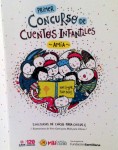
Cynthia Fidel was the coordinator of AMIA’s literary contest, which resulted in the publication Primer Concurso de Cuentos Infantiles. (photo by Rebeca Kuropatwa)

When the AMIA (Asociación Mutual Israelita Argentina) bombing occurred in Buenos Aires on July 18, 1994, there was already tension in Argentina between different religious and other groups. The bombing was a sad reminder of the need for diligence – and creativity – in mitigating hatred and fear.

After the bombing, it was very difficult for people to feel comfortable enough to return to the AMIA building, especially parents with small children. Hence, the Jewish education advisor for AMIA, Gabriela Wilensky, developed a program called AMIA for Kids. On two Sundays a month, she brought in top performers to engage children and their parents in forming fresh connections between families and AMIA.

In 2014, Wilensky came up with the first literary contest for kids that would have them explore the concepts of culture and identity. The idea was to involve the greater Buenos Aires community by partnering with 40 public and private schools, with children of all religions. Recently, the literary contest coordinator, Cynthia Fidel, moved to Winnipeg with her family.

“This contest was part of the 20-year anniversary of AMIA, which happened in 2014,” said Fidel. It was open to children from 8 to 12 years old.

When all was said and done, Fidel and Wilensky received 200 story submissions. With the help of a couple of local children’s book authors, 10 winning stories were selected to be published in a book called Primer Concurso de Cuentos Infantiles (First Contest of Fairy Tales) that was published by MILA for Kids, a division of MILA publishing house.

“They talked about different problems, ideas and questions regarding cultural diversity and identity,” said Fidel. “The first prize went to a girl who wrote about cultural diversity. It’s a collection of certain ideas and questions but, above all, it’s a collection of all the incredible imaginations of the kids.”

Now there is talk of launching a second literary contest, because of the success of the first. “They were really happy about what happened with the kids,” said Fidel.

The contest, which was open to children of all origins and faiths, has sparked dialogue between the kids. The main talking point has been respecting each other’s ideas and understanding that agreement is not needed to achieve mutual respect. Fidel loosely translated one of the first lines in the book’s preface: “Nobody is the same, nor worse or better, just different.”

Primer Concurso de Cuentos Infantiles is 84 pages long and includes the 10 winning stories, as well as an extra story written by several children together.

“Some of the stories talk about some kind of conflict situation and how they solved that situation,” said Fidel. “A recurring theme revolves around how they solved it and prevailed using dialogue.”

An excerpt from the book, as translated by Fidel, reads: “There was a society where some people had curly hair, so they thought they had the right to have more time in front of the mirror, to comb their hair. But, others who had different kinds of hair thought they deserved more time. There were others who were taller and they thought they deserved to cut their hair, while short people didn’t deserve that right.

“Until, one day, a girl wished in her heart that everybody would become equal and have the same characteristics. The wish came true and the entire world became grey – colorless and boring. She wished again to have colors and differences in her world, and everybody got their characteristics back. But, now, everyone loved their uniqueness and celebrated others’ uniqueness, too.”

Fidel is a strong believer that adults can learn a great deal from children. “From my experience,” she said, “it is amazing what you can learn from kids and their reflections if you give them the opportunity to express themselves.”

Fidel said the literary contest is a great representation of AMIA as a whole, as their main principles revolve around democracy and pluralism, and creating spaces for all through communal living and coexistence. “They promote those values,” said Fidel. “I’m very proud to have worked there.”

Rebeca Kuropatwa is a Winnipeg freelance writer.

Format ImagePosted on December 4, 2015December 3, 2015Author Rebeca KuropatwaCategories WorldTags AMIA, Argentina, children's books, coexistence, Cynthia Fidel, Gabriela Wilensky, Primer Concurso de Cuentos Infantiles, terrorism

One generation to the next


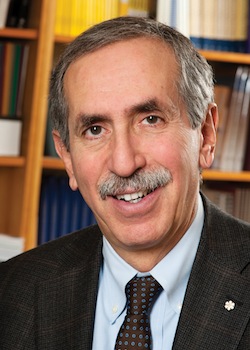
Current president and chief executive officer of the Canadian Institute for Advanced Research (CIFAR) Dr. Alan Bernstein has been a scientist all his life.

“When I was asked if I was interested in the [CIFAR] position, it was a natural evolution of my own journey through science, so I said yes immediately,” said Bernstein. “It’s a great organization and I’m having a tremendous amount of fun running it and making the kinds of changes I think are necessary to stay current and take CIFAR with the strengths when I started to the next level, which we are in the middle of doing.”

photo - Dr. Alan Bernstein was inducted into the Canadian Medical Hall of Fame earlier this year
Dr. Alan Bernstein was inducted into the Canadian Medical Hall of Fame earlier this year. (photo from Alan Bernstein)

For more than 30 years, CIFAR has been bringing some of the top researchers in Canada and around the world together to focus on worldwide challenges. It provides a space for sustained, small-scale, intimate conversations between groups of investigators that come from diverse disciplines and perspectives.

“We need to take risks,” said Bernstein. “We expect our researchers to take risks. Tough questions are always, by definition, risky.

“We’ve always been global in the sense that half our fellows come from outside Canada. We have 14 programs divided into three broad initiatives. One is a brain initiative. The second is around … the environmental and physical sciences. And, the third one is around building stronger societies. Within that, there are a number of programs. Each program typically has 20-30 fellows who meet on a regular basis and discuss issues around their particular program.”

One program concerns child and brain development. “There are about 25 people in that program and they range from pediatricians to fruit fly neurogeneticists, psychologists, epidemiologists, molecular biologists and policy people,” said the doctor.

While all of the 25 have their own particular research program, they come to CIFAR to focus on one question, which, in this case, is how do we optimize child and brain development?

Fifteen years ago, Bernstein became the first president of the Canadian Institute of Health Research, the national funding agency for health research. It was a job he had to create. Seven years later, he joined CIFAR.

During his first five years there, Bernstein also ran a lab. “My lab was in Toronto at the Mount Sinai Hospital, where I’d been the director,” he explained. “I just found that, after five years, I wasn’t being fair to the people in my lab in the sense that I just couldn’t devote the kind of time, energy and brainpower to my own scientists that they deserved … and that the science deserved. So, I made the tough decision after a year of agonizing about it, to give up my lab.”

When he closed his lab, Bernstein made sure that everybody had a job. Although the transition was quite traumatic for him at the time, he realized he was still a scientist, that he did not need to run a lab to be one.

“I still do, maybe more so than before, think very deeply about science and read much more widely now than I ever used to,” said Bernstein. “Before, I only read about health research things, but now I read about everything – from cosmology and gravity to successful societies, and childhood development.”

In April of this year, Bernstein was one of six inductees into the Canadian Medical Hall of Fame. Laureates “are individuals whose outstanding contributions to medicine and the health sciences have led to extraordinary improvements in human health. Their work may be a single meritorious contribution or a lifetime of superior accomplishments. Pioneers in their field, they are role models and inspiration to young Canadians to pursue careers in the health sciences.”

“I was deeply honored,” said Bernstein of being chosen. “It’s a high honor, indeed. I know a lot about the Hall of Fame because when I was the president of CIHR, I had to chair the selection committee.… I had a chance to go to a lot of the ceremonies.

“It’s one of those things that your colleagues bestow on you, so it was especially meaningful to me, as these are my colleagues, saying, ‘Alan, we think your contributions to Canadian medicine and health research have been at a calibre that you’re deserving to be inducted into the Canadian Medical Hall of Fame.’”

Some of Bernstein’s family was able to be at the April 23 ceremony – his wife, sister and son. “So, that was also very nice for me,” he said. “Actually, it was very nice to be in Winnipeg. The ceremony moves around from year to year and, this year, it was in Winnipeg.”

Bernstein had not been back to Winnipeg for a long time and was looking forward to seeing some familiar faces and places. And also some new ones, such as visiting the Canadian Museum for Human Rights. “That was an especially moving experience,” he said. “I’m sure it is for everybody who goes there. It’s incredible.”

For the induction ceremony, a video was made in which some of his former students were interviewed, as well as some colleagues from his time at CIHR.

“Sir John Bell, who’s a Canadian, but also the Regis Professor of Medicine at Oxford University – a very accomplished, very senior guy in the global medical scene – also said some nice words about me,” said Bernstein.

“It’s always interesting to hear what other people think about you. It was very meaningful to me that a couple of my students – a post-op in my lab and one who’d been a student with me – spoke. To hear what they had to say from their perspective about what it was like to be in my lab, that meant great deal to me.”

What Bernstein found most moving about the video was the message that it conveyed – that the most important legacy a scientist leaves behind is the training of his or her students.

“Science is never-ending, so the art of doing science has to be passed from one generation to the next,” said Bernstein. “That’s just a privilege, to be able to interact with and help introduce young people to science.”

Rebeca Kuropatwa is a Winnipeg freelance writer.

Posted on December 4, 2015December 3, 2015Author Rebeca KuropatwaCategories NationalTags advanced research, Alan Bernstein, CIFAR, Medical Hall of Fame
Researching unique species

Researching unique species

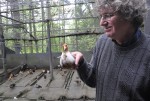
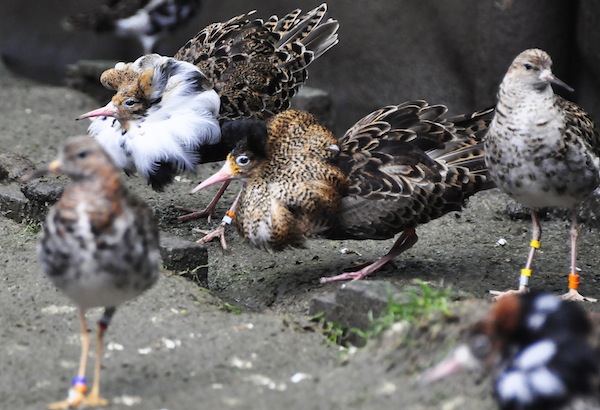
Simon Fraser University biologist Dov Lank with some of the ruffs he and his team have been studying. (all photos from SFU Communications)

photo - The ruffs Dov Lank and his team have been studyingSimon Fraser University biologist Dov Lank and a team of researchers have identified the genes responsible for three different kinds of male ruff (Philomachus pugnax) – a species of wading bird. The ruff is the only bird species in which three kinds of males exist, each having its own approach to courtship and mating and with distinct physical characteristics. One is a fighter, the second is a “wingman” and the third is a cross-dresser.

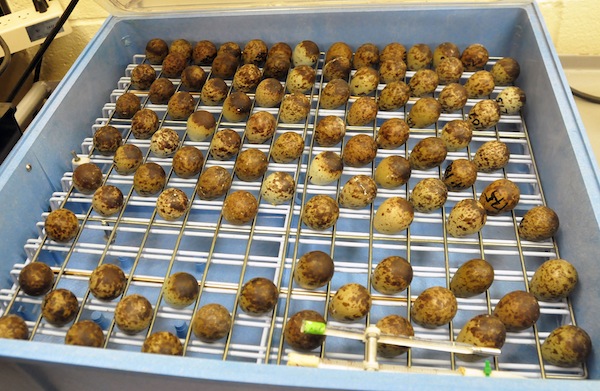
photo - ruff eggsThe paper, “A supergene determines highly divergent male reproductive morphs in the ruff” was published on Nov. 16 in Nature Genetics. Researchers found that, 3.8 million years ago, an inversion occurred in the chromosomes of the ruff, creating a second kind of male. Then, half a million years ago, a second chromosomal rearrangement between the inversion and the original sequence occurred, creating a third kind of male. As a result, there are three types of male ruffs: one with ancestral sequences, another with an older kind of the inversion and a third with a newer kind of inversion.

Lank said, “Today, we have the tools to identify exactly what genes are involved and, over the next few years, we will describe how they work. These genes control differences in aggressive behavior and the expression of gender-specific traits, and the pathways and processes involved will provide a model with general applicability for vertebrates, including ourselves.”

Format ImagePosted on December 4, 2015December 3, 2015Author SFU CommunicationsCategories LocalTags Dov Lank, Philomachus pugnax, SFU
Discovering my 99% family

Discovering my 99% family

The author’s one photograph of her great-grandmother, Betty Brotman, “stiff-necked and corseted, with her dark hair combed tightly across her head.” (photo from Shula Klinger)

I have been researching my family history for many years, on and off. Much of my research has been online, using resources like JewishGen, the internet database of Jewish genealogical records. I have also found a home at Czernowitz-L, an email group hosted by Cornell University for people whose families come from what is now the Ukrainian city of Chernivtsi. Once known as “Jerusalem on the Prut,” Czernowitz – as it is still called by those who recall its Habsburg past – was once home to 50,000 Jews. Less than a third of this number survived the war.

Like many third-generation Czernowitzers, I write messages to Czernowitz-L in the hope that someone, somewhere, will remember hearing my family name and be able to point me in the direction of a lost relative. Very often, we hear nothing, but once in a blue moon, we strike gold.

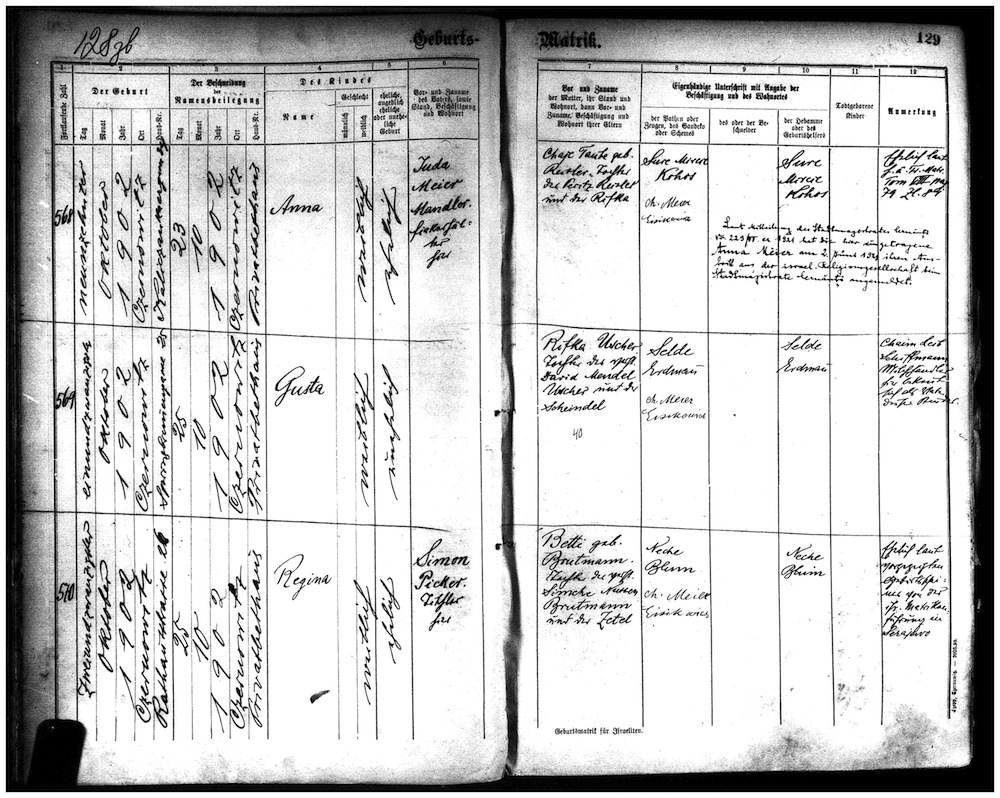
That’s what happened when I sent out an email asking list members if they knew of the family name Brotman. I had just received an image of my grandmother’s birth certificate from Czernowitz in 1902, which showed that Regina Picker’s mother, Betty, had been born a Brotman.

Shortly after I shared this information, I received an email from a lady in Portland, letting me know that she had married into the Brotman family in Oregon. She asked me if I would be interested in contacting one of her in-laws, whose mother had been a Brotman. He was very well-informed, she said. A conversation with him might yield some results. Not knowing that I lived here in Vancouver, she told me that Cyril Leonoff here. Naturally, I was thrilled and eager to talk to him as soon as I could.

Having corresponded with Cyril’s daughter, Anita, for awhile, we set a date and I drove over to meet them both. My children were very excited to find out if this man was a relative. I fielded the same question from them over and over again: “Are we 100% for sure, for sure related to him, Mommy? Or just 99%, do you think?”

On arriving at the Leonoff home, I was greeted by Anita. She showed us into the house, where a beautiful table had been set with fresh fruit and homemade poppy seed cake. Anita showed the children where to find some toy ships and I brought out my family photograph: my one photograph of my great-grandmother, Betty Brotman, stiff-necked and corseted, with her dark hair combed tightly across her head. Betty Brotman, who passed away at a young age, leaving her husband and children behind to survive the fall of the Habsburg Empire and the devastation of two world wars. But, back to the present.

Cyril asked me about the photo. I was eager to ask him a host of questions. Was I about to discover something extraordinary? Would I learn, after almost 20 years in Canada, that I had been living a few miles away from a relative, all this time? And after growing up in England, completely isolated from my extended family, was this man one of my elders? What did he know? What could he tell me? What did he remember of his people and their original home in Europe?

I watched his face as he calmly – and silently – looked at my photo. I tried to guess at what he was thinking. He suggested that we sit for tea before looking at his records upstairs. I accepted, glad of the tea, but thinking that this was a wonderful opportunity to practise mindfulness. Peace. Serenity in the face of burning curiosity and decades of longing for grandparents that I could talk to, family members who were able to tell me about their journeys, their struggles, their triumphs.

We sat quietly and poured tea while I tried not to boil over myself. We drank our tea and talked about the delicious poppy seed cake, which Anita’s daughter had made. And then Cyril asked me, “What are you looking for? What brings you here?”

His gaze was direct, his voice was polite. I told him the truth: I have no story, and I need one. My family was fractured, over and over, between Czernowitz, Cairo, Haifa and London. What little I do know of our history was told to me by an unreliable witness. A witness who had not wanted me, or anyone else, to find other, more reliable witnesses. A man who went to great lengths to separate his children from their story, or anyone that might refute his own accounts. A man who may have survived the war – and wars – physically, but who continued to fight their battles every day of his life, until he died. And, when he did die and I was finally able to say, rest in peace, it was truly the only peace he had ever had. He was traumatized, barely existing, unable to communicate or listen, to tell the whole truth or make any kind of authentic connection with another human being. My father, who I spent a lifetime trying to love, but who would never let me.

Cyril is 10 years older than my father was when he died. His intelligent gaze was steady and he listened quietly when I answered his questions. Difficult questions whose answers may well have been a lot longer than he had anticipated.

He didn’t respond directly, but we finished our tea slowly and he asked me up to his library. He said he had a book to show me. We climbed the stairs and entered a room with a high ceiling, filled with books. It reminded me of the shelves of my own family home, now gone. My father’s books.

Cyril walked over to a shelf by the window and removed a small volume of poetry. He opened it on a table and said, “I think you’ll want to see this.”

“This” was the inside cover of an old book inscribed in sepia copperplate. “Betty Brotman.”

“May I take a photograph of it?” I asked, after a few seconds, feeling a little superficial but not knowing where to put my happiness or my hands, other than on a camera.

“Yes,” said Cyril, so I did.

When the emotion had subsided and reason returned, I considered the facts: Cyril’s Betty may not be my great-grandmother, but still: there have been not one but three women named Betty in my family and the first was Betty Brotman. It isn’t impossible that his Brotmans were cousins to mine. It’s tenuous but, still, it’s a trace. A faint trace that proves we exist. That we left our mark on the world somewhere. That I am still connected to my people, even with my father’s concerted efforts to keep us all apart.

Cyril brought me to another room, where he kept his family records. He laid out a map showing where his family had come from. Indeed, our families were from nearby cities, again suggesting a possible link. He showed me his work on the history of Jewish farmers in Canada, where his branch of the Brotman family had homesteaded in 1889, and gave me some of his books to read. I thought about taking notes but was too moved to multitask. Simply sitting down with a man who might be a member of my family, who cared so deeply about his roots and was so proud of his family’s achievements, was overwhelming. He had done his own research and he had written it down – he had not hidden from it, or excised the story from memory. He is devoted to talking about and preserving it, just as I am.

And not only that, he wanted to talk to me, and he wanted to listen. To find out what I knew that might prove to be an irrefutable link between our families. He was curious; wanted names, dates, places.

“How old are you?” he asked me.

“Forty-four,” I replied, and cringed, feeling self-conscious. There was a pause.

“That old, eh?” he said, sounding shocked. Then he smiled – with his bright blue, 90-year-old eyes.

We looked around the room at framed photos and other artifacts of his family’s past. His record was abundant, both in photographs and documents. He pointed out a carved wooden picture frame that had been made by one of his relatives. I told him that my great-grandfather and my uncle were both carvers, that our family had worked in the lumber industry in Czernowitz. That our family had worked with trees for generations, in one way or another – whether as lumber, through sculpture or carpentry, or tree-planting in Israel in the 1940s. Another connection. Maybe.

image - The author’s grandmother’s birth certificate from Czernowitz in 1902, which shows that Regina Picker’s mother, Betty (“Betti”), had been born a Brotman (“Brutmann”). It also shows that Regina’s father, Betty’s husband, Simon Picker, was a carpenter
The author’s grandmother’s birth certificate from Czernowitz in 1902, which shows that Regina Picker’s mother, Betty (“Betti”), had been born a Brotman (“Brutmann”). It also shows that Regina’s father, Betty’s husband, Simon Picker, was a carpenter. (image from Shula Klinger)

When it was time to go, my older son asked me again. “Is he a relation? Is he ours?” I told him, “Very possibly.” And, again, he wanted to know the percentage probability. “Ninety-nine percent, then,” Benjamin decided.

It was hard to leave. After so many years, I wanted to stay until I dealt with that niggling one percent of doubt. I wanted to be sure. I had to know.

I don’t know how much of Cyril’s story is really my story, which he has taken such pains to write down. I don’t know if his Betty knew my Betty, if they were cousins, second cousins, or even more remotely related than that – or not at all. And I may never find out.

But, then again, even if we are just an appendix to his main narrative, I had a chance to read between the lines. To meet the Leonoffs, to eat with them and to ask questions about our fractured family stories. Because what matters is that we tried to knit those fractures together, to heal the tremendous wounds created by the past and the efforts made by those who refused – or were unable – to heal them on their own.

Months later, my children still talk about “our 99% relative.” They are proud to have an elder in Vancouver and they mention Cyril regularly. I love to hear them talk about him with affection and respect.

When it comes to family, I have discovered that 8- and 4-year-olds aren’t too worried about evidence. They really don’t care about that missing one percent. And now, as my children are also my teachers, neither do I.

Shula Klinger is an author, illustrator and journalist living in North Vancouver. This article is written with grateful thanks to Anita and Cyril Leonoff.

Format ImagePosted on December 4, 2015December 3, 2015Author Shula KlingerCategories LocalTags Brotman, Cyril Leonoff, Czernowitz, genealogy

Posts pagination

Previous page Page 1 … Page 270 Page 271 Page 272 … Page 323 Next page
Proudly powered by WordPress