שדההתעופהאוטווהובהבינלאומי. (צילום: P199 via Wikimedia)
המשטרה הפדרלית הקנדית (האר.סי.אם.פי) ושירות המודיעין הביטחוני הקנדי (סי.אס.איי.אס) פתחו בחקירה מואצת לגלות את זהות הגורם שריגל ועקב אחרי מכשירי טלפון ניידים, בבירה אוטווה ובשדה התעופה הבינלאומי ‘טרודו’ של מונטריאול. כך הודיע בשבוע שעבר השר לבטחון הציבור, רלף גודל. זאת, לאור תחקיר ראשון מסוגו בקנדה שנעשה על ידי רשת השידור הציבורית הקנדית – הסי.בי.סי, לפיו התנהלו מעקבים באמצעות מכשירי איי.אם.אס.איי קאטצ’ס אחרי טלפונים ניידים בדאון טאון של אוטווה, באזור בו ממוקמים משרדו של ראש הממשלה, ג’סטין טרודו, בית הפרלמנט הקנדי, המפקדה לביטחון לאומי, שגרירות ארצות הברית, שגרירות ישראל ואולפני הסי.בי.סי. בנוסף לפי הסי.בי.סי התנהלו מעקבים גם בשדה התעופה של מונטריאול.
צוות של ה.סי.בי.סי החזיק בידו מכשירים מיוחדים שבדקו במשך החודשים דצמבר וינואר שאכן נעשה שימוש במכשיר האיי.אם.אס.איי במשך למעלה מחודש, כדי לעקוב אחרי מכשירי סלולר ניידים, בהתאם למידע מוקדם שהרשת הציבורית קיבלה. כן התברר לצוות כאמור שהתנהל מעקב אחרי טלפונים ניידים באוטווה ובמונטריאול. גודל אמר בצורה חד-משמעית כי שום סוכנות ביטחון קנדית בהן האר.סי.אם.פי והסי.אס.איי.אס, לא ריגלה ועקבה אחרי מכשירים ניידים באוטווה. לדבריו בימים אלה מתנהלת חקירה לגלות מי אכן כן עשה זאת.
לדעת מומחים בתחום שלושה גורמים מסוגלים להחזיק בידיהם מכשירי איי.אם.אסי.איי ולעקוב אחרי מכשירים ניידים: גורמי ביטחון וריגול קנדיים, גורמי ביון זרים כמו של הרוסים, הסינים או הישראלים, או ארגוני פשע גדולים. לפי הנתונים שאסף הסי.בי.סי ושנמסרו למומחים כנראה שגורמי ביון זרים הם אלה שעקבו אחר פעילות של הטלפונים הניידים באוטווה. לדבריהם ידוע כי הרוסים כבר עשו שימוש בעבר במכשירי האיי.אם.אס.איי לרגל ולעקוב אחרי מכשירים ניידים בקנדה. יצויין כי השגרירויות באוטווה של סין, רוסיה, ארה”ב וישראל סירבו לחלוטין להגיב בפרשה.
מנושא לנושא ובאותו נושא: משטרת האר.סי.אם.פי הודתה בשבוע שעבר לראשונה כי במקרים מסויימים היא משתמשת בטכנולוגיה של מכשירי האיי.אם.אסי.איי, לעקוב אחר מכשירי טלפון ניידים וזאת בחקירות בנושאים פליליים ובטחוניים. השימוש במכשירים נעשה לזהות חשודים. לאר.סי.אם.פי יש כיום עשרה מכשירים מיוחדים לעקוב אחרי טלפונים ניידים, והם עשו שימוש בהם בארבעים ושלוש חקירות בשנתיים האחרונות (2014-2015). במשטרה הפדרלית הוסיפו עוד כי מכשירי האיי.אם.אס.איי שלהם מאפשרים לקלוט רק את מספרי טלפונים של המכשירים ניידים ולא את תוכנם. המומחים מציינים כי מכשירי מעקב איי.אם.אס.איי משוכללים יותר יכולים לכלול גם מידע על שיחות הטלפון, הודעות טקסט וכל תוכן אחר שמועבר באמצעות המכשירים הניידים. יש להוסיף עוד כי סוכנויות משטרה נוספות בקנדה מחזיקות גם הן במכשירי איי.אם.אס.איי לצורך מעקבים אחרי טלפונים ניידים בחקירות שונות.
ועוד בנושא ביטחון: הממשלה הפדרלית הקנדית מחפשת דרכים לשכנע את המגזר הפרטי להשקיע משאבים בשיפור הביטחון ברשת והגנה בפני מתקפות סייבר, שכל כך נפוצות לאחרונה. לאור זאת הממשלה הקנדית משתפת פעולה עם ממשלת ישראל בנושא. בחודשים האחרונים נערכו פגישות בין גורמים בכירים ביותר מקנדה ומישראל בסוגיה, תוך כוונה לקבל עזרה ישראלית בשיפור מערכי הבטחון ברשת. בממשלה הקנדית מודעים לעובדה שעל קנדה לעשות עוד כברת דרך ארוכה כדי לשפר את אמצעי הבטחון להגנה בפני מתפקות הסייבר, ויודעים היטב שישראל נחשבת למובילה עולמית בתחום. החודש פורסם דו”ח קנדי בנושא עם המלצות למגזר הפרטי כיצד לשפר את מערכי הבטחון ברשת. עם זאת בתקציב השנתי החדש של ממשלת הליברלים של טרודו לא הוזכר כלל תקצוב נושא הביטחון ברשת.
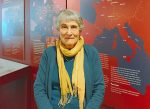
Claude Romney will give the keynote address on April 23. (photo from Vancouver Holocaust Education Centre)
Jacques Lewin, a Jewish physician in Paris, was arrested at the end of 1941 and was sent to Auschwitz on the very first convoy from Western Europe to that notorious death camp. His profession almost certainly saved his life, as he performed a role that the Nazis deemed useful: that of a prisoner-doctor.
Lewin’s daughter, Claude Romney, has studied the Holocaust experiences of prisoner-doctors like her father and has a forthcoming book on the subject. She will share her family’s story, and illustrate aspects of the experience of prisoner-doctors, as the keynote speaker at this year’s Yom Hashoah Holocaust Commemorative Evening, which takes place April 23, 7 p.m., at the Jewish Community Centre of Greater Vancouver.
Lewin’s arrest took place two weeks after Romney’s third birthday. She and her mother, Saya, survived the war in Bagnères-de-Bigorre, a small town near the Spanish border that was occupied by the Germans less than three months after they arrived.
Romney’s presentation will begin with some context about the state of French Jewry in the early part of the war, something she said is not as well known as it could be. She will share a bit about her and her mother’s experiences during the war, then turn attention to her father’s story.
That story is something that Romney has pieced together mostly after her father’s death in 1968. “I remember when he died, thinking that so much had remained untold,” Romney said. “He never talked about it.”
Years after her father passed away, Romney’s mother gave her a file containing documents from her father’s past, including a few articles he had written immediately after he returned to France after the war. These had been published in a newsletter distributed by the French resistance and never reached a wide audience.
Romney has obtained the transcript of the testimony her father gave at the 1947 trial of the Auschwitz commandant Rudolf Höss, but it is not comprehensive.
“The transcript of his testimony looks as though he was so frustrated that he wasn’t given more time to talk about it,” said Romney. “I don’t know if it was 10 minutes or what, but it looks as if he was really frustrated because at one point he enumerates a number of atrocities that he saw and he said, ‘it could take me days and days to tell you about them.’ I think that’s why he never wrote any more. I don’t know whether he was approached to testify anywhere else, but he never did.”
However, other prisoner-doctors did write and testify. Romney’s forthcoming book, Saving Lives in Auschwitz: The Written Testimonies of Prisoner-Doctors, is based on the experiences of 60 individuals who survived and told what they witnessed.
When Lewin first arrived at Auschwitz, he and the others in his transport were put to work constructing a new section of the camp – to be known as Birkenau.
Lewin was one of only a few from this group that survived the war, Romney said, because he was a medical doctor. The Nazis decided around the end of 1942 that they could use prisoner-doctors to treat ill and wounded inmates who were doing forced labour. Prisoner-doctors tried their best to help other inmates, but routinely confronted horrific ethical dilemmas. They were faced, Romney said, with what the Holocaust scholar Lawrence Langer called “choiceless choices.”
“If they had refused to obey orders outright, they would have sent them to the gas chambers too,” she said.
After the war, Romney studied at the Sorbonne and became a professor of French linguistics and literature, first in Toronto, then Sudbury and finally Calgary, before retiring to Vancouver. She and her husband, also an academic, thought Canada seemed an ideal place since he was English and she was French.
The annual Yom Hashoah evening is presented by the Vancouver Holocaust Education Centre (VHEC). It is supported by the Gail Feldman Heller Endowment and the Sarah Rozenberg-Warm Memorial Endowment Funds of the VHEC, and funded through the Jewish Federation of Greater Vancouver annual campaign.
In addition to Romney’s keynote address, the evening will feature cellist Eric Wilson, Yiddish singer Myrna Rabinowitz, Cantor Yaacov Orzech and the Kol Simcha Singers. Artistic producers are Wendy Bross Stuart and Ron Stuart of WRS Productions. Holocaust survivors are invited to participate in candlelighting.
Pat Johnsonis a communications and development consultant to the Vancouver Holocaust Education Centre.
George Heyman is the member of the B.C. legislative assembly for Vancouver-Fairview. (photo from George Heyman)
George Heyman is one of numerous British Columbia residents who owe their lives to the Japanese diplomat Chiune Sugihara. Though born after the Second World War, Heyman is the son of a Polish Jewish couple who were among the estimated 6,000 Jews aided in fleeing Nazi Europe by the acts of Sugihara, who was the vice-consul for the Empire of Japan in Lithuania.
“That’s a story my parents didn’t spend a lot of time telling me about, which I’ve since found out is actually very common – parents don’t tell their story,” Heyman told the Independent. “But I learned much about it in recent years and it has been well-documented with a number of exhibits telling the story in Vancouver and the United States and other parts of Canada and in Japan.”
Sugihara risked his career – and his life – issuing transit visas to Jews. An estimated 40,000 descendants of “Sugihara Jews” are alive today because of his actions.
Once they had escaped Europe, Heyman’s parents were sponsored by family in Vancouver.
“Canada was certainly not falling over to welcome Jewish refugees,” said Heyman. “But they had distant relatives who were from Austria, who had already established here before the war started, seeing the writing on the wall. They sponsored them. My dad enlisted in the reserves, worked as a machinist in a boiler factory – even though he had an engineering degree – until he could get his credentials recognized in Canada, and eventually went on to work in the profession in which he had been trained.”
Heyman was born at Vancouver General Hospital, in the riding he now represents in the B.C. legislature, Vancouver-Fairview. The New Democrat says his family’s experience – and his own experience with casual antisemitism – helped shape his approach to the world and politics.
“I think, as a young child growing up in Canada, I just wanted to be what most children wanted, which was to be accepted,” he said. “I remember the normalization of what we would now recognize as clearly antisemitic jokes or comments or generalizations or characterizations. As a young boy, I had a hard time speaking up against it. It took a lot of courage to say, ‘you can’t talk about Jews that way’ or ‘why are you using the term Jew, my religion, in that way that is clearly not a good one?’”
These experiences, Heyman said, helped him recognize injustice and learn to value other people regardless of their economic class, ethnicity or religion, “to embrace people, not categorize them or shun them.”
“As part of that, I was also learning to stand up for who I was,” he said. “Like many young Jews, I was torn between looking for my identity and wanting to fit in. It’s been a lifelong journey.”
These experiences also helped lead him to careers in the labour movement and public office. Heyman served as head of the B.C. Government and Service Employees Union, then executive director of the Sierra Club of British Columbia, before being elected to the B.C. legislature in the 2013 election.
One of the reasons he has taken the opportunity over the years to speak up about his own experiences, Heyman said, has been “to try to deepen understanding and let people know what casual and thoughtless racist comments do to people who are the recipients of them.”
Antisemitic rhetoric and threats in North America and the murder of six Muslims in a Quebec mosque have had a range of unintended consequences, he said. They have ensured that people do not take security for granted and they have caused a coming together of disparate religious and ethnic groups.
“When Muslims at prayer in a mosque in Quebec are murdered, members of the Jewish community stood with Vancouver Muslims at the mosque and expressed their own solidarity as well as horror at the actions,” he said. “And Muslims have come to the [Vancouver Jewish Community] Centre for peace circles, to express their solidarity.… What makes us strong is when we work together, understand each other, support each other, build institutions together; not when we live in isolation or fear, because then we just give encouragement to those people who thrive on creating fear and hatred because it’s the only answer they have for what’s missing in their lives. I’d rather find a positive, constructive answer to those things that are missing in people’s lives, whether it’s spirituality, faith or some measure of economic equality, and build community solidarity that way.”
Heyman said he and the rest of the NDP caucus want to see the recommendations of the Truth and Reconciliation Commission report implemented, including educational components about the history of First Nations.
“The commission talked about ensuring that there is a healthy education component in schools, right from the earliest stages, about the history, what was wrong with it, how we can grow beyond it and heal,” he said. “The same is true of the racist laws that existed in Canada that impacted Chinese, South Asian, Japanese and other immigrants, who actually did the hard labour, in many cases, of building this country that other people weren’t willing to do. The same is true of understanding the history of the Holocaust that happened in Europe, which obviously was overwhelmingly targeted to Jews, but not only. How that connects to other aspects of racism, hatred and genocide, [and to] recognize the genocides that have happened in other parts of the world, as Jewish speakers at Holocaust memorials in the legislature have consistently done.
“We need to educate young people, both about the horror of the past and what it leads to, about the impact of thoughtless words or actions that promote or embody racist thought, but also about the benefits to us all when we live and work together and appreciate each other and embrace each other.… Government has the resources and the authority to both legislate against hatred and racism, but also to animate the actions that can ultimately, if not wipe it out, shrink it to the minimum amount that we would hope.”
On the Israel-Palestinian conflict, Heyman said he supports a two-state solution and does not support the boycott, divestment and sanctions (BDS) movement.
“I’ve never chosen to personally support or even quietly implement on my own behalf a boycott of Israeli products,” he said. “I also think it’s important in this context that we distinguish between tactics that some people choose to make a political point and whether or not that tactic is synonymous with antisemitism. I think, for instance, there are antisemites who express their views through a variety of mechanisms, and I also think there are Jews and other people who are legitimately concerned about government actions and want to find a two-state solution and peace that brings an end to the conflict and brings security to both Palestinians and Israelis who may support that tactic without being antisemitic. Personally, while I support a two-state solution, I very much want to see the hatred and conflict in the Middle East solved and that means, for me, opposing terrorism as well as opposing actions that block the road to peace.”
He added: “I think it’s important for people to recognize that those who call for a just peace and a two-state solution may be calling for justice for Palestinians and justice for Jews and Israelis, and they are not incompatible.”
As voters prepare for the May 9 election, Heyman said there are plenty of topics on the agenda.
“There are issues of affordability, issues of fairness and services for communities, for people needing healthcare, for seniors, for children, for working families, issues of housing and very important issues of, how do we build a modern, diversified economy that doesn’t threaten our children and grandchildren with an unliveable future due to climate change?” he said. “We can’t put off the choices of transitioning to a supportive society, a society that takes care of seniors and kids, as well as a society and economy that employs people productively while respecting and protecting the environment – those are the choices we need to make today.”
The Jewish Independent’s provincial election coverage continues with interviews with other candidates in future issues.
The record $8.5 million generated through the Jewish Federation of Greater Vancouver annual campaign will support programs and services on which thousands of Jewish community members rely, and includes $300,000 for community security initiatives. This campaign result is unprecedented and will provide more financial resources to address community needs than ever before.
“I would like to thank everyone who made a gift to the campaign. This record $8.5 million result ensures that our partner agencies can continue to provide critical programs and services, and is already funding important community security initiatives,” said Alex Cristall, campaign chair.
Funds from the campaign support social services, Jewish education, community-building, seniors services, youth services, and arts and cultural programs in the local Jewish community. Funds also support social services and programs for at-risk youth in Federation’s partnership region in northern Israel, and help Jewish communities in need around the world.
“We have a number of challenges ahead of us as a community,” said Stephen Gaerber, board chair, “including the dual issues of affordability and accessibility, engaging young adults and young families, addressing the needs of our growing seniors population and developing programs for the nearly half of our community who now live in underserved regional communities. The record result will help Jewish Federation and our partner agencies address these challenges.”
Over the past year, Federation has become increasingly aware of and concerned about the changing security landscape, and identified community security as one of five areas of opportunity in its 2020 Strategic Priorities.
“We listened to the concerns about community security expressed by our partner agencies, our donors and community members. We responded by making community security a central focus of the campaign and developed a matching gift program funded by a group of generous donors. This helped fuel the record result and enabled us to invest strategically in an issue that is front and centre in our community,” said Cristall.
The $300,000 raised is already at work addressing security needs faced by some high-traffic local Jewish organizations, including security guards and specialized security assessments, as well as additional security for several high-profile community events.
“Jewish Federation has taken the lead on community security for years, and our proactive approach was recently commended by Chief [Constable Adam] Palmer of the Vancouver Police department,” said Gaerber. “Given the threats received recently by our JCC, the fact that we were out in front of this takes on added significance. Every donor to the campaign can be very proud of having played a role in addressing this important issue while supporting the full depth and breadth of community needs at the same time. The record $8.5 million raised is a real testament to how we all care for our community.”
Vancouver-born writer and comedian Nathan Fielder has donated more than $150,000 US to the Vancouver Holocaust Education Centre (VHEC). The funds represent the profits of the Summit Ice outdoor apparel line, founded by Fielder to raise awareness of the Holocaust and to support the education and remembrance mandate of the VHEC.
“We are honoured to be the recipient agency for Nathan Fielder’s Summit Ice initiative,” said Nina Krieger, executive director of the VHEC. “It is especially meaningful that Nathan appreciates the work our centre does to advance anti-racism education in his hometown.”
This significant contribution will help the VHEC deliver more programs to more people at a time when the centre’s work is as relevant as ever. This gift will strengthen the VHEC’s outreach programs, educational resources and exhibitions that engage students, teachers and the general public in British Columbia and beyond.
“We receive countless letters from students affirming that participating in a VHEC program, particularly when this features a Holocaust survivor speaker, is among the most meaningful and memorable experience of their school years,” said Phil Levinson, president of the VHEC board. “Nathan Fielder’s generosity will help advance the Vancouver Holocaust Education Centre’s vision of a world free of antisemitism, discrimination and genocide, with social justice and human rights for all.”
The VHEC relies on the support of members of the community to fund education and remembrance programs.
Last week, the B.C. Supreme Court rejected a petition to stop the University of British Columbia’s Alma Mater Society from holding a referendum April 3-7. The question being posed in the referendum is the same one the AMS asked of students in 2015: “Do you support your student union (AMS) in boycotting products and divesting from companies that support Israeli war crimes, illegal occupation and the oppression of Palestinians?”
The question was brought to the AMS by the UBC branch of the Solidarity for Palestinian Human Rights (SPHR), which collected the required number of signatures to have a referendum that was initially scheduled to take place in March. It was postponed when UBC third-year commerce student Logan Presch filed a petition against it. He and his legal representation secured a court order that resulted in the referendum’s delay.
Presch’s petition stated the proposed question “is divisive, creates a toxic atmosphere for students supportive of the state of Israel, and is destructive of open and respectful debate on an important issue.” It also raised safety concerns, he said, noting the 2015 referendum “drove a wedge between religious groups on campus who had previously enjoyed interfaith outreach and collaboration. Students outwardly opposed to the [referendum] encountered a hostile reaction and there were reported acts of antisemitism on campus.”
In an affidavit, Rabbi Philip Bregman, executive director of Hillel BC, recalled that, at that time, anti-BDS lawn signs at UBC were pulled down. He also cited a climate of “a lack of personal security that many Jewish students experience on campus that is exacerbated by referenda such as the proposed question. There is an important line between robust political discourse and circumstances where I am compelled to deal with the personal security of students who study and live on campus who feel threatened by the consequences of this type of proposed question, which I believe foments the antisemitism and hostility I have described…. I believe that these students’ concerns for their personal safety are justified, as acts of violence have often followed hostility to Jews.”
While not Jewish, Presch is a member of the Jewish Students Association and the historically Jewish Alpha Epsilon Pi fraternity. He declined requests to comment but, in an affidavit filed with his lawyer, Howard Mickelson, Presch recalled that the first referendum created a “toxic environment on campus.” He said the question being posed by the AMS was contrary to its mission statement, which is to “cultivate unity and goodwill among its members” and to “encourage free and open debate as well as respect for differing views.” Presch also noted that the AMS code of procedure requires referendum questions to be capable of a “yes” or “no” answer, but that this question is “so loaded with assumptions (which are themselves highly controversial), that it will not be clear what a yes or no vote by my student colleagues will actually mean.”
Mickelson said the court recognized that the question was loaded and that the intention of a “yes” vote could be unclear for the AMS to act on, but denied the petition because the court determined “the society’s bylaws do not require that a question be fair as long as it can be answered yes or no. The standard for a qualifying question is a low one.”
Mickelson said the court recognized the “concerns for student safety” and acknowledged “the responsibility of the AMS and UBC to ensure student safety and respectful debate by all means necessary.”
“Although this case involves the political hot potato issue of the Israeli-Palestinian conflict and the role of BDS on campus, we argued that this was about the interpretation of this society’s bylaws,” said Mickelson, who represented Presch’s petition pro bono. “One of the arguments made by proponents of the question was that, in the context of a referendum, one party that is ‘funded’ or has ‘connections’ may be able to shut down the question against those that may not have the same level of funding…. I thought it was important for the court to understand that I was doing this pro bono.”
Though “disappointed” about the ruling, Bregman said “we really won the battles because the judge didn’t disagree with any of our arguments. We lost because the judge felt he was bound by a very poorly written bylaw by the AMS. So, we go forward fighting this nefarious referendum aimed at marginalizing and demonizing not only Israel but, by extension, those who support Israel.”
Bregman recalled that, in the spring 2015 referendum, UBC had the largest “no” vote ever seen in Canada at that time. “We’re ready to fight the referendum,” he said, adding, “But really, what we’re all about is dialogue and this is something that the SPHR has never taken us up on. Whereas we have dialogue with all sorts of groups on campus, the SPHR has rebuffed all of our efforts.”
The referendum question was to be directed at students starting Monday, as the Jewish Independent was preparing to go to press.
Lauren Kramer, an award-winning writer and editor, lives in Richmond. To read her work online, visit laurenkramer.net. This article was originally published by CJN.
This is the third of a three-part series on Writing Lives, a two-semester project at Langara College, coordinated by instructor Dr. Rachel Mines, in which second-year students are teamed up with local Holocaust survivors to interview them and write memoirs of their experiences before, during and after the Holocaust. The course is a partnership between Langara, the Vancouver Holocaust Education Centre and the Azrieli Foundation. As part of their course work, students are keeping journals of their personal reflections on their experiences as Writing Lives participants. This week’s journal is entitled “The Importance of Memoir.” Here are some excerpts.
Our survivor has repeatedly stated that he and his peers greatly fear that, once they are gone, no one will remember what they went through. Survivors worry that, once they are no longer here as living testaments, their suffering and the people they lost will be forgotten. Our class, and other projects like it, is working to ensure that does not happen.
We must preserve the experiences of Holocaust survivors in written form so that, once they are no longer physically here, their story will be. We are not only archiving personal anecdotes, we are putting a human face on history. Facts are important for historical validity, but personal perspectives are essential in creating empathy. This program is chronicling history in such a way as to touch people and make them care about what happened to the Jewish people (and others) during the Holocaust. Empathy is one of the greatest tools in breaking down intolerance. Once we see the humanity in others, it becomes harder to hold onto prejudice and hatred.
Now, more than ever, it is vital to create this historic empathy. Prejudice and persecution are becoming ever more prevalent in our society, and it is up to us as a nation to halt such hatred. It is essential to remind the world what can happen when hatred is met with social apathy. These memoirs are a documentation of the horrors that unchecked hatred can lead to. I believe in the power of memoirs, the power of living history. I am honoured to be a part of such an important project at such a crucial time.
– Frieda Krickan
***
The first time I interviewed a Holocaust survivor, I was nervous, and rightfully so. My interview partner and I had been preparing for months before our first meeting but, nonetheless, when our interviewee arrived, I was so star-struck that I briefly lost my aptitude with the English language altogether. All I could manage to say was multiple renditions of the same sentence, thanking him again and again for his time and for agreeing to meet us.
Our interviewee, R., was gracious and didn’t miss a beat. He chimed in every time by thanking us in return just for listening and told us on multiple occasions, “I am so grateful for what you are doing. This is very important to make sure that the Holocaust never happens again.” His response surprised me but, the more I listened, the more I realized that this project meant more to him than just sharing his story; it was his personal call to tikkun olam, to repair the world the best that he can.
I learned that every Holocaust survivor’s greatest fear is not what you would expect. It is not death camps or gas chambers – instead, R. told us that their greatest fear is that no one will remember their stories when they are no longer alive to tell them. They are afraid that, with today’s ugly resurgence of antisemitism, everything they endured will be meaningless in the face of a society that cannot wait to forget. In a world that wants us to keep silent, it is every survivor’s hope that we raise our voices – that we proclaim the truth until our breath runs out. Our sacred duty is to empower the ones who can no longer empower themselves, and the key to making sure history never repeats itself is to tell their stories.
– Zoe Mandell
***
During this course, my group members and I spent a concentrated amount of time with a child survivor of the Holocaust. Time and time again, he narrowly escaped falling into the hands of the Nazi regime…. His story is inspiring, heroic, terrifying at times, and very emotional. He tells his story with such grace, in such detail, that we could clearly visualize in our minds what he had experienced.
I have heard many stories of those who survived, and the stories they tell of those they lost. I have learned what it was like for a child survivor from Paris, a teenage survivor from Amsterdam and an adult survivor from Warsaw. I have heard the stories of their mothers, fathers, brothers and sisters: how they watched their father get shot, or saw their mother walk toward her certain death, or said goodbye to a brother they knew they’d never see again. Telling their stories, writing their stories, is not only a therapeutic technique, but a preventative one. It is important for those who survived to tell as many stories as they can, not to let the memory of their loved ones perish like they did during that awful time in history. It is important to tell the story of their loved ones to keep their memory alive in as many beating hearts as possible. And it is important to tell the stories of the Holocaust, for both survivors and those who perished, to stand up and say, “We survived. We won’t forget. Never forget. And never let it happen again.”
– Marni Weinstein
***
During and after each interview my group conducted with R., he thanked us multiple times. He thanked us for taking the time to listen to his story, for writing his memoir, and even for sharing parts of our lives with him. Every time he thanked us I was taken aback: why was he thanking us for listening to him, when we were the lucky ones? We were being given the opportunity not only to listen to a Holocaust survivor speak but to write a memoir that would continue his legacy throughout time. At first, I struggled with his gratitude; I was almost uncomfortable with how genuinely thankful he was that we were spending time with him and listening to his story. Yet no matter what I said, he was grateful.
It took me quite awhile to grasp exactly why R. felt the need to continually express his gratitude. In fact, R. did not grow up in a world that accepted the events of the Holocaust as facts and wanted to learn more about it. He grew up in a world where no one wished to speak about the Holocaust and its events were contested. He did not conceal his experiences only because they were too painful to revisit, but also because no one wanted to listen.
Not only did those affected by the Holocaust lose their families, their homes, their childhoods and years of their lives, but in many cases they lost their voices. For years, the world refused to listen and, because of that, we lost many valuable stories. Memoirs are important not only because they give survivors the opportunity to share their stories, but because, on a very small level, they begin to give a voice back to the voiceless. Although we can’t bring those survivors back and prove to them there are people who care and will listen, we can make sure the survivors who are still alive do not go unheard.
Left to right: Larry Fisher (Lark Group), David Berson (Canadian Associates of Ben-Gurion University of the Negev), Daniel Blumenthal (Centre for Digital Innovation Negev), Dianne Watts (South Surrey-White Rock MP) and Rowena Rizzotti (Health and Technology District). (photo by Yvonne Chiang)
The Health and Technology District in Surrey and the Centre for Digital Innovation in Israel have formalized a number of collaborations on health-related technologies, creating an international network between partners to support health-tech innovations in Israel and across North America.
The Centre for Digital Innovation (CDI) is located in the Advanced Technology Park in Be’er Sheba, Israel, the growing “Silicon Valley” of the Middle East. CDI is a nonprofit created through the collaborative efforts of Israeli entrepreneurs and Ben-Gurion University of the Negev. CDI operates in the areas of digital healthcare, healthy aging, education and smart cities, and brings together experienced entrepreneurs, start-up companies, innovators, researchers, industry leaders, academics, the public sector and investors to generate a high return on innovation for the challenges of the 21st century, such as the cost of healthcare and chronic diseases.
“Both CDI and Surrey’s Health and Technology District [HTD] have aggressive goals to drive innovation across the health sector and Canada stands to deeply benefit from the mentorship and leadership that Israel can bring to our innovation agenda here in Canada,” said Rowena Rizzotti, vice-president of health and innovations for HTD.
The memorandum of understanding between HTD and CDI will co-create and share respective solutions to global healthcare challenges by expediting the implementation of innovations in critical healthcare improvements for both countries.
“It’s great to see that Canada and Israel have parallel visions and focus in developing high-level innovations,” said Ziv Ofek, CDI founder and chief executive officer. “We are excited about this partnership with Canada and with the Health and Technology District and we look forward to collaborating and working together to create technologies that will benefit the world in which we live.”
The partnership was finalized during a recent trade mission organized by the Conference Board of Canada, where participants studied the culture and key success factors that have led to Israel’s groundbreaking developments in innovation and commercialization.
“Israel is a hotbed of high-tech innovations and boasts world-class skills and capabilities with universities and forward-thinking organizations developing some of the world’s latest technology breakthroughs,” said Paul Preston, Conference Board of Canada. “It’s hugely beneficial for Canadians to learn from this success and assist us in developing the talent and capacity to lead a culture in innovation in Canada.”
Every year, the Centre for Israel and Jewish Affairs (CIJA) brings more than 100 Canadians to visit and learn firsthand from the “start-up nation,” and has facilitated trips in recent years for the City of Surrey, the Government of British Columbia and the Conference Board of Canada.
“This exciting partnership is a prime example of how, in bringing the best Canadian and Israeli minds together, we can achieve remarkable things for both countries,” said Jason Z. Murray, CIJA Pacific Region chair.
HTD held a celebratory reception on March 23 with CDI and special guests Dianne Watts, member of Parliament for South Surrey-White Rock, Ofek and members of CIJA.
Developed by the Lark Group, a Canadian-based company, HTD is a series of high-tech buildings located immediately adjacent to Surrey Memorial Hospital, creating an ecosystem for clinicians and health-care providers to work alongside innovators, entrepreneurs and tech companies.
In February, the Louis Brier Jewish Aged Foundation and Louis Brier Home and Hospital honoured Chaim Kornfeld. And they did so in the place he has especially dedicated his time over the last four decades: the Louis Brier synagogue.
Chaim was born in Hungary in 1926. His upbringing and education were Orthodox and, for the first part of the Second World War, his family were untouched. From the start of his education at Yiddish cheder, at age 3, he was a good student. Community life continued much as it had for centuries.
Outside the home, Chaim’s memories describe a tense separation between Jew and non-Jew. “My father always used to say, ‘When you see a Shaygetz, cross the street. Go on the other side.’”
Needless to say, young Chaim did not always do as he was told. “I took the beating instead – but I fought back, too.” He adds, “Especially at Easter time, they’d call you dirty Jew.”
It’s not hard to imagine a young Chaim’s spirited response. Even at 90, he is energetic and expressive in conversation. “I was a tough kid,” he says. His daughter Tova adds with pride, “He gave as good as he got!”
In 1944, Chaim was preparing to go to Franz Josef National Rabbinical Seminary of Hungary in Budapest. Then, not long before his 17th birthday, his family was moved to a ghetto with the other Jews of their town. Then came the trains.
Chaim, his parents and one of his sisters were sent to Auschwitz. On the journey, Chaim was permitted to fill a bucket of water for the passengers to have occasional drinks. He also took the dead out of the car.
On arriving at the concentration camp, Chaim jumped out. Greeted with ordinary scenes – “children playing, laundry drying” – Chaim’s mother figured she could work in the camp laundry.
Chaim relates how “an old man came up and asked, ‘Do you speak Yiddish?’ I said, ‘Yes, of course.’” The man pointed to a German official. “He’s going to ask you two questions. When he asks how old you are, you say you’re 18. When he asks you what you do, say you’re a farmer.”
Young Chaim approached the man with his usual confidence. Josef Mengele asked him his age and profession. Chaim answered as he’d been told. Mengele told him to go to the right. His parents were sent to the left. Before they were separated, Chaim’s father made a final request: “Bleib a Yid.” (“Remain a Jew.”) Afterwards, Chaim heard others say, “You see that smoke? That’s your parents.”
At Auschwitz, the Nazis stripped the prisoners of their belongings and identity, shaving off Chaim’s hair. He smiles ruefully. “I had lovely peyis, nice and curly.” Having only spent two weeks in Auschwitz before being transferred to Mauthausen in Austria, Chaim wasn’t at the camp long enough to get a number tattooed on his arm. He has not forgotten his number, though, and barks out “67655!” at an impressive volume, but not in English, or even Yiddish. It’s in Polish, as he heard it at Auschwitz.
Asked how he managed to maintain his sanity while facing death every day, he quotes Robert Frost: “I had promises to keep and many miles to go before I sleep.” But there’s more to it. Chaim describes how he kept his promise to his father, in spite of malnutrition and brutal treatment. “I always said, I’ll get out of here.”
He speaks with gritted teeth. “I never gave up. Even when I worked in a tunnel underground, I was mumbling a prayer. I prayed all the time to make time go faster. I knew the prayers by heart from a very young age. All kinds.”
Chaim describes a life of hard labour, misery and oppression. There were about 600 steps up the quarry. We “carried rocks on our shoulders, every day. There were dogs barking, soldiers pointing guns at us.” There was a pond at the bottom. If a prisoner fell down, he says, they would be pushed in.
Chaim found that he was the only one who remembered long tracts of the Torah. He led Kol Nidre in the camp, “all the others stood around me. I knew it by heart. I got a good education.” To lead a service in such appalling circumstances takes more than just education, however. It speaks to a capacity for leadership and clarity in a situation that is baffling in its cruelty.
When the prisoners were forced on a death march, Chaim was recuperating from an abscessed ankle. Although barely able to stand, he followed the advice of a fellow prisoner, who told him that if he didn’t leave the camp upright, he’d never leave at all. Limping in extreme pain, Chaim made it out but collapsed afterwards. When an SS officer raised his gun to shoot him, Chaim spoke up with his characteristic blend of optimism and boldness. Having been reminded of what a good worker this young Jew was, the officer permitted Chaim to hitch a ride on a passing wagon.
Until this year, Chaim was active in Holocaust education. In spite of the many letters from kids, thanking him for his work, these letters can be “painful,” he says. “The reminder is not always pleasant.” One might think that even a “tough kid” could tire of telling this harrowing story again and again, but Chaim isn’t flagging. “As long as there’s someone to listen, I’ll tell.”
After liberation, Chaim lived at the “internat” (boarding school) maintained by the rabbinical college in Budapest. Completing two years of high school in one under the instruction of one Dr. Kolben, Chaim still speaks admiringly of his teacher. “She was quite a lady. Very smart,” he says.
Kolben also taught them about the culture of Budapest. It gave the boys a chance to revive their appreciation of the arts, to leave them with images of beauty, after the horrors of the war. These included trips to the theatre in Budapest, to see Shakespeare’s plays. Their influence lives on today in Chaim’s memory. “To be or not to be, that is the question, whether it is nobler.…” He pauses to let me finish the quote. After staring, dazed, for an instant, I am relieved to find “the slings and arrows of outrageous fortune” bubble up in my mind.
Chaim Kornfeld in his younger days. (photo by Shula Klinger)
Chaim ended up in a displaced persons camp, in Bari, Italy. The hungry residents were frustrated to find that the food stores were locked away. “He led an uprising and they opened the locker,” Tova says. “He gave an impassioned speech.”
After the DP camp came aliyah. “Someone came from the JDC [Joint Distribution Committee] to take people to Palestine.” Chaim arrived in 1949, right after independence, and joined the air force immediately. “I was in charge of a platoon of women. That was fun,” he laughs. “I told them, during the day, I am in charge. In the evening, you are in charge!”
Asked about his career, he describes being “a lawyer for 55 years; prosecuting, judging, the lot!” Indeed, Chaim was appointed to the bench. Having developed a habit of quoting the Talmud in his judgments, he earned the nickname “The Bible Judge.” He would make “off the bench decisions,” which were popular with the courts, Tova recalls.
Chaim had originally planned to go to engineering school but his English was not fluent enough. “It was so hard, so technical,” he says. At the end of his first year, his essay about George Bernard Shaw’s Candida got him a C-. “People who were born and raised in Canada failed that exam!” he says proudly of his grade.
His optimistic attitude was evident in his approach to work as well. As a lawyer, he was known for handing out treats at the courthouse. Known as “Candy Man,” he would move up lines of people waiting for their paperwork, greeted by out-stretched hands.
At the Feb. 25 Louis Brier tribute, Chaim was honoured with a special Shabbat service in his name. With more than 150 people in attendance, Chaim read Haftorah. As Tova, says, “like a bar mitzvah boy, beautiful.” Thanked by many for his work, he was given a Torah cover for one of Louis Brier’s volumes. Says Tova, “It was really lovely.”
Reflecting back on his survival, Chaim credits his Judaism for keeping him afloat. This is living proof of Viktor Frankl’s assertion that, to survive, one needed to seek a meaning to one’s existence, even in the camps. “I didn’t feel that G-d abandoned me,” says Chaim. “I never lost my faith.”
Indeed, he has kept a kosher home for all of his adult life. But survival takes resilience and a good deal of ingenuity, as well as faith. “We took empty burlap bags and stuffed them into our pyjamas, to stay warm,” he says. When he was starving, he ate coal. “I was my own doctor,” he says.
One might think these experiences would define him, but, when presented with the term “survivor,” he shrugs and grimaces. “Rachmanut saneiti,” he adds. “I hate pity.”
One cannot help but see the sense in Chaim’s attitude. Simply referring to this man as a Holocaust survivor would be reductive. He recently celebrated six decades of marriage to his wife, Aliza, and their four adult children all have successful careers. Still active at 90, he has built a reputation as a mensch: generous, respectful, with a buoyant spirit and a talent for relationship-building. And, even now, one sees the tough kid – the keeper of promises, the kid who took a beating rather than tolerate bigotry. And, the same kid who jumped off the train in 1944, ready to meet the eye of the man who held – and toyed with, tortured and destroyed – the lives of his contemporaries.
Chaim has only just retired. He still reads the Tanach in his office and attends shul on Saturdays and Sundays. He talks of keeping up with his hobbies: “Swimming at the JCC every day. Making my wife happy.”
Shula Klingeris an author, illustrator and journalist living in North Vancouver. Find out more at niftyscissors.com.
Jewish Genealogical Society of British Columbia member Danny Gelmon, left, speaks with Hal Bookbinder. (photo Stephen Falk)
Why Did Our Ancestors Leave a Nice Place Like the Pale? That was the title of Hal Bookbinder’s March 14 talk at Temple Sholom.
Bookbinder was hosted in Vancouver by the Jewish Genealogical Society of British Columbia (JGenBC). He is involved with JewishGen, JewishGen Ukraine and the Jewish Genealogical Society of Los Angeles. He has published numerous articles on research techniques, Jewish history, and border changes; the latter a matter of particular import to Ashkenazi Jews researching their families’ histories in Eastern Europe. A former president of the International Association of Jewish Genealogical Societies, Bookbinder was honoured in 2010 with the association’s Lifetime Achievement Award.
On March 14, Bookbinder gave a detailed and insightful presentation, all without using notes. “Pale comes from the Latin palus for a stake, the stakes which were used to mark off an area.” he explained. “It was also used for the English Pale, a territory within Ireland controlled by the English. The Pale of Jewish Settlement in western Russia was a territory within the borders of Czarist Russia where Jews were allowed to live.”
Bookbinder said, “Limits on the area in which Jews could live came into being when Russia attempted to integrate Jews into the expanding country, from which Jews had been excluded since the end of the 15th century.” From 1791 until 1915, he said, the majority of Jews living in Eastern Europe were confined by the czars of Russia within the “Pale of Settlement.”
Bookbinder broke up the history of the Pale into six periods, each approximately 25 years long: creation, confinement, oppression, enlightenment, pogroms and chaos. The first era, that of creation, arose from Russia’s westward march to seize new territories in Belarus, Poland and Ukraine, he explained. Russia didn’t want Jews within its borders, but, as it expanded its empire westward, it came to be responsible for millions of them, creating a “Jewish question” for itself.
Catherine the Great (who reigned 1762-1796) responded by ruling that Jews should stay in the Pale. The confinement era intensified efforts to keep the Jews in the Pale, so as not to “infect our good Eastern Orthodox brethren,” explained Bookbinder. During this era, Catherine the Great’s son, Paul I, initiated a new program aimed at assimilating Jews into Christian culture by making their lives so miserable they would rather convert than remain as they were.
This led to the period of the cantonists, during which Jewish boys were drafted into the Russian army. Some did convert, though most did not. Large numbers died from mistreatment, neglect and malnourishment. The military schools provided army training as well as a rudimentary education. Discipline was maintained by the threat of starvation and corporal punishment. At the age of 18, pupils were drafted to regular army units, where they served for 25 years. Enlistment for the cantonist institutions, which originated in the 17th century, was most rigorously enforced during the reigns of Paul I’s son Alexander I (reigned 1801–1825) and Nicholas I (reigned 1825–1855), said Bookbinder. It is estimated that around 40,000 Jewish children were stolen from their families during this period. The practice was abolished in 1856 under Alexander II (reigned 1855-1881).
Czar Alexander II took a more “enlightened” approach, continuing to seek the conversion and assimilation of Jews through gentler methods. Czar Alexander III, a rabid antisemite like his grandfather, initiated the era of pogroms after he came to power in 1881.
Starting in 1905, with the ascension of Nicholas II, the chaos period began. “Russia was in ferment,” said Bookbinder, “and it was the era of assassination attempts, the Bolsheviks, fighting between the Red Army and the White Army, the Cossacks – creating a situation that was so unpleasant that it prompted many of our ancestors to leave.”
But, Bookbinder asked, “Why did they leave then? They had lived through so many horrors, and this was far from the worst they had seen. I think it is because, during the more enlightened era of Czar Alexander II, our ancestors got a taste of a more dignified, more secure existence and took courage. When things descended again into chaos, they had had enough, and many escaped Russia.”
Matthew Gindin is a freelance journalist, writer and lecturer. He writes regularly for the Forward and All That Is Interesting, and has been published in Religion Dispatches, Situate Magazine, Tikkun and elsewhere. He can be found on Medium and Twitter.