Skip to content
  • Home
  • Subscribe / donate
  • Events calendar
  • News
    • Local
    • National
    • Israel
    • World
    • עניין בחדשות
      A roundup of news in Canada and further afield, in Hebrew.
  • Opinion
    • From the JI
    • Op-Ed
  • Arts & Culture
    • Performing Arts
    • Music
    • Books
    • Visual Arts
    • TV & Film
  • Life
    • Celebrating the Holidays
    • Travel
    • The Daily Snooze
      Cartoons by Jacob Samuel
    • Mystery Photo
      Help the JI and JMABC fill in the gaps in our archives.
  • Community Links
    • Organizations, Etc.
    • Other News Sources & Blogs
    • Business Directory
  • FAQ
  • JI Chai Celebration
  • JI@88! video

Recent Posts

  • Story of Israel’s north
  • Sheltering in train stations
  • Teach critical thinking
  • Learning to bridge divides
  • Supporting Iranian community
  • Art dismantles systems
  • Beth Tikvah celebrates 50th
  • What is Jewish music?
  • Celebrate joy of music
  • Women share experiences 
  • Raising funds for Survivors
  • Call for digital literacy
  • The hidden hand of hate
  • Tarot as spiritual ritual
  • Students create fancy meal
  • Encouraging young voices
  • Rose’s Angels delivers
  • Living life to its fullest
  • Drawing on his roots
  • Panama City welcoming
  • Pesach cleaning
  • On the wings of griffon vultures
  • Vast recipe & story collection
  • A word, please …
  • מארק קרני לא ממתין לטראמפ
  • On war and antisemitism
  • Jews shine in Canucks colours
  • Moment of opportunity
  • Shooting response
  • BC budget fails seniors
  • Ritual is what makes life holy
  • Dogs help war veterans live again
  • Remain vital and outspoken
  • An urgent play to see
  • Pop-up exhibit popular
  • An invite to join JWest

Archives

Follow @JewishIndie
image - The CJN - Visit Us Banner - 300x600 - 101625

Category: News

Using film school as therapy

Using film school as therapy

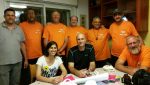
From Ma’aleh School of Television, Film and Art, standing, from left to right, are Asher Lemann, David Cohen, Chanan Ariel, Ofir Shaer, Yosef Baruch Kalangel and Nachum Lemkus. Sitting, from the left, are Keren Hakak, Menachem Assaraf and Shalom Sarel. (photo from Ma’aleh)

When a major donor came to Neta Ariel, director of Ma’aleh School of Television, Film and Art, with an offer to provide scholarships as long as the students give back to the community, Ariel accepted the challenge.

“Ma’aleh is located in the centre of Jerusalem and, unfortunately, there are a lot of social issues,” Ariel told the Jewish Independent. “For example, lots of high school-age teens walk the streets or, during the night, use drugs and live on the streets. So, my students tried to help them – we knew a few of them, and we invited them to come to the school once a week for two hours in the afternoon to learn about film.”

The students at Ma’aleh became mentors, encouraging the teens to bring their own stories to life through the materials. Another group – comprised of immigrants from Ethiopia – also works with the students.

“Tell your story,” said Ariel of the most important aspect of the program.

“At the end of the year,” she said, “when we screened the movie for the group, teacher, friends … it was an amazing thing. They [had] left high school, or the family didn’t want them; they felt like they’re losers and didn’t have self-confidence. When we had the screening and their family or friends came, they really appreciated them. And the film gave them hope. We thought, the making of the film was not only fun, it was a teaching tool to uplift them and our students.”

Through learning how to film, from making personal connections and from telling their stories – which often included trauma or conflict, from rape, violence and negative treatment to gender or sexual orientation issues – they began to heal.

For most participants, it was their first encounter with therapy.

“Most of the time, at the end of the day, after the project was done, they shared with us that this is the first time they’d dealt with this,” said Ariel. “This was their way to tell the society, family or friends that this is their story and what I suffer from.”

From these beginnings, the school developed a curriculum for the program and, with each passing year, it has grown. Now, the school offers two such programs, focusing on how to use film as therapy and how to work together.

“You have a group of social workers and filmmakers,” explained Ariel. “Every week, they meet and work on the exercises we give them, and they work together to find a balance. It works well, the partnership. It’s amazing how the psychologist becomes a filmmaker and the filmmaker comes to understand psychology.”

Months after Operation Protective Edge, the school decided to host a group of bereaved mothers from the conflict, to determine if there was a way they could help.

They found ways of incorporating filmmaking into the process of mourning. At each meeting, they studied and focused on one aspect of filmmaking – lighting, filming, music, and so on. Once taught, participants were given an exercise to practise the skill. Then, they were given a camera and asked to practise filming.

“They didn’t tell them to make a movie about something specific,” said Ariel. “They gave them a task about something emotional. Most chose an aspect connected to the son they lost a few months ago.

“Then, we teach them how to write the script, how to do voiceovers, how to incorporate music. Automatically, most would think about their son or themselves and their fears. So, part of the meeting was talking about what we go through, and a lot of it was about creating things.

“At the end of the year, everyone together made a film called Saba. The main character in the movie is the grandfather, as all of them had mentioned their grandfathers, from time to time.”

Last year, the school opened a bereaved fathers group and found that, while they seemed to barely communicate in the classroom, they collaborated well outside of class. They put together what Ariel described as an “amazing movie” about their surviving kids.

“This is something the fathers said – that the kids at home blamed the parents, saying that, at home, they give a lot of time, attention and energy to something dedicated to the dead son … and [are] not taking care of them,” said Ariel. “Regardless of the age of the kids, in every house, they found it was the same situation. And, it was just amazing.

“Now, we are trying to open a group for grandparents … but, most of them, they can’t come, too hard for them, very far. So, I hope that … we’ll open another group for bereaved mothers … those who couldn’t come last time.”

While the main objective of Ma’aleh stems from a Jewish perspective, Ariel travels the world to introduce filmmaking and therapy to schools.

“Most of our students come from a Jewish Orthodox background … not all, but a lot of them,” said Ariel. “And, a lot of the subjects we touch on are connected to Jewish identity and our roots.”

At the time of her interview with the Independent, Ariel had just returned from the United States, where one of her stops was at a Christian school, where she spoke about how to best relay religious differences through film.

Apart from teaching, Ariel uses these trips to fundraise for the school and to keep in touch with filmmakers, mostly in Los Angeles.

“When they come to Israel, they help us, come to give a workshop at our school,” said Ariel. “We do projects together. Most importantly, we’re sharing our graduate movies with the world. A lot of institutions in Israel and America use them as education tools, cultural tools, and even, from time to time, to promote Israel.

“My goal is that this tool will be used for all kinds of populations. Many different kinds of groups can take care of themselves using this process.”

For more information, visit maale.co.il. The bereaved fathers’ short film can be seen at youtube.com/watch?v=uoNiQVSqhOw&feature=youtu.be.

Rebeca Kuropatwa is a Winnipeg freelance writer.

Format ImagePosted on April 7, 2017April 4, 2017Author Rebeca KuropatwaCategories IsraelTags film, Israel, Judaism, therapy, tikkun olam
Bonding over backgammon

Bonding over backgammon

Jerusalem Double tournament at Machane Yehuda market, Jerusalem. (photo from Jerusalem Double via israel21c.org)

On a winter night inside the Mayer Davidov Garage in the Talpiot industrial area of Jerusalem, some 500 university students, mechanics, high-techies and senior citizens – wearing kippot, kaffiyehs and everything in between – played or cheered on contestants in a backgammon championship accompanied by live Arabic music.

Backgammon (shesh-besh in this part of the world) is thousands of years old and remains a popular pastime among Arabs and Jews. And, in Jerusalem, a surprising number of them are playing the board game together since the spring 2016 launch of Jerusalem Double, a project of the nonprofit organization Kulna Yerushalayim (We Are All Jerusalem).

“Backgammon is played throughout the Middle East, so we have this game in common. It’s fun, down-to-earth, accessible and inclusive,” said Zaki Djemal, one of the founders of Jerusalem Double along with Dror Amedi, Mahmoud Schade, Hiday Goldsmith, Kamel Jabarin, Mahmoud Jamal Al-Rifai, Matan Hayat, Noa Tal-El and Shir Hoory.

“Games have an amazing power to reduce tension and create empathy,” said Djemal, 29, also the cofounder and managing partner of fresh.fund, the first student-run venture capital fund in Israel.

Often, players discover other cultural commonalities through the medium of the game. “Shaike, a Jew who runs a car-parts shop, is playing with Munzir, a Palestinian originally from Bethlehem, and they’re speaking in Arabic. Shaike pulls out his oud and Munzir starts singing,” Djemal pointed out to Israel21c.

Djemal, a Harvard graduate born in London and raised in Jerusalem, explained the origins of Jerusalem Double in his recently filmed TEDxWhiteCity talk titled Game Changer: How Backgammon Will Bring Peace to the Middle East.

“I was sitting together with Jewish and Arabs friends at Hiday’s house in Jerusalem,” he said. “We were discussing a project we’d been working on to bring Jews and Arabs together around a shared love for Middle Eastern music, but we couldn’t agree on anything, and very quickly our discussion deteriorated into a heated debate. Then, in the middle of all of it, my good friend Dror said, ‘Guys, why don’t we take a break? Let’s play something. How about backgammon?’… In six short minutes, this game had completely defused all tension.… We thought to ourselves: ‘Why not organize a backgammon tournament for Jews and Arabs … to meet beyond the daily grind of buses, supermarket checkout lines, hospitals? And we wanted there to be crossover between neighbourhoods that for years have been completely segregated.”

Some 150 people showed up for the first Jerusalem Double tournament in Beit Hanina, a Palestinian neighbourhood in East Jerusalem. “A third of them were from West Jerusalem, and it wasn’t easy convincing them to come,” said Djemal.

One of Djemal’s friends, a religious Jew in high-tech, was afraid of coming to Beit Hanina. “He thought it would be dangerous, but we insisted. And he ended up winning the tournament that night. For us, the real victory is that he’s attended every one of the events since and that’s, in a nutshell, what a project like this can accomplish.”

Mahmoud Al-Rifai, 53, was the one who offered to host the event on his home turf. “I didn’t even know how to play shesh-besh, but I went along with it because I met these young people who were trying to do something important and looking for a place to make it happen,” he told Israel21c. “I like to work with people who do things, not just talk about things. And I knew it would work because I’ve done some joint events in Beit Hanina since 2004. To me, it was an attempt to break the stereotype that it’s dangerous here.”

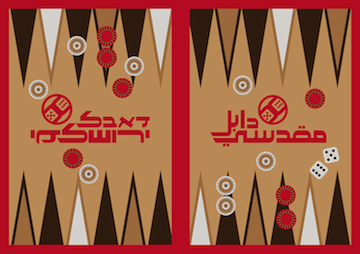
photo - Jerusalem Double, in Hebrew and Arabic
Jerusalem Double, in Hebrew and Arabic. (photo from Jerusalem Double via israel21c.org)

The stereotype-breaking went both ways. Some local teens known to be wary of Jewish Israelis encountered them in a new light at the Jerusalem Double event.

“They were dancing and hugging Jews, playing shesh-besh with them, exchanging phone numbers,” marveled Al-Rifai, whose nonprofit organization, Jerusalem Consortium for Research and Development, holds interfaith meetings and other mixed events. He also is a Sufi master and runs a computer business and a social jewelry-making business for women in cooperation with the municipality.

“It was beautiful and we can’t just stop here,” said Al-Rifai, a self-described diehard realist.

Djemal agreed: “Our plan is to organize an international backgammon championship in Jerusalem with delegations from Turkey, Morocco, Jordan and Egypt all playing backgammon,” he said.

The crowd that came to the fourth Jerusalem Double event, in Talpiot, included Deputy Mayor Ofer Berkovitch and supermarket king-politician-philanthropist Rami Levy. Djemal said 64 people played “and the rest just come for the party. We have a good following and are getting new participants all the time because we’ve created a way for people to interact.”

Jerusalem Double won $35,000 in the Jerusalem Foundation’s 2016 Social Innovation Challenge. The project is also supported by the Pratt Foundation and Jerusalem municipality.

“It’s pretty amazing to see this happening,” said Djemal, whose long resumé includes entrepreneurial ventures, beekeeping, journalism, mentoring and humanitarian work with Israeli organizations IsraAID and Tevel b’Tzedek. The Jerusalem Double cofounders previously started Simply Sing, a series of popular public sing-alongs in Hebrew and Arabic, which they are now reviving.

Djemal said he returned to Jerusalem after five years in the United States because “I thrive on being close to where it’s all happening and being confronted with so many issues that need to be solved. I didn’t want to come back and be complacent. I see a lot of opportunity in the city.”

Israel21c is a nonprofit educational foundation with a mission to focus media and public attention on the 21st-century Israel that exists beyond the conflict. For more, or to donate, visit israel21c.org.

Format ImagePosted on April 7, 2017April 4, 2017Author Abigail Klein Leichman ISRAEL21CCategories IsraelTags backgammon, Israeli-Palestinian conflict, peace
Forgetting our fright?

Forgetting our fright?

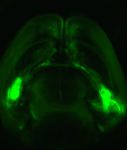
An entire mouse brain viewed from above: neuronal extensions connect the two amygdalas (brightest spots on both sides of the brain) with the prefrontal cortex (top). (photo from wis-wander.weizmann.ac.il)

Erasing unwanted memories is still the stuff of science fiction, but Weizmann Institute scientists have now managed to erase one type of memory in mice. In a study reported in Nature Neuroscience, they succeeded in shutting down a neuronal mechanism by which memories of fear are formed in the mouse brain. After the procedure, the mice resumed their earlier fearless behavior, “forgetting” they had previously been frightened.

This research may one day help extinguish traumatic memories in humans – for example, in people with post-traumatic stress disorder, or PTSD.

“The brain is good at creating new memories when these are associated with strong emotional experiences, such as intense pleasure or fear,” said team leader Dr. Ofer Yizhar. “That’s why it’s easier to remember things you care about, be they good or bad; but it’s also the reason that memories of traumatic experiences are often extremely long-lasting, predisposing people to PTSD.”

In the study, postdoctoral fellows Dr. Oded Klavir (now an investigator at the University of Haifa) and Dr. Matthias Prigge, both from Yizhar’s lab in the neurobiology department, together with departmental colleague Prof. Rony Paz and graduate student Ayelet Sarel, examined the communication between two brain regions: the amygdala and the prefrontal cortex. The amygdala plays a central role in controling emotions, whereas the prefrontal cortex is mostly responsible for cognitive functions and storing long-term memories. Previous studies had suggested that the interactions between these two brain regions contribute to the formation and storage of aversive memories, and that these interactions are compromised in PTSD, but the exact mechanisms behind these processes were unknown.

In the new study, the researchers first used a genetically engineered virus to mark those amygdala neurons that communicate with the prefrontal cortex. Next, using another virus, they inserted a gene encoding a light-sensitive protein into these neurons. When they shone a light on the brain, only the neurons containing the light-sensitive proteins became activated. These manipulations, belonging to optogenetics – a technique extensively studied in Yizhar’s lab – enabled the researchers to activate only those amygdala neurons that interact with the cortex, and then to map out the cortical neurons that receive input from these light-sensitive neurons.

Once they had achieved this precise control over the cellular interactions in the brain, they turned to exploring behaviour: mice that are less fearful are more likely to venture farther than others. They found that when the mice were exposed to fear-inducing stimuli, a powerful line of communication was activated between the amygdala and the cortex. The mice whose brains displayed such communication were more likely to retain a memory of the fear, acting frightened every time they heard the sound that had previously been accompanied by the fear-inducing stimuli.

Finally, to clarify how this line of communication contributes to the formation and stability of memory, the scientists developed an optogenetic technique for weakening the connection between the amygdala and the cortex, using a series of repeated light pulses. Indeed, once the connection was weakened, the mice no longer displayed fear upon hearing the sound. Evidently, “tuning down” the input from the amygdala to the cortex had destabilized or perhaps even destroyed their memory of fear.

“Our research,” said Yizhar, “has focused on a fundamental question in neuroscience: How does the brain integrate emotion into memory? But, one day, our findings may help develop better therapies targeting the connections between the amygdala and the prefrontal cortex, in order to alleviate the symptoms of fear and anxiety disorders.”

For more about the research being done at the Weizmann Institute, visit wis-wander.weizmann.ac.il.

Format ImagePosted on April 7, 2017April 4, 2017Author Weizmann InstituteCategories IsraelTags memory, science
הגבוה ביותר עד כה

הגבוה ביותר עד כה

הפדרציה היהודית של אזור מטרו ונקובר ממשיכה להגדיל את היקף התרומות לקמפיין השנתי שלה, שהוא מקור ההכנסה המרכזי של הארגון ו-35 ארגונים היהודים הקשורים בה. בקמפיין של 2016 היקף התרומות עמד על 8.5 מיליון דולר. אשתקד הפדרציה היהודית גייסה תרומות בהיקף 8.3 מיליון דולר לקמפיין השנתי ואילו בשנת 2014 היקף התרומות עמד על 8 מיליון דולר.

כפי שכבר פורסם מתוך ה-8.5 מיליון דולר 300 אלף דולר יוקצו לטובת אמצעי ביטחון לשמירה על מוסדות ואירועים של הקהילה היהודית באזור ונקובר. זאת כולל השכרת מאבטחים לאירועים מיוחדים וקיום הערכות בטיחוניות בעת הצורך. לאור הגברת האנטישמיות ברחבי העולם והגידול באיומי הטרור, היה סביר להניח שהפדרציה תקצה משאבים אף גדולים יותר לטובת תחום הביטחון. בנושא האבטחה אומר יו”ר הקמפיין השנתי, אלכס קריסטל: “הקשבנו לחששות בנוגע לביטחון הקהילה, כפי שהובאו על ידי הארגונים היהודים השותפים שלנו, התורמים וחברי הקהילה. הפכנו את הביטחון בקהילה לנושא המרכזי של הקמפיין ופיתחנו תוכנית מיוחדת לתורמים נדיבים בתחום זה”.

כספי התרומות מהקמפיין השנתי מיועדים מדי שנה לתמיכה בארגונים היהודים המקומיים, בפעילויות ושירותים שהם מעניקים בתחומים חברה, החינוך, התרבות והאמנות. וכן עזרה לקהלי יעד חלשים יתר בעיקרם קשישים ונוער. חלק מהכספים יוקצו כרגיל ליטפול בפרוייקטים מיוחדים בישראל, במסגרת מתן החסות הקבועה של הפדרציה, שכוללת הענקת משאבים לשירותים חברתיים לאוכלוסיית נוער בסיכון בצפון הארץ.

קריסטל מוסיף כי היקף הכספים שגוייסו הפעם הוא הגבוה ביותר עד כה. יו”ר הקמפיין: “הכספים מבטיחים כי נמשיך לתמוך בארגונים השותפים שלנו שיוכלו להמשיך ולספק מגוון של שירותים ותוכניות שכל כך חיוניים לקהילה היהודית המקומית. ואילו יו”ר מועצת המנהלים של הפדרציה היהודית, סטיבן גרבר אומר: “יש לנו מספר אתגרים כקהילה כולל הנושאים הכפולים של אפשרויות ונגישות, מעורבות צעירים ובני משפחות צעירות, מענה לצרכים של אוכלוסיית הקשישים הגדלה שלנו, ופיתוח תוכניות עבור כמעט ממחצית מהקהילה שלנו אשר חייה כיום באזורים רחוקים בפריפרייה, שלא מטופלים על ידי שום ארגון. התוצאה של הקמפיין תאפשר לפדרציה היהודית ולארגונים השותפים שלנו להתמודד עם אתגרים אלה לטובת הקהילה”.

ללשכת הסטטיסטקה הקנדית אין נתונים מעודכנים לגבי פשעי השינאה במדינה. העידכון האחרון מתייחס לשנת 2014. אז המשטרה קיבלה מידע על 429 מקרים של פשעי שינאה בכול קנדה, בהם 213 הקשורים בקהילה היהודית. בוונקובר התרחשו בסך הכל באותה שנה 47 מקרים של פשעי שינאה.

ריו דה ז’ניירו וונקובר זכו באולימפיאדת ההכנסות ממיסחור

אולימפיאדת הקיץ ה-31 שנערכה בריזו זה ז’ניירו אשתקד ואולימפיאדת החורף ה-21 שנערכה בוונקובר בשנת 2010 הן המכניסות ביותר, מבחינת מכירת מוצרים ממוסחרים. כך עולה מנתוני דוח השיווק של הוועד האולימפי הבינלאומי שפורסמו בימים האחרונים.

על פי דוח השיווק של הוועד ההכנסות של האולימפיאדה בריו זה ז’ניירו ממוצרים ממוסחרים שברו את כל השיאים, והגיעו לכשלוש מאות ועשרים מיליון דולר. תקציב האולימפיאדה בריו זה ז’ניירו נאמד ב-11.9 מיליארד דולר. אולימפיאדת הקיץ בבייג’נג שנערכה בשנת 2008 הכניסה “רק” מאה ושישים מיליון דולר ממסחור. ואילו שאר אולימפיאדות הקיץ נמצאות הרחק מאחור.

האולמפיאדה של ונקובר הכניסה יותר מכל אולימפיאדת חורף בתחום מכירת המוצרים הממוסחרים, ופועל מדובר על סכום של חמישים ואחד מיליון דולר. תקציב האולימפיאדה בוונקובר נאמד בעשרה מיליארד דולר. הרחק מאחוריה אולימפיאדת החורף של סוצ’י שנערכה בשנת 2014 והכניסה שלושים וחמישה מיליון דולר ממוצרי מיסחור.

Format ImagePosted on April 5, 2017April 2, 2017Author Roni RachmaniCategories עניין בחדשותTags annual campaign, Jewish Federation, Olympics, security, אולימפיאדת, ביטחון, הפדרציה היהודית, קמפיין השנתי
B.C. NDP leader talks with JI

B.C. NDP leader talks with JI

B.C. NDP leader John Horgan (photo from B.C. NDP)

Horgan says he likes how British Columbians have come together across racial and religious differences during recent times of strife. In a wide-ranging interview with the Independent, the New Democratic party leader also promised to restore the B.C. Human Rights Commission, said he would like to see religious studies in the school curriculum, expressed opposition to boycotts against Israel and said ethnocultural groups play an important role in the delivery of social services.

Horgan, the provincial opposition leader who hopes to be premier of British Columbia after the May 9 election, said that public reactions to antisemitic and anti-Muslim incidents recently have been encouraging.

“What I’ve been seeing … is an unprecedented coming together of diverse groups – ethnic and people of faith – to support each other, whether it be [after] the horrific shootings in Quebec City or the threats of bombings here in the Lower Mainland,” he said. “I’ve seen people crossing traditional faith boundaries to embrace one another and that gives me great hope and optimism for the future here in B.C. When I look south of the border to the rise of hatred, antisemitism, Islamophobia – and without it being brought into check by the leadership, at least the executive branch of the United States – I’m absolutely concerned about that. But I think the advantage for us here in Canada and in B.C. is it gives us an opportunity to reaffirm our tolerance. I’ve been quite moved by it.”

Leaders, he said, have a role not only in legislating but in expressing attitudes that should exemplify the values of the community they serve. “The broader public often criticize politicians for participating in ethnic celebrations or ceremonies,” he said. But he believes it sends a crucial message about respect for multicultural and faith communities, so he attends Chanukah menorah lightings at the legislature and Kristallnacht commemorations, as well as events of many other communities.

Horgan said there must be a means for people who believe their human rights have been violated to seek redress and a body to spearhead education about human rights. An NDP government, he said, would re-establish the Human Rights Commission that the B.C. Liberals dismantled in 2002.

“Every other jurisdiction in the country has a commission for educational purposes, for bringing forward examples of human rights abuses, and I don’t know why British Columbia wouldn’t have that opportunity,” he said.

Also on the education front, Horgan said he would like to discuss with stakeholders the potential for adding religious studies to the B.C. school curriculum.

“I’m a student of history, I have a master’s degree in history and I look back as much as I look forward in terms of shaping my personal views,” he said. “I would see some benefit to having part of the curriculum have a religious studies component in the middle school or high school curriculum.” It might not be a mandatory course and he would seek consultation with school boards, teachers, parent advisory committees and others, but, he said, the idea has come up repeatedly in conversations with members of different religious communities.

Governments partner with community agencies to ensure culturally sensitive and appropriate delivery of services such as addiction, settlement and immigration and seniors’ programs, and this is something Horgan strongly favours.

“It’s not just ethnocultural and faith-based organizations,” he said, “it’s community organizations. In my world, the role of government is to try to unite and bring people together whenever possible and foster understanding and tolerance. You don’t do that by not having discussions or relationships with various organizations, you do that by stimulating that participation.”

Providing culturally appropriate foods for patients in the medical system is a small example of accommodation, Horgan said, but one that has been made more difficult by the outsourcing of food services in the health-care system.

On the security front, Horgan supports the $100,000 the province recently announced in funding for Jewish community security, though he would have done it differently had he been premier, he said.

“Anytime we can improve security for any community, I would support that,” he said. “I don’t want to take shots of the government in this interview but, for me, I would have reached across the floor and said to my counterparts, were I in the premier’s office, this is something that we’re going to do, can we have a resolution of the legislature to make this cross partisan lines, rather than making it a statement of, ‘the Liberals are doing this and the NDP or Greens or Conservatives are not.’ But, beyond that, I support it, absolutely.”

Horgan said he personally opposes the anti-Israel boycott, divestment and sanctions (BDS) movement, but he’ll let party members have their own opinions.

“On these issues, as a provincial leader, what I try to do is allow people to have their point of view. I don’t necessarily have to agree with them,” he said, adding that foreign affairs is a federal matter. “I hold fast to the hope that our federal government, which has diplomatic responsibility for these issues, will show leadership that divestment and sanctions are not a solution.”

He added: “I believe in a two-state solution to the challenges in the Middle East and that’s a personal view and I’ll share that with anyone who asks me. But I try in my interactions with various community members to focus on how do we provide unity here in British Columbia. I look at, just as an example, the sanctions on Cuba. They’re not comparable, I appreciate that, but it is an attempt to have a state outcome in another jurisdiction based on economic pressure, and all that’s happened as a result of that is increased poverty and a lack of understanding. I think we want to reduce poverty wherever possible and increase understanding and, by cutting ties, severing relationships, you’re never going to achieve that. My approach, personally, is always to engage rather than disengage, so I think the BDS movement is not something I support, but people have their own personal will. They can choose to invest their resources wherever they want to.… My own personal view … is that reducing interactions never leads to a better understanding, it leads to less understanding.”

Horgan noted he has met with several organizations in the Jewish community on issues around economic cooperation and trade with Israel.

“I’m excited about the prospects of increasing our ability in British Columbia to take advantage of the cultural linkages we have to grow stronger economic linkages,” he said.

As British Columbians ponder their electoral choices, Horgan said he wants Jewish voters to know that “what they want for themselves and their community I want for them as well.”

“That’s a tenet of social democracy,” he said, paraphrasing J.S. Woodsworth, an early leader of the Canadian left, who said, “What we desire for ourselves, we wish for all.”

“That is a tenet of the Jewish faith and that is something that I think those who have not looked to the NDP in the past may want to do so in the coming election campaign,” he said. “I want growth and prosperity for our communities, I want tolerance and peace and understanding – and those are the issues that I think most British Columbians want, regardless of their faith. I believe that if we focus on the mainstream values that unite us, rather than the issues that divide us, we’ll all be better off here.… My answer is to lead by example and to highlight always tolerance and welcoming and cooperation over intolerance, hate and division.”

The Jewish Independent’s provincial election coverage continues with interviews with other candidates in future issues.

Note: This article has been edited to reflect that the B.C. government allocated $100,000 for security measures in the Jewish community.

Format ImagePosted on March 31, 2017April 4, 2017Author Pat JohnsonCategories LocalTags BC NDP, education, Election, Israel, John Horgan, multiculturalism, politics, security

Israeli authorities arrest teen

A Jewish teenager with dual Israeli and American citizenship living in the southern Israeli city of Ashkelon was arrested March 23 in connection to the more than 100 bomb threats against Jewish community centres and other Jewish institutions across North America since the beginning of 2017.

The suspect, 19, was arrested by Israel’s Lahav 433 police unit in the wake of a months-long investigation by Israeli authorities, who worked alongside the FBI and other international law enforcement agencies. Authorities did not release the suspect’s name. Additionally, police detained the suspect’s father on suspicion that he knew of his son’s activities.

Authorities believe the suspect was also behind a bomb threat against two Delta Airlines flights between New York and Tel Aviv in January 2015, the Times of Israel reported.

The JCC Association of North America said on March 23 that it is “gratified by the progress in this investigation” and praised law enforcement agencies’ “commitment and leadership.” But the umbrella organization for the community centres added that it is “troubled to learn that the individual suspected of making these threats … [is] Jewish.”

During a raid on the suspect’s home, authorities found an advanced computer lab with sophisticated equipment, including voice-altering technology, encryption methods and a large antenna that he likely used to phone and email bomb threats to Jewish institutions in the United States, Canada, Australia, New Zealand and Israel.

It is believed the suspect has lived in Israel for several years, and that the Israel Defence Forces refused to draft him “on personal grounds after finding him unfit for service,” Haaretz reported.

Israel Police spokesman Mickey Rosenfeld said this arrest was part of a coordinated international operation. “This specific investigation was complex in terms of the suspect and its nature, and there was a significant breakthrough in the investigation, which led us to make the arrest of the suspect, who lives in southern Israel,” he told the Jerusalem Post.

Rosenfeld added that “he was the main suspect behind the numerous amount of threats which were made to different Jewish communities and organizations around the world.” Investigators, he said, will continue to “see if and how he was connected to the different Jewish communities in the U.S. That directs the investigation to the American connection. We are looking to see if there was an incident which triggered him to carry out threatening those communities.”

Israeli Public Security Minister Gilad Erdan congratulated police on the arrest and expressed his hope that it would bring an end to the threats against Jewish institutions.

U.S. Attorney General Jeff Sessions, meanwhile, said the Department of Justice “is committed to protecting the civil rights of all Americans, and we will not tolerate the targeting of any community in this country on the basis of their religious beliefs. I commend the FBI and Israeli National Police for their outstanding work on this case.”

Earlier this month, U.S. authorities arrested Juan Thompson, a 31-year-old former news reporter from St. Louis, in connection with eight bomb threats against Jewish institutions. At the time, law enforcement officials said Thompson was not believed to be the main suspect behind the threats, an assertion that is purportedly confirmed by the latest arrest.

Following the March 23 arrest in Israel, Anti-Defamation League chief executive officer Jonathan Greenblatt said that, even though “it appears that the main culprit behind the majority of these attacks has allegedly been identified, antisemitism in the U.S. remains a very serious concern.”

He said, “No arrests have been made in three cemetery desecrations [that occurred in early 2017] or a series of other antsemitic incidents involving swastika graffiti and hate fliers. JCCs and other institutions should not relax security measures or become less vigilant.”

– for more international Jewish news and opinion, visit JNS.org

***

Canadian reactions

“We are relieved and grateful that authorities have located the individual believed to be responsible for these false threats. At the same time, we are shocked and outraged to learn that the alleged perpetrator of these crimes, which terrorized our community, is a Jewish dual American-Israeli citizen. He appears to have acted alone, and we unequivocally condemn his behaviour.

“While Israeli authorities deserve credit for arresting this individual, he was apprehended following a lengthy and complex global investigation that included Canadian and other global law enforcement partners. We remain deeply appreciative of the work of Canadian government, police and security agencies in supporting our community.

“While these threats proved to be false, the Jewish community remains a target of hate. We encourage communal institutions to remain vigilant and follow their existing security protocols.”

– David J. Cape, Centre for Israel and Jewish Affairs

“If the allegations are true, it would prove to be shameful and disheartening.”

– Avi Benlolo, Canadian Friends of Simon Wiesenthal Centre


Posted on March 31, 2017March 31, 2017Author Sean Savage JNS.ORGCategories WorldTags antisemitism, bomb threats, JCC
Young Judaea at 100

Young Judaea at 100

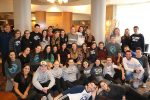
Canadian Young Judaea’s National Leadership Conference in February, which had participants from Vancouver, Montreal, Toronto and Halifax. (photo from CYJ)

Many of Metro Vancouver’s residents are from other parts of Canada. It is no surprise, therefore, that many members of Vancouver’s Jewish community are familiar with Canadian Young Judaea (CYJ). But the memories of CYJ date back even further than most anyone can recall because CYJ is celebrating its 100th anniversary.

Started by 11-year-old Dov Joseph in 1910 in Montreal as a Zionist club, CYJ was officially proclaimed at the 15th Zionist Convention in Winnipeg in 1917. Within eight years, there were 75 clubs across Canada and, by 1935, national membership reached 5,000. Jews in small towns like Timmins, Ont., and Melville, Sask., formed groups and organized activities.

“There was a ken (group) in every city that had a Jewish population,” said CYJ national director Risa Epstein about the organization at its peak. “In Ontario alone, CYJ was active in Niagara Falls, St. Catharines, Sarnia/Petrolia, North Bay, Sudbury, Peterborough, to name a few. In the West, you could find CYJ in Vancouver, Edmonton, Calgary, Winnipeg, Saskatoon, Moose Jaw, Regina and many smaller communities and, of course, it was in every small town in the Atlantic region.”

In the beginning, the appeal of CYJ was its purpose, its focus on Zionism at a time when antisemitism was rampant throughout Europe and in Canada (and elsewhere) as well. The Zionist dream was that of young Jews taking control of their fate, according to acclaimed Canadian poet A.M. Klein, who served as the editor of The Judaean from 1928-32. Klein wrote in 1931, “Jewish life, as at present constituted, with barrenness and emptiness, its utter meaninglessness, its haphazard activity, stands as an imperious challenge to Canadian Jewish youth.”

Epstein described the nature of CYJ in less fiery terms. “It was born out of the desire of young Jews in Montreal to have a group to come to and discuss and dream about a Jewish homeland,” she said. “It later grew from a city-based organization to summer camps and Israel programs.”

The camps were established as early as 1942 in Quebec, followed by Camp Kadima in Nova Scotia in 1943. Ontario, Manitoba, Saskatchewan and Alberta also had CYJ-affiliated camps. British Columbia was the last to add a camp, in 1956, known originally as Camp Hatikvah-Massada in Oyama.

After the establishment of the state of Israel in 1948, the Zionist dream was realized and CYJ took steps to affiliate with youth group Hanoar Hatzioni in Israel. As a result of the newfound excitement about making aliyah, a number of Young Judaeans went to study in Israel. In the 1950s, camps were established across the country that simulated the kibbutz experience.

Today, according to Epstein, CYJ has more than 2,000 members (7 to 18 years old) from across Canada. As the concentration of the Jewish population has shifted, so have the active centres for CYJ activities. They are now active in the major centres of Toronto, Montreal and Vancouver and are still operating in Halifax. Their summer programming engages close to 750 staff (18 to 22 years old), many of whom are alumni of CYJ camps.

Programming during the non-summer months is organized by age groups. The offerings include leadership-training opportunities, which often parlay into jobs at summer camps. CYJ also provides some programs for parents, alumni events and special training for program directors of the camps.

Every city where CYJ has a presence has JOLT (Jewish Outreach Leadership Training). “It consists of two meetings a month,” explained Epstein. “The first is an educational session and the second is an outreach related to the topic of the first. An example is learning about Jewish veterans in Canada and a bake sale to raise money for the veterans.” She mentioned that participation in JOLT is growing in Vancouver and elsewhere.

CYJ has an historic link with another uniquely Canadian grassroots Zionist organization: Canadian Hadassah-WIZO (CHW). CYJ is and has always been the youth arm of CHW. Epstein said the Biluim Israel trip raises funds for CHW daycares in Israel and includes a day spent volunteering at one of those daycares. In turn, CHW provides funding for some CYJ activities.

Along with this year’s regular programming, including camps and trips to Israel with Biluim Israel, national CYJ is planning a centennial celebration on Aug. 27 at Camp Shalom in Gravenhurst, Ont. The event will run from 11 a.m.-4 p.m and is intended for families. “There will be food, camp-like activities, displays, shira [singing] and rikud [dancing]. It will be an amazing event and we are hoping that there will be over 400 people,” said Epstein.

All Young Judaeans are invited to the celebration. For more information, contact the national CYJ office at 416-781-5156 or e-mail Epstein at [email protected].

Michelle Dodek is a freelance writer living in Vancouver.

Format ImagePosted on March 31, 2017March 31, 2017Author Michelle DodekCategories NationalTags Camp Hatikvah, CHW, CYJ, Israel, Young Judaea
No simple dichotomy

No simple dichotomy

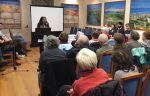
Amna Farooqi speaks at Temple Sholom during her March 13-14 visit to Vancouver. (photo by David Berson)

Amna Farooqi, a rising peace activist who aims to transcend the division between being pro-Israeli and pro-Palestinian, was in Vancouver March 13-14 to speak at Temple Sholom and at the University of British Columbia.

Last year, Farooqi, a Muslim-American woman from a Pakistani family, made international headlines when she was elected head of J Street U, the student organizing arm of J Street, which calls itself “the political home for pro-Israel, pro-peace Americans.” She presents a unique perspective: she is against the boycott, divestment and sanction movement and is pro-Zionist, while also being against the occupation, critical of settlements and deeply concerned for Palestinian dignity and human rights. Temple Sholom, the Progressive Jewish Alliance, Or Shalom, Ameinu Canada and JSpaceCanada sponsored her visit to Vancouver.

Farooqi, who finished her term at J Street U as she graduated from the University of Maryland, continues to be active in J Street and spoke at their annual conference last month, which also included Bernie Sanders as a speaker.

Farooqi told the Jewish Independent that she grew up in a religious but progressive Muslim home where politics were a constant topic of discussion. “Have tea and talk politics,” she said. “Very much like Israelis.”

After 9/11, the topics shifted from things happening in India, Pakistan and throughout the Muslim world to American politics and the condition of American Muslims, she said. “In middle school, I began wearing a headscarf to school. I liked wearing the hijab to provoke conversation, and to say that one can be Muslim and American, one does not have to choose one or the other.”

In high school, Farooqi, who had been raised with a concern for Palestinians, began learning more about the Israeli-Palestinian conflict and fiercely sided with the Palestinians. In 2011, when the Palestine Liberation Organization made a bid for statehood at the United Nations, Farooqi supported it and found herself in an emotional fight with a Jewish friend that came to raised voices and tears. “I realized then that I did not know enough about the conflict,” she said.

Farooqi took Israeli studies courses in college, heeding her parents’ advice that the situation was complex and she should refrain from becoming involved in the debate unless she first studied it in detail. Farooqi’s turning point came when one of her professors had students take part in an involved role-playing exercise, where pro-Palestinian students studied and defended a Zionist (hers was David Ben-Gurion) and pro-Israel students the opposite. This was the beginning, she said, of her “falling in love with Zionism,” without losing her deep concern for the Palestinians.

Over time, Farooqi got more involved with the J Street U chapter at her university, and she spent a semester abroad in Israel studying at Hebrew University, as part of an international student exchange program; the first of several trips.

“My first trip to Israel was an emotionally intense experience from start to finish,” she told the Independent. “There is not a moment in Jerusalem where you are not exposed to diverse perspectives. Everywhere you go there is history, tragedy and beauty.”

She had a Passover seder with a settler family and dined with families in the West Bank. “I remember one visit to the West Bank with some Jews concerned about Palestinian human rights. We visited one family bringing gifts. A young Palestinian child approached my Jewish friends with wonder, and said, ‘You are Jews?’ Bewildered, the child pointed to a nearby house of settlers. ‘But they are Jews.’”

Asked what she perceives as the way forward in today’s increasingly volatile climate, Farooqi said, “It’s a difficult moment. I think the path forward lies in investing in civil society on all sides. None of the governments involved is in a position to show real leadership at the moment.”

Farooqi said the key will lie in building relationships on the ground and in looking at a holistic picture of what drives people on both sides whose behaviour is bstructing peace. “You cannot understand settlers unless you understand the need for affordable housing in Israel,” she said, “and you cannot understand Palestinians who join Hamas unless you understand it may be the only way for them to put food on the table.”

Farooqi said she is excited by the rise of a new Sephardi left in Israel, which she hopes will help inspire a “new, young left” in the country, with ideas that go beyond those of previous generations. And she would like to see more done to help younger Palestinians understand that many Israelis value their rights. “Younger Palestinians need to know that,” she said. “It will change the elections of the future. Palestinians need economic opportunity, and they need real vision and hope. They must be given a real political and economic horizon.”

Speaking of the international Jewish community, Farooqi said, “If you are a pro-Israel, pro-peace, two-state solution person, invest in communal support for that and be careful [about] who we host, who we support, what message are we sending out.”

Even though she is against BDS, she disagrees with the recent Israeli travel ban of BDS supporters. “I oppose the travel ban because going to Israel and actually talking to Israelis made me more pro-Israel,” she said.

She added, by way of warning, that “Diaspora Jews underestimate the far-right in Israel. Many moderates have become disengaged on Israel, whereas big supporters on the far-right have not.”

Speaking of Sanders’ talk at the recent J Street conference, Farooqi said, “I thought it was a great speech, significant for lots of reasons. Sanders talked about 1948 in a beautiful way, talking of the progressive vision of Zionism and his experiences on a kibbutz, but also talking of the effect on the Palestinians. You can acknowledge both. It is rare for a U.S. politician to do that.”

Now that her term at J Street U is over, Farooqi is turning her attention to affairs at home and looking to get involved in organizing in the United States. “We have our own crisis of democracy to deal with,” she said.

Matthew Gindin is a freelance journalist, writer and lecturer. He writes regularly for the Forward and All That Is Interesting, and has been published in Religion Dispatches, Situate Magazine, Tikkun and elsewhere. He can be found on Medium and Twitter.

Format ImagePosted on March 31, 2017March 31, 2017Author Matthew GindinCategories LocalTags Amna Farooqi, Israeli-Palestinian conflict, J Street, peace
Anti-Jewish remarks

Anti-Jewish remarks

Sheikh Muhammad bin Musa Al Nasr is captured in a YouTube video dated Dec. 23, 2016, addressing a prayer meeting at Dar Al-Arqam in Montreal East. (screenshot from cjnews.com)

More videos of anti-Jewish sermons being delivered in mosques in Canada have come to light, the latest from the Dar Al-Arqam mosque in Montreal and the Al-Hikmah mosque in Toronto.

Sheikh Muhammad bin Musa Al Nasr is captured in a 20-minute YouTube video dated Dec. 23, 2016, addressing a prayer meeting at Dar Al-Arqam in Montreal East.

According to a translation of the Arabic by the Toronto-based online publication CIJNews, he says Jews are “the most evil of mankind” and that Allah has ordained that they be killed by Muslims.

“At the end of time when the Muslims will triumph over the most evil of mankind [and] the human demons, the stone and the tree will say: O Muslim, O servant of Allah, O Muslim, O servant of Allah, there is a Jew behind me; come and kill him; but the tree Gharqad would not say, for it is the tree of the Jews,” the translation says.

Musa Al Nasr is identified as a visiting Jordanian cleric.

Similar messages have been delivered by Sheikh Abdulqani Mursal, an imam at Al-Hikmah in North York, reports CIJNews editor Jonathan Halevi, who is described as a reserve lieutenant-colonel in the Israel Defence Forces and a senior researcher of radical Islam at the Jerusalem Centre for Public Affairs.

Apparently drawing from Islamic scripture, Mursal taught that “the fate of the Jews is … to be killed by Muslims,” Halevi writes.

He read a hadith, or saying of Muhammad, that: “You will fight against the Jews and you will kill them until even a stone would say: Come here, Muslim, there is a Jew [hiding himself behind me], kill him.”

Whatever the source of these sentiments, Jewish groups decry them as hateful, incitement, possibly hate crimes.

The Centre for Israel and Jewish Affairs (CIJA) said the published excerpt of Musa Al Nasr’s talk “mirrors, word for word, a similar genocidal declaration” in the charter of Hamas, which is designated as a terrorist organization by Canada.

“We are deeply troubled and angered that yet another imam has dehumanized Jews and glorified violence against them,” stated CIJA Quebec co-chair Rabbi Reuben Poupko.

Even more disturbing, he said, is that the mosque would disseminate Musa Al Nasr’s “incitement to violence and hatred” on the internet.

CIJA has submitted the latest material to police to determine if it violates Canada’s Criminal Code.

“We condemn these appalling sermons which … are a dangerous rejection of Canada’s core values of tolerance, pluralism and non-violence,” he said. “In light of similar incidents recently exposed in Montreal and Toronto, there is a real concern that the airing of hateful rhetoric – including antisemitism – has become routine at some mosques.”

B’nai Brith Canada has filed a formal complaint with police because it believes that this is hate speech. Musa Al Nasr is a “prominent member of the hardline Salafist movement in Jordan, where he lectures at the al-Ahliyya University in Amman,” it asserts.

According to B’nai Brith’s research, he delivered lectures more than a dozen times at Al-Arqam, which were recorded and uploaded on YouTube.

B’nai Brith chief executive officer Michael Mostyn expressed frustration that police have yet to lay charges in connection with a complaint it made in February when a video was exposed of another imam at another Montreal mosque pleading for the death of Jews.

The 2014 sermon by Sayed AlGhitawi, a guest imam at the Al-Andalous Islamic Centre, called on Allah “to destroy the accursed Jews” and “kill them one by one.”

“When will Canada finally recognize that we are not immune to racism and antisemitism, and that it is this type of rhetoric that directly leads to radicalization all over the world?” Mostyn asked. “What will it take before charges are laid for criminal incitement in Canada?”

– For more national Jewish news, visit cjnews.com

Format ImagePosted on March 31, 2017March 31, 2017Author Janice Arnold CJNCategories NationalTags antisemitism, mosques
Team Israel’s fairytale run

Team Israel’s fairytale run

Josh Zeid during the game against Japan. (photo from worldbaseballclassic.com)

Team Israel had a great run at the World Baseball Classic tournament. The ballplayers with a David vs. Goliath approach came out swinging hard and stunned the world with four consecutive wins in the preliminary and second rounds. But two losses in a row – an 8-3 loss to Japan March 15 and a 12-2 clobbering by the Netherlands on March 13 – made advancing to the finals a dream for the next global tournament.

The March 15 game started with five scoreless innings, but Japan blew open a lead in the sixth with five runs and added three more for good measure in the eighth. Israel scored all its runs in the top of the ninth.

The World Baseball Classic is a tournament in which the best baseball players in the world compete. Team Israel had bookers betting against it even making the main event, but the blue-and-white uniformed ballplayers, who were ranked 41st going into the Classic, not only made it to the preliminary rounds but won an astounding four in a row at the tournament.

Dubbed the Cinderella team of the contest, Team Israel stunned Cuba 4-1 in the first WBC quarterfinal game at the Tokyo Dome and, before that, swept the first round of games by beating South Korea, Taiwan and the Netherlands.

Only three of Team Israel’s 28 players are Israeli; the rest are Jewish Americans. According to WBC rules, anyone eligible to hold citizenship in a country can play for its national team. There are other teams with players who do not hold passports for the country for which they’re playing.

“The players love playing for Israel,” Israel Association of Baseball president Peter Kurz told Israel21c. “A lot of them want to come and visit after the tournament or after they retire.”

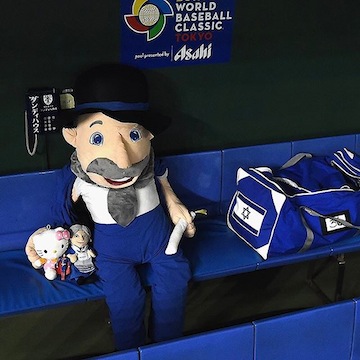
photo - Mensch on a Bench – the Israeli team’s mascot – waits for the game to begin
Mensch on a Bench – the Israeli team’s mascot – waits for the game to begin. (photo from worldbaseballclassic.com)

For fans, that the ballplayers are proud to wear “Israel” on their uniforms and represent the country is more than enough.

“I am a lifelong baseball fan, and it’s thrilling to see Israel competing on a world stage. But Israel’s participation in the World Baseball Classic is about so much more than baseball,” said Elie Klein, an associate partner at Finn Partners Israel who calls himself a “rabid New York Mets fan.”

“While baseball fans around the globe have taken notice of Team Israel due to their surprising athletic prowess, Jews around the world – many of whom have never watched a single inning of baseball – are drawn to Team Israel out of deep Jewish pride. Not because they are Israelis, but because they aren’t – they are largely American Jews who have decided to wear uniforms emblazoned with the Jewish star and don kippot during Hatikvah, to identify as Jews in such a public way,” said Klein.

American rapper Kosha Dillz (Rami Matan Even-Esh) even made up a song about Team Israel. And Team Israel will also be remembered for its mascot, Mensch on a Bench, a stuffed doll that was the Jewish answer to the popular Christmas toy and story Elf on the Shelf.

On March 22, the United States team beat Team Puerto Rico to win the championship.

Israel21c is a nonprofit educational foundation with a mission to focus media and public attention on the 21st-century Israel that exists beyond the conflict. For more, or to donate, visit israel21c.org.

Format ImagePosted on March 31, 2017March 31, 2017Author Viva Sarah Press ISRAEL21CCategories WorldTags baseball, Israel, Mensch on a Bench, sports

Posts pagination

Previous page Page 1 … Page 222 Page 223 Page 224 … Page 322 Next page
Proudly powered by WordPress