Skip to content
  • Home
  • Subscribe / donate
  • Events calendar
  • News
    • Local
    • National
    • Israel
    • World
    • עניין בחדשות
      A roundup of news in Canada and further afield, in Hebrew.
  • Opinion
    • From the JI
    • Op-Ed
  • Arts & Culture
    • Performing Arts
    • Music
    • Books
    • Visual Arts
    • TV & Film
  • Life
    • Celebrating the Holidays
    • Travel
    • The Daily Snooze
      Cartoons by Jacob Samuel
    • Mystery Photo
      Help the JI and JMABC fill in the gaps in our archives.
  • Community Links
    • Organizations, Etc.
    • Other News Sources & Blogs
    • Business Directory
  • FAQ
  • JI Chai Celebration
  • JI@88! video

Recent Posts

  • Zionism wins big in Vegas
  • Different but connected
  • Survival not passive
  • Musical celebration of Israel
  • Shoppe celebrates 25 years
  • Human “book” event
  • Reclaiming Jewish stories
  • Bema presents Perseverance
  • CSS honours Bellas z”l
  • Sheba Promise here May 7
  • Reflections from Be’eri
  • New law a desecration
  • Resilient joy in tough times
  • Rescue dog brings joy
  • Art chosen for new museum
  • Reminder of hope, resilience
  • The national food of Israel?
  • Story of Israel’s north
  • Sheltering in train stations
  • Teach critical thinking
  • Learning to bridge divides
  • Supporting Iranian community
  • Art dismantles systems
  • Beth Tikvah celebrates 50th
  • What is Jewish music?
  • Celebrate joy of music
  • Women share experiences 
  • Raising funds for Survivors
  • Call for digital literacy
  • The hidden hand of hate
  • Tarot as spiritual ritual
  • Students create fancy meal
  • Encouraging young voices
  • Rose’s Angels delivers
  • Living life to its fullest
  • Drawing on his roots

Archives

Follow @JewishIndie
image - The CJN - Visit Us Banner - 300x600 - 101625

Category: News

תופעה חדשה בקנדה

תופעה חדשה בקנדה

(צילום: חברת אאורה דולס)

בטורונטו – העיר הגדולה והעכשווית ביותר בקנדה מתחיל טרנד חדש בתחום המין: בית בושת שהזונות “שיעבדו” בו הן בובות עשויות סיליקון מתקדם, שנראות די אנושיות.

חברת אאורה דולס התכוונה לפתוח בראשית החודש את בית בושת עם הבובות הראשון בטורונטו, בשכונת נורת’ יורק. אך בשלב זה לאור התנגדות תושבי המקום, הצליח חבר מועצת העירייה, ג’ון פיליון, לעצור את הפרוייקט ורשיון ההפעלה בוטל בשלב זה. אאורה דולס תאלץ מעתה לחפש מקום אחר לבית הבושת שלה. בכל מקרה בטוח שבמוקדם או במאוחר מקום שמספק שרותי מין עם בובות יופעל טורונטו, כי קשה כידוע למנוע טרנדים חדשים שכאלה ובעיקר כאשר מדובר בתחום הסקס.

לאאורה דולס יש בשלב זה שש בובות: אנה (ממוצא יפאני) – שמתוארת באתר האינטרנט של החברה “כסקסית, רומנטית וספונטנית”, אריקה (קנדית-צרפתית) – המתוארת באתר “כצעירה, היפה והמתוקה”, הרפר (קנדית-אירית) – המתוארת באתר “כנערה המושלמת של השכן”, יסמין (קולמביאנית) – המתוארת באתר “כארוטית עם פני המלאך”, סקאלט (אמריקנית) – המתוארת באתר “כחלום האמריקני המוחלט” ויוקי (קוריאנית) – המתוארת באתר “כחפה מפשע, הכנועה והשובבה”. בהמשך החברה תפעיל בובות נוספות של נשים וכן גם בובות של גברים. המחירים של שירותי הבובות: חצי שעה 90 דולר, שעה 120 דולר, שעתיים 240 דולר, שלוש שעות 360 דולר וארבע שעות 480 דולר.

באתר החברה מוסבר מדוע שירותי מין עם בובות כל כך חשובים לנו: “מדובר בדרך חדשה ומרגשת להגשים את צרכי הלקוחות ללא מגבלות והגבלות אשר שותף אמיתי יכלול להעמיד. הלקוחות יוכלו לממש את כל הפנטזיות שלהם ולהגיע לחוויה מינית אולטימטיבית, ללא בושה או שיפוט על ידי אחרים”. עוד מציינים בחברה כי הבובות יעברו תהליך חיטוי קבוע על ידי העובדים כדי לשמור על בריאות הלקוחות”.

מטבע הדברים לא כולם מקבלים בשימחה את פתיחת בית הבושת החדש שבשלב זה כאמור פעילותו הוקפאה. אחת מתושבות נורת’ יורק אמרה לאחד העיתונים המקומיים בטורונטו: “בהתחלה חשבתי שמדובר בבדיחה. עבורי זה סוג של עסק שלא מתאים לסביבה שלנו”. חבר המועצה פיליון מציין כי קיבל פניות מהורים רבים ששאלו אותו בפשטות: “כיצד נסביר זאת לילדים שלנו?” הוא מוסיף: “לא הייתי רוצה לראות שירות כזה בשום מקום וזה סוג של דברים שאנשים צריכים לעשות בבתיהם. אבל אם מסתכלים מנקודת מבט של המיקום, זה צריך להיות הרחק מבית ספר ומאזור בו מסתובבות משפחות רבות עם ילדיהן”.

באאורה דולס מגיבים על התנגדויות לפתיחת בית הבושת שלהם: “אנו מאמינים שהשירות שלנו יכול להועיל דווקא לאלה שסובלים מבעיות של חרדה חברתית, וכן אף לרסן את הסחר במין. כיוון שמדובר בקונספט חדש ובלתי מוכר מובן כי הדבר יעורר חששות והתנגדות. אולם ככל שנמשיך אל תוך העידן המודרני של הטכנולוגיה, עלינו להיות פתוחים לרעיונות וקונספטים חדשים – כל עוד הם בטוחים לכולם. אנו מקווים שהקהילה שלנו תהיה מוכנה להסתגל לשינויים אלה בראש פתוח, כיוון שאף אחד לא יפגע או יהיה מושפע לרעה משירות זה. כמובן, שתמיד זה יהיה נושא שנוי במחלוקת אבל אנחנו מאמינים כי התכונות החיוביות של השירות עולות בהרבה על אלה השליליות”.

בישראל ניתן להשיג בובות סקס בעיקר באמצעות רכישה מאתרי האינטרנט שונים. בין האתרים שמציעים למכירה בובות סקס מסוגים שונים: שופ שישים ותשע, רדול קנדה, אלי אקספרס ועליבאבא.

Format ImagePosted on September 20, 2018Author Roni RachmaniCategories עניין בחדשותTags Aura Dolls, brothel, John Filion, Toronto, אאורה דולס, בית בושת, ג'ון פיליון, טורונטו
Ayalon speaks at TWU

Ayalon speaks at TWU

Danny Ayalon speaks at Trinity Western University on Aug. 30. (photo by Chloe Heuchert)

On Aug. 30, Danny Ayalon spoke at Trinity Western University. Ayalon, a former deputy foreign minister of Israel and former ambassador of Israel to the United States, is the founder of The Truth About Israel website. The event at Trinity was sponsored and co-organized by the TWU Alumni Association with Natalie Hilder, a former political aide at Parliament of Canada, who hosted and introduced the talk.

Ayalon’s presentation, Insights and Analysis of Israel and the Middle East, was thought-provoking. He described the outstanding issues and argued that peace could be attained if both sides would come together for a resolution. Throughout the interactive lecture, Ayalon mentioned Judaea and its importance in our modern day.

Ayalon has served as an advisor to three Israeli prime ministers: Binyamin Netanyahu, Ehud Barak and Ariel Sharon. In 2002, he was selected as Israel’s ambassador to the United States, a role he occupied until 2006, playing a significant part in the Road Map for Peace, a plan to resolve the Israeli-Palestinian conflict. He later became involved with Nefesh b’Nefesh, which facilitates aliyah by North American Jews, and then he joined the Yisrael Beiteinu political party, being elected as a member of the Knesset in 2009 and bein//g appointed as deputy foreign minister in Netanyahu’s government of the time; he wasn’t a candidate in the next election.

The lecture at TWU began with Ayalon explaining how Israel strives – and is obligated – to bring about peace. He spoke about the peace treaty with Egypt in 1979. President Anwar Sadat, he said, offered Israel an olive branch in 1977 by speaking at the Knesset to identify strategies for peace, which led to Israel’s decision to give up the Sinai Peninsula, an area almost three times the size of the state of Israel. Israel and Egypt have a mutual respect and fight together against Hamas and ISIS, said Ayalon.

Israel also made peace with Jordan, he said. The mid-1990s agreement gave Jordanians land and water and, today, the Israel-Jordan border is peaceful because the governments work together on certain matters, said Ayalon.

Not all peace discussions have gone according to plan, however, and Ayalon described the Oslo negotiations of the early 1990s and the 1993 agreement that was reached, but which was ultimately unsuccessful. The parties would meet again at Camp David in July 2000 and Ayalon was there. He shared some of his firsthand experiences from the discussions, recalling how Israeli prime minister Barak offered Palestinian Authority chairman Yasser Arafat Gaza and half of Jerusalem but to no avail. Ayalon also spoke about the unsuccessful attempt at peace that occurred in 2008 between prime minister Ehud Olmert and PA president Mahmoud Abbas. Again, he said, both sides could not come to an agreement even though Israel offered land.

Ayalon said the ways in which Israel strives for peace are not broadcast on the news, but are, instead, ignored in a way. The major headlines are about Israel’s alleged war crimes, he said, but this not the truth. Israelis fear for their lives every day, he said, because of the bomb attacks and other hostile actions of Hamas, who use their own people as human shields.

“There are 22 Arab countries and Israel is one state, and makes up only [a miniscule part] of the entire Middle East,” said Ayalon. “This is not a war about territory or natural resources but of elimination and extinction.”

When it comes to the United Nations, Israel is outnumbered. There are 193 member countries, with 120 voting against Israel, he said. While some of these countries are bowing to the pressure against Israel in order to keep themselves safe, Ayalon said the result is that many resolutions against Israel are made by the UN, so that Israel has little chance on the international front.

He went as far back as UN Resolution 181 in 1947, which called for the partition of Palestine into Jewish and Arabs states. The Arabs rejected the agreement and denied that Jews had any right to the land. To this day, Ayalon said, Palestinian schools use their curriculum to teach children that Israel is theirs. He said, in order for peace to become a real possibility, the truth must be established – curricula, media and the way in which children are brought up need to change before peace can be achieved.

Chloe Heuchert is a fifth-year history and political science student at Trinity Western University. She was involved in the early stages of the planning for the lecture.

Format ImagePosted on September 14, 2018September 30, 2018Author Chloe HeuchertCategories LocalTags Danny Ayalon, Israel, Israeli-Palestinian conflict, peace, speakers, Trinity Western University, TWU
Bridging the future

Bridging the future

Petach Tikvah’s Calatrava bridge. (photo from Ashernet)

Petach Tikvah’s Calatrava pedestrian bridge and glass walkway was designed by architect Santiago Calatrava, who also designed Chords Bridge at the western entrance to Jerusalem. The Petach Tikvah bridge, erected in 2005, connects the Beilinson hospital complex with a shopping mall and a central park. Situated some 11 kilometres east of Tel Aviv, Petach Tikvah continues to expand to accommodate its increasing population and its appeal to high-tech, pharmaceutical and distribution companies. Today, the city, with its population of more than 240,000 individuals, ranks as the fifth biggest city in Israel, and has one of the larger percentages of religious Jews in the country. However, while some 70,000 religious Jews are served by about 70 synagogues of various sizes, there are more than 300 schools in the city that serve children of all religious and non-religious affiliations.


Format ImagePosted on September 14, 2018September 12, 2018Author Edgar AsherCategories IsraelTags development, Israel, Petach Tikvah
סוכן המוסד לשעבר

סוכן המוסד לשעבר

סוכן המוסד לשעבר: “עזרתי לישראל לחשוף את תוכנית הגרעין של סוריה” – חלק שלישי. (צילום מחוסיין עלי סומדייה)

המשך הראיון עם הסוכן הכפול לשעבר של עיראק, ולאחר מכן של המוסד, חוסיין עלי סומדייה (53), שגר בקנדה ומנסה למנוע את גירושו בשנית לתוניסיה.

מה בעצם אנשי המוסד רצו ממך?

הם ידעו שאני טיפוס מאוד חברתי ויש לי קשרים רבים. הם ביקשו ממני מידע על כל מי שנחשב סיכון לישראל ורצה למשל עשות פעולות טרור נגדה. הייתי בקשר עם לא מעט סטודנטים ממדינות ערב שונות או פלסטינים, שלמדו או עבדו במנצ’סטר.

האם הצלחת להביא מידע משמעותי למוסד?

כן. מפעילי התעניינו בעיקר בשני סטודנטים שהיה לי קשר טוב עימם. אחד בשם ג’מאל אבו ג’מוס פלסטיני שגר בסוריה. והשני תאופיק שגם כן גר בסוריה. התברר דרכי למוסד ששניהם נשלחו על ידי השלטון הסורי ללמוד על נשק גרעיני, באותה אוניברסיטה שבה אני למדתי. בעצם בזכותי המוסד למד לראשונה כי סוריה מתכוונת לפתח תוכנית גרעין. המבצע שלי עם המוסד היה מסובך ונמשך מספר חודשים. יצרתי קשר בין ג’מאל לאנשי המוסד והצגתי אותם בפניו כעיתונאים. אנשי המוסד הבינו כי ניתן לקנות אותו בכסף ולכן התחילו לעבוד קודם כל עימו ולאחר מכן עם תאופיק. אני התבקשתי מייד לנתק את הקשרים שלי עם שניהם. אנשי המוסד הצליחו לאט לאט ובכסף לשאוב מידע רב מג’מאל. יותר מזה אינני יודע כי ניתקתי קשר עם השניים.

היו לך עוד הצלחות?

הייתי מבקר קבוע באירועים ומסיבות בשגרירות עיראק בבריסל, מצלם תמונות של המשתתפים ומעביר אותן למפעילי במוסד. מתברר שהם התעניינו במיוחד באחד האורחים באירועים אלה. מדובר היה מדען טילים קנדי בעל שם עולמי, ד”ר ג’רלד בול. התברר למוסד שהוא נשכר על ידי סאדם חוסיין לפתח את תותח העל “יום הדין”. עוד התברר שחברות בריטיות עזרו בקמת שני מתקנים לבניית טילים בפאתי בגדד. מתקן אחד לטילים שיכוונו נגד איראן ומתקן שני לטילים שיכוונו נגד ישראל. אינני יודע עד כמה תרמתי בנושא הזה, אך אני כן יודע שמפעילי במוסד לא אהבו לראות את ד”ר בול באירועי שגרירות עיראק. ידוע לי לאחר מספר שנים הוא הוצא להורג. (לפי פרסומים בתקשורת ד”ר בול החוסל בבריסל ב-90 ע”י המוסד ר.ר).

בגלל שחשש לשלום משפחתו ולאור שהרגיש כי הוא נחשף על ידי העיראקים החליט סומדייה לגלות להם שעבד עם המוסד. ב-1990 הוא עזר אומץ וברח לקנדה וביקש מקלט מדיני כאן.

האם באמת הפסקת לעבוד עם המוסד בגלל שפחדת?

כן. התחלתי להרגיש שעולים עלי ב-85 בשגרירות עיראק בבריסל. לכן במקום להמתין שיתפסו אותי הלכתי הישר אליהם וסיפרתי שאני עובד עם המוסד. אבי ששמע על כך חתם על מסמך ההוצאה להורג שלי. נשלחתי לבגדד וסאדם חוסיין החליט לחון אותי באם אעבוד שוב עם העיראקים, וארגל נגד נגד ישראל מאנגליה. נשלחתי ללונדון וכדי למנוע את שהותי באנגליה כדי שלא אעבוד עם העיראקים, החלטתי שאצור לעצמי בעייה פלילית. בכוונה תחילה גנבתי כרטיסי אשראי ואז הבריטים גרשו אותי והגעתי לארה”ב. באמצעות השגרירות העיראקית בניו יורק שוב הוחזרתי לעיראק. הצלחתי לברוח משם לתימן ומשם דרך אירופה הגעתי לקנדה ב-90. אנשי הסי.איי. איי האמריקאי שפגשו אותי בטורנטו הציעו לי לעבוד עבורם תמורת ‘גרין קארד’. אך הפעם אני סירבתי כי זה כבר הספיק לי.   ב-91 פירסמתי את ספר באנגלית על קורותי “מעגל של הפחד”. אז גם התחלתי בהליך לקבל מקלט מדיני בקנדה שנמשך בעצם עד היום הזה.

האם קיבלת כסף מהמוסד עבור שירותך?

כן. קיבלתי הרבה מאוד כסף מהם.

בינתיים בעת שהותו בקנדה במשך כשלושה עשורים הספיק סומדייה להתחתן כבר בפעם השלישית, ויש לו שלושה ילדים. המשפחה גרה כיום בהמילטון ויש לו חברת שיפוצים שנקראת “סם אנד קרו”. בראיון ‘לנשיונל פוסט’ אמר: “אלו היו עשרים ושמונה שנים. יש לי את החיים שלי, יש לי את המשפחה שלי, יש לי את העסק שלי. מיקמתי את עצמי כאן בקנדה. זה הבית שלי”. הוא הוסיף כי לאור המקרה שלו אמו ושתי אחיותיו קיבלו מעמד של פליטים בארה”ב. בשל ההליך המתנהל נגדו בקנדה, הוא אינו יכול לטוס לחו”ל ולכן לא הצליח להגיע להלווית אמו ב-2016.

Format ImagePosted on September 12, 2018Author Roni RachmaniCategories עניין בחדשותTags "המוסד", Hussein Ali Sumaida, Israel, Mossad, spy, חוסיין עלי סומדייה, ישראל, סוכן הכפול
Courage in a time of change

Courage in a time of change

Rabbi Irwin Kula speaks in Vancouver on Sept. 16 at FEDtalks, the opening event of the Jewish Federation of Greater Vancouver annual campaign. (photo from JFGV)

The world is in a time of historic shifts and the way we interpret and respond to what is happening can make each individual a player in this civilizational drama.

This is the promise of Rabbi Irwin Kula, who will speak in Vancouver on Sept. 16 at FEDtalks, the opening event of the Jewish Federation of Greater Vancouver annual campaign. Kula is co-president of Clal, the National Jewish Centre for Learning and Leadership.

“We are living in one of the most dramatic, exciting times in human history,” Kula told the Independent in a telephone interview. “Whenever one lives in a dramatic transitional moment, the call to responsibility is also dramatic. The fear and the anxiety that we are feeling is all understandable. But managing the fear, managing the anxiety and, therefore, managing some of the loss that comes in these great moments of transition, is how we move on the journey.”

Kula promises audience members more than an interesting talk.

“Anyone who is going to be in that room, anyone who is willing to speak about it this way, really has an opportunity to be a part of not only the solution but one of the great adventures in the human drama right now,” he said.

At Clal, Kula is part of a team that is “reimagining Judaism for this era.”

“And not only Judaism, but religion in general,” Kula said. “What is religion and Judaism going to look like in an information age? In an age of globalization? In an age when the borders and boundaries of their identities are more permeable?”

Kula is an eighth-generation rabbi and holds a degree in philosophy. He has served congregations in Jerusalem and St. Louis, Mo., and, over the last 30 years, has been involved with Clal, which describes itself as a “do-tank” – “The thinking actually has to apply to people’s doing,” he explained.

Kula works “at the intersection of religion, innovation and human flourishing,” he said. “Those are the lenses I use.”

Kula analyzes how information, entertainment, media, retail and other components of society are affected by innovation. In his 2007 book Yearnings: Embracing the Sacred Messiness of Life, Kula considers the relationship between what we desire and how we live.

“Yearnings is a fancy word for desires,” he said. “The central insight in the book is that what animates us, what animates our lives, are our desires. They are sources of great wisdom for who we are as human beings. We know our most intense desires – our desire for love, our desire for the truth, our desire for meaning, our desire for happiness, our desire to be creative and have a purpose and to contribute.… The interesting thing about looking at our desires is, the more one can understand our desires, the wiser our lives are.”

Whatever the day’s headlines, Kula said, maintaining optimism is critical to making positive change in the world.

“Being an optimist doesn’t mean you have to be Pollyanna,” he said. “You can be an optimist and be 51-49 about it. The difference between being a 51-49 optimist and 51-49 the other way may be the biggest difference of all.”

And when the nightly news brings stories of authoritarian ascendancy or other alarming developments, the long view is an antidote.

“I use a long-term, macro-evolutionary take,” said Kula. “This is where Martin Luther King, I think, is right. The arc of history bends toward justice. But it doesn’t bend linearly. It’s not one plus one plus one plus one. It’s sometimes two steps forward and a step backward. We are in now a very, very significant moment of transition. There’s a lot of ways to talk about that transition – postmodern, information age, technological age – and all of the changes are hard to metabolize. So, it takes a very serious responsibility for elites and cultural creatives and people who experience themselves at the cutting edge of these changes to take very seriously the costs and pains and dislocation of these changes for different people. That is what I think we are all called to do.”

People may look at the state of the world and feel helpless or hopeless. But the better response, Kula said, is not only to acknowledge the ways in which we might affect improvements, but also to take individual responsibility for the situation.

“Maimonides, the great Jewish philosopher, said, in the face of trauma and in the face of political tragedies, the first thing to ask is how am I complicit in what is transpiring,” said Kula. “Not in a giant moral drama of blaming, because, if we are actually interdependent … then what’s happening with people with whom we deeply disagree is connected to us. It’s not some other, evil person over there.”

This is not to say there is not evil in the world, he cautions. But, asserting that those with whom we disagree are evil can potentially misallocate cause.

“In America, there aren’t 60 million evil people who voted for Trump that want America to be destroyed and become a homophobic, primitive, psychologically regressive place in the world,” Kula said. “It behooves us, says Maimonides, to address very seriously what have I missed and, therefore, perhaps been complicit in allowing this to emerge?”

Courage and a sense of adventure can help us navigate times like these.

“If we mitigate a little bit the fear and just stand at that burning bush and not be so scared, know there is tremendous possibility,” he said.

For tickets to FEDtalks, at the Vancouver Playhouse, visit jewishvancouver.com.

Format ImagePosted on September 7, 2018September 6, 2018Author Pat JohnsonCategories LocalTags Clal, FEDtalks, Irwin Kula, Judaism, lifestyle, philanthropy, tikkun olam
Global, contextualized access

Global, contextualized access

The Vancouver Holocaust Education Centre has developed a collections management system (CMS) that integrates the components of the centre’s diverse holdings into an online platform featuring educational resources aligned with the B.C. secondary curriculum to support teaching with primary source materials.

The CMS allows visitors to the VHEC and online users to explore the various holdings in a way that eliminates divisions between the museum, archives, library and audio-visual testimony collections.

“When you search for a keyword term, it will return records from each collection,” said Caitlin Donaldson, the VHEC’s registrar, who was on the project team that coordinated the development of the system. “We worked collaboratively to design the metadata so that catalogue records are fulsome and so that users will get really rich relationships between items.”

The user-centred design approach prioritized the needs of the centre’s educational mandate and community.

“The VHEC’s system has some administrative modules and features that can track conservation, storage location, loans, accessions and donations,” said Donaldson. “So it’s a really powerful tool for us as a nonprofit organization with a small staff.”

A researcher, student or visitor to the VHEC can view the video testimony of a survivor, then easily see all the centre’s holdings that relate to the individual, such as books written by or about them, documents or artifacts donated by them and broader information about their place of birth, their Holocaust experiences and the camps, ghettoes or other places they survived.

The VHEC is committed to assisting teachers to use primary sources effectively in the classroom to teach about the Holocaust and social justice broadly. The centre has created materials to guide students through searching the CMS and analyzing artifacts. Lightbox is a tool within the CMS through which users can create, manage and share collections of items from the catalogue. Students can use this digital workspace to collaborate on projects and further independent research.

The CMS was developed using Collective Access, an open-source collections management and presentation software created by Whirl-i-Gig, which provided development services for the VHEC. Collective Access is also used locally by the Vancouver Maritime Museum and the newly opened Indian Residential School History and Dialogue Centre at the University of British Columbia.

“The open-source software allowed us to benefit from the collected knowledge of other institutions and to also contribute back to that base of knowledge through the development of some modules that were created just for our needs,” said Nina Krieger, executive director of the VHEC. “This collections management system allows us, our visitors, researchers, students and anyone in the world unprecedented access to our collections, with the opportunity to contextualize artifacts and information in ways that were not remotely possible when the centre was created two decades ago.”

The VHEC is continually adding records and digitized items to the catalogue. Researchers are encouraged to contact VHEC collections staff to inquire about its full holdings and to access non-digitized materials.

The development of the online catalogue and CMS was made possible through a gift from the Paul and Edwina Heller Memorial Fund of the Jewish Community Foundation of Greater Vancouver. To explore the VHEC collections online, visit collections.vhec.org.

A version of this article was published in Roundup, Spring 2018, issue 272, by the B.C. Museums Association.

Format ImagePosted on September 7, 2018September 6, 2018Author Pat JohnsonCategories LocalTags history, Holocaust, museum, technology, VHEC
A personal perspective

A personal perspective

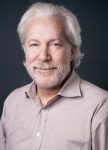
April Ford (photo by Antonella Fratino)

In the fifth and final articles of a series on sexual harassment and violence, the Jewish Independent speaks with Montreal writer April Ford.

As the late Maya Angelou wrote in I Know Why the Caged Bird Sings, “There is no greater agony than bearing an untold story inside you.”

Montreal-born fiction writer and essayist April Ford, who has been working as associate publisher for Southern Fried Karma, a literary press in Atlanta, Ga., since December 2017, knows this all too well.

“I’m honoured to stand alongside any woman who’s been mistreated, whether or not there’s a hashtag appended to her experience,” said Ford, a bold, heart-on-her-sleeve survivor of abuse. “The #MeToo movement, like any grassroots quest for equality, is one of unleashed compassion, controversy and confrontation … and, right now, it’s a mess. Sometimes, it seems more interested in the public shaming du jour of a celebrity sexual predator than in collective healing, and that frustrates me.”

Ford said she is not a believer in public shaming. “Black Mirror brilliantly depicts this nastiness in White Bear, season 2, episode 2,” she said.

“I’m even skeptical about how much the #MeToo movement can help women who’ve been abused, but who don’t have Twitter accounts, blogs or access to other popular venues for the dissemination of dark secrets to the masses … in exchange for emoticons and the chance to go viral,” she added.

In terms of some of the stories that have come out of the movement and how they have affected her, Ford said, “The story I’ve followed most closely is that of Concordia University in Montreal, where I completed the undergraduate creative writing program in 2007. Throughout the course of my degree, I spent a lot of time on campus as an aspiring but uncertain writer, and I sought mentorship from a handful of professors. I was consistently treated very, very well – there were no strings, pressures or consequences attached to the help and encouragement I received. That said, thanks to rumours, I knew to stay away from certain individuals within that concentrated world.

“Also, I started the program when I was 23 and, I think, being a few years older than the typical undergraduate student buffered me against harassment. Or maybe the negative experiences in my life outside of the program had trained me how to get through a situation as cleanly as possible, without giving anything away that wasn’t part of the experience I had signed on for, or having it taken from me without my consent.”

Regarding some of the high-profile people who have been outed as abusers via the #MeToo movement, Ford said, “I certainly have an opinion about how to cope with the abusive actions of people, whether family members, friends, mentors, celebrities or demi-gods. First, you have to be clear on your definition of abuse … and consistent. If you’re going to accuse one person of abusing you, then you can’t switch to a sliding scale when some actor or comedian you love is proven guilty of the same offence. And, no, I don’t believe you can separate the teacher, leader or artist from the abuser. That’s like saying you can separate all the white fur from the cream fur in a cat the colour of sand. It’s ridiculous.”

Ford was adopted as a child and only discovered after marrying a Jewish man (they have since divorced) – that her birth family may have Jewish roots.

When she was 15 years old, her adoptive parents, who had been fighting for years, decided to call it quits. Her mother left their home. Not long after, Ford lost her virginity to Bruce, a 34-year-old man. Up until then, she said, she “had hardly kissed a boy.”

Bruce instructed her to start taking birth control, “which I did,” said Ford, “as soon as I found a clinic that would dispense the pill to me for free and without questions like, ‘Where are your parents?’

“While my parents were dealing with the failure of their marriage, I was dealing with the euphoria and confusion that come with being a 15-year-old girl with no adult in her life to anchor her to a safe place. My mother, in trying to move forward from the damage my father’s abuse had caused her, was unable to be a mother to me. My father, in trying to hold his world together with rage, essentially fast-tracked me into the hands of a man who … [abused] me. I did my best to keep quiet – to hide the fact that this man I had rebelliously told everyone that I loved more than life itself was raping me every weekend.

“A lot of people in my life at the time could sense there was more to the story,” she said. “But, instead of getting involved or simply buying me a hot chocolate and asking how I was doing, they stopped being my friends.”

At that time, the mothers of Ford’s former friends insulted her with terms like “slut” and “whore” and said she had no business being anywhere near their daughters, sons and husbands. Ford went from being a decent student at a private Catholic high school for girls, a horse-lover and aspiring Olympic rider, to being what she referred to as “someone to be ashamed of, an afterthought.”

Ford can still vividly recall the whispers that, to her ears, were like screams of “all-knowing” grownups predicting that she was – at that young age – already done for; that she would end up pregnant, hooked on drugs and collecting welfare.

“None of that happened,” said Ford. “Not even close. Over the years, I’ve occasionally reconnected with people from that period. And, after they express exaggerated delight to see how well I’ve done for myself, they’d defensively stammer things like, ‘You seemed so mature and into your own thing … we just figured that’s how it was…. You said you were happy. Anyway, look at you now. Everything happens for a reason, right?’ No, it doesn’t.

“I’m sure some survivors can relate to my next statement: Bruce didn’t abuse me all the time. Not every time we had sex was rape, and there were times when he tried to initiate and I refused, and my wish was granted.” But there were several instances, as well as other types of abuse, that are too graphic to describe here.

Ford finds the whole concept of “moving on” troubling.

“It’s not a tidy process and it takes time,” said Ford. “It takes a lifetime. For me, moving on involved a lot of self-injurious behaviour in my late teens through to my 20s, and a lot of self-hate that I eventually learned to disguise as wit.

“My ‘disguise’ actually helped me push forward, to appear exponentially more confident than I was, so that I could create opportunities for myself. I’ve found there’s an expectation of real-life survivors of abuse to tell our tales demurely, to dab our eyes and conclude with, ‘But that was then, and I am stronger for it.’”

One message Ford has for other survivors is to not assume that people, including family and friends, will protect the deeply personal stories and truths you tell them. She advised that survivors tell their stories to the authorities and to people in positions to protect them, physically and legally. Most importantly, Ford stressed that survivors take charge of their emotional safety.

“In the years immediately following my break up with Bruce, I felt constantly in need of confessing my unworthiness to anyone who didn’t know the story, from new acquaintances to college professors to bartenders,” said Ford. “Thankfully, there haven’t been many cases where someone I’d confided in judged me unfairly. Mostly, people are compassionate and kind. But then, just last year, a pair of colleagues at the university where I had taught for eight years ‘profiled’ me, let’s call it … because they disagreed with a choice I’d made in my private life. They accused me of victimhood, based on what I’d shared with them in our friendships. We are no longer friends.”

As a self-described atheist, when in need of support, Ford prefers systems she can interact with directly, such as “proper nutrition, regular exercise and sleep hours, close friends and cuddly animals, work and pastimes that light joyful fires in her belly, and the occasional double shot of rum with a splash of Coke on the side. These things I can trust to always be available to me, and I am free to adjust and readjust their proportions to fit my always in-flux needs.

“What has not worked for me, in terms of healing, is writing about my experiences for the sole purpose of healing. I am a fiction writer to the bone. Sure, I graft details from my life onto the stories I write. But, actually, I use fiction to explore other people’s nightmares, so that I can take a break from my own. I need one kind of noise in my head to cancel out the survivor noise, if that makes sense.”

While Ford hopes that sharing her story here will do some good in the world, she would rather not impose her story on anyone. Further, she feels strongly that no one who has been abused is obligated to become a spokesperson for others.

“Sometimes,” she said, “the abuse a person experiences is so extreme that she needs the rest of her life just to learn how to step outside of her house without fear.”

Rebeca Kuropatwa is a Winnipeg freelance writer.

Format ImagePosted on September 7, 2018September 6, 2018Author Rebeca KuropatwaCategories WorldTags #MeToo, abuse, April Ford, culture, harassment, women
Learning negotiation together

Learning negotiation together

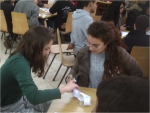
The Pathways program pairs Arab and Jewish high schools for two-day experiential workshops about interest-based negotiation skills. (photo by Emily Singer)

As politicians debate about how to bring peace to the Middle East, or if it’s even possible, a newly formed nonprofit organization is bringing together hundreds of Jewish and Arab children across Israel every year and teaching them how to get along.

The Pathways program, directed by Avi Goldstein and facilitated by Michael Schnall, pairs Arab and Jewish high schools for two-day experiential workshops about interest-based negotiation skills. The program, sponsored by the U.S. embassy and run in partnership with school networks and community organizations, is based in large part on concepts from the international bestselling book Getting to Yes: Negotiating Agreement Without Giving In by Roger Fisher, William Ury and Bruce Patton (Penguin Books, 2011) and on methodology developed at the Program on Negotiation at Harvard Law School. Thanks to the initiative of the Darca network, the school where I teach, Shaked Darca on Kibbutz Sde Eliyahu, has had the tremendous privilege of participating in Pathways for the past two years.

The Pathways program combines a few goals, the most important of which would be difficult to say. Last year, when we received the invitation to apply to participate, I saw it as an exciting opportunity to expose my students to two intensive days of study and conversation in English. The entire program is in English, and this is a natural common language for communication among the Jewish and Arab students. But the program exposes the students to so much more.

With rich and varied activities, the students learn English as the international language of negotiation, conflict resolution and peace. They develop many new skills with one central message – in order to “win,” you don’t need for someone else to “lose.” When you listen to others and you are curious about their needs, instead of reaching a compromise, you can often reach agreements in which both sides walk away with a feeling of success.

And all of this takes place in a setting in which students have the opportunity to meet kids from a very different population and culture. Or maybe not so different.

The program opens with an activity designed to foster cooperation among the students, while emphasizing what they share. They are divided into mixed groups and given the task to build a paper chain made up of things everyone in the group has in common. Sound simple? Now try it with one hand behind your back. Literally. The students need to talk and plan together, and also to write, cut and paste, all with lots of cooperation, creativity, and even laughter.

Throughout the program, the kids are given situations in which they have to negotiate with each other. For example, a kid lends his friend his iPod. The next day, after the iPod is returned, he discovers that it doesn’t work and he wants his friend to buy him a new one. This is his “position.” But, before he goes into negotiation with his friend, he has to weigh a number of important issues. What does he think his friend is going to claim? Might there be any truth to it? How valuable is his friendship with this person? What is most important to him, and on what is he prepared to compromise?

There is a lot of discussion over the two days about “positions” versus “interests.” If each side comes to the table after serious consideration of what is really important to him or her (their “interests”) and curiosity about what the other party wants and needs, this leaves open the possibility for empathy as well as creative, outside-the-box thinking, and then the sky’s the limit.

The students are exposed to a wide variety of situations that must be negotiated, but none of them addresses the political conflict in which they live. They are able to make connections and compare shared values with students whom they might never otherwise meet, in a setting where the “sides” are mixed up, so they are not negotiating as Jews and Arabs, but rather “Table 1” against “Table 6,” “parent” versus “child,” or friend and friend.

The first day concludes with two powerful exercises. In one, the students are asked to divide into pairs, lock arms and “try to bring their partner’s arm down to the table as many times as possible.” The students proceed to arm wrestle. Mike, the program facilitator, asks why the students felt a need to struggle with their partner. “Did anyone notice that with cooperation, both players could arrive at much higher results?”

The final activity of Day 1 is an improvisational role play of a negotiation between a father and child. The child wants to go to a party and to come home late. Mike is the stubborn father who says, “By 10:30.” The part of the kid is played by students, who take turns volunteering. It begins with a classic negotiation of compromises. Midnight? No, 10:40. How about 11:30? No, 10:45. Whatever the outcome, someone will walk away disappointed. Until one student finally goes up to the stage and asks the Pathways magic word, “Why?” After a real conversation about interests, the boy understands that his father is worried about safety on the roads at night, and he’s feeling too tired to stay awake until his son arrives home safely. So, the boy suggests he stay overnight at his friend’s house and return home in the morning. Dad agrees. Everyone “wins” and walks away happy.

The second day begins similar to the first. After another ice-breaker, volunteers are invited to participate in a game. The kids are divided into two teams. There is a long rope, and each side has to pull the middle of the rope over the red line on their side as many times as possible. Rida, my Arab partner teacher, and I stand there watching in disbelief as the two sides struggle with all their might to “win.” Do they not remember the arm wrestling from the day before? Why are they not working together? But we learned from this and from many other activities that these skills are like muscles. Our habits and assumptions need to be understood and new skills need to be developed and exercised often. The good news is that they are relevant in every aspect of our lives – whether with friends, colleagues, family or business partners – so there is no shortage of opportunities to practise.

By the end of the second day, the students leave with a new language of negotiation – positions versus interests, options versus alternatives, communication, legitimacy, obligation and, of course, everything in English. They also leave thinking a bit differently about “the other,” with some students exchanging emails and telephone numbers.

Unfortunately, after the two days, the program ends and the students remain 45 minutes away, but worlds apart. This year, Pathways has begun new initiatives to build on the program for the future. To this end, I participated in Pathways’ Negotiation Education Teachers Fellowship, funded by the U.S. embassy, designed to bring together a community of teachers to integrate the learning of problem-solving negotiation skills into the English-language curriculum. We are also looking for ways to continue bringing the students together.

I feel incredibly blessed to be a part of the Pathways program and the rich community of Arab and Jewish English teachers in Israel who devote their lives to making the world a better place through education. I’m deeply grateful to the Darca network and to my school, Shaked Darca, for their support and their ongoing desire for innovation and alternative education. I also appreciate the contribution of the U.S. embassy, and Mike and Avi, who created Pathways and continue to keep it going, always thinking how the program can be improved and expanded. Most importantly, I am thankful to our fabulous students, mine and my partner teacher Rida’s, without whose open minds, open hearts and willingness to try new things and to dare to speak in English for two straight days, none of this would be possible.

Our children are truly our future. The more they know the language – and tools – of communication, cooperation and peace, the better our world will be. For more information on Pathways Institute for Negotiation Education, see pathwaysnegotiation.org.

Emily Singer is an English teacher and coordinator at Shaked Darca School on Kibbutz Sde Eliyahu in Israel. Singer taught at Vancouver Talmud Torah and her husband, Ross, was rabbi of Vancouver’s Shaarey Tefilah congregation until 2004.

Format ImagePosted on September 7, 2018September 6, 2018Author Emily SingerCategories IsraelTags coexistence, Israel, negotiating, peace, tikkun olam
World without prisons?

World without prisons?

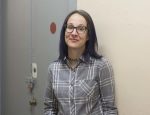
Prof. Liat Ben-Moshe teaches disability studies at the University of Toledo. (photo from Liat Ben-Moshe)

University of Toledo assistant professor Liat Ben-Moshe moved to the United States in 2002 to do her doctorate in disability studies at Syracuse University, as the field was not offered in Israel at the time.

Ben-Moshe describes the field as one “that looks at disability as an identity and a culture.”

“So,” she said, “we read things about mad culture – ‘mad’ as in ‘crazy’ – deaf culture and a variety of disability histories, disability laws and social movements related to disabilities … as well as representation [of] people with disabilities and disability, in general, in films and in literature.”

Ben-Moshe is a member of and has been a leading voice in the disability community. She works to educate anyone who will listen about disability rights, to change the outlook.

“We are not asking for charity,” said Ben-Moshe. “We are asking for what is rightfully ours, like an increase in disability stipends and things of that nature. At that time, there was also no kind of formulated disability law.” Now, there is, and there are both similarities and differences between such laws in Canada, the United States and Israel, she said, noting, “They are all rights-based laws, discrimination-based laws.”

As Ben-Moshe was developing her understanding of disability law and how society began looking differently at people with disability, she started seeing correlations between how people with disabilities were being treated in institutions and how prisoners were being treated.

Society has dismantled many large institutions for people with mental and intellectual disabilities. “People don’t really understand how massive these institutions were,” said Ben-Moshe. “Some of them housed 3,000 people with intellectual disabilities in the heyday.

“Closures of these facilities came out of a desire to really change the way that we understand what disability means and how to react to it on a social level,” she explained. “We don’t need to be segregated in order for the civility to be viable in our communities. And the reason I’m connecting it to the prison arena is because there has been – and, today, for sure – a vibrant, although quite small, social movement that advocates for the closure of prisons…. By that, I mean prison abolition.”

Ben-Moshe contends that people should not be locked away as punishment.

“It’s really a radical framework – to understand how we can react to each other differently and how we can respond to harm that’s done to us differently … without segregation, without locking people away,” she said. “When you take this [locking up] idea of out of sight, out of mind, [something] that only exacerbates the root of the harm, you can see a lot of connections between this [non-segregating] framework and the framework of deinstitutionalization.”

Just as some people thought that deinstitutionalization could not work, there are those who don’t believe that decarceration is achievable. But Ben-Moshe said we can learn from how deinstitutionalization took place in most American states and in Canada, and how well it has worked, in general.

“How do we learn from it, as a historical precedence?” she said. “A lot of my work is about bridging those two ideas – frameworks and social movements.”

Ben-Moshe mentioned the 128-page ebook called Are Prisons Obsolete? by Angela Davis (Penguin Random House, 2003). In it, says the description online, Davis argues that “American life is replete with abolition movements and, when they were engaged in these struggles, their chances of success seemed almost unthinkable. For generations of Americans, the abolition of slavery was sheerest illusion. Similarly, the entrenched system of racial segregation seemed to last forever, and generations lived in the midst of the practice, with few predicting its passage from custom…. Davis expertly argues how social movements transformed these social, political and cultural institutions, and made such practices untenable.”

There is no short answer to the question of how to abolish prisons. But, according to Ben-Moshe, the answer has to come from communities. The prison abolition movement in the United States, she said, is led by the black feminist movement and, in Canada, it is led by indigenous groups, as these communities are most impacted by the prison system.

Insofar as the movement’s success in both countries, Ben-Moshe said, “I’d say, definitely, there is, in Canada, a pretty vibrant prison abolition movement. As it is in the U.S., it’s pretty varied. Some of it does come from the indigenous perspective. For example, the idea of sentencing circles.

“In many indigenous communities, there has never been a prison. So, we don’t necessarily need to go back in time to see what it means to live in a world without a prison. We can talk to the indigenous people who have never bonded to this idea of prison. Not to romanticize it. I mean, harm has been done in those communities, but how did they deal with it? That’s definitely something that’s going on in Canada, as well.”

Ben-Moshe pointed to the somewhat new concept of using ankle bracelets, as opposed to imprisonment, as a misguided move. The way she sees it, by doing this, instead of reducing incarceration, the prison walls become endless.

“These are for-profit things that people who are incarcerated have to pay for,” said Ben-Moshe. “And what we see is that people who would have not even been incarcerated before now get ankle bracelets.”

In the same way that disability can’t exist in a place with no barriers, prisons can cease to exist if people are taught how to better work within society’s limits.

“If everyone spoke sign language, those who are deaf wouldn’t even be categorized as disabled, because they would just be a linguistic minority,” said Ben-Moshe. “Disability is not something in people. It’s something in the interaction between people and their environment.

“In disability studies, we talk about ‘ablism’ (able-ism), which is oppression that people with disabilities face. But, I also connect that to racism, sexism and other forms of oppression, to say that we’re always living simultaneous forms of privilege and oppression.”

Rebeca Kuropatwa is a Winnipeg freelance writer.

Format ImagePosted on September 7, 2018September 6, 2018Author Rebeca KuropatwaCategories WorldTags decarceration, deinstitutionalization, disability, mental health, prison reform
Many good things happened

Many good things happened

Prime Minister Binyamin Netanyahu presents the nuclear secrets of Iran at a special press briefing in Jerusalem on April 30, 2018. (photo from IGPO courtesy Ashernet)

It has been a year of diplomatic success for Israel, as more countries upgraded their relations with the Jewish state. This took, in general, two forms: heads of government making an official visit to Israel or Prime Minister Binyamin Netanyahu visiting other countries; and the establishment of the embassies of the United States, Guatemala and Panama in Jerusalem, Israel’s capital.

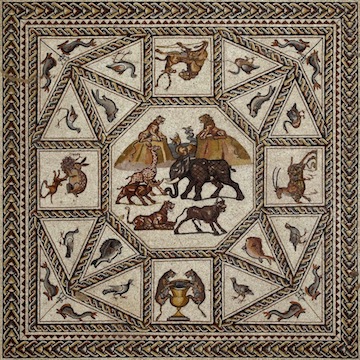
photo - The newly discovered Lod mosaic.
The newly discovered Lod mosaic. (photo from IGPO courtesy Ashernet)

In April, at a special press conference hosted by Netanyahu, the world learned of the secret storage facilities in Iran that housed Iran’s nuclear ambitions. It is not known exactly how Israel managed to find out the location of the files, or how they were copied and brought back to Israel, but the revelations served Israel well, and the files were instrumental in making the United States renege on the nuclear agreement that President Barack Obama had made with the Iranian regime.

It was a long, hot summer in more ways than one. The latest form of terrorist aggravation was for Gazans to assemble in the thousands along the Gaza-Israel border and launch kites and balloons to which were attached flaming torches that set fire to forests and agricultural fields in Israel, causing uncountable damage and destruction. A variation of this procedure was for terrorists to attach flaming torches to lines attached to the legs of kestrels who managed to survive long enough to set trees alight in Israeli forests near the border.

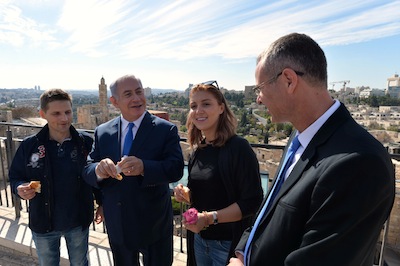
photo - In November last year, the three millionth tourist of 2017 arrived in Israel. He and his partner were shown around Jerusalem’s Tower of David Museum by Prime Minister Binyamin Netanyahu
In November last year, the three millionth tourist of 2017 arrived in Israel. He and his partner were shown around Jerusalem’s Tower of David Museum by Prime Minister Binyamin Netanyahu. (photo from IGPO courtesy Ashernet)

In better news, this year Israel became the focus of the world’s cycling fraternity. Due to the generosity of Israeli-Canadian billionaire Sylvan Adams, one of the three most important annual cycling races in the world, the Giro d’Italia, started in Jerusalem with a time trial and then took the cyclists from Haifa to Tel Aviv, with a third stage from Be’er Sheva to Eilat. All this was made possible by an $80 million donation to the federation organizing the event. It was one of the biggest sporting events ever staged in Israel and was seen by tens of thousands on television around the world.

The Jewish year opened with the announcement that one of the most outstanding mosaics ever found in Israel, from the Roman era, was going to be incorporated in a new museum in the city of Lod, where it had been found during preparations for building works. This beautiful mosaic was one of many important archeological finds in Israel in the past 12 months.

photo - Prime Minister Binyamin Netanyahu is welcomed by Indian Prime Minister Narendra Modi in New Delhi in January 2018.
Prime Minister Binyamin Netanyahu is welcomed by Indian Prime Minister Narendra Modi in New Delhi in January 2018. (photo from IGPO courtesy Ashernet)

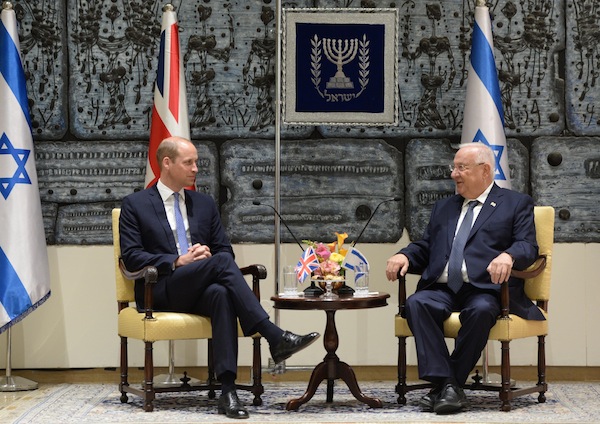
Also at the start of the Jewish year, tourism in Israel hit a new high, with the three millionth tourist of 2017 arriving at Ben-Gurion International Airport in November. And, this summer, Prince William made an official visit to Israel, where he was received by President Reuven Rivlin and Netanyahu. Members of the British Royal family have been to Israel before, but never on an official visit.

As always, Israeli technology, universities and medical prowess was remarkable over the year. And, when natural disasters occurred around the world, such as earthquakes and floods, Israel was among the first to send aid.

Not all the news was good for Netanyahu, who, for a major part of the year, was being investigated and questioned by Israel Police for allegedly obtaining inappropriate large-scale benefits from businessmen – charges Netanyahu strenuously denied. Ari Harrow, Netanyahu’s former chief of staff, signed a deal to become a state witness to testify against the prime minister.

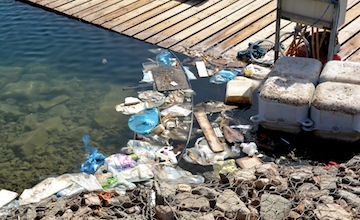
photo - Plastic waste accumulates in an inlet along Eilat’s Red Sea coast. A worldwide problem, much is being done in Israel to manage the correct disposal of plastic, paper and glass
Plastic waste accumulates in an inlet along Eilat’s Red Sea coast. A worldwide problem, much is being done in Israel to manage the correct disposal of plastic, paper and glass. (photo from IGPO courtesy Ashernet)

The Jewish year also saw Netanyahu’s wife Sara receiving a lot of negative press. In the previous year, the Jerusalem Labour Court awarded an employee of Sara Netanyahu’s the sum of $46,000 as he claimed that she had been abusive towards him and withheld wages at times. While she appealed the ruling, it was turned down. She is now being investigated for allegedly ordering expensive meals at the prime minister’s official Jerusalem residence at government expense, despite the fact that the prime minister’s official residence employed a cook. She refutes the accusations.

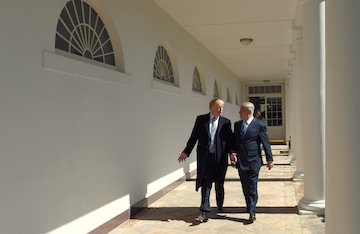
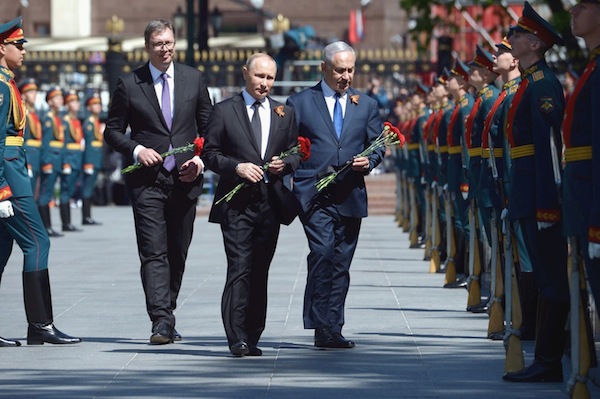
Despite these problems, Binyamin Netanyahu maintains a high international profile – he has the ear of presidents Donald Trump and Vladimir Putin, for example.

photo - U.S. President Donald Trump and Prime Minister Binyamin Netanyahu at the White House in January 2018
U.S. President Donald Trump and Prime Minister Binyamin Netanyahu at the White House in January 2018. (photo from IGPO courtesy Ashernet)

As 5778 closes, Israel has the pleasurable problem of deciding how best to market the huge natural gas finds that are presently churning about below the waves of the Mediterranean Sea, well within Israel’s exclusive continental shelf.


photo - Left to right: Prime Minister Binyamin Netanyahu, Sara Netanyahu, Ivanka Trump and Jared Kushner at the opening of the U.S. embassy in Jerusalem
Left to right: Prime Minister Binyamin Netanyahu, Sara Netanyahu, Ivanka Trump and Jared Kushner at the opening of the U.S. embassy in Jerusalem. (photo from IGPO courtesy Ashernet)
photo - The Guatemalan flag is projected on Jerusalem’s Old City walls in anticipation of Guatemala moving its embassy from Tel Aviv to Jerusalem
The Guatemalan flag is projected on Jerusalem’s Old City walls in anticipation of Guatemala moving its embassy from Tel Aviv to Jerusalem. (photo from IGPO courtesy Ashernet)
photo - Violence along the Gaza border
Violence along the Gaza border. (photo from IGPO courtesy Ashernet)
photo - Prime Minister Binyamin Netanyahu and Russian President Vladimir Putin in Moscow
Prime Minister Binyamin Netanyahu and Russian President Vladimir Putin in Moscow. (photo from IGPO courtesy Ashernet)
photo - The Giro d’Italia time trials in Jerusalem
The Giro d’Italia time trials in Jerusalem. (photo from IGPO courtesy Ashernet)
photo - Prince William and President Reuven Rivlin in Jerusalem
Prince William and President Reuven Rivlin in Jerusalem. (photo from IGPO courtesy Ashernet)
Format ImagePosted on September 7, 2018September 6, 2018Author Edgar AsherCategories IsraelTags environment, Israel, Netanyahu, photography, Putin, Rosh Hashanah, Trump

Posts pagination

Previous page Page 1 … Page 176 Page 177 Page 178 … Page 323 Next page
Proudly powered by WordPress