Skip to content
  • Home
  • Subscribe / donate
  • Events calendar
  • News
    • Local
    • National
    • Israel
    • World
    • עניין בחדשות
      A roundup of news in Canada and further afield, in Hebrew.
  • Opinion
    • From the JI
    • Op-Ed
  • Arts & Culture
    • Performing Arts
    • Music
    • Books
    • Visual Arts
    • TV & Film
  • Life
    • Celebrating the Holidays
    • Travel
    • The Daily Snooze
      Cartoons by Jacob Samuel
    • Mystery Photo
      Help the JI and JMABC fill in the gaps in our archives.
  • Community Links
    • Organizations, Etc.
    • Other News Sources & Blogs
    • Business Directory
  • FAQ
  • JI Chai Celebration
  • JI@88! video

Recent Posts

  • BGU fosters startup culture
  • Photography and glass
  • Is it the end of an era?
  • Taking life a step at a time
  • Nakba exhibit biased
  • Fight for Jewish rights
  • Film festival starts next week
  • Musical with heart and soul
  • Rabbi marks 13 years
  • Keeper of VTT’s history
  • Gala fêtes Infeld’s 20th
  • Building JWest together
  • Challah Mom comes to Vancouver
  • What to do about media bias
  • Education offers hope
  • Remembrance – a moral act
  • What makes us human
  • המלחמות של נתניהו וטראמפ
  • Zionism wins big in Vegas
  • Different but connected
  • Survival not passive
  • Musical celebration of Israel
  • Shoppe celebrates 25 years
  • Human “book” event
  • Reclaiming Jewish stories
  • Bema presents Perseverance
  • CSS honours Bellas z”l
  • Sheba Promise here May 7
  • Reflections from Be’eri
  • New law a desecration
  • Resilient joy in tough times
  • Rescue dog brings joy
  • Art chosen for new museum
  • Reminder of hope, resilience
  • The national food of Israel?
  • Story of Israel’s north

Archives

Follow @JewishIndie
image - The CJN - Visit Us Banner - 300x600 - 101625

Category: Arts & Culture

Information and chaos

Information and chaos

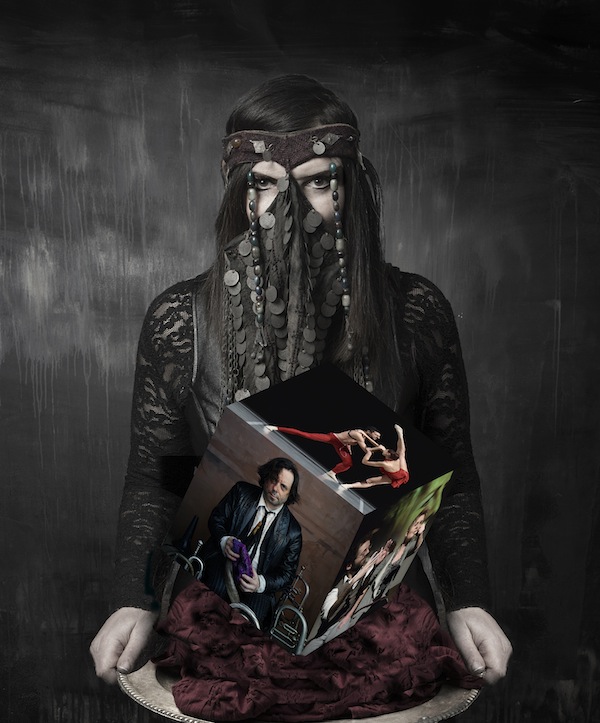
Wells Hill has its world première Nov. 24-26 at DanceHouse. (photo by David Cooper)

“What does it mean to imagine a world where we are not connected all the time?” This is just one of the many questions choreographer (and Jewish community member) Vanessa Goodman is exploring in Wells Hill, which has its world première Nov. 24-26 at DanceHouse.

Goodman is artistic director of the dance company Action at a Distance. Wells Hill was commissioned by Simon Fraser University’s Woodward’s Cultural Programs (SFUW) and is co-presented by DanceHouse and SFU’s School for the Contemporary Arts. It is a Celebrate Canada 150+ event, but its genesis goes back a few years.

“In early 2014, SFU’s Michael Boucher and I were out for coffee discussing my work,” Goodman told the Independent. “At the time, I was planning what I was going to present at the Chutzpah! Festival in 2015. In our conversation, I shared the anecdote that I grew up in philosopher Marshall McLuhan’s former family home [on Wells Hill Road] in Toronto and that Glenn Gould would sometimes visit. As two towering figures in 20th-century Canada, the idea of being a fly on the wall during their conversations was fun to imagine. Michael helped me recognize the seeds for a piece in this story, and has since supported its creation and production through SFUW.”

In creating Wells Hill, Action at a Distance collaborated with a team including composers Loscil (Scott Morgan) and Gabriel Saloman, lighting designer James Proudfoot and projection artists Ben Didier and Milton Lim. The promotional material notes that, in the work, seven dancers “splice together themes of technology and communication.”

“In Understanding Media, McLuhan stated that different media invite different degrees of participation on the part of the person who consumes it,” explained Goodman. “For me, this draws parallels to consuming dance and is one of the themes I explore in the piece. McLuhan divided media consumption into two categories: hot and cool. Hot media consumption requires the viewer to intensify the use of one single sense and is called ‘high definition.’

“McLuhan contrasted this with cool media consumption, which he claimed requires more effort on the part of the viewer to determine meaning due to the minimal presentation of detail. In these cases, a high degree of effort is necessary to fill in the blanks in areas where the information is obscured. It demands much more conscious participation by the person to extract value and meaning. This type of consumption is referred to as ‘low definition.’ When applied to dance, the audience would be required to be more active here, which includes their perceptions of abstract patterning and simultaneous comprehension of all the working parts.

“In this work,” she said, “I apply hot and cool media consumption to crafting the material and finding authenticity within the embodiment of the performers. While I still believe that the audience needs an entry point into the work to become invested, I am interested in defining the hot and cool medium consumption in my staging, demanding the viewer work through their high and low definition comprehension. I am interested in the interplay between hot and cool as a continuum: where they are measured on a scale and also on dichotomous terms.”

Wells Hill isn’t about raising or answering any specific questions, she said, “as much as it is about observing and interpreting some of McLuhan and Gould’s fascinating ideas. In making this work, I kept coming back to the Douglas Coupland quote, ‘I miss my pre-internet brain.’ What does it mean to imagine a world where we are not connected all the time? In some ways, it’s comforting to be plugged into this collective human mass. On the other hand, there is an anxiety linked to this relationship and violence associated with this ceaseless bombardment of data. As McLuhan predicted, technology has become an extension of our nervous system. This is why I feel dance is such an incredible medium to explore these ideas: at its core, human movement is neuromuscular connectivity. I have developed movements with my collaborators that are derived from tasks from our physical reactions to technology: from our Pavlovian responses to messages and social media notifications to the deeper impact on our attention spans while we’re connected. I want to capitalize on both the order that we receive information in and the chaos it can create.”

In response to a question about what McLuhan and Gould each offer by way of the content or structure of Wells Hill, Goodman said that the sound score “is heavily influenced by the history of the house.”

She said, “Eric McLuhan, Marshall’s eldest son, told me that Gould would often come to the home for visits, where he would discuss media, performance and art with his father. Gabriel Saloman and Scott Morgan, both incredible composers that I have been collaborating with over the past few years, have each composed pieces of the music for Wells Hill. They have incorporated audio samples of both McLuhan and Gould speaking about their theories. This adds an interesting entry point to the ideas that inspired Wells Hill. The house has a rich past that has been documented through the written form but has never been explored performatively. I am drawing from this story for the staging of this work, which creates an environment and historical context for the non-linear story arc.”

Wells Hill is at Fei and Milton Wong Experimental Theatre, SFU Goldcorp Centre for the Arts, on Nov. 24-25, 8 p.m., and Nov. 26, 2 p.m. In conjunction with the show, there are a few community events. Speaking of Dance Conversations on Nov. 21, 7 p.m., at SFU Goldcorp Centre for the Arts (free), is a community roundtable conversation around McLuhan and the Global Village, led by moderator Richard Cavell, founder of UBC’s Bachelor in Media Studies program and author of McLuhan in Space: A Cultural Geography, and guest speakers. There are also pre-show chats Nov. 24-25, at 7:15 p.m., at the centre, and a post-show social on Nov. 24. Tickets and more information can be found at dancehouse.ca or by calling 604-801-6225.

Format ImagePosted on November 17, 2017November 15, 2017Author Cynthia RamsayCategories Performing ArtsTags Canada 150, contemporary, DanceHouse, Glen Gould, Marshall McLuhan, SFU, Vanessa Goodman
Feeling lucky, grateful

Feeling lucky, grateful

Aiden Cumming-Teicher celebrated his bar mitzvah by organizing Our Voices. (photo from Aiden Cumming-Teicher)

Aiden Cumming-Teicher got his start in acting at the age of 9. In the four years since then, he has played leading roles in numerous films and documentaries, receiving several Joey Awards nominations for his acting and winning a Young Entertainer Award in Los Angeles. For Beyond the Sun, he spent two months shooting in Argentina last year. He describes the film as “a religious adventure movie for kids.” The film – which features Pope Francis – was a highlight of his career so far, he said.

This year, Aiden celebrated his bar mitzvah in a novel way: by organizing Our Voices, a film festival that put child and youth filmmakers in the spotlight. Said Aiden of his unusual choice, “I wanted something that wasn’t all about me, something that gave back to other people, gave them the chance to express themselves and the opportunity to be heard and celebrated.”

Our Voices received more than 200 submissions from around the world and the contest culminated in a screening at Hollywood 3 Cinema in Pitt Meadows on Nov. 4. The entries represented a wide range of

genres and narrative styles: documentaries, films about relationships, films about giving kids the tools to deal with anxiety, music videos, comedies. The selections were judged by a panel that included professionals in the movie industry, with Aiden having the final say on the winners. His favourite movie was A Pencil, a satire on Apple. “It didn’t really fit in the categories so we created a Wildcard Award,” said Aiden. “We also made a Tikkun Olam Award for another wonderful film from Australia, Today?, which was about giving kids the tools to express themselves, finding solidarity against bullying.”

Admission for the screening of the 60-plus films was by donation, with the proceeds being donated to B.C. Children’s Hospital. Aiden presented a cheque for $610 to the hospital on Nov. 7, to show his gratitude for the care they have provided him, his friends and family.

“A big part of my life is finding ways to give back, because I know that I have been blessed,” said Aiden. “My family has faced difficult times – such as my mom’s cancer diagnosis a few years back – but we have always found ways to make it through.”

With his parents, Chris and Apis, Aiden helps others, despite whatever adversity he might be facing. “When my mom was sick, we made a kids book to help others going through the same thing. It’s available as a free PDF to anyone that needs it, and some printed copies have been given away too.”

Regarding his approach to tzedakah, he said, “A big part of this is feeling that we are helping to heal the world, even a little. I can’t fix everything, but being a kid doesn’t mean I’m helpless. I can still make a difference, even if it’s a small one.”

He credited his family for his sense of agency. “I am really thankful that I have a very strong, loving family, and that we tackle all challenges together, perform mitzvot together.”

This was certainly the case with a documentary he made on Vancouver Island, about saving at-risk salmon fry during a brutal drought.

Some of Aiden’s philanthropic work has brought him into contact with the harsh potential realities of life as a young adult. In 2016, he received an award at the Wall of Stars, an annual event that celebrates excellence in entertainment, with an emphasis on mutual support among artists. “The best part was that it was presented by Ms. Carol Todd, mother of Amanda Todd,” he said, referring to the teen who committed suicide in 2012 after relentless bullying. “My mom was there to see it,” he said.

Reflecting on the personal rewards of his work, Aiden said, “Making this film festival made me very happy. We got to see so many perspectives from around the world and see so many different lives.”

The big picture, though, is the impact of all this on the world around him. “I have been lucky,” he said, “to be in projects that all have a positive message.”

Shula Klinger is an author and journalist living in North Vancouver. Find out more at shulaklinger.com.

Format ImagePosted on November 17, 2017November 15, 2017Author Shula KlingerCategories TV & FilmTags Cumming-Teicher, film festival, tikkun olam, tzedekah, youth
The gift of innocence?

The gift of innocence?

The Innocence Treatment by Ari Goelman is a psychological thriller set in 2031 America. 

Looking for a smart, tense, psychological thriller for your teenage reader? Ari Goelman’s The Innocence Treatment (Roaring Brook Press, 2017) would fit the bill. Though, if you’re unsure, you can ask the author himself. Goelman will be doing a reading and book-signing on Nov. 21, 7 p.m., at Book Warehouse on Main Street. He will also be at the Cherie Smith JCC Jewish Book Festival on Nov. 27, 6:30 p.m.

Goelman is originally from Philadelphia. “I moved around the U.S. a bunch before ending up in Vancouver, living mostly in New York City and Boston before I came here,” he told the Independent. “I came to Vancouver gradually, a few months here (1995), a few years here (1997-1999), until finally settling here in 2006. I wanted to make sure I waited until I definitely couldn’t afford to buy a house in the city. As for why, I had family in Vancouver, so, when I was looking into grad schools, I knew it was a fun (and back then) affordable place to live.”

The Innocence Treatment is Goelman’s second book. His first, The Path of Names, for middle-grade readers, received many literary awards and nominations. He also writes short stories and is on the faculty of Kwantlen Polytechnic University. His undergraduate degree in economics is from New College of Florida, he has an MSc in planning from University of British Columbia and a PhD in urban studies from Massachusetts Institute of Technology.

photo - Ari Goelman
Ari Goelman (photo by John Goldsmith Photography)

“One of the first bits of paid writing I ever did was for this very newspaper, when I first came to Vancouver in 1995,” he shared. “True story. A once-off article about Kidsbooks.” True, indeed. The story, “No kidding around,” was published on Sept. 29, 1995, in the Jewish Western Bulletin, the Independent’s predecessor. But back to the present … well, the future.

Goelman sets The Innocence Treatment in his home country in 2031, when “the United States was still enjoying the lull between the first and second uprisings. A drought was drying out the last of the great western forests, but it would be another two years before the massive wildfires that left millions homeless and sparked the second uprising.”

His main character, 16-year-old Lauren was once so innocent that she had to be watched at all times so that no harm would come to her. At first, she is “super-excited” to be undergoing a medical procedure to “fix” her, because then she “won’t be stupid anymore.” But, afterward, she discovers that understanding people and their motivations doesn’t necessarily lead to happier or better outcomes and, more than once, the “new” Lauren must use her ample self-defence skills and literally kick some butts.

“Lauren’s kick-ass qualities naturally emerged from her character,” said Goelman about his strong female lead. “I started with the idea of a character who had spent her whole life very naive and very protected, and I imagined she’d be furious once the veil was lifted and she started to experience the world as it really was. I figured, as well, that after spending her whole life being unavoidably passive, she would be thrilled by her new ability to act and would make the most of those abilities.”

The problem becomes one of self-restraint, which Goelman explicitly explores in a chapter involving an experiment while Lauren is in custody, which I personally found somewhat out of place, or forced.

“What I was trying to do in that chapter was to show Lauren’s inability to control herself, even when she genuinely wants to, both for her own self-interest and to spite Dr. Corbin,” explained Goelman. “That’s what Corbin is really measuring – not Lauren’s fighting ability, but her paranoia and anger. It was a fun chapter to write, because it’s from Lauren’s perspective and she’s aware of the challenge that she’s failing, even as she fails it.”

Overall, The Innocence Treatment is a fun book to read. To use an apt cliché, it is a page-turner. It is also a little scary in its seeming prescience, having been written before the election of Donald Trump and the apparent descent of America.

“Yes, The Innocence Treatment does feel a bit unfortunately prescient at this point,” agreed Goelman. “I’m glad it was published this year, or it would have started seeming less like a near future world and more like the past.”

As for what he thinks the future might hold in reality, Goelman said, “I think the most we can hope for is to slow climate change and deal with its consequences in a fair way that limits human suffering. I’m not real optimistic about our near-term prospects, as I think that nothing good will happen as long as so much of the world’s resources are controlled by so few individuals and families.

“The world of The Innocence Treatment is very much formed by the combination of climate change disaster and the unequal distribution of wealth. And,” said Goelman, “while the election of Donald Trump in the U.S. is the latest and maybe the best example of how these two trends come together, we don’t have to look so far from home. The B.C. Liberals ran this province for 16 years, defunding public education and subsidizing the fossil fuel industry, at the behest of their very wealthy (and largely unregulated) donors.

“On the upside,” he said, “it’s not like the solutions are so complicated – if we get money out of politics, I believe humans can be really brilliant at solving problems collaboratively. So, while I’m pretty pessimistic about any major improvement in the near term, I think it’s very possible to change things for the better – it just requires the political will. There’s a part of The Innocence Treatment where Lauren’s older sister describes the family’s life right after the ‘Emergency’ era permanently reshaped the U.S., and one of the things she remembers is it wasn’t so bad being without power, as people came together to help each other. I think there’s a lot of truth to that. Given the chance, humans are really good at working together. They’re also really good at struggling for dominance and to monopolize scarce resources. It’s anyone’s guess which direction we’re going.”

For the full schedule of the Jewish Book Festival, which runs Nov. 25-30, visit jewishbookfestival.ca.

Format ImagePosted on November 17, 2017November 15, 2017Author Cynthia RamsayCategories BooksTags Ari Goelman, dystopia, Jewish Book Festival, Trump, United States, youth
Step aside fried latkes

Step aside fried latkes

My younger brother has one main rule for my nieces, who are 6 and 4 years old – “No head injuries.” Sounds simple enough, until you see one of them launch themselves off the back of the couch. I could see a bit of them in the character of Sadie in Queen of the Hanukkah Dosas, written by Pamela Ehrenberg and illustrated (beautifully and creatively) by Anjan Sarkar.

“It wasn’t that I didn’t want my little sister, Sadie, to help us make dosas for Hanukkah,” explains her big brother. “The problem was, she climbed too much.” Onto tables, out of cribs, up stacks of cans at the supermarket, Sadie does like to climb. And luckily so, it turns out. But you’ll have to read the book to know why.

book cover - Queen of the Hanukkah Dosas
Queen of the Hanukkah Dosas cover

If the title didn’t give it away, Sadie and her family are a Jewish family with Indian heritage. Instead of latkes, they are celebrating the Holiday of Lights with dosas, and there is a recipe for the Indian pancake in the book, as well as a recipe for sambar, a vegetarian lentil stew made with tamarind paste and many other delicious ingredients.

Queen of the Hanukkah Dosas, published by Farrar, Straus and Giroux (2017), is part of PJ Library, which sends free Jewish children’s books to families with kids from 6 months to 8 years old. B.C. community members can sign up through Jewish Federation of Greater Vancouver or Jewish Federation of Victoria and Vancouver Island.

PJ Library’s selection committee chose Queen of the Hanukkah Dosas because it “loves how this book celebrates the varied cultural and ethnic backgrounds that make up today’s Jewish community, and encourages each of us to be proud of our individuality.”

The book also offers the opportunity to talk about various holiday customs that cut across Jewish cultures. Sadie wears a dreidel costume for some of the book, the family lights the chanukiyah, there is gelt on the table and, of course, dosas are fried, so there’s that miracle of oil to discuss.

Format ImagePosted on November 17, 2017November 20, 2017Author Cynthia RamsayCategories Books, Celebrating the HolidaysTags Chanukah, diversity, food, PJ Library
Brave choice to stage Taken

Brave choice to stage Taken

A scene from United Players’ production of Taken at Midnight, which is at the Jericho Arts Centre until Nov. 26. Seen here are Brian Hinson as the Nazi Dr. Conrad and Suzanne Ristic as Irmgaard, Hans Litten’s mother. (photo by Nancy Caldwell)

As a Jew, a lawyer and a child of a Holocaust survivor, I am embarrassed to say that I had never heard of Hans Litten until I saw United Players’ production of Taken at Midnight, which runs to Nov. 26 at Jericho Arts Centre.

Litten was a brilliant young Jewish-German lawyer, known for his defence of opponents of the Nazi movement. In 1931, he had the audacity to subpoena Adolf Hitler as a witness in the trial of four Nazis charged with murder, and subjected him to a grueling three-hour cross-examination, exposing the Nazi party for what it really was – a murderous bunch of thugs. Litten called Hitler “a cross between Baron Munchhausen and Attila the Hun.”

Unfortunately for Litten and the world, within two years Hitler was in power and he started to exact his revenge on his opponents. At midnight on Feb. 28, 1933, after the Reichstag (German parliament) fire, Litten, along with thousands of others, was arrested or, as the Nazis euphemistically called it, taken into “protective custody” at a series of concentration camps. Litten became known as “Hitler’s personal prisoner” – the cocky Jewish lawyer who had dared to expose the Fuhrer’s weaknesses – and, over the years, was subjected to brutal torture and unspeakable degradation as punishment. Despite the valiant efforts of his mother, Irmgaard, to obtain his release over the five years of his incarceration, Litten ultimately committed suicide in Dachau in 1938, which was a bit messy for the Nazis, as they wanted their political prisoners to die accidentally or naturally, not by taking their own lives.

The irony is that Litten was not technically Jewish. His mother was not Jewish and his father had converted to Christianity (to make things easier). As Litten says in the play, “I am an atheist Jew and, prior to that, I was an atheist Lutheran.” Of course, that made no difference to the Nazis, who went back three generations to ferret out Jewish blood.

Playwright and filmmaker Mark Hayhurst’s 2010 BBC films The Man Who Crossed Hitler and To Stop a Tyrant planted the seeds for this staged work. It had its West End (London, England) debut in 2014. Reviewers called it a “masterpiece of theatre not to be missed.” Now, United Players has taken on the formidable task of presenting this gripping story to Vancouver audiences. From the minute you walk into the theatre, the dark, shadowy, stark set – an elevated wooden platform fronted by barbed wire positioned between two floor-to-ceiling red banners emblazoned with black swastikas – is a harbinger of the grim things to come.

The entire cast, mostly comprised of veteran actors, is stellar and, as an ensemble, makes this a truly remarkable theatrical experience. Particular mention has to be made of the two main protagonists – Suzanne Ristic as Irmgaard and Sean Anthony as her son. Ristic is sublime in her portrayal of this strong, heroic woman who takes on the Gestapo establishment in a relentless battle to free her son. She often takes centre stage to talk directly to the audience, thereby breaking down the fourth wall, making for a very intimate encounter. And Anthony plays his difficult role with dignity, yet shows uncompromising defiance. We ache as we watch his physical and mental decline – his transformation from ordinary citizen to bloodied, head-shaven prisoner; a business suit to the striped concentration camp uniform, replete with the obligatory yellow Star of David.

Supporting, but not lesser, performances come from the rest of the cast.

photo - Irmgaard Litten (played by Suzanne Ristic) tries everything to save her son Hans (Sean Anthony) from the Nazis in Taken at Midnight
Irmgaard Litten (played by Suzanne Ristic) tries everything to save her son Hans (Sean Anthony) from the Nazis in Taken at Midnight. (photo by Nancy Caldwell)

Brian Hinson as Dr. Conrad, Irmgaard’s Gestapo contact, portrays a man of culture and intelligence who appreciates this feisty woman and appears to feel affection for her. The scene where they share an ice cream on a summer’s afternoon in a park seems incongruous, juxtaposed against the darkness of this play. Yet it speaks to some form of humanity even in the worst of times.

Litten’s cellmates – Erich Muhsam, an anarchist (played by Richard Hersley) who refers to Hitler as “the Austrian transvestite,” and Carl von Ossietzky, a newspaper editor and winner of the 1935 Nobel Peace Prize (played by Jewish community member Michael Kahn) – show the camaraderie and trust that can evolve from difficult circumstances. The triumvirate produces an amusing reenactment of Hitler’s cross-examination, providing an island of levity in their sea of despair.

Douglas Abel plays Fritz Litten, Hans’ father, as a calm counterpoint to his wife’s intense persona. John Harris, with his posh English accent, is Lord Clifford Allen, an English diplomat, patrician and pacifist who Irmgaard seconds in her quest for her son’s freedom. Allen is able to secure a meeting with Hitler to discuss the matter, but to no avail. Allen’s political attitude highlights the European appeasement zeitgeist of the early 1930s – that Germany was just experiencing growing pains and Hitler was an effective statesman, not a threat to the world. If only it had been so.

The play provides an historical lesson in the rise to power of the fascist Nazi regime and the consequences of speaking truth to power, but, at its heart, it is the story of the love of a mother for her son and her fight, at great personal risk, to try and save him.

As director Michael Fera, states in his notes, this is “an informative and deeply engrossing play about the high price paid for resisting tyranny,” and is as relevant today as it was in 1933. “People are living it now, again. History is repeating itself in many ways.”

Taken at Midnight is a tough watch and an emotional ride but well worth a trip to the Jericho Arts Centre. Kudos to artistic director Andree Karas for having the courage to stage this work. The show runs to Nov. 26, Thursdays to Sundays, 8 p.m., with 2 p.m. matinées Nov. 12, 19 and 26. For more information, visit unitedplayers.com or call 604-224-8007, ext. 2.

Tova Kornfeld is a Vancouver freelance writer and lawyer.

Format ImagePosted on November 10, 2017November 9, 2017Author Tova KornfeldCategories Performing ArtsTags Holocaust, Jericho Arts Centre, Nazis, theatre, United Players
Resettling Eretz Yisrael

Resettling Eretz Yisrael

Alison Pick discusses her new novel, Strangers with the Same Dream, at the Cherie Smith JCC Jewish Book Festival Nov. 25. (photo by Emma Lee)

“Here they were, she thought, in this remote land of Palestine, far from their homes and families. They had left their lives as they knew them to turn the Balfour Declaration, and the idea of a homeland for the Jews, into truth. They were strangers with the same dream…. But this was the thing: Zionism was not just an idea. It was something that was happening, now and now and now. It was something she could make happen.”

So thinks Ida, one of the three main characters in Alison Pick’s latest novel, Strangers with the Same Dream (Knopf Canada, 2017). Pick will be in Vancouver to open the Cherie Smith JCC Jewish Book Festival on Nov. 25, 7:30 p.m., at the Rothstein Theatre. Appropriately enough, the title of her conversation with Jerry Wasserman is Idealism vs. Reality.

Ida has come to Palestine, to Eretz Yisrael, the Land of Israel, on her own from Russia, having seen her father killed and knowing that the brutal attackers also raped her mother; her sister, “Eva, thank God, had been at school.”

It is 1921. Ida is part of the Third Aliyah, one of many other young idealists, most of whom had no idea at the harsh conditions that awaited them – the heat of the dessert, the abundance of malaria-spreading mosquitoes, the backbreaking work, the relinquishment of individuality and, of course, their new Arab neighbours, who were displaced by their arrival.

The leader of Ida’s particular group is David, who immigrated during the Second Aliyah, in 1910. He “had helped establish the moshava [settlement] at Kinneret, planting eucalyptus trees along the muddy banks, negotiating with the fellaheen [farmers]. Ida heard he had traveled the entire length of Eretz Yisrael on horseback, meeting the Arabs in every tent and marketplace, learning their various customs so as to help in the purchase of land.”

And there is David’s wife, Hannah, who, “like David, had arrived in the Second Aliyah, which meant the halutzim [pioneers] instantly respect her.” While the “historic speeches fell to David; Hannah was left with the logistics.” For example, Hannah was the one to request that the new olim (immigrants) voluntarily surrender all of their valuables “to the enterprise they were building together. She did not want strangers circulating like policemen to take each other’s belongings. Especially not after what so many of them had been through in Czarist Russia.”

photo - Strangers with the Same DreamStrangers with the Same Dream is divided into three sections, each of which is written from the perspective of one of the three protagonists – Ida, David and Hannah – about the same series of events.

“Following the writing of my memoir Between Gods, I was very interested in the relationship between truth and memory, and the ways in which different people (family members, as one example, or characters) experience the same events very differently,” Pick told the Independent. “I love to challenge myself with each new book and so I decided to try and tell the same story through three different sets of eyes. I wanted the reader to have the pleasure of seeing things the characters did not; that is, miscommunications, misunderstandings, falsely attributed motivations.”

The protagonists could be considered archetypes of a sort. “Although I didn’t set out to write it that way,” said Pick, “Hannah certainly has some of the Mother in her, and Ida has the Maiden. David, I suppose, could be seen as a Trickster, although that might be a generous way to characterize him.”

The novel is introduced by a short prologue, written in the voice of a ghost – a former halutza – who sets up the narrative and then enters it occasionally.

“The ghost is a link between the past and the present,” explained Pick. “Because the three narrative voices were necessarily so limited, I wanted an additional over-arching outside view – outside of time, even – who could reflect both backward and forward. I was also thinking about the idea of haunting – that Israel today (as with Canada, as with many other places) is haunted by history, by the very real lives of those who came before us and influence how we live and how we understand our own stories.”

Pick chose to set the novel in 1921 for a number of reasons.

“I’m not an historian, although I do love writing historical fiction – and, while there is a lot of leeway in fiction as a genre, it is important to me to get the historical facts right. So, I set relatively narrow parameters for myself – all the action takes place roughly over the course of one year. The kibbutz in Strangers with the Same Dream is fictional, but it is loosely based on Kibbutz Ein Harod, established in 1921. While there had been other, smaller attempts at kibbutzim, Ein Harod was the first attempt on a bigger scale, and it is a kibbutz that has, still today, a mythical presence in the collective psyche of Israel.”

The novel took Pick about three years to write, and she did research in Israel.

“At Kibbutz Ein Harod, there is an incredible archive about the early years of kibbutz life,” said Pick. “I was able to access first-person diaries, many written by the female pioneers, which I had translated from Hebrew. Both the translator and the archivist herself were wonderful sources of information about the early years, and they introduced me to an elderly man (who has sadly since passed away), who was there at the establishment of the kibbutz in 1921. So, I read, I researched, I listened, I imagined. And then I tried to breathe life into a world of the past, to bring it to life for readers today.”

While some readers might find the ghost an intrusive presence, I found the novel completely engaging, in part because it shows some of the grim realities the halutzim faced, not only from the land and their Arab neighbours, but from one another. Readers will be able to picture what it was like in those early days. If I wasn’t sure before, I am now that I would have made a poor halutza – the hard work and strange surroundings wouldn’t have been nearly as daunting as the high risk of malaria and the challenges of living in a collective with few resources. I came away from the novel with more admiration for (most of) those who worked to make the idea of Zionism a reality. At least one reviewer, though, has imputed an anti-Zionist message to the novel.

“I confess I have been surprised by the (few) reviews that take the novel as anti-Zionist,” said Pick. “Perhaps I’m naïve – and I am certainly a newcomer to Judaism, which is no secret – but I adore Israel. I traveled there three times during the writing of the book and, each time, I fell more madly in love with the place.

“It did not occur to me that exploring the psyche of those early Zionists – who at the very least did realize that the place they were ‘settling’ was already populated – would be construed as anything other than telling the simple truth. I did not start out with a political message and, indeed, I think to do so is anathema to good fiction. The role of art, as I see it at least, is to open, to unravel, to make space for more questions rather than to judge, decide or condemn. Although one of the characters [David] is decidedly a villain, albeit I hope one in whom the reader sees humanity, the other two main players (Hannah and Ida) are, to my mind, hugely sympathetic. Everyone in the novel – Jews and Arabs alike – are simply trying to make do in a both remarkable and remarkably difficult situation.”

For tickets to hear Pick, and for the full book festival lineup, visit jewishbookfestival.ca.

Format ImagePosted on November 10, 2017November 9, 2017Author Cynthia RamsayCategories BooksTags aliyah, fiction, history, Israel
Merging psychology, acting

Merging psychology, acting

Jed Weiss plays Mr. Gibson in UBC theatre’s production of Wives and Daughters. (photo from UBC theatre)

University of British Columbia’s theatre program has a tradition of presenting historical plays. The current production, Wives and Daughters, based on an 1860s serial novel by Elizabeth Gaskell, was adapted by Jacqueline Firkins and directed by Courtenay Dobbie. It promises to be “a charming romp of love convoluted by hidden desires and expectations.”

One of the actors in Wives and Daughters is Jewish community member Jed Weiss. In his final year at UBC, Weiss will graduate in May 2018 with a dual degree in psychology and acting. A transplant from California, he moved to Vancouver in 2013.

“I first moved here to go to UBC,” he told the Jewish Independent. “And I would definitely like to continue living here for awhile after graduating. I’ll always go back to Northern California to visit, but Vancouver is a second home to me. Part of what made UBC so attractive was the tuition price. I was able to finesse a dual citizenship a month before I applied here, thanks to my awesome mom, who kept her Canadian citizenship after moving to the States.”

Since his arrival, he has been very busy with work and study. Among other activities, he was a radio host for several years. “Between 2013 and 2016, I was hosting my radio show called Crescendo on the UBC radio station CITR 101.9. It went live for one hour every Sunday night. The program played eclectic music, starting with chill and down tempo, and building in intensity through the hour. I also used the time on the show to interview local bands, which was a really fun time. It was a live show, which was later podcasted, and some of the shows are archived on the website. Sadly, during the last couple years, I’ve gotten increasingly busy with acting and music and had to let go of the show, but I still drop by to support the station.”

He also donated his time to the nonprofit organization Generocksity.

“Generocksity is a nonprofit organization that originated at UBC and has since spread internationally,” he explained. “Its purpose is to create philanthropic opportunities, increase philanthropic culture, and throw live events featuring local musicians, with every dollar made from those events benefitting a local charity. A few years back, I worked as a talent coordinator, so I spent time reaching out to Vancouver comedians and musicians to volunteer their time to perform at our events to benefit local charities. At this point, I can only help out when I’m not too busy. I almost feel like Generocksity’s dead-beat stepdad, but I’d encourage everyone to look into them.”

When asked about acting, and what attraction it holds for him, Weiss said, “As an actor, you get to be whoever you want. You get to lose yourself in the escapism while simultaneously chasing this high of complete connection with an audience. It didn’t occur to me as a viable option until my ninth grade drama class and, since then, it’s been step by step. In 10th grade, I had to inform both my wrestling coaches that I was quitting mid-season to join the cast of my high school’s production of Beauty and the Beast, which were two very ‘fun’ conversations. After high school, I began working with the UBC Players Club and other campus productions. Eventually, a close friend of mine pushed me to audition for the UBC BFA program, and the rest is history.”

Weiss enjoys both of his areas of study. “If I can make enough money from acting to feed, house and at least partially clothe myself, I’d be set! That being said, I would honestly feel that something was missing if I didn’t spend some time continuing to study psychology. I wouldn’t even mind Frasier-ing it and landing a radio or podcast psychology advice show that would utilize both of those fields,” he said, referring to the main character’s jobs on the television comedy Frasier, which ran from 1993 to 2004.

Weiss said that psychology is a useful skill for an actor, and that the opposite is also true. “There has been a rise in the implementation of theatre into therapy,” he explained. “There is significant power in using theatre and performance in clinical settings, so it’s great to see theatre being recognized for how therapeutic it can be.”

As for UBC’s current production, Weiss said Wives and Daughters “is based in a small English town in the 1830s, centred on a determined girl, Molly, who is reaching for adulthood. It’s a very period-specific piece, but it does a great job of relating to the universal human experience of family dynamics. Our crew and production team have done a phenomenal job of helping create this universe through the use of costuming, lighting, sound and stagecraft.”

Weiss plays Molly’s father.

“I play Mr. Gibson, the town doctor and Molly’s widowed father,” said Weiss. “I read the novel and also watched the BBC adaption, then researched what medical knowledge was available to doctors in the early Victorian England. You need the research to fuel the technique but you can’t play any of the research during the actual performance. You play the wants of this person filtered through his age and the time period. Mr. Gibson may want to tell someone else to get lost, but with his 1830s gentility, he would word it in the kindest and most astute way possible.”

Weiss is passionate about theatre. He likes everything about it: researching, rehearsing, performing. And, of course, the audience response. “Nothing beats the visceral elation of connecting with an audience,” he said. “A group of people connected to the story you are telling and [the] feedback of connecting with that focus is an incomparable high.”

In addition to all of these pursuits, Weiss is part of a local band, Cheap Flavor. So, what does he want to be?

“I want to be freakin’ everything!” he said. “The hardest part of growing up for me has been acknowledging that I can’t do everything. I’ve been able to trim it down to acting, school and music only, and forcing myself to focus on those areas, but it’s always a work in progress. In the future, I would like to keep up with psychology, acting and music equally, and, when it comes time to let one of those fields go, I’ll have to make peace with that sacrifice.”

Wives and Daughters runs until Nov. 25 at Frederic Wood Theatre, UBC. For tickets and more information, visit theatrefilm.ubc.ca.

Olga Livshin is a Vancouver freelance writer. She can be reached at [email protected].

Format ImagePosted on November 10, 2017November 9, 2017Author Olga LivshinCategories Performing ArtsTags Jed Weiss, theatre, UBC
Orwell’s vision timeless

Orwell’s vision timeless

Bernard Cuffling as George Bowling in Leslie Mildiner’s adaptation of George Orwell’s Coming Up for Air, at Kay Meek Studio Theatre Nov. 16-25. (photo by Stephen Courtenay)

Award-winning actor Bernard Cuffling portrays George Bowling in Leslie Mildiner’s award-winning adaptation of George Orwell’s Coming Up for Air. Presented by Kay Meek Studio Theatre and One-O-One Productions, the one-man stage play opens Nov. 16.

First published in 1939, Orwell’s novel centres on 45-year-old insurance salesman George Bowling, “who makes an escape from ‘Hilda and the kids’ in London for a few days following a win at the races,” explains the promotional material. “George visits his boyhood village in an attempt to recapture childhood innocence, but finds it changed beyond recognition by the effects of modern life. His feelings of loss are intensified by the threat of war looming on the horizon.”

“Prose is the most intimate of writing – nothing separates the writer from the reader. Plus, there are no physical limitations to the setting, time, etc.,” Mildiner, a member of the Jewish community, told the Independent about the challenges of taking a novel and turning it into play. “Theatre is both a physical medium and collaboration. Physically, the storytelling is constrained by the limits of the performance space, restrictions of real time and the physical limitations of the actor/s in that space. So, the challenge is to take the unbridled narrative possibilities of prose and contain them on stage. Specifically, a stage play can only cover so much of the story unraveling over the length of a novel, so large sections of the narrative have to be edited or tossed aside. But, thankfully, whatever the medium, all stories have a beginning, middle, end – or three acts. What’s lost [are] certain subtleties and nuances of the story. What’s gained: the director (me!), actor and designers get to bring the story to life whatever way we choose.”

photo - Leslie Mildiner
Leslie Mildiner (Courtesy of Kay Meek Studio Theatre)

As a teenager, living in Britain, Mildiner published his first novel; he published his second novel when he was 22. In those years, according to his bio, he “was immersed in the British fringe theatre/alternative comedy scene as a writer and performer. On arriving in Vancouver in the early ’80s, he was drawn to the scene here when he was engaged as a comedy performer at Expo 86.” His scripts have been produced by Vancouver companies like Arts Club, Touchstone and the Firehall Arts Centre, and across Canada. He has also written for TV animation shows, including Kid vs. Kat and Class of the Titans.

So, what interested him in adapting a novel and, in particular, Coming Up for Air?

“The main character George Bowling’s struggle to do ‘the right thing,’” said Mildiner. “He’s a bit of an ass – and you probably wouldn’t want to meet him in real life – but he has a solid moral core and struggles against his need to be ‘the messenger,’ the canary in the coal mine. I found this fascinating. Also, it makes him a modern-type anti-hero. Also, because he is flawed, the audience get to see themselves reflected in him when he is forced to make choices.”

The anxieties and tensions described in Coming Up for Air are still relevant, almost 80 years after its publication.

“Coming Up for Air was published in 1939, a couple of years after Orwell’s experiences in the Spanish Civil War, where he witnessed the hope of people’s revolution turn into totalitarianism, with the threat of Hitler and Germany looming,” explained Mildiner. “In 2017, post-9/11, we live in an increasing paranoid world where even in the West, individual rights (seem) to be eroding. Plus, we have an unstable, narcissistic leader of the Free World, daily making attacks against minorities and those with no power, blaming ‘the Other’ for everything that’s wrong. Also, with the [President Donald] Trump insistence that everything in opposition is ‘fake news,’ including his own lies, Orwell’s ‘Newspeak’ has been brought to life.”

That said, added Mildiner, “Despite Trump, international terrorism, racism, corporate mentality and consumerism, I don’t think Orwell predicted the rise of modern humanism – our real desires and efforts to look after each other. For example, the conservation movement, eco-awareness, fight for indigenous rights, children’s rights, [the] LGBT movement.”

But Orwell did foresee many aspects of the future accurately.

“In seemingly incidental ways,” said Mildiner, “Coming Up for Air is prophetic: the main character encounters urbanization (his small village is now a large suburb), box stores – he complains about new chain stores and the advent of fast food joints. ‘Everything is streamlined and sleek – comfort doesn’t matter,’ he complains at one point. People from that era would be appalled at the idea of an eatery posting signs telling you [that] you can only stay for a set period of time!”

Coming Up for Air runs at Kay Meek Studio Theatre in West Vancouver Nov. 16-25. Tickets ($29-$45) can be purchased at kaymeek.com/coming-up-for-air.

Format ImagePosted on November 10, 2017November 9, 2017Author Cynthia RamsayCategories Performing ArtsTags George Orwell, Kay Meek Studio Theatre, Leslie Mildiner, theatre
Artists open doors for Crawl

Artists open doors for Crawl

Norbert Mantik and Rebekah McGurran of the Hive Printing. (photo from Rebekah McGurran)

The Eastside Culture Crawl is an annual tradition. This year marks the 21st time that artists and craftspeople on Vancouver’s Eastside have opened up their studios to the public in the fall. The Crawl runs Nov. 16-19, and includes more than 500 artists in 80 locations. Among the artists featured are Jewish community members Ideet Sharon-Martin and Rebekah McGurran.

Sharon-Martin hails from Israel. She studied computer animation and, since graduating from the Vancouver Film School in 1998, she has been working as an animator full-time. But, she has always loved art and, in the last couple of years, has resumed painting, as well. Visitors to her studio (204-1000 Parker St.) will be delighted by her mixed media representations of origami birds soaring through various images.

“I find the Eastside Culture Crawl beautiful,” she said in an interview with the Jewish Independent. “The artists are so welcoming and open. Actually, the Eastside Culture Crawl is what brought me back to painting. I started attending it in the last five years, and what began as ‘feel good’ inspiration became this strong need to create with the more traditional mediums than the computer, which is my day job. After three years of attending, I started stalking the art supply shops. At that time, I had a lot of self-judgment; I didn’t think I really had anything to offer to the art industry besides animation. When I finally finished procrastinating and started painting, I was amazed at how exciting and fun it was. I had a feeling that I arrived ‘home.’”

She paints on weeknights and weekends. “Animation and painting are each their own entity,” she said. “During my animation job, I explore and implement acting, physics and body language into the characters I am animating, but I work exclusively on my PC. When I am at my art studio, my inner child comes out and gets messy with the paints and papers and glue. I lose myself in the process and, as a result, find myself.”

The origami birds appeared in her paintings a few months after she picked up the brush again. “The birds symbolize freedom,” she explained. “I woke up one day around that time and realized that I had the freedom to make the choices concerning my life. It was empowering. I began questioning whether I was living the life I wanted or if I was doing what everyone else wanted me to do. The birds have accompanied me on that journey, or personal growth. They ascend, and I imagine myself with them.”

photo - Ideet Sharon-Martin
Ideet Sharon-Martin (photo from culturecrawl.ca)

Sharon-Martin’s children inspire her birds, as well as her dreams, but there is also another inspiration, one that seldom appears in artist statements: quantum physics. “I am a quantum physics nerd,” she said. “I read a lot about it. It fascinates me that, at the quantum level, everything is connected. Us, the trees, the animals, the chair I am sitting on – they are all parts of a unified field. I think a lot about the connection between energy and physical form, how each seems to affect the other. It definitely affects my art: energetic and geometric layers and patterns explored on canvas.”

In addition to selling original paintings, Sharon-Martin also sells prints of her paintings. “I’m not the only one,” she said. “Artists do it to bridge the gap between art and people. Many people don’t feel that original art is accessible to them. Perhaps it isn’t affordable. In some cases, the art world is so foreign to them that they are unsure how to approach it. I am so happy that I offered prints last year. I noticed that many people felt more comfortable to flip through the prints rather than look at the originals. My prints led to connections and to many great conversations, which may not have happened otherwise. Last year, a woman who bought a print contacted me a few months later to purchase the original.”

Affordable artwork takes many forms, not just prints to hang on a wall. McGurran and her partner Norbert Mantik sell custom-made T-shirts, towels, bags and other merchandise, all printed with their original designs. Their small artisan studio at 1895 Powell St. is called the Hive Printing.

“This is our third year doing the Crawl,” said McGurran, who was born in Vancouver, but lived in Toronto for a time before returning to live here. “I think it’s an amazing event for both the public and the artists. It gives the public access to spaces and studios they may not otherwise see and a chance to meet artists on their own ground instead of in a craft show setting…. For artists, it is a lower-barrier way to introduce their art to the public than some of the more expensive juried craft fairs.”

McGurran has a degree in urban planning and environmental studies from Toronto’s York University.

“My partner and I moved to Vancouver from Toronto five years ago and decided we wanted to try something different,” she explained. “We looked into a few businesses and loved the idea of going creative. We bought an existing screen printing shop with the idea to do our own line of design. Before we took over, the shop just did custom printing.”

The Hive does both custom printing and original designs. “My partner actually executes the designs, with feedback from me,” said McGurran. “He has a background in industrial and graphic design, as well as a little bit of experience with screen printing, but, for the most part, we both sort of learned screen printing on the fly. It was a lot of research, trial and error, as well as assistance from some local experts in the field. Running a small business is challenging, but I come to work every day with my partner and my dog and I’m never bored.”

According to McGurran, one of the nicest aspects of being a craftsperson is participating in artisan events such as the Crawl.

“I love the Crawl,” she said, “because it means that people come to us and see the process, as well as our space. The studio is in an old bank building, complete with a vault we use as a darkroom. I think people have a much better appreciation for the work we do if they see us in action.”

To learn more, visit culturecrawl.ca.

Olga Livshin is a Vancouver freelance writer. She can be reached at [email protected].

Format ImagePosted on November 10, 2017November 9, 2017Author Olga LivshinCategories Visual ArtsTags art, Culture Crawl, Ideet Sharon-Martin, printing, Rebekah McGurran
Living in hospital limbo

Living in hospital limbo

A scene from Muhi: Generally Temporary, which screens Nov. 21 as part of the Victoria International Jewish Film Festival. (photo from Medalia Productions)

Veteran Israeli photojournalistRina Castelnuovo-Hollander wasn’t looking to make a transition to movies when she was introduced to Muhi. In fact, she wasn’t remotely prepared for their chance meeting.

In 2013, she was working on a series of portraits for the New York Times of Israelis and Palestinians who had lost family members in the conflict. Palestinian elder Abu Naim and Israeli activist Buma Inbar arrived for their photo session with Naim’s grandson, a small boy named Muhi, whose limbs had been amputated.

“It was hard for me,” Castelnuovo-Hollander recalled with a bit of embarrassment. “‘How am I going to photograph him?’ The picture I published in the New York Times – I can’t believe it today – nobody can see that Muhi has no legs and no arms. He’s semi-concealed, because I wasn’t sure yet what the story was.”

The story, she soon learned, was that Muhi had been born in Gaza with a life-threatening immune disease. As a baby, he was brought to an Israeli hospital where the doctors deemed it necessary to amputate Muhi’s arms and legs to save his life.

Castelnuovo-Hollander and Tamir Elterman’s profoundly moving documentary, Muhi: Generally Temporary, screened at the Vancouver Jewish Film Festival (which is on until Nov. 12) and is also part of the Victoria International Jewish Film Festival, which runs Nov. 18-21. The film depicts the complicated, absurdist existence of the boy and his grandfather – who continue to live at the hospital. If they go home to Gaza, Muhi will likely die without adequate care and facilities. So they stay, but Naim is unable to obtain a visa or work permit.

The poignancy of Muhi’s situation is exacerbated by the extraordinary difficulty that his mother encounters obtaining documents and navigating the checkpoints. This political backdrop informs Muhi, and Inbar plays a key supporting role in the film by reaching out to and negotiating with Israeli authorities in ways that neither Naim nor Muhi’s mother can.

The core of the film, however, is the strong-willed, funny and occasionally rebellious boy for whom it is named.

“I was around Abu Naim and Muhi for almost a year before I came up with the idea that we want to do a film,” Castelnuovo-Hollander said during an interview this spring when the film had its world première at the San Francisco International Film Festival. “First, I did stills, then interviews just to research, then I started filming with an iPhone, and then with a camera. Then I joined forces with Tamir, and we said, ‘Let’s try and do a film.’ So there were a few stages and, by then, Abu Naim trusted me that I didn’t come to destroy his world or expose something.”

Castelnuovo-Hollander had long stopped seeing Muhi as a boy with a disability by that point, and related to him as she would anyone else. She also realized that a film was necessary to convey Muhi’s personality and character, along with his bizarre state of limbo.

“When we started speaking about this,” said Elterman, “Rina told me, ‘I’m taking photographs and this kid’s amazing and there are extraordinary relationships, but these people need to speak. People need to hear Muhi, and see him in action.’ He sees himself like anyone else and, when you interact with him, after five minutes, you see him as everyone else. But that’s a function of meeting him and getting to know him in a way that still photos don’t allow you to do.”

Elterman, who was born in Berkeley, Calif., to Mexican parents and moved to Israel after college – and then returned to New York to earn his master’s before returning to Tel Aviv for good – met Rina when he was making two- and three-minute films for the New York Times’ website.

“I’ve always been interested in the mixing of worlds coming together and what happens at that intersection,” Elterman explained. “It might have been serendipitous, but this story and this setting was perfect for what I’m interested in exploring.”

For her part, Castelnuovo-Hollander preferred a novice filmmaker to a veteran.

“He came without preconceived ideas, and that was a very important thing for me,” she said. “Tamir reacted enthusiastically to this story, so I knew he was going to be the right person to spend long hours with no pay. You can laugh, but that’s how it is. We did it for passion, basically.”

Muhi is at the Roxy Theatre in Victoria on Nov. 21, 6:30 p.m. For the full Victoria film festival schedule, visit vijff.ca. For the remaining screenings of the Vancouver festival, visit vjff.org.

Michael Fox is a writer and film critic living in San Francisco.

Format ImagePosted on November 10, 2017November 9, 2017Author Michael FoxCategories TV & FilmTags film festival, Muhi, Rina Castelnuovo-Hollander, Victoria

Posts pagination

Previous page Page 1 … Page 104 Page 105 Page 106 … Page 163 Next page
Proudly powered by WordPress