Skip to content
  • Home
  • Subscribe / donate
  • Events calendar
  • Business Directory
  • FAQ
  • News
    • Local
    • National
    • Israel
    • World
    • עניין בחדשות
      A roundup of news in Canada and further afield, in Hebrew.
  • Opinion
    • From the JI
    • Op-Ed
  • Arts & Culture
    • Performing Arts
    • Music
    • Books
    • Visual Arts
    • TV & Film
  • Life
    • Celebrating the Holidays
    • Travel
    • The Daily Snooze
      Cartoons by Jacob Samuel
    • Mystery Photo
      Help the JI and JMABC fill in the gaps in our archives.
  • Community Links
    • Organizations, Etc.
    • Other News Sources & Blogs
  • JI Chai Celebration
  • JI@88! video

Recent Posts

  • SFU honours Gloria Gutman
  • Lifting people’s spirits
  • Wedding a ray of light
  • Indigeneity and Zionism
  • Rule of law broken: councilor
  • Football and its roles
  • The burden of defence
  • Fish Café returns after fire
  • All right in what goes wrong
  • Nuns & mermaids at TUTS
  • Camp offers holiday retreat
  • Students and mentors inspire
  • Once-in-a-lifetime trip
  • 100 dancers, one heart
  • Money for the sciences
  • What “Jewish food” means
  • Have a cookie, schnitzel too
  • Federation now across BC
  • Israel fighting for its existence
  • Deal strengthens Iran
  • Patriotic belonging diminishes
  • A campaign to engage
  • Upstanders’ first live event
  • Responding to Carney
  • Having your own home
  • Music a family tradition
  • Musical to warm heart
  • Community milestones … June 2026
  • Sharing her passion for Israel
  • Or Shalom reopens its doors
  • JFS from past to future
  • Need holistic approach
  • Sharing stories, advice
  • Journalist shares fears
  • Skills to live together
  • Road to independence

Archives

Follow @JewishIndie
image - CJN box ad Rockowers 2026

Byline: Rebeca Kuropatwa

Expert on sundowning

Expert on sundowning

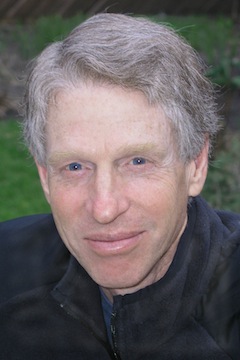
Dr. Brian Goldman (photo from Brian Goldman)

While most people have heard of dementia, many of us won’t have heard the term sundowning before.

According to Dr. Brian Goldman, emergency physician at Mount Sinai Hospital in Toronto, sundowning is generally part and parcel with dementia of various kinds.

“Sundowning refers to a person who is sleepy during the day and very active at night,” he explained. “Almost as soon as the sun goes down, that’s when they become active. The activity can be not just when awake and walking about in an agitated or restless state.… For sundowning to have its maximum impact on the patient and others – the caregivers and care providers – you have to have dementia [as well].

“A person who is cognitively intact, who is simply sleeping during the day and being up all night, would have the cognitive reserve to be able to handle that. They might feel they have a problem, need to see a doctor, or they might rearrange their lives because, when everyone’s sleeping, they’re up, [but] they’d be able to cognitively make sense of it.”

Goldman explained dementia as “a chronic disorder caused by a brain disease or injury. It is characterized or marked by impaired cognition or thinking, memory and personality changes.”

Goldman – who grew up in Toronto’s North York, the heart of the Jewish community – said he is seeing more elderly people with dementia. Often he is one of the first people to notice the symptoms.

“As an emergency physician,” he said, “I would say that an increasing percentage of the patients I see in the emergency department are frail seniors. When I started out in the 1980s, we would see an occasional patient over the age 90, but now it’s commonplace.

“I have professional experience, but I also have personal experience. Both my parents have passed away in the last two years and they both reached frail senior years. My mother had dementia. My father did not.”

Why some dementia patients also suffer from sundowning while others do not, Goldman said, remains a mystery. As well, the number of people who suffer from this newly defined condition of sundowning is also unknown, with estimates ranging from as low as two to three percent of people with dementia up to more than 60%.

“It has been said that sundowning tends to occur when the person is in unfamiliar surroundings, though it can also occur in the home,” said Goldman. “It’s well known that some people with dementia have damage to the pathways to their brain that recognize light coming in through their eyes and stimulating a part of the brain called the pineal gland. The pineal gland secretes the hormone melatonin.”

Melatonin is secreted somewhere around 2 or 3 a.m. every morning. It resets your body’s circadian rhythm. If that pathway is disrupted, it makes sense that your sleep-wake cycles would be seriously disrupted.

Another theory is that people who sundown are dreaming vividly. They are flipping between the awake and dreaming states quickly and frequently. And, again, because they don’t have the cognitive reserve, they do not know if they are dreaming or awake.

There is not yet a lot known about sundowning and another phenomenon known as delirium.

According to Goldman, delirium is confusion associated with the activation of the fight or flight response along with symptoms that include tremors, shaking, a fast heart rate, sweating and dilated pupils. These symptoms are sometimes also referred to as “toxic delirium.” People with toxic delirium have a rapid, traumatic change in their demeanor. Triggers of toxic delirium are often fever, urinary infection, pneumonia, flu, or even a heart attack.

“You recognize it if you see a sudden change from what the person was doing a week ago,” explained Goldman. “They look sick, sweaty … something seriously wrong … and there is an underlying cause. Treat the cause and the toxic delirium goes away.

“Sundowning is a more chronic pattern that can go on for months. There is no vast dramatic change. The only change in pattern you might notice, wherein dad or mom wander off at night once a month, then it becomes once a week, then every night. It’s a gradual pattern.”

Ways to help this condition, according Goldman, include regularizing a sundowner’s routine: having meals at set times, a set time for exercise (but not at night), set times for bathing and toileting (like washing in the morning or before bed), and the like.

“The experts say that caffeine should be avoided,” he added. “You want people to walk. Walking is good for them. Visitors are good, but probably not close to the time they’re going to bed. Also, reduce noise from TVs and radios and address the lighting in the room, ensuring you don’t have harsh lighting that could cast disturbing shadows on the wall.”

Besides these steps and before turning to sleep medication, Goldman advised exploring some other preventive approaches. Light therapy has shown some promise, he said, affecting patients in a similar way as those with seasonal affective disorder. This involves getting special light-generating therapy units, which are available without a prescription and come with instructions on use.

When it comes to lost brain pathways, Goldman sees the technique as especially helpful when approached in a “use it or lose it” fashion. “If you want to build up a reserve, this might be a way of doing that, with year-round light therapy,” he said.

“Certainly, making them busier during the day with exercise and other stimulation is the way to go. Somebody with dementia wants adventures in the same way that everyone wants adventures, something new. Keeping to the same routine everyday is helpful for structure, but the novelty factor can be helpful as well.”

Goldman said these practices can offer some relief of the effects of dementia, including Alzheimer’s, the most common cause and form of dementia.

Rebeca Kuropatwa is a Winnipeg freelance writer.
Format ImagePosted on May 20, 2016May 18, 2016Author Rebeca KuropatwaCategories NationalTags aging, Alzheimer's, dementia, mental health, sundowning
Difficulties with conceiving

Difficulties with conceiving

At Limmud in Winnipeg earlier this year, Bryan Borzykowski talked about his and his wife Lainie’s difficulties in having children. (photo from Rebeca Kuropatwa)

At this year’s Limmud in Winnipeg, on March 13, Bryan Borzykowski spoke about the miscarriages he and his wife, Lainie, experienced and, in particular, the anxiety they felt during her pregnancy after multiple miscarriages.

A woman’s body innately senses the starting point of pregnancy and it recalculates, again and again, throughout the pregnancy, often determining whether or not it is possible by week 12 to carry a baby to term. This is why women are cautioned not to mention a pregnancy until after that point.

Miscarriages and difficulties in conceiving occur more often than we know – in large part because of our discomfort in speaking openly about the topic. Recently before his Limmud talk, Borzykowski – who is a freelance writer in the field of finance – had written an article on his family’s experiences in Today’s Parent magazine.

Borzykowski and his wife had their first miscarriage before their first child, a second one between their first and second child, and three more between their second and third child.

“The first miscarriage was 10 years ago,” he said. “We’d been going through pregnancy issues for a decade. So, after we realized we had this miscarriage, it was really terrible. But, once we started talking about it, everybody said, ‘I’ve gone through this as well’ … which was really nice to hear.

Apparently, 10-20% of women go through miscarriages. I think it’s got to be higher. Pretty much everyone I know has had one.

“The problem is when you have more than one, especially when you’re dealing with your wife going through this terrible situation. You just want to be there for her. There’s not a lot of time to go talk to friends about it.”

The couple went through IUI (intrauterine insemination) treatments in the hopes of getting pregnant again after their first child. Through these treatments, they discovered they had lost their second child’s twin, which apparently is somewhat common.

“They did tell us that a lot of people have twins, but one disappears … literally, disappears,” said Borzykowski. “At eight to 12 weeks, when they do the ultrasound, it’s already gone. Sure enough, we found out that we lost this twin, which was actually really difficult. We were happy we had one, but the strange thing about this is how attached you get to this thing before it’s even a real thing.

“But you do, you get attached to the idea of the baby. It’s hard to articulate to people who haven’t gone through it. You feel stupid, dumb, getting attached to something that’s not this thing. You start thinking about ways to … avoid the thought process.”

Borzykowski has found that it gets harder to talk about miscarriages the more they happen, but the couple was determined to try for a third child. They did succeed, via in vitro fertilization, which raised questions about the $15,000 cost.

Borzykowski found himself getting into financial conversations with friends. “It’s awkward, talking about your financial situation, about how you’re paying for it,” he said.

The couple’s last miscarriage occurred at 16 weeks. They took a test that showed the baby had Down syndrome. They ended up having only a couple of days to contemplate their options before they learned they had another miscarriage. At that point, they reevaluated their desire for a third child.

“It sounds silly,” said Borzykowski. “A lot of people can’t have more than one. We fully admitted we have an amazing life and are blessed with two kids, but we wanted three. That was hard, because a lot of people would say, ‘You have two, why do want a third?’ I don’t know. We wanted another, but we were pretty close to giving up until, one day, we decided to try. We just didn’t use protection. Somehow, Lainie got pregnant – no fertility [treatments], nothing. But, we didn’t talk about it for three months … not connecting, trying not to feel like you’re going to have a baby. You don’t want to jinx it. If something happens, you don’t want to feel the pain.”

Only after the three months had passed did the couple begin, little by little, to feel a sense of hope, that this was really going to happen.

“We took this test again,” said Borzykowski. “There’s this great test. It tells you everything…. It came back negative. We immediately breathed a sigh of relief. I don’t know. Something changed.

“As time went on, we came to terms with the fact that we were having a third baby … and we started connecting to her, although we didn’t fully think it was going to happen until I was holding her.

“When she came out, it was a miracle. I appreciate her. I appreciate all my kids, but there’s something about what we had to go through to get her that just makes it special … enough to make me realize the importance of opening up, which is difficult still. It helps.”

According to Borzykowski, research and statistics show that talking about miscarriages helps you get through them and that, while men usually get over the experience faster than women, it does affect men as well, with long-lasting effects.

From his family’s experiences, Borzykowski also learned that it was OK to go for what they wanted, as long as they felt they could manage the emotional possibility of having another loss.

“We knew we wanted a third,” said Borzykowski. “That was never the question. It was just … the emotional toll. We didn’t want to break up our family. I don’t think it would have, but I can’t say for sure. But, it worked out for us. I’m glad we went for it. I’m glad it worked out well. It’s easy to say now, but I’m glad we didn’t stop.”

Something else Borzykowski learned from these experiences was the significance of he and his wife being there for each other. These were experiences that made them even closer, he said. As well, for Borzykowski, having people to talk to about it was key – whether a family member, a friend or a professional.

“It also forces you to deal with death on a more regular basis and, in a sense, gives you an advantage over some of your peers in the future,” he said. “People often don’t understand the depth of loss that comes from losing an unborn child and the only way for them to understand it is by talking about. Then, maybe people would understand that, if we need more time, that’s OK.

“When people start opening up more,” he continued, “that changes some of the cultural thinking around it…. If you knew, before the miscarriage, that everyone went through it, maybe it wouldn’t feel as shameful or you wouldn’t feel as lost.”

Rebeca Kuropatwa is a Winnipeg freelance writer.

Format ImagePosted on May 20, 2016May 18, 2016Author Rebeca KuropatwaCategories NationalTags Borzykowski, conception, health, Limmud, miscarriage
Research into psychedelics

Research into psychedelics

Jordan Sloshower (photo from Jordan Sloshower)

The use of psychoactive plants and mushrooms for sacramental and religious purposes has been widespread throughout the world’s cultures for centuries. More recently, in the 1950s and 1960s, academic centres investigated the potential therapeutic uses of psychedelic compounds – primarily lysergic acid diethylamide (LSD) – to treat forms of mental illness and addictions. After producing thousands of papers, the field came to a halt in the 1970s, due to the “war on drugs” and the classification of psychedelic drugs as a Schedule 1 drug in the United States. Nonetheless, the past 10 years have seen a resurgence of interest in the field of psychedelic science.

In the last decade, research has resumed at prominent universities, such as Johns Hopkins University, University of California-Los Angeles and New York University, where clinical trials have examined the use of psilocybin (the psychoactive component of “magic mushrooms”) to treat cancer-related end-of-life anxiety, as well as addiction to alcohol and tobacco. And, a recently formed group at Yale University – the Yale Psychedelic Science Group (YPSG) – is exploring the science behind such research.

YPSG was formed with the aim of reviewing and discussing academic research in the psychedelic sciences via examining academic articles and papers, as well as hosting leading scholars in this field from across the country. The group is working to host an interdisciplinary forum in which clinicians and scholars from across Yale can learn about and discuss the reemerging field of psychedelic science and therapeutics.

One of the leaders of this resurgence is Winnipeg-born and -raised Jewish community member Jordan Sloshower, who is currently a second-year resident physician in Yale’s psychiatry program.

“I first thought I was going to do infectious disease, which is a more typical path for someone like myself interested in global health,” Sloshower told the Independent. “But I found that, clinically, I was most interested in interpersonal relationships, so social dynamics and psychiatry was feeling like a better fit.

“What actually happened was I was able to go do a psychiatry elective in Peru – both in Lima and in a smaller city in the mountains – and, for six weeks, I got to interact with different aspects of their mental health care system there. It was really my first exposure to what we call ‘global mental health,’ and I learned that this is actually a very vibrant field.”

Sloshower found that mental health was a hugely underserved area, with not only a lack of access to care, but with human rights abuses. With a lot of work needing to be done in the field, he decided to combine his interest in global health with his clinical interest in psychiatry. This led to his working in Nepal’s mental health system as well, at the end of medical school.

Regarding the field of psychedelic science, Sloshower dates its inception back to when Albert Hoffman synthesized LSD.

“Now, the way I think of it is as a broad interdisciplinary study of how these molecules act biologically, socially and economically,” he said. “I think there are also political, arts and anthropological angles. I think the term psychedelic still brings up thoughts of art and music from the ’60s. It’s a broad term.”

According to Sloshower, the term psychedelic means “minds manifesting,” which some refer to as “hallucinogen.” In context, this refers to compounds that cause perceptual alteration.

The province of Saskatchewan, as it happens, was one of the leaders investigating LSD for the treatment of alcoholism and cancer-related anxiety. In Europe, psychedelic drugs were used for psychotherapy. Thousands of papers were published on this until, Sloshower said, “things got shut down when psychedelic drugs were classified as illegal drugs.”

Psychedelic drugs went from being perceived as potential wonder drugs to something awful, and then just disappeared. Then, about 10 years ago, Dr. Rick Strassman in New Mexico did a study looking at dimethyltryptamine, a psychedelic drug found in many species of plants as well as in our own bodies.

“There’s a huge need for new treatments that work rapidly in a sustained way, and we need treatments that are not toxic,” said Sloshower. “So, it makes a lot of sense that we should look at these drugs, which actually have safety profiles that were demonstrated to be excellent back in the original wave of research and, increasingly, in controlled settings.

“There have been several trials using psilocybin, which is the active ingredient in magic mushrooms to treat cancer-related anxiety, which, again, picks up from the ’60s. There’s been a promising study with psilocybin to treat alcohol and nicotine dependence.”

While Sloshower said he is not an expert in the matter, he was willing to explain the basics of how these compounds work on the brain. He said that psychedelic drugs activate a subtype of serotonin receptor in the brain and that “serotonin is one of the key neurotransmitters in mood, attention and a range of different things.”

He said, “Typical antidepressants usually act on the serotonin system as well. One potential mechanism of how psychedelics exert peculiar effects on thought and perception is by interrupting something called ‘the default mode network,’ which is kind of like a neural correlate of the ego. It’s a network of neurons that fire together in your baseline consciousness when you’re doing self-referential thinking. In people with depression who have a lot of ruminant thoughts, you see an increased activation of the default mode network and, with both the use of psychedelics and mindfulness practice, you actually see a decrease in activation of the default mode network.”

Among the speakers YPSG has hosted is a speaker from Johns Hopkins who discussed his work using psilocybin to treat tobacco addiction. Another expert, from NYU, was part of the trial done on psilocybin for cancer-related end-of-life anxiety. The results from both studies look promising.

Sloshower anticipates that some Canadian universities will soon become more interested in researching psychedelics. “Actually, the Canadian medical journal, I noticed on the front cover a few months ago, had psychedelics on it,” he said.

When asked about any possible connection between psychedelics and the increased interest in medical marijuana, Sloshower said they are not explicitly connected, although both are part of a search for new therapeutic approaches.

“From my point of view, it’s not so much a matter of the drugs (antidepressants) being overused as much as it is that the drugs don’t work as much as we’d like,” he said. “In a lot of cases, we don’t have great treatment. In depression, for instance, the medications either work partially, take a long time to start working or have a lot of side effects.

“In these cases, the treatments we have aren’t really adequate. We need new ones. We don’t really have good drugs for substance use disorders either. Actually, something that’s been interesting with psychedelic drugs is that the model being proposed, unlike typical antidepressants, is based on a very limited number of drug exposures over a very short period of time.”

The proposed model includes providing treatment in clinics only, with people requiring only one or a handful of drug-therapy sessions linked with psychotherapy, as studies have shown both rapid-acting and prolonged effects of psychedelics.

As for the cancer anxiety research, it has shown improvement in patients’ mood six months after having received a single dose of psilocybin.

“That’s why I think there’s a lot of interest,” said Sloshower. “I don’t think it’s going to be a miracle, but another tool we’d have alongside other treatments we already have.”

Rebeca Kuropatwa is a Winnipeg freelance writer.

Format ImagePosted on May 20, 2016May 18, 2016Author Rebeca KuropatwaCategories WorldTags antidepressants, anxiety, cancer, depression, psilocybin, psychedelic, Sloshower

Outside play is vital for kids

As children, most of us at least once created a space of our own built of cushions, sheets, cardboard, branches, tables, almost anything – a space of our own that mimicked the house in which or near which it was built. This is a cross-cultural phenomenon that serves to help children establish their identities, according to David Sobel.

Sobel is a faculty member in the education department at Antioch University in New England. The author of Children’s Special Places: Exploring the Role of Forts, Dens and Bush Houses in Middle Childhood, he teaches conceptual development in science education, a course called the Ecology of Imagination Childhood.

“I’m teaching upcoming teachers in a master’s program, so folks with undergrad degrees, most of whom have done other stuff and are coming back,” he said. “The first thing that is interesting [about kids building their own spaces] is that this is a fairly cross-cultural phenomenon. Not necessarily all children do it, but a lot of children do it in different cultures and settings around the world. They tend to do it between the ages of 6 and 12, therefore, it suggests this is some sort of genetically determined behavior that serves some kind of survival value.”

According to Sobel, there are a couple of different goals achieved through this practice. One is that they are creating another world or a home away from home. Young kids will do this inside the house. As they get to the ages of 5, 6 or 7, they start to do it outside, but near the house.

book cover - Children’s Special Places: Exploring the Role of Forts, Dens and Bush Houses in Middle Childhood“They will gradually do it further away from the house, as a home they’ve created rather than that their parents have created, and it’s a way for them to establish themselves as unique individuals out in the world,” he said. “So, it has the function of identity creation … a special place or den, as a chrysalis out of which a butterfly will emerge. The butterfly is the self of the child that will emerge around the ages of 12 or 13.”

Sobel believes the behavior is instinctual, not a culturally transmitted one, though he admitted he has not yet unequivocally eliminated cultural influence as a variable in the cases he has observed. The behavior, Sobel thinks, is a mechanism to increase bonding with the natural or physical world.

“The theoretical model of Joseph Chilton Pearce, who wrote about the magical child, says that children are moving around [age] 6 or 7 from the family matrix, from being bound and held in the family, to moving out to the earth matrix, the physical world matrix,” he explained. “Kids are establishing a relationship with the natural world. It’s becoming a safe place for them, a source of energy, from the perspective of developing a healthy relationship with the natural world, eventually an environmental citizenship. Creating a home in the world that’s often made of natural materials gives them a sense of safety in a place that can feel a little scary or dangerous.”

Sobel contends that, in many cases, kids are discouraged from creating this sort of space or are not given access to the appropriate materials to do so, making it into less of a phenomenon and more of a function of parental and cultural permission or restriction.

“It’s good for parents to recognize it as a healthy behavior,” he said. “So, if kids show the impulse, it’s good to encourage it rather than discourage it. Also, in the natural play areas, there’s the theory of loose parts, which essentially says that what children want in a play landscape is a variety of loose parts or pieces that they can disassemble and assemble to create their own places.

“It’s great for parents to provide loose parts or for city parks to provide loose parts, so kids can construct things – branches, sand, stone and cardboard boxes – to encourage the creation of kid places.”

Sobel understands the hesitation of parents and public stewards to provide such tools, seeing them as accidents waiting to happen, but he thinks it is appropriate to allow a moderate amount of risk while also eliminating the most dangerous hazards.

“You want to encourage safe tool use,” he said. “So, if kids are going to be using pocket knives, make sure they know how to use them correctly, and you take them away when they don’t abide by those rules. With my son, as an example, when he was 7 or 8, I came home and found little fire scars on the concrete floor in the barn, which is our garage. He was interested in building little fires. In the barn, this was not a good idea, so I constructed a fire ring for him and made him a fire kit with matches and appropriate things. I told him he could build fires if he wanted to, but only here … that he has to respect the impulse, but also limit [it] … giving it some structure.”

Sobel suggested reading children’s literature that includes stories about the creation of such spaces as a great way to lead to positive building behavior.

He added that, while the impulse is fine indoors at the beginning, it eventually wants to be outdoors. When doing it outdoors, he advised becoming aware of the city’s zoning laws, as there will be areas in which the construction of subsidiary or outlying sheds, buildings or forts is not permitted. Another modern-day complication, he added, is “the digitalization of kids lives.” The time “not just for fort building, but any kind of natural play experiences outside, is getting eroded because of the lure of digital entertainment. But also, parents feel like digital entertainment is safer than the woods or exploring the neighborhood.

“With all this digitalization, kids are less likely to have an interior sense of balance, they are more overweight and they are having more vision problems as a function of not exercising certain kinds of motor development in their eyes,” he said. “The sedentary lifestyle is unhealthy for children.

“Place creation is part and parcel with having kids with more physically active lifestyles. It’s important for kids to understand the motor diversity of outdoor natural play, as opposed to just having them involved in a sport, which tends to limit motor skills to certain kinds of behaviors.”

According to Sobel, there is a vein of Jewish theology that can be drawn upon which supports nurturing our relationship with the natural world. He is helping organize a conference of Jewish early childhood programs in the New York area, where topics such as nature preschools and forest kindergartens for the Jewish early childhood community will be discussed.

He also said that there is a vibrant nature-based education community in Victoria and Vancouver, giving the example of educator Dr. Enid Elliot at Camosun College in Victoria.

Rebeca Kuropatwa is a Winnipeg freelance writer.

Posted on May 20, 2016May 18, 2016Author Rebeca KuropatwaCategories BooksTags children, play, Sobel
Couples need to talk about sex

Couples need to talk about sex

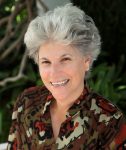
Doreen Seidler-Feller, PhD, is a clinical psychologist who has decided to focus her practice, in part, on the underserved population of Orthodox Jews. (photo from Doreen Seidler-Feller)

While sex is vital to our existence, it remains a topic many people are not comfortable discussing. Yet it is critical that we at least feel comfortable talking about it in private with our partners. It is even more fulfilling if we are able to enjoy the act of it with them, too.

Unfortunately, some newlywed Jewish Orthodox couples find themselves unable to consummate their marriages in an enjoyable way, due to a lack of sexual education and some misguided sexual advice from their peers. Enter sex therapist Doreen Seidler-Feller, PhD, a Los Angeles-based clinical psychologist who has decided to focus her practice, in part, on the underserved population of Orthodox Jews.

“I’m the last resort for everyone in this area,” Seidler-Feller told the Independent. “Nobody likes to come and face the situation in which they need to talk about something as intimate as their sexuality and their relations with their partners.”

Since people often only go to Seidler-Feller after they have exhausted all the options they can think of to solve the difficulties by themselves, she sees more complicated cases.

“It’s rare that I see a man alone,” she said. “It’s more likely that I’d see a man together with his wife, presenting as a couple, or that I’d see women alone. The reason for this is that, frequently, the problem is identified as theirs [the woman’s]. If it is an issue of painful intercourse or the involuntary contracture of the vaginal musculature that denies entry to the man … any sort of pain condition inside the vaginal vault or inability to tolerate intercourse … it makes sense that she would present alone.”

As treatment progresses, Seidler-Feller brings her patient’s partner into the process, as there is always some bridging required to bring the couple back into harmony and aid in their sexual choreography. Sometimes, the partner, too, may have a problem undiscovered until that point. In that case, his individual problem becomes addressable.

“The issue that causes the greatest anxiety is the inability to consummate marriage – a pain condition and an inability to tolerate insertion are conditions most likely to bring them into treatment,” she said. “These conditions not only deny the couple the opportunity for the mitzvah pru u’rvu [being fruitful and multiplying]. They deny them the opportunity for pleasure, the sensations of adulthood, and related normalcy.”

According to Seidler-Feller, the next most likely causes for seeking treatment are if the man has erection or ejaculation control difficulties, while the least likely cause is a woman being unable to achieve orgasm.

The majority of Orthodox couples and individuals Seidler-Feller sees are between the ages of 21 and 35.

“People, usually women, also sometimes want to come to me to talk about something in their past that they haven’t been able to talk to anyone about, that may be relevant to their sexual dysfunction,” said Seidler-Feller. “In that case, my being a stranger to her – not necessarily part of her community – is a plus, not a minus. That is because usually it enables the patient to maintain a certain kind of anonymity. At the same time, it enables her to raise the question of to what extent an experience of either subtle or outright sexual abuse might be relevant to her sexual difficulty.”

Since the work is so intimate, Seidler-Feller works strictly in person – not over the phone or electronically – partially to challenge the taboo around frank sexual discussion in the Orthodox world. Also, because of the inhibition that exists around both the language and activity involved in human sexuality, one-on-one discussions are most useful.

In a world where oblique language supplies the vocabulary, Seidler-Feller is not a fan of maintaining the status quo. One of her objectives is to train couples to be completely open with each other, to say what they mean and mean what they say.

“They can deal with the rest of the world in euphemism and indirection, that’s fine,” she said, “but I don’t want them, with one another, to talk in euphemistic and inhibited language, as it may lead to difficulties and misunderstandings.”

On the other hand, Seidler-Feller does not advocate the use of clinical or vulgar language. Her intention is simply to help a couple speak clearly to each other, so they can effectively express their desires.

“Once the dysfunction is behind them, they are left with a world of possibilities about how to enact their sexual relationship,” said Seidler-Feller. “Some find, at that stage, that they want to have a more ample, open and variable sexual relationship. For that to be realized, they need to be strong internally and know what they feel and want. This way, they can refer to their experience clearly and can effectively achieve their wishes.”

Seidler-Feller’s treatment is short-term behavior-oriented psychotherapy and involves focused discussion, not actual activity of any sort in a session. Her patients are given a series of exercises designed for them, specifically based on what their diagnostic assessment reveals and what are their halachic (Jewish law), cultural and value considerations. The exercises, which the couple completes in the privacy of their home, are the subject of each session. Usually, the person who has the dysfunction begins by doing self-directed exercises. Later, the couple performs partner exercises together.

“Over the course of the week, I expect my patients to do the exercises three or four times, and journal,” said Seidler-Feller. “Then, they bring back their journals or good memories, as the case may be, and we talk about what they did over the course of the week. And, I put in my two cents about how to enlarge it or differently shape it.”

In this broad way, Seidler-Feller approaches numerous issues wherein primary medical causes have been ruled out or are limited in their effects.

Seidler-Feller would like to see a standardized curriculum in Orthodox day schools.

“I’d like to see Orthodox day schools become more courageous, to face the fact that we live in a modern world where people of all kinds get their sexual information and values from all sorts of places,” she said. “It’s still true that most get information from their peers, which is variable, and, even when the information is good, is never enough.

“A sexual ethic involving a modern Jewish approach to sexual values must be developed to have a chance of captivating the imagination of both young Orthodox men and women, as well as the non-Orthodox. Otherwise, we condemn our young to the values either of the street or the Kitzur Shulchan Aruch [Code of Jewish Law].”

Seidler-Feller sees talking about problems surrounding sex, and giving young people especially a way to think about sex as something that is spiritually and emotionally enriching, is critical. She also thinks it will reduce a lot of personal anguish and marital tension.

“I’d like to see public forums in the Orthodox world, where people like me are invited into synagogues, panels or programs, offering the opportunity to talk about responsible human sexuality in the Jewish context, Orthodox context, in a straightforward, unapologetic way,” said Seidler-Feller. “This could help rabbis in the institutions that have failed us, to the extent that they consider all public discussion on sexuality as somehow immodest and prohibited. My dream is that when they come to the chuppah [marriage canopy] and to the world of marriage beyond, couples are truly prepared.”

Rebeca Kuropatwa is a Winnipeg freelance writer.

Format ImagePosted on May 20, 2016May 18, 2016Author Rebeca KuropatwaCategories WorldTags counseling, mental health, Orthodox, sex
An aerobic experience

An aerobic experience

Daniel Brenner’s klezmer aerobics workout and performance was inspired by the Klezmorims. (photo from Daniel Brenner)

Rabbi Daniel Brenner – who grew up in the small Jewish community of Charlotte, N.C. – has come up with an aerobic workout set to klezmer music.

Brenner graduated from the Reconstruction Rabbinical College which, at the time, was led by Rabbi Art Green. He began performing in 1987 with the late comic legend Chris Farley at the Ark Improvisational Theatre, and has been doing theatre ever since.

In rabbinical school, Brenner created the one-man-show Faster, Rabbi, Drill! Drill!, which won an All Out Arts New York playwriting award (2000). He also wrote a series of Chassidic folktales/plays for Philadelphia’s Theatre Ariel and has had a play produced by New York’s Vital Theatre, in addition to producing a handful of Purim shpiels. Today, he performs regularly with the band Midnight Nosh, on guitar, and lives with his wife Lisa and their three children in Montclair, N.J.

“Growing up, my home was a place that other people came to experience Judaism,” Brenner told the Independent. “There were no other Jewish families on my street, so my home was a site where many non-Jewish people experienced Judaism for the first time.”

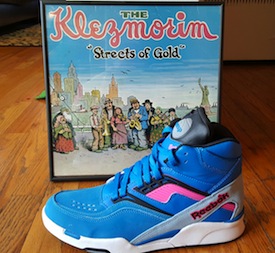
photo - A big part of Daniel Brenner’s inspiration came from the Klezmorim’s Streets of Gold
A big part of Daniel Brenner’s inspiration came from the Klezmorim’s Streets of Gold. (photo from Daniel Brenner)

Brenner’s love of music came early on, as he listened to a mix of Shlomo Carlebach and contemporary American folk. In the 1980s, Brenner’s parents went to a Klezmorim concert and came home with their record Streets of Gold.

“I was ecstatic listening to the music,” said Brenner. “I couldn’t believe that we had music that had so much soul. As a kid, I was enthralled with Michael Jackson – music you can dance to. But, when I heard the Klezmorim, I was like, this music is just as good for dance. I loved it.”

While working out and listening to klezmer, Brenner thought of how amazing it would be to lead a class using this music. Originally, he thought of pairing it with Zumba, but then decided that klezmer aerobics would be the best fit.

As he worked on the idea, he realized this could be more than just another class. “I really tried to think of what story it wants to tell,” he said. “That really helped me get to the place where it was a full narrative, and a full show about the relationship between someone in the 1980s and someone in the 1880s.

“I thought about it in terms of the two great shifts in human past civilization, recent history – the shift away from agricultural, industrial, rural to urban that happened in the 1880s, and then also the 1980s, the shift between the industrial era and the digital era. I wanted the story that I told to be about that shift.”

Brenner started researching moves that would reflect, as closely as possible, the 1880 dance fashion. He discovered Steven Lee Weintraub, who teaches Jewish traditional dance, and engaged him in private lessons. Brenner videotaped these lessons and practised intensely to get a good handle on the movements and to effectively incorporate them into his repertoire.

“I told my beloved, I told her, keep in mind that I want to do this over the next decade, so she understands I’m definitely thinking long-term about what I want to do with the project,” he explained. “My goal really will be to work together with local klezmer bands in various places around the world to create an experience for people – to perform a show as a way to not only teach dance and tell the story, but as a way to connect people to the local klezmer scene who may not experience it otherwise.”

Brenner has created ’80s Klezmer Aerobics, a family-friendly, interactive dance-storytelling workout wherein “the 1880s meets the 1980s.” In the show, Brenner plays an aerobics instructor and leads an audience-participation workout, as he tells the story of a dancer, Levi, and his apprentice. The audience learns the traditional Old Badchen dances that Levi learns and creates when he runs off to Warsaw.

“I feel that the fun ’80s Klezmer Aerobics and the experience is going to be a draw for a lot of people,” he said. “Then, I also feel like giving people the opportunity to hear live klezmer music is a rare thing. In anyway I can, I want to help people dig the stuff I dug when I was a boy in N.C., putting that record on for the first time.”

In addition to the family-friendly version, Brenner has been considering splitting the experience into two parts – one as a matinée for the family and one in the evening, attracting a different crowd.

Since being performed last November, there have been a few shows in different venues so far. Brenner is working with some Canadian friends to create shows in Canada, having received a few inquiries about it from Jewish community centres.

“I’ve also heard from New York, Atlanta and North Carolina,” he said. “I hope to take it around the Jewish world.”

For more information, visit klezmeraerobics.com or check out Klezmer Aerobics’ Facebook page. There are also videos available on YouTube.

Rebeca Kuropatwa is a Winnipeg freelance writer.

Format ImagePosted on May 20, 2016May 18, 2016Author Rebeca KuropatwaCategories Performing ArtsTags aerobics, Brenner, exercise, interactive theatre, klezmer
Jewish-Muslim unity efforts

Jewish-Muslim unity efforts

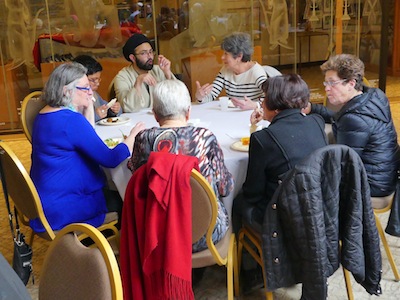
On March 13, members of Calgary’s Muslim community visited Congregation Beth Tzedec. Jewish community members had visited Green Dome Mosque the week prior. The events were part of the Our House is Your House program. (photo from Shaul Osadchey)

After a 2014 clash between Palestinian and Israeli supporters on the grounds of Calgary City Hall that ended violently, Imam Syed Soharwardy of Green Dome Mosque reached out to local rabbis and Jewish community leaders, and Rabbi Shaul Osadchey of Beth Tzedec responded by inviting Jewish and Muslim leaders to his synagogue for discussions.

The discussions helped make the next demonstrations peaceful. They also helped transform the general relationship between the Muslim and Jewish communities, which led to two unity events held this past March.

“From that conversation, we made a commitment to meet again and continue the conversation,” said Osadchey. “We continued to meet at Beth Tzedec monthly and, within about two months, we decided to form the Calgary Jewish Muslim Council.”

That council has been meeting for almost two years, discussing various issues that affect both communities. Through this, the rabbi proposed the concept of Our House is Your House, the program that hosted the recent unity events. The program’s purpose is to bring together lay members of the communities for table conversations – not for lectures about religion, but simply to come together to explore mutual commonalities.

On March 6, about 50 Jewish community members made their way to Green Dome Mosque in northeast Calgary for the first of two consecutive Sunday events, the second of which took place at Beth Tzedec.

“We had a very inspiring program in which the clergy spoke at the beginning and then a lot of people were then invited to ask questions and express how they felt about doing these kinds of programs and getting to know each other,” said Osadchey. “We had refreshments and people visited with each other. It was quite a significant day.”

According to Osadchey, those who attended were impressed, finding the imams forthright in explaining how they felt the use of certain quotes from the Quran, such as, “you shouldn’t make friends with Jews or Christians,” were often used out of context and not in the true spirit of Islam.

The plan is to expand Our House is Your House with the program My House is Your House, matching people up for dinners in community members’ homes. There is also another program, funded by a Beth Tzedec member, that will see Jewish and Muslim teens (15- to 16-year-olds) engage in philanthropy.

“We’ll have six to eight Jewish youth and six to eight Muslim youth meet for six sessions, alternating between the mosque and the synagogue,” said Osadchey. “They will focus on learning about charity in each other’s traditions. They’ll identify common values, and then will go through a process of selecting and then allocating funds that have been donated to organizations in Calgary that they think reflect the values that they’ve articulated. So, it’s going to be an opportunity for the teens to get together and build a relationship, and do something constructive and positive to influence the community.”

Another initiative between the communities involved the Soup Sisters, an organization that was started by two Beth Tzedec women and has grown to include chapters in many Canadian cities, as well as one in Los Angeles. (See jewishindependent.ca/soup-ladled-with-love.)

“They make soup that is then donated to abused women in shelters and other facilities,” said Osadchey. Wanting to do a soup project for Syrian refugees, “the women came to me and asked how to get halal meat. I sent an email to several imams, asking them if they knew anyone who’d be willing to donate 86 kilograms of halal meat. Within an hour or two, I got a response from an imam saying he has the name of an individual able and happy to do that and that he’s expecting my call. Again, things are working in ways that we’re able to accomplish wonderful goals to help people in the community.”

Soharwardy, who initiated the Jewish-Muslim unity talks, is also the founder of Muslims Against Terrorism and the Islamic Association of Canada. He is a Sunni Muslim who follows the Sufi tradition.

“About three months ago, Rabbi [Osadchey] and I were chatting,” said Soharwardy. “He said, ‘Let’s do something grassroots instead of a rabbi and an imam talking. Let’s involve our families, women, children, everybody.

“I think this was the first time in the history of, at least Canada, that such a large group from the Jewish community came to the mosque. They had a dialogue, they had food … we sat together for an informal discussion…. That inspired so many Muslims. It removed misunderstanding. People realized, Jewish people are not our enemies, we have so much in common.”

photo - About 80 or 90 members of the Muslim community went to Beth Tzedec on March 13
About 80 or 90 members of the Muslim community went to Beth Tzedec on March 13. (photo from Shaul Osadchey)

About 80 or 90 members of the Muslim community went to Beth Tzedec on March 13, he said. “We sat down, we saw the Torah, we heard three rabbis there. We were so amazed. I was happy to see we have so much in common. I’m so happy and I’m still, in my mind, still in that synagogue, listening to this rabbi and the way he was performing. I can’t call him anything except a person of faith, and his Jewish faith is very close to my faith. It’s just an amazing feeling. I don’t understand why we are enemies. I don’t think we are enemies.”

Soharwardy can hardly wait for the next step of inviting some new Jewish friends to his house to share food and conversation.

“I think, at the family level, we should start engaging ourselves,” he said. “That will build the relationship among adults as well as children … so our children will get the understanding that we are not enemies, we don’t hate each other. We are normal humans, Canadians, and neighbors.”

Osadchey added, “We recognize there’s still a lot of work to be done in both communities. There’s a lot of suspicion, a lot of stereotype and misinformation that exists in our communities about the other. To further break that down really takes people-to-people contact.

“There’s a lot of anxiety and a lot of cynicism and doubt about whether these efforts are really viable,” he continued. “I think the more that we’ve done together as two communities, the more the message is emerging that, yes, this is worth doing. We’re not under any illusion that we are going to change events in the Middle East, but we are creating an alternative model that will have a ripple effect beyond Calgary, that will say to people, having good relationships and learning about each other and respecting each other is definitely possible and desirable.

“We’re doing it with people in the Jewish community and Muslim community. We all have relatives in the Middle East. We have relatives elsewhere, too. So, to be able to model what we are doing and let people know about this will put the seed of change elsewhere … so that it goes beyond our local efforts.”

Rebeca Kuropatwa is a Winnipeg freelance writer.

Format ImagePosted on May 13, 2016May 11, 2016Author Rebeca KuropatwaCategories NationalTags Beth Tzedec, Calgary, interfaith, Jews, Muslims, Osadchey, Soharwardy
Caring for people at life’s end

Caring for people at life’s end

Henry Fersko-Weiss, president of the International End of Life Doula Association. (photo from Henry Fersko-Weiss)

Doulas offer support to expectant mothers, guiding women and their partners through the childbirth process and into their first steps of parenthood. Now, a similar concept is gaining ground to fill a need at the end of our lives.

Fear, exhaustion and uncertainty often leave us unsure of how to best support a loved one during their last days, while we also try to deal with our own impending loss.

The idea for end-of-life doulas was conceived by licensed clinical social worker Henry Fersko-Weiss, who works in hospice care in New York and New Jersey.

“There seemed to be a gap in the services that were traditionally available to people,” Fersko-Weiss told the Independent. “As wonderful as hospice is in the U.S., where most people die in their own homes – which is the ideal, unless there’s a cultural reason not to – that’s when people really need help the most.

“They recognize that death is very close and now they can’t avoid thinking about it. They are exhausted and the care demands have increased. They need more help than they were able to access through normal programs. So, I started to think about how to figure this out … and, at the time, a friend of mine was learning how to become a birth doula.”

Fersko-Weiss had not heard about doulas before then. But, as his friend shared with him what she was learning in her training, he increasingly felt this would also be an ideal way to approach the end of life.

“There are a lot of tremendous similarities between birth and death, clear differences as well,” he said. “I became intrigued and started learning more about birth doulas. And, I took the training myself, so I would learn exactly what they were learning.”

By then, Fersko-Weiss was convinced that there were many tools, techniques and principles of care from the birthing world that could be transferred in a very positive way to the end-of-life sphere. So, he went to Carolyn Cassin, the chief executive officer of Continuum Hospice Care in New York City, where he was working at the time, and presented the idea to her. She encouraged him to follow it through.

By 2015, Fersko-Weiss had established a not-for-profit organization that trains and supports end-of-life doulas.

“Currently,” he said, “my work is focused on promoting the use of end-of-life doulas through organizations that care for people at end of life, as well as training people publicly and helping them to achieve certification through the organization that I head: the International End of Life Doula Association.”

To create the program, Fersko-Weiss incorporated some of the concepts from the birth doula training, such as visualization and guided imagery, techniques used by birth doulas to help ease pain.

“I started building on that and writing the training, looking for material that would support some of the things that were important and created a model of the different phases of care that this would offer,” he said. “At that first training, I had 17 people. Once we went through that first training, which was a weekend – which has become the standard for us, about 22 hours – we went on and kept training, and developing the program, and serving patients and their families.”

There are three phases to the model Fersko-Weiss has created, the first of which is summing up and planning. This occurs as early as possible, when the patient and the family are shifting their focus to end-of-life comfort care and away from a cure.

“But, even if they were still focused, to some degree, on a cure, parts of what we do would still make sense, probably even months before somebody would be at the point of dying,” said Fersko-Weiss. “We work on exploring the meaning of their life, as they look back over their life, and help them think about what they might want to leave behind as a legacy that reflects that meaning that they’ve uncovered or what they think is important for their loved ones and friends to remember them by or to carry into their lives.”

Psychologist Erik Erikson has examined the different developmental stages that we go through within our lifespan and refers to the last of these stages as “integrity versus despair.”

“When somebody is dying and facing death, they are automatically propelled into that final developmental stage, no matter what age,” said Fersko-Weiss. “In that stage, they have to contend with coming to the point of a positive completion of their life as they go through reviewing their life. Or else, they move towards despair, anguish and feeling that their life either didn’t matter or didn’t fulfil their dreams.”

The other aspect of the first phase of Fersko-Weiss’ program is planning what one’s last days of life will look like. This entails finding out what would be most helpful to them and their family to allow those last days to unfold in a way that honors who they are, carries deeper meaning for everyone involved and makes it easier for the person to approach death.

The second phase of the program is when the person is actively dying, which generally comprises the last two to four days of life.

“We stay with people as much as possible, around the clock,” said Fersko-Weiss. “We help them understand what is coming next. We support the family emotionally and spiritually, and we assist with physical care in a basic way.

“We will stay [with the family] through the death,” he continued. “We will wait hours afterwards to give them time to process it and have the death experience sink in a bit. We sometimes call the funeral home for them, or friends, if they are too emotional. We stay with them through the body being removed from the home and also up to the point where they feel more comfortable being on their own.”

Phase three of the program has the doula returning to the family three to six weeks following the death to review and tell the story of the dying process. This helps the family see some of the many beautiful and loving things they did together during that time, reminding them how things went, as they may have not have been thinking clearly during that time due to the pain of loss.

“This is done as a way to reframe some of the negative pieces that they are carrying that may be coming back to them over and over again in their mind, and help them to begin the very early stage of grief, understand what grief work is about,” said Fersko-Weiss. “We help them through some of the early grief work and then refer them to programs in the community or within the organization that were perhaps involved with the care as well. We may, at that point, do a final ritual to bring closure to our work with them.”

The end-of-life doula service is provided primarily by hospice and out-care programs, which may be part of a hospital. Fersko-Weiss is working to spur interest in this service at assisted living facilities and nursing homes. This type of care is also starting to be done by groups of people getting together to provide the service to a dying person and their family.

Fersko-Weiss has been teaching at the Institute of Traditional Medicine in Toronto, doing a compressed form of the doula training he offers in the United States. Students attend classes one weekend a month for six months, and graduate as certified contemplative end-of-life-care practitioners.

“My understanding of hospice in Canada is that many people are very underserved,” he said. “There are a lot of people who are dying without the ability to access hospice care in Canada.”

Fersko-Weiss has also been working with a Canadian organization called the Home Hospice Association.

“They are still in the process of forming, but their intention is to provide home hospice in Canada and to solve the problem of lack of access,” he said. “Their intention is to build into that program the utilization of end-of-life doulas.”

Rebeca Kuropatwa is a Winnipeg freelance writer.

Format ImagePosted on May 13, 2016May 11, 2016Author Rebeca KuropatwaCategories WorldTags death, doula, Fersko-Weiss, health care, hospice
EcoPeace crosses borders

EcoPeace crosses borders

EcoPeace Middle East is an Israeli-Jordanian-Palestinian organization dedicated to environmental peace building, primarily through water diplomacy. (photo from EcoPeace Middle East)

EcoPeace was created by Gidon Bromberg some 22 years ago after he made the connection between ecology and the lack of cooperation between the region’s various authorities regarding water issues.

At the time, he was studying for a master’s in environmental law in Washington, D.C. When he returned to Israel, he organized the very first gathering of Israeli, Palestinian, Jordanian and Egyptian environmentalists. On the second day of the meeting, in December 1994, an agreement was struck to create EcoPeace Middle East.

Bromberg has been working together with Jordanian Munqeth Mehyar since then and Palestinian Nader Khateeb since 2001 to create an Israeli-Jordanian-Palestinian organization dedicated to environmental peace building, primarily through water diplomacy, and to the advancement – through both top-down advocacy and community-led grassroots work – of cross-border cooperation concerning shared water resources, pollution issues and sustainable development issues. Half of their programming is bottom-up community work through the Good Water Neighbors (GWN) project, now into its 15th year of operation.

“The second half of our work is advocacy aimed at influencing the Israeli, Palestinian and Jordanian governments, as well as at garnering support from the international community in advancing dialogue and cooperation between them,” Bromberg told the Independent.

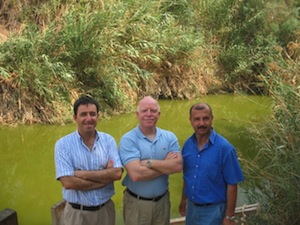
photo - The three co-directors of EcoPeace Middle East at the Jordan River. From left to right: Gidon Bromberg (Israel), Munqeth Mehyar (Jordan) and Nader Khateeb (Palestine)
The three co-directors of EcoPeace Middle East at the Jordan River. From left to right: Gidon Bromberg (Israel), Munqeth Mehyar (Jordan) and Nader Khateeb (Palestine). (photo from EcoPeace via commons.wikimedia.org)

The underlying assumption behind their efforts on all fronts is that regional cooperation is in each party’s best self-interest. “As altruism is not a common feature of foreign policy, particularly not in the midst of conflict, speaking to the self-interest of each side enables us to create political will for cooperation that ultimately serves the region as a whole,” said Bromberg.

Over the years, EcoPeace’s major areas of work have been focused on the rehabilitation of the Jordan River; a regional plan for sustainable development in the Jordan Valley; water and the peace process; Gaza’s water, sanitation and energy crisis; the water-energy nexus in the region; and the Red Sea-Dead Sea conduit.

Since its establishment, EcoPeace Middle East has seen many periods of extreme hostility and bloodshed in the region but, in the midst of that, has been able to make headway.

“Joint work of Israelis, Palestinians and Jordanians through EcoPeace’s programs has brought the leveraging of more than half a billion U.S. dollars in recent years for water supply and sanitation solutions in the GWN communities, all with a strong cross-border effect, i.e. removal of sewage from shared resources,” said Bromberg. “EcoPeace has also been able to convene Israeli, Palestinian and Jordanian government representatives together and generate dialogue between them around issues such as the Jordan River, at a time when no such meetings were taking place.”

At the community level, EcoPeace holds many cross-border youth gatherings every year, wherein kids not only learn about the interdependency of their and their neighbors’ water reality, but also about each other, in an effort to break down negative stereotypes.

One of the biggest achievements of EcoPeace in terms of bringing together people from the three countries has been the facilitation of relations between Jordan Valley mayors, who have rallied together to demand joint governmental cooperation toward rehabilitating the river.

“As far as positive ripple effects, very much due to our work, there is a growing realization amongst the various stakeholders, including decision makers, that regional sustainable development is crucial for geopolitical stability and for security in the region, for economic growth, public health and other aspects of life in the region,” said Bromberg.

EcoPeace’s notion of water as a political game changer in the region, for example, is slowly but surely becoming a part of the political discourse.

“The Jordan River is a good example of persistence that has recently started to pay off,” said Bromberg. “Ten years ago, when we were trying to convince the Israeli Water Authority (IWA) to release fresh water from the Sea of Galilee to the Jordan River, something which had then not happened for almost 60 years, one of the seniors raised his palm and said, ‘Gidon, when hair grows on this palm, that’s when fresh water will flow again from the Sea of Galilee to the Jordan River.’”

Nonetheless, by mid-2013, following years of advocacy by EcoPeace and others, the IWA released nine million cubic metres (mcm) of water into the river, committing to raise this volume to 30 mcm in the near future. This is only a drop in the bucket, however. Based on research commissioned for the project, the estimate is that 400 mcm overall is required to rehabilitate the river – and not all from the Sea of Galilee, which is in Israeli territory, but also from Jordan and Syria.

This is a very important first step, said Bromberg, who is certain of EcoPeace’s ability, with the help of many partners, to convince the relevant decision makers to allow for more significant volumes of water to flow into the river.

“Times now are particularly difficult in our region,” he said. “Hostility between Israelis and Palestinians has reached a whole new level, a frightening environment that, for the most part, does not react well to cooperation.”

Bromberg believes that, through providing youth in each of their communities with opportunities and cooperation with their neighbors, even this complex environment can be overcome.

For more information, visit foeme.org or facebook.com/ecopeacemiddleeast.

Rebeca Kuropatwa is a Winnipeg freelance writer.

Format ImagePosted on May 6, 2016May 5, 2016Author Rebeca KuropatwaCategories WorldTags Dead Sea, EcoPeace, Israeli-Palestinian conflict, Jordan River, Middle East, peace, Red Sea, water

Increasing organ donations

Leading up to the provincial election in Manitoba in April, activists, family members of organ recipients and those waiting for organs pushed the topic of organ donation as an election issue. They reached out to many prominent people to help them spread their message, including Prof. Arthur Schafer, founding director of the Centre for Professional and Applied Ethics at the University of Manitoba.

The centre’s purpose is to promote research specifically in applied ethics across different professions, such as medicine, engineering, pharmacy and nursing. Schafer further described it as “ethics as it applies to controversial, moral, social and political issues in society.”

Organ donation, while supported by most segments of the population, has been an issue with which many countries struggle. As there is most often a gap between supply and demand, some countries are coming up with new ways to tackle the problem.

photo - Prof. Arthur Schafer
University of Manitoba’s Prof. Arthur Schafer. (photo from Arthur Schafer)

“Israel used to have just about the lowest organ donation rate of all the Western countries,” said Schafer. “So, historically, and rather embarrassingly, more people died waiting for an organ donation in Israel than anywhere else.”

According to Schafer, the lack stemmed from the common misconception that Jewish law prohibits organ donation.

“But, the very low donation rate in Israel changed after a new law was passed in 2008,” he said. “The new law gave priority [to certain people]. It was still true, after the new law was passed, that medical need was the most important criteria. Someone faced with imminent death would have priority over someone whose need was less urgent but, when patients had comparable need, the 2008 law gave priority to those who’d signed an organ donor card or whose family had donated an organ.”

The policy was nicknamed, “Don’t Give. Don’t Get.” Schafer said what this meant was that, if someone, for religious or other reasons, would not sign an organ donor card, they might end up dying themselves as a result of having a lower priority on the list of waiting patients.

“I suppose it’s the dual moral justification … first of all, a principle of justice or fairness,” said Schafer. “If you aren’t willing to give, you don’t deserve, you could argue, it’s not fair for you to take when you’re not willing to donate.

“Then, there’s also the principle of maximizing benefit, because this law seems to have resulted in saving many lives – which, according to Jewish law, is supposed to be of the highest priority. Jewish law says that saving a life is more important than anything else. Yet, many Orthodox Jews refuse to sign an organ donor card.”

Schafer said that, while the supply gap in Israel is still significant, it has narrowed dramatically since the passage of this new law.

Meanwhile, in Canada and its provinces, there is no priority given at present to those who sign an organ donor card.

As for the current local situation, the Province of Manitoba has passed a law – called Required Consideration – that requires physicians to consider whether someone dying or near death is a suitable candidate for organ donation, and to ask them or the family about donating.

Other provinces, like Ontario and British Columbia, have taken it a step further, passing a law known as Required Request. Doctors must discuss organ donation with dying patients. In both of these provinces, doctors can take themselves out of the process by alerting an organ donation coordinator to the situation.

“Many physicians are quite squeamish about the topic, by the way, especially when a younger person has died tragically in a car accident,” said Schafer. “Their organs might be a potential source of numerous healthy organs that could save lives but doctors feel, due to the severe family grief resulting from the death of a young person, that they don’t want to add to the burden by asking for an organ donation. That’s a fairly understandable reaction. But, I think it’s profoundly wrong. I think that, if your child has died in an accident or suffered from an untimely death, the family might welcome the opportunity to make something morally significant by agreeing to have other lives saved through organ donation. I think many people actually feel this way and that doctors who are reluctant to ask the families about it are depriving them of an opportunity.”

Schafer went on to say that, in many provinces, there is a big push to change the system of organ donation so that it would be a choice of opting out as opposed to one of opting in. The current situation is that, if you do not tick the box or tell your family you want to donate, your organs will not be harvested. Schafer contends that reversing the onus is a good option, as it still gives individuals a choice, but they have to choose not to do it rather than to do it.

“Many European countries have adopted opting-out systems, such as Spain,” he said. “Their donation rates have gone up considerably.”

Another option Schafer suggested is to tweak the compensation system for doctors, giving them further incentive to talk to people about organ donation when there is not the option of referring the matter to an organ coordinator.

“Many people die in community hospitals, nursing homes or in their own homes,” he said. “The family doctor, rural doctor or community hospital doctors are often unwilling to take the time filling out the forms to arrange for organ donation. I think the medical profession itself has been a big impediment to an increase in cadaveric organ donation.

“If you’re in a teaching hospital where transplant operations are occurring, you’re more likely to approach the family or individual and arrange organ donation,” he continued. “If you’re in a community hospital, it takes time. You have to fill out forms, you have to speak to people, and you’re not reimbursed. I think part of the solution to the dramatic gap between the supply and demand for organs requires a change in the medical profession itself or making it a requirement for doctors.”

The possible downside to a change in the compensation system for doctors, however, is to ensure that they still do all they can to save a patient.

For information on becoming an organ donor in British Columbia, visit transplant.bc.ca/be-donor.

Rebeca Kuropatwa is a Winnipeg freelance writer.

Posted on May 6, 2016May 5, 2016Author Rebeca KuropatwaCategories WorldTags Canada, halachah, Israel, Jewish law, organ donation, transplant

Posts pagination

Previous page Page 1 … Page 19 Page 20 Page 21 … Page 31 Next page
Proudly powered by WordPress