Skip to content
  • Home
  • Subscribe / donate
  • Events calendar
  • Business Directory
  • FAQ
  • News
    • Local
    • National
    • Israel
    • World
    • עניין בחדשות
      A roundup of news in Canada and further afield, in Hebrew.
  • Opinion
    • From the JI
    • Op-Ed
  • Arts & Culture
    • Performing Arts
    • Music
    • Books
    • Visual Arts
    • TV & Film
  • Life
    • Celebrating the Holidays
    • Travel
    • The Daily Snooze
      Cartoons by Jacob Samuel
    • Mystery Photo
      Help the JI and JMABC fill in the gaps in our archives.
  • Community Links
    • Organizations, Etc.
    • Other News Sources & Blogs
  • JI Chai Celebration
  • JI@88! video

Recent Posts

  • Or Shalom reopens its doors
  • JFS from past to future
  • Need holistic approach
  • Sharing stories, advice
  • Journalist shares fears
  • Skills to live together
  • Road to independence
  • Cutting grass with scissors
  • Zionism as a solution
  • Deceit, desire & the divine
  • Reclaiming sacredness
  • Creative project ideas
  • Summer squares and cobbler
  • Thou shalt … summer commandments
  • Legal help for students
  • Revisiting myth of Lilith
  • Wrong person rebuked
  • Canada’s mixed messages
  • Questions for museum
  • Symposium on antizionism
  • Making soccer political
  • CJPAC lauds Pulver’s impact
  • City recognizes Vrba’s legacy  
  • Organ donation saves lives
  • Theodore’s March premiere
  • A healing Shabbaton
  • Supplying healthy food
  • A chime of metal tags
  • Yellowknife seder a first
  • Ishai energizes, unifies
  • A Lag b’Omer to remember
  • Expanding the healing
  • Hannah Senesh – a unique hero
  • Community milestones … May 2026
  • Деньги до зарплаты на карту Займ до зп онлайн за 5 минут 2026
  • Микрокредит онлайн в Казахстане Микрозайм в Акшамат

Archives

Follow @JewishIndie
image - The CJN - Visit Us Banner - 300x600 - 101625

Author: Pat Johnson

Teaching about Shoah

Teaching about Shoah

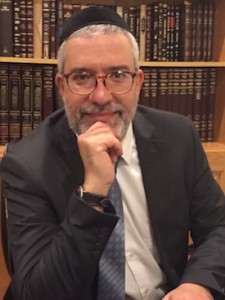
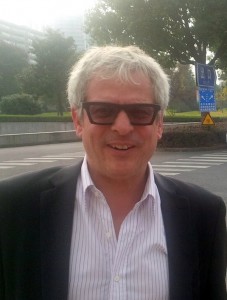
Eyal Daniel (photo from Eyal Daniel)

Three Vancouver-area teachers who traveled to Israel last summer for an intensive three-week symposium on teaching about the Holocaust now plan to share their knowledge with other educators throughout the region.

The three were chosen to study at Yad Vashem, the Holocaust Martyrs’ and Heroes’ Remembrance Authority, with many of the world’s foremost scholars on the Shoah. The focus was on how to educate students of diverse cultures and faiths about the Holocaust and to leverage that knowledge as a framework for teaching about human values, responsible citizenship and social justice.

Eyal Daniel, former head of school at Vancouver Talmud Torah elementary and high school, the latter of which became King David High School, now teaches at Buckingham elementary in Burnaby. As a Jewish person and a native of Israel, Daniel said his experience was somewhat different from most of the other participants from across Canada, but he tried to go into the process ready to absorb everything presented.

“The symposium was three weeks, from 8:30 to 5:30 every day,” he said. “It included lectures about all the different facets connected to the Holocaust by really top lecturers.”

The group also visited different parts of Israel, including Kibbutz Lohamei Haghetaot, the Ghetto Fighters’ Kibbutz, formed by survivors of the Warsaw Ghetto. In addition to teachers, participants included Christian clergy, researchers and some people from the U.S. Holocaust Memorial Museum in Washington, D.C. The Canadian teachers were sponsored by the Canadian Society for Yad Vashem.

Among the most impactful aspects, said Daniel, was meeting and hearing from people with perspectives on well-known aspects of the Shoah.

“One of them was Anne Frank’s childhood friend, a woman at the age of 94, who knew her personally because she met her before [Frank] died in Bergen-Belsen concentration camp,” he said. “The second one was a couple that was on Schindler’s list, people that worked in Schindler’s factory and knew him personally.” Hearing firsthand accounts leaves a deep impact, he said. “You’re part of this history.”

He was also impressed to see how many non-Jewish people are touched and moved by the Holocaust and how committed they are to teach people from different cultures, he said.

The provincial education ministry curriculum does not require educators at any grade level to teach the Holocaust, although it usually comes up when studying the Second World War. It falls to the individual teacher to determine what to emphasize. Daniel has incorporated the topic into social studies, language arts and art. His students, for example, wrote poems about the Holocaust and Daniel sent the seven best to a competition for young writers by the Poetry Institute of Canada. All seven were published in an anthology.

He also incorporates books like The Boy in the Striped Pyjamas, The Old Brown Suitcase (by Vancouver writer Lillian Boraks-Nemetz) or Anne Frank’s diary, and films like the documentaries Paper Clips and Freedom Writers.

“The Holocaust is a one-time event, but it is also connected to racism and prejudice and stereotypes and genocide,” he said. The multicultural students of Metro Vancouver can often personally relate to the historical or contemporary manifestations of these topics.

“The idea is to show that, first of all, you need to learn about this kind of an event because even though it’s an exceptional event, it can happen – or may not happen – because of you,” he said.

Delta high school teacher Stephanie Henderson participated in the program, as well. She too tries to weave the topic into the curriculum when appropriate. When studying the history of Venice, for example, she will note the history of the Venice ghetto, the original Jewish ghetto but not the last.

“The Holocaust is getting to be far away,” she said. “Slowly, people are forgetting about it. This is giving us the ability to keep talking about it.”

The third local teacher on the program was Surrey high school teacher Mark Figueira. “Having been there, it’s something that I think about every day now, whereas before I had been to Israel, it was a topic that I covered in my class, but now it’s become much more than that,” he said. “When I teach about the Holocaust now, it’s so much more rich. It’s stories about people that we met. Just having been there gave me such a really good context for it now.”

The three have created a presentation they will share with other teachers during professional development days, beginning in Delta next February. They will offer advice and approaches on educating about the Holocaust for teachers at every level of knowledge and experience.

In the last decade, the Canadian Society for Yad Vashem has sent more than 200 teachers to attend the summer seminar, where they acquire pedagogical tools for teaching about the Holocaust to Canada’s multicultural students.
Format ImagePosted on December 18, 2015December 16, 2015Author Pat JohnsonCategories LocalTags Eyal Daniel, Holocaust, Mark Figueira, Stephanie Henderson, Yad Vashem

Helping businesses expand

In August, the Jewish Independent connected with Gary Brownstone about a Winnipeg tech incubator he was working on called Eureka. In the short time since then, the entrepreneur has already moved on to his next adventure.

photo - Gary Brownstone
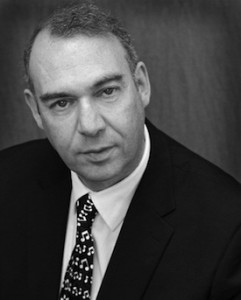
Gary Brownstone (photo from Gary Brownstone)

“Most of my career has been characterized by taking on multiyear projects,” said Brownstone. “In many cases, I’d be involved with or invest in small companies needing help growing to the next level. I’d grow them to the next level and then I would exit. But, generally, the projects I get involved in have a Point A and a Point B, and my mission is to take them from A to B.

“When I went to the Eureka Project, which was an incubator in Winnipeg that a group of individuals together with government and the U of M [University of Manitoba] had tried to launch, for all intents and purposes, [it] had failed. They hadn’t achieved what they’d set out to.”

Brownstone was brought onto the Eureka team to try to save it. They needed answers to three questions. Was there enough world-class talent in Winnipeg to make a venture like this worthwhile? Could the incubator help advance their causes and spin off commercial enterprises? And could Brownstone help make the operation sustainable?

“A big challenge with incubation is that early- stage companies can’t always afford to pay market rates for help, but governments don’t want to pick up the costs forever,” said Brownstone. “When I got to the project, the Manitoba government was covering about 90% of the operating budget.

“The first two [questions] we solved in a relatively short period of time. But, the sustainability issue was longer and … this year, we saw a third of those solved with the signing of a multiyear funding agreement with the province – with them only needing to cover about 30% of our operating budget.”

Seeing that a service like the one he was providing in Manitoba was needed everywhere in Canada, Brownstone move on to create a small practice under the name of LucraTech. He soon had several clients across Canada, the largest one situated in Vancouver, where he now spends about 60% of his time. The other clients are located in Manitoba, Ontario and Nova Scotia.

“I’ve got some associates that I bring into jobs as needed,” said Brownstone. “We are building up our business across Canada and have been for about six months now with some pretty decent success.”

The Vancouver-based company with which Brownstone is working is Canada’s largest technology incubation platform, Istuary Innovation Group. “This is a group of Chinese Canadians who see an opportunity to invest in or acquire Canadian technology for which there could be a market in China,” said Brownstone. “Their expertise is taking Canadian-developed world-class technology into China, where there’s a big market and hunger for this technology … so, these guys are trying to bridge the gap.

“Let’s say that you are an engineer and you have some unique approach to internet security, and they know that, today, in China, on an industrial level, there’s a huge demand for internet security. If they feel that your technology is suitable for that market, they will offer to do a deal with you, and they are very flexible about how they do that. They may offer you employment in one of their innovation labs or, if you had an existing company and were looking for investors, they would invest in you and help you access that market, or they could represent you on an agency basis.”

According to Brownstone, any Canadian technology looking for a home in the Chinese market can likely be aided by Istuary. He believes that Canada is in a unique position and has an advantage over other countries, due to the quality of its schools for engineering, computer programming and related fields, like clean technology and light sciences.

“There is also very strong R&D support in Canada, both federally and provincially,” said Brownstone. “The government will often match every dollar I invest. There is also a very strong tax-credit program, [and] rebates offered will sometimes offset the big costs of R&D.” As well, he added, Canada is an attractive place for developing technology at the moment with the low Canadian dollar compared to that of the United States.

LucraTech aims to take on a series of projects with each client and create a support team to work with that client, beginning by identifying a starting point and an end point.

“Typically, the companies we start working with are small,” said Brownstone. “They have some customers, they have some revenue, but they are trying to grow to the next level. Maybe you have a company that is doing $300,000 a year in revenue and you want to grow that to $3 million in the next couple of years. We create a road map and a plan that will get you from $300,000 to $3 million, and work with you to achieve that.

“By the time you are at $3 million, you’re probably at a size where you can get and manage the support talent in-house and you can now afford more full-time employees, so maybe we aren’t needed anymore at that level of expertise.”

LucraTech offers other services, as well, such as turnaround, wherein they take on medium-sized companies that, for one reason or another, have encountered some trouble and need help. In this scenario, LucraTech goes in and tries to fix the problem and make the company healthy again. Their typical timeline with clients can be anywhere from one to four years.

“If we believe in a company and the entrepreneur and we can add value to the whole equation, we are very flexible on how we work with companies and usually give them two or three choices. We know we will only get paid if the project goes ahead,” said Brownstone.

“Sometimes, we work just for success fees, where we set out to raise money for a company … sort of a finder’s fee. If we are successful, we get paid. If not, we don’t. Sometimes, we will work for a piece of the business or a small number of shares in the business. We’re really flexible. Once we believe in the concept and the entrepreneur, we will find a way to make it work, whether they have a lot or a little money.”

Rebeca Kuropatwa is a Winnipeg freelance writer.

Posted on December 18, 2015December 16, 2015Author Rebeca KuropatwaCategories WorldTags China, entrepreneurship, Eureka Project, Gary Brownstone, investment, LucraTech
Glass exhibit at Zack Gallery

Glass exhibit at Zack Gallery

From left to right are artists Larissa Blokhuis, Kirsten Rankel, Maria Keating, Sonya Labrie, Joanne Andrighetti, Hope Forstenzer, Mona Ungar and Scott McDougall. (photo by Denise Relke)

From antiquity, glass has been used for utilitarian and ornamental purposes. The current group show at Zack Gallery, Works in Glass from Terminal City Glass Co-op, demonstrates both functions in the elegant and colorful creations of co-op members. Vases and funky animal sculptures, jewelry and abstract decorative pieces transform the gallery into a celebration of light and flowing forms.

Holly Mira Cruise, one of the co-op founders and its current executive director, told the Independent a little about the group’s history.

“Terminal City Glass Co-op is the first and only nonprofit, cooperative glass arts facility in Canada. It was founded in February of 2012 by Morley Faber, Joanne Andrighetti, Jeff Holmwood and myself. We came together around a mutual desire to see the glass community in Vancouver grow…. We have worked together since then. We started with 30 members, and we now have over 150. It’s a constantly changing community, and we see new members come in every month, and others move on to other opportunities.”

Many co-op members exhibit their glass art often, attracting interest from both customers and professionals. That’s how Linda Lando, director of the Zack, discovered them.

“Linda reached out to me earlier this year,” said Hope Forstenzer, one of the show participants and a member of the local Jewish community. “She had seen some of our co-op’s pieces during Culture Crawl, liked them, and wanted to talk about a show at the Zack.”

Forstenzer herself is in love with glass. “Glass is an amazing medium. It’s elemental,” she said. “There is nothing like it in the whole world. At different stages, it could be liquid and malleable or hard and bullet resistant. It reflects light and allows colors to play inside. It’s created with fire.”

A professional artist, Forstenzer didn’t start her artistic life with glass. “I worked in ceramics and, at one point, I designed several pieces as a combination of glass and ceramics. I couldn’t find the glass I wanted so I started taking classes to make my own glass. I loved it so much, I stopped doing ceramics and concentrated on glass.”

She even moved from New York to Seattle because of her fascination. “Many of the best glass artists in the world live and work in Seattle, and I studied with some of them. There are two glass centres in the world. Venice is one. Seattle is another.”

When her partner took a job in Vancouver a few years ago, Forstenzer moved here. She has been teaching glass-making for about 10 years now. She teaches a class at the co-op, and she also teaches graphic design at Emily Carr University of Art + Design.

Like Forstenzer, Cruise is also passionate about glass. “I tried almost every medium before glass. I painted and drew, I tried clay and metals, I made jewelry. I was an art school dropout. A friend who had been blowing glass since he was a kid told me, ‘Try glass, you’ll like it!’ He was right. I liked it and I never looked back. I became really attracted to the material, to the way it moves and feels and, of course, all the amazing colors. Glass is enthralling in a way that no other material has been for me. I think a lot of people find it has addictive qualities. There have been times over the past 20 years when I have taken a break from glass, but I always seem to go back. It calls me.”

To answer that call, she not only works as a glass artist but also manages the co-op, organizing all its programs and classes, and bringing in visiting instructors from all over the world. “TCGC offers classes in glassblowing, beadmaking, flameworking and sandblasting,” she said. “We make it easy for people to take the first steps. We also offer advanced learning opportunities for people who have practised for awhile. There is no post-secondary glass program in Vancouver, but there is one at Alberta College of Art and Design and at Sheridan College in Ontario. Hopefully, we will catch up with other provinces soon.”

Widely available education in glass-making is a relatively new development for such an ancient craft. Before the 20th century, glass was mostly worked at factories, and each one guarded its secrets.

“In the 1960s, the Studio Glass Movement started,” Cruise explained. “Glass-making moved from factories to independent artist studios. It became a lot easier for people to approach glass and learn it…. Today, there are books on how to set up your own studio and build your own equipment. People are 3-D printing with glass. This year, Emily Carr ran its first class in 3-D Design with Glass through our studio. It was a great success, and seeing the potential of glass as a material to be enhanced and developed with technology was thrilling.”

According to both Cruise and Forstenzer, the students taking classes at the co-op come in all ages and artistic levels.

“Our students are pretty diverse,” said Cruise. “We get all ages, from 17 to 75. Sometimes, it’s retired people who want to pick up a hobby, or younger people who want to become glass artists, or couples looking for something fun to do. We have something for everyone to try here.”

Works in Glass runs until Jan. 10. For more information about the co-op, visit terminalcityglass.com.

Olga Livshin is a Vancouver freelance writer. She can be reached at [email protected].

Format ImagePosted on December 18, 2015December 16, 2015Author Olga LivshinCategories Visual ArtsTags glass-making, Holly Mira Cruise, Hope Forstenzer, Terminal City, Zack Gallery

Bright lights to end year

Canadians have been in an uncharacteristically self-congratulatory mood lately over our national response to the Syrian refugee crisis. The federal government has come through on behalf of thousands of people fleeing the catastrophic violence in Syria, with the prime minister and what appeared to be most of his cabinet showing up personally to greet the first arrivals. Perhaps more impressive still has been the mobilization of ordinary Canadians to sponsor and aid refugees, with synagogues, churches, community groups, neighborhoods and individuals stepping up to help. In contrast with the response from many in the world, including the Gulf states and divisive figures like Donald Trump, Canadians should be rightly proud of our collective response.

Certainly there are concerns among some Canadians about the newcomers. The idea that “radicalized” individuals could slip in under the guise of humanitarian status is frequently mooted. More likely is the potential that some refugees may carry with them ideas about women, Jewish people, gay people or others that are not consistent with this country’s norms. This is not something to gloss over. We should be aware of it and ensure that, along with our clearly demonstrated willingness to offer a heart-felt welcome to the refugees, we also model for them other Canadian ideals, including respect for difference. The fact that the groups sponsoring refugees are themselves representative of Canadian diversity should be a good head start in this regard.

The joyous welcome we have witnessed is an uplifting way to draw 2015 to a close. This has not been a year filled with happy news, yet the last few weeks have brought us several encouraging lights in the midst of the winter’s darkness.

In Paris last weekend, 195 countries made an historic step toward reining in the carbon emissions that are causing climate change. These two issues – refugees and the climate – are not unrelated. Scientists and other warn that if something significant does not change quickly, the world will be awash in populations struggling against each other for arable land, potable water and habitable space. It is a daunting prospect, put mildly, and events in Paris suggest the world may finally be taking the danger seriously. Of course, we have made false promises before. Again, we may have reached a moment of truth where the arc of history is bending toward repairing the damage we have done to the world.

There has been another very significant development in recent days. The rapprochement between the Jewish people and the Catholic Church that began five decades ago took a very major and substantive leap forward with remarks by Pope Francis and the release of a landmark statement by the Vatican.

Catholics, the document states, are obligated to demonstrate their faith in Jesus to all people, including Jews, but the Catholic Church “neither conducts nor supports” missionary initiatives aimed toward Jews. From the perspective of 2,000 years of Christian doctrine that situates the Catholic Church and Christianity as the preemptive successor religion to Judaism, this is a revolution. It is the antithesis of the sort of language and ideas that have caused incalculable strife for Jews in Europe and other primarily Christian lands. It suggests that the leadership of the church, once deemed infallible and all-knowing, admits that some things are unknowable. The Christian dictum that eternal life requires belief in and dedication to Jesus as the messiah is neither negated nor affirmed by this new statement, deeming it “an unfathomable divine mystery” that salvation can come only through Jesus while the church also affirms the biblical covenant between God and the Jewish people, the Vatican says.

“While affirming salvation through an explicit or even implicit faith in Christ,” the Vatican document says, “the church does not question the continued love of God for the chosen people of Israel.”

The Pope has repeatedly made friendly gestures to the Jewish people, rejecting millennia of hostility and continuing a trajectory of reconciliation begun in the 1960s with the Second Vatican Council.

These three developments – the welcoming of refugees to Canada, the recognition that we must care for our planet for its and our survival, and an historic reappraisal of the relationship between Christianity and Judaism – seem like pleasant things to reflect on as we close out a year in which bright lights are a welcome respite.

Posted on December 18, 2015December 16, 2015Author The Editorial BoardCategories From the JITags Catholic-Jewish relations, climate change, Justin Trudeau, Paris, Pope Francis, refugees

Perspective gained at camp

On a logging road near Smithers, B.C., the Unist’ot’en people occupy their traditional land in order to stop work on the 11 pipeline projects that would run through the area. Located beside Wedjin Kwa (Morice River), the camp is one of the only places left in the world where it is safe to drink directly from a natural body of water. Add to this the rustling trees, abundant huckleberries, countless wildlife and more, and it is clear why it is worth fighting for this land.

The Unist’ot’en maintain a checkpoint where all visitors must answer a series of questions posed by a member of the clan to assess the level of support for the clan’s action before being allowed into the territory. Supporters and allies have been allowed into the camp, as well as loggers with preexisting contracts; however, pipeline workers and helicopter crews arrive often and are reminded that they have not followed the appropriate channels to be permitted to do work on the land.

During my visit, the camp was on high alert after a tip that police planned to raid and demolish the camp, and arrest people living there. Stories around the campfire included many accounts of police misinformation and aggressiveness from veterans of the land defence struggle since the Oka crisis in 1990. There were also accounts of police following members of the camp when they went in to town, and of helicopters and surveillance drones flying overhead more than six times a day.

As those telling stories began to reminisce about siblings and parents in the residential school system, I saw the patterns of trauma visible in my own family and community emerge. The way that pain is passed through generations reveals an eerie overlap. I see remnants of the Holocaust in the way my grandparents raised my parents, my family’s relationship with food and eating, and the way they remember and guard their identity because someone once tried to take it away. With new research into genetics and epigenetics, we now know that trauma during a person’s lifetime can be passed to their children through their genes. This means that both habits and practices built during a lifetime, as well as genetic responses to stress, can be passed on.

An authority that once promised to keep them safe has betrayed both my ancestors and the people at the camp. When one elder spoke about watching as his siblings and childhood friends disappeared at the residential school, it echoed the blank pages that are so many Jewish family trees since the 1930s. I also see similarities between the Holocaust and the genocide of First Nations peoples through the reserves and the residential school system, the devastation caused by smallpox and alcoholism, much of which was propagated by the state. Not to mention continued racism.

I understand that the situations are not identical but there is enough commonality that it warrants a deeper look. I do not understand why peoples who have gone through cultural and physical genocide don’t come together in dialogue and support for each other’s survival. Throughout the last 70 years, we have promised repeatedly to “never forget,” but First Nations peoples still suffer discrimination, and this should command our attention. When there is injustice for some, there is no justice for anyone, and who better to stand in support of equal rights and freedoms, than a people who also has a long history of being oppressed and having to fight for survival.

Ariel Martz-Oberlander is a theatre artist, activist and poet living in Vancouver, Coast Salish territories. She is grateful every day for the people who work to make the world a more lovely place to be.

Posted on December 18, 2015December 16, 2015Author Ariel Martz-OberlanderCategories Op-EdTags Coast Salish, First Nations, genocide, Holocaust, identity issues, pipelines, Unist’ot’en

Emanu-El to sponsor refugee family

The board of Congregation Emanu-El of Victoria has unanimously approved a motion to proceed with sponsorship of a Syrian refugee family. They believe that this is a moment to step forward as Jews and “welcome the stranger.”

Many in Victoria’s Jewish community trace their families’ arrival in Canada from the time they fled brutal pogroms in the Russian empire, and some came as the surviving remnant of European Jews after the Holocaust. Others landed here because they were expelled from their countries throughout the Middle East and North Africa after the creation of the state of Israel in 1948.

“As we cannot forget our oppression and persecution over millennia, we also count our blessings for living in freedom and comfort in Canada. Jewish ethics enjoin us to reach out to others to help end their suffering. The concept of tikkun, or repair, is central to Jewish belief, in that it is our duty to try and fix what is broken in this world,” said Congregation Emanu-El’s Rabbi Harry Brechner.

The synagogue welcomes all who wish to join in the fund-raising efforts. Office hours (1-250-382-0615) are Tuesday to Thursday, 9:30 a.m.-2:30 p.m., to make credit card donations, or cheques can be sent to 1461 Blanshard St., Victoria, B.C., V8W 2J3. Tax receipts will be issued for all donations.

For more information, contact Jean Dragushan, chair of the refugee sponsorship steering committee, at [email protected] or 1-250-818-4132.

Posted on December 18, 2015December 16, 2015Author Congregation Emanu-ElCategories LocalTags Emanu-El, Harry Brechner, refugees, Syria

Join in Shabbat of Song

photo - Rabbi Ilan Acoca of Congregation Beth Hamidrash
Rabbi Ilan Acoca of Congregation Beth Hamidrash (photo from Beth Hamidrash)

One of the ways to thank God for blessings, says Rabbi Ilan Acoca, is through singing. Shabbat Shira, which takes place Jan. 23, tells of the Israelites breaking into song as a way to thank God for the parting of the sea during the Exodus.

“Traditionally, it’s a special Shabbat,” said Acoca, spiritual leader of Beth Hamidrash, Vancouver’s only Sephardi congregation. “Obviously, there’s a lot of liturgy in our

Judaism, depending on the background that we have, there’s a lot of music. On this particular Shabbat, there is even more music and more liturgy and, therefore, it makes a special Shabbat.”

To mark the occasion, Beth Hamidrash is organizing Shabbaton Shabbat Shira: East Meets West, which will celebrate the different musical approaches among Sephardi and Ashkenazi Jews. Cantor Yaacov Orzech of Schara Tzedeck Synagogue will bring the Ashkenazi flavor. The West Coast Andalusian Ensemble, an ad hoc group of Vancouver and Los Angeles musicians coming together for the first but maybe not the last time, will celebrate the Sephardi traditions.

photo - Cantor Yaacov Orzech of Schara Tzedeck Synagogue
Cantor Yaacov Orzech of Schara Tzedeck Synagogue (photo from Beth Hamidrash)

“The idea is that often we look at our differences as Jews and our backgrounds,” Acoca said. “Music brings people together, so the idea behind it is definitely to bring the beauty of both Ashkenazi and Sephardi music, but it’s more than that. We unite the community and show them that, yes, we may have our differences in background and our philosophy and so on and so forth, but we are one people. Therefore, we thought that the best way of doing it, rather than to give speeches about unity, which rabbis often do, we thought the best way was to put speeches aside and concentrate on the music.”

Acoca credits Orzech for coming up with the idea, but it is something that used to happen among congregations in Montreal, where Acoca grew up.

***

Shabbaton Shabbat Shira: East Meets West takes place Jan. 22, 4:35 p.m., services followed by Kabbalat Shabbat then dinner, 6 p.m., and a lecture by Rabbi Acoca on Discovering the Richness of Sephardi Liturgy ($18; $10 for kids 6-12, free for 5 and under): reserve by Jan. 20. Jan. 23, 9 a.m., services with Kol Simcha Singers and sermon on The Power of a Song, musaf led by Cantor Orzech, lunch with Sephardi and Ashkenazi delicacies. Jan. 23, 8 p.m., music celebration with Acoca, Orzech and West Coast Andalusian Ensemble, with Sephardi refreshments – suggested donation $10.

Posted on December 18, 2015December 16, 2015Author Pat JohnsonCategories MusicTags Ashkenazi, Beth Hamidrash, Ilan Acoca, Schara Tzedeck, Sephardi, Shabbat Shira, Yaacov Orzech
Rehab centre fills gap

Rehab centre fills gap

Ian Rabb with his dogs Samson and Ariel. (photo from Ian Rabb)

After falling prey to the habit himself, being rescued by his family and brought back home to Winnipeg for recovery, Ian Rabb began giving back – not just to his supporting family and the Jewish community, but to the greater community of Manitoba.

Rabb knew how the system worked from personal experience, had learned its flaws and, after recovery, set about to fix it.

“What I noticed then was a broken system in Manitoba, where there was no continuity of care,” said Rabb. “People didn’t have the ability to have extended stays in any kind of stable environment and, as I started doing my research and working in the program, I was appointed to the board of directors of the Addictions Foundation of Manitoba.”

With help from his brother, Jeff, Rabb determined that the biggest problem was the lack of a safe house where recovering addicts could take their time and realign their lives after completing their residential treatment program, which comprises a couple of weeks of rehabilitation. He opened Two Ten Recovery, a men’s house of recovery, as well as Destiny House for women. Today, there are three homes with a total of 33 beds.

“Our aim is to help people stabilize their lives and get them back to being fully self-supporting citizens, having a better prognosis or outcome when they leave,” said Rabb. “We allow them up to two years in our homes, where they have to be working and self-supporting within three months. Our success rate is at about 83%. What we’ve learned over the last number of years is the longer we can stay connected to someone post-treatment, coming out of a treatment centre, the better our success rates will be.”

It was six years ago that Rabb began hatching a plan to open a 24-hour, full-service drug and alcohol rehab centre. Once the Addictions Foundation closed their detox clinic, it became clear that a detox centre was also needed. Aurora Recovery Centre was established.

“I realized one thing very early on – that there was desperate need for a medical detox program where anyone could access medical services at any time, for any substance, and be provided with a service that would help them get off that substance, ultimately moving to the next step, addiction treatment,” he said.

Another thing that was critical in Rabb’s mind was to eliminate the wait time. “You don’t have time to wait when it comes to addiction treatment,” he said. “When someone’s ready for treatment, they need to be able to access a treatment facility. That doesn’t exist here. There’s months-long wait.

“All across Canada, because of the epidemic of addiction, even private centres are having severe wait times. So, ultimately we’re scrambling for places to send people when they need immediate help.

“The best centre in the world is just south of us, in Minnesota.

It was the first one ever started. Our model (at Aurora) is replicating the Hazelden model of addiction treatment.”

Aurora Recovery Centre is located on 28 acres of land along Lake Winnipeg, just north of Gimli. It will start as a 76-bed primary care centre, with 16 beds devoted to medical detox and emergency situations.

“We will be able to handle the ongoing problems here in Manitoba and hopefully will be busy enough to expand,” said Rabb. “We have lots of acreage there. We’re opening smaller with the plan of creating a full campus.”

To manage the centre, Rabb hired Peter Connelly, a Manitoba-born and -raised clinical director who has worked at the Minnesota Hazelden recovery centre for the past 13 years.

“I really believe that more services are needed, not only in Manitoba, but also in Canada,” said Connelly. “It’s an exciting project. It’s going to provide people who obviously need help with programs, so that’s really my reason for coming back. I certainly have a passion for recovery.”

Apart from the detox unit, which Connelly views as critical, his focus will be on the continuum of care, as he believes that after-care is of vital importance – the available services once clients have completed their in-patient treatment.

“The reality is that in-patient treatment is very difficult,” said Connelly. “It’s about people making a change, about people learning the tools of recovery and taking these tools into the outside world and using them to deal with life, on life’s terms.

“Addicts, alcoholics, need structure. They need to take responsibility and be accountable. Once they finish in-patient treatment, those are the challenges they face, so after-care is critical.”

This is an area that Aurora aims to focus on, with a number of programs that aid patients, including the option of extended-care programming, sober-housing on site, and continued follow-up with clients after they leave the centre.

“We will be developing an extensive out-patient program, so those who’ve been through the program can continue having group sessions and individual counseling after they leave,” said Connelly. “Through a number of programs that we’re developing and have developed, we’ll have clients come back yearly for an annual reunion.”

The facility is privately funded; participants and/or their family members will need to pay for their treatment. But, the cost is all-inclusive, with no added fees. “At the end of your stay, you certainly won’t be getting a bill for additional charges,” said Connelly. The cost is determined on a case-by-case basis, dependent on treatment and other factors.

At Aurora, the aim will be to have no wait time. “This is critical,” said Connelly. “We all have a tendency to procrastinate and the addict/alcoholic has a tendency to change their mind. When someone finally makes a decision they need to go, or a family member helped them with that decision, we need to get them into treatment as quickly as possible.

“As we move forward, I think people will see that the programming we offer is certainly needed. We’ll see what kind of relationships develop from there.”

Aurora began accepting patients on Oct.16. For more information, visit aurorarecovery.com.

Rebeca Kuropatwa is a Winnipeg freelance writer.

Posted on December 18, 2015December 16, 2015Author Rebeca KuropatwaCategories NationalTags addiction, alcoholism, Aurora, Ian Rabb, recovery, rehab
New Olympic Museum

New Olympic Museum

Try your hand at ski jumping in one of ROX’s five simulators. (photo from ROX)

There’s no question the 2010 Winter Olympics in Vancouver changed the region considerably, but some of those changes are as recent as November 2015. That’s when the Richmond Olympic Experience, or ROX, opened at the Richmond Olympic Oval, the massive structure built on the banks of the Fraser River to accommodate the Olympics’ speed-skating competitions.

A $10 million museum, ROX is all about hands-on experience and is filled with interactive exhibits and activities that engage visitors. Take the five sport simulators, for example, three of them designed and manufactured specifically for ROX. On the ski-jump simulator, you experience the thrill of ski jumping on one of Whistler’s world-class runs, while on the bobsleigh you feel the rush of speed on the same track traveled by Canadian Olympic bobsledder Chris Spring. There’s a race-car simulator, a kayak and a sit-ski simulator, too. While the simulators are the most exciting of the interactive exhibits (and the highest in demand), there are many others. Visitors are encouraged to learn how high and how far they can jump, to measure their hand-eye and foot-eye reaction times, to score goals in soccer and hockey and to compare their results to those of Olympic athletes.

There are also lots of interesting artifacts, including a display of Olympic torches that date back to 1936, when the torch relay was introduced to the Games by Adolf Hitler’s Nazi party. One case displays sports equipment including tennis rackets, showing how they have evolved over the years. Another showcases Olympic medals, which have also changed considerably in size and design over time. For those who want to spend time researching the participation of a specific country in the Olympic Games, or the performance of one or more athletes, ROX has a data lounge where a wealth of information is digitally archived and easily accessible.

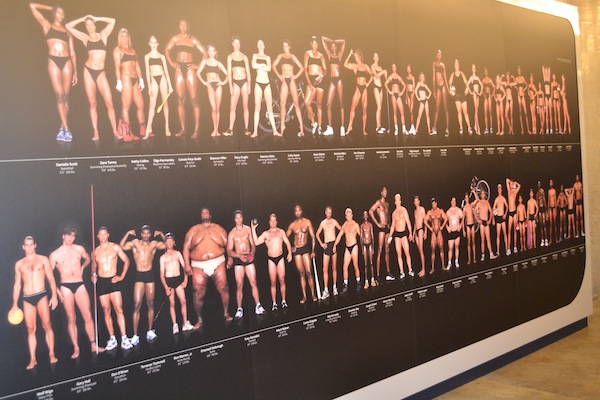
There are many images at ROX. One of my personal favorites is a massive photograph of athletes who have competed, all wearing black bikinis or swimsuits. Since they’re scantily clad you can get a sense of the many different body types and how a specific sport has shaped individual bodies. The photographic collage delivers a powerful message about the beauty of the human body and the many reflections of that beauty, big and small.

photo - Olympic athletes
(photo from ROX)

While most of the displays are not specific to the 2010 Winter Olympics in Vancouver but cover the Games in general, there is one wall that pays tribute to the 2010 Games with statistics on how many medals Canada won that year (26), how many viewers watched on TV (1.8 billion!) and how many media representatives were present (a mere 10,000). A large screen in the vicinity replays the most memorable moments from the Games and another encourages visitors to try their hand at being a TV announcer.

One wall pays a noticeably teensy tribute to tragic Olympic events. It’s here that the 1972 massacre of Israeli Olympic athletes in Munich is mentioned in two short lines.

Of the plethora of museums about the Olympics worldwide, only 21 are accredited members of the IOC Olympic Museums Network. ROX is the only member of this network in North America and that membership allowed the City of Richmond to expand its budget from the humble $575,000 initially allocated for the museum to $10 million, by opening the door to a robust sponsorship drive. It also enabled loans of Olympic resources like the torches. Ted Townsend, spokesperson for the City of Richmond, said the most priceless exhibit at ROX is that of the medals and torches.

While you’re at ROX take a peek at the Olympic Oval. After the dismantling of the speed-skating rinks, it now includes two hockey rinks, facilities for pilates and yoga, courts for badminton, baseball, basketball, soccer, table tennis, tennis and volleyball, a wall for climbing, and areas for golf, gymnastics and rowing. And don’t forget to look up at the wood panels of the Oval’s roof. Created from pine beetle-damaged wood, it contains the signatures of 8,000 Richmond residents who inscribed their names in the early construction stages.

For more information, visit therox.ca or call 778-296-1400.

Lauren Kramer, an award-winning writer and editor, lives in Richmond. To read her work online, visit laurenkramer.net.


Format ImagePosted on December 18, 2015December 16, 2015Author Lauren KramerCategories LocalTags Olympics, Richmond Oval, ROX
Young Lamplighters 2015, and other December milestones

Young Lamplighters 2015, and other December milestones

Surrey Mayor Linda Hepner, left, White Rock Mayor Wayne Baldwin and Simie Schtroks of the Centre for Judaism present the 2015 Young Lamplighters Award to Sarah and Amy Aginsky on Dec. 13. (photo from Lauren Kramer)

Sarah and Amy Aginsky, 12-year-old identical twins from Richmond, are this year’s recipients of the Centre for Judaism of the Lower Fraser Valley’s Young Lamplighters Award. With this annual award, the Centre for Judaism honors individuals between the ages of 5 and 18 who have performed outstanding community service.

In March 2015, Sarah and Amy, Grade 7 students at Homma Elementary in Richmond, hosted a Street Store for the homeless and impoverished. The Street Store concept was founded in Cape Town, South Africa, in January 2014 to help the homeless. Based on retail shopping, it involves collecting clothes and other items, organizing a pop-up, one-day store and giving shoppers the opportunity to select apparel and shoes without the exchange of money. The Street Store provides people located all over the world with an infrastructure, support and inspiration to host their own such stores.

The twins’ parents were born in Cape Town and their grandparents and relatives live there to this day. They saw how the Street Store had helped the homeless in cities including Sao Paulo (Brazil), Kentucky, Brussels, Tepic (Mexico), Grande Prairie (Alberta), Tucuman (Argentina), Oslo (Norway) and Vancouver, among others, and were inspired to host a Street Store of their own.

Between January and March, Sarah and Amy collected truckloads of donated clothing and footwear, distributing them to the needy on March 6 at the Lighthouse Mission in Bellingham, Wash.

“It was humbling to see how much people were prepared to give and how eagerly they wanted to help us help others,” said Amy. “Seeing the appreciative faces of our Street Store shoppers was heartwarming and beautiful. Many of them have very little and are living difficult lives. It felt great to know we were helping others and that, as a result of our mitzvah project, their lives might get a little bit easier.”

Rabbi Falik and Rebbetzin Simie Schtroks, directors of the Centre for Judaism, with Surrey Mayor Linda Hepner and White Mayor Wayne Baldwin, presented the Lamplighters Award to Sarah and Amy at a public menorah lighting at the Semiahmoo Shopping Centre in White Rock on Dec. 13.

“Chanukah celebrates the victory of light over darkness and goodness over evil,” said Simie Schtroks. “This is a most appropriate opportunity to motivate and inspire young people to make this world a brighter and better place. By filling the world with goodness and kindness, that light can dispel all sorts of darkness.”

***

photo - Elizabeth Wolak and her daughter-in-law Anna Wolak
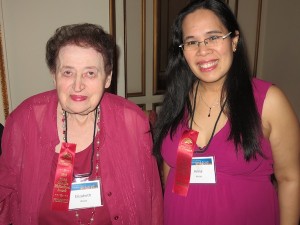
Elizabeth Wolak and her daughter-in-law Anna Wolak (photo from Arthur Wolak)

Elizabeth Wolak and her daughter-in-law Dr. Anna Wolak were both nominated for the 2015 British Columbia Multicultural Awards. As nominees, they were honored to attend the official awards gala evening, together with representatives from the provincial and federal governments, which took place at the Fairmont Hotel Vancouver in November.

The B.C. Multicultural Awards is an annual event hosted by the provincial government and the Multicultural Advisory Council to recognize and honor the multicultural accomplishments of individuals, organizations and businesses throughout the province. Elizabeth Wolak was nominated for her decades of multicultural work bringing the beauty of Jewish choral music to the attention of diverse ethnic communities through her numerous annual concerts. Dr. Anna Wolak was nominated for her health-care work, treating and educating patients and medical practitioners in British Columbia’s multicultural setting.

***

Leila Getz has been selected by Musical America Worldwide as a 2015 Influencer and is profiled in its MA 30 Professionals of the Year: The Influencers special report, released this month, which lists 30 honorees. The report’s editors, “recently asked the MA community to nominate 30 people who are making a difference in our business, either by virtue of their position, their creativity and/or their dedication – folks about whom you could say, ‘When they speak, we listen.’”

“Leila Getz looms large as one of the primary driving forces on the classical music scene in Vancouver, B.C.,” reads her profile in the report. “In 1980, at the age of 40, this South African native founded the Vancouver Recital Society, a presenting organization that has consistently aimed high and brought many of the world’s leading artists to a relatively isolated region.

“It seemed like a foolhardy project at first, especially since there was an economic recession in Canada in the early 1980s…. But the series gradually expanded from five events at the beginning to 20 in 2015….

“Most striking is Getz’s knack for finding major artists before they become widely known. She presented the Canadian debuts of mezzo-soprano Cecilia Bartoli, who reportedly stopped the first rehearsal cold after she sang her first note (the baton flew out of the amazed conductor’s hand), and pianist Lang Lang, who was all of 15 at the time. Other Canadian debuts on this series include those of violinists Joshua Bell and Maxim Vengerov, Anne Sofie von Otter and, one of Getz’s earliest discoveries, pianist András Schiff.”

For the full profile, visit musicalamerica.com/specialreports.

***

The Jewish Community Centre of Greater Vancouver has announced that Sharon Dwek has joined the centre as director of development.

photo - Sharon Dwek has joined the Jewish Community Centre of Greater Vancouver as director of development
Sharon Dwek has joined the Jewish Community Centre of Greater Vancouver as director of development. (photo from JCCGV)

Dwek comes with more than a decade of experience in development, fundraising, community service and marketing, in Vancouver, Israel and the United States. She most recently worked as the director of development at King David High School.

Eldad Goldfarb, JCCGV executive director, said the appointment of Dwek to this new position was a positive step for the centre. “Sharon’s wealth of experience and knowledge has already made her a key addition to the JCC family,” he said. “We view her appointment as a sign of our commitment to being a leading communal organization in our Jewish community.”

Goldfarb suggested the hiring was as much about the centre’s future as it was about its current success. “Our growing programs and our evolving vision for the future led us to look for an addition to our team who will fit in with our values and exceptional service,” he said. “It is very fortunate that we were able to find someone of Sharon’s calibre to fulfil this role.”

For Dwek, coming to work at the centre was a natural fit. “Five years ago, my family and I relocated to Vancouver and we turned to the JCC and immediately felt at home and connected,” she said. “As a place of connecting, care-giving and learning, the JCC has truly become our second home and I am honored to help usher the JCC into the next stage of its future growth and development.”

For more information on JCCGV programming or staff, visit jccgv.com.

***

The 613th mitzvah of the Torah is the obligation for every Jew to write a Torah scroll. In the words of the verse: “And now, write for yourselves this song, and teach it to the Children of Israel. Place it into their mouths, in order that this song will be for Me as a witness for the Children of Israel.” (Deuteronomy 31:19)

Congregation Beth Israel has been blessed to receive a generous gift of a new sefer Torah with the opportunity for its members to complete it by scribing the last 100 letters. As space is limited, participation is by lottery. For more information on the project, visit bethisraelvan.ca/asitiswritten. The deadline for entry into the lottery is Jan. 18, 2016.

Under the guidance of sofer Rabbi Moshe Druin of Florida, families will participate in scribing and other activities for all ages Feb. 19-21. The following weekend, Feb. 26-27, the dedication of the congregation’s new sefer Torah will take place, as will a celebration of Debby Fenson’s 10th anniversary as BI’s ba’alat tefillah.

There are 304,805 letters in the Torah and, if any is missing, the whole Torah scroll must be wrapped up and put away until it is repaired. Every letter in a Torah is vitally important. Now imagine all the Jewish people as one Torah scroll. Each person, big or small, rich or poor, a pious scholar or just a simple Jew, is one letter; all of us as important as each other.

Format ImagePosted on December 18, 2015December 16, 2015Author Community members/organizationsCategories LocalTags Aginsky, Beth Israel, Centre for Judaism, JCCGV, Jewish Community Centre of Greater Vancouver, Lamplighter Award, Leila Getz, Moshe Druin, multicultural, Schtroks, Sharon Dwek, Street Store, tikkun olam, Vancouver Recital Society, Wolak

Posts pagination

Previous page Page 1 … Page 543 Page 544 Page 545 … Page 670 Next page
Proudly powered by WordPress