Skip to content
  • Home
  • Subscribe / donate
  • Events calendar
  • Business Directory
  • FAQ
  • News
    • Local
    • National
    • Israel
    • World
    • עניין בחדשות
      A roundup of news in Canada and further afield, in Hebrew.
  • Opinion
    • From the JI
    • Op-Ed
  • Arts & Culture
    • Performing Arts
    • Music
    • Books
    • Visual Arts
    • TV & Film
  • Life
    • Celebrating the Holidays
    • Travel
    • The Daily Snooze
      Cartoons by Jacob Samuel
    • Mystery Photo
      Help the JI and JMABC fill in the gaps in our archives.
  • Community Links
    • Organizations, Etc.
    • Other News Sources & Blogs
  • JI Chai Celebration
  • JI@88! video

Recent Posts

  • Or Shalom reopens its doors
  • JFS from past to future
  • Need holistic approach
  • Sharing stories, advice
  • Journalist shares fears
  • Skills to live together
  • Road to independence
  • Cutting grass with scissors
  • Zionism as a solution
  • Deceit, desire & the divine
  • Reclaiming sacredness
  • Creative project ideas
  • Summer squares and cobbler
  • Thou shalt … summer commandments
  • Legal help for students
  • Revisiting myth of Lilith
  • Wrong person rebuked
  • Canada’s mixed messages
  • Questions for museum
  • Symposium on antizionism
  • Making soccer political
  • CJPAC lauds Pulver’s impact
  • City recognizes Vrba’s legacy  
  • Organ donation saves lives
  • Theodore’s March premiere
  • A healing Shabbaton
  • Supplying healthy food
  • A chime of metal tags
  • Yellowknife seder a first
  • Ishai energizes, unifies
  • A Lag b’Omer to remember
  • Expanding the healing
  • Hannah Senesh – a unique hero
  • Community milestones … May 2026
  • Деньги до зарплаты на карту Займ до зп онлайн за 5 минут 2026
  • Sharing her testimony

Archives

Follow @JewishIndie
image - The CJN - Visit Us Banner - 300x600 - 101625

Author: Sybil Kaplan

Sponge cake a Pesach must

Sponge cake a Pesach must

Another version of orange-glazed sponge cake, minus the Sabra. (photo from littlemisscelebration.com)

Sponge cake. It’s an integral part of Pesach for many people, even though there is no special plate for it, and no bracha said over it. Sponge cake comes in two types – angel food and true sponge.

Angel food cake has cream of tartar, an acid ingredient, which used to be combined with baking soda and salt to make a form of baking powder before baking powder was produced commercially. Cream of tartar is what gives an angel food cake its white color, and it also creates an acid reaction in the batter.

Sponge cake has a more delicate cousin referred to as sunshine cake. Most people, however, refer to the Passover version as sponge cake. Sponge cake is usually baked without shortening or butter or baking powder but with lots of eggs. Its lightness and texture come from careful handling and the air beaten into the eggs. Recipes with nine to 12 eggs are not uncommon.

The aim of making a sponge cake is to beat the maximum amount of air into the yolks and whites while handling them as little as possible. An electric or rotary beater gives better results than whipping by hand. Since there is no baking powder, the main rising factor is the air plus steam.

In making a sponge cake, it is important that the yolks are beaten until light and thick, and the whites must be beaten until they are stiff and glossy. Essences such as vanilla lemon or orange rind add special flavor to a sponge cake.

The best pan for a sponge cake is a tube pan with a removable rim, thus the central tube gives support to the batter.

In Israel, many old-timers use a wonder pot (in Hebrew, sir pella) about which I wrote a cookbook in the 1970s for people without an oven (see jewishindependent.ca/cookbook-resurfaces). A wonder pot is basically a sponge cake pan that sits on a coned base and then has a lid with strategic holes around its top to let out the steam. It is placed atop a stove burner for baking. Last year, in the weeks leading up to Passover, one of the large supermarkets in Jerusalem carried three different sizes of wonder pots (dairy, meat and parve) so you didn’t have to kasher your oven before the holiday.

A regular sponge cake pan should be ungreased. A preheated 350˚F oven is the best heat for baking a sponge cake. When the cake is done, the pan should be inverted to cool for about an hour and a half. Before removing the cake from the pan, the sides should be loosened with a knife. It is best not to try to cut a fresh sponge cake with a knife; rather, use a divider with prongs instead, and slide it back and forth gently.

In Let My People Eat, Zell Schulman offers these additional tips to keep your sponge cake from falling: have the eggs at room temperature and use only large eggs; don’t add sugar until the egg whites begin to hold small, soft peaks; beat the egg whites until stiff but not dry; and never make a sponge cake on a wet day.

Here are three different kinds of sponge cake.

ORANGE-GLAZED SABRA SPONGE CAKE

1/2 cup unsalted parve margarine or 1/4 cup plus 2 tbsp oil
2/3 cup sugar
1 tsp orange rind
5 tbsp Sabra liqueur
3 separated eggs
2 tbsp sugar
1/2 cup potato starch
4 tsp orange rind

  1. Preheat oven to 325˚F. In a bowl, cream margarine or oil and sugar. Add one teaspoon orange rind, two tablespoons of the Sabra liqueur and the egg yolks and blend.
  2. In another bowl, beat egg whites until stiff, gradually adding two tablespoons sugar. Add to creamed mixture gently, then stir in potato starch.
  3. Pour into a greased tube pan. Bake for 45 minutes to one hour. Let cool for at least an hour then gently remove to a plate.
  4. Meantime, in a bowl, combine orange juice, the other three tablespoons of liqueur and the orange rind. While cake is still hot, punch holes around it with a toothpick and pour the glaze over it.

MIRIAM’S BANANA CAKE
This is from one of my close friends in Overland Park, Kan., who, at 88, is still a really creative cook. 

7 eggs, separated
1/4 tsp salt
1 cup mashed bananas
3/4 cup potato starch
1 cup sugar
1 cup chopped walnuts

  1. Preheat oven to 350˚F. In a bowl, beat egg whites until stiff but not dry, then refrigerate.
  2. In another bowl, beat egg yolks until thick and lemon-colored. Gradually add sugar and salt, beating continually. Fold in bananas and potato starch. Fold in egg whites then nuts.
  3. Turn into an ungreased tube pan and bake for 45-50 minutes. Invert pan to cool.

PAN DI SPAGNA
This recipe comes from The Classic Cuisine of the Italian Jews by Edda Servi Machlin. Pan di Spagna (bread of Spain) is also called pasta reale and was made in the matzah bakery with the same flour that was used for the matzot.

6 eggs, separated
1/8 tsp salt
1 cup sugar
1/4 cup fresh orange juice
1/2 cup Passover cake meal
1/4 cup potato starch
freshly grated rind of 1 large lemon

  1. Preheat oven to 350˚F. In a small bowl, beat egg whites with salt until soft peaks form.
  2. In a larger bowl, place egg yolks, sugar and orange juice and beat until frothy and lemon-colored.
  3. Combine the cake meal with potato starch and gradually add to the egg yolk mixture, beating until the batter is smooth. Add the lemon rind and fold in the egg whites.
  4. Pour into an ungreased sponge cake pan with removable bottom and bake for one hour. Remove from oven and invert over a wire rack to cool before unmolding.

Sybil Kaplan is a journalist, foreign correspondent, lecturer, food writer and book reviewer who lives in Jerusalem. She also does the restaurant features for janglo.net and leads weekly walks in English in Jerusalem’s market.


Format ImagePosted on April 15, 2016April 13, 2016Author Sybil KaplanCategories Celebrating the HolidaysTags baking, Passover, sponge cake
Secrets from best chefs

Secrets from best chefs

Leah Schapira and Victoria Dwek work together often. Instalments of their Made Easy cookbook series have been featured in the Jewish Independent, with positive reviews. And now, the pair have co-authored Everyday Secret Restaurant Recipes (ArtScroll/Mesorah Publications, 2015).

Here are not just 103 recipes, but they all come from restaurants, many from across the United States, but also from Australia, Austria, Brazil, Canada, China, England, Israel, Panama, Thailand and Uruguay. For each recipe, there is information on the restaurant, a large introduction and photo(s), ingredients, instructions, tidbits or hints for the home cook, and sometimes comments from the chef.

There is also an essay on kosher food trends by Elan Kornblum, founder of Great Kosher Restaurants Magazine, and an interview with him, followed by some basics that prep cooks do. Another essay covers the topic of sweets in the prep kitchen, and yet another, the smoking of foods.

There are 21 starters and sides, like avocado egg rolls from Bocca Steakhouse in Los Angeles; 16 soups and salads, such as a green salad from Milk N Honey in Melbourne; 12 sandwiches, including Philly steak sandwich from Retro Grill in Brooklyn; 17 chicken and meat recipes, such as gong bao chicken from Dini’s in Beijing; 10 fish recipes, like a salmon from Fresko in Aventura, Fla.; 14 brunch and lunch suggestions, including fettuccine with pesto from Deleite in Rio de Janeiro; and 12 baked goods and desserts, such as a halva from Lula by Darna in Panama City.

There are 148 mouth-watering color photographs, both full-page and stamp-size. Whereas a previous version of the cookbook focused on upscale restaurants, this cookbook’s subtitle is “From Your Favorite Kosher Cafés, Takeouts & Restaurants.”

If you know someone who enjoys traveling and eating, or just trying new recipes, this would make a great gift. The cookbook is more than just recipes, it is also a wealth of information.

ARTICHOKES, ROMAN-STYLE
Tevere 84, New York City, Lattanzi brothers (owners/chefs)

6 medium or 2 pounds baby artichokes
juice of 1 lemon
1/4 cup extra virgin olive oil
additional oil for frying
12 minced garlic cloves
sea salt 

  1. Cut off the top of each artichoke just above the middle. Remove some of the outer leaves and the interior immature and hair-like leaves.
  2. Using a peeler, peel the stems of each artichoke.
  3. In a bowl, toss artichokes with lemon juice.
  4. Heat olive oil in a large sauté pan over medium heat. Add garlic. Add artichokes and sprinkle with sea salt. Cook, side by side, stem side up.  Cook until artichokes are tender, turning several times for overall browning, 15-20 minutes. Using a wooden spoon, press each artichoke firmly to the bottom of the pan so that the leaves flatten out. Cook for 10 minutes. (Optionally, for very soft and hot artichokes, you can also transfer to the oven and bake at 400˚F for an additional 10 minutes.
  5. Before serving, heat additional oil in a sauté pan. Flatten artichokes to the flower shape and fry for two to four minutes before serving. Makes one to two servings.

ISRAELI BREAKFAST
Café Tamara, Jerusalem Technology Park, Ohad Vansuv (chef)

2 finely diced Persian cucumbers
2 finely diced tomatoes
1/2 finely diced red onion
handful chopped parsley
2 tbsp olive oil
1 1/2 tbsp lemon juice
salt to taste
pepper to taste
olive oil for frying
4 beaten eggs
1 tbsp preserved lemon/lemon spread
1 tbsp harissa
1 cup yogurt
2 tbsp tahini 

  1. In a bowl, combine cucumbers, tomatoes, onion, parsley, olive oil and lemon juice. Season with salt and pepper.
  2. Heat olive oil in a skillet over medium heat. Add eggs, preserved lemon, harissa, salt and pepper. Scramble eggs until cooked.
  3. Place salad onto a plate. Top with eggs, yogurt and tahini. Garnish with parsley. Makes two servings. Serve immediately.

Sybil Kaplan is a journalist, foreign correspondent, lecturer, food writer and book reviewer who lives in Jerusalem. She also does the restaurant features for janglo.net and leads weekly walks in English in Jerusalem’s market.
Format ImagePosted on April 15, 2016April 13, 2016Author Sybil KaplanCategories BooksTags cookbook, cooking, Dwek, restaurant, Schapira
Germs, humans, numbers

Germs, humans, numbers

How many microbes inhabit our body on a regular basis? For the last few decades, the most commonly accepted estimate in the scientific world puts that number at around 10 times as many bacteria as human cells. In research published earlier this year in Cell, a recalculation of that number by Weizmann Institute of Science researchers reveals that the average adult has just under 40 trillion bacterial cells and about 30 trillion human ones, making the ratio much closer to 1:1.

The bacteria living in our bodies are important for our health. The makeup of each person’s microbiome plays a role in both the tendency to become obese and in each individual’s reaction to drugs. Some scientists have begun referring to it as the “second genome,” recognizing that it needs to be taken into account when treating patients.

The rising importance of the microbiome in current scientific research led the institute’s Prof. Ron Milo, Dr. Shai Fuchs and research student Ron Sender to revisit the common wisdom concerning the ratio of “personal” bacteria to human cells. Their research was undertaken as part of their work for the book Cell Biology by the Numbers, which was recently published by Milo and Prof. Rob Philips of the California Institute of Technology.

The original estimate that bacterial cells outnumber human cells in the body by 10 to one was based on, among other things, the assumption that the average bacterium is about 1,000 times smaller than the average human cell. The problem with this estimate is that human cells vary widely in size, as do bacteria. For example, fat or muscle cells are at least 100 times larger than red blood cells, and the microbes in the large intestine are about four times the size of the often-used “standard” bacterial cell volume. The Weizmann scientists weighted their computations by the numbers of the different-sized human cells, as well as those of the various microbiome cells. They also weighted their calculations for the quantities of “guest” bacteria in different organs in the body. For example, the bacteria in the large intestine dominate, in terms of overall numbers, all the other organs combined.

* * *

Feeling sick is an evolutionary adaptation, according to a hypothesis put forward by Prof. Guy Shakhar of the Weizmann Institute’s immunology department and Dr. Keren Shakhar of the psychology department of the College of Management Academic Studies, in a recent paper published in PLoS Biology.

We tend to take it for granted that infection is what causes the symptoms of illness, assuming that the microbial invasion directly impinges on our well-being. In truth, many of our body’s systems are involved in being sick: the immune system and endocrine systems, as well as our nervous system. Moreover, the behavior we associate with sickness is not limited to humans. Anyone who has a pet knows that animals act differently when they are ill. Some of the most extreme “sickness behavior” is found in such social insects as bees, which typically abandon the hive to die elsewhere when they are sick.

The symptoms that accompany illness appear to negatively affect one’s chance of survival and reproduction. Symptoms, say the scientists, are not an adaptation that works on the level of the individual. Rather, they suggest, evolution is functioning on the level of the “selfish gene.” Even though the individual organism may not survive the illness, isolating itself from its social environment will reduce the overall rate of infection in the group.

In the paper, the scientists go through a list of common symptoms, and each seems to support the hypothesis.

Appetite loss, for example, hinders the disease from spreading by communal food or water resources. Fatigue and weakness can lessen the mobility of the infected individual, reducing the radius of possible infection. The sick individual also can become depressed and lose interest in social and sexual contact, again limiting opportunities to transmit pathogens.

The scientists have proposed several ways of testing the hypothesis, but they hope its message sinks in: when you feel sick, it’s a sign you need to stay home. Millions of years of evolution are not wrong.

For more, visit wis-wander.weizmann.ac.il.


Format ImagePosted on April 15, 2016April 13, 2016Author Weizmann InstituteCategories IsraelTags bacteria, common cold, germs, illness, science
The old town that Jan built

The old town that Jan built

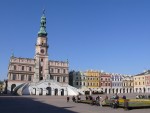
 Zamosc town hall. (photo by Tomasz Zugaj)

If you were rolling in money, what would you do with it? Would you build a town for yourself? That’s what Jan Zamoyski did.

As you approach the town’s main square, you might be inclined to think that someone has fooled with your itinerary. On first glance, it might well appear that somehow you have been detoured from Poland to Italy. Before you stands Zamosc, which can only be described as a stunning example of a planned, late-16th century Renaissance town. Designed by Italian architect Bernardo Morando, it follows the model of the citta ideale, or ideal town.

More than 400 brutal years have passed since the town’s inception. Yet, Zamosc has remarkably withstood the enormous devastation of the Second World War and the utilitarian, unesthetic architecture of the communist era. It largely retains its original layout, a large number of original buildings and fortifications.

Zamosc stands in southeast Poland, 142 miles (228 kilometres) from Warsaw. Zamoyski founded Zamosc on his own property in 1589. He was an intriguing character, an extremely wealthy and educated man who juggled a variety of careers, including in the military and politics. He was a hetman (head of the army) and a chancellor. His taste in things Italian probably began during his student days at the University of Padua.

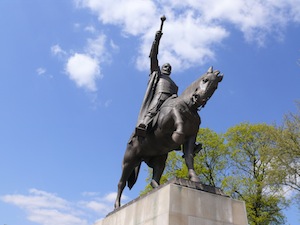
photo - A statute of Jan Zamoyski, founder of Zamosc
A statute of Jan Zamoyski, founder of Zamosc. (photo by Tomasz Zugaj)

While he was an army man, Zamoyski’s focus in establishing Zamosc was seemingly more economic than military. It should be noted, however, that he did not forget to commission an imposing fortress and city ramparts.

Located on the trade route linking western and northern Europe with the Black Sea, Zamoyski envisioned Zamosc as a thriving trade centre. He invited Italian, Turkish and Dutch Jewish merchants to work and live in his new town. His liberal policy toward outsiders was likewise extended to Armenian, Greek and Scottish merchants, and to Ruthenes (Slavs of the Orthodox Church). His outreach to foreigners did not spring as much from liberality, as from a strong desire to see Zamosc succeed. At the time, all of the mentioned ethnic groups had reputations for jump-starting floundering economies.

Zamoyski’s concerns went beyond the economic, though. As an intellectual ruler who was likewise a devout Roman Catholic, he had an academy – located today at Academy and Perec Streets – a high court and a large church, which was originally dedicated to Saint Thomas the Apostle and the resurrection, but was elevated in 1992 to cathedral status, and an imposing palace centrally constructed. Altogether, Zamosc’s buildings reflect the idea that institutions should be in physical harmony with the residents of a town. Just as the organs of the body support the human being, so Zamosc’s institutions were designed to organically mesh with the populace.

As mentioned, when Zamoyski decided to build his town, he imported a skilled Italian architect. It seems clear, however, that the chancellor also considered Morando because of his sensitivity to Polish culture. Morando had already worked in Poland and had gained an appreciation of Polish life.

The 16th-century Great Market Square features colorful arcaded houses characteristic of Morando’s native Padua. These houses, located at the northern end of the square, were designated for the Armenian merchants, hence the street’s name, Ormianski.

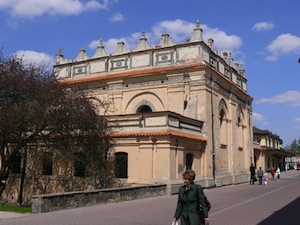
photo - The town’s 17th-century synagogue
The town’s 17th-century synagogue. (photo by Tomasz Zugaj)

In length and width, the square measures exactly 100 metres. It is here that the two main axes of the old town cross. The 600-metre longitudinal axis runs east to west: from Bastion No. 7 to the Zamoyski Palace. The 400-metre crosswise axis runs north to south, joining the Great Market Square to the two smaller market squares: Solny (this area, translated as the Salt Market, was assigned to Jewish merchants) and Wodny (translated as the Water Market). The original buildings in these smaller markets complemented those of the Great Market.

The town hall in particular was an enormous enterprise, taking nine years to complete (1591-1600). It was meant to draw attention. And, with its fan-shaped double staircase and imposing tower, it certainly achieved this purpose. During the early part of the construction work (1591-1593), Morando also served as the town mayor. His appointment ended before he was able to hang his name on the door of town hall’s mayoral offices.

In 1992, the town of Zamosc became a UNESCO World Heritage site. Hopefully, this award will help to preserve the beauty of this Renaissance town for years to come.

More on Zamosc

  • From July 11 to July 18, Zamosc is hosting the international folklore festival Eurofolk. About seven international carriers fly regularly between Vancouver and Warsaw.
  • Famous people who lived in Zamosc include L.L. Zamenhof, founder of Esperanto. He had the revolutionary idea that hatred would disappear if people spoke the same language. A revolutionary who was born in Zamosc was Rosa Luxemburg.
  • The old town of Zamosc stands largely intact. Humans fared far worse. For instance, the Jewish population, which had comprised almost half the city’s pre-Holocaust population (12,531), has vanished. Those who could, fled from the Nazis. Others were forced into a ghetto. In a series of four deportations, many Jews were sent to Belzec. Others were shot in marches and in roundups. As a reminder of the once-thriving Jewish community, visit the synagogue (9-11 Zamenhofa St.), which has been undergoing an extensive renovation project.

Deborah Rubin Fields is an Israel-based features writer. She is also the author of Take a Peek Inside: A Child’s Guide to Radiology Exams, published in English, Hebrew and Arabic.

Format ImagePosted on April 15, 2016April 13, 2016Author Deborah Rubin FieldsCategories TravelTags Bernardo Morando, Holocaust, Poland, Renaissance, Zamosc, Zamoyski
Trip to India reveals much

Trip to India reveals much

Inside of Kadavumbagam Synagogue of Mattancherry, Cochin, facing what’s left of the women’s gallery. (photo by Deborah Rubin Fields)

In enormous and populous India, anonymity does not exist. And social or group orientation counts – in a big way. Ironically, this is apparent in laidback Kerala, a lush coastal farming state in the southwest of the country.

In Kerala, Jews, Christians, Muslims and Hindus basically lived in harmony for years. Yet, within the region’s small Jewish community – often referred to as Cochin Jews, since almost all the Kerala synagogues were built in the kingdom of Cochin – differences have existed between the apparently ancient Malabar Jews, the Meshuhurarum, whose ancestors were reportedly freed slaves, and the Paradesi Jews, who arrived hundreds of years later. Frequently, the groups referred to each other, sometimes derogatorily, as Black Jews, Brown Jews or White Jews. Even today, when one talks with those involved in these communities, issues related to paternalism, land rights and misappropriation of property enter into the conversation.

How have these divisions expressed themselves? A sense of imbalance sneaks in when learning about the famous Tamil script copper plates. The area’s ruler, Bhaskara Ravi Varman, presented these special plates upon the Malabar Jews’ arrival in 1069 CE, although the Malabar Jews often claim they arrived in southern India with King Solomon’s merchants. The plates provide a detailed list of the elevated rights and privileges the sovereign bestowed upon his new residents.

Somehow or other, these important proofs of status are no longer in the possession of the Malabar Jews. Rather, they are reportedly held by the Paradesi Jews who arrived in the 16th century from Spanish, Portuguese, Iraqi, Yemenite and European lands. Just how the Paradesi came to control them is not spelled out in historical accounts of these communities. It is simply presented as fact.

In her autobiography Ruby of Cochin: An Indian Jewish Woman Remembers (1993), Ruby Daniels (1912-2002) and Prof. Barbara Johnson recall Daniels’ experience at the Paradesi Synagogue, “our family had to sit separately from the others … the men in the azarah (entrance room) and the women in the separate building just in front of the synagogue. We could see everything from there, but it was a shame for us.”

Daniels also relates that, around 1950, a mixed couple wanted to marry in the Paradesi Synagogue. “The White Jews … opposed the marriage … [so] they had the wedding in Bombay.” And, “these Paradesis didn’t marry among the Jews of the other seven synagogues. Sometimes, they called the others ‘Black Jews’ though in fact most of them were not very black in color. And, sometimes, they spoke of them as converts and slaves, even though these Jews had been in Kerala hundreds of years before them.”

Still, the Malabar Jews managed to live a peaceful existence, working largely as shop owners. Over time, they spread out to five different Kerala towns and villages: Cochin, Ernakulam, Parur (also written Paravur), Chendamangalam and Mala. For Zionist rather than antisemitic reasons, the Jewish population, especially the Malabar Jewish community, resettled in Israel in the 1950s. The cemeteries and the eight or nine synagogues they built in the 1500s through the 1600s were left behind.

Today, the Malabar Jewish community’s presence in southern India is still felt, albeit not strongly. The Kerala governing body took upon itself to restore the community’s Chendamangalam Synagogue and Parur Synagogue. These centres of former Jewish life are now museums. However, some empty Jewish institutions are now being used for other purposes, such as offices, storerooms, handicraft and antique shops.

While five aging Paradesi members (and outside sponsors) maintain their synagogue and cemetery, this is definitely not the case in the Malabar Jewish cemetery in Mala. A sizable portion of it has been parceled off to build a stadium, which, in turn, might be converted into the K. Karunakaran Sports Academy, and graves have been desecrated. Significantly, this land grab violates the cemetery and synagogue preservation agreement the Malabar Jews signed with the Mala panchayat (the elective village council in India) before making aliyah in 1955. Villas now stand on the northern edge of the cemetery, but these were built on land the Malabar Jews sold to locals, so that they would have enough money for the move to Israel.

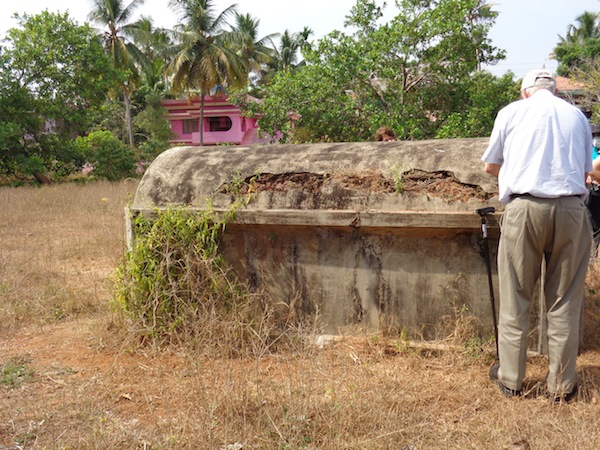
photo - Mala Jewish cemetery, one of three graves left intact. The villa can be seen in the background
Mala Jewish cemetery, one of three graves left intact. The villa can be seen in the background. (photo by Deborah Rubin Fields)

How did the cemetery disrepair come about? According to a professor emeritus, historian and social activist who goes by the name C. Karmachandran: “The Jews [who emigrated] from Mala could not visit and monitor the developments in Mala due to the social and political problems they faced in the infant nation of Israel. I understand … Indian Jewish immigrants were given only exit visas, with which it was not possible to return to India for a visit … only [in] the 1990s, it became easy for the Indian Jews to visit.”

He continued, “From the side of the local authority, their initial enthusiasm to conserve the Jewish monuments began to decline in course of time…. It may be noted that there was no purposeful destruction at that time, but there was serious neglect. There was nobody in the locality to point out its historical significance as we do now. Whoever came to power … found the vast area of the Jewish cemetery ‘ripe’ for their ambition to make money in the pretext of useful developmental projects.”

According to Karmachandran, “the Mala Jews in Israel seemed to be weak in protecting their interest in Mala cemetery. Even today that is the case … there is no effective Jew[ish] organization in Kerala to approach a court of law … the Paradesi … have no interest or influence beyond … Jew Town. They don’t maintain much contact with the remaining Malabari Jews who have a strength of around 25 members in its fold.”

While Kerala has a Hindu majority, the area around the Mala Jewish cemetery is currently 75% Muslims and 25% Christians, so sectarian politics has become an issue in the cemetery’s preservation, as well. An anonymous local source stated, “political parties who want to get the votes of Muslims will keep mum because [those who] speak for the Jewish monuments are being pictured as anti-Muslims and agents of Israel.”

Importantly, Karmachandran and other Kerala Christians, Muslims and Hindus have mobilized themselves to form the Heritage Protection Society, Mala. The group’s goal is to save what they consider not just their former neighbors’ Jewish heritage, but what they maintain is their common Indian heritage. To assist in the preservation project, contact Karmachandran at [email protected].

More on Jewish India

  • Oh, Lovely Parrot is a composite of musical pieces sung in the Malayalam language by Kerala Jewish women. As part of its digitized Jewish music conservation project, the Israel National Library (in collaboration with Hebrew University) offers free listening from its website. The online Jewish art collection of the library also has about 200 of Zev Radovan’s 1995 black-and-white photos of religious objects from the Malabar Jewish community.
  • A few years ago, Essie Sassoon, Bala Menon and Kenny Salem published Spice & Kosher: Exotic Cuisine of the Cochin Jews. Also, in Claudia Roden’s The Book of Jewish Food: An Odyssey from Samarkand to New York, there is a section devoted to “The Three Jewish Communities of India.” Finally, in his book Olive Trees and Honey: A Treasury of Vegetarian Recipes from Jewish Communities Around the World, Rabbi Gil Marks (z”l) devoted space to presenting a number of curried vegetarian Indian dishes.
  • Reconstructed Malabar synagogues are on view in different locations around Israel. Over a period of several years, Jerusalem’s Israel Museum restored the interior of Cochin’s Kadavumbagam Synagogue. It was opened to the public in 1996. The heichal (ark) and tebah (podium) originally came from the Parur Synagogue. Oddly enough, since the 1950s, the synagogue’s original heichal has been in use at Nehalim, an Israeli moshav composed of Orthodox German Jews. Moshav Netivim has an active synagogue and the Cochin Jewish Heritage Centre with artifacts of the Malabar Jewish community.

Deborah Rubin Fields is an Israel-based features writer. She is also the author of Take a Peek Inside: A Child’s Guide to Radiology Exams, published in English, Hebrew and Arabic.

Format ImagePosted on April 15, 2016April 13, 2016Author Deborah Rubin FieldsCategories TravelTags Cochin, India, Karmachandran, Malabar, Paradesi
Was the Last Supper a seder?

Was the Last Supper a seder?

“The Last Supper,” by Juan de Juanes (also known as Vicente Juan Masip), circa 1562, housed in Prado Museum. (photo from Wikimedia Commons)

Nearly every year around the time of the Jewish holiday of Passover and the Christian holiday of Easter, theologians and historians start to ask the same question. Was Jesus’ Last Supper a Passover seder?

“It is all very mysterious,” said Rabbi Raymond Apple, rabbi emeritus of the Great Synagogue in Sydney, Australia.

Let’s start with the facts. There are four accounts in the New Testament that refer to the Last Supper with reference to the Passover holiday. They are Mark 14:12-31, Matthew 26:17-30, Luke 22:1-19 and John 13:1-30. But Mark, Matthew and Luke are synoptic Gospels, which means they are closely related and best studied together, making the three Gospels – according to Jonathan Klawans, a professor in Boston University’s department of religion – “one testimony, which was then copied twice.”

“Mark … fashioned and inserted a single ‘Passover’ paragraph (14:12-16) … between what we identify as 14:11-17,” explained author Michael J. Cook, a professor of Judeo-Christian studies at Hebrew Union College-Jewish Institute of Religion. “So, the entire problem resides with Mark’s text.”

According to Mark’s text, Jesus prepared for the Last Supper on “the first day of Unleavened Bread, when they sacrificed the Passover lamb.”

We know that the Passover lamb was sacrificed on the 14th day of the Hebrew month of Nissan, and consumed by Jewish families either on that night or the onset of the 15th day of Nissan.

Klawans notes that there are those who can cite no fewer than 14 parallels between the account described in Mark and the modern-day Passover seder. These include the bread and wine, the hymn or blessings that were recited and the reclining diners. Jews at their seders discuss the symbolism of the Passover meal; Jesus at his Last Supper discussed the symbolism of the wine (“This is the blood of my covenant”) and the bread (“Take, eat; this is my body”).

Nonetheless, scholars Klawans, Apple and Cook all do not believe that Jesus’ Last Supper was a Passover seder, for several reasons.

For starters, the parallels that can be drawn seem to be those that are general, rather than decisive. It would not be uncanny for Jesus to eat a meal with his disciples in Jerusalem. During that meal, they would have reclined, broken bread, drank wine and possibly even sang a hymn.

“Such behavior may have been characteristic of the Passover meal, but it is equally characteristic of practically any Jewish meal [at the time],” said Klawans.

Some key Passover elements are missing from the Last Supper: the Passover lamb, references to matzah (unleavened bread), the bitter herbs, charoset, the four cups of wine, the recitation of the Four Questions and the narrative retelling of the Passover story.

Moreover, the parallels drawn between the Last Supper and the Passover seder ritual we celebrate today assume that the seder as we know it was celebrated in Jesus’ day. But this is not the case. Nearly all scholars agree that the modern Passover Haggadah and the rabbinic accounts of Passover traditions all emanate from after the destruction of the first Jewish Temple in the year 70 CE. The Gospels date Jesus’ ministry from around 26 CE to early 37 CE, with Jesus’ death coming between 30 and 33 CE.

“At that time, the core element of the Passover observance had been Jerusalem’s sacrificial cult, from 621 BCE up until 70 CE,” said Cook. “Jewish families brought lambs for sacrifice on the Temple altar as biblically prescribed.… For the ceremony, the kohanim (Jewish priests) conducted the sacrificial rite. Then families retrieved and consumed their meat as part of their Passover meal, which also included unleavened bread and bitter herbs. The Passover meals Jesus experienced in his lifetime would have had to be along these Temple-centred lines.”

Klawans said many people assume that Jesus ate matzah at his Last Supper because Catholics eat wafers as their Eucharist bread. The custom of using wafers, however, does not date back as far as one might think, but rather only to medieval times. The oldest customs in Orthodox Christian churches involve bread, and the New Testament describes bread, not unleavened bread.

“There is no reason to think the bread was matzah unless that was specified,” Klawans said.

Additionally, Klawans said it is impractical for Jesus’ crucifixion to have taken place on Passover, as the Sanhedrin (Jewish High Court of 70 elders) would not have worked on the yom tov, which was already one of the Israelites’ most important pilgrimage festivals.

Read more at jns.org.

Format ImagePosted on April 15, 2016April 13, 2016Author Maayan Jaffe-Hoffman JNS.ORGCategories Celebrating the HolidaysTags Jesus, Last Supper, Passover, seder
שידור הווידאו של סנודן

שידור הווידאו של סנודן

אלפים הגיעו לשמוע את שידור הווידאו של אדוארד סנודן לוונקובר (צילום: Roni Rachmani)

ליף הידוע בעולם, אדוארד סנודן, שעבד בעבר בסוכנות לביטחון לאומי של ארה”ב (האן.אס.איי), השתתף ביום שלישי שעבר בפורום על נושא “המידע גדול” שאורגן על ידי אוניברסיטת סיימון פרייזר בוונקובר. סנודן שמסתתר במוסקבה מזה כשלוש שנים, דיבר אמצעות שידור וידאו לאלפי מעריצים שמילאו עד אפס מקום את אולם תיאטרון קווין אליזבת בדאון טאון. הכרטיסים לאירוע נמכרו מראש לפני מספר חודשים בתוך שעות.

סנודן נטש את ארה”ב במאי 2013 ומשם טס להונג קונג. הוא קיווה לקבל בהונג קונג או באיסלנד מקלט מדיני מפני השלטון האמריקני שמחפש להביאו למשפט אך זה לא קרה. סנודן טס ישירות לרוסיה ושם קיבל מקלט מדיני. הוא חשף בין היתר מידע על קשרי ישראל וארה”ב, שמתאר את מערכת היחסים הקרובה בין שירותי הביטחון של שתי המדינות (בתחומי ירוט, ניתוח ודיווח) כולל העברת מידע צבאי, אזרחי ותקשורת דיפלומטית.

בדבריו בפורום התייחס סנודן לסוגיות שעומדות כיום על הפרק. בהן הדלפת המסמכים הענקית ממשרד עורכי הדין על המשקיעים ידועים מכל העולם שמחזיקים הון גדול בפנמה, החשיבות שבהדלפת חומרים מסוג כזה, על החוק נגד טרור שאושר בקדנציה האחרונה של ממשלת השמרנים בראשות סטיבן הרפר, ומה יכולים לעשות כיום אזרחים מן השורה כדי שיוכלו לשמור על פרטיותם.

לגבי פרשת פנמה טען סנודן כי שוב הוכח שאנשים עשירים בעלי השפעה מנצלים את כוחם, ופועלים לפי חוקים אחרים לעומת אזרחים מן השורה, ואף משלמים הרבה פחות מס מהם. “אנו למדים שהשחיתות אינה רק נחלתן של סין, רוסיה ואוקראינה, אלא גם של מדינות אחרות” הוא הוסיף. סנודן חזר והדגיש כי רק הדלפות כמו זו של מסמכי פנמה, המסמכים שהוא בעצמו חשף ביוני 2013 על תוכניות המעקב של האן.אס.איי, יגנו על האזרחים. הוא הדגיש כי יש לעודד ואף לתמוך במדליפים. בתשובה לשאלה שהגיע מן הקהל, הוא ענה כי לא היה לו קשר למי שהדליף את מסמכי פנמה. לגבי קנדה ציין סנודן כי כידוע למדינה יש קשרים הדוקים עם ארה”ב והן שותפות במידע עם שלוש מדינות נוספות שחברות במועדון ‘חמש העיניים’ לנושאי ביטחון וביון (בריטניה, אוסטרליה וניו זילנד). לגבי ההגנה על פרטיות האזרחים הציע סנודן כי יש לנקוט במשנה זהירות בכל הקשור לשיחות טלפון, שליחת מסרים וכדומה. הוא הציע מספר אפליקציות שחסינות ממעקב.

סנודן הוא האחראי לכך שפתאם כולם מדברים על הצפנת מסרים, נושא שנמצא בחדשות בתקופה האחרונה וכולל את כל אמצעי המדיה השונים. לפני שהחל סנודן לחשוף את מסמכי האן.אס.איי לפני כשלוש שנים, היה קשה להסביר את הצורך שבהצפנה ברוב המכשירים והיישומים. עם חשיפת מידע הריגול האדיר על האן.אס.איי והשותפות של הארגון של ידי סנודן, הופנתה ביקורת קשה מאוד אל עבר הממשל האמריקני, מצד גורמים שונים בהם חברות תקשורת רבות וממשלות באירופה. סנודן הוא זה שהביא לתודעת התקשורת והציבור הרחב את החשיבות שנושא ההצפנה.

בשידור לוונקובר אמר סנודן שהוא תומך נלהב באפליקציית המסרים של וואטסאפ (בבעלות פייסבוק שרכשה אותה לפני כשנתיים תמורת 19 מיליארד דולר). כל ההודעות שנשלחות בוואטסאפ מקבלות שידרוג אבטחה גבוה ביותר מקצה אל קצה, ממש כמו הצפנה של תכנים. לדברי סנודן זהו המערך היחידי כיום שאי אפשר לדלות את האניפורמציה שמועברת בו כולל מספרי טלפון, מסרים ותמונות. על המשתמש בוואטסאפ לבדוק שהאפליקציה שלו מעודכנת והוא משתמש בגירסה האחרונה של השירות.

Format ImagePosted on April 12, 2016April 12, 2016Author Roni RachmaniCategories עניין בחדשותTags NSA, security, Simon Fraser University, Snowden, אוניברסיטת סיימון פרייזר, ביטחון, האן.אס.איי, סנודן
Bringing our seniors home

Bringing our seniors home

The author and her youngest son, Joel, enjoy Purim at the Louis Brier Home and Hospital. Her eldest son, Benjamin, was the photographer. (all photos by Benjamin Harrington)

When the Hebrew Men’s Cultural Club met in 1945 to talk about starting a home for the elderly, their project began with 14 men, with $5 each. The first home opened in 1946 with 13 residents. Now home to more than 200 seniors, the Dr. Irving and Phyliss Snider Campus for Jewish Seniors includes the Louis Brier Home and Hospital, and the Weinberg Residence. With many new programs and services, the campus has formed powerful bonds with the surrounding community.

This spring sees the launch of a new fundraising campaign by the Louis Brier Jewish Aged Foundation, which provides financial support to the campus. To interview members of the foundation board and staff about the campaign, I made my visit to the Louis Brier Home with both of my children during their spring break. Benjamin, 8, and Joel, 5, are used to volunteering in a seniors home, and are quite comfortable coming to work with me. Without grandparents in the area, it was a blessing for us all to be able to visit the home.

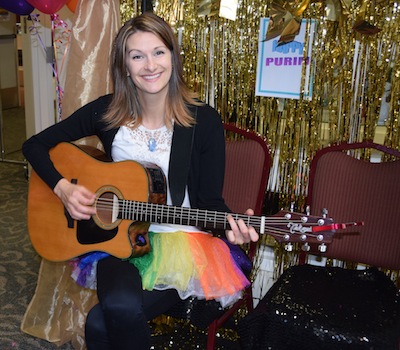
photo - Music therapist Megan Goudreau provides holiday entertainment
Music therapist Megan Goudreau provides holiday entertainment.

Before even shaking any hands, the first thing we noticed was the art. There is art everywhere, and not mass-produced art but carefully curated, vibrant images, full of life, movement and different textures. According to foundation president Harry Lipetz, this is thanks to the organization’s art committee. Every piece is a donation.

We met first with Dr. Judith Globerman, interim chief executive officer of the Snider Campus. Asked to point to some of the home’s distinguishing features, she described an atmosphere that is “more personal than institutional. Our staff feels it’s their home, too, and they tend to stay with us a long time.”

Residents also have a sense of agency, so, for example, if the seniors want to suggest changes – even to the art hanging outside their room – these changes can be made quickly.

Describing her place of work, Globerman spoke about energy, love and understanding. “The energy is warm, celebrating life; people’s faces here light up, there’s always life going on around you, even if you’re not moving yourself.”

Lipetz joined the Brier Foundation for this very reason. “It is a happy place,” he said. “I saw the level of caring, from custodial staff right through to top management.”

Bernard Pinsky, chair of the current fundraising campaign, can attest to the heimish (comfortable, homey) quality of the Louis Brier Home.

“Both of my parents lived there, as well as my uncles and aunt,” he said. “For a period of 21 years, at least one of my relatives lived there. My mom was at Louis Brier for 13 years. I was there a lot and saw for myself the warmth, the quality of the care. The program director goes into residents’ rooms personally to check in, to encourage seniors to join activities. It makes such a difference to be invited personally, to keep you connected to community life.”

The Louis Brier is the only Jewish home for seniors in the province. As such, it carries a certain responsibility, said Pinsky. He speaks of the community’s pride in being able to offer a life with dignity in a warm and stimulating environment to our seniors.

“Donors’ contributions make it a Jewish home,” he said. “They allow us to offer the special things that help people to live more fulfilling lives: kosher food, a weekly minyan, festivities for every Jewish holiday.”

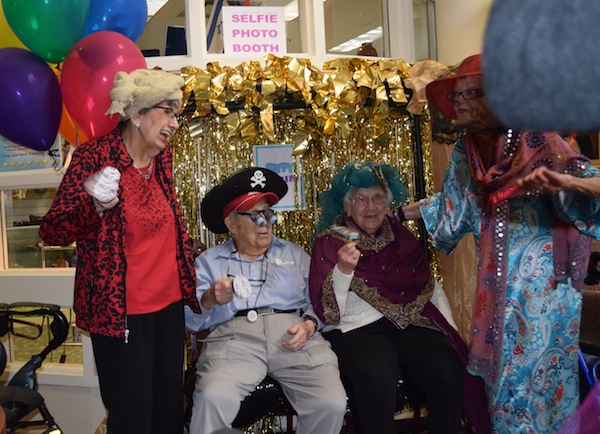
That said, nothing prepared us for our visit at Purim, where we were greeted by staff wearing rainbow tutus, feather boas, glittery glasses and spotted mouse ears. As we stood in the entrance hall among the balloons, an elderly resident wearing googly-eye glasses strolled through with some friends waving groggers. Needless to say, this was a little different from my sons’ previous experiences of seniors facilities.

photo - Residents get into the spirit of Purim
Residents get into the spirit of Purim.

When I spoke with Pinsky, he talked at length about the Louis Brier’s music therapy program. Offered by a team of professionals, it is based on research that shows how music calls on a different part of the brain than speech. Pinsky observed, “People can sing songs they knew 60 or 70 years ago, when they can’t even speak.”

He added, “We have the best seniors music therapy in the province. There’s music every single day.”

The March calendar includes weekly Shabbat music, ukelele sing-alongs and jam sessions, as well as a concert of Russian music and a piano recital. We caught a flavor of this during our visit when music therapist Megan Goudreau played her guitar and sang one of the residents’ favorite songs, “Kol Ha’olam Kulo.”

photo - Even a friendly dog joins in the festivities
Even a friendly dog joins in the festivities.

The home was a hive of activity when we visited, with youngsters volunteering, residents – and a couple of friendly dogs! – milling about. Costumed kids came by with their families and sang on both floors of the home. Nothing beats the sight of a mini race-car driver delivering a “Chag Purim!” message with a huge smile to delighted seniors.

“The three things that concern residents the most – beyond housing – are food, music and companionship. The foundation provides that. It’s beyond public funding,” said Lipetz.

The seniors “are not coming here to be housed,” he added, “they are coming here to live.”

Pinsky agreed. “It’s amazing what we’re able to do. Loneliness is one of the biggest problems for seniors, so seniors with families who live out of town can be visited by special companions.”

Louis Brier residents have access to their own rabbi, Hillel Brody, spiritual leader of the Chava and Abrasha Wosk Synagogue. Located within the home, the synagogue is funded solely by the foundation. In other words, like the music, the companions and occupational therapy, it is a gift from the community.

The new campaign is a quest to raise $1 million. Pledges are for two years, so a $5,000 donation would be given in two portions of $2,500 each.

“These funds are essential to maintain continuity in the programming,” said Pinsky. “The home needs to budget 12 months ahead, for the next fiscal year. If we fall into deficit, these life-improving programs need to be cut.”

Added Lipetz, “For many residents, this is their last home. We want to make it their best home.”

Shula Klinger is an author, illustrator and journalist living in North Vancouver.

Format ImagePosted on April 8, 2016April 6, 2016Author Shula KlingerCategories LocalTags fundraising, Globerman, Lipetz, Louis Brier, music, Pinsky, Purim, seniors, Weinberg Residence
Jungle comes to the city

Jungle comes to the city

Luc Roderique as Shere Khan and Camille Legg as Mowgli in Carousel Theatre for Young People’s The Jungle Book. (photo by Tim Matheson)

This month, Carousel Theatre for Young People presents The Jungle Book, the musical adaptation of the classic story by Rudyard Kipling. For the production at Waterfront Theatre, which opens April 17, local Jewish community member Anton Lipovetsky takes on the role of sound designer and additional music.

The Studio 58 alumnus is no stranger to the Vancouver performing arts scene. Lipovetsky has worked as an actor for many local companies since graduating from the Studio 58 acting training program in 2011. “Now I spend about half my year working as an actor,” he said, noting that he’ll be joining the cast of Bard on the Beach again this summer, “and, roughly, the other half creating music and musical directing for local theatrical productions.”

He approaches each project in a different way.

“I try to be as prepared as possible for theatre gigs, but, especially if I’m in a designing role or leadership role like musical director, I have to make more decisions, and make them earlier, and those decisions will affect more people. I suppose there’s more pressure at the beginning. But then, unlike performing, as rehearsals get underway, I’ll become more and more hands-off, showing trust to the performers, creative team and crew,” he said.

Lipovetsky does not remember one exact moment when he realized he possessed a talent for composing and sound design. Rather, he noted that he has been playing the guitar and writing music his entire life, and music naturally worked its way into his career.

“I’ve been singing and writing songs for as long as I can remember,” he said. “I fell in love with theatre in high school (I had great teachers). Then, through my training at Studio 58, I learned how multi-disciplined a theatre artist can be. I’m always looking for new ways to challenge myself as a creator.”

Regarding his latest endeavor, The Jungle Book, Lipovetsky said there are inherent nuances when working on an adaptation, but there is always room for further expression.

“There’s always a degree of pressure when dealing with any story as beloved as The Jungle Book, but I think [director] Kayla Dunbar’s innovative concept will allow audiences to approach the show from a new angle.… The adaptation, written by Tracey Power, comes with some great tunes by Tracey and her collaborator Steve Charles, and encouragement to create jungle soundscapes and rhythms. I will be working with the fabulous percussionist Todd Biffard to devise a score played through traditional Indian instruments, like the tabla and dhol.”

Given that Carousel Theatre is geared towards youth – on, behind and in front of the stage – it is expected that much of the audience will be made up of children. Parents should note, however, that the theatre company recommends that viewers be 6 years old at least, as “[t]here are some intense moments and strong themes, with characters in the play dealing with topics that include hatred, prejudice, killing and death.”

Aware of who the audience will be, Lipovetsky said, “The most important value for me in this process is making sure the sound/music is clear for the youth and economical (not too long!). I do think the sound/music is going to elicit a big range of emotions from the youth … we will definitely mine the comedy, but we’ll search for dramatic depth, as well. Keeping the stakes high is important to a discerning young audience.”

The Jungle Book is, above all, a story of finding empathy and acceptance in the face of prejudice and intolerance.

“I think everybody feels like an outsider at some point in their childhood,” said Lipovetsky. “Jewish children may feel that especially because of how small the Jewish population is; they may feel underrepresented. Mowgli is treated like family by Baloo and the wolves, even though he is so different from them. Because of this kindness, Mowgli learns integrity, ultimately connecting with his roots and becoming a hero. I hope children root for him! And I also hope they want to be like Baloo in their own lives … compassionate and helpful to others.”

Lipovetsky believes that the story of The Jungle Book serves to emphasize that it is often through unlikely connections with those who may be different to us that we are able to become better ourselves.

With respect to how theatre can transmit values and offer guidance for how to approach life, Lipovetsky said, “What I have found is that art helps me to better understand others and better understand myself. I think understanding is more powerful than tolerance.”

The Carousel Theatre for Young People production opens April 17, just two days after Disney’s The Jungle Book remake hits movie theatres. Lipovetsky called it “the spring of The Jungle Book” and believes the movie will help the play’s success.

For tickets to The Jungle Book, which runs Saturdays and Sundays, 2 p.m., until May 1, visit carouseltheatre.ca.

Brittni Jacobson is a freelance writer living in Toronto.


Format ImagePosted on April 8, 2016April 6, 2016Author Brittni JacobsonCategories Performing ArtsTags Carousel Theatre, Jungle Book, Kipling, Lipovetsky, musical
A fresh look at Israel

A fresh look at Israel

David Decolongon participated in the first-ever mission organized by the Centre for Israel and Jewish Affairs designed exclusively for young people who originate, or whose families came from, East Asia. (photo from David Decolongon)

A Vancouver student who recently returned from Israel says he has a better understanding of the nuances of the Israeli-Palestinian conflict – and other realities of life in the region – after participating in a mission for young leaders of East Asian descent.

David Decolongon is a student at Regent College, on the University of British Columbia campus. He graduated from UBC last year in political science with a minor in philosophy, and is considering whether to pursue a full master’s degree or complete a graduate diploma in Christian studies.

He was chosen to participate in the first-ever mission organized by the Centre for Israel and Jewish

Affairs designed exclusively for young people who originate, or whose families came from, East Asia. Decolongon, who was born in Vancouver, is of Filipino heritage.

“I connected with this trip in three major ways,” he said. “Number one, religiously. I’m a practising Christian and so being able to go to a place where a lot of this history took place was big enough for me. But also, over the summer, I was involved in a startup and so being able to connect with Israel through a startup team was big with me. But also to connect with it politically was big for me because I’m involved in politics, I work and volunteer for a political party right now.”

Though he said it is a “cop-out” to say the entire trip was a highlight in itself, he does identify a number of instances that stand out when he recalls the trip, which took place in February.

“Being able to go over to Ramallah and meet the Canadian attaché to the Palestinian Authority and to be able to go up north to see the Lebanese border and to learn the history of that area and to go to a lot of those places that you hear about a lot in the news is probably the significant highlight for me in this trip,” said Decolongon.

Though he had been to Israel before, on a church-organized trip, the variety of perspectives he witnessed on this occasion, combined with the diversity of fellow participants from across Canada, opened his eyes and mind, he said.

“When it comes to thinking about a hot topic such as Israel, people tend to use a lot of political rhetoric and they tend to take very pro- and anti-, very extreme, stances. I think when you’re on the ground and you see how these things affect people on a daily basis, whether they be Jewish-Israeli, Arab-Israeli, Palestinian, it becomes more real and, once you’re on the ground, the solutions that you bring to the table tend to be a lot more common sense, a lot more feasible and a lot more geared toward achieving peace for all groups,” he said.

Being pro-Israel, he added, does not mean being anti-Palestinian.

“You can take a pro-Israeli stance while at the same time wanting to push the well-being of Palestinians. People think it’s an either-or answer but when you’re on the ground and you get to see what really happens, you’re more interested in pushing forth the betterment of life for both groups,” he said.

People everywhere have the same desires for their children, said Decolongon.

“They want to make sure that their children can grow up in safety, that their young people have jobs coming out of college and university,” he said. “We come at it recognizing that both sides have common interest and it’s going to be messy and it’s going to be complex, but I think the solutions are attainable once you realize that both sides are human and that both sides can come to the table and either side may not get 100% of what they want but we can certainly make it livable for both sides.”

Decolongon was the only British Columbian among the eight participants, though the mission was led by Sarina Rehal, an employee in CIJA’s Toronto office who is from here and who graduated from UBC. The group met with a wide range of people, including an Arab-Israeli journalist, a leader in the region’s vibrant startup sector who thinks economic opportunity is the antidote to Islamic extremism, as well as political, military and academic experts.

The newly established East Asian Student Leaders program was created by CIJA as an experiential learning initiative for students of East Asian heritage or origin who demonstrate leadership in the areas of politics, journalism or campus activism.

Nico Slobinsky, director for the Pacific region of CIJA, said it is important to engage young leaders.

“It’s an ongoing dialogue and opportunity we are forging with these young leaders as they continue to engage in their communities, with our community, with civil society in Canada, in the years ahead,” said Slobinsky. “As they progress in their leadership, in their careers, into their life, they will continue to engage and that’s why we do this.

“In the case of this mission in particular, we were looking at emerging leaders in the pan-Asian communities,” he said.

Format ImagePosted on April 8, 2016April 6, 2016Author Pat JohnsonCategories LocalTags advocacy, Centre for Israel and Jewish Affairs, CIJA, Decolongon, East Asian, Israel, mission

Posts pagination

Previous page Page 1 … Page 525 Page 526 Page 527 … Page 670 Next page
Proudly powered by WordPress