
Skip to content
  • Home
  • Subscribe / donate
  • Events calendar
  • News
    • Local
    • National
    • Israel
    • World
    • עניין בחדשות
      A roundup of news in Canada and further afield, in Hebrew.
  • Opinion
    • From the JI
    • Op-Ed
  • Arts & Culture
    • Performing Arts
    • Music
    • Books
    • Visual Arts
    • TV & Film
  • Life
    • Celebrating the Holidays
    • Travel
    • The Daily Snooze
      Cartoons by Jacob Samuel
    • Mystery Photo
      Help the JI and JMABC fill in the gaps in our archives.
  • Community Links
    • Organizations, Etc.
    • Other News Sources & Blogs
    • Business Directory
  • FAQ
  • JI Chai Celebration
  • JI@88! video

Recent Posts

  • Story of Israel’s north
  • Sheltering in train stations
  • Teach critical thinking
  • Learning to bridge divides
  • Supporting Iranian community
  • Art dismantles systems
  • Beth Tikvah celebrates 50th
  • What is Jewish music?
  • Celebrate joy of music
  • Women share experiences 
  • Raising funds for Survivors
  • Call for digital literacy
  • The hidden hand of hate
  • Tarot as spiritual ritual
  • Students create fancy meal
  • Encouraging young voices
  • Rose’s Angels delivers
  • Living life to its fullest
  • Drawing on his roots
  • Panama City welcoming
  • Pesach cleaning
  • On the wings of griffon vultures
  • Vast recipe & story collection
  • A word, please …
  • מארק קרני לא ממתין לטראמפ
  • On war and antisemitism
  • Jews shine in Canucks colours
  • Moment of opportunity
  • Shooting response
  • BC budget fails seniors
  • Ritual is what makes life holy
  • Dogs help war veterans live again
  • Remain vital and outspoken
  • An urgent play to see
  • Pop-up exhibit popular
  • An invite to join JWest

Archives

Follow @JewishIndie
image - The CJN - Visit Us Banner - 300x600 - 101625

Author: Cynthia Ramsay

Up close, personal at Fringe

Up close, personal at Fringe

Jewish community member Erika Babins co-stars in How to Adult: The Musical. (photo from Coffee & Screaming)

As with the Jewish community Fringers profiled in the last issue of the Jewish Independent, the performers interviewed this week seek not only to entertain audiences but to spur self-reflection and even societal change. And they do so in a range of styles – musical, vaudeville and drama.

How to Adult: The Musical opens Sept. 8 at the Cultch Historic Theatre. It features three 20-something roommates who are trying to get their lives in order.

It is Amy Dauer’s writing debut and it is directed by Eleanor Felton, whose Eurydice received critical acclaim at last year’s festival. Dauer and Felton know each other from university.

“Last year, during the Fringe Festival, I told her she should write me a show to direct. And so she did,” Felton told the Independent. “It’s fantastic because Amy and I are also roommates, so a lot of what is in the script are things I recognize from our lives. I love the mixture of hilarity and disaster that feels very close to my life. And I love that, above all, this show is about the relationships between the characters rather than the events that are going on in their lives.”

Being a new musical, however, posed some challenges, the biggest of which, said Felton, “has been working with an evolving script and score. Peter [Abando] and Amy have worked really hard and the actors have been incredibly flexible, which was a huge blessing in the process.”

Jewish community member Erika Babins plays Imogen.

“Imogen is your textbook introvert,” explained Babins about the character. “She works from home on her computer all day as a graphic designer and, when she’s done, all she wants to do is curl up on the couch and watch Doctor Who on TV. When her friends suggest they go clubbing for her 25th birthday, it’s the worst thing imaginable. She finds it hard to stand up for herself and voice her opinions and usually defers to the judgment of her outspoken and confident best friend and roommate Holly. Throughout the course of the play, you see her getting frustrated with constantly being talked over and her ideas being vetoed, especially with Holly, who’s always been the alpha in their relationship, but with their other roommate Rosie and her brother, Graham, who suddenly reappears in her life.”

Babins can relate to her part.

“When I first read the character description, I joked that I was being type cast in this role. I even wore my Doctor Who shirt to the audition,” she said. “Like Imogen, I would rather stay home and read than go to a club or a party. I’ve also been able to bring my experiences with anxiety and panic attacks to the role, which has been both enlightening and really hard to explore. I’ve definitely had many moments in the five years since I graduated university where I’ve seriously sat down with myself and thought, ‘What is the point here? What am I actually doing?’ The big difference between Imogen and myself is that, unlike her, I have an amazingly strong support system of family and friends who I know I can talk to and who will either give me great advice or complain and berate the universe right along with me.”

photo - Bella Culpa opens Sept. 9 at Waterfront Theatre
Bella Culpa opens Sept. 9 at Waterfront Theatre. (photo from A Little Bit Off)

A strong support system is also at the heart of Bella Culpa, where Portland-based circus theatre duo A Little Bit Off – Amica Hunter and David Cantor – must rely on each other, as their comedy shows are not just vaudevillian and slapstick but acrobatic, as well.

Bella Culpa, which opens Sept. 9 at Waterfront Theatre, is set in an Edwardian-era manor house, and Hunter and Cantor play two servants who are trying to finish (unsuccessfully) all of their chores before a big dinner party.

“We tend to approach our work from many angles at once,” Cantor told the Independent about their creative approach. “Once we have an idea for a show, we think of the overarching theme, the props we want to use, the characters, and we tend to approach all of those areas by playing games, or doing exercises. Through the games, we find things we like, which we take and apply some structure to. Once we have a few well-crafted bits, then we start weaving them together and making things flow together, to grow and expand out into a full show.”

Cantor – who is first cousin, twice removed of famed vaudeville and film actor Eddie Cantor – met Hunter at the Circus Centre in San Francisco in 2013.

“We were inspired by many of the same artists, so we started working together,” he said. “When the opportunity arose to travel to Europe and perform in some festivals, we jumped at the chance, and A Little Bit Off was born.”

About the enduring popularity of vaudeville and slapstick, Cantor said, “Language can be a very useful tool when it comes to conveying ideas to other people, but it can also be a mask. While it lets us connect on an intellectual level, it also distances us. Having our work centre around the body, it gets closer to what makes us all human. It’s a way to speak across any language barrier, any generational gap, any cultural differences. Our work is very much about tying people to their humanity and giving them a shared experience with the temporary community that forms any time you see a show in a theatre.”

As to the physicality involved in their performance, Cantor said, “All art takes risks. Our risks are sometimes with our bodies. We take care to use good technique, which mostly protects us, but there is an element of chaos that we choose to include, that makes the slapstick a bit more real, and the audience can see that, and we hear it in their reactions. They gasp at the falls, and then there is a laughter that comes with the relief of tension, as they realize that it was part of the shtick.

“We, luckily, to this point have avoided any serious injuries from our slapstick. We have had other show mishaps. In our last show, Beau & Aero, we use a tambourine as a prop. We were nearing the finale of the show and Amica stepped on one of the tambours, the little metal cymbals, that had fallen off, due to the abuse we put the prop through in the show. It was razor sharp and sliced Amica’s foot open quite badly. She left bloody footprints all over the stage and on my costume as we finished the show with an acrobatic number. Luckily, the footprints were up my back and, hence, not visible to the audience. We left immediately after the show to a pharmacy to get superglue and glue her foot shut. Had we been in Canada, with proper health care, we could have gone to the ER, but we do what we have to.”

photo - Ariel Martz-Oberlander’s The Lilacs that Come a Month Early are Still so Beautiful is part of the Fringe's Generation Hot program
Ariel Martz-Oberlander’s The Lilacs that Come a Month Early are Still so Beautiful is part of the Fringe’s Generation Hot program. (photo from Ariel Martz-Oberlander)

Moving from health policy to the environment, climate change is front and centre of the program Generation Hot, which features nine “young artists responding to the climate crisis through new performances.” Guided by The Only Animal co-founder Eric Rhys Miller and mia susan amir of The Story We Be, the mentees have created various works. Divided into three programs, local Jewish community member Ariel Martz-Oberlander’s The Lilacs that Come a Month Early are Still so Beautiful shares Program C with Cosmic Justice by Nelson Ellis and Howard Dai. Program C opens Sept. 10 in the Anderson Street parking lot.

“This piece is vitally personal, there are parts that are deeply vulnerable and, therefore, risky to present publicly,” Martz-Oberlander told the Independent about her play. “I believe strongly that the personal is political, and that we can only talk successfully about large-scale issues by addressing the specific ways these issues are experienced in the small details of the day to day. For this piece, I am working with a cast of six enthusiastic, intelligent actors who fully bring their own worlds to this piece in such a rich way.”

The play’s description reads, “A grandmother, millennials, a woman coming to terms with abuse and ‘The Last of His Kind’ all share the stage. What is the everyday normalcy of climate change, or the deep abnormality of ignoring a crisis so large it already affects everyone? The characters struggle to hold on to the answers even as a world that ended five minutes ago slips away.”

“In the play,” said Martz-Oberlander, “the last of an unidentified species struggles to curate a message that will illustrate the urgency of the situation; however, the vignettes presented always get away from him, and the result is bittersweet.”

She added, “Jewish viewers will recognize a twist on the traditional Passover seder scene halfway through the play, as a young girl struggles to bring social justice to her family table.”

For tickets and information on all the Fringe shows, visit vancouverfringe.com.

Format ImagePosted on September 2, 2016August 31, 2016Author Cynthia RamsayCategories Performing ArtsTags adulthood, Babins, Bella Culpa, climate change, David Cantor, Fringe Festival, Martz-Oberlander, slapstick, theatre, vaudeville
NFB releases 60 films

NFB releases 60 films

Anne Wheeler during the making of Chi. (photo from babzchulasociety.wordpress.com)

On Aug. 29, the National Film Board of Canada released more than 60 films that now can be viewed free of charge on nfb.ca. Among the new releases is Chi by Anne Wheeler (2013). The documentary follows Canadian actress Babz Chula (seen in the background of the photo) to Kerala, India, where she is to undergo treatment by an Ayurvedic healer in an effort to manage her six-year battle with cancer. The bare-bones Indian clinic at first disappoints, but Chula is uplifted, as her condition seemingly shows signs of improvement following treatment and introspection. Returning home, however, it is revealed that her cancer has advanced. Amazingly, the actress invites Wheeler to continue bearing witness to her journey into the unknown. Chula died on May 7, 2010.


Format ImagePosted on September 2, 2016August 31, 2016Author National Film Board of CanadaCategories TV & FilmTags Anne Wheeler, Babz Chula, Chi, NFB
This week’s cartoon … Sept. 2/16

This week’s cartoon … Sept. 2/16

For more cartoons, visit thedailysnooze.com.

Format ImagePosted on September 2, 2016August 31, 2016Author Jacob SamuelCategories The Daily SnoozeTags donkey, fence, thedailysnooze.com, zebra
אמזון מגייסת עובדים

אמזון מגייסת עובדים

אמזון מתכוונת בשלב זה לגייס כשלוש מאות עובדים לסניף המפואר בבניין ‘טאלס גארדן.’ (צילום: telusgarden.com)

תופסים קנדה: אמזון מגייסת עובדים מישראל לסניף החדש בוונקובר

ענקית המסחר האלקטרוני האמריקנית – אמזון, מגייסת בימים אלה עובדים בין היתר מישראל, לסניף החברה החדש בוונקובר. נציגי החברה האמריקנית הגיעו לאחרונה לישראל במטרה לגייס עובדים לתפקידים שונים ובעיקר מהנדסים. זאת כדי לבנות מוצרים חדשים ולהעניק תמיכה לשירות הענן ‘אמזון ווב סרוויס’.

אמזון מתכוונת בשלב זה לגייס כשלוש מאות עובדים לסניף המפואר בבניין ‘טאלס גארדן’ ברחוב ג’ורג’יה בדאון טאון, שמשתרע על פני כ-91 אלף סקוור פיט. בהמשך מצוות כוח האדם תגדל לכאלף עובדים, והחברה תממש כנראה את האפוציה להכפיל את שטחו של הסניף. באמזון מקווים שיופיה של ונקובר וכידוע איכות החיים גבוהה שלה, תעזור לגייס עובדים לכאן. עם זאת רק לפני מספר שבועות התפרסם דוח בינ”ל על עליית מחירי הנדל”ן בשנה האחרונה בערים מובילות בעולם, ממנו עולה כי ונקובר נמצאת במקום הראשון עם עלייה גבוהה מאוד של 36.4%.

לאמזון שני סניפים נוספים בקנדה באוטווה וטורונטו והיא מתכוונת עד סוף השנה לפתוח סניף רביעי במונטריאול.

בשנים האחרונות ונקובר הופכת להיות מרכז טכנולוגי משמעותי, שמשמש בית לחברות בינלאומיות כמו מיקרוסופט, פייסבוק, טוויטר, סיילספורס ועוד.

זחל לפרסום: נחש נמצא בבור ביוב מתחת לכביש

שבוע שלם לקח לעובדי מחלקת עיריית ויקטוריה לתפוס את הנחש הכי מפורסם בתולדות עיר הבירה של בריטיש קולומביה. הנחש שאורכו חמישה פיט (שהם כ-1.5 מטרים) מסוג כרכן תירס, נמצא בבור ביוב מתחת לאחד הכבישים הראשיים בעיר. עובדי העירייה שפתחו את מיכסה הבור במסגרת עבודות תחזוקה רגילות (בפינת הרחובות קוואדרה ובלמורל), נדהמו לראות שנחש מסתובב לו חופשי בתוך הבור העמוק. הם הורירו מצלמה לבור שתיעדה את תנועת הנחש שתחילה חשבו שהוא ארסי. לאחר שהוזעק למקום לוכד נחשים התברר שמדובר בנחש לא מסוכן ולא ארסי – מסוג כרכן תירס.

הנחש כרכן תירס זכה לכינוי זה כיוון שעל גחונו יש משבצות שמזכירות קלח תירס, והוא נמצא בדרך כלל בשדות ואסמי תירס. הנחש טורף לילי שניזון ממכרסמים, ציפורים, צפרדעים ולטאות. כרכן התירס נפוץ באמריקה התיכונה והדרום מזרחית ובעיקר בפלורידה. לכן לא ברור כיצד בכלל הגיע לבור של מערכת הביוב בויקטוריה. לפי הערכה הנחש שכאמור לעיל אינו מסוכן לבני האדם וניתן לגדלו כחיית מחמד (בשל אופיו הנוח), נזרק על ידי בעליו ובצורה כלשהי הגיע למערכת הביוב העירונית. יצויין כי כל הנחשים ובעיקר כרכן התירס ינצלו כל הזדמנות לברוח מהשבי.

אם כן עובדי העיריית ויקטוריה נזקקו לשבוע ימים לתפוס את הנחש שמצא בית חדש בביוב. הם ניסו לפתות אותו בעזרת מלכודות עם עכברים ואביזרי חימום – אך ללא הצלחה. לבסוף הצליח אחד העובדים שירד אל בור הביוב לתפוס את הנחש העקשן. הוא הועלה על פני הכביש ונקשר. ולאחר מכן הועבר למתקן בעלי חיים ושם אגב השיל את עורו. עם תפיסתו מיהרה מחלקת הדוברות של העייריה לפרסם הודעה על כך, כדי הרגיע את הציבור המבוהל.

במהלך הימים בהם פורסמו באמצעות התקשורת תמונות של הנחש בביוב, התקשרו מספר אזרחים למוקד העירייה ודיווחו, כיבכול שהנחש שלהם. הגדילה לעשות ניקול פנרייס שטענה כי הנחש הוא שלה, שמו ‘מיקו’ והוא נעלם מביתה בדרך לא ברורה לפני כשלוש שנים.

אגב בוושינגטון הסמוכה לבריטיש קולומביה התברר בימים האחרונים, שבור ביוב שימש מגורים לא לנחש אלה לשני ילדים. הם הצליחו לברוח ולמשטרה אין מוסג מדוע הפכו דווקא את המקום הזה לביתם.

Format ImagePosted on August 31, 2016August 30, 2016Author Roni RachmaniCategories עניין בחדשותTags albino corn snake, Amazon, sewer, technology, Telus Garden, Vancouver, Victoria, אמזון, ביוב, וונקובר, ויקטוריה, טאלס גארדן, טכנולוגי, נחש כרכן תירס
FEDtalks coming soon

FEDtalks coming soon

Alison Lebovitz (photo from Jewish Federation of Greater Vancouver)

The original meaning of tikkun olam, as seen in the Talmud, was to “decorate, beautify or refine” the world. The modern meaning of “repairing” the world came to be emphasized much later, in kabbalistic writings. Alison Lebovitz was taught the importance of this older sense of tikkun olam by her grandmother Mimi, though she had a different way of putting it: “Pretty is as pretty does.” In the Jewish ethical context in which she was raised, “beautiful actions” meant making the world a better place. To this day, that priority shapes Lebovitz’s life.

Lebovitz is among the speakers who will help launch the annual campaign of the Jewish Federation of Greater Vancouver on Sept. 22, with this year’s FEDtalks.

Growing up in Montgomery, Ala., Lebovitz was an active volunteer in the Jewish community. One summer, she worked with refuseniks, who had come to Birmingham as refugees. Seeing them clustered around a shelf offering several different kinds of toothpicks, paralyzed by the alien surfeit of choices, unable to select a brand, Lebovitz had a visceral confrontation with the way people lived outside of her middle-class American bubble, and how much our own over-abundance of resources should inspire us to be givers.

After moving to Chattanooga, Tenn., Lebovitz became involved with the documentary Paper Clips, working to have it shown in more schools. Paper Clips takes place in the rural Tennessee community of Whitwell, where a middle-school class attempts to understand the magnitude of the Holocaust by collecting paper clips, each of which represents a human life lost in the Nazis’ slaughter of six million Jews and millions of others.

For Lebovitz, this work naturally developed into her initiative One Clip at a Time, which is a program for taking kids from the message of Paper Clips further, into personal application and action. Students discover ways to make positive changes in their own classrooms and communities and are encouraged to continually look for ways to make a difference. “For me, growing up,” Lebovitz told the Independent, “the question my family always asked about any idea was, ‘So what?’ What does it mean in the real world? Next was, ‘Now what?’ How are you going to put that into action?”

In addition to her work with One Clip, Lebovitz has been involved in an impressive roster of other activities. For 20-plus years, she has written a column on the trials and tribulations of daily life and lessons learned called “Am I There Yet?”; columns of which were published as a book by the same name. She is host of the PBS talk show The A List with Alison Lebovitz, and is a regular public speaker, including for TED Talks.

Lebovitz views herself as a “curator of stories” and an entrepreneur with a passion for social justice. These two themes will coalesce in her FEDtalks presentation in Vancouver, where she plans to speak on “the power of story and the power of community.” She said the end game, for her, is to light the torch of the next generation and invite them to run along with us, but then to also pass on the flame to the generation that follows them.

FEDtalks takes place at Queen Elizabeth Theatre on Sept. 22, 7 p.m. For tickets and information about all the speakers, visit jewishvancouver.com/fedtalks2016.

Matthew Gindin is a Vancouver freelance writer and journalist. He blogs on spirituality and social justice at seeking her voice (hashkata.com) and has been published in the Forward, Tikkun, Elephant Journal and elsewhere.


Format ImagePosted on August 26, 2016August 25, 2016Author Matthew GindinCategories LocalTags annual campaign, education, Federation, FEDtalks, Holocaust, Lebovitz, One Clip, Paper Clips, tikkun olam
Fabulous fare at Fringe Fest

Fabulous fare at Fringe Fest

Jolene Bernardino is among the cast of Deborah Vogt’s Carry On: A Musical. (photo by Landon Shantz, graphics by Braden Neufeld)

How many hours do you think you’ve stood around baggage carousels waiting for your luggage? Were you able to do something productive with your time? Or was it luggage limbo? Waiting for luggage becomes the backdrop of one of several plays with Jewish connections at the Vancouver Fringe Festival this year.

When Deborah Vogt and her team in Smackdown 2015 (a 24-hour musical theatre competition) picked “YVR Baggage Claim” out of a hat last year, the brainwave was immediate.

“I think that we were all inspired by the limbo of baggage claim: the idea that you’ve finished your flight, you’ve gone through customs and you just want to finish your journey, yet you’re stuck and powerless while waiting for your bags,” she told the Independent.

“As emerging artists, this feels unsettlingly close to home. We’re at different stages of our careers, but all somewhere in between school and working full time as artists. Do we commit, with the hope that eventually what we’re waiting for will come true? Or do we acknowledge that maybe our bags are lost and go home? And, more importantly, how do we stop and breathe and enjoy our surroundings in the meantime?”

Thus, Carry On: A Musical was born, in which the audience gets to examine the type of people we encounter in baggage claim areas; their physical and emotional baggage.

“Each of our characters is dealing with one kind of baggage or another – the fun part is watching how different people cope with what is lost, damaged, deep-seated or brand new.”

While this is intended to be a fun, silly show, it also addresses real conflicts that people live with every day, Vogt said.

“An important theme for us is the idea that there is no ‘right’ way to live life. Everyone has baggage, and that’s OK. Just like in an airport, there are many directions to take. It’s OK to make mistakes or accidentally get on the wrong flight, because that’s all part of the journey.”

* * *

photo - Randy Ross explores his singledom in The Chronic Single’s Handbook
Randy Ross explores his singledom in The Chronic Single’s Handbook. (photo by Sue Brenner Photography)

Enjoying the journey is a key message in writer/performer Randy Ross’ The Chronic Single’s Handbook. In it, Ross addresses the issues of relationships, examining why he’s single, whether some people are meant to be single and whether we should always hold out hope for that oxytocin-creating state we call love.

Based on a book that he’s been working on for seven years, called God Bless Cambodia, Ross places his quest amid a world tour where he strikes out with women on several continents but gets lucky (in many different ways) in Cambodia.

The play is not without its controversy. Because of its raw sexual exploration, some critics have called the work “misogynistic,” while others sing its praises. (It’s rated 18+.)

“The narrator’s trying to figure out why he’s still single,” Ross explained. “He tells stories of past relationships that failed. One is a domination scenario/date. Another is with a sex tourist in Cambodia who gives him a tour.”

In the end, you won’t please everyone, he said.

“My mother has seen the show – twice. She just says, ‘Boys will be boys,’ and we’re New York Jews, so this is our sense of humor. If you look at the whole Clinton/Lewinsky investigation, you could call most of the United States hypocrites.”

In the end, one key thing Ross discovers is that being single may be who he is. It’s a story of acceptance.

In the 35- to 54-year-old crowd, he said, one out of seven has never been married, so marriage is no barometer of mental health.

“Where I live in Boston, most of my friends are in their 50s and have never been married. And that number was comparable for women. You have 70 good years in your life, get on with your life.”

At the same time, Ross believes we are actually meant to be in some type of relationship – whether it’s marriage or not – and that everyone should experience the effect of the “cuddle drug.”

* * *

photo - Windy Wynazz makes a deal with the Devil in Rich and Famous
Windy Wynazz makes a deal with the devil in Rich and Famous. (photo by Shoot That Klown)

Following from her previous Fringe performance Uncouth, San Francisco–based Windy Wynazz (aka Wendi Gross) is back as co-writer, producer and performer in Rich and Famous, co-written and directed by Deanna Fleysher.

“I’ve built on what Uncouth was last year, but I’ve made it more personal,” said Wynazz. “I make a deal with the devil and undergo a transformation through the play. The theme is similar to making it in showbiz.”

Wynazz said she was interested in exploring what success is at different times of our lives.

“I’ve reevaluated what ‘making it’ looks like,” she told the Independent. “It was even reflected in the intense creation period with Deanna. She prods and provokes to bring out the most juiciest and most enjoyable. But, at one point, she said to me, ‘Well, you didn’t make it, Wendi. How does it make you feel?’ I feel tied up in performing, it’s what I love to do. So, that’s success as well. There’s nothing else I’d rather be doing.”

While Rich and Famous is more linear and verbal, as well as less raunchy, than Uncouth, the audience might still expect some coarse moments, given that Wynazz describes the character as a mix of Carol Burnett, Lucille Ball and Lady Gaga.

“People will be dancing with delight when they leave,” said Wynazz. “The idea is that it’s positive and uplifting.”

* * *

Continuing with the theme of self-discovery, Vancouver’s Theatre Terrific jumps into the mix with The Hidden Stories Project.

Inspiration for the play comes from the poem “We are These” from the book In Honor of Our Grandmothers: Imprints of Cultural Survival, authored by Garry Gottfriedson and Reisa Smiley Schneider, with artwork by George Littlechild and Linda Dayan Frimer.

“With Hidden Stories, we used a Cree medicine wheel,” said artistic director Susanna Uchatius. “Each actor is put in a process determining which direction they are connected to. Whenever you start to build something like this, it’s a bit of chaos and a lot of fog. We walk through everyday life and the face we give to the public is actually our mask. Working through the medicine wheel, identifying our animal spirit … and putting on a mask allow the actors to really express who they are.”

Setting this play apart are a number of features.

First, it’s site-specific, taking place outside near the lagoon on Granville Island – rain or shine.

Second, Theatre Terrific includes actors of all abilities. “We have in our group people with autism, cerebral palsy and Downs syndrome,” Uchatius explained. “We bring people together who would normally not come together and unite as ensemble to speak in a common voice.”

It’s also very accessible for those who are deaf or hard of hearing, as there is a lot of imagery but not as much verbal communication.

photo - Butt Kapinski stars in Dick on the Fringe on Sept. 6
Butt Kapinski stars in Dick on the Fringe on Sept. 6. (photo from vancouverfringe.com)

“What they’re doing refers to hope and fear. It’s a lifecycle: you’re born, you eat, you speak, you love, you dance, you die. Many people will be surprised to identify with what they see. We deal with basic issues that matter to everyone.”

* * *

The Fringe Festival runs from Sept. 8-18 on Granville Island. Fleysher opens the festival with a fundraising performance Sept. 6, where she reprises her character Butt Kapinski in Dick on the Fringe. Described as part Phillip Marlowe, part Elmer Fudd, Kapinski is the film-noir-style private eye who helps solve the great Fringe murder mystery (see jewishindependent.ca/butt-kapinski-not-your-childrens-clown). For more information, visit vancouverfringe.com.
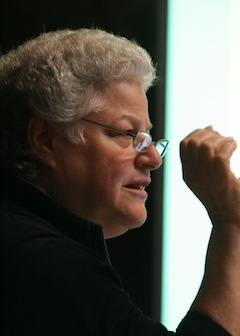
Baila Lazarus is a freelance writer and media trainer in Vancouver. Her consulting work can be seen at phase2coaching.com.

Format ImagePosted on August 26, 2016August 25, 2016Author Baila LazarusCategories Performing ArtsTags airports, Butt Kapinski, Deborah Vogt, Fringe Festival, Linda Frimer, Randy Ross, reconciliation, showgirl, singlehood, theatre, Windy Wynazz

JACS Vancouver launch

When Paul Steinberg first read The Big Book, the “bible” of Alcoholics Anonymous, written by founder Bill Wilson, he scribbled disagreements in the margins. His sponsor later saw them and took him to task. “Do you really think you know more than Bill Wilson, who wrote a book that has saved the lives of millions of people?” he said. “Maybe it’s time for you to start looking for things you can connect with in the book, not things you disagree with!”

photo in Jewish Independent - Beit T’Shuvah Rabbi Paul Steinberg helps launch JACS Vancouver on Sept. 8
Beit T’Shuvah Rabbi Paul Steinberg helps launch JACS Vancouver on Sept. 8. (photo from beittshuvah.org)

Steinberg took the advice to heart, and a journey began. He is now the rabbi of L.A.-based Beit T’Shuvah, a Jewish centre for addiction recovery that integrates the wisdom of the 12-step program with Jewish spirituality, culture and community. He will be speaking at Congregation Beth Israel, together with Rebecca Denham of Jewish Addiction Community Services Vancouver, on Sept. 8, 7:30 p.m. The event, which officially launches JACS Vancouver, is called Opening the Door: A Conversation about Addiction in the Jewish Community.

Steinberg first came to Beit T’Shuvah, which this year celebrates its 30th anniversary, as a rabbi, a Jewish educator and an alcoholic looking for healing. After living there for five months in recovery, he began doing part-time spiritual counseling as part of the centre’s work therapy program. Eventually, he took on that role full time, then became the pulpit rabbi of the centre’s synagogue, a congregation with hundreds of attendees on Shabbat.

“The centre is unusual in many ways, one of which is in having a synagogue with a fully functioning congregational life on site,” Steinberg told the Independent. “The congregation is made up mostly of residents of the centre, alumni and their family members. Being so close to Hollywood, we have an amazing roster of artists and musicians who come to shul here – the music rocks.”

Steinberg’s rebirth was dependent on his discovering a deeper Judaism, and that is something he is passionate about sharing with other Jews in recovery. “We believe, as evidenced by the success of the 12-step program, that the spiritual is essential in recovery,” he said.

In 2014, Steinberg published the book Recovery, the 12 Steps and Jewish Spirituality: Reclaiming Hope, Courage and Wholeness, about his journey and the insights it afforded. He explained that, for many Jews, the 12 steps are uncomfortably associated with Christian spirituality, despite the open-ended approach to God in the method. “Some Jews recoil from AA for that reason. We need to give Jews access to the 12-step structure in Jewish terms,” he said.

“The addict’s world is very narrow, obsessive, self-centred. Opening up and surrendering to a greater power – whether that’s thought of as God, the universe, the Dao, the collective spirit – breaks that entrapment and allows change. It is the essence of a Jewish approach to recovery. On that ground, the disciplines of Jewish life – community, service, study, prayer – can do their work.”

Discomfort with the spirituality of AA is far from the only obstacle Jews struggling with addiction face. Steinberg said there is tremendous stigma around addiction in the Jewish community, especially around drugs and alcohol. As Rabbi Abraham Twerski discusses in the foreword to Steinberg’s book, AA groups were refused the use of synagogues for many years, reinforcing their habit of locating in church basements.

“The old saying was a shikker is a goy (a drunkard is a gentile),” said Steinberg. “Jews are not supposed to be alcoholics. The reality is that there are many Jews struggling with substance abuse, even very outwardly successful Jews. There are doctors, lawyers, businessmen and even rabbis. I was outwardly a success, but I was living a divided life. My life had to completely fall apart before I would deal with my alcoholism.”

Many struggling Jews do not know where to turn when they suffer from addiction. “It is amazing how few Jews will turn to their rabbi or their community for help,” said Steinberg. “The synagogue is all too often not seen as a place where you can air your dirty laundry, where you can be vulnerable.”

The desire to provide Jews with a place to find healing from addiction as Jews is what drove the creation of JACS Vancouver. “It is imperative to provide a safe place for Jews to get help, and to provide them with the Jewish tools they need for that healing to be successful,” said Denham.

“Addiction is an epidemic in North America,” said Steinberg. “It’s not just alcohol and street drugs; it’s also gambling, sex addiction, workaholism, pornography, opiate addiction. We need to face the brokenness in ourselves and our community without stigmatizing it, so that the healing can begin.”

To RSVP for the Sept. 8 event, email [email protected].

Matthew Gindin is a Vancouver freelance writer and journalist. He blogs on spirituality and social justice at seeking her voice (hashkata.com) and has been published in the Forward, Tikkun, Elephant Journal and elsewhere.

Posted on August 26, 2016August 25, 2016Author Matthew GindinCategories LocalTags 12 Steps, addiction, Beit T'Shuvah, health, JACS
New CEO for seniors

New CEO for seniors

David Keselman (photo from the Louis Brier)

After an extensive search, the Dr. Irving and Phyliss Snider Campus for Jewish Seniors, comprised of the Louis Brier Home and Hospital and the Weinberg Residence, have appointed David Keselman chief executive officer.

“David is the ideal candidate at this time for the organization,” said Louis Brier board chair Arnold Abramson in a press release. “David’s experience will benefit Louis Brier directly in our commitment to providing quality patient care for residents. We feel that his innovative approach, enthusiasm and leadership style will enable Louis Brier as it moves forward with both our clinical operations and our upcoming site redevelopment.”

Sandra Bressler, chair of the Weinberg Residence, echoed Abramson’s endorsement.

“I plan first to get to know and understand the environment, both clinical, social and political in the organization and in B.C. in general,” Keselman told the Independent. “The relationships with stakeholders (both internal and external) are important, as well as familiarizing myself with the Jewish community and finding opportunities for integration as appropriate.”

Born in Lvov, Keselman was raised north of Haifa, in Kiriyat Yam, and served three years in the Israel Defence Forces. At 21, he followed his high school sweetheart to Toronto and began working at Baycrest, Toronto’s major Jewish home for the elderly. He has a doctorate of health administration from Central Michigan University, and a master’s of nursing and a bachelor of science in nursing from the University of Toronto, and he worked in acute care for many years.

In Toronto, the couple had two children, now aged 20 and 17, both of whom attended Jewish day school. They live with their mother but are following in their father’s footsteps – his son is enrolled in the nursing program at Ryerson University and his daughter plans to become a nurse as well.

Coming with his partner to Vancouver from Yellowknife – where he was vice-president of patient services at Stanton Territorial Health Authority – Keselman is looking forward to getting back to a place with a Jewish community. While he admits that he does not connect with the synagogue experience, he feels connected to many aspects of the Jewish community.

“As I get older,” he said, “the affinity and need to get closer to my roots becomes more important. Seeing that I grew up in Israel, keeping our community strong and active is imperative on many levels, not only to ensure that our tradition and culture continue to exist, but also because a strong community here ensures the strength of Israel and its ability to cope with the many adversities it is facing.”

Keselman comes to the campus in the 70th anniversary year of the Louis Brier.

“I am excited about the renewal plans,” he said, “and look forward to a future design that integrates culture, tradition, values with evidence-based and best practices to create a dynamic environment that provides a holistic continuum for patients/residents of the Louis Brier and their families, with an aim of creating a centre of excellence in geriatric care anchored in the philosophy of client- and family-centred care.”

Keselman has a five-year history of involvement with Accreditation Canada, the organization that certifies health-care facilities, where he has gained considerable knowledge in the area of quality improvement and risk reduction. He has held a wide range of executive roles in Ontario and the Northwest Territories, and is an associate instructor at both the Ryerson University School of Nursing and Athabasca University.

“I believe my experiences to date culminate in a progressive, open-minded, transformational leadership style that will support the team, stakeholders and, of course, the residents of the Louis Brier in achieving quality outcomes and satisfaction from the environment and the services delivered in the organization,” he said.

Sounding like a West Coaster already, Keselman said he is looking forward to a very different lifestyle in Vancouver than he had in Yellowknife. Jewish community is a big bonus, he said, but so is the increased opportunity for fitness – Keselman has taught aqua fitness and spin classes for almost 20 years. According to Abramson, Keselman is expected to be on-site at the Louis Brier on Sept. 14.

Michelle Dodek is a freelance writer living in Vancouver.

Format ImagePosted on August 26, 2016August 25, 2016Author Michelle DodekCategories LocalTags health, Keselman, Louis Brier, seniors, Weinberg Residence
Dealing with memory loss

Dealing with memory loss

Artwork from a participant in an exhibit by the Society for the Arts in Dementia Care. (photo by Baila Lazarus)

As the population ages, there will be more adult children, caregivers, seniors homes and other centres caring for loved ones or patients whose memories are failing.

For many years, it’s been believed that there is little that can be done to slow such degeneration. We’re told that, if we challenge ourselves with puzzles or other intellectual games, this might have an effect. But, one woman has been investigating a different option – one that started out facing a lot of skepticism by those working in the field but has been slowly gaining acceptance.

Dalia Gottlieb-Tanaka didn’t set out to become an expert in the conditions of dementia, but life brought her onto this path, which she embraces with passion … and compassion.

Born in Israel, Gottlieb-Tanaka actually started out in a drafting career with the Israeli navy and studied at the Bezalel Academy of Arts and Design, where she met her husband, Mineo, who was from the Okanagan. They came back to Canada in 1975 to study at the University of British Columbia, where she did a master’s degree in architecture. The two are both semi-retired now and share their residency between Vernon and Vancouver.

In 1990, Gottlieb-Tanaka volunteered to spend time with a woman living with dementia and that subsequently led to her present occupation. This was a pivotal turning point in Gottlieb-Tanaka’s career.

“I went there and fell in love with this woman. She was so lovely and we could talk about anything in the world,” said Gottlieb-Tanaka.

photo - Dalia Gottlieb-Tanaka
Dalia Gottlieb-Tanaka (photo from Dalia Gottlieb-Tanaka)

Over time, Gottlieb-Tanaka noticed there were situations in which the woman demonstrated a lack of memory and no conception of the consequences of certain actions.

“Then it clicked,” she said. “It’s unpredictable. There are good and bad days.”

She became fascinated and started to immerse herself in the study of what she refers to as a medical condition, not a disease.

She learned that there are 72 different types of dementia, of which Alzheimer’s affects the largest number of people; that dementia is characterized by confusion and memory loss; and that it can be brought on by stress or depression.

“You can meet people with dementia who are very, very normal, but they might have memory issues,” she explained. “It doesn’t mean they’re mentally ill, and only now people are understanding the difference.”

Eventually, Gottlieb-Tanaka took her studies to UBC, where she completed a PhD in the Institute of Health Promotion Research and the Interdisciplinary Studies Program. In 2011, she completed a post-doctoral fellowship with the department of psychology.

Her goal was to assess the creative abilities – singing, art, flower arrangement, among others – of people with memory loss to determine how those activities were affected, and whether an increase in those activities could make a difference in staving off the development of these medical conditions.

“So what if someone has memory loss?” she said. “Does it mean they don’t like listening to music?”

Despite a steep learning curve, Gottlieb-Tanaka started to make inroads. She eventually developed the Creative Expression Activities Program for seniors with dementia, for which she won an award from the American Society on Aging. She also founded the Society for the Arts in Dementia Care in British Columbia, which just celebrated a 10-year anniversary.

Among the activities of the society are exhibits of artwork by people suffering from dementia. In its first year, the society’s exhibit was held in North Vancouver and 4,000 people came.

“They were amazed by the results,” said Gottlieb-Tanaka.

The society also runs an annual international conference on creativity and aging, which takes place this year in Vernon, Sept. 8-10.

Trying to pursue her research has been an uphill struggle because Gottlieb-Tanaka was constantly breaking new ground. In some cases, people thought she was crazy. Slowly, however, her ideas are gaining acceptance.

Originally, her work focused on bringing the arts to dementia sufferers; now, she’s looking at how such activities might prevent the onset of those conditions, and she’s showing that such memory loss might be delayed by up to two years.

As her research becomes more known, Gottlieb-Tanaka is trying to pass the torch to those working with people with dementia – nurses, art therapists, music therapists, elder-care facilitators and seniors advocates. That’s the goal of the upcoming conference in Vernon, which offers presentations and hands-on workshops and includes a keynote by Isobel Mackenzie, seniors advocate with the B.C. government. It’s been a 25-year battle, but it seems people are finally starting to take notice.

For more information on the conference, visit cecd-society.org.

Baila Lazarus is a freelance writer and media trainer in Vancouver. Her consulting work can be seen at phase2coaching.com.

Format ImagePosted on August 26, 2016August 28, 2016Author Baila LazarusCategories LocalTags Alzheimer's, art therapy, dementia, Gottlieb-Tanaka, memory loss

Tempest in coffee pot

The BDS movement – which seeks to boycott, divest from and sanction the state of Israel – is having an impact. Though maybe not exactly as they’d hoped.

There was a tempest in a coffee pot recently when an East Vancouver café waded into the topic, angering some customers and, we surmise, perhaps some of the establishment’s own employees and investors.

As we addressed in this space last week, Elizabeth May, leader of the Green Party of Canada, was dismayed by the vote by her party in convention to support the BDS movement. She pondered resigning her position but this week announced that she would remain at the helm and seek to revisit the issue with her party.

A social media feed for Bows & Arrows Coffee, on Fraser Street, declared that May’s lack of support for BDS meant that she “got cowardly” on the issue and “caved.” One online commentator responded that the café’s coffee “tastes a little too antisemitic for my liking.”

After some social media back and forth, the co-owner of the café, which is headquartered in Victoria and only recently opened the Fraser Street location, published a statement acknowledging that he had “tweeted without consultation with staff and business partners.” Seemingly surprised that a simplistic #BDS hashtag and name-calling would elicit strong and equally simplistic reactions, he says that he blocked other posters and deleted tweets. He did these things, he claims, because he “wanted to address real arguments, not stand in a storm of accusers that would not engage or address my criticism of a state.”

Hopefully, he has learned that Twitter is not designed for intelligent and in-depth debate or discussion. More hopefully, perhaps he will now consider the possibility that BDS is not necessarily about “solidarity with oppressed peoples everywhere.”

While BDS supporters, including the one involved in this instance, reject the idea that the movement has any antisemitic elements and insist it targets “Netanyahu’s administration and policies of expansion in the territories,” plenty of evidence exists to suggest that BDS aims to end the existence of a Jewish state and, some would argue, this is perforce antisemitic.

Nonetheless, at least one member of the Jewish community went beyond Twitter and invited the B&A co-owner to discuss the issues surrounding BDS. In his email, the community member included a link to an article by Alan Dershowitz that was published by Haaretz, called “Ten reasons why BDS is immoral and hinders peace.” It can be found on the Centre for Israel and Jewish Affairs’ website.

While the brewmaster may contend, as he implies in his statement, that he was a victim of “[t]he silencing that occurs daily via the repetition of the dominant narrative,” what he really experienced was disagreement with his beliefs and a resulting effect on his business. He was not silenced. He voluntarily chose to exit a discussion he started.

In Canada, thankfully, the freedom to speak one’s mind comes with the freedom of others to criticize the views that come from that mind. Such discussions are healthy and can even be enjoyable – especially over a nice cup of coffee.


Posted on August 26, 2016August 25, 2016Author The Editorial BoardCategories From the JITags anti-Israel, antisemitism, BDS, Bows & Arrows, boycott, coffee, Fraserhood

Posts pagination

Previous page Page 1 … Page 492 Page 493 Page 494 … Page 661 Next page
Proudly powered by WordPress