Skip to content
  • Home
  • Subscribe / donate
  • Events calendar
  • News
    • Local
    • National
    • Israel
    • World
    • עניין בחדשות
      A roundup of news in Canada and further afield, in Hebrew.
  • Opinion
    • From the JI
    • Op-Ed
  • Arts & Culture
    • Performing Arts
    • Music
    • Books
    • Visual Arts
    • TV & Film
  • Life
    • Celebrating the Holidays
    • Travel
    • The Daily Snooze
      Cartoons by Jacob Samuel
    • Mystery Photo
      Help the JI and JMABC fill in the gaps in our archives.
  • Community Links
    • Organizations, Etc.
    • Other News Sources & Blogs
    • Business Directory
  • FAQ
  • JI Chai Celebration
  • JI@88! video

Recent Posts

  • Eby touts government record
  • Keep lighting candles
  • Facing a complex situation
  • Unique interview show a hit
  • See Annie at Gateway
  • Explorations of light
  • Help with the legal aspects
  • Stories create impact
  • Different faiths gather
  • Advocating for girls’ rights
  • An oral song tradition
  • Genealogy tools and tips
  • Jew-hatred is centuries old
  • Aiding medical research
  • Connecting Jews to Judaism
  • Beacon of light in heart of city
  • Drag & Dreidel: A Queer Jewish Hanukkah Celebration
  • An emotional reunion
  • Post-tumble, lights still shine
  • Visit to cradle of Ashkenaz
  • Unique, memorable travels
  • Family memoir a work of art
  • A little holiday romance
  • The Maccabees, old and new
  • My Hanukkah miracle
  • After the rededication … a Hanukkah cartoon
  • Improving the holiday table
  • Vive la différence!
  • Fresh, healthy comfort foods
  • From the archives … Hanukkah
  • תגובתי לכתבה על ישראלים שרצו להגר לקנדה ולא קיבלו אותם עם שטיח אדום
  • Lessons in Mamdani’s win
  • West Van Story at the York
  • Words hold much power
  • Plenty of hopefulness
  • Lessons from past for today

Archives

Follow @JewishIndie
image - The CJN - Visit Us Banner - 300x600 - 101625

Author: Brittni Jacobson

More than a pageant

More than a pageant

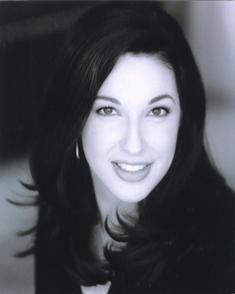
Vancouver Jewish community member Alicia Ohana is Miss Canada Petite 2016/17. (photo from misscanada.tv)

This August, self-described proud Jewish community member Alicia Ohana won the title of Miss Canada Petite 2016/17.

The mission of the national competition, which took place in Toronto, is to “help raise funds and bring public awareness to [competitors’] charitable causes; promote multiculturalism, special events and nonprofit fundraisers throughout Canada. Be a symbol of today’s modern woman!”

Born and raised in Vancouver, Ohana, 23, works at All Hair & Skin Care, a beauty salon owned and operated by her family. She had never competed in a pageant before, but was inspired to get involved because of the various opportunities this particular event provides.

“The Miss Canada Globe Pageant is a beauty pageant that offers girls all over Canada a chance to get involved in their community and represent a charity of their choice to help fundraise for improvements,” she told the Independent in an interview before the competition. “I was modeling jewelry for a company and met another girl that previously participated in the same pageant. She said it was a life-changing experience that opened many doors for her community-wise and has, overall, made her a well-rounded person with more unique experiences.”

Excited by the prospects of meeting new people, making a difference and traveling, Ohana began the lengthy application process.

“I went through multiple interviews by application, phone and essay submission,” she said. “They accept people who want to make a change, are looking for something new and exciting, and can handle pressure.”

And the pressure was intense, as Ohana realized once she was accepted into the contest, for which she was sponsored by Pharmasave (Oak and 41st), After Five and the Jewish Community Centre of Greater Vancouver.

“To prepare, I have been working out everyday (thank you, JCC!), researching charities, fundraising to help cover costs of the pageant, and trying to find appropriate gowns, clothes and attire,” she said. “I have been educating myself on foreign events, I have been writing many essays on how I plan on helping my charity and community, and I’ve also been designing and making my national costume.”

Ohana admitted that she was surprised by the time, work and commitment required.

“It’s taken me months to prepare and it’s honestly unbelievable,” she said. “I thought this was going to be about great hair, dresses and a trip to Toronto! But, it turns out, it’s a whole lot of research about my community and becoming involved to make it a better place.”

Ohana’s road to the pageant had its obstacles. In April, mere months before the competition, she made the difficult decision to withdraw due to her father’s battle with mental illness.

“My father unfortunately slipped into a huge depression, causing me to put more important things first,” she explained.

It was the time spent at her father’s side while he was in hospital that opened her eyes to the needs of that facet of her Vancouver community.

“I met other patients and saw how lovely and warm they were, and saw how grim the hospital was, and I realized I could help raise awareness about the conditions and actually make a change with the help of the pageant,” said Ohana. “The patients inspired me to make changes for their sake.”

Ohana jumped back into the competition in June with the hope of making those changes.

“It has actually set me back quite a bit,” she admitted. “I’ve returned donations, let go of sponsors, and didn’t have time to properly fundraise, which has caused me to work way harder, but I believe everything will work out fine!”

In light of her experiences, Ohana used the pageant platform to get involved with the VGH & UBC Hospital Foundation, specifically the fundraising unit for mental health care. But her commitment extends beyond the event.

“Because of what my father went through, the conditions at the hospital really struck a chord with me and this is more of a personal goal, to make things better, rather than just for the sake of the pageant,” she said.

Nonetheless, her participation in the pageant was essential for her to make the impact she wanted.

“This pageant is helping me get involved with charities that have helped my family personally and is giving me more of a voice,” she said. “Before I joined, I felt I could only help so much, but now it’s given me the power to join the foundation and raise awareness.”

Ultimately, Ohana wishes to help instil a sense of hope and community in the hospital’s mental health patients and their families.

“I hope to organize a group of people affected by mental illness directly or indirectly to help patients, once discharged, become more involved in the community so they do not feel so lost,” explained Ohana before the pageant. “I want to provide support for the patients in terms of visitation and outings, as many of them do not have supportive families or visitors and are faced with loneliness, boredom and a tough environment both inside and outside the hospital.”

During her father’s illness, Ohana saw firsthand the valuable difference being part of a strong, supportive community makes.

“As my family has experienced, a sense of community is everything,” she said. “Without this wonderful Jewish community, things would have been a lot harder and we would not have been able to handle it.”

Ohana – who won Miss Petite British Columbia and then took the national title – is following through on her pageant goals. Inspired by the 80 contestants of the event, she said, “I created OHANA support circles right after the pageant to help people who have gone through rape, abuse, mental illness, homophobia, molestation, eating disorders and many other forms of trauma; for victims to share their stories with other victims who do not have a support system. I’m hoping I can strengthen communities and destroy the fear that has been put in people. It has been lovingly received and I have had many men and women approach me to join. My pageant sisters across Canada are also taking on my challenge and starting circles in their communities.”

The group is accessible via facebook.com/ohanasupportcircles.

Ohana is also collecting donations in the form of toys, art supplies and books in support of fundraising for mental health care, which can be dropped off at All Hair & Skin Care on Oak Street.

“This year,” said Ohana, “I promised myself to try everything new that comes my way – and my life has definitely changed since I have.”

Brittni Jacobson is a freelance writer living in Toronto.

Format ImagePosted on September 9, 2016September 7, 2016Author Brittni JacobsonCategories LocalTags mental health, Miss Canada Petite, Ohana, pageant, tikkun olam, VGH
Federation envisions 2020

Federation envisions 2020

To read more about the Jewish Federation of Greater Vancouver’s 2020 Strategic Priorities, visit jewishvancouver.com/2020.

An estimated 50% of Metro Vancouver’s Jewish community lives outside of the city of Vancouver. For young families with at least one Jewish parent, the proportion of Jews living outside of Vancouver jumps above 60%. Like other area residents, they are moving to the suburbs in the elusive search for affordable housing – and that search has taken them far away from the organizational centre of the community, at Oak Street and 41st Avenue.

In setting its 2020 Strategic Priorities, the Jewish Federation of Greater Vancouver addresses the challenge of an increasingly dispersed community, as well as that of an aging population. It also considers the fact that, while it is expensive to live in Metro Vancouver, it is even more expensive to be involved Jewishly.

Over the past two years, Federation has surveyed Jews both in Vancouver proper and outside of the city to find out what they consider to be the priorities of the community and where resources should be allocated. The Connect Me In online surveys reached more than 300 people in outlying areas, 200 of whom agreed to further conversations with Federation, according to Federation chief executive officer Ezra Shanken.

“We’ve had hundreds of conversations with groups and individuals,” Shanken told the Independent. “We wanted to know what areas are lacking. We also asked how should Federation feel and how does it feel? We heard that Federation and the Jewish community is not accessible enough.”

A look into the near future, the 2020 document highlights a number of key areas that have been identified for strategic investment. The report’s subtitle gives the clear message for the idea behind the plan: “Moving our Jewish Federation from Strength to Excellence,” and excellence requires more resources.

As the main fundraising organization of the Jewish community, Federation directs support not only to large, high-profile institutions like Jewish Family Service Agency and Vancouver Talmud Torah, but also to many smaller organizations for which it would be impossible to adequately fundraise independently. The dollars raised and then allocated by Federation are meant to ensure that its 40 constituent agencies are able to sustain a diverse, well-rounded Jewish community without the worry of constant fundraising.

With such a large number of organizations and a wide range of needs, every year the allocation process requires Federation to make difficult decisions. The 2020 plan is intended to identify current community needs, predict the amount of money needed to meet those needs and then raise the necessary funds. The identified priorities include both local and international obligations.

Locally, engaging the next generation, addressing new and evolving community needs, investing strategically in the community and closing the funding gap to meet ongoing needs are the priorities. Each area has a number of key issues embedded within it and all of the details are available on the Federation website. The breakdown of needs is laid out to include the current level of funding and what it covers, as well as the projected needs with their accompanying cost.

Federation’s international commitments include supporting a variety of projects in Israel and communities around the world. Shanken said he is often asked about the amount of money that leaves the local community.

“It used to be an 80:20 ratio of money going to Israel – UIA [United Israel Appeal] was set up to build Israel,” he explained. “Now, it’s more like 30:70 because the way we engage with Israel is very different. We have an Israel department here, we bring the Shinshin [Year-of-service] program to Vancouver for Israel engagement with our community and we fund the Gesher [Bridge] program that brings young Israelis here.”

He also noted that Federation facilitates the funding of some special projects in Israel, which are separate from Federation’s budget. The way these funds are directed is a result of the donor’s wish to feel a sense of ownership of their gift. However, cautioned Shanken, “The sense of ownership cannot replace the duty to help all agencies.”

Federation plans to continue strategically funding existing organizations, while putting in place some new programs. The Diamond Foundation recently gave seed money to bring in a part-time community developer to reach out to marginalized communities. Jewish education, services for seniors and other Jewish programming are among the ways Federation plans to “get out there,” according to Shanken. He offered as an example Federation’s PJ Library, which provides books with Jewish content to more than 1,000 Jewish children in the Lower Mainland.

To read more about Federation’s 2020 Strategic Priorities, go to jewishvancouver.com/2020 or join the conversion on social media, #ourcommunity2020.

This year’s annual campaign launches on Sept. 22, 7 p.m., at the Queen Elizabeth Theatre with FEDtalks, featuring author, radio host and founder of Zuckerberg Media, Randi Zuckerberg; Reut think thank founder Gidi Grinstein; One Clip at a Time co-founder Alison Lebovitz; and journalist Terry Glavin. For tickets and more information, visit jewishvancouver.com/fedtalks2016.

Michelle Dodek is a freelance writer living in Vancouver.

Format ImagePosted on September 9, 2016September 7, 2016Author Michelle DodekCategories LocalTags Federation, FEDtalks, fundraising, Shanken, Vision 2020
Living with prostate cancer

Living with prostate cancer

Sima Elizabeth Shefrin’s new book, Embroidered Cancer Comic, will be launched on Sept. 15 at the Roundhouse.

Cancer is a word often whispered. Sex is certainly not spoken of in polite company. Yet Sima Elizabeth Shefrin tackles both topics in her new book, Embroidered Cancer Comic (Singing Dragon, 2016), which receives its Vancouver launch on Sept. 15 at Roundhouse Community Centre.

The comic begins with Shefrin’s husband, Bob Bossin, coming home from the doctor with a diagnosis of high cholesterol. “Oh, he also said my PSA was up,” Bossin tells Shefrin. After some understandable delays, Bossin gets the needed biopsy. While the couple are enjoying a funny movie together, the call from the doctor comes: prostate cancer.

book cover - Sima Elizabeth Shefrin’s new book, Embroidered Cancer ComicIn a mere 30 pages, with text and illustrations by Shefrin, Embroidered Cancer Comic shows Bossin’s uncertainty over treatment options, his efforts to learn more about the cancer, the emotional stress on him and Shefrin, as well as the effects of the cancer and its treatments on the couple’s sex life.

“The strain of the prostate cancer journey on relationships cannot be overstated, yet patients and their partners are left to figure this out for themselves,” writes Dr. Peter Black of Vancouver Prostate Centre – Bossin’s surgeon – in a brief commentary at the end of the comic, where both Shefrin and Bossin also share more of their story.

Helping others was one of Shefrin’s goals.

“I’m hoping the book will help couples in this situation be able to communicate,” she told the Independent.

Already, it’s had an impact.

“I thought it had potential for being a major project, especially after I got the publishing contract,” said Shefrin. “But then, of course, you don’t leave that in the hands of the gods. Singing Dragon has been very good for getting publicity in Britain, in both the comic and the medical worlds. In Canada, I’ve done most of it myself.

“I believe that this book can do real good in the world,” she said, sharing that a man in Quebec had written her “about what a difference it had made to both him and his wife.”

She said, “That’s what I’m hoping to do. I believe in the comic, so I’m willing to do whatever pushing I need to, to get it out into the world.”

Shefrin is a noted fabric artist, her website name – stitchingforsocialchange.ca – perfectly describing the nature of her work.

“I have often used my art to work through life events and to create awareness and conversation about taboo or contentious subjects,” she writes at the end of the comic book. “But nothing has made me feel as vulnerable as the creation of this comic. At the same time, it has helped me realize that, when you’re there, cancer becomes a part of daily life, like buying groceries or washing dishes.”

It took Shefrin three years to sew the embroidered line drawings, which were then photographed for the book. When asked if she ever thought of creating the images in a more expedient way, Shefrin said, “Fabric is my medium. The books I illustrated are mostly paper collage, but even when I work in paper, I think like a fabric artist. I did drawings first and then embroidered them, and I always liked the embroidered result better than the original drawing.”

The book “started out as a piece of art,” she said. “I thought I might self-publish or maybe simply photocopy a kind of catalogue for a show. But, one day, I came across the Graphic Medicine site and realized that there was a whole world out there of people making comics about medical issues. I’d had no idea.

“So, I started looking at the site regularly as well as at their Facebook page. Occasionally, there would be postings for people looking for comic strips on this and that and, if it was vaguely relevant, I’d send out my work. I do this a lot and often it comes to nothing. But, a couple of months later, I got an email from Jessica Kingsley saying they might be interested in publishing my work. It took me about an hour to figure out who they were and how they found me. They published it through their imprint, Singing Dragon. After that, the focus shifted and became about creating the comic, a story with a beginning, middle and end, instead of an art series. Now that it’s in print, I’m back to creating the quilts for the art series.”

The book has received many very positive reviews, including one in the U.K. medical journal The Lancet – and, according to the book’s Facebook page, it earned “a lovely personal note from Judi Dench,” who is mentioned in the comic. Specifically, when Shefrin asks her husband, “Who really excites you?” his answer is Dench.

The most touching review of the book comes from Bossin. “And because you live with cancer, whoever you live with lives with it, too, as Elizabeth’s comic shows so tenderly,” he writes. “For me, there is no one I would rather live with cancer with. No one.”

Those curious about what Dame Judi said and other stories behind the comic’s creation can ask Shefrin and Bossin at the Sept. 15 launch, which starts at 7 p.m. The quilted original illustrations are on display at the Roundhouse’s Window Gallery until Oct. 30.

Format ImagePosted on September 9, 2016September 7, 2016Author Cynthia RamsayCategories BooksTags Bossin, comics, health, prostate cancer, relationships, Shefrin
Dance links cultures

Dance links cultures

Sula Boxall will perform with Flamenco Rosario in Flamenqueando on Sept. 17 at Vancouver Playhouse. (photo by Tim Matheson)

The Vancouver International Flamenco Festival Sept. 10-20 features a lineup of local and international flamenco artists – including local Jewish community member Sula Boxall.

Founded by Flamenco Rosario in 1990, the festival is apparently one the few devoted to flamenco outside of Spain. It features both free workshops and ticketed performances by several different groups and, this year, “celebrates flamenco’s Spanish Gypsy origins with the Vancouver première of Mercedes Amaya Company (Mexico/ Spain).”

Boxall will perform with Flamenco Rosario in Flamenqueando on Sept. 17, 8 p.m., at Vancouver Playhouse. They will open for Mercedes Amaya Company.

“I am honored that Rosario [Ancer] asked me to be a part of Flamenco Rosario’s performance on Sept. 17. These types of opportunities do not come along very often in Vancouver,” Boxall told the Independent. “It is an amazing opportunity to grow as a dancer and be a part of her creative process and experimentation. To be dancing in the same performance as the renowned Mercedes Amaya is humbling and intimidating. Being able to watch other performers and learn from them is a chance for professional development; I’m looking forward to the other performances and workshops that the festival has to offer.”

Boxall was born in Vancouver. “My parents had moved to Canada three years previously from South Africa,” she said. “I grew up in the Kitsilano area, attending Trafalgar Elementary and the Prince of Wales mini school. I moved to Victoria to study at UVic before continuing my studies at UBC. Currently, I am an elementary school teacher in Vancouver and teach children’s flamenco classes at Centro Flamenco.”

She has always wanted to dance.

“Since I was able to walk, I’ve been dancing,” she said. “When I was in preschool, I would create performances in my living room for my parents. I begged for dancing lessons until my parents agreed to start me in ballet at age 5. I continued to dance for the next 11 years. After a nine-year break from dancing, I was drawn back into it with flamenco. For the last eight years, it has grown into another important part of my identity. Dancing is something that is a part of me and I am a better person because of it.”

According to her bio, Boxall studied ballet, modern, jazz and character dance at Arts Umbrella. When she returned to dancing in 2008, “she found a way to renew her love of dance with flamenco at Centro Flamenco” and Ancer’s mentorship was “an integral part of her development as a dancer.”

Boxall started Flamenco Rosario’s three-year professional training program in 2010, she traveled to Spain in 2012 and studied there, she regularly attends workshops in Vancouver and, in 2013, she had her first solo performance. She regularly performs around Metro Vancouver, and also participated in the Vancouver International Flamenco Festival in 2014.

“Flamenco is an art form that has connections to many cultures, including the Jewish culture. I feel that my love of the traditional Jewish melodies is closely tied to my love of flamenco music,” said Boxall about why she is particularly drawn to this dance form.

“Having the opportunity to move and feel through flamenco dance allows me to express myself,” she added. “Flamenco is incredibly complex and diverse and demands lifelong learning. It takes years of study to understand flamenco and, even then, there is always more to learn. The challenge is what draws me to continue and work on improving my skills and understanding.”

As for other aspects of Judaism or Jewish culture that play a role in her life, Boxall said, “When I was growing up, I regularly attended the Peretz Centre in Vancouver. Through the Peretz, I was allowed to explore different parts of Judaism and gain a greater understanding of my cultural background. The culture, traditions and history continue to be very important to me and my identity, in particular the elements of family and community. With my family and friends, I continue to celebrate the holidays and enhance friendships in the Jewish community.

“I’ve especially been drawn to the music and the way it moves my soul. My mother gave me a large book of Jewish music for Chanukah years ago and I continue to find joy in learning new songs.”

It is interesting to connect the secular humanist philosophy of the Peretz Centre with the way in which the weeklong flamenco festival is described on its website. Since it began, the festival has “grown to a mature understanding of Vancouver’s multicultural audiences by nurturing the form’s hybridized roots in Sephardic, Persian, Gypsy and Indian cultures, and by striving to reflect and connect its diverse sociocultural identity through work narratives underlining flamenco’s universal message of humanistic tolerance.”

For tickets and information about the Vancouver International Flamenco Festival, visit vancouverflamencofestival.org or call 604-568-1273.

Format ImagePosted on September 9, 2016September 7, 2016Author Cynthia RamsayCategories Performing ArtsTags Boxall, dance, flamenco, humanism, Peretz Centre, Rosario Ancer
Chagall lithograph exhibit at Zack

Chagall lithograph exhibit at Zack

Susanna Strem, owner of Chali-Rosso Art Gallery, in front of a Marc Chagall lithograph. (photo by Olga Livshin)

Marc Chagall needs no introduction. But perhaps not everyone is aware that there is a gallery in Vancouver that specializes in original graphic works by Chagall, as well as a few other 20th-century European masters.

“We opened the gallery in 2005,” Susanna Strem, owner of Chali-Rosso Art Gallery, told the Independent. “Since then, I always wanted to have a Chagall show at the JCC. I was familiar with the community and liked it. When I first immigrated to Canada and arrived in Vancouver, I often went there.”

Now, she finally will have her wish. On Sept. 15, she is bringing her selection of Chagall’s lithographs to the Sidney and Gertrude Zack Gallery at the Jewish Community Centre of Greater Vancouver.

Strem considers herself not just a gallery owner but also an art educator. She is passionate about art and she longs to share her passion and her knowledge. She often discusses multiple aspects of the arts with gallery guests and she loves answering their questions. A recurring question concerns the nature of lithographs.

“Not everyone realizes that lithographs are original works by the artists,” she explained. “First, the artist creates an image on a stone block and then he transfers it on paper. It’s a time-consuming process and, after the artist makes a set number of copies, the stone image is destroyed. It is called a ‘limited edition.’ A limited edition could consist of 50 or 100 copies, or however many the artist had decided upon, but each copy has a number and is signed by the author. They are all originals, and that’s what we sell in our gallery. That’s what we’ll be bringing to the Zack.”

Lithographs, or prints on paper, while originals, are not unique. Consequently, they are more affordable than other works by the same artist.

“Some people, when they think of art at all, they think oil on canvas,” Strem mused. “But most artists create in different media. Creative minds always try something new and interesting. Salvador Dali, one of the artists we represent, created many amazing sculptures. Pablo Picasso worked on pottery. Both Picasso and Chagall enjoyed printmaking. When we first decided to open the gallery, we knew we wanted to represent graphic works on paper because of their relative affordability, compared to the oils. Oil paintings by Chagall could go for enormous prices, but a lithograph by Chagall could cost only a couple thousand dollars.”

Strem started her professional life far from the artistic field. She was born in Hungary and studied art history and computers in Budapest. After graduating from university, she worked as a software developer and IT consultant for many years, first in Hungary, then in several European countries and, for a short spell, in Israel. None of those places suited her for long.

“Europe has too much history and culture; it’s too heavy a burden. That’s why Canada, and specifically Vancouver, work for me,” she said. “It is a new world here, it is lighter, more accepting.”

In 1994, Strem settled in Vancouver and resumed her work with computers. For the first decade she lived here, she worked as an IT specialist, until the moment came when she knew it was time to embark on a new career.

“When my husband and I opened the gallery, it was a big change. It would have been impossible in Europe. People there don’t switch careers: once an engineer, always an engineer. If I decided to open a gallery in Europe, after being an IT person for years, everyone would look at me and think something was wrong with me. But it was OK in Vancouver.”

Chali-Rosso first opened on Granville Gallery Row – a short strip of Granville Street between Broadway and the bridge – where many major Vancouver galleries still reside.

“Art collectors knew to come there if they wanted some art,” she explained. “It was the right place to open a new gallery.”

A couple years ago, after their collection quadrupled in size, they moved the gallery to a new and larger facility in downtown Vancouver, on Howe Street.

They chose the name Chali-Rosso for their gallery because of the artists that comprise the majority of their collection: four European masters of the first half of the 20th century.

“The gallery name is an acronym of their names: Marc Chagall, Salvador Dali, Joan Miro and Pablo Picasso,” said Strem. “We focus on these four, although we have some works by other artists, too, including a small but wonderful piece by Rembrandt.”

For Strem, opening a gallery on the West Coast is a challenge.

“I like Vancouver, like living here,” she said, “but it’s not easy for any art gallery to engage people’s attention. Western Canada is still too new, too young. Most people are attracted more by the outdoors than by art. To spend $300 on bicycle gear is fine, but $800 on a piece of art is too much. There is no centuries-old tradition here, no art on the street. In Europe, people are surrounded by art, but here, art is not an integral part of life. It’s up to us, gallery owners and artists, to change the situation here. We’re pioneers.”

Marc Chagall’s Bible Suites opens at the Zack on Sept. 15, 7 p.m., with a reception to which the public is invited. The exhibit runs until Oct. 26.

Olga Livshin is a Vancouver freelance writer. She can be reached at [email protected].

Format ImagePosted on September 9, 2016September 7, 2016Author Olga LivshinCategories Visual ArtsTags Chagall, Chali-Rosso, lithography, Strem, Zack Gallery
Melancholic adaptation

Melancholic adaptation

Natalie Portman in a scene from the film A Tale of Love and Darkness. (photo by Ran Mendelson/Focus Features via houstonchronicle.com)

A Tale of Love and Darkness may seem like a nondescript and even coyly evasive title, but in fact it expresses the essence of Natalie Portman’s textured film of Amos Oz’s book.

An unfailingly sensitive though necessarily compressed adaptation of Oz’s acclaimed 2004 memoir, the movie portrays Oz’s nurturing yet fraught childhood with his immigrant parents in Jerusalem in the years just before and after the declaration of the state of Israel.

In the film, Amos possesses both character and potential, but there are rocks in the path of every promising child. Almost every frame of A Tale of Love and Darkness is imbued with a brooding, ominous tension that derives in various measure from Old Country suffering, the nascent nation’s Holocaust trauma and Amos’ mother’s depression.

Shot in a hard-edged, anti-nostalgic palette of black and green, the story unfolds in a constrained world where both the past and the future exert immense weight on the present. That said, Portman infuses her richly engrossing feature directorial debut with welcome dashes of poetry and humor.

Amos (Amir Tessler) is an exceedingly smart and empathetic child, instilled with a love of books and words by his academic father Arieh (Gilad Kahana) and an appreciation for the allusive power of fables by his quietly adoring mother Fania (Portman).

Because the viewer (likely) knows that Amos will grow up to be a great writer, we immediately presume that Arieh is his primary influence. In one of the film’s most rewarding turns, we come to realize that Amos received the gift for storytelling from his mother.

Amos doesn’t make that connection either, until much later. Even an observant child can’t recognize or understand the import of most events as they happen, whether they are as familiar as his paternal grandmother’s perennial disapproval of Fania or as dangerous as foraging for empty bottles on the outskirts of Jerusalem during the War of Independence.

Although Fania, Arieh and Amos are tightly connected, they also inhabit private universes. Arieh is subsumed by his goal of being a popular scholarly author, first reveling in the publication of his esoteric debut and gradually frustrated by the reality of his modest place in the world.

Fania’s inner life is deeply mysterious, with dark memories of her youth in Poland alternating with curious dreams, or fantasies. She has a recurring vision of a hunky, sandy-haired kibbutznik, a “new Jew” and the diametric opposite of her husband, who is a spiritual descendant of the yeshivah bochers of the shtetl.

Amos, who was born in Jerusalem – as was Portman, more than four decades later – tries to make sense of everything, from the late-night United Nations vote for the partition of Palestine and the creation of Israel, to the Neanderthal schoolyard bullies who take his sandwich, to his mother’s catatonic fugues.

The film’s guiding light, Amos navigates this terrain with uncommon aplomb and resourcefulness. The impact of A Tale of Love and Darkness, though, is in its evocation of the currents of memory, sorrow, dread and pride that swirl through Jerusalem’s streets.

The elderly Amos (voiced by Moni Moshonov), a welcome albeit melancholy presence, provides occasional, wise narration about his city, as well as his parents.

“Jerusalem,” he muses at one point, “is a black widow who devours her lovers while they are still inside her.”

It’s a metaphor, yes, but it could be a synopsis for a parable that Fania might tell Amos. Ultimately, A Tale of Love and Darkness is about the power – and the limits – of stories to change our lives.

A Tale of Love and Darkness (in Hebrew with English subtitles) opened last week at Fifth Avenue Cinemas.

Michael Fox is a writer and film critic living in San Francisco.

Format ImagePosted on September 9, 2016September 7, 2016Author Michael FoxCategories TV & FilmTags adaptations, Amos Oz, Israel, Portman

We have our own issues

American politics, these days, attracts global disbelief and revulsion. The contest pits against each other two of the most unpopular candidates since polling began. One of them, the Republican nominee Donald Trump, is endorsed by the country’s leading white supremacists.

There is no question that Trump has tapped into something. Most of his supporters are not now and never have been members or supporters of the Ku Klux Klan or similar fringe groups. They are, in fact, a large and mainstream enough group that he won the nomination of the Republican party and now stands just a couple of points behind Democrat Hillary Clinton in polls, with at least two in five Americans saying they intend to vote for him. Among white Americans, if they alone were the electorate, polls say Trump would win a landslide.

Leaving aside his nonchalance about the fact that David Duke, the former imperial wizard of the KKK, and other of America’s most prominent racists think he would make a top-notch president, Trump has legitimized a host of barely more discrete forms of bigotry, chauvinism and hatred. People who strive for human respect have responded with two approaches. They have condemned the most overt examples of Trump’s racism, while acknowledging that many Americans are experiencing economic and social displacement that could justify their scapegoating of other groups or otherwise find reason to support a candidate whose policy positions are nothing more than accumulated Twitter tantrums.

If Trump wins, there will be more issues to address than this space can accommodate. If he loses, there will still be a divided country where parents have to explain to their children why it is inappropriate for them to express ideas that have been so effortlessly articulated by one of the two leading candidates for the highest office in the country.

Incongruously – or is it? – we are also in a time when the United States is engaged in a deep public reflection on race. The Black Lives Matter movement, which is partly a result of the murder of young African-Americans by police officers but also of broader systemic racism, has opened an overdue public discussion. Decades after legal racism was upended, there remain serious issues that the country needs to confront. Small gestures like that by Colin Kaepernick, a football player who is refusing to stand for the national anthem as a protest against discrimination, have aroused outrage but also raised legitimate awareness. Can you love your country and still condemn aspects of its nature?

Israelis, perhaps foremost among others, have faced this question for decades. And Canada is also engaged in a discussion around race. While we, too, have a history of racism against people of African descent, this history is different from that of the United States in myriad ways, including the absence of slavery in our history. But our past includes racist and antisemitic immigration policies, social and systemic antisemitism, racism and mistreatment of women, degradations of many varieties and, in something we are only beginning to come to terms with, treatment of indigenous Canadians that was intended to erase their cultural identities. And these are not the only areas where our society fails to live up to our ideals.

It is certainly tempting to look at what is happening to our south and feel superior. It would be more productive as a society for us to acknowledge that, while we see fault in others, we will be a better country when we keep our gaze closer to home, and use our stones for repairing, not throwing.

Posted on September 9, 2016September 7, 2016Author The Editorial BoardCategories From the JITags antisemitism, Clinton, politics, presidential race, racism, Trump
Working to heal, entertain

Working to heal, entertain

Steven Page describes his latest recording as “all about finding humility. I’m exploring my own foibles.” (photo from Steven Page)

Has it already been 25 years since we first heard radio hits “If I Had a Million Dollars” and “Be My Yoko Ono”?

In early 1992, Toronto-based Barenaked Ladies’ first label recording, Gordon, was released. It also produced classics “Enid,” “Grade 9” and “Brian Wilson.”

It didn’t take much time for stardom to follow, particularly after the next series of hits, “One Week” and “Pinch Me,” and a string of infectious melodies emanating from a dozen albums to come over the next 17 years.

It’s been said that frontman (and lantzman) Steven Page, who began the group with childhood chum Ed Robertson, wrote or contributed to 97 out of the 113 original Barenaked Ladies tunes. Since 2008, however, Page has pursued a divergent path.

Beginning with a split from the band – hastened by his much-publicized 2008 cocaine bust – Page has carved out a solo musical career, while also, in the past few years, candidly speaking to a variety of audiences about his battle with mental health issues.

In 2010, his inaugural solo album of original material, Page One, was released. And, earlier this year, its followup, Heal Thyself Pt. 1: Instinct.

Jewish Independent: How does it feel to have wrapped up Heal Thyself?

Steven Page: It feels like a total relief. In the weeks coming up to its release I was in full panic mode, because it’s hard to let go of something that you’ve been working on, especially this one. I’ve been working on it for a long time.

You spend all your time kind of obsessing over it and massaging it and fixing it and redoing parts. I learned a long time ago not to over-produce something so it just gets slick. But, for me, it was actually just a matter of trying to get what I heard in my head coming out of the speakers. And that takes some tweaking, but it can lead to some pretty obsessive behavior as well. I had thought, is this going to get ignored? Is everybody going to hate it, or not going to understand it the way it was meant? Did I do my job properly? And then it’s out there. And you can’t control it anymore.

JI: But you’ve never made anything that anybody’s hated? Have you?

SP: No, I don’t think so. But I think most artists have those conversations in their heads. They write their own worst reviews before it’s actually released. But the wonderful thing is, people have been so positive about this record, in a kind of shockingly, exorbitant way.

It’s out of my studio and actually in front of people. Sharing it, it’s really a nice feeling.

JI: What are you trying to say with the album?

SP: One of the things that I’ve struggled with a lot over the last 20 years has been: what is the value of what I do for a living? Am I creating a product people may or may not buy? Am I expressing myself and, if I am, who cares? Why would anyone want to listen to me? So, all those kinds of struggles I think a lot of artist ask themselves, especially when art is becoming more devalued. It’s like, where do we fit?

At the end of the day, the record becomes all about finding humility. I’m exploring my own foibles.

I think anybody else of my age comes to a point where your kids get older, your parents get older and, obviously, you do, too. And you can’t fix everything, and you can’t be responsible for everything, but you can at least find some peace in what your contribution is.

CD cover - Heal Thyself Pt. 1: InstinctJI: Thus Heal Thyself?

SP: Exactly. With that title also, it’s both sincere and ironic at the same time. It obviously comes from “physician, heal thyself,” which is a biblical quote from Jesus; it means don’t judge anybody else until you fix your own self. But, when you take it out of context, it sounds ridiculously snarky. In Jesus Christ Superstar, “heal yourselves, heal yourselves,” he says to the lepers. I thought that was kind of a funny dual meaning, but also is that sincere personal side.

JI: You have been known, over the course of your career, as this kind of funny guy, beginning with the Barenaked Ladies. What is underlying that funny or witty within the songs?

SP: Humor is still a big part of how I approach the world, whether that’s with a sense of sardonic, even some snark; sometimes, it’s also self-effacing. But I think I’ve finally moved past the full-on self-deprecation of some of my older material. And now it’s about finding the humor of the situation when you’re in the worst times. That’s how I look at the world, even when I’m in a pretty dark place. And I think I work really hard on my lyrics. I try not to have any throwaway lines or throwaway words or phrases. Everything is there for a reason. Sometimes a line just makes you laugh your head off when it’s in there.

JI: You spoke about dark places and I want to veer into it. You’ve spoken a lot about your bout with mental illness to audiences over the years. How has your perspective changed in your struggles?

SP: I think the biggest change for me is just that I’ve learned to lose the romance. I think it’s pretty easy when you’re in the arts to romanticize, especially depression and anxiety, neurosis. I mean, a lot of my favorite filmmakers and musicians and artists have multiple lives, and most of those are marked by anguish and mental health struggles.

I’ve realized over the years that, when I’ve struggled the most, I’ve been the least productive and the least creative. The hard times have given me perspective. Sometimes, it has given me an angle to write about, because I’m able to step back when I’m in a better place and assess it, and write about it and think about it.

I’ve learned to take it more seriously and learned to try to take care of myself, where before, I think, I would just let it go, because it seemed almost acceptable to me. We always see these images of the symphony conductor throwing a tantrum on the back of the stage, and that would be completely unacceptable if your band did it. It’s not that different. How you treat other people, the fallout from your behavior, how your illness influences you, is serious.

JI: Sometimes, people are frightened to seek help. They’re not sure if the help they get is going to help.

SP: I think what people are afraid of is medication, and I don’t blame them. Nobody wants to be on anti-depressants for the rest of their lives and, if it’s the wrong medication, then it can totally mess you up. I mean, it’ll make you sleepy, it’ll make you sad, you can never have another orgasm again, like all these horrible things.

There are all kinds of side effects to this stuff and the biggest problem, frankly, is that most people get their prescriptions from their family doctors and they get one prescription, because the family doctor says, “this one seems to work the most” or “haven’t heard any complaints.” You have to be able to go back and keep working until you find the right dosage, the right medication, the right cocktail of medications. The person who can prescribe should be a specialist and a psychiatrist.

So, what you end up doing is you get this one prescription and it makes you feel bad, or it makes you temporarily feel better after a couple of months, and you go, “OK, I’m better now,” and you stop taking it. I hear this all the time from people and I did it myself for years. You don’t follow up, you don’t follow through.

Depending on what their mental health struggles are, there are therapeutic talk therapies that don’t involve any medications at all. I work with a therapist who practises CBT, cognitive behavioral therapy, and it basically challenges your ingrained assumptions about yourself and gives you skills to learn how to defeat what I call the “sick brain,” by reminding yourself that sometimes your brain lies to you when you’re sick.

It’s not so much about mental health but mental fitness. It’s about having a relationship with somebody you trust.

People go to one therapist and feel judged, or feel they don’t have a connection, or they feel like they are in a relationship like they are with a parent or a teacher, [it] makes them feel uncomfortable and they don’t go back. People have to know that they should be able to audition people until you find the right match. One of the problems for most people is they can’t afford that.

JI: The health-care system needs to heal itself, too?

SP: Exactly. It needs to take mental health far more seriously.

I think people just need to keep reminding politicians that it’s a priority. Mental health, if it was treated with the same weight as physical health issues by the public – we have a prime minister now who’s dealt with this firsthand, with really horrific mental health issues with his mother, and she’s been such a great and open advocate – hopefully that would start to help. I really hope that he starts to help push the public perception in the right way.

JI: Songwriting, performing. What for you requires the most emotional strength or drive to do?

SP: There are several things. When it comes to writing, I’m both a workaholic and a procrastinator at the same time, if that makes any sense.

I’ll find a lot of ways to not commit to finishing a song. That’s why I love collaboration with another writer, because you push each other to go, whereas when you are by yourself, you have so much more space and so many more places to explore.

So, what I’ll do is, I’ll start to write something and then I’ll just start another song at the same time. I’ll work for 16 hours, but I didn’t finish a song.

The finality of a song is a bit scary to me, so that can be a challenge. But there are very few things that are as rewarding as finishing a song that you are proud of. And someone comes along and tells me they love a certain line, and it connects with them.

What is also hard is that there are times I’ve gone on stage and been a bit nervous.

JI: Nervous? Why?

SP: I’m not 100% sure. I might need more therapy for that.

I don’t do bad shows. But I want my show to be the best of mine they’ve seen, so there’s that added pressure on me.

Sometimes, I just have to trust myself and go into it, and try to get to that place where it’s transcendental for both me and the audience.

Dave Gordon is a Toronto-based freelance writer whose work has appeared in more than a hundred publications around the world.

Format ImagePosted on September 9, 2016September 7, 2016Author Dave GordonCategories MusicTags Barenaked Ladies, Heal Thyself, mental health, Steven Page
Khalifa joins the circus

Khalifa joins the circus

Jared Khalifa toured with Cirque de Soleil this year. (photo from Jared Khalifa)

Last November, Jared Khalifa’s career was at a low point. He had just come back from Denmark, where injuries in both ankles and one knee had limited his performance representing Canada at an international competition for tumbling, a high-intensity form of gymnastics where, after a running start, one tumbles, cartwheels and twirls at high speed down a course before coming to an artful landing at the end of the track. He was having a hard time getting motivated to get back up on his feet when he was contacted by a talent scout who had first spoken to him months before – a scout for the internationally renowned Cirque de Soleil.

Montreal-based Cirque de Soleil, famous for its innovative blend of music, narrative, dance and acrobatics, is now the largest theatrical producer in the world. The scout had expressed interest in Khalifa after seeing him perform previously but had told Khalifa, then 17, that he was too young. But, at 18, only weeks after his time in Denmark, Cirque wanted Khalifa to submit a demo.

Khalifa submitted a mixed demo reflecting his broad mix of skills – singing, dancing, martial arts and gymnastics – and was told he had made it into the final selection for singers. He would be invited to make a live audition when the circus was next in town.

photo - Jared Khalifa did a two-month tour with Cirque de Soleil
Jared Khalifa’s two-month tour with Cirque de Soleil tool him from Louisiana to New York. (photo from Jared Khalifa)

A month later, he was contacted by another branch of Cirque’s talent scouts who were unaware of his possible selection as a singer – they were interested in offering him a training contract doing teeterboard. Teeterboard is a circus mainstay, where two performers collaborate on different ends of a giant teeter-totter, propelling each other into the sky to twirl and tumble in the air. The circus was coming for Khalifa from multiple angles, and soon he was signed to do a show. He joined Cirque de Soleil for a two-month American tour, traveling from Louisiana to New York. With between five and eight shows a week, he did around 50 shows in those eight weeks.

Khalifa said he has had “a thrilling year,” which is surely putting it mildly. He said he learned a tremendous amount on the road with the troupe of perhaps 40 performers and 100 support staff.

“The troupe became very close,” said Khalifa, who is still friends with many of the performers he met. “Despite the exhaustion, I was exhilarated every day.”

How did Khalifa – who went to Vancouver Talmud Torah and King David High School – get to Cirque de Soleil?

He began studying capoeira, the Brazilian martial art that integrates acrobatic and dance elements, at 3 years old. That led to an interest in gymnastics and dance and, when he was 8, he also began studying musical theatre. He attended the summer musical theatre program at the Jewish Community Centre of Greater Vancouver, Gotta Sing! Gotta Dance! And, by his teen years, he was training in competitive tumbling. “It’s all about the elegance you bring to it,” said Khalifa, whose Instagram feed is a study in bending the laws of physics.

Since his return to Vancouver, Khalifa has signed with a film and television acting agency. He is part of the local troupe ShowStoppers and has also started studying hip-hop and urban street-style dancing. Khalifa – whose skills, as has been mentioned, include capoeira, musical theatre, dancing, singing, gymnastics, tumbling and circus performance – said, without a hint of irony, that his focus now is to become “more well-rounded,” an athlete and artist.

Matthew Gindin is a Vancouver freelance writer and journalist. He blogs on spirituality and social justice at seeking her voice (hashkata.com) and has been published in the Forward, Tikkun, Elephant Journal and elsewhere.

Format ImagePosted on September 9, 2016September 7, 2016Author Matthew GindinCategories Performing ArtsTags capoeira, circus, Cirque de Soleil, gymnastics, Khalifa, musical theatre, tumbling
Renewal in education

Renewal in education

The Peretz Centre is moving towards a renewed commitment to social justice, Yiddishkeit, the arts and building community. (photo from peretz-centre.org)

If you walk into Vancouver’s Peretz Centre for Secular Jewish Culture on a Sunday afternoon between September and June, you are likely to find a group of families singing Yiddish songs such as “Shabbes Zol Zayn” and “Az der Rebbe Tanz,” making latkes or doing arts and crafts, while learning new and unique approaches to being Jewish. Some of the children are “officially,” i.e. halachically, fully Jewish by birth, with a Jewish mom and dad, but many are “half-Jewish” (with the Jewish parent being either mom or dad) or “double half-Jewish,” with parents who themselves were raised in half-Jewish families.

This is the Peretz Family Education program, where adults and kids learn together. Bubbies and zaydies often come to visit, and there is song, story and food that is shared in a community of families eager for a connection to their roots (or half-roots, as the case may be) that is not dogmatic or religious. This program, now entering its third year, is a remarkable success, attracting inter-cultural as well as LGBT families and others who feel at home at Peretz.

“We had families coming to us for years, asking us to create a place for their children to feel connected to Jewish culture, as well as progressive humanistic values, that was not focused on religion,” said Donna Becker, Peretz coordinator.

Vancouver Jews may know of the Peretz Centre from its 70-year legacy as the home for Yiddish-speaking, secular Jewish education. Loosely affiliated with sister organizations in Winnipeg, Toronto and Montreal, Peretz was founded by non-religious Jews who loved the Yiddish language, culture and traditions. These founding members were more focused on humanism, social justice and activism than on ritual, prayers and liturgy.

For decades, the Peretz community boasted a school with hundreds of students learning Jewish cultural identity and progressive values. The hub of Yiddish culture in Vancouver, it hosted (and still does) the Vancouver Jewish Folk Choir, theatre groups, classes and study groups, and artistic events celebrating Judaism from a cultural perspective. However, as the only organization in the Vancouver Jewish community that spearheaded a secular humanist and progressive perspective on the Jewish experience, it was for a long time somewhat on the margins of the community.

Then came a period of contraction. With many of the founders gone, and with Yiddish increasingly becoming a boutique, intellectual study rather than a living language and tradition, Peretzniks were not able to sustain the school-age programs. Apart from a thriving secular b’nai mitzvah program, the focus has been on strengthening the Peretz community through adult discussion groups, seniors programming, lectures, concerts, the choir, plus alternative non-religious celebrations and observances to mark Rosh Hashanah/Yom Kippur, Chanukah, Passover and other important Jewish holidays.

But, once again, the Peretz Centre is going through changes. Increasingly, young families in Vancouver and the surrounding area have been seeking a place where they can raise their children with a secular Jewish identity resonant with modern concerns of environmentalism and reconciliation and healing from the trauma so prevalent in many Jewish communities.

The new family education program is the brainchild of Dr. Danny Bakan, a PhD in education with more than 20 years experience facilitating Jewish Renewal and secular Jewish education.

“When we started, I insisted that this be a family education program; everyone is here to learn together,” said Bakan. “We focus on creating a joyous way to be connected, staying away from the common narrative of being victimized as Jews.”

In the last two years, Bakan has been helping Peretz reboot. And, it seems to be working.

“There is nothing like it, to my mind, in the city: secular, progressive and filled with an incredible range of activities that appeal to all of us, ranging in age, I suspect, from 5 to 75!” said family education parent Greg Buium.

Now, with new young families flocking to join via the program, the Peretz Centre is moving towards a renewed commitment to social justice, Yiddishkeit, the arts and building community. New offerings for the fall 2016 session will include secular Hebrew for children and adults, a b’nai mitzvah boot camp for teens and adults, art exhibits and a youth open stage and coffeehouse.

For more information about Peretz Centre programs, events and activities, visit peretz-centre.org or contact Becker at [email protected] or 604-325-1812.

Format ImagePosted on September 9, 2016September 7, 2016Author Peretz CentreCategories LocalTags education, Judaism, Peretz Centre, secularism, Yiddishkeit

Posts pagination

Previous page Page 1 … Page 477 Page 478 Page 479 … Page 649 Next page
Proudly powered by WordPress