First mikvah in B.C. Interior

Okanagan Chabad House’s Rabbi Shmuly and Fraidy Hecht with their family. (photo from Okanagan Chabad)

For almost three months now, residents of Kelowna have had the opportunity to participate in the mitzvah of mikvah, following the completion at the Okanagan Chabad House of the ritual bath, the first to be built in the British Columbia Interior.

“Just having the physical edifice implanted in the earth of the city of Kelowna already emits holy energy and divine blessing to all the inhabitants of this city,” Rabbi Shmuly Hecht said following the Feb. 21 (Rosh Chodesh Adar 5783) opening of Mikvah Chaya Mushka.

“In addition to that, families – by bringing this age-old unifying and beautiful part of our heritage into their home – enhance the home. They bring the light and the warmth of Judaism and its impact into the home, into the marriage and the relationship between children and parents,” he said. “Many beautiful stories concerning our mikvah have already happened.”

Before this year, women in Kelowna needed to travel hundreds of kilometres to larger cities, such as Vancouver or Calgary, to participate in the mikvah ritual. The costs for some were substantial, both in money and time.

The story of the new Kelowna mikvah goes back to 2019, when Hecht started considering means to raise funds – together with rabbis at other Chabad centres in smaller-sized cities throughout North America, who also wanted to build mikvahs for their communities.

With the other rabbis – who were based in Regina and Saskatoon, Sask.; Fargo, N.D.; Mobile, Ala.; Salem, Ore.; and Arcata, Calif. – Hecht hoped to collect about $1.5 million US for the seven mikvahs.

Initially, their efforts to find donors and philanthropists did not yield the results they sought. After a few months, the group decided to announce their goals more publicly, and therein was launched the Bring Mikvah Home campaign.

More than a thousand people in Jewish communities from New York to Sydney, and scores of places in between, contributed to the cause, in sums, according to Hecht, ranging from $5 to $5,000.

“They were people from all corners of the world who had never heard of us and never met us, yet they are Jewish and they know every community needs a mikvah, so they were willing to give their funds to support us. And that is one of the most inspiring things in this campaign,” he said.

When the donations were finally tabulated, the seven rabbis had reached their goal. Yet, there would be another hurdle for Hecht in the effort to complete the Kelowna mikvah. At the height of COVID, as they were ready to build, the contractor increased the cost estimate of the project.

Thus, the Kelowna contingent started a second campaign, called Finish the Mikvah, and raised $46,000 in that process. Hecht credits his wife, Fraidy, as instrumental in guiding the project through this last phase and towards fruition.

“My wife took it upon herself to be the contractor of the project, while juggling being the mother of seven children, who are home-schooled, and all the responsibilities, including being the program director and everything else she does at the centre,” the rabbi said. “She was working tirelessly as the contractor for hiring all the trades. She was on the ground every day, dealing with the city and the tradespeople on a daily basis. I don’t know how she did it. She saved us thousands.”

photos - The new mikvah at Okanagan Chabad House opened Feb. 21
The new mikvah at Okanagan Chabad House opened Feb. 21. (photos from Okanagan Chabad)

To Hecht, the importance of the Kelowna mikvah cannot be overstated. He explained that the mikvah, it is believed, connects each woman and her family to their innate spirituality, bringing blessings to themselves and those around them; water has the power to purify, restore and replenish life.

“In Jewish law, a community has to build a mikvah before a shul. The future is dependent on mikvah,” Hecht said.

Hecht, too, seeks to dispel the notion that a mikvah is something to be used only by religious Jews.

“There are people who are not observant who have used the mikvah. It is for every Jew,” he said. “There is no label. There are many families in Kelowna learning about mikvah who have used it. It is not religious. It is a foundation of Judaism. It is something that every Jew should have – the opportunity to bring this holiness and beauty to their life.”

Hecht compared the challenges of building the mikvah to settling in the B.C. Interior more than 12 years ago and starting a Chabad centre. At that time as well, he said, he needed determination, vision and a belief that his goals would be achieved – and he needed the assistance of others.

“I learned from my father that, whenever you do something good, try to bring in someone else to bring in more blessing,” he said. “Our whole life is how can we go and service Jewish people … that don’t have the availability, the resources or the opportunities to have a Jewish education at their doorstep, such as having a rabbi to speak to locally, and a feeling of closeness and support within a Jewish community.”

Sam Margolis has written for the Globe and Mail, the National Post, UPI and MSNBC.

Check out JQT Artisan Market

(photos from JQT Vancouver)

The JQT (Jewish Queer Trans) Artisan Market on May 15, 6-9 p.m., at the Peretz Centre features several local artists, and international performer Stav Meishar presents Oy Slay! at 8 p.m. For more information on the market and other JQT Heritage Month events, including the launch of the B.C. JQT Oral History Project at the Zack Gallery on May 28, visit jqtvancouver.ca.

Yiddish alive and well

Yiddish has the odds stacked against it – the vast majority of its speakers were murdered in the Holocaust, its use was repressed in the postwar Soviet Union, Israel favoured Hebrew over it, and it faced the challenges that any immigrant language faces in a new country, including in Canada. Yet, Yiddish lives on, and can continue to do so, and even flourish, contends Rebecca Margolis, director and Pratt Foundation Chair of Jewish Civilization at Monash University, in Australia.

Margolis, who is originally from Canada, will be in Vancouver to launch her new book, Yiddish Lives On: Strategies of Language Transmission, at the Peretz Centre for Secular Jewish Culture on May 23, 7:15 p.m. Introducing Margolis will be the Vancouver Jewish Folk Choir with the song “Yomervokhets,” a Yiddish translation of “Jabberwocky” by Raphael Finkel, set to music by the choir’s conductor, David Millard.

The event is particularly special, as Margolis uses the Vancouver Jewish Folk Choir – in which I’ve sung for more years than I can recall – as one of many examples of a “created language space.” Such spaces are “sites that are deliberately created to support the continuity of a language that is not commonly a mother tongue or widely spoken,” she writes.

image - Yiddish Lives On book coverThe small section that features the choir cites the work of local Yiddish scholar and translator Faith Jones, who is a member of the choir as well, and the book references a paper that she and I wrote together in tandem with the 2019 online exhibit marking the choir’s 40th anniversary. I have to say it was an exciting surprise to find a paper I co-wrote quoted, but it’s a quote from Faith’s 1999 thesis on the Yiddish library of the Peretz Centre (the choir’s home, too) that helped me clarify some of what draws me to Yiddish. In commenting on the intersections between Yiddish, politics and identity, Faith wrote that “what these strands have in common is the belief in the power of human beings to alter the course of history. In left political life, in feminist theory, in the movement for lesbian and gay equality, in the political culture of secular humanism, it is not the past which is romanticized, but the future. Yiddish does not offer the path to the past as much as to a collective future which is linked with the past: a better future, but better because of human endeavour.”

It is this human aspect – the intention we can possess – that runs through all of Margolis’s examples of the ways in which people, specifically Canadians, have kept Yiddish alive. She conceptualizes her book “as a series of expanding rings of engagement with the language and culture.” Each chapter focuses on a ring, while acknowledging the rings are interconnected: families (1950s to today), youth theatre groups (1960s to 1970s), literature (1970s to 1980s), singing (1990s to 2000s) and new media/technology (2000 to today).

Margolis explains that Yiddish exists in two communities: the Haredim (ultra-Orthodox), who speak Yiddish in their everyday lives, and the secular, people “for whom continued engagement with the language has taken place despite maintaining linguistic acculturation.” Margolis’s book is mostly about the latter group, but she does discuss the Haredim quite a bit and, to a much lesser extent, the experience of preserving Scottish Gaelic, which, she says, “is undergoing revitalization in Canada and abroad,” and Indigenous languages.

Yiddish Lives On is an academic book, but easy to read, and there are common threads that recur, so that, if you don’t quite understand a concept on first encounter, you will when it is used in a subsequent context. In addition to discussing scholarly texts, Margolis talks about Yiddish writers – in Canada between 1950 and 2020, more than 200 books were published in Yiddish! – and analyzes movies and shows like the web series YidLife Crisis, which was created by and stars Eli Batalion and Jamie Elman, two Montreal secular Jews who speak Yiddish, using “provocative comedic dialogue,” Margolis notes, “to address contemporary issues around Jewish identity.”

Margolis doesn’t expect that Yiddish will ever return to regular, everyday use by non-Haredim, however, she convincingly argues that “a language lives by being used” and that the many spaces that have intentionally been created for Yiddish – “from raising children as native speakers to a virtual Yiddishverse” – bode well for the language’s continuity.

To attend the book’s launch and the mini-concert that precedes it, register at peretz-centre.org.

Celebrating 30th year

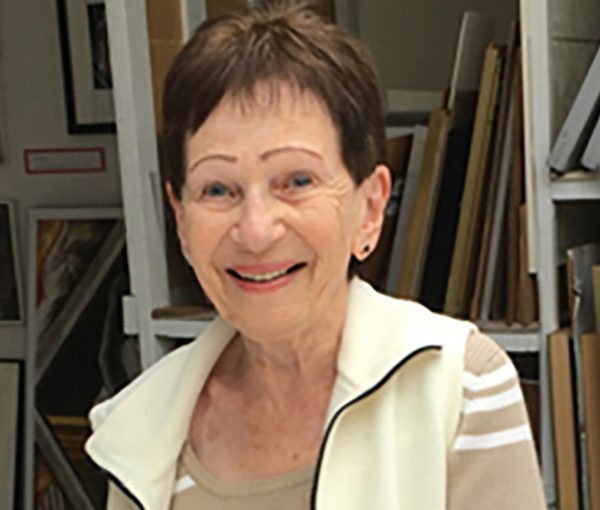
This year’s West of Main Art Walk will be event founder Pnina Granirer’s last open studio. (photo from Pnina Granirer)

In European cities such as Paris, art has been blooming for centuries and is an essential component of life and culture. Unfortunately, in the relatively young city of Vancouver, art was barely noticed in the early ’90s.

While living in Paris in 1992, I discovered an amazing number of galleries and museums and spent every free moment gorging myself on a wealth of art. One of the most exciting happenings occurred in the spring, when an unusual event burst onto the city: Le Génie de la Bastille. All around the arrondissement (neighbourhood) of the Bastille, hundreds of artists opened their studios to the public for an entire week. A large exhibition at the City Hall was launched and maps were handed out to the public, showing the location of each studio. Every day, map in hand, I would go up and down the ubiquitous five-floor buildings in the area, soaking in the opportunity of seeing the great variety of works and talking to the artists.

Too soon, I was back in Vancouver, still thinking with much pleasure about that wonderful week in Paris. Getting together with my artist friend, Anne Adams, who passed away in 2007, I described to her the exciting days spent visiting the artists’ studios in the City of Lights, when a sudden thought occurred to me. Anne, I said, what if we tried doing this here? Are any artists living in our neighbourhood, who might be interested?

Anne was as excited at the idea as I was, and we approached the now-defunct local Courier newspaper, which was very supportive and published an article with a call to artists. We did not have to wait long for the telephone to start ringing. To our delight, we discovered a good number of artists living in Point Grey, Kitsilano and Dunbar/Kerrisdale who wanted to participate.

A small group of us got together to plan the event. We needed a venue to have an opening exhibition, followed by a weekend when the artists would open their studios and their homes to the public. This had never been done before in Vancouver!

The West Point Grey Community Centre at Aberthau offered its space and the first exhibition opened in 1993. Word spread like wildfire. We were inundated with calls from artists who wanted to join. This will be too much for one weekend, I thought, let’s keep it small and limit the number of studios to no more than 20, so that everyone’s work could be seen.

I had the idea to hold the Art Walk over three weeks, one week for each neighbourhood. There was a lot of work to do, all of it voluntary. This was a time without the internet, so we used a “telephone tree” and the mail. Anne was an excellent organizer. I was quite idealistic at that time and suggested that we do not ask for any grants or taxpayers’ money, although donations from businesses and private donors were welcome. We would prove that artists had initiative and could do such an event by themselves – and it worked! We proved that artists were capable of contributing and enriching their communities by sharing their art and creativity.

We needed a name that would represent us. After sifting through many names, we decided to call ourselves Artists in our Midst, as we were all artists living in the midst of our community. By two years later, our idea had caught on and spread all over the city and the Lower Mainland, and we are all culturally richer for it.

Over the 30 years since we began, much has changed, including the name, which is now West of Main Art Walk. We are now back to only one weekend, but many new artists have joined us. Everyone is invited to visit us the last weekend in May, enjoy the art and perhaps take some home to live with.

As for myself, all of my works will be offered at 50% discount. And I will repeat last year’s idea of a fundraising sale to benefit Stand Up for Mental Health, founded by my son, David, the recipient of a Governor General Meritorious Service Medal. He teaches stand-up comedy to people with mental illness, as a way of building confidence and fighting public stigma and has been invited to work all across Canada, the United States and Australia.

This will be my last open studio and sale. Hope to see you!

West of Main Art Walk features more than 50 participating artists, including many Jewish community members, who invite visitors to their studios May 27-28, 11 a.m.-5 p.m. For the studio map and more information, visit artistsinourmidst.com.

Get ready to laugh it up

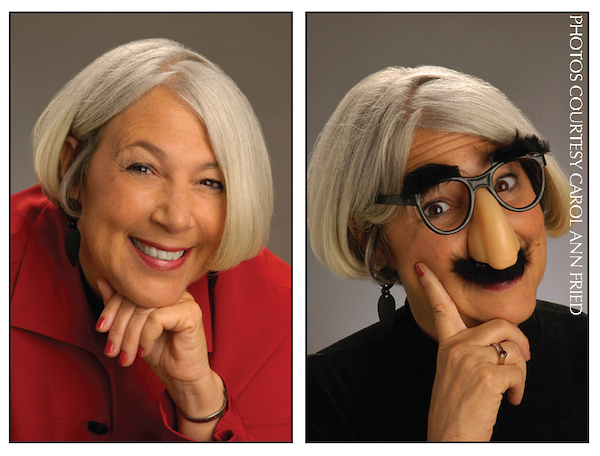
Carol Ann Fried as herself, and as Groucho Marx. Fried presents the program Laughing Matters at the May 28 Jewish Seniors Alliance Spring Forum. (photos from Carol Ann Fried)

Carol Ann Fried helps people find their “joy spot.” When she brings her interactive presentation to the Jewish Seniors Alliance Spring Forum May 28, she promises: “My goal is it’s going to be the most fun meeting they’ve ever attended.”

Fried is a Halifax-raised, Montreal-educated, Vancouver woman whose Friedom Training and Coaching Services include keynote speeches, workshops and meeting facilitation. She is also chief executive officer of Playfair Canada, which offers noncompetitive adult play experiences, especially to first-year students on Canadian campuses.

The joy spot is found in many ways, but it always involves connecting people with one another, she told the Independent.

“I do it by getting people to interact in creative and fun ways, toward some kind of end, if it’s a theme or team-building or fun at work or fun at home,” she said. “This can happen in various ways, but the way I do it is to get people up moving, usually, interacting with each other, talking with each other, doing some kind of activity.”

Typically, she does this with businesses, organizations and teams. In her program with the Jewish Seniors Alliance, laughter will be a core objective.

While members of the JSA may be longtime friends or acquaintances, Fried promises that, by attending her program, “They are going to get to know each other in new ways. They are going to make new connections, they are going to laugh. There will be laughter.”

After growing up in Halifax and studying at Dalhousie University, Fried got a master’s degree in counseling at McGill University in Montreal and eventually made her way west. She has served on the board of Or Shalom synagogue and is currently the chair of the membership committee.

If she has one piece of advice for people – attending her program or not – it is “Be courageous.”

That can mean something as simple as being willing to play.

“In our world, people somehow have the idea that play is for children and that we have to get serious when we get taller,” Fried said. “The idea of it is pooh-poohed by a lot of people. But my work is about getting them to do it before I tell them what they’re going to do.”

In corporate settings, she calls this “Managing to have fun.”

“I love jazzing up meetings,” she said.

Fried also has an affinity for doing programs with food.

“You can do a lot of things around food – Jewish people and food,” she said. “You can have a bag and in the bag are a variety of implements that are anything but cutlery. One of them could be the egg beater, the carrot peeler, a salt spoon, the things that you find in that drawer where you throw everything. People pull a ribbon and they have to eat their whole meal with that one thing. There are no forks, knives or spoons in there. It’s super-fun and it would be great for one of these family meals where you’re worried about how people are going to get along.”

Another idea is a “backwards meal” – spoiler alert: it’s eating dessert first.

“I really believe that shared laughter and play are essential to a healthy lifestyle,” said Fried. “When we are playful, all sorts of good things happen in our body, all those horrible hormones decrease and all the good ones increase. It affects morale, it affects creativity, all very positively. They’re going to experience each other in different ways than they otherwise would or that they are used to or that they have at other times.”

JSA’s Spring Forum takes place May 28, 2 p.m., at the Peretz Centre. Fried’s program is titled Laughing Matters. Call 604-732-1555 or email office@jsalliance.org for more information.

Supporting Beth Israel’s light

Standup comedian Cory Lupovic will perform at Congregation Beth Israel’s gala next month. (photo by Joan Ullyett)

Congregation Beth Israel’s Be the Light Gala Presented by Gerry & Ruby Gales & Family takes place June 4.

The fundraising event features the Candlelight Experience – the synagogue will be lit by hundreds of candles and a string quartet will perform songs by ABBA and Queen. The night’s emcee will be Dr. Erik Swartz, comedian Cory Lupovici will perform and Howard Blank will serve as auctioneer.

The “Be the Light” theme was inspired by the concept of people either being a light to Beth Israel and the Jewish community or how the synagogue has been a light to those in need.

“It gives us light and hope,” said Gerry Gales about why the family donated to the synagogue. “The work the Beth Israel does for the community is essential and must be supported,” he said.

Formerly known as Friends of Beth Israel, the newly redesigned and revamped event will include a mix-and-mingle cocktail reception for major donors followed by the concert (compliments of Beth Israel), dinner and entertainment. It is being planned under the leadership of Beth Israel’s new director of development, Jacci Sandler.

Swartz, the emcee, is head of pediatrics for Richmond Hospital, Vancouver Coastal Health and Providence Health Care, and is a clinical associate professor of pediatrics at the University of British Columbia. Born and raised here, Swartz graduated from Vancouver Talmud Torah and attended medical school at UBC. After years studying and practising elsewhere in Canada and abroad, he and his family returned to the city in 2008, and have been members of BI ever since.

Lupovici is a Chinese-Jewish comedian based in Vancouver – he spent his childhood summers at Camp Hatikvah and is a King David High School alumnus. Lupovici describes himself as an observational comic, in that he observes his parents and makes fun of them to strangers. His jokes mainly stem from his unique background and are a mix of personal anecdotes and silly everyday observations. With a Montreal Jewish father and a Hong Kong Chinese mother, the well of humour and rare perspectives is deep.

Rounding out the event’s main performers is Blank, chief executive officer of Point Blank Entertainment Ltd. Over the past 25 years, Blank has helped raise more than one billion dollars for organizations across North America, and his auctioneering is something to behold. He has received many accolades and awards and is recipient of the Queen’s Jubilee Medal, the British Columbia Community Achievement Medal and the Order of Canada Sovereign’s Medal for volunteerism. In 2021, he was featured in Business in Vancouver’s BIV 500 as one of the top executives in the province.

Funds raised from the gala will help ensure that the synagogue continues providing programming and services to the community. Attendance at BI for morning and evening minyan, as well as for various programs, is back to pre-pandemic numbers – this isn’t the case at most Conservative synagogues in North America. Most recently, BI had more than 800 people in attendance for its Purim programs and well over 350 people for its Passover seders.

Tickets for the June 4 gala can be purchased until May 19 at bethelightgala.com.

– Courtesy Beth Israel

Na’amat to gather in Calgary

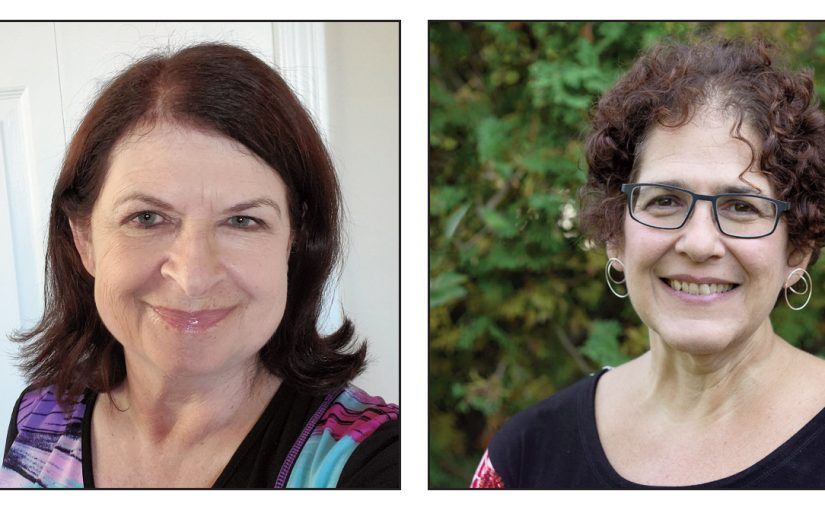
This fall, Susan Inhaber, left, will take over the presidency of Na’amat Canada from Dr. Sandi Seigel. (photos from Na’amat Canada)

Na’amat Canada’s 20th Triennial Convention takes place Oct. 13-15 at the Hilton Garden Inn in Calgary. The event will include a thank you to outgoing president Dr. Sandi Seigel of Hamilton, Ont., and it will welcome new president Susan Inhaber from Calgary, Alta. Inhaber will be the first national president from Western Canada since 1975.

Inhaber became a member of Na’amat Canada Calgary in 2000. “In short order,” she said, “I was president of a new chapter and, a few years later, I became the president of an amalgamated chapter. I served in that role for many years, immersing myself in all of the projects and programs that our group was involved with, including being the bingo chair, casino chair and grocery store gift card chair. My involvement in all activities continues to this day.  As city president, I was a member of the national board, later becoming a member at large and, lastly, the vice-president of Na’amat Canada.”

Inhaber has been to Israel several times with Na’amat. “Everyone who goes always comes back with a renewed sense of energy for the organization,” she said. “We can see the impact that we are making in the lives of others and that is what drives my passion for Na’amat. My next trip will be as the leader of our newest leadership cohort.”

Delegates from across Canada and guests from Israel and the United States will attend the fall convention, and special guests will include Hagit Pe’er, president of Na’amat Israel, and Shirli Shavit, director of the overseas division of Na’amat Israel. There will be speakers on the topics of antisemitism, human rights, breaking the glass ceiling, and more.

“It has been a privilege serving as Na’amat Canada national president since 2020,” said Seigel. “I am most proud that we have supported our organization throughout the pandemic and not only have we survived but thrived. We have built on our relationships with our chaverot internationally and in Israel and have had four successful fundraisers with Na’amat USA.”

Contributing to the success has been the quality of programming, both on Zoom and, more recently, back in-person, she said. “Despite many challenges, we have been able to transmit significant funds to support our work in Israel and continued to maintain important local projects such as our school supplies for kids program.”

Stepping down as president doesn’t mean leaving the organization. “I feel that I have lifelong friends at Na’amat, and it is wonderful to be united in the work that we do on behalf of Na’amat,” said Seigel. “As we near our convention in Calgary, I am excited for the future of our organization as we approach our 100th anniversary in 2025.”

For her upcoming three-year term, Inhaber said she is looking forward to continuing the relationship building that Seigel and, before her, Doris Wexler-Charow brought to the organization. “My main goal is to further grow our membership and donor base,” said Inhaber. “I hope to increase awareness of what Na’amat Canada does in Israel and Canada, especially among Western Canadians.”

For more information, contact Vivian Reisler at vivian.reisler@naamat.com. To register for the convention, visit naamat.com.

– Courtesy Na’amat Canada

Community artists highlighted

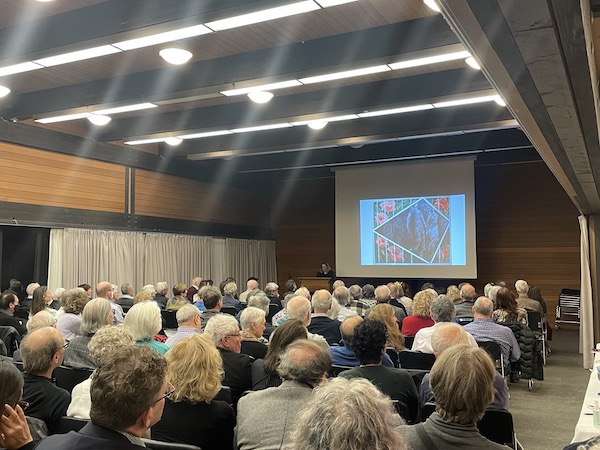
Guest speaker Marsha Lederman addresses the crowd at the launch of the 40th issue of The Scribe on April 19. (photo from JMABC)

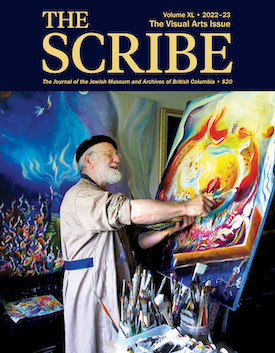
Last month, the Jewish Museum and Archives of British Columbia (JMABC) released its 40th issue of The Scribe, the organization’s mostly annual publication that chronicles various aspects of Jewish life in the province. This latest issue features 30 members of the local Jewish visual arts circle: painters, sculptors, mixed media artists, illustrators, textile artists, art educators, art consultants, an art curator and a gallery owner.

The official launch of the publication at VanDusen Botanical Garden’s Floral Hall on April 19 incorporated a silent auction of works donated by many of the artists highlighted in the issue. The items ranged from original paintings and sculptures to art books, sets of cards, and an art consultation.

The festive atmosphere buzzed, as people talked and laughed and greeted their friends. After the mixing and mingling, several speakers addressed the crowd. JMABC past president Carol Herbert acted as emcee, introducing current president Daniella Givon, the issue’s managing editor Carol Crenna and the keynote presenter, Marsha Lederman, who is Western arts correspondent for the Globe and Mail.

Givon gave an overview of the history of the JMABC, calling it the “community storage of history and memory.” She also talked about The Scribe and how it has evolved since its first issue.

Lederman’s address included a video presentation, as she concentrated on the theme of what makes Jewish artists Jewish, how their Jewish identity informs their art. The artists’ Jewishness is much more than the tragedy of the Holocaust, she said. There is a place in Jewish art for humour and family, for traditions and ecology. Lederman didn’t mention every artist featured but she mentioned as many as she could, given the time constraints, and her delivery was laced with admiration for the artists’ love of life, their creativity and their courage.

image - The Scribe 2023 coverCrenna, who was hired specifically to lead this issue of The Scribe, talked about her excitement when she received the offer. “I’m not Jewish,” she said, “but so many Jewish people affected my life. I worked in businesses owned by Jews. I ate at Jewish restaurants. I wore clothing designed by Jewish designers.” She spoke about the stories in the magazine, which inspired her. She also said a few words about the visual aspect – the multiple colourful illustrations that made the publication an artistic creation of its own. And she introduced her graphic designer, Sonia Bishop.

“The Jewish artists in this magazine, and the ones we didn’t include – they are all fearless,” Crenna said. “They reinvent themselves again and again.… Their creativity has no limits.”

The magazine itself is a glossy, large format publication. Each of the 30 features inside is based on an interview with an artist, plus several colour illustrations of that artist’s works.

In her email interview with the Independent, Crenna said, “I was hired to complete this issue last June. Before, [Jewish Independent] publisher Cynthia Ramsay edited a number of previous issues on a volunteer basis, but this was the first time that the JMABC hired an editor to create one of its publications. The job was advertised, and I was hired due to my experience and the vision I had for The Scribe.”

Crenna has been a journalist for 39 years, including nine years as a columnist for the Vancouver Sun. “I have been an editor of nine magazines varying in subject matter. I have been the managing editor of the national visual art magazine Art Avenue for the Federation of Canadian Artists for seven years. I am also an artist. It was my wish to create a visually beautiful, more contemporary and more reader-friendly version of The Scribe…. I was very inspired by the incredible stories I read in the previous issues.”

She also said she wanted to make the magazine more accessible to a wider audience, not just Jews, and ruminated about the selection process – how the editorial team chose 30 artists from the much larger artistic community. Every issue, the team must narrow its subjects down to fit the constraints of a finite publication.

“An artist subcommittee was formed in the year prior to the beginning of work on this issue, before I was hired,” said Crenna. “This committee compiled a list of approximately 70 established B.C. artists or those that are emerging…. All are professionals. All have sold their works and have had exhibitions. To reduce the numbers, since 30 is the average number of individuals featured in every issue of The Scribe, it was decided that photographers would be excluded. They will have their own issue.… Some artists opted out, as well. Also, it was decided that the publication should include others within the artistic community…. Therefore, art consultants, a curator, an art educator and a gallery owner were also included in the visual arts issue. After much consideration, only living artists were included, since there are no archival interviews with those who are deceased.”

Crenna explained how the interview process worked. All of the participants were interviewed for this issue in 2022, she said. “These interviews – either on Zoom or in-person – were conducted by JMABC volunteers within the offices, where recording equipment is of high quality, so the future generations would be able to listen to them. The interviewers included Helen Aqua, Carol Herbert, Brynn Gillies, Perry Seidelman, Daniella Givon, Pam Wolfman and Bill Gruenthal. The 30 interviews lasted from one hour to two-and-a-half hours and were from 6,000 to 19,000 words. Afterwards, JMABC interns transcribed the recordings. Then I edited the information and wrote the features, which were then approved by the interviewees.”

Crenna organized with each artist to send her six high-resolution images of their artwork – in different styles/themes for variety – and headshots of them working on their art.

To purchase an issue of The Scribe or find out more about the JMABC, visit jewishmuseum.ca.

Olga Livshin is a Vancouver freelance writer. She can be reached at olgagodim@gmail.com.

KDHS hits all the right notes

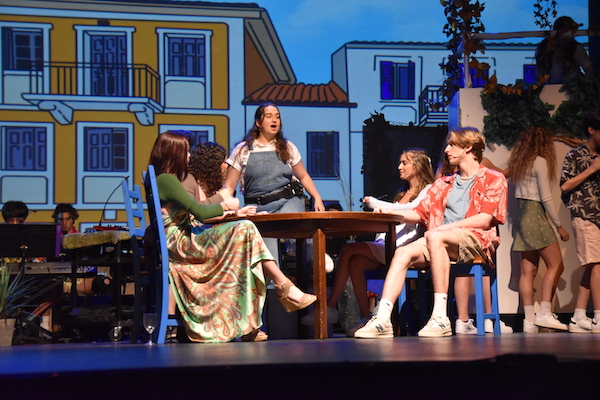
Rachel Gerber, playing Donna Sheridan, performing “Money, Money, Money” in King David High School’s production of Mamma Mia! (photo from KDHS)

High school theatre programs have the power to unite a student body. At King David High School, community values are inseparable from the student experience, and their recent production of Mamma Mia! May 3-4 was a captivating demonstration of exactly that.

Mamma Mia! follows a young bride’s search for her birth father, leading her to invite three of her mother’s former lovers to her wedding. It is a tale of love, friendship and family, told through the beloved hits of the iconic ABBA. I was lucky enough to see the King David High School production of the show on its sold-out closing night May 4. The audience was brought to its feet by the final song, “Waterloo.”

Staging a musical such as Mamma Mia! requires teamwork and camaraderie. The show largely relies on its ensemble and King David’s ensemble and principal actors seamlessly collaborated in their singing, dancing and acting. Several of the actors agreed that the most meaningful part of the process was the cast coming together over the course of rehearsals and the performances.

The cast featured students from grades 8 to 12. The on-stage band, led by Johnny Seguin, was professional and impressive, providing a soulful and steady backbone for the actors. With an electric musical score, a heart-warming plot and countless laughs, any theatre’s take on Mamma Mia! is sure to delight its audience, and this production was no exception.

The graduating seniors of King David claimed the stage in roles that showcased their respective talents. The curtains rose as Kailey Bressler, playing Sophie Sheridan, enchanted the audience with an angelic rendition of “I Have a Dream.” Bressler – who, full disclosure, is my sister – portrayed Sophie with a balance of sweetness and confidence, accompanied by her breathtaking voice. While I did not see Mhairi Hemingson’s portrayal of Sophie the day before, she earned herself rave reviews – I heard she gave a genuine and graceful performance.

The introduction of Sophie’s mother, Donna Sheridan, and the Dynamos sent laughter and excitement throughout the audience. Nikki Wiseman brought energy and humour to the character of Rosie, skilfully counterbalanced by Kiera Katz’s poised and classy portrayal of Tanya. Both Wiseman and Katz said that a memorable part of the rehearsal period was developing the dynamic between their characters, and their efforts paid off, eliciting roaring laughter with each interaction. Completing the trio was Rachel Gerber’s portrayal of the matriarch, Donna. Gerber’s performance emanated confidence, energy and depth, bringing some to tears with her rendition of “The Winner Takes It All.”

The leading male characters of the show – Sophie’s three possible dads – also delivered heartfelt and vibrant performances. Shai Rubin’s Sam was dignified and upbeat. Ori Haber, who played Harry, shared that his favourite part of rehearsals was crafting the intricate interactions among the dads, who happen to be his real-life best friends. The actors’ friendship translated on stage, especially with the masterful comedic timing of Yair Cohen, playing Bill. Another standout was Jesse Millman’s exuberant stage presence as Sophie’s fiancé, Sky.

As King David prepares to send off its graduating class, Mamma Mia! proved to be the ideal narrative for its seniors. The story captures the journey of navigating unique paths while having the comfort of community to fall back on. It is about growing up and self-acceptance in an ever-changing world. Gerber and Bressler’s rendition of “Slipping Through My Fingers” perfectly captured the emotional core of the story – it was an emotional moment for the families of the graduating class, as well.

With their talent and joy, this remarkable cast and crew made Mamma Mia! a pleasure to watch, and a beautiful testament to the strength of King David’s community.

Alisa Bressler is a fourth-year student at Queen’s University in Kingston, Ont. She is an avid reader and writer, and the online director of the arts and culture publication MUSE Magazine. Bressler is a member of the Vancouver Jewish community, and the inaugural Baila Lazarus Jewish Journalism Intern.

Giving back to their community

Lucy Samuel, left, and Tori Segal, co-chairs of the Jewish Federation of Greater Vancouver’s Ben Gurion Society. (photos from BGS)

“Both of us were BGS members before becoming co-chairs. We are so grateful for the leadership opportunities that BGS has given us,” said Tori Segal (née Simons), who co-chairs the Ben Gurion Society with Lucy Samuel (née Adirim). “We recognize that the Jewish community of Greater Vancouver made us the leaders we are today, and so we jumped at the chance to give back.

“We were shaped by this community,” Segal continued. “Through BGS, we have connected with like-minded young adults, donated to Jewish Federation in support of our community, and been afforded special opportunities for us all to learn from leaders spanning multiple fields in our community.”

The Ben Gurion Society is Jewish Federation of Greater Vancouver’s national donor recognition program for young professionals ages 25-45, who support the community through the Federation’s annual campaign with a gift of $1,000 or more.

BGS offers its members a range of possibilities, from private speaking events and social cocktail hours with donors and community leaders, to professional development and leadership opportunities. Recently, for example, BGS members listened to presentations from David Shore, the executive producer of The Good Doctor and House, and Lillian Boraks-Nemetz, the author of Mouth of Truth and Out of the Dark, among several other titles. Later in the spring, they will hear from Anat Yahalom, an advocate in Israel for those with disabilities, and other local Jewish leaders.

Additionally, BGS offers members a chance to gain a better understanding of community needs from the Jewish Federation’s many partner agencies, which are based both locally and in Israel.

“New members are typically found by word of mouth or through our campaign volunteer canvassers,” Samuel explained. “We invite community members in the BGS age range (25-45) to events we hold for both BGS and non-BGS members, so that they can experience our programming and learn about our philanthropic mission, the types of events we hold and how they can join if they are interested.”

Samuel, who was born and raised in Vancouver, learned the importance of engaging with her Jewish values at a young age – at Vancouver Talmud Torah, King David High School and Camp Hatikvah. She enrolled at McGill University and studied cognitive science. Throughout her time in Montreal, she was involved in both Hillel and Chabad. She was also a long-term chair of Save a Child’s Heart McGill.

After graduating in 2016, Samuel became a realtor and started working with her father at the family business. Upon returning to her hometown, she joined Axis, where she met her husband.

Axis is a network of Jews in their 20s and 30s whose stated aim is to build a vibrant young Jewish community in Metro Vancouver.

“In addition to my time on the Axis board, I recently helped start a new chapter of Canadian Hadassah-WIZO, the BVLGARI chapter,” Samuel said. “I am looking forward to continuing to grow and expand the wealth of opportunities available to young adults in the Vancouver Jewish community.”

Segal, too, is a native Vancouverite and has enjoyed being brought up immersed in the local Jewish community. She also attended VTT and KDHS, where, she said, she “learned about community values and history.”

An alumna of McGill University as well, she, like Samuel, continued her involvement there in the Jewish community through the school’s Chabad and Hillel organizations. She graduated from McGill with a degree in dietetics, and works as a registered dietitian at Vancouver General Hospital in cardiology and cardiac surgery. Alongside that work, Segal is a clinical instructor at the University of British Columbia, supervising and teaching dietetics students in their hospital placements. Further, she is currently completing a postgraduate program in healthcare safety, quality, informatics and leadership through Harvard University.

“I joined the Ben Gurion Society upon its restart at the Jewish Federation of Greater Vancouver and have recently taken on co-chairing the society with Lucy. I married Dylan Segal in August 2022 and am looking forward to building a Jewish home and supporting others in doing the same. I am excited to join the Federation board and support initiatives that help create the Greater Vancouver Jewish community,” Segal told the Independent.

Over their two-year term, both Samuel and Segal said they will continue to seek out new members to help support the community, and engage existing members through a broad range of events.

For more information, visit jewishvancouver.com/bgs.

Sam Margolis has written for the Globe and Mail, the National Post, UPI and MSNBC.