September 2016, Jerusalem. At the funeral of former president and prime minister Shimon Peres, U.S. President Barack Obama offers a tissue to Peres’ son Chemi. (all photos from Ashernet)
In reviewing the Jewish year 5777, one name stands out – Binyamin Netanyahu. Despite having to fend off accusations of various wrongdoings at home, the Israeli prime minister has had a successful diplomatic year.
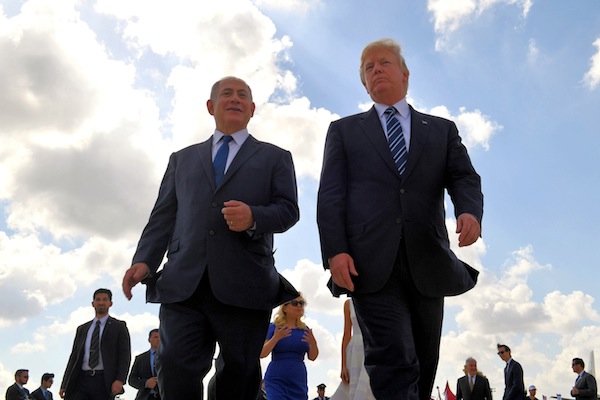
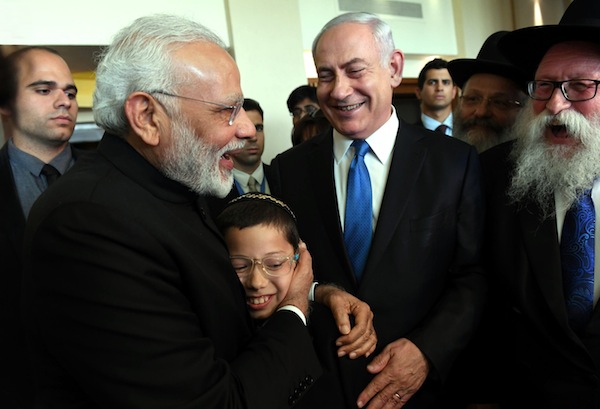
This year, Israel welcomed U.S. President Donald Trump and India’s Prime Minister Narendra Modi. Modi’s visit marked the first time since the foundation of the state of Israel that a sitting Indian prime minister had visited. Meanwhile, Netanyahu was warmly received by China in March and, a month prior to that, by Australia. Closer to home, he established good relations with Greece and Cyprus.
In September 2016, Israel bade a final farewell to former president and prime minister Shimon Peres. His funeral was attended by many sitting and former heads of state, including former U.S. presidents Barack Obama and Bill Clinton.
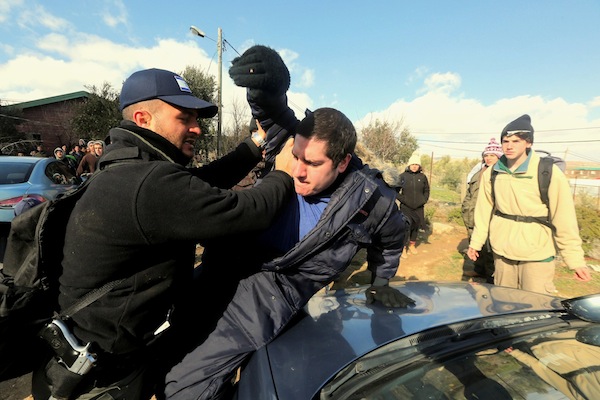
Last December, the Israel Air Force received its first F-35 fighter plane from the United States. In January, settlers in the West Bank outpost of Amona fought with police following a court order that declared Amona an illegal Jewish settlement.
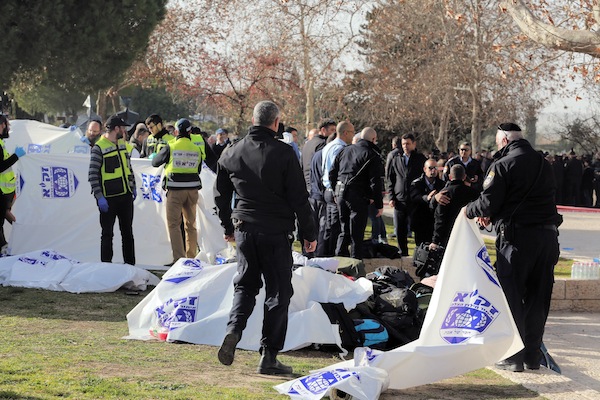
On Jan. 8, four people were killed when a released Arab prisoner ran a truck into a group of people on the Armon Hanatziv Promenade in Jerusalem. This act of murder was referred to as the “truck intifada.” In Gaza, Hamas activists handed out sweets in celebration. This method of terror was soon to be repeated many times in countries all over the world.
At regular intervals during the year, announcements were made concerning important archeological finds all over Israel. Israeli law states that the Israel Antiquities Authority must be notified as soon as there is indication of archeological remains and that, only after specialist examination and, if necessary, excavation, can the development proceed.
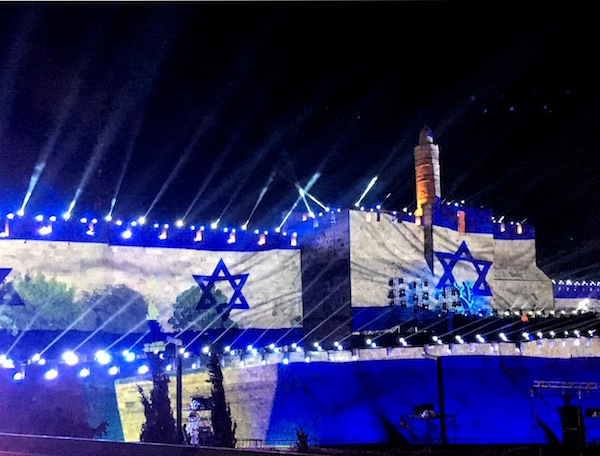
The year also saw the celebration of the 50th year since the reunification of Jerusalem in the Six Day War ( June 1967).
It has been an outstanding year for Israel’s high-tech sector. In particular, 2017 saw the largest business deal in Israel’s history when Mobileye was bought by Intel for some $15 billion.
The Jewish year ended with a bit of confusion, as the region once again became unsettled as Iran attempts to get a stronger foothold in Syria, along with their continued efforts to arm Hezbollah.
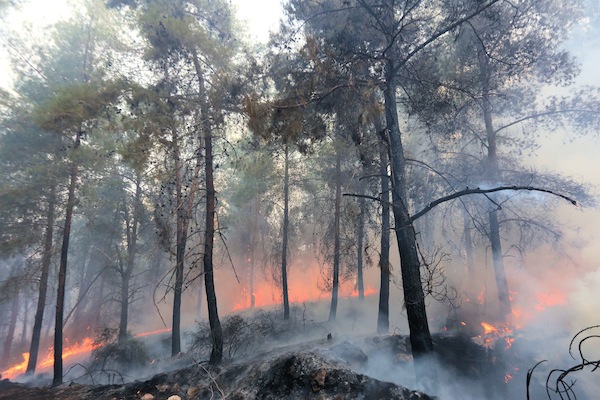
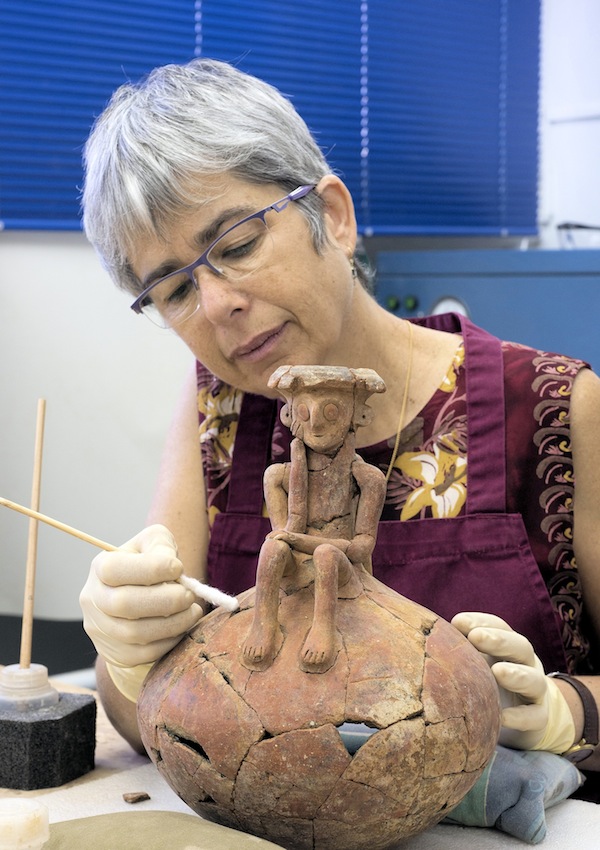
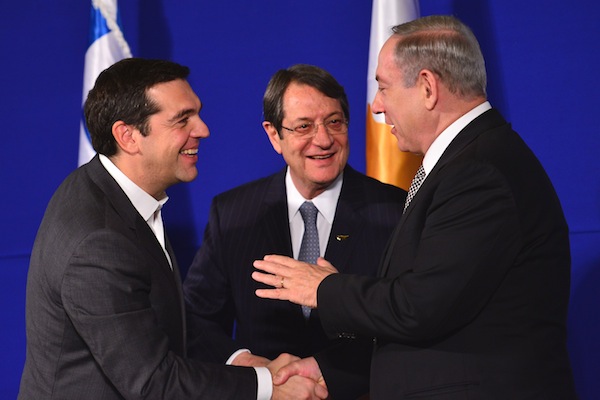
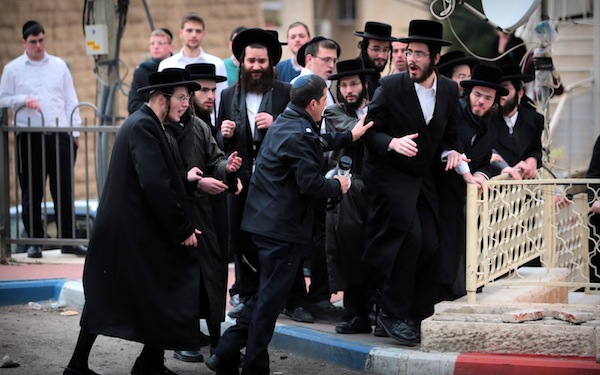
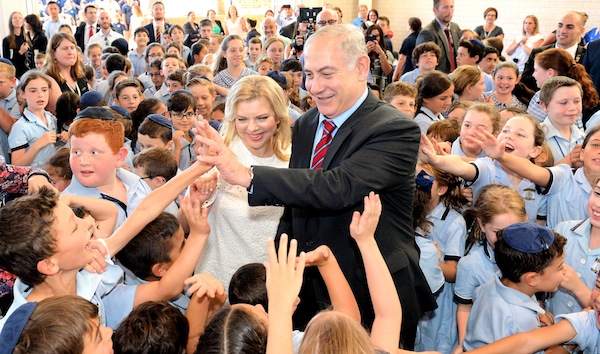
November 2016. A serious fire breaks out near Latrun in the Jerusalem corridor following yet another dry, hot summer. Some 140 firefighters are needed to bring the blaze under control.November 2016. A high school student taking part in an organized excavation in Yehud, near Ben-Gurion International Airport, finds a 3,800-year-old jug from the Middle Bronze Age, seen here during its restoration.December 2016, Jerusalem. Left to right: Greek Prime Minister Alexis Tsipras, Cypriot President Nicos Anastasiades and Israeli Prime Minister Binyamin Netanyahu hold historic tripartite talks to improve cooperation between the three eastern Mediterranean countries.December 2016. The first of 50 F-35 stealth fighters arrive in the Israel Air Force base in Nevatim. The IAF was the first air force outside the United States to receive this state-of-the-art fighter plane.January 2017. Four pedestrians are murdered in Jerusalem’s East Talpiot neighbourhood by a truck driven at speed; 13 others are injured. The terrorist is shot dead by police.February 2017. Following a High Court ruling, the illegal Jewish settlement of Amona, 20 kilometres north of Jerusalem, is forcibly evacuated by police and security forces. The court ruled that the settlement had been established on Palestinian-owned land.February 2017. Some ultra-Orthodox riot over government insistence that all able-bodied young men be drafted into the army. While heads of many Charedi yeshivot have encouraged their students not to report to induction centres, there are many Israel Defence Force units that have ultra-Orthodox soldiers in their ranks.February 2017. Binyamin Netanyahu is the first incumbent Israeli prime minister to officially visit Australia. The picture shows Netanyahu and his wife Sara at the Sydney Jewish School of Moriah.March 2017. Prime Minister Binyamin Netanyahu with Chinese President Xi Jinping. Netanyahu, together with a business delegation, made the visit to China to expand trade between the two countries.March 2017. Mobileye is bought by Intel, but the headquarters of the company will remain in Jerusalem. Left to right are Amnon Shashua, Eli Cohen, Prime Minister Binyamin Netanyahu, Brian Krzanich and Ziv Aviram.May 23, 2017. U.S. President Donald Trump, seen here with Prime Minister Binyamin Netanyahu, made Israel one of the first overseas countries he visited since becoming president.May 2017. On May 20, Jerusalem was illuminated to celebrate the 50th year of the city’s reunification following the Six Day War.July 2017. Indian Prime Minister Narendra Modi, left, becomes the first sitting Indian prime minister to officially visit Israel. Accompanied by Prime Minister Binyamin Netanyahu, Modi meets with Moshe Holtzberg, 10, who survived the terrorist attack that killed Moshe’s parents and seven others at Mumbai’s Chabad House in November 2008.
David Icke spoke in Vancouver earlier this month at the Orpheum. (photo by Tyler Merbler via cjnews.com)
David Icke – a controversial conspiracy theorist, antisemite and Holocaust denier – spoke in Vancouver at the Orpheum on Sept. 2, despite the city’s civic theatres board’s recommendation to Mayor Gregor Robertson and city council that Icke’s booking be canceled.
In a statement quoted in the Vancouver Sun, the city said that under the Charter of Rights and Freedoms, “the city is not in a position to take action intended to censor speech that is otherwise permissible under Canadian law.”
Icke is a British author and speaker known for his bizarre views. A former football player and sports broadcaster for the BBC, Icke was once also a spokesperson for the U.K. Green Party. All that changed in 1990, when, by his own account, a psychic told him that he had a special mission on earth and would soon begin receiving messages from the spirit world. The following year, he announced on primetime British television that he was “the son of godhead” (also a title of Jesus Christ’s) and predicted global natural disasters to come.
Over the next several years, Icke developed his worldview, which has been called “new age conspiracism.” He described himself as “a full-time investigator into who and what are really controlling the world.” In his 1994 book The Robots Rebellion, he answered the question by singling out Jews. But, he also argued that the really major players in world dominion were an ancient order of shapeshifting, blood-drinking reptilian humanoids called the Babylonian Brotherhood. Their goal, according to Icke, is the creation of a neo-fascist global state, known as the New World Order.
When Icke added Holocaust denial to his worldview in his 1995 book And the Truth Shall Set You Free, his publisher felt he had crossed a line. As a result, that book, and Icke’s subsequent works, were published at his own expense.
Icke combines familiar New Age philosophies with conspiracy theories about public figures being reptilian humanoids and pedophiles. He believes in reincarnation, a collective consciousness that has intentionality and the “law of attraction” (that good and bad thoughts can attract like experiences).
According to a report by Political Research Associates – an American nonprofit research group that studies white supremacist groups and militias – Icke’s ideas are “a mishmash of most of the dominant themes of contemporary neofascism, mixed in with a smattering of topics culled from the U.S. militia movement.” The same report details the support that Icke has gotten from far-right and neo-Nazi groups, including the violent U.K. group Combat 18, which was linked to bombings of minority neighbourhoods in London.
Aiden Fishman of B’nai Brith Canada described Icke’s views as “classic antisemitic ideas” and said the booking should never have been allowed. “It’s totally, totally incompatible with the city of Vancouver’s role as an open and tolerant multicultural municipality to allow Mr. Icke to speak at a city-owned facility after we’ve brought all these concerns to their attention,” Fishman told CBC News.
“You are free to be a racist in Canada, you are free to say so and tell others that they should be, too,” Micheal Vonn, policy director of the B.C. Civil Liberties Association, told the CJN. “But this is not just about Mr. Icke’s rights. Everyone who comes to see him has their Charter rights involved, as well. The government should not be in a position to prevent you from hearing what you would like to hear.”
To those who say that the talk should not have been held at a city-owned venue, Vonn said: “The city does not support this, the city is neutral with regards to the content. Can you imagine if the city could pick and choose who among the public they allowed to make use of the venue? They can’t be cherry-picking what members of the public get that benefit. The city can’t be saying this is available only to people that we like. It is, as it should be, available to all members of the public involved in lawful activity.”
To be unlawful, Icke’s speech would have to constitute criminal hate speech, which has a high burden of proof in Canada. “He would need to be intentionally and explicitly inciting harm,” said Vonn.
An admittedly unscientific Vancouver Sun poll asking whether the event should be canceled, showed that most readers supported Icke’s right to free speech, with more than 81% of respondents saying the show should go on.
Despite significant coverage of the event leading up to the talk, Icke’s lecture, which he claimed would last 10 hours, apparently failed to attract a media presence. Nor have there been any allegations of criminal hate speech.
Matthew Gindinis a freelance journalist, writer and lecturer. He writes regularly for the Forward and All That Is Interesting, and has been published in Religion Dispatches, Situate Magazine, Tikkun and elsewhere. He can be found on Medium and Twitter. A longer version of this article was originally published by CJN.
המשנה לנגיד הבנק המרכזי של קנדה, ד”ר נדין בודו-טרכטנברג חלקה שבחים רבים למדינת ישראל, על שהצליחה להשיג את יעדי האינפלציה הרצויים החל משנות התשעים. דבריה של ד”ר בודו-טרכטנברג נאמרו במסגרת הרצאה לפני מספר ימים בכנס של הבנק המרכזי הקנדי, שעסק במדיניות המונטרית והכלים של המדיניות השונים להשגת המטרות שלה.
חלק מרכזי בהרצאתה של המשנה לנגיד עסק בהתפתחויות העיקריות ובאתגרים השונים, בהשגת יעדי האינפלציה בישראל בשנים האחרונות. לדבריה המשק הישראלי חווה בשנים האחרונות צמיחה כלכלית יציבה, עלייה בשכר, התחזקות המטבע המקומי (השקל) מול הדולר האמריקני ושאר המטבעות הבולטים, וכן שמירה על רמת אינפלציה נמוכה שלא רק שהיא מתחת ליעד שנקבע, אלא אף מצויה בתחום השלילי מזה כשלוש שנים.
ישראל חוותה עשור של היפר-אינפלציה בשנות השבעים וכן בתחילת שנות השמונים. ולאחר מכן עשור של מדיניות דיסאינפלציה שהתמקדה בחתירה לקצב של אינפלציה ההולך ופוחת. מאז שנת 2003 יעד האינפלציה של ישראל הוא בתחום שבין אחוז לשלושה אחוזים. למרות שרמת האינפלציה בהסתכלות אחורה על השנה האחרונה חרגה לפעמים מהטווח הזה, הסטייה נרשמה בעיקר בתקופות קצרות כתוצאה מתנודות בשערי החליפין. לפני כשלוש שנים חל שינוי משמעותי כאשר מאז נמצאת האינפלציה באופן עקבי, מתחת ליעד. עם זאת יש לציין, כי הציפיות לאינפלציה לטווחים הבינוניים הארוכים ממשיכות להיות מעוגנות היטב בתוך רצועת היעד, ובכך משקפות את אמון השוק במדיניות המונטרית של בנק ישראל.
חשיבות השמירה על יציבות המחירים בישראל קיבלה מישנה תוקף עם חקיקת חוק בנק ישראל החדש (בשנת 2010), שקבע כי תפקידו הראשון במעלה והחשוב ביותר של המוסד הוא לשמור על יציבות המחירים בשוק, ובמקביל לתמוך בצמיחה כלכלית וביציבות הפיננסית של המשק הישראלי. החוק החדש מאפשר להנהלת הבנק פרק זמן של שנה להחזיר את האינפלציה לרמת היעד, מה שנראה בזמן שהוא חוקק על ידי הכנסת – פרק זמן סביר. כך שיתאפשר לבנק המרכזי להכיל זעזועים זמניים, וכן גם אירועים חד-פעמיים שצפויים להסיט את האינפלציה מהיעד לזמן קצר.
לדברי המשנה לנגיד הבנק המרכזי של קנדה בשנים האחרונות בזמן שרבות מהמדינות ששותפות בסחר עם ישראל עמדו בפני משבר פיננסי חמור, וכלכלתן דישדשה, הכלכלה של מדינת ישראל צמחה בהתמדה, וכעת היא קרובה לשיעורה הפוטנציאלי, תוך שהיא נתמכת בעלייה מתמשכת בשיעור ההשתתפות בכוח העבודה, במיוחד של הנשים הישראליות, צמיחה בשיעור התעסוקה בכלל ענפי המשק, וכן בעלייה בשכר הריאלי והנומינלי, שאיפשרו התרחבות של הצריכה הפרטית. כמובן שהנתונים שמציגים תמונה זו לא התקבלו באופן רציף, ומלבד נתוני שוק העבודה שהיו חזקים באופן קבוע, חזינו בתנודתיות רבה של הנתונים, כולל אף תיקונים משמעותיים בנתוני החשבונות הלאומיים-הרבעוניים.
למרות העודף המובהק בחשבון השוטף, המשק הישראלי התמודד עם ביצועי החסר של מגזר היצוא. ההאטה ביצוא נבעה בין היתר מההאטה הכללית בסחר העולמי. יש לציין כי השקל הישראלי המשיך להתחזק, מעבר למה שהוערך בתחילה, דבר המשקף את ההתאמה הנורמלית לביצועים הטובים יחסית של המשק הישראלי.
ד”ר בודו-טרכטנברג מוסיפה עוד כי בישראל רמת האבטלה נמצאת ברמה הנמוכה ביותר מאז הקמת המדינה, ובמקביל השכר עולה בזמן שהאינפלציה נשארת ברמה נמוכה. בישראל גברה המודעות למחירים הגבוהים וגברה התחרות בתחום הקמעונאי, בעיקר עם התגברות השימוש באינטרנט. כיוון שרמת המחירים במדינה גבוהה היא מותירה מקום רב יותר להפחתת מחירים, שמקורה בתחרות המוגברת.
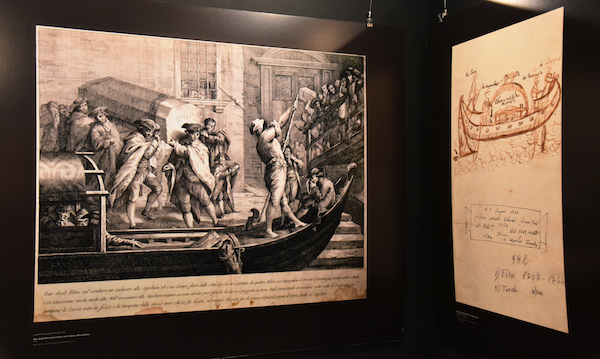
A page of the digital interactive installation of the domestic space of the Jewish ghetto, which was created by camerAnebbia. Part of the exhibit Venetian Ghetto: A Virtual Reconstruction: 1516-2017, which is at the Italian Cultural Centre’s Il Museo until Oct. 30. (photo by Cynthia Ramsay)
The Venetian ghetto – a segregated enclave for Jews and the one from which the very name “ghetto” emerged – was created 500 years ago. An exhibit at Vancouver’s Italian Cultural Centre tells the history of the ghetto and is one of a number of local cultural events this year marking the half-millennium since the notorious decree.
The Venetian Ghetto: A Virtual Reconstruction: 1516-2017 opened at the centre’s Il Museo this summer. It is an abridged version of a larger exhibit showing concurrently at the Doge’s Palace in Venice, said the museum’s curator, Angela Clarke.
Clarke and Il Museo had wanted to do something around the topic of the ghetto in part because of a connection with a member of Vancouver’s Jewish community. When the late renowned University of British Columbia architecture professor Dr. Abraham Rogatnick passed away in 2009, he left his collection of Venetian books and other materials to the museum.
“A lot of the prints we have in the hallways are from his collection,” said Clarke. “Venice was his specialty.”
Rogatnick took his architecture classes to Venice and was also noted for turning his lectures into theatrical performances, accompanied by moody lighting and complementary background music. (After his retirement, he became immersed in Vancouver’s alternative theatrical scene, depicting, as he put it, “usually dying old men.”)
“We have, for a long time, wanted to do something in honour of Abraham Rogatnick,” said Clarke. When she discovered that the Doge’s Palace was planning an exhibit to mark the 500th anniversary, she contacted the institution. They agreed to reproduce a version of the exhibit tailored to Il Museo’s space.
It was the palace’s 16th-century resident, Lorenzo Loredan, the doge of the Republic of Venice from 1501 until his death in 1521, who determined that Jews should be segregated from the general Venetian population.
Although the origin of the term “ghetto” is disputed, many accept the view that it comes from the Venetian dialect’s word ghèto, foundry, which was the neighbourhood in which Jews were confined. Jews were allowed access to the city during the day, but were restricted to the ghetto at night. Space limitations in the ghetto led to upward expansion, including multi-storey homes and buildings, a unique architectural approach to that date.
“They built upwards to accommodate their family life and their businesses, so you got these very, very high staircases in buildings and they just built upwards,” Clarke said. “For the Jewish community, it’s all about going up stairs. I think a lot about the aging people in these families. What happened to them? What would an 80-year-old do? How would they negotiate that and go about their family life and business? And the stairs are incredibly steep. That was just their everyday life.”
The exhibit has four parts, including an interactive exploration of the ghetto’s synagogues through a virtual reconstruction. The architecture of the ghetto, the cemeteries and “the ghetto after the ghetto” – the fate of the area after Napoleon conquered Venice and emancipated the city’s Jews in 1797 – round out the exhibit.
The ghetto was remarkably multicultural, Clarke emphasized.
There were four main cultural groups that came to Venice, she said. “There were the Italian Jews, there were the German Jews, there were the Spanish Jews and then there were the [Levantine] Sephardic Jews, and they all came to Venice, so there were a number of synagogues and each synagogue was like a different cultural centre, based on your group, because each synagogue, of course, had schools. You have Hebrew but then your own cultural language. So the synagogues really did deal with a diverse group of people who came.”
Images of boats leading to the Jewish cemetery circa 1700s. Part of the Venetian Ghetto: A Virtual Reconstruction: 1516-2017 exhibit at Il Museo. (photo by Meghan Kinnarny)
Jews began gravitating to Venice as early as the 900s, with a surge in the 1300s and then again after the expulsion from Iberia.
The segregation of Jews was premised on economic concerns, said Clarke, with restrictions on professional activities that pushed the Jewish residents into dubious roles like moneylender. As in so many instances across European history, Jews were forced to wear differentiating articles of clothing; in Venice’s case, a red hat. The exhibit demonstrates the constancy of the compulsory topper while also depicting changing styles across centuries.
“The fashions change but the red hat stays the same,” Clarke says guiding visitors from one painting to another. “The woman over there, she’s very Renaissance. Over here, it’s the 1700s and he’s still wearing the red hat but the fashion has changed dramatically.”
Napoleon liberated the Jews, but he had somewhat bigoted notions of the city of Venice.
“He called it the drawing room of Europe, depicting Venice as this beautiful little elegant community,” Clarke said. “However, I’ve been reading Florence Nightingale and she [observes that] referring to something as a drawing room is a pejorative term. For a man to be in a drawing room is basically to say that he’s effeminate.
“When you look at it in that historical context – especially when you’re dealing with a megalomaniac who’s got basically size issues – it’s a veiled term,” she said, laughing.
The exhibit at Il Museo coincided with the Stones of Venice exhibit at the Jewish Community Centre of Greater Vancouver (profiled in the Independent Aug. 18) and performances of Merchant of Venice and Shylock as part of this year’s Bard on the Beach (reviewed July 21).
“It all just seemed to come together, which is very bizarre,” said Clarke. “It doesn’t often happen that way.”
The Venetian Ghetto: A Virtual Reconstruction: 1516-2017 continues until Oct. 30 at Il Museo in the Italian Cultural Centre of Vancouver, 3075 Slocan St. More information at italianculturalcentre.ca.
In The Mountain of SGaana, sea hunter Naa-Naa-Simgat is abducted by a killer whale and his lover, Kuuga Kuns, must try to save him. (image from National Film Board of Canada)
One of the highlights at this year’s Vancouver International Film Festival will be the animated short The Mountain of SGaana, presented by the National Film Board of Canada.
In The Mountain of SGaana, Haida filmmaker Christopher Auchter tells the tale of two lovers, sea hunter Naa-Naa-Simgat and Kuuga Kuns. When Naa-Naa-Simgat is abducted by a killer whale (SGanna, in Haida), Kuuga Kuns must negotiate a supernatural undersea world in order to save him. If she doesn’t succeed, they will both become part of the spirit world forever.
The film starts in the present-day, with a thoroughly modern fisherman, Skipper, ignoring all that is around him; his focus being solely on his cellphone, until a small mouse catches his attention and, literally, knits the supernatural tale. Auchter notes in an interview on the NFB website that SGaana also means “supernatural” in the Haida language.
“The Haida are an indigenous people whose island territories lie off the West Coast of Canada and in the southern regions of Alaska,” explains Auchter in the interview. “The modern name for the archipelago is Haida Gwaii, which best translates to “people’s island.” There was a time when the islands were called Xaadlaa gwaayee, which means ‘coming out of concealment,’ appropriately named for its location in the world’s largest remaining temperate rainforest.
“Haida Gwaii was formerly named the Queen Charlotte Islands, after the ship of a British explorer who landed there in 1787. The lands of the Haida nation were re-named in 2009.”
Auchter first read the story told in The Mountain of SGaana years ago in an anthology. In subsequent research, he encountered various versions of the tale, but all contained the same fundamental elements.
In addition to directing the 10-minute short, Auchter co-wrote the film with Annie Reid and the film’s vivid and magical animation was created by Auchter, Tara Barker, Marco Li and Sitji Chou. Jewish community member Michael Mann is listed as compositor, VFX and after-effects animator.
“Chris Auchter designed and created this beautiful world of The Mountain of SGaana, which had this beautiful Haida iconography and told a really wonderful story,” Mann said in a phone interview with the NFB. “What I did is, I took this 2-D animation and basically added lighting, camera moves and visual effects. Say, I get a flat image of water, I make it feel more watery and rippley.”
Mann also colour-graded the film. He explained that certain parts of it needed to look aged, as the film contrasts an older world with a more modern one. He said, “My reading of the story is, it’s a modern-day character [Skipper] who’s lost connection with his stories…. For a long time, they’re very separate and by the end they connect.”
And Mann also had to unite the characters that inhabit the different worlds. “One thing that’s really fun,” he said, “is playing with sunlight and darkness and rain. And all these mythical characters, how do you make them feel they’re all in the same world?”
He said, “I think of myself as a visual sandwich maker sometimes because, basically, someone gives me one layer of the sandwich and then I add all those other layers up to it so that it looks like it’s all one meal, like it’s all one world.”
Mann mostly worked on The Mountain of SGaana remotely from his studio on Salt Spring Island, but came to the NFB offices in Vancouver at the end for an intense 36-hour session with Auchter to finalize all the film’s effects.
Mann’s work as a visual storyteller – using animation, illustration and graphic design – has been featured in the opening ceremonies of the 2010 Winter Olympics in Vancouver, on Nickelodeon, on PBS, in advertising campaigns, in documentaries, in video games, at Ontario’s Stratford Festival, the list goes on.
“Whether working on documentaries, commercial projects, government initiatives or collaborations with other artists,” reads his bio, Mann “loves using creativity to translate cultural concepts to new audiences.”
And The Mountain of SGaana certainly communicates, if only in a small way, something about Haida culture.
“I used Haida art to help frame the action and highlight key moments in the story, and to give those important moments an exclamation mark,” explains Auchter in the online interview. “I also use the Haida art as symbolism: at the beginning of the film, the character of Skipper is surrounded by multiple frames featuring various scenes from his environment. He ignores what’s going on around him, and doesn’t engage with his world. These scenes that surround Skipper are framed with black lines. This works in contrast with the other more complex multi-panel Haida formline shots we see throughout the course of the film. Skipper doesn’t get this more complex visual treatment until later in the story when he actively begins to engage with the world around him. His biggest moment comes when he throws the rope to Kuuga Kuns and Naa-Naa-Simgat and pulls them in. This symbolizes that he is pulling his culture closer to him.”
The Mountain of SGaana won the Young Audiences 6-12 Official Competition at this year’s Ottawa International Animation Festival and was an official selection for ImagineNATIVE 2017 and the Vancouver International Film Festival. It screens at VIFF on Oct. 5, 9:15 p.m., and Oct. 12, 3:15 p.m., at International Village 8, as part of the Strangers in Strange Lands shorts program. For tickets and the full festival lineup, visit viff.org. The festival runs Sept. 28-Oct. 13.
Israeli Prime Minister Binyamin Netanyahu, left, with U.S. President Donald Trump in New York. (photo from Israel’s Government Press Office via Ashernet)
A great deal of diplomacy depends on intangibles like whether the parties involved like or dislike each other. Israeli Prime Minister Binyamin Netanyahu made little effort to hide his frustration with Barack Obama, the former U.S. president. The feeling was blatantly mutual, as even the most obtuse reader of body language could interpret from photographs of the two men together. Netanyahu and the current resident of the White House … this is whole new meeting of minds.
There are similarities and differences of style and substance between Bibi and Donald Trump. One thing worth noting is that each has their core of stalwart domestic supporters and another, possibly even more virulent, bloc of detesters.
Seeing the two leaders together in New York this week, present for the annual United Nations General Assembly, was a reminder of how big a role mutual affection or irritation between two leaders can affect international relations.
The Israeli prime minister engaged in a Trump-like tweetstorm Monday morning, including this one: “Under your leadership, @realDonaldTrump, the alliance between the United States and Israel has never been stronger.”
This may not be true – the relationship has always been extremely tight – but it is certainly true that the alliance between the two countries’ leaders is strong.
It’s always wise for Israeli leaders to seek good relations with the American president, but this particular relationship is double-edged. A recent poll indicated that 21% of American Jews view Trump favourably, while 77% view him unfavourably. This puts Netanyahu in a difficult position of his own choosing – hitching his wagon to a politician who is deeply distrusted by the largest population of Diaspora Jews.
There is also something odd about Netanyahu’s interpretation of the Israel-U.S. relationship. Just a couple of years ago, at the depths of the Netanyahu-Obama snit, commentators wondered if the bilateral relationship had ever been lower. (Calmer heads insisted that, despite the childishness at the top, on every issue of bilateral substance, everything remained tickety-boo.) Now, just 10 months into a new administration, the Israeli leader alleges that the alliance has never been better. Was a change in the White House all it took for things to go from bad to super-awesome? If so, upon what kind of a foundation does this relationship rest? And, what are the metrics?
The reality is that, for reasons pragmatic and ideological, the Israeli-American bond is strong and indivisible. What Netanyahu did in New York this week is simply the flip side of the coin he tossed when Obama was in office. Then, he betrayed diplomatic processes to accept an invitation from U.S. congressional leaders. Now he’s got a man he likes in the White House and he’s throwing bouquets at him. In both instances, he is crudely poking around in the internal politics of the United States, a strategy that has (in ordinary times) about a 50-50 chance of blowing up in a foreign leader’s face. And these are not ordinary times. Trump is a divisive and potentially dangerous figure who is supported by the worst elements in American society, including racists and antisemites. By wrapping himself in Trump’s flag, Netanyahu is playing a risky game.
Even so, coming just hours after the Emmy awards, the Donald and Bibi show had its fleeting moments of humour, if unintentional. To wit, Trump lent his inimitable erudition to the promise of Mideast peace.
“Most people would say there’s no chance whatsoever. I actually think with the capability of Bibi and frankly the other side, I really think we have a chance,” Trump said. “I think Israel would like to see it and I think the Palestinians would like to see it. And I can tell you that the Trump administration would like to see it.”
Apparently we’d all like to see it. Yet every administration since Truman has tried, to one extent or another, to facilitate peace between the Israelis and their neighbours. The best and brightest among the presidents have proved incapable of the task. Is it possible that this one will counterintuitively succeed? The definition of insanity is said to be doing the same thing again and again and anticipating a different outcome. President after president has taken a similar approach to this problem and failed. No one can accuse Trump of doing things the conventional way. And, he’s put his best man on the job – son-in-law Jared Kushner – whose qualifications appear to be, well, mostly matrimonial.
Trump, the self-proclaimed great deal-maker, has repeatedly failed to find any common ground with a House and Senate led by his own party and has so far been able to achieve none of his signature initiatives. A modest achievement like solving the Israeli-Arab conflict would be something worth bragging about. As Trump and Netanyahu plot that little rabbit trick, we will watch with interest or, if you’re a praying person, maybe do that.
Canadian Hadassah-WIZO (CHW) has been a driving force in the Jewish community for 100 years. Known to many simply as Hadassah, CHW has rebranded in the last decade to be recognized for its full range of activities, using its acronym to also exemplify the work it does for children, healthcare and women in Israel.
Jewish Canadians can take great pride in the many initiatives that have come from the fundraising and determination of CHW women who have helped build the state of Israel.
One of the keystone projects CHW supports is the Hadassim Children and Youth Village, located east of Netanya. Founded in 1947 for European Jewish refugee children, it is one of the largest residential schools in Israel. The school has evolved over the years to house children as young as age 6 who could not safely remain in their homes. These children live in family units, cared for by foster parents who maintain contact with biological parents when appropriate.
With the world refugee crisis, there has been somewhat of a return for Hadassim to its original purpose. As an example, because of antisemitism, more than 60 teens from France have sought refuge at Hadassim through the Na’aleh program, according to CHW national executive director Alina Ianson.
The program, she said, “is an opportunity for Francophone youth to continue their education in their native language. The Na’aleh program has become increasingly important due to the rise of antisemitism, causing many European teenagers to seek out safety and security. CHW Hadassim gives teenagers freedom: freedom to learn, freedom to live, freedom to be Jewish. CHW Hadassim gives teenagers a home again.”
Over the past 100 years, Israel has grown from the dream of a homeland to a high-tech powerhouse. Nonetheless, pressing social issues, particularly for women and children, still exist. Healthcare has changed dramatically but the need for support is arguably more critical because, while there are more life-saving technologies, they can also be quite expensive. For this reason, CHW continues to be as relevant as ever, national president Debbie Eisenberg told the Independent.
Eisenberg highlighted the CHW Vancouver connection. “Four of CHW’s past national presidents have called Vancouver home,” she said. “These visionary past national leaders include Naomi Frankenberg, z”l, Judy Mandelman, Rochelle Levinson and Claudia Goldman. Throughout our 100 year history, CHW has certainly changed the very fabric of Israeli society by supporting essential programs and services for children, healthcare and women in Israel,” she added.
Current Vancouver centre president Stephanie Rusen is proud to head an organization that has made and continues to make such an impact on the lives of people in Israel. Rusen believes that the focus for Vancouver in CHW’s centennial year is the Hadassim Youth Village partly because it exemplifies everything that CHW does right. Those most vulnerable in Israeli society find a home at Hadassim and grow up to meet their potential as active, contributing members of Israeli society.
“CHW Hadassim has been improving the lives of children and families for the last 70 years,” said Rusen. “Many of the children who come to CHW Hadassim are escaping prejudice, persecution, and even violence. Thanks to our generous supporters, as well as the funds raised at last year’s tribute gala, the Claudia Goldman Dormitory Hey at CHW Hadassim was renovated and is now home to 60 students. These children now have a safe place to call home. CHW Vancouver proudly supports CHW Hadassim.”
Rusen has presided over many local changes in how CHW operates. The previous chapter-based format has given way to an organization that plans citywide programs for all ages and interests, while continuing its efforts to fund its projects in Israel. The local annual kick-off event was held on Sunday at the Shaughnessey Golf and Country Club. Entitled “Heroes Among Us,” the event honoured three local women, ranging in age from the mid-20s to mid-80s, who have made a difference in various aspects of the Metro Vancouver community: Courtney Cohen, Lori Yelizarov and Helen Coleman.
For more information on how to become involved with the activities of CHW, visit their website at chw.ca (look for Vancouver centre) or call the office at 604-257-5160.
Michelle Dodekis a freelance writer living in Vancouver.
On Sunday, Sept. 24, 11 a.m., at Schara Tzedeck Cemetery in New Westminster, the annual High Holidays Cemetery Service, presented by the Vancouver Holocaust Education Centre, Congregation Schara Tzedeck and the Jewish War Veterans, will mark the 30th anniversary of the Holocaust Memorial. On April 26, 1987, 1,300 numbers of the community, including Holocaust survivors and their families, attended the unveiling of the memorial, on which more than 900 names of family members who perished during the Holocaust were inscribed. Survivor Lillian Boraks-Nemetz wrote the following poem after that unveiling 30 years ago.
The Six Million Written in dedication of the Holocaust Monument in Schara Tzedeck Cemetery
In this cemetery
far away from where They died
you stand dwarfed by this giant monument
your feet sinking lower and lower into the earth
your soul graining deeper and deeper
into the black granite.
You stand an alien to this earth
a born again human
sixty odd years away from the factories of death
of mercy – pleading voices scattered to deaf winds.
You stand in this cemetery
on the anniversary of the Holocaust
staring with hollow eyes
at simulated graves of strangers finally named
who once went to sleep in a common ditch
souls torn from peace like bones from flesh –
a child’s name upon your lips
a child’s fist pressing upon your breath
to break the granite silence
to speak to shout to scream the truth
to silence forever the mad dogs who
deny the happening of Shoah.
You remember as you stand here
waiting your turn to honour the Dead
how you stood with Them then
in line for death only you didn’t die
running away on all fours
through the contaminated sewers like a rat.
You say Kaddish and for a single moment
become one with the living and the dead.
Then you, the survivor, slip away into an alien world
where your soul must learn to sustain alone,
The Six Million.
Clockwise from the top: Jason Sakaki (Brett), Julia Mclean (Patrice), Graham Verchere (Evan), Julian Lokash (Archie), Emma Leblanc (ensemble) and Rachel Valentina (ensemble). (photo by Anita Alberto)
Jason Robert Brown’s 13: The Musical, a show that centres around the bar mitzvah of its young hero, Evan Goldman, will première in Vancouver on Sept. 28, presented by Bring On Tomorrow Co.
Concerned both with authenticity and sensitivity with regards to the show’s Jewish content, director Chris Adams invited Congregation Beth Israel Rabbi Adam Stein to meet with the cast and crew after a rehearsal Aug. 29. The Jewish Independent was invited to attend.
13 was the first-ever Broadway show to feature an all-teenage cast when it debuted in 2008. The cast of the local production is an accomplished team of professional young actors who have appeared on such networks as ABC, NBC, CBC, Disney and FX. They were dynamic, cheerful and attentive throughout Stein’s visit, laughing at his jokes and making a few of their own as well. The rabbi, who himself has a background in theatre, seemed right at home.
The musical follows 12-year-old Evan Goldman, a Jewish kid from New York who moves to a small town in Indiana after his parents’ divorce. A fish out of water, the story details his struggle to adapt to his new community and make friends, with a key plot point centring around him trying to get the cool kids to come to his bar mitzvah, and the rite of passage that results as Evan’s perspective matures.
Stein explained the meaning of the bar mitzvah ritual to the cast, saying that the passage into adult moral responsibility is at its core. He also described some of the details of the synagogue ceremony. In 13, Goldman is heard singing one line of his Haftarah and Stein explained its meaning and checked the trope in the script, which was correct.
The rabbi also explained the meaning of the tallit and tefillin the bar mitzvah boy would begin wearing, and advised the cast about how the tallitot in the show should be handled – for starters, don’t hold them by the tzitzit (fringes). They also discussed how to stage and choreograph the synagogue scene, and debated how to costume the actors who appear in a dancing rabbis scene. Stein helped the cast imagine the layout of a synagogue, and suggested that having all the rabbis look like Chassidim would be stereotyping.
13: The Musical was penned by young adult novelist Dan Elish with TV producer and writer Robert Horn. Starring as Evan is Graham Verchere, 15, whose recent credits include Theatre in the Raw’s The Raymur Mothers and Arts Club Theatre’s A Christmas Story. Graham is a regular on the FX series Fargo and will appear in ABC’s The Good Doctor, which premières Sept. 25.
The Bring On Tomorrow cast also includes Jewish community member Julian Lokash, who just had his own bar mitzvah 15 months ago. “I first heard about the play at my own bar mitzvah,” Julian told the Jewish Independent. “Friends of mine who were there are now in the cast for this production.”
Asked if he played an ambassadorial role as the only Jewish actor in the play, Julian said he wouldn’t quite say that, but he did feel called to a certain degree of leadership. “Everyone turned to me when they had a question,” he admitted.
Julian’s acting credits include Theatre Under the Stars’ Shrek, Oliver! and Beauty and the Beast; the lead role of James in Carousel Theatre for Young People’s James and the Giant Peach; and roles in Gateway Theatre’s Music Man and Famous Artists Ltd.’s Mrs. Claus’ Kitchen.
13 director Adams is joined by vocalist Monique Creber as musical director. The production company, Bring On Tomorrow Co., is a collective of artists founded in 2016. The group “aims to assemble the city’s brightest professional theatre talent with award-winning musical artists to mount productions monumental in scale, energy and sound.”
Asked why Bring On Tomorrow was inspired to produce this show, Adams told the JI that it was all based “around the kids.”
“We knew we had the talent out there to present this show,” he said. “We wanted to give these professionals an opportunity to be leads…. Often kids in this city play the ‘kids’ roles. Well, in 13, every role is made for kids. They have to step it up because there isn’t a cast of professional adults driving their own show. It really is a wonderful challenge and something that a lot of them don’t get to experience every day.”
13 runs Sept. 28-Oct. 1 and Oct. 4-8 at the Waterfront Theatre. For tickets and more information, visit bringontomorrowco.com.
Matthew Gindinis a freelance journalist, writer and lecturer. He writes regularly for the Forward and All That Is Interesting, and has been published in Religion Dispatches, Situate Magazine, Tikkun and elsewhere. He can be found on Medium and Twitter.
לדין שיינדלר תושב אזור ונקובר מסתבר שיש מנהג מוזר ביותר שאינו זוכה כלל להערכה. במשך עשר השנים האחרונות הוא נוהג להופיע בעשרות טקסי אשכבה שונים (בעיקר אלה שנערכים במועדוני גולף מהודרים), ולהינות בחינם מהאוכל והשתייה שמוגשים בהם – לקרובים של הנפטרים. שיינדלר שיהיה ברור לא מוזמן כלל לאירועים אלה והוא פשוט מופיע אליהם כאילו הוא אחד ממקורבי הנפטרים. הוא אינו מדבר עם אחד וללא בושה ניגש לאחד השולחנות העמוסים אוכל מתיישב ומתחיל לאכול. לאחר סיום הארוחה המכובדת כאשר מילא את כרסו, הוא מכבד את עצמו בשתיית מספר כוסות של בירה או יין ואז נעלם. מספר קרובים של נפטרים מציינים כי הם ראו את שיינדלר אף לוקח אוכל הבייתה. וחוזר חלילה. איך הוא לא מתבייש?
במשך השנים הצטברו עדויות רבות בגין התנהגותו השערוריית והביזארית של שיינדלר שהוא איש מבוגר המרכיב משקפיים עם שיער שיבה לראשו, שכנראה נחשב לאיש בודד מאד בעולמנו וחי לבד. לא מעט תושבים מקומיים ראו אותו שוב ושוב בטקסי האשכבה שונים. אז גם החלו להגיע תלונות כנגדו לתחנות הרדיו והטלוויזיה המקומיות שהולכות ונערמות.
במספר מקרים ניגשו לשיינדלר קרובי משפחה שלא הכירו אותו ושאלו אותו ישירות איך וכיצד הוא קשור לנפטר. לפי תשובתו המתחמקת הם הבינו מייד שהוא לא מכיר את הנפטר כלל. באחד המקרים אומרת אישה שאימא נפטרה, כי שיינדלר סיפר לה שכביכול שאימא ואימו היו חברות טובות. ואימא נהגה להסיע את אימו אף למקומות שונים כולל לקניות. נו באמת? “אך מה לעשות” אומרת האישה “לאמי לא היה רשיון נהיגה ואף לא רכב”. לאחר השיחות הלא נעימות הללו שיינדלר היה קם ומסתלק מהמקום בשקט ומהירות רבה.
לתשובת כתבת תחנת הטלוויזיה ‘גלובלניוז’ שתפסה אותו ליד ביתו, אמר שיינדלר שלא הרגיש בנוח עם הראיון (הוא לא הפסיק להתגרד, להוריד ולהרכיב את משקפיו), כי הוא אכן מבקר בטקסי ההשכבה, אך זה נובע לטענתו לאור כביכול תחקיר שהוא עושה במסגרת ספר שהוא כותב. הספר שהולך להיות פרוייקט מאוד ארוך יעסוק בסיפור מפחיד מאוד הוא מוסיף. הוא דחה את הטענה כי הוא מגיע לאירועים בגלל האוכל והשתייה בחינם. שיינדלר הודה כי הוא נהג לבקר בשלושה עד ארבעה טקסי הלוויות מדי חודש לאורך שנים רבות. את המידע בדבר האירועים לכיבוד המתים הוא פשוט מצא במודעות אבל בעיתונות של משפחות הנפטרים. להגנתו אמר עוד כי הוא כן נהג לשוחח מעת לעת עם האורחים באירועים, אך הוא לא יכול לספר להם מדוע הוא נוכח במקום. לאור התלונות הרבות נגדו הבטיח שיינדלר להפסיק ולבקר בטקסי הלוויות שאליהם לא הוזמן. הוא גם התנצל. לא ברור עדיין האם יש אמת בדבריו כי הוא אכן כותב ספר. שיספר זאת למתים.
אחד מהגושלים באינטרנט שקרא על מעלליו הרבים של שיינדלר הגיב באופן הבא: “כשיבוא היום ונקווה לא בזמן הקרוב כולנו נגיע להלוויתו שלו”. גולש אחר הגיב בחריפות גדולה יותר: “מדוע שלא נעמוד על הכבר שלו ובתור נשתין עליו?”. גם אחת הגולשות הגיבה בחריפות רבה על התנהגותו של שיינדלר: “אין שום תרוץ למעשיו. האיש הזה הוא כדור רפש שמנצל צער של אנשים אחרים כדי להשיג רווח פרטי. זה מעורר רחמים”. ולסיום גולשת אחרת ענתה בתחכום: “יש כאלה שהולכים לסרטים ויש אחרים שהולכים להלוויות”.