Skip to content
  • Home
  • Subscribe / donate
  • Events calendar
  • Business Directory
  • FAQ
  • News
    • Local
    • National
    • Israel
    • World
    • עניין בחדשות
      A roundup of news in Canada and further afield, in Hebrew.
  • Opinion
    • From the JI
    • Op-Ed
  • Arts & Culture
    • Performing Arts
    • Music
    • Books
    • Visual Arts
    • TV & Film
  • Life
    • Celebrating the Holidays
    • Travel
    • The Daily Snooze
      Cartoons by Jacob Samuel
    • Mystery Photo
      Help the JI and JMABC fill in the gaps in our archives.
  • Community Links
    • Organizations, Etc.
    • Other News Sources & Blogs
  • JI Chai Celebration
  • JI@88! video

Recent Posts

  • SFU honours Gloria Gutman
  • Lifting people’s spirits
  • Wedding a ray of light
  • Indigeneity and Zionism
  • Rule of law broken: councilor
  • Football and its roles
  • The burden of defence
  • Fish Café returns after fire
  • All right in what goes wrong
  • Nuns & mermaids at TUTS
  • Camp offers holiday retreat
  • Students and mentors inspire
  • Once-in-a-lifetime trip
  • 100 dancers, one heart
  • Money for the sciences
  • What “Jewish food” means
  • Have a cookie, schnitzel too
  • Federation now across BC
  • Israel fighting for its existence
  • Deal strengthens Iran
  • Patriotic belonging diminishes
  • A campaign to engage
  • Upstanders’ first live event
  • Responding to Carney
  • Having your own home
  • Music a family tradition
  • Musical to warm heart
  • Community milestones … June 2026
  • Sharing her passion for Israel
  • Or Shalom reopens its doors
  • JFS from past to future
  • Need holistic approach
  • Sharing stories, advice
  • Journalist shares fears
  • Skills to live together
  • Road to independence

Archives

Follow @JewishIndie
image - CJN box ad Rockowers 2026

Tag: women

CHW tickets going fast

CHW tickets going fast

Left to right, Sasha Gerson, Joanna Wasel and Frances Belzberg will be honoured by CHW on Sept. 22. (photos from CHW Vancouver)

Welcome to September! A few signals that summertime is ending are the kids going back to school, the Jewish holidays quickly approaching and the return of Jewish community gatherings like the upcoming Canadian Hadassah-WIZO (CHW) Vancouver luncheon.

On Sept. 22 at the Richmond Country Club, CHW is holding an event to honour exceptional volunteers. As a volunteer organization driven by women, which focuses on the welfare of children and women in Israel but is also concerned with the health care of all Israelis, CHW often chooses to recognize the contributions of local women who make a difference to the lives of those in our local community.

This year, the organizing committee of the luncheon, headed by CHW volunteer Toby Rubin, selected three visionaries who have put their considerable talents as organizers, motivators and mentors to work to improve various areas of Jewish life in Vancouver. Sasha Gerson, Joanna Wasel and Frances Belzberg represent three different generations of volunteers and all contribute in diverse ways to the community.

Gerson is well known in the Russian-Jewish community. For years, she helped immigrants settle in Vancouver through her work at Jewish Family Services. Her most public role is as an award-winning radio host. Twelve years ago, she and her partner, Dmitry Shiglik, launched Radio VERA, a weekly Russian-English talk show. Her motivation is to bring Jews together, and her volunteer activities through the radio have included organizing trips to Israel, festivals for children and music events. She interviews people primarily in Vancouver but has guests from Russia and Israel on her show. She is also a CHW volunteer, currently serving as treasurer of CHW Vancouver.

Familiar to those who are connected in any way to Camp Hatikvah, Wasel is known as a volunteer extraordinaire. She is currently serving her fifth year as president of the Camp Hatikvah board and, during her presidency, she has expanded participation in the camp’s programming. One of her most important legacies is the introduction of Family Camp, which was first held eight years ago. This program has brought a camp experience to more than 220 people every year since its inception.

“You’re never too old or too young to be a camper!” said Wasel of Family Camp. She sees the weekend-long experience as a chance for adults to make new friends. “People bond and it establishes a foundation for the Camp Hatikvah community. In addition to being good, quality family time, we see it as a community-building experience,” she said.

Camp Hatikvah is associated with the Young Judaea movement, a Zionist organization that dates back to 1917. Historically, CHW has been associated with Young Judaea, as well, providing funding for national programs including Biluim Canada and Israel.

The third honouree, Belzberg, has had a life-long commitment to philanthropy and Jewish community building. She has been involved with CHW for 67 years, most of those in Vancouver. Having contributed in the early years of her marriage to Hadassah in Edmonton, Belzberg knew that joining a Hadassah chapter when she moved to Vancouver would help establish close friendships in a new city. She continued as a volunteer in many leadership roles, including chair of the Hadassah Bazaar, and on the national board as well.

Belzberg’s dedication to community extends beyond CHW. She also has served as Jewish Federation of Greater Vancouver’s first women’s division chair and has held many other leading fundraising roles, including with St. Paul’s, B.C. Children’s and Vancouver General hospitals. She was a founder of the Dystonian Medical Research Foundation and was recognized for her diverse and numerous efforts with the Order of Canada in 1995. Belzberg has given countless hours as a volunteer, driven by a belief she explained this way: “Without community involvement,” she said, “there will be no future for the Jewish people. It is up to us to combat antisemitism and make sure our communal organizations remain strong.”

Those who attend the Sept. 22 luncheon, 11 a.m. to 2 p.m., will have the opportunity to hear a short address by each of the honourees. Proceeds from the event will benefit one of the many educational projects CHW supports in Israel – the CHW Centre for Clinical Training and Community Care, Hadassah Academic College in Jerusalem, is one of the fastest-growing institutions of higher learning in Israel. It is a pluralistic college with a range of undergraduate and graduate degrees, from health and life sciences to information and computer technology.

Luncheon tickets are selling fast, said Rubin. With more than 100 already sold and capacity at 150, those interested should purchase tickets soon. For more information or to register, call the CHW office at 604-257-5160.

Michelle Dodek is a freelance writer living in Vancouver.

Format ImagePosted on September 6, 2019September 4, 2019Author Michelle DodekCategories LocalTags CHW, Frances Belzberg, Hadassah, health care, Israel, Joanna Wasel, Sasha Gerson, volunteers, women
Jewish women in West

Jewish women in West

When Jeanne Abrams told a friend she was planning to do her doctorate dissertation on an aspect of Colorado Jewish history, her friend replied, “What a wonderful idea! You’ll hardly have any work to do.” She proved wrong.

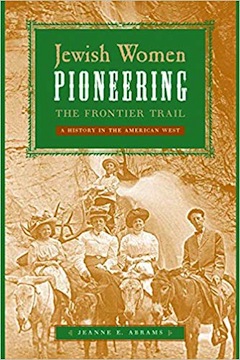
“While I was researching my dissertation and finishing up my PhD, I visited the Beck Archives of Rocky Mountain Jewish History at the University of Denver,” Abrams told the Independent. “The director, when she retired, asked me to interview for the job. The rest is history. As director of the Beck Archives, one of my tasks was to become an expert on Western American Jews, and that’s how the book came about,” she said, referring to Jewish Women Pioneering the Frontier Trail: A History in the American West (New York University Press, 2006).

“I’ve always had an interest in American Jewish women, and found there were some differences that I wanted to point out, and that Jewish women played a very important part in settling and developing Jewish communities in the American West,” she said.

Abrams herself was born to Holocaust survivor parents in Stockholm, Sweden. Sheltered there after the war by the Swedish Red Cross, her family moved to the United States when Abrams was less than a year old.

Through her research, she has learned that, in the United States, while Jewish men were very involved in city and organization building, it was often left to the women to develop religious continuity and community.

She said Jewish women “were in the forefront of founding synagogues, keeping Jewish tradition alive in the home, and they also branched out in many areas – particularly strong in philanthropy and charitable enterprises. At the same time, because of a combination of factors, including the more open environment in the West and that kind of spirit of adventure, Jewish women also really ventured into professions, into higher education.

“I think this environment in the West made this area of the country different for Jews in general. I certainly don’t want to suggest that there was no antisemitism in the West but … [Jews] were more prominently accepted into general society, so American Western Jews, men and women … were often leaders in both the general community and the Jewish community simultaneously.”

Throughout Denver’s history, there have been many endeavours that have involved people of different faiths. As an example, Abrams cited the Denver Charity Organization Society, which was organized in 1887 by a Jewish woman, a rabbi, a Catholic priest and a Protestant minister. The society evolved into what is now known as the United Way.

image - Jewish Women Pioneering the Frontier Trail book cover“Jewish women were also in the forefront of political life here in many ways, and I don’t think that most people realize that women voted in the West long before they did on the East Coast…. We’re coming up to the 100th anniversary of the amendment that allowed women to vote in the U.S.,” said Abrams. “In 1893, women were already voting in Denver. It was the largest city in the U.S. in which women could vote. I think people often think of women’s suffrage with the East Coast, New York, and minimize the amount of influence that early suffragettes had in California, here in Colorado, and in many other cities.”

In 1899, the National Jewish Hospital was founded as a place for people with tuberculosis. It drew patients and staff from all over the country, and was funded by people all over the country. According to Abrams, this was likely one of the first national Jewish organizations to hire a Jewish woman in the role of executive director, in 1911.

While Abrams’ research has primarily focused on Denver’s Jewish population, she also has come across parallels in Canada.

“We know Jews have a very long tradition of philanthropy and social justice. I found that across the border as well,” said Abrams. “But, in terms of the hospitals, when I studied them, I’d say, in Denver, the two Jewish sanatoriums actually had more interaction by women than I saw in Montreal.”

With her book, Abrams wanted to impart a sense of appreciation for women in the American West – of them having been leaders.

“They’ve often been overlooked, because historians tend to be very East Coast-centric,” she said. “I think that people generally seem to be surprised that there are Jews living out in the West. If they thought of anyone, they had the stereotype of cowboys living there.”

While more people associate Denver with the gold rush, Abrams noted that more people actually came to Colorado in search of health than wealth, specifically referring to the tuberculosis treatments available.

These days, Abrams has mainly been studying early American history. Her most recent book was, she said, “on America’s first three ladies. It’s called First Ladies of the Republic: Martha Washington, Abigail Adams, Dolley Madison and the Creation of an Iconic American Role. I’ve moved back and forth, but I’ve enjoyed the different topics I’ve covered.”

Rebeca Kuropatwa is a Winnipeg freelance writer.

Format ImagePosted on July 19, 2019July 18, 2019Author Rebeca KuropatwaCategories BooksTags Colorado, health, history, Jeanne Abrams, tuberculosis, United States, women
The courageous beach queen

The courageous beach queen

Lea Gottlieb at work. (photo from Lea Gottlieb Archive via Design Museum Holon)

Summertime … bathing suit season. As a child, I fondly remember our family trips to Israel. Among all the memories is the treat of a scrumptious falafel before we went off to the Gottex bathing suit factory, where my mother indulged my two sisters and me with the colours and styles from Lea Gottlieb’s latest swimwear collection.

Born Lenke Lea Roth on Sept. 17, 1918, in Sajószentpéter, Hungary, Gottlieb was raised in poverty. Before the Second World War, she worked as a bookkeeper in a company that produced raincoats. There, she fell in love with Armin Gottlieb, the owner’s son; the two married and started a family.

During the Holocaust, Gottlieb’s husband was imprisoned in a labour camp. Gottlieb and their young daughters, Miriam and Judith, went into hiding and were saved by a family who sheltered them in a pit behind their home beneath trees and flowers.

After the war, the family reunited and tried to rebuild what they had established in the past, moving to Czechoslovakia to start anew. However, staying in Europe, with its continuing antisemitism proved impossible for the Gottliebs and, in 1949, they moved to Israel.

They landed in the country with pretty much nothing but the clothes on their backs and Gottlieb’s gold wedding band. Turning this item into cash, as well as borrowing some money, she purchased a sewing machine and enough fabric to start making raincoats. It didn’t take long for Gottlieb to understand that a line of raincoats in a place that has mostly sunshine would not make for a fruitful future – rather, bathing suits would prove a more promising venture. Merging her name, Gottlieb, with the word textile, Gottex came into being.

Gottlieb’s Hungarian cultural roots remained evident. She maintained her distinct accent and served Hungarian cuisine in her showrooms. She celebrated her survival by incorporating flower motifs into her signature designs, and, with her choice of colours, she expressed her love of her new home, Israel – aqua for the Mediterranean, yellow for the dessert, pink for Jerusalem stone and greens, the Galilee. From swimwear came a line of trousers, caftans and tunics, as Gottlieb wanted her creations to be worn at the beach or by the poolside, for a drink at the bar and on the dance floor.

photo - Gottex Israeli fashion house, Tel Aviv, 1961
Gottex Israeli fashion house, Tel Aviv, 1961. (photo from wiki commons)

During the peak of Gottlieb’s career, her work was admired by many leading ladies. Elizabeth Taylor, Princess Grace, Nancy Kissinger and Brooke Shields were among her many fans. A friendship formed with one special client, the late Princess Diana, who was given private showings in Buckingham Palace each season.

Gottlieb and her daughter Judith were the design team, based in Israel, while her husband oversaw the financial side and daughter Miriam ran the showroom in New York. Together, the family built a global fashion house and Gottex became the top swimsuit line in the United States, with the most sought-after models walking in their shows and being featured on the cover pages of international fashion magazines.

Gottlieb’s achievements included numerous fashion awards, earned both in Israel and elsewhere. A highlight of her career occurred at Yad Vashem, the World Holocaust Remembrance Centre, in Israel. There, Gottlieb was part of an honourary exhibition, called My Homeland, which acknowledged Holocaust survivors’ essential role in contributing to Israel through cultural, economic and national security development.

In 1995, the loss of Gottlieb’s husband, the financial pillar of the company, was a devastating blow. She was forced to sell Gottex in 1997. As part of the sale, she had to sign a non-compete agreement, which prohibited her from designing for eight years. And more loss was to come. In her daughter Judith’s final days of battling cancer, in 2003, she apparently implored her mother to continue with her passion of design and start again. But, even when the company did come up for sale, Gottlieb couldn’t afford to buy it back. “I lost the two most important things in my life, my daughter Judith and my life’s work,” said Gottlieb after her daughter’s death.

But, at 85 years old, Gottlieb managed to reinvent her career. With the support of a design team, she launched a new line of swimwear under her own label, Lea Gottlieb. The industry had become much more competitive since she created Gottex and, relatively soon after she had restarted, Gottlieb closed production and retired.

Gottlieb passed away in 2012, at the age of 94. She left behind a legacy in her beloved homeland, as well as in the eyes of veteran and aspiring designers around the world.

Ariella Stein is a mother, wife and fashion maven. A Vancouverite, she has lived in both Turkey and Israel for the past 25 years.

Format ImagePosted on July 19, 2019July 18, 2019Author Ariella SteinCategories IsraelTags business, fashion, Gottex, Lea Gottlieb, women
Exploring music, dance, self

Exploring music, dance, self

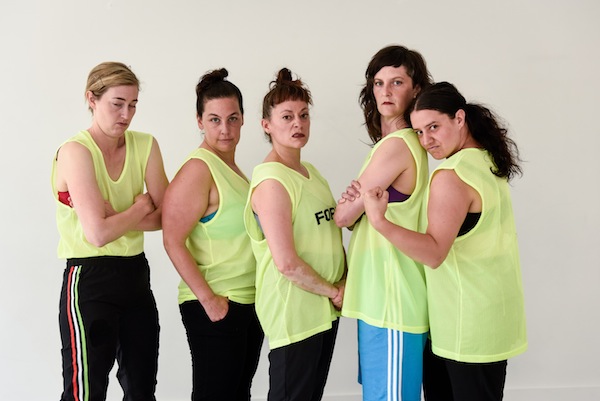
The cast of Tara Cheyenne Performance’s The Body Project. (photo by Wendy D. Photography)

Among the more than 20 choreographers and companies from across Canada, Brazil and Korea that are participating in this year’s Dancing on the Edge Festival are local Jewish community members Alexandra Clancy (Soleful Dance Company) and Tara Cheyenne Friedenberg (Tara Cheyenne Performance).

Soleful Dance Company’s Where the Music Begins will take place July 12, 8:15 p.m., in the Firehall Arts Centre courtyard, and Tara Cheyenne Performance’s The Body Project (working title) is part of Edge 5 July 11, 9 p.m., and July 13, 7 p.m., at the Firehall. DOTE runs July 4-13. Click here to watch the festival trailer on YouTube.

* * *

Where the Music Begins, created by Clancy and composer and musician Mike W.T. Allen, was commissioned by Dances for a Small Stage for its Summer Series.

“Mike and I had played music together but never officially constructed any works for stage,” Clancy told the Independent. “Throughout the rehearsal process, there would be a back and forth of ideas; sometimes I would have a rhythmical phrase of tap dance and Mike would then create a melody over top, and sometimes Mike would compose a phrase of the melody and I would choreograph specifically to that part of the tune. After some give and take between our prospective instruments and ideas, we solidified a melody and then decided upon the structure of the tune. Some of the tune is improvised, some is a conversation, and some is very set and predetermined. We both enjoyed the collaborative process and found a harmonious way to create music and dance together.”

Clancy grew up in Vancouver and has always been involved with the Jewish community. “I was raised Jewish; attending Hebrew school on Sundays, becoming bat mitzvah, and participating in holidays and traditions,” she said. “After going on Birthright a few summers ago, I was re-inspired by the beauty of the culture and have tried to stay more engaged in the community by attending Axis events and other social gatherings, as well as going to synagogue when I can. I am grateful for the support and familial kindness that I have received from the community, consistently reminding and encouraging me that I am capable of whatever I put my all into.”

And she has put her all into a lot, having trained in all genres of dance, studying at Danzmode and the Vancouver Tap Dance Society. She was a member of Tap Co., a pre-professional youth tap dance company, and has trained and performed across North America.

photo - Alexandra Clancy is one of the performers and choreographers whose work will be featured in this year’s Dancing on the Edge, which runs July 4-13
Alexandra Clancy is one of the performers and choreographers whose work will be featured in this year’s Dancing on the Edge, which runs July 4-13. (photo from DOTE)

“After graduating, I lived in Austin, Tex., and was a member of Tapestry Dance Company in its 25th season,” said Clancy. “I then moved back to Vancouver and have been performing and teaching ever since. This past year, I taught at the Arts Connection, Dance Co., and the Pulse, sharing my love and passion for tap dance and educating the next generation of talented dancers.

“As recital season comes to an end, I am currently in a creative residency with Dances for a Small Stage, where we are developing works for our Summer Series and exploring digital literacy in dance. As well as preparing for DOTE, I am also in the studio rehearsing and creating for our upcoming performance at Jacob’s Pillow later this summer. In the fall, I will be moving to Calgary to attend the training program at Decidedly Jazz Dance Company.

“My goal,” she said, “is to broaden my toolbox to assist in expressing myself and telling stories through dance. This upcoming year, I hope to continue to collaborate and create through Small Stage, develop more new works with Soleful Dance Co., film a concept video, and share dance through as much teaching and performing as possible.”

Jacob’s Pillow is located in western Massachusetts in the town of Becket. Clancy auditioned for and then attended the inaugural tap dance program at Jacob’s Pillow in 2010 and returned two years later (again with an audition) for a second summer of learning and dancing. “My time at the Pillow was the most influential training thus far in my life and it has always been a dream of mine to perform my own work at the Pillow,” she said.

That dream will become a reality this summer.

“Jeffrey Dawson and I co-choreographed a piece for an online competition Jacob’s Pillow was running this year, and we were lucky enough to be chosen as Top 6 and then voted Top 3, meaning we will get to perform our work live at the Inside/Out stage on Aug. 17,” said Clancy.

In addition to choreographing and teaching, Clancy established Soleful Dance last spring. She and some other dancers “felt we needed a name and a clear avenue to share the work we had started developing. Based in Vancouver, this company is a platform to express ourselves and tell stories through the music of tap and the movement of dance.

“Although under my direction,” she said, “Soleful Dance Company is rooted in collaboration. Our ultimate goal is to make audiences feel something. All of the members of the company’s primary focus is tap dance; however, everyone brings a versatile background to the creative process, spanning from contemporary dance, to acting, to playing music and more. We hope to continue to grow and create more works to share with audiences in the near future.”

Clancy described tap dance as “a magical art form that allows one to not only express through movement but connect and emote through sound.

“This traditional American art form has a rich and complex history that is intertwined deeply with jazz music and culture,” she explained. “There is a sense of community that I have always appreciated about tap dance, and I feel a great amount of respect and gratitude that I get to perform and participate in its culture. It just feels good to get to move your body and dance and then, on top of that, creating and connecting with music opens endless doors of expression.”

* * *

The Body Project is a new interdisciplinary performance created from interviews, symposiums and roundtables.

“I started research on and around the theme of ‘female body image’ about a year ago,” Friedenberg told the Independent. “Part of our research/creation process has been interviewing female-identifying and non-binary people (many dancers and actors). To date, 35 people have generously participated.

“In the studio, I have been mining my own complicated and unhealthy relationship with my body as a dancer in a female body with the help of my amazing collaborators/performers. The process so far has involved exploring how the forms of stand-up comedy and dance can express this difficult, and often absurd, story of struggling with body image that many of us share.”

The performers – Bevin Poole, Caroline Liffmann, Kate Franklin and Kim Stevenson – came into the process shortly after Friedenberg began her exploration of the topic.

“We are working very closely with intimate and difficult material so, although I am leading the process, it is essential that all the voices/bodies in the room are present in the work. For example, there is a section choreographed by Kim Stevenson – much of the gestural language has been created through our own gestures as we’ve spoken about our personal experiences with body image.”

About the creative process, Friedenberg said, “These are very busy people, so we have had times when we are all in the studio and other times when it’s just me and one collaborator. Making room for people’s lives and demands, including parenting and caring for parents, is an important part of our feminist practice.

“Justine A. Chambers is our dramaturge/outside eye and Michelle Olson will be involved in the project as a consultant and possibly a performer in the next phase of development.”

As professional dancers, the performers/creators have shared some common struggles and coping mechanisms regarding body image.

“The pressure to fit a very narrow ideal of the ‘dancer body’ has been difficult and complex for all of us,” said Friedenberg. “There’s the pressure to be very thin, small, more muscular, or less muscular. Pressure to fit an oppressive ideal of beauty. We each have found ways to navigate these limiting ideas. Sometimes we have had to remove ourselves from certain arenas in order to survive. Sometimes we have found power in defying the stereotypes of what a dancer should look like to the euro-centric patriarchal gaze. But I keep coming back to the effort and energy required to bare these expectations and what we can transform with that energy instead.”

She added, “It must be noted that the many voices, words, time and contributions from the people we have interviewed are alive in the work through our bodies and presence. Their names will be listed on our website. Although the work, at this early stage, is a version of my story, it is also very much a result of being together in conversation about body image, in a circle, speaking, listening, moving, supporting and sharing with many powerful female-identifying/non-binary people – ‘the personal is political.’”

* * *

The full DOTE schedule can be found at dancingontheedge.org. For tickets, call 604-689-0926 or visit tickets.firehallartscentre.ca.

Format ImagePosted on June 28, 2019July 1, 2019Author Cynthia RamsayCategories Performing ArtsTags Alexandra Clancy, choreography, dance, DOTE, identity, music, Tara Cheyenne Friedenberg., women

A word chosen with care

Words matter. In a period when traditional media compete with social media, where everyone on the planet can pretty much find a place to say whatever they want, the weight of words can seem lost in the deluge of opinions, aspersions and insults. So, it is encouraging, in some ways, to see a pitched battle over the use of a single word. It assures us that many people still understand the power that language can have.

After the Truth and Reconciliation Commission’s 2015 final report, the federal government set up the National Inquiry into Murdered and Missing Indigenous Women and Girls. The MMIWG report, released last week, concluded that there are “serious reasons to believe that Canada’s past and current policies, omissions and actions towards first Nations peoples, Inuit and Métis amount to genocide….”

The use of the term genocide has sparked a debate. Top federal officials at first avoided using the word. At the ceremony marking the release of the report, Prime Minister Justin Trudeau was interrupted by an audience member who yelled, “Genocide! Say it!” Trudeau opted against it on that day, but he would use the term later in the week. Justice Minister David Lametti deflected discussion, saying he would leave the determination around the use of the term genocide “to academics and experts.”

The 1948 Genocide Convention defines it as “intent to destroy, in whole or in part, a national, ethnical, racial or religious group.” Raphael Lemkin, the Polish Jew who coined the term, described genocide as an effort to destroy the foundations of a national group with the objective of annihilation. While genocide certainly includes state-led mass murder, the term can also incorporate a range of less aggressively lethal acts, such as Canada’s residential schools system, the core goal of which was to eradicate indigenous cultures and languages among native peoples in the country.

The report identifies “colonial structures,” including the Indian Act, the Sixties Scoop, residential schools and offences against human rights, as antecedents to current rates of traumatic violence, suicide and deaths among indigenous populations.

The MMIWG report makes a series of recommendations, including, for example, that police services investigate officers for discrimination and mistreatment against indigenous peoples and failures to investigate crimes, government funding to improve recruitment of indigenous peoples into policing, a national task force to review and potentially reinvestigate every unresolved case and a standardizing of protocols around treatment of the thousands of missing and murdered women.

The chief commissioner, Marion Buller, chose the term genocide determinedly and used it throughout the report.

“This report is about deliberate race, identity and gender-based genocide,” she wrote in the opening paragraph of the final report.

However, the report also acknowledged that there are “outstanding disagreements” over the definition of the term. Alongside the final report came a 43-page legal analysis of the term genocide and how it applies to the Canadian situation.

The lead author of the legal assessment, Fanny Lafontaine, a specialist on international criminal justice and human rights at Université Laval, said, “I think it has to be understood as a very distinct type of genocide from the Holocaust…. Genocide is composed of lethal and nonlethal acts. All of that together leads to the physical destruction of indigenous people, but also as a social unit. It’s the genocide taken as numerous acts spanning decades, basically, that is the root cause of the violence against [indigenous] women,” she told the National Post.

RCMP statistics indicate that 16% of female homicides in Canada between 1980 and 2012 were perpetrated against indigenous women, who make up just 4% of the population. This is triple the rate of nonindigenous women and double those of indigenous men. Testimony from individuals and families that were incorporated into the final report tell a harrowing story of violence and dehumanization.

Some might say that the debate over the term genocide detracts from the urgent, less theoretical components of the report and its recommendations. Maybe. But the considered choice by those who best understand the social impacts of systemic discrimination against indigenous Canadians, especially indigenous women, to use the term genocide should give us pause. Among Jewish observers, there may be an understandable sensitivity to anything that seems to shift the weight of the word, which was created specifically to articulate the Jewish experience in the Shoah. Yet, we should also take this opportunity to learn and understand why and how a community in our midst would articulate their own experiences as amounting to genocide.

Knee-jerk responses are not helpful on this front (or any, probably) and, while the arguments over the meaning and intent of the term reassure us that people still appreciate the power of words, we might also caution not to get stalled over this debate. What non-indigenous Canadians should do at this point – especially if we have an issue with the use of the term genocide – is to dive deeply into the tragic legacies of colonialism that have led to this moment and try to understand why this term was carefully chosen. Perhaps, we can each start with a commitment to read the report.

Posted on June 14, 2019June 12, 2019Author The Editorial BoardCategories From the JITags Canada, First Nations, genocide, law, Marion Buller, MMIWG, women

A case for mothering

“Oh, I know that I owe what I am today to that dear little lady so old and grey / To that wonderful Yiddishe momme of mine.” (from the song “My Yiddishe Momme,” by Sophie Tucker, 1920s)

It was not until the early part of the 20th century that a day was created to honour and officially acknowledge the importance of mothers. Founded by American Anna Jarvis and first observed on May 10 in 1908, Mother’s Day will be celebrated this year on May 12.

But times change, and what may have applied in Jarvis’s time doesn’t go far enough in our present society. A distinction should be made between the mother and the act of mothering: one is a noun, the other a verb. Historically and biologically driven, the role of mothering has been primarily fulfilled by the biological mother. However, in the 21st century, this role is now often carried out by a variety of others, such as fathers, grandparents, adoptive parents, foster parents, step-parents or paid caregivers.

The explosion of neuroscience research over the past few decades has provided a meteoric rise in neurobiological literature with findings that support their predecessors’ observations and predictions in child development. Selma Fraiberg (1977) was farsighted when she wrote that mothering “is the nurturing of the human potential of every baby to love, to trust and to bind to human partnerships in a lifetime of love.” The evidence from various sources converges in the consensus that the human capacity to love is formed in infancy and this bond should not only be considered a gift of love to the baby, but a right – “a birthright for every child.”

Unfortunately, the recognition and awareness of the crucial role of mothering in a child’s healthy development and, consequently, to future generations, is gradually being eroded. It is often seen as a secondary role in the scheme of our busy lives. It was 42 years ago when Fraiberg wrote that we are seeing a devaluation of parental nurturing and commitment to babies and young children, which may affect the quality and stability of the child’s human attachments in ways that cannot yet be predicted. She warned that the deprivation of a mother or mother substitute will diminish a child’s capacity for life.

Fraiberg’s cautionary notice is eerily apparent in the growing numbers of young children and troubled youth as reflected in mental health issues and criminal behaviours. For example, Canadian Bullying Statistics (Canadian Institutes of Health Research, 2012) indicated that 47% of Canadian parents have had a child who has been a victim of bullying; Canada has the ninth-highest rate of bullying in the 13-year-old category in a survey of 35 countries; and at least one in three adolescents have reported being bullied.

The basic needs of children have not changed, but our priorities seem to have been rearranged, as advertisers increasingly shape our wants into needs. We did not invent childhood. We are only discovering what has likely existed since the beginning of time. Louis Cozolino, PhD, (2014) notes there is “a causal link between interpersonal experiences and biological growth.” These links are of particular interest in their impact on early caretaking relationships, when the neural infrastructure of the social brain is forming.

As Lloyd deMause notes in The History of Childhood, “That because psychic structure must always be passed from generation to generation through the narrow funnel of childhood, a society’s child-rearing practices are not just one item in a list of cultural traits. They are the very condition for the transmission and development of all other cultural elements, and place definite limits on what can be achieved in all other spheres of history.”

A world of mothers and mother substitutes has taken on the loving and arduous tasks of mothering, with all the pleasures and perils of parenting. To those who are fortunate to still have mothers in their lives – be thankful and let her know how much she is cherished. For those who don’t, treasure the memories that have become even more precious. And for those who are themselves mothers, you have undertaken the most difficult but important task of life with all its joys and sorrows. You have taken on the most valuable contribution to society and its future as well. So, to mothers and to those who mother, we honour you today and every day.

Libby Simon, MSW, worked in child welfare services prior to joining the Child Guidance Clinic in Winnipeg as a school social worker and parent educator for 20 years. Also a freelance writer, her writing has appeared in Canada, the United States, and internationally, in such outlets as Canadian Living, CBC, Winnipeg Free Press, PsychCentral and Cardus, a Canadian research and educational public policy think tank.

Posted on May 10, 2019May 9, 2019Author Libby SimonCategories Celebrating the HolidaysTags children, lifestyle, Mother’s Day, parenting, women
Importance of women’s stories

Importance of women’s stories

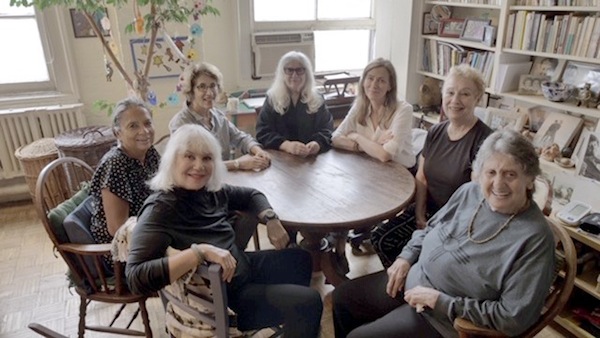
“Stories Around the Table” meets a couple of times a year to present and critique their writing. (photo from Karen Ludwig)

Today, at Karen Ludwig’s home in New York, the actor, director and teacher regularly leads a group of women in story sharing.

Ludwig, whose father is from Winnipeg but whose family origin is Russian, grew up in San Francisco. “It was a very antisemitic San Francisco town,” said Ludwig of the time. “And the German-Austrian Jews kind of ran the city, and they looked down on Russian Jews.

“We had a rabbi in my temple, Emmanuel, who used to say, ‘Hear, o-Is-roy-ale,’ and I never knew he was actually saying ‘Israel.’

“My mother would speak in a whisper, ‘Is she Jewish? Is he Jewish?’ I never heard the word ‘Jew’ out loud until I came to New York. Then, someone asked, ‘Are you Jewish?’ And, I said, ‘Hey, take it easy.’ But, New York is a Jewish town.”

Ludwig’s parents were amateur actors, acting in synagogue plays, and her family regularly went to see musicals and plays together in San Francisco. Ludwig knew that, when her parents were on stage, they had such a good time and she wanted to be up there with them.

When she was 14, Ludwig subscribed to Theatre Arts Magazine. The late Anne Bancroft was on one cover; she was in the play The Miracle Worker and was making the sign of the letter “L” for love.

“There was something about that picture that was magnetic,” Ludwig told the Independent. “I thought, that’s what I want to do.”

photo - New York-based Karen Ludwig leads a writing group for women
New York-based Karen Ludwig leads a writing group for women. (photo by Frankie Alduino)

Cabaret was all the rage and Ludwig went to see a show with her then-boyfriend. She enjoyed it so much that she went to see it again on her own a couple more times and the lead performer, Kaye Ballard, noticed her.

“She came out one time,” said Ludwig, “and saw me and said, ‘What, do you sleep here, kid?’ And, I was born. I thought, ‘That’s it. I’ve been recognized.’ And, I became a follower of hers, because … I loved anybody who made me laugh.

“She met me for coffee a couple months later, very graciously. And, she said, ‘If you’re serious about being an actress, don’t go to college. It won’t do you any good. Go to New York while you’re young and study.’ And so, I did, [after] I went for one year of San Francisco state college. I played the lead in a play called The Wingless Victory, by Maxwell Anderson, and I thought, well, this is easy.”

Ludwig went on to perform in other plays – some on Broadway and some off-Broadway. She even had the chance to work with Bancroft, and they became friends.

This is what led Ludwig to start her women’s group for actors who could write.

While the group took a hiatus for several years, Ludwig restarted it two years ago. They meet every Wednesday and write about topics that are rarely discussed or written about by men.

Ludwig said she developed her writing skills out of necessity. “I did it because I was tired of waiting around for parts, because, as I got older, as a woman, parts became fewer and fewer. So, I decided to write my own show about my career – who I met, who I worked with and, then, another thread through it was my mother and my relationship with her. And the show was very successful.”

Ludwig won a one-night space rental in a competition at Joe’s Pub at the Public Theatre and so performed her stand-up show on that one night. She described it as a wonderful but terrifying experience. Later, for almost two weeks, her show ran at another little studio in the city.

One of the pieces of history that Ludwig shared in the show was her experience playing Ethel Rosenberg in the movie Citizen Cohn. She was very involved in it, even raising money for the Rosenberg Foundation for Children, which “supports children whose parents are incarcerated,” said Ludwig. “I did all kinds of research about how Ethel Rosenberg died, and how many volts of electricity she had to have to still her heart, and then I showed the clip of it in the show I did. I did quite a bit about Ethel Rosenberg and the two boys she left behind, and that she, in fact, was not guilty.”

In her writing group, Ludwig prompts participants each week with a topic to help them focus their writing on different aspects of their lives. This brings about a variety of views on any given topic and the women push one another to dig more deeply than they would on their own.

“There are things that happen in a room with just women that don’t happen with men,” said Ludwig. “So, I thought we would take advantage of that. I use prompts like…. ‘My mother walked into my bedroom and said….’”

Living in the Westbeth Artists Housing complex allows Ludwig to have a big table, so the group has dubbed their meetings, “Stories Around the Table.” They present and critique their writing about twice a year and the subject matter ranges from family to politics to hair and beyond.

Ludwig began her teaching career in Israel. “I kept saying, ‘This country isn’t going to affect me that much,’” recalled Ludwig. “I’m a Reform Jew. What do I care really about Israel? But, from the moment we landed at the airport and they started singing, I began to weep, and weep and weep. And then, there’s a clip of me going toward the Wailing Wall. Again, I’m saying, ‘This doesn’t affect me. It has no meaning for me.’ And, before you know it, I’m davening. It was hard for me to leave Israel, because the actors were saying, ‘You’re a Jew. You should stay here and teach. This is your place to teach us what you know.’ It was very hard to leave; I did love it there.”

In a way, Ludwig’s Israel encounter parallels what she aims to get her writers to experience in their sessions – to discover a connection, to one another, to their past, to the world.

“The whole idea is about sharing each other’s feelings and thoughts about what’s going on … so you don’t feel so isolated,” said Ludwig. “There isn’t a goal exactly. It’s just about the sense of feeling united, together … critiquing each other’s work. And, if we don’t understand something, we talk about it.

“There’s a certain kind of pressure that’s off. There’s a certain feeling of generosity. Really, how many feelings are universal? There’s not that much that separates us, really, in terms of human experience.”

Rebeca Kuropatwa is a Winnipeg freelance writer.

Format ImagePosted on May 10, 2019May 9, 2019Author Rebeca KuropatwaCategories Arts & CultureTags Karen Ludwig, women, writing
Silber honoured by Shalhevet

Silber honoured by Shalhevet

Left to right are gala honouree Anita Silber, Shalhevet Girls High School head of school Meira Federgrun and Shalhevet board president Vivian Claman. (Jocelyne Hallé Photography)

On April 7, Shalhevet Girls High School honoured Anita Silber with the Guardian of the Flame Award.

Vivian Claman, president of the Shalhevet board of directors, described Silber as someone “whose default is set to ‘giving.’”

“Anita leads by example, showing what it means to be charitable,” Claman told the Independent. “She is a woman devoted to her community and to her family.”

Having learned the importance of philanthropy from her father at a young age, Silber said, “It left a deep impression on me.”

When asked what she values most, she said, “Jewish education and philanthropy.” And, as a former educator herself, she said she recognizes the excellent quality of education the girls receive at Shalhevet.

“The amount of attention the students get and the mentoring they receive from their principal and teachers will serve them well in the future,” said Silber, who has followed some of the Shalhevet graduates and their careers and community involvement. “It’s so important to have options like Shalhevet Girls High School in order for our [Jewish] community to flourish and remain sustainable,” she said.

Silber’s background includes a variety of careers and leadership roles: elementary school teacher; marriage, family and child therapist; clinical art therapist; member of the Jewish Federation of Greater Vancouver Israel overseas allocations committee; and member of the Vancouver Jewish Community Foundation board of governors, to name just a few.

In the 1990s, Silber led support groups for people with HIV/AIDS and other life-threatening illnesses. She also led children-of-divorce groups at the Jewish Community Centre of Greater Vancouver for Jewish Family Services. With the Silber Family Foundation, she helped establish an art therapy program at Ronald McDonald House.

Silber’s passion for Israel began just a few weeks after the Six Day War, in 1967, when she visited Israel for the first time, at age 22. While there, she volunteered at a hospital and fell in love with the country. Fast forward several decades and Silber, along with her husband Arnold, support numerous projects in Israel’s Upper Galilee, particularly the Friends of Beit Vancouver fundraising initiative in Kiryat Shmona.

“Beit Vancouver, which opened in 2006, is an amazing centre for at-risk kids and teens from the periphery, who go there after school for all kinds of programs, including educational and music programs, computer training and more,” explained Silber. “The centre also serves kids with disabilities, and offers family counseling and therapy.”

With her high regard for Jewish education, Silber was a fitting choice for Shalhevet’s Guardian of the Flame Award. The school, in existence for 13 years, was originally an extension of Vancouver Hebrew Academy, and then struck out on its own as Shalhevet in 2007. It is the only Orthodox girls high school in Vancouver.

According to Meira Federgrun, head of school, fundamental to the Shalhevet philosophy is “empathy and chesed – feeling for others, and seeking to understand them and their needs.”

Federgrun said Shalhevet’s teachers “instil in our students a passion for leadership, inspiring them to step up and take responsibility. Students are involved in planning and running school programs, Shabbatons, and extracurricular activities.” The teachers have created a real sense of community for the girls, both in and out of school, she said.

According to Claman, “When the girls are all together, they’re like a gigantic family.”

Shalhevet’s enrolment is not large – only 14 girls in grades 8 through 12 this year – yet they offer a full dual curriculum of Judaics and secular studies. Federgrun said it’s a small school, “but we pack a big punch.” The teacher-student ratio and small class size (one to four students) allow for personalized attention and learning.

Shalhevet has also offered some AP (advanced placement) and online classes.

“We definitely cater the curriculum to what the girls want to do. If we have a girl who wants a specific course, we’ll make sure to offer it for her,” said Federgrun. “We’ll also help out any special needs students by collaborating with the family, staff and any service providers to create an IEP (individualized education plan) for each student. That IEP guides our teaching and goal-setting for that student, and it’s reviewed often and adjusted as needed.”

Shalhevet offers a variety of extracurricular programming, including a basketball team, an annual play produced by the girls, holiday events and a student committee. Shalhevet accepts girls from a range of Orthodox Jewish backgrounds, complemented by a staff of teachers that includes secular educators.

Shalhevet graduates have gone on to study at top-notch universities, securing careers in areas such as medicine, speech language pathology, social work and law. Many Shalhevet graduates also have gone on to study in seminary.

“We teach our girls to look beyond themselves and to see others for who they really are on the inside, without fear, and with open hearts. This commitment extends beyond the walls of the classroom and the school. Shalhevet is known for our students’ commitment to volunteering and helping in the community,” said Federgrun in her gala speech. “The students volunteer, tutoring secular Jewish public school students in Hebrew reading, Jewish holidays and Torah knowledge once a week, which is a powerful way for the girls to play a role in the broader, non-religious community. The girls also volunteer at the Louis Brier Home, spending time with seniors, visiting the sick in hospital, and more.”

Shalhevet girls learn solid Torah values, continued Federgrun. “Our Judaics teachers are inspiring role models of devotion to Yiddishkeit, and they engage our students’ minds, hearts and souls through Torah study,” she said.

Claman emphasized that Shalhevet is important for the community, providing religious Jews a place to send their daughters for an Orthodox Jewish education that incorporates a secular education. “There was a big gap in the community because there was no Orthodox girls high school until Shalhevet,” said Claman. With concerns about the Pacific Torah Institute boys high school closing, Shalhevet wants the community to know that they are a strong, thriving school.

Asked what she is most proud of about Shalhevet, Federgrun said, “The warm environment, the girls giving back to our community, strong academics, and the students learning leadership skills.”

She added that many of their students go on to accomplish tremendous things. “We believe in offering a well-rounded education,” she said. “It’s very important to send girls out into the world today, and they need to be prepared.”

Claman said she’s most proud of what the girls do for the community.

More than 200 people attended the soldout Shalhevet gala honouring Silber, which was held at Schara Tzedeck and included entertainment by comedian Ashley Baker. Most of the money raised will go towards student scholarships.

Shelley Civkin is a happily retired librarian and communications officer. For 17 years, she wrote a weekly book review column for the Richmond Review, and currently writes a bi-weekly column about retirement for the Richmond News.

Format ImagePosted on May 3, 2019May 1, 2019Author Shelley CivkinCategories LocalTags Anita Silber, education, Judaism, Meira Federgrun, philanthropy, Shalhevet Girls High School, tikkun olam, Vivian Claman, women
Miriam’s legacy of drumming

Miriam’s legacy of drumming

Female hand drummers from the Iron Age II (eighth to seventh century BCE), found at the site of what was Achzib, on the Mediterranean coast of northern Israel. From the Israel Museum collection. (photo by Deborah Rubin Fields)

In February, an Israeli ultra-Orthodox bride got lots of media attention for playing drums before a mixed (male and female) crowd of wedding guests. Putting aside issues of religious modesty and political clout, does Jewish law restrict females from playing drums?

Significantly, there is a biblical precedent for female drum playing. It dates back to Miriam the Prophetess. Having just crossed a miraculously dry channel in the Red Sea, Miriam felt compelled to celebrate. She and the other Israelite women who had just experienced the Exodus play drums, referred to in Hebrew as tof miryam. (See Exodus 15:20.)

In a 2009 article in Jewish Women: A Comprehensive Historical Encyclopedia, Prof. Carol Meyers notes, “The Bible mentions … only one percussion instrument … the tof, or hand drum, even though other kinds of drums were known elsewhere in the biblical world. Whenever this word is found, it is quite likely that the presence of female instrumentalists is implied.”

Meyers explains that this hand drum consisted of an animal skin stretched over a hollow body of any shape or size. Moreover, although tof miryam is sometimes rendered in English as a tambourine, it is not, given that it has no rattle or bells. Meyers further reports that the tambourine was not authenticated before the 13th century CE.

Additionally, Meyers points out that female figures predominate in unearthed Iron Age terracotta statutes, holding what appear to be hand drums. These women are plainly dressed, hence they appear to be ordinary people, rather than gods or members of the elite.

Few terracotta statues have been discovered in Palestine or Israel. Yet, from the biblical references of Exodus, Judges 11:34, I Samuel 18:6 and Jeremiah 31:4, we are left to understand that there was a tradition of female hand drum players.

Moreover, citing I Samuel 18:6-7, S.D. Goitein states in a 1988 article in Prooftexts, that a woman’s duty was to welcome the returning fighters and to praise them.

Of what importance were these female drums? Meyers elaborates that female public performance would (1) assume a level of competence based upon practice, (2) indicate that, in ancient Israel, there were groups of women performers and (3) imply that leaders and other members of the community acknowledged and appreciated the expertise of these women performers.

Not only that, but, in the book Miriam’s Tambourine: Jewish Folktales from Around the World (1988), edited by Prof. Howard Schwartz, Miriam’s drum had magical abilities. Relying on a 19th-century Eastern European folktale, Schwartz writes that the music from Miriam’s drum drove off serpents and kept Miriam herself in eternal life.

According to Rabbi Allen Maller’s interpretation of the Mechilta and Pirkei d’Rabbi Eliezer, while in Egypt, Miriam taught all the Israelite women how to play the drum. Moreover, he writes on blogs.timesofisrael.com, once the plagues started, Miriam repeatedly reminded the women of all that she had taught them and that, as a sign of their faith in G-d, they should all take at least one drum per family with them when it was time to leave.

Still it is not clear from whom Miriam learned to play. Did Miriam’s mother, Yocheved, teach her to play the hand drum? Or did Miriam learn from Egyptian women?

Broadcaster and writer Eva Dadrian states in her 2010 article “Let there be music!” that ancient Egyptian musicians realized percussion was basic to their orchestras. Thus, they played drums of different sizes. Drums were particularly associated with sacred ceremonial events, but they were also used during battles to rally the troops or to spread panic among the enemy forces.

Dadrian adds that, in spite of the richness of the documentation, our knowledge of pharaonic music remains limited: without theoretical treaty or musical score, it is particularly difficult to do an archeology of music. The two main membranophones used by ancient Egyptians were the single membrane drum mounted on a frame and the barrel-shaped drum with two membranes.

In the University of California, Los Angeles Encyclopedia of Egyptology, Music and Musicians (2013), Egyptologist Sibylle Emerit claims the single membrane drum is documented in Egypt’s Old Kingdom (2575 BCE to 2150 BCE) in a scene carved in the solar temple of Niuserra in Abu Ghurab. She relates that the non-epigraphic material from the East Cemetery of Deir el-Medina, dating to the 18th dynasty, indicates that the owners of the musical instruments buried in this tomb belonged to a modest social class attached to the service of local noblemen. Thus, Emerit confirms Meyers’ assertion about the plain appearance of female Iron Age II drummer statues.

Music researcher, lecturer and performer Veronica Doubleday notes in a 1999 Ethnomusicology article that plentiful evidence shows women played the frame drum in the Egyptian New Kingdom (1570-947 BCE) dynasties. There were musical troupes in temple rituals, as well as solo drum players.

Over the centuries, Islam, Christianity and Judaism marginalized woman’s public drum playing. In a PhD dissertation (2006), Mauricio Molina writes that early leaders of the Christian religion, for example, condemned the frame drums because of their connection with the fertility cults, which the Church was struggling to banish.

Aside from Miriam, Jewish (and non-Jewish) females might have been told that it is not lady-like to play drums, as drummers need to sit with their legs spread apart and drummers sometimes “let loose” to play.

Nonetheless, today, the number of female drummers – including Jewish female drummers – is growing. As the recent bride story reveals, the numbers are increasing even within the Orthodox and ultra-Orthodox community. In Jerusalem, for example, the school Mayever LaMusica (Beyond Music) offers separate drum lessons for girls and women.

Among those who grew up Orthodox are Temim Fruchter, former drummer in the Shondes, and Dalia Shusterman, who drummed in an all-female Chassidic alternative rock group. Elaine Hoffman-Watts, who died two-and-a-half years ago at the age of 85, was a klezmer drummer – many klezmer bands refused her talents because she was a woman; it wasn’t until her father (also a klezmer musician) intervened that she got work as a drummer.

Other notable Jewish female drummers with Israeli backgrounds are Meytal Cohen, Mindy Abovitz (who is also founder and editor-in-chief of the drum magazine Tom Tom), Iris Portugali and Yael Cohen.

So, the beat goes on and, after a long respite, women are again helping to produce it.

Deborah Rubin Fields is an Israel-based features writer. She is also the author of Take a Peek Inside: A Child’s Guide to Radiology Exams, published in English, Hebrew and Arabic.

Format ImagePosted on April 12, 2019April 12, 2019Author Deborah Rubin FieldsCategories Op-EdTags antiquity, archeology, drumming, history, Israel, music, women
Pesach: story of a people’s birth

Pesach: story of a people’s birth

God Almighty Herself induces Egypt to give birth. We simply need to listen for the birth mother’s screams in the delivery room. We hear the screams throughout the plagues, as they become increasingly intensive, starting with the first plague, blood. (illustration by Nina Paley)

The idea of the Exodus as a birth story begins as Shemot (Exodus) begins. The first chapter brings us into the atmosphere of a giant delivery room. Things have gotten out of control: “And the Israelites were fruitful and increased abundantly and multiplied and grew exceedingly strong and the land was filled with them.” (Shemot 1:7)

The Israelites are having children all the time. There’s this anonymous, collective mass of people that are steadily spreading out. The only two figures mentioned by name are the midwives, Shifra and Pua, and there’s a reason for that. The book is telling us: “Pay attention, readers. We are entering a delivery room, and so the most important figures are the midwives. You will feel this sense of birth.”

If one didn’t get this sense from Chapter 1, take a look at Chapter 2. It begins with the personal birth story of Moses, the story of a natural, biological birth, in which a woman becomes pregnant and has a son. A few verses later, the mother places the baby in an ark, or basket, and, when Pharaoh’s daughter comes by, she takes him in and becomes his adoptive mother. She, too, has a birth story. There’s a womb – the ark. There’s water – the Nile. She sees the womb, the ark. She opens it and she sees the baby. She, too, is portrayed as having given birth. If we saw a portrait of the natural, biological birth by the Hebrew mother, we also have a portrait of the Egyptian adoptive mother who takes the child.

This “birth” mindset will intensify and be actualized through this grand metaphoric story we call the story of the Exodus from Egypt. There was a famine in Canaan, so the Israelites went to Egypt to buy grain and find seed. They stayed. Scripture tells us how they “were fruitful and increased abundantly and multiplied and grew exceedingly strong, and the land was filled with them.”

This little nucleus, the embryo that first descended, is developing within this large Egyptian womb, Israel’s “surrogate mother,” which nourishes this fetus. The time comes for the birth. As in any case of surrogate motherhood, there is difficulty. On one hand, it’s not my baby. I want it out. On the other hand, there’s emotional difficulty. I nourished that child. He’s part of my body.

From the perspective of the child, there will be problems, or challenges, of attraction and repulsion toward the surrogate mother in whom he developed. The Children of Israel grew and developed in that womb, and it must be taken out. But the Egyptian mother refuses to begin the birthing process.

Enter the most powerful midwife imaginable – God Almighty Herself. She induces Egypt to give birth. The entire story is described in this manner. We simply need to listen for the birth mother’s screams in the delivery room. We hear the screams throughout the plagues, as they become increasingly intensive. Blood. Frogs. Lice. Beasts. Pestilence. Boils.

We’re standing next to the birth mother, saying, “Push! Push! Scream! Scream! Let this baby out!” Just before the birth, a moment before the Children of Israel emerge, they are commanded to paint the doorposts with blood. Soon after, this people will pass through this doorway.

They will reach the waters. And the waters will descend, as well. Then the sea will split in two, and the Children of Israel will pass through the waters on dry land, through the birth canal that has opened for them. At the end of the birth canal, who will be waiting for them? The midwife, ready to grasp them and teach them to walk.

This story, this birth story, is the powerful story of the birth of a people. But, beyond the importance of hearing this story, it can also explain what happens later, during their travels in the desert.

Like any newborn baby, the people will cry and scream for their most immediate needs – water, food. Moses and God will provide for them because that’s how you take care of an infant. You give water and food. You can’t expect anything else. Slowly but surely, he will be taught to walk. Slowly, he will learn rules. He will be given laws to follow.

When we meet this child in Bamidbar (Numbers), once he has grown, he will make the same requests that he made in Shemot as an infant: water and food. But God’s response will be different, because we don’t have the same expectations of a little baby that we have from a growing child. We expect something different.

How do we connect this to the seder night? The Exodus, first, is a story. There is a strong emphasis on telling the story. It has all the detail it needs, and all the drama we want. These are what make this story a foundational story, one that can be transmitted generation after generation.

We sit around and tell our birth as a people. We try to impart it to the next generation. When we tell the story with all its detail, it excites us once more. But why is this done over matzah?

God planned the Exodus from the time of Abraham: “Know that your seed will be a sojourned in a land not theirs; they will serve them and be tormented by them for 400 years. But then they will go out with great wealth.”

It’s all planned, down to the moment. God tells them to have their loins girded, their bags packed and their food prepared and, when I say so, leave. Everything had been planned. So what happened? Why couldn’t the dough rise? Why couldn’t they have fresh rolls?

This is a precise dramatization of a birth story. If you want it to be credible, it has to be exact. As in the story of any birth, everything is planned. There’s a due date. There’s a packed suitcase, a list of phone numbers to call. If it’s not the first birth, there are arrangements for the older kids.

Yet labour will always be unexpected. It’s always sudden. The water breaks suddenly. Contractions come suddenly. Suddenly, it’s time to go. That’s birth. Everything is planned, but the moment arrives suddenly. This is the meaning of eating matzah. It’s as if we are saying, everything was there, everything was planned. This birth was a major event and, like every other birth, it was unexpected. Despite all the preparations, we had to run, we had to leave. The dough did not have a chance to rise. All that could be made from it was matzah.

Ilana Pardes’s book The Biography of Ancient Israel describes this as the story of a collective persona, the people of Israel: “The Israelites are delivered collectively out of the womb of Egypt. National birth, much like individual births (and all the more so in ancient times), takes place on a delicate border between life and death. It involves the transformation of blood from a signifier of death to a signifier of life. It also involves the successful opening of the womb, the prevention of the womb’s turning into a tomb…. God performs a variety of wonders in Egypt (the 10 plagues in fact are perceived as such), but the parting of the Red Sea seems to surpass them all. It marks the nation’s first breath – out in the open air – and serves as a distinct reminder of the miraculous character of the birth. Where there was nothing, a living creature emerges all of a sudden….”

As we sit around the seder table, around the matzah, telling the story of our birth each year, you may want to read from the poem, “Miracles,” by Yehuda Amichai: “From a distance everything looks like a miracle / But up close even a miracle doesn’t appear so. / Even someone who crossed the Red Sea when it split only saw the sweaty back of the one in front of him.”

Ask every participant at the seder to think of something that happened to them during the year, something that, because the individual was part of it, they “only saw the sweaty back of the one in front of him.” If we were to take a step back and look at things from a distance, we could have said to ourselves: “I’m living through a miracle. I’m passing through the sea, on dry land. I’m undergoing the process of birth, right now.”

It is worthwhile, and it even brings joy, to mention this miracle and think about it at this event celebrating the great miracle of the nation’s birth.

Dr. Orit Avnery is a research fellow at the Shalom Hartman Institute. She received her PhD in Bible studies at Bar-Ilan University. Her dissertation is entitled The Threefold Cord: Interrelations between the Books of Samuel, Ruth and Esther. This article is based on a talk she gave in Hebrew. Articles by Avnery and other institute scholars can be found at shalomhartman.org.

Format ImagePosted on April 12, 2019April 10, 2019Author Dr. Orit Avnery SHICategories Celebrating the HolidaysTags childbirth, history, Judaism, Passover, Shalom Hartman Institute, women

Posts pagination

Previous page Page 1 … Page 8 Page 9 Page 10 … Page 15 Next page
Proudly powered by WordPress