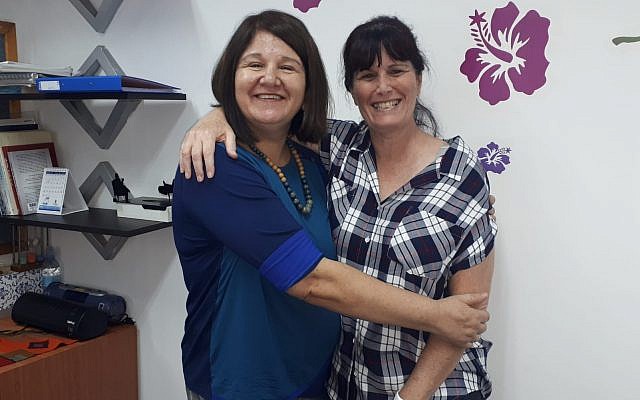
Volunteer during election

Oct. 21, 2019, seems like a lifetime ago, doesn’t it? That was the date of the last Canadian federal election. Since then, it’s been a world of endless uncertainties and instability.

The Jewish community has witnessed levels of antisemitism that haven’t been seen for decades. Hate crime numbers are way up. The aura of anti-Israel sentiment, especially following the conflict earlier this year in Gaza, has created an environment that has many feeling unsafe and anxious. The silence of many within the political sector has been cause for concern. On top of all of this, the havoc of the COVID pandemic is still felt daily.

Let’s be real: people are upset and worried. The past 22 months since the last election have presented incredible challenges to our well-being and shown that nothing is guaranteed. The Canadian Jewish community has demonstrated its resilience and fortitude but there is a lot more to do, especially when it comes to elections. We’ve seen firsthand what an important role the government plays in our lives, especially regarding the pandemic, so it’s vital that we extend our efforts more effectively in the political realm.

The Jewish community makes up less than 1.1% of the population and is concentrated in just a handful of ridings – 10 out of 338. That’s only three percent. Our numbers are continuing to decline. In politics, relationships matter. If we limit ourselves to involvement in only three percent of ridings and three percent of candidates, we are at a major disadvantage when it comes to our community and the things we care about.

To ensure our voices are heard, members of the Jewish community must continue to build relationships and educate MPs in ridings from coast to coast. This starts with political engagement, and it starts with each of us. As Rabbi Tarfon said, “It is not your duty to finish the work, but neither are you at liberty to neglect it.”

The good news is that we have the tools to get engaged so we can work beyond the local ridings where we vote. While the Canadian Jewish Political Affairs Committee (CJPAC) does not engage in or facilitate lobbying and advocacy, we do act as a concierge, helping members of our community to get engaged politically.

Another important factor is that change is inevitable with elections. In 2019, 98 first-time MPs (27%) were elected, 60 of whom were in ridings that flipped seats. A third of those 60 MPs defeated the second-place finisher by less than five percent of the vote. As for this election, at the time we wrote this, 26 incumbents had decided not to run for reelection. Many more ridings will change hands. This means that, no matter which way the election goes, our community will need to build new relationships with new parliamentarians.

We can jumpstart that process. Community members like you can volunteer and acquaint yourselves with candidates from beyond your own riding and across the country. Every campaign is in dire need of volunteers, and even just a few hours can be a huge help. Often just a few more volunteers can make the difference between winning and losing a race. Plus, the appreciation for a volunteer’s work – no matter how big or small – is something that’s not easily forgotten.

There is, of course, one element that’s changed the game with this election: COVID. While it’s still possible to engage in traditional methods of volunteering – door-knocking, handing out literature in the community, putting up lawn signs or working in a polling station – understandably, some are hesitant to participate under pandemic circumstances.

But fear not: there are many physically distanced ways to volunteer, including from your own home. And you don’t have to be politically experienced to do it. All you have to do is raise your hand and show up. CJPAC will connect you to the campaign of your choice.

For those who feel more comfortable with a bit of instruction, CJPAC’s team makes it simple by training you on the basics of campaign volunteering. You can volunteer in your local riding or in one of the other many ridings where a strong Jewish presence is absent. Perhaps that means traveling 20 to 30 minutes away from your home or simply making phone calls from your couch for a candidate in a more remote part of the country.

The first step is to sign up at cjpac.ca/volunteer, and CJPAC will connect you with the campaign or candidate of your choice.

As Jews, we are committed to community service and contributing to the greater society. While it’s been a rough several months, we don’t have to stand alone. It doesn’t matter what party you align with: it’s vital to the health and safety of the Canadian Jewish community to build relationships with all parties. We can accomplish that together by getting engaged.

Jeffrey Feldman is chair of the Canadian Jewish Political Affairs Committee and Mark Waldman is the executive director of CJPAC. This op-ed was first published on thecjn.ca.

Light of holiday meals

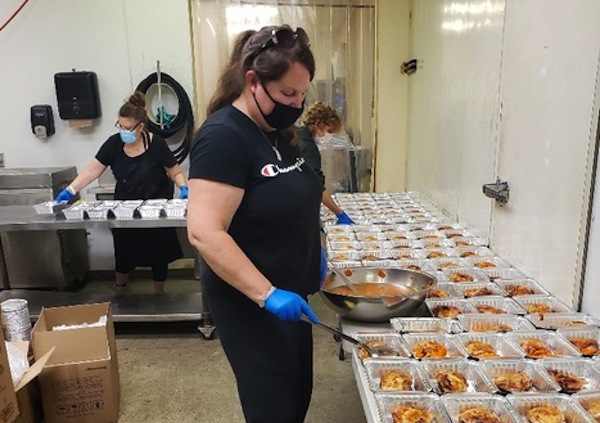
Light of Shabbat Volunteers packaging kosher meals for the High Holidays. (photo from Chabad Richmond)

On Aug. 29, a contingent of 12 Chabad Richmond volunteers worked to ensure that recipients of the Richmond community Light of Shabbat (LOS) meal program would be well fed throughout Rosh Hashanah, Yom Kippur and Sukkot.

The volunteers cooked more than 800 LOS meals in a local kosher commissary. “This is truly a labour of love,” said organizer Chanie Baitelman, co-director of Chabad Richmond. “Our Light of Shabbat participants rely on these meals. It’s not just about feeding individuals and families, it’s about nourishing their souls as well.”

Since 2011, Chabad Richmond has run a community-building program called Light of Shabbat, where volunteers cook and deliver kosher Shabbat meals to old and young, singles and families, the unemployed and working poor, immigrants and born-and-raised community members. The program is run entirely by volunteers, who coordinate, plan, shop, cook, bake, package and deliver full, healthy, kosher meals.

Since the pandemic began, more than 12,000 such meals have been prepared and delivered to people in the Richmond community. All of this is made possible through the generosity of donors, many of whom are LOS volunteers themselves. They know that everyone needs a helping hand at some time in their life.

For more information about Chabad Richmond, visit chabadrichmond.com.

– Courtesy Chabad Richmond

More than a teaching position

Sara Barahan, a former Israel Connect student, continues to meet with her mentor from the program, and has started helping others improve their English, too. (photo from Chabad Richmond)

Israel Connect pairs a mentor with an Israeli teen student who is wanting to improve their English reading, vocabulary and language skills. Mentors dedicate time every week to a video meeting with their student, using Israel Connect’s “Tour of Israel” curriculum. The goal is that, by the end of the school year, students have the skills and confidence they need to succeed in Israel’s national university entrance exam.

I have been blessed with the opportunity of being part of the Israel Connect program as a volunteer tutor/mentor. Having done this for a few years, I’m keenly aware of the benefits for both students and tutors.

A year-and-a-half ago, I was matched up with Sara Barahan, 23, who is older than the average student we work with and is in college. When we were first matched up, she was in her first year, studying to be an English and special needs teacher. It was pure joy from the moment we met. Her enthusiasm, motivation and single-minded pursuit for learning English was palpable, and her commitment and memory extraordinary.

We were tutor and student for a full school year and, once it finished, Sara asked if we could continue to meet via WhatsApp video, independently, and, of course, I agreed. I think I enjoy our meetings even more than Sara does! Even though I have a new Israel Connect student I tutor once a week, Sara and I continue to talk weekly, often for an hour or more. I’ve met many of her family members, virtually, and we’ve shared a lot about our lives in our many conversations.

For one of her college assignments, Sara was asked to write about the people and things that have influenced her on her journey to learn English. This is what she wrote:

“The Israel Connect Program was sponsored by Chabad. This program involves senior volunteer tutors from all over North America, who are fluent English-speakers, connect online, one-on-one via Zoom, for 30 minutes once a week with Israeli high school students who want to improve their English conversation and reading skills. The organizers know that good English skills will give Israeli students an advantage in accessing post-secondary education, and getting better jobs.

“English proficiency is crucial to Israeli students, since it makes up a third of their entrance exam marks for university. Students and tutors make great connections and it often goes beyond simply tutoring the curriculum, and turns into friendship. The program is something concrete and meaningful that helps Israeli students improve their lives. Building relationships is a highly satisfying and core part of this program, for both the students and the tutors.

“I joined the Israel Connect Program when I was in my first year in college,” said Barahan. “The lecturer offered this program (although it was meant to be for teenagers) and I saw it as an opportunity to improve my English, so I decided to participate in it. And this is how I got to know my tutor, Shelley from Vancouver, Canada, who until today is still in touch with me.

“This program is very important and meaningful to me because it is through this program that I got to meet the person who has influenced me, and a person that I enjoy talking to about different topics. This relationship has become very close and it’s not just a virtual meeting about a set curriculum; our conversations are about topics far beyond the studies. Thanks to the Israel Connect program I have gotten the chance to practise my English speaking, reading, writing and listening skills and expand my vocabulary.”

What greater accolade could Israel Connect get than this firsthand testimonial from a graduate of the program? I use the word graduate because Sara participated as an older student and has continued with her English studies.

Sara and I are fast friends, despite our 41-year age difference. We talk about school, her social life, our families, her aspirations, her frustrations, and everything in between. She confides in me and we have become very close. I would say that Sara seems like a daughter to me, except for the fact that I’m old enough to be her safta (grandmother). The age disparity isn’t an issue though; in fact, I like to think that she sees me as a kind of hip grandmother.

Sara often asks for my help proofreading her essays for school, and I love helping her learn. I see remarkable progress in her English language fluency and conversation skills. She says that I’m the only person she can speak English with, and really appreciates practising with me. What better way to learn a language than to converse at length about all sorts of topics? And Sara has gone on to tutor English to her neighbour’s 9-year-old daughter. Now, if that’s not a success story, I don’t know what is!

Other Israel Connect mentors have also expressed how gratifying it is to help these young Israeli students, and most mentors say that they’re certain they enjoy the experience at least as much as their students. They’ve described the mentoring experience as refreshing, fun, fulfilling and, at times, challenging – but always rewarding. Their students all sincerely appreciate the chance to practise their English conversation, vocabulary and reading skills with someone who is friendly and nonjudgmental. Some kids said they are embarrassed to try speaking English in class, or in front of their family, so the Israel Connect program gives them the confidence to speak. More importantly, it gives them the incentive to continue learning English, which they know will help them as they enter university and seek out good jobs.

Israel Connect always welcomes new volunteer mentors. For more information about the program and how to volunteer, go to tinyurl.com/yd6y4jrq.

Shelley Civkin is a happily retired librarian and communications officer. For 17 years, she wrote a weekly book review column for the Richmond Review. She’s currently a freelance writer and volunteer. She wrote this article for Chabad Richmond.

Providing meals, warmth

Several years ago, Chabad Richmond launched the Light of Shabbat program with the purpose of helping Richmond Jewish seniors celebrate Shabbat and feel connected. At first, the program involved making and delivering a free, homemade, kosher kugel and challah to six or seven Jewish seniors in the community every other week. As the program has grown, more people are receiving Shabbat meals, which now include soup, salad, a main dish, vegetables, dessert, Shabbat candles and grape juice.

Because of the COVID-19 crisis, the Light of Shabbat has expanded, and now approximately 140 meals are delivered every week to people in Richmond and beyond – an increase of more than 80%. And that number continues to grow. Now, not only seniors, but younger individuals, families and those in need can receive a Light of Shabbat meal weekly. Chabad Richmond hopes to expand the program even more.

A program like this doesn’t happen in a vacuum. More than 44 Light of Shabbat volunteers do everything from shopping, to food preparation, cooking, baking, packing and delivering the meals. Every volunteer plays an integral role.

Reaching out to help those in need is a core Jewish value. As we all know, the pandemic has resulted in people self-isolating, and many have little or no access to stores. Some have difficulty cooking, and others are simply feeling the desperation of social disconnection.

Supported through individual donations and foundation funding, Chabad Richmond’s year-round partner for the Light of Shabbat program is the Kehila Society. During the COVID-19 crisis, the Jewish Federation of Greater Vancouver has stepped forward and been supportive. In addition, Chabad Richmond has received donations of goods from Urist Cosmetics (hand sanitizer) and Real Canadian Superstore, Dan-D-Pak (food items), and a donor who wishes to remain anonymous provided facemasks.

Several of the Light of Shabbat volunteers were recently interviewed. When asked about their personal experiences volunteering, many said they deliver the Shabbat meals. The volunteers deliver not only to seniors (some of whom have mobility issues), but also to people who have lost their jobs, people struggling with physical and mental health issues, and those who are grieving alone. As one volunteer said: “You just don’t know what people are going through right now.”

Several volunteers have gotten to know Light of Shabbat recipients quite well, have become part of their lives and have forged strong connections with them. A number of volunteers say they feel like a lifeline for the people they deliver to.

One volunteer started doing deliveries with his son before his son’s bar mitzvah a few years ago. Acknowledging that his own family is fortunate, he said: “It’s a way to show my son the importance of helping others, and expose him to a wide range of experiences.”

Every volunteer’s experience is different, but they all have one thing in common: they all enjoy volunteering and feel that they benefit as much if not more than those receiving the meals. “The socially distanced shmoozing and forming of new friendships is important to the people we deliver to,” said volunteer Jill Topp. “And to me, too.”

While the Light of Shabbat program is primarily for the Jewish community, volunteer Topp said that she delivers a weekly meal to a local Muslim family. The head of the family told her: “I don’t know what we would do without you.”

As for what motivates the volunteers, giving back to the community is key. One volunteer, who chose to remain anonymous, said she treasures celebrating Shabbat with her own family, and wants others to have that experience too, even if it’s only to eat a Shabbat meal.

Volunteer Michelle Zychlinski said, “Not only do the recipients appreciate the meal, but they really appreciate the social interaction,” even if it’s from a safe distance of two metres. “So, if I can help in some way, I’m happy to.”

Volunteer Yael Segal said, “I feel it’s my responsibility, as a part of this Jewish community, to help others. It’s my honour and privilege to do it.”

Yet another volunteer, Shannon Gorski, said she gets back tenfold what she puts into it and volunteer John Samuel said, “It’s so important that people have community support. They deserve to have a kosher meal on Shabbat and to feel connected.” Another volunteer said that this opportunity has “enlarged my life,” and she wants to do more.

The connections made between volunteers and recipients will likely last beyond the COVID-19 crisis, with quite a few volunteers saying that they definitely plan to visit with their newfound friends after it’s all over.

Segal said she rekindled an old friendship when she delivered the Shabbat meal to someone she hadn’t seen in years. “One of the Russian families I deliver to recognized me from when I first immigrated to Canada as a small child. I built a rapport with them and have a little visit each week. They really look forward to the visit and the Shabbat meal. Some of the people feel very isolated.”

In the end, it’s all about building relationships with members of the community. As one interviewee put it, “It’s so important for people in the community to know that they are not forgotten about. And it’s good to know that I’m making a difference. The Light of Shabbat program is a great means to connect with secular members of the community, too, and demonstrate that Chabad cares about them.”

Topp added, “I encourage anybody to volunteer – it’s a great thing for everyone involved.”

If you know someone who could benefit from the Light of Shabbat program, contact Chabad Richmond at 604-277-6427. If you would like to get involved as a volunteer with the program, go to chabadrichmond.com/lightofshabbat.

PORCHpics Project

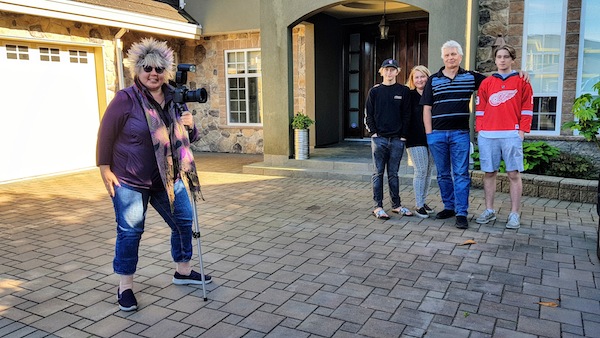
Lianne Cohen prepares to take a “PORCHtrait” of the Gorski family. (photo from Kehila Society)

As a fundraiser for Kehila Society of Richmond and/or Pathways Clubhouse, professional photographers Lianne Cohen, Jocelyne Hallé and Adele Lewin are volunteering their time (in a safe way) to photograph your family in front of your home. Dress up, stay in your PJs, hold a sign, whatever you feel like – be creative, have fun! These photos are intended to be a positive memory, to serve as a reminder of all the time you got to spend with your families in quarantine. The photographs are by a suggested minimum donation of $54 to kehilasociety.org/content/make-donation-kehila-society-richmond or pathwaysclubhouse.com/donate. A full tax receipt will be provided, along with your photographs. Bookings are available until June 7. To register, email kehila@kehilasociety.org or call 604-241-9270.

Do more than vote this fall

If you could give just a few hours to build relationships and build goodwill for the Jewish community, would you do it? Now – during an election – is the best possible time to get active and engaged so that you can make a real difference. Voting is a start, but it’s not enough.

Our community makes up less than 1.1% of the population and we’re continuing to shrink. We also tend to live in urban centres. That means we have an impact at the ballot box in just 10 (three percent) of Canada’s 338 ridings. But it doesn’t have to be that way. We need to get engaged so we can work beyond just our local ridings where we vote.

CJPAC, the Canadian Jewish Political Affairs Committee, is a multi-partisan, nonprofit organization. CJPAC’s mandate is to engage our community in the political process and foster active political participation. We work hard to build relationships, especially with candidates in the other 97% of ridings. If we had a repeat of last election, where there was a turnover of at least one-third new members of Parliament, that would be a lot of new relationships to build. We can start the process early by community members volunteering and getting to know the candidates and vice versa.

In the last federal election, 70 races – that’s 20% of all races in Canada – were won or lost by less than a five percent margin. Some races were lost by only 50 votes! A few more volunteers could have made the difference from being just a candidate to becoming an MP.

Hands down, the most effective way to make a difference this election is by volunteering for the candidate or campaign of your choice. Every campaign is hungry for volunteers, and just a small amount of time can be a big help.

You can expect to go door-knocking (possibly with your candidate!), make phone calls to constituents, hand out literature in the community, put up lawn signs or even work in a polling station.

“It’s a few hours of time committed, and it really does make a difference,” said Sharon Fitch, who volunteered on an NDP campaign in Victoria.

Volunteering can be done with the whole family and high school students can even get volunteer credit in some provinces, building their resumés along the way. Jonah Presser was just 15 when he first volunteered on a Conservative campaign in Montreal.

“It’s an excellent networking opportunity, builds confidence and you never know where volunteering could lead you,” he said.

CJPAC’s team makes volunteering easy by training you on the ins and outs of campaign volunteering, connecting you with the campaign of your choice and being there for you throughout the volunteering process. You can volunteer in your local riding or in one of the other 328 ridings where there is no strong Jewish presence. Maybe that means volunteering 20 minutes away from your home or, if you have a cottage, volunteering there. We need to cover a lot of ground to build goodwill and have the biggest impact.

“CJPAC supported connecting me to whatever party I wanted and helped me navigate who to contact,” said Maddy Cooper, who volunteered on a Liberal campaign in Toronto.

Even though Election Day is Shemini Atzeret (Oct. 21), campaigns need help every day of the week and every day of the election period.

You have the power to make a difference for the candidate you support and the opportunity to ensure that they have a connection to the Jewish community. So, take the first step by signing up to volunteer at cjpac.ca/volunteer, and CJPAC will connect you with the campaign or candidate of your choice.

Regardless of how one votes, it is incumbent upon all of us to build relationships with all parties. Our community is not monolithic and that is a great strength, especially when it comes to elections. Let’s put that strength into action.

Don’t wait to get engaged in this election. The outcome is in your hands.

Joseph Paperman is the chair and Mark Waldman is the executive director of the Canadian Jewish Political Affairs Committee. This article originally appeared in the CJN.

Ever consider a ghostwriter?

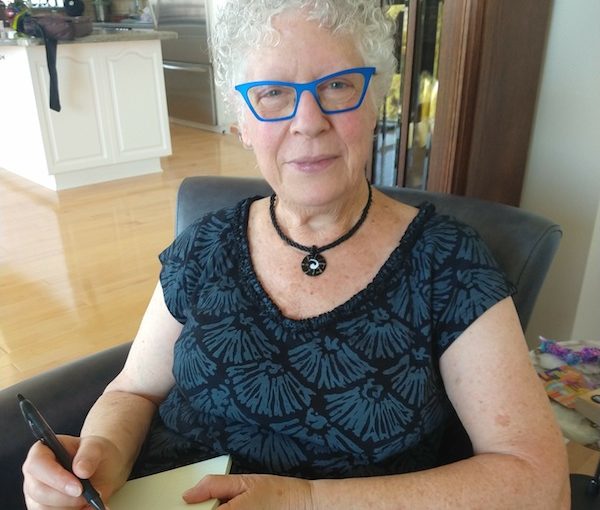
Judi Majewski can help you express what you’d like to say in writing. (photo by Pat Johnson)

Want to write your thoughts down but you’re not so good with words? Need to write a difficult letter? Want to record some memories? If you need a ghostwriter to help you express what you need to say – no matter what it is – a volunteer is ready and willing.

Judi Majewski has been offering the free service at the Isaac Waldman Jewish Public Library since the summer. She hopes readers of the Independent might know someone who can use her help.

“I thought, I know people struggle with this, so I would love to help people,” said the former public school teacher. Writing comes easy for her, she said, something she knows is not the case for everyone.

People for whom English is not a first language might benefit from her help, Majewski said, but she’s excited to help anyone.

“I think anybody, really, who wants to tell a story, who wants to record a memory, record their family history, write a eulogy. And anybody who struggles with putting things down on paper – I think there are a lot of people like that,” she said.

Publishing has never been a desire for her, she said, she just enjoys writing as a way of communicating feelings and thoughts.

“I have written the occasional difficult letter,” she said. “Sometimes your emotions are so involved and sometimes I think people can use help.”

She knows her challenge is to capture the voice of the person for whom she is writing.

“I want it to be in their voice. I think that’s going to be the interesting challenge for me, to see if I can do that, to see if it speaks for them,” she said. “That’s very important.”

Her husband told her she could make a business out of it, but she doesn’t want to go into business. She’s just happy to help, she said.

He offered some other advice, too.

“My husband says I express myself much better in the written word,” she said laughing. “Sometimes we think maybe we should just write to each other.”

To contact Majewski, visit her at the Waldman Library, in the Jewish Community Centre of Greater Vancouver, until Dec. 11, where she will be every other Wednesday, at 1:30 p.m., or email her directly at judimajewski@gmail.com.

Help out Israeli teens

Want to make a difference in the lives of Israeli teens? Consider joining Israel Connect, a program where local volunteers connect online, one-on-one, via Zoom (a video conferencing app), with Israeli high school students who want to improve their English conversation and reading skills. The program starts at the end of October and is sponsored by Chabad Richmond. It entails a half-hour per week commitment.

“We’re looking for volunteer retirees, seniors or adults with flexible schedules. No previous tutoring experience is necessary and the curriculum is provided,” said Shelley Civkin, local coordinator of the program.

“We’re looking for Jewish adults who are fluent English speakers, have basic computer skills and own a computer with a camera,” said Civkin. Volunteers can do this from home and technical support is available if needed. Time preferences of volunteers will be coordinated beforehand and sessions take place in the morning between 7 and 11 a.m. any day from Sunday to Thursday. Volunteers will be trained in how to download and use Zoom.

“It’s a very meaningful, practical way for community members to support Israel,” said Rabbi Yechiel Baitelman of Chabad Richmond. “You’ll be doing a mitzvah, while investing in Israel and its young people. Plus, good English skills will give them an advantage in accessing post-secondary education and getting better jobs.

“English proficiency is crucial to Israeli students, since it accounts for a third of their entrance exam marks for university,” he added. “Partnering with the Israeli Ministry of Education, the Israel Connect program targets teens from disadvantaged neighbourhoods in Israel. The tutoring sessions are vital to students’ upward mobility in terms of education and jobs, which is why this program is so vital.”

“Most volunteers really enjoy helping their Israeli students and make great connections with them. It often goes beyond simply tutoring the curriculum and turns into friendship and mentorship,” said Civkin. “This kind of one-on-one tutoring makes a significant difference in their lives, both educationally and personally. It’s hard to estimate the impact of this tutoring on Israeli youth, but we know it’s significant. And it’s incredibly satisfying to know that you’re doing something concrete to help Israeli students improve their lives. Several tutors have visited their students on trips to Israel, and keep in touch beyond just the school year. Building relationships is an integral and highly satisfying part of this program.”

For more information, contact Civkin at 604-789-5806 or civie1956@gmail.com.


NCJW Vancouver fall update

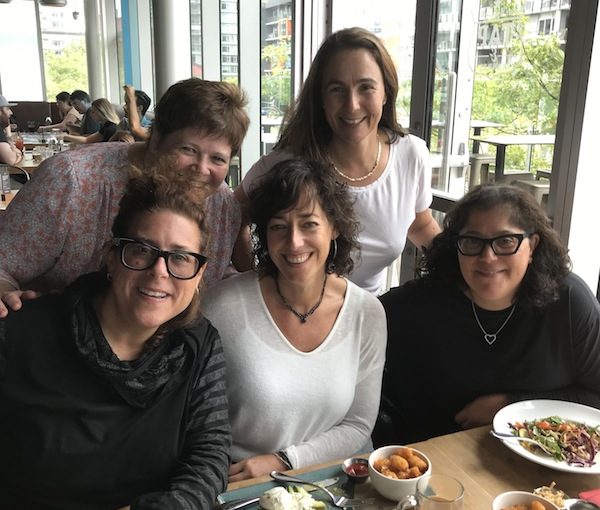
National Council of Jewish Women of Canada, Vancouver section, members. Seated, left to right, are Lisa Boroditsky, Jill Kipnis and Sandi Hazan Switzer. Standing are Heather Sirlin, left, and Jane Stoller. (photo from NCJWC Vancouver)

Members of National Council of Jewish Women of Canada, Vancouver section, have been busy close to home, not only supporting various initiatives for disadvantaged children in local schools – Books for Kids, HIPPY, Operation Dressup, and hygiene and nutrition school programs – but learning more about the Jewish history of the city.

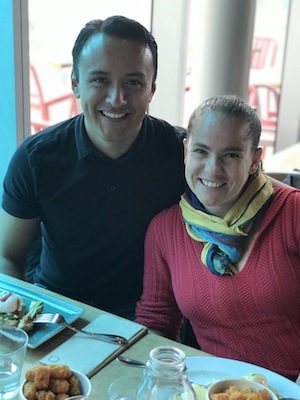
photo - Newcomers to Vancouver, Guillermo and Debby Castillo from Mexico, who joined the NCJWC walk Sunday morning
Newcomers to Vancouver, Guillermo and Debby Castillo from Mexico, who joined the NCJWC walk Sunday morning. (photo from NCJWC Vancouver)

On Sept. 8, more than 25 people participated in a sold-out walk through the “old city” of Vancouver, organized by Lisa Boroditsky, Jane Stoller and Sandi Hazan Switzer. Participants were enthralled by the stories of Harry Hammer, by the geographical and architectural details, to say nothing of the oral history of horse-drawn carts, family stores and tales of running to the bus for cheder.

NCJWC members also worked nationally, supporting successful efforts by CIJA (Center for Israel and Jewish Affairs) to get Parliament to adopt the International Holocaust Remembrance Alliance’s definition of antisemitism; and internationally, issuing a call to action to participate in the campaign to free human rights lawyer Nasrin Sotoudeh, who has been imprisoned in Iran’s Evin prison since June 2018.

In May of this year, Prof. Irwin Cotler, chair of the Raoul Wallenberg Institute in Montreal, addressed the executive of the International Council of Jewish Women on the issue of human rights. He made a compelling case for participation in the campaign to free Sotoudeh, sentenced to 38 years and 148 lashes in Iran because of her work defending women’s rights. She has been imprisoned four times since 2010.

Freedom of expression and peaceful assembly are integral to ensuring rule of law and the functions of democracy; they are fundamental principles clearly defined in international law and they are the inherent right of all people. These two democratic themes were betrayed in 2018 when, as part of peaceful protests, some women removed their hijabs and waved them like flags and then were prosecuted for this behaviour. For defending these women, Sotoudeh has been unjustly imprisoned.

The International Council of Jewish Women executive voted to support Cotler’s recommendation and Debby Altow, vice-president for Canada on this executive, circulated a backgrounder and sample letter of protest for 33 affiliates worldwide. Both email and postal addresses for United Nations Secretary-General António Guterres and UN Commissioner Michelle Bachelet, were distributed, making such protest letters easier to submit. For more about Sotoudeh and NCJW Vancouver section, visit ncjwvancouver.org.

Israeli crisis line volunteers

Ety Siton, left, director of the Kfar Saba branch of ERAN, also oversees the Toronto volunteers. She is pictured with Sigal Almog, co-founder of Toronto’s ERAN project. (photo from ERAN)

Finding enough volunteers in Israel for the night shift of the country’s emotional crisis hotline, ERAN, proved difficult. So, its chief executive director, David Koren, came up with the idea of looking for Israeli volunteers living in North America to help cover this time period.

ERAN is a confidential service, offered over the phone or the internet, which provides free, anonymous emotional support to people in Israel of all ages, in Hebrew, Russian, Arabic and English.

Sigal Almog and Galya Sarner, both former Israelis living in Toronto, were at a conference in Washington, D.C., in 2017 when they heard of Koren’s mission. They sent out a call for volunteers through their network, and further recruited two social workers, Anat Gonen and Sabina Mezhibovsky, to co-found and open a chapter of ERAN in Toronto last year.

“Right now, in Toronto, we have 16 volunteers,” Gonen told the Independent, adding, “We have around 85 volunteers in the four North American branches. I think they are answering, each month, around 800 calls. So, that is 800 calls that, before we had those volunteers in North America, were unanswered, because nobody was there at night.”

“Just think about the message behind it,” said Sarner. “It’s unbelievable, probably saving the lives of so many in need who couldn’t get help, because not enough volunteers were there to give them the minimum support they were asking for.”

All four Toronto co-founders knew of the ERAN helpline prior to becoming involved with it in Canada, though none had used it themselves.

photo - David Koren, chief executive director of ERAN
David Koren, chief executive director of ERAN. (photo from ERAN)

“ERAN is part of daily life in Israel,” said Sarner. “It’s a very distinguished project and, when we heard from Koren that he was looking to expand his global networking and to work with the North American community, we didn’t think twice. We knew we’d do whatever it took to launch the branch of ERAN in Toronto.”

Almog, who was also at the 2017 conference, recognized that this was a great opportunity to connect with and help people in Israel from Toronto. Nearly 80 former Israelis came to the initial information session in the city and, after screening them all, the branch accepted around 20 volunteers, who went on to get special training from ERAN and then started taking calls from Israel.

Volunteers do not need to have any particular degree, but they do need to possess specific skills.

“You need to be able to have some kind of empathy and self-awareness to know how to listen, [and to] understand and have a conversation in Hebrew, Russian, Arabic or English,” said Gonen. “One of the things we also found to be a struggle is that some of the people, especially those who’ve been here many, many years, can’t write in Hebrew. This is also a requirement, as they need to write a report in Hebrew. But, mostly what we need are people who are able to listen, to try not to give advice, and to be able to commit to the process,” to take a number of shifts per month.

“Whenever a volunteer answers the phone, they are told to say, ‘Eran, Shalom’ … keeping it very neutral, as, for some people on the line, it’s not a great evening…. It actually can be a pretty bad one,” said Sarner.

When a person in an emotional crisis dials 1201 from anywhere in Israel, they will be connected to a trained volunteer, who will try to direct them to those who can best help them; for example, a soldier with another soldier, or a Holocaust survivor with someone knowledgeable about the issues survivors face.

North American volunteers are taking shifts between 5 and 9 p.m., and 9 p.m. and 1 a.m., EST. Each volunteer signs into the ERAN system from their own computer and takes calls in their home.

“They have to be at home, because they have to be in a quiet room, a closed room, so nobody can hear the conversation they’re having and nobody interferes with what they say,” said Gonen.

Though the volunteers are in Toronto, they are trained to keep that fact out of the conversation. This way, explained Gonen, the caller is more likely to feel comfortable with them, thinking they are in Israel and able to identify with their struggle.

Running the Toronto chapter has been challenging, as the branch does not receive financial support from ERAN Israel or from the Toronto Jewish community. But, they have received some support from private donors and the Schwartz/Reisman Centre (in Vaughan, Ont.) provides space for ERAN volunteer training.

“We don’t have any kind of money that comes from ERAN Israel and everything we do here we pay for from our own pockets,” said Gonen. “The training … Sabina and I are volunteering to do every month. And, when we meet, all four of us will bring snacks for the meeting or things like that, because we want to make sure people feel appreciated for doing this. So, we’re looking for donations to help us run the branch.”

“We’re looking to expand support from our sponsors, because we did receive very touching sponsorships, mainly in the beginning, during the time of the initial training,” said Sarner. “But, in terms of the monthly meeting, it takes place at Schwartz/Reisman JCC. We’re very lucky to have the support of the JCC, but we definitely need to expand and find more sponsors and donors.”

The feeling shared by the co-founders and volunteers is that of gratitude to be able to have a direct impact on the lives of Israelis in Israel.

“We give a lot to ERAN,” said Almog. “We work many volunteer hours, but I feel like each one of the volunteers gets so much out of it. It’s brought a lot of meaning to our lives here, as Israelis who live outside of Israel.

“The volunteers just told us last week, someone who went to Florida and didn’t participate in the last training, that she really missed ERAN. It has become very meaningful in the lives of each one of us.”

“Anything you do in life,” Sarner added, “you have to do with love – with love and respect – and the respect we have among the four of us, it means so much to me. In Toronto, from the volunteers to the sponsors and the support of the community at large, it makes it even more meaningful to me. It has touched my heart and soul to be part of such an important initiative.”

ERAN is always looking for more North American volunteers and would like to open a chapter in Vancouver. For more information, visit app.etapestry.com/onlineforms/SchwartzReismanCentre/ERAN.html.

Rebeca Kuropatwa is a Winnipeg freelance writer.