Skip to content
  • Home
  • Subscribe / donate
  • Events calendar
  • News
    • Local
    • National
    • Israel
    • World
    • עניין בחדשות
      A roundup of news in Canada and further afield, in Hebrew.
  • Opinion
    • From the JI
    • Op-Ed
  • Arts & Culture
    • Performing Arts
    • Music
    • Books
    • Visual Arts
    • TV & Film
  • Life
    • Celebrating the Holidays
    • Travel
    • The Daily Snooze
      Cartoons by Jacob Samuel
    • Mystery Photo
      Help the JI and JMABC fill in the gaps in our archives.
  • Community Links
    • Organizations, Etc.
    • Other News Sources & Blogs
    • Business Directory
  • FAQ
  • JI Chai Celebration
  • JI@88! video

Recent Posts

  • BGU fosters startup culture
  • Photography and glass
  • Is it the end of an era?
  • Taking life a step at a time
  • Nakba exhibit biased
  • Film festival starts next week
  • Musical with heart and soul
  • Rabbi marks 13 years
  • Keeper of VTT’s history
  • Gala fêtes Infeld’s 20th
  • Building JWest together
  • Challah Mom comes to Vancouver
  • What to do about media bias
  • Education offers hope
  • Remembrance – a moral act
  • What makes us human
  • המלחמות של נתניהו וטראמפ
  • Zionism wins big in Vegas
  • Different but connected
  • Survival not passive
  • Musical celebration of Israel
  • Shoppe celebrates 25 years
  • Human “book” event
  • Reclaiming Jewish stories
  • Bema presents Perseverance
  • CSS honours Bellas z”l
  • Sheba Promise here May 7
  • Reflections from Be’eri
  • New law a desecration
  • Resilient joy in tough times
  • Rescue dog brings joy
  • Art chosen for new museum
  • Reminder of hope, resilience
  • The national food of Israel?
  • Story of Israel’s north
  • Sheltering in train stations

Archives

Follow @JewishIndie
image - The CJN - Visit Us Banner - 300x600 - 101625

Tag: Rosh Hashanah

Chicken with a French twist

Chicken always makes for a nice holiday meal. For a special treat, however, try out these French kosher chicken entrees.

CHICKEN DIJON
(8 servings)

1/4 cup water or vegetable oil
1 tsp garlic powder
1/2 cup Dijon mustard
1 tsp dry Italian seasoning
8 boneless skinless chicken breast halves
lemon slices or fresh herbs

  1. Preheat oven to 375°F.
  2. In a plastic bag, combine mustard, water or oil, garlic powder and Italian seasoning. Add chicken and shake to coat.
  3. Place chicken in a baking pan. Bake for 20 minutes or until done.
  4. Garnish with lemon slices and fresh herbs.

CHICKEN LEGS COQ AU VIN
(I’ve adapted slightly Chef Eric Ripert’s recipe that was in Food & Wine. It makes 8 servings.)

16 chicken drumsticks
salt and pepper
6 tbsp flour
1/4 cup canola oil
1 cup finely chopped carrots
1 cup finely chopped onions
1 cup finely chopped celery
3 cups chopped mushrooms
4 thinly sliced garlic cloves
1 cup brandy
2 tbsp tomato paste
1 bottle dry red wine
2 cups chicken stock
4 thyme sprigs

  1. Heat oil in a large pot.
  2. Season chicken with salt and pepper and dust with 1/4 cup flour. Add chicken to pot and cook over high heat five minutes. Remove to a plate.
  3. Add carrots, onions, celery, mushrooms and garlic and cook five minutes.
  4. Add brandy and cook one minute. Stir in tomato paste and two tablespoons flour. Add wine, chicken stock and thyme and bring to a boil.
  5. Return chicken to pot, cover and simmer 1.5 hours. Remove chicken.
  6. Simmer sauce until reduced by half, about 10 minutes. Discard thyme. Return chicken to sauce and heat.

CHARDONNAY-BRAISED CHICKEN THIGHS
(I’ve made a few changes to cookbook author Grace Parisi’s recipe that was in Food & Wine. It makes 8 servings.)

4 tbsp unsalted margarine
4 tbsp olive oil
16 chicken thighs
salt and pepper to taste
1/2 cup flour
8 peeled, quartered shallots
2 pounds parsley root or parsnips, cut into 3-by-0.5-inch pieces
2 rosemary sprigs
2 cups Chardonnay or dry white wine
3 cups chicken soup

  1. Preheat oven to 425°F. Melt margarine in a large frying pan with oil.
  2. Season chicken with salt and pepper and dust with flour. Add to frying pan, skin side down and cook until brown, about six minutes. Place on a plate.
  3. Add shallots, parsley root or parsnips and rosemary and cook one minute.
  4. Add wine and cook three minutes or until reduced by half.
  5. Add chicken soup and bring to a boil.
  6. Place chicken skin side up in frying pan and place in oven. Braise 25 minutes or until cooked through.
  7. Broil chicken for three minutes. Return to stove and boil until sauce is thickened, about three minutes. Discard rosemary. Transfer to bowls and serve.

Sybil Kaplan is a Jerusalem-based journalist and author. She has edited/compiled nine kosher cookbooks and is a food writer for North American Jewish publications.

Posted on September 16, 2022September 14, 2022Author Sybil KaplanCategories Celebrating the HolidaysTags chicken, recipes, Rosh Hashanah

Relationship with the earth

At the dinner table, I asked my family what I should write. One of my kids, age 10, immediately said, “Climate change. People think the problem’s all hot air, but the problem’s really hot water.” There was a smirk at his joke, but his twin nodded in agreement.

Hurricane Ida’s just made landfall and is churning its way up through swaths of the United States as I write this. Haiti is in shambles from its most recent earthquake, only compounded by the storm that followed. In Manitoba, we’ve lived through a hot, smoky summer, surrounded by wildfires and besieged by drought. When it finally rained, there was so much of it that some places flooded.

The weather has, at times, felt apocalyptic. While I’m not superstitious, the recent uptick in truly awful weather and world events made me think back to Yom Kippur, 20 years ago.

In 2001, my husband and I sat in Yom Kippur services in Durham, N.C., where we lived at the time. Just a little over two weeks after Sept. 11, the terrorist acts in New York, Pennsylvania and at the Pentagon were on most people’s minds in that congregation.

Like many, I have images burned in my brain from that time, as both my family near D.C. and my husband’s in New York City, were alive, thank goodness, but personally affected. At synagogue, when we reached the prayer Unetaneh Tokef, the room fell silent, electrified. This ancient prayer, perhaps written by Yannai in the sixth century, is familiar to most who’ve attended services on the High Holidays or listened to Leonard Cohen:

“On Rosh Hashanah will be inscribed and on Yom Kippur will be sealed – how many will pass from the earth and how many will be created; who will live and who will die; who will die after a long life and who before his time; who by water and who by fire, who by sword and who by beast, who by famine and who by thirst, who by upheaval and who by plague, who by strangling and who by stoning. Who will rest and who will wander, who will live in harmony and who will be harried, who will enjoy tranquility and who will suffer, who will be impoverished and who will be enriched, who will be degraded and who will be exalted. But Repentance, Prayer and Charity mitigate the severity of the Decree.”

In Temple Beth El in Durham, there was loud sobbing and then, the most elemental keening and grief that I’ve ever heard. Twenty years later, I can’t forget my brother-in-law running down Broadway as the second tower fell behind him, covered in its dust as he escaped Manhattan on the Staten Island ferry, or my father-in-law, who walked five miles through Manhattan in the middle of the street, only to stand in Central Park, afraid to go indoors. My father and brother, away from D.C. on business trips, waited days, unable to get home. My sister-in-law, stuck in D.C. overnight, was finally able to leave the city and walked home to her apartment in Virginia, only to suffer through continual sonic booms, as fighter pilots raced overhead, shaking her high-rise building.

I will never hear this prayer, which is primarily part of the Ashkenazi liturgy, without being shaken by that keening sound.

However, just as I remember it, it’s also helpful to keep reading. It says that, by doing repentance, prayer and charity, we can change the severity of the outcome. We’re taught clearly that repentance is not simply feeling badly about past behaviour, it’s about making amends. We must apologize to those we’ve wronged and try to fix our mistakes. Our prayers are not simply rote, but must come from our hearts, with the right kind of kavannah, or intention.

Finally, it mentions we must do tzedakah, which some translate as charity, but really also means righteousness. It is the obligation to do the upstanding, just thing, and to act with integrity.

Although I can’t help but think of this prayer in context of those who died, both on Sept. 11 and those who, each year, aren’t written in the Book of Life for the next year, it’s not just about that. This prayer says we must act now to make change and to stop bad things from happening to us.

Even for those who don’t believe in its literal power, the message is clear. If we want to be able to live with ourselves later, we’re taught that we must repair our relationships promptly, practise introspection through prayer, and make a big effort to step up and do the right thing.

Those who’ve lived through floods, wildfires, earthquakes and hurricanes this summer would argue that bad things are happening. The rest of us, living through the pandemic, would be hard-pressed to disagree. Yet, Jewish tradition teaches us that we aren’t passive observers. We aren’t meant to simply submit and accept this.

More than one rabbi has told the joke about the man on top of his roof in the middle of a flood. He ignores the orders to leave, turns down a neighbour’s offer of a ride, says no to the rescue boat and refuses to be saved by helicopter.

The floodwaters rise higher. He drowns. Then he gets to speak with G-d. He says, “Lord, I believed in you. Why didn’t you save me?” And G-d responds, “Well, I sent you an evacuation order, a carpool, a boat and a helicopter!  What else do you want?”

While we battle a pandemic, forest fires, rising temperatures in ocean waters and on land, it’s helpful to remember that our tradition teaches us that “G-d helps those who help themselves.”

This is a strange year, where some of us, used to sitting in synagogue, will instead be streaming services at home again, or perhaps spending time praying outdoors. It could also be the year where we decide that, upon reflection, it’s important to repair our relationship with the earth and to start doing the right thing personally. Climate change is upon us. It’s going to take everyone’s efforts to make a difference.

Wishing you an easy fast. May you be written for good in the Book of Life.

Joanne Seiff has written regularly for CBC Manitoba and various Jewish publications. She is the author of three books, including From the Outside In: Jewish Post Columns 2015-2016, a collection of essays available for digital download or as a paperback from Amazon. Check her out on Instagram @yrnspinner or at joanneseiff.blogspot.com.

Posted on September 10, 2021September 9, 2021Author Joanne SeiffCategories Op-EdTags 9/11, climate change, High Holidays, repentance, Rosh Hashanah, terrorism, Unetaneh Tokef, Yom Kippur

Choose kindness in 5782

A friend of mine is an essential grocery store worker. Her colleagues are a mix of international newcomers, along with a sampling of Canadian-born workers. This Canadian friend’s favourite colleagues are often the immigrants from elsewhere, who are trying hard to be kind and helpful to one another. The most difficult ones, often those born in Canada, she describes as the “mean girls.” It’s the kind of exclusionary, popular crowd many of us faced in middle or high school … not a fun work environment.

I tried to be comforting about the upcoming shift with the mean girls, but I have faced some of this myself. I’d pushed it to the back of my mind but now I wondered, was I also battling the sad adolescent feelings of being excluded or harassed by the in-crowd?

Like most of us during the pandemic, I’ve felt moments of isolation and loneliness and, as a parent, being overwhelmed. One warm morning, while walking the dog and twins (because, while I may feel lonely, as a mom these days, I’m rarely alone!), we saw that a neighbour had left out items to be picked up by a charity. On the walkway was a Singer treadle sewing machine. I just about swooned – as did my kids. They saw a summer sewing rehab project. We returned home and went out on the familiar route with our red wagon so the kids could play. We rang the doorbell to ask about the sewing machine, but got no answer. We wondered if the neighbours were home, so we walked around to the back lane. We faced only a big garage.

Next to this house was another friendly, older neighbour’s home with an apple tree. We often pick up the fallen apples, and pick the tree, making apple chips and sauce. We give the neighbour homemade applesauce and donate the rest to the foodbank. We paused, examining the tree (few apples this year due to frost and drought) and discussing it.

Suddenly, an expensive car came out of the garage behind us. We asked about the sewing machine. The woman told us disdainfully that she was already late for an appointment. She told me it would cost me $200 cash (but she was giving it away to charity?) when I offered the $60 in my pocket. She drove off in a pique. I felt shame – but my kids, while disappointed, raced up the sidewalk with the wagon. We played instead, while I hatched a plan.

In the meantime, I saw a social media announcement. Invitations had been sent to a new private Jewish women’s professional networking group to which I’d applied. “Hurray!” The announcement touted, “You were all accepted, check your email!” Except, when I checked – and re-checked – my email, I hadn’t gotten any acceptance email. Maybe there was a snafu? Nope. I wasn’t invited. Another thing where I wasn’t actually eligible for the cool club.

What’s the Jewish lesson in all this?

On one hand, we’re all part of a big family, starting with Avraham Avinu, or Abraham, our father, as my kids learn in school. We’re meant to look out for one another, supporting, networking and treating one another with love.

On the other hand, there’s this situation I just read in Tractate Sukkah, on page 38a, where the rabbis question what it means if a Jewish man cannot read and a Canaanite slave, a woman, or a minor was reciting Hallel (prayers of thanksgiving done on festivals) on his behalf. The man must repeat every word to make it valid. Then the Mishnah says, “And may a curse come to him” (for being so ignorant) and the Gemara clarifies, explaining that a son can recite for his father, a slave can recite for his master and a woman may recite a blessing on behalf of her husband, but “the sages said: ‘May a curse come to a man who, due to his ignorance, requires his wife and children to recite a blessing on his behalf.’”

Here we are again!  There’s a message of belonging and obligation, as well as an opportunity to shame, curse or embarrass someone who might have less knowledge or power. Is this the Jewish way to behave?

I returned again to this because, well, I’m still wandering the neighbourhood with my kids. It’s still lonely, but, today, we had a triumph.

I remembered which charity picked up the Singer sewing machine. Winnipeg isn’t such a big place. I sent them an email, describing where and when it was picked up. Lo and behold, they tracked down the neighbour’s discarded sewing machine, which they tested. It worked perfectly. We went to the downtown nonprofit’s shop. It took me several tries to find the person I’d been emailing, but, when I did, she rolled out the truly fine antique sewing machine in its wooden cabinet. She showed it off to me.

I happily paid $150 to support the charity’s work to claim it. The loading dock workers joked to my husband. They found these all the time! If I wanted more, they’d love to help!

This journey took the sewing machine back home, just a block away from where it used to live. But I can’t rewind time to fix that uncomfortable interaction with the neighbour. I can’t erase the mean girl experiences in my friend’s work life or magically get accepted into the “very best” Jewish networking circles. However, I can turn these experiences upside down.

The sewing machine incident offered an opportunity to use my research skills and donate to a good cause. My friend found solace, during her cashier shift, in the other employees, who acknowledged what was happening and cheered her on. She got a chance to hug a cancer-survivor friend during the shift. Last but not least, another butcher colleague alerted her that some steak was going on sale so she could afford to buy it to feed her teenagers.

It’s true that our rabbinic tradition acknowledges curses as commonplace and shaming as acceptable. Yet, when we make amends this year and pray for a good 5782, we can try to turn that message on its head. We’re all children of Abraham. Let’s, as my friend suggested, “lay on the love,” kindness and inclusivity, even when there are prime insider opportunities to ostracize others.

Make a donation, network with newcomers or outsiders, and choose to treat others as beloved family.

Wishing you blessings and not curses! Wishing you a happy, healthy and meaningful new year, from my house to yours.

Joanne Seiff has written regularly for CBC Manitoba and various Jewish publications. She is the author of three books, including From the Outside In: Jewish Post Columns 2015-2016, a collection of essays available for digital download or as a paperback from Amazon. Check her out on Instagram @yrnspinner or at joanneseiff.blogspot.com.
Posted on August 27, 2021August 25, 2021Author Joanne SeiffCategories Op-EdTags gratitude, immigration, Judaism, kindness, lifestyle, Rosh Hashanah, Talmud
About the Rosh Hashanah cover art

About the Rosh Hashanah cover art

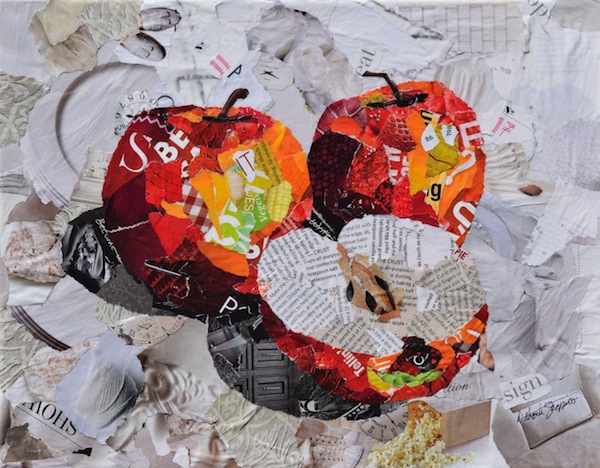
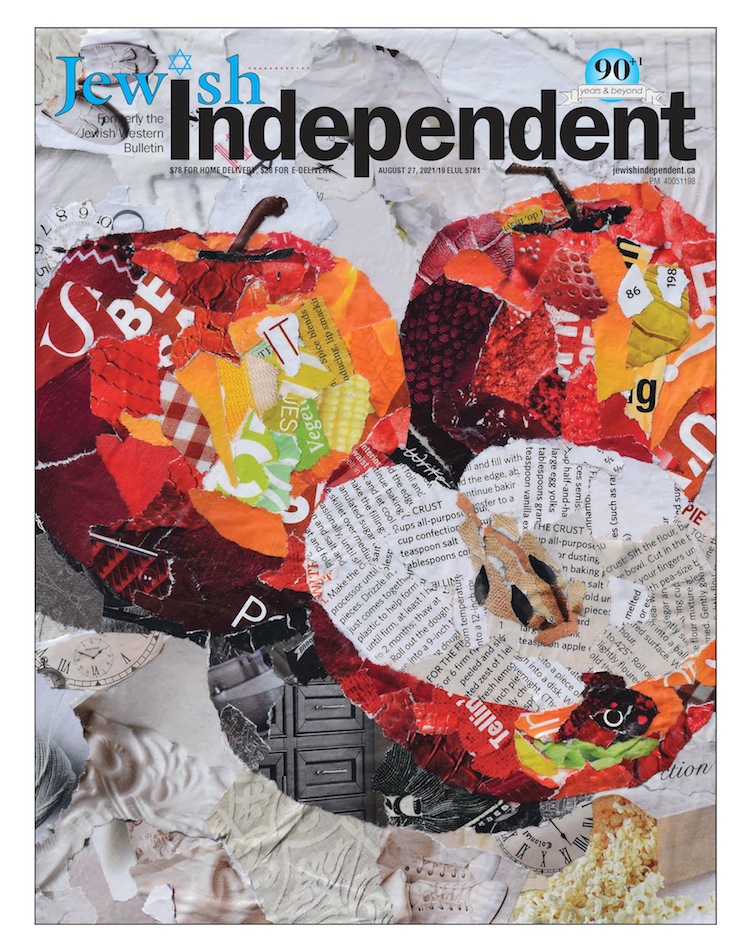
image - JI Rosh Hashanah issue 2021 cover with art by Deborah ShapiroDeborah Shapiro is a self-taught, award-winning artist from Akron, Ohio, who creates collages from bits of magazine paper – no paint is used. Her subjects include nature scenes, animals and still life images. Many of her pieces have words and added meaning, as with the apple collage that graces the cover of this special issue of the Jewish Independent. You will find parts of apple pie recipes within the cut part of the apple. Apples, of course, are one of the symbols of Rosh Hashanah, representing, as we dip them in honey, our wishes for a sweet new year.

Shapiro began her art career later in life, after the age of 50, following a jaw surgery.  Her mother gave her magazines as she recovered and Shapiro used them as paint to create paper paintings. Prior to that, she was a videographer for more than 35 years. To see more of her creations, visit deborahshapiroart.com or facebook.com/deborahshapiroart.

Format ImagePosted on August 27, 2021August 25, 2021Author The Editorial BoardCategories Celebrating the HolidaysTags apples, art, collage, Deborah Shapiro, Rosh Hashanah
Returning to our holiday tables

Returning to our holiday tables

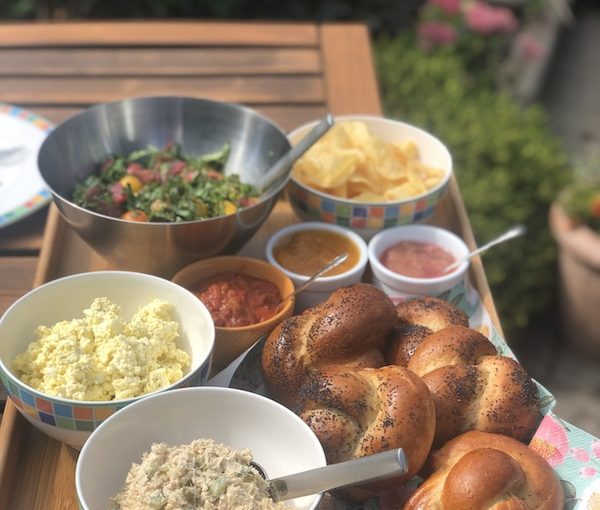
Planning ahead can help minimize touch points and help keep a small gathering safe. (photo by Michelle Dodek)

We all remember the days when we gathered family, friends and maybe some strangers together at our holiday table to celebrate Rosh Hashanah. For me, it feels like a distant memory but I know I loved preparing loads of food for all of us to enjoy together. And I’m looking forward to doing it again this year, albeit outside, under cover of a tent my brother luckily bought before his eldest daughter’s bat mitzvah (and has subsequently used for the bat mitzvah parties of his two younger daughters and other gatherings, particularly since COVID hit).

Dinner in my family has always a “family style” affair, where dishes are passed from one to the next and then left on the table for anyone to help themselves to seconds or thirds. Lunch on the first day of Rosh Hashanah, which is the main event in my home (aka “the Big Lunch”), has been, for the more than 20 years I’ve hosted it, a giant buffet.

For some people, reverting back to the way things were may be an easy mental step. For others, in an environment with unvaccinated children, immunocompromised loved ones and a newfound awareness about germ transmission, things will not go back to the way they were pre-pandemic. Not yet, given the latest mask mandate, and maybe not ever.

What to serve and how to serve it has always been a challenge in my family. How do we make sure everyone is comfortable with the food choices and the way they are presented? We have a few parameters since we are kosher and have those with nut allergies, dairy sensitivities, oral allergy syndrome, a few vegetarians and others who are just plain particular. Inviting upwards of 40 people, usually closer to 75, always presents some logistical fun, especially with environmental concerns ruling out disposables. All of these challenges have created an environment where thinking creatively about food is a necessity. My formal training as a chef has helped with this process.

The two parts to making sure your guests are at ease this holiday season are choosing a delicious menu (as usual) and presenting the food in a way that features as few touch points as possible. Menus can go one of two ways: traditional or modern. For traditional foods, I will defer to your family’s minhag (tradition). Some families and cooks take great pleasure in their annual interaction with time-honoured recipes. I treasure my baba’s potato knish recipe and relish the prospect of circling my challah and topping it with another small, braided crown the way my mom showed me when I was a little girl.

As a vegetarian, however, I have never presented a full array of traditional Ashkenazi foods to celebrate any holiday. Pickled tongue? Not a chance. In fact, I felt like a bit of a bad Jewish mother when my daughter was 5 years old and leaned over to me at my mother’s yontif table as the soup was served and whispered, “Chicken in soup! Weird!” My soups are seasonal, bright vegetable soups like butternut squash or carrot ginger.

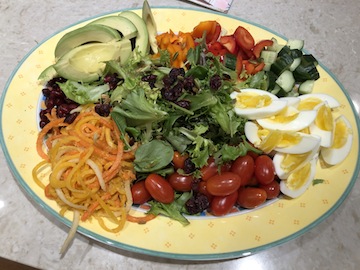
photo - Composed salads are colourful and tasty
Composed salads are colourful and tasty. (photo by Michelle Dodek)

The farmers market produce that looks most appealing is what guides my menu. I feel strongly that bringing the bounty of our local harvest to my celebration of a spiritual new year is integral to our connection with where we are and how we live. That topic, however, is for another article.

Let me suggest, if you wish to bring your offerings into 2021 and still have your food choices reflect the symbolism of our tradition, try a couple of approaches.

First, look to Israeli cuisine. The mash-up of all Jewish traditions from Austria to Addis Ababa give many tasty options that will become new staples at your family gatherings.

Second, many Sephardi foods focus on beautiful vegetables and fruits that were not available to people living in Eastern Europe. However, living as we do today, we have access to almost every possible kind of produce. Invest in a few good cookbooks, like those of Adina Sussman, Jana Gur, Einat Admony or Yotam Ottolenghi for ideas on how to up your game with some vegetable forward, delicious, holiday-worthy food.

As far as ways to serve your food, here are some options to consider in order to be considerate of your guests in this special year of our emergence from pandemic holiday isolation.

Option 1: “Modified Family Style aka Downton Abbey,” using family members as the serving staff. For this option, the cook enlists the help of a few willing family members, (in my case, my teenaged children, my sisters and my brother). Each helper is given the responsibility to serve a dish, going from guest to guest, giving a description of the delicacy and spooning out an appropriate amount. While efficient, this does lend itself to the possibility of green bean almandine on Bubbie’s shoulder or salad in Grandpa’s lap.

Option 2: “Plated Dinner aka Eat What’s On Your Plate aka Sweat Away, Host.” This is the restaurant-style plate that hasn’t been so common at home since the Starbucks revolution in dining, where everyone has to have everything their way. In this model, everyone gets the same thing, in approximately the same amounts. Similar to a restaurant but without choosing your order. This results in more food waste, because, although it hasn’t been dropped on Grandpa’s lap, some of dinner will no doubt be pushed to the perimeter of the plate and left for the compost. It also requires, as suggested in the third version of the name, for someone to toil in the kitchen to make every plate and be on call if someone wants seconds of quinoa pilaf and doesn’t have the good fortune of sitting next to a toddler who has pushed all of that mixed grain thing to the edge of her plate. One can enlist the help of volunteers to assist with the plating to speed things up and, most certainly, some people will be needed to take the finished plates to the table, but the onus of refills will almost certainly fall to the person in charge of the kitchen.

Option 3: “Staffed Buffet” is probably the easiest, depending on the set up of your house. In this iteration of food service, a couple of people serve the buffet of food to the guests as they walk by with their plates. This eliminates having everyone touch the serving utensils. It requires fewer helpers than Option 1 and is more customized than Option 2. The catch is that your house needs to be set up to accommodate a group of hungry Jews traipsing along – and staying patient long enough with their family members who are acting as servers – to get all of their food. One major recommendation is, to avoid a stampede or major butting in line, do not serve any version of smoked salmon. For some reason, the sight of thinly sliced orange fish causes many Jewish people to act like Americans at Walmart on Black Friday.

Good luck with your holiday entertaining. Keeping things small this year to ease back into the intimacy of entertaining is also probably a great idea. Remember to say a hearty Shehechiyanu with your assembled guests for, if the pandemic has taught us one lesson, it is never to take being with our loved ones for granted. Shana tova.

Michelle Dodek is a longtime contributor to the Jewish Independent and a balabusta. She shares her love of cooking and entertaining through culinary classes, both in person and on Zoom.

Format ImagePosted on August 27, 2021August 25, 2021Author Michelle DodekCategories Celebrating the HolidaysTags cooking, coronavirus, COVID-19, entertaining, lifestyle, Rosh Hashanah
Being a Jewish woman

Being a Jewish woman

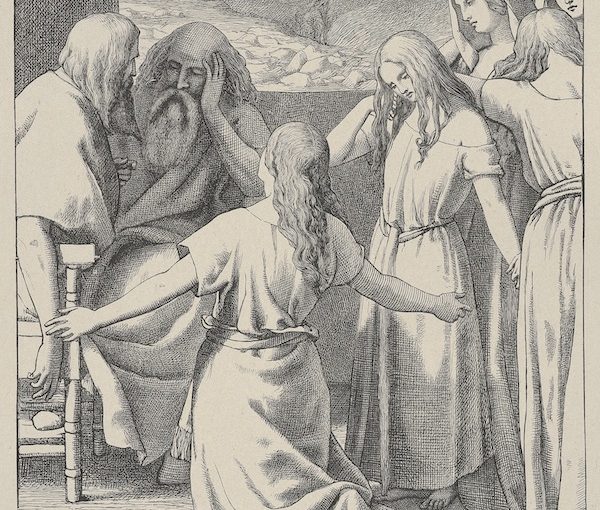
The Daughters of Zelophehad by artist Frederick Richard Pickersgill, engraver Dalziel Brothers, 1865-1881. (photo from metmuseum.org)

“A cobbler passed by the window of Rabbi Levi Yitzhak, calling out: “Have you nothing to mend?!” The rabbi began to cry: “Woe is me! Rosh Hashanah is almost here and I have not yet mended myself!” (Zichron Ha Rishonim)

According to Rabbi Kruspedai, in the name of Rabbi Yohanan, three books are opened on Rosh Hashanah: one for the wholly righteous, one for the wholly wicked and one for most of us, those in between. The wholly righteous are inscribed and sealed in the Book of Life; the wicked in the Book of Death; and the rest of us are held suspended until Yom Kippur, when we are judged worthy or unworthy. The zodiacal symbol for the Hebrew month of Tishri is, fittingly, a balance – the scales of justice.

When Creation was established, but still incomplete, humans had an important role – to fill the earth with life and to sustain life at the highest level (Genesis 1:28). We became a partner with the Creator in tikkun olam, perfecting the world.

Women are not relegated to a minor position in this task. As Rosh Hashanah approaches, Jewish women reflect on their role, knowing that they have more to do than merely bake honey cakes, send out Shana Tova cards and light candles.

Since coming to live in Israel five decades ago, I have felt the need for a deeper, more spiritual aspect. Every type of Jewish woman is represented in Jerusalem, from the ultra-Orthodox matron to the professional modern religious woman; from the Reform woman rabbi to the completely secular woman who sees any kind of ritual as nonsense. Each has her convictions and will act on them accordingly.

Having begun my life as a fairly assimilated Jewess, I fall somewhere in the middle. I consider myself a modern, observant woman, although I fall short of my daughters, who cover their hair and have studied Talmud, Mishnah and Jewish philosophy at a level of commitment to Judaism I probably will never attain. Yet, I am not totally ignorant, nor have I been left entirely unaffected by the feminist movement. I do believe that the Torah was given by G-d at Mount Sinai and one may not change it even one iota. But neither am I satisfied to fulfil the prayer of the pious father at his daughter’s birth in the Middle Ages: “May she sew, spin, weave and be brought up to a life of good deeds” – especially as the first three skills are completely beyond me!

I want to find a comfortable spiritual niche for myself within the framework of halachah (Jewish law). I have no desire to don tallit or tefillin to make a feminist statement, yet I know there are possibilities that exist for the Jewish woman that give her a place beyond catering to the family’s gastronomic needs when the Days of Awe come round. Many opponents of orthodoxy contend that women are not honoured in Judaism, despite the deep reverence for Sarah, Rebecca, Rachel and Leah. My namesake, Dvora, the judge and prophetess, is also greatly honoured for her political, moral and religious leadership.

There are contemporary Orthodox women who have widened the halachic barriers by challenging practices of separate synagogue seating, and questioning the right of women to be called to the Torah and to be counted in the minyan (traditionally, the minimum 10 men required for communal worship). These privileges do not unduly attract me – if they did, I would attend a Conservative or Reform synagogue. I am not even tempted to join a halachically permitted women’s “minyan” – I rather enjoy my silent communion with G-d and don’t feel it necessary to see everything that is going on. G-d hears Jewish women’s pleas, as He did in the case of the childless Sarah, Rachel and Hannah and the landless daughters of Zelophehad.

I don’t yearn for religious parity with men. Not everything in life can be equal or fulfilled at every given moment. Demands for personal gratification and unreal expectations can destroy relationships in the secular sphere also. Blu Greenberg, a pioneering Orthodox feminist and writer, has defined “time, energy, a measure of sacrifice and generosity of spirit” as the enemies of instant gratification and believes that one is only free within an ethical and moral structure.

With the approach of the High Holy Days, there are women who are searching for a role that will be neither insignificant nor undervalued. We are sifting through the perspectives of Jewish values, what we can welcome and what we can reject.

We will attend synagogue and listen to the shofar as men and women are obligated to do, and try to observe the period of penitence that ends with Yom Kippur. There are also tehinnot (petitional prayers; in Yiddish, tkhines) for women, written in Yiddish in Bohemia and published in Germany, Russia and Poland in the 18th century, which I would like to find and have translated. They emphasize G-d as a loving father rather than as a stern judge; the merit of the matriarchs; and define rewards in terms of pious and virtuous children. They represent a kind of folk literature, mirroring the daily life and concerns at that time in the ghetto. As it is known that many of the tehinnot were composed by women – a rare phenomenon – I think they are appropriate prayers to be added by women to the traditional ones at this time.

Mainly, I think, we should sustain our belief that women, as well as men, are made in G-d’s image. For me, being a Jewish woman largely defines who I am and what I am called to do. Our sages tell a story that, when the Torah was first given, G-d told Moses to teach it first to the women. I believe the reason – that is still valid today – was that women were the architects of the next generation, and their acceptance of it would determine whether or not future generations would continue the covenant. Surely, there is no more significant role as we approach the New Year and the Day of Judgment. May we all be inscribed for a good year.

Dvora Waysman, originally from Melbourne, Australia, has lived in Jerusalem for 50 years. She has written 14 books, and the film The Golden Pomegranate was based on her novel The Pomegranate Pendant. She can be contacted at [email protected].

Format ImagePosted on August 27, 2021August 25, 2021Author Dvora WaysmanCategories Celebrating the HolidaysTags identity, Judaism, Rosh Hashanah, tikkun olam, women, Yom Kippur

Salmon for the holiday

One of the symbols of Rosh Hashanah is the fish head – “God will make you the head, not the tail” is the blessing. Fish is often served at one of the holiday meals and here are a few salmon recipes that would be nice to serve for lunch or brunch.

HOT DOG BUN SALMON SANDWICHES
(This recipe is adapted from Food & Wine. It makes 8 servings.)

1/2 cup plain yogurt
2 finely chopped celery ribs with leaves
1 tbsp chopped chives
2 tbsp chopped flat leaf parsley
1 tbsp fresh lemon juice
salt and pepper to taste
4 loose cups flaked roasted salmon
8 hot dog buns
melted unsalted butter
potato chips

  1. In a bowl, combine yogurt with celery, chives, parsley and lemon juice. Season with salt and pepper. Fold in salmon.
  2. Heat a griddle. Brush the cut sides of the buns with butter and toast.
  3. Fill the buns with salmon salad. Top with potato chips.

SALMON BURGERS
(This recipe comes from Rick Moonen of RM Seafood in Las Vegas with my changes. It makes 6 servings.)

5 coarsely chopped scallions, white and green parts only
3/4 cup coarsely chopped red pepper
3/4 cup coarsely chopped green pepper
1 1/2 pounds skinless, centre-cut salmon, cut into 1-inch cubes and frozen for 30 minutes
1/2 cup dry breadcrumbs
salt and pepper to taste
2 tbsp unsalted butter
1/4 cup olive oil
6 split and toasted brioche buns
harissa-spiced mayonnaise (optional)
cucumber relish, lettuce and tomato slices, for serving

  1. Pulse scallions and peppers in a food processor until finely chopped. Transfer to a bowl. Pulse salmon until finely chopped and with some bigger chunks. Transfer to bowl.
  2. Fold in breadcrumbs, salt and pepper and one-third cup harissa mayonnaise (to make: add two tablespoons of the North African paste to two-thirds cup mayonnaise). Oil hands and shape into six patties. Transfer to a lightly oiled plate and refrigerate 30 minutes.
  3. Light a grill. Melt one tablespoon butter and two tablespoons olive oil in a frying pan. Add three burgers, cook on both sides four to five minutes. Transfer to a plate. Add another one tablespoon butter and two tablespoons olive oil to pan and fry remaining burgers.
  4. Spread harissa mayonnaise on buns. Top with burgers, relish, lettuce and tomato slices.

SMOKED SALMON AND ONION FRITTATA MUFFINS
(This recipe comes from Foods You Want for the Life You Crave by Nealy Fischer. It makes 4 to 5 servings.)

1 1/2 tsp olive oil
1 tbsp unsalted butter
1/2 small finely chopped onion
1 1/2 ounces lox or smoked salmon
4 large beaten eggs
1/4 cup chopped chives

  1. Preheat oven to 400°F. Grease six-cup muffin pan with olive oil or vegetable spray.
  2. Heat olive oil and butter in a frying pan. Add onion and cook eight minutes.
  3. Move onions to one side of frying pan, fry smoked salmon one minute. Break into small pieces.
  4. Transfer onion and salmon to a bowl and allow to cool.
  5. Add eggs, chives, salt and pepper to bowl and combine. Pour into muffin cups. Bake for 20-25 minutes or until eggs are set in the centre. Let cool one minute then remove from pan.

Sybil Kaplan is a journalist, editor of nine kosher cookbooks (working on a 10th) and a food writer living in Jerusalem. She has written the kosher restaurant features for janglo.net since 2014 and leads weekly English-language Shuk Walks in Machane Yehuda.

Posted on August 27, 2021August 25, 2021Author Sybil KaplanCategories Celebrating the HolidaysTags cooking, recipes, Rosh Hashanah, salmon

Try new-ish dish in new year

Quinoa (keen-wah) is a plant whose seed is eaten like a grain, like wheat, originally from the Andean region of South America. However, it is not a true grain. Quinoa contains higher amounts of protein compared to true grains, and it does not contain any gluten.

Eating quinoa might make people feel fuller than wheat or rice and it might also decrease post-meal levels of blood fats called triglycerides compared to eating bread. Here are some recipes you might like to try in the new year, particularly if you are gluten-free or celiac.

BASIC QUINOA
(makes 3 cups)

2 cups water
1 cup quinoa

  1. Place quinoa and water in a saucepan. When all the grains turn white, bring to a boil.
  2. Cover and cook until all the water is absorbed (about 15 minutes).

QUINOA TABBOULEH
(This recipe is from Rancho la Puerta in Tecate, Mex. It makes 4 servings.)

2 tbsp olive oil
2 tbsp fresh lemon juice
2 tbsp chopped Italian parsley
1 minced garlic clove
salt and pepper to taste
1 cup water
1/2 cup rinsed quinoa
1/2 cup chopped cucumber
1/2 cup chopped tomatoes
1/4 cup chopped fresh mint
1/2 cup chopped parsley
8 lettuce leaves

  1. Whisk oil, lemon juice and parsley in a bowl with garlic, salt and pepper.
  2. In a saucepan, bring one cup water to boil. Add quinoa, cover, reduce heat and cook until water is absorbed, about 13 minutes. Transfer to bowl and cool.
  3. Add cucumber, tomato, mint and a half cup of parsley. Pour dressing on and toss to coat.
  4. To serve, arrange two lettuce leaves on each of four plates. Spoon quinoa tabbouleh on top and serve.

LEMONY QUINOA SALAD
(This recipe is from California Chef Jeremy Fox from a Food & Wine article on America’s best vegetarian cooking. It makes 4 servings.)

8 large red radishes
1 small black radish
1 peeled medium carrot
1 cored medium fennel bulb
1 cup quinoa
2 1/2 cups water
finely grated zest of 2 lemons
juice of 1 lemon
2 tbsp vegetable oil
salt and pepper to taste

  1. Using a mandolin grater, thinly slice radishes, carrot and fennel and transfer to a bowl of ice water. Refrigerate about one hour, until crisp.
  2. In a saucepan, bring quinoa and water to a boil. Cover and cook over low heat until water is absorbed, about 20 minutes. Let cool.
  3. Drain and dry vegetables. Combine lemon zest and lemon juice with oil in a bowl. Add quinoa and toss. Season with salt and pepper.
  4. To serve, place quinoa in salad bowls and top with vegetables.

CRISPY QUINOA SLIDERS
(This recipe is from Food & Wine by Chef Kay Chun. It makes 12 sliders.)

2/3 cup quinoa
2/3 cup water
2 1-inch slices whole wheat bread, crusts removed, bread cubed
2 large eggs
1 cup coarsely grated zucchini
1/2 cup grated Parmesan cheese
1/4 cup chopped chives
3 minced garlic cloves
salt and pepper to taste
4 tbsp vegetable oil
mini buns, lettuce, tomatoes, onions, pickles

  1. In a saucepan, cook the quinoa in boiling water until just tender, about 10 minutes. Drain and spread onto a baking sheet to cool.
  2. Pulse bread in a food processor until coarse crumbs (about one cup).
  3. Whisk eggs in a bowl. Squeeze liquid from zucchini and add to eggs. Stir in cheese, chives, garlic, salt and pepper. Add quinoa and breadcrumbs. Let stand 10 minutes.
  4. Scoop 12 mounds of mixture to form half-inch-thick patties. Heat one tablespoon oil in a frying pan. Add six patties and cook about three minutes, until golden on the bottom and crisp. Re-oil the pan and fry the remaining six patties for three minutes.
  5. Serve in mini buns with lettuce, tomatoes, onions and pickles.

Sybil Kaplan is a journalist, editor of nine kosher cookbooks (working on a 10th) and a food writer living in Jerusalem. She has written the kosher restaurant features for janglo.net since 2014 and leads weekly English-language Shuk Walks in Machane Yehuda.

Posted on August 27, 2021August 25, 2021Author Sybil KaplanCategories Celebrating the HolidaysTags cooking, quinoa, recipes, Rosh Hashanah

Add a spinach salad to menu

Spinach may have originated 2,000 years ago in Persia but it is native to central and western Asia. Now widely popular, there are many tasty ways to prepare it. In addition, its health benefits are many, especially if eaten raw, so here are a few recipes for a healthy new year.

MY FAVOURITE SPINACH SALAD
(4 servings)

4 cups fresh, chopped spinach
6-8 halved cherry tomatoes
2 medium, sliced kohlrabi
2 grated hard-boiled eggs

dressing
1/2 tsp minced onion
1 crushed garlic clove
salt and pepper to taste
1/4 tsp sugar
1/8 tsp paprika
dash dry mustard
dash celery seeds
1 tbsp red wine vinegar
1 tbsp + 1 tsp olive oil
1 1/2 tsp water

  1. In a salad bowl, combine spinach, cherry tomatoes, kohlrabi and eggs. Set aside.
  2. In a jar, combine dressing ingredients, close and shake well.
  3. Dress salad just before serving.

CRUNCHY SPINACH SALAD
(4 servings)

4 cups torn spinach
1 cup fresh bean sprouts
1/2 cup sliced and drained water chestnuts
2 chopped hard-boiled eggs

dressing
1/4 cup brown sugar
1/4 cup vegetable oil
2 1/2 tbsp red wine vinegar
2 1/2 tbsp ketchup
1 1/2 tsp Worcestershire sauce

  1. In a salad bowl, combine spinach, bean sprouts, water chestnuts and eggs.
  2. In a bottle or jar, combine dressing ingredients. Cover and shake well to mix.
  3. Before serving, pour dressing over salad and toss.

SPINACH SALAD DRESSING
(This salad dressing recipe is from P.J. Clarke’s in New York, which was founded in 1884. The bar was once a saloon owned by Patrick J. Clarke, an Irish immigrant who was hired in the early 1900s and, after about 10 years working there, bought the bar and changed the name. It has had other owners since then and now has multiple locations.)

1/4 cup fresh lemon juice
1 large egg yolk or 1 tbsp mayonnaise
3/4 tsp salt
1/2 tsp dry mustard
1/4 tsp freshly ground black pepper
1/4 tsp sugar
1 small chopped garlic clove
1 cup olive oil

  1. Blend all ingredients except oil in a food processor until smooth.
  2. With motor running, add oil in a stream and blend. Transfer to a jar, cover and keep chilled until serving.

Sybil Kaplan is a journalist, editor of nine kosher cookbooks (working on a 10th) and a food writer living in Jerusalem. She has written the kosher restaurant features for janglo.net since 2014 and leads weekly English-language Shuk Walks in Machane Yehuda.

Posted on August 27, 2021August 25, 2021Author Sybil KaplanCategories Celebrating the HolidaysTags cooking, recipes, Rosh Hashanah, salads, spinach
Lamb shanks a savoury dish

Lamb shanks a savoury dish

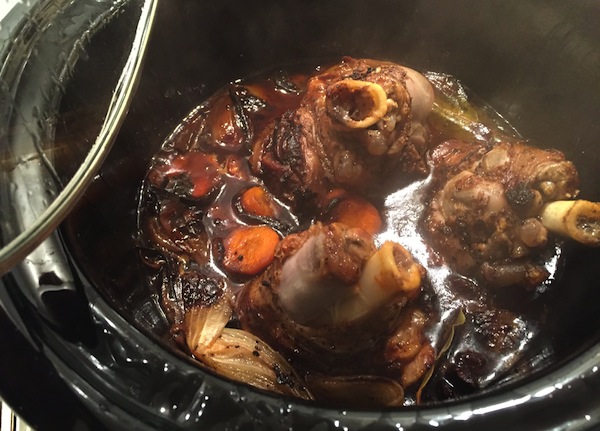
Lamb is a rich meal, so count on one shank per person. (photo by Arild Finne Nybø)

This year, I plan to stray from my plebian Rosh Hashanah chicken and salmon, and go all in with lamb shanks. Even as I write this column, I don’t know whether or not we’ll be able to gather with family this year for the High Holidays. But, I’m hopeful. And, after spending a year-and-a-half’s worth of Jewish holidays celebrating via Zoom (or on our own), it’s left me remarkably unfazed. We have to eat, after all. It may as well be yummy. As my father always reminded me, “I am the most important guest in my own home!” So, lamb it is.

Being a shockingly bad liar, I feel compelled to come clean right at the get-go. I have never cooked this dish before. My husband Harvey is the lamb expert at our home. But it’s high (chai) time I stretched my culinary balabusta skills. For the record, I am breaking all my own rules, by making a dish that has more than five ingredients, and which looks like it’ll take a good hour or more to prepare. But we’re worth it. The end result will be a smooth, savoury dish with extrastellar depth and gastronomic nuance. Ha! And if you believe those hyperbolic words, I have a bridge to sell you. But, in all seriousness, it’s one of my favourite meals, rich though it may be.

As you know, if you’re a hardcore carnivore like me, lamb is a very fatty meat. As well, it has a distinctive flavour that you either love or hate. There don’t seem to be many fence-sitters when it comes to lamb. Harvey and I position ourselves squarely in the love-it camp. While we don’t eat it often, we consider lamb fancy food, and usually only have it on special occasions. Like Tuesdays. It plays well with rice, couscous, noodles or potatoes, which makes it an equal opportunity meat. And that’s something I admire in my food.

MOROCCAN LAMB SHANKS

6 lamb shanks
coarse salt and pepper to taste
3 tbsp plus 1/4 cup olive oil
1 large onion, finely chopped
6 large garlic cloves, minced
4 carrots, cut crosswise into 1/2-inch pieces
4 celery ribs, cut crosswise into 1/2-inch pieces
2 tbsp packed brown sugar
1 tsp dried thyme
1 tsp ground cumin
1 tsp paprika
1/2 tsp ground cinnamon
1/4 tsp ground cloves
1/4 tsp cayenne, or to taste
1 1/2 cup dry red wine
3 cups beef broth

  1. Preheat oven to 325°F. Season the lamb with salt and pepper.
  2. Heat three tablespoons oil in a heavy pot over medium-high heat. Add the celery, carrots and onion and cook until very soft, eight to 10 minutes.
  3. Add the thyme, cumin, paprika, cinnamon, cloves, cayenne, brown sugar and garlic and cook for three minutes.
  4. Add the wine, then raise heat to high and bring to a boil. Lower heat to medium and add the beef broth. Leave on medium heat while you brown the lamb shanks.
  5. Pour the remaining 1/4 cup of olive oil into a sauté pan. Over medium-high heat, brown the lamb shanks well on all sides.
  6. Transfer the lamb shanks to the roasting pan (or Dutch oven) and pour the braising liquid on top. Cover with a lid or aluminum foil and cook for one hour. Remove the lid/foil and cook two-and-a-half to three hours more, turning the shanks over every half hour until the meat is very soft.
  7. Remove the shanks from the braising liquid and strain the liquid. Skim any fat that rises to the surface, then use the liquid as a sauce.
  8. Serve over rice, couscous or noodles, or with potatoes.

I can say with a fair degree of certainty that this is one of the tastiest lamb dishes I’ve ever had the pleasure of devouring. It’s not exactly summer food, but it’s perfect for fall or winter. If you served it for Rosh Hashanah dinner, you would undoubtedly impress the heck out of your guests. Or whomever you plan to eat with. It’s a labour-intensive recipe, no question about that. But you’ll thank me once the smell comes wafting out of your kitchen and you begin to food swoon.

Like I said, it’s a rich meal, so count on one shank per person. If you’re Israeli, you’ll probably opt to lay it gently on a mountain of rice or couscous, but maybe you’ll go rogue and settle it lovingly on a bed of noodles. We Ashkenazim like our meat and potatoes (a little too much, I’m afraid), so I’ll probably make a side of roasted baby new potatoes. If you go the traditional Ashkenazi route and start with gefilte fish and matzah ball soup, I guarantee you’ll be stuffed to the gills by the time you get halfway through the lamb. But will you stop? I think not. It’s kind of like a marathon … you don’t get halfway through only to say, “I think I’ve had enough.” Oh no, you’ll throw yourself into this Moroccan lamb like it’s a cold lake on a hot day.

As for Rosh Hashanah dessert, if you think anyone will have even a millimetre of space left in their stomach for a little something sweet, think again. I’d say there might even be a vomitorium involved, but we’re not Roman, so … no. Maybe put out some fruit for those who are really feeling gluttonous and want to ring in the New Year with a Gaviscon chaser. It’ll only be a token gesture (the fruit, not the Gaviscon), but you can always have it the next day for breakfast. Mind you, I’m usually so stuffed the following day that I can barely face food until maybe 9 a.m. Decide for yourself. Those little fruit jellies are always a nice touch, and barely take up any room.

Before you start feeling full just reading this, remember that you don’t have to eat every course that’s served during Rosh Hashanah dinner. You’re allowed to beg off the first three and save yourself for the main event. No one will be offended. In fact, probably no one will even notice. Whatever you end up doing for the High Holidays, be healthy, be safe and here’s to a sweet new year full of positive and inspiring adventures. Shana tova u’metuka.

Shelley Civkin aka the Accidental Balabusta, is a happily retired librarian and communications officer. For 17 years, she wrote a weekly book review column for the Richmond Review. She’s currently a freelance writer and volunteer.

Format ImagePosted on August 27, 2021August 25, 2021Author Shelley CivkinCategories Celebrating the HolidaysTags Accidental Balabusta, cooking, lamb shanks, recipe, Rosh Hashanah

Posts pagination

Previous page Page 1 … Page 3 Page 4 Page 5 … Page 10 Next page
Proudly powered by WordPress