Skip to content
  • Home
  • Subscribe / donate
  • Events calendar
  • News
    • Local
    • National
    • Israel
    • World
    • עניין בחדשות
      A roundup of news in Canada and further afield, in Hebrew.
  • Opinion
    • From the JI
    • Op-Ed
  • Arts & Culture
    • Performing Arts
    • Music
    • Books
    • Visual Arts
    • TV & Film
  • Life
    • Celebrating the Holidays
    • Travel
    • The Daily Snooze
      Cartoons by Jacob Samuel
    • Mystery Photo
      Help the JI and JMABC fill in the gaps in our archives.
  • Community Links
    • Organizations, Etc.
    • Other News Sources & Blogs
    • Business Directory
  • FAQ
  • JI Chai Celebration
  • JI@88! video

Recent Posts

  • Sharing her testimony
  • Fall fight takes leap forward
  • The balancing of rights
  • Multiple Tony n’ Tina roles
  • Stories of trauma, resilience
  • Celebrate our culture
  • A responsibility to help
  • What wellness means at JCC
  • Together in mourning
  • Downhill after Trump?
  • Birth control even easier now
  • Eco-Sisters mentorship
  • Unexpected discoveries
  • Study’s results hopeful
  • Bad behaviour affects us all
  • Thankful for the police
  • UBC needs a wake-up call
  • Recalling a shining star
  • Sleep well …
  • BGU fosters startup culture
  • Photography and glass
  • Is it the end of an era?
  • Taking life a step at a time
  • Nakba exhibit biased
  • Film festival starts next week
  • Musical with heart and soul
  • Rabbi marks 13 years
  • Keeper of VTT’s history
  • Gala fêtes Infeld’s 20th
  • Building JWest together
  • Challah Mom comes to Vancouver
  • What to do about media bias
  • Education offers hope
  • Remembrance – a moral act
  • What makes us human
  • המלחמות של נתניהו וטראמפ

Archives

Follow @JewishIndie
image - The CJN - Visit Us Banner - 300x600 - 101625

Tag: Judaism

Providing meals, warmth

Several years ago, Chabad Richmond launched the Light of Shabbat program with the purpose of helping Richmond Jewish seniors celebrate Shabbat and feel connected. At first, the program involved making and delivering a free, homemade, kosher kugel and challah to six or seven Jewish seniors in the community every other week. As the program has grown, more people are receiving Shabbat meals, which now include soup, salad, a main dish, vegetables, dessert, Shabbat candles and grape juice.

Because of the COVID-19 crisis, the Light of Shabbat has expanded, and now approximately 140 meals are delivered every week to people in Richmond and beyond – an increase of more than 80%. And that number continues to grow. Now, not only seniors, but younger individuals, families and those in need can receive a Light of Shabbat meal weekly. Chabad Richmond hopes to expand the program even more.

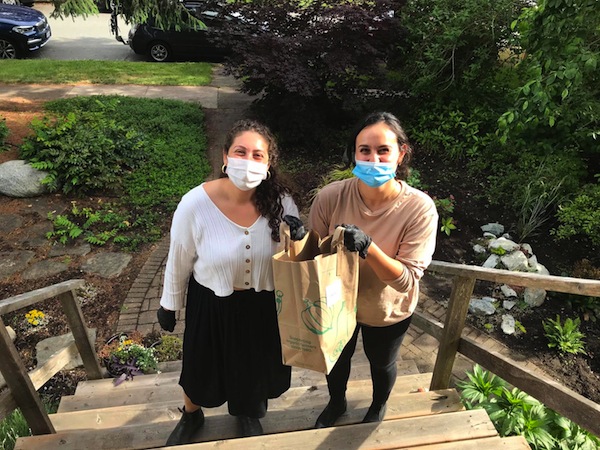
A program like this doesn’t happen in a vacuum. More than 44 Light of Shabbat volunteers do everything from shopping, to food preparation, cooking, baking, packing and delivering the meals. Every volunteer plays an integral role.

Reaching out to help those in need is a core Jewish value. As we all know, the pandemic has resulted in people self-isolating, and many have little or no access to stores. Some have difficulty cooking, and others are simply feeling the desperation of social disconnection.

Supported through individual donations and foundation funding, Chabad Richmond’s year-round partner for the Light of Shabbat program is the Kehila Society. During the COVID-19 crisis, the Jewish Federation of Greater Vancouver has stepped forward and been supportive. In addition, Chabad Richmond has received donations of goods from Urist Cosmetics (hand sanitizer) and Real Canadian Superstore, Dan-D-Pak (food items), and a donor who wishes to remain anonymous provided facemasks.

Several of the Light of Shabbat volunteers were recently interviewed. When asked about their personal experiences volunteering, many said they deliver the Shabbat meals. The volunteers deliver not only to seniors (some of whom have mobility issues), but also to people who have lost their jobs, people struggling with physical and mental health issues, and those who are grieving alone. As one volunteer said: “You just don’t know what people are going through right now.”

Several volunteers have gotten to know Light of Shabbat recipients quite well, have become part of their lives and have forged strong connections with them. A number of volunteers say they feel like a lifeline for the people they deliver to.

One volunteer started doing deliveries with his son before his son’s bar mitzvah a few years ago. Acknowledging that his own family is fortunate, he said: “It’s a way to show my son the importance of helping others, and expose him to a wide range of experiences.”

Every volunteer’s experience is different, but they all have one thing in common: they all enjoy volunteering and feel that they benefit as much if not more than those receiving the meals. “The socially distanced shmoozing and forming of new friendships is important to the people we deliver to,” said volunteer Jill Topp. “And to me, too.”

While the Light of Shabbat program is primarily for the Jewish community, volunteer Topp said that she delivers a weekly meal to a local Muslim family. The head of the family told her: “I don’t know what we would do without you.”

As for what motivates the volunteers, giving back to the community is key. One volunteer, who chose to remain anonymous, said she treasures celebrating Shabbat with her own family, and wants others to have that experience too, even if it’s only to eat a Shabbat meal.

Volunteer Michelle Zychlinski said, “Not only do the recipients appreciate the meal, but they really appreciate the social interaction,” even if it’s from a safe distance of two metres. “So, if I can help in some way, I’m happy to.”

Volunteer Yael Segal said, “I feel it’s my responsibility, as a part of this Jewish community, to help others. It’s my honour and privilege to do it.”

Yet another volunteer, Shannon Gorski, said she gets back tenfold what she puts into it and volunteer John Samuel said, “It’s so important that people have community support. They deserve to have a kosher meal on Shabbat and to feel connected.” Another volunteer said that this opportunity has “enlarged my life,” and she wants to do more.

The connections made between volunteers and recipients will likely last beyond the COVID-19 crisis, with quite a few volunteers saying that they definitely plan to visit with their newfound friends after it’s all over.

Segal said she rekindled an old friendship when she delivered the Shabbat meal to someone she hadn’t seen in years. “One of the Russian families I deliver to recognized me from when I first immigrated to Canada as a small child. I built a rapport with them and have a little visit each week. They really look forward to the visit and the Shabbat meal. Some of the people feel very isolated.”

In the end, it’s all about building relationships with members of the community. As one interviewee put it, “It’s so important for people in the community to know that they are not forgotten about. And it’s good to know that I’m making a difference. The Light of Shabbat program is a great means to connect with secular members of the community, too, and demonstrate that Chabad cares about them.”

Topp added, “I encourage anybody to volunteer – it’s a great thing for everyone involved.”

If you know someone who could benefit from the Light of Shabbat program, contact Chabad Richmond at 604-277-6427. If you would like to get involved as a volunteer with the program, go to chabadrichmond.com/lightofshabbat.

Posted on June 12, 2020June 11, 2020Author Chabad RichmondCategories LocalTags coronavirus, COVID-19, food, Judaism, Light of Shabbat, philanthropy, tikkun olam, volunteering
Song of healing is a hit

Song of healing is a hit

Israeli artists Yair Levi and Shai Sol sing Moses’s prayer to heal his sister Miriam of leprosy. The song, “Refa Na,” has resonated with people during the pandemic.

The song “Refa Na” (“Heal Her Now’”) by Israeli composer Yair Levi, together with vocalist Shai Sol, has become a global hit during the current COVID-19 pandemic.

Based on Moses’s prayer to heal his sister Miriam after she contracted leprosy, the song was released on Levi’s Facebook page April 6. The lyrics include the words, “O Lord, heal her now. O Lord, I beseech thee. Then we will be strengthened and healed” (Numbers 12:13) and Levi’s original is in multiple languages: Hebrew, as well as English, Spanish, French, German, Chinese, Arabic, Russian, Hindi and Swahili. The song has been picked up in dozens of covers, from Lebanon to Argentina.

When Levi’s grandmother fell ill, he composed a tune incorporating Moses’s prayer for his sister’s wellbeing. The song has resonated throughout the world during the current pandemic, garnering hundreds of thousands of views and shares.

“My grandmother had an illness unrelated to coronavirus, but the pandemic obviously affected everyone, myself included,” Levi, 31, told Ynet news portal. “Due to the epidemic, I received the names of people in need of prayer and a list of about 20 names accumulated on my fridge. Every day, I would say a prayer for the sick, and I searched for words and a tune related to medicine.”

Then Levi remembered the “Al na refa la” prayer in Numbers.

“I took my guitar and composed the music for it on the spot and, since I have a recording studio in my home, I recorded the song within a week.”

Levi then approached Sol, a vocalist with Miqedem, a band that composes and sings Psalms all around the world.

“In quarantine and with no way to actually meet, she recorded herself,” Levi said.

After posting the song on social media, he said, “It was amazing. We received many responses and translations. Immediately after we released the song, it was shared online by evangelist Christians, Jewish communities, and even the Friends of the IDF organization.”

But not only the obvious audiences were enthusiastic.

“We have received cover versions from all over the world, including from a Lebanese singer, and, on Saturday evening, I received three new covers from Namibia … India and a Brazilian singer, Fortunee Joyce Safdie, who performed the song live on her Instagram page,” he said.

“Getting so many messages from people all around the world is incredible,” he added. “If I have the privilege to spread prayer around the world, to me, it’s just crazy. When people from all over the world translate and sing a prayer for health, it feels like it is literally the End of Times.”

During his three-year service in the Israel Defence Forces, Levi – who grew up in Israel’s secular mainstream – became intrigued by traditional Judaism. A turning point in his life came on May 31, 2010. Serving as a naval commando, his elite unit stormed the MV Mavi Marmara, one of six ships in the Gaza Freedom Flotilla attempting to breach Israel’s blockade of the coastal enclave. Nine Turkish activists were killed in the incident, while 10 IDF soldiers from Levi’s unit were wounded. After the sea battle, Levi was determined to join an IDF officer course. But, at the age of 26, he decided to pursue a musical rather than military career.

“I spoke with my commander, who told me people often regret what they had not done,” Levi said. “It opened my eyes and I realized that the flotilla incident pushed me in the direction of the course, but my real dream was to make music and become a singer.”

Levi has released two albums, Breathing Again (2016) and Let Go (2017).

“People see me as a religious person but I don’t like labels,” he said of his oeuvre.

To hear more of Levi’s music, visit yairlevi.bandcamp.com/releases.

Gil Zohar is a writer and tour guide in Jerusalem.

Format ImagePosted on May 29, 2020May 28, 2020Author Gil ZoharCategories MusicTags culture, healing, Israel, Judaism, Refa Na, Shai Sol, Torah, Yair Levi
Jewish surety in Shabbat ritual

Jewish surety in Shabbat ritual

We have two Jewish dogs. When we sing Shabbat blessings, our dogs come over, sit politely, and wait until we’re done with the Hamotzi, the blessing over the bread. Then, they each get a small chunk of challah. This is the only people food they get. We don’t feed them while we eat and they don’t beg. However, when they hear us start to sing blessings, they know what to do!

On Chanukah or Passover, we are ready with alternative treats. Every night after we light Chanukah candles, they get dog biscuits. On Passover, they get matzah.

Our lab/pointer mix, Sally, who is more than 15 years old, has been doing poorly. Bigger dogs don’t usually live this long. She’s had a good life. We love her dearly. When she started having trouble eating, despite pandemic vet visits and several medicines, we were ready to try anything. She vomited and would eat only sparingly.

Then I had an idea. We had leftover homemade challah after Shabbat ended last week. I took out a piece, broke it into smaller bits, and started reciting brachot (blessings). I sang the Hamotzi. She moved her sore joints and sat near me. She ate challah. I did it again. She ate a little more challah. I kept going. In my happy blessing voice, I sang the Shehecheyanu (“Who has given us life”) blessing, feeling grateful for having reached this moment. Challah eaten. I thanked the Almighty for making me in the divine image. Challah eaten. I sang the blessing about giving tired people the strength to go on, from the morning blessings. She ate more challah.

My husband had small luck with this approach. In the end, she ate more for me. Was it my singing? My happy fake-out training technique, after 15 years of dog training to sit for blessings? We don’t know why it worked. After a day or two, we ran out of challah and switched to dog biscuits. Now, she is eating a weird mixture of special canned dog food diet, chicken and kibble again. Things are better, for now.

I want to tell one of our relatives, Ann, in New York City, about this success – about our old Jewish dog, her many blessings and the challah – but I can’t call her. She died May 3rd from a blood disorder. Once she was admitted to the hospital in New York, she was alone. Although she didn’t die from COVID-19, she died alone because of it. Ann, may her memory be a blessing, loved dogs and Jewish tradition. She would have laughed to hear about how Sally regained her appetite because of those blessings and challah.

It feels right now like we’re wandering in the wilderness. There’s so much uncertainty surrounding the COVID-19 pandemic. Every day, things change. Many news sources refer to this virus as “the novel coronavirus.” Yes, it’s new, unlike all the other coronaviruses. Yet, in some ways, this situation, where we’re faced by terrible illness or challenge, arises repeatedly throughout the Torah, rabbinic texts and our history. It may be new to us, but it’s the same old story. How do we face these challenges? How can we behave in Jewish ways when the challenges seem so huge? We study what worked in the past – our history and traditions can help.

How do we make Shabbat (or make anything special) in a time when all the days seem hard and the same? In the Talmud, Tractate Shabbat 69, “Rav Huna said: ‘If someone was walking on the road or in the desert and he does not know when Shabbat is, he counts six days and then keeps Shabbat for one day.’ Hiya the son of Rav said: ‘He keeps one day and counts six.’ What is this dispute really about? One bases his opinion on the creation of the world, and one bases his opinion on Adam.”

The rabbis discuss whether we celebrate Shabbat after the six days of creation so, when we don’t know which day is Shabbat, we count six days and then observe one. But Rav Hiya starts with Adam, the first person, and recognizes that one starts with our creation story. Without humans, there would be no way to make Shabbat, so we celebrate first, and then we count six until the next Shabbat.

Rav Hiya’s approach reminds us that we humans are central to this Jewish observance narrative. Our family had to remember that, even if burials and shivah aren’t done normally now, Zoom memorial services and shivahs are for us, the living, to help us navigate through this uncertainty.

Sally the dog is still with us for now, thank goodness. She reminds me, every day, to keep counting (and reciting!) my blessings. Whether you count six days and then celebrate, or celebrate and then count six days, we have these very human routines to help in navigating the unknown – the road, the desert, or a global pandemic.

So, please, grab some challah, say a brachah and train your Jewish dog. Somehow, I can still hear Ann (z”l) laughing as I tell this story. Ahad Ha’am said, “More than the Jewish people have kept Shabbat, Shabbat has kept the Jews.” Our dog Sally has reminded us, too, that, once we say those blessings, a delicious treat always follows. It’s up to us to keep making the blessings and finding those Shabbat treats.

Joanne Seiff has written regularly for CBC Manitoba and various Jewish publications. She is the author of three books, including From the Outside In: Jewish Post Columns 2015-2016, a collection of essays available for digital download or as a paperback from Amazon. Check her out on Instagram @yrnspinner or at joanneseiff.blogspot.com.

Format ImagePosted on May 29, 2020May 28, 2020Author Joanne SeiffCategories Op-EdTags blessings, dogs, Judaism, lifestyle, Shabbat, spirituality

An unfair funeral

This article was posted on medium.com on May 20 with the title “Bouncing from a COVID funeral,” and is reprinted with permission.

I had a loss in my family this weekend. It was not related to COVID. Nonetheless, it has been an exceptionally challenging time to lose a loved one. There are no mourning rituals, or figurative closures or moments to console the ones who are hurting the most. There are no hugs or shmoozing or recounting memories or poring over old picture albums around a coffee cake and a cup of tea (you get the idea: insert any of your traditions or rituals here).

Loss and death are concepts I struggle with, like most people. I always feel like I cannot say the right thing and feel awkward in the presence of those hurting the most. I am not “good” at funerals or mourning phases. I generally show up, pay my respects, and bounce.

What makes losing life during this unique time in history so hard is that we are mandated to be socially distant. However, when death hits the one we know and love, it is so heartbreaking, I want to so badly be socially closer, more than ever before. I would not have bounced. I would have stayed and been present.

Today, at 2 p.m., I will sit on a Zoom call to pay my respects. I will send a meal to the homes of the mourners. My father will be one of 10 that is allowed at the graveside service. He will wear his masks and gloves and stand six feet apart from his sister and nieces.

This seems grossly unfair, for a person whose funeral would have attracted people counting in the hundreds.

I cannot show up at this funeral even if I wanted to. I can sit in my house and watch it all go down on a live stream. It feels so cheap and lame and gross. Not the tribute that this person deserves.

The learning for me – as we sit together, alone, living a socially dis-social lifestyle for the foreseeable future, what small acts of kindness, generosity, pay it forward, TLC and tenderness can I express to just one other person to enrich their lives?

When I close my eyes and I imagine the eulogy recited at the end of my time on this earth, I wonder, what will I be remembered for?

I challenge you: what will you be remembered for?

Are you proud of the life you have lived?

How would you want to go down in the books?

What is your legacy, big or small?

It’s a morbid thought – not a place I often go but feel compelled to address, given the nature of the planet and the nature of my family’s pain.

My heart aches for anyone who has lost anyone during this truly f*cked up moment in time.

May your memory be a blessing.

Alana Kayfetz Kantor is founder and chief executive officer at MomsTO and MOMFEST, and co-host of Moms That Say F*ck the Podcast.

Posted on May 29, 2020May 28, 2020Author Alana Kayfetz KantorCategories Op-EdTags coronavirus, COVID-19, funeral, Judaism, mourning
Feeding the body and mind

Feeding the body and mind

National Hebrew Book Week has taken place every year in June. Its fate for this year, in light of the COVID-19 pandemic, is unclear. (photo from gojerusalem.com)

In Israel, you know Shavuot is approaching when you see the grocery stores setting up displays of pasta and spaghetti sauce. The pandemic shouldn’t change that.

Israelis are obsessed with the thought of eating non-meat meals on Shavuot. I suspect that at the heart of this obsession is the feeling that, even today, many people still consider eating a non-meat meal equivalent to eating less than a full meal. Hence, the worry that there really will be a satisfying meal to appropriately celebrate the holiday.

While there are many lovely explanations about why we eat dairy on Shavuot, they seem to be secondary to some practical considerations. As Rabbi Prof. David Golinkin points out, in the late spring, young calves, lambs and kids are weaned. Thus, historically at this time in Europe, there was an abundance of milk. Bear in mind that refrigeration is a fairly new process and that, prior to refrigeration, farmers needed to move fast with perishable milk. They made cheese and butter, which, likewise, needed to be consumed relatively fast. This dairy excess may have motivated some Jews to eat dairy on Shavuot. (See the article “Why do Jews Eat Milk and Dairy Products on Shavuot?” on the Schechter Institutes’ website, schechter.edu.)

But, eating a non-meat meal on Shavuot is not restricted to the customs of European Jewry. As Jewish food expert Claudia Roden notes in The Book of Jewish Food: An Odyssey from Samarkand to New York, Sephardi Jews in Syria made cheese pies called sambousak bi jibn, Tunisian Jews had a special dairy couscous recipe and, in places like Turkey and the Balkans, Jews prepared a milk pudding called sutlage for Shavuot. (If you don’t want to eat animal-based foods, you don’t need to feel left out. The United Kingdom’s Jewish Vegetarian Society helps you enjoy a variety of traditional, but vegan, cheesecake recipes.)

So from where did all this dairy focus originate? One appealing explanation reminds us of what was supposed to have happened on Shavuot, namely that the Jewish people received the Torah. In Gematria, the Hebrew word for milk (chalav) adds up to 40, the number of days on which Moses stayed on Mount Sinai in order to receive the Torah.

Significantly, studying the Torah and other Jewish texts on Shavuot eve has become a major trend in Israel, as well as in the Diaspora. The big Israeli cities offer any number of options for participating in a tikkun leil Shavuot. These free learning sessions welcome the participation of all of Israeli society, from the religious to the secular, and everyone in between. Those living in smaller towns and on kibbutzim and moshavim likewise hold study sessions on the night of the holiday.

The idea of all-night studying originates with the kabbalists. The earliest members of this group apparently studied with Rabbi Shimon bar Yochai, the author of the Zohar, who lived in the second-century CE. It was this scholar (also known by his initials, as Rashbi) who stated: “G-d forbid that the Torah shall ever be forgotten!” (See the Babylonian Talmud Tractate Shabbat 138b.) By the Middle Ages, the kabbalistic all-night Shavuot study had really picked up steam in places such as Safed.

photo - Studying the Torah and other Jewish texts on Shavuot eve has become a major trend in Israel, as well as in the Diaspora
Studying the Torah and other Jewish texts on Shavuot eve has become a major trend in Israel, as well as in the Diaspora. (photo from pexels.com)

Some claim the reason for studying during the night is found in the midrash stating that it was a way to correct for the Children of Israel’s mistake of oversleeping on the morning they were meant to receive the Torah. Others claim, however, that the Hebrew word tikkun should not be translated as correction, but rather as adorning or decorating the bride. The bride in this instance is the people of Israel and the groom is either G-d and/or the Torah.

According to a late 17th-century Libyan tradition, Shavuot symbolizes the wedding day between the people of Israel and the Torah. According to this tradition, the Torah is the bride, which explains the title of the Libyan Shavuot text entitled Tikkun Kallah. Accordingly, those who read this tikkun are likened to bridal attendants.

The importance of studying on Shavuot is bolstered by the fact that Israel’s Hebrew Book Week (or, in some places, Book Month) begins right after Shavuot. I do not believe this occurrence is coincidental, but rather links us to the idea that we are still the People of the Book and a people of books.

The Israeli book fair has been running for many years. This year, 2020, would mark the 59th annual celebration of Hebrew Book Week and the fair’s age is all the more impressive when you recall how shaky was the Israeli state’s start as an independent entity. Recent years’ events have included Israeli authors appearing in coffee houses, story hours and plays for children, guided walks in Israel’s National Library, the more traditional book signings and, of course, the possibility of thumbing through thousands of Hebrew books.

In brief, our spring holiday offers opportunities for both spiritual and physical nourishment.

Deborah Rubin Fields is an Israel-based features writer. She is also the author of Take a Peek Inside: A Child’s Guide to Radiology Exams, published in English, Hebrew and Arabic.

Format ImagePosted on May 15, 2020May 14, 2020Author Deborah Rubin FieldsCategories Celebrating the HolidaysTags books, education, history, Israel, Judaism, kabbalah, Shavuot, Torah
Jewish papercutting art

Jewish papercutting art

The paper cut “Jerusalem Mizrah” by Yehudit Shadur (1928-2011). (photo from shadurarts.com)

Papercuts are created by taking a folded sheet of paper and drawing a design on one side. The folded sheet is then fastened to a wooden board and the design is cut out with a sharp knife. When the paper is unfolded, a symmetrical work of art appears.

Papercutting dates back to the fourth-century CE in China. It appeared in Western Asia by about the eighth century; in Europe by the 13th century and in Turkey, Switzerland and Germany by the 16th century. Papercutting has been a common Jewish folk art since the Middle Ages and, by the 17th century, it was popular for Shavuot.

Shevuoslekh (little Shavuots) and roysele (rosettes or flowers) were used to decorate windows on Shavuot. They were made of white paper, usually, and frequently displayed the phrase, “Chag haShavuot hazeh” – “this holiday of Shavuot.”

According to an article by Sara Horowitz in the recently defunct Canadian Jewish News a couple of years ago, “for Ashkenazi Jews, there was a particular link between papercutting and Shavuot, which stems from an old practice of decorating homes and synagogues with flowers, branches, boughs and trees. In shtetl culture, cut flowers were a luxury – pricey and perishable. And Jewish culture was deeply literate, so paper, especially used paper – was always around and available for artistic repurposing. Some sources cite the objection of 18th-scholar Vilna Gaon to the Shavuot greening as another reason for the development of a Shavuot papercutting tradition. Because church décor involved cut flowers and pagan practices involved trees, the Vilna Gaon viewed such customs as inherently non-Jewish.”

An acquaintance of mine from many years ago, Yehudit Shadur (1928-2011), and her husband, Joseph, wrote a history of the last three centuries of Jewish papercutting, called Traditional Jewish Papercuts: An Inner World of Art and Symbol. The book won a 1994 National Jewish Book Council Award.

Yehudit Shadur was considered to be the one who pioneered the contemporary revival of the Jewish papercutting tradition. Her works are represented in major museum collections. She also had museum exhibits in Israel, England and the United States.

Shadur’s website offers many quotes from the artist, including one from a 1996 exhibit catalogue, in which she states, “What at first seemed a simple craft proved to be an artistic medium of endless possibilities and variations – not only in the arrangement of time-honoured Jewish symbols imbued with deep and often complex significance, but also in the challenges of colour, composition and texture. Eventually, the subject matter of my papercuts went beyond traditional forms and content to express my personal vision as a contemporary artist….”

Some typical symbols in Shadur’s Jewish papercuts – and in those of others – are menorot, crowns (keter Torah, the crown of Torah), columns representing the Temple in Jerusalem, plants or trees (the Tree of Life, the Torah), and grapevines, lions and gazelles (all representing the people of Israel).

For an in-depth article on the history of Jewish papercutting, visit myjewishlearning.com/article/jewish-papercutting.

If you’re looking for an activity to do with your children, PJ Library (pjlibrary.org) offers the book The Art Lesson: A Shavuot Story written by Allison and Wayne Marks and illustrated by Annie Wilkinson, in which “Grandma Jacobs teaches Shoshana how to make traditional papercuts,” and readers also learn to make a papercut. For anyone interested, there are various websites that have papercutting tutorials for kids and adults alike.

Chag sameach!

Sybil Kaplan is a journalist, lecturer, book reviewer and food writer in Jerusalem. She created and leads the weekly English-language Shuk Walks in Machane Yehuda, she has compiled and edited nine kosher cookbooks, and is the author of Witness to History: Ten Years as a Woman Journalist in Israel.

Format ImagePosted on May 15, 2020May 14, 2020Author Sybil KaplanCategories Celebrating the HolidaysTags arts and crafts, history, Judaism, kids, papercutting, parenting, Shavuot, Yehudit Shadur

Choose to be and to do good

As Jews, we’re acutely aware of our core Jewish values: help others, perform mitzvot, respect human dignity and life, love your neighbour as yourself, act morally, save lives, repair the world. But do we actually do those things? As we’ve heard before, it’s the duty of every single person to leave the world better than he or she found it.

During this unprecedented time, when the world is reeling from the COVID-19 pandemic, now, more than ever we need to remind ourselves of Jewish morals and ethics. And be better Jews.

Exceptional times typically bring out both the worst and the best in people. I’m choosing to focus on the best, though. For instance, folks around the world going outside at a set time every day to make noise and show their gratitude for frontline workers – and not just the doctors, nurses and caregivers, but also grocery store cashiers, letter carriers, pharmacists, delivery people, tradespeople, chefs and taxi drivers. Anyone and everyone who puts themselves in harm’s way each day, to keep us safe, fed and healthy.

If we don’t, as a society, learn the value of showing gratitude and generosity in desperate times, we become a society without a soul. If we think only of ourselves, we become lacking in conscience and void of morality.

What I know for certain is this: if a Jew needs something, another Jew should always step up and help out. It’s what we are supposed do. It’s what we’ve always done, most of the time. It might even be embedded in our DNA. In fact, we’re commanded to do it. Here are some tips for being a better Jew during COVID-19 (and always):

  • Take care of yourself so that you can take care of others. This may sound trite and over-used, but it’s true: your health is everything. I have suffered a long and serious illness and it’s shown me that nothing is more important than having your health. Unless it’s faith.
  • Be an active participant in life – this is not just a long lunch break. There is more to life than Netflix and reading (says the retired librarian). There are meaningful things you can be doing with all your spare time now. Think about where you can be of service, and whom you can help.
  • Practise random acts of kindness, compassion and loving care for your fellow human being – remember the Golden Rule. It can be something as simple as thanking a healthcare worker or letter carrier you see walking on the street. It doesn’t take much to show someone that they’re needed and appreciated.
  • Practise generosity – share, don’t hoard. Surprise a family member or friend with a meal or small gift that might just make their day. It can be something as simple as an extra few rolls of toilet paper or a container of disinfectant wipes (COVID-19 gold). Something that lets them know you’re willing and happy to share. Just remember physical distancing! A friend of mine recently brought me some extra face masks she had on hand (again, coronavirus gold).
  • Offer to do errands (grocery shopping, picking up a prescription, walking a dog, etc.) for family, friends or acquaintances in need. Be someone’s hero. People won’t always be comfortable asking for help, so be proactive and offer, if you can.
  • Cultivate faith (emunah) and trust (bitachon) in G-d, that everything will be OK. Life is easier when you have a higher power on your side and understand that there are many things you can’t control.
  • Check in regularly with single friends and seniors, in particular. Isolation can be devastating, especially when it’s ongoing. Even if you can just wave to a friend or family member through a window, that might just be their only human connection all day (or all week). It costs nothing and it’s priceless. Small gestures can have big impacts. Help people feel part of their community.
  • Show gratitude every day, because there is always something for which to be grateful. Whether it’s big (your good health) or small (cherry blossoms on the trees), appreciate the abundance in your life. It’s everywhere you look. Just keep your eyes open. And get out there at 7 p.m. every day and clap your hands or bang your pots and pans, to show your thanks to all the frontline workers who turn up for us every single day to make our lives easier. We are one big family – show the love!
  • Keep in mind the social and economic impacts the COVID-19 pandemic is having on everyone. Be sensitive to the situations of those less fortunate than yours. If you can, offer financial help, food or any other kind of assistance when you see the need.
  • Volunteer your time delivering food or supplies to others if you’re healthy and able. Contact and get involved with your local synagogue, Jewish Family Services, the Kehila Society or any other organization, Jewish or non-Jewish, working to alleviate the many needs right now.
  • Stay positive – for yourself and others. Positivity is the best medicine during this stressful time.
  • Be your best self. Let your innate goodness shine through. Remember we each have a tiny piece of divine soul within us.
  • Do mitzvot – tip the scales for good.
  • Give tzedakah. You don’t have to be a millionaire to make a difference in someone’s life. Every little bit helps.
  • Study a bit of Torah or other spiritual texts, if you’re so inclined.
  • Recite Psalms, if you’re so inclined. (I have a copy that includes English commentary, and this makes it so much more meaningful when I read them. It started out slowly for me, but now I find huge comfort in reading Psalms. Why not give it a try?)
  • Participate in some online classes or listen to speakers via Zoom video presentations. There’s a lot of inspiration and new perspectives to be gleaned, and goodness knows we could all use some of that right now.
  • Keep busy by finding purpose in your life. This is so important, especially right now, when there is so little to distract us from the devastation of COVID-19. Try to look for the good in every situation – it will serve you well. I’ve been on both sides of that wall and believe me when I say that staying positive will make your life much easier.

Here are some simple rules to live by (unknown source): help others without being asked; help people who cannot help you; help without the expectation of return; help many people; do the right thing the right way.

Remember that, every second of every day, we make choices. Choose to be good and do good. You can’t go wrong with that.

Shelley Civkin is a happily retired librarian and communications officer. For 17 years, she wrote a weekly book review column for the Richmond Review. She’s currently a freelance writer and volunteer.


Posted on April 24, 2020April 24, 2020Author Shelley CivkinCategories Op-EdTags coronavirus, COVID-19, health, Judaism, lifestyle
Musician tries to offer hope

Musician tries to offer hope

Montreal-based musician Elizabeth Leslie has a new EP out, Brave Animal, which, among other topics, tackles climate change. (photo from Eric Alper PR)

It had always been musician Elizabeth Leslie’s dream to visit Scotland, which her Sephardi ancestors had made their home. For years, she had envisaged hiking the Highlands, reveling in its beauty and experiencing the misty, “dreary” British weather that she had heard so much about.

Learning about the Leslie clan and their lives as Jews intrigued the young Canadian musician, who had been raised in Eastern Canada and is now based in Montreal. But so did the idea of experiencing a truly Scottish spring. So it came as a rude shock, she said, when she finally arrived to the British Isles to be greeted by a drought of parched hillsides and 25˚C weather. Her image of Scotland’s Highlands, she admitted, appeared to be sorely out of date.

“It wasn’t green rolling hills anymore. It was just glaring sun,” said Leslie. “I was peeling off layers and [there was] yellow grass and rampant tourism.”

That experience became a seminal moment for the musician, who attributes the erosion of the Highlands to humanity’s greed and the unrealistic goals of 21st-century capitalism. “Capitalism affects everything,” she told the Independent. “It’s a selfish beast and it’s unsustainable.… Capitalism mixed with climate change and the fact that climate change is a product of capitalism, [makes it] glaringly obvious that we need to completely reimagine the way we live.”

image - Brave Animal EP coverHer recently released EP recording, Brave Animal, speaks to that urgency. Its lead song, “To the Next,” is the summation of what she sees for future generations left to navigate the impacts of a warming planet. Its dark-wave melody is as hypnotic as its lyrics:

“There is only one place left to go / And I’m afraid that it is far / If you listen close / You will soon hear / All their words / Are full of fear.

“Men might be masters of this world / But little girl / We’re going to the next / Men might be fighting against this world / But little girl / We’re fighting for the next.”

According to Leslie, the song was written before Swedish climate change activist Greta Thunberg rose to notoriety. Still, its refrain hits to the heart of a question that is commonly voiced these days.

“When I wrote this song,” Leslie said, “Greta wasn’t around … but [she is] exactly the kind of girl I am speaking to in the song and she is metaphorically what that little girl is.”

Leslie added, “I mean, who is there to comfort Greta Thunberg? Why is there a teenager fighting [against] climate change and why aren’t the older guys in suits doing it with their millions of dollars?”

In Leslie’s eyes, change is motivated by leadership, and she believes there is a dearth of examples for young people to follow these days.

“There’s really no adult role models out there who are really standing up – at least in music,” or none willing to tackle a topic that is already defining a generation’s social and environmental expectations, she said. “I am just trying to give them some glimmer of hope, I guess.”

For this artist, probing difficult questions seems to come naturally, even when the questions are unpopular with those around her. When she learned some years ago that her Scottish ancestors were Jewish, she searched for more information and unearthed stories of the Leslie clan – started by a Jew who had served in a distinguished position for Mary, Queen of Scots, and was a Knights Templar – despite warning from her mother about antisemitism.

Although her mother wasn’t Jewish, she was concerned about her daughter taking on an identity that had been subjected to persecution throughout millennia. The warnings, though, didn’t deter Leslie, who later converted to Judaism.

“My mom had like 10 cups of tea per day and my dad drinks scotch every other night and my uncle plays the bagpipes and all that stuff, so it was a huge surprise in a lot of ways,” said Leslie about discovering her Jewish heritage. “But, for some reason … I always had a feeling about it.”

Although Leslie said her visits to shul are more infrequent these days, she sees a parallel between the values she was raised with and the ethics that Judaism espouses. Fairness and protecting the environment are at the heart of both her identity as a Jew and as a musician, she said. As is social justice. She said she was incensed when she found a book about the Leslie clan and learned that her ancestors were forced to convert to Christianity.

“That connection with the culture and values and also a really deep need to right the wrongs of the past” were key to her decision to convert, she said. “I just found it so unrighteous that my family was forced into this religion [of Christianity]. We already had a religion. I just felt it was so unfair and I wanted to turn back the clock.”

Her identity as a Jew has also been shaped by her relationships. Leslie, who self-describes as a non-binary queer person, was first introduced to Judaism when she dated a woman who had been raised Charedi and maintained a Jewish household. Leslie said the exposure to Jewish traditions was both fascinating and “extremely familiar.”

“I think one thing I love about Judaism is … we have never forgotten who we are,” said Leslie. “And I think that sort of cultural preservation is really important, especially in the face of recent antisemitism, in face of capitalism and climate change and everything, that sort of centreness is a power. And I think it is really important.”

Leslie’s music can be purchased through a number of online venues, including Spotify or by connecting through her Facebook page.

Jan Lee’s articles and blog posts have been published in B’nai B’rith Magazine, Voices of Conservative and Masorti Judaism, Times of Israel, as well as a number of business, environmental and travel publications. Her blog can be found at multiculturaljew.polestarpassages.com.

Format ImagePosted on April 3, 2020April 1, 2020Author Jan LeeCategories MusicTags climate crisis, Elizabeth Leslie, environment, Judaism
Among Canada’s best books

Among Canada’s best books

In the play Birds of a Kind by Wajdi Mouawad, the character of Eitan, injured in a terrorist attack in Jerusalem, lies in a coma. As his estranged parents and his grandmother hope for his recovery, they bitterly dig ever deeper into their familial dysfunction. At one point, the doctor tells them about Eitan, “What matters is the voices of those dear to him. His parents, his friends.”

His father responds, “His friends are in Berlin.” His mother, “Or New York.” His grandmother, “But his fiancée is here.” (The Palestinian fiancée that his parents cannot fathom and regarding whom they are nasty, based on a mix of racism, fear, guilt, concern over their own identity, secrets they have kept and more.) The doctor tells the trio, “The stronger the emotional attachment, the quicker the brain responds. We reconstruct ourselves through affection.” Godspeed to Eitan, then.

Birds of a Kind is a fascinating, if somewhat predictable, story and Mouawad’s exposition of complex and hyper-relevant topics, such as group identity versus individual choice, is nuanced and poetic; he uses language beautifully. It is no wonder that Montreal-based translator Linda Gaboriau earned the play its 2019 Governor General’s Literary Award for translation (from French to English).

Also faring well in last year’s awards was Calgary writer Naomi K. Lewis, whose Tiny Lights for Travellers was a finalist in the non-fiction category of the prize, which is funded and administered by the Canada Council for the Arts.

image - Tiny Lights for Travellers book coverLewis is extremely candid and self-critical in this travel memoir. Readers learn about her family, her struggle with developmental topographical disorientation (which means she can’t envision a map in her head and, therefore, often gets lost), the complicated messages about Judaism she received growing up, her insecurities about being Jewish (including a botched nose job when she was a teen) and her failed marriage, among other things. We follow her on her literal and metaphorical journeys to self-discovery, -understanding and -acceptance, as her personal story is interwoven with her retracing of the route her grandfather took in 1942 to escape from Nazi-occupied Netherlands to southern France, from where he then traveled through Spain and Portugal to get to London, England.

While Tiny Lights for Travellers includes excerpts from Lewis’s grandfather’s journal of his escape, it is mostly about Lewis and her exploration of identity, family history and the Holocaust. As Lewis notes well into her book, “the journal seemed a tease, so withholding, the anomalous 30-page confession of someone who otherwise lived inside his own experience with no desire to make himself known to anyone.”

Lewis may have set out with a goal of learning more about her grandfather, of connecting to her past, “trying to find what made me,” but there are not clear links from the past to the present. The journey is revealing in the end, just not about her grandfather or exactly how she came to be who she now is, but rather in coming to terms with who that person is.

Format ImagePosted on April 3, 2020April 2, 2020Author Cynthia RamsayCategories BooksTags #ShowUpForShabbat, Birds of a Kind, Governor General’s Literary Award, Israeli-Palestinian conflict, Judaism, literature, memoir, Naomi K. Lewis, politics, Tiny Lights for Travellers, Wajdi Mouawad
A Jewish guide to streaming

A Jewish guide to streaming

Mike Wallace is Here is one of the smartest and best documentaries of 2019. (photo from Cinando)

In the streaming universe, as with all entertainment, there’s the stuff that everyone watches and talks about. But that’s just the tip of a vast catalogue, a lot of it quite good, that doesn’t get the hype and the buzz. Here’s an eclectic list of accessible Jewish-themed movies that received some hosannas on their initial release. The more obscure (and great) Jewish films of recent years will be on a future list, since, alas, it appears we’ll have ample time to watch more after catching up with these.

The Zigzag Kid (j-flix): The Toronto Jewish Film Foundation has launched a free streaming platform, j-flix, with dozens of terrific recent fiction and documentary features and shorts. You could get lost there for weeks. I suggest you start with this irresistible, action-packed, family-friendly adventure about a precocious Dutch boy, adapted in 2011 by a Belgian director from Israeli author David Grossman’s novel.

The Women’s Balcony (Chai Flicks): Menemsha Films, the venerable U.S. distributor of Jewish-themed films from around the world, offers a free 30-day trial of their streaming platform. (A subscription will then run you $5.99 US a month.) Israeli director Emil Ben-Shimon and screenwriter Shlomit Nehama set their warm and wonderful romp in a small Orthodox congregation dislocated by structural damage to the shul.

Tel Aviv on Fire (Amazon Prime): Sameh Zoabi’s clever comedy about a Palestinian soap-opera writer trying to navigate the demands of both his bosses and an Israeli checkpoint commander will lift your spirits without insulting your IQ. Make a batch of hummus first.

1945 (Amazon Prime): This extraordinary black-and-white Hungarian film parlays the postwar arrival of two exhausted Jews at a small village into an exposé of guilt, betrayal, corruption and murder. One of the most acclaimed European films of 2017, 1945 is a gripping and haunting reckoning with dark history.

Mike Wallace is Here (Hulu): One of the smartest and best documentaries of 2019 examines, entirely through archival television footage, the ambitious journalist who made 60 Minutes essential viewing. Not a Jewish film, oddly enough, but a riveting one.

Disobedience (Amazon Prime): Sebastian Lelio’s taut, understated 2017 drama, adapted from Rebecca Lenkiewicz’s novel, is a remarkably nonjudgmental story that follows a volatile, adrift woman’s (Rachel Weisz) return to London after the death of her estranged father, an Orthodox rabbi. Community, identity, responsibility, sexuality – everything is on the table.

Prosecuting Evil: The Extraordinary World of Ben Ferencz (Netflix): The last surviving U.S. attorney from the Nuremberg trials has an impeccable memory, a spotless moral compass and enormous gravitas. If your fortitude is at a low ebb, Ben Ferencz will give you the strength to persevere.

A Serious Man (Netflix): The Coen Brothers’ most personal and most Jewish film, filmed in and around their childhood stomping grounds of Minneapolis-St. Paul, is a painfully hilarious moral fable guaranteed to provoke a cross-generational dinner table conversation. One politically incorrect question that this devious 2009 movie poses: Are Jews our own worst enemies?

Michael Fox is a writer and film critic living in San Francisco.

Format ImagePosted on April 3, 2020April 2, 2020Author Michael FoxCategories TV & FilmTags COVID-19, documentaries, Judaism, movies, streaming services

Posts pagination

Previous page Page 1 … Page 32 Page 33 Page 34 … Page 67 Next page
Proudly powered by WordPress