ראש ממשלת קנדה לשעבר מנסה לעשות עסקים בישראל – חלק א’
יש לנו סינון די פשוט. כל מי שעובד איתי, עבד איתי שנים ארוכות בממשלה בצורה כזו או אחרת. אני חושב שהייתי ידוע גם בקרב תומכיי וגם בקרב מתנגדיי, בתור מי שהייתה לו אג’נדה ברורה וסט מוגדר של ערכים פוליטיים, לטוב ולרע. המבחן הפשוט שבו אנו משתמשים בכל מה שאנו עושים הוא האם זהו סוג העסקים שאני בתור ראש ממשלה הייתי רוצה להיות קשור אליהם ושהייתי מוכן להתייצב ולצאת בהצהרה רשמית לגביו, שהייתי רוצה להיות מקושר אליו ושהייתי רוצה לראות שהוא קורה. אם הוא לא כזה – בלי קשר אם הוא רע או לא חוקי או וואטאבר – אז זה לא סוג העסקים שנחפש.
כך הגדיר ראש ממשלת קנדה לשעבר סטיבן הרפר (בן השישים) את גבולות הגזרה המוסריים שלו בעשיית עסקים, בין היתר עם גופים סיניים, בראיון לעיתון “גלובס” שנערך בעת ביקורו האחרון בישראל.
הרפר כיהן שלוש קדנציות רצופות כראש ממשלה ימני שמרני, מאלפיים ושש ועד שהודח בבחירות האחרונות על ידי ראש הממשלה הליברלי הנוכחי, ג’סטין טרודו. הרפר הוא נוצרי אוונגליסט שנחשב תומך נלהב של ישראל וביקר בה כמה וכמה פעמים. בביקור האחרון כרה”מ נשא נאום במליאת הכנסת שבו אמר בין השאר את המילים הנחרצות: זו מסורת קנדית לעמוד לצד מה שעקרוני וצודק ללא קשר למה נוח או פופולרי. עמידה לצד ישראל היא למעלה מצו המוסר, היא גם בעלת חשיבות אסטרטגית וגם עניין של האינטרסים ארוכי-הטווח שלנו. עבור אומות רבות עדיין קל יותר לראות בישראל שעיר לעזאזל מאשר לחקות את הצלחתה.
לאחר התבוסה בבחירות הקים הרפר את את הרפר ושות’ – חברת ייעוץ שמעמידה לרשות לקוחותיה את רשת הקשרים שלו.
החברה מסייעת לתאגידים שפועלים בסביבה בעלת סיכון פוליטי או גיאו־פוליטי, בנגישות לשווקים ופיתוח קשרי ממשל. עם זאת, כמו ראשי ממשלה ונשיאים אחרים הוא מוסיף להיות מעורב בפוליטקה הבינ”ל. הרפר עומד בראש ארגון “האיחוד הדמוקרטי הבינלאומי” – ארגון גג של מפלגות מרכז-ימין, המקביל לאינטרנציונל הסוציאליסטי, מהצד הימני-שמרני, ומסייע למפלגות שמרניות אחיות להיבחר בארצותיהן. מזה כשנה כולל הארגון גם את מפלגת הליכוד מישראל.
בראיון דיבר על הצורך של יזמים צעירים ביד מכוונת. זה לא הדבר היחיד שאנו בהרפר ושות’ עושים אבל רבים מלקוחותינו הן קרנות השקעה, חלקן בתחום הטכנולוגיה, והסיפור פה בישראל שונה. מבלי להעליב, רוב הזמן אתה פוגש בניעשרים ושלושים חכמים וכו’, אבל אתה יודע – יש להם עוד הרבה מה ללמוד בחיים. זו חלק מהסיבה שהם מעסיקים אותנו. הם זקוקים לפרספקטיבה הרחבה. אך לעומת זאת, במקרה שלנו, כשאנו מתעסקים עם ישראלים מנוסים יוצאי מערכת הביטחון הם בשלים ומקצועיים, ואנחנו עובדים איתם כדי להפיק הזדמנויות עסקיות, אז זה בהחלט תחום מרתק.
עניין שמוסיף הרפר לגלות בפוליטיקה העולמית לאחר פרישתו קיבל ביטוי משמעותי גם עם פרסומו של הספר שכתב בשם “כאן ועכשיו: פוליטיקה ומנהיגות בעידן השיבוש” – משחק מילים באנגלית אותו ניתן לקרוא גם כ”ימין כאן וימין עכשיו”. הספר מנתח את הסיבות לעליית הפופוליזם ובראשן בחירותו של נשיא ארה”ב, דונלד טראמפ והברקזיט בבריטניה. את הספר, שאותו הרפר עצמו מתאר כמדריך למדינאות שמרנית בעידן הפופוליסטי, תיאר השבועון הקנדי “מקלינז” כמעין מתכון לשיפוץ המצע הרפובליקני בארה”ב, שבו הוא מתרה בהנהגה הרפובליקנית למצוא דרכים לשמור את הקולות המתנדנדים שהעלו את טראמפ.
Left to right, Sasha Gerson, Joanna Wasel and Frances Belzberg will be honoured by CHW on Sept. 22. (photos from CHW Vancouver)
Welcome to September! A few signals that summertime is ending are the kids going back to school, the Jewish holidays quickly approaching and the return of Jewish community gatherings like the upcoming Canadian Hadassah-WIZO (CHW) Vancouver luncheon.
On Sept. 22 at the Richmond Country Club, CHW is holding an event to honour exceptional volunteers. As a volunteer organization driven by women, which focuses on the welfare of children and women in Israel but is also concerned with the health care of all Israelis, CHW often chooses to recognize the contributions of local women who make a difference to the lives of those in our local community.
This year, the organizing committee of the luncheon, headed by CHW volunteer Toby Rubin, selected three visionaries who have put their considerable talents as organizers, motivators and mentors to work to improve various areas of Jewish life in Vancouver. Sasha Gerson, Joanna Wasel and Frances Belzberg represent three different generations of volunteers and all contribute in diverse ways to the community.
Gerson is well known in the Russian-Jewish community. For years, she helped immigrants settle in Vancouver through her work at Jewish Family Services. Her most public role is as an award-winning radio host. Twelve years ago, she and her partner, Dmitry Shiglik, launched Radio VERA, a weekly Russian-English talk show. Her motivation is to bring Jews together, and her volunteer activities through the radio have included organizing trips to Israel, festivals for children and music events. She interviews people primarily in Vancouver but has guests from Russia and Israel on her show. She is also a CHW volunteer, currently serving as treasurer of CHW Vancouver.
Familiar to those who are connected in any way to Camp Hatikvah, Wasel is known as a volunteer extraordinaire. She is currently serving her fifth year as president of the Camp Hatikvah board and, during her presidency, she has expanded participation in the camp’s programming. One of her most important legacies is the introduction of Family Camp, which was first held eight years ago. This program has brought a camp experience to more than 220 people every year since its inception.
“You’re never too old or too young to be a camper!” said Wasel of Family Camp. She sees the weekend-long experience as a chance for adults to make new friends. “People bond and it establishes a foundation for the Camp Hatikvah community. In addition to being good, quality family time, we see it as a community-building experience,” she said.
Camp Hatikvah is associated with the Young Judaea movement, a Zionist organization that dates back to 1917. Historically, CHW has been associated with Young Judaea, as well, providing funding for national programs including Biluim Canada and Israel.
The third honouree, Belzberg, has had a life-long commitment to philanthropy and Jewish community building. She has been involved with CHW for 67 years, most of those in Vancouver. Having contributed in the early years of her marriage to Hadassah in Edmonton, Belzberg knew that joining a Hadassah chapter when she moved to Vancouver would help establish close friendships in a new city. She continued as a volunteer in many leadership roles, including chair of the Hadassah Bazaar, and on the national board as well.
Belzberg’s dedication to community extends beyond CHW. She also has served as Jewish Federation of Greater Vancouver’s first women’s division chair and has held many other leading fundraising roles, including with St. Paul’s, B.C. Children’s and Vancouver General hospitals. She was a founder of the Dystonian Medical Research Foundation and was recognized for her diverse and numerous efforts with the Order of Canada in 1995. Belzberg has given countless hours as a volunteer, driven by a belief she explained this way: “Without community involvement,” she said, “there will be no future for the Jewish people. It is up to us to combat antisemitism and make sure our communal organizations remain strong.”
Those who attend the Sept. 22 luncheon, 11 a.m. to 2 p.m., will have the opportunity to hear a short address by each of the honourees. Proceeds from the event will benefit one of the many educational projects CHW supports in Israel – the CHW Centre for Clinical Training and Community Care, Hadassah Academic College in Jerusalem, is one of the fastest-growing institutions of higher learning in Israel. It is a pluralistic college with a range of undergraduate and graduate degrees, from health and life sciences to information and computer technology.
Luncheon tickets are selling fast, said Rubin. With more than 100 already sold and capacity at 150, those interested should purchase tickets soon. For more information or to register, call the CHW office at 604-257-5160.
Michelle Dodekis a freelance writer living in Vancouver.
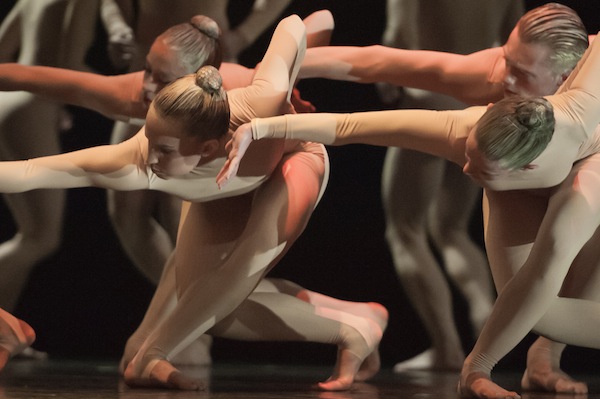
Artists of Ballet BC in a previous production of Bill. (photo by Cindi Wicklund)
Ballet BC’s 2019/20 season marks its 34th anniversary year, as the company continues to celebrate life as movement. The new season features a North American première, a Ballet BC première and the return of five renowned choreographers.
Reveling in the beauty of our humanity, the season opens with Program 1, Oct. 31-Nov. 2. It features the première of BUSK by Canadian choreographer Aszure Barton and B.R.I.S.A. by Johan Inger. Inspired by the world of busking and set to an atmospheric score, Barton’s BUSK showcases her versatile and poignant choreography. Inger’s B.R.I.S.A., a probing and liberating piece exploring themes of awakening and change, returns to the stage by popular demand.
In Program 2, March 4-7, the company revisits the pleasure, pain and politics of young love with Romeo + Juliet by Medhi Walerski. In response to unprecedented demand and soldout performances for 2018’s world première of Romeo + Juliet in Vancouver, Ballet BC returns to this iconic story set to Sergei Prokofiev’s score. Crafted by Walerski, an original voice in international dance, it is an innovative and contemporary retelling of the full-length classic.
The season closes May 7-9 with the return of two of the most influential artists in international dance today, both of whom are from Israel. Ballet BC will be the first North American company to perform Hora by Ohad Naharin, following the success of the audience favourite Minus 16 in previous seaons. Program 3’s dynamic lineup features the much-anticipated return of Bill by Sharon Eyal and Gai Behar.
For the holidays in December, Ballet BC presents Alberta Ballet’s retelling of holiday classic The Nutcracker. With choreography by Edmund Stripe, sets and costumes designed by Emmy Award-winning designer Zack Brown, and Tchaikovsky’s musical score played live by the Vancouver Symphony Orchestra, this extravagant production is set in turn-of-the-century Imperial Russia. Reflecting an era noted for its opulent grandeur, this show, which runs Dec. 28-30, displays more than a million dollars in sets and costumes.
“In 2019/20, we are excited to continue a dialogue about dance and its power to transform and connect us in ways that echo across time, place and culture. Today, more than ever, we need channels of expression that examine society and our place in it,” said Ballet BC artistic director Emily Molnar. “Dance can move people to feel and interpret life in new and meaningful ways. This season we are eager to delve deeper into a dance with each of you.”
All performances are at the Queen Elizabeth Theatre. Tickets and more information can be found at balletbc.com.
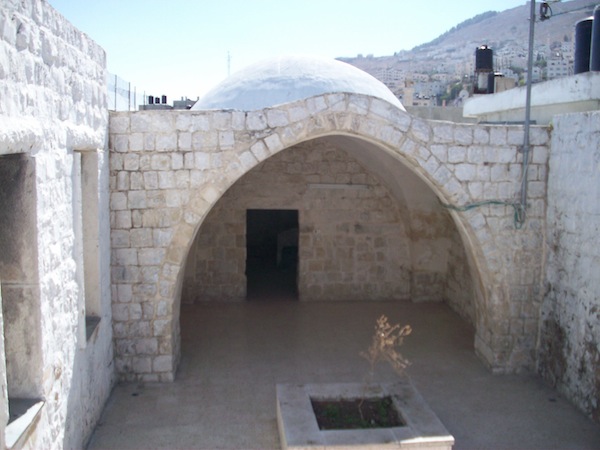
Joseph’s Tomb, inside the gate. (photo by Gil Zohar)
“The bones of Joseph, which the Children of Israel brought up from Egypt, were buried in Shechem in the portion of the field that had been purchased by Jacob.” – Joshua 24:32
“‘And he bought the field where he pitched his tent.’ (Genesis 13:19) Said Rav Yudan bar Simon, ‘This is one of the three places regarding which the nations of the world cannot slander Israel and say, “You stole them!” The places are the Cave of Machpelah [in Hebron], the Temple [in Jerusalem] and the Tomb of Joseph [in Shechem/Nablus].” – Bereshit Rabba, 79:4
There’s little inspiration to be found in the unadorned tomb of Joseph, the favourite of Jacob’s 12 sons. The holy site, located in the gritty eastern outskirts of Nablus among parched olive groves and graveyards of wrecked cars, is today a flashpoint between those who revere the site – Israeli Jews, Palestinian Muslims, Christians of all stripes, and the 600-member Samaritan community living on Mount Gerizim overlooking this West Bank city of 160,000. The traditional anniversary of Joseph’s death on Tammuz 27 (which fell on July 31 this year) is considered an especially auspicious pilgrimage time.
The group of 1,200 pious Jews, armed with permits and prayer books, arrived at the shrine in a convoy of bulletproof buses protected by the Israel Defence Forces. Most were Bratslaver Chassidim, who set great store in their practice of praying at the graves of tzadikim (righteous ones).
The IDF-escorted pilgrimage on the first Tuesday of every month often leads to riots. IDF sappers neutralized a pipe bomb hidden at Joseph’s Tomb prior to the visit of the 1,200 pilgrims and 12 Palestinians were injured during clashes with the IDF. The list of security incidents, arson and terrorism is long and bloody.
In the secular West, the story of Joseph – whose 11 jealous brothers sold their 17-year-old sibling into slavery in Egypt – has been popularized by the rock opera Joseph and the Amazing Technicolor Dreamcoat. Librettist Tim Rice and fellow Academy Award-winning composer Andrew Lloyd Weber, along with actor Donny Osmond as Joseph, captivated audiences from Broadway to the West End with their account of Joseph’s rise to become the vizier, second only to Pharaoh in the Egyptian empire.
But Joseph, the hero of Bible and Quran stories, has hardly been given the royal treatment by Middle East politics. Dotan, where Joseph was thrown into a pit, called Jubb Yussef (Joseph’s Well) today is a ruined caravanserai that collapsed in an earthquake in 1837. Joseph’s tomb, enshrining the bones brought back from Egypt by the Children of Israel some 3,300 years ago together with the remains of Joseph’s sons Ephraim and Manasseh, has fared better.
The plain one-storey is called Qabr an-Nabi Yúsuf (Tomb of the Prophet Yúsuf) in Arabic and is revered by Jews as Kever Yosef ha-Tzadik (Tomb of Yosef the Righteous). The whitewashed limestone building is capped with a cupula and protected by a massive black gate. Barbed wire crowns the looming walls. Signposts in Arabic and English indicate the nearby sites of Tel Balata and Jacob’s Well. None directs visitors to Joseph’s Tomb.
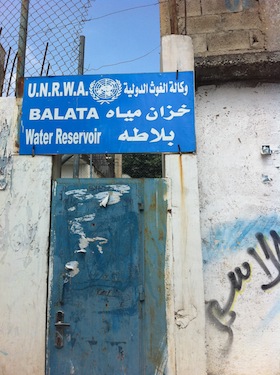
Balata refugee camp. (photo by Gil Zohar)
Tel Balata is the nondescript Canaanite/Israelite Iron Age stratified archeological mound that few tourists bother to visit. Jacob’s Well is covered by a 20th-century Greek Orthodox basilica marking where the patriarch camped when returning to Shechem (ancient Nablus) from Paddan Aram in today’s Iraq. In one of the Torah’s three real estate deals – along with Abraham’s purchase of the Cave of Machpelah in Hebron and David’s acquiring of Mount Moriah in Jerusalem – Jacob bought the plot of land from the sons of Hamor, the father of Shechem. There, Jacob pitched his tent and erected an altar (Genesis 33:18-20).
Some 1,500 years later, Jesus “came to a city of Samaria called Sychar, near the field which Jacob gave to his son Joseph. Jacob’s Well was there.” (John 4:5-10) Drinking water, he chatted up a Samaritan woman, known in Greek as Photine (the luminous one; hence, the church’s name, St. Photini). Christian pilgrims flock to the site to reverently drink drafts of cool water from the deep well in the church’s vault.
Across the street is Balata Refugee Camp, administered by the United Nations Relief and Works Agency for Palestine Refugees in the Near East (UNRWA). Today the largest camp in the West Bank, it houses 27,000 people in a quarter-square-kilometre site that was designated for 5,000 refugees when it was established in 1950.
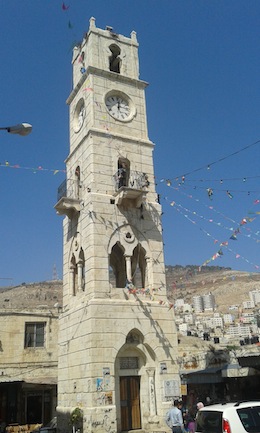
Ottoman Sultan Abdul Hamid II’s clocktower, erected in 1906. (photo by Gil Zohar)
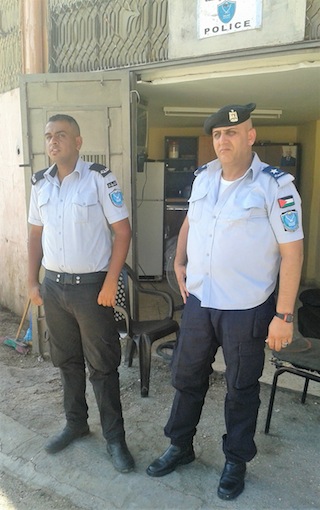
Even for an intrepid, multilingual tour guide like this writer, it is daunting to find the unmarked way to the holy site. The drab building is located next to the Qadari Tuqan School, along a dusty unnamed road where only recently were sidewalks laid. The easiest way to find the landmark is to look for the Palestinian Authority police vehicle parked outside the locked gate. Then, one must locate the pair of PA police officers loitering in the shade nearby, smoking cigarettes and nervously fidgeting with their rifles. Ask politely in Arabic and they’ll let you in, no questions asked, no baksheesh (tip or bribe) required – just don’t mention that you’re Jewish.
Inside the locked gate, you’ll find a simple barrel tomb and the stump of a column of indeterminate age. There’s no evidence of the repeated vandalism that has punctuated the tragic history of Joseph’s Tomb since 1995, when Israel withdrew from the West Bank city, ending the occupation that began in 1967 with the Six Day War.
A photo from 1900 shows the well-maintained compound around Joseph’s Tomb. A carriage road facilitated the pilgrimage of pious Jews from the Old Yishuv who regularly came to pray there. The holy site stood in isolation. Nearby was the Arab hamlet of Balata, with eight houses.
The name Nablus is a corruption of the Latin Colonia Julia Neapolis, which was founded by the Roman emperor Vespasian in 72 CE. In the old city, in 1906, Ottoman Sultan Abdul Hamid II erected a clocktower to celebrate 30 years on the throne of the Sublime Porte.
In the Six Day War, Israel captured the territory, which had been occupied by the Hashemite Kingdom of Jordan since 1948. Once-somnolent Nablus experienced a burst of prosperity, though today, under PA self-rule, the Palestinian economy is floundering. Expanding from a population of 30,000, the city spread out to swallow the nearby villages, including Balata. Joseph’s Tomb became entangled in urban sprawl.
Jewish settlers began to frequent the mausoleum. By 1975, Muslims were prohibited from visiting the site, which some claimed was the tomb of Sheikh Yúsuf Dawiqat, an 18th-century Sufi saint. In 1982, St. Louis, Mo.-born kabbalist Rabbi Yitzchak Ginsburgh established the Od Yosef Chai (Joseph Still Lives) yeshivah at the site.
Palestinian Authority police by Joseph’s Tomb. (photo by Gil Zohar)
Conflict mounted following the Oslo Accords. Tensions boiled over in September 2000, in the wake of then-prime minister Ariel Sharon’s controversial visit to Jerusalem’s Temple Mount. A full-scale battle broke out.
On Oct. 1, 2000, Border Police Cpl. Madhat Yusuf, 19, of Beit Jann in the Upper Galilee, was wounded in the neck in a clash with Palestinians at Joseph’s Tomb. Over the course of four hours, the Druze warrior bled to death because the IDF considered it too risky to evacuate him without a ceasefire.
A week later, on Oct. 7, 2000, the site was handed over to PA police. Within hours, Joseph’s Tomb was pillaged by Palestinian protesters. Using pickaxes, sledgehammers and their bare hands, they demolished the holy site. It was rebuilt by Italian stonemasons.
In the Bible, Joseph – the chaste and handsome prisoner – is wooed by an unnamed would-be lover only identified as Potiphar’s wife. Though many midrashim about Joseph are incorporated in the Quran’s 12th chapter, known as Surat Yusuf, the lady’s name is similarly omitted. However, within several centuries, various Islamic sources identified her as Zuleika. Among these medieval texts, the most popular was the epic Farsi poem “Yusuf and Zulaikha,” composed in 7,000 Persian couplets by 15th-century poet Jami.
The Sufi master regarded the story of Joseph’s temptations as an allegory for the mystical striving after divinity. In Nablus today, pilgrims continue to come to Joseph’s Tomb seeking that union. Alas, Israelis and Palestinians have not found a coat of many cultures to fit them both equally.
Gil Zohar is a writer and tour guide in Jerusalem, Israel.
The U.S. president accused Representative Rashida Tlaib of a political stunt when the American politician of Palestinian descent rejected Israel’s offer of permission to visit the West Bank on humanitarian grounds.
Israel’s government had first announced that it would permit visits to Palestine by Tlaib and fellow congresswoman Ilhan Omar, another of the four members of the “squad” of progressive women of colour elected to Congress as Democrats in last November’s U.S. midterm elections. Then, apparently after Donald Trump intervened with his continued vendetta against the women, the government of Prime Minister Binyamin Netanyahu changed their minds and declared that the congresswomen would not be permitted to go to Palestine. Then, in another twist, Israel decided to allow Tlaib admission based on “humanitarian” grounds to visit her grandmother and other relatives in the West Bank. Tlaib rejected the offer.
“Silencing me & treating me like a criminal is not what she wants for me,” Tlaib tweeted about her grandmother. “It would kill a piece of me. I have decided that visiting my grandmother under these oppressive conditions stands against everything I believe in – fighting against racism, oppression & injustice.”
Putting ideology over seeing a nonagenarian grandparent seems a tad distorted, but she’s probably correct that Israel’s actions were over-the-top.
The idea that Israel should ban members of the United States Congress from entering the country (en route to the West Bank, which is occupied by Israeli forces, which means Israel controls who can enter and move around there) is a highly dubious move. Given Tlaib’s and Omar’s unrelenting condemnation of Israel and its policies, including support for the BDS movement, some people argued that Israel should ban them. But almost every mainstream Jewish and Zionist organization in the United States that spoke up argued that they should be permitted to go.
In fact, it would have been smart to invite the two as guests of the Israeli government and give them the VIP tour of Israel. Then, they would have at least have heard the Israeli side of the story, take it or leave it. More to the point, had they refused the invitation to see the modern miracle that is the Jewish state, they might have looked closed-minded.
Instead, the two Democrats have come out of it looking righteous, while Netanyahu looks like Trump’s puppet and Trump looks like, well, like he usually does. Especially when he tweeted that the only winner in the scenario is Tlaib’s grandmother because “She doesn’t have to see her now!” One wonders about what goes through the minds Trump’s grandchildren when he blusters into the room.
On the one hand, the recent vote in Congress to criticize the BDS movement was massively lopsided and indicates that Israel’s special relationship with the United States remains steadfast. But among grassroots Democratic voters and some other Americans, the Netanyahu-Trump bromance is repellent and makes some people naturally less amenable to the bilateral relationship – specifically because it has been so spectacularly and cynically politicized by both leaders.
There are serious and legitimate fears that the solid bipartisanship that has defined this relationship for 71 years is fraying, possibly irrevocably.
It doesn’t matter what one thinks of Trump. It doesn’t matter if you agree with the board member of the Republican Jewish Coalition who told the New York Times, “When I look at what he’s done for Israel, I’m not going to take issue with anything he’s said or done.” The day-to-day cut-and-thrust of politics means we will agree and disagree with our leaders in Canada, or those in the United States or Israel or elsewhere. But the deterioration of the nonpartisanship around the foundational importance of the bilateral relationship between Israel and its most significant ally is a grave concern.
We have an election campaign about to launch here in Canada. There will be moments when Middle East policy comes up and we will disagree. What we should strive to ensure is that, regardless of our opinions about Israel’s leader – and what position he may hold after next month’s Israeli elections – or our thoughts about our own political leaders, one thing we should avoid at all cost is turning Israel into a partisan tool. Let’s just not. And let’s not reward politicians who try.
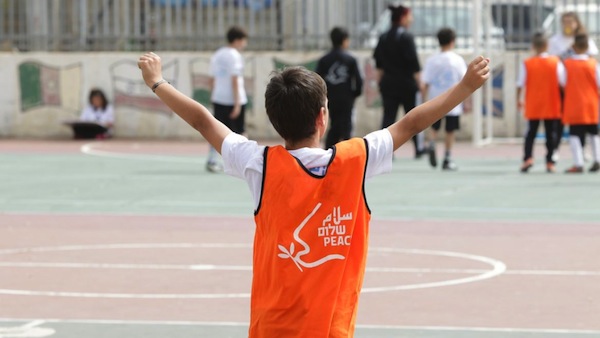
A participant in Playing Fair, Leading Peace in Jaffa. (photo from Peres Center)
“I did not know I could play with Jews or talk to them. Now I want to and I can,” wrote an Arab middle school student whose school was one of 10 – five Jewish, five Arab – to participate in Playing Fair, Leading Peace, created by the Jaffa-based Peres Center for Peace and Innovation to unite Jewish and Arab Israeli children through soccer.
In 2018-2019, Playing Fair, Leading Peace engaged 300 fifth- to seventh-graders in Arab and Jewish sectors of Jerusalem, Tel Aviv, Jaffa, Kalansua, Kfar Saba, Beersheva and Tel Sheva. In each participating school, one class is matched with one class from the corresponding nearby school. Kids and their teachers are guided by two specially trained university students (one Jewish, one Arab) in five tolerance education and prep sessions held at their own school, and in five joint soccer matches on one another’s turf.
In these games, Arabs don’t play against Jews; each team mixes children from the hosting and visiting schools. And there are no referees; the children are given the responsibility of determining rules and mediating disputes.
“They need to communicate to solve issues during the game by themselves. This is a smart component of the program,” said Tamar Hay-Sagiv, director of the education for peace and innovation department at the Peres Center.
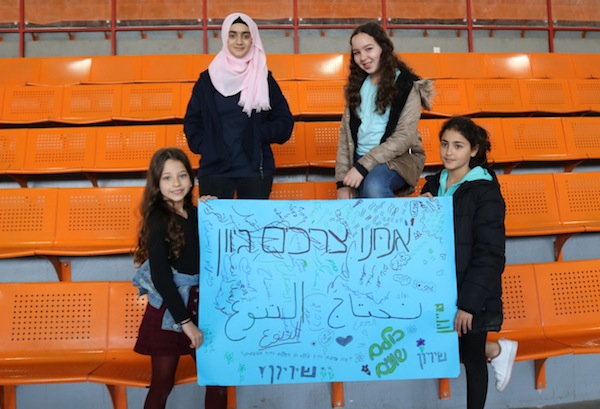
Children in the Arab village of Kalansua with a poster stating, “We need diversity” and “We are all equal” in Hebrew and Arabic. (photo from Peres Center)
But it’s not an easy component, because one side speaks Hebrew and the other speaks Arabic. “We tackle the language issue by teaching through sports. They learn the language of ‘the other’ while they play,” said Hay-Sagiv.
Nor is it a simple matter to convince parents to allow cross-visits.
“There are fears and stereotypes to overcome,” acknowledged Hay-Sagiv. “We had one child in the south whose family was afraid for him to travel to a Bedouin school. It was a trust-building process between his parents and the head of the school, who gave us full support and made the family comfortable in allowing the visit. It’s always a challenge for Jewish schools to agree to travel to Arab communities, but the hospitality they receive is unbelievable.”
One child wrote on the evaluation form after the first visit: “Even after they prepared us, I was still afraid of them, but when I met them, they looked like us, only with different clothing.”
As for stereotypes, it’s not only about the Arab-Jewish divide but also about gender. “We’ve had girls thinking they are not allowed to play soccer,” said Hay-Sagiv. “We have to overcome that, too. We try to create a safe space for everyone that is fun and interactive.”
For the last 18 years, the Peres Center has used sports, specifically soccer, as a tool to break down barriers between youth, Hay-Sagiv told Israel21c.
The centre’s flagship project, Twinned Peace Sports Schools (TPSS), involves leadership training and mixed teams led by professional coaches. Britain’s Prince William kicked around a ball with the TPSS team in Jaffa during his visit to Israel last summer.
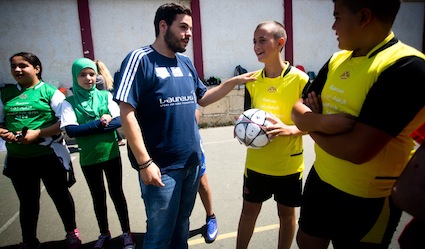
Playing Fair, Leading Peace soccer match at a Jerusalem school. (photo from Peres Center)
TPSS, started in 2002, is the first and longest-running initiative of its kind in the region. Hay-Sagiv said it “significantly influences Arab and Jewish, Israeli and Palestinian girls and boys to become agents of positive change in their community and around the world.”
The Peres Center sought a way to scale up this successful, but limited, peace-building-through-sports program in a more accessible and less expensive format that would also involve nonathletic children.
“Based on our experience, we thought it would be interesting to get into Jewish and Arab schools during school hours and engage full classrooms. This way, we can reach all the boys and girls, as well as their teachers,” said Hay-Sagiv. When the other children in the host school observe the mixed teams playing soccer together, “it’s unbelievable to see the reactions to this unusual sight. That also has an impact.”
Playing Fair, Leading Peace is supported by the Israel Football Association, which oversees Israel’s national football (soccer) team comprised of Jewish and Arab Israelis, and captained by Circassian-Israeli Muslim Bibras Natkho. The program also works with the National Union of Israeli Students (representing all Israeli universities) and the Laureus Sport for Good Foundation.
“Hopefully, next [school] year, we will double the number of participating schools,” said Hay-Sagiv.
She explained that fifth- to seventh-graders were chosen for the program “because we see this as a crucial age for exposing them to this type of experience. Verbally, they are well developed and they’re going into a tough age. You have enough time to work with them during school hours, and it’s still possible at this age to work with boys and girls together.”
Based on questionnaires distributed before and after the activity, Hay-Sagiv and her staff can see that the program effects changes in attitude.
“I want to feel with them exactly the way I feel with my friends,” wrote one child.
“I hope that we will become one family that does joint activities in togetherness and tolerance,” wrote another.
Hay-Sagiv isn’t surprised by this impact, having seen the inroads made over the years by Twinned Peace Sports Schools.
“We’re traveling to Poland to organize a sports tournament in Warsaw with Israelis, Poles, Germans, Hungarians and Russians to mark 80 years since World War II, hopefully in September,” she said. “We are thinking of bringing a mixed Jewish and Arab team from Israel.”
Israel21c is a nonprofit educational foundation with a mission to focus media and public attention on the 21st-century Israel that exists beyond the conflict. For more, or to donate, visit israel21c.org.
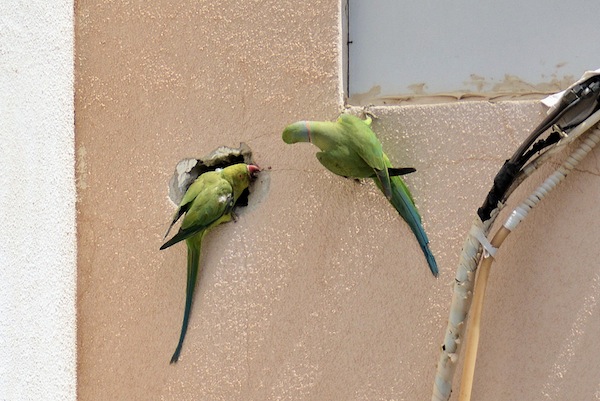
A few years ago, the sight of a parrot in the Israeli sky was a rare event but invasive species have arrived, causing agricultural and other damage and threatening native biodiversity. Brought to the Middle East and Europe as pets, escaped or released parrots have established numerous wild populations across the area. ParrotNet – a European and Middle East network of scientists, practitioners and policymakers dedicated to research on invasive parrots, their impacts and the challenges they present – has concluded that measures to prevent parrots from invading new areas are paramount for limiting future harm. According to lead researcher Dr. Assaf Shwartz of the Technion in Haifa, “Today in Israel there are more than 200 populations of parrot species originating in South America and India…. These populations are growing every year and, today, there are more than 10,000 ring-necked parakeets and monk parakeets in Israel.”
בית המשפט הפדרלי של קנדה קבוע בסוף יולי כי סימון יין שיוצר בהתנחליות שבשטחים הכבושים, בתוך יין תוצרת ישראל אינו מותר. זאת כיוון שמדובר בדברי שקר, הטעייה והולכת שולל של ציבור הצרכנים.
הפסיקה הקשה נגד היין מהשטחים ניתנה בעקבות עתירה של אזרח יהודי מהעיר וויניפג, בשם דיוויד קטנבורג, שהוא פעלי פרו פלסטיני. הוא טען בעתירתו כנגד ממשלת קנדה, שיינות שיוצרו בהתנחלויות שבשטחים אינם יכולים להימכר עם תווית של יין שיוצר במדינת ישראל. לדברי קטנבורג הקהילה הבינלאומית וכן גם קנדה לא מכירות בהתנחלויות שבשטחים, כחלק אינטגרלי ממדינת ישראל. העתירה של קטנבורג הוגשה נגד סוכנות הפיקוח על המזון של קנדה, שבמקור אישרה את מכירת היין מההתנחלויות בשטחים עם התווית מיוצר בישראל.
שופטת בית המשפט הפדרלי, אן מקטביץ, פרסמה את פסק הדין שלה (שמתפרש על פני ארבעים ושלושה עמודים). היא אמרה בין היתר בהחלטתה כי יש מעט מאוד דברים כה מורכבים וסבוכים בהם המדיניות במזרח התיכון. וכן קיומן של ההתנחלויות הישראליות בגדה המערבית. אלה מעלים נושאים פוליטיים מסובכים, רגישים ועמוקים. עם זאת, אחת הדרכים השלוות אשר בה יכולים בני האדם להביע את עמדותיהם, היא דרך קבלת ההחלטות שלהם, כאשר הם רוכשים מוצרים שונים. כדי שיכולו להביע את עמדתם בהקשר זה, על הצרכנים לקבל מידע מדוייק לגבי זהות המוצר שנמצא במחלוקת. עוד קבעה השופטת של בית המשפט הפדרלי כי סימון יינות שיוצרו והוכנסו לתוך בקבוקים בהתנחלויות שבשטחים, כיין שיוצר במדינת ישראל, הוא דבר שקרי, מטעה ומוליך שולל את ציבור הצרכנים. לדבריה בהתנהלות שכזו מפירים את חוקי המקור של מוצרי מזון (כולל יינות) ותרופות. ההחלטה שמאפשרת לסמן יין שיוצר בהתנחלויות הישראליות שבשטחים כיין שיוצר במדינת ישראל, לא נופלת בגדר האפשרי והמתקבל על הדעת. אגב שופטת סירבה לקבוע כיצד כן יש לפרסם מהיכן היין בשטחים הכבושים יוצר. זאת לאור חילוקי הדעות המשמעותיים בכל הנוגע למעמד החוקי של ההתנחלויות הישראליות, בשטחי הגדה המערבית. היא ציינה כי אינה מתכוונת ליישב סוגיה זו בתיק שלפניה.
השופטת מקטביץ שלחה את התביעה של קטנבורג בחזרה לסוכנות הפיקוח על המזון של קנדה, על מנת שתדון בסוגיה מחדש. יצויין כי תחילה סוכנות הפיקוח הקנדית הסכימה לאור פנייתו של קטנבורג, להסיר את הסימון תוצרת ישראל על בקבוקי יין שיוצרו בהתנחלויות בשטחים. לאחר מכן היא חזרה בה ואז הוא עתר לבית המשפט העליון במדינה.
בהתאם לחוק הקנדי מוצרי מזון, כולל יינות אשר נמכרים בקנדה, חייבים לכלול פירוט מלא על מקור המדינה בהם הם יוצרו. כמובן שחל איסור להטעות את הצרכנים המקומיים.
לא ברור בשלב זה כיצד סוכנות הפיקוח על המזון תנהג לאור הפסיקה. לא מן הנמנע שסוגיה סבוכה זו תחזור לשולחנו של בית המשפט הקנדי לאור ערורים צפויים.
המרכז לענייני ישראל היהודים בקנדה פנה רשמית לממשלת קנדה וביקש תגיש עירעור לבית המשפט על החלטת השופטת מקטביץ. לדברי המרכז נפלו מספר טעויות משמעותיות בהחלטת השופטת. זאת כיוון שהדבקת התוויות על מקור היצור של בקבוקי היין מההתנחלויות בשטחים, תואמת את רוח הסכם הסחר החופשי בין קנדה לישראל שנחתם לאחרונה. וכן תואמת את החוק הקנדי והחוק הבינלאומי.
במרכז מציינים כי אם כן יוגש ערעור הם יבקשו מבית המשפט לקבל מעמד של מתערבים בדיון המדובר, על מנת להבטיח שהחוק הקנדי והחוק הבינלאומי יפורשו ויושמו כראוי.
In a world where Israel is accused of being an “apartheid state” and Zionism is equated with racism, it is understandable that we would recoil from accusations of actual racism in Israel, but we can’t afford to do so.
On June 30, 18-year-old Solomon Tekah was shot and killed by a police officer in Haifa. He is one of at least four Ethiopian-Israelis killed by police in recent years, while another seven deaths were cited as suicide or as being the result of uncertain causes after police encounters, according to community leaders. Reports of police brutality against the black community are alarming and suggest a systemic problem.
Supporters of Israel on social media like to celebrate Muslims, Druze and other minorities who reach the pinnacles of Israeli society, and so we should. But we should not restrain our criticism of serious racial injustice in that country just because of what outsiders might think. There have been struggles in Israel not only between Jews and Arabs, but around the treatment of and inequalities experienced by Sephardim and Mizrahim, Bedouins, Ethiopians and others. There are also legitimate concerns around the treatment of African asylum-seekers, concentrated in south Tel Aviv, who have been neglected and used as political footballs by politicians.
The New York Times Sunday compared the growing awareness of police brutality, as well as more casual racism, to the Black Lives Matter movement in the United States. In addition to the most visible cases – police killings – the article also includes examples of pervasive prejudices, such as the Ethiopian-born head of a social services agency who was offered housecleaning work by strangers on the street, as but one example. Interestingly, even though one arm of the Israeli government coordinated the airlift of 14,000 Ethiopian Jews in 1991, another arm insisted on second, symbolic circumcisions for the men, whose Judaism was apparently legitimate enough for the Law of Return but somehow not legitimate enough for the state-sanctioned arbiters of religious identity.
It is particularly disheartening when one compares the racism experienced by Ethiopian-Israelis with the hopefulness this community carried with them to Israel. One individual said that arriving in Israel after journeying for two months was “like touching the moon.”
“Is this the Israel we dreamed of?” Zion Getahun remarked. “It’s a question I ask.”
In light of recent events, the minister for internal security, Gilad Erdan, is setting up a new unit “to fight expressions of racism wherever they exist,” to ensure that force is used by police responsibly and that “over-policing” – in which Ethiopian-Israelis say they feel like they are treated like automatic suspects – is brought to heel.
The parallels are notable with the situation in the United States, where African-Americans experience disproportionate brutality and deaths at the hands of police officers. Also similar are the fears of parents, like the mother who worries about the coming time when her now-11-year-old son will want to go out by himself.
What is notable in the Times article, which seems well presented and fair, is that, unlike African-Americans in the United States, Ethiopian-Israelis do not have nearly the same level of community leadership or representation in government and other places of power. They are a small minority of 150,000, lacking the established community organizations that African-Americans have built over generations.
This means that, more even than in the United States, and more than in Canada, where non-indigenous Canadians have begun to speak up on behalf of the rights of indigenous peoples here and to address the wrongs that have been perpetrated, the moral obligation falls even more heavily on people who do not belong to the affected communities to right these wrongs.
In Israel, there is a need to encourage and support communal leadership among Ethiopian-Israelis while simultaneously speaking out on their behalf when they experience discrimination. As supporters of Israel and as people who are proud of the many achievements of the Jewish state in creating an enviable society nearly from scratch in an historical blink of an eye, we, too, have a voice.
Express concerns to Israeli family and friends, send support to the myriad organizations that build connections across Israel’s many divides and, while we’re at it, consider whether we can improve our own attitudes about and treatment of people who are different from us.
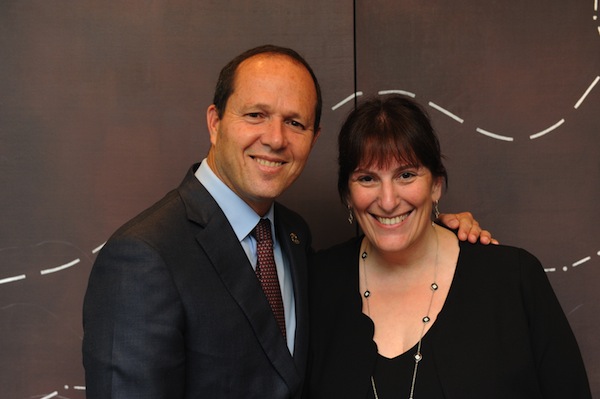
Then-mayor of Jerusalem Nir Barkat and Nomi Levin Yeshua at the Jerusalem Foundation of Canada gala in Toronto in 2014. (photo from Nomi Levin Yeshua)
This article is the first in an occasional series about people with British Columbian roots having positive impacts in Israel and elsewhere.
When Nomi Levin Yeshua went to Israel in 1990, she wasn’t committed to staying there. Almost three decades later, the Vancouver-born and -raised woman can look back on a career that has impacted the face of Jerusalem and Israel.
Thanks to a chance meeting over Shabbat lunch with her grandmother’s former neighbour’s sister – “You know Israel,” she said, laughing – Yeshua had barely arrived in Israel when she got a job as assistant to the assistant to Teddy Kollek, Jerusalem’s mayor – but the job was more than that.
Shula Eisner, Yeshua’s new boss, had been working for Kollek since 1965, just before he began his 28-year run as mayor. Kollek was chairman of the Israel Museum and, before that, had served 11 years as director general of the prime minister’s office under David Ben-Gurion. In that role, Kollek effectively created almost all of the government agencies in the new state.
“One of the things he believed was that there had to be a national museum,” Yeshua told the Independent recently while in Vancouver for a milestone birthday of her mother, Shanie Levin. “He went around raising money to start the Israel Museum. He had an office there and [Eisner] was originally hired there to work with him with all the foreign donors. Then he was elected mayor and he kept to the Israel Museum office.”
In 1966, Kollek founded the Jerusalem Foundation, where Yeshua now works.
“That was his way of creating a forum for supporters of Jerusalem around the world, to be part of creating a new vision for Jerusalem. Then, a year after that, with the Six Day War and the reunification of the city, suddenly everything was just multiplied,” she said.
Yeshua acknowledged that Kollek’s multiple roles as mayor, head of the national museum and leader of a major foundation would probably not be sustainable today, but that was a different time.
“For him, it was all fluid,” she said.
To accommodate his different hats in the era before email or even fax machines, there was a driver who shuffled between offices, taking papers back and forth.
When Eisner moved over to another foundation, she handed her baton to Yeshua, who worked with Kollek through his last years as mayor and continued until a few months before he passed away, in 2007. She continues to run all donor relations for the Jerusalem Foundation and she personally handles Canadian fundraising for the organization.
The Jerusalem Foundation was started by Kollek because he saw that Jerusalem was a very poor city.
“A lot of religious institutions that don’t pay taxes at all are in Jerusalem, so he knew that it was always going to be a challenge for the city to have a balanced budget, to expand the city, to develop the city, to provide for the citizens of the city, so he knew that he was going to need to raise money,” she said.
Kollek pioneered a fundraising model that is now almost universal across Israeli and Jewish philanthropy.
“He connected every donor to a specific project and they knew that their money went to that project and they could come – and now their grandchildren come – and see those projects. To this day, they can still track the money. The Jerusalem Foundation was really at the forefront of that movement of changing the way people were giving to Israel. Now, it’s taken for granted, but it wasn’t back in the late ’60s and early ’70s at all. That was Teddy,” she said. “He wanted people to feel personally connected to the city, to the project, to the place.”
The foundation emphasizes “shared living” and is now focused on a vision for 2030.
“This is a city that is completely about how to exist together in this space that we share. It’s not just Arabs and Jews. It’s also secular and religious, it’s poor and rich, it’s all kinds of divisions that exist in the city,” she said. “But how do we share and how do we understand each other better?”
One major project is Hand-in-Hand School for Bilingual Education.
“Bilingual education is something that Canadians completely understand but Israelis less so. This is a school that teaches in Arabic and in Hebrew, in mixed classrooms. The rest of the Israeli education system is – we don’t like to use this word but it’s the truth – segregated,” she said. “There are Jewish schools, there are Arab schools and then, even within the Jewish schools, there are religious and nonreligious. This school brings together all of the different population groups and at all times there is an Arabic-speaking and a Hebrew-speaking teacher in the classroom.” There are now six such schools around the country.
Another area of the foundation’s work is helping the most vulnerable populations in the city, through projects such as Springboard, which develops programs primarily through the education system to push gifted kids into opportunities their financial situation might not otherwise permit.
The Jerusalem Foundation is also the city’s second-largest funder to the arts, after the municipality.
“We really believe that a modern and thriving city should have a good cultural scene. Culture is not just for one population group. All members of the community should be cultural consumers. But you have to create culture that is appropriate for those people,” she said. “For example, there is a dance troupe for ultra-Orthodox women. They only perform for women, of course, because otherwise that wouldn’t work for them. But they’re really doing amazing stuff and giving these ultra-Orthodox women who want to dance an opportunity to have a really high-level, professional dance troupe within the system that works for them.”
The foundation is also building a new Hassadna Conservatory of Music.
“They help kids ages six all the way through high school with classical music education and they also provide a special program for children of Ethiopian descent who don’t necessarily have the financial means to get musical training and they have a special program for special needs kids that’s integrated,” she said.
Yeshua credits her Vancouver upbringing as foundational to her worldview and accomplishments. She grew up in the Habonim Dror Zionist youth movement and was a camper, counselor and camp director at Camp Miriam. At home, her Jewishness was nurtured in a pluralistic way.
“In terms of how my mother brought us up, Jewish identity wasn’t limited to our religious identity,” she recalled. “National identity was something that was acceptable, cultural identity was very much encouraged. I think growing up in the very open community of Vancouver – to me it always seems that way, at least – it allowed me to be Jewish in a way that I felt good with and it wasn’t only one way to be Jewish.”
Yeshua acknowledged that “many people feel somewhat alienated from Israel today.”
“I want people to understand that there is a way to engage with Israel, to support Israel, and not contradict your own value system or what you think is acceptable,” she said. “What we do with the Jerusalem Foundation is something that people can respond to, relate to, understand – to protect Jerusalem as a city that is for everyone.”