Skip to content

  • Home
  • Subscribe / donate
  • Events calendar
  • News
    • Local
    • National
    • Israel
    • World
    • עניין בחדשות
      A roundup of news in Canada and further afield, in Hebrew.
  • Opinion
    • From the JI
    • Op-Ed
  • Arts & Culture
    • Performing Arts
    • Music
    • Books
    • Visual Arts
    • TV & Film
  • Life
    • Celebrating the Holidays
    • Travel
    • The Daily Snooze
      Cartoons by Jacob Samuel
    • Mystery Photo
      Help the JI and JMABC fill in the gaps in our archives.
  • Community Links
    • Organizations, Etc.
    • Other News Sources & Blogs
    • Business Directory
  • FAQ
  • JI Chai Celebration
  • JI@88! video
image - Weizmann Canada Physics Tournament 2025
image - The CJN - Visit Us Banner - 300x600 - 101625

Recent Posts

  • היהירות היא אחד האויבים הגדולים ביותר של ישראל
  • Vrba monument is unveiled
  • Music to build bridges
  • A better future possible
  • Anne Frank exhibit on now
  • Human rights in sport
  • Telling the story of an icon
  • Crawl bigger than ever
  • JCC Maccabi in Toronto
  • A way to meet fellow Jews
  • Time to include
  • Add Jewish joy to the mix
  • Reminder of humanity’s light
  • From the archives … editorials
  • Year-round holiday recipes
  • מדוע עזבתי את ישראל ואינני חושב לחזור ארצה
  • OJC hosts Oct. 7 memorial
  • A journey beyond self
  • Antisemitism a problem
  • Young man is missed
  • Orr action sparks complaint
  • Prison sentence for hate
  • Etgar Keret comes to Vancouver
  • New fall lecture series
  • Series explores music
  • Doc on Zapiro screens Nov. 6
  • Joy of shared existence
  • Community milestones … October 2025
  • MAID vs Jewish values
  • Cheshvan a great month, too
  • Bull, bear or bubble?
  • From the archives … a coin, etc.
  • מדוע האנטישמיות הולכת וגואה בעולם
  • New bio gives Vrba his due
  • Joy brighter than ever
  • When approaches differ

Archives

Follow @JewishIndie

Tag: British Columbia

Green leader condemns BDS

Green leader condemns BDS

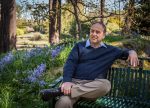
B.C. Green party leader Andrew Weaver, MLA for Oak Bay-Gordon Head. (photo from Andrew Weaver)

Andrew Weaver calls the two-party system that typifies B.C. politics a “dichotomy of dysfunction.” As leader of the provincial Green party, he hopes to hold the balance of power in the next legislature so that his party can “hold to account either the B.C. Liberals or the B.C. NDP.”

“That would be a very, very wonderful situation,” Weaver told the Independent. While he is ostensibly running to be premier of the province, the scientist and MLA for Oak Bay-Gordon Head acknowledged he would be satisfied with a lesser role. Some opinion polls have suggested that Weaver, the first and only Green elected to the B.C. legislature, may be joined by other Green colleagues after the May 9 election. If the race between the Liberals and the NDP remains close across the province, that could put the Green party in an enviable position in the next legislature.

“I’d be very pleased,” Weaver said of the potential to hold the balance of power in a minority government. “One of the reasons why that’s important for people to know is, frankly, people don’t trust the Liberals right now. I see that all around. But they also don’t trust the B.C. NDP. Our role, if we should if we form the balance of power, is to actually hold to account either the B.C. Liberals or the B.C. NDP because they can trust us. The others can’t be trusted but we are convinced that people could get behind us and trust us to actually ensure that the others, if we were in a balance of power, actually follow through with what they say they would do.”

While touting his party’s comprehensive platform, which he urges Jewish Independent readers to review online, he also emphasized the quality of candidates the party has recruited.

“They’re not career politicians, they are stepping aside from their careers because, honestly, they can’t stand by and watch what’s going on anymore, this dichotomy of dysfunction,” he said.

Weaver, who was elected MLA in 2013 and became party leader in 2015, was the Canada Research Chair in climate modeling and analysis in the School of Earth and Ocean Sciences at the University of Victoria. He has been at UVic for 25 years and has degrees from UVic and Cambridge University and a PhD in applied mathematics from the University of British Columbia.

On issues of community security and culturally appropriate delivery of services, Weaver insisted that, before committing to any actions affecting ethnocultural groups, his party would consult with the communities in question.

“The first thing you would do is consult with those ethnocultural groups to ensure that what you think is the best approach is also what they think the best approach is,” he said. “I think that, in government, we do not have all the solutions.”

On threats and violence against minority groups, such as the desecration of the Jewish cemetery in his hometown of Victoria, Weaver said leaders have a role in shaping public opinion by “expressing clear and unequivocal disdain for hatred – hatred in all forms. There is nothing positive that can ever come of it.”

Supporting cultural events and other avenues where communities can learn about one another is critical to society’s cohesion, he said.

“Celebrating our diversity is one of the strongest things that can happen,” said Weaver, noting that his wife, who is Greek, grew up when Greeks were discriminated against in Canada and his mother, who is Ukrainian, faced discrimination growing up in Montreal.

“Celebrating our diversity is critical to embracing diversity,” he said. We have cultural festivals in Victoria and Vancouver – these need to be supported and celebrated because you break down barriers when people meet each other. When people get together and they talk … they share more commonalities than they do actual things that they disagree on. What’s important is the celebration of our multicultural values, ensuring that there are funds available, ensuring that there are places available that will bring cultures together, rather than apart.”

Education is another key to multicultural success, Weaver added.

“We’ve gone through extensive reevaluation of the curriculum to ensure that indigenous values and rights and culture is covered appropriately in our K-to-12 system, but that should be true of all multicultural values,” he said. “When a child is born, they don’t even understand what prejudice is. Prejudice is a learned concept, it’s not something that a child understands. So, if one is able to develop an educational system that promotes tolerance, promotes respect for diversity, promotes multicultural values, promotes religious tolerance, you’re not dealing with any perceived kinds of barriers to inclusion early on. [The Green party has] a major investment that we propose in the K-to-12 system and one of the things we’re hoping to do is ensure that teachers can deliver the new curriculum, which does have more multicultural values expressed in it, and to ensure that barriers early on are not put up.”

Involving cultural communities in the delivery of social services is good for the communities and the government, Weaver added.

“You are going to get a lot further partnering, for example, with the Jewish community to provide social support for those who share the Jewish values, culture, religion, than you would trying to impose a one-size-fits-all model,” he said.

This extends to Green support for independent schools.

“Continued funding for the independent system is critical because there are people who determine that their children are best served by an education system that provides the curriculum – because that’s provincially mandated – but does so in a manner that shares the values and cultures that the child is being educated in. So, for example, a Jewish school, we would support the independent funding to continue there, same with a Sikh school, same with a Christian school. It’s important though that the province maintain control of the curriculum to ensure that it’s consistently taught across society.”

Weaver has been an outspoken opponent of the anti-Israel boycott, divestment and sanctions movement.

“Solutions to complex issues come through dialogue and bringing people together, not dividing and picking winners or losers,” he said.

Last year, the federal Green party passed a resolution endorsing BDS. Weaver condemned it forcefully and publicly.

“It’s just not my style,” he said. “It’s not the B.C. Greens’ style to be divisive and hurtful. We are here to be inclusive and bring people together…. You’re there to actually broker solutions and that’s what troubled me so much about the federal Green party. What had happened there, clearly, was they had had a large sign-up of members going into the convention and it was just outrageous that this policy – I’m not a member of the federal Green party, just so you know – but it was outrageous that this would end up on the floor for discussion.… It’s not something that would have made it to the floor of the B.C. Greens, it would never have got past our policy committee.”

He is particularly passionate on this matter in part because of the experience of his mother’s family in Ukraine.

“They were kulaks,” he said, referring to a category of independent peasant farmers who were declared “class enemies” under Stalinism. The family’s farm was collectivized, Weaver’s grandfather was sent to Siberia and his mother and grandmother were interned in a camp.

Another experience that impacted him was meeting a survivor of the Holocaust who came to see him when a billboard in the Victoria area, paid for by a group called Friends of Cuba, called for a boycott of Israel.

“She was devastated,” Weaver recalled of the meeting. “People who live these horrific stories and bring them home, when you hear them, you can only imagine what they’ve gone through. And when you see people really taking positions that I don’t think are fully informed, comments that are divisive positions … they don’t understand the hurt that they are doing. By putting that up, they don’t understand that they are hurting people.… It is tone deaf.

“Everybody recognizes that the situation in the Middle East is one where there is a lot of tension. But we also have to recognize that there is one stable democracy in the Middle East and we have to work with that democracy and ensure that the values that we instil within our society are consistent with the embrace of inclusive values that we expect others to follow.… We need to be very careful about how we approach the situation. It’s very volatile and we need to understand it better before we just start blindly picking winners and losers.”

The Independent invited the leaders of the B.C. Liberals, the New Democratic Party and the Greens to be interviewed for our election coverage. The Liberal campaign did not make their leader available. An interview with NDP leader John Horgan appeared in the March 31 issue and is available at jewishindependent.ca.

Format ImagePosted on April 28, 2017April 26, 2017Author Pat JohnsonCategories LocalTags Andrew Weaver, British Columbia, elections, Green party, politics
NDP values in kishkes

NDP values in kishkes

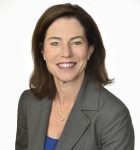
Selina Robinson, current MLA and NDP candidate for Coquitlam-Maillardville. (photo from Selina Robinson)

Coquitlam is not known as a hotbed of Jewish life, yet Selina Robinson notes that the area has been represented by three Jewish members of the legislature over the past few decades.

Riding boundaries frequently change, but the area was represented by Dave Barrett, when he was premier of the province, later by Norm Levi and, since 2013, by Robinson, in the riding now called Coquitlam-Maillardville. She appeared initially to lose last time around, but won by 41 votes in a recount. She’s not counting on a landslide this time, she said – she’ll be happy just to win on election night.

Robinson’s roots run deep in the Jewish community. Moving from Montreal to Richmond as a teen (she was Selina Dardick then), she remembers standing in the school hallway with a boy in a turban – two non-Christians excused every morning while their classmates recited the Lord’s Prayer. After high school, she went to Israel for a year, where she did an ulpan and Livnot U’Lehibanot, a program exploring Israel and Jewish heritage through hiking, community service, seminars and interactions with Israelis.

Returning to British Columbia, she was an administrator for Habonim Camp Miriam and later ran Lubavitch’s Camp Gan Israel. Meanwhile, she was studying at Simon Fraser University, obtaining a master’s degree and beginning a career in family therapy. She was headhunted to become director of counseling at the Jewish Family Service Agency and later served as associate executive director there. Her political career began on Coquitlam city council. In the legislature, she has been the New Democratic Party spokesperson for local government, sports and seniors.

She understands issues of affordability, she said, because she and her husband were on the Jewish cutting-edge putting down stakes in Coquitlam when they married 30 years ago. Part of the solution to affordability, she said, is providing more diversity of housing. Now that her kids are grown, they do not require the single-family suburban family home and could free it up for a larger family. They want to stay in the neighbourhood, where they are longtime active members of the Burquest Jewish community, but there are no townhouses or other appropriate options for them.

Different kinds of housing, such as the co-op model that is more secure than rental and not as expensive as individual homeownership, could improve the situation, she said. “We need to look at purpose-built rental and how to influence and encourage market-built rental.”

Affordable, accessible daycare in the province is also a pillar of affordability, according to Robinson, who calls daycare expenses “another mortgage payment every month.”

Another issue where Robinson has a personal perspective is her party’s promise to reinstate the B.C. Human Rights Commission, which the B.C. Liberals disbanded more than a decade ago.

“It speaks volumes that we take this seriously and there is a place for you to go to if you believe you’ve been discriminated against,” Robinson said. She was a surrogate mother for a friend’s baby and, in 2001, went to the Human Rights Commission over the legal definition of who was the baby’s mother.

“I had to register the birth under my name as the mother,” she said, even though she was not genetically related, as the baby she carried was conceived from the mother’s egg and the father’s sperm.

“Fatherhood is determined based on genetics but motherhood is based on from whom the baby was ‘expelled or extracted.’ That’s discriminatory. It should be based on genetics. So we took the government to court and the Human Rights Commission accepted the claim and then the government caved.”

Without the commission, someone who feels discriminated against would be required to go to court at their own expense, she said.

Robinson commends the provincial government for providing $100,000 to the Jewish community for increased security, and she recently signed a letter of support for a mosque in her area that is also seeking security funding.

“I think we have to address immediate risk,” she said. “But I think there’s a lot of work for us to do around making sure that people understand that this isn’t tolerated and to challenge discriminatory practices that do exist.”

Cuts to education over the past 16 years, she said, have led to reductions in things that might be considered “extras,” like taking opportunities to explore other cultures. Combined with these reductions, there are more families in which both parents are working, so few can get involved in providing extracurricular activities, as Robinson did when her kids were young, inviting classes to their sukkah and visiting to discuss Jewish topics with their public school classes.

“Those are the things that went by the wayside,” she said. “It allows for ‘others’ to be unfamiliar and, therefore, to be not trusted. And, therefore, hate can grow because of that gap.”

As NDP spokesperson for seniors, Robinson visits facilities and appreciates the role ethnocultural communities play in the delivery of social services.

“The fact that we have the Louis Brier and that it’s so established, and the Weinberg [Residence] … it’s so important,” she said, “for this community and not all communities have that.… I think government should support that, in helping ethnic groups make sure that their seniors have the comforts that they need and they can live their lives as the people that they are and how they’ve lived their entire lives.”

On the movement to boycott, divest from and sanction Israel, Robinson said she has “real problems with it.”

“My understanding of the BDS movement is to destroy the state of Israel,” she said. “I think that’s not OK. I support the state of Israel. I think the idea of not having a state of Israel is destructive and I do think that’s antisemitic.”

While she opposes BDS, she emphasized that people are free to make choices about where they invest or spend, and she defended the right of people to criticize any government.

“I didn’t like what [Stephen] Harper was doing. It doesn’t make me anti-Canadian, it just makes me an engaged person, an engaged Jew who is paying attention to what’s going on in the world around me.”

As British Columbia addresses economic development issues, Robinson urges them to look to Israel.

“When people talk about resource development here in Canada, particularly here in British Columbia, and they say, ‘Well, what else would we do?’ I say, ‘Well, take a look at Israel.’ They have no resources except people and they invest in their people and their people are amazing.… I want to see British Columbia take parts of that model – yes, we have resources and we should develop them wisely – but we have people and, when we invest in people, anything and everything is possible, and I think Israel’s an excellent example of that. I think we have a lot to learn from Israel. I would like to see a lot more of that.”

As Jewish voters ponder their options for the May 9 election, Robinson insists the NDP is the natural choice.

“I think that, in our hearts, our Jewish hearts, in our kishkes, we are New Democrats,” she said. “Jewish values are New Democrat values.”

Format ImagePosted on April 28, 2017April 26, 2017Author Pat JohnsonCategories LocalTags British Columbia, elections, NDP, politics, Selina Robinson
Apartheid impacted views

Apartheid impacted views

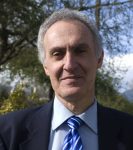
Michael Barkusky, Green candidate for Vancouver-Quilchena. (photo from Michael Barkusky)

Michael Barkusky was a teenager when he canvassed for Helen Suzman’s anti-apartheid Progressive Party in South Africa’s 1970 election. Now, he is the Green party candidate in Vancouver-Quilchena. An old friend told him, “You were always good at spotting trends ahead of time.”

“I thought that was a great compliment,” Barkusky told the Independent. “I’m kind of used to being with small parties that everybody writes off as not really relevant yet that, over time, become very relevant.”

He has given a great deal of thought to the ethical behaviour of governments.

“If you were a morally aware individual, you kind of knew that there was this huge moral question about how the whole society ran in South Africa,” he said.

Barkusky left South Africa in 1980 and came to Vancouver to do a master’s in business administration at the University of British Columbia. He obtained a certified general accountant designation in 1985, the same year he became a Canadian citizen. He has run an accounting practice since then, while also at times working for nongovernmental organizations like the Rainforest Solutions Project and the Coastal First Nations alliance.

While he said the Green party is seeing a surge in the campaign – a recent poll showed the party in first place on Vancouver Island – Barkusky admitted his bid is a longshot. He is running in one of the safest Liberal seats in the province. Vote-splitting may result in interesting upsets in some ridings, but Quilchena would be a shocker.

“I’ve taken on a very tough riding,” said Barkusky, who served with incumbent Liberal MLA Andrew Wilkinson on the board of the B.C. Mountaineering Club. “What I want to do is have a very issue-oriented, respectful-of-my-opponents contest in which we talk about ideas and we talk about where the province is heading.”

He wants British Columbians to see the environment and the economy as inextricably related.

“People often tend to think of the environment as a side issue, a minor issue in politics, and tend to say, well, the Green party is mostly for that, so it’s not really concerned about the economy,” he said. “In my view, these things are all very closely interconnected. We believe in an economic strategy that will give us prosperity but not at the expense of our future, and my worry is that the B.C. Liberals, in particular, with their focus on traditional economic indicators – particularly what will make the GDP go up the most – give up a tremendous amount in terms of stewardship of our natural capital, or the innate riches that make British Columbia such a spectacular place to live.”

Addressing recent incidents in Canada and elsewhere, in which Muslims and Jews have been targeted, Barkusky said there are opportunities for intercultural solidarity, adding that it is important that communities stand together at times like these.

“Some of those who are threatening both vulnerable groups are the same people with the same racist attitudes,” he said.

Confronting prejudice is a matter of education, but it can also be a matter of modeling behaviour, he suggested.

“We should look to what we can do through education because dealing with it through criminal law is really the last resort. It’s what you do when all else has failed,” he said. “The education area is where we should be most active. I think we’re doing quite well, really, in teaching tolerance in the schools in a jurisdiction like B.C. I think we can perhaps model it a bit better in our public life and the way we conduct politics. A slightly less sneering, adversarial style of politics would be helpful. In the Jewish community, we can do that, too, in the way that we have our own internal debate as Jews about Israel.”

Barkusky is well versed in the diversity of discourse in the Jewish community.

“I went to a Jewish high school in Cape Town, Herzlia High School, and our headmaster was probably more of a Likudnik than a labour Zionist, but my mother was more of a labour Zionist. So, there were always debates … about South Africa, about Israel, about other things that were going on in the world.”

Growing up in the apartheid era caused ambivalent feelings, he said, because Jews “had to deal with our role in a society in which we were actually legally classified with the privileged.

“It was a complex history because Jews were very prominent in the struggle against apartheid, but there were plenty of Jews who thought, ‘thank God they’re persecuting someone except us.’ They were maybe not enthusiastically participating in making the lives of black people miserable, but they weren’t too concerned about it and were more concerned about whether the establishment of the time might dislike them if they were too strong in their opposition. Those tensions ran through the Jewish community of South Africa the whole time that I lived there.”

Barkusky has a nuanced perspective on the use of the apartheid label against Israel.

“To me, apartheid wasn’t just a monstrous system that I read about in a book,” he said. “It’s a system that I saw in action.”

Even so, he rejects the idea that comparisons can’t be made.

“You can compare anything to anything,” he said. “The point is, what conclusions do you draw when you compare it?… I don’t like a simpleminded comparison because the situation is different in a number of ways, the history is different, but I don’t think it’s something that should be silenced.”

There may, in fact, be something to be learned, he said. The way the current constitution in South Africa was arrived at may have some lessons for a resolution of the Israeli-Palestinian situation, he suggested.

On the issue of the movement to boycott, divest from and sanction Israel, Barkusky said he doesn’t agree, but avoids getting on a moral high horse about it.

“I personally think it’s not the greatest way to conduct politics,” he said. “Persuasion, discussion and education, thinking things through, looking at the evidence, makes much more sense.”

Boycotts can also harm the people they are intended to help, he warned.

“I continued to buy South African wines after I moved here from South Africa, not because I particularly wanted to support the government but because I thought that boycotting the wines would put farm workers out of work and the farm workers were mostly not white,” he said.

Barkusky blames the Israeli government for some of the criticism aimed at the country.

“I do find the current government in Israel so far to the right that it’s very hard to not see them as, in some sense, the author of their own misfortune,” he said, but added: “I think a situation in which Israel is treated as the worst example of human rights abuses on the planet is really just ridiculous. It’s just not in keeping with the evidence.”

Format ImagePosted on April 28, 2017April 26, 2017Author Pat JohnsonCategories LocalTags British Columbia, elections, Green party, Michael Barkusky, politics
Affordability a priority

Affordability a priority

Gabe Garfinkel, Liberal candidate for Vancouver-Fairview. (photo from Gabe Garfinkel)

Whether the B.C. Liberals or the NDP win the riding of Vancouver-Fairview in the May 9 provincial election – and any other result would upend every prognostication – the riding will have a Jewish MLA.

There has never been a great number of Jewish politicians in British Columbia – though some, like David Oppenheimer and Dave Barrett have made history – and so it is an unusual situation that two members of the province’s Jewish community find themselves head to head in this election.

The riding has been held since 2013 by New Democrat George Heyman, who was profiled in the Independent’s April 7 issue. Gabe Garfinkel, a former assistant to Premier Christy Clark, won the Liberal nomination for the riding in February; Louise Boutin is the Green party candidate in Fairview, Phil Johnston is the Libertarian and Joey Doyle is running for Your Political Party of British Columbia.

Garfinkel was profiled by the Independent during his nomination run (Dec. 2, 2016). For the Independent’s election coverage, we posed to him the same questions we asked all candidates we interviewed.

Responding to threats to ethnocultural communities, Garfinkel said security should be a partnership between government and the community.

“When Premier Clark announced $100,000 of security funding for the Jewish community, I think that makes a tangible difference because it allows us to hire security,” he said, adding that incidents of threats and violence have had the unintended consequence of building bridges between communities. “When we heard about the devastating attacks in the mosque in Quebec, that really gave the Jewish community and the Muslim community an opportunity to work together to address racism and hatred and intolerance.”

Having strong representation in the legislature, he said, is important in times like these.

“We need to work as a community to ensure these voices are heard in government and to ensure that we have the right representation out there standing up for our interests, which is what I plan on doing,” said Garfinkel. “As we look across the world at the instability and the insecurity in some areas, and even in our own backyard, we must be united and we must have an effective voice in government that is able to look after us.”

Changes to the education curriculum that increase attention to indigenous issues including residential schools is a good thing, he said, and further exploring the histories of B.C. multicultural communities will make the province better.

On partnerships between the government and multicultural communities, Garfinkel said the Jewish community is a model.

“The Jewish community has always been a community that takes care of those who most need our support,” he said. “That’s what makes our community who we are and makes us so strong. That’s why I’m so pleased to join Premier Clark and her team, who have continuously funded these services, which are funded by the strong economy.”

Affordability is an issue all parties are addressing and Garfinkel said he takes it personally because his family has been in Vancouver-Fairview for four generations.

“My great-grandparents lived here, my grandmother grew up here and then my parents did as well,” he said. “I want to stay in the community I live in today. Being able to find affordable housing is a difficult challenge that I’m facing personally as well. I can relate to a lot of other people in our community who are going through the same thing.”

He highlighted initiatives of the provincial government aimed at improving affordability, including a 15% foreign homebuyers tax, the B.C. Home Owner Mortgage and Equity (HOME) Partnership program, which he said will get 42,000 families into the housing market while also making rental space available, as well as the first-time homebuyers grant.

“At the same time,” he said, “housing affordability is a complex issue and there is no one-size-fits-all solution.” He said the government will see if there are ways to work with Metro Vancouver municipalities to expedite the permitting process on 100,000 housing units currently in the planning stages.

While foreign affairs is a federal matter, the boycott, divest from and sanction movement against Israel seeks to target Israel at every level of politics and society.

“I am absolutely 100% against BDS and I have no problem saying that,” Garfinkel said. “Israel needs more friends in this world and B.C. as a province, under the leadership of Premier Clark and International Trade Minister Teresa Wat, has increased and promoted trade with Israeli companies and also its universities and government.”

In addition, Garfinkel said the BDS movement demonstrates that “we have to teach more about antisemitism.”

“We have to talk about the harmful and hateful rhetoric that we’re hearing on campuses across our continent,” he said. “I’ve dedicated my life so far to serving my community, working with CIJA [Centre for Israel and Jewish Affairs] as well as Federation and CJPAC [Canadian Jewish Political Affairs Committee] to help increase our voice against harmful forces like BDS and I want to continue doing that at the legislature and I want to continue fighting antisemitism there.”

Format ImagePosted on April 28, 2017April 26, 2017Author Pat JohnsonCategories LocalTags British Columbia, elections, Gabe Garfinkel, Liberals, politics
International partners

International partners

Left to right: Larry Fisher (Lark Group), David Berson (Canadian Associates of Ben-Gurion University of the Negev), Daniel Blumenthal (Centre for Digital Innovation Negev), Dianne Watts (South Surrey-White Rock MP) and Rowena Rizzotti (Health and Technology District). (photo by Yvonne Chiang)

The Health and Technology District in Surrey and the Centre for Digital Innovation in Israel have formalized a number of collaborations on health-related technologies, creating an international network between partners to support health-tech innovations in Israel and across North America.

The Centre for Digital Innovation (CDI) is located in the Advanced Technology Park in Be’er Sheba, Israel, the growing “Silicon Valley” of the Middle East. CDI is a nonprofit created through the collaborative efforts of Israeli entrepreneurs and Ben-Gurion University of the Negev. CDI operates in the areas of digital healthcare, healthy aging, education and smart cities, and brings together experienced entrepreneurs, start-up companies, innovators, researchers, industry leaders, academics, the public sector and investors to generate a high return on innovation for the challenges of the 21st century, such as the cost of healthcare and chronic diseases.

“Both CDI and Surrey’s Health and Technology District [HTD] have aggressive goals to drive innovation across the health sector and Canada stands to deeply benefit from the mentorship and leadership that Israel can bring to our innovation agenda here in Canada,” said Rowena Rizzotti, vice-president of health and innovations for HTD.

The memorandum of understanding between HTD and CDI will co-create and share respective solutions to global healthcare challenges by expediting the implementation of innovations in critical healthcare improvements for both countries.

“It’s great to see that Canada and Israel have parallel visions and focus in developing high-level innovations,” said Ziv Ofek, CDI founder and chief executive officer. “We are excited about this partnership with Canada and with the Health and Technology District and we look forward to collaborating and working together to create technologies that will benefit the world in which we live.”

The partnership was finalized during a recent trade mission organized by the Conference Board of Canada, where participants studied the culture and key success factors that have led to Israel’s groundbreaking developments in innovation and commercialization.

“Israel is a hotbed of high-tech innovations and boasts world-class skills and capabilities with universities and forward-thinking organizations developing some of the world’s latest technology breakthroughs,” said Paul Preston, Conference Board of Canada. “It’s hugely beneficial for Canadians to learn from this success and assist us in developing the talent and capacity to lead a culture in innovation in Canada.”

Every year, the Centre for Israel and Jewish Affairs (CIJA) brings more than 100 Canadians to visit and learn firsthand from the “start-up nation,” and has facilitated trips in recent years for the City of Surrey, the Government of British Columbia and the Conference Board of Canada.

“This exciting partnership is a prime example of how, in bringing the best Canadian and Israeli minds together, we can achieve remarkable things for both countries,” said Jason Z. Murray, CIJA Pacific Region chair.

HTD held a celebratory reception on March 23 with CDI and special guests Dianne Watts, member of Parliament for South Surrey-White Rock, Ofek and members of CIJA.

Developed by the Lark Group, a Canadian-based company, HTD is a series of high-tech buildings located immediately adjacent to Surrey Memorial Hospital, creating an ecosystem for clinicians and health-care providers to work alongside innovators, entrepreneurs and tech companies.

Format ImagePosted on April 7, 2017April 4, 2017Author Health and Technology District & Centre for Digital InnovationCategories LocalTags British Columbia, health, Israel, technology
Come celebrate our history

Come celebrate our history

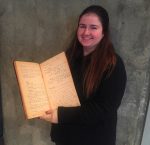
Jewish Museum and Archives of British Columbia archivist Alysa Routtenberg holds a minute book from Victoria’s Congregation Emanu-El, circa 1920. (photo from Alysa Routtenberg)

The documents and artifacts collected, processed and housed by the Jewish Museum and Archives of British Columbia are part of “everyone’s story,” JMABC archivist Alysa Routtenberg told the Independent in a recent interview. She encouraged people to donate material, join museum walking tours and visit the archives.

Routtenberg, who was born and raised in Vancouver, did her undergraduate studies in history and art history at the University of British Columbia before heading to Montreal for two years to earn her master’s of library information and archival studies at McGill University. In the summer of 2014, she had the opportunity to work in her field at the JMABC and, when she completed her studies, the museum’s then-archivist, Jennifer Yuhasz, was getting ready to move on and Routtenberg won the job.

“I ended up moving back to Vancouver, and was lucky enough to get this position not that long after I moved back to start my career as an archivist here,” she said.

Routtenberg’s family has been very involved in historical societies and groups for generations, and she always has loved her family’s library and the study of history.

“We did a lot of trips – like Fort Langley and all sorts of museums and things – so I always knew I wanted a career in history,” she said. “It was just a matter of figuring out the practicality of what that looked like.”

The JMABC originally started out as the Jewish Historical Society of British Columbia in 1971. Its founding president was Routtenberg’s grandfather, Cyril Leonoff, who passed away last year. Since its beginnings, the museum’s mandate has evolved, but the core objective has stayed the same – to preserve, collect and share the history of Jewish people in British Columbia.

The museum and archives makes information “accessible so people can come in and research,” said Routtenberg. “Then, we try to use that material in our public programming, whether that be with walking tours, lectures or physical exhibits. It’s all about celebrating and sharing the history. It’s a fairly short history compared to Jewish people in other provinces, but that doesn’t mean it’s any less important.”

The oldest material in the archives is from 1862 – from Congregation Emanu-El in Victoria. While not Canada’s oldest synagogue, it is the oldest synagogue in continuous use in the country. It’s been open and operational ever since it was started a couple years after Jews first arrived in the province.

“They were mostly coming up from California during the gold rush,” said Routtenberg of these pioneers. “And then, they developed businesses and, within a couple years, wanted to start a synagogue. So, that’s our oldest material. They are pretty special … very beautiful … handwritten notebooks and things.”

The first Jewish arrivals, she said, “set up businesses where they sold supplies to the guys who were going off panning [for gold]. So, that’s what allowed them to build a community. They built a business, a home, then a synagogue…. A couple guys called themselves wholesalers, selling every kind of supply. And then, as soon as there were actually people staying in Victoria and wanting to live there … I know there were a couple clothing stores and then a women’s clothing store, specifically, and a fur store … that sort of thing.”

As others did, Jews kept trickling into British Columbia, moving west with the hope of a better life, with more space. In the 1920s and 1940s, the Jewish community got big population boosts and communal groups began to be organized. Some community groups and businesses have now been around for three or four generations.

“There were furniture and scrap metal dealers … and we’ve collected a lot of those stories, fortunately, while those people were still with us,” said Routtenberg. “We’ve been able to write a couple of books about them,” she said, referring to the JMABC’s annual journal, The Scribe. The museum also publishes a newsletter, The Chronicle, twice a year.

Routtenberg’s job is to collect and preserve all the historical artifacts from the Jewish community, and the artifacts are divided into two major groups.

One group is family collections, which includes letters, photos, certificates and any other correspondence or paper material a family produced over the years. In that area, the JMABC has many great collections from a range of people.

“They were involved with any number of organizations,” said Routtenberg. “We’ll have their handwritten notes from meetings from the 1950s. We’ll have their letters back and forth with relatives across the country. Those are the sorts of things we have in the family collection.”

The second group focuses on community organizations, with collections from the Jewish Community Fund and Council, the Canadian Jewish Congress and the Hebrew Free Loan Association, as but three examples. The material in these collections includes correspondence, meeting minutes, agendas, publications they produced, information relating to events, etc.

“We’re very lucky in that most of the synagogues in the city have agreed to donate their materials to us,” added Routtenberg. “We collect the material related to the synagogue’s administration, meeting minutes, member lists, committee minutes, photos, events and publications.”

One important aspect of Routtenberg’s job is to reach out to and speak with people and organizations, to explain what it is that the JMABC does, what types of things it collects and, at times, making house calls to help sort materials.

“Once materials have been fully processed, everything is in a file and we know exactly what it is, what the dates are, and where to find it,” said Routtenberg. “So, that’s the main job we do.

“We deal with a lot of research requests as well,” she added. “A lot of people call or email and they are researching their family, asking what information we might have about them. Also, a lot of students, from high school to doctoral students, contact us when they are doing projects and want to know about a theme.

“I’ll make notes about those. I’ll try to answer right away, but often it requires some searching. Usually, looking through material in the archives needs to wait for a volunteer to be available or I encourage people to come in themselves.”

Routtenberg especially enjoys getting to dig into a box, and she has made some exciting discoveries.

“Something I love finding are handwritten letters,” she said. “We have a number of collections in the archives that are very thorough. There’s one that’s [between] a couple who was in Vancouver and Montreal in 1920, and they wrote letters back and forth.

“They met in Montreal, I believe, and then were secretly engaged for I think six months or so. And they wrote letters everyday, sometimes twice a day, back and forth. It’s those kinds of things that people don’t necessarily think is important, but they tell us so much about what life was like back then – things they struggled with and thought about. They are just beautiful.”

The archives are meant to preserve everyone’s history, not just the visible part of the community, stressed Routtenberg.

“If we don’t preserve our history, no one else will,” she said. “That’s what it comes down to at the end of the day. It’s really easy for people to think they’re not important, that their stuff isn’t important, thinking there is no reason why we would want it. People, all the time, bring stuff from the 1970s and 1980s, and they think it’s not important … but, if we don’t do it now, it never gets to be 150 years old.

“And we get so many research requests – we average 650 to 700 per year. These are all people with a wide range of questions wanting to know about the Jewish community. I don’t want to have to sit there and explain something, because I happen to know it – I want the evidence to back it up, providing the original documents for people to be able to come and look through.

“We’ve really been trying to promote community ownership of these archives,” she said. “They’re not this thing to be locked away from the public. They’re really everyone’s story.”

For more information, visit jewishmuseum.ca.

Rebeca Kuropatwa is a Winnipeg freelance writer.

Format ImagePosted on March 17, 2017March 14, 2017Author Rebeca KuropatwaCategories LocalTags Alysa Routtenberg, archives, British Columbia, history, Jewish museum, JMABC
Garfinkel wins nomination

Garfinkel wins nomination

B.C. Liberal candidate Gabe Garfinkel. (photo by Larry Garfinkel)

Gabe Garfinkel was nominated Sunday afternoon, Feb. 19, by the B.C. Liberals in Vancouver-Fairview. The former aide to Premier Christy Clark defeated Elizabeth Ball, a Vancouver city councilor. He will be up against incumbent New Democrat George Heyman in the provincial election scheduled for May 9. Garfinkel credits support in the Jewish community for his nomination. “I come from four generations in Vancouver-Fairview,” he told the Independent after his victory. “My grandfather was the kosher butcher on 15th and Oak. My parents have lived here their whole lives and so have I. The community was instrumental in this nomination and I’m so thankful for all their support. I cannot wait to serve the Jewish community in Victoria.”

Garfinkel was profiled in the JI Dec. 2. The paper is inviting all Jewish candidates in the election to be profiled in advance of the election.

Format ImagePosted on February 24, 2017February 21, 2017Author The Editorial BoardCategories LocalTags British Columbia, Election, Garfinkel, Liberals, politics
Leaders meet with Horgan

Leaders meet with Horgan

From left to right: Ezra Shanken, chief executive officer, Jewish Federation of Greater Vancouver; Jason Z. Murray, chair, Local Partner Council, Centre for Israel and Jewish Affairs; Penny Gurstein, volunteer leader, JFGV; Candace Kwinter, member of the CIJA LPC; Stephen Gaerber, chair of the board, JFGV; John Horgan, MLA, leader of the Official Opposition; Yael Levin, manager of partnerships, CIJA Pacific Region; David Berson, member of the CIJA LPC; Shelley Rivkin, vice-president, allocations and community relations, JFGV; and Nico Slobinsky, director. (photo CIJA Pacific Region)

On Nov. 28, the Centre for Israel and Jewish Affairs (CIJA) and the Jewish Federation of Greater Vancouver (JFGV) hosted discussions with Jewish community leaders and British Columbia Leader of the Official Opposition John Horgan and Selina Robinson, member of the Legislative Assembly for Coquitlam-Maillardville.

The discussion underscored the Jewish community’s relationship with the provincial New Democratic Party (NDP) and provided Horgan with details regarding issues faced by the approximately 30,000 members of British Columbia’s Jewish community.

Lay leaders and professional staff representing a wide range of perspectives discussed such priorities as antisemitism, community security, affordable housing, elder care, Jewish education, ethno-cultural cooperation and the centrality of the state of Israel to the Jewish community.

Horgan expressed his appreciation for the Jewish community and recognized the importance of working with them to confront hatred and intolerance wherever it exists.

“British Columbia’s Jewish community cherishes the historic, enduring and constructive relationships existing with both the B.C. NDP and B.C. Liberal parties,” said Nico Slobinsky, CIJA’s Pacific Region director. “CIJA is committed to strengthening our relationship with all provincial parties to affirm our shared values and work together on the challenges facing B.C.’s Jewish community and other ethnic and religious minorities.”

Format ImagePosted on December 16, 2016December 14, 2016Author CIJA Pacific RegionCategories LocalTags British Columbia, CIJA, Election, Horgan, NDP, politics
Spinal cord registry expands

Spinal cord registry expands

Left to right: In Jerusalem, during British Columbia’s trade mission to Israel, are B.C. MLA Dr. Moira Stillwell, Hadassah Medical Centre’s Dr. Guy Rosenthal, Rick Hansen Institute chief executive officer Bill Barrable, B.C. Finance Minister Michael de Jong; and Hadassah Medical Centre’s Prof. Eyal Itshayek and Prof. Yoram Weiss. (photo from RHI)

The medical interventions and outcomes of Israelis with spinal cord injury (SCI) can now be captured in the Rick Hansen SCI Registry (RHSCIR), a prospective observational study of individuals sustaining a traumatic SCI, thanks to the teams at the Rick Hansen Institute (RHI) and Hadassah Medical Centre.

Spinal cord injuries have a devastating impact on the health and well-being of the individuals affected. SCI health-care services are highly specialized and complex and place a significant burden on health-care systems. By connecting clinicians, researchers and health-care administrators, the goal of the registry is to advance research, improve clinical practice and reduce health-care costs.

The registry has sites at 31 major acute care and rehabilitation hospitals across Canada. In the last year, registry sites have been established in China, New Zealand and, now, Israel, marking its turn as a truly global study that connects the international SCI research and clinical care communities. There are currently more than 6,000 individuals with SCI enrolled in the registry.

At Hadassah Medical Centre, the registry pilot study is led by Dr. Eyal Itshayek and a team of researchers who will collect details about study participants’ SCI, including the extent of their injury, level of paralysis, recovery, success of various treatments and impact on quality of life and physical function.

RHI and Hadassah celebrated their established partnership with an official launch of the RHSCIR pilot study on Nov. 16. RHI’s chief executive officer, Bill Barrable, and manager of commercialization and industry relations, Jonathan Miodowski, visited the hospital as part of British Columbia’s trade mission to Israel, led by B.C. Minister of Finance Michael de Jong.

The delegation and invited guests attended a presentation from Hadasit Technology and took a tour of the trauma unit of the medical centre, which was followed by the RHSCIR pilot launch event. Elad Strohmayer from the Israel Ministry of Foreign Affairs, and Ralph Jansen, deputy head of mission from the Canadian Trade Commissioner Service, had the opportunity to say a few congratulatory words, along with de Jong, hospital representatives and Barrable. De Jong spoke highly of the partnership between Hadassah Medical Centre and RHI, and of how the launch of RHSCIR “forges another link in the chain of research that will make life better for so many people.”


Format ImagePosted on December 16, 2016December 14, 2016Author Rick Hansen InstituteCategories LocalTags British Columbia, Hadassah, health, Israel, Rick Hansen, SCI, spinal cord injury
ביקור מלכותי

ביקור מלכותי

(צילום:רוני רחמני)

ביקור ראשון לנסיכים המלכותיים ויליאם וקייט במחוז בריטיש קולומביה וטריטוריית יוקון, ביחד עם ילדיהם הקטנים ג’ורג’ (בן השלוש) ושרלוט (בת השנה וארבעה חודשים). הביקור הקודם של הנסיכים בקנדה נערך ב-2011 מיד לאחר חתונתם (באפריל 2011), עת ביקורו במחוז אלבטרה.

הנסיך ויליאם, הדוכס מקיימברידג’ והנסיכה קייט, הדוכסית מקיימברידג’, הגיעו במטוס (של חיל האוויר של קנדה) ביום שבת אחר הצהריים ונחתו בבירה ויקטוריה. כל הביקור הרשמי כמתחייב בתקנון (ממלכות חבר העמים הבריטי), ממומן על ידי משלם המיסים הקנדי. עם נחיתתם, קיבלו אותם נציג המלכה אליזבט המושל של קנדה, דיוויד ג’ונסטון ואשתו שרון ג’ונסטון, ראש ממשלת קנדה, ג’סטין טרודו ואשתו סופי גרגואר טרודו, נציגת המלכה המושלת של בריטיש קולומביה, ג’ודי גאושון, והפריימר של בריטיש קולומביה, קריסטי קלארק ובנה היימש קלארק. אלפי תושבים המתינו שעות לקבל בחום ואהבה את הזוג המלכותי הבריטי בשדה התעופה של ויקטוריה.

ויליאם וקייט שמו לעצמם למטרה לפגוש הפעם בביקור העמוס לעייפה בן שמונת הימים, נציגים של שכבות שונות באוכלוסיה, ובעיקר את החלשים בבריטיש קולומביה ויוקון. וכן הם ביקשו לראות מקרוב מה קורה בנושא איכות הסביבה בטריטוריות השונות של האינדיאנים.

וויליאם וקייט הגיעו מוויקטוריה לקוהל הרבור בוונקובר במטוס צף, ביום ראשון לקראת אחת עשרה בבוקר. הם התקבלו כאן על ידי עשרות אלפי תושבים שהמתינו להם משעות הבוקר המוקדמות, בג’ק פול פלז’ה שליד הלהבה של אולימפיאדת ונקובר 2010. תחילה עברה קבוצה גדולה של עיתונאים וצלמים. לאחריהם אנשי ביטחון ומשטרה רבים. עם הגעתם של ויליאם וקייט, רבים החלו לצרוח ומהצלמות צילמו ללא הפסק. הפעם ללא ליווי הילדים הרגישו השניים יותר חופשיים לנוע בשביל הבטוח, שנוצר עבורם בין המבקרים הרבים. וויליאם לחץ ידיים ודיבר עם הקהל בצד השמאלי של השביל, ובאותה עת קייט עשתה את אותו הדבר בצד הימני. לאחר מכן השניים נכנסו ללימוזינה מפוארת ובלווית מכוניות ביטחון ומשטרה רבות, הם נסעו במהירות להמשך הביקור בדאון טאון, שכלל מספר תחנות.

ויליאם וקייט נפגשו עם נציגים של ‘הפירסט ניישן’ (אינדיאנים) אתמול בוונקובר איילנד, והיום בוונקובר. הם ביקרו במעון מיוחד לנשים בהריון ואימהות צעירות (‘שיוואי’), שסובלות מבעיות נפשיות והתמכרויות לסמים ואלכוהול, בדאון טאון אייסט סייד. לאחר מכן הם ביקרו במוסד של ארגון שירותי ההגירה של בריטיש קולומביה, שמטפל בפליטים חדשים שהגיעו מסוריה, גם הוא ממוקם בדאון טאון אייסט סייד (ג’סטין טרודו הסביר בביקור לנסיכים כיצד ממשלתו מטפלת בשיתוף פעולה עם האזרחים בשלושים ואחד אלף פליטים, שהגיעו כבר מסוריה). לאחרי כן השניים השתתפו בטקס קבלת פנים באולם ‘בטאלס גארדן’ בדאון טאון, למנהיגים צעירים בעלי הישגים מרחבי קנדה, כולל נציגים של נבחרות קנדה למשחקים האולימפיים ולמשחקי אולימפיאדת הנכים, בריו דה ז’ניירו. האירוע כלל נאום של ראש הממשלה טרודו.

החלק האחרון בביקור המאוד מתוקשר של הזוג המלכותי בוונקובר, באמצעות אמצעי תקשורת מכל העולם, כלל את התחנה של משמר החופים בחוף של קיצ’לאנו. השניים הגיעו למקום בסביבות שלוש אחר הצהריים, וניפגשו עם נציגים שונים של צוותי חירום והצלה, נושא הקרוב אישית לוויליאם, שעד לאחרונה הטיס בעצמו מסוק של צוותי החירום בבריטניה.

אל הזוג הצטרפו בחלקים מהביקור בוונקובר, כאמור ג’סטין טרודו ואשתו סופי, קריסטי קלארק, וכן ראש עיריית ונקובר, גרגור רוברטסון. עם סיום הביקור בקיצ’לאנו טסו הנסיכים בחזרה לוויקטוריה, לבית הממשלה בו הם לנים עם ילדיהם.

Format ImagePosted on September 28, 2016October 4, 2016Author Roni RachmaniCategories עניין בחדשותTags British Columbia, Royal visit, ביקור מלכותי, בריטיש קולומביה

Posts pagination

Previous page Page 1 … Page 8 Page 9
Proudly powered by WordPress