Skip to content
  • Home
  • Subscribe / donate
  • Events calendar
  • Business Directory
  • FAQ
  • News
    • Local
    • National
    • Israel
    • World
    • עניין בחדשות
      A roundup of news in Canada and further afield, in Hebrew.
  • Opinion
    • From the JI
    • Op-Ed
  • Arts & Culture
    • Performing Arts
    • Music
    • Books
    • Visual Arts
    • TV & Film
  • Life
    • Celebrating the Holidays
    • Travel
    • The Daily Snooze
      Cartoons by Jacob Samuel
    • Mystery Photo
      Help the JI and JMABC fill in the gaps in our archives.
  • Community Links
    • Organizations, Etc.
    • Other News Sources & Blogs
  • JI Chai Celebration
  • JI@88! video

Recent Posts

  • Federation now across BC
  • Israel fighting for its existence
  • Deal strengthens Iran
  • Patriotic belonging diminishes
  • A campaign to engage
  • Upstanders’ first live event
  • Responding to Carney
  • Having your own home
  • Music a family tradition
  • Musical to warm heart
  • Community milestones … June 2026
  • Sharing her passion for Israel
  • Or Shalom reopens its doors
  • JFS from past to future
  • Need holistic approach
  • Sharing stories, advice
  • Journalist shares fears
  • Skills to live together
  • Road to independence
  • Cutting grass with scissors
  • Zionism as a solution
  • Deceit, desire & the divine
  • Reclaiming sacredness
  • Creative project ideas
  • Summer squares and cobbler
  • Thou shalt … summer commandments
  • Legal help for students
  • Revisiting myth of Lilith
  • Wrong person rebuked
  • Canada’s mixed messages
  • Questions for museum
  • Symposium on antizionism
  • Making soccer political
  • CJPAC lauds Pulver’s impact
  • City recognizes Vrba’s legacy  
  • Organ donation saves lives

Archives

Follow @JewishIndie
image - CJN box ad Rockowers 2026

Category: World

Meet at camp, get married?

Meet at camp, get married?

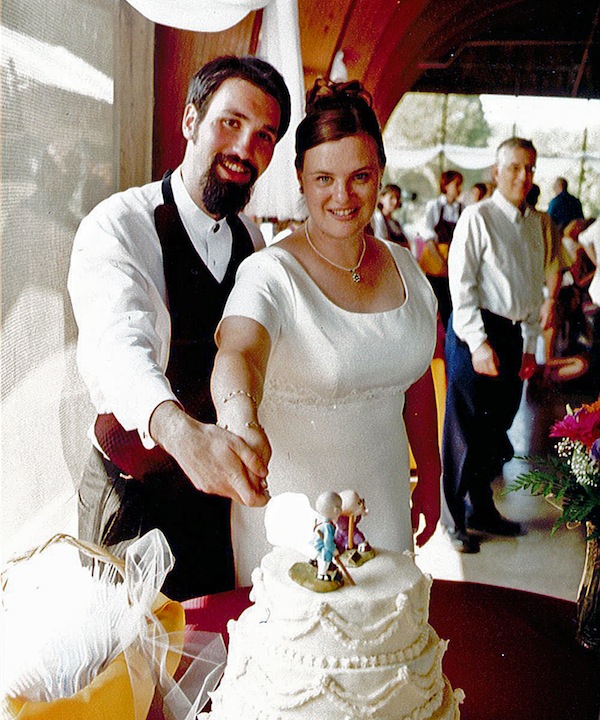
Dan and Jen Silber met at Camp Moshava. (photo from Silber family via jns.org)

Eighteen-year-old Bernie Kozlovsky spent from sundown to sunrise on a boat with 16-year-old Sonia Rosenbaum in the summer of 1972.

“We talked until dawn,” Kozlovsky recalls about that summer at the Orthodox Jewish NCSY overnight camp in northeastern Maryland. Kozlovsky worked in the camp kitchen. Rosenbaum was a camper. From that summer forward, neither dated another individual. Forty-three years later – including 39 years of marriage, six children and seven grandchildren – Kozlovsky attributes his successful relationship to the spark that formed during his summertime experience.

Not much has changed.

Today, the (camp) fire is still burning at Jewish summer camp. Dating and marriage are byproducts of summers spent banging on the table during Birkat Hamazon (Grace after Meals), engaging in loud and intense games of color war, and celebrating Jewish culture with Hebrew plays and folk-music campfire sing-alongs.

No one is pushed to date at Jewish summer camp, said Lauren Ben-Shoshan, who met her Israeli husband, Alon, as a counselor at URJ (Union for Reform Judaism) Camp Harlam in Kunkletown, Penn., in 2004. The couple now lives in Israel.

“Camp is a positive place for Jewish learning, physical activity and connecting with the outdoors. No one wants campers to feel bad because they didn’t find their spouse when they were 15, 19 or 22. But there is a covert understanding that [marriage is] a nice byproduct of Jewish summer camp, when it happens,” said Ben-Shoshan, who is also a Jewish educator.

It occurs more often than many realize. According to Camp Works, a report released in 2012 by Foundation for Jewish Camp, Jewish adults who attend Jewish overnight camp are on average 10% more likely to marry within the Jewish faith than their peers. The 2000-01 National Jewish Population Study found that number to be higher, with 78% of individuals who attended Jewish summer camp in-married, as opposed to 62% of their non-camper peers.

What’s the secret sauce? Is it that romantic Shabbat at sunset by the lake or in the secluded woods? That’s part of it, but it is more likely a result of the “intensity” of the camp experience, Ben-Shoshan believes.

“The days last forever, but camp feels like it only lasts a minute, so even if camp is only two months, these are two very intense months,” she said. “You see the campers and counselors in stressful situations, how they interact with peers and with the kids, the meals, how they interact with co-workers. It is all these things that happen in life, that could take several months in the ‘real world,’ you see within a week at camp.”

Jewish summer camp focuses heavily on community-building, noted Aaron Bogage, who attended the BBYO International Leadership Training Conference for several summers and now works at the overnight BBYO Chapter LTC. He said there are always “quite a few couples per session,” explaining that these relationships form because everyone is “extremely open” with each other and open to meeting new people. “Everyone is genuinely excited to get to know the rest of the teens.… There is a sense of community that comes from camp,” he said.

One can start to pinpoint new couples, according to Bogage, by looking at who sits where during meals and what campers do during free time. Bogage has not met his significant other through camp, but his good friend met a girl last summer from another state. They are still together despite the physical distance between them.

Jen Silber, executive director of Habonim Dror Camp Moshava in Street, Md., said there is a focus at camp on building healthy peer relationships. “We want [campers] to learn about communication, how to express their needs in relationships, feel confident being themselves and develop trust,” she said.

Silber, who met her own husband as a camper and then staffer at Moshava, argues that friendships and romantic relationships that people form at summer camp tend to be “deeper” and more authentic than those forged at school or in other environments. Campers and counselors feel accepted for who they are, she said.

Read more at jns.org.

Maayan Jaffe is former editor-in-chief of the Baltimore Jewish Times and a Kansas-based freelance writer. Reach her at [email protected] or follow her on Twitter, @MaayanJaffe.


Format ImagePosted on December 18, 2015December 16, 2015Author Maayan Jaffe JNS.ORGCategories WorldTags BBYO, Bogage, Camp Harlam, Camp Moshav, Habonim Dror, Jewish camp, Kozlovsky, URJ
Stories about diversity

Stories about diversity

Cynthia Fidel was the coordinator of AMIA’s literary contest, which resulted in the publication Primer Concurso de Cuentos Infantiles. (photo by Rebeca Kuropatwa)

When the AMIA (Asociación Mutual Israelita Argentina) bombing occurred in Buenos Aires on July 18, 1994, there was already tension in Argentina between different religious and other groups. The bombing was a sad reminder of the need for diligence – and creativity – in mitigating hatred and fear.

After the bombing, it was very difficult for people to feel comfortable enough to return to the AMIA building, especially parents with small children. Hence, the Jewish education advisor for AMIA, Gabriela Wilensky, developed a program called AMIA for Kids. On two Sundays a month, she brought in top performers to engage children and their parents in forming fresh connections between families and AMIA.

In 2014, Wilensky came up with the first literary contest for kids that would have them explore the concepts of culture and identity. The idea was to involve the greater Buenos Aires community by partnering with 40 public and private schools, with children of all religions. Recently, the literary contest coordinator, Cynthia Fidel, moved to Winnipeg with her family.

“This contest was part of the 20-year anniversary of AMIA, which happened in 2014,” said Fidel. It was open to children from 8 to 12 years old.

When all was said and done, Fidel and Wilensky received 200 story submissions. With the help of a couple of local children’s book authors, 10 winning stories were selected to be published in a book called Primer Concurso de Cuentos Infantiles (First Contest of Fairy Tales) that was published by MILA for Kids, a division of MILA publishing house.

“They talked about different problems, ideas and questions regarding cultural diversity and identity,” said Fidel. “The first prize went to a girl who wrote about cultural diversity. It’s a collection of certain ideas and questions but, above all, it’s a collection of all the incredible imaginations of the kids.”

Now there is talk of launching a second literary contest, because of the success of the first. “They were really happy about what happened with the kids,” said Fidel.

The contest, which was open to children of all origins and faiths, has sparked dialogue between the kids. The main talking point has been respecting each other’s ideas and understanding that agreement is not needed to achieve mutual respect. Fidel loosely translated one of the first lines in the book’s preface: “Nobody is the same, nor worse or better, just different.”

Primer Concurso de Cuentos Infantiles is 84 pages long and includes the 10 winning stories, as well as an extra story written by several children together.

“Some of the stories talk about some kind of conflict situation and how they solved that situation,” said Fidel. “A recurring theme revolves around how they solved it and prevailed using dialogue.”

An excerpt from the book, as translated by Fidel, reads: “There was a society where some people had curly hair, so they thought they had the right to have more time in front of the mirror, to comb their hair. But, others who had different kinds of hair thought they deserved more time. There were others who were taller and they thought they deserved to cut their hair, while short people didn’t deserve that right.

“Until, one day, a girl wished in her heart that everybody would become equal and have the same characteristics. The wish came true and the entire world became grey – colorless and boring. She wished again to have colors and differences in her world, and everybody got their characteristics back. But, now, everyone loved their uniqueness and celebrated others’ uniqueness, too.”

Fidel is a strong believer that adults can learn a great deal from children. “From my experience,” she said, “it is amazing what you can learn from kids and their reflections if you give them the opportunity to express themselves.”

Fidel said the literary contest is a great representation of AMIA as a whole, as their main principles revolve around democracy and pluralism, and creating spaces for all through communal living and coexistence. “They promote those values,” said Fidel. “I’m very proud to have worked there.”

Rebeca Kuropatwa is a Winnipeg freelance writer.

Format ImagePosted on December 4, 2015December 3, 2015Author Rebeca KuropatwaCategories WorldTags AMIA, Argentina, children's books, coexistence, Cynthia Fidel, Gabriela Wilensky, Primer Concurso de Cuentos Infantiles, terrorism
Tikkun olam as focus

Tikkun olam as focus

Leah Stern in Haiti, where she was helping orphaned and abandoned children. (photo from Leah Stern)

While London-based journalist and content producer Leah Stern was unable to be the guest speaker at this year’s Choices, the annual campaign event of Jewish Federation of Greater Vancouver’s women’s philanthropy, the Jewish Independent had the opportunity to chat with her over the phone prior to her scheduled talk. Hopefully, she will have the chance to come to Vancouver on another occasion, as she is a fascinating and accomplished person.

Born and raised in Miami, Stern made aliya after graduating university. In her career to date, she has been the face of the evening news on the Israel Broadcast Authority and a correspondent for CNN, she has liaised with the Vatican on behalf of the Israeli government and worked with nonprofits in South America. She is currently communications director in London, England, for OurCrowd, a high-tech, crowdfunding platform created by venture capitalist John Medved, for which she travels to Israel every couple of months. This is only a partial resumé.

JI: You made aliya in 2002. What led to that?

LS: Growing up in Miami Beach, everyone was very materialistic, focused on clothes, cars, houses, etc., and I wanted to run away from it all. My brother went to Israel to serve in an elite military group during the Second Intifada and my mother and I decided to follow him there. She went first, I came after.

JI: How did you get into journalism?

LS: That started with a program I saw in Miami on CNN with coverage of Scuds falling in Sderot and I saw a woman running in fear along the street. Suddenly, I thought, I need to be there in the thick of it all. When I finally went, I was only 21. At first, when I arrived, I could not find a job, so I folded laundry, made pizza and worked as a housekeeper.

JI: What happened next?

LS: I decided to volunteer for the Magen David Adom (MDA). That consisted of a week indoctrination course and then riding in the back of an ambulance to callouts. My first call was to a bus bombing in Jerusalem on May 18, 2003. I remember riding in the back of the ambulance, going at 100 miles an hour, running through red lights and then we came upon the shell of the bus. My first memory is seeing the bodies of college students my age, all sitting exactly as they were in that last moment before the explosion, one was reading a book, one was eating a sandwich. That picture still resonates with me today.

JI: Did that experience have an impact on your career?

LS: I did the MDA job for about three months. I was so affected by it I decided to … blog about it. I sent articles back to Miami. I wanted to give a different view than the jaded coverage by CNN and Fox. I thought I could make an impact on people by reporting the truth of what was happening through my eyes, and not through the eyes of the foreign press that did not understand the contextual background to the story.

JI: You also worked for the Jerusalem Post?

LS: Yes. I applied and got an internship as the funeral reporter. I did that for awhile but I wanted to go to the next level. So, I applied to IBA, the Israel Broadcast Authority, the only government-run, English-speaking channel in Israel, to be a news anchor. I bombed the audition. I said, “Baby Netanyahu” instead of “Bibi Netanyahu.” I thought I would never get the job. But the bureau chief called me that night and said, “You were absolutely terrible but there is something about you. Come in tomorrow for another screen test.” So, I studied the names of all of the people in the Knesset and practised in front of the mirror, and I got the job.

JI: What happened at IBA and where did you go from there?

LS: I started off as a newsreader but eventually my boss let me go out in the field. I went out as a one-woman band. I went and bought a video camera and all the equipment. I would mic myself up and take my camera out on a tripod and do the interview, write the text and send it to my editor in three-minute news package format while sitting in the front seat of my Peugeot. These were some of the most incredible days of my life, being in the thick of things.

photo - Leah Stern on a CNN mentorship program with Wolf Blitzer at the Republican National Convention in Florida
Leah Stern on a CNN mentorship program with Wolf Blitzer at the Republican National Convention in Florida. (photo from Leah Stern)

It was during this time that I came to realize that there were so many stories that were not being covered, i.e. co-existence, Israeli doctors working with injured Palestinians, stories that I felt would change the world’s perception of what was happening in Israel. So, I started to tell them and sent some to CNN and they must have liked them because I got invited to Atlanta and met with Ted Turner, who offered me a job as a correspondent. Wolf Blitzer sort of took me under his wing.

JI: What were some of the stories you covered for IBA and CNN?

LS: I was sent all over, to Ethiopia to cover the migration of the Ethiopian Jews to Israel … to the Vatican to cover the funeral of Pope John Paul II in 2005. I went to Baghdad and Kabul and all over the Arab world.

JI: Were you concerned about any danger in covering some of these assignments?

LS: No. I was a CNN producer, an American journalist on an American passport and did not at any time feel in danger. I was running on pure adrenalin, and was determined to tell the story for people who did not have a voice.

JI: You accompanied the Israel Defence Forces during the disengagement from Gaza in 2005. What was that experience like?

LS: For me, this was the first time that I found myself reporting on a big story alongside the major players of the world media…. I had just interviewed Ariel Sharon and was forming my own opinion on this. I was conflicted, lots of questions were running through my mind, like, was the government right? What were these people entitled to? [Stern ended up making a documentary about the experience, called Disengagement (2006).]

JI: Were you treated any differently for being a woman reporter?

LS: War reporting is a man’s world. Here I was a young, blond, American, female journalist with not great Hebrew, with an English accent, with very seasoned male war reporters, trying to be one of the guys. I had to earn the respect. It was not easy. It took time.

JI: How did people react to you in the various areas you visited?

LS: Good reporters get people to open up to them and to trust them. You have to ask the tough questions, be relatable, get people to be real. I let people know I would tell their story … like they told it to me.

JI: Has your attitude towards covering the news changed over the years?

LS: I always remember the quote from Abba Eban, “To be a realist in Israel, you have to believe in miracles.” My time in Israel was one miracle after another. When I did my first stand up in front of the camera during the Second Lebanon War, a rocket landed near me and I was not afraid. I felt as if the camera would protect me and I was so dedicated to telling the story that I did not think of any danger. But one of my colleagues, Steve Sotloff, was beheaded by ISIS, and that was a wake-up call for me. I would not go back to some of those countries now even though I have been offered opportunities to report in Iran and Syria.

JI: In addition to reporting, you did a three-year diplomatic stint at the Vatican as a liaison for the Israeli government. What was that like?

LS: I studied Italian because I had to read 20 newspapers a morning and brief the Israeli ambassador on what Italians were saying about Israelis. Twice a week, I also got to sit in on meeting with Pope Benedict XVI and his cardinals…. I learned what it meant to be an Israeli diplomat in the Vatican. It was very interesting but it was also the first time I had to be careful about being open about my Israeli and Jewish status.

JI: What does your future hold?

LS: I am writing a book, but I am not sure what to focus on. I think writing a memoir is a bit egotistical at the age of 35. I have been roaming the world for 15 years, I am ready to put down some roots and I am getting married again next year.

JI: Do you have any advice for women considering career options like yours?

LS: I believe in tikkun olam, to make the world a better place. I think the best advice I can give is to be strong and to follow your dreams. Remember that small things make a difference. Don’t be afraid to try. Put yourself out there. Make an impact.

Tova Kornfeld is a Vancouver freelance writer and lawyer.

Format ImagePosted on December 4, 2015December 3, 2015Author Tova KornfeldCategories WorldTags broadcasting, CNN, IBA, Israel, Jewish Federation of Greater Vancouver, JFGV, Leah Stern, OurCrowd
Pollard back at home

Pollard back at home

Jonathan Pollard and his wife Esther in the first photograph following his release from prison. (photo from Justice for Jonathan Pollard via jns.org)

After spending 30 years in a U.S. federal prison, American-Israeli spy Jonathan Pollard was freed on parole on Nov. 20, one day ahead of schedule to allow him to observe Shabbat.

“The people of Israel welcome the release of Jonathan Pollard,” Israeli Prime Minister Binyamin Netanyahu said in a statement. “As someone who has raised the issue for many years with American presidents, I have dreamt of this day. After three long and hard decades, Jonathan is finally reunited with his family. I wish Jonathan a quiet and joyous Shabbat.”

Pollard was the only person in U.S. history sentenced to life in prison over spying for an American ally (Israel). Advocates in the Jewish community as well as experts in the U.S. intelligence community had long called for his release both due to the severity of his sentence and on the humanitarian grounds of his failing health.

The National Council of Young Israel (NCYI) said on Nov. 20 that it is “extraordinarily grateful that Jonathan Pollard is now out of prison and reunited with his family.”

Read more at jns.org.

Format ImagePosted on December 4, 2015December 3, 2015Author JNS.ORGCategories WorldTags Israel, Jonathan Pollard
A platform for giving

A platform for giving

Naomi Brounstein, left, and Vivi Mann working on Ten Gav. (photo by Hindy Lederman via Israel21c.org)

In the Israeli port city of Ashdod, two families with blind babies were eager to take courses at the country’s sole training centre for parents of vision-impaired infants. But the centre is in Petah Tikva, a three-bus journey from Ashdod, and these families did not have cars. How could they get the specialized guidance they needed?

Their municipal social worker appealed to a new nonprofit, Ten Gav, a crowdfunding site for relatively small needs identified by Israeli social workers and vetted by the two volunteer founders. Following a successful campaign, a van was hired to transport the families to and from the training sessions.

The funding needs presented on Ten Gav never exceed $1,500, and every dollar donated goes directly to the chosen campaign, so even a small contribution counts large. Since December 2014, Ten Gav has fully funded 80 projects, among them a refrigerator for a destitute family, beds for new immigrants, an air conditioner for the bedroom of a child with cerebral palsy and a washing machine for an elderly woman.

The founders, Ra’anana residents Vivi Mann and Naomi Brounstein, are professional women with a soft spot for charitable endeavors. They wanted to find a worthwhile project they could start and run together. Mann is a management consultant and Brounstein – who is from Ontario – has degrees in law and social work.

“Vivi and I looked for challenges that needed to be faced, and we developed this model for the Israeli market based on similar sites operating in America,” Brounstein told Israel21c.

They began Ten Gav as an online crowdfunding platform to match donors with modest needs in Israel that cannot be funded by the state or existing charities. “We are very careful not to present stories where another organization can easily provide what is needed,” said Brounstein.

With startup capital from supporters including Joseph Gitler, founder and head of the Leket Israel national food bank, they began making contact with municipal social workers across Israel.

They weren’t quite ready to launch when the 2014 summer conflict with Hamas escalated into Operation Protective Edge, but a Canadian friend of Brounstein’s wanted to make an immediate donation to families affected by the rocket fire, and asked if she could do so through Ten Gav.

“So, we built our first site using Wix, as Vivi ran around to communities in the south to find needs from social workers,” said Brounstein. “Sderot social workers deal with a lot of elderly residents, and we filled a number of requests for air conditioners and washing machines. This was not a directly war-related need but, in times of uncertainty and insecurity, any help you give goes a long way in making people feel they are supported by others.”

After the ceasefire in late August, the women took Ten Gav offline until they truly felt ready to launch at the end of the year.

“Ten Gav is all about empowering donors to select the cases their money will go to, and empowering the recipient,” said Mann.

Many of the cases brought to their attention by social workers don’t fall under the rubric of traditional charity. For example, a social worker in one city thought that joining an afterschool soccer program would help two boys in therapy to release their aggression in a fun and disciplined manner, and that they would benefit from being part of a team. Since their parents could not afford the fee, Ten Gav raised it and the boys were able to join.

The two founders say they are impressed by the sensitivity and creativity of the welfare authorities they meet in each municipality. “They see things in homes that you and I do not see,” said Brounstein.

Sharon Friedman, a social worker in the Department of Youth at Risk of Jerusalem, describes Ten Gav’s assistance as “oxygen to breathe” for some of her clients. Among requests her office has submitted and that have been successfully crowdfunded are piano lessons for a girl whose family could not afford them, a ping-pong table for a child with social difficulties, an afterschool program for a child from a single-parent home and a computer to enable a woman to work from home.

Cheques are made out to the service providers and handed over by the social workers. All administrative costs are covered separately by grants from supporters such as the U.S.-based Good People Fund.

“We are looking to expand slowly so we can control the types of cases and level of due diligence we can do so our donors can always be confident their money is going to the right place,” said Brounstein.

Mann explained that the name Ten Gav was chosen for a few reasons. The expression loosely translates to “watch my back” and portrays the idea of helping out rather than handing over cash. “Everybody gives something and gets connected to a personal story, knowing their money won’t get lost in a big pool.”

For more information, visit tengav.org.

Abigail Klein Leichman is a writer and associate editor at Israel21c. Prior to moving to Israel in 2007, she was a specialty writer and copy editor at a daily newspaper in New Jersey and has freelanced for a variety of newspapers and periodicals since 1984. Israel21c is a nonprofit educational foundation with a mission to focus media and public attention on the 21st-century Israel that exists beyond the conflict. For more, or to donate, visit israel21c.org.

Format ImagePosted on December 4, 2015December 4, 2015Author Abigail Klein Leichman ISRAEL21C.ORGCategories World

The longest shiur

Rabbi Shlomo Einhorn, dean of Yavneh Hebrew Academy, will attempt to deliver the longest uninterrupted Torah lecture ever from Dec. 23, 11:59 p.m., to Dec. 24, 6 p.m. PST. The goal of the record-setting attempt is to raise funds in support of students who can’t afford Jewish day school and to educate the public on the importance of a Jewish education.

Einhorn, author of Judaism Alive, is a graduate of Yavneh. In 2005, he became the head rabbi of New York’s West Side Institutional Synagogue. Upon returning to Los Angeles as dean of Yavneh in 2012, he began giving Torah lectures across the city, to both Orthodox and non-Orthodox groups. He is known for his memory and his ability to quote from dozens of Torah sources, while at the same time referencing pop culture, heroes and self-help gurus. To prepare for the 18-hour lecture, he is training with a vocal coach to get in shape.

The rabbi will focus on a different topic every hour for the full 18 hours. Among the topics are The Chosen People and Three Other Arrogant claims; Two Jews, Four Opinions: Why Do We Always Argue?; John Lennon’s “Imagine” Experiment: What Would the World be Without Religion?; Jacob’s Ladder and “The Stairway to Heaven”: Does Secular Culture Have a Home in this Religion?; and Did the Israelites Miss the Train?: Did the Messiah Already Come?

Einhorn will be lecturing from Yavneh Hebrew Academy. At the end of the 18 hours, there will be a dinner celebration with the student body and community members, as the students celebrate their own achievement, mastering 18,000 questions on Bereishit, Genesis, the first book of the Five Books of Moses. With a goal of raising $200,000 towards Jewish education, viewers can watch and donate by going to longestshiur.com.


Posted on December 4, 2015December 4, 2015Author Yavneh Hebrew AcademyCategories WorldTags shiur, Shlomo Einhorn, Yavneh
366 ideas for kindness

366 ideas for kindness

Areyvut, a New Jersey-based nonprofit organization whose mission is to infuse the lives of Jewish youth and teens with the values of chesed (kindness), tzedakah (charity) and tikkun olam (repairing the world), has released its 2016 A Kindness a Day Calendar.

This flip calendar offers 366 suggestions (it’s a leap year!) for people of all ages to better themselves, their communities and the world at large. For example, Jan. 1’s entry suggests, “make a New Year’s resolution that will positively impact someone else’s life.” Other entries remind readers to “call and wish Shabbat Shalom to an out-of-town relative” or to “assist someone who is unemployed with writing a resumé and finding a job.” Beneath each act of kindness is a traditional Jewish text that explains from where the act of kindness is inspired.

Areyvut debuted A Kindness a Day in 2005 and continued to create calendars through 2009, the last year that the flip-book was published. Despite a six-year hiatus, the A Kindness a Day calendar is back with suggestions, sources and inspiration that will hopefully help readers to play a more active role in their families and communities.

“Charity, kindness and social justice must be an integral part of everyone’s day,” said Daniel Rothner, Areyvut’s founder and director. “The 2016 calendar allows for these core Jewish values to become more aligned to the context of people’s daily lives. A Kindness a Day is a great educational tool for children and adults alike; as well as homes, schools and other organizations, both as a guide to help instil Jewish values into one’s life and as a springboard for discussion and study.”

The 2016 calendar also includes a thematic index that categorizes the acts of kindness by theme (for example, loving your neighbor, tzedakah, tending to the sick, volunteering, prayer, etc.) and a glossary of terms. Calendars can be purchased on Areyvut’s website areyvut.org/shop. For sample pages, and additional information, email [email protected].

Format ImagePosted on December 4, 2015December 4, 2015Author AreyvutCategories WorldTags Areyvut, calendar, chesed, kindness, tikkun olam, tzedakah
Better access to education

Better access to education

Aaron Friedland at Semei Kakungulu High School in Uganda. Friedland has written the book The Walking School Bus, both as a first reader but also as a means to generate funds for students to access education. To get it published, he has started an Indiegogo campaign. (photo from Aaron Friedland)

During high school and elementary, “it was too easy for me to miss school,” said Aaron Friedland, currently a master’s in economics student at the University of British Columbia. In other parts of the world, children walk great distances to attain an education.

“Five years ago, I wrote a children’s book called The Walking School Bus,” Friedland told the Independent. It was “written with the realization that students in North America really take access to education for granted.”

It was on a trip to Uganda and South Africa, he said, when he really began to understand “the distances students had to walk to obtain an education and it was startling.”

Data from the Uganda National Household Survey Report 2009/2010 indicate that 5.5% of children aged 6-12 do not attend school because it is too far away, and the average high school-aged student must walk a distance of 5.1 kilometres to the nearest government school, more than 10 kilometres every day.

“I wanted the book to serve a purpose and the purpose was twofold. I wanted it to raise awareness … that students have to walk,” Friedland said about The Walking School Bus. “But I also wanted it to be a means to generate funds for students to access education and so, in that case, I’d say the school bus itself is metaphoric and it represents access to education.

“I submitted my manuscript to a publishing house just under a year ago and it was well received, so we started moving forward. But, in order to really have a book come to fruition, it costs quite a bit of money.”

On Nov. 9, Friedland started an Indiegogo campaign to raise $15,000 to cover the costs of publication, “everything surrounding the book,” which includes editors who specialize in children’s books and the illustrations. The campaign runs for 60 days.

The Walking School Bus has the capacity to “act as a first reader and, while it does have a picture book component, I’d also like it to serve as a coffee table book and a symbol for interfaith collaboration,” said Friedland.

Friedland’s concern about and involvement in interfaith work began in 2010, when J.J. Keki, a member of the Ugandan Abayudaya Jewish community and founder of the Delicious Peace fair-trade coffee cooperative, was invited to King David High School. Many students, including Friedland, “formed a pretty special bond with him.”

A bond that continued for Friedland. “When I was in first year [university] – while all my friends were going to Mexico and hilarious holidays – I went to Uganda with my family,” he said. “It was an amazing experience for us. We benefited so much more than the ‘recipient’ community. I recognized quite quickly that our aid had been negligible, but what it did for me was it provided me with a clear trajectory, which guided me for my four years at McGill.… At McGill, I started working with the Abayudaya community in Uganda, specifically with Delicious Peace…. What most amazed me – and my rationale for getting involved – was that they employed an interfaith collaboration model in which they united these previously disparate communities, the Muslim, Christian and Jewish communities, and formed one solid frontier in which they collaborated. In collaborating, there were a variety of positive spillover effects … you see higher levels of economic prosperity in that region on Nabagoya Hill than you do in comparable areas, you see how there is much more religious tolerance.”

About his experience in Uganda, Friedland, who has worked with UN Watch, said, “I have only seen the us-against-them mentality, and this is one of the first times I have ever seen this collaboration.”

About his most recent trip to Uganda, Friedland said, “Essentially, I have been working with three schools there as well as King David over here, kind of empowering their educational sector in the interfaith forum. And the three interfaith schools I’ve been working with are the three I’m the most motivated to help provide school buses.”

While interviewing students in Uganda, he said, “One of the girls that really stood out to me was a girl named Miriam, a lovely Jewish girl from [Semei Kakungulu] high school, an 18-year-old. She was telling me that, when she walks to school, she walks six kilometres in either direction. And, in extreme rainfall events, which is pretty much all of the rainy season, she will cross a river to school and, when she goes back, the river is often flooded and she cannot cross back, so that night she’ll spend at a friend’s.”

Friedland added, “When I think about the struggle that our counterparts make to go to school and we do not – we don’t have that drive. That is something I’d like to impress on people in North America. I’m not saying you have to feel bad, just appreciate your access and your ease in getting an education and take it seriously.”

The website thewalkingschoolbus.com was created by Friedland to support the book and bus project, and sales of T-shirts and various other merchandise go towards his efforts to increase access to education. He said, “I think, as a Jew in Vancouver, in a more liberalized society, that this is the model that we should be going for … we should be supporting interfaith.”

Friedland has most recently worked with a team to connect King David’s Marketing 12 class with the entrepreneurship class at Semei Kakungulu. About his master’s degree, he said he will likely be writing his thesis on “the positive economic spillover effects from interfaith collaboration and employing interfaith collaboration, as an economic development growth model in other places, particularly Israel.”

Zach Sagorin is a Vancouver freelance writer.

Format ImagePosted on November 13, 2015November 11, 2015Author Zach SagorinCategories WorldTags Abayudaya, education, KDHS, King David High School, Semei Kakungulu, tikkun olam, Uganga, Walking School Bus
Celebrating 50 years

Celebrating 50 years

Ambassador Rolf Pauls of Germany presents his credentials to Israeli president Zalman Shazar on Aug. 19, 1965. (photo from picture-alliance/dpa via CIJA)

On Aug. 19, 1965, Ambassador Rolf Pauls of Germany presented his credentials to Israel’s president Zalman Shazar. The tension and solemnity of the occasion were evident in everyone’s faces. Formal intergovernmental relations were being launched between Israel and Germany in the dreadful shadow of the Shoah.

Three milestones paved the way for this historic rapprochement.

  • The Luxembourg Agreement of 1952, which constituted the Federal Republic of Germany’s assumption of responsibility for the consequences of the Holocaust.
  • The meeting in March 1960 between David Ben-Gurion, Israel’s first prime minister, and Konrad Adenauer, West Germany’s first chancellor.
  • The 1961 trial of Adolf Eichmann.

The Luxembourg Agreement formed the foundation for opening dialogue, which after long years of deliberate, mutual and courageous effort culminated in the meeting between Ben-Gurion and Adenauer. The Eichmann trial helped change the two countries’ perception of each other, making it possible to look forward to a different future.

This spring, we marked the 50th anniversary of the establishment of formal diplomatic ties between Germany and Israel on May 12, 1965, a landmark day in the history of both countries. These 50 years have been marked by the rapid development of relationships and contacts in all fields and the burgeoning of a friendship that has become part of the bedrock of international affairs.

Initiated by the pioneering efforts of the scientific community in both countries, German-Israeli ties now cover every possible field of human endeavor and achievement, from scientific research and technological innovation, to youth exchange programs, civic partnerships, municipal exchanges, cultural collaborations, sport, tourism, and so much more.

Today, a quarter of all Israelis have visited Germany, while more than 700,000 young people have participated in bilateral exchange projects. Meanwhile, a trade relationship worth a mere $100 million in 1960 has grown to $7.4 billion in 2013, making Germany Israel’s third most important trading partner, after the United States and China. Israel, in turn, is Germany’s second most important trading partner in the Near and Middle East.

At the governmental level, building upon the deep desire of both peoples, our countries have worked consistently to expand and deepen mutual trust and understanding, as well as the platforms for exchange and interaction that make it possible for these to flourish. Visits at the highest political levels – laden with meaning and symbolism – have developed into regular exchanges, including annual government-to-government consultations and close coordination between trusted partners.

At the core of Adenauer’s and Ben-Gurion’s efforts was the recognition on the German side of the need to demonstrate in the most concrete terms – to itself, to Israel and the Jewish world, and to the broader international community – that the country had detached from its Nazi past and was committed to the responsibility for that past. For Israel, close relations with Germany were a geopolitical imperative for the young state, a matter of securing its future in the family of nations, without forgetting the past.

The unique relationship built by our two nations in the five decades of our ties has helped both countries normalize our international standing, entrench our security and economic well-being and make meaningful contributions to global society. This success is founded upon three key principles: Germany’s ironclad commitment to the security of Israel, for which every Israeli is grateful; our mutual commitment to remembrance and education of the next generation; and our mutual understanding that the well-being of our people requires that we work together to build a safe and prosperous future for all.

German-Israeli relations are built on this dual commitment to the past and the future. A unique trust and a real friendship have been courageously fashioned out of the abyss created by the horrors of the Nazi era. We are proud of what our two countries have achieved together and full of optimism for what lies ahead.

D.J. Schneeweiss is consul general of Israel to Toronto and Western Canada, and Josef Beck is consul general of the Federal Republic of Germany to Vancouver and Western Canada. This article was first published in the Canadian Jewish News and Das Journal. The Centre for Israel and Jewish Affairs, Pacific Region, and the German Consulate General in Vancouver are hosting a concert on Oct. 29 in celebration of the 50th anniversary year.

Format ImagePosted on October 23, 2015October 22, 2015Author D.J. Schneeweiss and Josef BeckCategories WorldTags Germany, Israel, Luxembourg Agreement, trade

Refugee system doesn’t work

According to David Matas, former president of Canadian Council of Refugees (CCR), changes that have been made to this country’s refugee system within the last few years have made it more difficult to sponsor refugees.

photo - David Matas is a vocal proponent of changing Canada’s immigration system
David Matas is a vocal proponent of changing Canada’s immigration system. (photo from David Matas)

“We set up a sponsorship system in ’78 and it was used in ’79 and ’80 and years around there to bring in the Vietnamese refugees,” said Matas. With the different sponsorship programs developed over the years, mixed with the growing willingness of people to sponsor, visa offices no longer have the capacity to process the amount of sponsorship applications, he said.

“The response of the government, in my view, should have been to increase the resources to match the sponsorship need, but that’s not what happened,” he said. “Instead, what they did is put visa caps on the offices with the biggest numbers, as well as an overall local cap for private sponsorship through sponsorship agreement holders. Then, they divided the global cap amongst the sponsorship agreement holders.”

According to Citizenship and Immigration Canada, “A group of five (G5) is five or more Canadian citizens or permanent residents who have arranged to sponsor a refugee living abroad to come to Canada. All of the group members must be at least 18 years of age and live or have representatives in the area where the refugee will settle.

“The group must agree to give emotional and financial support to the refugee(s) for the full sponsorship period – usually one year.”

They couldn’t cap the G5 applications in the same way as the other, so what they did instead, said Matas, “was insist that anybody who sponsored through group of five had to get prior approval … through the office of the United Nations High Commissioner for Refugees, which is much more overwhelmed and under-funded than the Canadian government.”

The CIC website explains that, effective Oct. 19, 2012, “a G5 may only sponsor applicants who are recognized as refugees by either the United Nations Refugee Agency (UNHCR) or a foreign state, unless you are applying to sponsor a Syrian or Iraqi refugee.”

According to Matas, the caps made the lines longer, forcing people to reapply year after year, making it so that anybody who applied had to wait years before sponsorship came through.

“But, obviously when you’re dealing with refugee people marching across Europe, they can’t wait years,” he said. “And, what’s more, there is a direct connection between people leaving and the failure of the sponsorship. Because, if people know they’re putting in an application and, if they hang around, it will succeed, they’ll stay. But, if it’s going to take five or 10 years, there is no point in waiting.

“So, there’s a direct connection between this exodus that we’re seeing now, the failure of the Canadian sponsorship scheme and the absence of any European sponsorship schemes.”

Matas believes that if we had kept our Canadian sponsorship scheme as it was, then we could have advised Europe to do the same and, if Europe had agreed, all this mass migration could have been avoided.

Recent turmoil has simply shined a spotlight on the issue. “It’s just like water pressing against a dam,” said Matas. “In the beginning, it doesn’t have any impact. It’s only when it breaks, or the water overflows the dam, that you notice the dam isn’t working or that the dam is a problem.”

The current situation does not come as a big surprise to him, with visa offices being “under water” for years. But, instead of giving them more “air” (staff), they were further strained by the capping system, which artificially controlled the number of refugees going through the system, regardless of need.

“With the failure of the Canadian system, there wasn’t a picture to show the Europeans how it is done and ask them to do the same,” said Matas. Instead, “We have a system that collapsed. Well, not completely, but it ceased to be functional.”

According to Matas, the caps need to be removed and the system resources increased “to match the private sponsorship, so we don’t have the generosity of Canadians being frustrated.”

In early September, Matas spoke at a public rally about refugees organized by the Kurdish community of Winnipeg.

“The refugee sponsorship and resettlement community has been against these changes from the first minute they were discussed,” he said. “I am not presenting a new idea here. I’m reiterating a stand that has been taken many times in the past by the refugee support, resettlement, integration [and] advocacy community.”

The topic became an election issue, with candidates talking in terms of numbers – but not in terms of fixing the mechanics of the system. However, said Matas, “Presumably, with the numbers will go the capacity to process them.”

While many of the refugees arriving in Europe are Syrian, many are not, said Matas. “While the situation in Syria is terrible, it’s not the only place in the world that’s terrible,” he said.

About the Canadian government’s decision to not have Canadian visa officers apply the UN refugee definition to 10,000 Syrians, thereby allowing these 10,000 to enter Canada on a first-come, first-served basis, Matas said, “The government, with the recent announcement, did nothing to fix the system,” said Matas. “Rather, it acknowledged, indirectly, its failure, by deciding not to apply it to 10,000 random Syrians who may or may not be refugees. As far as I am concerned, that is not much of a response to the global refugee crisis or even, for that matter, the Syrian one.”

Rebeca Kuropatwa is a Winnipeg freelance writer.

Posted on October 23, 2015October 22, 2015Author Rebeca KuropatwaCategories WorldTags David Matas, immigration, refugees, Syria

Posts pagination

Previous page Page 1 … Page 24 Page 25 Page 26 … Page 33 Next page
Proudly powered by WordPress