Skip to content
  • Home
  • Subscribe / donate
  • Events calendar
  • News
    • Local
    • National
    • Israel
    • World
    • עניין בחדשות
      A roundup of news in Canada and further afield, in Hebrew.
  • Opinion
    • From the JI
    • Op-Ed
  • Arts & Culture
    • Performing Arts
    • Music
    • Books
    • Visual Arts
    • TV & Film
  • Life
    • Celebrating the Holidays
    • Travel
    • The Daily Snooze
      Cartoons by Jacob Samuel
    • Mystery Photo
      Help the JI and JMABC fill in the gaps in our archives.
  • Community Links
    • Organizations, Etc.
    • Other News Sources & Blogs
    • Business Directory
  • FAQ
  • JI Chai Celebration
  • JI@88! video

Recent Posts

  • Zionism wins big in Vegas
  • Different but connected
  • Survival not passive
  • Musical celebration of Israel
  • Shoppe celebrates 25 years
  • Human “book” event
  • Reclaiming Jewish stories
  • Bema presents Perseverance
  • CSS honours Bellas z”l
  • Sheba Promise here May 7
  • Reflections from Be’eri
  • New law a desecration
  • Resilient joy in tough times
  • Rescue dog brings joy
  • Art chosen for new museum
  • Reminder of hope, resilience
  • The national food of Israel?
  • Story of Israel’s north
  • Sheltering in train stations
  • Teach critical thinking
  • Learning to bridge divides
  • Supporting Iranian community
  • Art dismantles systems
  • Beth Tikvah celebrates 50th
  • What is Jewish music?
  • Celebrate joy of music
  • Women share experiences 
  • Raising funds for Survivors
  • Call for digital literacy
  • The hidden hand of hate
  • Tarot as spiritual ritual
  • Students create fancy meal
  • Encouraging young voices
  • Rose’s Angels delivers
  • Living life to its fullest
  • Drawing on his roots

Archives

Follow @JewishIndie
image - The CJN - Visit Us Banner - 300x600 - 101625

Category: News

Researcher moves to London

The Canadian government’s policies toward local research and innovation are being streamlined with industry, making it so researchers are no longer free to look outside the box. This is one of the reasons Dr. Robert Brownstone gives for his decision to leave Canada to live in England and teach at the University College of London.

photo - Dr. Robert Brownstone
Dr. Robert Brownstone (photo from Dr. Robert Brownstone)

Brownstone, who was born and raised in Winnipeg, has spent most of his research career in Canada. He is a neurosurgeon who has treated people with movement disorders, pain and epilepsy, and who researches neural circuits that control movement. Prior to recently leaving the country, he was working as a professor of surgery (neurosurgery) and medical neuroscience at Dalhousie University.

“While it could be argued that there have been no cuts to the Canadian Institutes and Health Research (CIHR), funding has been flat (which is in effect a cut) and funding has been directed to specific programs (which is a cut to investigator-driven fundamental research),” said Brownstone in an interview with the Independent.

Minister of State (Science and Technology) spokesperson Scott French challenged this claim, however. “Since being elected in 2006, our government has made record investment in science, technology and innovation to push the frontiers of knowledge, create jobs and improve the quality of life of Canadians – including providing over $1 billion in funding toward neuroscience research alone,” he said.

French added that CIHR directs two-thirds of its funding envelope to basic or discovery science to strengthen Canada’s position as a world leader in health research.

photo - Dr. John Bergeron
Dr. John Bergeron (photo from Dr. John Bergeron)

McGill University’s Dr. John Bergeron – researcher, professor and chair of anatomy and cell biology for 13 years – explained the issue using a hockey analogy. “For whatever reason,” he said, “we decided that talent and accountability to genuine discovery would not be part of our funding mechanism. That decision was made by administrators and, in my mind at least, it’s sort of like saying, ‘We’re going to get the best logos in hockey and that will make us win the championship, the NHL cup, or whatever.’ And saying, ‘We don’t need talent…. We just need to look good on camera.’ Of course, that’s not sensible.”

Bergeron acknowledged that generous sums of public money are targeted for research and development. However, he said that an accountability mechanism should be considered to see if that money is targeting talent that generates genuine discoveries.

“By any deductive measure, Canada is not doing well,” said Bergeron. “The most recent is the latest rankings of research universities (viewable at shanghairanking.com). We’ve had zero Nobel Prizes in medicine since our one and only award in 1923 (for the discovery of insulin). All big pharma pre-clinical research labs have left Canada and we have only one living Lasker Award winner – James Till of Toronto.

“It is the university presidents and heads of our funding agencies who have failed the Canadian taxpayer. It is young, genuine talent that is needed across Canada, and the lack of accountability of our university presidents and heads of funding agencies is what is holding us back.”

Bergeron said we are shooting ourselves in the foot by funding research without having an infrastructure to apply the discoveries and reap the rewards of our efforts. “One of my goals is to try to use the Merck labs, get them going to put together a world-class institute to exploit genuine discoveries that are made here in Canada.”

As an example, Bergeron pointed to the work of McGill University Canadian-Israeli educator Dr. Nahum Sonenberg.

“With Dr. Sonenberg’s basic science discovery, he went from figuring out all of the machinery involved in making proteins to stumbling across the fact that if you target a small molecule with some of the proteins he’s discovered, it improves memory. So, colleagues in the U.S. and Britain teamed up with biotechs and big pharmas and have now used this discovery to develop drugs to treat senility, Alzheimer’s, memory loss.

“This is going to be a market creating hundreds of millions of dollars that we’re not going to exploit [in Canada]…. We don’t have any infrastructure to do this, all because these crazy administrators know nothing about what real discoveries have been historically.”

Bergeron sits on grant panels for the European Commission that provide 10 million euro grants a year, as well as U.S. funding agencies panels that give out more than a million dollars in grants per year.

“When you’re in Canada, the average grant in the last competition for the open operating grant averaged out to about $125,000 a year per investigator,” said Bergeron. “That’s serious taxpayer money, but it’s not competitive with what’s going on in the rest of the world. We’re spending over $30 billion a year in research and development, yet we don’t use peer review. Funding decisions are made by administrators that know nothing about discovery.”

photo - Jim Woodgett
Jim Woodgett (photo from Jim Woodgett)

Jim Woodgett, investigator and director of research of the Lunenfeld-Tanenbaum Research Institute at Toronto’s Mount Sinai Hospital Joseph and Wolf Lebovic Health Complex, also said that funding has been stagnant in recent years and that restructuring at CIHR has resulted in further hoops researchers need to jump through to access funding.

“To access funds here, in Canada, you have to bring to the table equivalent funds from other sources,” said Woodgett. “They can be philanthropic sources, etc. These types of programs, the government has been quite keen on promoting as a means of leveraging additional support. And some types of research just don’t have that kind of accessibility or the researchers don’t have accessibility to those matching funds, so that does become a bit of a limiting problem.”

Woodgett said there needs to be a balance, and better ways to access funding that do not require fundraising. “You need to balance discovery research and applied research, otherwise what happens is you just dry up after awhile,” he said. “All the ideas dry up and there’s nothing then to translate into applied research.

“You can argue you should spend 10 percent of your funds on discovery and 90 percent on applied … and say that the private sector shouldn’t be funding basic science … they should be only funding applied science.”

Internationally, many government-supported research funds go toward the discovery end of the spectrum. Canada needs to do the same if it wants to retain top researchers, said Brownstone.

Acknowledging that he is not a politician nor an economist, he said, “I feel there is intrinsic value in knowledge or a knowledge economy. Good things come from knowledge. Just look at leaders in the field, like Switzerland and Silicon Valley, unlike oil economies, such as Saudi Arabia.”

As far as creating change and reinventing research in Canada, Brownstone said, “Changing culture is hard, but it can be done with leadership. Look at [U.S. President John F.] Kennedy and landing a man on the moon.”

Rebeca Kuropatwa is a Winnipeg freelance writer.

Posted on August 28, 2015August 27, 2015Author Rebeca KuropatwaCategories NationalTags anadian Institutes and Health Research, CIHR, Jim Woodgett, John Bergeron, Nahum Sonenberg, Robert Brownstone, science, technology
Adler amends bio, posters

Adler amends bio, posters

The photo tweeted Aug. 16 by Walrus editor Jonathan Kay of Mark Adler’s original campaign office sign. (photo from @jonkay)

Conservative MP Mark Adler has removed a reference in his online biography in which he described himself as the first child of a Holocaust survivor to be elected to Parliament.

The move came after an Aug. 17 Canadian Jewish News story revealed that Raymonde Folco, a Liberal who served as a Montreal-area MP from 1997 to 2011, preceded Adler in that distinction, and that Folco was herself a child survivor of the Holocaust.

The Adler campaign also changed a large building sign outside his campaign office that contained a reference to the candidate being the son of a Holocaust survivor, which was removed and replaced with a message about “keeping our taxes low.”

The York Centre MP found himself at the centre of controversy after Walrus editor Jonathan Kay tweeted a picture Aug. 16 of Adler’s original campaign office sign containing his claim about being the son of a survivor. “And who needs Yad Vashem when Holocaust awareness is now being promoted on partisan Conservative signage?” Kay tweeted with the photo.

Adler’s current online biography continues to describe him as “a child of a Holocaust survivor … [who] has passionately dedicated his time to raise awareness about discrimination and antisemitism throughout the world.”

In a prepared statement, Adler said, “Throughout my life, I have advocated for Holocaust remembrance – so that all Canadians will remember the great evil of the Second World War and never forget. My father came to Canada after surviving the horrors of a Nazi death camp, and chose Canada based on the values that continue to unite us: democracy, freedom, human rights and the rule of law.

“I am proud to serve our country and deliver on the priorities of residents in York Centre – including advocacy for the security of the state of Israel and the promotion of democratic values abroad. I share the concern of many residents who are alarmed by the global campaign to isolate and denounce Israel, and the moral relativism that was embraced by past governments who equivocated on the defence of the Jewish state.”

Adler’s NDP opponent, Hal Berman, a palliative care physician, criticized the MP on his own Twitter feed, saying, “Shame on you using #Holocaust for political gain. #yorkcentre deserves better – I am in this for voters.”

Ironically, Berman is also the child of Holocaust survivors. In his own web bio, the Montreal-born Berman points out his “grandparents and mother arrived to start a new life after the Holocaust.”

Meanwhile, Folco said she found it “disgusting” for Adler “to use the Holocaust in this way, for personal ends.” As an MP, she never publicized her status as a child of Holocaust survivors, while Adler is “profiting” from it.

“Whether he is the first or 15th, I should think it is your record that matters: what you’ve done and what you intend to do for Canadians, when elected,” she told the CJN.

Adler is far from the first politician to draw attention to unique circumstances in their personal background.

In Vancouver, Liberal candidate Harjit Sajjan, who served in the Canadian Armed Forces and received the Order of Military Merit, noted in his web biography that he “is the first Sikh to receive this award and continues to be a role model for youth across the country as he prepares to serve his country in new ways.”

Retired senator Vivienne Poy, a Liberal, is described on the parliamentary website as the “First Canadian of Chinese origin appointed to the Senate.” She notes on her own website that she “was the first Canadian of Asian descent to be appointed to the Senate of Canada.”

High-profile NDP candidate Olivia Chow mentions her unique circumstances in her online biography, as well: “Olivia was born in Hong Kong and moved to Toronto with her parents when she was 13. In 1991, Olivia became the first Asian-born woman elected as a Metro Toronto councilor.”

And, south of the border, Hillary Clinton, the front-running Democratic Party presidential candidate, in a statement designed to appeal to new Americans, said during the campaign that her grandparents had immigrated to the United States. However, that comment was inaccurate. Three of her grandparents were born in the United States and the fourth immigrated to the country as a young child.

– For more national Jewish news, visit cjnews.com.

Format ImagePosted on August 28, 2015August 27, 2015Author Paul Lungen CJNCategories NationalTags Conservatives, federal election, Holocaust, Mark Adler, Raymonde Folco

Resignation, apology

Ala Buzreba, the 21-year-old Liberal candidate in Calgary Nose Hill, has withdrawn from the federal election campaign after vicious tweets attacking readers were revealed.

Buzreba apologized on Aug. 18 for the tweets, saying they were “made a long time ago, as a teenager, but that is no excuse.”

“They do not reflect my views, who I am as a person or my deep respect for all communities in our country,” she stated on her Twitter page.

The University of Calgary student announced her withdrawal later that evening, on the same day she tweeted how proud she was to be part of Liberal Leader Justin Trudeau’s team promoting real change.

“After the unfolding of today’s events, I have decided to step down as the Liberal candidate for Calgary Nose Hill,” she stated.

Speaking during a campaign appearance in Sault Ste. Marie, Ont., Trudeau said, “When someone makes a mistake, it’s important that they own up to it and they apologize.

“Ala has unreservedly apologized for her comments and I think it’s important to point out that she was a teenager and that we all make mistakes.”

The tweets that prompted Buzreba’s apology and withdrawal employ vicious language to attack a variety of targets. One is a supporter of Israel, who in a 2011 tweet is told his mother should have used a coat hanger for an abortion. Another insults gay women, when Buzreba said her new haircut made her look like “a flipping lesbian.” And, in a third, she wrote, “Go blow your brains out you waste of sperm.”

Responding to critics, Buzreba tweeted that “young people, myself included, have learned a lot of lessons about social media. Those 2009-2012 tweets reflect a much younger person.”

Ironically, earlier this month Buzreba retweeted a tweet from Jerome James, Liberal candidate for Calgary Shepard, who spoke at an anti-bullying rally. It is, he stated, “An important cause to support.”

– For more national Jewish news, visit cjnews.com.

Posted on August 28, 2015August 27, 2015Author Paul Lungen CJNCategories NationalTags Ala Buzreba, federal election, Israel, Liberals
New addictions study

New addictions study

Winnipeg’s Jewish Child and Family Services executive director Al Benarroch. (photo from Al Benarroch)

Although the problem of alcohol and substance abuse in the Jewish community is not new, it is often kept hidden and even ignored. A recent study by Winnipeg’s Jewish Child and Family Services (JCFS) hopes to expose the problem and dispel the stigma.

Led by executive director Al Benarroch, JCFS has increased its activity in raising awareness about addictions in the Jewish community over the past five-plus years. These efforts have included giving lectures, writing articles, building JCFS staff’s capacity to address addiction issues, hosting speakers, holding a conference on the topic, and launching and supporting the local chapter of JACS (Jewish Alcoholics, Chemically Dependent Persons and Significant Others), a Jewish 12-step recovery group.

“As a result of all this work, stigma has been reduced and our community has become more open to discuss this significant social issue,” said Benarroch. “Many more Jewish families and individuals are now willing to seek out support and assistance from JCFS.”

These initiatives were mainly funded through grants from the Jewish Foundation of Manitoba and private donors. In 2011, JCFS received core funding from the Jewish Federation of Winnipeg to hire a dedicated staff person to oversee the development of future addiction recovery services.

JCFS has created a standing strategic advisory group on addictions (SAGA), which has prioritized main areas of focus, including the expansion of services and resources for youth and families. The continuum of services could include education (workshops, etc.), the provision of counseling, the opening of a Jewish recovery resource centre, offering Jewish transitional sober housing for individuals leaving in-patient treatment and requiring extended time to foster lasting sobriety and, ultimately, Jewish in-patient recovery services.

With all of these goals in mind, JCFS was faced with a problem: little or no research had been conducted on the incidence and nuances of addiction and addiction recovery in Jewish communities.

“However, anecdotal information and reports from other communities and their agencies mirror the experiences of Winnipeg,” said Benarroch. “Specifically, that there are many Jewish individuals and families struggling with a wide array of addiction issues, and that these numbers and [the] intensity of problems likely mirror the general population.”

Nonetheless, JCFS set about to gather some hard data about addiction in its community. The recent study, Alcohol and Substance Use in the Jewish Community – A Pilot Study, was proposed as the first in a series of studies on this topic.

“This study was a partnership between JCFS and the University of Winnipeg’s (U of W) department of psychology (Dr. Gary Rockman),” said Benarroch. “One of Dr. Rockman’s former students, who was also a former summer student case aide at JCFS, Melanie Baruch, expressed an interest in this topic and in conducting research. Together, I, as representative from JCFS, Melanie and

Dr. Rockman developed a survey that was sent out to a random sample of existing JCFS clients.”

The pilot study on the incidence of addiction-related issues among existing JCFS clients has been completed and researchers have embarked on a second phase, which is exploring the narrative themes of the journey of Jews in recovery. For this phase, Canadian and American Jewish individuals in various stages of the addiction recovery process are being recruited and interviewed.

“It is hoped that this study will shed light on what sorts of educational resources and treatment resources our community can offer to be most effective,” Benarroch said.

A third phase also has been proposed. It would involve an attitudinal survey sent out to Jewish communities across Canada, the United States and abroad, exploring various attitudes that exist within Jewish communities with regard to addictions.

The pilot’s findings

Almost 20% of the respondents to the JCFS survey had used drugs other than those required for medical reasons. Nearly 15% of respondents could not get through the day without using drugs, yet only nine percent of respondents had sought help.

photo - Ivy Kopstein coordinates JCFS’s addictions services
Ivy Kopstein coordinates JCFS’s addictions services. (photo from Ivy Kopstein)

“This is an area we would like to explore further – what is preventing individuals from seeking help,” said Ivy Kopstein, the social worker JCFS hired to coordinate its addictions services. “Is it lack of information, stigma, lack of services?”

Respondents had used general, rather than specifically Jewish, services more often, yet 70% said they would attend JACS if they knew it existed.

“This leads us to believe that respondents may not be aware of Jewish-focused addiction recovery services,” said Kopstein.

Almost 24% of respondents reported having a family history of alcohol or drug abuse and 41% reported knowing someone currently struggling with addiction. There was no difference when it came to marital status or education in who reported drinking frequently or infrequently, which is consistent with findings in the general population.

“A common theme when doing research on this subject is the stigma and sensitivity to the problem of addiction,” said Kopstein. “This includes concerns over anonymity, even though confidentiality was clearly expressed at the outset. So, we will continue with education and awareness programs to address the stigma and encourage those affected to seek help.”

Currently, SAGA is working on programs for youth and parents, as well as developing other clinical and cultural services.

“We are hoping to learn what helps individuals enter and maintain recovery and how Jewish culture, community and spirituality enhances (or detracted from) each individual’s journey,” said Kopstein. “This information will provide a microscopic view into recovery, which will assist us in further planning Jewish recovery resources.”

Rebeca Kuropatwa is a Winnipeg freelance writer.

Format ImagePosted on August 28, 2015August 27, 2015Author Rebeca KuropatwaCategories NationalTags addiction, Al Benarroch, alcoholism, Ivy Kopstein, JACS, JCFS, Jewish Child and Family Services
Bible Museum in the works

Bible Museum in the works

An artist’s impression of the interior of the new Museum of the Bible in Washington, D.C. (all photos from Ashernet)

image - An artist’s impression of the exterior of the new Museum of the Bible in Washington, D.C.
An artist’s impression of the exterior of the new Museum of the Bible in Washington, D.C.

The Museum of the Bible, which will open in Washington, D.C., in November 2017, will display a large collection on loan from the Israel Antiquities Authority (IAA). The museum will cover an area of 48,000 square metres and use advanced techniques to illustrate Bible stories. Following an agreement with IAA, the new $400 million privately funded museum will devote a whole floor to a revolving selection of items from the two million held by IAA in Israel.

The museum also will house the Green Collection, the world’s largest private collection of rare biblical texts and artifacts. Steve Green is the founder and president of the 600-branch U.S.-based Hobby Lobby craft store chain. The museum building, which was formerly the home of the Washington Design Centre, was purchased by Green for $50 million in 2012.

From the Israel Antiquities Authority’s collection, glass objects found in a 2,000-year-old burial cave in Jerusalem.
photos - From the Israel Antiquities Authority’s collection, glass objects found in a 2,000-year-old burial cave in Jerusalem and a pottery cup from the late Canaanite period, 13th-century BCE. (photo from Ashernet)
Also from IAA, a pottery cup from the late Canaanite period, 13th-century BCE.


Format ImagePosted on August 28, 2015August 27, 2015Author Edgar Asher ASHERNETCategories WorldTags archeology, IAA, Israel, Israel Antiquities Authority, Museum of the Bible, Steve Green
VTT Class Act honors

VTT Class Act honors

The Shia Ismaili community, St. Augustine’s Catholic School and Vancouver Talmud Torah students assembled gifts of hope and compassion, and distributed them – along with 2,000 servings of food items courtesy of Tim Horton’s – to residents on the Downtown Eastside. (photo from Vancouver Talmud Torah)

Random Acts’ Class Act is an annual award program for schools worldwide, intended to inspire acts of kindness around the world. The winner is the group that is the most creative and inventive in performing an act of kindness in their community and receives $3,000 US for their school.

Last year, Shoshana Burton and Jessie Claudio, then of Richmond Jewish Day School and Az-Zahraa Academy, respectively, won the Class Act award for Abraham’s Tent: Using Diversity as a Base for Unity, a joint Jewish and Muslim service learning project. Together, they planned a week of giving: teachers and students alike spent the week handing out scarves, shoes and bag lunches in one of Vancouver’s poorest neighborhoods and performing other acts of generosity in their community.

This year, with both Burton and Claudio at Vancouver Talmud Torah, they and their students were runners-up to the award for their Kindness Project.

With the organizational efforts of the sixth and seventh grade students of VTT, local community members were gifted with myriad kind gestures over a span of several months. Among the projects were a Random Acts of Chesed Race, in which students and their families gathered together to spread kindness across the city through a series of small acts; a holiday gift exchange with a neighboring Catholic school, during which students shared in one another’s traditions; and a donation drive for a nonprofit working to provide shoes to children in Haiti and the Dominican Republic (Ruben’s Shoes), for which the group collected more than 710 pairs. In addition, the group also paired up this spring with the local Catholic school and the Muslim Shia Ismaili community to distribute care packages to the homeless community in Vancouver – a project that not only helped the homeless, but the students as well.

“The focus was not only on handing out necessities and food to needy people but also to interact with them with compassion and restore their hope to make sure they understand that they are not forgotten,” wrote Burton to Random Acts, adding that the projects were meant to “build bridges of understanding that we are more of the same than different.”

“Jewish education includes many lessons about doing chesed, being generous, being compassionate, being nonjudgmental and inclusive from a very young age,” Burton said. “Our goal at VTT is not only to teach about it but also to provide students with enduring real-life opportunities to apply those so they can see and feel the great impact of their kind actions…. When we allow them to have a voice in how we will do things, they become empowered and literally unstoppable. They want to do more and we continue to be amazed and touched, seeing them inspired and inspiring all who are around them, including parents and teachers. The younger students watch the enthusiasm of the older ones and want to do it, too – it becomes contagious and takes a life of its own.

“Kids are not only compassionate but also curious to know more about the world, other cultures and faiths,” she added. “Our Grade 7 students had three projects with Muslim and Catholic students. They did not only learn to see similarities and common practices between faiths but also found themselves teaching about Judaism, feeling proud to tell the world who they are. Another example of building bridges with other cultures was when we invited a First Nations cultural group from Alert Bay to come learn about and participate in a Havdalah ceremony. When we were done with the Havdalah, we participated in one of their traditional drum circles, it was fascinating and moving.”

Format ImagePosted on August 28, 2015August 27, 2015Author Random Acts and VTTCategories LocalTags chesed, Jessie Claudio, kindness, Random Acts, Shoshana Burton, Vancouver Talmud Torah, VTT
תינוקת ומאה וחמישים תנינים נמצאו

תינוקת ומאה וחמישים תנינים נמצאו

 במאי נמצא תנין משוטט ברחבי העיר קיסריה, לאחר שברח מחוות תנינים שבישוב בית חנניה שסמוך אליה.(צילום: YouTube screenshot)

תינוקת בוכיה נמצאה נעולה בכספת: איש האחזקה של בית מלון שיחרר אותה ללא פגע

בשבוע שעבר חדרנית של בית המלון הווארד ג’ונסון באזור הניאגרה פול של קנדה, נדהמה שממה שזוג שגר באחד החדרים סיפר לה. שני האורחים ממוצא אסייתי תוך שהם מנתנשפים ובאנגלית עילגת וכמעט בלתי מובנת, אמרו לה שהתינוקת שלהם שהיא כמעט בת שנה, ננעלה בכספת שבחדרם. לאחר שהתעשתה, החדרנית הזעיקה את איש האחזקה של המלון, שהגיע בריצה מטורפת הישר לחדר של ההורים עם ארגז הכלים שלו. הוא הצליח תוך מספר דקות ארוכות לפתוח את הכספת, ולחלץ ממנה את התינוקת הבוכייה כשלמזלם שכולם היא בריאה ושלמה. הנהלת בית המלון הספיקה בינתיים לדווח על המקרה המוזר למשטרה הפדרלית (האר.סי.אם.פי) ועוד בטרם השוטרים הגיעו, ההורים המבויישים ביחד עם התינוקת ושני אחיה המבוגרים יותר, נכנסו לרכבם ונעלמו אל תוך החשכה. לאחר מכן התברר למשטרה כי המשפחה בשל החוויה הקשה שעברה עליה ומאימת אמצעי התקשורת, העדיפה לעבור וללון אצל חברים שגרים בעיר מרקהאם שליד טורונטו.

המשטרה פתחה בחקירה מואצת לאתר את ההורים והתינוקת. בשלב ראשון התברר בחקירה כי רכבם של ההורים נושא לוחית זיהוי אמריקנית (של מדינת ניו ג’רסי), הם גרים בברוקלין והגיעו לחופשה של מספר ימים בקנדה. לחקירה צורפה עתה גם המשטרה הפדרלית האמריקנית (האף.בי.איי), והודעה נמסרה אף למשטרות הגבולות של קנדה וארה”ב, כדי שיעצרו את הזוג כאשר ינסו לחצות את הגבול ולחזור לארה”ב.

לאחר ששמעו באמצעי התקשורת הרבים כי הם מבוקשים לחקירה ע”י המשטרה הפדרלית, שמחפשת אחריהם במרץ, ההורים המבוהלים התקשרו ביוזמתם לתחנת המשטרה המקומית. בחקירתם שהתבצעה בעזרת מתורגמן, סיפרו השניים כי שלושת ילדיהם שיחקו במחבואים בחדר שבמלון, והתינוקת מצאה לנכון להתחבא דווקא בכספת. אך לרוע המזל הדלת של הכספת ננעלה והם לא ידעו כיצד לפתוח אותה. לאחר שנשמעה גירסת ההורים לאירוע ומשהתברר שהתינוקת לא נפגעה אלא רק בכתה, הוחלט במשטרה שאין מדובר כאן במעשה פלילי. ולכן לא היה מקום להעמיד את ההורים לדין והם שוחררו לדרכם, וחזרו לארה”ב.

מאה וחמישים תנינים נמצאו בבית אחד: הם הועברו לחוות תנינים ללא פגע

בעל חווה וגן חיות לגידול תנינים שנמצא מרחק כשעתיים נסיעה מטורונטו, נדהם מטלפון שקיבל לפני מספר ימים. על הקו היה אזרח העיר שגידל בביתו לא פחות ממאה וחמישים תנינים, וביקש את עזרתו המידית לפנותם. הוא גידל את התנינים במשך כעשר שנים, אך כבר לא היה מסוגל להשתלט עליהם כיוון שגדלו, וחלקם אף הגיע לאורך של שלושה מטר ויותר. שמו של בעל התנינים וכתובתו נשארו חסויים. בגן החיות ציינו שביתו נמצא בתוך אזור מגורים בטורונטו, והתנינים חיו בתוך אקווריומים גדולים. בעל החווה הודה לו על שביקש להעביר את התנינים לגן החיות ואף העביר תרומה כספית גדולה למימון אחזקתם היקרה.

מבצע פינוי והעברת התנינים היה ארוך ומסובך ונמשך למעלה מארבע שעות, בהשתתפות יותר מעשרים מתנדבים שמנוסים בטיפול בזוחלים האגרסיביים. לאחר שלסתותיהם נקשרו וראשם כוסה בבד יוטה עבה, הועברו התנינים לתוך תיבות מיוחדות וגדולות שהועלו למשאיות. לאחר מכן הם הוסעו אחר כבוד לביתם החדש והנוח יותר בגן החיות.

במאי נמצא תנין משוטט ברחבי העיר קיסריה, לאחר שברח מחוות תנינים שבישוב בית חנניה שסמוך אליה. המשטרה נקראה למקום והזעיקה את בעל החווה. הוא לכד את התנין והחזירו לחווה. לטענתו מישהו פרץ לחווה ושבר את מנעול הכלוב בה שהה התנין, וזה ברח.

Format ImagePosted on August 26, 2015August 26, 2015Author Roni RachmaniCategories עניין בחדשותTags baby locked safe, Caesarea, crocodile zoo, escape, Howard Johnson, Niagara, אזור הניאגרה, המלון הווארד ג'ונסון, וגן חיות, קיסריה, תינוקת נמצאה נעולה בכספת, תנינים ברח
Cotler speaks at FEDtalks

Cotler speaks at FEDtalks

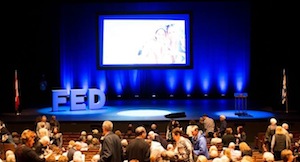
Irwin Cotler, left, with Bob Rae. Cotler is one of four speakers who will participate in FEDtalks, the Jewish Federation of Greater Vancouver’s annual campaign launch on Sept. 17. (photo from irwincotler.liberal.ca)

Irwin Cotler, one of the foremost figures in international human rights, will speak here next month on global trends impacting the Jewish community. He is one of four guest speakers at FEDtalks, an innovative new opening event for the Jewish Federation of Greater Vancouver’s annual campaign.

When the new Parliament is sworn in after the Oct. 19 election, Cotler’s career as an elected politician will end. He has served as MP for the Montreal riding of Mount Royal since 1999, and as minister of justice and attorney general for Canada. He is not seeking reelection.

His proudest achievements in politics, he told the Independent, include legislation against human trafficking, particularly of women and children. He also cited the legislated equality of marriage for gays and lesbians, which he shepherded through the House. “We were at the time only the fourth country in the world, in 2005, to do so and it was very divisive at the time,” Cotler said of the civil marriage law.

He also takes pride in being the attorney general when Steven Truscott’s conviction for rape and murder was overturned and declared a miscarriage of justice. Truscott was a 14-year-old Ontario boy sentenced to death in 1959 for the rape and murder of a classmate. His death sentence was commuted to life imprisonment and he was jailed for a decade before being paroled, but it was another four decades before his name was cleared and he was acquitted by the Ontario Court of Appeal.

In addition to landmark acts, Cotler said his proudest roles in public office have included helping individuals in ways that never make the news. “I think the one [achievement] that remains unheralded and that is true for all MPs is the one in which we try as best we can on a daily basis to act as an ombudsperson for the constituents in our riding,” he said.

After he leaves office, he will devote more time to the defence of political prisoners, he said. In his role as an international human rights lawyer, Cotler has been central to some of the most prominent cases in the world, including those of Andrei Sakharov, Nathan Sharansky and Nelson Mandela. He is currently on the legal team for Chinese Nobel Peace laureate Liu Xiaobo, the imprisoned Saudi blogger Raif Badawi, the Venezuelan political prisoner Leopoldo López and the Iranian Shi’ite cleric Ayatollah Boroujerdi. He has been recognized with numerous honorary degrees and other awards, including Parliamentarian of the Year by his colleagues in the House of Commons. He chaired the International Commission of Inquiry into the Fate and Whereabouts of Raoul Wallenberg.

“I am even exploring establishing a Raoul Wallenberg Centre for International Justice named after the first [Canadian] honorary citizen, a unique international consortium of politicians, scholars and jurists, human rights defenders, NGOs united in the pursuit of justice, inspired by and anchored in Wallenberg’s humanitarian legacy,” he said. “Those are some of the things I’m looking forward to.”

At the FEDtalks event, Cotler said he will address “mega-trends” affecting the Jewish people worldwide, foremost being what he calls the “Iranian five-fold threat.”

The nuclear agreement between Iran and the P5+1 powers, “both in the process of arriving at the agreement with Iran and the agreement itself, has overshadowed, if not sanitized, the other four threats,” he said.

Those overshadowed or sanitized threats, he continued, include Iran being the leading sponsor of international terrorism, “the hegemonic threat in terms of its destabilization of the Middle East and beyond,” the danger posed by Iran’s state-sanctioned incitement to hate and to genocide, and the “massive domestic repression” in Iran.

“While the nuclear negotiations have been going on, for example, Iran, which already was executing more people per capita than any other country in the world in the time of [Mahmoud] Ahmadinejad, has almost doubled the execution rate and yet we hear very little about it, and that’s only one example,” said Cotler. “I’ll be speaking about the criminalization of dissent, the prosecution and persecution of Baha’is and other religious and ethnic minorities.”

The second mega-theme, he said, will be terrorism, security and human rights, including how we combat terrorism without undermining civil liberties, and a third theme will probably address antisemitism in what he calls its old and new forms. “The old, or classic, antisemitism being the discrimination against, denial of, assault upon the rights of Jews to live as equal citizens within any society that they inhabit,” he explained, “and the new antisemitism being the discrimination against, denial of and assault upon the right of Israel and the Jewish people to live as an equal member among the family of nations or, at its worst, to even to live.”

FEDtalks, the opening event of the annual campaign for the Jewish Federation of Greater Vancouver, takes place Sept. 17 at Queen Elizabeth Theatre. More information is available at jewishvancouver.com and tickets are available at ticketpeak.com/JFGV. Interviews with the other speakers will appear in successive issues of the Independent.

Format ImagePosted on August 21, 2015August 27, 2015Author Pat JohnsonCategories LocalTags FEDtalks, Irwin Cotler, Jewish Federation of Greater Vancouver
Fighter returns to Israel

Fighter returns to Israel

Former British Columbian Gill Rosenberg spent nine months fighting the Islamic State in Iraq and Syria. (photo from Gill Rosenberg)

Gill Rosenberg returned to Israel a month ago, after spending nine months fighting the Islamic State in Iraq and Syria (ISIS).

Born in Surrey, Rosenberg, 31, grew up in White Rock and graduated from King David High School before continuing her studies at B.C. Institute of Technology, finishing a program in airport operations management. She moved to Israel in 2006 to serve in the Israel Defence Forces, volunteering through a program called Mahal (the overseas volunteer IDF program). During the course of her service, she made aliya. She now lives in Jerusalem.

“I served as a search and rescue NCO (non-commissioned officer) and as an instructor at the Search, Rescue and Civil Defence School,” Rosenberg told the Independent. “It was a great experience.”

She also spent time training the Kenyan Armed Forces and helped them establish a disaster response unit in their country.

Growing up in British Columbia taught Rosenberg “to respect the diversity of culture, beliefs and religion,” she said. “As well, being raised Jewish, I had a strong education on the Shoah and participated in the March of the Living, visiting the concentration camps in Poland.”

After that experience, Rosenberg was invited to speak at the B.C. Legislature on behalf of Jewish youth when the government voted to enact Holocaust Memorial Day legislation, when Ujjal Dosanjh was premier.

Intolerance and totalitarianism are two things that she has vowed to never tolerate. “I fully believe that when we say ‘Never again,’ we don’t mean just for us Jews,” she said. “We can’t stand by and stay silent to any genocide taking place – and that’s what I saw happening to the Yazidi population on Sinjar Mountain. The Christians and Yazidis in Iraq have lost the most in this war.”

Rosenberg fought in Syria with the YPG/YPJ (Kurdish militia groups) for three months and then headed to Iraq for six months, fighting with the Assyrian Christian militia, Dwekh Nawsha.

“In Syria, I was in Serekaniye and it was a pretty static front over the winter months,” she said. “It was bitterly cold, always raining, muddy, and darkness like I’ve never experienced anywhere else.

“There’d be a firefight at least once a day, but it was mostly from a distance of over one kilometre. My first day on the frontline, a suicide bomber blew himself up about 50 feet from our checkpoint. He intended to get closer, but because of the deep mud, his vehicle got stuck and, thank God, he was the only casualty that day.

“In Iraq,” she continued, “I was at a frontline 25 kilometres from the city centre of Mosul. They were in Baqofa and Telskuf, and the next town over, called Batnay, was already Daesh-occupied.

“The Daesh [ISIS] are hitting that position with mortars, Katyusha rockets and heavy machine gun fire daily and especially at night. They attempt to ambush, but both Dwekh Nawsha and the Peshmerga at that frontline have prevented any advancement of ISIS forces.”

Rosenberg said she was treated with the utmost respect and not any differently than other fighters. “They feel like the world has forgotten them, so for an Israeli Jewish woman to pick up a weapon and stand with them on the frontlines meant a lot to them,” she said. “I still keep in touch with the leader there and he tells me I’ll be a part of them forever, that we’re family.”

As she was fighting, Rosenberg wore the Canadian flag on her uniform proudly. “I feel that Canada is one of few countries that still stands tall and supports democracy and freedom, and it isn’t afraid to condemn those committing evil in this world. And that’s something to be very proud of.”

Earlier in the interview, she noted, “Stephen Harper is the only world leader condemning the nuclear deal with Iran and speaking out against the evils of this world and standing with our best allies.”

Since returning to Israel, Rosenberg has met with several members of the Knesset and shared with them some of her experiences. She also has been approached by several nongovernmental organizations working in Syria and Iraq for her help with their efforts.

“I want to continue helping women and children in Syria and Iraq,” she said, “so I have to determine where my experience and abilities can be best put to use. As far as returning to the frontline, I have no plans to return at this stage.”

Rosenberg was very clear that she does not see herself as a recruiter. “I very adamantly would advise against anyone traveling to the region to fight,” she said. “There are many ways to help, including a Montreal Jewish foundation called CYCI (the Liberation of Christian and Yazidi Children of Iraq), which are buying and liberating the children that are sold like sheep in the market in ISIS-controlled areas.

“Pikuach nefesh [to save a life] is an obligation we have as Jews, and the Talmud even requires us to spend money to save a life if we have that ability,” she said. “This organization [CYCI] gives us that ability.”

Another Canadian organization, also coming from the Jewish community, is Rape Is No Joke (RINJ). This group provides medical care to women and children who have been victims of rape and other brutality in Syria and Iraq.

From what Rosenberg has been hearing, the dynamics on the battlefield have changed in recent weeks, with the Iranians making gains in Iraq against ISIS. However, she was quick to add, “They might be fighting ISIS just as I was, but, ultimately, they’re not a friend and I believe they’re a much greater threat than is ISIS.”

Reiterating her discouragement of anyone traveling to the region to fight, Rosenberg said, “I believe that if we don’t stop ISIS now, they’ll be at our doorstep before we know it. ISIS are geniuses at social media and media and know how to look strong and strike fear in the hearts of the West.

“I can tell you, from my personal experience on the ground, that they fight in a very cowardly manner and often run away when challenged. This is especially true when it’s the women of the YPJ. Their beliefs are such that they think if they’re killed by a woman, they will go to hell. So, my only question is this, What happens to them when that woman is also Jewish and Israeli?”

Rebeca Kuropatwa is a Winnipeg freelance writer.

Format ImagePosted on August 21, 2015August 19, 2015Author Rebeca KuropatwaCategories WorldTags Gill Rosenberg, IDF, ISIS, Islamic State, Israel, Middle East, terrorism

NDP drops candidate

Three federal NDP candidates are under intense scrutiny – and one has resigned – for controversial comments each made about Israel.

Hans Marotte, the NDP candidate in Quebec’s Saint-Jean riding; Morgan Wheeldon, who was, until stepping aside Aug. 9, running in the Nova Scotia riding of Kings-Hants; and David McLaren, running in Bruce-Grey-Owen Sound, were among the NDP candidates featured, alongside past comments they made, on a Conservative Party of Canada’s attack website titled “Meet the NDP.”

Marotte, a lawyer and well-known former separatist, is flagged on the site for a statement he made in his 1990 book Un Pays à Faire (A Country to Make): “When a Palestinian comes to ask me to sign his declaration of support for the intifada, and tells me how happy he is to have my name on his list, I see how important it is that we not close in on ourselves.”

photo - Until he stepped aside, Morgan Wheeldon was running in the Nova Scotia riding of Kings-Hants
Until he stepped aside, Morgan Wheeldon was running in the Nova Scotia riding of Kings-Hants. (photo from Facebook via cjnews.com)

Wheeldon, whose website has been wiped of all content, is featured on the Conservative site for a comment in an August 2014 Facebook post, made in the context of a discussion about British MP George Galloway, who had been physically attacked in London allegedly for his anti-Israel views.

The quote reads: “One could argue that Israel’s intention was always to ethnically cleanse the region – there are direct quotations proving this to be the case. Guess we just swept that under the rug. A minority of Palestinians are bombing buses in response to what appears to be a calculated effort to commit a war crime.”

McLaren, meanwhile, is quoted as saying it isn’t principled to take sides in the Israeli-Palestinian conflict because it is like picking a side in “a telephone booth packed with dynamite.”

In a statement to the Canadian Jewish News, the NDP’s senior campaign adviser, Brad Lavigne, said the party’s “position on the conflict in the Middle East is clear, as [leader] Tom Mulcair expressed clearly in [the recently televised Maclean’s] debate. Mr. Wheeldon’s comments are not in line with that policy, and he is no longer our candidate. We were made aware of some information that had not previously been disclosed. When we approached Mr. Wheeldon with this information, he submitted his resignation.”

The NDP did not offer a comment on Marotte’s or McLaren’s statements.

Wheeldon himself told the CJN via Twitter that his Facebook statement “referred to how information sources affect framing of the conflict. I also attacked terrorism and said neither side was solely at fault, but pointed out the alternate perspective. I said ‘one could argue.…’ I’ve been called an antisemite, and it’s pretty upsetting for me and my family.”

Michael Mostyn, CEO of B’nai Brith Canada, said that it was appropriate for Wheeldon to offer his resignation following his “libelous smears against the Jewish state.”

“Israel is a democracy where all its citizens enjoy rights and freedoms unimaginable anywhere else in the Middle East,” said Mostyn. “Mr. Wheeldon should use some of his newfound free time to advocate against actual ethnic cleansing taking place on a daily basis in the terrorist Islamic State, which continues to massacre Christians, Yazidis, gays and other minorities.”

Mostyn also noted that B’nai Brith is trying to track down a copy of Marotte’s book, and reach out to him to verify the accuracy of the quote and whether his opinion has changed over the 25 years since he wrote the book.

He added that “the quote in question displays a certain naiveté about the fact that one does not sign a petition to support an intifada, jihad or any other extremist act of violence. Seeking to promote a pluralistic society in Canada does not translate to supporting calls for violence against innocent civilians.”

Joe Oliver, the Tory MP for the Toronto riding of Eglinton-Lawrence, also condemned the remarks.

“These radical anti-Israeli comments are just another example of the NDP’s troubling lack of support for a democratic friend and ally,” Oliver said. “They stand in stark contrast to Prime Minister Stephen Harper’s unwavering support for Israel’s security and right to defend itself against international terrorism. Reckless comments on matters of international relations make it abundantly clear how inexperienced and risky the NDP would be for Canada’s future and its standing in the world.”

– For more national Jewish news, visit cjnews.com.


Posted on August 21, 2015August 19, 2015Author Jodie Shupac CJNCategories NationalTags Conservatives, David McLaren, federal election, Hans Marotte, Israel, Morgan Wheeldon, NDP

Posts pagination

Previous page Page 1 … Page 280 Page 281 Page 282 … Page 323 Next page
Proudly powered by WordPress