Skip to content
  • Home
  • Subscribe / donate
  • Events calendar
  • News
    • Local
    • National
    • Israel
    • World
    • עניין בחדשות
      A roundup of news in Canada and further afield, in Hebrew.
  • Opinion
    • From the JI
    • Op-Ed
  • Arts & Culture
    • Performing Arts
    • Music
    • Books
    • Visual Arts
    • TV & Film
  • Life
    • Celebrating the Holidays
    • Travel
    • The Daily Snooze
      Cartoons by Jacob Samuel
    • Mystery Photo
      Help the JI and JMABC fill in the gaps in our archives.
  • Community Links
    • Organizations, Etc.
    • Other News Sources & Blogs
    • Business Directory
  • FAQ
  • JI Chai Celebration
  • JI@88! video

Recent Posts

  • Story of Israel’s north
  • Sheltering in train stations
  • Teach critical thinking
  • Learning to bridge divides
  • Supporting Iranian community
  • Art dismantles systems
  • Beth Tikvah celebrates 50th
  • What is Jewish music?
  • Celebrate joy of music
  • Women share experiences 
  • Raising funds for Survivors
  • Call for digital literacy
  • The hidden hand of hate
  • Tarot as spiritual ritual
  • Students create fancy meal
  • Encouraging young voices
  • Rose’s Angels delivers
  • Living life to its fullest
  • Drawing on his roots
  • Panama City welcoming
  • Pesach cleaning
  • On the wings of griffon vultures
  • Vast recipe & story collection
  • A word, please …
  • מארק קרני לא ממתין לטראמפ
  • On war and antisemitism
  • Jews shine in Canucks colours
  • Moment of opportunity
  • Shooting response
  • BC budget fails seniors
  • Ritual is what makes life holy
  • Dogs help war veterans live again
  • Remain vital and outspoken
  • An urgent play to see
  • Pop-up exhibit popular
  • An invite to join JWest

Archives

Follow @JewishIndie
image - The CJN - Visit Us Banner - 300x600 - 101625

Category: News

Money still unclaimed

Thousands and thousands of dollars belonging to Jewish institutions and individuals are sitting unclaimed at the Bank of Canada.

Banks and federally chartered trust and loan companies are required to transfer to the Bank of Canada all unclaimed bank balances maintained in Canada in Canadian currency that have been inactive for a period of 10 years. According to the Bank of Canada’s website (bankofcanada.ca), at the end of December 2016, approximately 1.8 million unclaimed balances, worth some $678 million, were on the bank’s books. More than 93% of unclaimed balances were under $1,000, representing 26% of the total value outstanding. In 2016, the bank paid out $15 million to account holders. The oldest balance dates back to 1900.

At the Bank of Canada, there are many small amounts payable to Jewish organizations, including ones that are currently active. There are also some organizations that may no longer be active, which is why money in their name is languishing at the Bank of Canada. It is unfortunate that money intended to benefit Jewish organizations, charities or other causes, should not be used for the intended purpose, but instead sits unclaimed at the bank. Many of these organizations must have successor organizations or responsible persons that, with a little effort, could prove their right to claim the funds.

To discover whether a group you are now or have previously been associated with has such a balance, you should do the following:

  1. Go to bankofcanada.ca.
  2. Type “unclaimed balance” into the search box.
  3. Once you reach the unclaimed balances registry, type one word of the organization name into the search box and scroll through the results.
  4. If you see a name that is familiar, open the link.

If there is a bank account untouched for 10 years, the organization will pop up, along with the name and address of the originating bank. Then you can make a claim for the money through a process set out on the website. You will have to prove that the account was yours, and the website explains how to do that.

You can search by province, or by “all” (of Canada). Each year, on Dec. 31, the Bank of Canada adds another year’s unclaimed bank accounts to the website.

Members of the Canadian Jewish community should try to reclaim funds that were intended for use in the community.

Here are some of the words searched that found unclaimed balances belonging to Jewish groups or institutions: Jewish, Hebrew, tikvah, congregation, Canadian friends, beth, bnai, b’nai, rabbi, synagogue, temple, Torah, Talmud, Israel, Jerusalem, Moshe, Habonim, Zionist, ohel, Na’amat, chevra, camp, JCC, eitz, beit, chaim, kosher, yeshiva, Yiddish.

For example, the Bank of Canada holds $3,311.02 for an organization called Canadian Friends of Tikvah Lay in Ontario. It also holds $256.94 for Yeshiva of the Northwest, whose last transaction date was in 1992 in Vancouver, and $108.69 for the Edmonton Jewish Women’s Baseball League, untouched since 1997.

There may be some hurdles to jump to establish the right to the $953.08 of the Yiddish Drama Company in Toronto, untouched since 1979. However, there are at least a dozen Jewish community centres and congregations in towns across the country that should have very little difficulty in obtaining their unclaimed bank balances.

Few of the amounts found were large – but should any of the money raised or donated for a Jewish cause, charitable or not, be left at the Bank of Canada? Some effort should be made by the community to locate these funds and use them as they were intended.

You should also check your own name and those of family members, especially those family members who died more than 10 years ago, as there are sometimes bank accounts that heirs were unaware of at the time of death and that show up at the Bank of Canada years later. The process for obtaining personal unclaimed funds is also quite simple, and requires establishing your identity and your right to the funds.

Not to be confused with the funds held at the Bank of Canada, the province of British Columbia has its own, government-affiliated B.C. Unclaimed Property Society. It seems to hold more funds for individuals rather than organizations. Its website (unclaimedpropertybc.ca) says:

“Each year, millions of dollars in British Columbia goes unclaimed in dormant credit union accounts, forgotten insurance payments, unclaimed wages, overpayment to debt collectors, as well as unclaimed proceeds from courts, tax offices and unadministered estates and intestates (death without a will and next of kin cannot be notified). The British Columbia Unclaimed Property Society (BCUPS) helps reunite British Columbians with their forgotten or unclaimed assets. We hold unclaimed property as the custodian for rightful owners under the Unclaimed Property Act.”

The BCUPS website also provides an easy way to search, but if you find your name, you will find no further information about the amount of funds or the source of the funds being held for you, until you contact the society. You could think of it as a form of treasure hunt, where you expend no money, but you do expend your time, and maybe there will be a treasure chest or at least a few coins at the end of the hunt.

Felicia Folk is a retired lawyer living in Vancouver.

Posted on February 9, 2018February 7, 2018Author Felicia FolkCategories NationalTags banking, charity, Jewish life, unclaimed property
Jewish take on health issues

Jewish take on health issues

Attendees engaged with panelists, left to right, Drs. Eric Cadesky, Brian Bressler and Jennifer Melamed at a Kollel event Jan. 29. (photo from Kollel)

A small but passionate group gathered at the Ohel Ya’akov Community Kollel Jan. 29 to engage with Drs. Brian Bressler, Eric Cadesky and Jennifer Melamed on the topic of Canadian Health Care Challenges Through the Jewish Lens, which focused on the legalization of marijuana, the treatment of addiction, the practice of harm reduction, the opioid crisis and medical assistance in dying (MAiD).

Cadesky, who chaired and moderated the event, is a family doctor in Vancouver and president-elect of Doctors of B.C.; until last summer, he was also medical coordinator at the Louis Brier Home and Hospital, a position he held for some eight years. Bressler is a gastroenterologist at St. Paul’s Hospital and a clinical assistant professor in the University of British Columbia’s department of medicine, while Melamed is co-owner of the Alliance Clinic, an addiction services facility in Surrey.

Bressler framed the conversation in terms of what he called the four principles of medical ethics for a healthcare provider: autonomy, respecting a patient’s choice and their right to understand and consent to treatment; beneficence, doing or recommending everything that could benefit a patient; nonmaleficence, taking into account all known risks to a patient and doing no harm, or the least amount possible, if harm is unavoiadable; and justice, making treatments available to all patients.

“I wouldn’t distinguish between those principles and Jewish ethical principles,” said Bressler. “I think they’re entirely consistent.”

Within this framework, the doctors’ dialogue with the audience took place.

One exchange was sparked by Melamed’s criticism of harm reduction clinics. “This is the dilemma we face,” she said, “is addiction insanity? Should we respect the patient’s autonomy even if the addiction has impaired that autonomy and they are not truly free to make decisions for themselves anymore because of the effects of the addiction?”

She said, “I refuse to accept harm reduction as the end result, as the highest result for my patients.”

Arguing that there “is really no such thing as a safe injection,” she said she believes such clinics are doing more harm than good.”

An audience member countered that recovery might be a realistic goal for working and middle-class patients, who have seemingly more to recover for; but, for addicts living in extreme poverty, who have a history of trauma and/or mental illness, they may not have a realistic chance of recovery. “With harm reduction, we keep them away from crime and treat them like human beings.”

The Kollel’s Rabbi Avraham Feigelstock said that, from a Jewish point of view, the community has a responsibility to do everything in its power to help a person recover. However, the question of how harm reduction clinics could go beyond their current purpose and move towards recovery was not pursued.

Discussing opioid use, Bressler expressed both a cautionary approach, based on his own practice (Crohn’s patients are at particular risk for addiction), and the opinion that it is important to focus on addressing the sources of pain, not just pain itself.

Both Bressler and Melamed were negative about the legalization of marijuana and its use in a medical setting. They said there was some evidence that marijuana was effective for a very limited number of conditions – neuropathic pain and nausea were mentioned – but that the risks of marijuana, such as cognitive impairment and a link to developing psychosis, were well-evidenced.

Melamed expressed concern about what she thinks will be the massive costs of policing marijuana intoxication, among drivers or industrial workers, for example.

When one person raised the potential of increased teen use of the drug, Melamed said teens were already using and she didn’t fear an increase, though she was concerned about the potential for increased use among adults.

Another audience member suggested the Jewish community should protest marijuana’s legalization.

The doctors took a less defined stance towards medical assistance in dying. Both Bressler and Melamed said they had personal and professional experience with it but did not take a stand in favour or against it, instead highlighting issues to consider. Bressler acknowledged the right of Canadians to MAiD but also pointed out that the practice conflicts with Jewish law.

Feigelstock said the general principle in Judaism is to prolong life but not necessarily to prevent death. “According to Jewish law, generally speaking, you may choose not to do things to prolong the life of someone who is dying,” he explained, “and you may give medicines to relieve suffering, which have the side effect of possibly shortening life, but you do not do something that will directly kill the patient. Every case must be dealt with separately, however, case by case; one cannot make general statements about what to do.”

Matthew Gindin is a freelance journalist, writer and lecturer. He writes regularly for the Forward and All That Is Interesting, and has been published in Religion Dispatches, Situate Magazine, Tikkun and elsewhere. He can be found on Medium and Twitter.

Format ImagePosted on February 9, 2018February 7, 2018Author Matthew GindinCategories LocalTags addiction, healthcare, Kollel, marijuana, medically assisted dying
Looking younger, naturally

Looking younger, naturally

Father and son team, Lou and Darryl Segal, of Herbal Glo. (photo from Darryl Segal)

It’s difficult enough to start and build one successful business, let alone two. But Lou Segal and his family have done just that.

Segal began his career as a pharmacist working in Cape Town, South Africa. Having received his formal training in Pretoria, South Africa, he had also started blending natural products to help his customers with their ailments. He was one of a few pharmacists who specialized in pharmacognosy, the study of how plants or other natural sources can be used for medicinal purposes.

The course of his career took a dramatic change when he took a safari vacation in Mozambique. It was during this trip that he noticed an interesting phenomenon. “The people of one particular tribe had incredibly thick, full hair and younger looking skin as compared to the people of the other tribes,” said Segal.

With help from the chief of the tribe, Segal learned that, for certain ceremonies, “these particular people would gather plants, roots, flowers, leaves and the extracts from the barks of trees and mix these all into a paste form. Then they would apply this mixture to their face and heads.”

Segal took some of the mixture back to Cape Town, where he added various percentages of it to his own products; scalp formulas, shampoos and conditioners, as well as to his anti-aging skin care products. With encouraging feedback – his customers reported less hair loss, thicker hair growth and that they thought they looked younger – the products did very well.

As a teenager, Segal’s son, Darryl, became interested in his father’s business, in how natural ingredients can help people overcome all kinds of hair and skin care issues. But, before he could become more involved in the business, the Segal family decided to leave South Africa, given the political situation.

Lou, his wife Friedah and their adult children Darryl and Janine headed to Vancouver, where their other children, Basil and Ramona, had moved earlier. The family couldn’t take much with them, so they arrived in Vancouver in 1979 with little money – but they had all their formulations.

“It is never easy when you build a life and business in one country, then realize that you have to give that all up, move to a new country and start all over again,” Darryl Segal told the Independent. But his father was confident that they could start again and achieve success. And they did.

Based on their earlier work, the father and son team were able to rebuild the family business in Canada. Also a pharmacist, Darryl Segal first had to re-qualify at the University of British Columbia (having come from another country) and then spent seven years at Shoppers Drug Mart in Kerrisdale; he also researched and added to his father’s formulations. In 1986, the Segals established Herbal Glo, making products with “natural essential nutrients” that “contain none of the harmful chemicals like parabens, formaldehydes and phthalates,” said Darryl Segal.

It was a rough start, admitted the younger Segal, as nobody knew them in Vancouver. But he and his father helped “boost each other even when things got rough,” he said.

At first, the Segals relied on a manufacturer to make their hair-care products. Six years ago, they opened their own factory in Richmond. “We expand as we need and as space becomes available,” said Darryl Segal. Herbal Glo products are manufactured, bottled and labeled here, before being sold both locally and worldwide.

The Segals have three brands: Herbal Glo, which can be found in health food stores; Segals Solutions, available in beauty salons; and Feels like a Facelift, which is sold in drugstores, like London Drugs. They have also written a book, called Hair for Life, which is on its fifth edition.

In addition to their own endeavours, Darryl Segal enjoys helping others create their own brands. Herbal Glo offers a “one-stop shop” that helps people choose and manufacture formulations, as well as design logos and handle packaging. “We persevered in the fiercely competitive world of the cosmetic industry. Now I am able to give back by helping others,” he said.

Herbal Glo, which has a staff of 10, recently earned the company its third National Nutrition Award. In addition to not using harmful chemicals in their products, the Segals do not test their products on animals, their products do not contain any animal ingredients, they are gluten-free and they contain organic ingredients whenever possible.

Almost 40 years after coming to Canada, the Segals are still working together. Lou Segal, who is 92, said he still enjoys coming to work, and offers advice where he can. Said Darryl Segal of his father, “He is still passionate about helping people all over the world to see and feel results with his formulations.”

A third generation of the Segal family has begun working with the company. Darryl Segal’s son, Daniel, completed a qualification in cosmetic compounding from University of California, Los Angeles, in April of last year.

“I’ve always enjoyed working in my father’s factory,” said Daniel Segal, who has shown his passion for organic, natural ingredients – such as jojoba oil and shea butter – with the development of a new blend of moisturizer.

And so Herbal Glo continues to grow.

Shula Klinger is an author and journalist living in North Vancouver. Find out more at shulaklinger.com.

Format ImagePosted on February 9, 2018February 7, 2018Author Shula Klinger and Cynthia RamsayCategories LocalTags Darryl Segal, Feels like a Facelift, hair, Herbal Glo, Lou Segal, Segals Solutions
Increasing awareness

Increasing awareness

Eldad Goldfarb, executive director of the Jewish Community Centre of Greater Vancouver, and Jewish community member Shirley Barnett show off their “Labels are for Clothes” T-shirts. (photo by Leamore Cohen)

February is Jewish Disability Awareness and Inclusion Month and the shirts are available for purchase ($18) at the JCC. The message on the back of the shirts reads, in smaller print: “100% human / Treat with care and love / Learn before you assume / Do not separate / Do not label / #jccincludesme.”


Format ImagePosted on February 9, 2018February 7, 2018Author JCC inclusion servicesCategories LocalTags equality, inclusion, JCC
Farming as social enterprise

Farming as social enterprise

In the book Street Farm: Growing Food, Jobs and Hope on the Urban Frontier, Michael Ableman shares the story of how Downtown Eastside residents helped create Sole Food Street Farms. (photo by Michael Ableman; Street Farm [Chelsea Green, 2016])

In his book Street Farm: Growing Food, Jobs and Hope on the Urban Frontier (Chelsea Green, 2016), Michael Ableman shares the inspirational story of how residents in one of the poorest urban areas in North America – Vancouver’s Downtown Eastside – helped create Sole Food Street Farms.

Ableman has been a leading voice in the organic sector for 45 years and is the owner of Foxglove Farm (an organic 120-acre plot of land on Salt Spring Island), an author and a public speaker.

“I became incredibly impassioned by the power of food and farming to heal the world, to change people’s lives, to reconnect them,” Ableman told the Independent. “I came to see farming, not as the industrial activity that it had become since World War Two, but as a community venture to be shared by everyone participating.

“I think that has formed all my endeavours, all the projects I’ve done, all the work I’ve done – not all successfully … but it’s a function of being 63 years old … that you begin to recognize the importance of talking about those areas where you fall short … because, it’s a lot more informative than patting yourself on the back.”

Ableman responded to a call for strategies to help transform the Downtown Eastside, which is the lowest-income community in Canada, “with the highest rates of intravenous drug use perhaps in North America … mental illness, open prostitution,” he said.

“I agreed to come to a meeting with a number of social service agencies on the Downtown Eastside who wanted to come up with some creative ideas. They had access to a half-acre parking lot next to one of the dive hotels. And, you know, one meeting led to the next and, before you know it, I was directing and envisioning the birth of this amazing social enterprise that we started … which became Sole Food Street Farms.”

Now, after seven years in operation, the farm’s four-plus acres on pavement is producing 25 tons of food annually, employing up to 30 people, and is having a profound impact on people’s lives, as well as on how urban agriculture is perceived.

In his book, Ableman tells the story of the people he is working with, how their lives are being affected, and how they work with municipal governments to do what had never been done before on this scale.

“It is my belief that the smaller production units, whether front or back yards, are actually incredibly important for our future,” said Ableman. “And, probably, in the end, my goal has always been to see individuals and families put farmers out of business, by growing for themselves. But, we have a long way to go. My goal is still very much focused on jobs and producing quantities of food.”

Every city has two main challenges if you’re going to attempt to do gardening or agriculture, he said. “Number one, the soils are either too contaminated to grow in or are paved over. And, number two, the value of the land is too high for landowners or municipalities to give up.

“We felt it was incredibly important in the enterprise we created in Vancouver to address those issues. So, we designed a very innovative box system and we had these boxes manufactured. The boxes are isolated from contamination or pavement. They have interconnected drains. They are stackable, nestable, have pockets for hoops, and are indestructible.”

book cover - Street Farm: Growing Food, Jobs and Hope on the Urban FrontierAbleman said Street Farm is a “why-to” book, though they are “producing an actual tool kit, a companion to this book, the nuts and bolts of how we did it.” But, Street Farm, he said, “is a book that says, ‘Look, even under the worst circumstances, the poorest neighbourhoods, here is what individuals in a community can do to improve their lives and here’s how they did it.’ So, if we could do it here, you can do it elsewhere. We’re there to inspire people and make them understand that you have to do it in a way that addresses the particular needs of your community – the culture, economics, ethnicity. All those things have to be considered when setting something like this up – knowing who you are serving and why.”

Since the book came out, the project itself has evolved. In fact, Sole Food had to move their largest farm location a few months ago, which was a huge undertaking.

“When you write a book, the story is the story that existed at the time the manuscript was submitted and accepted by the publisher,” said Ableman. “But, nothing stays the same, especially in the work we do. Certainly, the individuals I write about, their lives have changed. We’ve learned more things … and we shift our systems accordingly. It’s really the wonder and beauty of agriculture, that it requires that each of us approach it with what I call a ‘beginner’s mind’ – never having a preconception, always being open to the moment. It’s a biological system, and requires a day-to-day, moment-to-moment response to that system. That’s the beauty, what we love about it – it always changes.”

He recalled, “For my bar mitzvah, the section of the Torah I read from was about the land of milk and honey. It was essentially about creating a fertile environment, abundance and nutrition from the land. At 13, the last thing I ever thought I’d be involved with was agriculture.

“If you really go back to the roots of our tradition – Judaism – we have strong roots in the land, strong agrarian roots. That doesn’t mean each of us has to be a farmer. What it means though is that we have a responsibility to create relationships and connections with those who are, and trying to do it well.”

It’s so much more than agriculture.

“While we generate $300,000 every year in products grown and sold,” said Ableman, “we still have to raise another $300,000 to support the social component of what we do – the trainings, taking people to the hospital, rain gear, literacy programs, meals. We are recognized as a world-class model. Participate in whatever way you can in your own tradition by supporting local enterprises trying to do the right thing.”

More about Ableman and Sole Food Farms can be found at solefoodfarms.com.

Rebeca Kuropatwa is a Winnipeg freelance writer.

Format ImagePosted on February 9, 2018February 7, 2018Author Rebeca KuropatwaCategories LocalTags economy, farming, Michael Ableman, social enterprise, Sole Food Farms
Proud of Jewish roots

Proud of Jewish roots

When she was Nova Scotia’s lieutenant governor, Myra Freeman opened up Government House to the public. (photo by Alex Rose)

When Myra Freeman (née Holtzman) was appointed lieutenant governor of Nova Scotia in 2000, she broke down two major walls. She was the first woman appointed to the position, and she was the first Jewish person appointed to the position. In fact, she was the first Jewish appointee to such a position in all of Canada, and the second in the entire Commonwealth of Nations (the first was former Australian Governor-General Zelman Cowen).

“It’s always been my family and my heritage that have defined me,” Freeman told the Independent in a recent interview.

Her Jewish values, she said, were put in place by her grandparents, who moved to Canada around the turn of the 20th century, and strengthened during her upbringing in Saint John, N.B., the city where her grandparents eventually settled. The Holtzmans were one of about 120 Jewish families.

Freeman went through the Canadian Young Judaea program. She said it nurtured seeds to give back to Israel, to give back to community and to help improve the lives of Jewry on the other side of the world. These lessons were echoed by her parents – her mother was a president of the local Hadassah-WIZO chapter and her father was very involved with their synagogue.

“Over the years, I’ve never really lost sight of the fact that I have a responsibility to the Jewish community, and I’ve always been proud of the things that I’ve done in my shul, in Hadassah, in United Israel Appeal,” she said, just the beginning of the long list of a life of involvement in the Jewish community. But, with that, she added, “the broader community was a huge part of my life as I changed careers.”

photo - Myra Freeman
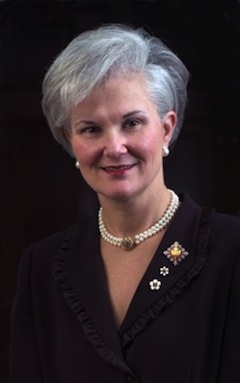
Myra Freeman (photo from Myra Freeman/Historica Canada)

Freeman’s first career was teaching, and she always thought it would be her only career. She loved working with students, helping them discover the joys of learning and the world around them. She encouraged students to step up and help others, to set an example by leading the way. She passed along lessons she had learned from mentors who had inspired her over the years. And, as she taught these lessons, she also took them to heart, becoming increasingly involved in community.

“And that’s when, in April of 2000, I received a call from the prime minister [Jean Chrétien], and he asked me to take on the responsibility as the queen’s representative in Nova Scotia,” said Freeman.

Aside from being the first woman and the first Jewish person to serve in the role, Freeman’s tenure as lieutenant governor, which concluded in 2006, will be remembered for some of her main initiatives, said Craig Walkington, communications advisor to the Office of the Lieutenant Governor of Nova Scotia. For one, she focused on supporting education and childhood development. She also created a number of awards that recognized Nova Scotians who excelled in their fields, including writing, teaching and the environment.

“I think the one I’m most proud of is the Lieutenant Governor’s Masterworks award, which gives an opportunity for artists to showcase their creative talent,” said Freeman.

Walkington added that Freeman will also be remembered for opening up Government House, which is the lieutenant governor’s residence, to the public. It is the oldest vice-regal residence in North America – the cornerstone was laid in 1800.

“We call the Government House the ceremonial home of all Nova Scotians,” explained Walkington. “I think, for a lot of people, it was just this very big mansion on Barrington Street that they would drive by every day, and having it more accessible means that visitors and Nova Scotians can learn about the history of this province and the history of the people who worked and lived in this house.”

Walkington estimated that 14,000 to 15,000 people pass through Government House every year.

“We made it like our home. We had a kosher home, we had Shabbat, we had seders in there,” said Freeman of her time at Government House. “And I think one of the remarkable moments was we had a visit from royalty.”

When Prince Michael of Kent, a cousin of Queen Elizabeth, visited Nova Scotia in 2002, he stayed overnight in Government House. He was scheduled to arrive around 4:30 on a Friday afternoon and Freeman had been instructed to show him to his room and then leave him be, but she had other plans.

“You can’t surprise royalty, OK? You cannot just throw something on them when they arrive,” she said. But, even so, “after I showed him to the room, I said, ‘Every Friday night, our family tries very hard to be together to observe the Sabbath and have our Sabbath meal. And we’ll be eating dinner at 7 o’clock if you would like to join us.’… He looked at me and he said, ‘It would be an honour.’”

Freeman said Prince Michael was attentive throughout the whole evening, as they sang “Shalom Aleichem” and as her husband made Kiddush. At the end, he told Freeman that, as a man in his late 70s, it was the first Shabbat dinner he had ever attended; he also said it was the highlight of his trip across Canada.

“It just goes to show that we take for granted … our heritage, and we might not observe it as much because we think it’s nothing, but to somebody else … he was so honoured to be a part of it,” said Freeman.

“Each of us brings to our communities our traditions and our culture, our heritage,” she said. “And we, as people of an ethnic background, like all other people of ethnic backgrounds, contribute and make Canada unique…. We care enough to participate and to become involved in community, and we give of ourselves. And, when we do that, we add diversity to the country and we enhance the social fabric of our countries.”

As Jewish community members, she said, “we have the responsibility to our home and abroad, because, really, our heritage is our strength, and we have to preserve that through our actions. We never lost sight that we have an equal responsibility to take our place in the secular community – in our city, in our province, in our country, and globally – because Canada afforded our grandparents a home and the opportunity to achieve.”

Alex Rose is a master’s student in journalism at the University of King’s College in Halifax. He graduated from the same school in 2016 with a double major in creative writing and religious studies, and loves all things basketball, especially his hometown Toronto Raptors.

Format ImagePosted on February 9, 2018February 17, 2018Author Alex RoseCategories NationalTags government, Myra Freeman, Nova Scotia, politics
A law career with many firsts

A law career with many firsts

Morton Minc is Concordia University’s first jurist-in-residence. (photo from Morton Minc)

During his long career in the field of law in Quebec, Morton Minc has made several firsts. His latest – becoming Concordia’s first jurist-in-residence.

Born in Lublin, Poland, Minc came from a very religious, but also academic, family. His father was studying medicine in Paris when the Second World War broke out. The family made their way to Montreal and started over again, with only $17, provided by the Jewish community.

After graduating from Sir George Williams University with an arts degree, Minc went onto law school at the Université de Montréal, where he won several awards. He then joined a large law firm and eventually opened his own practice, specializing in general commercial banking law. He married his wife, Linda, and they had one daughter, Samantha (who is a vascular surgeon in the United States).

“I then was the first Jewish judge in the history of the municipal court of Montreal,” said Minc of his 1993 appointment. “Then, I was nominated as chief justice of the municipal court of Montreal [in 2009], and I was the first Jewish anglophone judge appointed to the municipal court in their history.

“When I became chief judge, I used the court in a different manner,” he said. “One part of the court was streamlining toward social justice programs, social justice courts and problem-solving courts, and the other was traditional justice. The aim of the social justice court is not only to identify an individual’s problem, but also to assist, rehabilitate and help him/her to find his/her way back into society … once they’ve completed the program set by the court successfully, and even decriminalizes their record when possible. In other words, they were charged with a criminal matter or with statutes where they had to pay all these fines … [and] we had made arrangements with an execution department of the city for them to get amnesty.”

Minc was responsible for initiating the program, including working with judges who specialized in mental health.

“We had Crown prosecutors who specialized in the mental health program and a defence lawyer full-time to assist the offender who had the mental health issue when he/she committed a crime,” said Minc. “These people worked not in a combative way, but it’s what we call, ‘participating justice.’”

Most judicial systems are considered adversarial, where the parties are in opposition to one another. But, in these social justice and problem-solving courts, he explained, everyone is working together on the same “side” toward the good of the person on trial.

“I was responsible for establishing the court for the homeless,” said Minc. “We had judges dedicated to the issue of homelessness, so we’d find the person a place to live if s/he had a mental issue, alcohol issue and/or drug issue…. We’d work toward resolving these problems. It wasn’t necessarily a problem of homelessness.

“We dedicated a court only for these social issues, so that they wouldn’t be in the mainstream of the criminal system … so that they would not be embarrassed; the homeless, they wouldn’t feel ill-at-ease. And, the same thing for mental health and domestic violence court…. I can tell you, the success rate was over 85%. It was a win-win situation…. We had a minister of justice coming to our court every year to see what we were doing in our social programs.”

Minc attributed his own compassion for others to his Jewish heritage and its tradition of involvement with and assistance for those who are less fortunate.

When it came time for him to leave his position, Minc – who said he is not a believer in retirement – was asked to meet with Concordia University president Alan Shepard, provost Graham Carr and the dean of the faculty of arts and science, André Roy. The trio invited Minc to join the history department’s Law and Society Program, and he accepted, becoming the first jurist-in-residence.

“My role, or the goal, is to help students, mentor students, on what they could do in the future, about law school…. You don’t have to necessarily become a lawyer, but to get a law degree, or become a lawyer,” said Minc. “There are all kinds of different other institutions you could work at and use your law background for.”

In addition to introducing students to different aspects of law, Minc is helping students find ways to get involved in the legal system, using his vast knowledge and contacts.

“Perhaps Concordia will have its own law faculty one day,” said Minc. “My goal is to stimulate and excite students about the law – and it seems well-received.

“While Concordia doesn’t have a law school,” he added, “it offers students the option to minor in law and society, and to study issues like governance, crime, conflict and social justice from sociological, historical, anthropological and philosophical perspectives.”

Minc’s appointment as jurist-in-residence is for a two-year term and, while he hopes that his successor continues what he is starting, he is focused on doing what he can do now. So far, all of the events he has organized have sold out.

As example of the types of events he has put on, Minc hosted a fireside chat with now-Chief Justice Richard Wagner of the Supreme Court of Canada, on Nov 23. 2017. The talk covered Wagner’s journey to becoming a judge and what it’s really like to be part of the Supreme Court.

On Oct. 19 last year, Minc hosted an event on the legal and psychological implications of the maltreatment of children. A number of distinguished panelists took part, including Judge Patrick Healy (Quebec Court of Appeal) and Judge Martine Nolin (Court of Quebec, Youth Court Division).

Minc also mentored the Concordia Moot Law Society for a legal debate competition against other Canadian universities. He helped student delegates prepare legal arguments and taught them about legal jargon.

Rebeca Kuropatwa is a Winnipeg freelance writer.

Format ImagePosted on February 9, 2018February 7, 2018Author Rebeca KuropatwCategories NationalTags Concordia, law, Montreal
Disruptive Israeli companies

Disruptive Israeli companies

One of Ormat Technologies’ geothermal power plants. (photo from Ormat)

Could Israel be the country that finally puts fossil fuels to rest with the dinosaurs? “When we talk about killing fossil fuels, Israel is not yet seen as tops in the world, as we are in water or cyber technologies. But in each related niche – solar energy, battery technologies and electric car components – there is tremendous respect for Israeli companies,” according to clean-energy activist Yosef Abramowitz, aka “Kaptain Sunshine,” whose Energiya Global social development company is bringing solar power to Africa.

Two early solar-energy pioneers founded in Israel, BrightSource Energy and Ormat Technologies, are now headquartered in the United States with myriad international projects to their credit. BrightSource built the world’s largest solar electricity generation installation, in California, using nanoparticle coatings developed at the Hebrew University of Jerusalem. Ormat built one of the world’s first solar-power fields, near the Dead Sea, and is a leading geothermal and recovered-energy generation producer.

Although Israeli electric-vehicle (EV) network Better Place had great disruptive potential, its bankruptcy in May 2013 dashed those hopes. Yet Abramowitz believes the mega-fail led to something positive. “Better Place spawned a whole industry of 500 [Israeli] startups in the automotive sector, largely related to electric cars and the software and hardware that will kill the combustion engine,” he told Israel21c.

In 2011, the Israeli Prime Minister’s Office launched its Alternative Fuels Administration and Fuel Choices Initiative, aiming to implement government policy and support for fuel alternatives research and industry that can serve as a model for other countries while helping reduce Israel’s dependence on oil for transportation. Since then, the number of alternative fuel research groups in Israel has grown from 40 to about 220 and the number of companies in this field to about 500. Globally, renewable energy is a $359 billion business. Here are 10 Israeli companies trying to accelerate the end of fossil fuels.

  1. Aquarius Engines. The lightweight Aquarius engine has a single-piston linear engine. A cylinder moves the fuel from side to side to generate electrical current, much like sea waves can do through an up-and-down movement. A car fitted with the Aquarius engine would have a range of 1,200 kilometres per 50-litre tank, which would have to be filled every five or six weeks. Aquarius is working with Peugeot to test its engine in a concept car. The company also is developing a lightweight portable generator based on its technology.
  2. Brenmiller Energy. Founded in 2012 in Rosh Ha’ayin, Brenmiller Energy has created products for renewable energy including a thermal storage system that hybridizes any power source – wind, solar, biomass, nuclear, natural gas – to provide reliable, clean energy anywhere. The B-Gen unit’s first cycle transfers the heat coming from different sources; the discharging cycle delivers steam on demand on a megawatt or gigawatt scale. Commercial projects are underway in several countries. Founder Avi Brenmiller was involved in solar power plant design in Spain and in the United States through the Israeli company Luz Industries, acquired by Solel and then by Siemens.
  3. Doral Renewable Energy Resources Group. Doral, in Ramat Gan, was the first company to connect a solar photovoltaic (PV) system to the national electricity grid, back in 2008. Its several branches operate renewable energy projects (natural gas, biogas, wind, solar) throughout Israel, especially in kibbutzim in the periphery and in rural areas, including what will be the largest (170 megawatts) PV power plant in Israel. Doral recently entered a joint venture agreement with Invenergy, the largest privately held electricity producer in the United States. Doral is planning to introduce advanced means of electricity production, storage and smart-grid solutions to eliminate the need for external electricity suppliers.
  4. Eco Wave Power. The Tel Aviv-based company’s proprietary technology extracts energy from ocean and sea waves and converts it into affordable, zero-emission renewable electric power. EWP has projects in various stages in the United Kingdom, Gibraltar, China, Chile, Israel and Mexico.
  5. ElectRoad. Founded in 2013, ElectRoad of Rosh Ha’ayin develops underground electric coils that recharge EVs wirelessly as they travel. Copper-and-rubber electromagnetic induction strips are installed inside the asphalt and smart inverters are installed on the sides of the road. A coil unit is attached beneath any kind of EV to receive the power over a small air gap for safety. ElectRoad plans pilot projects on a short public bus route in Tel Aviv and in a European city.
  6. Energiya Global. This Jerusalem-based renewable-energy developer will invest $1 billion over the next four years to advance green power projects across 15 West African countries. Energiya Global and its associated companies developed the first commercial-scale solar field in sub-Sahara Africa, in Rwanda, and broke ground on a similar plant in Burundi that will supply 15% of the country’s power. Energiya Global now has fields at various stages of development in 10 African countries.
  7. H2 Energy Now. This company is building a prototype battery-free solution for storing and increasing the usability of alternative energy from intermittent sources – sun and wind – to meet times of peak demand reliably. Radio waves separate water into hydrogen and oxygen and then recombine them in a fuel cell when energy is needed. As last year came to an end, H2 Energy Now was in the finals for several contests and was in talks with worldwide energy corporations. In addition, the company was one of four winners of the AES Corporation’s 2017 Open Innovation Contest, held in Washington, D.C., for designing a ceramic drone enabling unmanned inspection solutions for extreme heat environments in the global power industry.
  8. New CO2 Fuels. Founded in 2011, NCF is raising funds toward a working model of its technology to transform two waste streams – industrial water and carbon dioxide – into a hydrogen-carbon monoxide synthetic gas, which is then turned into liquid fuels, plastics and fertilizer. The conversion process is fueled by concentrated solar energy or byproduct heat from the industries themselves. NCF signed a cooperative agreement with Sinopec Ningbo Engineering to address carbon dioxide pollution in China.
  9. Solaris Synergy. Based in Jerusalem, Solaris Synergy developed a solar-on-water power plant that converts a water surface into a cost-effective and reliable solar-energy platform. Solaris and Pristine Sun of San Francisco received a BIRD grant to collaborate on a utility-scale floating PV solar energy system to be installed in California. In October 2016, Solaris installed a 100kWp Floating PV system on a reservoir in Singapore. Recently, Solaris formed a partnership with Electra Energy to plan large projects in Israel.
  10. StoreDot. Electric vehicles can never be mass marketed unless they have batteries that store a charge longer, weigh less and charge up faster. StoreDot of Herzliya concentrates on fast charging. It is developing a pack for EVs comprised of hundreds of its proprietary EV FlashBattery cells. Together, the cells take only five minutes to charge fully and provide up to 480 kilometres of driving distance. In addition, FlashBattery is environmentally safer than a lithium-ion battery, using organic compounds and a water-based manufacturing process.

Israel21c is a nonprofit educational foundation with a mission to focus media and public attention on the 21st-century Israel that exists beyond the conflict. For more, or to donate, visit israel21c.org.

Format ImagePosted on February 9, 2018February 7, 2018Author Abigail Klein Leichman ISRAEL21CCategories IsraelTags fossil fuels, technology
הזוג שרמן נרצח

הזוג שרמן נרצח

בארי והאני שרמן. (צילום: jewishtoronto.com)

סוף לשמועות: הזוג היהודי–קנדי שרמן נרצח בכוונה תחילה. במקביל: מנכ“ל “אפוטקס” של שרמן התפטר בחשד לקבלת סודות מסחריים של טבע.

המיליארדר הקנדי היהודי-קנדי בארי שרמן (77) ואשתו האני (75) נרצחו בכוונה תחילה, ב-15 בדצמבר. כך נמסר ע”י משטרת טורונטו ביום שישי לפני כעשרה ימים והדבר הביא לקיצן את השמועות שהזוג אולי התאבד.

במסיבת עיתונאים מתוקשרת מאוד של משטרת טורונטו התקיימה עם עיתונאים רבים נוכחים, ודוברה הייתה סוזאן גומז (ממחלקת הרצח במטשרת טורונטו) שאחרית לחקירה. נמסר על ידה כי לאחר חקירה ממושכת שנמשכה שישה שבועות, הגיעו החוקרים למסקנה שהזוג שרמן נרצח. גופותיהם נמצאו ישובות בסמוך לבריכה במרתף ביתם והם נחנקו באמצעות חגורות.

המשטרה מנסה לפתור עתה את הסוגיה הכפולה החשובה ביותר: מה המניע לרצח של השניים ומי אחראי/אחראים למעשה החמור. במשטרה ציינו כי החקירה מתמקדת ביומיים האחרונים (13-15 בדצמבר) שקדמו למותם של השרמנים. במסגרת זו החוקרים מנסים ליצור רשימה של כל מי שהגיע לביתם של הזוג באותם יומיים. ואז לדבר עם כל אחד מהם (אם טרם נחקרו עד כה).

בחקירה המשטרתית הושקעו עד כה למעלה מאלף שעות, נחקרו והתקיימו ראיונות לקרוב לכ-130 עדים. וכן נבדקו עשרות ממצאים בהם מספר סרטי וידאו ומכשירים סלולרים (במקרים אלו המשטרה נאלצה לבקש את אישור בית המשפט לשים את ידה על החומר). משניסתיימה החקירה הארוכה בביתם היוקרתי של הזוג בארי והאני שרמן (שהוצע למכירה לאחרונה תמורת כשבעה מיליון דולר) הוא הועבר לידי בני המשפחה.

בני משפחת השרמן לא היו מרוצים מחקירת המשטרה כיוון שלא הביאה לתוצאות עד כה, ולאור השמועות שהוריהם התאבדו. לכן הם שכרו חוקרים פרטיים שהגיעו לאותה מסקנה כי הזוג נרצח. לדעת החוקרים הפרטיים יותר מאדם אחד היו מעורבים ברצח.

אחד מחבריו הוותיקים של בארי שרמן אמר בראיון לתקשורת, כי המשטרה לא מצאה סימני פריצה בביתו, כיוון שכל מי שהכירו אותו היטב ידע, כי הוא היה פותח את דלת ביתו מייד וללא חשש לכל מי שהיה נוקש עליה. שרמן לא ראה שום סכנה שמאיימת עליו ועל אשתו.

שרמן הקים את חברת התרופות הגנרית אפוטקס שפועלת מאז שנת 1974. החברה מעסיקה כאחד עשר אלף עובדים ברחבי העולם, וההכנסות השנתיות שלה נאמדות בכמיליארד דולר. שרמן נחשב לאחד האנשים העשירים בקנדה והוא ממוקם במקום השתיים עשרה והמכובד ברשימה. הונו של שרמן נאמד בלמעלה מ-3.7 מיליארד דולר (אמריקני). הזוג עסק בפעילות פילנטרופית רחבה ותרם כספים רבים לגופים יהודים, לבתי חולים ועוד.

אחד מהעיתונאים החוקרים את פרשה מטעם הרשת הטלוויזיה הציבורית הסי.בי.סי. ציין, כי לשרמן היו אויבים רבים בתחום יצרניות התרופות, כיוון שחברתו חתכה מחירים ופגעה קשה בהכנסותיהן. במקביל היו לו סכסוכים רבים עם בני משפחה שונים, ובעבר הוא נתבע על ידי אחייניו בטענה שגרם להם נזק של כמילארד דולר בהתייחס לאפוטקס. הם הפסידו במשפט ואולצו לשלם לו כשלוש מאות אלף דולר.

ללא קשר לפרשת הרצח, גם כן באותו יום שישי (של ה-26 בינואר) הודיע נשיא ומנכ”ל אפוקטס ג’רמי דסאי, על התפטרותו. זאת לאור התביעה שהוגשה נגדו ונגד החברה, בגין קבלת סודיות מסחריים של חברת טבע גנריקה (בעלות חברת טבע הישראלית). בתביעה נאמר כי סמנכ”ל רגולציה לשעבר של טבע גנריקה ברינדר סנדהו, ניהלה קשר רומנטי ולאחר מכן הפכה לבית זוגתו של דאסי. במסגרת היחסים ביניהם היא העבירה לו את המידע המסחרי החסוי של טבע גנריקה.

Format ImagePosted on February 7, 2018February 5, 2018Author Roni RachmaniCategories עניין בחדשותTags Apotex, Barry Sherman, Honey Sherman, Jeremy Desai, murder, Teva Pharmaceutical, Toronto, אפוטקס, בארי שרמן, ג'רמי דסאי, האני שרמן, חברת טבע, טורונטו, רצח
Survivor shares story

Survivor shares story

Holocaust survivor David Ehrlich speaks on Jan. 25. (photo by Pat Johnson)

David Ehrlich grew up in a small city in Hungary, sleeping in the kitchen of the family’s three-room house – “not three bedrooms, God forbid, three rooms” – and it was through the kitchen curtains early one morning that he saw three bayonets before he heard a knock at the door.

“I opened the door, they came into the kitchen and they said to me in German – there were two Hungarian gendarmes and one German soldier or officer or whoever he was – ‘I want you to bring in the family into the kitchen.’”

Young David gathered his parents, sister, three brothers and grandmother and they assembled in the kitchen, where they were told to be on the street in 30 minutes to prepare for deportation to a work camp.

Ehrlich shared his story Jan. 25 at a commemoration marking International Holocaust Remembrance Day (which was Jan. 27). The afternoon event, which took place at the University of British Columbia, was presented by the Vancouver Holocaust Education Centre, Hillel BC, the department of Central, Eastern and Northern European studies at UBC (CENES) and the Centre for Israel and Jewish Affairs, with support from the Akselrod family in memory of Ben Akselrod.

After two weeks in a makeshift ghetto on a local farm, the 7,000 Jews were forced onto trains, said Ehrlich. Seventy people were pushed into each car.

“These were not cattle cars,” he clarified. “I wish they had been cattle cars because [cattle cars] are ventilated.” There was one little hole at the top of the car, covered with barbed wire, and a child would occasionally be lifted up to look out to see if the signs outside were in Hungarian, German or Polish.

“But, soon enough, the train stopped,” he said. “They opened up the door … and there were some signs and some smells and some visions that I’ll never forget as long as I live. The place had electric lights … barbed wire all over in all directions.

“Little people – I thought they were little, but they were prisoners – came up to the train and said leave everything there, stand in line, five abreast. And we did that and walked over to this man with a stick in his hand and he was doing the selection. Who is going to live, who is going to die.… They played God. About 10 minutes or so later, we were separated from our family.”

While he was receiving his uniform, Ehrlich got his first lesson in what this place – Auschwitz – was all about.

“Did you say goodbye to your family?” the man asked Ehrlich.

“I said, why should I? I’m going to see them probably this afternoon. He said, while you were taking a shower, your family was gassed and, while we talk here, their bodies are probably being burned in the crematorium.”

Ehrlich’s brothers were almost immediately sent on to Melk, a sub-camp of Mauthausen, in Austria.

Because Hungarian Jews were among the last to be deported to the camps, the Soviet army was already advancing from the east by the time Ehrlich arrived at Auschwitz and the prisoners were sent on a death march westward. He, too, ended up in Melk and found someone from his hometown who knew the fate of his brothers. They had been sent to the hospital a few days earlier. Ehrlich knew that the hospital was a farce and that being sent there meant certain death.

“That was probably my lowest point in the whole deal because I always felt that I’d meet up with my brothers someplace,” he said. “I did, only a week too late.”

As the Russians kept on moving westward, the Nazis marched Ehrlich and the others further, this time to Ebensee, Austria.

“One day – it was a nice sunny day – we went outside and the loudspeaker came on and the president of the camp said, I’ve got good news for you. I have received orders from the Reich that we are to take you into the mine and blow it up with you in it. But I’m not going to do that – that’s the good news. For the first time since I’m in the services of the Third Reich, I’m going to disobey this order.”

He told the prisoners that they were free. The next day, they heard tanks on the cobblestone streets.

“And a guy that was probably 20 years old – like a kid, he looked like me – got out of the manhole and said to us in Yiddish, ‘Ich bin ein Amerikaner Jude,’ ‘I am an American Jew.’”

After liquids, then vitamins, eventually solids, Ehrlich regained some of his health. After two months, he still weighed less than 100 pounds, but he was ready to go home.

“But going home for Holocaust survivors, whether it was to France or to Germany or to Poland, it was the same thing,” said Ehrlich. “Canadian soldiers, American soldiers came back from the war, they came back to their community, to their parents and to their country. We went back and there was nobody there. My sister [who had been liberated in Lithuania] was there but we lost everybody else.”

Ehrlich wasn’t going to stay behind the Iron Curtain. He and a friend wanted to see Paris, planning eventually to head for pre-state Israel.

“But, while we were waiting in Paris, there were rumours that Canada was looking for orphans to go to Canada,” he said. “I went to work as soon as I came to Canada. I was going on 19. I went to work and I’ve been paying taxes ever since.”

The story has a good ending, Ehrlich told his audience.

“I married a wonderful girl – she’s right here, the little grey-haired girl – 65 years ago and we’re still together and we brought up three wonderful sons.”

Rabbi Philip Bregman told the survivors: “We are tremendously aware of how precious you people are who lit these candles and came in today as personal witness.”

The commemoration also featured Prof. Uma Kumar, of CENES, who said the Holocaust is a contemporary issue because antisemitism is a contemporary issue. “For this reason,” she said, “it is everyone’s duty to reflect on what happened.”

Format ImagePosted on February 2, 2018February 1, 2018Author Pat JohnsonCategories LocalTags Akselrod, CENES, David Ehrlich, Hillel BC, Holocaust, survivor, UBC, VHEC

Posts pagination

Previous page Page 1 … Page 194 Page 195 Page 196 … Page 322 Next page
Proudly powered by WordPress