Skip to content
  • Home
  • Subscribe / donate
  • Events calendar
  • News
    • Local
    • National
    • Israel
    • World
    • עניין בחדשות
      A roundup of news in Canada and further afield, in Hebrew.
  • Opinion
    • From the JI
    • Op-Ed
  • Arts & Culture
    • Performing Arts
    • Music
    • Books
    • Visual Arts
    • TV & Film
  • Life
    • Celebrating the Holidays
    • Travel
    • The Daily Snooze
      Cartoons by Jacob Samuel
    • Mystery Photo
      Help the JI and JMABC fill in the gaps in our archives.
  • Community Links
    • Organizations, Etc.
    • Other News Sources & Blogs
    • Business Directory
  • FAQ
  • JI Chai Celebration
  • JI@88! video

Recent Posts

  • Zionism wins big in Vegas
  • Different but connected
  • Survival not passive
  • Musical celebration of Israel
  • Shoppe celebrates 25 years
  • Human “book” event
  • Reclaiming Jewish stories
  • Bema presents Perseverance
  • CSS honours Bellas z”l
  • Sheba Promise here May 7
  • Reflections from Be’eri
  • New law a desecration
  • Resilient joy in tough times
  • Rescue dog brings joy
  • Art chosen for new museum
  • Reminder of hope, resilience
  • The national food of Israel?
  • Story of Israel’s north
  • Sheltering in train stations
  • Teach critical thinking
  • Learning to bridge divides
  • Supporting Iranian community
  • Art dismantles systems
  • Beth Tikvah celebrates 50th
  • What is Jewish music?
  • Celebrate joy of music
  • Women share experiences 
  • Raising funds for Survivors
  • Call for digital literacy
  • The hidden hand of hate
  • Tarot as spiritual ritual
  • Students create fancy meal
  • Encouraging young voices
  • Rose’s Angels delivers
  • Living life to its fullest
  • Drawing on his roots

Archives

Follow @JewishIndie
image - The CJN - Visit Us Banner - 300x600 - 101625

Category: News

New views on heart disease

New views on heart disease

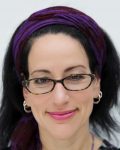
Dr. Ross Feldman is leading various teams as the principal investigator for women’s health at the Institute of Cardiovascular Sciences at the city’s St. Boniface Hospital. (photo from Dr. Ross Feldman)

Many of us are under the impression that heart disease mainly affects men. But researchers have been trying for the last few decades to change this skewed view. One such researcher, Dr. Ross Feldman, recently found his way to Winnipeg. Feldman is leading various teams as the principal investigator for women’s health at the Institute of Cardiovascular Sciences at the city’s St. Boniface Hospital.

According to Feldman, “Most of what we know in terms of risk and benefit and treatment of those factors that contribute to heart disease initially came from studies of younger people with more advanced risk factors – be it cholesterol, high blood pressure, [etc.] – and what the benefit was from the treatment of those problems, in terms of reducing risk of heart attacks or strokes. Women tended not to be included in those studies, because premenopausal heart disease risk is so much lower. So, in the earlier days, we developed guidelines that were mostly based on findings in younger men. It really wasn’t appreciated that women had accelerating risk after menopause.”

This new understanding about the connection between post-menopause and heightened risk of heart disease has only come to light in the past 10 to 15 years. The Heart and Stroke Foundation is only now, within the last year, opting to make the topic a priority.

“I think it’s taken even longer for it to register on the psyche of healthcare professionals … that women are at an increased risk post-menopause,” Feldman told the Independent. “They’re also much less likely to be diagnosed appropriately, less likely to get appropriate treatment, and they are more likely to have complications with trying to fix blood vessel problems. They’re less likely to be sent out following a cardiac event on all the right medications. And then, ultimately, a little more likely to die of heart disease.”

Feldman believes this lag time – for women to get the correct diagnostics and treatments – will not change anytime soon, unfortunately, as the training provided in medical schools is still based on past knowledge about women and heart disease. Medical students are still being taught that women are more likely to present with atypical chest pain, with no further explanation, said Feldman.

“If women are most likely to present that way, why are you calling it atypical chest pain?” he asked. “It gives you an idea of how male-centric our whole approach to heart disease has been. What we get out of it is, you often see a dichotomy, that sometimes you’ll see premenopausal women at risk of being over-treated.

“A woman, premenopause with hypertension, probably doesn’t need blood pressure-lowering therapy unless their blood pressure is greater than 160 over 100. Whereas, a post-menopausal woman with multiple smaller elevations in individual risk factors – a little bit higher blood pressure, a little bit higher cholesterol – will often get overlooked…. Yet, she is at a much greater risk than will be projected, based on consideration of any individual risk factor.

“There needs to be a sex-specific approach to management of the risk factors of heart disease and the presentation for heart disease,” he said. “The guidelines for that approach are still in flux.”

As medical practitioners are lagging behind the latest findings about women and heart disease, Feldman said that premenopausal women don’t need to be as concerned about risk factors that may be a little out of whack, such as LDL cholesterol or blood pressure. However, he said, post-menopausal women need to be advocates for more aggressive treatment for even seemingly marginal elevations in risk factors.

“The problem is that primary care professionals, a lot of them, will tend to underestimate the risks,” said Feldman. “There are reasonable calculators that will tell people, if you add up several small risks for a post-menopausal woman, that translates into an overall risk level that mandates more aggressive therapy. Generally, blood pressure and cholesterol are the most important factors to look at, but it’s the whole aggregate risk based on the calculation that tells you how aggressively you need to treat, regardless of the extent of the elevation.”

While researchers like Feldman are working on sex-specific therapies, women can help themselves by reducing their degree of risk via exercise, maintaining a healthy weight and a healthy diet, keeping hydrated and finding ways to keep stress and anxiety levels down.

“As women age, as with men, excessive salt intake increases blood pressure and often that excessive salt doesn’t primarily come from the salt shaker, but from processed foods,” said Feldman. “When shopping, shop the rim of grocery stores. Stay away from the aisles. Maybe shop in the frozen food sections, but probably not.

“To date, there is no real sex-specific preventative approach. That is, exercise, as far as I know, is as effective in blood pressure reduction and weight reduction for men as it is for women … maybe a little more effective in women, but likely marginal differences. I think it’s important for women to know that weight gain and a more sedentary lifestyle are bigger risks for them than for men. Men tolerate being couch potatoes a little better than women do.

“The slope of the line for weight gain in men is pretty linear,” he said. “In women, there’s an increase in slope of weight gain after menopause. Women’s systems are less tolerant of the kinds of changes that occur with age than men’s.

“We know there are ethnic differences in risk tolerance,” he added. “We know that Asians are less tolerant to weight gain than Caucasians. That is a genetic difference. We hadn’t appreciated that sex differences work the same way, although we should have, as, ultimately, a sex difference is a genetic difference.”

Rebeca Kuropatwa is a Winnipeg freelance writer.
Format ImagePosted on July 13, 2018July 11, 2018Author Rebeca KuropatwaCategories NationalTags heart disease, menopause, Ross Feldman, science, women
Archeological cliff-hanger

Archeological cliff-hanger

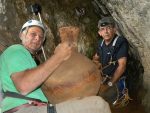
Dr. Yinon Shivtiel, left, and Dr. Danny Syon inside the cave where large wine jars, a cooking pot and other pottery more than 2,000 years old were salvaged two weeks ago in a joint operation of the Sefad Academic College, the Israel Antiquities Authority (IAA), the Israel Cave Research Centre and the Israel Cave Explorers Club. (photo by IAA from Ashernet)

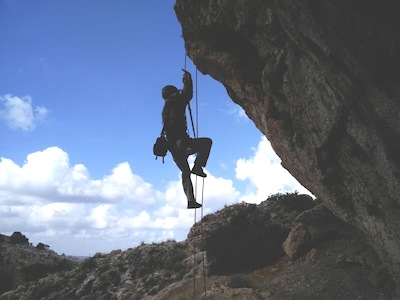
photo - The pottery was found in a cave high on a sheer cliff, under an overhang
The pottery was found in a cave high on a sheer cliff, under an overhang. (photo by IAA from Ashernet)

In 2017, Dr. Yinon Shivtiel, a speleologist and senior lecturer at Sefad, conducted a survey in Western Galilee, aided by the Israel Nature and Parks Authority, to locate caves that served as shelters and hiding places. He discovered a cave high on a sheer cliff, under an overhang, which contained ancient pottery vessels. “As a first impression,” said Dr. Danny Syon, senior archeologist with the IAA, “the finds seem to date to the Hellenistic period: between the third and first centuries BCE…. We assume that whoever hid here escaped some violent event that occurred in the area. Perhaps by dating the vessels more closely, we shall be able to tie them to a known historic event. It is mind-boggling how the vessels were carried to the cave, which is extremely difficult to access. Maybe an easier way that once existed disappeared over time?”

Format ImagePosted on July 13, 2018July 11, 2018Author Edgar AsherCategories IsraelTags archeology, history, Israel, pottery
פורום הישראלים בקנדה

פורום הישראלים בקנדה

פורום אתר תפוז (בבעלות חברת אורנג’ הולדינגס) עבור הישראלים בקנדה ממשיך להיות עמוס בשאלות רבות, ובמידע רב הנדרש עבורם. כיום 15,309 איש עוקבים אחר נעשה בפורום. תפוז מפעילה בנפרד פורום עוברים לקנדה שעוסק בענייני הגירה. כיום 11,369 איש עוקבים אחר הנעשה בפורום הזה.

לפי תפוז הפורום עבור ישראלים בקנדה הוא “הבית לישראלים הגרים במדינה השנייה בגודלה בעולם, למי שמעוניין לדעת על החיים כאן, ולאלו שבדרך. זה המקום ליצירת קשרים ומתן מידע לישראלים הרבים החיים ברחבי קנדה. מסעדות, עבודה, מגורים ובילויים – הבמה פתוחה לכל נושא שמעניין אתכם ויהפוך את הפורום והחיים פה ליותר מעניינים. לאלו מכם שנמצאים בדרך, בחבלי ההגירה לקנדה, אנחנו מבקשים תשעיינו במאגרי הקישורים, המאמרים ובדף השאלות הנפוצות ותבדקו שם את המידע, כיוון שאם שאלתכם כבר נענתה שם, תקלו על הפורום מחזרה על עצמו. הפורום הזה ששואף לתמוך בקהילה גדולה של חברים, מבוסס על סובלנות ועזרה הדדית, וכמה דברים אינם מקובלים בו: אין כאן מקום לניגוח בנושא השהייה בחו”ל, לא יתקבלו כאן הטפות מוסר. הודעות מעין אלה, ובמיוחד אם יכתבו בשפה בוטה – ימחקו בשלב ראשון ויחסמו בשלב השני. התקפות אישיות על גולשים או חשיפה של פרטים אישיים על גולשים ע”י גולשים אחרים, לא יתקבלו כאן. הודעות כאלה ימחקו וכותביה יחסמו. הפורום פתוח לכל הגולשים המעוניינים להשתתף בו ולכולם ניתנת זכות ביטוי שווה. הודעות המשתיקות גולשים אחרים מכל סיבה אף הן אינן רצויות כאן. יש להקפיד על התייחסות בכבוד לכל משתתף/ת בפורום, ללא התבטאויות פוגעות במזיד, קללות וכדומה. נא לשמור על שפה נקייה ונעימה בפורום. כמו בכל קהילה, גם כאן יש מקום לידיונים וחילוקי דעות. אנא שמרו על דיון ענייני ובוגר. השתדלו לנסח את דעותכם בצורה סובלנית, תרבותית, חיובית ובונה, גם כשאתם נסערים”.

בין השאלות שהועלו לדיון בפורום לאחרונה: היבטים פסיכולוגים בגידול ילד מחונן, הגירה לקנדה, מעבר לארה”ב, מחפשים ספרים ישראלים בוונקובר, כיצד ניתן לצפות בערוצים ישראלים בחו”ל, רואי חשבון בטורונטו, ספרי ילדים ונוער מחפשים בית חם, מה דעתכם על הילודה בקנדה, הבדיקות הבטחוניות לקבלת כרטיס פי.אר, שבוע בטורונטו עם הרכב – היכן מומלץ לשהות, הוצאת רישיון נהיגה, האם יש מגבלות גיל להגירה, המלצות על סוכן נדל”ן במונטריאול, ישראלים בקולונה, המנטליות בקנדה, בית ספר יהודי בטורונטו, לימודי פסיכולוגיה בקנדה, האם יש סיכוי ששער הדולר הקנדי ירד, דמי ניהול בבניינים, מס על הכנסה, אתר לחיפוש דירות להשכרה, יציאה מישראל עם דרכון זר, מערכת הבריאות הציבורית בקנדה, מיסוי כפול וביטוח לאומי, מכירת בית בישראל, אפשרות לרילוקיישן ועוד.

אתר תפוז מפעיל גם פורום להשקעות נדל”ן בקנדה. מדובר בפורום חדש יחסית שנפתח ביולי אשתקד, ומספר העוקבים שלו עומד על 1,241 איש. בין השאלות שהועלו לדיון בפורום זה: חוזה שכירות אחיד בטורונטו, משקיעים זרים בנדל”ן בטורונטו, קניית בית והשכרה לדיירים, הזדמנויות להשקעה, עתיד בקנדה, השקעות בקנדה לא מובילות לאזרחות קנדית, מה העדיפות של קנדה על ארה”ב, השקעה של אזרח קנדי, מה התשואה שאפשר להשיג על נדל”ן בקנדה, האם יש הגירה חיובית כל כך שמצדיקה השקעה בנדל”ן, האם המיסוי של 15% על השקעות בנדל”ן לזרים לא מוחק את היתרון, קרן פנסיה קנדית תסכים להתחייב לאזרח ישראלי לפנסיה, מה דין הבנקאות בקנדה בייחס לתיירים, כיצד מובטחת ההשקעה על שם המשקיע ובאיזה אופן כדאי להשקיע בקנדה.

Format ImagePosted on July 11, 2018July 9, 2018Author Roni RachmaniCategories עניין בחדשותTags Canada, immigration, investments, Israel, real estate, Tapuz, הגירה, השקעות, ישראל, נדל"ן, קנדה, תפוז
VHEC reopens with exhibits

VHEC reopens with exhibits

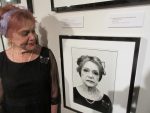
Jannushka Jakoubovitch, a Holocaust survivor, looks at her portrait, taken by Pulitzer Prize-winning photographer Marissa Roth, part of the Faces of Survival exhibit at the VHEC. (photo by Pat Johnson)

Two new original exhibits opened at the Vancouver Holocaust Education Centre recently, concurrent with the opening of the centre’s redeveloped space.

Following the annual general meeting of the Vancouver Holocaust Centre Society for Education and Remembrance on June 20, attendees moved from the Jewish Community Centre of Greater Vancouver’s Rothstein Theatre to the Holocaust centre for the official opening of the exhibits and a first look at the revamped space. (An article on the centre’s renewal project will appear in a future issue.)

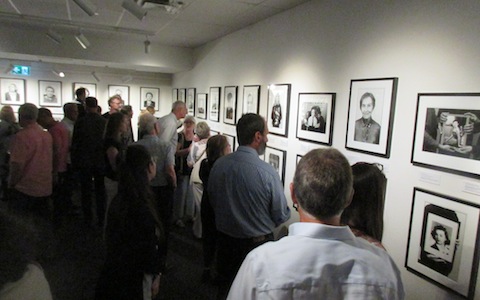
photo - Following the AGM, attendees moved from the Rothstein Theatre to the Holocaust centre for the official opening of the exhibits and a first look at the revamped space
Following the AGM, attendees moved from the Rothstein Theatre to the Holocaust centre for the official opening of the exhibits and a first look at the revamped space. (photo by Pat Johnson)

Both exhibits emphasize local relevance of broader Holocaust history.

In Focus: The Holocaust through the VHEC Collection includes items that the Holocaust centre has assembled over decades. Thematic aspects of Shoah history are illustrated through documents, photographs and artifacts. Interactivity is incorporated through replica items in adjacent drawers, which visitors can handle and explore. Electronic kiosks encourage deeper and broader exploration of topics, including cross-referenced databases that connect, for example, all holdings related to an individual, a place, an event or other search query.

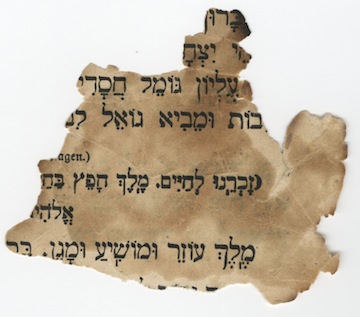
Among the items on display are a yellow Star of David worn in the Theresienstadt camp in Czechoslovakia, a fragment of a prayer book burned during Kristallnacht in 1938 and found on the street in Berlin after the violence temporarily subsided, and a photo album of life in the Netherlands under Nazi occupation, created from negatives that were developed in 1981 and donated to the VHEC.

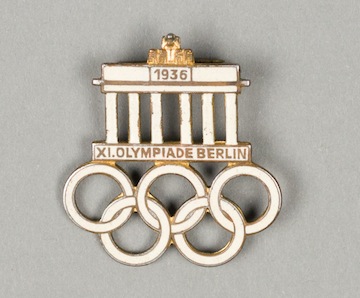
photo - A souvenir pin from the 1936 Berlin Olympics, part of the Vancouver Holocaust Education Centre’s permanent collection and the exhibit In Focus: The Holocaust Through the VHEC Collection
A souvenir pin from the 1936 Berlin Olympics, part of the Vancouver Holocaust Education Centre’s permanent collection and the exhibit In Focus: The Holocaust Through the VHEC Collection. (photo from VHEC)

Also on display is a Torah scroll from Prague, which, along with 100,000 other Czechoslovakian Jewish religious objects, was gathered by the Central Jewish Museum in Prague at the behest of Nazi officials.

A souvenir pin from the 1936 Olympic Games in Berlin, featuring a replica of the Brandenburg Gate, and a porcelain figurine of an idealized Aryan woman produced around the same time speak to that portentous international sporting event.

Artifacts from life in hiding include a wooden toy dog that belonged to local child survivor Robert Krell. Among the most unusual items on display is a chess set modeled from chewed bread and sawdust, then painted and varnished.

“These finely articulated pieces are believed to be the work of a Polish Jewish man interned in the Warsaw Ghetto,” according to the exhibit descriptor. “He likely offered the set to a soldier stationed as a guard in the ghetto, in exchange for food.”

Photographs illustrate life in the ghettos, life in hiding and the “Holocaust by bullets,” the process of mass murder in Eastern Europe perpetrated by Einstatzgruppen (Nazi death squads) and collaborators.

Also on display is a recipe book compiled by Rebecca Teitelbaum, the aunt of Vancouver-area Holocaust survivor Alex Buckman. While working in a Siemens ammunition factory in the women’s concentration camp Ravensbrück, the exhibit explains, “At great risk of being discovered and killed, she stole pencils and paper to record her recipes and those of other inmates.”

A child’s shoe recovered from the Kanada barracks at Auschwitz II-Birkenau is on exhibit. “This shoe, belonging to a child of age 3 or 4, was retrieved after the Second World War. Young children deported to Auschwitz were among the first to be selected for the gas chambers. An estimated one million Jewish children were murdered by the Nazis and their collaborators during the Holocaust – 220,000 children died in Auschwitz alone.”

photo - A fragment of a Torah scroll found on the street in Berlin following Kristallnacht, in 1938, part of the VHEC's permanent collection and the exhibit In Focus: The Holocaust Through the VHEC Collection
A fragment of a Torah scroll found on the street in Berlin following Kristallnacht, in 1938, part of the VHEC’s permanent collection and the exhibit In Focus: The Holocaust Through the VHEC Collection. (photo from VHEC)

Also on display is a letter, dated April 20, 1945, from U.S. soldier Tom Perry to his wife Claire after arriving in the liberated Buchenwald concentration camp.

“I want to write you tonight about one of the most moving experiences I’ve ever had, as well of as one of the most horrible things I have ever seen.… With the idea not of pleasing you, for what I saw there was really too horrible to be seen by any decent human being. But with the thought that as my wife you would want to share with me my most horrible as well as my pleasant experiences. And because I think the rest of the family and our friends should know from personal observations what bestial things the Nazis have done, and what a dreadful menace they have been to people all over the world.” The letter proceeds in graphic detail.

The second exhibit is even more intimately connected with the local community. Faces of Survival: Photographs by Marissa Roth consists of portraits of British Columbians who survived the Shoah. Roth, a Pulitzer Prize-winning photographer who created a similar exhibit at the Museum of Tolerance / Simon Wiesenthal Centre in Los Angeles, took portraits of survivor volunteers, including both past and present VHEC outreach speakers and board members. In cases where the survivors themselves have passed away, the portraits feature family members holding a photo of the survivor.

The subjects were asked two questions: “Why do you think it is important to remember the Holocaust?” and “What message do you want to convey to students?” From their answers, captions were created to accompany the portraits in the exhibition, which was made possible by the Diamond Foundation.

Accompanying Agi Bergida’s portrait are the words: “My great hope is in the young people, the new generation. Racism is ignorance, to which the answer is education.”

Marion Cassirer, who died in Vancouver in 2014, is pictured in a photograph held by her daughter, Naomi Cassirer. “The Holocaust happened a long time ago, but for our family and for many others, it never ended,” said her daughter. “Marion spent the rest of her life speaking to groups about her family’s experiences, hoping that people would learn and understand that no society is immune.”

Serge Haber said, “It is important to remember the Holocaust because it can happen again, and it can happen here.”

A photograph of the late Paul Heller, held by his daughter Irene Bettinger, is accompanied by her words: “Dangerous human behaviour continues to this day, including antisemitism. Every one of us must participate in efforts to combat such behaviour if our freedoms and democracies are to survive.”

Accompanying Evelyn Kahn’s portrait are her words: “In a world where the media reports events absent of historical truth, the most essential tool becomes survivor testimony.”

The photograph of Peter Parker, who survived Birkenau and Dachau as well as a death march and died in Vancouver in 2015, includes words from his 1987 testimony: “Every human being has good and bad in them, we are capable of the highest noble things and the lowest deeds.”

Claude Romney, who survived in hiding, said: “We, as the last witnesses, have a duty to warn the world of the dangers of targeting any ethnic or religious group; for discrimination and persecution can lead to extermination, as it did under the Nazis.”

The late Bronia Sonnenschein was a survivor of the Lodz Ghetto, Birkenau and Stuthoff concentration camps and a death march from Dresden to Theresienstadt. Dan Sonnenschein, her son, said, “In her many years of Holocaust education, my mother honoured not only the memory of the murder victims and the other victims who survived, but understood the virulent intensity of antisemitism as ‘the longest hatred’ and the need to combat its current forms.”

Louise Stein Sorensen, a survivor of the Amsterdam Ghetto who survived in hiding, said: “The Holocaust teaches us to arm ourselves against the abuse of human rights.”

Both exhibits continue until next year, and information on opening hours and other details can be found at vhec.org.

After the routine business of the annual general meeting, Dr. Ilona Shulman Spaar, VHEC education director, presented the 2018 Meyer and Gita Kron and Ruth Kron Sigal Award to educators Sharon Doyle of South Delta Secondary and Julie Mason of David Oppenheimer Elementary in Vancouver. The award recognizes excellence in Holocaust education and genocide awareness in B.C. elementary and high schools.

Ed Lewin, past president of the organization, conferred life fellowships on Ethel Kofsky and Dr. Martha Salcudean.

Introductions and explanations of the new exhibitions, as well as of the renovated centre, were presented by Nina Krieger, VHEC executive director, architect Brian Wakelin, principal of Public: Architecture + Communication, and Shulman Spaar. Hodie Kahn offered reflections from a second-generation perspective.

Format ImagePosted on July 6, 2018July 5, 2018Author Pat JohnsonCategories LocalTags Holocaust, photography, VHEC
Height of celebration

Height of celebration

Feeding time for the giraffes in Ramat Gan Safari Park on June 21, which was World Giraffe Day. (photo from Ashernet)

It is no coincidence that the day to raise public awareness of the tallest animal on earth takes place on the longest day of the year, at least in the northern hemisphere. In the world, there are nine sub-species of giraffes, all of which are categorized as endangered. Seven giraffes live in the Safari Park: Denisa, Daniela, Dikla, Diana, Dedi, Anton and Dadon. This year, Denisa, the Dutch-born giraffe who came to the safari when she was just 2 years old, broke a record when she passed the age of 28, becoming the oldest giraffe in any zoo.

Format ImagePosted on July 6, 2018July 5, 2018Author Edgar AsherCategories IsraelTags animals, giraffe, Ramat Gan Safari Park, zoo
הערים היקרות בעולם

הערים היקרות בעולם

הונג קונג (סין) היא העיר היקרה ביותר בעולם. (צילום: Estial)

מי אמר שקנדה יקרה: רק 5 ערים קנדיות ברשימת 209 הערים היקרות בעולם

חברת הייעוץ מרסר מפרסמת את הדוח השנתי ליוקר המחייה בעולם. המדד של מרסר המתפרסם זו השנה ה-24 ברציפות כולל 209 ערים, והוא מתבסס על בדיקת עלויות של למעלה מ-200 מוצרים שונים (כולל הוצאות לדיור, הוצאות על מזון, הוצאות על תחבורה, הוצאות על מוצרי צריכה לבית, הוצאות על ביגוד והוצאות על בידור).

קנדה שיש טוענים שהיא מדינה יקרה מיוצגת רק על ידי 5 ערים ברשימת 209 הערים היקרות בעולם. טורונטו במקום ה-109, ונקובר גם כן במקום ה-109, מונטריאול במקום ה-147, קלגרי במקום ה-154 ואוטווה במקום ה-160.

הונג קונג (סין) היא העיר היקרה ביותר בעולם. אחריה בעשירייה הראשונה: טוקיו (יפן), ציריך (שוויצריה), סינגפור (סינגפור), סאול (דרום קוריאה), לואנדה (אנגולה), שנחאי (סין), נג’מנה (צ’אד), בייג’ין (סין) וברן (שוויצריה).

העשירייה השנייה: ג’נבה (שוויצריה), שנז’ן (סין), ניו יורק (ארה”ב), קופנהגן (דנמרק), גונגג’ואו (סין), תל אביב (ישראל), מוסקבה (רוסיה), ליברוויל (גבון), ברזוויל (הרפובליקה של קונגו) ולונדון (בריטניה).

דיון בוועדת העלייה והקליטה של הכנסת להוקרת תרומת יהודי קנדה

ועדת העלייה, הקליטה והתפוצות של הכנסת קיימה דיון מיוחד להוקרת יהודי קנדה, ביום שלישי שעבר (ה-26 בחודש).

בקנדה חיים כיום למעלה מ-400 אלף יהודים ומדובר בקהילה השלישית או הרביעית בגודלה בעולם, מחוץ לישראל. מרבית היהודים בקנדה חיים בריכוזי הערים הגדולות: טורונטו ומנטריאול.

שגרירת קנדה בישראל, דבורה ליונס, שהשתתפה בדיון המיוחד של ועדת העלייה והקליטה, אמרה בין היתר כי היהודים החלו להגיע לקנדה כבר בשנת 1760. הפרלמנט הקנדי החליט כי חודש מאי יהיה חודש מורשת יהודי קנדה, מדי שנה. ליונס הדגישה כי קנדה תמשיך להילחם עד חורמה באנטישמיות ובתנועת החרם נגד ישראל והיהודים. ובמקביל קנדה תמשיך להנציח את זכר השואה תוך אמירת השבועה “לעולם לא עוד”. היהודים בקנדה ימשיכו להיות בטוחים ומוגנים כמו שאר האזרחים בקנדה.

ליונס עושה רבות לקירוב היחסים בין ישראלים לפלסטינים. במרץ אשתקד היא אירחה במעונה הרשמי כמאה נשים מתנועת “נשים עושות שלום”, המבקשת לקדם את הפיתרון הסכסוך בין שני העמים. האירוע לרגל יום האישה הבינלאומי, כלל את השתתפותן של 11 שגרירות שמהכנות בישראל (בהן מסלובניה, פינלנד ואירלנד). וכן שלוש סגניות שגרירים. ליונס אמרה באירוע: “התכנסו הערב, נשים מכל העולם, כדי לתת הכרה לתפקיד הקריטי שנשים ישראליות ופלסטיניות ממלאות בחברה כאן על כל רבדיה. אין מטרה נעלה יותר מאשר שלום במדינה. במיוחד היום כשאנו נושאות את מבטינו מסביב, אנו רואות מספר עולה וגובר של קונפליקטים, אשר גובים מחיר אנושי במיוחד מנשים וילדים. לכן מצאנו לנכון שהיום – יום האישה הבינלאומי, נישא על נס את התפקיד החשוב שממלאות חברות בארגון נשים, שעושות שלום ובקידום השלום. הטרמינולוגיה בה משתמשות הנשים הייתה ביטחון כולל על רבדיו השונים. ביטחון הוא לא רק צבא, אלה הוא גם ביטחון כללי, חברתי ואישי. אך מעבר להרחבת המושג, מדובר בשיתוף נשים בהליכים המובילים להסכמי שלום. כאשר נשים מעורבות במשא ומתן ההסכמים שנחתמים מכילים יותר ומחזיקים מעמד לטווח ארוך יותר. למרות זאת, כיום רק 9% מהנושאים ונותנים הינן נשים. ורק 4% מהחתומים על הסכמים הן נשים. משמעות הדבר היא בפועל כאשר מדובר בהחלטות קריטיות על ביטחון, ממשל, חוקים ותקציבים, כחצי מהאוכלוסיה נשארת מחוץ למעמד החשוב של קבלת החלטות. אנו תומכות במעורבות גוברת של נשים בחברה, דבר היביא לשיפור מצבה”.

Format ImagePosted on July 4, 2018June 28, 2018Author Roni RachmaniCategories עניין בחדשותTags Canada, Deborah Lyons, Diaspora, Knesset, most expensive cities in the world, women, דבורה ליונס, הערים היקרות בעולם, התפוצות, כנסת, נשים, קנדה
Rabbi chosen as a fellow

Rabbi chosen as a fellow

Rabbi Susan Shamash began a fellowship with Rabbis Without Borders this month. (photo from Susan Shamash)

“Rabbis Without Borders addresses borders within Judaism,” said Rabbi Susan Shamash, one of two Canadian rabbis who began a fellowship with Rabbis Without Borders (RWB) this month. “The fellowship aims to span denominations and to break down barriers between rabbis of different denominations, so that they can cross the borders and collaborate.”

While at a Shabbaton led by RWB when she was a rabbinical student, Shamash became interested in the Clal fellowship. Established in 1974 by Rabbi Irving Greenberg and Elie Wiesel, Clal’s “mission has been to help prepare the Jewish people for the unprecedented freedom and openness of North America,” notes the announcement of Shamash’s acceptance into the competitive program, which began in 2008.

Shamash told the Independent that RWB tries to develop rabbis who are able to think and work outside the box while working inside specific communities. Although based in the United States, Clal welcomes Canadian rabbis to its fellowship and, this year, Rabbi Denise Handlarski of Toronto’s Oraynu, a secular humanist congregation, was also accepted.

Shamash completed her rabbinical training in January 2017, obtaining semichah (ordination) from Aleph: Alliance for Jewish Renewal, after a decades-long career as an administrative law judge. Shamash received semichah with four others at that year’s Ohalah conference in Boulder, Colo., from a large number of rabbis, 10 of whom signed her certificate. Her training was overseen, as are all Aleph rabbinic trainings, by a committee of three. In her case, it was Rabbi Victor Gross, Rabbi Hanna Tiferet Siegel (one of the founders of Vancouver’s Or Shalom) and Rabbi Laura Duhan Kaplan (formerly spiritual leader of Or Shalom, now on the faculty of Vancouver School of Theology).

Shamash has been involved with Or Shalom since it started and counts the founding teachers, Siegel and her husband Daniel, among her mentors, as well as Duhan Kaplan, who is delighted to have her aboard. “As a longtime member of the RWB network, I’m delighted that Rabbi Susan Shamash will join us,” Duhan Kaplan told the Independent. “We need more Canadian voices like Rabbi Susan, willing to creatively address emerging issues in our religious and cultural life.”

“I am excited to join Rabbi Laura Duhan Kaplan and [Or Shalom] Rabbi Hannah Dresner in bringing the deep wisdom of this fellowship to Metropolitan Vancouver,” said Shamash.

“I went into law school because I needed a professional skill, and it was a wonderful and rewarding career,” she explained. “I met Rabbi Daniel Siegel while at school – he was a Hillel director at the time and just founding Or Shalom. I learned a lot under his and Hanna Tiferet’s mentoring.”

Although Shamash enjoyed her judicial career, she said she is deeply satisfied with her transition to a second career. “In some ways, I came home, even though I really loved the law,” she said. “I might have become a rabbi for my first career but, at that time, it was not at all encouraged [for a woman]. I was very interested in the study and the prayer life as a kid.”

Primary areas of interest for Shamash include interfaith ceremonies and outreach to underserved Jewish communities, both of which she thinks the fellowship will help equip her for. “The fellowship will inform the work that I do with interfaith families or marriages between observant Jews and unaffiliated Jews or non-Jews, as well as working with people who want some Yiddishkeit for ‘hatching, matching and dispatching,’ as they say, the cycles of life, but want that outside of synagogues and institutions,” she said. “I would also like to take Judaism [beyond] the Lower Mainland and bring Jewish experience to smaller communities in B.C.”

She said there is a lack of diverse offerings for Jews outside of major urban centres, and she would like to help fill that gap.

Shamash currently teaches Talmud at Or Shalom, where she delights in making the study available to people who might otherwise not have access to it. She is hoping, over the years to come, to collaborate with others in the Jewish community to increase the options for serious adult yeshivah-style learning for the non-Orthodox.

Matthew Gindin is a freelance journalist, writer and lecturer. He is Pacific correspondent for the CJN, writes regularly for the Forward, Tricycle and the Wisdom Daily, and has been published in Sojourners, Religion Dispatches and elsewhere. He can be found on Medium and Twitter.

Format ImagePosted on June 29, 2018June 28, 2018Author Matthew GindinCategories LocalTags ALEPH, Judaism, Or Shalom, Rabbis Without Borders, RWB, Susan Shamash
Negev Dinner helps Israeli children

Negev Dinner helps Israeli children

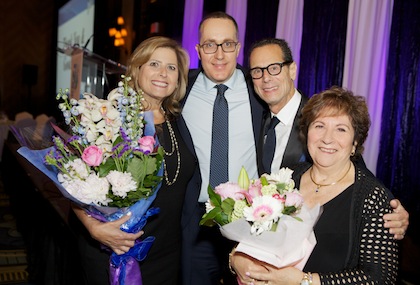
Left to right: Ilan Pilo, Michelle Pollock, Dr. Neil Pollock, Wendy Eidinger Spatzner and David Goldman. (photo by Robert Albanese)

Vancouver supporters of the Jewish National Fund (JNF) gathered in their finery at the Four Seasons Hotel Vancouver on June 3 to celebrate Israel’s 70th birthday and pay tribute to philanthropists Neil and Michelle Pollock.

Michelle Pollock is a former lawyer, the immediate past president of the board of the Jewish Community Centre of Greater Vancouver, and has co-chaired the Jewish Federation of Greater Vancouver annual campaign’s women’s division for six years, as well as supporting Jewish education, among many other causes. Dr. Neil Pollock is chief surgeon and medical director of Pollock Clinics. He has undertaken teaching missions to Rwanda, Congo and Haiti, as well as being involved in philanthropy at home and abroad.

photo - Bernice Carmeli, dinner co-chair, with Ilan Pilo, David Goldman and Ilene-Jo Bellas
Bernice Carmeli, dinner co-chair, with Ilan Pilo, David Goldman and Ilene-Jo Bellas. (photo by Robert Albanese)

JNF Pacific Region president David Goldman welcomed the crowd – who had to pass a few dozen protesters on their way into the hotel – and introduced the evening’s emcee, Michael Nemirow, a friend of the Pollocks, who is also involved in various community organizations and activities. “I’ve done the math, and we have around 11 hours of speeches and entertainment for you this evening, but we’ll try to compress it into three,” Nemirow said, eliciting laughter from the crowd.

After Maurice Moses led the audience in O Canada and Hatikvah, B.C. Lt.-Gov. Janet Austin took the stage. She praised JNF for its work in the “restoration and preservation of the Jewish homeland,” which covers everything from ecological to social to security initiatives. Austin also commented about the Pollocks, highlighting Neil Pollock’s work in Rwanda to prevent the spread of HIV.

Galit Baram, consul general of Israel for Toronto and Western Canada, focused her remarks on the 70th anniversary of Israel, “the only democracy in our region, a bastion of democracy.” She described its strengths in the areas of human rights, medicine, multiculturalism and technological innovation. She said Israel is led by people “both on the right and on the left who love their country with all their hearts” in the face of multiple existential threats. “We rely on our friends who share common values, and Canada, our ally, is among them,” she said.

photo - Honourary chairs Jodi and Alex Cristall
Honourary chairs Jodi and Alex Cristall. (photo by Robert Albanese)

“The success of Israel did not happen in a vacuum,” said Baram, citing JNF as a key organization in supporting the state, one in whose name every Israeli has a tree planted. She also spoke of JNF’s contributions in a multitude of activities, including supporting soldiers with post-traumatic stress disorder and her “personal favourite,” the building of a protected playground in Sderot in an area that has suffered shelling from Hamas and other militant groups. Baram thanked Canadians for the warm welcome and open arms with which Israeli diplomats are welcomed in the country.

After Hamotzi, chanted by the Kollel’s Rabbi Avraham Feigelstock, Ilene-Jo Bellas, former president of the JNF Pacific Region (2012-2015), was presented with the JNF Bloomfield Award by local shaliach Ilan Pilo. He described Bellas as an indefatigable servant for Israel who “bled blue and white,” a portrayal she affirmed as fact after taking the podium.

The video on the work of the JNF was introduced by JNF Canada president Wendy Eidinger Spatzner, who explained that the First Zionist Congress established a fund to purchase land in Israel and that this fund became JNF. She talked about JNF’s extensive work to “build the infrastructure of Israel,” noting that it affects the daily lives of “pretty much every Israeli citizen.”

photo - Honourary chairs Jodi and Alex Cristall
Honourary chairs Jodi and Alex Cristall. (photo by Robert Albanese)

Rabbi Dan Moskovitz then led everyone in Birkat Hamazon, before Vancouver TheatreSports performed a series of improv skits centred on the Pollocks’ life as a married couple.

The keynote speaker of the dinner was Doron Almog, a former major general in the Israel Defence Forces, who received the Israel Prize for lifetime of achievement. He discussed his role as founder of ALEH, the charity for children with developmental disabilities that the Pollocks chose to support with monies raised from the evening.

Almog spoke on the theme of commitment, as experienced throughout his life and in the work he has done for children. He shared the story of the death of his brother, a tank operator who died after being injured, left behind by his fellow IDF soldiers. Almog subsequently swore to never leave behind an injured soldier.

Almog’s son Eran, who was named after his fallen uncle, was born with a combination of autism and developmental problems, and a psychiatrist told the family that he would probably never speak, remaining at the cognitive age of an infant. “This son became the greatest teacher of my life, he taught me more than anyone about life, about commitment,” said Almog.

After his son died, Almog went to see how children like Eran are treated “in the only Jewish state in the world.” What he saw horrified him: “The first thing you saw is the stink; distorted, terrified faces; shameful things. What the hell are these places, why are they being punished more?”

photo - Keynote speaker Maj. Gen. (Res.) Doron Almog, founder of ALEH, right, with local businessman and philanthropist Gary Segal
Keynote speaker Maj. Gen. (Res.) Doron Almog, founder of ALEH, right, with local businessman and philanthropist Gary Segal. (photo by Robert Albanese)

Almog discovered that such children were objects of shame in Israeli society. Golda Meir, prime minister of Israel from 1969 to 1974, had a granddaughter with Down syndrome who, as an adult, gave interviews to the press, said Almog. In these interviews, he continued, “she said, ‘Golda never visited me, Golda never loved me, Golda told my mom, “Never mention the prime minister of Israel having a retarded granddaughter.”’ Yigal Alon [deputy prime minister of Israel, 1968-1979] had a beautiful child who, at age 5, was taken away from the kibbutz she was born in and sent away to Scotland and he never spoke about her. And inside me I heard my son screaming, ‘My dear father, I will never complain to the media, you can send me away to Scotland and never speak of me, but, if you do that, you do not deserve even the title of “father” or even the title of human. I am the ultimate test of commitment,’ he said to me, the echo box of your bleeding brother.”

After Almog left the military, he established the village of ALEH, “a paradise where the children can have a full life. We broke the walls of stigma and shame and stereotypes.”

ALEH Jerusalem, a multi-service home for children with disabilities, now receives help from more than 450 volunteers from all over the world. Some of them, said Almog, are children of Nazis, who say they are coming as atonement for Hitler’s decision to kill people with disabilities. “The social chain is always measured by its weakest link,” said Almog, receiving a standing ovation.

After a video explaining more about ALEH, there was a video tribute to the Pollocks introduced by their children, Josh, Elliot and Shoshana. The Pollocks said a few words, after which Goldman and Pilo wound up the celebration.

Matthew Gindin is a freelance journalist, writer and lecturer. He is Pacific correspondent for the CJN, writes regularly for the Forward, Tricycle and the Wisdom Daily, and has been published in Sojourners, Religion Dispatches and elsewhere. He can be found on Medium and Twitter.

Format ImagePosted on June 29, 2018June 28, 2018Author Matthew GindinCategories LocalTags ALEH, children, health, inclusion, Israel, Jewish National Fund, JNF, Negev Dinner, Pollock
Celebration and call to action

Celebration and call to action

More than 130 people joined the Chai Tea celebrations June 10. (photo by Alan Katowitz)

“Life is not measured by the number of breaths you take, but by the moments that take our breath away.”
(Rabbi Abraham Twerski)

The Chai Tea celebration on June 10 brought together 135 people to support the work of the Jewish Seniors Alliance and to honour Serge Haber on his 90th birthday.

Educator and writer Matthew Gindin emceed the event, which took place at the Peretz Centre for Secular Jewish Culture. Shelley Rivkin of the Jewish Federation of Greater Vancouver emphasized Haber’s effectiveness in bringing the issues of seniors to the fore in the Jewish and general communities, while Grace Hann, coordinator of JSA’s peer support services (with Charles Liebovitch), described Haber as a visionary who created the program because of his love and commitment to seniors. She told the story of a woman, alone, sick with cancer, who had lost both her eyesight and hearing. Peer support services provided her with three levels of support: a peer counselor, a driver and a friendly telephone caller.

JSA coordinator Liz Azeroual and her assistant, Rita Propp, joined Hann and Liebovitch for a tribute to Haber to the tune of “This Land is Your Land.” Music by Dave and Julie Ivaz filled the room, and Julie Ivaz read a summary of Haber’s biography, which was accompanied by a slide show of some of his life experiences. The musicians then serenaded Haber with a medley of his favourite songs.

Ken Levitt, president of JSA, emphasized the importance of “reinventing oneself,” both in terms of venue and occupation. Haber is a prime example: from being a pharmacy student in Romania, to surviving the Holocaust, to reaching safety in Cuba and then, with the help of an uncle, settling in Montreal in 1950 and coming to Vancouver in 1978. Here, Haber ran Kaplan’s Jewish delicatessen from 1981 until 2000. During that time, he began working with seniors – JSA started as a subcommittee of Federation – and he continues to be productive and active.

At the Chai event, Haber recited the prayer, “Blessed art thou, O Lord our God, King of the Universe, for giving us life, sustaining us and enabling us to reach this season.” His wife Elinor passed away seven years ago; they had been married 57 years and have three children, Wanda, Geoffrey and Stephen. Haber has five grandchildren and one great-grandchild. He acknowledged with affection his friend and partner Sheila Gordon, who supports all his endeavours.

Haber lamented that, whereas JSA is in the business of prevention, the government is mainly concerned with responding to the urgent needs of seniors. A public program of prevention would prolong healthier lives for seniors, he said, and eliminate the expensive costs associated with sickness and mental decay.

The 70 volunteers who work with 175 seniors at JSA are not going to be enough, said Haber. “Sometime, somewhere in your life, rich or poor, you’ll need the services of JSA,” he said.

Throughout the afternoon, tickets were drawn for donated door prizes. The 50-50 draw was won by Carole Kline, who donated the money back to JSA. The grand prize of a night at the Grand Villa Casino Hotel was won by Julia Wallstrom.

Helene Rosen and Marie Doduck were the co-conveners of the Chai Tea. Their efforts and work were acknowledged along with that of Gyda Chud and Propp. Delightful portrait caricature drawings by artist Katie Green were available all afternoon. Gala Catering served up the sandwiches and cake. It was a memorable afternoon.

Tamara Frankel is a member of the board of Jewish Seniors Alliance. Shanie Levin, MSW, worked for many years in the field of child welfare. During that time, she was active in the union. As well, she participated in amateur dramatics. She has served on the board of the Jewish Federation of Greater Vancouver and is presently on the executive of JSA and a member of the editorial committee.

Format ImagePosted on June 29, 2018June 28, 2018Author Tamara Frankel and Shanie LevinCategories LocalTags JSA, seniors, Serge Haber
On death and dying

On death and dying

Rabbi Laura Duhan Kaplan, director of inter-religious studies at Vancouver School of Theology. (photo from Laura Duhan Kaplan)

“Most of the world’s religions speak of dying to self,” said Dr. Eloecea, a Christian psychotherapist speaking at the Inter-Religious Conference on Spiritual Perspectives on Death and Dying at the Vancouver School of Theology May 22-24. “If we can do this before the time death approaches, suffering is greatly diminished for ourselves and for those around us.”

“Dying to self” refers to giving up egotism and self-centred attachments. Eloecea’s words echoed a theme that appeared in many of the sessions I attended, which was that of a holistic spiritual path of surrender and humility that unites life and death.

Rabbi Dr. Laura Duhan Kaplan, formerly of Or Shalom Synagogue and now director of inter-religious studies at VST, discussed how she had been spurred by reading Plato to take a closer examination of Jewish views of death and the afterlife. “Plato said living well is preparing for death. But what is death?” she asked.

Duhan Kaplan explained how the texts of kabbalah offer accounts of a soul’s journey after death. The soul travels through stages of physical, emotional, intellectual and spiritual purification, she said. According to Duhan Kaplan, this account of the afterlife is based both in kabbalistic theories of the soul’s development and glimpses of higher consciousness by current spiritual seekers. As Duhan Kaplan presented them, these texts are a guide to a lifetime of self-reflection, humility and non-attachment.

The stages of the soul’s ascent after death are tied to the rituals and rhythms of the traditional Jewish year of mourning that follows the death of a loved one, she said. “When I decided I would research Jewish views of the afterlife I had no idea I would discover what I did.”

Duhan Kaplan spoke of the dreams and spiritual experiences she had after the deaths of her father, mother and mother-in-law. She said the stages of her parents’ journeys offered particular gifts that related to their stages of spiritual ascent in the next worlds. The movement from the shivah period through the year of saying Kaddish to the yahrzeit and Yizkor corresponds to the soul’s difficulty in letting go, the emotional purification, the visit to the lower Gan Eden, the “paradise of understanding and good deeds,” and then the return to the storehouse of souls to merge with the divine. This description captures just one thread in the rich tapestry of connections Duhan Kaplan wove.

Other teachers at the conference presented different lenses through which spirituality relates to death. Acharya S.P. Dwivedi, poet and interfaith activist, presented the traditional Hindu view of karma, reincarnation and freedom from rebirth through non-attachment and identification with the transcendent self (atman). Dwivedi described how in the Hindu view the jiva (individual soul) moves from birth to death, experiencing happiness or suffering in accordance with the good and bad actions it commits, until finally it finds its true identity with the atman – the innermost self that is one with all of existence – and lets go, returning to its source and not again being reborn.

Syed Nasir Zaidi, Muslim chaplain at the University of British Columbia, discussed the importance in Islam of confronting and making peace with death. “Death should be our strength, not our weakness,” Zaidi said, emphasizing how thoroughly internalizing the reality of our own death and ceasing to fear it can enrich our spiritual path. Zaidi pointed out that, according Rumi, it is death that gives value to life, making it precious. Zaidi also explained that, in Islam, peace with death is accomplished through confident submission to God’s will in a life of virtue and acceptance of life’s unfolding as an expression of God. “Abraham told his children they should not die before becoming Muslims,” Zaidi said. “Obviously, this doesn’t refer to being members of the religion of Islam, but rather to having submitted to God, which is what being a muslim [submitted one] means.”

Some presenters offered specific practices. Eloecea shared a series of meditations aimed at producing positive thoughts to change the state of the brain, to shift from the egotistical self and its entrapping habits. Lynn Mills, a PhD student at Trinity College in Dublin, Ireland, Skyped in to present a liturgy for people in the early stages of Alzheimer’s, which consisted of psalms and prayers to be recited in their presence. This had two parts: the first was a morning liturgy for every day, the second a way to celebrate the person’s life before memory loss prevents them from knowing friends and family and remembering the stories they share.

A variety of other topics were covered. Mark Stein, a Jewish chaplain, tackled the issue of what to do when non-Christians (or anabaptists, who only baptize believing adults) are called upon to give baptisms for sick or stillborn children. Can a Jew baptize a child? Should they? Stein spoke of the need for chaplains to support people in these extreme situations. He spoke of the transformation this could cause in a chaplain, leading them not only to embrace a pragmatic flexibility but to an openness – seeing God’s work as something also happening beyond one’s own religion.

One recurrent issue was medical assistance in dying, about which there was a panel discussion moderated by Duhan Kaplan on the opening night of the conference. Rabbi Adam Rubin of Congregation Beth Tikvah spoke as a member of the panel. He noted the lack of a consensus about medically assisted dying across Jewish traditions, but affirmed a few core teachings. “First, because of the infinite preciousness of every life, we’re commanded to do everything we can to preserve life,” Rubin told the Independent. “Second, we must do everything we can to attenuate suffering. Some traditional rabbinic authorities hold that this imperative means that one can give a level of pain-killing medicine (morphine, for example) that might even endanger the life of a patient, in order to reduce the patient’s suffering. In addition, some authorities allow the removal of life-sustaining machines or apparatuses if they extend suffering, in order to allow the normal course of physical decline to take place. This is a tricky and controversial subject within Jewish tradition,” he said, “but the general idea is that there’s a place for ‘allowing nature to take its course’ if it is likely to reduce suffering. All of that said, there is a (rare for Judaism!) consensus in traditional Jewish law that it is absolutely forbidden to take one’s own life or to assist in taking someone else’s life.”

Rubin warned of the dangers of simplistic notions of consent or decision-making that don’t take into account the full range of pressures and emotional factors that might influence a person’s decision. “People are not robots, making ‘clean,’ rational decisions in a vacuum,” he said. “So, my approach, and my take on Jewish tradition, is that we must fight the things that might lead to someone wishing to end their life.”

In addition to the talks and panels, there was an afternoon session for musical and meditative reflections on the first day of the conference. Jewish music ensemble Sulam (which contains both Duhan Kaplan and her husband Charles Kaplan) performed, as did the Threshold Singers; the music was followed by Zen priest Myoshin Kate McCandless giving a presentation on meditation and chant in support of end-of-life care.

The keynote event of the conference, which was open to the public, was called We Die Alone and Yet We Don’t. It was a conversation with Dr. David Kuhl, facilitated by Duhan Kaplan. Kuhl is a professor in the department of family practice in the faculty of medicine at UBC. He helped design and develop the palliative care program at St. Paul’s Hospital, and is known for his 2011 book What Dying People Want: Lessons for Living from People Who Are Dying.

Matthew Gindin is a freelance journalist, writer and lecturer. He is Pacific correspondent for the CJN, writes regularly for the Forward, Tricycle and the Wisdom Daily, and has been published in Sojourners, Religion Dispatches and elsewhere. He can be found on Medium and Twitter.

Format ImagePosted on June 29, 2018June 28, 2018Author Matthew GindinCategories LocalTags death, dying, Eloecea, interfaith, Laura Duhan Kaplan, Mark Stein, spirituality, Vancouver School of Theology, VST

Posts pagination

Previous page Page 1 … Page 180 Page 181 Page 182 … Page 323 Next page
Proudly powered by WordPress