Skip to content
  • Home
  • Subscribe / donate
  • Events calendar
  • Business Directory
  • FAQ
  • News
    • Local
    • National
    • Israel
    • World
    • עניין בחדשות
      A roundup of news in Canada and further afield, in Hebrew.
  • Opinion
    • From the JI
    • Op-Ed
  • Arts & Culture
    • Performing Arts
    • Music
    • Books
    • Visual Arts
    • TV & Film
  • Life
    • Celebrating the Holidays
    • Travel
    • The Daily Snooze
      Cartoons by Jacob Samuel
    • Mystery Photo
      Help the JI and JMABC fill in the gaps in our archives.
  • Community Links
    • Organizations, Etc.
    • Other News Sources & Blogs
  • JI Chai Celebration
  • JI@88! video

Recent Posts

  • Federation now across BC
  • Israel fighting for its existence
  • Deal strengthens Iran
  • Patriotic belonging diminishes
  • A campaign to engage
  • Upstanders’ first live event
  • Responding to Carney
  • Having your own home
  • Music a family tradition
  • Musical to warm heart
  • Community milestones … June 2026
  • Sharing her passion for Israel
  • Or Shalom reopens its doors
  • JFS from past to future
  • Need holistic approach
  • Sharing stories, advice
  • Journalist shares fears
  • Skills to live together
  • Road to independence
  • Cutting grass with scissors
  • Zionism as a solution
  • Deceit, desire & the divine
  • Reclaiming sacredness
  • Creative project ideas
  • Summer squares and cobbler
  • Thou shalt … summer commandments
  • Legal help for students
  • Revisiting myth of Lilith
  • Wrong person rebuked
  • Canada’s mixed messages
  • Questions for museum
  • Symposium on antizionism
  • Making soccer political
  • CJPAC lauds Pulver’s impact
  • City recognizes Vrba’s legacy  
  • Organ donation saves lives

Archives

Follow @JewishIndie
image - CJN box ad Rockowers 2026

Category: Local

Shabbat Across UBC

Shabbat Across UBC

Chabad on Campus, student and other volunteers and Shabbat hosts made Shabbat Across UBC on Nov. 18 possible. (photos from Chabad at UBC)

On Nov. 18, more than 75 students celebrated Shabbat with Chabad on Campus at the University of British Columbia but, this time, they only arrived at Chabad after dinner. Instead of hosting the meal at the Chabad House as usual, there were six different dinners hosted by student volunteers in their residence buildings, after which the students met up at Chabad, where they shared dessert and got a chance to know one another.

photo - Chabad on Campus, student and other volunteers and Shabbat hosts made Shabbat Across UBC on Nov. 18 possibleRabbi Chalom Loeub, who runs Chabad at UBC with his wife Esti, delivered food and supplies, and the hosts invited their friends and neighbors and ran the meal.

Cordelia Sank is a second-year UBC theatre production student, who volunteered to co-host a dinner in the Fairview Residence block. “Getting the chance to bring together all of the other Jewish students in my residence was very special and inspiring for me,” she said, “and I look forward to attending many more of these dinners in the future.”

photo - Chabad on Campus, student and other volunteers and Shabbat hosts made Shabbat Across UBC on Nov. 18 possibleThe event was a big success, drawing in both seasoned Chabad members and new students, some of whom were experiencing Shabbat for the first time. UBC president Santa J. Ono wrote a letter of congratulation, praising the event as a “wonderful initiative … to build community at UBC.”

Hani Gorgy is a third-year exchange student visiting from Israel, who has attended many Shabbat meals, classes and programs at Chabad on Campus. “I’ve always felt that Shabbat dinner is a time of spiritual joy,” she said. “Being invited to Shabbat dinners here in Vancouver made me feel welcomed and safe. Meeting so many Jewish people here helped me feel like I’m part of the community.”

photo - Chabad on Campus, student and other volunteers and Shabbat hosts made Shabbat Across UBC on Nov. 18 possibleWeekly Shabbat dinners are only one of the programs that Chabad at UBC offers, including social programs, Torah classes, kosher meals on campus, support and holiday programming for the Jewish community at UBC and other colleges and universities across Vancouver.

The Shabbat Across UBC event was made possible by the sponsorship of the Jewish Federation of Greater Vancouver and the Marine Drive Superstore. Chef Menajem of Forty-One Catering created an impeccable spread, and the student volunteers and Shabbat hosts made this annual event a reality.

For more information about this or other events, contact the Chabad Jewish Student Centre at 778-712-7703, [email protected] or chabadubc.com.

Sydney Switzer is a fourth-year student at Emily Carr University and president of the Chabad Jewish Student Club.

Format ImagePosted on December 9, 2016July 2, 2020Author Sydney SwitzerCategories LocalTags Chabad, Judaism, UBC
Garfinkel aims for Victoria

Garfinkel aims for Victoria

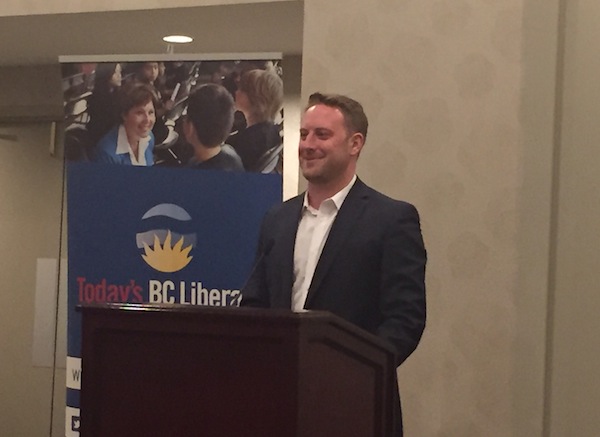
Gabe Garfinkel is running for the B.C. Liberal nomination in Vancouver-Fairview. (photo from Gabe Garfinkel)

Gabe Garfinkel says he has the combination of youth and experience that makes him an ideal candidate for the B.C. Legislature.

Garfinkel recently announced his candidacy for the B.C. Liberal nomination in Vancouver-Fairview. The 31-year-old former assistant to Premier Christy Clark added that representing the Jewish community is an important part of his reason for running.

Garfinkel attended Vancouver Talmud Torah elementary (as did both his parents) and Prince of Wales secondary before obtaining a BA in political science at the University of British Columbia. During his time at UBC, he did a semester at Hebrew University and says Middle East issues have long been an area of interest.

His first job after university emerged out of a volunteer position. The Canadian Jewish Political Affairs Committee (CJPAC), for which he had volunteered as a student, hired him as outreach coordinator, based in Toronto. CJPAC is a national, independent, multi-partisan organization that aims to engage Jewish and pro-Israel Canadians in the democratic process and to foster political participation.

“I was the guy that was going into community groups, to community centres, to high schools, to summer camps, to campuses, to Hillels across the country and essentially telling them why they should get involved in politics,” Garfinkel told the Independent. “I was selling a few different programs, but what I was really doing was [building] up an army of hundreds of Jewish community members across the country that were in most cases in high school or university and giving them a voice and a vehicle to represent their own community’s interests in government.”

When he returned to Vancouver, Garfinkel followed his own advice. He walked into the campaign office for federal Liberal candidate Joyce Murray and volunteered. After the election, the MP hired Garfinkel to work in her constituency office.

“I saw firsthand how hard an MP can work and how an MP can make a difference in their constituents’ lives,” he said.

Garfinkel volunteered on the successful campaign of Margaret MacDiarmid, who was elected MLA for Vancouver-Fairview in 2009. She went on to serve in several portfolios in the B.C. Liberal government, including labor and education. MacDiarmid was defeated in 2012 by New Democrat George Heyman, who Garfinkel will be up against if he wins the Liberal nomination. (The Independent will invite all Jewish candidates in the election, which includes Heyman, to be interviewed and profiled.)

Garfinkel also volunteered on the leadership campaign of Clark, who went on to become premier.

“I was drawn to her because I saw the energy and charisma she could bring and the care she had for people,” he said. “I helped put together her youth campaign and young professional team. I played a small role in helping her win and it was great.”

When Clark became premier, Garfinkel served as executive assistant and advisor to several cabinet ministers before being called to the premier’s office and offered a job by Clark. He was the premier’s executive assistant until the 2012 election, when he left government to work for the party. He was on the campaign staff that oversaw the B.C. Liberals’ stunning come-from-behind victory that gave Clark her first full four-year mandate. His role in the election was working with multicultural communities and media.

After the election, Garfinkel returned to the premier’s office as director of community and stakeholder relations.

“The government does so many things and my job was to bring along stakeholders in all these decisions, and making sure that the decisions were being made not from the lens of the government, but from the lens of the people they affected the most,” he said.

In 2013, Garfinkel joined FleishmanHillard, an international public relations and marketing firm. He developed a particular interest in health policy and worked for health-care clients in the nonprofit and private sectors at FleishmanHillard and, since leaving that company, as a self-employed consultant.

He also has gained experience in small business.

“Just over a year ago, I realized that my dad’s business needed some help,” he said. Both his parents, Sandi Karmel and Larry Garfinkel, are social workers, but his father left social work to start Native Northwest, which creates products featuring the works of local First Nations artists.

“It’s been a really great experience helping him run a small business,” he said. “I have such a great time because you never know what’s going to hit you every day and you never underestimate the sheer amount of small hurdles you need to get by in running a business.”

While his new candidacy has required him to take a leave, Garfinkel was until recently on the allocations committee of the Jewish Federation of Greater Vancouver and also sat on the Local Partnership Council for the Centre for Israel and Jewish Affairs. He still volunteers for CJPAC, speaking to groups, usually young people, about the political process, and he is a longtime volunteer for Cystic Fibrosis Canada.

“It’s been important to me because we have a very close family friend who has the disease and for years I’ve been fighting internally for government to help make changes, and now I took that advocacy outside of government,” he said.

In addition to general awareness, advancing the cause of cystic fibrosis includes promoting organ donation and access to life-saving medications.

“Christy Clark’s government has been able to make a lot of positive changes on the organ registry,” Garfinkel said. “There are more avenues for people to sign up and be an organ donor.… It’s a lot easier now than it used to be.”

Nonetheless, he said, there remains a long way to go to increase the number of donors.

Garfinkel was formed by the Jewish community, he said, and has been deeply influenced by his grandmothers. While both his grandfathers passed away when he was young, Garfinkel cites his grandmothers as models of community engagement. His late paternal grandparents, Marsha and Israel (Izzy) Garfinkel, were members of Schara Tzedeck, while his maternal grandparents, Ethel and the late Jonah (Johnny) Karmel, were Beth Israel members. Ethel Karmel was a leader in the preservation of the Cambie Heritage Boulevard, lobbying successfully to have the Cambie Skytrain route go underground, and is an artist with an upcoming exhibition (see Community Calendar for details).

His grandparents’ and parents’ models of community service, he said, helped make him the person he is.

“You understand the interest of looking out for other people, you understand the importance of tikkun olam,” said Garfinkel, who also credits summers at Camp Miriam for building his Judaism and social conscience.

In his race for the nomination, Garfinkel said he is relying on his experience drawing people into the political sphere.

“My background’s in engaging people into the political process so they can have a voice,” he said. “In many cases, it’s been the Jewish community and young people, but also multicultural and new Canadians, where there is some kind of disconnect between them and the government that’s supposed to represent them.”

His candidacy is resonating in particular with young people, he said. In many cases, young people are asking him basic questions about the political system, which indicates to Garfinkel that they feel alienated from it.

“People don’t feel represented,” he said. “First and foremost, I want to make sure people have a voice and I want to fight for them in Victoria.”

His own experience is similar to that of many his age, he added.

“I have a small apartment in the riding and I’m afraid that a bigger place nearby is already out of reach,” he said. “I see transportation and transit as really important because it allows people to spend more time with their families and it protects the environment.”

The riding of Vancouver-Fairview runs from False Creek to 33rd Avenue between Main and Granville, and also includes areas west of Granville from Cornwall to Fourth Avenue east of Burrard, and east of Arbutus from 4th to 16th.

“I think there’s a general consensus that this is a great neighborhood to live in, but it’s not always easy to live here,” said Garfinkel. “If you look at things like housing affordability, it’s something that affects a lot of people here and a lot of future generations as well.”

The election is slated for May 9, 2017, but first Garfinkel has to win the B.C. Liberal nomination. The date for the nomination meeting has not been set and, therefore, neither has the deadline for joining the party in order to vote at the meeting. Garfinkel expects the meeting to be called for January, which means the membership cut-off will be in the coming few weeks.

He believes his comparatively young age combined with his experience in government is good preparation to be an MLA.

“I thought maybe I should wait until I’m older and have more money in my bank account and a longer resumé, but I realized that I have energy now, I have the desire now and have some really great experience I can bring to the table,” he said. “I’m ready.”

Format ImagePosted on December 2, 2016December 1, 2016Author Pat JohnsonCategories LocalTags politics, provincial election
Finding community on coast

Finding community on coast

Members of the Gibsons-area Jewish community gather for a pre-Rosh Hashanah dinner. (photo by Lehe Spiegelman)

Young Jewish families are looking for affordable living, just like everyone else. What they are finding is that the Lower Mainland just doesn’t provide opportunities for family-work-life balance, so they are seeking it further afield. One such frontier is the Sunshine Coast. Close enough to commute into Vancouver via ferry if necessary for work, the communities of Gibsons, Roberts Creek, Sechelt and beyond are looking more appealing than ever before.

There is a real draw for Jewish community members right now: a growing community of young Jewish families interested in Jewish education and community events. This fall, Rebecca Porte and Lehe Spiegelman started a weekly Hebrew school for their children and other interested families. They have also been community-building though Shabbat dinners and other activities that include the range of generations.

A native of Vancouver, Porte attended Vancouver Talmud Torah and Congregation Beth Israel growing up. When work took her to Gibsons, she fell in love with the community. “It’s like being in a Jewish community but in a different way. It’s intimate living in a small community,” she said.

Porte’s husband, Steve, grew up in Oyama, B.C., a very small community, so the transition to Gibsons was natural for him. Career advancement drew them back to Vancouver for a few years, where their young daughters also attended VTT. Upon returning to Gibsons, the family felt something was missing: the girls needed more formal Jewish education and community.

Spiegelman has three children and lives on a farm close to Gibsons. She and Porte became friends and decided to work together to bring a stronger sense of Jewish community to the Sunshine Coast.

“We wanted to make something happen,” Porte told the Independent. “We started by created an avenue to Jewish education for our kids – it’s always about the kids, right?”

photo - Teacher Corin Neuman with students Maya, Sahra, Sarra and Ocean
Teacher Corin Neuman with students Maya, Sahra, Sarra and Ocean. (photo by Lehe Spiegelman)

Together, Spiegelman and Porte secured a teacher, Corin Neuman, who travels to Gibsons from Vancouver for weekly lessons with 10 children from six different families. Neuman travels every Thursday afternoon to work for 3.5 hours with individuals and small groups at different levels. The focus is on holidays and culture, some children speak Hebrew at home and others are just beginning to learn.

A big challenge of this program is cost. To ensure that this Jewish educational experience is accessible for all families who want to participate, Porte and Spiegelman are subsidizing the lessons themselves.

“We have a $90 shortfall each week,” said Porte. “We’ve applied for a grant from [Jewish] Federation and are looking for other grants … but because we’re really just trying to get it going, we’ll cover the costs for this year.”

Porte added that Spiegelman is an awesome teammate in this venture, not only in her financial generosity but also her hospitality.

While education is the foundation of a communal experience, food is another crucial part of being Jewish together. Spiegelman opened her home for the first two Shabbat dinner initiatives the duo planned. The first dinner, which took place just before Rosh Hashanah, had more than 30 people and included challah-baking beforehand with the kids. On Nov. 18, they hosted a second dinner, with a similar number of participants, although not all the same people. The duo’s next plan is to have a Chanukah party that includes older members of the Jewish community who have been on the coast for years.

“When we first came to Gibsons, before we had kids, Steve taught private guitar lessons. It is kind of funny: all of the Jewish parents in Roberts Creek had their kids doing guitar lessons, so we were invited to things back then,” said Porte.

“I know there have been Jews who have been connected to each other on the Sunshine Coast for many years,” she added. “What we’re doing is building a network of younger families, creating a hub as well as regular Jewish education. I’m curious to know how many Jews are on the Sunshine Coast – I have no idea! We know right now there are enough to have a Jewish network, enough people for our kids to sing a Jewish song together and do some Israeli dancing. It’s important for us because it’s good for the kids.”

For more information on how to connect with this blossoming community, e-mail Porte at [email protected].

Michelle Dodek is a Vancouver freelance writer and community volunteer who tries to get to the Sunshine Coast with her family as often as she can, weather permitting.

Format ImagePosted on December 2, 2016December 1, 2016Author Michelle DodekCategories LocalTags Judaism, Sunshine Coast
Strength in numbers

Strength in numbers

Left to right, Yael Rubanenko Horwitz, Wendi Klein, Debbie Jeroff and Lisa Pullan at Choices on Oct. 30. (photo from Jewish Federation of Greater Vancouver)

For the 12th year in a row, hundreds of women of all ages gathered to celebrate the choice they made to strengthen our community through tzedakah at this year’s Choices event. Co-chairs Debbie Jeroff, Wendi Klein and Yael Rubanenko Horwitz and their committee worked for months to make the event a success, and brought the room to life with their chic black-and-white theme.

“Each of us [came] with our own story, history, talents and tragedies,” said Lisa Pullan, chair of women’s philanthropy for the Jewish Federation of Greater Vancouver annual campaign, as she addressed the packed ballroom at Congregation Beth Israel on Oct. 30. “But what unites us is the choice that we have made to stand together in support of our Jewish community.”

With more than 400 women in the room, including 36 first-time attendees, Pullan declared that “there is definitely strength in numbers.” Case in point is the more than $2,064,000 that was raised through women’s philanthropy last year, accounting for 25% of the 2015 Federation annual campaign’s record $8.3 million total. “Together,” Pullan remarked, “we are making a lasting impact on the community that we love.”

A highlight of the event every year is the inspirational speaker, and this year’s keynote speaker, Talia Levanon, was no exception. As director of the Israel Trauma Coalition (ITC), she and her team provide trauma care and emergency preparedness and response to affected communities in Israel and around the world. ITC is a global leader in providing aid and support to local professionals working in the field in crisis zones.

“Seeing how the ITC social workers in crisis zones have to work through their own traumas to help others was particularly powerful,“ said Pullan. “Talia showed a video in which one of the ITC workers was talking to a client on the phone and had to talk her through a rocket firing, while simultaneously getting out of her own car, lying on the ground and dealing with it herself. It helped us understand in a visceral way the trauma that Israelis experience.”

Community member Stephanie Mrakovich also spoke at the event, sharing the moving story of how her family discovered their Jewish roots and how she came to find her place as a leader in our community. She shared her personal and touching account of her dying grandmother’s revelation of the family’s Jewish heritage. Her remarks can be found at jewishvancouver.com/stephanie-mrackovich-choices-speech.

Choices is the signature campaign event for women’s philanthropy. While the speakers and the theme change each year, what stays the same is the focus on the great work in the community that is made possible by women’s commitment to the mitzvah of tzedakah. To donate or for more information on the annual campaign and the services and organizations it helps fund, visit jewishvancouver.com.

– From e-Yachad, published by Jewish Federation of Greater Vancouver

Format ImagePosted on November 25, 2016November 23, 2016Author Jewish Federation of Greater VancouverCategories LocalTags annual campaign, Jewish Federation, philanthropy, women
Rower turns to apps

Rower turns to apps

Matthew Segal (front, facing the camera) and his teammates at the Royal Henley Regatta in England. (photo from Matthew Segal)

Matthew Segal was an all-round athlete until the age of 15, when he found his one true love: rowing. He fell in love with the sport while he was a student at St. George’s School in Vancouver and followed it to Yale, where he rowed for the university’s lightweight varsity rowing team. In recent months, Segal, 22, the grandson of Vancouver icon Joe Segal, returned to Vancouver after graduating with a bachelor’s degree in economics from Yale. His most memorable times at school were spent rowing, specifically in the boat’s coveted position of stroke seat.

“Coaches look for a rower’s rhythm, length and the reliability of their endurance when they select the stroke seat,” Matthew explained to the Independent. “It was an honor to fill that role but I think the stroke takes too much of the credit. The success we had is attributable to every single guy on the boat.”

Segal’s father, real estate developer Lorne Segal, said he believes his son has been the only Jewish stroke of the Yale Varsity boat since intercollegiate sport began in the United States. While rowing began at Yale before 1852 and was the first collegiate sport, Lorne Segal said, “The first U.S. intercollegiate sport was a rowing race between Harvard and Yale in 1852; prior to that, Yale would simply race internally. So, the entire intercollegiate sport system started in the U.S. with the Harvard-Yale race, which has become one of the most famous annual races.”

photo - Matthew Segal at graduation
Matthew Segal at graduation. (photo from Matthew Segal)

Segal’s team had an undefeated regular season in 2016 before it went on to compete in the Eastern Sprints, a race against rowing teams of the top 18 schools in the United States. When they won the Eastern Sprints, they were invited to race in the prestigious Royal Henley Regatta in England, where they competed against 72 boats and were the only lightweight team to make it to the semifinal.

Lorne and Mélita Segal traveled to England to see their son compete. “They were racing the Cornell heavyweights who were, on average, 35 pounds heavier. It was a real David and Goliath battle!” said the proud father.

As he reflected on his final season on the rowing team, Segal said it was “one of the best seasons Yale ever had.” No stranger to winning, Segal also set two world records during the winter season, when he and his team were training indoors on ergometers: in the lightweight category for the 500-metre distance and for a one-minute test.

Now back at home and focusing on his career, Segal’s body is adjusting after being used to a rigorous schedule that saw him training 11 times a week. “I have different priorities right now but I’ll always hold rowing close to my heart,” he said.

These days, his attention is keenly focused on a series of mobile apps he’s developing with his company, Lipsi Software Development Inc.

Lipsi is an anonymous messaging app geared at high school and college-age kids that facilitates interactions that might not otherwise occur. “It’s supposed to be a fun platform for approaching people under the veneer of anonymity,” he explained. Another project is a gift-giving app that facilitates random acts of kindness by allowing givers to send recipients a small gift via text message.

In both of these endeavors, Segal is the mastermind behind the ideas, concepts, app layouts and legalities, but he has outsourced the technical component to programmers he describes as “some of the most brilliant people I know.”

Coming from a family such as his, you might think Segal is under extraordinary pressure to succeed.

“It’s always lurking in the back of my head that I need to try and live up to my dad and grandfather’s achievements,” he admitted. “In my life, I’ve tried to focus on the things that have meant the most to me, pursuing them to the highest level possible. And my parents have always been very supportive with regard to anything I’ve pursued. They’ve never told me I need to follow a certain career path, they’ve just told me to do what I do, and do it well. I think that’s the best approach in life.”

Lauren Kramer, an award-winning writer and editor, lives in Richmond. To read her work online, visit laurenkramer.net.

Format ImagePosted on November 25, 2016November 23, 2016Author Lauren KramerCategories LocalTags apps, high-tech, rowing
Jewish view of afterlife

Jewish view of afterlife

Rabbinic Pastor Simcha Raphael will be a scholar-in-residence at Congregation Or Shalom for a Shabbaton Nov. 25-26. (photo from Simcha Raphael)

Later this month, Congregation Or Shalom is hosting a Shabbaton featuring Rabbinic Pastor Simcha Raphael, a bereavement counselor and expert in Jewish beliefs and sacred practices around death and the afterlife.

Founding director of Da’at Institute for Death Awareness, Advocacy and Training, Raphael also has a psychology practice specializing in grief counseling and bereavement support, and is an adjunct assistant professor in the Jewish studies department of Temple University in Philadelphia. While in Vancouver, he will participate in various educational activities at Or Shalom, sharing observations from his decades-long study of related Jewish wisdom and customs.

Raphael’s interest in the afterlife began in personal experience. When he was 4 years old, his Bubby Mina died. As was common for children at the time, he did not attend the funeral or shivah, but he was told that she had “gone to heaven.” In his young mind, this meant she was still alive and accessible and, for years afterward, he found comfort in talking to her.

Years later, when the rabbi was 22, a good friend died in a car accident. Heartbroken, Raphael found that he had a continued sense of his friend’s presence. This experience, together with his childhood memories of talking to his grandmother, came together as both a question and an inspiration. Raphael was already studying psychology and world religions – he turned his focus on what Judaism says about the afterlife.

Then, as now, many Jews and non-Jews wrongly believed that Judaism does not have anything to say about the afterlife. But, as Raphael investigated the textual tradition, he found that the Torah, Talmud, kabbalistic writings and Jewish folklore all painted a very different picture.

“In the world of the Chassidim, the world of the Ashkenazi shtetl, there was no question about the reality of the spiritual realms and their interaction with this world,” Raphael told the Independent.

As many Jews eagerly embraced modernity, these traditions were suppressed or forgotten. With the encouragement of his mentor, Reb Zalman Shachter-Shalomi, Raphael undertook to unveil these traditions for modern Jewry. In his now-classic Jewish Views of the Afterlife, published in 1994, Raphael provided a comprehensive discussion on these issues for a popular audience. A 25th anniversary edition of the work with a foreword by Arthur Green is expected in 2019.

Raphael has found that traditional rituals and beliefs around death can have therapeutic value, whether those dealing with these transitions believe in a tangible afterlife or not. “For example,” he said, “traditionally it is believed that the soul stays behind for seven days after death, preparing to leave. Mourners can be encouraged to take this time to say things they wished to say to their loved one, whether they literally believe their words are heard or not. I have found that this practice has great value for people.”

At the upcoming Shabbaton, Raphael will share rituals like this one, as well as explore the rich traditional lore Judaism possesses around death and the afterlife.

Raphael’s teaching program at Or Shalom runs Nov. 25-26 and is called Judaism and the Mysteries of Life, Death and the World Beyond. He will address what the Hebrew Bible, Jewish custom and the kabbalah can tell us about death and dying. On the Saturday, at 7 p.m., he will offer a community talk called Twilight Between the Worlds: Jewish Ghost Stories, which will take place at Celebration Hall at Mountain View Cemetery.

For more information about and registration for the Shabbaton weekend, visit orshalom.ca/shabbaton2016. Admission to the Saturday night cemetery event is free but seating is limited, so an RSVP is requested to orshalom.ca/jewishghoststories.

Matthew Gindin is a freelance journalist, writer and lecturer. He writes regularly for the Forward and All That Is Interesting, and has been published in Religion Dispatches, Situate Magazine, Tikkun and elsewhere. He can be found on Medium and Twitter.

Format ImagePosted on November 18, 2016November 15, 2016Author Matthew GindinCategories LocalTags afterlife, death, ghosts, Judaism, Or Shalom

Letters connected families

A trove of letters between Jewish children and their parents separated by the Second World War and the Holocaust gives insight into the way families communicate in times of crisis.

Debórah Dwork, Rose Professor of Holocaust History and director of the Strassler Centre for Holocaust and Genocide Studies at Clark University in Massachusetts, has been studying the letters. On Nov.  1, she delivered the Kristallnacht Commemorative Lecture, an annual event presented by the Vancouver Holocaust Education Centre in partnership with Congregation Beth Israel.

During the Second World War, postal service between belligerent or occupied countries ceased, but an individual in neutral Switzerland could convey messages between people in countries on either side of the conflict. Largely by happenstance, Elisabeth Luz, a Swiss woman living outside Zurich, helped many Jewish families maintain contact. After Luz, an unmarried woman who became known to many as “Tante Elisabeth,” had forwarded messages for a few families, word of mouth led to unsolicited requests from children who had been sent to presumed safety in France, Belgium, the Netherlands and Britain.

“News about the aunt who forwarded letters spread quickly and Tante Elisabeth gained many nieces and nephews,” said Dwork. “She soon became their counselor and confidant, although nearly none ever met her.”

“Please pardon us that we write you without having permission to do so,” wrote Robert Hess and his brother. “Adolf is 12 years old and I am 14 years. We live in an OSE [Jewish philanthropic organization] home and have been selected for immigration to America. We write to you because we would like to write to our mother and have no other possibility. Please write our mother that she can write us via you. We must ask our mother permission to travel to America.… Can you also send us a photo of her?” The boys provided their address, their mother’s address in Vienna and a photograph of themselves.

“She did not disappoint,” Dwork said of Luz, “and they were included in that transport to America.”

Although she was poor, Luz sent writing paper, envelopes, international reply coupons and reply-paid postcards to the children and parents.  She transcribed each letter, believing this would reduce the likelihood of attracting the attention of wartime postal censors, and kept the original. After Luz passed away in 1971, the original letters were discovered by her nephew, who passed them along several years later to Dwork, who has written about children’s experiences in the Holocaust.

At the Kristallnacht commemoration, Dwork shared stories and correspondence of several families, including Wilhelm and Adele Halberstam. In 1939, their daughter Kathe and son-in-law Heinrich Hepner obtained visas for themselves and their three children and eventually made their way to Chile.

“Wilhelm and Adele decided not to emigrate,” Dwork said. “They stayed in Amsterdam with their son Albert. Thus began the parents’ long-distance relationship with their daughter and grandchildren, which depended upon letters.… They sought to weave a web of letters, to hold each other tightly and to assure each other that, notwithstanding the pressures of their radically changed circumstances, their relationships endured.”

Adele Halberstam wrote to her daughter: “I really live from letter to letter.”

As the occupation continued, the parents grew increasingly silent about developments at home, mentioning nothing of the expanding repression they were experiencing, including the imposition of the requirement to wear the yellow star.

“Out of consideration for you, I will not allow my pen to overflow with what fills my heart,” the mother wrote her daughter. “Why should you become as sad as I am?”

Regular mail service between Europe and Chile took longer and longer, then eventually ceased. The family came to rely on the Red Cross, which conveyed messages of 25 words or less. This limited means of communication continued after the Halberstams were deported from Amsterdam to the Dutch transit camp of Westerbork.

“The pattern of Adele’s messages remained consistent,” said Dwork. “Little discussion of the hardship, humiliation or fear and always an emphasis on family ties, love and longing.”

Eventually, some truths could not be withheld. An abrupt Red Cross message told the Hepners of Wilhelm Halberstam’s death by heart attack. Adele and Albert were deported to Auschwitz on Nov. 16, 1943. Adele was murdered on arrival. Albert survived until March 1944.

In another case, a son shared with Luz his fears for his parents’ survival, but did not convey that fear in the letter to his parents. In reply, the mother, writing from the Warsaw ghetto, wrote only of her yearning for her children and not of the horrors she was experiencing.

“Her last letter, written in November 1942, said not a word about the mass deportations to Treblinka that the Germans had just unleashed on the ghetto,” said Dwork.

Luz also helped Hanna Ruth Klopstock, another of the children in the care of OSE, correspond with her mother Frieda and brother Werner in Germany. When the girl had not heard from them in some time, she wrote to Luz expressing her fears.

“Every day I tell myself, today I must certainly get a letter from Mutti. And still nothing. I do not know what to think about this silence,” she wrote. “Maybe the letters have been lost. I hope so.”

The girl’s fears were well-founded, said Dwork. By the end of 1942, Werner had been sent to a forced labor camp in Germany, detailed to heavy agricultural work. The mother wrote to Luz: “I foresee nothing good and must hold myself together.” In the letter, Frieda Klopstock thanks Luz for everything she had done and makes a final request that Luz help and console Hanna Ruth when the inevitable occurs.

“Frieda was deported to Auschwitz six weeks later,” said Dwork. Luz and Hanna Ruth learned this news in a letter from Werner, who himself would follow his mother to the death camp a month later. Luz assumed the worst when a letter to Werner in the labor camp was returned with the address crossed out and the words “Zuruck” and “retour, parti” – return to sender, addressee departed – written on the envelope.

In a shocking twist though, Dwork added: “Remarkably, this is not the last sign of life from Werner.”

A postcard from Werner came some time later.

“Written in block letters,” Dwork said, “his message ran, ‘Dear Tante Elisabeth and dear Hanna Ruth, I inform you today that I am healthy and remain here for the future. Sadly, I have no news from you but I hope you are well. For today, very hearty greetings from Werner.’”

The message was just six lines, Dwork noted, not the full 10 permitted.

“What we know now is that the Nazis, too, recognized the importance of letters,” she said.

In his Nuremberg testimony, a Nazi official described the letter program of the Reich Security Main Office. Jews brought to extermination camps were forced, prior to being murdered, to write postcards that were then mailed at long intervals, in order to make it appear as though these senders were still alive. “And thus,” said Dwork, “letters that seemed a sign of life served as markers of death.”

Dwork’s remarks were preceded by a candlelight procession of survivors of the Holocaust. Cantor Yaacov Orzech chanted El Maleh Rachamim, a memorial prayer for the martyrs. Heather Deal, deputy mayor of Vancouver, read a proclamation from the city. Nina Krieger, executive director of the Vancouver Holocaust Education Centre, introduced Deal and the keynote speaker. Beth Israel’s Rabbi Jonathan Infeld thanked Dwork and reflected on his own grandparents’ history of relying on letters from Europe to learn the fate of family left behind.

In his opening remarks to the program, Prof. Chris Friedrichs compared the situation of refugees today, who are fortunate, in many cases, to have access to technology that allows instant communication with loved ones left behind, while also acknowledging parallels across time.

“Nothing we say or do can bring back to life the six million Jews who perished, along with so many millions of others, during the darkest six years of the 20th century,” Friedrichs said. “But now, in the 21st century, the world is still full of desperate human beings longing for rescue or hope. There are things we can do to help bring families together, or to help build bridges of contact and connection. What we learn from the past must ever be our guide for the present and the future.”

Pat Johnson is a communications and development consultant for the Vancouver Holocaust Education Centre.

Posted on November 18, 2016November 15, 2016Author Pat JohnsonCategories LocalTags Holocaust, letter-writing
A forum on rethinking aging

A forum on rethinking aging

Gyda Chud of Jewish Seniors Alliance with forum speaker Dan Levitt of Tabor Village. (photo by Binny Goldman)

On Sunday, Nov. 6, 175 people gathered at the Peretz Centre for Secular Jewish Culture for the Jewish Seniors Alliance of Greater Vancouver’s fall symposium, featuring Dan Levitt and his unique approach to residential living.

Ken Levitt, president of JSA, spoke briefly about the seniors organization, after which Gyda Chud, co-convener, greeted the crowd and introduced the Three Amigos, Yom Shamash, Ian St. Martin and Steve Glass, a musical trio who urged attendees to join in as they sang and played songs which included “Bei Mir Bistu Sheyn” – and Chud thanked the musicians with “bei undz bistu sheyn,” “in our eyes you are nice.”

Shanie Levin introduced Levitt.

“In continuing the theme of our Empowerment Series, ‘Thriving until 120,’ we have invited Dan Levitt, executive director of Tabor Village, an elder-care facility affiliated with Fraser Health Authority,” she said. “Levitt is also an adjunct professor in the gerontology department at Simon Fraser University, whose insights and leadership on seniors’ care are sought after in Canada, the U.S., Europe and Asia.”

Levitt challenges societal attitudes towards aging by introducing new approaches to residential living. The goal of his talk – Rethinking Aging: Not the Traditional Nursing Home Grandma Lives In – was to start a conversation that reframes elderhood as an exciting stage in human growth and development.

Levitt would like people to discard the stereotypes of aging that have been emphasized by the media. He wants people to remove the word “still” when praising someone who looks good at 75, to refrain from showing surprise at the ability of someone to work at 80, and for people to maintain high expectations as they age.

He cited an experiment in which each of the residents on the first floor of a seniors residence were given an African violet to water, while second-floor residents were told of a doll that was left in the care of the staff and that, together, they had to make sure it didn’t get lost. On follow up, it was discovered that those who were given the individual responsibility to care for the plants thrived, requiring less medication, and their moods were uplifted, whereas those with the collective responsibility did not fare as well.

Levitt said the idea of individual responsibility has been introduced at Tabor Village and the residents are flourishing, as they expect more of themselves and feel increased self-worth. Levitt mentioned one occasion, where a resident remembered her recipe for pancakes and proceeded to make pancakes from scratch for 20 diners. She then approached Levitt, saying: “You didn’t think I could do it, right?” He had to agree, as he looked around the spotless kitchen. She had not only cooked and served the food, she had cleaned up afterwards.

Statistics show that an average of nine medications are given to seniors in British Columbia. Some of these are chemical restraints – anti-psychotic medications – just to alter behavior and make the residents easier for staff to deal with.

One alternative method that has proven effective is music therapy, said Levitt. This therapy enables non-verbal residents to sing their thoughts when speech has failed.

Alive Inside is an experiment by Dan Cohen, which introduced iPods into a seniors home. Listening to the music, each with their own earphones, non-verbal residents experienced an unprecedented improvement. They readily responded to familiar music, singing along. Some were even able to hold a conversation afterward, saying the music gave them hope and happiness inside. Subsequently, a program called Music and Memory was instituted.

In addition, many residences have introduced computer classes, which benefit many residents.

Breaking old policies is indeed difficult but must be strived for, said Levitt. There are many books, videos and films on the subject of dementia and the stigma that is often associated with it. Still Alice and Glen Campbell: I’ll Be Me are two examples.

Levitt listed off some “super seniors”: one who had climbed Mount Kilimanjaro at age 90; another who golfed and had come close to beating the pros at age 90; and Olga Kotelko, who ran races, breaking records and winning medals into her 90s (she died in 2014).

There are many experimental and successful programs being carried out, said Levitt. One is Hogeweyk in Amsterdam, a village built and devoted to seniors with dementia. A small Ontario town, Penetanguishene, has recreated a village similar to Hogeweyk and relatives of the residents are reportedly pleased with how happy those living in this community are; residents are able to shop and walk to the market, for instance. In Florida, Miami Jewish Health Systems is seeking to create a similar program – Green House Project focuses on helping companies and individuals convert or build residential homes where every room would have a shower. These residences, which exist in several states in the United States, can provide a high level of care for those who do not wish to be in a nursing home.

Levitt ended his talk with a quote from Margaret Mead: “Never doubt that a small group of thoughtful, committed citizens can change the world. It is the only thing that ever has.”

Chud thanked Levitt for teaching the audience to think differently, and noted that the success of the event was made possible by the dedicated help of JSA’s office staff. A video taken by Karon and Stan Shear can be found at jsalliance.org.

Binny Goldman is a member of the Jewish Seniors Alliance of Greater Vancouver board.

Format ImagePosted on November 18, 2016November 15, 2016Author Binny GoldmanCategories LocalTags aging, JSA, residential living, seniors

Campaign continues

“Let’s make it easy, not just to be Jewish, but to feel part of the community. We have to make it easy and we have to find ways of connecting,” Alex Cristall told the Jewish Independent in a recent phone interview.

Cristall is general chair of the Jewish Federation of Greater Vancouver’s annual campaign this year. The fundraising effort has so far “been really, really good,” he said, noting “it looks like our numbers are ahead of where they were last year.”

photo - Alex Cristall, general chair of Jewish Federation of Greater Vancouver annual campaign
Alex Cristall, general chair of Jewish Federation of Greater Vancouver annual campaign. (photo from Jewish Federation)

At the centre of the current campaign is the community’s 2020 Strategic Priorities. “We have some key areas that over the next few years we are trying to focus on,” explained Cristall, such as “affordability, accessibility, seniors, engagement and connectivity, and security. And, this year specifically, we have set up a matching program,” so that every new donation and every donation increase is matched, with the funds being allocated to security initiatives, to “set up a good, long-term security plan for the community.”

Bernard Pinsky is the chair of the community security advisory committee, said Cristall, and “they’ve laid out a whole framework of things to get us up to date and to get us more centralized and focused, and to continue on with things we’ve done over the years and improve on them. So, this year we have set up a match[ing program] and I think we are almost at $300,000.”

In addition to the 2020 priorities and the focus on security, donations to the campaign fund social services performed by 40 partner organization, including seniors programs, Jewish education, arts and culture, community building, and youth and young adult services.

“Federation has access to so many different things that are going on in the community and, to help those institutions every year, it takes a lot of [fundraising] pressure off them,” said Cristall. “The major selling point is the reach the Federation has … your dollar touches so many different aspects” of the Jewish community.

“In terms of the number of people who benefit, it is in the thousands,” said Becky Saegert, Federation’s director of marketing and communications, in an email interview.

“We want to make being part of our community easy for our constituents and our community members,” reiterated Cristall.

The community has valuable capital infrastructure in the Oak Street area, he said, “but engagement and accessibility … for underserved areas – that is a huge part of our future. And that has to grow more and more. We have to be very creative.”

This outreach is part of the 2020 plans, he said, “for example, supporting White Rock JCC, supporting Burquest JCC.”

“With regard to the regional communities,” added Saegert, “the campaign currently provides funding to five different regional community organizations. Our Regional Communities Task Force, which is currently exploring ways to enhance Jewish community life outside of Vancouver, will be presenting their recommendations to our board in February 2017. We anticipate that the recommendations will increase funding for a number of initiatives in the regional communities. This past year, with the increase in our overall campaign result, we were able to increase our funding to all of our regional community organizations and fund some new initiatives, including a very exciting partnership between Richmond Jewish Day School and Congregation Beth Tikvah.”

While this year’s campaign is well underway, Cristall said, “We cannot have enough canvassers.… We are probably the easiest organization to get involved in. If someone wants to come on and be a canvasser, we’ll give them training. I hosted a meeting at my house to train people and to welcome people…. It’s a very welcoming environment and we welcome all comers to join.”

To participate in or contribute to the campaign, call the Federation office at 604-257-5100 or go to jewishvancouver.com. For more about Federation’s 2020 priorities, visit ourcommunity2020.jewishvancouver.com.

Zach Sagorin is a Vancouver freelance writer.

Posted on November 11, 2016November 11, 2016Author Zach SagorinCategories LocalTags campaign, Jewish Federation, security, tikkun olam

Okanagan’s New Year

The Okanagan Jewish community celebrated the High Holidays with spiritual leaders Rabbi Larry Seidman and Rabbi Linda Seidman from California officiating at the services. The husband-wife team had prepared special pamphlets for everyone in the community to be able to participate.

There was an erev Rosh Hashanah service on Oct. 2, as well as morning services the next day, which were followed by a potluck luncheon. For Yom Kippur, there were also two services, with Kol Nidre on the erev and a day-full of services on Oct. 12, which included a discussion period, Yizkor and a break-fast potluck.

The services were all well-attended and Rabbis Larry and Linda were warmly welcomed to Kelowna and to the celebrations.

Rabbi Larry has a background in research and management, encompassing communications, satellites, aerospace, wind energy and telemedicine. He holds many degrees, as well as being skilled in engineering and management, and has been sought after for presentations. He has given talks around the world.

Throughout his career, he has been dedicated to Jewish practice and study, having served as a lay leader of minyans and Torah study groups, and has continued to pursue both formal and informal Jewish education. A few years ago, he retired from his position as a senior manager in Phantom Works, the research and development organization of the Boeing Company, which has allowed him to increase his engagement in Jewish activities.

He was ordained as a rabbi by the Academy for Jewish Religion, in California, and is a member of the Southern California Board of Rabbis. His practice is dedicated to being a rabbi who combines Jewish tradition with modern thought.

A 2010 ordinee, Rabbi Linda currently serves as a prison chaplain in Orange County, Calif. Donning her uniform and bullet-proof vest, Rabbi Linda, who is certified as a deputy chaplain, works with the county jails, offering counseling and other services to 80 or 90 people per month. “If anybody had told me 10 years ago, when I was an aerospace engineer, that I would be doing this, I would have said ‘in your dreams,’ but life takes funny turns,” she said.

Admitting that she failed at retirement, she said she became interested in the Academy for Jewish Religion, which is a non-denominational rabbinical school, when she heard that it offered a part-time program. She enrolled a year after her husband. Today, in addition to the jail chaplaincy, she serves as the chaplain at a hospice, performs an occasional funeral and leads services and Bible study at a senior living facility.

Rabbi Linda believes that there is “a tremendous amount of security in knowing what to do and when to do it,” and that traditional Judaism meets the needs of some people who are happy and comfortable with their roles. But, she feels that women bring another approach to Judaism. “We see things differently than men,” she said. In other areas, however, such as women’s health and children’s issues, “our concerns are rooted in same values, and there is plenty to unite us.”

* * *

In other recent OJC news, one of the community’s newer members, Philippe Richer-Lafleche, became a bar mitzvah on Oct. 15. Not having had the opportunity to have a bar mitzvah when he was a boy, Richer-Lafleche had looked forward to the special day, which took place after many months of studying under the guidance of OJC’s religious chair, Evan Orloff. The services were followed by a potluck lunch, which included dishes provided by Richer-Lafleche.

* * *

Finally, OJC celebrated Sukkot on Oct. 17 with a mixture of 60 adults and children in attendance. The rains dispersed and the ground dried so that everyone could enjoy the experience of building and decorating the sukkah.

A special thank you to Natasha for organizing crafts, and to the parents who helped construct the sukkah without the help of Google or Siri. The construction was followed by a potluck inclusive of pizza cooked by one of the OJC Golf Classic food sponsors, Mr. Mozzarella Pizza and Wings.

* * *

The Okanagan Jewish Community Centre’s mission “is to work towards building a strong and unified Jewish community in the Okanagan Valley of British Columbia. The OJCC encourages an inclusive atmosphere of understanding and respect amongst Jews of different backgrounds, and maintains cooperative relationships with other regional and national Jewish community organizations. The OJCC also aims to promote a positive and active relationship with the Okanagan community at large.”


Posted on November 11, 2016November 11, 2016Author Okanagan Jewish CommunityCategories LocalTags High Holidays, Jewish life, Judaism, Okanagan

Posts pagination

Previous page Page 1 … Page 145 Page 146 Page 147 … Page 181 Next page
Proudly powered by WordPress