Skip to content
  • Home
  • Subscribe / donate
  • Events calendar
  • News
    • Local
    • National
    • Israel
    • World
    • עניין בחדשות
      A roundup of news in Canada and further afield, in Hebrew.
  • Opinion
    • From the JI
    • Op-Ed
  • Arts & Culture
    • Performing Arts
    • Music
    • Books
    • Visual Arts
    • TV & Film
  • Life
    • Celebrating the Holidays
    • Travel
    • The Daily Snooze
      Cartoons by Jacob Samuel
    • Mystery Photo
      Help the JI and JMABC fill in the gaps in our archives.
  • Community Links
    • Organizations, Etc.
    • Other News Sources & Blogs
    • Business Directory
  • FAQ
  • JI Chai Celebration
  • JI@88! video

Recent Posts

  • Eby touts government record
  • Keep lighting candles
  • Facing a complex situation
  • Unique interview show a hit
  • See Annie at Gateway
  • Explorations of light
  • Help with the legal aspects
  • Stories create impact
  • Different faiths gather
  • Advocating for girls’ rights
  • An oral song tradition
  • Genealogy tools and tips
  • Jew-hatred is centuries old
  • Aiding medical research
  • Connecting Jews to Judaism
  • Beacon of light in heart of city
  • Drag & Dreidel: A Queer Jewish Hanukkah Celebration
  • An emotional reunion
  • Post-tumble, lights still shine
  • Visit to cradle of Ashkenaz
  • Unique, memorable travels
  • Family memoir a work of art
  • A little holiday romance
  • The Maccabees, old and new
  • My Hanukkah miracle
  • After the rededication … a Hanukkah cartoon
  • Improving the holiday table
  • Vive la différence!
  • Fresh, healthy comfort foods
  • From the archives … Hanukkah
  • תגובתי לכתבה על ישראלים שרצו להגר לקנדה ולא קיבלו אותם עם שטיח אדום
  • Lessons in Mamdani’s win
  • West Van Story at the York
  • Words hold much power
  • Plenty of hopefulness
  • Lessons from past for today

Archives

Follow @JewishIndie
image - The CJN - Visit Us Banner - 300x600 - 101625

Category: Life

Add a spinach salad to menu

Spinach may have originated 2,000 years ago in Persia but it is native to central and western Asia. Now widely popular, there are many tasty ways to prepare it. In addition, its health benefits are many, especially if eaten raw, so here are a few recipes for a healthy new year.

MY FAVOURITE SPINACH SALAD
(4 servings)

4 cups fresh, chopped spinach
6-8 halved cherry tomatoes
2 medium, sliced kohlrabi
2 grated hard-boiled eggs

dressing
1/2 tsp minced onion
1 crushed garlic clove
salt and pepper to taste
1/4 tsp sugar
1/8 tsp paprika
dash dry mustard
dash celery seeds
1 tbsp red wine vinegar
1 tbsp + 1 tsp olive oil
1 1/2 tsp water

  1. In a salad bowl, combine spinach, cherry tomatoes, kohlrabi and eggs. Set aside.
  2. In a jar, combine dressing ingredients, close and shake well.
  3. Dress salad just before serving.

CRUNCHY SPINACH SALAD
(4 servings)

4 cups torn spinach
1 cup fresh bean sprouts
1/2 cup sliced and drained water chestnuts
2 chopped hard-boiled eggs

dressing
1/4 cup brown sugar
1/4 cup vegetable oil
2 1/2 tbsp red wine vinegar
2 1/2 tbsp ketchup
1 1/2 tsp Worcestershire sauce

  1. In a salad bowl, combine spinach, bean sprouts, water chestnuts and eggs.
  2. In a bottle or jar, combine dressing ingredients. Cover and shake well to mix.
  3. Before serving, pour dressing over salad and toss.

SPINACH SALAD DRESSING
(This salad dressing recipe is from P.J. Clarke’s in New York, which was founded in 1884. The bar was once a saloon owned by Patrick J. Clarke, an Irish immigrant who was hired in the early 1900s and, after about 10 years working there, bought the bar and changed the name. It has had other owners since then and now has multiple locations.)

1/4 cup fresh lemon juice
1 large egg yolk or 1 tbsp mayonnaise
3/4 tsp salt
1/2 tsp dry mustard
1/4 tsp freshly ground black pepper
1/4 tsp sugar
1 small chopped garlic clove
1 cup olive oil

  1. Blend all ingredients except oil in a food processor until smooth.
  2. With motor running, add oil in a stream and blend. Transfer to a jar, cover and keep chilled until serving.

Sybil Kaplan is a journalist, editor of nine kosher cookbooks (working on a 10th) and a food writer living in Jerusalem. She has written the kosher restaurant features for janglo.net since 2014 and leads weekly English-language Shuk Walks in Machane Yehuda.

Posted on August 27, 2021August 25, 2021Author Sybil KaplanCategories Celebrating the HolidaysTags cooking, recipes, Rosh Hashanah, salads, spinach
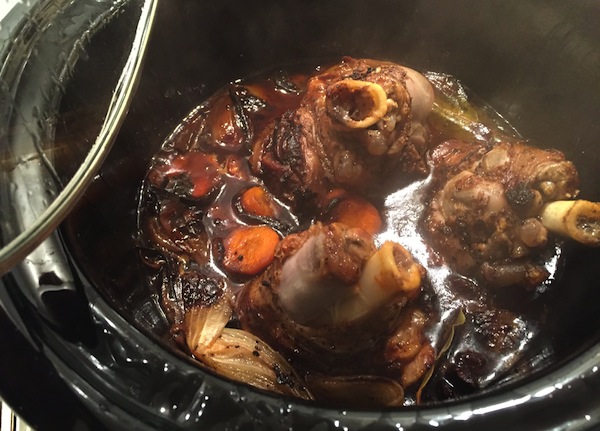
Lamb shanks a savoury dish

Lamb shanks a savoury dish

Lamb is a rich meal, so count on one shank per person. (photo by Arild Finne Nybø)

This year, I plan to stray from my plebian Rosh Hashanah chicken and salmon, and go all in with lamb shanks. Even as I write this column, I don’t know whether or not we’ll be able to gather with family this year for the High Holidays. But, I’m hopeful. And, after spending a year-and-a-half’s worth of Jewish holidays celebrating via Zoom (or on our own), it’s left me remarkably unfazed. We have to eat, after all. It may as well be yummy. As my father always reminded me, “I am the most important guest in my own home!” So, lamb it is.

Being a shockingly bad liar, I feel compelled to come clean right at the get-go. I have never cooked this dish before. My husband Harvey is the lamb expert at our home. But it’s high (chai) time I stretched my culinary balabusta skills. For the record, I am breaking all my own rules, by making a dish that has more than five ingredients, and which looks like it’ll take a good hour or more to prepare. But we’re worth it. The end result will be a smooth, savoury dish with extrastellar depth and gastronomic nuance. Ha! And if you believe those hyperbolic words, I have a bridge to sell you. But, in all seriousness, it’s one of my favourite meals, rich though it may be.

As you know, if you’re a hardcore carnivore like me, lamb is a very fatty meat. As well, it has a distinctive flavour that you either love or hate. There don’t seem to be many fence-sitters when it comes to lamb. Harvey and I position ourselves squarely in the love-it camp. While we don’t eat it often, we consider lamb fancy food, and usually only have it on special occasions. Like Tuesdays. It plays well with rice, couscous, noodles or potatoes, which makes it an equal opportunity meat. And that’s something I admire in my food.

MOROCCAN LAMB SHANKS

6 lamb shanks
coarse salt and pepper to taste
3 tbsp plus 1/4 cup olive oil
1 large onion, finely chopped
6 large garlic cloves, minced
4 carrots, cut crosswise into 1/2-inch pieces
4 celery ribs, cut crosswise into 1/2-inch pieces
2 tbsp packed brown sugar
1 tsp dried thyme
1 tsp ground cumin
1 tsp paprika
1/2 tsp ground cinnamon
1/4 tsp ground cloves
1/4 tsp cayenne, or to taste
1 1/2 cup dry red wine
3 cups beef broth

  1. Preheat oven to 325°F. Season the lamb with salt and pepper.
  2. Heat three tablespoons oil in a heavy pot over medium-high heat. Add the celery, carrots and onion and cook until very soft, eight to 10 minutes.
  3. Add the thyme, cumin, paprika, cinnamon, cloves, cayenne, brown sugar and garlic and cook for three minutes.
  4. Add the wine, then raise heat to high and bring to a boil. Lower heat to medium and add the beef broth. Leave on medium heat while you brown the lamb shanks.
  5. Pour the remaining 1/4 cup of olive oil into a sauté pan. Over medium-high heat, brown the lamb shanks well on all sides.
  6. Transfer the lamb shanks to the roasting pan (or Dutch oven) and pour the braising liquid on top. Cover with a lid or aluminum foil and cook for one hour. Remove the lid/foil and cook two-and-a-half to three hours more, turning the shanks over every half hour until the meat is very soft.
  7. Remove the shanks from the braising liquid and strain the liquid. Skim any fat that rises to the surface, then use the liquid as a sauce.
  8. Serve over rice, couscous or noodles, or with potatoes.

I can say with a fair degree of certainty that this is one of the tastiest lamb dishes I’ve ever had the pleasure of devouring. It’s not exactly summer food, but it’s perfect for fall or winter. If you served it for Rosh Hashanah dinner, you would undoubtedly impress the heck out of your guests. Or whomever you plan to eat with. It’s a labour-intensive recipe, no question about that. But you’ll thank me once the smell comes wafting out of your kitchen and you begin to food swoon.

Like I said, it’s a rich meal, so count on one shank per person. If you’re Israeli, you’ll probably opt to lay it gently on a mountain of rice or couscous, but maybe you’ll go rogue and settle it lovingly on a bed of noodles. We Ashkenazim like our meat and potatoes (a little too much, I’m afraid), so I’ll probably make a side of roasted baby new potatoes. If you go the traditional Ashkenazi route and start with gefilte fish and matzah ball soup, I guarantee you’ll be stuffed to the gills by the time you get halfway through the lamb. But will you stop? I think not. It’s kind of like a marathon … you don’t get halfway through only to say, “I think I’ve had enough.” Oh no, you’ll throw yourself into this Moroccan lamb like it’s a cold lake on a hot day.

As for Rosh Hashanah dessert, if you think anyone will have even a millimetre of space left in their stomach for a little something sweet, think again. I’d say there might even be a vomitorium involved, but we’re not Roman, so … no. Maybe put out some fruit for those who are really feeling gluttonous and want to ring in the New Year with a Gaviscon chaser. It’ll only be a token gesture (the fruit, not the Gaviscon), but you can always have it the next day for breakfast. Mind you, I’m usually so stuffed the following day that I can barely face food until maybe 9 a.m. Decide for yourself. Those little fruit jellies are always a nice touch, and barely take up any room.

Before you start feeling full just reading this, remember that you don’t have to eat every course that’s served during Rosh Hashanah dinner. You’re allowed to beg off the first three and save yourself for the main event. No one will be offended. In fact, probably no one will even notice. Whatever you end up doing for the High Holidays, be healthy, be safe and here’s to a sweet new year full of positive and inspiring adventures. Shana tova u’metuka.

Shelley Civkin aka the Accidental Balabusta, is a happily retired librarian and communications officer. For 17 years, she wrote a weekly book review column for the Richmond Review. She’s currently a freelance writer and volunteer.

Format ImagePosted on August 27, 2021August 25, 2021Author Shelley CivkinCategories Celebrating the HolidaysTags Accidental Balabusta, cooking, lamb shanks, recipe, Rosh Hashanah
Jewish life in Newfoundland

Jewish life in Newfoundland

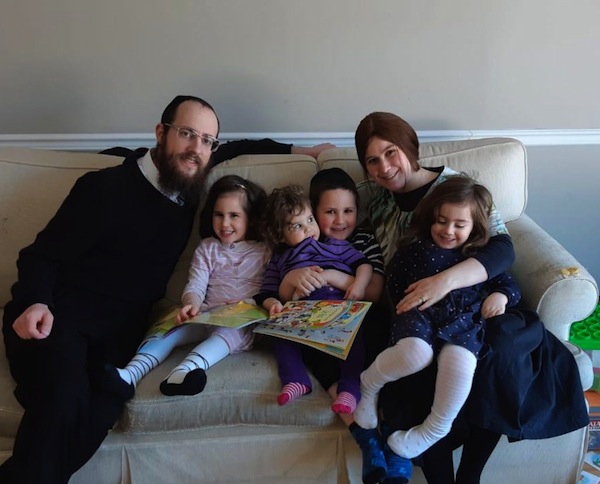
Rabbi Chanan and Tuba Chernitsky and their family before the couple had another baby this past spring. (photo from lubavitch.com)

In the fall of 2019, my husband and I traveled to Newfoundland to take in its beauty and bounty. Both of us had been to “the Rock” for work in previous years but had never had the pleasure of a real holiday in this unique part of Canada. As is always the case with our travels, we were very curious about whether, when and how there may have been Jewish life in this part of the world.

An internet search revealed that Spanish Sephardi traders began arriving in what is now Newfoundland after the English conquest of Eastern Canada in 1761. More than 100 years later, during the 1890s, Ashkenazim – peddlers, tailors, merchants and farmers – escaping Russian and Polish pogroms came to settle there. These peddlers and merchants traveled the island, trading salt fish and textiles. At one time, there was even a small textile industry in St. John’s, which attracted some of these former merchants.

By 1909, the first Hebrew congregation was incorporated. The first free-standing synagogue was built in St. John’s in 1931 but is no longer in use as a synagogue. At its peak, in the early 1970s, about 360 Newfoundlanders self-identified as Jews.

Postwar Jewish life

A 2014 article on melbourneblogger.blogspot.com, called “Canada: A History of the Jews in Newfoundland and Labrador,” speaks about various options proposed after the Second World War by the World Zionist Congress as possibilities for the settlement of Jews while the reestablishment of the Jewish homeland, Israel, was developing. Settlement in the outports of Newfoundland was apparently one of those options.

The same article refers to Robin MacGrath’s book Salt Fish and Shmattes: A History of the Jews in Newfoundland and Labrador from 1770, noting there were many missed opportunities to create a more substantial Jewish presence and contribution to the well-being of all Newfoundlanders in the 1930s and 1940s. One example was the refusal of the Newfoundland government – then ruled jointly by British and local commissioners – to address Newfoundland’s critical shortage of doctors by offering the possibility of immigration to German Jewish doctors who were willing to be housed in isolated fishing ports. The British and local Newfoundland government opposed admission of anyone who was not of British stock. One wonders how different and how much more safe outport life might have been had those who lived in these tiny hamlets had access to such medical support.

Current Jewish life

My research into Jewish connections finally led to the doors of the Chabad rabbi and rebbetzin, Chanan Chernitsky and his wife Tuba, who have made St. John’s their home for the last four years. Rabbi Chernitsky, Argentine by birth, came to St. John’s via Winnipeg, a place to which his family immigrated during one of the many economic declines in Argentina. Tuba Chernitsky is a Winnipegger by birth, raised in a religious family of 11 children. The couple married in Winnipeg, then moved to Montreal, where they spent a handful of years.

Settling in Newfoundland in 2017, with Chabad’s mission to bring Jewish life “to life,” has had its challenges but the Chernitskys – and their five children – have enjoyed a warm welcome from the community at large. Over a Shabbat meal at their home, my husband and I learned that other religious leaders in St. John’s have been generous, as well; for example, offering the rabbi office space and other supports until he can fully establish roots in the community.

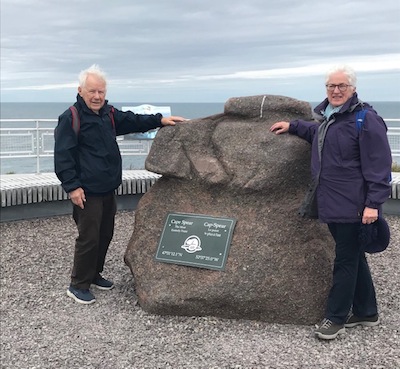
photo - The writer and her husband, Ted Ramsay, at Cape Spear, the eastern-most point of Canada
The writer and her husband, Ted Ramsay, at Cape Spear, the eastern-most point of Canada. (photo from Karen Ginsberg)

The number of Newfoundlanders who self-identify as Jewish is low. The population of Jews living in the province at any one time is partly a function of who metaphorically washes up on its shores – occasionally an academic on loan to Memorial University, a student undertaking a special course of studies, a government official working on a certain project or a businessperson with a unique product or service to develop.

Notwithstanding the relatively small Jewish community, the broader community’s interest in learning about Judaism is lively. During the Chernitskys’ first Chanukah, about 50 people came out to partake in the public candlelighting. The next year, that number trebled – some 150 people came out to get a sense of what Chanukah was all about for their Jewish neighbours.

In 2020, in order to comply with COVID restrictions, Chabad created a drive-in menorah lighting, which generated the largest turnout so far. The Chernitskys gained permission to use a local parking lot, had a radio frequency through which they could keep participants involved in the ceremony and they brought around sufganiyot (jelly doughnuts) to the cars so that families could safely enjoy this part of the celebration.

Both the rabbi and his wife make strong efforts to connect with any Jewish students studying at Memorial University. Before COVID, they also made themselves available to the occasional Jewish visitor who arrived with one of the several cruise lines that make a stop in St. John’s, and they plan to resume the practice as soon as the cruise ships once more operate.

The Chernitskys’ intention is to home school their five children, with Tuba as the teacher. In 2019, the couple started a small Hebrew school for their two eldest children and a few children from another Jewish family. During COVID, in-person activities had to stop but the school is expected to be underway again in September.

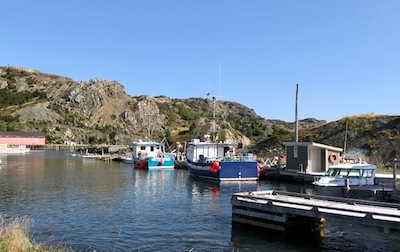
photo - Brigus is a small fishing community located in Conception Bay
Brigus is a small fishing community located in Conception Bay. (photo by Karen Ginsberg)

In addition to home schooling their children, the Chernitskys also try to make sure that their kids attend various events, to mingle with other children and gain an appreciation for the history and culture of their new home.

The rabbi and his wife are planning for the future. A successful online fundraising activity this past year has provided sufficient financial support to move Chabad House, which is also their home, to a property closer to downtown and only a few minutes from the university. This means that observant Jews could more easily join them for Shabbat. They would like to continue to involve more of the larger community in their Chanukah celebrations.

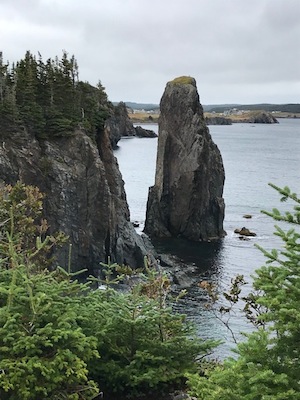
photo - A view on Newfoundland’s Skerwink Trail
A view on Newfoundland’s Skerwink Trail. (photo by Karen Ginsberg)

In the longer term, the Chernitskys hope to attract Jewish immigrants to Newfoundland from other parts of Canada, from Israel or elsewhere. Today’s Newfoundland is very different from pre-Confederation Newfoundland in its acceptance of newcomers. The province proudly welcomes immigrants and international students from any part of the world and sees immigration as a key component of its economic and labour market growth. Newfoundland’s relative affordability, along with the need for growth in its economy, most particularly its service sector, are reasons to be optimistic about that vision.

Beyond Jewish Newfoundland

Our car travels took us the length and breadth of the magnificent Bonavista Peninsula and the Irish Loop, another peninsula in southeastern Newfoundland, as well as to St. John’s. We enjoyed hikes on the Skerwink and East Coast trails. Everywhere we went, we enjoyed the remarkable beauty of Newfoundland’s landscapes and the warmth of our hosts. It was not until I was gazing out from the plane’s window on our return flight – when I could see more fully just how rugged the whole topography of the Rock is – that I really understood how resourceful each of the small outport communities, which lie at the end of every spit of land, has had to be. My visual from up above gave me an appreciation for how resilience has come to be bred into the DNA of Newfoundlanders.

Karen Ginsberg is an Ottawa-based travel writer.

Format ImagePosted on August 27, 2021August 25, 2021Author Karen GinsbergCategories TravelTags Chanan Chernitsky, history, immigration, Newfoundland, Tuba Chernitsky
Age no concern to Sar-El

Age no concern to Sar-El

Sar-El volunteers from Canada, the United States, England, Germany and the Caribbean at a base not far from Sderot in 2018. (photo from Ed Rozenberg)

This past July, I found myself shlepping boxes full of medical supplies and loading them onto pallets. How did I get here? I was volunteering in Sar-El, or Sherut LeYisrael, which means “service for Israel.”

Sar-El enables people, both inside and outside Israel, to volunteer to provide assistance to the Israel Defence Forces while contributing to the country, experiencing Israel and integrating into Israeli society. At present, due to COVID-19 and its resulting limitations on visitors, it is rare to meet a non-resident volunteer but, hopefully, that won’t be the case for much longer.

Sar-El volunteering comes in two types: arriving in the morning and leaving in the afternoon or arriving on a Sunday in the morning and leaving after lunch on a Thursday (sleeping on the base).

This recent volunteering stint, my wife Ida and I went to a central pickup spot in north Tel Aviv and were taken by bus with the rest of our group to the medical division (Matzrap, which is Hebrew shorthand for Centre for Medical Supplies) of Tel Hashomer, a large army base about 25 minutes away from the city. The usual group has about 15 volunteers, evenly divided between the sexes. Before COVID, the groups would consist of about 25 people, also evenly divided between the sexes, and about 60% Jewish and 40% non-Jewish. My co-workers have ranged in age from 20 to 92.

On arriving at the base, we are taken to our dorm building, with men and women sleeping on separate floors. We are told that there is to be no alcohol, drugs or romantic liaisons. Discussions of religion and politics are strictly forbidden. The group is led by two or three madrichot (female leaders) who are part of an IDF unit trained to lead Sar-El groups. It is important to remember that Sar-El is a unit of the IDF and, while on the base, you are under IDF jurisdiction, which means that you can’t leave the base except with hard-to-get permission. We receive uniforms, which we’re required to wear from the morning till after dinner.

A usual day begins with breakfast at 7 a.m. and the flag-raising at 8:15, followed by the singing of Hatikvah. This is often a very emotional moment, as we volunteers from all over the world are assembled with the same purpose, namely, to do something important for Israel.  I have been on 10 Sar-Els and have met people from Canada, the United States, New Zealand, Australia, many European countries, South Africa, Brazil, Uruguay and Argentina. Volunteering with Sar-El is an extremely broadening experience and you make close friends for life.

Announcements come after the flag-raising. The madrichot ask us if there are any concerns or questions, and take care of them. We are then assigned to our workstations.

The work depends on the type of base. This was my fifth time in Matzrap, which deals with the packing and loading of medical supplies. Other parts of Matzrap deal with checking whether batches of medical equipment, such as stethoscopes, pressure gauges and night vision equipment, are functioning properly, or checking the expiration dates of drugs. The supplies are used in Israel, as well as by emergency units sent abroad to assist in disaster areas.

I first found out about Sar-El in early 2006 from an article in the Jerusalem Report. When the Second Lebanon war broke out, Ida and I flew to Israel and were assigned to a base in the Negev, where we loaded tanks, assembled army equipment, packed uniforms and weapons and loaded food.

One of my favourite activities in Matzrap is to help prepare worktables for adolescents with intellectual challenges. It is fulfilling to see these young people working and getting a feeling of accomplishment. There is always a small thank you ceremony at the end of the work period that I find quite touching. One thing that has struck me since moving to Israel in 2016 is the degree to which people here are encouraged to reach their potential no matter what their background and abilities.

Work continues till lunch at noon. After lunch and a rest period (and, for those who choose to participate, minchah prayers), we return to work till about 4 p.m. Dinner is at 6 p.m. and, at 7 p.m., there is an activity of some sort, either educational or entertaining, or both, such as quizzes, led by the madrichot. The atmosphere is relaxed.

Sar-El itself was the brainchild of General Aharon Davidi (z”l), a former head of the IDF paratrooper and infantry corps. In the summer of 1982, in the midst of the First Lebanon War, Golan Heights communities faced the prospect of losing their entire agricultural crop. The majority of able-bodied farmers and other workers were called up for army reserve duty and entire farms, with crops already ripened, were left unattended.

Davidi was then the director of community and cultural activities of the Golan and Jordan Valley. He sent a number of friends as a recruitment team to the United States and, within a few weeks, some 650 volunteers arrived to help. Those first volunteers expressed the wish that the project be continued. As a result, in the spring of 1983, Sar-El, the National Project for Volunteers for Israel, was founded as a nonprofit, nonpolitical organization. Sar-El is represented in more than 30 countries.

On many occasions, Sar-El volunteers work with soldiers who are assigned to the same workstations. At the beginning, the soldiers are amazed that there are people who actually volunteer for this but, after awhile, they feel more comfortable with the volunteers, they chat with them, get advice from older souls and practise their English.

The lunch on Thursday before the group returns to Tel Aviv can be a quiet time. By then, we have gotten used to one another, laughed, sweated and yelled at one another and many of us have become quite close. The madrichot always set up a WhatsApp group for anyone who wants to join and through which we get our notifications.

I have no doubt that, on balance, I have gotten more from volunteering for Sar-El than from any other contribution that I might have made through volunteering. It has been an enormously enriching experience for both Ida and myself.

Jack Copelovici and his wife, Ida, made aliyah from Toronto in 2016. Sar-El (Sherut LeYisrael) is one of the organizations for which they volunteer. They first volunteered for it in 2006.

Format ImagePosted on August 27, 2021August 25, 2021Author Jack CopeloviciCategories TravelTags IDF, Israel, Sar-el, seniors, Sherut LeYisrael, volunteer
Tour guides struggle

Tour guides struggle

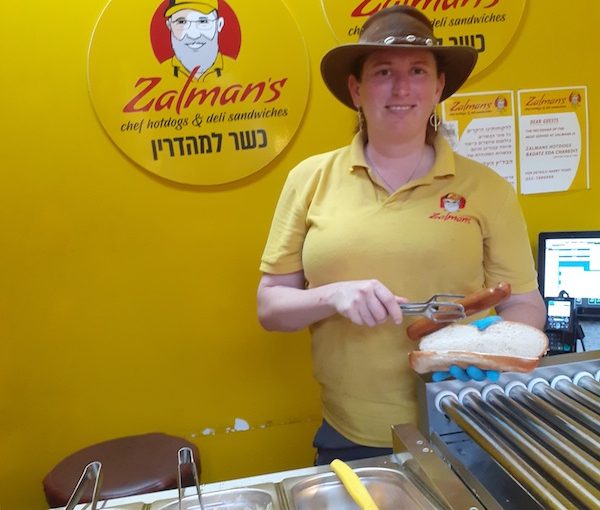
Unemployed tour guide Hannah Rosenberg is now serving up hot dogs for about $12.50 Cdn an hour. (photo by Gil Zohar)

For Anglo tour guides who have been unemployed since March 2020, the Israeli government’s recent decision to impose a seven-day quarantine requirement for visitors from the United States because of the coronavirus – that resulted in the cancellation at the beginning of August of 42 10-day Birthright trips – was another blow to a hard-hit industry.

Compounding the gloom caused by the week-long isolation order are two other decisions. The U.S. Centres for Disease Control recently warned against travel to Israel due to the rise in cases of the coronavirus as the Jewish state experiences another wave of COVID-19 infections and death. And, at the end of June, Bituach Leumi (Israel’s social service agency) ended payments to unemployed guides under the age of 60.

Hannah Rosenberg, 30, who completed a two-year certification course at the Hebrew University, leading to a series of Ministry of Tourism licensing exams in February 2020, is currently grilling hot dogs at Zalman’s in downtown Jerusalem for NIS 32 (about $12.50 Cdn) an hour. She remembers how the good times suddenly ended.

“March 18 (2020) was my last tour,” she recalled. She was two days into a seven-day tour with an American family visiting Jerusalem and the Galilee when a phone call from the U.S. State Department cautioned the family to leave immediately, lest they get stuck without a flight out. “It was a lie,” said Rosenberg, a native of Jupiter, Fla., the first of many she has heard from government officials.

“I applied to Bituach Leumi,” she said, “and was denied because I had not been working for the previous six months, during which I was studying for the tour guide exam.”

An ever-resourceful veteran of an Israel Defence Forces combat intelligence unit, Rosenberg kept applying and, after nearly a year, was given NIS 1,200 ($475 Cdn) monthly beginning in February. That payment ended in June.

“My parents are helping,” she said. “It’s the first time since I was a kid. It’s a hard thing to ask.”

Notwithstanding the hardship, Rosenberg has no plans to leave Israel. “I’m here for good,” she said, sharing that she still plans to pursue her dream to become an archeologist.

Mark Sugarman, 68, who made aliyah from Boston in 1971 and became a licensed guide in 1992, has had a relatively easier time. He’s simply become retired – but not by choice. His last tour was in March 2020, he said.

“We finished the tour, the typical 10-day Christian pilgrimage tour of the holy places. It was grueling. It was like being in the army and doing miluim (reserve duty). I was exhausted…. I went into a voluntary two-week quarantine. I didn’t know if I was infected and I didn’t want to infect anyone close to me…. By the time I came out of quarantine, we were in the first lockdown. I was stuck at home with my wife and dog in Talpiot. I was knackered,” he said, using a word he learned from his British clients.

“I applied for everything. A month later, I turned 67, so I officially reached the age of retirement and I got Bituach Leumi. I couldn’t get unemployment … because I took old-age pension, I wasn’t eligible. Whatever I get, I’m grateful.”

He added, “When I was working, I saved money. The last four years before COVID was a fat period. Now, it’s lean. I’ve been in the business for close to 30 years. I remember the Second Intifada, from 2000 to 2004, and that was a harder period than now. Everyone had to scramble at the time. I know how hard it is for my colleagues who have young families.”

Sugarman would like to go back to the United States for the unveiling of his mother’s headstone in November, but it’s problematic at this time.

“It’s been hard,” he said. “My mother’s funeral was on Zoom. Since the pandemic started, I [have] lost three family members and two friends. We were cut off from each other physically. People dying were isolated from their loved ones. Together with the loss of income, that’s been the hardest part.”

Daniel Gutman, 41, has worked as a tour guide since 2009. The Dallas, Tex., native remains philosophical about the situation. “I’ve had a little bit of work here and there, with some people visiting, family and seminaries and yeshivas, which needed two to four guides per capsule. That helped a little but, basically, I haven’t worked in the last 18 months.

Since Bituach Leumi stopped its payments at the end of June, Gutman said it has been challenging. “The government bailed us out for 18 months after they put me out of work. It was enough to survive. Now I’m back to March 2020, to square one, figuring out what I’m going to do. I’m dipping into my savings.”

On the positive said, he said, “Although I’ve taken a hit financially, I’ve had an 18-month sabbatical to be with my family.” But, he added, “I’m looking forward to getting back to showing people the country I love.”

Even during times of war and terrorism, tourists used to arrive, Gutman said. But not now. “Is there [national] value in tourism?” he asked. “If so, the government needs to support tour guides. Money has gone to bail out tour operators and hotels.”

Gutman loves his career and said he has no plans to retrain. “I am optimistic this will end.”

Chicago-born Ami Braun, 43, another veteran guide, also has scrambled to survive since benefits ended in June. He recently sent an email promoting online sales of the Four Species (etrog, palm, myrtle and willow) for the upcoming holiday of Sukkot. And he has conducted some virtual tours for the Beit Avi Chai community centre. “I have been a licensed guide for 14 years. This is my passion. I am doing whatever I can to stay afloat,” he said.

Braun has returned to guiding part-time at the Kotel Tunnels. “The pay is like a student job,” he noted. “It’s not something to live off of.”

In addition to being a writer, I’ve been a licensed guide for more than a decade. For the longest time after March 2020, I dreamed, every night, about guiding. It was a great adventure showing tourists my country, the West Bank, Jordan and Egypt, and I touched the hearts of a lot of people who fell in love with Israel. But those days are gone. I’ve been able to devote my time to editing a book about Hebron’s Jewish community, and to researching a study about Nazi collaborator Hajj Amin al-Husseini, the grand mufti of Jerusalem, who spent the years 1941 to 1945 living in Berlin and aiding the Third Reich. I’ve had clients send me to Portugal and to Germany, but now travel has all but ended. Every summer since 2005 my wife and I have visited family in Canada. This year was the first time we haven’t gone. We’ve cut back on all expenses, including hosting Shabbat guests.

Still, I consider myself fortunate. I have my good health, interesting research, food in the fridge, and a wonderful wife and friends. Everything else doesn’t matter.

Gil Zohar is a writer and tour guide in Jerusalem.

Format ImagePosted on August 27, 2021August 25, 2021Author Gil ZoharCategories TravelTags Ami Braun, Bituach Leumi, coronavirus, COVID-19, Daniel Gutman, economy, Hannah Rosenberg, Israel, Mark Sugarman, tour guides, tourism, unemployment
Ancient foods still popular

Ancient foods still popular

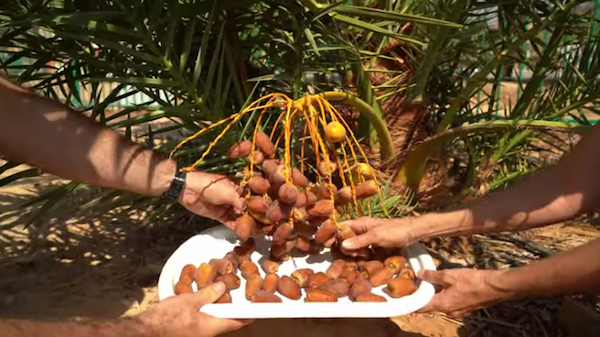
Dates being harvested from Hannah, a tree germinated from ancient seeds in Israel. (screenshot from arava.org)

The Mediterranean Diet is not a recent lifestyle development, but rather a form of eating going back to ancient times.

Based on the foods consumed by people living near the Mediterranean Sea, this diet contains lots of olive oil, legumes, unrefined cereals, fruits and vegetables. It includes fish and dairy products, such as cheese and yogurts. It allows for wine drinking and a bit of meat.

From the specialized field of Israeli agro-archeology, we can get an idea of what people once grew and ate – and a number of these foods are mentioned in the Torah.

In some instances, the sages understood why certain foods were healthy, as seen in this quote from Tractate Ketubot of the Babylonian Talmud: “Dates are wholesome in the morning and in the evening. They are bad in the afternoon, but, at noon, there is nothing to match them. Besides, they do away with three things: evil thoughts, sickness of the bowels and hemorrhoids.”

In September 2020, the Arava Institute harvested 111 very special dates – the first fruit of Hannah, a tree sprouted from a 2,000-year-old seed and pollinated by another ancient Judean date tree. Dr. Elaine Solowey, director of the Centre for Sustainable Agriculture of the Arava Institute, and Dr. Sarah Sallon, director of the Louis L. Borick Natural Medicine Research Centre of Hadassah Hospital, harvested these ancient dates in the culmination of a decades-long experiment to raise the biblical-era Phoenix dactylifera (date palm) from the dead. The date seeds were originally discovered in the 1960s, when Yigal Yadin excavated Masada.

And, in January 2021, Israeli archeologists published the discovery of thousands of olive pits off the southern coast of Haifa. These pits were embedded in stone and clay neolithic structures in a now-submerged area, but one that was probably once part of the northern coast. They date back to about 4600 BCE.

Tel Aviv University archeologist Dafna Langot points out that these pits were not from olives used for oil because, in the production of olive oil, the pits get crushed and, in this find, the pits were mostly still intact. The site’s proximity to the Mediterranean Sea may indicate that the seawater served to de-bitter, pickle and salt the olives. (To read the article “Early production of table olives at a mid-7th millennium BP submerged site off the Carmel coast [Israel],” visit nature.com/articles/s41598-020-80772-6. BP stands for “before the present.”)

There is no biblical reference to olive eating itself. But, at the ceremony in which Moshe’s brother Aaron and Aaron’s sons become the priests over the ancient Hebrews, they ate matzah with oil olive (Exodus 29:2). Indeed, olive oil seems to have the edge over olives as seen in R. Yohanan’s warning: olives cause one to forget 70 years of study, olive oil restores 70 years of study (Babylonian Talmud, Horayot 13b). Yet, in Numbers Rabbah 8:10, proselytes are praised using a comparison to olives: “just as there are olives for eating, preserving and for oil … so from proselytes came Bible scholars, Mishnah scholars, men of commerce and men of wisdom, men of understanding.”

Around the ancient Hula Lake – referred to by researchers as Gesher Benot Yaakov or GBY – Israeli archeologists have discovered different types of nuts, dating back to the Lower Paleolithic period (1.5 million to 200,000 years ago). Two types of pistachio nuts (Pistacia atlantica and Pistacia vera) are said to have been gathered there. (See “Nuts, nut cracking, and pitted stones at Gesher Benot Ya’aqov, Israel,” at pnas.org/content/99/4/2455.)

Pistachios are one of only two nuts mentioned in the Bible. Pistachios may have grown in the Garden of Eden (Genesis 43:11). Legend has it that the Queen of Sheba declared pistachios were to be enjoyed only by royalty, even decreeing that it was illegal for commoners to grow pistachio trees. The nuts were considered an aphrodisiac.

In the Middle East, both Muslims and Jews prepare pistachio-filled baklava for holiday celebrations.

photo - In biblical times, barley was used as fodder for donkeys and horses so, if a person ate barley, it was a sign they were poor
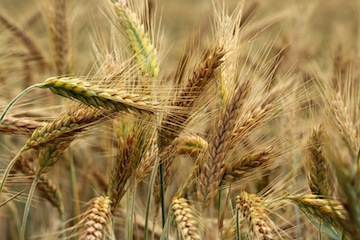
In biblical times, barley was used as fodder for donkeys and horses so, if a person ate barley, it was a sign they were poor. (photo by Alicja / Pixabay)

On the Gezer Calendar, which dates back to King Solomon’s era, the springtime months of Iyar and Sivan are noted as the time for harvesting barley, the first grain to ripen in Israel. On the status scale, however, barley was held in low regard. It was used as fodder for donkeys and horses (I Kings 5:8). Thus, in biblical times, if you ate barley, it was a sign you were poor. At recent Israeli archeology digs, onsite workers collected barley seeds from the epipaleolithic period, some 20,000 to 10,000 years BP.

In addition, Israeli archeologists have identified 1,000-year-old eggplant seeds. They found the seeds in cisterns located in an ancient market complex that was discovered in Jerusalem’s Givati Parking Lot dig, more or less across from the Old City’s Dung Gate. The cisterns apparently had been left behind in either cesspits or garbage pits and the eggplant seeds had neither rotted nor disintegrated. Researchers surmise that the market stall owners used garbage pits to hold their unused stock or to discard damaged produce. Eggplant seeds found in cesspits were seeds consumed and naturally eliminated.

Eggplants are well-traveled. According to the late Gil Marks, in his cookbook Olive Trees and Honey: A Treasury of Vegetarian Recipes from Jewish Communities Around the World, eggplants originated in India some 4,000 years ago. By the fourth century CE, eggplants arrived in Persia. From, there they were “picked up” by Arabs, who probably brought them to Spain in the ninth century. Claudia Roden writes in her book The Book of Jewish Food: An Odyssey from Samarkand to New York that Jews came to be associated with eggplant when they fled the Almohades and Almoravides and when the Inquisition banished them from southern Italy.

Seeing that pomegranates are part of the Rosh Hashanah table, I’ll close with some information about the ancient fruit, one of the seven species mentioned in Deuteronomy 8:8. The Roman Pliny the Elder, who died in the 79 CE eruption of Mount Vesuvius, also had something to say about this juicy fall fruit – he wrote that the wild pomegranate seed, taken in drink, is curative of dropsy (edema).

Pomegranate seed oil contains high concentrations of Omega 5, which is believed to be one of the most powerful antioxidants in nature. Prof. Ruth Gabizon and Prof. Shlomo Magdassi from Hebrew University and Hadassah Hospital are hopeful that their pomegranate seed oil research will lead to a way of slowing down or lessening the effects of degenerative brain diseases.

A 2020 report by other researchers, which was published in The American Journal of Clinical Nutrition (doi.org/10.1093/ajcn/nqz241), contends that pomegranate juice helps maintain visual memory skills in middle-aged and older adults. The authors of the study state that it could have a potential impact on visual memory issues commonly associated with aging.

The old Mediterranean diet continues to provide new promise.

Deborah Rubin Fields is an Israel-based features writer. She is also the author of Take a Peek Inside: A Child’s Guide to Radiology Exams, published in English, Hebrew and Arabic.

Format ImagePosted on August 27, 2021August 25, 2021Author Deborah Rubin FieldsCategories LifeTags food, health, history, Judaism, Mediterranean diet, science
Sweet summer dessert treats

Sweet summer dessert treats

(photo from twopeasandtheirpod.com)

They don’t make ’em like they used to. And, almost without exception, recipes from yesteryear are tastier, precisely because they’re reminiscent of gentler times. When I think Rice Krispie squares, I recall sitting on our old brown couch in the den, watching Ed Sullivan with the whole family. And I longingly remember eating Mom’s cheesy broccoli soufflé during Rosh Hashanah. Or, I’m back in 1966, enjoying a mountain of fried onions with my mother’s world-class chicken livers. And those salmon patties! And how about that creamed tuna in patty shells? Does anybody even eat this stuff anymore? If not, it’s a crying shame.

Maybe it’s a longing for those days when you could send your children out into the neighbourhood armed with only roller skates, in the certainty that they would be back, safe and unharmed, for lunch (or dinner, depending). A time when TV dinners were acceptable and ubiquitous. (I especially liked the one with fried chicken, corn, peas and tiny, unnaturally square carrots, mashed potatoes and canned pears/peaches.) I remember when an hourglass figure was desirable, and women actually ate to their fill. Of course, most of them smoked, too, but that’s a whole other column. I’m talking food right now. Uncomplicated, unapologetic, unfussy food. Anybody remember chip steaks? How about fondue? Sloppy Joes? Pineapple upside down cake? Aspic (now that’s one heinous creation)?

What’s old can always be new again. Especially if you’re willing to look the other way when it comes to nutrition, calories and cholesterol. Some of my favourite desserts are classic 1950s and ’60s numbers. In other words, any recipes that call for Jello or Dream Whip. And, preferably, have fewer than five ingredients.

My dad, alav hashalom, loved one particular dessert I made. Not that my repertoire was so enormous back then, but, still, it was always a winner with Dad. He’d take one bite and look at me like I’d just discovered fire. It was an easy (understatement of the millennium) recipe given to me by a woman I used to work with when I was a librarian at West Kildonan Library, in the North End of Winnipeg. Naturally, I just call it Liz Westlake’s Jello Dessert. I don’t make it very often, because I’m afraid of being shamed by my fancy foodie friends. But, occasionally, I break down and splurge. Let it be known, however, that no one – I repeat, no one – ever turns down a second piece of this dessert. It’s quaint, refreshing and … old-fashioned.

LIZ WESTLAKE’S JELLO DESSERT

1 can (398 ml or 14 oz) fruit cocktail (drained)
1 1/3 cup Graham cracker crumbs
1/3 cup melted butter
1/4 cup brown sugar
1 box cherry Jello

Preheat oven to 375°F. Mix the Graham cracker crumbs together with the melted butter and brown sugar and pat it into the bottom of a springform pan. Bake for five to seven minutes.

Make the Jello according to the instructions on the box and, when half congealed, but still smooth enough to stir (approximately 1 1/4 hours), add the drained fruit cocktail to the Jello and mix it together. Pour this on top of the Graham cracker crust and refrigerate until completely firm. (If you want to get really fancy shmancy, you can put whipped cream on top. I don’t – I’m a purist.)

Even the most kitchen-challenged soul can make this dessert. And I guarantee it’s a winner, especially on a hot day. Once again, you’re welcome.

Now to a sturdier sweet – the ubiquitous chocolate chip zucchini brownie. Anyone who grows zucchini knows that it can take over your entire garden. If you let it. This is all hearsay, of course, since I’m known far and wide to have a black thumb. But I read a lot. And I’ve heard of people whose gardens produce so much zucchini that they sneak out in the dead of night and drop bags of zucchini on neighbours’ doorsteps, then flee into the darkness, nary a trace of their identity to be found. Personally, I just buy mine at Safeway. But I’m getting off track. This dessert is easy, healthy (OK, let’s just say it’s in the general vicinity of health) and satisfying for those with a hankering for chocolate.

CHOCOLATE CHIP ZUCCHINI BROWNIES

1 1/2 cup white sugar
1/2 cup canola oil or vegetable oil
2 cups all-purpose flour
1/4 cup unsweetened cocoa powder
2 cups shredded zucchini (but don’t squeeze out the liquid)
2 tsp vanilla extract
1 tsp salt (or a little less)
1 1/2 tsp baking soda
1 1/4 cup semi-sweet chocolate chips

Preheat oven to 350°F. Grease a 9”x13” baking pan and set it aside.

In an electric stand mixer, or using a hand mixer, combine the sugar, oil and flour. It will look dry, but that’s OK. While mixing on low speed, add the cocoa, shredded zucchini, vanilla, salt and baking soda. Mix until well combined. Stir in the chocolate chips.

Pour the batter into the greased pan and bake for 28 to 32 minutes or until a toothpick inserted in the centre comes out clean. The brownies should look set, not mushy. Cool completely on a wire rack. Cut into squares and serve.

Don’t even consider asking me how many calories there are in one square. Think of it as a serving of vegetables. I mean, there is something green in there. Beigey-green? For goodness sake, just enjoy, and stop with the guilt. They’re a nice, moist alternative to regular brownies and you get to feel all high and mighty because they’re [semi] healthy.

If neither of these desserts float your boat, try making your own popsicles. Nothing spells old-school quite like those plastic popsicle molds with the multi-coloured tops. You can over-spend and get the molds at one of those highfalutin, hoity-toity kitchen stores, or you can rock it like it’s 1964 and buy them at your local dollar store. I chose Door #2, and it works just fine. (There’s also the ice-cube tray option, with toothpicks as the popsicle sticks.) There are a gazillion recipes for popsicles on the internet, most of them calling for Greek yogurt, frozen fruit, juice and honey. Check ’em out and keep cool.

Shelley Civkin, aka the Accidental Balabusta, is a happily retired librarian and communications officer. For 17 years, she wrote a weekly book review column for the Richmond Review. She’s currently a freelance writer and volunteer.

Format ImagePosted on July 9, 2021July 7, 2021Author Shelley CivkinCategories LifeTags Accidental Balabusta, baking, brownies, cooking, desserts, Jello, nostalgia, recipes

It’s time to revel in fish

During the nine days before Tisha b’Av, a day of fasting and mourning, it is customary to refrain from eating meat – but not fish. Here are some fish salad options for that week – and the rest of the summer – as well as some sauces that are great for both fish and vegetables. This year, Tisha b’Av starts the night of July 17.

CUCUMBER AND FISH SALAD
(I adapted this recipe from Food & Wine. It makes four to eight servings.)

2 large cucumbers
1 1/4 pounds skinned fresh cod, haddock or sea bass fillet
1 chopped scallion
small bunch chopped dill
salt & pepper to taste
5 tbsp milk
4 tbsp mayonnaise
2 tbsp sour cream or plain yogurt
4 black or green olives & cucumber ribbons

  1. Peel one cucumber and dice in a bowl. With a vegetable peeler, remove six long strips from second cucumber, then dice and add to bowl. Sprinkle with salt then drain on paper towels.
  2. Place fish in a frying pan with scallion, some of the dill, salt and pepper and milk. Poach until fish begins to flake. Remove and let cool.
  3. Wash and drain cucumber and dry. In another bowl, mix mayonnaise with sour cream or yogurt. Stir in cucumber and fish. Garnish with olives and cucumber ribbons.

CLASSIC CEVICHE
(I adapted this recipe from Food & Wine. It makes eight servings.)

1 pound fresh, skinless snapper, bass, halibut or other fish fillet, cut in half-inch pieces
1 1/2 cups fresh lime juice
1 medium white onion, chopped into half-inch pieces
2 medium-large tomatoes chopped into half-inch pieces
1/3 cup chopped cilantro
1/3 cup chopped pitted green olives
1 to 2 tbsp olive oil
salt to taste
3 tbsp fresh orange juice
1 large or 2 small peeled, pitted, diced avocados
tortilla chips for serving

  1. Combine fish, lime juice and onion in a glass or stainless steel bowl. Add more lime juice to cover fish and allow it to float freely. Cover and refrigerate four hours until a piece of fish, when broken open, no longer looks raw.
  2. In a large bowl, mix together tomatoes, cilantro, olives and olive oil. Stir in fish and salt. Add orange juice, cover and refrigerate if not serving immediately. Before serving, stir in avocados. Serve with tortilla chips or crackers.

HORSERADISH WHIPPED CREAM SAUCE

1 tsp prepared mustard
6 tbsp horseradish
1 tsp salt
1/8 tsp pepper
1 cup whipped heavy cream

  1. Combine mustard, horseradish, salt and pepper. Let stand 15 minutes.
  2. Fold in whipped cream.

PIQUANT HERB SAUCE

1/2 cup dry white wine
1/2 cup parsley sprigs
1/4 cup white vinegar
1 small quartered onion
2 large garlic cloves
2 1/2 tsp dried crushed tarragon
1/4 tsp dried crushed chervil
pepper to taste
1 cup mayonnaise

  1. Place white wine, parsley, white vinegar, onion, garlic, tarragon, chervil and pepper in blender cover and blend until uniform.
  2. In a saucepan, stir over medium heat until reduced to 1/3 cup.
  3. Strain, return to saucepan, stir in mayonnaise. Heat until warm. Garnish with chopped parsley.

CHIMICHURRI

1/2 cup olive oil
1/2 cup chopped parsley
2 tbsp chopped cilantro
2 tbsp fresh lemon juice
2 large minced garlic cloves
1 tsp crushed red pepper
1 tsp red wine vinegar
1/2 tsp sweet smoked paprika
1/2 tsp dried oregano
1/4 tsp kosher salt

  1. Mix all ingredients in a blender.

DILL CREAM SAUCE

1/4 cup dry white wine
2 dill sprigs
2 medium minced shallots
1 cup unsalted pareve chicken soup
1 1/4 cups whipping cream
salt & pepper to taste
2 tbsp snipped fresh dill

  1. Combine wine, dill sprigs and shallots in saucepan and bring to a boil.
  2. Add pareve chicken soup and cook to reduce to two tablespoons.
  3. Stir in cream, salt and pepper. Bring to a boil. Cook until thick, about seven minutes. Before dishing out, stir in dill and serve hot.

Sybil Kaplan is a journalist, lecturer, book reviewer and food writer in Jerusalem. She created and leads the weekly English-language Shuk Walks in Machane Yehuda, she has compiled and edited nine kosher cookbooks.

Posted on July 9, 2021July 7, 2021Author Sybil KaplanCategories Celebrating the Holidays, LifeTags cooking, fish, recipes, sauces, Tisha b'Av
Picnic sandwiches and salads

Picnic sandwiches and salads

(photo from vancouversnorthshore.com)

The sandwich as we know it was created in England in 1762 by John Montagu, the fourth Earl of Sandwich, a British statesman and gambler. He asked for a serving of roast beef to be placed between two slices of bread so he could eat with his hands and not have to get up from the table when he was playing cards or gambling. Here are some sandwiches good for your table – or a picnic.

MIDDLE EASTERN PITA SANDWICH
(makes eight sandwiches)

1 15-ounce can chickpeas
1 tbsp lemon juice
1/4 cup chopped onions
1 minced garlic clove
2 tsp vegetable oil
1/4 cup tahini
1/2 cup toasted sesame seeds
8 pieces pita
shredded lettuce
sliced olives
chopped tomatoes
chopped dill pickles

  1. Drain chickpeas and reserve three tablespoons of liquid.
  2. Place chickpeas, liquid and lemon juice in a blender or food processor and blend until pureed.
  3. Heat oil in a frying pan and sauté onion and garlic until tender.
  4. Combine pureed chickpeas, onion-garlic mixture, tahini and sesame seeds in a bowl.
  5. Split pita and fill with chickpea mixture. Add any of the accompaniments: lettuce, olives, tomatoes and/or pickles.

TUNA SANDWICH
(makes two cups)

6 tbsp cream cheese
1 cup sour cream
7/8 cup flaked tuna
2 tbsp finely chopped onions or scallions
2 tsp horseradish
1 tsp Worcestershire sauce

  1. Beat cream cheese and sour cream in a bowl until fluffy.
  2. Add tuna, onion, horseradish and Worcestershire sauce and blend.
  3. Let stand in refrigerator at least two hours. Remove and spread on bread or rolls.

GAZPACHO SANDWICHES
(makes eight servings)

8 round hard rolls
butter or margarine
4 medium or 6 small thinly sliced tomatoes
2 thinly sliced cucumbers
4 tbsp minced green peppers
2 tbsp minced onions
oil-and-vinegar dressing

  1. Cut tops from rolls and remove some bread from the tops and bottoms, leaving a thin shell. Spread sides of rolls with butter or margarine.
  2. Put tops and bottoms together, wrap airtight and refrigerate.
  3. In a bowl, combine tomatoes, cucumber, green peppers and onion. Add enough dressing to moisten well and toss. Cover and refrigerate at least one hour.
  4. Fill roll bottom with gazpacho mixture, replace tops and cut in half. Serve at once.

* * *

Many people think of potato salad as a good accompaniment for summer picnics, but they can also be used as a meat or poultry accompaniment at the dinner table, as well. In Europe, often, potato salad is served warm with vinegar and oil and herbs as a dressing, while Americans add mayonnaise. Here are a few of my favourites.

CREAMY POTATO SALAD WITH LEMON AND FRESH HERBS
(This recipe is adapted from one in Bon Appetit magazine. It makes four servings.)

1 1/2 pounds baby red potatoes
1 1/2 tbsp rice vinegar
salt & pepper
3/8 cup mayonnaise
1 to 2 green onions, thinly sliced
half a celery rib, cut into 1.5-inch slices
1 tsp dry parsley
1 tsp dry basil
1 tbsp chopped fresh dill
3/4 tsp grated lemon peel

  1. Drain cooked potatoes and let stand 20 minutes.
  2. Cut potatoes in small pieces and place in a bowl. Toss with vinegar, salt and pepper.
  3. Add mayonnaise, onion, celery, parsley, basil, dill and lemon peel and toss. Cover and chill until ready to serve.

DIJONNAISE POTATO SALAD
(makes three cups)

1/2 cup light mayonnaise
2 tbsp Dijon mustard
2 tbsp cider vinegar
1 tbsp fresh or 1/2 tsp dry dill or parsley
salt & pepper to taste
1 pound cooked, cubed red potatoes
1/2 cup minced celery
1/4 cup minced green onions

  1. In a bowl, combine mayonnaise, Dijon mustard, vinegar, dill or parsley, salt and pepper.
  2. Add potatoes, celery and onions. Cover and chill until serving.

NIÇOISE POTATO SALAD
(The original Niçoise salad came from Nice, France, in the 19th century; it had tomatoes, anchovies and olive oil. In a 1903 French cookbook, artichokes, red pepper, black olives and a vinaigrette were added. Over the years, tuna, hard-boiled eggs and green beans also have been added. This recipe makes four servings.)

1 1/2 pounds cooked and drained red potatoes
1/4 pound cooked green beans in one-inch pieces
2 ribs cut celery
1 sliced red pepper
1/2 sliced red onion (optional)
1 1/2 tbsp Dijon mustard
1 6.5-ounce drained can tuna packed in olive oil
10 pitted, sliced black olives
8 halved cherry tomatoes
3 cut up hard-boiled eggs
minced tarragon or chives

dressing
1/2 cup olive oil
1/4 cup lemon juice
2 tbsp red wine vinegar
3 rinsed & dried anchovies
3 tbsp minced fresh or 1 1/2 tsp dry tarragon
salt and pepper to taste

  1. Combine olive oil, lemon juice, wine vinegar, anchovies, tarragon, salt and pepper in food processor or blender and mix until smooth.
  2. Place potatoes in bowl, add dressing and toss.
  3. Add green beans, celery, red pepper, red onion, Dijon, tuna, tomatoes, eggs, tarragon and chives. Toss gently and serve!

Sybil Kaplan is a journalist, lecturer, book reviewer and food writer in Jerusalem. She created and leads the weekly English-language Shuk Walks in Machane Yehuda, she has compiled and edited nine kosher cookbooks.

Format ImagePosted on July 9, 2021July 14, 2021Author Sybil KaplanCategories LifeTags cooking, picnics, potato salad, recipes, salads, sandwiches, summer

Why is night different?

It was the first night of Passover and I was feeling miserable. By now, I recognize the ache. It’s the one I get when I am thousands of miles away from my family.

Away from the days of being young and just naturally assuming there would be a seder night with family. Away from old familiar melodies and reminders. I remembered when my mum would say a prayer in a funny British accent, or how we would all be tapping our hands vigorously on the table while singing. I’d be sitting with siblings and cousins, playing games with the matzah, sneaking a sip or three of heavily sweetened kosher red wine and counting down the time until we could eat.

Forty years ago, after leaving Israel, I moved to London, where there were always relatives to fill that gap. However, back in the younger days, my Jewish identity took something of a back seat. As a teen in Israel, I always wondered why I wasn’t allowed to join my friends at the beach on Shabbat. As a child, we were raised as Orthodox Jews but, when we immigrated to Israel, some of the traditions, sadly fell by the wayside.

Vancouver eventually became my permanent home and, initially, I’d always worry where I would be spending the Jewish holidays. Frequently, friends and kind strangers invited us to their homes. It only seemed to deepen the family longing pangs.

When I became a parent, my husband and I began to host our own celebrations and seders and we always included strangers and synagogue friends. Fortunately, when my oldest son was 3, we became friends with another family. They knew some family-less people and it wasn’t long before we all celebrated the Jewish holidays together, a tradition which has continued – until recently.

When the pandemic began and social distancing became necessary, holiday gatherings were cancelled. Zooming on our phones became the norm. It was different. Something of a novelty.

A few days before Pesach this year, I glanced at the secular calendar, which indicated Sunday as the eve of Pesach, so I arranged for our kids and partners to come Sunday night. It wasn’t until mid-afternoon Saturday that I realized I had goofed and Pesach commenced that night. By 4 p.m., the sadness had crept in. My sister had phoned from Israel and filled me in on the lovely seder she had attended.

My brother had sent photos. All the well-wishers had phoned and sent greetings.

For the first time in many years, my husband and I would be all alone and unprepared. There was little motivation to do anything. We ordered an Indian (vegan) meal to be delivered. I forced myself to light the festival candles and mutter some prayers. Then, the phone rang for the first time in hours.

It was a good friend. She sounded excited. Although she had hosted many a seder elsewhere, she was holding her first with her daughter in Vancouver, rather than attending an organization’s or other event via Zoom.

“You must come over and see my table! It’s so beautiful! Even just for a few minutes,” she said.

I begged off because we would be seeing our infant grandson the following afternoon and just couldn’t take the chance. Besides, our delivery would be arriving any minute. “Cancel it! We have lots of food here!”

I would have dearly loved to have dropped everything and gone to her house. I recalled how, some 20 years earlier, she and her daughter had attended our seder. We settled on a FaceTime call and sang the Shehecheyanu blessing together.

A knock at the door; our food had arrived. We said goodbye. But my friend’s enthusiasm was infectious. Her phone call, when I so needed to be remembered, reminded me that we weren’t, in fact, alone in the world.

We pulled out Haggadot and some of the seder plate preparations for the following day. Miraculously, there was enough kosher wine to get us to the third glass of wine and the spilling of the wine for the 10 plagues. My husband and I took turns reading while the candles flickered.

Unlike most of our past seders, it was quiet and peaceful.

This year, I really asked myself: “Why is this night different?”

The answer could be lengthy but I do know that, on this particular night, there was a little soul intervention.

Jenny Wright is a writer, music therapist, children’s musician and recording artist.

Posted on May 28, 2021May 27, 2021Author Jenny WrightCategories Celebrating the HolidaysTags coronavirus, COVID-19, family, mental health, Passover, seder

Posts pagination

Previous page Page 1 … Page 15 Page 16 Page 17 … Page 77 Next page
Proudly powered by WordPress