Skip to content
  • Home
  • Subscribe / donate
  • Events calendar
  • News
    • Local
    • National
    • Israel
    • World
    • עניין בחדשות
      A roundup of news in Canada and further afield, in Hebrew.
  • Opinion
    • From the JI
    • Op-Ed
  • Arts & Culture
    • Performing Arts
    • Music
    • Books
    • Visual Arts
    • TV & Film
  • Life
    • Celebrating the Holidays
    • Travel
    • The Daily Snooze
      Cartoons by Jacob Samuel
    • Mystery Photo
      Help the JI and JMABC fill in the gaps in our archives.
  • Community Links
    • Organizations, Etc.
    • Other News Sources & Blogs
    • Business Directory
  • FAQ
  • JI Chai Celebration
  • JI@88! video

Recent Posts

  • BGU fosters startup culture
  • Photography and glass
  • Is it the end of an era?
  • Taking life a step at a time
  • Nakba exhibit biased
  • Film festival starts next week
  • Musical with heart and soul
  • Rabbi marks 13 years
  • Keeper of VTT’s history
  • Gala fêtes Infeld’s 20th
  • Building JWest together
  • Challah Mom comes to Vancouver
  • What to do about media bias
  • Education offers hope
  • Remembrance – a moral act
  • What makes us human
  • המלחמות של נתניהו וטראמפ
  • Zionism wins big in Vegas
  • Different but connected
  • Survival not passive
  • Musical celebration of Israel
  • Shoppe celebrates 25 years
  • Human “book” event
  • Reclaiming Jewish stories
  • Bema presents Perseverance
  • CSS honours Bellas z”l
  • Sheba Promise here May 7
  • Reflections from Be’eri
  • New law a desecration
  • Resilient joy in tough times
  • Rescue dog brings joy
  • Art chosen for new museum
  • Reminder of hope, resilience
  • The national food of Israel?
  • Story of Israel’s north
  • Sheltering in train stations

Archives

Follow @JewishIndie
image - The CJN - Visit Us Banner - 300x600 - 101625

Byline: Edgar Asher

The making of ancient beer

The making of ancient beer

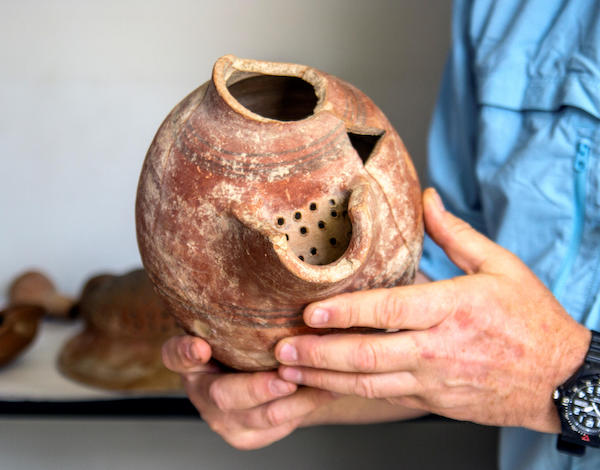
Nanopores taken from ancient pottery have allowed researchers to make beer following a 5,000-year-old recipe. (photo by Yaniv Berman IAA via Ashernet)

Research led by scholars at Hebrew University, the Israel Antiquities Authority, Tel Aviv University and Bar-Ilan University has revealed a way to isolate yeast from ancient pottery, from which beer was then produced. HU’s Dr. Ronen Hazan and IAA’s Dr. Yitzhak Paz, who are among the leaders of the research, noted that “we now know what Philistine and Egyptian beers tasted like.” The team examined the colonies of yeast that formed and settled in the pottery’s nanopores. Ultimately, they were able to use resurrected yeast to create a beer that’s approximately 5,000 years old.

“By the way, the beer isn’t bad,” said Hazan. “Aside from the gimmick of drinking beer from the time of King Pharaoh, this research is extremely important to the field of experimental archeology – a field that seeks to reconstruct the past. Our research offers new tools to examine ancient methods and enables us to taste the flavours of the past.”

Added Paz, “This is the first time we succeeded in producing ancient alcohol from ancient yeast. In other words, from the original substances from which alcohol was produced. This has never been done before.”

Format ImagePosted on May 31, 2019May 30, 2019Author Edgar AsherCategories IsraelTags archeology, beer, Israel, science
Extension granted

Extension granted

Prime Minister Binyamin Netanyahu, left, and President Reuven Rivlin hold the agreement that allows Netanyhau another two weeks to try and form a coalition government. (photo from Ashernet)

Prime Minister Binyamin Netanyahu met with President Reuven Rivlin May 13 to formally request an extension on forming the government. If Netanyahu is not able to form a majority coalition, then Rivlin would call on the head of the political party with the next highest number of votes to try and form a viable coalition government.

Format ImagePosted on May 17, 2019May 16, 2019Author Edgar AsherCategories IsraelTags Netanyahu, politics, Rivlin
Marking Yom Hashoah

Marking Yom Hashoah

Israeli Prime Minister Binyamin Netanyahu places a wreath at Yad Vashem on Yom Hashoah. (photo from IGPO via Ashernet)

photo - On Yom Hashoah, Israel comes to a virtual standstill at 11 a.m., for two minutes, as sirens wail across the country – everyone stops what they are doing and stands at attention, in respect to the memory of the six million Jews who were murdered in the Holocaust
(photo from IGPO via Ashernet)

On Yom Hashoah, Israel comes to a virtual standstill at 11 a.m., for two minutes, as sirens wail across the country – everyone stops what they are doing and stands at attention, in respect to the memory of the six million Jews who were murdered in the Holocaust.

Format ImagePosted on May 10, 2019May 9, 2019Author Edgar AsherCategories IsraelTags Holocaust, Israel, Yom Hashoah
First Temple stamps discovered

First Temple stamps discovered

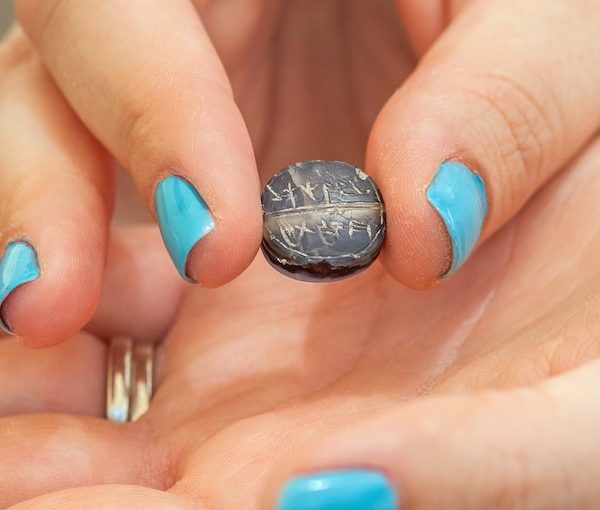
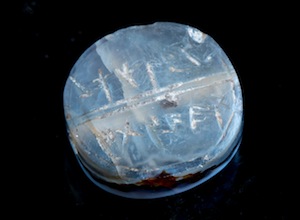
The stamp of “Ikar, son of Matanyahu.” (IAA photos courtesy Ashernet)

photo - The 2,600-year-old stamp of “Ikar, son of Matanyahu” was among the artifacts uncovered The 2,600-year-old stamp of “Ikar, son of Matanyahu” was among the artifacts uncovered in archeological excavations at the Givati Parking Lot, in City of David National Park in Jerusalem. The dig was conducted by archeologists from the Israel Antiquities Authority (IAA) and Tel Aviv University and, according to TAU’s Prof. Yuval Gadot and IAA’s Dr. Yiftah Shalev, the artifacts were found inside a large public building that was destroyed in the sixth century BCE, probably during the Babylonian destruction of Jerusalem in 586 BCE. Large stone debris, burnt wooden beams and numerous charred pottery shards were discovered, all indications that they had survived a fire.

The stamp and bulla (seal impressions), which are about one centimetre in size, were deciphered by Dr. Anat Mendel-Geberovich of the Hebrew University of Jerusalem and the Centre for the Study of Ancient Jerusalem. “The name Matanyahu appears both in the Bible and on additional stamps and bullae already unearthed. However, this is the first reference to the name Ikar, which was unknown until today,” said Mendel-Geberovich.

According to Gadot and Shalev, “These artifacts corroborate the highly developed system of administration in the Kingdom of Judah and add considerable information to our understanding of the economic status of Jerusalem and its administrative system during the First Temple period, as well as personal information about the king’s closest officials and administrators who lived and worked in the city.”

Format ImagePosted on April 5, 2019April 2, 2019Author Edgar AsherCategories IsraelTags archeology, Hebrew University, history, IAA, Israel Antiquities Authority, Jerusalem, Tel Aviv University
Marathon draws 40,000 runners

Marathon draws 40,000 runners

Jerusalem Marathon (photos from Ashernet)

photo - runners in Jerusalem Marathon Running has become one of the most popular sports in Israel, with both the Tel Aviv and Jerusalem marathons attracting thousands of competitors. The Jerusalem Marathon on March 15 attracted some 40,000 runners, including 4,600 athletes from more than 80 different countries. Six different runs were offered, one of which was designed for competitors with special needs. The main event was won by Kenyan runner Ronald Kimeli, 33, who ran the 42.2 kilometres in two hours, 18 minutes and 47 seconds.

Format ImagePosted on March 22, 2019March 20, 2019Author Edgar AsherCategories IsraelTags fitness, Jerusalem, marathon
Adding to Einstein Archives

Adding to Einstein Archives

A newly acquired photograph of Albert Einstein, left, with his lifelong friend Michele Besso. (HU photo courtesy Ashernet)

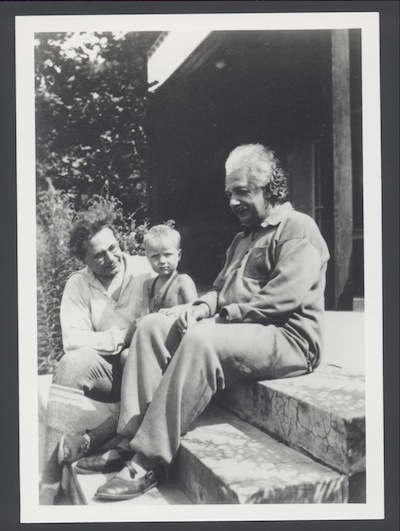
photo - Albert Einstein, right, with his grandson Bernhard, centre, and son, Hans Albert
Albert Einstein, right, with his grandson Bernhard, centre, and son, Hans Albert. (HU photo courtesy Ashernet)

One hundred and ten pages of Albert Einstein’s handwritten notes and other documents and photos have been added to the Albert Einstein Archives at the Hebrew University in Jerusalem. This latest material (dating mainly from 1944 to 1948) was acquired by the university thanks to a donation by the Crown-Goodman Foundation, which bought it for an undisclosed sum from Gary Berger, a North Carolina doctor. After Einstein’s death in 1955, most of his more than 80,000 scientific and personal papers were left to the Hebrew University. Einstein, who was one of the founders of the university and a great supporter of the Jewish state, was invited to become president of Israel, but declined the offer, implying that he did not feel worthy of such honour.

Format ImagePosted on March 15, 2019March 14, 2019Author Edgar AsherCategories IsraelTags Albert Einstein, archives, Hebrew University, history
Samaritan neighbourhood found

Samaritan neighbourhood found

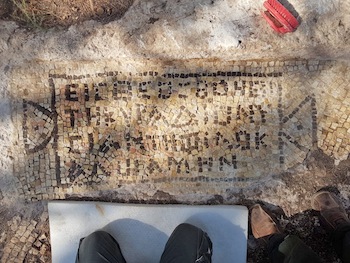
An inscription (top of above photo and below), written in Greek, was translated by Prof. Leah Di Segni of the Hebrew University of Jerusalem. Dated to the early fifth century CE, it says, “Only God helps the beautiful property of Master Adios, amen.” (photos from IAA courtesy Ashernet)

photo - Close-up of the inscription found
Close-up of the inscription found. (photo from IAA courtesy Ashernet)

New neighbourhood construction in the southern part of the Sharon Plain of central Israel has revealed an estate, some 1,600 years old, which was determined by Israel Antiquities Authority (IAA) archaeologists to have been the property of a wealthy Samaritan. The discovery reinforced evidence that, at one time, the area was extensively populated by the Samaritans, who claim they are Israelite descendants of the northern Israelite tribes of Ephraim and Manasseh. An inscription, written in Greek, was translated by Prof. Leah Di Segni of the Hebrew University of Jerusalem. Dated to the early fifth century CE, it says, “Only God helps the beautiful property of Master Adios, amen.” According to Dr. Hagit Torge, director of the excavation on behalf of the IAA, “The inscription was discovered in an impressive winepress [near the top of Tel Zur Natan, where remains of a Samaritan synagogue were found] that was apparently part of the agricultural estate of a wealthy individual named Adios. This is only the second such winepress discovered in Israel with a blessing inscription associated with the Samaritans. The first winepress was discovered a few years ago in Apollonia near Herzliya.” The Samaritans were originally brought to the region as part of Assyrian policy, and first settled on and around Mount Gerizim.

Format ImagePosted on March 8, 2019March 6, 2019Author Edgar AsherCategories IsraelTags archeology, history, IAA, Israel, Israel Antiquities Authority, Samaritans
Successful launch

Successful launch

Prime Minister Binyamin Netanyahu at the Israel Aerospace Industries control room to witness the launch of Israel’s first attempt to put a lander on the moon. (photo from IAI courtesy Ashernet)

In the early hours of Feb. 22, Bereishit, which means Genesis, successfully lifted off on one of Elon Musk’s U.S.-based SpaceX Falcon 9 rockets. It is hoped that the 585-kilogram Israeli space vehicle will land on the moon in about six weeks’ time. “There are four countries that have launched a spacecraft to the moon, one of them is 800 times bigger than we are, one of them 500 times bigger, and one that is a little less than that,” said Netanyahu, referring to the United States, Russia and China. “We are a small country, but huge in achievements and in the capacity of our initiative. I hope that the spacecraft to Mars is already being planned.” He also said he hopes that, on April 11, “we will be able to celebrate the safe landing of Bereishit.”

Format ImagePosted on March 1, 2019February 27, 2019Author Edgar AsherCategories IsraelTags Binyamin Netanyahu, IAI, Israel, Israel Aerospace Industries, moon, space, technology
Kinneret levels still low

Kinneret levels still low

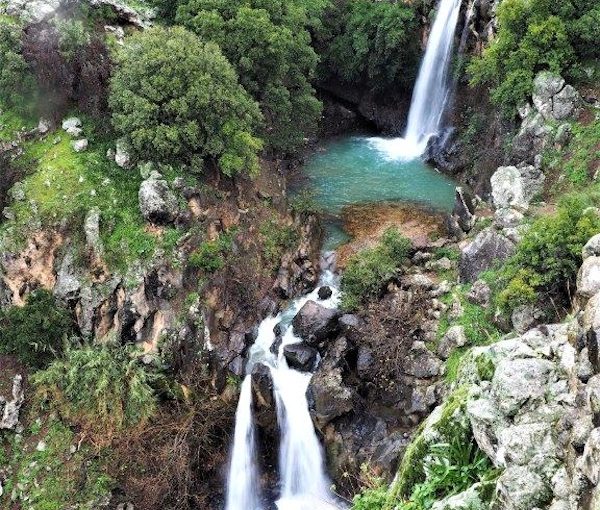
Waterfalls in the Golan Heights. (photo by Michael Davis courtesy Ashernet)

Water from the Golan Heights region’s streams, as well as melting snow from Mount Hermon, will eventually find their way into the Kinneret (Sea of Galilee). Unfortunately, even though precipitation has been plentiful this year, it will not be enough to refill completely the underground water resources or the Kinneret. Presently, the lake level stands at 213.58 metres below sea level, which is below the red line, one of three level measurements. When the lake falls below 214.87 metres below sea level, the pipes extracting the water from the lake are lower than the entry point of the pipes feeding the main pumping station of Israel’s water authority. When the water level in the lake is somewhere between the upper red line and the lower red line, lake water can be pumped to the country’s main fresh water pumping station for distribution along the Israel National Water Carrier. Fresh water is also sourced from the many natural aquifers that are found all over the country.

Format ImagePosted on February 15, 2019February 13, 2019Author Edgar AsherCategories IsraelTags drought, Israel, Kinneret, Sea of Galilee, water
Museum of Babylonian Jewry

Museum of Babylonian Jewry

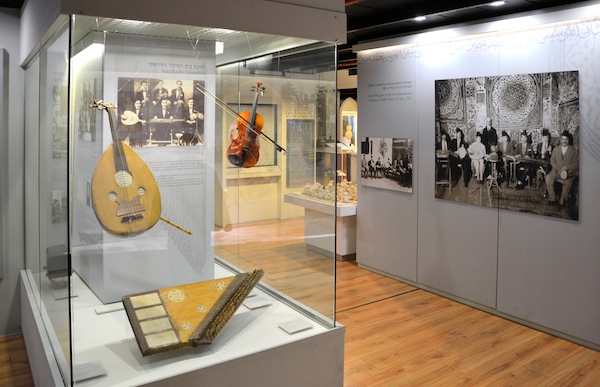
Between 1948 and 1951, more than 121,000 Jews were smuggled out of Iraq in operations Ezra and Nehemia. Many of those who came to Israel settled in the town of Or Yehuda, some 10 kilometres southeast of Tel Aviv. In 1988, Or Yehuda’s mayor, Mordechai Ben-Porat, who was himself born in Iraq, was instrumental in creating in the town the Museum of Babylonian Jewry. Together with six other founding members, the museum was built to tell the story of the Jews in Iraq, up until the aliyah following the establishment of the state of Israel. The museum has become the largest centre in the world for documenting, researching, collecting and preserving the spiritual treasures of Babylonian Jewry. (photo by Ashernet)

Format ImagePosted on February 8, 2019February 7, 2019Author Edgar AsherCategories IsraelTags history, museums, Or Yehuda

Posts pagination

Previous page Page 1 Page 2 Page 3 Page 4 … Page 10 Next page
Proudly powered by WordPress