Skip to content
  • Home
  • Subscribe / donate
  • Events calendar
  • News
    • Local
    • National
    • Israel
    • World
    • עניין בחדשות
      A roundup of news in Canada and further afield, in Hebrew.
  • Opinion
    • From the JI
    • Op-Ed
  • Arts & Culture
    • Performing Arts
    • Music
    • Books
    • Visual Arts
    • TV & Film
  • Life
    • Celebrating the Holidays
    • Travel
    • The Daily Snooze
      Cartoons by Jacob Samuel
    • Mystery Photo
      Help the JI and JMABC fill in the gaps in our archives.
  • Community Links
    • Organizations, Etc.
    • Other News Sources & Blogs
    • Business Directory
  • FAQ
  • JI Chai Celebration
  • JI@88! video

Recent Posts

  • Eby touts government record
  • Keep lighting candles
  • Facing a complex situation
  • Unique interview show a hit
  • See Annie at Gateway
  • Explorations of light
  • Help with the legal aspects
  • Stories create impact
  • Different faiths gather
  • Advocating for girls’ rights
  • An oral song tradition
  • Genealogy tools and tips
  • Jew-hatred is centuries old
  • Aiding medical research
  • Connecting Jews to Judaism
  • Beacon of light in heart of city
  • Drag & Dreidel: A Queer Jewish Hanukkah Celebration
  • An emotional reunion
  • Post-tumble, lights still shine
  • Visit to cradle of Ashkenaz
  • Unique, memorable travels
  • Family memoir a work of art
  • A little holiday romance
  • The Maccabees, old and new
  • My Hanukkah miracle
  • After the rededication … a Hanukkah cartoon
  • Improving the holiday table
  • Vive la différence!
  • Fresh, healthy comfort foods
  • From the archives … Hanukkah
  • תגובתי לכתבה על ישראלים שרצו להגר לקנדה ולא קיבלו אותם עם שטיח אדום
  • Lessons in Mamdani’s win
  • West Van Story at the York
  • Words hold much power
  • Plenty of hopefulness
  • Lessons from past for today

Archives

Follow @JewishIndie
image - The CJN - Visit Us Banner - 300x600 - 101625

Author: The Editorial Board

Still hoping for equality


At Israel’s Yom Ha’atzmaut celebration marking the 67th anniversary of the state of Israel, one of the 14 individuals selected for the honor of lighting torches kicking off the celebration was Lucy Aharish, a television newscaster and actor who happens to be an Arab citizen of Israel.

Of course, “happens to be” is an obfuscation given the charged nature of life in Israel and its region. The fact that she is an Arab citizen of Israel is not at all an insignificant fact. That, certainly, was the opinion of critics from across the political spectrum when it was announced that she would be among those centre-stage at the annual Independence Day ceremony at Mount Herzl Cemetery.

Her participation in the ceremony was politicized by both left and right – by the right for reasons that can hardly be described as anything but racist and by the left for reasons that seem based on the assumption that any Arab who participates in an official Israeli ceremony is a collaborator with some sort of Zionist … whatever.

Hopefully, the critics were schooled by Aharish’s magnificent, emotional words at the ceremony. Holding back tears, Aharish said that she was lighting the torch “for all human beings, wherever they may be, who have not lost hope for peace, and for the children, full of innocence, who live on this earth…. For those who were but are no more, who fell victim to baseless hatred by those who have forgotten that we were all born in the image of one God. For Sephardim and Ashkenazim, religious and secular, Arabs and Jews, sons of this motherland that reminds us that we have no other place. For us as Israel, for the honor of mankind, and for the glory of the state of Israel.”

Aharish, the only Arab lighting a torch in the ceremony, shifted into Arabic, Israel’s other official language, saying: “For our honor as human beings, this is our country and there is no other.”

A different yet parallel development occurred at the same time, when the annual Israel Prize for poetry and literature was bestowed on Erez Biton.

The Israel Prize is widely considered the country’s highest civilian honor and the jury that selected Biton described his five collections of poetry as “an exemplary, brave, sensitive and deep grappling with the wide range of personal and collective experiences, revolving around the pain of immigration, the travails of rooting oneself in Israel, and the establishment of eastern identity as an inseparable part of the full Israeli profile.”

Biton happens to be the first Sephardi Jew to receive the award in this crucial cultural category. Again, “happens to be” is a phrase that diminishes the cultural and historical realities that make this achievement one that transcends the individual and stands in for the history of neglect felt by this significant minority in Israeli society.

These two stories, each pleasant in their way yet tinged with the deep and diverse troubles of Israeli society, carry innumerable lessons for not only Israel but countries around the world.

There are people in every country who, because of the groups to which they belong, have experienced discrimination, decreased opportunities and, well, far worse. Yet within these groups are individuals who have nevertheless achieved accomplishments that suggest there is room for a better future, one that accepts diversity, that encourages creative grappling with a society’s complexities and that respects those who are unafraid to assert their rights.

Here’s hoping that this year, and in future years, a more diverse and equal world means that “happens to be” becomes the norm, not the exception.

Posted on May 1, 2015April 29, 2015Author The Editorial BoardCategories From the JITags discrimination, equality, Erez Biton, Israel Prize, Lucy Aharish, Yom Ha'atzmaut

A long wait for redemption


We were fortunate to be guests at two warm and spirited seders this year. As designated song-leader, I tried to ensure that the singing was fulsome and sufficiently rowdy to rescue late-night flagging energy levels. One heartfelt moment was singing Ani Ma’amin. Based on Maimonides’ 13 Principles of Faith, the song declares, “I believe, with complete faith, in the coming of the Messiah.” It’s a song familiar to attendees of Jewish summer camp and Holocaust remembrance ceremonies. It’s beautiful and haunting and, with its concise lyrics, contagious for group sing-alongs.

There was an Israeli-Canadian couple at the seder and so, after singing about the Messiah’s hoped-for arrival, I grabbed the opportunity to insert another song from my favorite genre: Israeli ’70s and ’80s pop music. Shalom Hanoch’s 1985 hit, “Waiting for the Messiah,” launched onto the Israeli music scene an iconoclastic cry of frustration: “The Messiah isn’t coming – and neither is he phoning.” The few at the seder who knew it sang and air-banded for a bit before turning solemn as we wound down the seder with Hatikvah.

In Ani Ma’amin there is the belief that the world will one day improve, if only we are patient. Hanoch’s song, by contrast, is an attempt at hard-edged realism.

In 1985, Israel was gripped by hyperinflation. “The stock market crashed,” he sang. “People jumped from the roof; the Messiah also jumped, and they announced that he was killed….” Serious political ills were also ramping up, with the Lebanon War fresh in the memory of an increasingly restless nation. And, with the intifada breaking out two years later, more would follow.

Even in the absence of belief, messianiam is an ever-present notion in Jewish culture. In the 17th century, there was Shabbetai Tzvi, known as the false Messiah; later, there was the rejection of modern Zionism among the ultra-Orthodox who believed – and still do – that the experiment in Jewish sovereignty should wait for the Messiah’s arrival. Then there is the belief of some within the Chabad movement that the Rebbe, Rabbi Menachem Mendel Schneerson may himself have been the Messiah. For my part, given that I speak only Hebrew to my kids, I’m stuck with phrases that I normally wouldn’t use in English – and which don’t always reflect my worldview – phrases like “what are you waiting for – the Messiah to come?” when my then toddlers would rest in a snowbank between their JCC preschool and the parking lot.

But what really struck me that night at the seder as we sang Hanoch’s lyrics was a two-fold question. First, which stance better fulfils the Judaic imperative of tikkun olam: the traditional belief in messianic redemption, or the belief that it is all up to us? And second, how can we agree on what of the many problems in the world are deserving of fixing in the first place?

Clearly, the world is in disrepair. Just within the last few weeks, for example, two infants died in unregulated South Tel Aviv day cares serving African refugees; Islamic militants of the al-Shabab Somali group slaughtered 148 Christian students at a university in Garissa, Kenya; bloodshed continues in Syria and Yemen; antisemitic attacks are on the rise, especially in France; and, in Canada, according to Make Poverty History, one in 10 children here lives below the poverty line.

Certainly, none of us in our lifetime will solve all the world’s ills, and with humanity’s imperfections, including our own mental and emotional flaws, our lust for power and the natural drive for accumulation amid scarcity, it’s hard to believe that widespread suffering will ever be overcome. Some believe that messianic yearnings lead to passivity; others that it spurs us to action.

But perhaps the biggest conundrum is how to agree on which of the world’s ills we should actually care about. For some, the criterion is whether the problem is local; for others it is the perception of how the solution will implicate their own well-being; for others it hinges on whether they think the problem is actually the fault of the sufferer. Whether or not one believes in the possibility of messianic redemption, or whether one believes that it is up to us mortals to repair the world, we would do well to start with something that is hard to contest: the importance of compassion for suffering wherever it is found.

Mira Sucharov is an associate professor of political science at Carleton University. She blogs at Haaretz and the Jewish Daily Forward. This article was originally published in the Ottawa Jewish Bulletin.

Posted on May 1, 2015April 29, 2015Author Mira SucharovCategories Op-EdTags Ani Ma'amin, Messiah, Passover, Shalom Hanoch, tikkun olam
בחשבונות הפטורים ממס

בחשבונות הפטורים ממס

ההחלטת ממשלת השמרנים של סטיבן הרפר, להגדיל את סכום ההשקעה בחשבונות הפטורים ממס לעשרת אלפים דולר בשנה, כבר בתוקף. (צילום: CBC News screenshot via YouTube)

ההחלטה להגדלת סכום ההשקעה בחשבונות הפטורים ממס לעשרת אלפים דולר כבר בתוקף

ההחלטת ממשלת השמרנים של סטיבן הרפר, להגדיל את סכום ההשקעה בחשבונות הפטורים ממס לעשרת אלפים דולר בשנה, כבר בתוקף. כך מבהירים גורמים רשמיים ברשות המיסוי הקנדית – קנדה רווינו אייג’נסי. זאת לאור חוסר בהירות בנושא.
כבר מספר חודשים שבממשלה הפדרלית מדברים על הרצון לאפשר להגדיל את סכום ההשקעה השנתית, בחשבונות הפרטים ממס (הטי.אף.אס.איי). לטענת האופוזיציה הדבר נובע רק משיקולים פוליטיים ברורים לאור הבחירות הכלליות, שיתקיימו בחודש אוקטובר הקרוב.
ואכן הצעת תקציב המדינה החדש שהוצגה בשבוע שעבר בפרלמנט, על ידי שר האוצר ג’ו אוליבר, כללה את ההחלטה לאפשר להשקיע בחשבונות הפטורים ממס, עד עשרת אלפים דולר בשנה. ההחלטה כאמור כבר בתוקף ומי שכבר שהשקיע השנה בחשבונות הפטורים ממס 5,500 דולר, יוכל להגדיל את השקעתו בתוספת נכבדת של עוד 4,500 דולר.
הממשלה הפדרלית החליטה להנהיג את החשבונות הפטורים ממס, כבר בשנת 2009. בהתאם להחלטה המקורית עד 2012 ניתן היה להשקיע בחשבונות אלה, מדי שנה 5,000 דולר. והחל משנת 2013 ההחלטה שונתה ותקרת הסכום השנתית הועלתה ל-5,500 דולר. בסך הכל מדובר בהשקעה כוללת פטורה ממס בהיקף של 36,500 דולר בכל אותן שבע שנים (2009-2015). עם החלטת הממשלה משבוע שעבר, להגדיל את תקרת הסכום לעשרת אלפים דולר בשנה, ההשקעה הכוללת בחשבונות אלה מגיעה כבר ל-41,000 דולר (עד לסוף השנה הנוכחית). יש לזכור שכל הרווחים מהכספים שמושקעים בחשבונות יחודיים האלה, גם הם פטורים ממס.
עד היום רק 11 מיליון קנדיים שהם כמעט כשליש מתושבי המדינה, משקיעים כספים בחשבונות הפטורים ממס. ויש רבים בציבור שעדיין אינם מבינים את היתרונות הברורים בחשבונות הפטורים ממס.


לאור המצב בשטח: ראשי הקהילה היהודית קיימו סדנת אימון בנושא אבטחה

לאור הגברת האיומים והסכנות כנגד הקהילות היהודית בעולם, בעיקר מצד גורמים איסלמיים קיצוניים, ראשי הקהילה היהודית של מטרו ונקובר בראשות הפדרציה היהודית, קיימו לאחרונה סדנת אימון בנושא אבטחה. ביום האימון היחודי השתתפו נציגים של משטרת ונקובר ושל המשטרה הפדרלית (האר.סי.אם. פי). כן השתתפו נציגים של המרכז לענייני ישראל והיהודים בקנדה, ושל רשת האבטחה של הקהילות (אס.סי.אן) – שהיא זרוע הביטחון של הפדרציות היהודיות בצפון אמריקה.
ביום האימון דנו המשתתפים בין היתר: בחששות כלליים בנושא הביטחוני, בדאגה לביטחון הארגונים היהודים המקומיים, הצורך לספק לארגונים את הכשרה הביטחונית הראויה, הידוק הקשר עם רשויות אכיפת החוק, באפשרות של התרחישים הגרועים ביותר והתגובות היעילות ביותר, ומהיא הדרך הטובה לשמור על איזון בין שמירה על הביטחון ומתן תחושה של קבלת פנים במוסדות היהודיים. נציגי רשת האבטחה של הקהילות סיפקו מידע על המתרחש בתחום הביטחוני, בקרב הקהילות היהודיות השונות בצפון אמריקה.
בשנים האחרונות חלה עלייה באיומים ובתקיפות כנגד יהודים ומוסדות יהודיים בקנדה. ביולי אשתקד בתקופת מבצע “צוק איתן” הותקפו יהודים על ידי מפגינים פרו-פלסטינים בקלגרי, בעת שהתקיימה הפגנה נגד ישראל. חלק מהמותקפים נזקקו לטיפול רפואי. באותו חודש הותקפו יהודים במיסיסוגה שהפגינו מול ארגון ‘הבית הפלסטיני’. ואילו בטורונטו כתובות נאצה וצלבי קרס רוססו על תחנת אוטובוס מקומית, באזור בו גרים יהודים רבים.
בפברואר השנה דיווח הקונסול הכללי של ישראל במונטריאול ומזרח קנדה, זיו נבו קולמן, כי בעת שביקר בהליפקס המשטרה עצרה לחקירה מוסלמי מקומי. זאת לאחר שפרסם בחשבון הטוויטר שלו ציוצים פוגעניים נגד קורבנות השואה. הוא גם לעג לנספים בפיגועי ה-11 בספטמבר.

Format ImagePosted on April 28, 2015April 27, 2015Author Roni RachmaniCategories עניין בחדשותTags Canada Revenue Agency, Jewish Federation, Joe Oliver, security, Stephen Harper, Tax-Free Savings Account, terror, TFSA, אבטחה, איומים ובתקיפות כנגד יהודים, ג'ו אוליבר, ההשקעה בחשבונות, הפדרציה היהודית, סטיבן הרפר, קנדה רווינו אייג'נסי
Film on fate of Polish town

Film on fate of Polish town

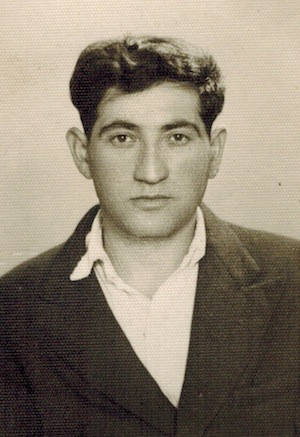
Filmmaker Haya Newman’s father Ozer Fuks grew up in Wolbrom, Poland. He escaped the town in 1939. (photo from wolbrom.pl)

The town of Wolbrom, Poland, had a population of around 10,000 in 1939; about half of the residents were Jewish. Because it was very close to the German border, it was occupied on the day the Second World War began with the invasion of Poland on Sept. 1, 1939.

Haya Newman, a Vancouver teacher of Yiddish and now a filmmaker, has spent the past several years investigating what happened to the Jews of Wolbrom. On April 14, the evening before the community gathered to mark Yom Hashoah, Newman premièred her documentary Wolbrom: My Father’s Hometown in Poland before a packed audience at Temple Sholom.

Newman’s father, Ozer Fuks, came from the town, and trouble began well before the invasion of the Nazis. When Ozer was 4 years old, his father was murdered in front of his leather goods shop. In 1939, Fuks was in the Polish army and he managed to escape the Nazis through the Soviet Union.

photo - Filmmaker Haya Newman’s father Ozer Fuks grew up in Wolbrom, Poland. He escaped the town in 1939
Filmmaker Haya Newman’s father, Ozer Fuks. (photo from Haya Newman)

The project of assembling information on her father’s hometown began from almost nothing, given that her late father kept his past during the Holocaust secret.

In her attempts to gather information, Newman visited the few remaining members of her father’s family in Israel. When that branch of the family opted to leave Europe for Mandate Palestine, Newman said, the remaining family told them they were crazy, heading to a barren desert. They are the only members of her father’s family that survived.

Newman’s documentary, which was filmed by her husband, Tim Newman, follows her first to Israel and then to Wolbrom, in search of the missing pieces.

The outline of the story of Wolbrom’s Jewish residents is similar to that of Jews in thousands of other Polish villages, towns and cities.

The Jewish residents were rounded up by the Nazis and their collaborators. Some were shot on the spot while the rest were forced on a six-day march that circled back to the same town. The able-bodied who survived were forced into slave labor.

In 1941, about 8,000 Jews from the surrounding area were forced into the ghetto in Wolbrom. Eventually, some were transported to concentration camps. But most of them met a grisly fate closer to home.

A memorial was erected in 1988, apparently by residents of Wolbrom themselves, remembering the 4,500 Jews killed and buried in mass graves outside the town.

“This must be carved in Polish memory as it is carved in stone,” the memorial reads in Polish.

Walking to the site, Newman ran into locals who shared some of the stories that had come down from the older villagers.

Three holes were dug in a clearing, they said, and planks were placed across them. The Jews were ordered to undress and as they individually walked across the planks, they were shot and fell into the ravines. When the dirt was pushed over the bodies, one local recounted, the earth cracked from the movement of those still alive.

A story survives of a boy who did not. A youngster managed to escape through the forest as the murdering was going on. Police chased after him, calling out to local boys who were tending cows to catch him, which they did. An officer stood on the boy’s hands and shot him point blank.

Wolbom’s synagogue was turned into a pile of rubble during the war. The Jewish school is now an agricultural supply store – with Nazi graffiti covering the doors. While Newman said she was largely greeted with warmth during her visit, which took place in 2005, she sensed some defensiveness among Poles.

“The fact of the matter is that 90 percent of Polish Jews were killed and a lot had to do with the Polish population,” she said, adding that hundreds of Jews who had been in hiding and survived were killed after the war by Poles. There are 327 documented cases of killings, either individual murders or in pogroms in the immediate aftermath of the war, but estimates are that as many as 2,000 Polish Jews who survived the Holocaust were murdered after liberation.

The reactions from some of the locals caught on video are intriguing.

“There is nothing to look for,” said one man, “You can’t turn back time.”

Another told her, “Take it easy, it’s all in the past.”

Newman visited the home where her grandmother had lived and the woman who resided there at the time was somewhat nonchalant about the property’s provenance.

“When we bought the house, it was empty,” she said.

Other residents spoke of the horror and upset felt by non-Jewish people at the fate of their Jewish neighbors. One woman said her mother picked up Yiddish playing with the Jewish kids in town before the war. Others provided helpful information to direct Newman to the relevant sites of the former Jewish community.

Overall, the people of Wolbrom were open and very willing to speak with her, she said. “It seemed like they were waiting for me there.”

It has been 10 years since the trip that formed the backbone of the film and Newman noted that it is not only the survivors who are passing away, but the eyewitnesses who can add to the fullness of what happened during that period.

“Within five, 10 years, they are not going to be there anymore,” she said.

Rabbi Dan Moskovitz spoke after the screening and referenced the just-ended Pesach holiday to emphasize the need to tell the stories of the more recent past. Just as the Hagaddah marks the narrative of the Exodus, he said, today’s generation should be recording the narratives of this era.

“We need to tell our stories so our children can tell them the way we tell the Hagaddah,” he said. “Go home, write down and tell your story.”

Newman’s next projects include a documentary about Yiddish on the West Coast, a film about her mother’s hometown in Poland and another about Vancouver singer Claire Klein Osipov.

Pat Johnson is a Vancouver writer and principal in PRsuasiveMedia.com.

Format ImagePosted on April 24, 2015April 23, 2015Author Pat JohnsonCategories LocalTags Fuks, Haya Newman, Holocaust, Shoah, Wolbrom
Analyzing talmudic sages

Analyzing talmudic sages

Vancouver colleagues and friends, Rabbi Binyomin Bitton, left, and Rabbi Eliezer Lipman (Lipa) Dubrawsky, spent many hours discussing scholarly Torah subjects, and the 300-page Hebrew volume by Bitton titled Rabbi Eliezer Hagadol was released in time for the second anniversary of Dubrawsky’s passing. (photo by Noam Dehan)

Rabbi Binyomin Bitton shared a unique bond with the late Rabbi Eliezer Lipman (Lipa) Dubrawsky, who was educational director of Chabad-Lubavitch of British Columbia in Vancouver. In addition to being personal friends, they spent many long hours discussing scholarly Torah subjects across the board.

In time for the second anniversary of Dubrawsky’s untimely passing at the age of 56, Bitton, co-director of Chabad of Downtown, released a book of in-depth research and analysis on the opinions and mindsets of two talmudic sages, Rabbi Eliezer ben Hyrcanus and Rabbi Yehoshua ben Chananya, based on the unique approach and teachings of the Lubavitcher Rebbe, Rabbi Menachem M. Schneerson.

“The idea first came to me shortly after Rabbi Dubrawsky’s passing,” explained Bitton. “His first name was Eliezer, and his father’s name was Yehoshua. I felt it would be a fitting memorial for two men who dedicated so much of their lives to Torah to explain the positions of two sages whose names they bear.”

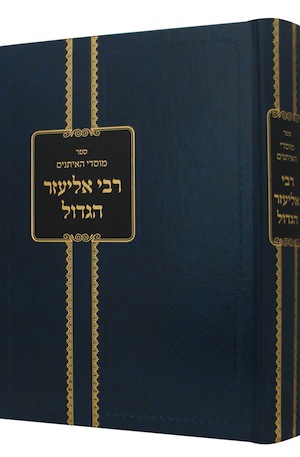
While he was not initially sure if he would have enough material for a book, Bitton’s research yielded a robust, 300-page Hebrew volume titled Rabbi Eliezer Hagadol (The Great Rabbi Eliezer), an honorific often used for the talmudic sage, which Bitton said aptly described his great friend and mentor, as well.

image - Rabbi Binyomin Bitton’s new book is dedicated to Rabbi Lipa Dubrawsky, book cover
Rabbi Binyomin Bitton’s new book is dedicated to Rabbi Lipa Dubrawsky.

Following a pattern championed by the Rebbe, the author identifies the prototypical approaches of the two first-century sages, and then goes on to apply those same underpinnings to seemingly unrelated arguments of theirs dotting the talmudic landscape.

“The Rebbe had a unique way of learning, of leshitasayhu” – the notion that the rulings of talmudic sages on disparate subjects are related to one another, explained Bitton, “and this forms the basis of the book. The widely accepted approach to leshitasayhu is that the ruling on one particular subject evolves from another one.

“By the Rebbe, it works on a different, deeper plane. In his view, many opinions evolve from a quintessential point in which the two sages essentially disagree and, from there, their opinion evolves in numerous subjects, which, at first glance, may not be related at all. Accordingly, the Rebbe further explains how the approach of each sage evolves and/or is connected to their Hebrew name, soul, place of residence, responsibilities, position and more. This, too, was incorporated in the book with regards to Rabbi Eliezer and Rabbi Yehoshua.”

In 45 chapters, Bitton masterfully weaves common threads through the full gamut of human experience, demonstrating how the sages approached dozens of subjects that can be traced to the same fundamental axioms.

The book was released just in time for 27 Nissan, the second anniversary of the rabbi’s sudden passing in 2013. Thus, the book’s second part deals with the two sacrifices that frame the time of year: the Omer barley offering that was brought to the Temple in Jerusalem on the second day of Passover, and the two loaves brought seven weeks later on Shavuot.

Expounding upon a discourse of the Rebbe, Bitton applies the Rebbe’s principles to a number of different aspects of the two offerings – even explaining how they reflect through the kabbalistic lens of Chabad Chassidic tradition.

“Rabbi Dubrawsky dedicated his life to learning Torah and teaching Torah every single day,” said Bitton, “and I truly feel that through sharing Torah with others, we can perpetuate his special life.”

This article is reprinted with permission from chabad.org. To sponsor other works and/or buy Bitton’s, visit chabadcitycentre.com/book.

Format ImagePosted on April 24, 2015April 23, 2015Author Menachem Posner • Chabad.orgCategories WorldTags Binyomin Bitton, Chabad, Lipa Dubrawsky, Rabbi Eliezer Hagadol, Torah

A moving Shoah memorial

Dozens of Vancouverites who survived the Holocaust were joined by their children, grandchildren and hundreds of others in a solemn, powerful commemoration for Yom Hashoah, Holocaust Remembrance Day.

The catastrophic impact of the Holocaust on individuals, families, communities and the world was made evident through words and music, as stories of survival and loss, and their impacts on the living, were interspersed with Yiddish songs that recalled the civilization destroyed by the Nazis.

The annual event took place at the Jewish Community Centre of Greater Vancouver on April 15, the eve of Yom Hashoah.

A procession of Holocaust survivors passed through the hushed auditorium, taking their places at the front of the hall and placing candles on a table before Chazzan Yaacov Orzech led the Kol Simcha Singers in a poignant El Male Rachamim, the prayer for the souls of the departed. Chaim Kornfeld led the room in the Kaddish.

Hymie Fox, a member of the second generation, told the audience that his parents, Jack and Freda Fuks (Fox), struggled to keep their experiences from their children, but the Holocaust permeated the family’s life in unanticipated ways.

“During the day, my mother could control her thoughts, her words, her stories,” Fox said. But at night, he would be awakened by his mother’s screams.

He wanted to ask about the trauma that caused the night terrors, he said, but his mother had devoted herself so completely to sheltering these memories from her children that to inquire would suggest that all her efforts to protect her children were for naught.

Fox’s father came from an extended family of more than 70 and was one of 11 children. Just Jack and one brother survived.

Though unspoken, his family’s Holocaust experience was especially present at holidays, when the small family of four would celebrate alone.

“Death was a part of our everyday life,” he said. “Yet, there was nobody to die.”

Kornfeld was the survivor speaker for the evening. He recalled his childhood in a village on the Czechoslovakian-Hungarian border, his early schooling and the strict adherence to Judaism with which he was raised, one that forbade the touching of an egg laid on the Sabbath until after sundown.

In March 1944, when the Nazis occupied the town, they rounded up the intelligentsia, Kornfeld assumes because it would be easier to control the masses if the heads of the community were removed.

A ghetto was established for the surrounding areas and, inevitably, Kornfeld was loaded onto a train car destined for Auschwitz.

An older inmate pointed out Josef Mengele and warned the young Kornfeld to tell the evil doctor that he was 18 years old and a farmer. A week later, Kornfeld was transported in a railcar destined for Mauthausen that was so packed people could only stand.

Mauthausen-Gusen concentration camp was a huge constellation of slave labor facilities, intended for the most “incorrigible political enemies of the Reich.” There, Kornfeld was put to work digging caves in a mountain where the Nazis constructed munitions and equipment, unassailable by Allied bombing.

At one point, he developed an abscess on his leg and was unable to walk. He was taken to the infirmary, which was an extremely dangerous situation in a dystopia where only those capable of work survived. One day, all patients capable of walking were ordered to leave the infirmary and a Polish man carried Kornfeld on his back, fearful of his fate should he remain in the infirmary. A German soldier ordered the man to put Kornfeld down. The officer put his hand toward his holster.

“I pleaded with the officer,” he said. “I begged for my life.”

He reminded the Nazi how effective he was as a worker and his life was spared. He was liberated from Mauthausen on May 5, 1945.

After a time on a kibbutz in Israel, Kornfeld came to Canada and learned of an opportunity as a Hebrew school principal in Saskatoon that allowed him to work evenings and study at university in the daytime. He became a lawyer, married and has four children.

Claire Klein Osipov sang and interpreted Yiddish songs that, while often melancholy in themselves, had added resonance as evidence of the people, culture and language that were almost completely extinguished in the Shoah. She was accompanied on piano by Wendy Bross Stuart who, with Ron Stuart, artistically produced the event. The Yom Hashoah Singers – a group of Jewish young people including members of the third generation – delivered a message of both mourning and hope with such songs as “Chai” and “The Partisan Song,” the defiant anthem of Jewish resistance that is an annual tradition on this day. Lisa Osipov Milton also sang, and Andrew Brown, associate principal viola with the Vancouver Symphony Orchestra, performed excerpts from Milton Barnes’ Lamentations of Jeremiah and Ernest Bloch’s Meditation.

Corinne Zimmerman, a vice-president of the Vancouver Holocaust Education Centre, which presented the event with support from the Jewish Federation of Greater Vancouver, the Jewish Community Centre and the Province of British Columbia, also spoke.

Moira Stilwell, member of the B.C. Legislature for Vancouver-Langara, said the day is a time to “learn, mourn and pledge, ‘Never again.’

“Yom Hashoah is not only about learning from history, but about passing those lessons on to the next generations,” she said.

Pat Johnson is a Vancouver writer and principal in PRsuasiveMedia.com.


Posted on April 24, 2015April 23, 2015Author Pat JohnsonCategories LocalTags Chaim Kornfeld, Holocaust, Yom Hashoah
Corrin retires

Corrin retires

After 20 years, librarian Karen Corrin retired in March from the Waldman Library. (photo by Olga Livshin)

Karen Corrin retired from her position as a librarian at the Isaac Waldman Jewish Public Library on March 30, after exactly 20 years with the library. She has been with the Waldman from the very beginning.

“There was always a small library at the old JCC,” she remembered. “I took my children there when they were young. The new library opened on the second floor of the new building in 1994. I was studying for my master’s at the library school at UBC then. My program was for two years, from 1993 to 1995, so I didn’t apply to work there, but I was at the opening. I remember Amos Oz speaking. He talked about the importance of words.”

With the new library space came new funding, so the Waldman could hire a librarian and a library technician. Corrin wasn’t among the new hires but when, a few months later, the position of the librarian opened again, her friends urged her to apply.

“I was still at school. I wanted to be a cataloguer when I graduated, but a job was a job, so I applied and got it.” She started working for the Waldman in April of 1995.

Her previous experience, both personal and professional, prepared her for this position. “I have always loved libraries,” she said with a smile. “I would go with my kids to a local library, and we would bring library books home for everyone.” Before she started her program at the University of British Columbia, she worked as a volunteer coordinator and in fundraising. She also had management skills and knew computers. All of this combined made her a perfect fit for her new duties as the Waldman librarian.

“Waldman is almost unique. There are so few JCC libraries in North America,” she lamented. “Most city libraries are funded by the governments, but Waldman is a community library. The funds come from fundraising. That’s why, from the beginning, it was run by volunteers.”

According to Corrin, there are about 30 regular volunteers at the Waldman, and she considers them the best PR people the library could have. “They care about the library, about books and about the community. They have time to chat to the patrons, to explain things, to help everyone find what they are looking for. The value of the library volunteers is great, it can’t be overrated. They are our gems.”

Corrin herself also worked as a volunteer, although not for the Waldman. “About my history with libraries,” she said, “I always volunteered at my children’s elementary schools in their school libraries. First for my son in Richmond and then for my daughter at [Vancouver] Talmud Torah.”

She emphasized that the volunteers who run the front desk of the Waldman liberate the librarians to do their main jobs – fundraising, acquisitions and event planning.

“There are several kinds of events,” she explained. “People would come in and ask us, why don’t we have a book club? So we would start a book club. We saw what events the community centre was running, and if there was something missing, something a library could supply. Another kind of event comes with the Canada Council grant. We would apply for a grant to pay a writer. If we got it, we could invite a writer for an event or a reading. We had a few children’s writers speaking at the library through this grant. We also had some book launches of local authors and sometimes poetry readings – those were often funded by Yosef Wosk. It all comes from what the community wants.”

Recently, the most profound community-inspired change at the Waldman was the introduction of ebooks. Before that, but also during Corrin’s term at the Waldman, it was computerizing the catalogue. “When I started, we still used cards,” she recalled. “Libraries are always reinventing themselves, but I think that the most important purpose of a library is to be a community hub, a meeting place. That’s why we ran educational courses and children’s events at the Waldman. There is always something going on. You’re never bored at the library.”

Surprisingly, the profession of a librarian wasn’t Corrin’s first choice. When she was young, she wanted to be a teacher. “I always thought a teacher has to be perfect. He is the one molding children’s minds. I was afraid I wasn’t perfect enough,” she recalled of her youthful dreams. But the library job gave her a lot of satisfaction, and now she has plans to be a teacher, too. She and her husband plan to travel to Spain as volunteer English teachers. They have already done this in Hong Kong, with high school students, and loved it.

“I have lots of other things I’d like to do now that I have more free time: walking, learning how to play piano, swimming outside at Kits pool. I might come back to the Waldman as a volunteer,” she mused.

Olga Livshin is a Vancouver freelance writer. She can be reached at [email protected].

Format ImagePosted on April 24, 2015April 23, 2015Author Olga LivshinCategories LocalTags Karen Corrin, Waldman Library
Art shares esthetic, stories

Art shares esthetic, stories

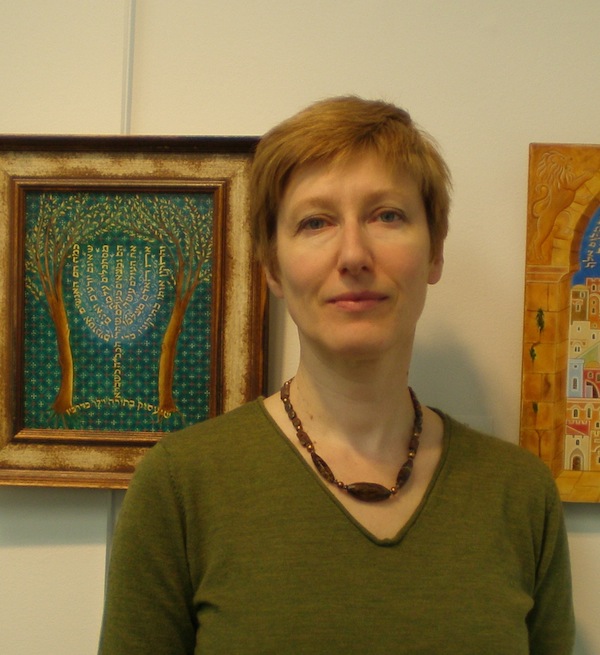
Judith Joseph (photo by Olga Livshin)

The current exhibit at the Zack Gallery, Tales of Light and Dark, features two artists from opposite sides of the continent. Alina Smolyansky is a local artist; Judith Joseph lives and works in Chicago. Their paintings hang side by side on the gallery walls as if they belong together. Their similar small size, bright color and propensity to tell stories balance the differences in technique and visual effects, as well as the two artists’ distinct creative auras.

Both artists explore Judaic themes. In the case of Joseph, her paintings relate her family’s history through the medium of Jewish symbolism. Almost every piece of hers includes birds as their most important element. Peacocks, firebirds and owls populate Joseph’s work.

“I love birds because they can fly. I wish I could fly,” Joseph said in an interview with the Independent. “A bird stands in for a person but it doesn’t have age or gender, it isn’t poor or rich. It represents everyone.”

In a way, in her art, she does fly, free of the restrictions of reality. Using the bird metaphor and the mysticism of the Torah, she spins tales of courage and suffering. Several of her paintings are dedicated to her grandmother who came to America from Ukraine after the First World War. In one image, a girl travels across the ocean on a menorah. Her vessel is wobbly, but she hangs stubbornly for her life, and the menorah glows with triumphant light, illuminating pain and sorrow but also victories and achievements.

Many pieces incorporate metal-foil embossing into the paintings. The process used for the embellishment is called repoussé. “I learned repoussé in high school,” Joseph recalled. “I like working with metal.” Her owls’ feathers and floral borders of her paintings glint with intricate copper patterns, infusing the pictures with a sophisticated and funky ambience.

Her paintings always start with an emotion and an idea, she said. “I always have a sketch book with me and, whenever an idea appears, I make a sketch. Most paintings in this show come from my sketches practically unchanged. I know that if the emotion that inspired it is genuine, unfiltered, then people respond to it.”

Like any art show, this one only highlights a small segment of the artist’s output. The majority of her art is beyond the scope of the show. “I paint ketubahs,” she said. “Most of my commissions are ketubahs. I started making them in high school and still love them. By now, I have done hundreds of them. Recently, I also do digital ketubahs. I would paint by hand, then have the image photographed professionally, and then play with it on the computer: add calligraphy, change colors, customize. I had to learn new software to do that, and my skills are still limited, but I’m learning.”

The courage to combine old materials, ancient art form and new computer skills is what makes Joseph a 21st-century artist. The same modern streak also made her collaborate with an online seller of ketubahs, the Canadian company ketubah.com. “Three of their bestsellers are mine,” she said with a smile.

photo - Alina Smolyansky
Alina Smolyansky (photo by Olga Livshin)

She works predominantly in egg tempera, the type of paint that was exclusively used until about 1500, when it was largely replaced by oil paints. Few artists still use egg tempera, but its brightness attracted not only Joseph but also her partner in this show, Smolyansky.

The credit for bringing them together belongs to the gallery director, Linda Lando. “I put them together because I thought that their work has a similar sensibility,” Lando said. The artists didn’t know each other before the show.

Unlike Joseph with her art degree, Smolyansky arrived at this point in her life by a vastly different route. She started her professional life as an engineer in Kiev. Like many Jews during the Perestroika era, she immigrated to Israel and, after four years there, she came to Canada in 1995. She kept working as an engineer, but wasn’t satisfied with her professional life. She felt the need for a change.

“I was searching for myself,” she explained. “I’ve been a dreamer all my life. I liked making up and writing stories and painting watercolors. When I was a child, I attended an art school. I always liked learning, always was an A student. If I could, I would be a permanent student,” she admitted.

To satisfy her craving for knowledge, she studied writing at Douglas College, and then enrolled in the professional communications program at Royal Roads University. She was thinking of a technical writing career, but felt she couldn’t settle.

At about the same time, around 2006, she began studying yoga, and discovered a spiritual path. “I’m not religious,” she said, “but I need to form my own connection to the Creator. I need to understand where we are coming from and where we are going.”

She quit her engineering position and spent some time in Thailand at a yoga school, but an unknown force was still pushing her towards a different goal.

“I was on Granville Island,” she recalled. “It was 2008, and I was looking for some classes to take when I saw this ad for an icon painting class. It was absolutely unexpected. I didn’t know anything about icons, but it seemed I was driven to this class. I took it and I was good from the beginning.”

The class introduced her to egg tempera and to icon paintings, both Eastern Orthodox and Roman Catholic. “I was fascinated by egg tempera. I haven’t painted watercolors since.”

She stayed with her icon teacher for three years, until he moved out of the city. She still paints icons on commission and she teaches icon painting, occupying a small but exclusive artistic niche in Vancouver. But she didn’t abandon her quest for knowledge. In search of more spiritual learning, she began her studies with Bnei Baruch Kabbalah Research and Education Institute, based in Israel.

The mysticism of kabbalah appeals to her. “My art in this show is influenced by my kabbalah studies, especially the … Zohar,” she said. Her Tree of Life gladdens the eyes, her old scholar contemplates the Jewish destiny and her menorah shines for all.

The exhibition continues until May 16. To learn more about the artists, visit judithjosephstudio.com and lettherebelightart.com.

Olga Livshin is a Vancouver freelance writer. She can be reached at [email protected].

Format ImagePosted on April 24, 2015April 23, 2015Author Olga LivshinCategories Visual ArtsTags Alina Smolyansky, Judith Joseph, kabbalah, Linda Lando, Zack Gallery, Zohar

The future to imagine

In the past several weeks, we have celebrated liberation and redemption on Passover. On Yom Hashoah, we mourned the victims of Nazism and the generations that never were. On Yom Hazikaron, we honored the brave defenders of Israel who gave everything for the dream of the Jewish people’s right to live as a free people in our own land. Then we joyously celebrated the realization of that dream on Yom Ha’atzmaut.

These four commemorations are drawn together in many ways by rabbis and thinkers. We are mere journalists, but if you give us a moment, we, too, have some thoughts that may be worthy.

There is a troubled narrative connecting the Holocaust and the creation of the state of Israel, a connection that is sometimes misunderstood and often deliberately misrepresented.

Critics have called Israel a “reparations payment” given to the Jews as recompense for the Holocaust. This formulation is a desecration, because there could be no recompense for the Holocaust. More to the point, it is false history. Israel was not given to the Jewish people. The Partition Resolution, significant as it was as a fulcrum for historical events, turned out to be another hollow United Nations vote. Israel came into being only because the Jews of Palestine, some from the Diaspora and a small group of idealistic non-Jews from abroad fought – some to the death – for the dream of a Jewish homeland.

The connection between the Holocaust and the creation of the state of Israel is not, as the popular narrative has it, because the world felt sympathy. If anything, the world wanted to create a place for the surviving remnant so that they wouldn’t have to take responsibility for them.

Where the genuine connection lies between the tragedy of the Holocaust and the joy of independence is in the realization that the Holocaust was a direct result of Jewish statelessness. Had Israel come into being a decade earlier, there may have been no Holocaust, or its magnitude would have been much diminished. That is one connection.

Another is the psychological effect the creation of the state had on Jewish people individually and collectively, in Israel and in the Diaspora.

After the Holocaust, the Jewish people worldwide could have been expected to plummet into individual and collective despair. Instead, Israel gave hope – and a future to imagine and to build after the collective future was almost destroyed. Whether Jews made aliya – or even visited – or not, Jewish Canadians helped build the state of Israel through a million acts of philanthropy and volunteerism.

Israel is many things to many different Jews. It is a resolution to 2,000 years of statelessness, the fundamental fact that was at the root of our tragedies. It is the culmination of the quest for sovereignty and freedom and, while Israel is not perfect by any stretch, we endeavor to work toward that ideal. Israel is the dream for which so many have given so much, as well as a complex, thrilling, sometimes infuriating, always cherished reality.

In the context of millennia of Jewish civilization, the comparatively new state of Israel is a part of all of us and we are all, in some way, a part of it.

Posted on April 24, 2015April 23, 2015Author The Editorial BoardCategories From the JITags Holocaust, Israel, Passover, Yom Ha'atzmaut, Yom Hashoah, Yom Hazikaron

Nostalgia’s place in progress

There were no doubt many emotions surrounding the Israel Prize this year: disdain over Prime Minister Binyamin Netanyahu intervening to disqualify some judges apparently on ideological grounds, pride for the winners and disappointment among those forgotten. Even Chaim Topol, this year’s Israel Prize winner for lifetime achievement, said he had mixed feelings about his victory since other deserving candidates have been shut out in recent years. And for those who think about Topol in what is his most popular role, that of Tevye in the 1971 film (and some of the stage productions of) Fiddler on the Roof, there is likely one other emotion: nostalgia.

Nostalgia often gets a bad rap when it is talked about in the context of social maturity. But as I’ve argued elsewhere, the collective experience of nostalgia can also be a source of psychological sustenance for mourning an apparently simpler past in order to embrace a more complex present. In 20th-century Jewish popular culture, nowhere has this been more apparent than in the case of Fiddler on the Roof.

This was a time of emerging feminism and rising divorce rates. Races, religions and ethnicities were mixing as never before. The nature of Jewish religious practice was becoming viewed as a personal choice – something that Steven M. Cohen and Arnold M. Eisen have described as the emergence of a “Jewish sovereign self.” On this backdrop, Fiddler’s audiences were given a “safe space” – in today’s parlance – to mourn patriarchy, cultural homogenization, and collective adherence to folkways and cultural conventions.

Consider the dream sequence. In presenting his concocted reverie as a divine omen in order to convince Golde that Tzeitel should marry Motel, Tevye pulls a trick out of the bag of shtetl superstition. And the conceit works. Though we know it’s a ruse, we become caught up in the ghoulish spin of the costumes, choreography and music. For a few minutes, we bid farewell to outmoded beliefs and traditions without feeling that we are abandoning our past commitments outright.

Or the ironic and comical number “Matchmaker, Matchmaker,” where the comfort of convention is as thrilling for the daughters initially in the show, as is their fierce independence by the end.

Or Tevye conceding in the prologue that he doesn’t know the origin of some of the community’s customs. As Judaism becomes increasingly infused with contemporary values – the ecological dimension of powering down on Shabbat; the blending of new food politics with kashrut and the search for personal spirituality – Tevye’s proverbial wink directed at the audience allows us to keep one foot in the present of personal autonomy and choice, while the other dips into the comfortable past where automatic adherence to Jewish tradition formed the bonds of community.

American Jewish writer Cynthia Ozick complained that Fiddler portrayed Sholem Aleichem’s stories as “naive,” with “the occasion of a nostalgia for a sweeter time, pogroms notwithstanding.” Fiddler’s Broadway director and choreographer Jerome Robbins was concerned about the play appearing overly nostalgic, writing to his costume designer that he didn’t want audiences viewing the characters “through the misty nostalgia of a time past….”

For allowing Americans to come to terms with a changing America, however, and for American Jews to reflect on the rapid changes within their own communities, the nostalgia in Fiddler has been important. As Stephen J. Whitfield has written in his history of the show, Fiddler “had the advantage of distance: play-goers were far enough removed to memorialize without honoring any particular claims it might make, and without submitting to any moral mandates it might demand.”

Thinking about the role of Fiddler in today’s Jewish landscape, I think about the constant tensions between history and tradition on one hand, and modernity and contemporary values on the other. This has been especially important in how Jewish communities negotiate difference.

From the ashes of the Holocaust, the Zionist struggle for sovereignty and postwar North American Jews fighting against prejudice and discrimination, Jewish concerns now include many additional tensions. There’s intermarriage – how to broaden the tent enough to include intermarried families who may wish to be part of the Jewish people, but not so much that the meaning of being Jewish is lost; increased women’s ritual participation in North American synagogues and in public space in Israel; and LGBTQ Jews looking to take their place in Jewish communities. For their part, Israelis struggle – not hard enough, perhaps – to honor their state’s Jewish identity while extending full equality to the Palestinian minority and contending with the ongoing occupation, all while confronting the difficult plight of African refugees and asylum-seekers.

With Passover just behind us – and, for many, its nostalgia-drenched experience of gathering around the seder table – we might pause to consider how to navigate the uncertain waters of change while being anchored by tradition. And yes, a little nostalgia now and then might just help.

Mira Sucharov is an associate professor of political science at Carleton University. She blogs at Haaretz and the Jewish Daily Forward. A version of this article was originally published on haartez.com.


Posted on April 24, 2015April 23, 2015Author Mira SucharovCategories Op-EdTags change, Fiddler on the Roof, tradition

Posts pagination

Previous page Page 1 … Page 566 Page 567 Page 568 … Page 649 Next page
Proudly powered by WordPress