Skip to content
  • Home
  • Subscribe / donate
  • Events calendar
  • Business Directory
  • FAQ
  • News
    • Local
    • National
    • Israel
    • World
    • עניין בחדשות
      A roundup of news in Canada and further afield, in Hebrew.
  • Opinion
    • From the JI
    • Op-Ed
  • Arts & Culture
    • Performing Arts
    • Music
    • Books
    • Visual Arts
    • TV & Film
  • Life
    • Celebrating the Holidays
    • Travel
    • The Daily Snooze
      Cartoons by Jacob Samuel
    • Mystery Photo
      Help the JI and JMABC fill in the gaps in our archives.
  • Community Links
    • Organizations, Etc.
    • Other News Sources & Blogs
  • JI Chai Celebration
  • JI@88! video

Recent Posts

  • Legal help for students
  • Revisiting myth of Lilith
  • Wrong person rebuked
  • Canada’s mixed messages
  • Questions for museum
  • Symposium on antizionism
  • Making soccer political
  • CJPAC lauds Pulver’s impact
  • City recognizes Vrba’s legacy  
  • Organ donation saves lives
  • Theodore’s March premiere
  • A healing Shabbaton
  • Supplying healthy food
  • A chime of metal tags
  • Yellowknife seder a first
  • Ishai energizes, unifies
  • A Lag b’Omer to remember
  • Expanding the healing
  • Hannah Senesh – a unique hero
  • Community milestones … May 2026
  • Sharing her testimony
  • Fall fight takes leap forward
  • The balancing of rights
  • Multiple Tony n’ Tina roles
  • Stories of trauma, resilience
  • Celebrate our culture
  • A responsibility to help
  • What wellness means at JCC
  • Together in mourning
  • Downhill after Trump?
  • Birth control even easier now
  • Eco-Sisters mentorship
  • Unexpected discoveries
  • Study’s results hopeful
  • Bad behaviour affects us all
  • Thankful for the police

Archives

Follow @JewishIndie
image - The CJN - Visit Us Banner - 300x600 - 101625

Images

Anatevka brought to Abbotsford

Anatevka brought to Abbotsford

Arne Larsen as Tevye and Ruth Kult as Golde in Gallery 7 Theatre’s production of Fiddler on the Roof. (photo by Dianna Lewis)

Growing up in a Jewish home, I always cherished Fiddler on the Roof and its Sholem Aleichem inspiration. I had a copy of the film in the entertainment room, but the recent Gallery 7 Theatre production was only the second time I have seen this classic as a live play, the first time being in high school.

Gallery 7 did an amazing job highlighting Jewish culture and tradition to audiences last month in Abbotsford, an area that is sparsely Jewish. The company’s executive and artistic director, Ken Hildebrandt, noted that all of the artists and technicians pursued the project with the utmost “passion, dedication and love,” and it showed.

Set in the fictional shtetl of Anatevka in czarist Russia, the musical’s subject matter isn’t for the faint-hearted. Tevye, Golde, their daughters and the other villagers experience the trauma of pogroms, the beauty of love and the strength of faith, offering lessons relevant to us even now.

What word best describes the play? Triumph. Triumph over poverty (the daughters married who they wish despite the lack of dowry) and adversity (antisemitism), and the triumph of women (including in the cast, as the fiddler was played by Abigail Curwen) and tradition (adapting to modernity).

Tevye is played with realism by Arne Larsen. Outside of the occasional accent slip, Larsen plays the role as if he were living in czarist Russia himself. He sings with honesty, and truly seems to wrestle with the Divine to honor his faith. Tevye is the papa, the one to be obeyed, but, as the play develops, he shows a remarkable love for his daughters, allowing them to marry who they wish – as long as they are Jewish. Even in the case of Chava (Anastasia McIntosh), who is “dead to him” because she marries Sasha (Sheldon Jeans), a non-Jew, Tevye wishes, “May G-d be with you.” Then there is Perchik (Kevin Hegeman), who turns everything into a political statement. At one point, he compares the biblical Laban to a modern employer in the socialist sense, one of the play’s many comedic moments.

The shtetl world was brought to life by the costume and set design of Rafaella Rabinovich, who has a BA from the Rafeket Levy Design School for the Performing Arts in Tel Aviv. She told the Independent that it was both a great privilege and a wonderful challenge to put together. (For a profile of Rabinovich, see the article “Relishing theatre life.”)

The play’s one main set, simple by theatre standards, was a very colorful depiction of a village house. The costumes accented some of the characters’ meanings. For example, the police outfits were distinguished for their detail and, when they appeared, one knew trouble was to follow. Tevye was costumed with tzizit and hat, which was used to great purpose at the end of the play when he notes that perhaps Jews wear hats because they are forced to move so often.

The rabbi in the play, however, more resembled a modern non-Orthodox rabbi in appearance with his clean shave and, at one point, he is caught drinking rather than praying. This bit of artistic licence contributed to Walt Derksen’s performance seeming less believable from a historical perspective. The play could have also used more attention to lighting.

While it wasn’t Broadway, Gallery 7’s Fiddler was a believable drama about triumph over adversity, and the strength of love. Many audience members were visibly moved. And, for this reviewer at least, the play brought a little welcome Yiddishkeit to his neighborhood.

Gil Lavie is a freelance correspondent, with articles published in the Jerusalem Post, Shalom Toronto and Tazpit News Agency. He has a master’s of global affairs from the Munk School of Global Affairs at the University of Toronto.

Format ImagePosted on April 3, 2015April 1, 2015Author Gil LavieCategories Performing ArtsTags Abbotsford, Anatevka, Fiddler on the Roof, Gallery 7, Rafaella Rabinovich1 Comment on Anatevka brought to Abbotsford
This week’s cartoon … April 3/15

This week’s cartoon … April 3/15

For more cartoons, visit thedailysnooze.com.

Format ImagePosted on April 3, 2015April 1, 2015Author Jacob SamuelCategories The Daily SnoozeTags exercise, psychotherapy, thedailysnooze.com
Mystery photo … April 3/15

Mystery photo … April 3/15

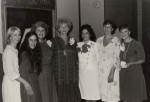
ORT Installation eve, 1983. (JWB fonds; JMABC L.14060)

If you know someone in this photo, please help the JI fill the gaps of its predecessor’s (the Jewish Western Bulletin’s) collection at the Jewish Museum and Archives of B.C. by contacting [email protected].

Format ImagePosted on April 3, 2015April 1, 2015Author JI and JMABCCategories Mystery PhotoTags JMABC, ORT
אורח הכבוד בערב הגאלה של קק”ל הוא שר החוץ לשעבר בירד

אורח הכבוד בערב הגאלה של קק”ל הוא שר החוץ לשעבר בירד

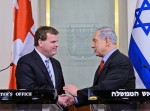
 שר החוץ הקנדי לשעבר ג’ון בירד, עת ביקר את ראש הממשלה בנימין נתניהו, בירושלים ב-20 בינואר השנה. בירד הוא אורח כבוד ‘בנגב דינר’ של קק”ל בוונקובר ב-7 ביוני. (צילום: Kobi Gideon-GPO via Ashernet)

מחלוקת בין ידידים: הרפר שוב תומך בהקמת מדינה פלסטינית בניגוד לנתניהו

ראש ממשלת קנדה, סטיבן הרפר, שנחשב לידיד הקרוב ביותר של ראש ממשלת ישראל, בנימין נתניהו, מקרב מנהיגי העולם, חלוק עימו בסוגיה מאוד משמעותית. בשיחה שהתקיימה בין השניים ביום ראשון שעבר, חזר והדגיש הרפר בפני נתניהו, כי הוא תומך בפתרון שתי המדינות והקמת מדינה פלסטינית לצידה של ישראל. הדברים נאמרו לאור הכרזת נתניהו ערב הבחירות בישראל, כי הוא מתנגד להקמת מדינה הפלסטינית וכי ימשיך את הבנייה בשטחים.

הרפר שוחח עם נתניהו לראשונה בטלפון לאחר ניצחונו בבחירות שהתקיימו לפני שבועיים, בזמן שהוא נערך להקמת הממשלה החדשה. מייד עם פרסום תוצאות הבחירות, שלח ראש ממשלת קנדה ברכות חמות לראש ממשלת ישראל היוצא והנכנס, והוסיף שהוא מצפה לעבוד ביחד עם הממשלה החדשה בישראל, וכי לישראל אין ידידה קרובה יותר מאשר קנדה. בשיחת הטלפון שוב בירך הרפר את נתניהו, וכן הבטיח כי קנדה תמשיך לעמוד במחוייבותה לדאוג לביטחונה של ישראל. וציין כאמור שהוא תומך בפתרון שתי המדינות.

אפשר לסכם את הפרק הזה ביחסי קנדה וישראל באמירה, כי הרפר מאז נבחר לרשות ממשלת קנדה (2006), ממשיך לעמוד לצידה של ישראל ומדיניותה בכל עניין. למעט שתי סוגיות עקרוניות משמעותיות: תמיכה בהקמת המדינה  הפלסטינית והתנגדות להמשך בניית ההתנחלויות בשטחים.

הערכה לידיד: אורח הכבוד בערב הגאלה של קק”ל הוא שר החוץ לשעבר בירד

סניף ונקובר של אגודת ידידי קרן קיימת לישראל (קק”ל) בקנדה בראשות אילן פילו, יקיים ערב גאלה מיוחד, בהשתתפות אורח הכבוד שר החוץ של קנדה לשעבר, ג’ון בירד. האירוע מתקיים לכבודו של בירד שנחשב לידיד קרוב מאוד של ישראל, וכמו ראש הממשלה סטיבן הרפר, עמד לצידה לכל אורך הדרך. בירד ביקר בישראל מספר פעמים וזכה לאירוח לבבי. האירוע במסגרת ‘נגב דינר 2015’ יערך ב-7 ביוני (יום ראשון) במלון ארבע עונות בדאון טאון ונקובר, ומחיר כרטיס 270 דולר.

קק”ל ונקובר תגייס תרומות לטובת הקמת פרוייקט בישראל שיקרא על שמו של בירד, ובשלב זה אין פרטים נוספים. כדי לקבל הכרה בפרויקט ע”י בירד יש לתרום לפחות 6,000 דולר.

קק”ל בקנדה יסדה את ‘נגב דינר’ עם הקמת מדינת ישראל ב-1948. האירוע מתקיים בכל רחבי קנדה מדי שנה להבליט את העשייה החשובה של קק”ל, לגייס כספים לטובת פרוייקטים בישראל, ולהעניק אות כבוד למי שעוזר ותומך בישראל.

בירד (45) פרש בראשית פברואר מתפקידו כשר החוץ בממשלת הרפר. בימים אלה הוא הצטרף לקואורפוריישן ‘בריק גולד’ (חברת כריית הזהב הגדולה בעולם), בתפקיד יועץ בינלאומי. הוא עבד בשירות הציבורי במשך כעשרים שנים, ושימש שר החוץ מאז 2011. קודם לכן החזיק בתפקידים בכירים שונים (בהם שר התחבורה ושר האנרגיה) בממשלות הרפר. ברד הוזכר לא פעם כמועמד להחליף את הרפר ביחד עם השר ההגנה, ג’ייסון קני, שגם הוא תומך גדול בישראל.

קק”ל שחוגגת השנה 114 שנים להיווסדה מקיימת שורה של אירועים בישראל. במסגרת זו אגודות ידידי קק”ל בעולם מארגנות מסע לישראל בן שמונה ימים, בחודש מאי (12-20). המשתתפים ישהו במלון מצודת דוד בירושלים. המסע יכלול מפגשים עם מספר אישים ובהם: נשיא המדינה, ראובן ריבלין וראש עיריית ירושלים, ניר ברקת. הסיורים יכללו בין היתר: ביקור בבסיס חיל האוויר, השתתפות באירועי יום ירושלים (ב-17 במאי), ביקור בתחנת הטלוויזיה של ערוץ החדשות באנגלית ’24 ניוז’, סיור ביקב, ביקור בשוק של יפו העתיקה, ביקור בבאר שבע ובנגב.

Format ImagePosted on March 31, 2015March 31, 2015Author Roni RachmaniCategories עניין בחדשותTags Binyamin Netanyahu, Jewish National Fund, JNF, John Baird, Negev Dinner, Palestinian state, Stephen Harper, בנימין נתניהו, ג'ון בירד, מדינה הפלסטינית, נגב דינר, סטיבן הרפר, קק"ל, קרן קיימת לישראל
Make time for Elbow Room

Make time for Elbow Room

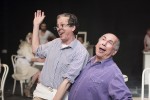
Allan Zinyk as Patrice, left, and David Adams as Bryan in Elbow Room Café: The Musical (Phase 1). (photo by Emily Cooper)

Allan Zinyk and David Adams are veritable doppelgangers for Patrice (Patrick) Savoie and Bryan Searle, who started the Elbow Room Café on Jervis Street in 1983. While the restaurant moved to Davie Street in 1996 and the couple has since taken on another business partner, the heart of the café is Savoie and Searle, and, for many people, “home” is wherever they are.

Elbow Room Café: The Musical (Phase 1) really captures the depth and warmth of their relationship with each other, as well as with their staff and customers. It is a fitting and well-deserved homage to two men who have not only built a successful business, but a community, not to mention raising tens of thousands of dollars over the years for the charity A Loving Spoonful.

The Studio 58 and Zee Zee Theatre collaboration is a work in progress, but its Phase 1 opening on March 21 was a pretty polished effort. It will be interesting to see what changes on the path to its final form. Already, the musical – book and lyrics by Dave Deveau, music and lyrics by Anton Lipovetsky, directed by Cameron Mackenzie – arouses a range of emotions, from belly laughter to touching sentimentality. The songs are catchy and singable, the characters are memorable and relatable, the choreography is appropriately silly and sexy.

photo - Mama Sutra and Earla are among the customers who witness all the drama at the café
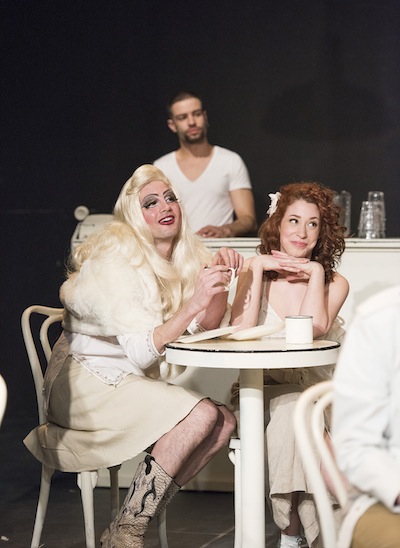
Mama Sutra and Earla are among the customers who witness all the drama at the café. (photo by Emily Cooper)

Led by professional actors Zinyk and Adams, the Studio 58 cast was top-notch. The audience gets lost in the life dramas that take place at the café: Tim and Tabby, a tourist couple from Kansas who stop in for a bite to eat on their way to Stanley Park, and are introduced to a whole new world; will Jackie and Jill, broken up for 253 days, get back together, despite all they’ve said to each other and what has happened since their breakup?; will the shy girl (aka Menu) find love at the café?; and Amanda, who finds out as her bachelorette party comes to an end that her wedding won’t take place as planned. Then there’s Patrice and Bryan, both getting older and a little slower – what’s to become of the café once they are no longer able to run it?

These main storylines are all played out in front of an odd, and endearing, assortment of other customers. One of the many notable aspects of this musical is how the supporting cast reacts to what’s going on around them. The full-cast musical numbers are big and bold, and there are some unique roles, such as Autograph, who takes on the personas of various celebrities who have eaten at the café, Tom Selleck and Sharon Stone, for example.

Since the musical is only in the first of a planned three phases, it is likely that the stories, dialogue and/or music will change. Considering who’s involved in the production, however, it should only get better. Then maybe afterward they can start on Jewish Independent: The Musical.

Elbow Room Café is at Studio 58 until March 29. As the musical’s program notes, there is “coarse language and immature content.” For tickets and information, visit studio58.ca.

Format ImagePosted on March 27, 2015March 26, 2015Author Cynthia RamsayCategories Performing ArtsTags Allan Zinyk, Anton Lipovetsky, Bryan Searle, Cameron Mackenzie, Dave Deveau, David Adams, Elbow Room Café, Patrice Savoie, Studio 58
Sephardi group in Ottawa

Sephardi group in Ottawa

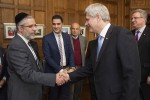
Rabbi Ilan Acoca, left, shakes hands with Prime Minister Stephen Harper on Parliament Hill. (courtesy of Prime Minister’s Office)

Last month, a Jewish delegation paid a visit to Parliament Hill with two main items on the agenda – educating the Canadian government about Sephardi Jewry in Canada and discussing Iran’s aim to obtain nuclear weapons.

The delegation included Sephardi community leaders, activists, philanthropists and spiritual leaders from across Canada. They met with the prime minister, various ambassadors and other dignitaries. The delegation was led by Yehuda Azoulay and Vancouver’s Rabbi Ilan Acoca of Congregation Beth Hamidrash, the only Sephardi synagogue west of Toronto.

A scholar, educator, author, activist and entrepreneur, Azoulay established the Sephardic Legacy Series: Institute for Preserving Sephardic Heritage. He envisioned the series as helping ensure future Sephardi publications, articles, lecture series, documentary films and research on Sephardi topics, and other works geared toward the benefit of Sephardi communities worldwide. It was the lack of general knowledge concerning Sephardi history, culture, Jewish law and other facets of Sephardi Judaism that prompted him to establish the organization. To date, Azoulay has authored five books and published more than 30 articles on various topics. In November 2013, he initiated a tribute luncheon to honor the contributions of Sephardi Jewry in America for members of the U.S. Congress.

The recent Parliament Hill delegation had as its primary goal to “create more awareness about Sephardic Jews in Canada by educating them about our history and our contributions to Canadian society,” Acoca told the Independent. “There are currently 55,000 Sephardic Jews in Canada and the number is growing. This is something that we related to the government.”

Acoca was born in Israel to parents of Moroccan descent. “I grew up in a typical, traditional Sephardic home,” he said. “Sephardic Judaism was an integral part of my upbringing.”

When Acoca was 13 years old, his family moved to Montreal, where he attended a Jewish high school. Growing up in Montreal’s Sephardi community, Acoca said, “helped me deepen my appreciation for my rich Sephardic ancestry.” Acoca eventually become a rabbi, fulfilling his grandfather’s wish that one of his descendants follow in his footsteps to the rabbinate, he said. In November 1999, Acoca and his wife Dina took on the roles of rabbi and rabbanit at Beth Hamidrash.

“Getting this responsibility made me more aware and passionate about my ancestry,” said Acoca. “My job enabled me to learn more about various Sephardic traditions and communities.”

Over the years, Acoca has added other aspects to his rabbinical role, teaching online, writing a monthly column in the Canadian Jewish News, heading the Rabbinical Council Sephardic Affinity Group, being an official Sephardi representative in Western Canada, and being the region’s Sephardi halachic authority.

Canadian human rights lawyer David Matas joined the group in Ottawa. Acoca described the importance of having Matas present in front of the House of Commons SubCommittee on International Human Rights about Iran’s intent to develop nuclear capability. During the presentation, Matas and Azoulay also conveyed some of the hardships that Iranian Jews “have faced and continue to endure.” (The full hearing is available at cpac.ca/en/programs/in-committee-house-of-commons/episodes/37646919.)

Matas gave six recommendations to the committee, which he shared with the Jewish Independent:

1. Expand the exceptions to sovereign immunity to catch Iranian human rights violations in a larger net. It should be possible for victims of the Iranian regime to sue in Canadian courts for the harm that the regime has done to them.

2. Ask for the extradition of Hassan el-Hajj Hassan, a Canadian citizen implicated in a Bulgarian bombing, from Lebanon to Canada. Under the Criminal Code, Canada has jurisdiction to prosecute him because he is a Canadian citizen, explained Matas. Canada does not have an extradition treaty with Lebanon, but the Extradition Act allows for extradition, even without a treaty, on a case-by-case basis by agreement with the state where the accused is found.

3. Support the suggestion that any arms agreement between Iran and foreign states include a human rights component parallel to that of the Helsinki Accord. “A regime hell bent on the destruction of Israel and the Jews should be kept as far away from weapons of mass destruction as possible,” said Matas. “A nuclear weapons agreement with Iran, if one can be reached, should not just prevent nuclear weapons capability. It should have a place for human rights.”

4. The European Union in July 2013 added the military wing of Hezbollah to its list of terrorist entities. Canada should urge the EU to list Hezbollah in its entirety, not just the military wing, as a terrorist entity.

5. As the lead sponsor to the United Nations General Assembly, Canada should strengthen the language of the resolution, even if it that means fewer votes. “While we would not suggest language so strong that the resolution would be lost, Canada today has some room for manoeuvre,” said Matas.

6. Encourage the Government of Canada to take into account all refugee populations as part of any just and comprehensive resolution to the Israeli-Palestinian and Arab-Israeli conflicts. “That, of course, includes 55,000 Jewish refugees from Iran, driven out of Iran by the regime of the mullahs,” said Matas.

It is also important to confront the myth that Israel is a Western, imperial, colonial enterprise – a myth that holds particular sway with the mullahs of Iran, Matas said. The reality is that Israel is in large measure composed of Jews from the Middle East, including Iran. “Unless the Palestinians themselves accept the reality of dual victimization, a meaningful peace becomes impossible,” he said.

The delegation met with MPs Tim Uppal, Denis Lebel, Jason Kenney, Peter Kent, John Carmichael, Mark Adler, Joyce Bateman and Irwin Cotler. Other members of the delegation, including Acoca, met privately with Prime Minister Stephen Harper.

“The government officials were extremely supportive and promised they will assist,” said Acoca. “We were ecstatic, definitely.”

Acoca is eager to create more awareness of Sephardi Jewry, the community’s needs and cultural differences, and to promote understanding. He is also looking forward to following up on the event and meetings, and hopes this delegation will become an annual occurrence. “I would like the Sephardic way and philosophy to be preserved and am working hard, together with my colleagues, to ensure a thriving future,” said Acoca.

For a short video clip from the group’s Parliament Hill visit, see this link (at 0:26): youtube.com/watch?v=AiZ9_4O936Q.

Rebeca Kuropatwa is a Winnipeg freelance writer.

Format ImagePosted on March 27, 2015March 26, 2015Author Rebeca KuropatwaCategories NationalTags Beth Hamidrash, David Matas, Ilan Acoca, Iran, Sephardi, terrorism
Imagination in full blooms

Imagination in full blooms

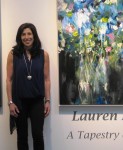
Lauren Morris (photo by Linda Lando)

Local artist Lauren Morris loves every aspect of her art form. “I even like the smell of paints,” she said in an interview with the Independent. “When I come to my studio, the smell jolts me into work. It’s like a kick-start to my imagination.” She added, “I didn’t start painting until I immigrated to Canada. I’m a graphic designer by education.”

Upon graduating as a graphic designer in her native Cape Town, she worked in her chosen field for awhile and then decided to see the world. She backpacked through Europe. “In Israel, I met an American girl in ulpan. We became friends, and she invited me to come to America. I thought I would only travel there for a few months but I stayed for five years. I found a job there as a magazine graphic designer. I also took some part-time art classes in Washington, D.C.”

Afterwards, she returned home and worked as a graphic designer for the book and magazine industry. She also started a family. Unfortunately, the political situation in South Africa was becoming increasingly unstable. Concerned about their growing children, the family decided to emigrate. They arrived in Vancouver in 2000.

“When we came,” Morris remembered, “I couldn’t find work as a graphic designer, so I started painting at home.”

Like any artist, she wanted to display her work, wanted people to see it and perhaps even buy it, but she was new in town, didn’t know anyone and had no connections in the local art community.

“I started hanging my paintings in coffee shops,” she recalled. “Some shops in Vancouver want to display and sell art, so they advertise on Craigslist. I looked for such ads, applied and my paintings sold very well in many of them. I wasn’t a snob. I would accept any offer. Most of my paintings sold not even through a coffee shop but through a fish and chips place in Kerrisdale.”

The sales were encouraging, so she rented a studio. “I wanted to be more professional,” she said with a smile. “But a studio cost money. To pay the rent, I started teaching.”

She still offers art workshops and she teaches mostly adults. “I love showing people what they can do. Some say: ‘Oh, I don’t know how to paint.’ They are wrong. Everyone can paint. They just need someone to guide them. Afterwards, they are amazed and awed by their own works. This is the most satisfying part of teaching – when my students discover things about themselves. It makes them happy and it makes me happy.”

Making people happy seems to be a requirement in her artistic approach: in her workshops, in the classes she taught at the Louis Brier Home and Hospital, and in her own personal art. That’s why flowers play such an important role in her creative output.

“Flowers make people happy,” she said. “When a painting of flowers hangs on a wall, it changes the feel and mood of a room, brightens it.”

Her flowers are not photographic. In fact, some of her paintings bear only a remote resemblance to real-life blooms. Her images lean towards the abstract, like symphonies of colors and shapes. Light and reflections, movements and shadows weave into interlacing harmony in her pictures, while flowers provide an inspiration.

“I don’t like to be too literal in my art,” she said. “Art is my imagination. It always springs from somewhere, from a point of reference, a photo I took or found online, or an idea I see in another artist’s work. Then I take my paintbrush and start building colors. Most of my paintings are color compositions. When I paint, I let my paintbrush take over. It’s like putting together a colorful puzzle, but I’m guided by my unconsciousness.”

Not only the colors but also the shapes of flowers attract Morris because they are so versatile.

“People see different shapes in my flowers,” she said. “Sometimes they see something I didn’t even know was there.”

Because of the expressionistic ideas of her paintings, she rarely works outside. “I tried,” she explained with a chuckle. “But I paint on the floor, on my knees, with the canvasses against the wall. It’s not convenient outside.”

Often, her process resembles a gym exercise, very physically taxing, so she doesn’t work for more than a couple of hours at a time. But she loves every minute of it. “When I see a painting unfolding, going in a certain direction, when my imagination flows, it’s the best moment for me.”

She enjoys listening to classical music while she paints, and the melodies seem to transfer to her canvasses. The different paints and hues splash and chase each other, like notes of a melody. The combined arrangement is invariably richer than its component parts, and the same is true for Morris’ paintings. Since her first coffee shop exhibit in 2001, her recognition in Vancouver has grown considerably. In the last few years, she has participated in Artists in Our Midst and the Eastside Culture Crawl. She has displayed her paintings in several group shows. And now her art is featured at the Sidney and Gertrude Zack Gallery. Her solo show, A Tapestry of Flowers, opened on March 18 and is on until April 12. For more on Morris’ work, visit lmdesignsstudio.com.

Olga Livshin is a Vancouver freelance writer. She can be reached at [email protected].

Format ImagePosted on March 27, 2015March 26, 2015Author Olga LivshinCategories Visual ArtsTags Lauren Morris, Tapestry of Flowers, Zack Gallery
Hard-earned wisdom

Hard-earned wisdom

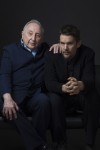
Seymour Bernstein, left, and Ethan Hawke. (photo from Ramsey Fendall/Risk Love LLC)

Two kinds of people will fall under the spell of Seymour: An Introduction, Ethan Hawke’s respectful and affectionate study of virtuoso pianist, composer and teacher Seymour Bernstein. Fans of classical music, of course, who will savor this ode to the beauty and craft of solo piano as 81 minutes of heaven. The other audience is anyone who ever wrestled with the pursuit of ambition, the hollowness of material success and the double-edged sword of uncommon talent.

Bernstein had all those things, but commercial pressures and the anxiety of going on stage whittled away the pleasure of playing concerts. At 50, he retired from public performance to compose and teach.

He had been aware for awhile, however, that he was unable to harmonize his career with the experience. After his celebrated 1969 performance at Alice Tully Hall in New York, he told the friend hosting the reception, “If you love me, you’ll never let me play in public again.”

To his friends, Bernstein is a mentor, philosopher and guru of how to attain satisfaction amid the vicissitudes of a life spent creating ephemeral art. Presumably that’s why Hawke, an actor and novelist, was moved to expose Bernstein’s hard-earned wisdom to a wider audience (without adding much in the way of inspired and/or distracting artistic flourishes).

Seymour: An Introduction opened March 20 for what will likely be a short run. That shouldn’t be interpreted as further evidence of the death of civilization, mind you, for classical compositions haven’t been America’s popular music since Elvis left Memphis.

Most of the film’s running time is devoted to the longtime Manhattan resident working with students and engaged in conversation, notably with the New York Times architecture critic and pianist Michael Kimmelman.

Bernstein is an astute teacher, and he’s exceedingly articulate on the subjects of music, discipline and education. But somewhere past the midpoint of the film he begins to seem less avuncular and more pedantic.

That stems, in part, from his willingness to talk about certain things – that we sense he’s expounded on countless times – while avoiding other subjects. There’s a clear limit to how much he’s going to reveal about himself, and how vulnerable he’ll be in front of the camera. He likes being revered, but on his terms.

All Bernstein says about his New Jersey upbringing is that there was no music in the house, and that his family didn’t own any records. He still bridles at the memory of his father’s perennial joke – “I have three daughters and a pianist” – as evidence that his old man couldn’t relate to him.

Perhaps it is this separateness, imposed on great talents by mere mortals, that pained Bernstein throughout his decades as a concert pianist. If so, why doesn’t this lifelong bachelor mention a single romantic relationship? Isn’t that an important element of living a satisfying life?

The one person who does merit his affection is the late, great English-Jewish pianist Sir Clifford Curzon, with whom Bernstein studied. That recollection has a self-serving coda, though, namely that Bernstein wrote a letter out of the blue to Queen Elizabeth that presumably contributed to Curzon receiving a knighthood.

That said, Bernstein is the teacher that everyone covets – knowledgeable, experienced, appreciative, precise, encouraging and invested. If you’re still recovering from the bark and bite of J.K. Simmons’ Oscar-winning turn in Whiplash, Seymour: An Introduction is the perfect balm.

Seymour: An Introduction is rated PG for some mild thematic elements.

Michael Fox is a writer and film critic living in San Francisco.

Format ImagePosted on March 27, 2015March 26, 2015Author Michael FoxCategories TV & FilmTags Ethan Hawke, Seymour Bernstein
An historic agreement

An historic agreement

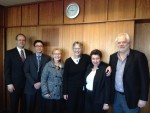
Left to right: Glen Hodges, manager, Mountain View Cemetery; Damian Koo, City of Vancouver legal services; Francie Connell, director, City of Vancouver legal services; Dr. Penny Ballem, city manager; Shirley Barnett, chair, MVJCRP committee; and Herb Silber, Schara Tzedeck Cemetery board. (photo from Mountain View Jewish Cemetery Restoration Project)

“Sometimes it takes awhile,” said Shirley Barnett, chair of the Mountain View Jewish Cemetery Restoration Project. But generally not 124 years! In 1891, Vancouver mayor David Oppenheimer, member of a prominent pioneer Jewish family, was approached by the growing Vancouver Jewish community to reserve a section within the city-owned Mountain View Cemetery to be consecrated and used exclusively for Jewish burials. At the time, when a Jewish person died, they were sent to Victoria, where the community had already established a cemetery.

Oppenheimer knew the small Jewish community of Vancouver well. The Gintzburgers, Weavers, Fleishmans, Golds and Goldblooms traveled in the same circles as the Oppenheimers. They had all emigrated from Western Europe, some via the United States, around the same time and all had prospered. Perhaps, as Barnett speculates, “they had even helped to get Mayor Oppenheimer elected.”

photo - David Oppenheimer, circa 1891
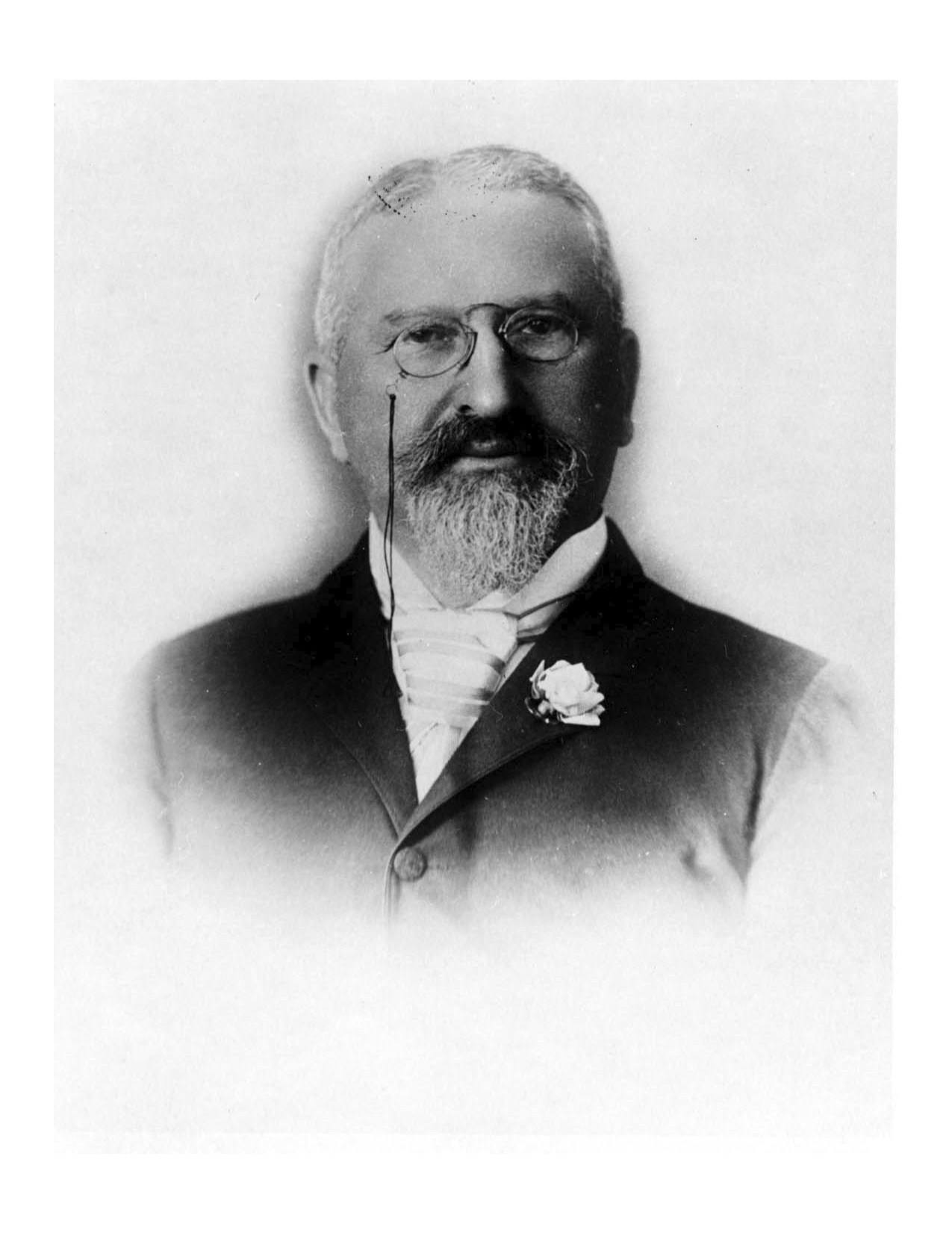
David Oppenheimer, circa 1891. (photo from Jewish Museum and Archives of British Columbia, L.00179)

Oppenheimer was born in Germany in 1834, one of 10 children. He emigrated to New Orleans in 1848 with his sister and four of his brothers. Becoming a bookkeeper, and later a trader in the California gold rush, the Oppenheimers relocated to Sacramento, where David invested in real estate, and married his first wife Sara in 1857. After the gold rush, the Oppenheimer brothers moved to Victoria, establishing stores throughout British Columbia, catering to prospectors and settlers. Also building a real estate portfolio, they expanded their interests in Vancouver.

Although Malcolm MacLean was the first mayor of Vancouver, it was Oppenheimer who is remembered as the “Father of Vancouver.” In his four terms as mayor, from 1888-1891, he implemented many basic civic services: fire department, streetcars, water supply, utilities, schools and parks. He was also a philanthropist, a founding member of the YMCA, Vancouver Board of Trade, Vancouver Club and many charities.

Establishing a Jewish cemetery at Mountain View in 1892 was one of his many accomplishments. Without minutes of meetings or other documentation, however, the only evidence of this was a number of articles published over the years, and the records of burials.

In 2015, 124 years later, the City of Vancouver recognized the historical establishment of the Jewish section at Mountain View and, based on this, an oversight agreement with Schara Tzedeck Cemetery board was signed. The agreement confirms that the cemetery board has the right to oversee all interment and funeral services within that Jewish section.

Although Oppenheimer himself was buried in New York, many of his colleagues were laid to rest at Mountain View. Over the past two years, a restoration of this old cemetery been undertaken. Now complete, the rededication will take place on Sunday, May 3, at 1:15 p.m.

Format ImagePosted on March 27, 2015March 26, 2015Author Jewish Cemetery at Mountain View RestorationCategories LocalTags Father of Vancouver, Mountain View, Oppenheimer, Shirley Barnett
Folk music in the Holy Land

Folk music in the Holy Land

The author enjoying a day of folk music from around the world at Israel’s Jacob’s Ladder festival. (photo from Miri Garaway)

I have always been a folk music aficionado, so when I heard about the Jacob’s Ladder Music Festival in Israel, I planned a trip there entirely around the idea of attending the festival. Not only was it a phenomenal event, it exceeded all my expectations and was the highlight of our month’s stay.

photo - Jacob's Ladder Festival sign
(photo from Miri Garaway)

Established in 1976, Jacob’s Ladder (Sulam Ya’akov) is held twice a year, in May and December, with the spring festival on a larger scale. It is billed as “Israel’s friendliest musical and social event, a unique bluegrass, folk, country, blues, Irish and world music extravaganza.” That it was.

With the venue on the grounds of Kibbutz Nof Ginosar on Lake Kinneret, nine kilometres north of Tiberias, the setting could not be more beautiful and the atmosphere is very relaxed, “green” and peaceful. Approximately 4,000 people attend the spring festival, yet it did not feel crowded or overwhelming.

How wonderful to be able to attend a two-and-a-half-day event and know that there is free camping on site, in addition to the pleasant Hotel Nof Ginosar. From the moment we entered the site, on a Thursday afternoon in May 2014, we could feel the energy of the special event that was about to take place.

The organizers have registration down to a science. We bought our tickets upon arrival, received our fluorescent wristbands and joined the throngs of festival goers entering the site. Considering the volume of people arriving, we were amazed that we only had to wait a short time in the line-up for tickets. Pre-festival online tickets helped to ease any congestion.

And, perhaps only in Israel would they provide free agalot, large wheely carts in the parking lot so you can carry all your belongings into the grounds. I found this so civil and convenient and it was fun to watch the hordes of people streaming in with their tents, barbecues, bicycles, chairs, strollers, blankets, duffle bags, food coolers and other camping paraphernalia.

This is a festival that everyone can enjoy: young families, teenagers, baby boomers, aging hippies and young-at-heart seniors. While it originated as more of an anglophone festival, today, many non-anglophone Israelis and tourists attend, too.

The festival is extremely well organized, with activities such as free early morning outdoor yoga and tai chi classes, holistic treatment kiosks, a craft fair, children’s handicraft workshops, a children’s puppet-making workshop, storytelling, juggling, Irish, tap and square dancing workshops. Food booths are also set up on site with pre-purchased tickets to be used throughout the festival.

We chose to stay at the kibbutz guesthouse, Hotel Nof Ginosar. Although the hotel is fully booked for the festival from year to year, the reservations clerk suggested we put our names on the waitlist (this was in October) with a good chance that a room would become available closer to the date of the festival. In the interim, we booked a nearby bed and breakfast to ensure that we had some accommodation in place. We were fortunate that space at the hotel did open up a couple of months before the festival.

It was convenient to stay on site rather than commuting. The hotel is basic, but clean and comfortable and every room has a fridge. The bountiful and delicious Israeli breakfast, included in the room rate, gave us a great start to the day.

While exploring the grounds, I met my Israeli cousin from a nearby moshav, who promptly invited us to his tent for a communal Shabbat dinner. Suddenly, we were among family and friends for a feast. This unexpected rendezvous was indeed a treat.

Jacob’s Ladder is easy to navigate. The main stage is a huge expanse of grass where you can put down blankets, towels or low chairs to reserve a spot for the entire weekend. This is unheard of at most festivals, since you usually have to collect your things at the end of the day and race for the coveted spots each day. It is an unspoken rule at Jacob’s Ladder that if you are not using your space, anyone can sit in your place until you return. The whole area is covered by an enormous see-through tarp, so the sun does not beat directly down on you. Once you are settled in, it is pure joy to sit back, relax and enjoy the outstanding talent and the incredible music. On many occasions, people are moved to get up and dance. You also get to know your neighbors and it feels like a community within a community. It is interesting to make connections with the people who are around you.

There is also the lawn stage, a smaller space with chairs set up on the plaza outside the hotel lobby. Another music venue within the hotel is Hermon Hall, an indoor auditorium, as well as the balcony stage and the sports hall for music and dance workshops.

The performers are often available to meet right after the concert, at a table beside the stage, where they sell their merchandise.

In addition to Israeli artists, musicians come from all over the world to perform at the Jacob’s Ladder. A sampling of some of the stand-outs for 2014 included the Jammin Divas; Maya Johanna, Shay Tochner and Yonatan Miller in a tribute to Pete Seeger; the Slocan Ramblers; and a variety of singers who belted out a moving medley of the songs of Janis Joplin, Joni Mitchell, Eric Clapton and Ray Charles. From the strumming of the Ukeleles for Peace Children’s Orchestra to the lilting sounds of Nava Tehila singing Jewish world music for Kabbalat Shabbat, this was a festival that moved and energized me.

The hotel kindly allows jamming sessions in the lobby and bar areas and people bring guitars, banjos, violins, flutes, clarinets, harmonicas, drums and an assortment of other instruments to showcase their talent. What a wonderful hive of activity and a delight to hear music wafting throughout the hotel. There are also pop-up jamming sessions on the grounds, away from the stages. People-watching is an activity unto itself.

If you want to take a break, there is a swimming pool, as well as the lake beach of the Kinneret, but we came for the music and it was truly an exceptional experience.

Miri Garaway is a freelance travel writer.

Format ImagePosted on March 27, 2015March 26, 2015Author Miri GarawayCategories TravelTags Israel, Jacob's Ladder, Lake Kinneret, music, Nof Ginosar, Sulam Ya’akov

Posts pagination

Previous page Page 1 … Page 439 Page 440 Page 441 … Page 494 Next page
Proudly powered by WordPress