Skip to content
  • Home
  • Subscribe / donate
  • Events calendar
  • Business Directory
  • FAQ
  • News
    • Local
    • National
    • Israel
    • World
    • עניין בחדשות
      A roundup of news in Canada and further afield, in Hebrew.
  • Opinion
    • From the JI
    • Op-Ed
  • Arts & Culture
    • Performing Arts
    • Music
    • Books
    • Visual Arts
    • TV & Film
  • Life
    • Celebrating the Holidays
    • Travel
    • The Daily Snooze
      Cartoons by Jacob Samuel
    • Mystery Photo
      Help the JI and JMABC fill in the gaps in our archives.
  • Community Links
    • Organizations, Etc.
    • Other News Sources & Blogs
  • JI Chai Celebration
  • JI@88! video

Recent Posts

  • Legal help for students
  • Revisiting myth of Lilith
  • Wrong person rebuked
  • Canada’s mixed messages
  • Questions for museum
  • Symposium on antizionism
  • Making soccer political
  • CJPAC lauds Pulver’s impact
  • City recognizes Vrba’s legacy  
  • Organ donation saves lives
  • Theodore’s March premiere
  • A healing Shabbaton
  • Supplying healthy food
  • A chime of metal tags
  • Yellowknife seder a first
  • Ishai energizes, unifies
  • A Lag b’Omer to remember
  • Expanding the healing
  • Hannah Senesh – a unique hero
  • Community milestones … May 2026
  • Sharing her testimony
  • Fall fight takes leap forward
  • The balancing of rights
  • Multiple Tony n’ Tina roles
  • Stories of trauma, resilience
  • Celebrate our culture
  • A responsibility to help
  • What wellness means at JCC
  • Together in mourning
  • Downhill after Trump?
  • Birth control even easier now
  • Eco-Sisters mentorship
  • Unexpected discoveries
  • Study’s results hopeful
  • Bad behaviour affects us all
  • Thankful for the police

Archives

Follow @JewishIndie
image - The CJN - Visit Us Banner - 300x600 - 101625

Images

Cuban shul in distress

Cuban shul in distress

Rabbi Yacob Berezniak in Havana’s Agath Israel synagogue. (photo by Baila Lazarus)

On a small side street in Old Havana, an innocuous sign on a decaying wall announces “Synagoga Adath Israel.”

A few steps away, on Picota Street, an entrance leads into the basement of an old building to reveal a modest but well-appointed synagogue that has been serving Cuban Jews for almost 100 years.

Rabbi Yacob Berezniak greets me, though I’ve made no appointment, and talks proudly about the synagogue, but is distressed at the situation with the Jews in Cuba. The community is dwindling, he says, and aging.
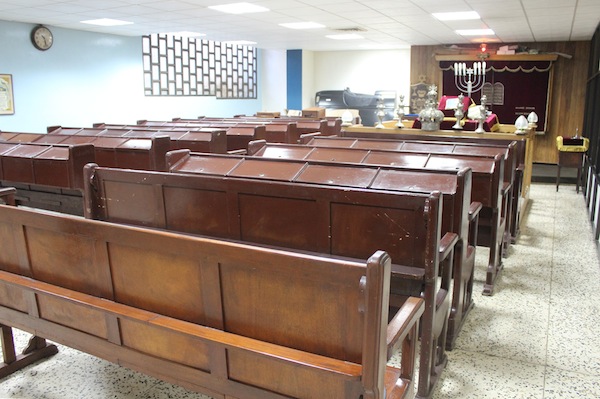
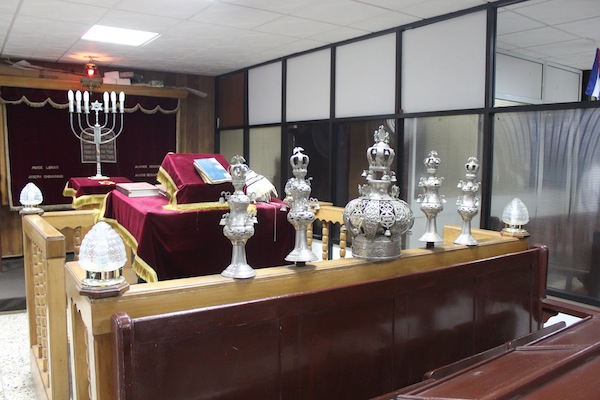
photo - Interior of Adath Israel Synagogue in Old Havana
Interior of Adath Israel Synagogue in Old Havana. (photos by Baila Lazarus)

photo - Interior of Adath Israel Synagogue in Old Havana, the arkThe Jewish community in Cuba started growing with an influx from Poland and Russia after the First World War and continued for almost three decades. At its largest, it’s estimated to have been more than 20,000. Not only was it big enough to build and maintain one synagogue, but, as tends to happen in many Jewish communities, it supported a break-away group that moved into a building next door.

After the Cuban revolution, however, changes in the political and economic structure, as well as restrictions on religious observance, caused many Jews to leave – for the United States, Israel and Mexico, among other locations. Today, according to Berezniak, the community numbers only 1,200 in all of Cuba, with 900 being in Havana.

“Most of the members are very old,” he said. “And they’re very poor.”

Poverty in Cuba is a controversial topic. There are those who talk about how the reforms after the revolution provided an ideal lifestyle. Indeed, there are few who would argue that Cuba has had some of the best educational and health reforms in the world. Many foreigners have been coming to Cuba to get health care they may not find in their own countries.

But good health care does not mean that the poorest can afford medications, Berezniak lamented.

There is definitely a two-tiered system in Cuba. Those who are strictly living in the socialist economy have a token stipend that may only amount to a few dollars a month. They receive their money in Cuban pesos (CUP) that are worth about $0.05 Cdn. Their needs are supposed to be met with ration coupons for food and other necessities that often don’t fulfil the requirements of a large family. They live in homes that have been inherited from their parents. If their family grows, they can’t simply move into another location.

Those who have managed to get business licences, especially if serving the tourist industry, have a different story. They are paid in Cuban convertible pesos (CUC) valued at $1 US. A taxi driver can make 50 CUCs for a half-day’s work taking tourists around Havana.

To help the oldest and poorest, Adath Israel offers free meals whenever they can. Every Friday, for example, they have a free fish dinner that fills the synagogue.

“For many of the people who come to that dinner, it’s the biggest meal they will have all week,” said Berezniak, adding that he is also concerned that the Jewish community will simply disappear. “The community has been getting smaller. There are no young people here to support the older ones.”

The poverty and shrinking Jewish population are two reasons why Berezniak welcomes donations – financial and otherwise – to the synagogue. On my visit, a friend and I dropped off bags of clothing, cosmetics and toiletries – items that we take for granted but are very costly in Cuba. Prescription and non-prescription medical supplies are also needed.

With the decision in January by the Obama administration to lift the U.S. embargo of Cuba, it will be easier for certain Americans to travel and bring some supplies in small quantities, but it’s hard to say how long that will take to impact the small country. As well, larger exports are still restricted. Limited products such as telephone, computer and internet technology are now open to trade, and investment in some small businesses is permitted. But general U.S. travel tourism is not open yet. It’s expected that tourist trips will be limited to supervised groups, and there has been no agreement yet about airline flights.

If you are thinking of seeing Cuba, consider going while it’s still building and renovating its infrastructure for tourism. Havana travel agent Ivan Barba said Havana is already almost at its maximum for the number of tourists it can hold; and it will get worse as the U.S. decision opens the door for more.

Food and lodging are still quite affordable, and there are numerous all-inclusive flight and hotel deals direct from Vancouver.

To contact Adath Israel, call 1-537-860-8242 or email [email protected]. Allow a lot of time for email response, however, as internet service is sporadic.

Baila Lazarus is a freelance writer media trainer in Vancouver. Her consulting work be seen at phase2coaching.com.
Format ImagePosted on March 27, 2015March 26, 2015Author Baila LazarusCategories TravelTags Adath Israel, Cuba, Havana, Yacob Berezniak
Create your own clay camel

Create your own clay camel

How fast time flies. Passover is almost here again, and it’s time to prepare a new tutorial, I said to my 7-year-old daughter while getting out a magic box with colorful modeling clay.

At school, we are reading a lot about Passover right now, she said to me. When the Jewish people crossed the dessert, they had camels with them, who carried people and their belongings. Mom, can you teach me how to model a baby camel? Please, mom, can you?

Of course I can, my dear. Come over here, I said, inviting my daughter to join me at the table to work on the model of a baby camel. For the young readers of Jewish Independent, as always, I have prepared pictures to demonstrate the process. Find yourself a comfortable seat and start working on your creation!

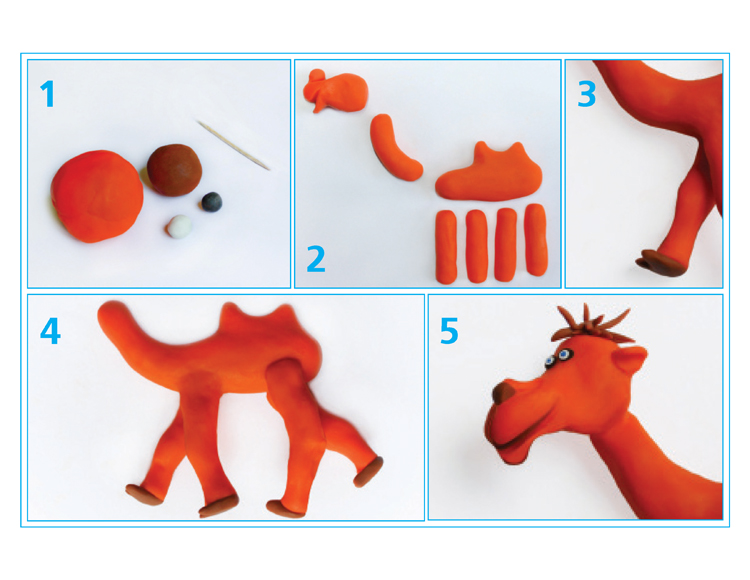
image - Clay camel by Lana Lagoonca, steps 1-51. Take a few pieces of modeling clay and a toothpick. Mostly we will work with orange color, but we will also use some brown, white and black pieces.

2. Prepare equal amounts of clay to form the baby camel’s head, neck, body with two humps and four legs.

3-4. Bend the legs a little in the middle and finish them with brown cushion-like hooves, perhaps parted in the middle front. Connect the neck, body and hooves.

5. For the head, you can use white and black pieces of clay for the eyes. Or blue or green clay, if you have it. Take some brown clay and shape the nose and also give your camel a tuft of hair on top of its head.

6. Cover the tips of the humps and tail with tufts of hair as well. We have made our baby camel! You can now take your new little friend for a walk.

image - Clay camel by Lana Lagoonca - taking it for a walkIsn’t it great to make toys with your own hands? You will also make your family happy by adding your creation to the Passover seder table. If you take a picture of your baby camel and print it, you will have a real postcard.

Let your imagination guide you and join our art lab! Send photos of your artwork to [email protected], and you may have a chance to win Curly Orli Goes to Vancouver, a book illustrated with clay pictures.

Wishing you a kosher and happy Pesach, dear friends! See you next time.

Lana Lagoonca is a graphic designer, author and illustrator. At curlyorli.com, there are more free lessons, along with information about Curly Orli merchandise.


Format ImagePosted on March 27, 2015March 26, 2015Author Lana LagooncaCategories Celebrating the HolidaysTags camel, Curly Orli, Passover, seder
Brief Kauai vacation tutorial

Brief Kauai vacation tutorial

The path to Nounou Mountain is a gentle incline through a forest of magnificent Norfolk pine trees. (photo by Lauren Kramer)

There were only a few items in my grocery basket so, when the cashier asked me for $100, I insisted on seeing the receipt. There it was, a single loaf of ordinary brown bread – no seeds, nothing fancy – listed at $7.50. There had to be a mistake, I thought, walking the loaf to the returns department of a Kauai K-Mart. But no, I was told. That was the price. A loaf that would cost $1.99 anywhere else in the United States was $7.50 on the island of Kauai.

We’d come as a family to enjoy a week in the December sunshine of the tropical island and learned quickly it would be anything but an inexpensive vacation. Our first shock was when we’d tried to book a furnished house or flat, thinking it would be a perfect way to avoid the cost of eating out every day. We checked the usual sites: vrbo and airbnb, and the listings showed beautiful accommodations, close to the beach and within our budget. So we booked air and went back to the website to secure a place to stay. That’s when we discovered that all those listings were controlled by agencies and, though they appeared “available” online, when you actually tried to book them, you discovered they weren’t. The “hard sell” began the moment I called the agencies. “There’s nothing left on the island,” the agents would say by way of introduction. Then, after a moment’s pause … “All I have left is this apartment at $350 per night.” Pictures of said apartments showed rooms last updated in the 1970s, tiny places that looked entirely unappealing. We learned visitors to Kauai book their accommodation up to a year ahead, sometimes more. And they pay premium prices for their island sunshine.

After many hours scouring online we found accommodation at a modest three-star resort, where we crammed four people into a tiny room and filled the excuse-for-a-refrigerator with snacks, lunch and breakfast foods. Still, the mostly lousy dinners we were forced to eat in restaurants, dining on food that was consistently overpriced, were memorable only for their pitiful quality.

photo - The Napali Coast on the island’s north side is one of Kauai’s great beauties
The Napali Coast on the island’s north side is one of Kauai’s great beauties. (photo by Lauren Kramer)

Kauai Vacation Lesson 1: Book early, ensure you have a kitchen, then visit Costco in Lihue and stock up.

Price sticker-shock aside, we were quickly bowled over by Kauai’s lush beauty. Drive around the island and there are exquisite beaches around every corner, the palm tree-lined stretches of sand you see in brochures, lapped by warm water that makes swimming pure pleasure. We had brought boogie boards and snorkel gear, and spent our days exploring beaches on different parts of the island. In Poipu, which has the island’s busiest beach, we snorkeled over the shallow reefs, while in Port Allen we marveled at a massive monk seal, stretched in languid repose on the shore. In Wailua, the kids surfed for hours, riding small-but-strong waves onto the beach before venturing back for more. In Princeville, we watched a massive turtle swim leisurely, oblivious to the swimmers and snorkelers nearby. With sunscreen and a picnic lunch in hand, the hours spun by beneath the Hawaiian sun, a perfect tonic after the grey, cold winter back home.

photo - Endless stretches of white-sand beaches with tumbling waves means there’s no shortage of space for kids to boogie board or snorkel
Endless stretches of white-sand beaches with tumbling waves means there’s no shortage of space for kids to boogie board or snorkel. (photo by Lauren Kramer)

Kauai Vacation Lesson 2: The beach is all you really need.

“You have to see Waimea Canyon,” folks told us. We had good intentions of visiting the “Grand Canyon of Kauai” but when we started out and learned it would be close to two hours each way, four kids fighting in the back seat, the canyon felt a whole lot less appealing. Instead, we contented ourselves with a hike up Nounou Mountain, through a forest of Norfolk pines with ringed trunks that felt straight out of a fairytale. The hike was exhilarating and muddy, taking us past locals’ back yards, where orange trees hung heavy with ripe fruit. Never has fruit theft felt more appealing – though we kept our hands to ourselves. Later, at one of Kauai’s farmers markets, we had ample opportunity for tasters. We purchased $5 coconuts from a young man who wielded a machete and expertly sliced them so we could drink the sweet milk before devouring the soft interior. And we gratefully accepted samples of colorful rambutan, miniature apple-bananas, massive avocados and Kauai-made chocolate spreads, jams and honey. There’s a farmers market somewhere on the island every day of the week and when you find one, it’s a great opportunity to interact with locals and stock up on fresh local fruit and vegetables. Just don’t even think about bringing them home. Produce export is strictly monitored at the airport and we even witnessed the confiscation of a small container of peeled mango someone had tried to save for the flight.

The only time we opted for a group excursion with a local tourism vendor, we wished afterwards that we hadn’t. The kayak tour we took mentioned a paddle upriver and snorkeling in a secluded cove. What it didn’t mention was that the river was very unremarkable, and that we’d need to commute an hour each way to reach the excursion. The disappointing outing robbed us of a precious day on one of the island’s better beaches and our dinner later that night, at a Hanalei restaurant, represented a new low in our island eating experience.

Kauai Vacation Lesson 3: Rent a car, buy a guidebook and explore on your own.

Lauren Kramer, an award-winning writer and editor, lives in Richmond, B.C. To read her work online, visit laurenkramer.net.

Format ImagePosted on March 27, 2015March 26, 2015Author Lauren KramerCategories TravelTags beach, Kauai, Nounou Mountain, Poipu, Port Allen, Princeville, snorkeling, Wailua
Cooking to fill others’ tables

Cooking to fill others’ tables

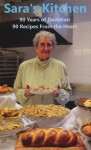
Mere days before heading to Israel for a couple of weeks, Sara Ciacci, 90, called the Jewish Independent to make sure that I had received her new cookbook, Sara’s Kitchen: 90 Years of Devotion, 90 Recipes from the Heart (Gateway Rasmussen, 2015), and that I had all the information I needed about the Jewish Food Bank. For Ciacci, food and tzedaka are inextricably connected with life and community.

“Sara Ciacci is the beating heart of Temple Sholom’s kitchen,” reads the cookbook’s introduction. “From her kiddush lunches to the Sisterhood catering committee, second seders, women’s seders and the annual Yom Kippur break-the-fast, Sara has made a mission of nourishing her congregation since its earliest days. She is queen of all hamantashen, blintzes and latkes, and, every year, she and friend Leonor Etkin produce challot by the dozen for Temple Sholom’s High Holiday celebrations. Sara also makes the Vancouver Jewish Food Bank her priority, and all the hungry in our community will be the beneficiaries of all the money raised from the sale of Sara’s Kitchen.”

The Jewish Food Bank supports close to 400 Jewish individuals each year, according to its 2013-2014 report. Ciacci shared with the Jewish Independent an email she wrote to the Jewish Family Service Agency, which co-funds the food bank with Jewish Women International-B.C. and community donors. In it, she traces her memories of the service agency back 80 years, to the Depression era, when, like many families in the Jewish community, she writes, “my mother, two sisters and I needed help. I also remember Theresa Blumberg, the social worker who came to our home and found a reason to look in the food pantry, to talk with me and ask about school. She also found time to visit me during the 18 months that I was in the children’s preventorium for tuberculosis. It was Miss Blumberg who made sure that I had proper shoes and school supplies. My only possession from childhood is an 11th birthday book inscribed, ‘To my dear Sara, from Theresa Blumberg.’…

“My adult association with the Jewish Food Bank started in 1984 when our president, Jean Cohen, was helping a Jewish senior and found canned cat food in her cupboard. She did not have a cat. Jean brought the idea of a food bank for seniors and immigrants to our board. We then approached the Jewish Family Service Agency (JFSA) and an unofficial partnership was born. B’nai B’rith Women (now JWI-BC) would be responsible for collecting food and JFSA counselors chose the recipients. Hampers were provided based on a list that identified recipients only by a numbered card that specified their specific needs.”

Organized for a number of years by “two wonderful women who are no longer with us,” Renee Lifchus for BBW (now JWI-BC) and Isabel Lever from JFSA, “We packed the first hampers … in Safeway paper bags on the workbench in Carol Fader’s basement…. Hampers contained non-perishable food items that our members donated or collected from friends and family.”

In this tradition of community, several recipes in Sara’s Kitchen are Ciacci’s “by way of being begged, borrowed, copied, changed or invented.” The sources of these recipes are acknowledged, which adds to the community feel of this cookbook.

There are three chapters, starting with most everyone’s favorite meal: dessert. The second chapter comprises Passover recipes, the third, “and everything else.” There is an index for quick finds, a page on which to note your favorite recipes and their page number for easy reference, as well as a couple of pages to write in a few of your own recipes. Each section is headed by a full-color page of some of the treats waiting to be made.

The desserts section starts with a few tips, such as the need to chill cookie dough for at least an hour. Ginger snaps, blueberry drop cookies, and apple and honey cake bread pudding with butterscotch sauce are among the 36 pages of desserts to try after Passover.

In addition to the Passover conversion table – offering substitutes for flour and Graham cracker crumbs, for example – there is a spice guide, and pieces of advice offered throughout, such as how to ripen avocados more quickly and how to make radish roses. Appropriately, on page 90, is “Sara Ciacci’s Recipe for a Rich Full Life,” featuring nine wise ingredients.

Since I’m reviewing this cookbook in the Jewish Independent’s Passover edition, the recipes I tested are all kosher for the holiday: spinach vegetable kugel, red cabbage and almond crisps. Everything turned out according to plan, except the almond crisps, which were golden brown in about half the suggested time. I will remember this next time I make them because they are so good and easy to make, there will be a next time.

SPINACH VEGETABLE KUGEL

3 large carrots
10 oz package frozen spinach, thawed
1 medium onion
2 stalks celery
1 cup chicken [or vegetable] bouillon
3 eggs
3/4 cup matza meal
salt and pepper to taste

Preheat over to 350˚F. Grease an eight-inch square pan.

Cut up and grate carrots. Set aside. Chop spinach, onion and celery. Place in a two-quart saucepan. Add grated carrots and bouillon. Cook over medium heat for 15 to 20 minutes until vegetables are soft.

Place the eggs and matza meal in a mixing bowl. Stir in cooked vegetables. Season with salt and pepper. Spread the mixture evenly in the baking pan. Bake, uncovered, for 45 minutes. Cut into squares before serving.

RED CABBAGE

1 medium onion
1 average-size red cabbage
4 medium apples
1/4 cup canola oil or butter
1/2 cup water
3 tbsp (or more) red wine vinegar
3 tbsp sugar
1 tsp salt
3 or 4 whole cloves
1 tsp caraway seeds (optional)

Slice onion and sauté in oil/butter until translucent. Shred cabbage. Peel, core and slice up apples. Place cabbage in a pot and top with the sliced apples. Add water and remaining ingredients. Place on medium-low heat and simmer one hour (or longer), stirring occasionally until cabbage is tender.

Adjust vinegar/sugar to taste. Some lemon juice can be substituted for the vinegar.

ALMOND CRISPS
Perfect for Passover, these cookies also make a great gluten-free option at any dessert buffet.

3 cups sliced almonds with skins, lightly toasted
1/2 cup sugar
2 egg whites. at room temperature
1/2 tsp vanilla (optional)

Preheat oven to 350˚F. Line cookie sheet with parchment paper.

In a large bowl, mix (do not beat) egg whites with sugar. Add vanilla. Stir in almonds.

Using a tablespoon, make mounds of mixture on cookie sheet and flatten into thin rounds with your fingers dipped in cold water or with the back of a spoon. Bake for 20 minutes or until golden brown.

Turn off the oven and leave cookies in the oven with door open for 10 more minutes.

Makes 20 to 22 cookies.

For copies of Sara’s Kitchen, contact Darcy Billinkoff at [email protected].

Format ImagePosted on March 27, 2015March 26, 2015Author Cynthia RamsayCategories LocalTags cookbook, Passover, recipes, Sara Ciacci, Temple Sholom
Preserving the music of film

Preserving the music of film

New Budapest Orpheum Society ensemble, from left to right: Danny Howard, Iordanka Kissiova, Mark Sonksen, Ilya Levinson, Don Stille, Philip Bohlman, Stewart Figa and Julia Bentley. (photo from Cedille Records)

A different type of “soundtrack” has recently been released: New Budapest Orpheum Society’s As Dreams Fall Apart: The Golden Age of Jewish Stage and Film Music 1925-1955 (Cedille Records, 2014).

NBOS is an ensemble in residence in the humanities division at the University of Chicago. The group has released three CDs: Dancing on the Edge of a Volcano: Jewish Cabaret Music, Popular and Political Songs, 1900-1945 (Cedille Records 2002) and Jewish Cabaret in Exile (Cedille Records 2009), as well as a CD to accompany the book Jewish Musical Modernism, Old and New (University of Chicago Press 2008), which is edited by NBOS artistic director and narrator Philip V. Bohlman.

Bohlman is the Mary Werkman Distinguished Service Professor of the humanities and of music at the University of Chicago. According to his bio, “The study of Jewish music in modernity has provided a primary focus for his research for 35 years and, since 1998, has provided the context for his activities as a performer…. His work in historical performance has been recognized with the Noah Greenberg Award from the American Musicological Society and the Donald Tovey Prize from Oxford University.”

CD cover - As Dreams Fall Apart by New Budapest Orpheum Society As are their previous CDs, As Dreams Fall Apart is both an esthetic and academic effort. The CD booklet includes a lengthy and fascinating essay by Bohlman on sound in film, which, of course, has as its origins the stage. Bohlman takes it to the Jewish cabaret stage specifically.

“In history’s very first synchronized sound film, Alan Crosland’s 1927 The Jazz Singer, the title character, Jakie Rabinowitz takes to the stage as Jack Robin, enacting and envoicing the struggle between Jewish tradition in Samson Raphaelson’s original play, The Day of Atonement, and the dreams of stardom awaiting him in the jazz clubs and vaudeville stages of New York City,” writes Bohlman. “The (real life) jazz singer’s musical transition from stage to film formed at the confluence of real-life transitions for European Jews at the beginning of the 20th century – migration from rural shtetl to urban ghetto, immigration from the Old World to the New – and of allegorical transitions – from religious orthodoxy to modern secularism, from diaspora to cosmopolitanism. As the old order of European empire collapsed in the wake of World War I, the Jewish musical traditions that had metaphorically represented its political and ideological boundaries … gathered new metaphors: those of modernity and modernism, ripe for the tales that would move

from the skits of the cabaret stage to the scenes filling the frames of sound film.”

As Dreams Fall Apart features the work of numerous composers, including Hermann Leopoldi, Hanns Eisler and Friedrich Holländer. The melodies and lyrics range from lively and humorous to sombre and serious. The songs take listeners from a traditional world to dreams of a better future through the tragedy of the Holocaust and, finally, to a more tempered hope in the aftermath of the war.

“Yiddish film musicals were the product of musicians and music on the move, a process of triangulation that witnessed the journeys of actors and directors from the United States, and musicians from Vienna and Berlin, all of whom would gather in Poland for the filming and production of films in the Yiddish studios of Warsaw and elsewhere in Poland and Lithuania,” writes Bohlman. And this movement is reflected in the CD, which starts with a section called On the Shores of Utopia, and the song “Die Koschere Mischpoche” (“The Kosher Family”) – the “opening verse of the original street song in Viennese dialect.” Dream sections follow, with songs like “Wir Ladies aus Amerika / We Ladies from America” and “Composers’ Revolution in Heaven” (which has Chopin, Wagner, Beethoven and Bizet in heaven, angry about all the people on earth making money from their music), before dystopia sets in (“Theresienstadt Potpourri – Aus der Familie der Sträusse / From the Strauss Family”), to be replaced by dreams of Hollywood that quickly fade, to the 10th and final section, From the Ruins of Dystopia, which features three songs by Holländer – and famously sung by Marlene Dietrich – in the Billy Wilder film A Foreign Affair (1948), which was set in Berlin.

Mezzo soprano Julia Bentley and baritone Stewart Figa deliver solid performances on As Dreams Fall Apart, capturing the cabaret style. They are skilfully accompanied by Danny Howard (percussion), Iordanka Kissiova (violin), Ilya Levinson (music director/arranger/piano), Mark Sonksen (bass) and Don Stille (accordion).

Format ImagePosted on March 27, 2015March 26, 2015Author Cynthia RamsayCategories MusicTags As Dreams Fall Apart, Friedrich Holländer, Hanns Eisler, Hermann Leopoldi, New Budapest Orpheum Society, Philip V. Bohlman, University of Chicago
Israel issues travel warnings

Israel issues travel warnings

A view of shore from a dive shop in Dahab, South Sinai, Egypt. (photo by B. Simpson via commons.wikimedia.org)

During the upcoming school holidays of Passover, followed by the summer months, many Israelis travel abroad. Europe is only a few hours away by plane, and the beaches of Cyprus and Greece are even closer. Vacations abroad, even including the flight, are often cheaper than local getaways because of the high price of Israeli hotels. However, the Israeli government has issued travel warnings for 41 countries, including Europe and Asia.

“Recent terrorist attacks by Islamic extremists in Belgium, Canada, Australia, France and Denmark raise concerns over additional attacks against Western targets, including Israeli and Jewish targets, by veterans of the fighting in Syria and Iraq who are affiliated with global jihad (including Islamic State) and by local elements inspired by the terrorist organizations.”

The travel warning, issued by the National Security Council Counter-Terrorism Bureau, noted that is illegal for Israelis to travel to “Syria, Iraq (including Iraqi Kurdistan), Iran, Lebanon, Yemen and Saudi Arabia.”

The warning comes amid a spate of attacks on Western and Jewish targets including the Charlie Hebdo magazine and the Jewish supermarket in Paris, the shooting in Denmark and, just this weekend, an attack on a synagogue in London.

Israeli terrorism experts say Israelis do not seem to be the primary target of these attacks.

“Until now there have been two main targets – governmental targets in Western countries and Jewish institutions,” Reuven Ehrlich, a terrorism expert, explained. “Israelis have not been the target, but I cannot tell you what it will be in the future.”

However, the warnings do not seem to be affecting travel plans. Israelis have one of the highest rates per capita of travel abroad, taking two million trips a year, although there are no statistics about how many of them are travelers who fly several times a year. Israeli travel professionals say they are telling their clients to maintain a lower profile.

“We are asking our passengers to be a little quieter, which is a good thing no matter what,” said Mark Feldman, chief executive officer of Ziontours in Jerusalem. “Israelis tend to be loud and raucous and call attention to themselves. We have several groups going to Europe in the next few weeks and we have told them not to congregate in the lobby, not to speak in loud voices and, if possible, not to speak in Hebrew.”

Read more at themedialine.org.

Format ImagePosted on March 27, 2015March 26, 2015Author Linda Gradstein TMLCategories TravelTags Charlie Hebdo, Israel, Sinai, terrorism
More than fitness at the JCC

More than fitness at the JCC

The fitness centre at the Rosen JCC in Orlando, Fla. (photo by Cyndy Phillips)

For Daphna Krupp, her workouts at the Jewish Community Centre (JCC or J) of Greater Baltimore have become somewhat of a ritual. She not only attends fitness classes but also engages with the instructors and plugs the J’s social programs on her personal Facebook page.

“It’s the gym and the environment,” said Krupp. “It’s a great social network.”

Krupp, who lives in Pikesville, Md., is one of an estimated one million American Jewish members of more than 300 Js around the country. Each J – in line with the bylaws of their umbrella organization, the JCC Association of North America (JCCA) – has a fitness centre that serves as one of its core businesses. Often, the fitness centre can be perceived as a for-profit enterprise of the J, with thousands of dollars invested annually in facility maintenance and gym advertising. But Steve Becker, vice-president of health and wellness at JCCA, says that is a myth. “JCCs are not fitness centres, we are engagement centres,” he said. “All fitness-related programs are structured to be relationship-building activities.”

The institution of the J was founded in 1854 as the Young Men’s Hebrew Association (YMHA), to provide help for Jewish immigrants. A Young Women’s Hebrew Association was established as an annex to the YMHA in New York in 1888. The first independent YWHA was set up in 1902. In 1917, these organizations were combined into a Jewish Welfare Board, and later renamed Jewish community centres. “After World War One, the Jewish Welfare Board morphed into an organization to meet the cultural, intellectual, physical and spiritual needs of the Jewish community,” said JCCA communications manager Marla Cohen, noting that physical needs were always part of the equation.

The much-debated 2013 Pew Research Centre study of the American Jewish community found that 62 percent of Jews say being Jewish is mainly a matter of ancestry and culture, rather than religion. The study showed a decline in non-Orthodox individuals involved with the organized Jewish community. As such, communal leaders – from award-winning author and lecturer Dr. Erica Brown to Jewish Agency for Israel president and chief executive officer of international development Misha Galperin – have been calling for increased “low-barrier, high-content” programming to meet Jews where they are. This, says Cohen, is a niche the J can fill. “For some people, aside from High Holiday attendance, working out at the J is probably the only flavor of Judaism they have. The J could be a very big part of these people’s Jewish identity,” Krupp said.

In the last two decades, many Js have opened their doors on Shabbat, in consultation with rabbis and community leaders. “These individuals are not choosing between the JCC and synagogue. They are choosing between everything else – the mall, soccer, snowboarding, you name it – and the J,” said Cohen. “The JCC just gives Jews another option. And many JCCs have stepped in offering meaningful programs for Jews seeking something other than a traditional service.”

Read more at jns.org.

Maayan Jaffe is an Overland Park-based freelance writer. Reach her at [email protected] or follow her on Twitter, @MaayanJaffe.


Format ImagePosted on March 27, 2015March 26, 2015Author Maayan Jaffe JNS.ORGCategories WorldTags community, fitness, JCC, Jewish Community Centre, Judaism
Bold, new menus for Pesach

Bold, new menus for Pesach

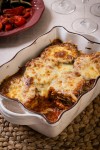
Paula Shoyer’s eggplant parmesan, featured in her latest cookbook, The New Passover Menu. (photo by Michael Bennett Kress)

The New Passover Menu by Paula Shoyer (Sterling, 2014) emboldened me. It was the whole package: the full-color photos, the clear text (blue for tools and ingredients; black for instructions), the organization by menus, the exotic-sounding nature of some of the offerings (gratin dauphinois, anyone?) and Shoyer’s dedication of the book:

“For all the kosher baker fans who asked me to write a cookbook of savory recipes. But, as my friend Suzin Glickman believes, you should still eat dessert first.”

Shoyer, of course, is famous for her baking. Bestselling The New Passover Menu joins her dessert bestsellers The Kosher Baker: Over 160 Dairy-Free Recipes from Traditional to Trendy and The Holiday Kosher Baker. She is a contributing editor to several kosher websites and cookbooks, as well as magazines, and is also a consultant for kosher bakeries and companies. She is no stranger to the Jewish Independent, as an internet search will show, and so it was with excitement that we received her latest cookbook.

In the press material accompanying The New Passover Menu, Shoyer says, “These recipes have been inside my head for years. As a book of 65 recipes, it offers not every possible Passover recipe but rather the best possible versions of food and desserts adapted for the Passover holiday.”

It lays out full menus for the two seders, as well as a Shabbat and Yom Tov menu, and menus for the holiday week, including lunch suggestions. There are several breakfast options and, of course, a lengthy list of dessert choices.

There is a chart of Passover cooking and baking substitutes, and a brief discussion of the holiday and its preparations (removing chametz and kashering the kitchen). Shoyer shares some memories of her seders past, and this leads into a description of the Passover table, the seder plate and its symbolic items, matza, salt water and wine.

Each recipe includes the preparation time, cook time, what items can be prepared in advance (and how long in advance) and all the equipment that will be needed. A brief paragraph accompanies each recipe, either a personal story about it or advice on cooking with some of its ingredients.

It was hard to narrow the selection of which recipes I would try. Since one of my taste testers is vegetarian, I shied away from such tempting creations as Seared Tuna with Olives and Capers with Kale Caesar Salad, and Moroccan Spiced Short Ribs. I opted instead for one main dish – eggplant parmesan – and something unique (and easy to make and transport) that I could bring to my host’s seder – banana charoset.

The New Passover Menu emboldened me in a couple of ways. First, I felt confident to adapt right from the beginning. So, for example, while Shoyer did not call for the eggplant slices to be sprinkled with salt and let sit for awhile to reduce their potential bitterness and bring some of their moisture to the surface (which I dabbed away with paper towel), I did it just in case. The recipe lists tomato sauce but, not wanting to buy or make any – as so many bought brands contain a lot of sodium and to make my own sauce would have been one more thing to do – I used a can of crushed tomatoes and added garlic powder, oregano and pepper to it, ingredients already included in the recipe. Finally, Shoyer offers a frying and a baking method for the eggplant slices, and I picked a middle version: I coated the slices as if for frying but then baked them, drizzling a little olive oil over them once they were laid out in the pan.

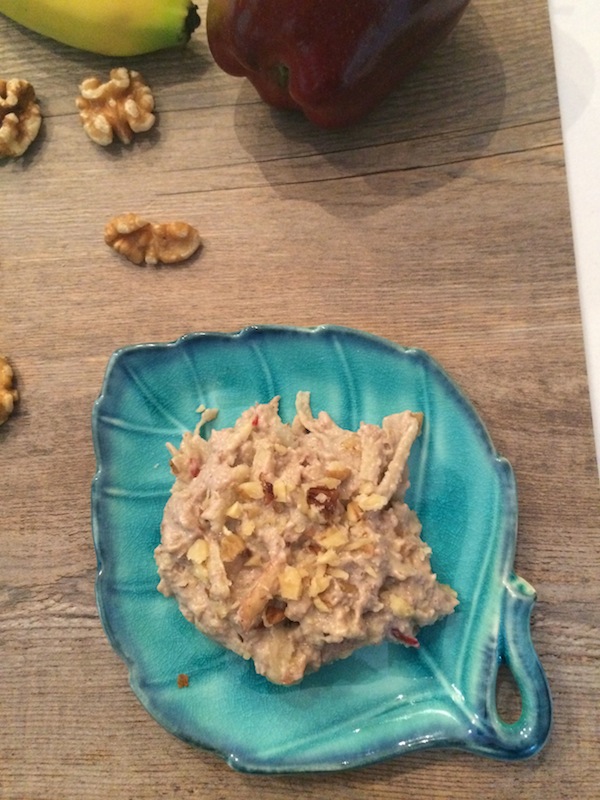
As for the banana charoset, I kept to the recipe for the most part, only adding more wine than recommended to brighten it up. I think the banana I selected for the mixture was on the too-ripe side. One thing to note with the charoset is that it tasted even better the next day, so I’d make it in advance if possible. The bold part of this recipe is that I pretty much insisted on bringing it to a seder once I’d tasted it.

The following recipes are reprinted from the cookbook, so the “I” and “my” from here on refers to Shoyer. Enjoy!

EGGPLANT PARMESAN

Serves: 12–15. Prep time: 10 minutes. Cook time: 20 minutes to fry eggplant; 35-40 minutes to bake. Advance prep: may be assembled one day in advance, fully baked three days in advance, or frozen; thaw completely before reheating. Equipment: cutting board, knives, measuring cups and spoons, two shallow bowls, large frying pan, nine-by-13-inch baking pan, silicone spatula.

Eggplant parmesan is one of my favorite Italian dishes. It is best made by my brother Adam Marcus, who has paid his rent for occasionally living with us by lovingly making his master version of this dish with a homemade sauce. Although I try to avoid frying foods (except for doughnuts and chicken once a year), I find that eggplant parmesan tastes better made with breaded and fried eggplant slices. If desired, you can grill the slices in the oven until fork-tender and then layer and bake as described below. If you go the healthier route, sprinkle the oven-roasted slices with some garlic powder, salt and black pepper. Depending on the size of the eggplants, you will end up with two or three layers in the pan.

1/3-1/2 cup oil for frying
3 large eggs, beaten
1 1/2 cups Passover breadcrumbs or matza meal
1/2 tsp garlic powder
1 1/2 tsp dried oregano
salt and black pepper
2 medium eggplants, not peeled, sliced into 3/4-inch-thick rounds
1 1/2–2 cups tomato sauce
2 cups shredded mozzarella cheese, or more as needed
1/3 cup freshly grated parmesan cheese

Preheat oven to 350°F.

Place a large frying pan on the stovetop and add 1/3 cup oil. Pour the beaten eggs into a shallow bowl. In another bowl, stir together the breadcrumbs, garlic powder and oregano and season with salt and pepper to taste. Heat the oil over medium-high heat. When the oil is hot, fry the eggplant slices in batches, browning both sides, until fork-tender, about 10 minutes per batch. Transfer to a plate covered with paper towels. Add more oil to the pan between batches if the pan gets dry.

Using a silicone spatula, spread about 3/4 cup of the tomato sauce in the bottom of a nine-by-13-inch baking pan. Place one layer of eggplant slices on top. Sprinkle with one cup of the shredded cheese. Cover with a second layer of eggplant. Pour another 3/4 cup sauce on top and use the spatula to spread the sauce on top of the eggplant pieces. Sprinkle with one cup of the shredded cheese. If you have more eggplant slices, place them on top, then add some tomato sauce and more shredded cheese. Sprinkle the parmesan all over the top.

Cover the pan tightly with aluminum foil and bake for 35 to 40 minutes, or until the eggplant layers are heated through and the cheese is melted. If you assembled the dish in advance and stored it in the fridge but did not bake it, bake for an extra 20 minutes.

BANANA CHAROSET

Makes three cups (serves 25 for seder). Prep time: 10 minutes. Advance prep: may be made three days in advance. Equipment: cutting board, knives, measuring cups and spoons, food processor, box grater, silicone spatula, small serving bowl.

photo - Banana charoset, from Paula Shoyer's The New Passover Menu
Banana charoset, from Paula Shoyer’s The New Passover Menu (photo by Michael Bennett Kress)

Charoset is the element on the seder plate that represents the mortar used by the Israelite slaves to build bricks. Growing up, I had seders almost exclusively at my parents’ house or a handful of other relatives’ homes, and everyone made the same charoset: walnuts, apples and sweet wine all smooshed together. It was only when I began hosting my own seders that I discovered a wide variety of charoset recipes from every corner of the world where Jews have ever resided. This recipe comes from my friend Melissa Arking, who is a fabulous cook. I added chopped walnuts at the end for some texture.

You can buy nuts already ground, with the skin or without. I have a coffee grinder dedicated to grinding nuts. You can also use a food processor, as long as it can reduce the nuts to a fine grind, almost like a powder, when you need almond flour for baking. If you grind nuts for too long, you will end up with nut butter.

3 large ripe bananas
2 cups ground walnuts
2 tbsp sugar
1/2 tsp ground cinnamon
2 tbsp sweet kosher wine
2 apples, shredded on the large holes of a box grater
1 cup walnut halves, chopped into 1/3-inch pieces

In the bowl of a food processor fitted with a metal blade [a hand blender also works], place the bananas, ground walnuts, sugar, cinnamon and wine. Process until the mixture comes together. Transfer to a small bowl, add the apples and chopped walnuts, and stir to combine.

Format ImagePosted on March 27, 2015March 26, 2015Author Cynthia RamsayCategories Celebrating the HolidaysTags charoset, eggplant, Passover, Paula Shoyer, recipes, seder
Charoset’s many variations

Charoset’s many variations

Ashkenazi-style charoset: apples, walnuts, cinnamon and red wine. (photo by Yoninah via commons.wikimedia.org)

What Passover seder symbol is common to all communities but is not mentioned in the biblical passage that enjoins us to eat the paschal offering, matza and bitter herbs? Charoset.

Charoset is loosely defined as a paste of fruit, spices and wine, symbolic of the mortar used by the Hebrews when they were slaves in Egypt.

The word is of unknown origin but may be from the word heres, meaning clay, because of its color. The custom of eating charoset is thought to have come from the time of the Babylonians, who dipped food in relishes or sauces to add flavor.

Some years ago, I surprised all my seder guests by serving both the traditional Ashkenazi version and a Sephardi version of charoset, which everyone loved and wanted in future years.

The New York Times Passover Cookbook, edited by Linda Amster, says that the Iraqi version of charoset is one of the oldest and most time-consuming recipes, dating back to the Babylonian exile of 579 BCE. Made into a jam from dates, grapes, pomegranate and honey, it was a sweetener in the ancient world and is still used by Iraqi, Burmese, Syrian and Indian Jews.

The Talmud says charoset must be sharp in taste and similar to clay in substance and color. Differing geographies is one of the reasons there are differing charoset recipes.

Ashkenazim tend to use apples, chopped almonds, cinnamon, red wine and perhaps even matza meal; sometimes walnuts or other nuts are used. Sephardi and Mizrahi Jews tend to use fruits that grew in Eretz Israel in biblical times, such as grapes, figs, dates, almonds and pomegranates. Israelis often turn charoset into a dessert by adding bananas, dates, orange juice and/or sugar.

Abraham Chill, author of The Minhagim (The Customs), writes that each ingredient symbolizes something different from the Egypt experience. The mixture as a whole stands for the mortar used by the Jews in making bricks, and the cinnamon resembles the color of the bricks they made. Wine represents the blood of the Jewish infants thrown into the Nile. Almonds are used because the Hebrew word for almond, shaked, is also a word that means to accelerate, as G-d accelerated the end of slavery. Apples are used because it was said that Jewish women during that time gave birth to their babies under apple trees in order to avoid detection by the Egyptians.

In her book The Jewish Holiday Kitchen, Joan Nathan states that charoset is “one of the most popular and discussed ritual foods served at the seder.” She says the fruits and nuts refer to verses in the Song of Songs, which mention an apple tree and the garden of nuts; the red wine recalls the Red Sea.

Because the maror or bitter herb is so strong, some say that the real purpose of charoset is to allay the bitterness. As part of the seder, the charoset and maror are placed between matzot to make a sandwich, which is said to have been invented by the first century CE Rabbi Hillel, hence, its name, the “Hillel sandwich.”

There are as many variations on the ingredients of charoset as there are Jewish communities.

Jews from the island of Rhodes use dates, walnuts, ginger and sweet wine. Jews of Salonika, Greece, add raisins. Other Greek Jews use walnuts, almonds, pine nuts, raisins, cinnamon, cloves and red wine and spread it thickly on matza. Turkish Jews include orange.

A Moroccan friend told me she used some of the seven species from the Bible in her charoset: dates, almonds, nuts, pomegranate seeds, figs, wine and cinnamon. Jewish Daily Forward Food Maven columnist Matthew Goodman once wrote in the Forward that Moroccan Jews sometimes make charoset paste and roll it into balls. He says this is a legacy from Jews of medieval Spain, who made the balls of apples, dried fruit, almonds, cooked chestnuts, sugar and cinnamon (but no wine) and then drizzled the balls with white vinegar before serving.

Jews of Venice use chestnut paste, dates, figs, poppy seeds, walnuts, pine nuts, orange peel, dried apricots, raisins, brandy and honey, while Jews of Bukharia use nuts, almonds, dates, raisins, apples and wine. Egyptian charoset contains dates, nuts, banana, apples, wine, cinnamon and pomegranate seeds.

An Iraqi woman told me that instead of a paste type of charoset, they would buy a special date honey and sprinkle chopped nuts on top. Goodman, again in the Forward, explained that its foundation is a syrup, halek, made by boiling dates, straining the liquid and then reducing it over a low flame until thick. Halek is one of the earliest of all sweeteners and may be the source of the reference in “land flowing with milk and honey.” Chopped walnuts or almonds are then added to the syrup. Jews of Calcutta also follow this custom.

A Dutch woman told me that she makes a chunky mixture with more apples and only a few nuts, plus cinnamon, sugar, raisins and sweet wine. Jews from Surinam in Dutch Guiana use seven fruits and coconut.

Following the injunction to have a sharp taste, Persian Jews use dates, pistachios, almonds, raisins, apples, orange, bananas, pomegranate seeds, sweet wine, cloves, cardamom, cinnamon, vinegar and black pepper. Likewise, Yemenite Jews use dates, raisins, almonds, nuts, figs, dates, sesame seeds, apples, pomegranate seeds, grape juice, ginger, cinnamon, cardamom, cloves and black pepper. Jews from Afghanistan pound charoset in a mortar with a pestle and use walnuts, hazelnuts, almonds, apples, sweet wine, pomegranate seeds, dates and black pepper.

One exception I have found to Ashkenazim following the strictly sweet version was a friend whose father’s family came from Galicia. He recalled that their charoset was made from apples, nuts, wine, cinnamon and horseradish.

Here are but a few recipes.

CLASSIC ASHKENAZI CHAROSET

6 chopped apples
1/3 cup chopped nuts
1/4 cup raisins
1 tsp cinnamon
2 tbsp sugar
1/4 cup red sweet wine

Combine apples, nuts and raisins. Add cinnamon, sugar and wine. Depending on your preference, this can also be made in a food processor.

DATE CHAROSET

1/2 cup seeded, finely chopped dates
1/2 apple, grated
1/2 cup chopped almonds
1/8 cup red wine
1/2 tsp cinnamon
1/4 tsp ginger

Combine dates and apple. Add nuts, wine, cinnamon and ginger.

SEPHARDI CHAROSET

1/2 cup chopped dates
1/2 cup chopped raisins
1 cup chopped walnuts
1/4 cup chopped almonds
1/4 cup red wine
2 tbsp lemon juice
1/8 tsp cinnamon

Combine dates and raisins. Add walnuts, almonds, wine, lemon juice and cinnamon. Form into balls.

SPICY CHAROSET

12 figs
1 1/2 cups pitted dates
2/3 cup raisins
2 seeded oranges
2/3 cup almonds
1/2 cup dry red wine
1/4 tsp cayenne pepper
1 tsp cinnamon

In a food processor, coarsely chop figs, dates, raisins, oranges and almonds. Try to keep the fruit chunky unless you prefer it pureéd. Pour into a bowl. Add wine, cayenne, cinnamon and blend.

Sybil Kaplan is a journalist, foreign correspondent, lecturer, food writer and book reviewer who lives in Jerusalem. She also does the restaurant features for janglo.net and leads weekly shuk walks in English in Jerusalem’s Jewish food market.

Format ImagePosted on March 27, 2015March 26, 2015Author Sybil KaplanCategories Celebrating the HolidaysTags Ashkenazi, charoset, Passover, recipes, seder, Sephardi
Chicken for Pesach midweek

Chicken for Pesach midweek

A tagine is a North African, slow-cooked savory stew, named after the earthenware clay pot in which it is cooked. (photo by Iron Bishop via commons.wikimedia.org)

After the sedarim, by midweek, you may be looking for some creative ideas for Passover dinners. Here are three dishes I frequently serve.

A mina is a traditional Sephardi savory layered pie, which is a great way to use up leftover chicken. In Spain and Turkey, it is called mina; in Egypt, maiena or mayena; in Algeria, meguena; and, in Italy, scacchi. The pie is also popular among Jews from the island of Rhodes and Yugoslavia.

A tagine is a North African, slow-cooked savory stew, named after the earthenware clay cooking pot, whose base is flat and circular with low sides. The cover is cone or dome shaped, which traps the steam and returns the condensed liquid to the pot, thus requiring very little liquid when cooking. In a chicken tagine, vegetables or dried fruit, nuts and spices are added.

Finally, leek patties known as kyeftes de prasa in Ladino, kifte in Turkish, keftas or keftes in Greek, are popular among Mediterranean Jews for Passover. I like to add chicken to mine.

CHICKEN MINA
6-8 servings

2 cups cooked, shredded chicken
1/2 cup chopped scallions
1/2 cup chopped Italian parsley
1/4 cup chopped mint
1/4 cup chopped dill
5 eggs
6 matzot
chicken soup
olive oil
1/2 cup tomato sauce
1/4 tsp nutmeg

  1. Preheat oven to 350˚F. Grease a rectangular or oval baking dish.
  2. In a bowl, combine chicken, scallions, parsley, mint and dill. Add two eggs and blend.
  3. In another bowl, combine three eggs, tomato sauce and nutmeg.
  4. Place matzot in bottom of a deep dish. Pour enough chicken soup to soften, about three minutes.
  5. Place two matzot in greased baking dish. Brush with olive oil. Spread half the chicken filling on top. Add two more matzot, brush with oil and spread rest of chicken filling on top. Top with remaining two matzot.
  6. Pour tomato sauce on top. Bake for 45 minutes. Cut into squares to serve.

CHICKEN TAGINE
8 servings

1 cup matza meal
8 pieces of chicken
4 cups chopped onions
2 cups chicken soup
1 1/2 – 3 cups prunes, apricots or other dried fruit
2 tsp cinnamon
1 tsp ginger
1/4 cup lemon juice
2 tsp lemon peel
1 cup slivered almonds
oil

  1. Place matza meal in a shallow dish. Dip chicken pieces in the meal.
  2. Heat oil in a soup pot. Add chicken and brown. Add onions, chicken soup and dried fruit and simmer until chicken is cooked.
  3. Add cinnamon, ginger, lemon juice, lemon peel, and almonds. Simmer another 20 minutes.

CHICKEN-LEEK PATTIES
6-8 servings

3 leeks
1 cup chopped onions
2 cups chopped cooked chicken
2 eggs
1 cup mashed potatoes
1/2 cup matza meal, plus extra
salt and pepper to taste
1 beaten egg
oil

  1. Place cut-up leeks and onions in a saucepan with water, bring to a boil, reduce heat and simmer 30 minutes.
  2. Drain and chop. Add chicken, eggs, 1/2 cup matza meal, mashed potato, salt and pepper and blend.
  3. Place egg in one shallow bowl and additional matza meal in the second bowl. Take chicken mixture and make into patties. Dip into beaten egg then in matza meal for coating.
  4. Refrigerate for awhile at this point if serving later. Before serving, heat oil in a frying pan and fry until patties are brown on both sides. Drain on paper towels.

Sybil Kaplan is a journalist, foreign correspondent, lecturer, food writer and book reviewer who lives in Jerusalem. She also does the restaurant features for janglo.net and leads weekly shuk walks in English in Jerusalem’s Jewish food market.

Format ImagePosted on March 27, 2015March 26, 2015Author Sybil KaplanCategories Celebrating the HolidaysTags chicken, Passover, recipes, seder, tagine

Posts pagination

Previous page Page 1 … Page 440 Page 441 Page 442 … Page 494 Next page
Proudly powered by WordPress