Skip to content
  • Home
  • Subscribe / donate
  • Events calendar
  • Business Directory
  • FAQ
  • News
    • Local
    • National
    • Israel
    • World
    • עניין בחדשות
      A roundup of news in Canada and further afield, in Hebrew.
  • Opinion
    • From the JI
    • Op-Ed
  • Arts & Culture
    • Performing Arts
    • Music
    • Books
    • Visual Arts
    • TV & Film
  • Life
    • Celebrating the Holidays
    • Travel
    • The Daily Snooze
      Cartoons by Jacob Samuel
    • Mystery Photo
      Help the JI and JMABC fill in the gaps in our archives.
  • Community Links
    • Organizations, Etc.
    • Other News Sources & Blogs
  • JI Chai Celebration
  • JI@88! video

Recent Posts

  • Legal help for students
  • Revisiting myth of Lilith
  • Wrong person rebuked
  • Canada’s mixed messages
  • Questions for museum
  • Symposium on antizionism
  • Making soccer political
  • CJPAC lauds Pulver’s impact
  • City recognizes Vrba’s legacy  
  • Organ donation saves lives
  • Theodore’s March premiere
  • A healing Shabbaton
  • Supplying healthy food
  • A chime of metal tags
  • Yellowknife seder a first
  • Ishai energizes, unifies
  • A Lag b’Omer to remember
  • Expanding the healing
  • Hannah Senesh – a unique hero
  • Community milestones … May 2026
  • Sharing her testimony
  • Fall fight takes leap forward
  • The balancing of rights
  • Multiple Tony n’ Tina roles
  • Stories of trauma, resilience
  • Celebrate our culture
  • A responsibility to help
  • What wellness means at JCC
  • Together in mourning
  • Downhill after Trump?
  • Birth control even easier now
  • Eco-Sisters mentorship
  • Unexpected discoveries
  • Study’s results hopeful
  • Bad behaviour affects us all
  • Thankful for the police

Archives

Follow @JewishIndie
image - The CJN - Visit Us Banner - 300x600 - 101625

Images

Early detection is key

Early detection is key

Left to right: Dr. Alon Friedman, Jayson Dzikowicz, Dr. Michael Ellis and Benedict Albensi. (photo by Rebeca Kuropatwa)

It has been known for years that there is a connection between brain injuries and diseases like Alzheimer’s, autisms and epilepsy, but early detection and possible prevention still elude us.

This was the message Ben-Gurion University’s Dr. Alon Friedman relayed at a recent brain-injury panel discussion, hosted by the Canadian Associates of Ben-Gurion University in Winnipeg. A professor in the medical faculty at Dalhousie University, Friedman was joined by Dr. Michael Ellis of the Pan Am Clinic Concussion Program; Dr. Benedict Albensi of the University of Manitoba and St. Boniface Hospital; and Jayson Dzikowicz of the Blue Bomber Alumni Association. The discussion was moderated by Charles Laflèche of St. Boniface Hospital Foundation.

Friedman opened with remarks on the work being done in the field of brain injuries at BGU and broke the discussion into two topics: traumatic brain injury and brain deterioration due to age.

“The money that we as a community spend on traumatic brain injury and on the outcome is tremendous,” said Friedman. “Sport injury is only one small part of it. Mostly, it’s road accidents and falls.

“We are getting into the 21st century and the average [life] expectancy in Western countries is around 80-to-90-years-old. Most of us will live at least until 90 or 100. The price is that we will all probably die with a brain disorder.”

According to Friedman, what is clear with all of the diseases is that we lose a lot of brain tissue before we see any symptoms. “The main problem is that we don’t understand how the diseases are generated. [Over] the last decade, we are trying to look differently at the brain.”

Researchers are now starting to look at the brain as a whole entity, including different cells that interact and communicate with one another all the time.

“While the brain gets the most blood to supply it with the elements it needs, blood does not enter into the brain tissue normally,” said Friedman. “The brain has its own environment protected by what researchers call ‘the blood-brain barrier.’ This separation allows the nerve cells in the brain to act in a very accurate and stable condition, regardless of what’s happening in the blood. A brain injury occurs when this barrier is broken.”

BGU learned more about this barrier by studying a group of football players in Be’er Sheva. “The reason we did it with football players is we knew it would attract the media much more than others, unfortunately,” said Friedman.

To help the audience grasp what football players face, Dzikowicz, who is a former player, shared his experiences with the panel. He has had approximately nine concussions. “Usually, one is more than enough to take people out of sports,” he said. “In business, if you’re faulting, it’s a long process to replace you. In sports, your replacement is standing 30 feet away…. You’re heavily motivated to stay on the field despite injury.

“When it became an issue with me … if you ever rub your eyes a lot and you see those circles … when I had those circles permanently, and when I got hit in the head and they’d be pulsing and flashing for weeks on end, that’s when I got the message that maybe I should stop playing.”

In the 1990s, when Dzikowicz played the game, his coaches’ main reaction was to say that he had “had his bell rung.” Dzikowicz went on to explain, “You got two plays off, you got some smelling salts and you got tapped on the butt and sent back on the field.”

Run by Ellis, the Pan Am Clinic Concussion Program treats children who have had concussions – the program focuses on kids with head injuries. “It’s a very unique partnership between Pan Am, the Children’s Hospital and our provincial government – multidisciplinary care for the children of Manitoba with mild, traumatic brain injuries,” he said. “Patients with more severe injuries go to the Children’s Hospital. We see 40-60 children a week.

“Fortunately, the vast majority of children who sustain a concussion will recover within two to three weeks, but we know that there’s a certain proportion, about 30-40%, who will have symptoms that will last longer.”

Some kids will have headaches or visual/reading abnormalities, issues with balance or develop mood disorders. The focus of the Pan Am program is to bring together experts from various fields to meet the needs of each individual patient.

While collaborative research on brain tumors and Alzheimer’s is being conducted, less is known about the connection between concussions and epilepsy. About the connection between brain trauma and epilepsy, however, Albensi said, “There’s certainly very good evidence that head trauma can lead to neurodegenerative disease…. The question is how many patients with TBI [traumatic brain injuries] develop epilepsy?”

At BGU, the focus is on using MRI to get better pictures of brain injuries and comparing them with images of normal brains. At Pan Am, researchers are developing an MRI brain stress test and looking at blood flow within the brain.

All the panelists agreed that treatment would be more effective with early detection. “Unfortunately, if someone has full-blown Alzheimer’s, the chances of reversing and changing the situation is almost impossible,” said Friedman. “The only chance … is early diagnosis.”

One of the biggest hurdles is getting those who are experiencing memory loss to see a doctor early enough and for the doctor to send them to a specialist without dismissing the memory loss as “normal.”

“There is a lack of awareness, because people don’t think that there’s something to do,” said Friedman. “Patients can go to early diagnosis in every large hospital today. There is general advice to be made and practice for detection, for treating.”

“I think that what we agree on is that there is some risk in families,” added Albensi. “It’s basically impossible to predict if a parent had Alzheimer’s whether his/her son or daughter will have it. Early diagnosis is more important.”

Albensi explained, “What we study in my laboratory as far as the inflammatory response are transcription factors, which are specialized proteins involved long term in the inflammatory process. And, it’s getting the brain to turn off this inflammatory process, in my view, that is key to reducing the risk for these neurodegenerative disorders.”

“The brain can change itself any time in our life,” said Friedman. “The fact that we can learn means the brain can change, at any age. In any condition basically after a trauma, whether emotional or physical, I don’t think it’s that important, but it’s possible.

“Inside a person, stress is a very important factor against brain plasticity. If we are motivated to change our brain, we can find ways to do it and help ourselves.”

Rebeca Kuropatwa is a Winnipeg freelance writer.

Format ImagePosted on May 29, 2015May 27, 2015Author Rebeca KuropatwaCategories LifeTags Alon Friedman, Alzheimer's, autism, Benedict Albensi, brain, concussion, dementia, epilepsy, Jayson Dzikowicz, Michael Ellis
Israelis flipping for acro-yoga

Israelis flipping for acro-yoga

Jerusalem-based instructor Ayo Oppenheimer bases student Rabbi Rachel Kobrin in her first acro-yoga flight. (photo by Daniel Cuevas)

As I walk through Tel Aviv’s HaYarkon Park on a gorgeous day, I watch people enjoy nice, normal activities like soccer, running, rowing and yoga. But that’s not what I’m here for. No, I’m at the park to join a weekly meetup of people who balance, flip and manoeuvre each other in a series of gravity-defying poses called “acro-yoga.”

Even though I don’t know a soul, I instantly recognize the acro-yoga group. They are all partnered up, the “bases” lying on their backs with the “flyers” balancing on top of them.

Within minutes of joining them, I meet Yair Chuchem, a computer programmer who’s practised these strange yet fun-looking moves for more than three years. When I tell him that I’m writing an article about Israel’s growing acro-yoga craze and ask for an interview, he responds, “The best way to understand acro-yoga is to do it.”

Anything for my craft….

The next thing I know, I’m trusting Chuchem – a complete stranger – to balance me upside-down with my shoulders planted on the soles of his feet. Surprisingly, Chuchem doesn’t feel like a stranger for long. After all, we are literally in a position that requires us to communicate and cooperate clearly and patiently with each other.

“This is what acro-yoga is all about,” he said after carefully lowering me back on my feet. “It’s trust and teamwork, and it bonds people.”

Once the blood rushes out of my head, I realize he’s right. Chuchem already feels like a friend (although, had he dropped me, I might feel differently).

In terms of the physical dynamics, acro-yoga is a practice that combines acrobatics and yoga moves between the base and the flyer. But, as I learned from my first experience, it also involves cooperation and some fearlessness, which perhaps is why Israelis are going absolutely crazy for it.

“Acro-yoga is a really fun practice with lots of social components to it,” explained Ofir Gothilf, an established acro-yoga instructor based in Tel Aviv. “It’s a warm community that uses touch in a safe, secure way; and everyone is looking for that human experience – maybe Israelis more than others.”

While acro-yoga (or acro-balance) is an international practice – with the trademarked AcroYoga school founded by two Americans in 2003 – it has grown leaps and bounds in Israel, which is recognized as one of the strongest, if youngest, acro-yoga communities worldwide.

“[The community] started out as just 10 friends wanting to jam and get together in the park,” explained Eitan Padan, an Israeli acro-yoga instructor with six years of experience. “And now, in just two years, it’s grown to over 4,000 members.”

That figure is based on current members of Israel’s acro-yoga Facebook group called LaOof Nifgashim or Fly Together. Padan estimates that among the 4,500 members, several hundred of them actively practise. The interest is also evident by the sheer number of acro-yoga opportunities throughout the country. According to Fly Together, Israel boasts nearly 30 instructors, classes and self-organized meetups spanning from Eilat to Haifa.

From May 21 to 24, a few hundred Israeli acro-yoga enthusiasts of varying levels were in the Negev for the fifth Israeli Acrobatic Convention, featuring workshops led by world-class teachers hailing from cities including Berlin, Paris and Moscow.

Among the headlining instructors was Lux Sternstein, who, for his third year in a row, traveled all the way from Seattle to lead several advanced workshops throughout the convention’s four-day program. Upon each visit, Sternstein grows more impressed with the growth and diversity of Israel’s acro-yoga community.

“Most remarkable to me is the age range [in Israel],” Sternstein said. “It’s the model that I wish the entire world would practise – to have teenagers and senior citizens working together. We don’t have that in North America, where it’s typically people in their early 20s to mid-40s.”

While it might seem shocking to imagine senior citizens doing acro-yoga, it speaks to the inclusive, welcoming nature of the practice, said Padan, who is in his 50s.

“Everyone can come join,” he said. “No matter your sex, race, religion, size, age. There is no sense of competition in ‘acro’ like there is in other sports. It’s about working together.”

Beyond recreation and fitness, acro-yoga also has therapeutic applications, said Jerusalem-based instructor Ayo Oppenheimer, who taught in the United States before immigrating to Israel.

“Acro-yoga is a tool for happiness, self-awareness and empowerment,” she said. “In addition to teaching my regular practice, I’ve taught here [in Israel] at a women’s shelter for victims of domestic violence and at a hospital for teenage girls at risk. I don’t see myself as a fitness instructor. For me, I really believe that acro-yoga can improve people’s lives.”

Back at the HaYarkon acro meetup, I hear a similar sentiment. People aren’t here for exercise, per se, but for a challenge that thrives on personal connection.

“It’s nice that people are cooperating together for one goal,” said Shira Rosenzweig, who is one of the best flyers at the meetup.

Next comes a real visual treat: Rosenzweig and Chuchem pair up. From handstands to turns to straddles, Rosenzweig gracefully flows from pose to pose with Chuchem expertly guiding and supporting her. They look like an ice-dancing couple who has practised together for years. But, then I remind myself that this is acro-yoga. It’s quite possible that they only just met.

Israel21C is a nonprofit educational foundation with a mission to focus media and public attention on the 21st-century Israel that exists beyond the conflict. For more, or to donate, visit israel21c.org.

Format ImagePosted on May 29, 2015May 27, 2015Author Rachel Solomon ISRAEL21CCategories IsraelTags acro-yoga, acrobatics, Eitan Padan, health, LaOof Nifgashim, Lux Sternstein, Ofir Gothilf, Shira Rosenzweig, Yair Chuchem, yoga
Mystery photo … May 29/15

Mystery photo … May 29/15

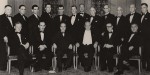
Group of B’nai B’rith men, circa 1950. (photo from JWB fonds, JMABC L.12152)

If you know someone in this photo, please help the JI fill the gaps of its predecessor’s (the Jewish Western Bulletin’s) collection at the Jewish Museum and Archives of B.C. by contacting [email protected].

Format ImagePosted on May 29, 2015May 27, 2015Author JI and JMABCCategories Mystery PhotoTags B'nai B'rith, JMABC
Soft side of the law

Soft side of the law

If you’re a member of any law enforcement effort in North America these days you’re not exactly living the dream when it comes to respect.

Stories of corruption and abuse have littered the news the past couple of years with well-known cities like Ferguson and Baltimore fighting off large-scale riots as a result.

On social media it has become the norm to talk about police officers like they are ALL abusive, power-hungry brutes – a label that is a sad contrast to the post 9/11 world.

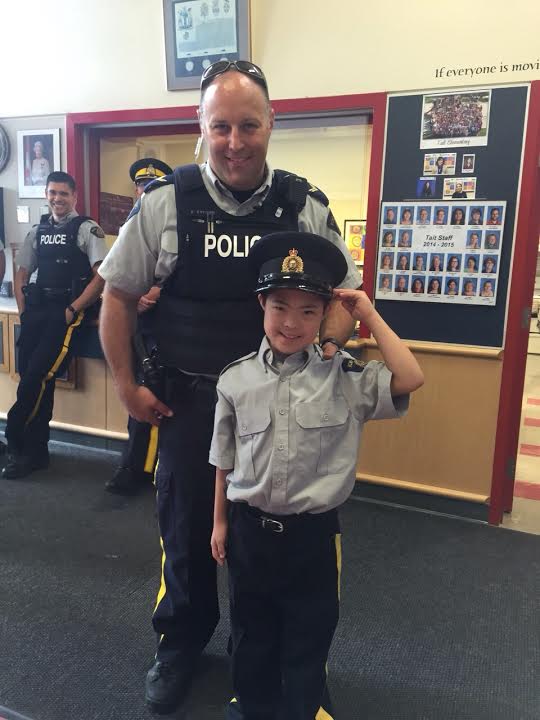
In Richmond last week, RCMP Corporal Kevin Krygier and his team put on a display that reminded many that the vast majority of our nation’s force are here for much more than crime and punishment. They are here for us.

This particular story started at Tait Elementary School, where Mike Ciu is a fourth-grade student with Down Syndrome. When Krygier visited the school this winter he met Mike, who helped give the corporal a tour of his school.

Soon after, Mike’s educational assistant, Marci Hammer, sent Krygier a video of Mike explaining that when he grew up he dreamed of being a police officer.

“I was so touched, I decided to make his dream a reality,” Krygier explained of what came next.

Krygier rallied his troops, connected with Hammer, started making some plans and put together an assembly presentation for Mike that blew his whole school away.

That day Mike Ciu was named an honorary Police Chief, given a uniform and marched into the gym with his new peers to roaring cheers from his younger peers. It was a day he and his family won’t soon forget.

Corporal Kevin Krygier and Mike Ciu

While the gesture turned into a nice community story, it was also a reminder that many of our uniformed defenders of the law are genuinely here to keep us safe AND make our lives better. So next time you hear a story of an officer abusing his power, share this one of our officers spreading the glory instead.

“I joined the RCMP to make a difference in people’s lives,” Krygier said. “I have done many things as part of the RCMP – some I have had to do and they have been sad and difficult. But this was so enjoyable for me and my colleagues. It took a lot of collaboration to make it happen, but comparably, it was easy and very meaningful for all of us who were involved.”

The event was captured on CTV News HERE.


Format ImagePosted on May 27, 2015May 27, 2015Author Kyle BergerCategories It's Berger Time!Tags Baltimore, Ferguson, Kevin Krygier, Mike Ciu, RCMP, Riots, Tait
אפליקציה סלולרית ברכבים

אפליקציה סלולרית ברכבים

אפליקציה סלולרית ברכבים: חברת הביטוח דז’רדינס מציעה לעקוב אחרי הנהגים תמורת עשרים וחמישה אחוז הנחה בפוליסה

לקוחות של חברת הביטוח המקומית דז’רדינס שיסכימו לתת לה אור ירוק לעקוב אחר נהיגתם, יקבלו בתמורה הנחה משמעותית בפוליסת הביטוח, בשיעור של עד עשרים וחמישה אחוז. כך החליטה חברת הביטוח לאחרונה, במסגרת קמפיין חדש כדי לעודד נהגים לנהוג בזהירות, כך שהדבר יגרום להקטנה משמעותית של מספר התאונות והנזקים בנפש וברכוש.

ד’זרנדיס היא בעצם חברה הראשונה בקנדה שמציעה ללקוחותיה ממש בימים אלה להתקין אפליקציה במכשיר הסלולר שלהם, שתאפשר לה לעקוב מקרוב אחר התנהגותם בכביש, כאמור תמורת הנחה בביטוח. האפליקציה תספק לדז’רנדיס מספר נתונים משמעותיים. ובהם: מהירות הנהיגה של הרכב, מרחק השמירה מהרכב שנמצא מקדימה, כמה פעמים לחץ הנהג על דוושת המעצור, באיזה יום הוא נהג ובאיזה שעה הוא נמצא על הכביש. עם סיום הנהיגה האפליקציה מסכמת את הנתונים ומעניקה לנהג ניקוד על צורת התנהגותו והתנהלותו בכביש, שמועברים למאגרי המידע של חברת הביטוח.

אחת מעובדות של חברת דז’רדינס שמפעילה את האפליקציה במסגרת ניסוי שמתקיים מאז חודש ספטמבר, מציינת כי רק מעצם השימוש בה היא כבר הפכה לנהגת יותר זהירה ומבוקרת שמקפידה על חוקי התנועה.

אך יש גם לא מעט שמבקרים את הפרוייקט החדש וטוענים שהאפליקציה תאפשר בעצם לדז’רדינס להשיג מידע אישי על לקוחותיה, ומי יודע לאיזה ידים הוא אף יכול להתגלגל. בדז’דינס שוללים את הטענות האלה ואומרים בתגובה, כי הם יאספו רק מידע על התנהגות הנהגים בכביש, והוא לא יועבר לשום צד שלישי. אגב גורמי אכיפת החוק יוכלו לקבל את המידע מחברת הביטוח רק אם יציגו צו בפניה מבית המשפט.

אפליקציה סלולרית במסעדות: מסעדות מוכרות מראש כרטיסים לשולחנות למנוע הפסדים מהזמנות

כמה פעמים הגענו למסעדה ונאלצנו להמתין בכניסה בתור ארוך ובלתי נגמר עד שפקעה סבלנותנו. ומה שעוד יותר מרגיז שראינו לא מעט שולחנות שפשוט עומדים להם ריקים וגלמודים עם השלטים מאירי העיניים “שמור”, ואף אחד לא יושב סביבם.

מתברר שהשולחנות “השמורים” האלה מעצבנים לא פחות גם את בעלי המסעדות, שמפסידים כסף רב מהתופעה הנפוצה הזו. הרבה לקוחות שמזמינים שולחנות מראש מאחרים מאוד להגיע, וחלק מהם אף לא טורח בכלל לבוא ולהודיע על כך למסעדות.

בעלי מסעדות בקנדה החליטו שהגיע הזמן לעשות מעשה ולשנות את רוע הגזרה, של מכת השולחנות הריקים. חלקם בחרו בפתרון קל ביותר והם ולא מקבלים עוד הזמנות מראש. התוצאות מורגשות היטב בשטח. אחוז תפוסת השולחנות גדל בשיעור משמעותי של למעלה מעשרים וחמישה אחוז, ובהתאם לכך ההכנסות הולכות וטופחות. ישנם בעלי מסעדות שמנסים אף “לחנך” את הלקוחות, וגובים פקדון מכובד עבור הזמנת שולחנות מראש, שלא יוחזר אם לא יופיעו.

ואילו ישנם בעלי מסעדות אחרים, בעיקר אלה שנמנים על הדור הצעיר יותר, שהחליטו לחפש פתרונות יצירתיים מבוססים על טכנולוגיה, כדי לאפשר ללקוחות להזמין מקומות מראש, אך במקביל גם לא להפסיד גם כסף. הם החלו לאחרונה להפעיל אפליקציה במכשיר הסלולר למכירת כרטיסים מראש עבור השולחנות, בדומה למה שקורה בענף האירועים. מחירי הכרטיסים משתנים בהתאם לרמת התפוסה המסעדה, מועד ההזמנה (למשל: באיזה שבוע מדובר, באיזה יום מדובר ואפילו באיזה שעה מדובר), מיקום השולחן וסוג התפריט. האפליקציה מדווחת גם בזמן אמת ללקוחות פוטנציאליים, מהו זמן ההמתנה לשולחנות באותו יום ואם יש בכלל שולחנות פנויים. כך שכולם יוצאים מורווחים מהאפלקציה הזו.

Format ImagePosted on May 26, 2015May 24, 2015Author Roni RachmaniCategories עניין בחדשותTags Ajusto, app, Desjardins, insurance, restaurant, telematics, אפליקציה סלולרית, ביטוח, דז'רדינס, מסעדה
Exhibit’s familiar face

Exhibit’s familiar face

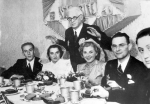
This photo is among the images in The Face of the Ghetto: Pictures Taken by Jewish Photographers in the Litzmannstadt Ghetto, 1940-1944, produced by the Topography of Terror Foundation, Berlin. The bride on the right is Bronia Sonnenschein; beside her is her groom Erich Strauss. The second bride is Mary Schifflinger with husband Ignatz Yelin. Blessing the couples is Chaim Rumkowski, head of Lodz Ghetto’s Jewish council. Only Sonnenschein survived the Holocaust. She passed away in Vancouver in 2011. (photo from Yad Vashem Photo Archive)

The Face of the Ghetto: Pictures Taken by Jewish Photographers in the Litzmannstadt Ghetto, 1940-1944, opened last week at the Vancouver Holocaust Education Centre. Produced by the Topography of Terror Foundation in Berlin, among the traveling exhibit’s photographs was a surprise – a photo with a local connection.

“Unidentified in the photo caption but recognized by our education director [Adara Goldberg] during her research about this exhibit, Bronia Sonnenschein is depicted in the photo to my left,” said VHEC executive director Nina Krieger in her remarks at the opening on May 14, directing attendees’ attention to an image “showing a double wedding ceremony presided over by Chaim Rumkowski, the head of the Council of Elders in the Lodz Ghetto. Bronia was the sole survivor of those shown in this photograph. A multilingual secretary in Rumkowski’s office and a survivor of Auschwitz, Bronia passed away in 2011 but is fondly remembered by so many of us.

“Bronia, who stood maybe ‘this’ tall,” continued Krieger, indicating a measure of about shoulder height, “was a giant in terms of her dignity, her resilience, and her dedication to sharing her eyewitness testimony with tens of thousands students as a VHEC outreach speaker.”

About the Topography of Terror Foundation, Krieger explained that it “is mandated to transmit the history of National Socialism and its crimes, and to encourage people to actively confront this history and its aftermath. A distinctive indoor and outdoor museum, the Topography of Terror is located on the very grounds previously occupied by the primary institutions of Nazi persecution and terror: the SS, the Gestapo secret police and the Reich Main Security Office ran their central operations from the site.”

Krieger provided context for the exhibit. “Following the German invasion of Poland in 1939, the Nazis imposed a ghetto in the city of Lodz, which they renamed Litzmannstadt. From 1940 to 1944, more than 180,000 Jews and 5,000 Roma and Sinti lived in the ghetto’s cramped quarters, with many working in factories that supported the war effort.

“Ghetto residents were not allowed to own cameras, yet Lodz is the most documented of all the ghettos in Nazi-occupied Europe. Some of these images were taken by perpetrators, often trivializing the terrible conditions in the ghetto and attempting to justify the exploitation of Jewish forced laborers. Others – and the focus of this exhibit – were taken by a handful of Jewish photographers, commissioned by the local Jewish council. While instructed to document the productivity of the war industry for the Nazis, the photographers also captured – at great personal risk – intimate moments of family, childhood and community.”

The Face of the Ghetto exhibit is here as a result of VHEC’s partnership with the German Consulate General in Vancouver and the sponsorship of the German government. Consul General Herman Sitz was at the opening and said a few words, as did Sonnenschein’s son, Dan. Drawn from a collection of 12,000 images held by the Lodz State Archives, one of the intimate moments captured is the one in which his mother appears.

“Last Friday was the historic 70th anniversary of Victory in Europe Day,” said Sonnenschein, addressing those assembled. “May 8th was personally very meaningful for my mother, as it was the date in 1945 on which she was liberated from the Nazi horror. For her, the bitterly harsh years had begun on March 13, 1938, when Germany annexed a largely welcoming Austria, immediately setting off intense persecution of the Jewish population.

“My mother, with her sister and parents, were among the longest-held prisoners in the Lodz Ghetto, from its formation in spring 1940 until its so-called liquidation in August 1944. Unlike many deported there from other places, they had fled Vienna after the notorious Kristallnacht, and were living under great stress in Lodz when the family was forced from their new home into the ghetto. They were later joined by a beloved aunt of my mother who was deported from Vienna. Her cherished elderly grandmother was deported elsewhere and murdered soon after.

“My mother, with her German-language and office skills, worked as a secretary in the ghetto’s Jewish administration,” he explained. “The photo in this exhibit shows her being married to Erich Strauss, who had been deported from Prague with his mother. The other bride in this double ceremony was Mary Schifflinger, my mother’s fellow office worker and good friend, whose groom’s name was Ignatz Yelin. Shown in the photo blessing the couples is Chaim Rumkowski, appointed head of the Jewish council by the ghetto’s masters in the German administration.

“These five people were all transported, in the usual dreadful way, to Auschwitz, where Rumkowski was killed. Soon after, the others were sent to a less well known but no less brutal concentration camp called Stutthof. There, Mary and her husband were killed, Erich Strauss and his mother were killed, my mother’s father and aunt were killed. As my mother once said, it was a killing field.

“Other photos of my mother in the ghetto may be seen on the internet, along with such photos of my Aunt Paula, who also married in the ghetto, to Stan Lenga,” continued Sonnenschein. “Unlike my mother’s first husband, my Uncle Stan survived and the couple was reunited after the war, being a part of my close family in Vancouver along with my maternal grandmother, Emily Schwebel. The local Jewish Family Service Agency gives an annual Paula Lenga Award in my aunt’s memory for exemplary volunteer service.

“My mother was also an exemplary volunteer, in her case, in Holocaust education. She began this late-life career, first under the auspices of the Canadian Jewish Congress and then with this centre, for over two decades compellingly conveying the suffering imposed on her and so many others for, as she put it, the crime of being Jewish. She often quoted Elie Wiesel’s saying: ‘Not every German was a Nazi but every Jew was a victim.’

“Although we no longer can experience her vibrant presence,” concluded Sonnenschein, “we are fortunate to have many recordings of my mother, as well as a book, to help her testimony live on.” Included in those recordings, he said, is one of her talking about the photo in The Face of the Ghetto exhibit, and related matters. The photos he mentioned of his mother and aunt can be found at google.com/culturalinstitute, searching for “Bronia Sonnenschein” and “Paula Lenga.”

In conjunction with the exhibit, the VHEC has developed a school program and teaching resource to engage students. “Visiting school groups will explore topics such as resistance to dehumanization; the unique experiences of children; and the complex role of Jewish leadership under Nazi occupation,” said Krieger, noting that several of the volunteer docents were at the opening. “Volunteers are central to our work,” she said, “and it’s my honor to acknowledge and to thank our docents for everything that they do.”

Krieger also thanked the VHEC staff – present were Goldberg, designer Illene Yu, archivist Elizabeth Shaffer, collections assistant Katie Powell and administrator Lauren Vukobrat – and the installation crew, Wayne Gilmartin and Adam Stenhouse, as well as the consul general.

The Face of the Ghetto is on display at the VHEC until Oct. 16.

– With thanks to Nina Krieger and Dan Sonnenschein for providing electronic copies of their remarks.

Format ImagePosted on May 22, 2015May 21, 2015Author Cynthia RamsayCategories LocalTags Bronia Sonnenschein, Dan Sonnenschein, Lodz, Nina Krieger, Topography of Terror Foundation, Vancouver Holocaust Education Centre, VHEC, Yad Vashem
Baking from the soul

Baking from the soul

Marat Dreyshner in action. (photos from Ella Dreyshner)

I can tell it’s going to be delicious even before I’ve taken a bite. I’m sitting in the Richmond home of Marat and Ella Dreyshner, owners of iKosherbake. I’m holding a slice of their chocolate chip banana bread. This golden cake is dense and moist; the semi-sweet chocolate is the perfect complement to the fruity sweetness of the bananas.

It all started with bagels. “We love bread in this house,” said Ella. It’s hard to find a good, kosher bagel, but iKosherbake has crafted its own variety. “It all comes down to time,” said Marat. “How long you boil the dough…. It’s a science!”

Over the last year, iKosherbake has gone from making bagels to cakes, to granola and catering birthday parties and personalized cakes.

photo - Ella Dreyshner with bags of iKosherbake buns.
Ella Dreyshner

It’s not always easy for a husband and wife to share a kitchen, but the Dreyshners have found their groove. Marat’s specialty is their line of savory products, while Ella leads with desserts. While Marat has trained professionally, Ella’s talents have flourished at home.

Marat explained, “She’s gotten to a level that would make a professional chef happy to work with her.”

It’s hard to find a kosher fondant, so Ella makes her own – “I like to paint on the actual fondant.” She has even molded a unicorn by hand. Her other specialties include kosher ice cream sandwiches: chocolate chip cookies filled with pineapple ice cream.

Their granola tells a story of its own. While working with students at Vancouver Talmud Torah, they were challenged to create a dish that included the seven flavors of Israel. The result was a granola bar containing ingredients like honey, olive oil, pomegranate juice and raisins. It was such a hit that they took the recipe home and developed a bagged granola.

The Dreyshners describe the flavor as “the perfect ratio of sweet and salty,” which is borne out when I opened the package at home. Slightly tangy, with a smoky hint of cocoa, the texture is a satisfying blend of chewy fruit and crunchy seeds. And that salty tang really does make the taste buds tingle!

Now that their product line is growing, the Dreyshners are serving the North Shore market, as well. Queensdale Market and City Market on Lonsdale have both snapped up bagels from iKosherbake.

Organic markets are a good fit. iKosherbake uses no additives or preservatives in their cooking and, whenever possible, they purchase ingredients from local, organic growers.

For the Dreyshners, kosher cooking isn’t just about finding ingredients with the right labels. The process of making food is a spiritual experience.

photo - A unicorn custom cake. iKosherbake also makes varieties of bagels, now carried at Queensdale Market and City Market on the North Shore
A unicorn custom cake. iKosherbake also makes varieties of bagels, now carried at Queensdale Market and City Market on the North Shore.

“Cooking is an art form that wakens your soul. It’s more than just filling your stomach – it’s digested on a spiritual level, as well,” Marat suggested. He added, “There’s a pleasure in the Torah aspect of the food, but also in the traditional aspect, as well – when you have the opportunity and the good luck to share with friends, family and community, the food becomes something real.”

Ella agreed. For her, kosher baking “symbolizes peace and unity,” by following a strict, methodical process with every recipe. Separating eggs, checking flour, keeping the wet and dry ingredients apart until the right moment: “These steps create a sense of calm and unity, when you finally combine all of these things together.”

For a sneak peek into the Dreyshners’ kitchen, you can watch Marat at work on YouTube with Rabbi Yisrael Shurack in their series of witty videos. In The Rabbi and the Chef, Marat talks about how the food is made, and the rabbi picks up on the symbolic, spiritual significance of dishes. These are lessons in Judaism served at high speed with delicious menus and a side dish of kooky humor.

Shula Klinger is an author, illustrator and journalist living in North Vancouver.

Format ImagePosted on May 22, 2015May 21, 2015Author Shula KlingerCategories LocalTags baking, Dreyshner, iKosherbake
Aleph is in full swing

Aleph is in full swing

Aleph in the Tri-Cities Society donated more than 150 boxes of organic foodstuffs to the Jewish Food Bank last week. (photo from Aleph in the Tri-Cities Society)

Aleph in the Tri-Cities Society / Israeli Canadian Culture Club donated more than 150 boxes of organic foodstuffs to the Jewish Food Bank last week. The shipment included pasta, raisins, nuts and tea.

Aleph was started in 2009 by Yossi (Joe) Dagan. Wanting to be part of a Jewish/Israeli community, Dagan said that driving to events at the Jewish Community Centre of Greater Vancouver or the Kollel was not easy to do on a regular basis, so he started a Facebook page and sought out compatriots in Coquitlam, where he lives. When he heard people speaking Russian or Hebrew, he would introduce himself.

“We are 306 on the FB page and we have a hard core of about 50-70 families that meet up for gatherings, holiday celebrations, Hebrew learning circle, field trips, bike rides, nature walks, parent meetings, culture shows and sports events,” said Dagan. “Our mission is to connect newcomers, young families and Jews within the Tri-Cities area and beyond.”

In 2013, with the help of Miri Tal, Aleph collaborated with the Jewish Federation of Greater Vancouver and Jewish Family Service Agency until February 2015, when Aleph started their own nonprofit society. In the Facebook post on the recent food bank donation, which can be found by searching “Israeli Canadian Culture Club,” Dagan thanked Dovrat Vitis and Gabrielle Dumont, and noted that the two shipments were worth more than $20,000 in retail value.

“As our group grows and needs expand,” said Dagan, “we are looking for donations going forward to help our group to keep on creating free or very low cost activities for our children. For example, we need immediate support to run our awesome outreach collaboration with the JCC summer camp, Camp Shalom. We are looking to support transportation costs that are needed to rent and operate a bus taking our children from Burnaby, Coquitlam, Port Moody, Port Coquitlam and Langley to the JCC and back every day for seven weeks of summer vacation 2015.” The program is supported by the JCC, JFSA and Federation, but the bus fees are not covered.

For more on Aleph, visit facebook.com/AlephInTheTriCities or email [email protected].


Format ImagePosted on May 22, 2015May 21, 2015Author Aleph in the Tri-Cities SocietyCategories LocalTags Israeli Canadian Culture Club, Tri-Cities, Yossi Dagan, Yossi Degen
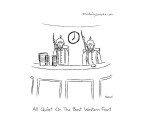
This week’s cartoon … May 22/15

This week’s cartoon … May 22/15

For more cartoons, visit thedailysnooze.com.

Format ImagePosted on May 22, 2015May 24, 2015Author Jacob SamuelCategories The Daily SnoozeTags Best Western, hotel, thedailysnooze.com
IDF veterans visit Vancouver

IDF veterans visit Vancouver

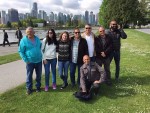
The eight visiting Israel Defence Forces veterans at Stanley Park. (photo by David Schwartz)

Eight Israel Defence Forces war veterans, all of them part of the rehabilitation program at Beit Halochem, visited Vancouver earlier this month for eight days. They were guests of Temple Sholom and each of them was hosted by a family here.

Temple Sholom president David Schwartz was one of those hosts. “It’s the fifth visit we’ve had, ever since we joined the Beit Halochem program 10 years ago, and each visit brings us, as a community, to new heights of emotional inspiration,” he said. “Our congregation’s response to this program was amazing and we had some members on the waiting list for the next time. Unfortunately, our group included only eight veterans – if we had more, there would have been no problem to find them a suitable accommodation. It is such a great privilege to host these brave people who sacrificed … for the state of Israel. Each one of them has an amazing story of personal heroism; it is just feels so honorable to have them among us even for a short while.”

Infantry Col. Eitan Matmon, who was injured three times during his military career, the last time on Lebanese soil during the 2006 war, was the highest rank officer among the visitors. It was Matmon’s second visit to Canada, but the first to the West Coast, and the warm weather matched the community’s hospitality. “From the first moment we landed in Vancouver,” he said, “our hosts took care of us and greeted us with the biggest hearts and smiles we could wish for.

“Our guys are struggling every single day to recover, both physically and mentally, from the horrible effects of war,” he continued. “For them to come here and enjoy this amazing scenery, to meet the local Jewish community and to relax and enjoy such a visit is just priceless. We are so thankful to our hosts from Temple Sholom, King David High School, Rabbi [Philip] Bregman from Hillel and everybody else who contributed to this successful visit. We can’t wait to show our friends and family at home what kind of warm support we have found here, on the other side of the planet.”

The group landed in Vancouver on Tuesday, May 5, and visited King David on Thursday, Hillel at the University of British Columbia on Friday, then joined Temple Sholom for Shabbat dinner. They toured Stanley Park and Granville Island, went shopping at Pacific Centre, attended a Vancouver Whitecaps game and traveled to Whistler and Bowen Island before leaving on May 14 for Calgary for five days. Separately, Matmon was among a group of about 50 people who joined a Jewish Museum and Archives of British Columbia tour of historical Jewish sites in Strathcona and Gastown on Sunday, which was when he had a chance to talk with the Jewish Independent.

The first connection between Beit Halochem and Temple Sholom was made by Bregman 10 years ago. Since then, five delegations have visited Vancouver, and Bregman is still excited by the special event. “For us, as North American educators,” he said, “this connection provides such a great opportunity to show our young generation something they have never seen before: personal sacrifice. Our country doesn’t ask for anything from local high school grads, right? You went to school, you graduated, you say thank you and move on with your life. In Israel, they say, ‘No, now you’re going to give us back three years of your life.’ And the young people of Israel keep on doing their mandatory service in such a devotion that can only be admired by our local youth. I’m so glad and proud that this connection has turned into a tradition. The IDF veterans’ visit at the Hillel centre has left our students with a powerful and inspiring message of hope and courage that can only come from one place in the world: Israel.”

For more details on Beit Halochem in Canada, visit beithalochem.ca.

Shahar Ben Halevi is a writer and filmmaker living in Vancouver.

Format ImagePosted on May 22, 2015May 21, 2015Author Shahar Ben HaleviCategories LocalTags Beit Halochem, David Schwartz, Eitan Matmon, IDF, Israel Defence Forces, Philip Bregman, Temple Sholom

Posts pagination

Previous page Page 1 … Page 432 Page 433 Page 434 … Page 494 Next page
Proudly powered by WordPress