Skip to content
  • Home
  • Subscribe / donate
  • Events calendar
  • Business Directory
  • FAQ
  • News
    • Local
    • National
    • Israel
    • World
    • עניין בחדשות
      A roundup of news in Canada and further afield, in Hebrew.
  • Opinion
    • From the JI
    • Op-Ed
  • Arts & Culture
    • Performing Arts
    • Music
    • Books
    • Visual Arts
    • TV & Film
  • Life
    • Celebrating the Holidays
    • Travel
    • The Daily Snooze
      Cartoons by Jacob Samuel
    • Mystery Photo
      Help the JI and JMABC fill in the gaps in our archives.
  • Community Links
    • Organizations, Etc.
    • Other News Sources & Blogs
  • JI Chai Celebration
  • JI@88! video

Recent Posts

  • Legal help for students
  • Revisiting myth of Lilith
  • Wrong person rebuked
  • Canada’s mixed messages
  • Questions for museum
  • Symposium on antizionism
  • Making soccer political
  • CJPAC lauds Pulver’s impact
  • City recognizes Vrba’s legacy  
  • Organ donation saves lives
  • Theodore’s March premiere
  • A healing Shabbaton
  • Supplying healthy food
  • A chime of metal tags
  • Yellowknife seder a first
  • Ishai energizes, unifies
  • A Lag b’Omer to remember
  • Expanding the healing
  • Hannah Senesh – a unique hero
  • Community milestones … May 2026
  • Sharing her testimony
  • Fall fight takes leap forward
  • The balancing of rights
  • Multiple Tony n’ Tina roles
  • Stories of trauma, resilience
  • Celebrate our culture
  • A responsibility to help
  • What wellness means at JCC
  • Together in mourning
  • Downhill after Trump?
  • Birth control even easier now
  • Eco-Sisters mentorship
  • Unexpected discoveries
  • Study’s results hopeful
  • Bad behaviour affects us all
  • Thankful for the police

Archives

Follow @JewishIndie
image - The CJN - Visit Us Banner - 300x600 - 101625

Images

Iron, fire meet cool waters

Iron, fire meet cool waters

Gregorio Scalamogna (photo by Olga Livshin)

The current double show at the Sidney and Gertrude Zack Gallery has its origins in the two artists’ friendship. “I met with Greg Scalamogna through a mutual friend,” said Miran Elbakyan, an artist-blacksmith and one of the two participants in the show. “I liked his technique – his lines are plastic-like metal.”

“We have similar philosophy in our works,” Scalamogna elaborated. “Miran’s lines flow like paint. We don’t restrict ourselves, [we] let our materials speak.”
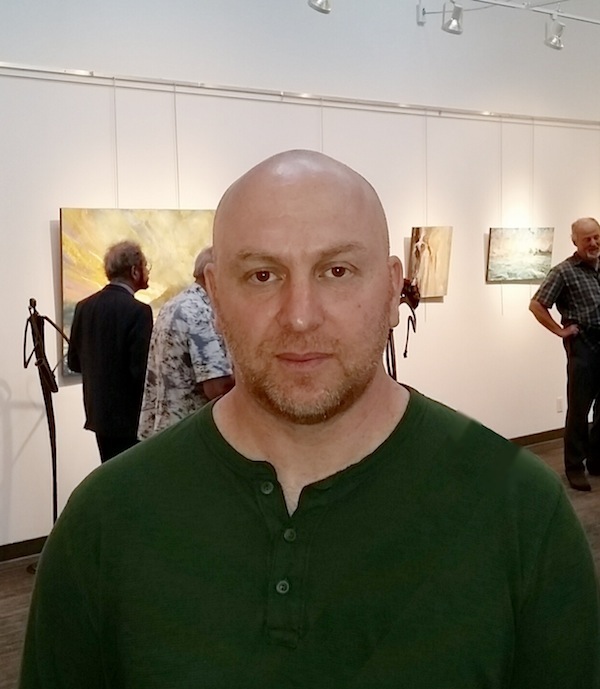
photo - Miran Elbakyan
Miran Elbakyan (photo from Miran Elbakyan)

The flowing lines and dynamic energy in both Scalamogna’s paintings and Elbakyan’s sculptures gave birth to the show’s title, Flow, but, aside from that, the two artists are very different, almost opposite in their approaches and subject matter.

While Elbakyan deals with fire and iron, creating tangible objects – sculptures, balconies, staircase rails, wrought-iron gates and other usable items – Scalamogna, a painter, concentrates on water in all its guises. Tame or wild, abstract or real, his waves and waterfalls inhabit the cool bluish-grey palette. His paintings reflect the artist’s fluid personality and his love for water. “I love boating and fishing,” he said with a smile.

Like his beloved water, Scalamogna traveled around the world, flowing in and out of adventures, before settling in British Columbia. He took his first trip when he was 19, a student of the Ontario College of Art and Design.

“I wanted to go to some place sunny,” he recalled. “I bought an air ticket to the Dominican Republic and exchanged my Canadian money at the airport before boarding the plane, but they made a mistake and gave me Mexican money instead of Dominican. Nobody in the Dominican Republic wanted to touch that money.”

As a result, he found himself alone in a foreign country without a cent. Young and proud as only a 19-year-old can be, he didn’t call home and ask his mother for help. “I wanted to do it myself,” he said. To earn some money, so he at least wouldn’t starve, he started painting tourists’ portraits on the beach. He also sold all his spare clothes for the price of a meal or two, and made friends with local people.

“They were poor but they helped me, took care of me,” said Scalamogna. “They were very generous. I couldn’t pay for a hotel, so one guy offered me to spend nights in his home.”

The trip was a success in the end. He made it, paying for his first independent vacation with his art, victoriously returning home a week later. He even brought back souvenirs for his family; he bartered for them with his portraits. “Since then, I wasn’t afraid. I knew I could make it anywhere. I could take on the world.”

Scalamogna spent his last year of college studying in Florence, Italy, and afterwards backpacked across Europe with his artistic portfolio, visiting museums and art galleries, finding work wherever he could. He had a few exhibitions abroad before returning home.

However, like water, which never stands still, he soon felt the urge to move again. This time, he took a bus across Canada. For several years, he lived and worked in Banff, but eventually settled here – the ocean enchanted him.

“I’m an expressionist,” he said. “Nature inspires me. I take photos when I’m on the water, fishing, but my photos are only starting points for my paintings. The photos bring back memories and feelings; they reference a certain time and emotion. There is no visual similarity.”

His paintings also reflect his daily existence. “They are commentaries on my life, my job, my relationships, people around me,” he said. A few years ago, when he was living in Tofino, his paintings were filled with vibrant colors and exploratory energy, with frantic tides and glittering sunsets. Some of them are part of the Zack Gallery show, instantly recognizable, but most of the pieces on display are from his latter Vancouver period. The paintings became calmer and quieter, as if seen through the veil of Vancouver’s rain. “I’m older now, more subtle,” he said.

Like his friend, Elbakyan traveled. He moved from Armenia to Israel and, from there, to Canada, prompted as much by political climate as by other considerations. Like Scalamogna, he, too, found a welcome home here, in British Columbia, and this exhibition is his third appearance at the Zack. “It is always nice to show my art here and get some feedback,” he said, although he admitted that he doesn’t like selling his sculptures.

“I’d rather sell home décor,” he said. “I’m always sorry to see my sculptures go. They are all unique. Even if I try to make a second copy, it has no inspiration in it. The first is always the best.”

The only artist-blacksmith on the B.C. mainland and one of the very few in Canada, Elbakyan is in high demand for those who are not satisfied with mass production, who want an original fence around their house or a one-of-a-kind balcony or some funky furnishing.

Recently, he branched out into the movie industry. His latest movie, Seventh Son, released in December 2014, is a medieval fantasy. “I made swords and shields for it,” he said, “and everything else of metal that their lab couldn’t produce. I also played a smith at a fair. It was fun.”

Elbakyan’s website is bcblacksmith.com; Scalamogna’s is artisticpainting.org. Flow opened on May 21 and runs until June 21.

Olga Livshin is a Vancouver freelance writer. She can be reached at [email protected].
Format ImagePosted on June 5, 2015June 3, 2015Author Olga LivshinCategories Visual ArtsTags Greg Scalamogna, Miran Elbakyan, Zack Gallery
Retiring from the JCC

Retiring from the JCC

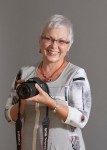
In her retirement, Jocelyne Hallé plans to keep working as a photographer. (photo by Rachel Lando)

Members of the Vancouver Jewish community know Jocelyne Hallé. For years, she has been the official photographer of the Jewish Community Centre of Greater Vancouver, taking pictures at gala dinners and art presentations. As well, her smiling face and helpful optimism have enhanced the centre’s membership desk and greeted many members, new and old, whenever they enter the building. But, after June 25, she will no longer be there. She is retiring.

“I came to work at the JCC in 2001,” Hallé said in an interview with the Independent. “Before, I used to work for several engineering firms, as a translator or executive assistant, but, by 2001, I grew unhappy with my job. I wanted a change, so I applied to an employment agency.”

She had never thought about a job at the JCC. “My agent took me for an interview but she didn’t tell me where she was taking me,” Hallé recalled. “She just said it would be a new environment for me and that I would like it. She brought me to an interview with Gerry Zipursky [executive director of the centre at the time]. The interview lasted for two hours, the longest interview of my life, and, after that, he hired me to be his personal assistant.”

When she started her new job, Hallé didn’t know anything about the local Jewish community or Jewish culture, or even about working at a community centre in general.

“I asked him why he hired me, a non-Jew,” she said, wondering aloud. “But he said he only wanted his assistant to be competent and sensitive to the situation in the Middle East. I guess I was both, although I don’t remember talking much during the interview. He did most of the talking.”

She admitted that the adjustment period wasn’t easy. “I had to learn so much. But the more I learned about the community and the Jewish culture, the more I fell in love with it. When, in 2005, I went with the others for a working trip to Israel, I felt very comfortable, as if it was home.”

The year 2005 was a milestone for her in many respects. She took thousands of photographs in Israel, and the experience propelled her lifelong passion for photography to a new level. Her photos of Israel adorned an entire wall of the JCC atrium for three years. Her affection for the country and the people reverberated through the images she captured. “It was so gratifying to see people standing in front of that wall, looking at my pictures,” she said. (In 2009, Hallé landed a show at the JCC’s Sidney and Gertrude Zack Gallery. “My friends told me that if they didn’t know better and only judged by my photos, they would’ve thought Israel a green country,” she confided happily.)

Another, sadder event also happen in 2005 – she was diagnosed with breast cancer soon after she returned from Israel. “Cancer changed me, in a good way,” she said. “Contrary to everyone’s expectations, it was a positive experience. I realized what was important in life. I learned who was a real friend and who wasn’t. Before, I was working too much, always tired and heading for depression, but my illness gave me leave to take care of myself.”

She took time to recover and, after two years, returned to the JCC. Her former boss was no longer there, so she started working at the membership desk. “It was a different environment,” she explained. “I finally met many community members and I was away from all the politics. I loved it. Everyone was very friendly and helpful; I felt almost a part of the family.”

She continued learning about the community, immersing herself in the culture and traditions. “By now, I know so much about Jewish ways, people often ask me questions. I explain to them about Rosh Hashana and Shabbat and other celebrations. Many are surprised to learn that I’m not Jewish. To tell the truth, sometimes I feel that I’m kind of Jew-ish. We joke about it.”

In January this year, Hallé turned 60, and decided it was time to retire.

“In the last couple of years, a few of my friends died,” she shared. “It was very upsetting, but I’m alive. I’m ecstatic to be 60. I want to travel, to take some class, to work more on my photography. Recently, I went to Nicaragua for a month; I worked there as a volunteer and I want to do it again. I want to visit Galapagos and Kenya. I might volunteer with the JCC Seniors.”

Hallé is sure that her work for the JCC created an opportunity for her to develop as an artist photographer. With the support and encouragement of her colleagues and friends, she continues to explore her chosen art form. “I have nine photographic events booked this summer, right after I retire,” she said. “I’ll do a bar mitzvah, a wedding, a fundraiser, even a dance festival.”

Hallé’s plans are still in flux, but they expand every day, perhaps enough to fill the next 60 years.

To learn more about Hallé, the photographer, visit her website, jocelynehalle.com.

Olga Livshin is a Vancouver freelance writer. She can be reached at [email protected].
Format ImagePosted on June 5, 2015June 3, 2015Author Olga LivshinCategories LocalTags JCC, Jewish Community Centre of Greater Vancouver, Jocelyne Hallé, photography
A party for Hebrew Free Loan’s 100th

A party for Hebrew Free Loan’s 100th

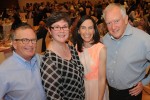
Hebrew Free Loan Association president Michelle Dodek, second from the right, with, left to right, past association presidents Errol Lipschitz, Diane Friedman and Mannie Druker. (photo by Dan Poh)

One hundred years of anything in Vancouver is fairly unusual. On May 7 at the newly rebuilt Beth Israel, the Vancouver Hebrew Free Loan Association celebrated the remarkable milestone of 100 years since it was originally founded.

In January 1915, the year that the Vancouver Millionaires won the Stanley Cup, a group of Jews gathered for the first meeting of the Vancouver HFLA. Designed to give interest-free loans to Jewish people starting out in the community, the association played an integral part in helping establish many early Jewish businesses and getting people settled here.

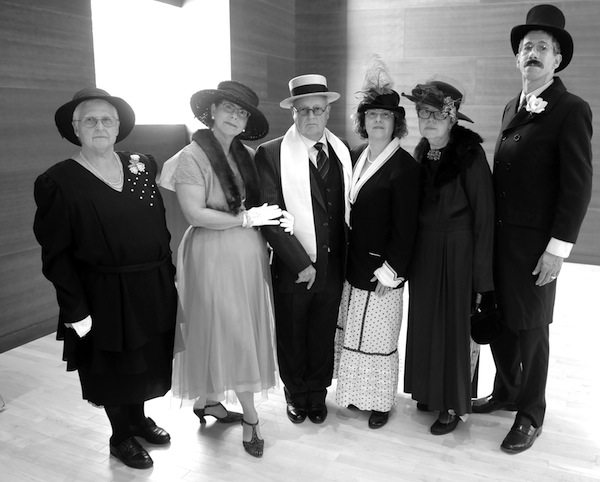
The HFLA Centennial Celebration reflected its grassroots beginning with a relaxed, different kind of evening. Casual picnic-chic décor and a picnic-style menu went with the fact that the event was held on Lag b’Omer. Greeting the guests were actors and musicians from the volunteer troupe Kol Halev. They were dressed in period costume and introduced themselves in character, sharing “their personal stories” as the founders of Jewish lending in Vancouver.

These actors provided an interactive beginning to an evening that was designed to raise the profile of HFLA. Through a multi-media approach, the event managed to educate those in attendance about the valuable role that interest-free loans play in Vancouver’s Jewish community.

photo - Members of the Kol Halev performance troupe, who represented the Jewish community at the time of Hebrew Free Loan Association’s founding 100 years ago
Members of the Kol Halev performance troupe, who represented the Jewish community at the time of Hebrew Free Loan Association’s founding 100 years ago. (photo by Dan Poh)

The program began with a short d’var Torah by Beth Israel Rabbi Jonathan Infeld, touching on the relationship between Lag b’Omer and interest-free lending. HFLA president Michelle Dodek followed the rabbi’s comments by explaining the three objectives of the event: to raise awareness in the community by sharing what HFLA does, to honor the donors and board members who have made the work of the organization possible, and to look to the future. She recognized the multi-generational links of those in attendance, including the remarkable fourth-generation connection of the three Krell sisters (Shoshana Lewis, Simone Kallner and Michaela Singerman), whose great-grandfather, David Davis, was a contributor to the original Vancouver HFLA kitty in 1915 and served as a trustee in 1931. Their grandfather, Charles Davis, was one of the founders of the re-creation of the organization in 1979.

Dodek’s speech was followed by a short video featuring two former borrowers, Mihael Mamychshvili, a prominent shiatsu therapist and Barbi Braude, a graphic designer. Joe Segal and Shirley Barnett shared their historical perspectives and goals for the organization.

Guests then heard from four borrowers whose lives were changed by the loans they received from HFLA. Successful entrepreneurs Zach Berman and Ryan Slater began their business, the Juice Truck, with help from HFLA. Val Lev Dolgin used an education loan to earn her master’s in counseling psychology; she now helps children who have survived physical and sexual abuse. George Medvedev, a neurologist, shared how he and his wife, a hematologist, used a loan to help them when they first arrived in Canada from the USSR almost 20 years ago.

Another story was read by a volunteer to respect the anonymity of the borrower because of the sensitive nature of her situation, while the story of former borrower Maxim Fomitchev was shared by his friend, Tobi Lennet. Briefly, Fomitchev, a deaf mime, while touring with his troupe of mime artists from the USSR in 1991, defected, accompanied by his performing partner. The two found themselves volunteering for Jewish Family Service Agency and, within two years, Fomitchev borrowed money for a car to get from one mime gig to another. He has since achieved one of the pinnacles of success for a mime – he is the head clown in Cirque de Soleil’s Las Vegas show, Zarkana.

The evening’s program ended with the educational element of the night, the stories of four “typical” borrowers: parents of a child needing counseling, a retired woman needing dental work, someone between jobs in a stressful situation and parents borrowing to finance a modest bar mitzvah. All of these stories served to drive home the significance of HFLA.

The HFLA Centennial Celebration was a chance to celebrate a significant milestone in the community, raise awareness of an organization that is “the best kept secret” in Vancouver while recognizing donors and volunteers who make it all happen. The message for the future is that HFLA is looking for borrowers. For more information on how to apply for a loan, to watch the HFLA video or to find out about how the organization works, check out its newly revamped website at hfla.ca.

Format ImagePosted on June 5, 2015June 3, 2015Author Vancouver Hebrew Free Loan AssociationCategories LocalTags Hebrew Free Loan Association, HFLA, Joe Segal, Kol Halev, Michelle Dodek, Shirley Barnett
This week’s cartoon … June 5/15

This week’s cartoon … June 5/15

For more cartoons, visit thedailysnooze.com.

Format ImagePosted on June 5, 2015June 3, 2015Author Jacob SamuelCategories The Daily SnoozeTags thedailysnooze.com
Cooperation in space

Cooperation in space

MacDonald, Dettwiler and Associates-designed RADARSAT-2 features state-of-the-art synthetic aperture radar technology and supports all the existing RADARSAT-1 beam modes, while offering many new capabilities, including the ability to acquire images to the left and right of the satellite. In partnership with Israel Aerospace Industries Ltd., MDA will study the feasibility of an advanced payload for a potential future mission that would enhance the flexibility of the next generation of satellite communications. (photo from MacDonald, Dettwiler and Associates Ltd.)

On May 26, the Hon. James Moore, minister of industry, announced that two Canadian space firms will be conducting concept studies for potential Canada-Israel space missions. The Canadian Space Agency (CSA) and the Israel Space Agency (ISA) seek to develop advanced applications in satellite communications and position both the Canadian and Israeli space sector to play a significant role in this growing global market.

MacDonald, Dettwiler and Associates Ltd. will study the feasibility of an advanced payload for a potential future mission that would enhance the flexibility of next-generation satellite communications. The firm will conduct this study in partnership with Israel Aerospace Industries Ltd. (IAI).

COM DEV International Ltd., with exactEarth, will evaluate the feasibility of a potential Israel-Canada advanced radio and thermal-location µ (micro) satellite (ICARUS) mission. ICARUS would demonstrate a new, low-cost nano-satellite constellation that would use a combination of receivers to locate maritime vessels, thus improving maritime awareness, safety and security. The potential ICARUS mission would be undertaken in collaboration with IAI and Elbit Systems Electro-Optics Elop Ltd.

A memorandum of understanding between CSA and ISA, signed in 2005 and amended in 2014, allows the agencies, private sectors and academia in both countries to cooperate in joint projects or research activities. Each Canadian firm will receive $300,000 to undertake their concept study.

Format ImagePosted on June 5, 2015June 3, 2015Author Canadian Space AgencyCategories WorldTags aerospace, ICARUS, James Moore, satellite, space
המונדיאל לנשים יוצא לדרך בסוף השבוע

המונדיאל לנשים יוצא לדרך בסוף השבוע

 הנשיא המתפטר של פיפ”א ג’זף ספ בלאטר, שאף אחד לא עצוב על שהוא עוזב. (צילום: Agência Brasil via commons.wikimedia.org)

  בצל האירועים החמורים בפיפ”א והתפטרותו של הנשיא בלאטר: המונדיאל לנשים יוצא לדרך בסוף השבוע בקנדה

בתקופה הגרועה ביותר בתולדות פיפ”א כשבכירה נחקרים בפרשת שחיתות גדולה, והנשיא המיתולוגי ג’זף ספ בלאטר, נבחר בפעם החמישית לתקופת כהונה נוספת ומייד התפטר לאור הביקורת העצומה נגדו, יפתחו בסוף השבוע בקנדה משחקי המונדיאל לנשים בכדורגל. מדובר בטורניר החשוב והגדול ביותר לנשים וצפוים לחזות בו יותר צופים מי פעם, באצטדיונים ומול מסכי הטלוויזיה.

משחקי גביע העולם לנשים השביעי במספר יחלו ביום שבת הקרוב עם המשחק בין קנדה לסין (באדמונטון), ויימשכו שלושה שבועות. חצאי הגמר יערכו ב-30 ביוני (מונטריאול) וב-1 ביולי (אדמונטון), ואילו הגמר יערך ב-5 ביולי (ונקובר).

עשרים וארבע הנבחרות המשתתפות במונדיאל שובצו בשישה בתים: בית א’: קנדה, סין, ניו זילנד והולנד (החזקות: קנדה מודרגת במקום השמיני בעולם והולנד מדורגת 12). בית ב’: גרמניה, חוף השנהב, נורבגיה ותאילנד (גרמניה מדורגת ראשונה בעולם ונורבגיה 11). בית ג’: יפן, שווייץ, קמרון ואקוודור (יפן מדורגת רביעית בעולם ושוויץ 19). בית ד’ שנחשב “לבית המוות”: ארה”ב, אוסטרליה, שבדיה וניגריה (ארה”ב מדורגת שנייה בעולם, שבדיה חמישית ואוסטרליה עשירית). בית ה’: ברזיל, דרום קוריאה, ספרד וקוסטה ריקה (ברזיל מדורגת במקום השביעי בעולם וספרד 14). ובית ו’: צרפת, אנגליה, קולומביה ומקסיקו (צרפת מדורגת במקום השלישי בעולם ואנגליה שישית).

52 המשחקים יתקיימו (בדרך בכלל לפנות בוקר לפי שעון ישראל) בשישה אצטדיונים בערים הבאות (ממזרח למערב): מונקטון (10,000 מקומות ישיבה), מונטריאול (66,000), אוטווה (24,000), ויניפג (33,000) אדמונטון (56,000) וונקובר (55,000). למעלה ממליון כרטיסים נמכרו למשחקים ובקרב המארגנים מקווים להצליח ולמכור בסה”כ 1.5 מליון כרטיסים, ובכך לשבור את שיא הצפייה במונדיאל לנשים שעמד 1.2 מיליון, בטורניר שנערך בארה”ב ב-1999. קנדה ידועה כמדינה שמכורה להוקי שנחשב כמעט לדת, ולמרות זאת המונדיאל מעורר עניין די גדול כאן בקרב הציבור ובתקשורת.

קנדה שהגיעה למקום האחרון והמבייש במונדיאל הקודם שנערך בגרמניה ב-2011, מדורגת כיום במקום השמיני בעולם, ויש לה מטרה ברורה אחת בטורניר הנוכחי: לזכות בגביע מול קהל ביתי חם ואוהד. אחת הנבחרות הטובות בעולם שלא תשתתף במונדיאל היא צפון קוריאה (מדורגת במקום התשיעי בעולם), כיוון שחלק מהשחקניות שלה נכשלו בבדיקת סמים בטורניר הקודם בגרמניה. יפן זכתה בגביע בגרמניה לאחר שניצחה בגמר את ארה”ב בקרב פנדלים. בהתאם לדרישות פיפ”א כדי למנוע מבוכות כמו בטורנירים קודמים, על השחקניות לעבור בדיקות לקביעת מינן, כדי שחלילה לא יסתתנו לנבחרות גברים שמחופשים לנשים.

בהתאחדות הכדורגל הקנדית לא אוהבים את בלאטר בלשון של המעטה, וכמו בארה”ב ובמדינות רבות באירופה שמחים שיסיים את תפקידו, כך שיתאפשר לפתוח תקופה חדשה בפיפ”א. לנשיא המתפטר אין יחסים טובים עם הכדורגל לנשים, הוא השמיע לא פעם הערות סרקסטיות כלפי שחקניות, והוא אפילו למכיר את הכוכבות של הכדורגל הנשי. למנגינת ליבן של השחקניות רבות שישתתפו במונדיאל בקנדה, בלאטר והנהלת פיפ”א קבעו שהמשחקים יערכו על דשא מלאכותי ולא על דשא טבעי, כמו במשחקי המונדיאל לגברים. השחקניות שטענו שפיפ”א מפלה אותן לרעה ותבעו אותה (התביעה בוטלה בשל קוצר הזמן עד לתחילת המשחקים). לטענתן משחקים על דשא סיננטי מתנהלים בצורה שונה לעומת דשא טבעי, ומספר הפציעות גדול יותר.

לאחר המשחקים בקנדה המונדיאל יחזור לאירופה, וצרפת נבחרה לארח את הטורניר הבא והשמייני מספר שיערך בקיץ של 2019.

נבחרת הנשים של ישראל שנכשלה במוקדמות אליפות העולם, תשתתף בטורניר מוקדמות היורו לנשים בכדורגל שיתקיים בספטמבר. ישראל הוגרלה לבית השמיני עם נורבגיה החזקה, אוסטריה, וויילס וקזחסטן.

Format ImagePosted on June 4, 2015June 3, 2015Author Roni RachmaniCategories עניין בחדשותTags corruption, FIFA, Sepp Blatter, soccer, Women’s World Cup, כדורגל, משחקי גביע העולם לנשים, ספ בלאטר, פיפ"א, שחיתות
Drought stress takes toll

Drought stress takes toll

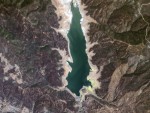
A July 2014 Planet Labs satellite image of a reservoir in California’s Lake County that supplies water to nearby Yolo County. In a non-drought year, according to Planet Labs, the visible water would cover roughly twice the area as it does in this picture. (photo from Planet Labs via Wikimedia Commons)

California headlines this month scream “water shortage” – but the shortage is not limited to the western United States. According to a recent report by the U.S. Environmental Protection Agency, while the demand for freshwater resources is increasing, the supply remains constant and many regions are starting to feel the pressure. The report states that water managers in 40 of 50 states expect water shortages in some portion of their states within the next 10 years.

Amid this grave prognosis, a new Israeli research project might make the Jewish state an important part of the solution.

In what is arguably one of the most innovative water research consortiums to date, researchers from Ben-Gurion University of the Negev (BGU), Technion-Israel Institute of Technology, Hebrew University of Jerusalem and Australia’s Monash University are working to develop “water-sensitive cities.” The description for the project, which is funded by the Jewish National Fund (JNF), says that water-sensitive cities adopt and combine decentralized and centralized water management solutions to deliver water security. The data gathered from the project may be used to support development of urban master plans in cities in Israel and around the world.

Researchers are grouped into teams, each focusing on a different aspect of creating water-sensitive cities.

Eran Friedler, senior research fellow and head of the Water Forum Project at Technion, leads a team whose objective is to develop a holistic vision for water-sensitive cities in Israel encompassing scientific, economic and societal aspects, and accounting for the potential effects of global warming on temperatures and rainfall regimes. The analysis seeks to quantify the effect of urbanization and changing urban texture on storm water harvesting potential.

Evyatar Erell, a professor in the Bona Terra Department of Man in the Desert at BGU, is responsible for water-sensitive urban planning and design. He explained that his role is to examine conventional hydrological planning of cities and to see how it can be improved. This means reducing impermeable surfaces (sidewalks, parking lots, driveways, etc.) in favor of more permeable surfaces, sometimes innovative ones, such as green roofs or the infusion of small bits of garden along footpaths.

“We are trying to determine how to use water as effectively as possible, to maximize its benefits to pedestrians, reduce energy consumption by our buildings, and ensure environmental sustainability,” said Erell.

Read more at jns.org.

Format ImagePosted on May 29, 2015May 27, 2015Author Maayan Jaffe JNS.ORGCategories WorldTags BGU, Bona Terra, California, drought, Eran Friedler, Evyatar Erell, Hebrew University, Israel, Technion, water
B.C. Achievement honor for Krell

B.C. Achievement honor for Krell

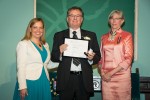
Dr. Robert Krell with the Hon. Coralee Oakes (left), minister of community, sport and cultural development, and the Hon. Judith Guichon, OBC, lieutenant governor of British Columbia. (photo from B.C. Achievement Foundation)

On April 24, 2015, Dr. Robert Krell was among those honored at the 12th Annual British Columbia Community Achievement Awards ceremony held at Government House in Victoria, where he received a B.C. Community Achievement Award medallion and certificate.

“These honorees exemplify what it is to go above and beyond; to do what needs to be done and to give without question their time and energy for the betterment of their communities,” said Keith Mitchell QC, representing the British Columbia Achievement Foundation.

In a personal letter received from the premier of British Columbia, Christy Clark, Krell was honored for his “many years of commitment to developing anti-racism, antisemitism and Holocaust education programs for people of all ages. By establishing the Vancouver Holocaust Education Centre in 1994 and documenting Holocaust survivors’ testimonials, you have ensured that no one will ever forget what Jewish people went through during the war. Your work with child survivor groups is further testament to your dedication to helping people gather together, talk to one another and know they are not alone in dealing with the aftermath of what they and their families experienced.”

Hidden as a child in the Netherlands during the Holocaust, child and family psychiatrist and University of British Columbia professor emeritus, Krell understands the necessity of Holocaust remembrance: learning from its lessons, providing education, supporting survivors and ensuring their stories are not lost. In addition to founding the VHEC, he also founded a group for child survivors, giving voice to their experience.

Format ImagePosted on May 29, 2015May 27, 2015Author B.C. Achievement FoundationCategories LocalTags child survivor, Holocaust, Robert Krell, Vancouver Holocaust Education Centre, VHEC
Funds raised for Nepal

Funds raised for Nepal

Left to right, back row: Mark Suzuki, Ai Nakano, Marie Doduck, Eppy Rappaport, Ruth Erlichman, Elena Steele and a representative from the Nepalese community. Front row: Casey Suzuki, Dickson Tsang and Andy Sui. (photo by Belinda Co)

On the evening of May 14, members of the Jewish community joined with members of the Japanese, Russian and Chinese communities to raise funds for earthquake relief efforts in Nepal. Held at Omnitsky Kosher Delicatessen, the restaurant’s proprietor, Eppy Rappaport, donated a percentage of profits of that evening’s sales, and attendees made individual contributions throughout the evening.

The evening was organized by Ruth Erlichman and Dickson Tsang, two longtime Vancouver realtors who have know each other for more than 15 years. The two have “done quite a few deals together,” Erlichman said, “during which time Dickson got to know a little bit more about Jews, kosher food, keeping Shabbos, etc. He has been involved in many fundraisers in the past and wanted to do one together … bridging the two cultures and adding our Japanese and Russian friends to the pot.”

The theme of the evening was giving and practising compassion, as “stated in the Torah in parashat Shemini,” Erlichman added. “Making sure we have emunah [faith] that Hashem will help when we personally, G-d forbid, encounter hardship. When it comes to other people’s hardship, we take out our chequebook – we don’t tell them to have emunah; that comes later.”

photo - Ruth Erlichman, left, with Ai Nakano, make origami cranes to be sold at another fundraiser
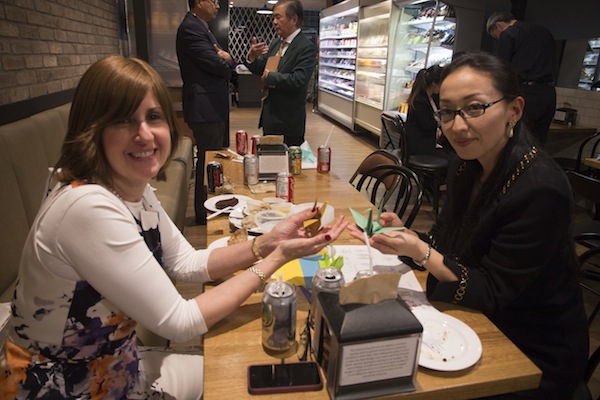
Ruth Erlichman, left, with Ai Nakano, make origami cranes to be sold at another fundraiser. (photo by Belinda Co)

About 30 people attended, including a representative from the Nepalese community who updated the group on the situation on the ground in Nepal. A strong aftershock had occurred just two days prior and the Canadian government had pledged to match dollar for dollar the money raised until May 25. The funds raised at Omnitsky are being donated through the Red Cross.

“Our Japanese friends showed us how to make paper origami cranes,” Erlichman shared. These were sold at a much larger fundraiser held at the River Rock Casino soon after the Omnitsky gathering.

Born and raised in Kobe, Japan, Erlichman said she is “very familiar with earthquakes. Many of us from the Jewish community here held a fundraiser for the Jan. 17, 1995, Kobe earthquake, at the Tama Sushi Lounge on West Broadway, co-owned by the late Mr. Leon Kahn. Funds were sent through the Joint [Distribution Committee] to the Ohel Shlomo Synagogue in Kobe, which incurred exterior damage.”

Format ImagePosted on May 29, 2015May 27, 2015Author Ruth ErlichmanCategories LocalTags Dickson Tsang, earthquake, Nepal, Omnitsky, Ruth Erlichman
Grant-winning video

Grant-winning video

A screenshot from Erin Goldberg’s winning entry to the NSERC competition.

The public has voted, the judges’ scores have been tallied and the results are in. The 15 winners of Natural Sciences and Engineering Research Council of Canada’s Science, Action! video contest have been revealed. Jewish community member and University of Manitoba student Erin Goldberg joined McGill’s Ira Sutherland and University of Guelph’s Morgan Jackson in the top three.

may 29 Health.29.Erin Goldberg-photo by Marc Goldberg
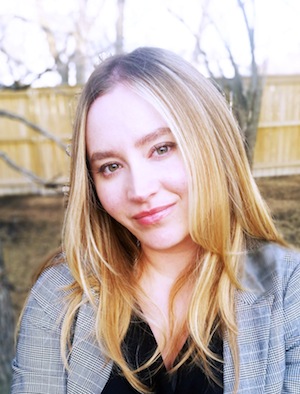
Erin Goldberg (photo by Marc Goldberg)

Goldberg, a survivor of childhood cancer, is now 26. She has always gravitated to the sciences, she said. “I especially love biology and chemistry so, naturally, that was always a part of my education. I was able to take my first nutrition course at the U of W [University of Winnipeg], which solidified my interest in the subject. After switching to the U of M [because of their nutrition program], I fell in love with it.”

Goldberg is an animal lover who enjoys doing yoga in her spare time. She began taking university courses at the age of 15 at the U of W Collegiate, and graduated a year early by doing course work through the summers. She is currently preparing to defend her thesis at U of M.

Goldberg has always been a creative person and enjoys translating her research in a way that is understandable to laypeople, she said, so she was ready for the NSERC competition. She also had participated in the 2013 3MT (Three-Minute Thesis) competition at U of M, which involved explaining her research in basic terms in three minutes. Regardless, she said she was still apprehensive about the NSERC competition; it is open to any student in Canada holding an NSERC grant, which numbers in the thousands. “I didn’t know what to expect,” said Goldberg, who said she was ecstatic when she learned that her video was one of the 32 chosen to move to the second round.

On April 7, she received notification that she was a winner. The email read, “After careful consideration by our panel of judges, your video was selected as one of the top three entries (English submissions). They felt your video told a compelling story and exhibited an exceptional grasp of quality science communication.” Besides the recognition, Goldberg will receive a $3,000 prize.

Goldberg’s 60-second video explains her latest research project, which was funded through NSERC. It involved feeding hempseed and hempseed oil to hens to enrich their eggs with omega-3. “Ironically, humans are allowed to consume hemp, but we can’t feed it to livestock, due to concerns over THC accumulation [the psychoactive compound in marijuana],” said Goldberg about the hempseed feed. “There is actually a very miniscule trace of THC in most hemp products, so there is really little risk, but the Canadian Food Inspection Agency requires several research trials to prove this, which is what our lab group is doing.”

Goldberg’s research proved that these two ingredients are safe and effective, even at the highest possible dose, and that there is no risk in feeding hempseed to chickens. In subsequent research trials, Goldberg designed different vegetable oil blends to boost the levels of DHA in eggs. “We found that feeding a higher ratio of saturated fat, called linoleic acid (an omega-6) and oleic acid (on omega-9), can reduce the competition between omega-3 and -6, leading to greater deposition of these critical fatty acids.”

In her thesis, Goldberg examined the impact designer diets have on the fatty acids and sensory properties of the eggs of laying hens. She was able to create omega-3 eggs using novel ingredient blends (like hemp, canola and flax), and then test the egg yolk for fat profile, aroma and flavor. The egg white remains the same regardless of what you feed the bird, so the changes only occur in the yolk, she explained.

Goldberg’s interdisciplinary research was conducted at U of M’s Fort Garry campus, in the poultry barn in the animal science, food science and human ecology buildings. She completed some of her research at the Saint Boniface Research Centre, as well.

“I love that it is interdisciplinary research,” said Goldberg. “I combine my interest in sensory with analytical work. I’m fully involved from start to finish, and like that I can combine my love of animals (i.e. taking care of my birds) with my analytical work.”

Although the cancer that Goldberg had as a 6-year-old was spontaneous, she said she believes that diet plays a major role in the development of many diseases, including Type-2 diabetes, heart disease and certain cancers, such as colon and breast cancer. “I believe in disease prevention through maintaining a healthy lifestyle, (including a proper diet), which would also ease the burden on our medical system,” said Goldberg. “Because I love educating people, I also teach an undergraduate nutrition course at the U of M, called Food – Facts and Fallacies.”

Goldberg feels is it critical to focus on omega-3s. “Omega-3 fatty acids are essential in our diet,” she said. “We must consume them in our food. They are critical for normal growth and development, and have a large impact in reducing inflammation in the body, which can prevent the development and progression of numerous diseases.

“A lot of research has focused on the health benefits of the longer chain omega-3 fatty acids, EPA and DHA in particular, which play a key role in brain and eye health, as omega-3s contribute to membrane fluidity. These fats are especially critical in a child’s proper development.”

The benefits spread across the lifespan, but in infant/child development, they are mainly related to cognitive/visual function and, in adults, the major benefits are mostly in the progression or prevention of Alzheimer’s, dementia, cancer and cardiovascular disease. Omega-3s can also lower triglycerides.

Research has shown that the best source of available omega-3 comes from fatty fish, like wild salmon; farmed fish have significantly less. Omega-3-enriched eggs are an excellent source for those who cannot or do not consume fish, for example, if someone is allergic to fish or is vegetarian. They are a safe, economically viable alternative.

“You can also get omega-3s from plant foods, like hemp, flax, walnuts, canola oil and chia seed,” said Goldberg, of those who prefers to get their omegas through vegan sources. “But, your body must convert a proportion of ALA into the longer-chain EPA and DHA, and this is inefficient (and possibly insufficient) in most adults.

“In omega-3 eggs, if you choose eggs from hens fed both flax and fish oil, you’re getting a great source of both ALA and EPA/DHA. My dietary blends help to eliminate the need for fish oil in the hen diet (which is expensive), because the laying hen can convert more ALA to EPA/DHA than can humans.”

Goldberg feels it is critical to encourage women to enter the STEM fields – science, technology, engineering and mathematics – and to pursue advanced education. She believes the payoff is well worth the investment. “I’d also encourage people to think critically about the nutrition messages they hear in the media,” she said. “When in doubt, look to the research or consult a dietician for nutrition advice.

“I also recommend people use supplements with caution. Sometimes it’s necessary (like taking Vitamin D3 supplements, because we do not get enough sunshine) but, in general, I recommend people consume whole foods first and use supplements to supplement a healthy diet, not to replace it.

“Functional foods, like omega-3 eggs, are a great way to consume foods that are enhanced with certain nutrients to protect against diseases and maintain a healthy body.”

Rebeca Kuropatwa is a Winnipeg freelance writer.

Format ImagePosted on May 29, 2015May 27, 2015Author Rebeca KuropatwaCategories NationalTags Erin Goldberg, health, NSERC, omega-3

Posts pagination

Previous page Page 1 … Page 431 Page 432 Page 433 … Page 494 Next page
Proudly powered by WordPress