Skip to content
  • Home
  • Subscribe / donate
  • Events calendar
  • Business Directory
  • FAQ
  • News
    • Local
    • National
    • Israel
    • World
    • עניין בחדשות
      A roundup of news in Canada and further afield, in Hebrew.
  • Opinion
    • From the JI
    • Op-Ed
  • Arts & Culture
    • Performing Arts
    • Music
    • Books
    • Visual Arts
    • TV & Film
  • Life
    • Celebrating the Holidays
    • Travel
    • The Daily Snooze
      Cartoons by Jacob Samuel
    • Mystery Photo
      Help the JI and JMABC fill in the gaps in our archives.
  • Community Links
    • Organizations, Etc.
    • Other News Sources & Blogs
  • JI Chai Celebration
  • JI@88! video

Recent Posts

  • Federation now across BC
  • Israel fighting for its existence
  • Deal strengthens Iran
  • Patriotic belonging diminishes
  • A campaign to engage
  • Upstanders’ first live event
  • Responding to Carney
  • Having your own home
  • Music a family tradition
  • Musical to warm heart
  • Community milestones … June 2026
  • Sharing her passion for Israel
  • Or Shalom reopens its doors
  • JFS from past to future
  • Need holistic approach
  • Sharing stories, advice
  • Journalist shares fears
  • Skills to live together
  • Road to independence
  • Cutting grass with scissors
  • Zionism as a solution
  • Deceit, desire & the divine
  • Reclaiming sacredness
  • Creative project ideas
  • Summer squares and cobbler
  • Thou shalt … summer commandments
  • Legal help for students
  • Revisiting myth of Lilith
  • Wrong person rebuked
  • Canada’s mixed messages
  • Questions for museum
  • Symposium on antizionism
  • Making soccer political
  • CJPAC lauds Pulver’s impact
  • City recognizes Vrba’s legacy  
  • Organ donation saves lives

Archives

Follow @JewishIndie
image - CJN box ad Rockowers 2026

Tag: tikkun olam

Negev a family affair

Negev a family affair

Left to right, Negev Dinner 2017 honourees Michael Averbach, Gary Averbach and Shannon Gorski (née Averbach). (photo from Jewish National Fund, Pacific Region)

“The important thing that I want to say is that I’ve accepted this honour because I’m sharing it with my kids,” Gary Averbach told the Independent about this year’s Jewish National Fund of Canada, Pacific Region, Negev Dinner, which will pay tribute to Averbach, his son Michael Averbach and daughter Shannon Gorski.

“Ultimately, it came down to my father being recognized,” said Michael Averbach. “He was apprehensive. Initially, he didn’t want to do this. He’s a very humble man and doesn’t like to be in the spotlight; in fact, he’s quite the opposite. But, he also understands it’s for a greater good and it will help build JNF, help fundraise and go towards a need in Israel.”

Even though the dinner on June 4 is sold out, community members can still support the Averbachs’ chosen project: the Tzofei Tzamid, the Israeli Scouts.

The Israeli Scouts run programs for kids 9 to 21. Their 80,000-plus members include more than 2,500 children and youth with disabilities.

Gorski and her father visited Israel in late February. She described the Scouts as “a rite of passage for Israelis.” In the program, she said, children with severe Down syndrome, kids with visual or hearing impairments or who are on the autism spectrum, “all of these children are being able to work side-by-side with their Israel Scouts’ peers and fully participate in the programs the Israeli Scouts offer. And that is what my family, alongside the JNF Vancouver community of supporters, are funding – the ability of the Israeli Scouts program in Raanana, to ensure that they have the proper resources and equipment when they take the Israeli scouts into the wilderness, as well as their own facility, to make it accessible for all.”

She said the organization’s mission “really resonated with my own philosophy, and that is one of inclusion … providing opportunities so that kids can develop skills, and leadership opportunities and life-preparedness. I see Israel already as such a leader in a lot of innovative ideas … and, when I got to see what they were doing in the area of youth services, they also are [excelling in that]…. When my father and I were there – to be able to see firsthand how happy these children were and how they were included, and listening to the testimonies of the parents, who are so appreciative and happy themselves, because what makes a parent happy is to see their child happy.”

Gorski, Gary and Diane Averbach’s eldest child, and Michael, their youngest, live in Vancouver, while their middle son, Blake, splits his time between Israel and Quebec City. The three Negev honourees are being celebrated for their many local community contributions.

Born in Vancouver to Louis and Betty Averbach, Gary Averbach – who is chief operating officer of Belmont Properties – has been involved in various capacities with JNF, the Jewish Community Centre of Greater Vancouver (JCCGV), the Jewish Federation of Greater Vancouver, the Jewish Community Foundation of Greater Vancouver (JCF), Congregation Beth Israel and the Jewish Museum and Archives of British Columbia, among others.

Shannon Gorski, managing director of the Betty Averbach Foundation, has worked with marginalized people and at-risk youth for most of her life. In the Jewish community, she has served on the boards of JCCGV, Hillel BC and Richmond Jewish Day School (RJDS); chaired galas and events, such as JCCGV’s Israel at 60, Beth Tikvah’s 40th anniversary and RJDS’s 18th gala; and sat on committees of JCF, King David High School and the Bayit.

Michael Averbach, who owns Averbach Mortgages and also works with Belmont Properties, has chaired the JCC Sports Dinner for many years (he co-chaired it this year with James Dayson), has co-chaired a Vancouver Talmud Torah Gentleman’s Dinner, is on the executive board of the Ohel Ya’akov Community Kollel and is active with Federation.

“We had a reception last night,” Gary Averbach told the Independent the morning after a Negev Dinner-related cocktail party at his home, “and I heard it enough times, that people understand, it’s so great your kids are carrying on your tradition. That’s the message I want to go out: how lucky I am to have kids that have carried forward what I believe in.”

The first Jewish organization Averbach got involved with was JNF, he said, and it is the only Israeli organization with which he has been heavily involved. “The local community, and especially things involving Jewish youth, means the most to me,” he said.

“I think it’s great what the JNF is doing now,” he added. Funding groups such as the Israeli Scouts, he said, “is a great step and it really makes the JNF more relevant to a lot more people all over, but certainly in Vancouver.”

Gorski said she has spoken to Israelis now living here about how integral the Israeli Scouts were to them. “In fact,” she said, “one individual in the community, who’s very active with youth in the community, said to me, ‘The Israeli Scouts saved my life.’ I was so, so moved by that.”

After she and her father visited the Israeli Scouts, Gorski joined JCCGV’s Bagel Club in Israel as a chaperone on their Birthright-style mission – “for many of these Jewish persons with different abilities and challenges,” she said, it was their first trip to Israel.

While she’s never been formally connected to the Bagel Club, Gorski said she has a step-uncle who is a participant and she was on the hiring committee for the current leader of the program, Leamore Cohen.

Worried about being away from her two children for so long, she asked them if they were OK with her leaving. She said her older son said, “What are your talking about? I’m excited for you. You’re going to Israel, and you’re going to do something that’s so important.

“That’s another reason why I get connected,” she said. “My father has been such a mentor to me and has instilled in me the importance of modeling behaviours of tikkun olam and just giving generously of your time. He used to say, when I was first asked to be on different boards, which he had been on, i.e. the JCC and involved with Federation, I basically said to him, ‘My biggest concern, Dad, is that I don’t have the capacity, the deep pockets that perhaps they think I do because of yourself,’ and he said, ‘You know what, the community, when they look at people to sit on their board and to participate and to volunteer … they look for the three Ws: wealth, wisdom and work. It’s not all three, it can be one…. They don’t just want the wealthy people.’ And he used to say it’s easy for somebody to write a cheque.

“He’s so humble,” she continued. “Every time that they would ask him to speak, he would always put the credit to those who were the worker bees, the people who were behind the scenes, who were doing the work, they were the ones who deserved the accolades…. For me, that’s been a lot of why I have focused on the Jewish community, but not just the Jewish community…. The fear among the older generation, which I’m entering into, is that, will the next generation be able to carry on and give with the three Ws … is Vancouver in good hands, is the Jewish community in good hands, is Israel in good hands?”

For his part, Michael Averbach – who has four children – has focused his attention mostly on the Jewish community. He was inspired, in his early 20s, by his father’s work on the campaign for JCCGV’s redevelopment. Achieving the goal, Averbach said his father “was so elated, so excited. He screamed out, ‘Yabadabadoo!’ It was the first thing that came to his mind, he was so happy.” Witnessing this reaction, he said, “I caught the bug. I got involved.”

Calling the JNF tribute “a huge honour,” he added, “If we can encourage other young philanthropists and people in the community who are thinking about getting involved to get off the fence and push forward, find something that resonates with them, then this is all very much worthwhile.”

Gorski echoed these sentiments. She said many of her peers “thought the JNF was restricted to selling trees … and, if you go to the Negev Dinner, you see a large demographic of the older generation and not a lot of young people.” With her brother and her joining their father in being honoured, she said, they have managed to share with their peers more about what JNF does – in Israel and around the world – and many “are coming to the Negev Dinner for the first time.”

While in Israel, Gorski organized a get-together for the Bagel Club with madrichim (counselors) from the Israeli Scouts. “They made friendship bracelets, they made pita over an outdoor fire, they were all conversing. It was a really fun evening,” she said. And, as it turns out, some of the Israeli Scouts will be in Vancouver around the time of the Negev Dinner, and some of them will be joining the festivities.

She also shared that it is JCCGV head Eldad Goldfarb’s hope that, along with Cohen of the Bagel Club, which is for adults, and Shirly Goldstein, who is the centre’s youth director, they will be able “to create a program of the two different groups – youth, and adults with special needs – working together with the same sort of philosophy that the Israeli Scouts follow, doing similar types of activities.”

The June 4 Negev Dinner at Four Seasons Hotel will also see Richmond Jewish Day School head of school Abba Brodt presented with JNF’s Education Award. For more information or to donate, contact JNF Pacific Region at 604-257-5155 or [email protected].

Format ImagePosted on May 26, 2017May 24, 2017Author Cynthia RamsayCategories LocalTags Averbach, Israel, Jewish National Fund, JNF, Negev Dinner, tikkun olam
Using film school as therapy

Using film school as therapy

From Ma’aleh School of Television, Film and Art, standing, from left to right, are Asher Lemann, David Cohen, Chanan Ariel, Ofir Shaer, Yosef Baruch Kalangel and Nachum Lemkus. Sitting, from the left, are Keren Hakak, Menachem Assaraf and Shalom Sarel. (photo from Ma’aleh)

When a major donor came to Neta Ariel, director of Ma’aleh School of Television, Film and Art, with an offer to provide scholarships as long as the students give back to the community, Ariel accepted the challenge.

“Ma’aleh is located in the centre of Jerusalem and, unfortunately, there are a lot of social issues,” Ariel told the Jewish Independent. “For example, lots of high school-age teens walk the streets or, during the night, use drugs and live on the streets. So, my students tried to help them – we knew a few of them, and we invited them to come to the school once a week for two hours in the afternoon to learn about film.”

The students at Ma’aleh became mentors, encouraging the teens to bring their own stories to life through the materials. Another group – comprised of immigrants from Ethiopia – also works with the students.

“Tell your story,” said Ariel of the most important aspect of the program.

“At the end of the year,” she said, “when we screened the movie for the group, teacher, friends … it was an amazing thing. They [had] left high school, or the family didn’t want them; they felt like they’re losers and didn’t have self-confidence. When we had the screening and their family or friends came, they really appreciated them. And the film gave them hope. We thought, the making of the film was not only fun, it was a teaching tool to uplift them and our students.”

Through learning how to film, from making personal connections and from telling their stories – which often included trauma or conflict, from rape, violence and negative treatment to gender or sexual orientation issues – they began to heal.

For most participants, it was their first encounter with therapy.

“Most of the time, at the end of the day, after the project was done, they shared with us that this is the first time they’d dealt with this,” said Ariel. “This was their way to tell the society, family or friends that this is their story and what I suffer from.”

From these beginnings, the school developed a curriculum for the program and, with each passing year, it has grown. Now, the school offers two such programs, focusing on how to use film as therapy and how to work together.

“You have a group of social workers and filmmakers,” explained Ariel. “Every week, they meet and work on the exercises we give them, and they work together to find a balance. It works well, the partnership. It’s amazing how the psychologist becomes a filmmaker and the filmmaker comes to understand psychology.”

Months after Operation Protective Edge, the school decided to host a group of bereaved mothers from the conflict, to determine if there was a way they could help.

They found ways of incorporating filmmaking into the process of mourning. At each meeting, they studied and focused on one aspect of filmmaking – lighting, filming, music, and so on. Once taught, participants were given an exercise to practise the skill. Then, they were given a camera and asked to practise filming.

“They didn’t tell them to make a movie about something specific,” said Ariel. “They gave them a task about something emotional. Most chose an aspect connected to the son they lost a few months ago.

“Then, we teach them how to write the script, how to do voiceovers, how to incorporate music. Automatically, most would think about their son or themselves and their fears. So, part of the meeting was talking about what we go through, and a lot of it was about creating things.

“At the end of the year, everyone together made a film called Saba. The main character in the movie is the grandfather, as all of them had mentioned their grandfathers, from time to time.”

Last year, the school opened a bereaved fathers group and found that, while they seemed to barely communicate in the classroom, they collaborated well outside of class. They put together what Ariel described as an “amazing movie” about their surviving kids.

“This is something the fathers said – that the kids at home blamed the parents, saying that, at home, they give a lot of time, attention and energy to something dedicated to the dead son … and [are] not taking care of them,” said Ariel. “Regardless of the age of the kids, in every house, they found it was the same situation. And, it was just amazing.

“Now, we are trying to open a group for grandparents … but, most of them, they can’t come, too hard for them, very far. So, I hope that … we’ll open another group for bereaved mothers … those who couldn’t come last time.”

While the main objective of Ma’aleh stems from a Jewish perspective, Ariel travels the world to introduce filmmaking and therapy to schools.

“Most of our students come from a Jewish Orthodox background … not all, but a lot of them,” said Ariel. “And, a lot of the subjects we touch on are connected to Jewish identity and our roots.”

At the time of her interview with the Independent, Ariel had just returned from the United States, where one of her stops was at a Christian school, where she spoke about how to best relay religious differences through film.

Apart from teaching, Ariel uses these trips to fundraise for the school and to keep in touch with filmmakers, mostly in Los Angeles.

“When they come to Israel, they help us, come to give a workshop at our school,” said Ariel. “We do projects together. Most importantly, we’re sharing our graduate movies with the world. A lot of institutions in Israel and America use them as education tools, cultural tools, and even, from time to time, to promote Israel.

“My goal is that this tool will be used for all kinds of populations. Many different kinds of groups can take care of themselves using this process.”

For more information, visit maale.co.il. The bereaved fathers’ short film can be seen at youtube.com/watch?v=uoNiQVSqhOw&feature=youtu.be.

Rebeca Kuropatwa is a Winnipeg freelance writer.

Format ImagePosted on April 7, 2017April 4, 2017Author Rebeca KuropatwaCategories IsraelTags film, Israel, Judaism, therapy, tikkun olam
Water expertise helps

Water expertise helps

During an installation of a solar water pumping system at Nyanza Village, Uganda, Innovation: Africa’s engineer and project manager celebrate as clean water flows. (photo from Innovation: Africa via Israel21c.org)

Using ingenuity to overcome its serious water challenges, Israel has become the go-to expert for a world facing an impending water crisis. To celebrate World Water Day on March 22, Israel21c took a look at 10 of these innovative water projects, and Israel’s leadership role.

This year’s WATEC expo and conference, to be held in September in Tel Aviv, is expected to attract 10,000 stakeholders from 90 countries seeking Israeli solutions for water issues. Israel exports $2.2 billion annually in water technology and expertise. In addition, these commodities are shared on a humanitarian basis through training courses, consultations and projects. Keren Kayemeth L’Israel-Jewish National Fund (KKL-JNF) often hosts delegations from around the world – most recently, from California, Argentina and the European Policy Centre – to see how Israel’s system of treatment facilities and 230 reservoirs has achieved the world’s highest ratio of wastewater reuse. About 92% of Israeli wastewater gets treated and 75% is used for agricultural irrigation. Israel plans to recycle 95% of its wastewater for irrigation by the end of 2025.

“During the 1980s, recycling wastewater was a revolutionary concept and many people were skeptical. Today, nearly half of the irrigation in Israel comes from recycled wastewater,” said KKL-JNF development project director Yossi Schreiber.

Israeli water-tech companies are planning and building agricultural and municipal water infrastructure in countries including Angola, Ghana, Serbia, China, Spain and the United States. Here are 10 recent examples.
1. The nonprofit group Innovation: Africa won a United Nations award for transforming lives in seven African countries using Israeli technologies, such as Netafim irrigation systems, that enable farmers to grow more crops with less water; and solar energy systems that pump water from aquifers, saving villagers (mostly women and children) countless hours previously spent finding and fetching water.

2. IsraAID launched its WASH (Water, Sanitation and Hygiene) project about four years ago to tailor-make solutions for communities from Fiji to Haiti to Myanmar.

In the rain-dependent South Pacific island nation of Vanuatu, a March 2014 cyclone contaminated reservoirs and destroyed water-harvesting systems. Among other steps, IsraAID strategized the engineering of a low-tech gravity system, built and maintained by locals, to bring water from mountain springs down into two villages encompassing more than 600 people and one school. IsraAID is working with the World Bank to construct three more gravity systems.

In Kenya’s Kakuma Refugee Camp and Uganda’s Gulu township, which struggle with waterborne disease and water contamination, IsraAID trains unemployed or underemployed people to be water technicians. Graduates work with local nongovernmental organizations or water companies, or start their own businesses, to contribute their new expertise in anything from drilling wells and building latrines to teaching hygiene.

3. A massive landslide in September 2015 damaged a major irrigation canal partially built by Israeli NGO Tevel b’Tzedek in an impoverished Nepali village. Tevel staff repaired the damage with funding from the Rochlin Foundation and Jewish Coalition for Disaster Relief, and worked with the local water council to strengthen the canal walls, reestablishing and assuring water supply to 224 households (about 1,300 people) and subsistence farmers.

Also in Nepal, Tevel is fighting the effects of flash floods – which deplete water available for drinking and irrigation – by building irrigation pools and setting up zero-water-waste systems enabling villagers to conserve water through Israeli methods, including drip irrigation learned by Tevel’s native Nepal director at Ben-Gurion University of the Negev. Tevel also is teaching village farmers less water-intensive professions, such as beekeeping.

4. Israel’s Ministry of Foreign Affairs (MFA) has partnered with Caesarea-based GAL Water Technologies to provide free water-treatment products to African nations for more than 20 years. In 2016, MFA donated GAL mobile water purification, storage and distribution vehicles to drought-stricken Papua New Guinea and to the Pacific Marshall Islands.

5. Earlier this month, the MFA’s MASHAV-Israeli Agency for International Development Cooperation established the Kenya Israel Drought Resilience Agriculture Centre to help in capacity-building with the latest Israeli irrigation and water-resources management know-how.

6. MASHAV’s special envoy for water and food security went to Swaziland this month with the director of overseas training, programs and research at MASHAV-affiliated Centre for International Agricultural Development Cooperation to conduct a water survey by request of Swaziland’s prime minister. The experts are identifying possible areas of cooperation in combating drought and a shortage of water for agriculture.

7. Following a May 2016 earthquake in Ecuador, IsraAID brought a new Israeli water-purification technology from NUFiltration to several affected villages. Instead of having to buy bottled drinking water, residents can use the NUF system to turn washing water into purified drinking water without electricity. NUF was first piloted by the company in Ghana as a humanitarian project to prevent diseases from contaminated water.

8. The Tel Aviv University chapter of Engineers without Borders designed and built a rainwater collection and purification system in a Tanzanian village where the drinking water had dangerously high amounts of fluoride. Since the project was finished in 2014, it has been supplying safe drinking water to more than 400 children daily.

9. The Technion Engineers without Borders chapter designed and implemented a safe drinking-water system serving more than 600 Ethiopian schoolchildren in a rural village with no reliable source of water for drinking and handwashing. The Israelis taught the older children how to maintain the system and treat the water, and continue to provide support to assure a safe and sustainable water supply.

10. In June 2015, the Israeli Ministry of Economy committed $500,000 to the World Bank Group’s Water Global Practice to help developing countries overcome complex water security challenges. The agreement has included two years of study tours and other activities for World Bank staff and officials of various governments.

Israel21c is a nonprofit educational foundation with a mission to focus media and public attention on the 21st-century Israel that exists beyond the conflict. For more, or to donate, visit israel21c.org.

Format ImagePosted on March 31, 2017March 31, 2017Author Abigail Klein Leichman ISRAEL21CCategories WorldTags Israel, tikkun olam, water
Fundraising with food

Fundraising with food

Israeli business owner and chef Yair Yosefi helped spearhead a fundraiser for Syrian refugees. (photo from Yair Yosefi)

A Tel Aviv restaurateur and bar owner wanted to do something about the dire situation of Syrian refugees, so he turned to what he knows best – food.

Yair Yosefi is the owner of Nahalat Binyamin restaurant Brut and bar Extra Brut. Thinking about how he might be able to help, Yosefi connected with his friend Ronit Vered, who is a food journalist. Together, the two created Kitchen Without Borders, which raises awareness of the plight of and funds for Syrian refugees.

“When you see what’s happening on the other side of the border, we have to do something,” Yosefi told the Jewish Independent. “We don’t have enough power. We aren’t politicians. We thought, if we have to do something, we will cook.”

Although Yosefi said he would gladly go to Syria to cook, his Israeli passport doesn’t allow him to do so. “It was a dream of mine to go to Haleb,” he said. “When I was living in France, I had friends from there … very interesting cuisine. But, having an Israeli passport, it’s impossible. Syrians can go into Israel, but Israelis can’t go into Syria…. So, we just decided we’d do what we can.”

They have raised funds by selling Syrian-inspired dishes at their restaurants and by getting other restaurants to join in the fundraising efforts.

Yosefi started Brut and Extra Brut with partners two-and-a-half years ago, soon after he returned to Israel from Paris, where he had been living and working for 10 years. He is now married and has a four-year-old daughter.

Of the restaurant, Yosefi said, “I’m co-chefing with my best friend, Omar Ben-Gal. I’ve been cooking for the last 20 years, since I was 20. We were born and raised in Tel Aviv. It’s the heart for Israel, heart of cultural life in Israel.”

Being the father of a young child, Yosefi feels especially concerned with the situation women and children are facing in Syria. With his friends in the restaurant industry, he wanted to help, but the question was how.

“Every restaurant decided on a dish – either one inspired by Syrian cuisine or, if that wasn’t possible, like with Thai or French restaurants, they’d choose a signature dish,” said Yosefi. “All the revenue from this, which ran for a few weeks, went to a foundation called Karam, based in the U.S. and created by ex-Syrians. Karam uses donations to help, especially, kids … education…. It’s very important.

“We forget, because of the war, they haven’t gone to school or kindergarten … so they’re helping the women and the kid refugees with basic things like food, tents, clean water, education … everything.”

Restaurants throughout Israel joined in the effort to raise the funds, many in Tel Aviv, as well as some Arab and Palestinian restaurants, from large restaurant chains to small mom-and-pop operations, said Yosefi.

About how much was raised through the project, which ran Jan. 15-31, Yosefi explained that he and the other organizers decided ahead of time that every restaurant would donate directly to the foundation. “We trust each other, so we’re not even asking,” he said. “We decided not to count the money. Everybody gave what they made. I know it was quite an important amount … but, most important, it was an issue that was spoken about in Israel and the money obviously helped them – the refugees.

“From the Karam Foundation, we’ve heard two things. First, that it was a nice amount. And, secondly, that it was very heart-warming … [that] people from [across] the border, Israelis, chefs and bakers, gave money.”

As for the Israeli customers enjoying this special cuisine, Yosefi said, “People came and were looking for a certain dish from each restaurant devoted to the cause. It was very, very nice actually. It’s very nice when you go out, eat and drink, and you know that the dish means you’re donating money. Patrons are very generous.”

At Brut, they decided to make a spin-off dish, called Duhul Safadi, the recipe for which they were given by a Palestinian friend from Nazareth, though they called the dish A Night in Halab. Slow (overnight) oven-cooked lamb served on foraged vegetables cooked in yogurt, Yosefi described it as “our take on the Palestinian-Syrian dish.”

Brut chose this particular recipe because the ingredients are locally sourced, something they put an emphasis on with all their food.

Looking ahead for other ways to help, Yosefi said, “We’re going to do something, but we don’t know what yet. We want to see the reaction first.”

In September, Yosefi and his team will be going on the road for a few events in the United States, with stops in Charleston, Nashville and New York. They have been invited to Tokyo this April to do a pop-up booth.

“We’d love to bring our cuisine to Vancouver,” said Yosefi. “It would be fun. We’ll bring our knives and you bring your Canadian whisky. It could be a good match.”

Rebeca Kuropatwa is a Winnipeg freelance writer.


Format ImagePosted on March 17, 2017March 14, 2017Author Rebeca KuropatwaCategories IsraelTags Israel, Syria, tikkun olam, Yair Yosefi
Korts fund education

Korts fund education

Sol and Shirley Kort (photo from Alisa Kort)

Catherine Stoller, president of the Vancouver section of the National Council of Jewish Women of Canada, announces the Shirley and Sol Kort Family Award to HIPPY, which will enable HIPPY home visitors to pursue higher education in an accredited program. The award, $5,000 annually for five years, will be divided between two qualified applicants, to be adjudicated by the HIPPY board of directors.

The HIPPY program, originating in Israel and now operating in many countries around the world, is dedicated to ensuring that immigrant and refugee women can achieve the training and education they need to support their families and create a better future. The Kort family thus continues the dedicated and creative work of Shirley Kort, who was a longtime member of NCJW, and one of the key supporters of establishing HIPPY here in Canada.

Both Shirley and Sol Kort were community activists, focusing largely on the immigrant community. They were equally committed to the role of education as the key to better lives for everyone.

NCJW of Canada will be celebrating its 120th birthday this year – the Vancouver section has a history of 96 years! NCJW’s commitment to education, service and social action is demonstrated locally, nationally and internationally. Its members have worked with immigrant and refugee agencies for decades and NCJW is proud to celebrate the Kort family’s dedication to these issues.

Format ImagePosted on March 10, 2017March 8, 2017Author NCJW VancouverCategories LocalTags HIPPY, NCJW, tikkun olam, women
Curiosity, activism, Judaism

Curiosity, activism, Judaism

Rebecca Baron gave a TEDx talk last year, calling for more encouragement and more opportunities for women in the STEM fields. Her nine-minute talk can be viewed at tedxkidsbc.com/rebecca-baron. (screenshot)

Rebecca Baron, a teenager who does research on air quality and speaks out about the gender gap in the sciences, has won the inaugural Temple Sholom Teen Tikkun Olam Award.

Baron will be given the award on March 5 at Temple Sholom’s Dreamers and Builders Gala, honouring world-renowned landscape architect Cornelia Hahn Oberlander.

“We are incredibly proud to be able to offer this Temple Sholom Teen Tikkun Olam Award to Rebecca,” said Temple Sholom Rabbi Dan Moskovitz. “Even at a relatively young age, Rebecca had demonstrated a passionate commitment to using her intellect and Jewish values to repair brokenness in our world.”

Baron, 16, is currently a Grade 11 student at Prince of Wales Mini School but has already been recognized nationally for her experiments on air quality. She won top medals at the Canada-Wide Science Fair in 2015 for research on whether bacteria found in household plant roots filter formaldehyde from paint fumes. Last summer, she won an award for the best business plan at a national student program focused on STEM (science, technology, engineering and math).

Baron said in an interview that she became aware of a gender gap in the sciences as early as Grade 3. As an example, boys and girls were interested in dissecting a fish when she was in kindergarten – she was so excited about the project that she decided at that moment to become a scientist. But when her class did a similar experiment in Grade 3, many girls were no longer interested. In subsequent years, she noticed how stereotypes, social pressure and cultural biases pushed many young girls away from the sciences.

She felt the curriculum that she experienced was not geared to encouraging girls to pursue studies in STEM. For instance, women were seldom portrayed as scientists in textbooks.

On their own, the incidents may not seem like much, but small things add up and contribute to an overall negative effect, she said. Statistics Canada in 2014 reported that women account for only 22% of the STEM-related workforce. Baron gave a TEDx talk last year calling for more encouragement and more opportunities for women in the STEM fields.

Baron attributed her unflagging interest in math and science to encouragement from family and friends. “It may be harder for others who do not have as much support as I have,” she said. “I just pushed through it.”

As her fascination with science developed, Baron began to conduct experiments at home, working on the kitchen counter. After winning awards, she “cold-called” academic researchers to ask if she could use their labs. Eventually, she found someone who said yes.

She now conducts her experiments after school in a lab at the University of British Columbia’s Life Sciences Institute. She also takes part in Science World’s Future Science Leaders program.

She linked her intellectual curiosity and social activism to values instilled by her parents and inspired by Judaism. She sees Judaism as valuing the strength and wisdom of women.

“The Torah emphasizes the emotional and physical differences between men and women,” she said in her submission for the Tikkun Olam Award. “However, these defining characteristic are not seen as inferior or superior to one another, but instead are considered to have cause for equal celebration.”

Baron went to Vancouver Talmud Torah for kindergarten, and from grades 3 to 7. Her bat mitzvah was at Masada, the Israeli mountaintop that symbolizes the determination of the Jewish people to control their own fate. As she stood amid the archeological ruins and looked toward Jerusalem, she felt a strong connection with the Jewish people. “It was a really neat experience,” she said. “I definitely did not expect that.”

She intends to use the Tikkun Olam Award money to help develop a nonprofit organization to encourage young women to pursue STEM and familiarize them with job-related opportunities.

Moskovitz said the annual Temple Sholom award is for a Jewish teen who is “doing the sacred and important work of tikkun olam,” regardless of affiliation or religious congregation.

The award was made possible by Temple Sholom members Michelle and Neil Pollack, who initiated efforts to create a prize recognizing teens who make a difference. Their generosity enabled Temple Sholom to make the Dreamers and Builders Teen Tikkun Olam Award an annual celebration and recognition of one of many inspiring Jewish teens in Vancouver.

Robert Matas, a Vancouver-based writer, is a former journalist with the Globe and Mail.

Format ImagePosted on February 24, 2017February 21, 2017Author Robert MatasCategories LocalTags Baron, science, STEM, Temple Sholom, tikkun olam, women
Rose’s Angels package care

Rose’s Angels package care

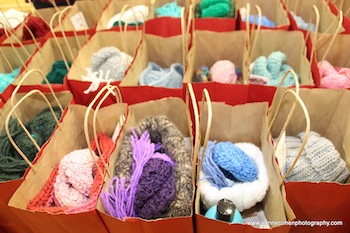
Rose’s Angels co-founders Courtney Cohen, left, and Lynne Fader, surrounded by some of the 60 volunteers who came out Feb. 12 to make 1,000 care packages for those less fortunate. (photos by Lianne Cohen Photography)

photo - Rose’s Angels made 1,000 care packages for those less fortunateOn Feb. 12, this year’s Rose’s Angels event drew 60 volunteers to Richmond Jewish Day School to create a total of 1,000 care packages. Each package was delivered to service organizations within Richmond, such as the Jewish Food Bank, Chimo Community Services, Richmond Family Place and Turning Point Recovery, among others.


Rose’s Angels was created four years ago by Richmond residents Courtney Cohen and Lynne Fader, with the idea to make care packages for those less fortunate, in memory of Cohen’s late grandmother, Rose Lewin. Lewin’s generosity and constant willingness to help those in need is the inspiration for this project.

With the event growing over the last two years, Rose’s Angels partnered this year with the Kehila Society of Richmond, a not-for-profit society that offers seniors programming and outreach.

Cohen has made it her goal this year to connect with new programs and service providers that may be interested in receiving these special packages for their clients. Each care package contains a new pair of gloves, a toque, socks, non-perishable foods and hygiene-care items, with other items selected with consideration of the organization it is going to.

Rose’s Angels gratefully accepts donations year round through the Kehila Society, 604-241-9270 or [email protected].

Format ImagePosted on February 24, 2017February 21, 2017Author Rose’s AngelsCategories LocalTags Courtney Cohen, Kehila Society, Lynne Fader, Richmond, Rose’s Angels, tikkun olam
Questions encouraged

Questions encouraged

Sam Bob is one of seven šxʷʔam̓ət, cast members. The play will run at Firehall Arts Centre March 3-11. (photo by David Cooper, design by Dafne Blanco)

Vancouver theatre director David Diamond, who founded the Theatre for Living 36 years ago, is hard at work this month on a play titled šxʷʔam̓ət (home), about reconciliation between indigenous and non-indigenous Canadians. Eleven performances are scheduled March 3-11 and Diamond says anyone that has any interest in a healthy Canada will find the play interesting.

“I don’t think we necessarily understand where we live but I think we all have a vested interest in living in a healthy country,” he reflected. “The tagline for the play is, What does reconciliation mean to you? Our hope is that we’re asking real questions about how to engage in this (reconciliation), in an honourable way that isn’t a repetition of colonization.”

Diamond was born in Winnipeg and has lived in Vancouver since 1976. Why did he choose the subject of reconciliation for his latest play? “Some of it is just paying attention to what’s happening in the world,” he said. “The Theatre for Living has a long history of working with indigenous communities throughout Canada and the reconciliation issue has gained a lot of prominence in the last couple of years. It feels important to ask these serious questions about reconciliation at a time when a lot of people are questioning whether the process in Canada is even valid.”

The issue of reconciliation has many layers, he added. “Sometimes people want to imagine there’s a solution – but, of course, there isn’t one, there are millions of smaller things that need to happen, that make up larger solutions. We have a lot of conversations to have internally about legacy, colonialism and the reality of the country we live in. Some of those conversations are internal to indigenous communities and only then can we get to the conversations in between communities. All of that has to occur in order for reconciliation to be an honourable, honest and real thing.”

Diamond has been involved in the subject of reconciliation for decades. “I’ve been very privileged and honoured to be invited into conversations on issues that arise out of colonialism and to work with indigenous communities,” he said. “The best thing a production like this can do is ask real and challenging questions, questions that we legitimately don’t have answers to. And then, because the theatre is interactive at every performance, to navigate a very deep conversation every night, that helps transform people’s relationship to the issues.”

Theatre for Living is collaborating with Journeys Around the Circle Society for this production, which began with a workshop and creation process on Jan. 30. It’s the same procedure Diamond has followed for many of his larger shows over the past few decades. Diamond strives to produce interactive theatre that challenges perceptions and creates social change, and this performance will consist of life-based stories woven together, as well as challenges to the audience to make reconciliation respectful and real.

Performances of šxʷʔam̓ət will be held at the Firehall Arts Centre, and tickets cost $15, with matinées priced at two-for-one. The trailer can be seen at youtube.com/watch?v=1Srk5Vlvueo and more information can be found at theatreforliving.com.

Lauren Kramer, an award-winning writer and editor, lives in Richmond. To read her work online, visit laurenkramer.net.

Format ImagePosted on February 10, 2017February 8, 2017Author Lauren KramerCategories Performing ArtsTags First Nations, reconciliation, šxʷʔam̓ət, tikkun olam
Removing graffiti full-time

Removing graffiti full-time

Corey Fleischer volunteers most of his time to removing hateful graffiti. (photo from Corey Fleischer)

When Montrealer Corey Fleischer finished university, he was unsure of what career path to take. In the interim, to pay the rent, so to speak, he started Provincial Power Washing.

Reflecting back on those days, Fleischer said, “I hated what I was doing – washing a lot of trucks, houses, decks, residential and commercial – zero substance. I’m a person who thrives off substance.”

One day, while heading to a job, Fleischer happened to spot antisemitic graffiti out of the corner of his eye.

“I was driving downtown here, in Montreal, and I saw a swastika on a cinderblock in a very busy part of town,” he said. “I had the equipment needed to remove it, so I got out of the truck and did just that. I got back in my truck, not thinking anything of it.”

From that day on, whenever Fleischer came across such graffiti, he would stop and remove it. As well, in the evening, after returning home from work, he would grab a bite to eat, shower and go out to look for racist, antisemitic and homophobic graffiti to remove.

“I would scour the city for hate crimes – back alleys, on walls, anywhere,” said Fleischer. “I found another one (swastika) and then another one. And then I started noticing, as the graffiti-removal side of my business began growing … I realized this was a real problem around town. It became my pastime. I quit hockey and softball and everything. It’s what I spent all my time doing. It fulfilled my life.”

For the first several years, it was only Fleischer’s parents and close friends who knew what he was doing. Then, he received a call from the local B’nai Brith Canada office to confirm his address, as they wanted to include him in a community newsletter mailing. While Fleischer refused to give out his address, he told the BBC that he had pictures of 40 swastikas that he had removed over the past five years, if that was of interest.

The BBC representative, said Fleischer, “literally couldn’t understand what was coming out of my mouth. She couldn’t believe that’s how I was spending my time. So, I sent her the pictures. They sent out a blogger to come and follow me, to do a story on what I was doing.

“Lo and behold, my life at that moment completely changed. People started seeing what I was doing and wanted to get involved. It went from removing 40 to 50 hate crimes in five years … [to] a couple hundred last year alone. The increase was pretty crazy.”

Fleischer now has thousands of followers wanting to get involved, so he has many more reports coming in, asking for free hate-graffiti removal. He said he has gone from spending about 10% of his company time removing hate graffiti to 95%. And, thanks to social media, the movement Fleischer started has gone global.

“People are calling me from all over the world, trying to figure out how to remove hate crimes in their area,” said Fleischer. “And, I basically put it together and have the removal done – wherever the people are calling from – with a local company.

“For most people dealing with hate crimes, it’s not a comfortable situation. People don’t know what to do with them or how to act when they see them. I happen to thrive in uncomfortable situations. I’ll go and organize. If I can’t find a local company to remove it, I’ll contact the local government, mayors, statesman, whoever, to get it done.

“For example, there was an attack on a Jewish cemetery in New York state. Their whole cemetery was defaced with swastikas and hate symbols. And somebody called me up from the town, saying they’d seen my videos and they’d been staring at these swastikas on their cemetery for two weeks – right around Yom Kippur. So, they called me to find out what could be done.”

After Fleischer hung up the phone, he began calling power washers. As it was a small town, it was hard to find someone, so Fleischer called the mayor and the local government. Within two days, all the graffiti was gone.

“When people figure out who I am and what I’m doing, they tend to spring into action quicker than if it was another situation,” said Fleischer. “Although I started the movement, it’s not just me getting it done. It’s people in the community, that I like to call ‘my army.’ I’m just a tool that was given to these people in order to remove these hate crimes. I’m just the instrument.”

While removing the hateful graffiti is, of course, good, Fleischer pointed out that it does not deal with the root of the problem. So, he decided to collaborate with Montreal-based Overture with the Arts, a not-for-profit that provides mainly after-school art classes to high school students. One of its programs is targeted at educating students about the Holocaust through a series of spoken word workshops about Anne Frank. OWTA opted to include a talk by Fleischer in the program.

“Instead of thinking about the actual guys who are putting on the hate crime, I had to find another way to make a difference in our society and in our communities,” said Fleischer of his speaking role. “I had to think of a way to make another difference by educating our youth, our future.

“When I was growing up and was going to high school, I was never taught about the Holocaust. I was never taught about the biggest massacre, the biggest tragedy, in human history.

“Before I started this whole movement, I didn’t even fully understand…. I knew what a swastika was, I knew it was bad, but I didn’t understand everything that was going behind it.”

The first two schools at which Fleischer spoke were classroom-sized talks, but this quickly expanded into full auditoriums. Schools now flood him with requests to come and speak.

“I had two calls this morning from schools calling me, out of the blue, trying to figure out how I can come to their schools,” said Fleischer in his interview with the Jewish Independent. “The school tour is called Erasing Hate.”

Fleischer received a peace medal last year from the YMCA (Young Men’s Christian Association) for his efforts with Erasing Hate, along with 30 Auschwitz survivors.

“To think I’m even in the same bubble with people like that, with something I started doing as a pastime, because I followed my heart, is mind-blowing. It’s really something else,” he said.

“Hopefully, we won’t, in the future, be ignoring hate crimes on the street and the future – our kids, the kids in schools – will understand that you don’t need to be silent. You can wake up, open your mouth and you can make a difference. That’s what this has turned into.”

For more information, Fleischer is on Instagram (@ErasingHate) and Facebook.

Rebeca Kuropatwa is a Winnipeg freelance writer.

Format ImagePosted on February 10, 2017February 8, 2017Author Rebeca KuropatwaCategories NationalTags antisemitism, Corey Fleischer, graffiti, hate crimes, homophobia, Quebec, racism, tikkun olam
Eight rungs of tzedakah

Eight rungs of tzedakah

Little Free Libraries are open 24/7 in cities across Canada. (photo by Josie Tonio McCarthy)

Have you heard of the Little Free Library movement? It’s a way for neighbours to exchange books. Throughout Winnipeg, Vancouver and other cities, there are little freestanding houses, a little bigger than a birdhouse. If you have a book you no longer want, you can leave it. If you’re looking for a book to read? You can take a book whenever you want. These Little Free Libraries are open 24/7.

Walking to our closest Little Free Library has become an important destination for me and my twins. It’s free, good exercise, and encourages our love of reading and learning. My twins often argue over which book to donate. Our house is overflowing with books. In order to take home a new storybook, we have an “even-exchange” policy.

Recently, I read on the National Public Radio (NPR) website about a similar U.S. movement, but, instead of books, the little house is a food pantry for the hungry. One family calls theirs a “blessing box.” Others call it a “little free pantry.” Sometimes, only one family stocks it with food, diapers or toothpaste. Sometimes, a whole neighbourhood takes part. The article mentioned that, in one neighbourhood, most of the food is taken between midnight and 7 a.m.; in another, the food comes and goes continuously. It’s a way of helping others anonymously. You don’t have to face someone at a food bank to admit your family is hungry and cannot afford food.

When I read this, I wanted to build one of these little food pantries right away, but then realized that, in a cold Canadian climate at this time of year, canned food or other stuff won’t do well outdoors. Even if that freestanding unheated food pantry doesn’t work out right away, the concept still made me want to do better than I’d been doing.

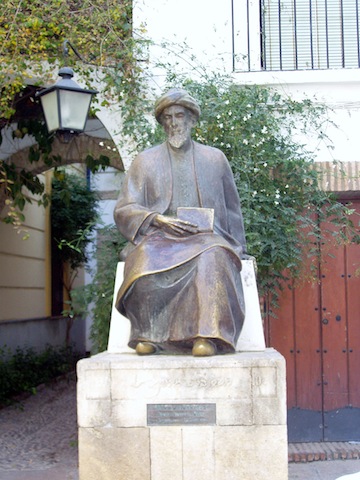
photo - Amadeo Ruiz Olmos’ statue of Maimonides stands in the Jewish Quarter of Córdoba, Spain. Maimonides compared tzedakah to a ladder with eight rungs, each of which you climb bringing you closer to heaven
Amadeo Ruiz Olmos’ statue of Maimonides stands in the Jewish Quarter of Córdoba, Spain. Maimonides compared tzedakah to a ladder with eight rungs, each of which you climb bringing you closer to heaven. (photo by Howard Lifshitz via commons.wikimedia.org)

I thought about a worksheet I’d used to teach religious school, maybe 20 years ago. I can’t find that piece of paper anymore but I remembered the point. It was about Maimonides’ ladder of tzedakah (justice, or charity). Maimonides (Rambam), a great Jewish scholar and teacher in the 12th century, lived in Spain and Egypt. I borrowed the following summary from the Jewish Teen Funders Network website, to remember the details.

Maimonides believed that tzedakah is like a ladder. It has eight rungs, from bottom to top. Each step you climb brings you closer to heaven.

1. The person who gives reluctantly and with regret.
2. The person who gives graciously, but less than one should.
3. The person who gives what one should, but only after being asked.
4. The person who gives before being asked.
5. The person who gives without knowing to whom he or she gives, although the recipient knows the identity of the donor.
6. The person who gives without making his or her identity known.
7. The person who gives without knowing to whom he or she gives. The recipient does not know from whom he or she receives.
8. The person who helps another to become self-supporting by a gift or a loan or by finding employment for the recipient.

To put this tzedakah approach into practice requires work. Many of us are stuck on the first five rungs of the ladder. I’m going to skip the first two rungs, because, while many of us may have only achieved this level, I’m going to act like we’re better than that. Right?

For instance, our membership dues to a synagogue or other Jewish organizations are acts of tzedakah, but usually of the third-rung kind. (If we could afford to donate more, we sink below No. 3.) We occasionally may get up to No. 7, when donating to a food bank. If you decide to “sponsor” something in the community and your name is pasted all over the event, that’s No. 5. It means, for instance, that while you do not know who ate the kiddush lunch you sponsored, everyone who is there knows your name. So, while some do this to celebrate a special event with their community, others do this named sponsorship because they like the attention. It’s tzedakah, sure, but it’s also about ego.

We could change the way we do our “tzedakah” business. We could push our Jewish community higher up Maimonides’ ladder. Here are some ideas.

Instead of “name in lights” sponsorship, we could donate anonymously to support a community meal, event or service. This could perhaps allow an organization to sponsor a free event. Maybe a congregation could have a nicer kiddush lunch on a Saturday or have an oneg on a more regular basis. It could boost the financial situation of an essential community function, like operational costs (heat, lights, water?), educational events, building renovation or maintenance. It could raise the salary of someone who works for the Jewish community. It could create new employment for someone in our community. It could offer a loan or gift to someone who needs a step-up to begin supporting himself or herself.

Ach! I hear you saying. I’m no moneybags. I can’t pay for someone’s salary. Fine.

If these sound too hard, lower your goals. Could you consistently offer a small amount of money or time when asked to help? Could you pay membership dues early? Could you donate food to the food bank every time you grocery shop? Maybe empty the change from your pockets every Friday afternoon to put in a pushke (collection box)?

Making a difference and working your way up that ladder can start small. It can be as simple as being gracious about donating. What about volunteering time or thanking others who donate? Many of us have the capacity to climb this metaphorical ladder. Shall we ascend those rungs together?

Joanne Seiff, a regular columnist for Winnipeg’s Jewish Post and News, is the author of a new book, From the Outside In: Jewish Post Columns 2015-2016. This collection of essays is now available for digital download, or as a paperback from Amazon. See more about her on joanneseiff.blogspot.com.

Format ImagePosted on February 10, 2017March 31, 2017Author Joanne SeiffCategories Op-EdTags charity, Little Free Library, Maimonides, tikkun olam, tzedakah

Posts pagination

Previous page Page 1 … Page 23 Page 24 Page 25 … Page 30 Next page
Proudly powered by WordPress