Basics of writing a contract

The other day, I finished the contract for an interesting project. There are half-a-dozen people involved in the project. Each of them has something to put in and is getting something out, but there is no direct relationship between one thing in and one thing out. In other words, I couldn’t say, “Mrs. Schwartz pays $100 and Mrs. Goldfarb treats her sciatica.” We were working with a pool of things being exchanged. It was more like, “Mrs. Schwartz pays $50 and provides physiotherapy equipment. Mr. Rosenblum takes $20 and provides a physiotherapy space. Mrs. Goldfarb treats Mrs. Schwartz, takes $30, and tells her other clients that she has space and equipment for physiotherapy.”

In Genesis, Chapter 9, we have the Covenant between G-d and Noah and with all of his descendants, being humankind; it also includes obligations between people. It is not set out as an item-by-item exchange, such as you pay your fare and the bus takes you along its route. It is a pool of obligations, promises and considerations among several parties, being G-d, Noah and each of the people who will descend from him.

This concept of a collection of promises was the structure I needed to put that project to paper the other day. It reinforced a basic technique in writing contracts that makes it possible to write a contract on a napkin.

A binding agreement is made by answering the questions, “Who’s doing what, and when are they doing it?”

The Torah distinguishes between the agreement (brit) and the token – or evidence – of the agreement (ot-habrit).

The agreement itself is the exchange of obligations: humankind will multiply and replenish the earth, will not murder (directly or indirectly) and will not eat meat that is still alive; G-d will provide to humankind the right and ability to hunt and eat meat, will establish the foundation of a justice system and will not flood the earth again.

The token of the agreement is the rainbow. This serves as a reminder both to G-d (verses 14 and 15) and to humankind and all creatures of the earth who can see it.

Today, we make this distinction by using a signed, written contract. The signed, written contract is evidence of the agreement between the parties. This brings us back to the napkin.

You’ll notice that, in my description of the arrangement between Mrs. Schwartz, Mrs. Goldfarb and Mr. Rosenblum, I state what each person does and expects to receive. Nothing happens without someone doing it. The only critical statement missing is the “when.” There are also a few details that would be quite helpful, such as where the money is being exchanged, what equipment is involved, the location of the therapy space, and the length of the therapy session.

In the questions “Who’s doing what, and when are they doing it?” the “what” also includes the “how” and the “where.” In this example, we could say:

“On the 15th day of Kislev, 5780, Mrs. Schwartz will put $50 in the old pickle jar behind the desk at Mr. Rosenblum’s office, which is at 12345 Oak St. She will also deliver, at the same time, an electric stimulation machine and the gel and pads needed for it. She won’t pick it up until the end of Chanukah.

“Mr. Rosenblum will take $20 of the $50 now in the pickle jar and let Mrs. Goldfarb use the therapy cubicle in his office for physiotherapy until the end of Chanukah.

“Mrs. Goldfarb will take the remaining $30 from the pickle jar and will treat Mrs. Schwartz’s sciatica for an hour on the 19th of Kislev and an hour on the 21st of Kislev.

“Mr. Rosenblum and Mrs. Schwartz will let Mrs. Goldfarb use the equipment and space for her other clients until the end of Chanukah.”

In this example, we now know who is responsible for what, when they’re going to do it, and how they’re going to do it.

There are far more details that we could put in, but this would be enough to move forward on its own if Mrs. Schwartz, Mrs. Goldfarb and Mr. Rosenblum don’t get around to writing out something more complicated.

If they expanded from a napkin to a couple of pieces of paper, they could also add in the kinds of details that lawyers argue over: what happens when things go wrong?

The first part of dealing with things going wrong is having everyone promise that it won’t. These are called, in Legalese, the representations and warranties.

Mr. Rosenblum will promise that he has an appropriate space for the therapy, including whatever licences and permits are needed. He also might promise certain details about what is an appropriate space, such as size, privacy, therapy bed, etc.

Mrs. Goldfarb will promise that she has the training, skills, certification and the valid licence required to carry out her obligations. She will also promise to do the therapy in a professional manner to the standards expected by her profession.

Mr. Rosenblum and Mrs. Goldfarb will both promise that they have the appropriate insurance.

Mrs. Schwartz will promise that she has the equipment needed for her therapy and that it works properly.

Now that we know who is going to do what, when and how they’re going to do it, and that they’ve all promised that everything is above board, we can discuss what happens if something goes wrong. Here we get into things like limitations of liability and indemnities. We also might have dispute resolution tools built right into the agreement.

If something goes wrong, no one wants to pay for someone else’s mistakes.

If Mrs. Schwartz trips on the doorstep, Mrs. Goldfarb doesn’t want to be responsible for Mr. Rosenblum not having a smooth entrance to his office.

If Mrs. Goldfarb injures Mrs. Schwartz during treatment, just because it happened in his office, Mr. Rosenblum doesn’t think he should be responsible.

If the electrical equipment causes a fire, neither Mr. Rosenblum nor Mrs. Goldfarb wants to be responsible for the damage caused by Mrs. Schwartz’s faulty machine.

Each will indemnify the others for liability arising from his or her own actions or negligence. In other words, each person promises to pay for the others’ damages for anything that is his or her own fault, whether or not it was intentional.

Dispute resolution is often overlooked because, when people are excited to enter a project together, they tend to think fights aren’t going to happen. But thinking about how to deal with an argument not only makes it easier should an argument arise, it also reduces the likelihood of the argument getting serious.

There are many flavours of dispute resolution tools, but here’s an easy one: the people involved pick an outside person whom they all trust, perhaps their rabbi, and they write in the agreement that, if they can’t resolve an argument between themselves, they’ll ask Rabbi Fogel to help them resolve it.

Remember that a good contract is a clear, written statement of a shared vision.

Jeremy Costin is a business and estates lawyer practising in Vancouver. He sits on the board of directors and the governance committee of the Vancouver Holocaust Education Centre, is a founding director of the Jewish Lawyers Association of British Columbia and is a frequent guest instructor at the Law Society of British Columbia.


Confidentiality clause issues

Typically, an insurer will bring a “standard” form of release to a mediation to be signed. (photo from pxhere.com)

Most of my cases against insurance companies settle, often at mediation. Typically, the insurer will bring a “standard” form of release to the mediation for my client to sign. If not, when the insurance company’s lawyer sends me the cheque, it will be accompanied by a form of release that my client must sign in order to receive the settlement funds. In either case, the release will always contain something not usually discussed – a confidentiality clause.

A confidentiality clause seeks to prohibit the parties to a settlement from disclosing the settlement terms, and sometimes more. Confidentiality raises numerous problems.

It is routine for the confidentiality clause to permit the settlement amount to be disclosed to tax preparers, accountants and legal or financial advisors. Not so routine, although perhaps it should be, is a carve-out that allows a client to reveal facts from the underlying claim to industry regulators.

Clients often object to confidentiality because they are frustrated and angry about what has happened to them and, specifically, what the insurance company did. Insurance companies always want confidentiality, often because of the feared perception of guilt that accompanies a settlement. That secrecy itself may be adverse to public policy and protection of the public, as it can allow wrongful conduct to continue.

As lawyer Ronald L. Burge wrote in a 2012 paper for the American Bar Association: confidentiality clauses are “bad for clients, bad for lawyers and bad for justice.”

Confidentiality prevents the public from knowing about wrongful conduct. It can also prevent regulators and government agencies from performing their duty to enforce the law and protect the public. The role of the court is to evenly administer justice to all, so that all are protected by the law. When violations are hidden by confidentiality, the legal system itself is thwarted from fulfilling one of its fundamental purposes – to protect the public from wrongful conduct.

Equally important is the fact that the legal system is funded by the public. The use of government employees, monies and buildings entitles the public to openness in all aspects of the legal process, including settlements that are achieved through use of the legal system.

Society would be better off if all settlements were public knowledge. Wrongful conduct would be exposed not just for the economic justice of the client, but for the broader societal purpose of curbing such wrongful conduct. Lawmakers and the public could see where problems exist, both in products and service suppliers, and act appropriately. Fundamentally, the settlement of a lawsuit should be a public proceeding, just as a trial is a public proceeding.

The conduct of insurance companies is governed by laws and regulations. It is likely contrary to public policy to require confidentiality of facts that may disclose the violation of laws and regulations governing the insurer’s conduct.

Moreover, the legal system does not belong to any industry, certainly not the insurance industry. It belongs to the Canadian public. Courts function best in the daylight of an open, transparent administration of justice. Otherwise, people cannot observe and understand what is going on and how the courts protect everyone by their fair administration of justice. Secrecy protects repeat offenders and harms everyone else. Openness is consistent with basic principles of the rule of law.

Secrecy in settlements also prevents lawyers from properly serving their clients. A lawyer cannot place a fair and reasonable value on a case when the lawyer cannot compare it to other known cases. It is particularly harmful to inexperienced lawyers who may be most prone to undervaluing a case. The secrecy allows insurance companies, with their vast resources, to assess a claim’s fair value, while preventing many clients from doing the same.

Finally, confidentiality does not actually promote settlement. The vast majority of cases already are settled without trial.

Governments should specifically limit the use of confidentiality clauses in the settlement of lawsuits involving wrongful conduct by insurance companies. This should be done for the protection of the public, to improve the industry and to preserve the effectiveness and integrity of our legal system.

Jan A. Fishman is a lawyer practising in Vancouver. He mainly acts for individuals who have been wrongly denied insurance benefits. He has held numerous elected and appointed positions in the legal profession and currently sits on the editorial board of Civil Jury Instructions. He also volunteers in the Jewish community and is active in his synagogue.

Focus on online hate

Kasari Govender, British Columbia’s human rights commissioner. (photo from Wosk Centre)

Hate in British Columbia, in Canada and globally is on the rise. In 2017, there were 255 police-reported hate crimes in British Columbia, an increase of 55% from just two years earlier. In 2018, Metro Vancouver had the highest rate of hate crimes reported to police in any of Canada’s three largest metropolitan areas, most based on the victim’s ethnicity or religion, with a smaller but significant number based on sexual orientation.

These alarming statistics, and others, provided a framework and urgency for an event Sept. 12 at Simon Fraser University’s Morris J. Wosk Centre for Dialogue in downtown Vancouver. The event, titled From Hate to Hope in a Digital Age, is envisioned as the inaugural annual Simces and Rabkin Family Dialogue on Human Rights.

Contextualizing the discussion, Shauna Sylvester, executive director of the Wosk Centre for Dialogue, cited the results of a report undertaken by her organization. These indicate that one in three Canadians believes Canadian-born citizens should have greater say in government than those born outside the country. One-quarter of Canadians say we have too many protections for minorities and one in four also believes we have too many protections for religious freedom.

Keynote speaker at the forum was Kasari Govender, in just her second week on the job as British Columbia’s human rights commissioner. She is the first to hold this role in the province since that office was closed in 2002.

“In my view, there is a strong connection between hateful speech and hateful violence, both on an individual and a systemic level,” she said, citing racist manifestoes sometimes posted online by perpetrators in advance of a mass killing. She said it is necessary to trace the path from speech to violence.

A common theme of recent mass murderers is anti-immigration sentiment, sometimes emphasizing the “purity of the nation, whether that nation is Canada, New Zealand, the U.S. or another,” she said, adding that many of the attacks around the world that have been linked to white nationalism correspond to discourse in mainstream political debates over immigration and public policy.

The worst antisemitic mass murder in United States history, the attack on Tree of Life synagogue in Pittsburgh in 2018, happened while U.S. President Donald Trump and others were promoting fears of the so-called “migrant caravan” coming from Central America. Part of that conversation, Govender said, “was somehow blaming the Jews for this migrant caravan, drawing a connection in the public discourse, and then there was the shooting.”

Boris Johnson, now prime minister of the United Kingdom, compared women who wear burqas to bank robbers, which led, Govender said, to an increase in acts of hate against Muslim women in the United Kingdom.

Online hate is a particular product of technologies that have emerged in recent decades, she said. “The anonymity, reach and immediacy afforded by the internet escalates the problem beyond what we’ve seen before,” she said. “The internet is a very effective tool for fomenting hate from belief to action, from hateful words to violent actions.”

While forcing social media platforms to police hate speech might be criticized as an infringement of free expression, she said, the opposite is true. Regulating platforms to shut down violent rhetoric actually improves access to freedom of expression for many, as people of colour, women and others are being silenced online by racism and misogyny, she said.

Participants at the Wosk Centre offered a wide range of perspectives.

Evan Balgord, executive director of the Canadian Anti-Hate Network, outlined the approach his agency takes in confronting online hatred.

“Legal [action] would be our last recourse against a hate group or a hate propagandist,” he noted, saying that their first response is to “try to hold somebody socially accountable.” That means, if the person is anonymous, exposing them. If the person is not anonymous, this might mean bringing their posts to the attention of their employers, family and friends.

“Those might provide checks on their behaviour,” he said, adding, “We’re not really trying to reform people here, we’re just trying to stop the spread of hate propaganda.”

For those who do not respond to social accountability, Balgord said, Canada’s laws are insufficient. Application of the Criminal Code’s section that deals with the wilful promotion of hate and distribution of hate propaganda is unwieldy.

“We did use to have a better recourse,” he said. “It was Section 13 of the Canadian Human Rights Act. It would allow a private individual to essentially file a complaint, which would be vetted by the Canadian Human Rights Commission and, if found credible, would go to the tribunal. They could order a cease-and-desist order against that individual and up to a $5,000 fine.” If, at that point, the individual failed to comply, they would be in contravention of a court order and could face jail.

“We really want to see something like Section 13 come back,” he said.

Several speakers agreed that social media platforms need to do more policing of hate speech. Some countries have laws that force social media companies to address hate material on their platforms within certain timeframes or face serious fines.

Social media platforms, Balgord said, may already be in contravention of Canada’s existing laws against discrimination in the provision of a commercial service, because women, people of colour, LGBTQ+ people and other members of targeted groups are exposed to abuse, harassment and death threats that could drive them off the platform.

Rabbi Dr. Laura Duhan-Kaplan, director of inter-religious studies at the Vancouver School of Theology, noted that government budgets are limited but that education can take place everywhere – and that everyone is an educator. Early childhood is crucial, she said.

“What children do together, the songs they sing, the books they read, all of that becomes the building blocks of the way they think,” she said. “All of us who interact with children have an opportunity to begin to teach values of respecting difference, helping others, nonviolence.… One week of summer camp with friends on a theme of diversity, peace, public service – these are experiences that stay with teens and we really, really bring them into young adulthood in a different way.”

A speaker from the audience, a counselor and educator, noted that inequality, including economic inequality and poverty, makes people susceptible to fear and that can become a foundation for hate.

Another speaker contended that there is, in effect, no such thing as race.

“I think it’s very problematic to use the term race as if it’s a reality,” he said. “There is such a thing as racism but not really race. If you look at the majority of anthropologists, geneticists and so on, they say that we have much, much more in common with each other [than differences].… Even using terms like black and white to refer to people reinforces racism. We never call people yellow anymore, because that’s racist. We need to come up with a new language that doesn’t emphasize unreal differences and that are respectful to everybody.”

Lorene Oikawa, president of the National Association of Japanese Canadians, contended that sharing one another’s stories is an effective means to education.

“People really don’t know the stories,” she said. “For sure, there are some people who do, but they don’t know the [extent of the] harm that was done and the intergenerational trauma.”

She applied lessons of the past to current events. “In 2019, Japanese-Americans, Japanese-Canadians are horrified by some of the hateful rhetoric we’re hearing [that] could be lifted from 1942,” she said. “If people knew their history, more people would be going, ‘Wait a minute. What we did back in 1942 was wrong. Why are we saying the same things about people from [other] countries, putting people in camps, separating families, separating children from their families?’ All that stuff happened to Japanese-Americans, Japanese-Canadians and it’s being repeated today.”

She added: “We feel it’s our duty that what happened to our community must never happen to another community again.”

Clint Curle, senior advisor to the president of the Canadian Museum for Human Rights, agreed that education is pivotal.

“Is there a lesson, an experience, we can give children especially that will make them resistant to hate speech and resistant to hateful violence?” asked Curle. He compared hatred to a communicable disease.

“If this was polio, what would we do? If this was polio, we would do what we did, which is vaccinate. The way vaccinations work is you get children and you give them just enough of something close to the disease [so] that they develop an internal resistance to it, so, when they encounter the disease, there is something within them that says, no. So, when they encounter hate, they’ll know.”

With more than 1.5 million visitors to the museum since it opened five years ago, Curle said what resonates, especially with young people, is exactly what Oikawa suggested.

“The thing that seems to work best is storytelling across social boundaries,” he said.

Zena Simces, a health and social service policy consultant and a former Pacific region chair of the now-defunct Canadian Jewish Congress, conceived of the annual event with her husband, Dr. Simon Rabkin.

“We felt that we wanted to enhance an understanding of human rights in our community and to create an opportunity for dialogue on human rights issues,” Simces said. “Our aim is to select current and relevant themes each year and to invite experts and community leaders and community members to advance and generate positive action.”

Rabkin, a cardiologist, professor of medicine at the University of British Columbia and president of the medical staff at Vancouver General Hospital, added: “The dialogue this evening … is seeking to enhance our understanding and knowledge of how this increase in hate and its consequences can be addressed from legal, social media and community perspectives.”

Will jail curb hater?

The sentencing of a notorious hate promoter in Toronto last week is, in some ways, evidence that our country’s laws and norms against targeting identifiable groups are working.

James Sears, editor of Your Ward News, a propaganda sheet distributed periodically to 300,000 households in Toronto and area, was sentenced to two consecutive six-month terms in jail. His paper is filled with bigotry and hatred, especially targeting Jews, women and LGBTQ+ people. He is obsessed with the Rothschild family, denies the Holocaust, dabbles in bizarre racial theories and celebrates rape. One issue invited volunteers to join an Adolf Hitler Fan Club. He and a co-conspirator, publisher LeRoy St. Germaine, were found guilty in January of promoting hatred against women and Jews. St. Germaine is yet to be sentenced.

The Centre for Israel and Jewish Affairs, among others, praised the judge’s sentence. In fact, the judge openly expressed his wish that he had the legal power to hand down a harsher sentence.

Unlike the United States, where constitutional freedoms make it legal to express almost anything but overt death threats or yelling fire in a crowded hall, Canada’s laws place limits on acceptable discourse. This is, it has seemed, a consensus position that we as a society have accepted as justifiable limits on our freedoms for the greater good. In practice, convictions on the basis of hate speech are exceedingly rare. More common are hearings and decisions via our network of human rights commissions, which provide a quasi-judicial recourse for victims. Neither of these systems is perfect. But cases like Sears’ indicate that, when necessary, they can have the appropriate outcomes.

We hesitate to call this good news, however. Justice may be served but, in the long run, what is gained? A happy ending would have been a society in which ideas like Sears’ are nonexistent. A more realistic world might be one in which some form of restorative justice is the sentence, some construction in which Sears and St. Germaine learn from their victims about the harm they have inflicted and perhaps come to see the humanity of the people they vilify. Instead, Sears will spend a year (or four months, depending on parole) stewing over what he doubtlessly interprets as some heinous injustice perpetrated against him by the imagined forces of evil. Justice is served, probably, but is the larger cause of social cohesion and mutual understanding?

הפסיקה נגד היין מהשטחים

(flickr)

בית המשפט הפדרלי של קנדה קבוע בסוף יולי כי סימון יין שיוצר בהתנחליות שבשטחים הכבושים, בתוך יין תוצרת ישראל אינו מותר. זאת כיוון שמדובר בדברי שקר, הטעייה והולכת שולל של ציבור הצרכנים.

הפסיקה הקשה נגד היין מהשטחים ניתנה בעקבות עתירה של אזרח יהודי מהעיר וויניפג, בשם דיוויד קטנבורג, שהוא פעלי פרו פלסטיני. הוא טען בעתירתו כנגד ממשלת קנדה, שיינות שיוצרו בהתנחלויות שבשטחים אינם יכולים להימכר עם תווית של יין שיוצר במדינת ישראל. לדברי קטנבורג הקהילה הבינלאומית וכן גם קנדה לא מכירות בהתנחלויות שבשטחים, כחלק אינטגרלי ממדינת ישראל. העתירה של קטנבורג הוגשה נגד סוכנות הפיקוח על המזון של קנדה, שבמקור אישרה את מכירת היין מההתנחלויות בשטחים עם התווית מיוצר בישראל.

שופטת בית המשפט הפדרלי, אן מקטביץ, פרסמה את פסק הדין שלה (שמתפרש על פני ארבעים ושלושה עמודים). היא אמרה בין היתר בהחלטתה כי יש מעט מאוד דברים כה מורכבים וסבוכים בהם המדיניות במזרח התיכון. וכן קיומן של ההתנחלויות הישראליות בגדה המערבית. אלה מעלים נושאים פוליטיים מסובכים, רגישים ועמוקים. עם זאת, אחת הדרכים השלוות אשר בה יכולים בני האדם להביע את עמדותיהם, היא דרך קבלת ההחלטות שלהם, כאשר הם רוכשים מוצרים שונים. כדי שיכולו להביע את עמדתם בהקשר זה, על הצרכנים לקבל מידע מדוייק לגבי זהות המוצר שנמצא במחלוקת. עוד קבעה השופטת של בית המשפט הפדרלי כי סימון יינות שיוצרו והוכנסו לתוך בקבוקים בהתנחלויות שבשטחים, כיין שיוצר במדינת ישראל, הוא דבר שקרי, מטעה ומוליך שולל את ציבור הצרכנים. לדבריה בהתנהלות שכזו מפירים את חוקי המקור של מוצרי מזון (כולל יינות) ותרופות. ההחלטה שמאפשרת לסמן יין שיוצר בהתנחלויות הישראליות שבשטחים כיין שיוצר במדינת ישראל, לא נופלת בגדר האפשרי והמתקבל על הדעת. אגב שופטת סירבה לקבוע כיצד כן יש לפרסם מהיכן היין בשטחים הכבושים יוצר. זאת לאור חילוקי הדעות המשמעותיים בכל הנוגע למעמד החוקי של ההתנחלויות הישראליות, בשטחי הגדה המערבית. היא ציינה כי אינה מתכוונת ליישב סוגיה זו בתיק שלפניה.

השופטת מקטביץ שלחה את התביעה של קטנבורג בחזרה לסוכנות הפיקוח על המזון של קנדה, על מנת שתדון בסוגיה מחדש. יצויין כי תחילה סוכנות הפיקוח הקנדית הסכימה לאור פנייתו של קטנבורג, להסיר את הסימון תוצרת ישראל על בקבוקי יין שיוצרו בהתנחלויות בשטחים. לאחר מכן היא חזרה בה ואז הוא עתר לבית המשפט העליון במדינה.

בהתאם לחוק הקנדי מוצרי מזון, כולל יינות אשר נמכרים בקנדה, חייבים לכלול פירוט מלא על מקור המדינה בהם הם יוצרו. כמובן שחל איסור להטעות את הצרכנים המקומיים.

לא ברור בשלב זה כיצד סוכנות הפיקוח על המזון תנהג לאור הפסיקה. לא מן הנמנע שסוגיה סבוכה זו תחזור לשולחנו של בית המשפט הקנדי לאור ערורים צפויים.

המרכז לענייני ישראל היהודים בקנדה פנה רשמית לממשלת קנדה וביקש תגיש עירעור לבית המשפט על החלטת השופטת מקטביץ. לדברי המרכז נפלו מספר טעויות משמעותיות בהחלטת השופטת. זאת כיוון שהדבקת התוויות על מקור היצור של בקבוקי היין מההתנחלויות בשטחים, תואמת את רוח הסכם הסחר החופשי בין קנדה לישראל שנחתם לאחרונה. וכן תואמת את החוק הקנדי והחוק הבינלאומי.

במרכז מציינים כי אם כן יוגש ערעור הם יבקשו מבית המשפט לקבל מעמד של מתערבים בדיון המדובר, על מנת להבטיח שהחוק הקנדי והחוק הבינלאומי יפורשו ויושמו כראוי.

Court’s segregation decision

Halifax-based lawyer Hanna Garson. (photo from Hanna Garson)

In 2015, the B.C. Civil Liberties Association and the John Howard Society launched a legal challenge to the federal government’s laws that allow administrative segregation – a form of solitary confinement – in prisons, calling it a cruel and inhumane punishment that can lead isolated prisoners to harm and even kill themselves. They won their case in the B.C. Supreme Court in January 2018, a decision that was appealed by the government the next month. Last week, the B.C. Court of Appeal affirmed the unconstitutionality of provisions that allow indefinite and prolonged solitary confinement of prisoners.

In the January 2018 decision, the B.C. Supreme Court gave the federal government 12 months to pass new laws. In January 2019, the court gave the government an extension to April, but said certain stipulations had to come into effect immediately. Correctional Service Canada was ordered to take several steps, including giving prisoners in segregation more time outside, requiring daily visits from healthcare professionals, allowing inmates legal counsel in hearings related to solitary confinement, and changing the authorization system regarding the placement of an inmate in segregation for more than 15 days.

The federal government was given another extension after the April deadline, to the end of June. Then, on June 24, the B.C. Court of Appeal came out with its decision on the matter – rejecting the government’s appeal.

“This particular case is very interesting, as there are no actual individual complainants,” said Jewish community member Hanna Garson, a lawyer based in Halifax whose focus is ensuring that everyone is treated fairly by the justice system. “So, the court [was] being asked to decide whether or not the written laws themselves breach provisions of the Charter of Rights and Freedoms in Canada.”

According to Garson, sections of the Charter are indeed being breached when it comes to administrative segregation, especially as it comes with no time limit. “People are being put into segregation not knowing when, if ever, they’re going to get out,” she told the Independent. “That really plays on the mind.”

Noting that many people have mental illness or struggle with mental health before they are incarcerated, which “may have led to their negative interaction with the law,” she said, “That population, in particular, is very damaged by periods of segregation.”

The appeal court’s reasons for judgment, written by Justice Gregory Fitch, stated that the Corrections and Conditional Release Act violated Section 7 of the Charter, which protects an individual’s right to life, liberty and security of the person. The court “found that the harm caused by prolonged confinement in administrative segregation undermines the maintenance of institutional security, as well as the ultimate goal of achieving public protection by fostering the rehabilitation of offenders and their successful reintegration into the community.” It also “found that prolonged confinement in administrative segregation is not necessary to achieve the safety or security objectives that trigger its use.”

The judgment noted “that administrative segregation has a small, but significant, disproportionate effect on indigenous men and an even more significant effect on indigenous women” and that the “impugned laws” violated Section 15 of the Charter “to the extent that they authorize and effect a procedure that results in discrimination against aboriginal inmates.”

Section 15 states that, “Every individual is equal before and under the law and has the right to the equal protection and equal benefit of the law without discrimination and, in particular, without discrimination based on race, national or ethnic origin, colour, religion, sex, age or mental or physical disability.”

Another issue, said Garson – who, in addition to being part of the firm Planetta Hughes LLP, is chair of the East Coast Prison Justice Society and is on the board of the Elizabeth Fry Society Mainland Nova Scotia – is that, while prisoners being placed in segregation have access to review boards, administrative segregation review boards consist of the same prison administration that placed them there. “So, it’s not an independent review and so, basically, the people who initially made the decision then question their own decision, which doesn’t necessarily secure a fair assessment of whether or not a person really needs to be segregated,” she said.

While legal counsel is permitted at these reviews, it is not provided in many provinces and few prisoners can afford representation or are not in a mental state of being able to request it, she said. “If you’re running a facility with hundreds of people who may be violent, I can understand a time-out for a moment to see what else needs to be done,” said Garson. “But, there needs to be a time limit and other solutions.

“Long-term, serious mental health treatments take far more expensive staff and thorough training. Are these better solutions though? Without a doubt, yes. Unfortunately, a lot of the constraints are budgetary and this is something that, oftentimes, courts are hesitant to rule on. But, for example, the court did say that, as it says in Section 15 [of the Charter], everyone has a right to be equal before the law and receive equal treatment of the law. So, the court does an assessment of whether or not people are being discriminated against by these laws.”

After hearing testimony and expert opinions, Garson said, “the court decided that both aboriginal people and people suffering from mental illness are segregated far more often … and that the impact on them is far more negative. But, it went further, ordering incarceration facilities to put in place better solutions – better programming that does not involve segregation.

“Usually, the court is hesitant to make decisions that would force the government to put more funding into something. But, it did in this decision, which is, in my opinion, really wonderful and a great precedent. This case is really groundbreaking and, to a certain extent, it was a wonderful thing that it was appealed.”

The B.C. Supreme Court said, “basically, we had to come up with new laws. But then, they suspended it for a year, as the government needs time to pass new bills and stuff like that. In the meantime, the attorney general appealed, because they don’t think it’s fair,” she said.

The Constitution of Canada, which includes the Canadian Charter of Rights and Freedoms, is the supreme law in Canada, she explained. Section 52 (1) of the Constitution Act 1982 mandates that any law inconsistent with the provisions of the Constitution is, to the extent of the inconsistency, of no force or effect. The decision by the appeals court will become a binding precedent in all provinces, not only in British Columbia.

Garson emphasized that she is especially happy with the decision because it is one that has really considered the damage segregation does on the mental health of those being isolated and notes that, “if we really care about rehabilitation, then [segregation] makes no sense as a strategy, especially for those with mental illness.”

Because the court looked at the experiences of those who have been segregated and the decision will affect them, the system and society as a whole in the long-term, Garson said, “It’s more like a living document in that way, and it’s a very exciting case for this reason.”

As for where Jewish law falls on this matter, the organization T’ruah has been leading a campaign to abolish solitary confinement in the United States. In a 2014 report on the compliance of the United States with the United Nations Convention Against Torture, T’ruah notes, “The very first two chapters of our Torah teach us that every human being is created in the image of God, and that no human being should be alone. The practice of solitary confinement violates these principles and diminishes the divine image. It also violates one of the Torah’s central moral teachings, expressed in Leviticus 19:18, that one should ‘Love your neighbour as yourself.’ The rabbis explain that this is taught, so that no one can justify degrading treatment of a member of their community…. If you do thus, know that the person you have dishonoured was created in the image of God.”

The report argues that “Jewish tradition understands instinctively that humans are social creatures. In a story about a character who outlives his family, friends and study partners, the Talmud teaches, ‘Either companionship or death.’ Life alone is unbearable. Jewish law warns against excessive punishment, ‘lest your brother be degraded before your eyes.’ (Deuteronomy 25:3) Even a person who has committed a horrific crime must be regarded as a member of one’s own family and, therefore, deserving of dignity.”

T’ruah contends that Jewish criminal law seeks to inspire teshuvah (repentance) and that there are several principles that should hold in prisons:

“1. No matter his or her crime, the prisoner should be seen as our ‘brother or sister’ and treated with dignity.

“2. No human being should be alone for extended periods of time. Isolation diminishes the human being and can even be deadly.

“3. Prisons should seek to rehabilitate the prisoner and not simply to degrade him or her.

“4. A prisoner should have a fair trial before being placed in solitary confinement. Therefore, solitary confinement cannot be used for those in pre-trial detention.”

Rebeca Kuropatwa is a Winnipeg freelance writer.

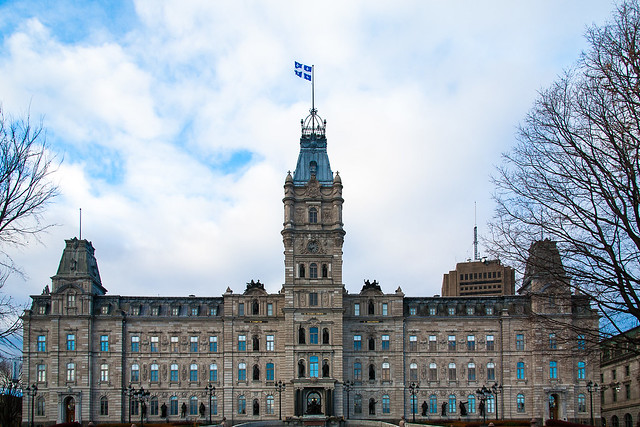
החוק החדש בקוויבק

(Paul VanDerWerf)

חוק עשרים ואחד כך קוראים במחוז קוויבק לחוק החדש שעבר לאחרונה בפרלמנט של קוויבק, שישפיע משמעותית על אורח החיים של שומרי המסורת במחוז, יהודים ומוסלמים כאחד. החוק החדש אוסר על כל מי מאלה שעובדים במשרות הציבוריים ללבוש בגדים או לענוד מסמלים הקשורים בדת כלשהי, בשעה שהם מבצעים את תפקידיהם הציבוריים. יש לזכור שקוויבק היא המחוז השני בגודלו בקנדה ובעיר המרכזית והגדולה שלה – מונטריאול גרים יהודים ומוסלמים רבים

ומי יסבול בעיקר מחוק מהפכני זה: יהודים אשר הם חובשי הכיפות, מוסלמים אשר הם חובשי חיג’אב, סיקים והודים אשר הם חובשי טורבנים. האיסור עלול להשפיע קרוב לוודאי גם על נוצרים שעונדים צלבים. החוק יכול על כל העובדים הנושאים במשרות הציבוריות.ובהם בין היתר: אנשי כוחות האכיפה והשוטרים, תובעים ציבוריים, שופטים ומורים בבתי ספר ציבוריים.

הצעת החוק עברה בפרלמנט של קוויבק לאור כך שהמפלגה השלטת החדשה – מפלגת הקואליציה למען העתיד של קוויבק, הבטיחה לבוחריה בבחירות האחרונות (שנערכו בחודש אוקטובר אשתקד) ליישמו מהר ככל הניתן.

המושל של קוויבק, פרנסואה לגולט, ציין בהודעה לעיתונות כי בניגוד לביקורת הקשה נגד החוק, הוא אינו מנוגד לחופש הדת. וכן הגיע הזמן לקבוע כללים חדשים בנושא.

חשוב לדעת שחוק עשרים ואחד נקרא כך משום שהוא אינו משפיע ולא ישפיע על העובדים הנוכחיים, שעובדים במגזר הציבורי. הוא יחול על כל העובדים החדשים שיצטרפו למגזר זה. לפי ההערכות אוכלסיית קוויבק מונה כיום כשישה מיליון איש, בהם כתשעים אלף אלף מוסלמים וכשבעים וחמישה אלף יהודים.

דובר משרד ההגירה וההכללה של קוויבק, מארק-אנדרה גוסלין, הסביר את הצורך הדרוש בחוק החדש: אנחנו מאמינים כי אלה פונקציות מאד ספציפיות והן צריכות להיות ניטרליות לחלוטין. זאת על מנת להבטיח שירות ניטרלי

מהמדינה לאזרחיה. לדבריו הממשלה לא מכוונת לדת אחת בלבד וכי כל הדתות שוות ובאותה מידה.

ומי נמנה על רשימת המתנגדים לחוק זה: כארבעים אחוז מהמצביעים בקוויבק, חברי מועצת העיר מונטריאל וכן גם פקידים רשמיים של בתי הספר במונטריאל. כידוע גם ראש ממשלת קנדה הליברלי, ג’סטין טרודו, הביע ביקורת חריפה על הצעת החוק.

הצעת החוק נכתבה בצורה כזאת שהיא מוגנת לכאורה מפני אתגרים חוקתיים במשך חמש השנים הבאות. שתי הדרכים המשפטיות שעליהן ניתן להתבסס מבחינה של עתירה משפטית נגד החוק, הן של החוקה של קנדה ואמנת זכויות האדם והחופש של קוויבק. עם זאת נראה כי מנסחי החוק כיסו את עצמם מכל זווית אפשרית שתמנע מהמתנגדים לנסות ופסול אותו.

הצעת החוק אינה מגדירה בדיוק את מהו סמל דתי. ומה עם קעקוע או עגיל? האם עובד ציבור יהודי יכול ללבוש ציצית? האם הצעת החוק אוסרת על החסידים שיעבדו במשרות ציבוריות לגדל פאות?

כדי לטעון שהחוק אוסר על כל הסמלים הדתיים כאחד ואינו מפלה – הממשלה החדשה החליטה להסיר צלב קתולי שתלוי כבר שמונים ושלוש שנים בבית המחוקקים של קוויבק.

מסקר שנערך בחודש מאי האחרון בו השתתפו יותר מאלף ומאתיים מתושבי קוויבק (נערך בחסות האגודה ללימודים קנדיים), עולה כי רוב התומכים בהצעת החוק מנמקים זאת בשל רגשות שליליים כלפי מוסלמים ויהודים. על פי הסקר יותר מחמישים אחוז מהנשאלים אמרו כי מקובל על מורים בבתי הספר הציבוריים ללבוש צלב נוצרי, רק כשלושים אחוז ציינו כי מקובל על מורה בית ספר ציבורי לחבוש כיפה, ורק כשניים עשר אחוז הצביעו כי מקובל על מורה ללבוש כיסוי ראש מוסלמי.

The will of “the people”

The deed is finally done. For years, Quebec politicians have been talking about secularism, or laïcité, proposing a range of actions to ban the presence of visible religious symbols among government employees. On Sunday, following a weekend of almost round-the-clock debate, the Coalition Avenir Québec majority in the National Assembly passed Bill 21. The law bans symbols such as the crucifix, turban, hijab and kippah for provincial employees in positions of authority, such as judges, police, prosecutors, court clerks and schoolteachers.

The bill was met with lamentations and anger from the opposition. Catherine Dorion, a member of the National Assembly representing the left-wing party Québec solidaire spoke powerfully in favour of individual liberty and the right to exhibit religious identity.

“Each person in this room who will vote for Bill 21 will bear the responsibility for this first great breach in the dike we had proudly erected to protect the fundamental rights of all Quebecers,” she said.

The vote came a day after a similarly contentious debate on another bill, which addresses the province’s agreement with the federal government over immigration to Quebec. On the one hand, the bill aims to ensure that immigration reflects the province’s labour requirements, which is justifiable. On the other hand, the bill also permits the creation of a “values test” that new Quebecers would have to pass before admission to permanent residency. A test of this nature is one thing in theory – extreme examples like female genital mutilation are raised as justifications – but it is something else in practice.

Government measures to adjudicate an individual’s beliefs is a recipe for disaster. Certainly we would like to see people with hateful or violent attitudes toward particular cultural groups prevented from entering the country, or rehabilitated if they are already here. There are programs and policies in Canada to address this problem and they should be strengthened. But applying what amounts to a form of prior restraint on the ideas and beliefs of new Canadians by a government with limited respect for civil liberties crosses a perilous line.

The religious symbols law parallels the immigration law in its flouting of civil liberties, but diverges importantly in a number of ways. It applies to people who are already Canadian (for the most part, at least), which is a more grievous affront than putting up barriers for non-citizens.

In responding to criticism, Quebec Premier François Legault declared: “Someone once said, beware of those who say they like the people but do not listen to what the people want.”

This language reflects a populism we have seen in Europe as well as North America, but which has been thankfully rare in this country. The idea that governments should do whatever “the people” want invites a tyranny of the majority that is almost destined to trample on individual rights, especially the rights of members of minority communities. It bears stating that, in Quebec, in order to deliver the will of the people, the assembly had to clip the wings of democracy not once but twice, invoking closure on debate on both bills and, in the case of Bill 21, promising to use the Canadian Constitution’s Notwithstanding Clause to override what even the government of Quebec acknowledges is a unconstitutional infringement on individual rights.

We are seeing flare-ups elsewhere in Canada of how some of “the people” would like to see public policy progress. On the same busy weekend, a rally in downtown Vancouver against transgender rights and opposing the province’s progressive sexual education agenda turned nasty (if the mission of the event wasn’t nasty enough) when counter-protesters showed up to confront them. At the rally were the Soldiers of Odin, a far-right group, people wearing yellow vests, the symbol of an amorphous movement that began in France and has attracted extremists, and at least one leading member of the People’s Party of Canada, a new populist party that seems determined to stoke a range of fears and prejudices in the lead-up to the federal election this fall.

Violence also erupted last weekend at a pride parade in Hamilton, Ont., when protesters showed up at the celebration. A local politician laid blame for the violence, which included punching and choking, on “far-right evangelicals” who he said were “just there to sucker-punch people.”

All of this is to say that Canada is not immune to extremism or even politically motivated violence. There is, of course, an important line between the violence in Hamilton and the laws that were rammed through Quebec’s legislature. Violence deserves universal condemnation while passionate disagreements over politics – even laws we see as repressive and excessive – are justifiable and welcome. Still, these incidents all reflect different approaches to “othering” – the idea that “we” are under threat from “them.”

What is encouraging is hearing the voices of those forced to defend the values of inclusion and respect for diversity. There was eloquence on the opposition side of Quebec’s National Assembly last weekend and, in response to the altercations in Hamilton and Vancouver, admirable recommitment by many to the values that we genuinely hope will represent the Canada we hope to create. This is also a reminder to speak up, so that when politicians say they are doing what “the people” want, what they mean is the will of people who pursue inclusion, acceptance and diversity.

A word chosen with care

Words matter. In a period when traditional media compete with social media, where everyone on the planet can pretty much find a place to say whatever they want, the weight of words can seem lost in the deluge of opinions, aspersions and insults. So, it is encouraging, in some ways, to see a pitched battle over the use of a single word. It assures us that many people still understand the power that language can have.

After the Truth and Reconciliation Commission’s 2015 final report, the federal government set up the National Inquiry into Murdered and Missing Indigenous Women and Girls. The MMIWG report, released last week, concluded that there are “serious reasons to believe that Canada’s past and current policies, omissions and actions towards first Nations peoples, Inuit and Métis amount to genocide….”

The use of the term genocide has sparked a debate. Top federal officials at first avoided using the word. At the ceremony marking the release of the report, Prime Minister Justin Trudeau was interrupted by an audience member who yelled, “Genocide! Say it!” Trudeau opted against it on that day, but he would use the term later in the week. Justice Minister David Lametti deflected discussion, saying he would leave the determination around the use of the term genocide “to academics and experts.”

The 1948 Genocide Convention defines it as “intent to destroy, in whole or in part, a national, ethnical, racial or religious group.” Raphael Lemkin, the Polish Jew who coined the term, described genocide as an effort to destroy the foundations of a national group with the objective of annihilation. While genocide certainly includes state-led mass murder, the term can also incorporate a range of less aggressively lethal acts, such as Canada’s residential schools system, the core goal of which was to eradicate indigenous cultures and languages among native peoples in the country.

The report identifies “colonial structures,” including the Indian Act, the Sixties Scoop, residential schools and offences against human rights, as antecedents to current rates of traumatic violence, suicide and deaths among indigenous populations.

The MMIWG report makes a series of recommendations, including, for example, that police services investigate officers for discrimination and mistreatment against indigenous peoples and failures to investigate crimes, government funding to improve recruitment of indigenous peoples into policing, a national task force to review and potentially reinvestigate every unresolved case and a standardizing of protocols around treatment of the thousands of missing and murdered women.

The chief commissioner, Marion Buller, chose the term genocide determinedly and used it throughout the report.

“This report is about deliberate race, identity and gender-based genocide,” she wrote in the opening paragraph of the final report.

However, the report also acknowledged that there are “outstanding disagreements” over the definition of the term. Alongside the final report came a 43-page legal analysis of the term genocide and how it applies to the Canadian situation.

The lead author of the legal assessment, Fanny Lafontaine, a specialist on international criminal justice and human rights at Université Laval, said, “I think it has to be understood as a very distinct type of genocide from the Holocaust…. Genocide is composed of lethal and nonlethal acts. All of that together leads to the physical destruction of indigenous people, but also as a social unit. It’s the genocide taken as numerous acts spanning decades, basically, that is the root cause of the violence against [indigenous] women,” she told the National Post.

RCMP statistics indicate that 16% of female homicides in Canada between 1980 and 2012 were perpetrated against indigenous women, who make up just 4% of the population. This is triple the rate of nonindigenous women and double those of indigenous men. Testimony from individuals and families that were incorporated into the final report tell a harrowing story of violence and dehumanization.

Some might say that the debate over the term genocide detracts from the urgent, less theoretical components of the report and its recommendations. Maybe. But the considered choice by those who best understand the social impacts of systemic discrimination against indigenous Canadians, especially indigenous women, to use the term genocide should give us pause. Among Jewish observers, there may be an understandable sensitivity to anything that seems to shift the weight of the word, which was created specifically to articulate the Jewish experience in the Shoah. Yet, we should also take this opportunity to learn and understand why and how a community in our midst would articulate their own experiences as amounting to genocide.

Knee-jerk responses are not helpful on this front (or any, probably) and, while the arguments over the meaning and intent of the term reassure us that people still appreciate the power of words, we might also caution not to get stalled over this debate. What non-indigenous Canadians should do at this point – especially if we have an issue with the use of the term genocide – is to dive deeply into the tragic legacies of colonialism that have led to this moment and try to understand why this term was carefully chosen. Perhaps, we can each start with a commitment to read the report.

Defending a neo-Nazi

Kenton Klassen, left, and John Voth co-star in Pacific Theatre’s production of Cherry Docs. (photo by Dylan Hamm)

I often wonder, as a lawyer and the child of a Holocaust survivor, if I would be able to defend a skinhead charged with a racist crime. Can a person shut off their emotions and take on a case that is at odds with their moral compass?

This is the premise of Cherry Docs, a two-hander playing at the Pacific Theatre until April 28. Playwright David Gow penned the piece in 1998 as a response, in part, to the homophobic attack by a group of skinheads on his university friend and, in part, to his Jewish Belgian family’s Holocaust experiences.

“I wanted to explore and come to terms with my own anger at seeing young people dressed as Nazis and adopting Nazi thinking 50 years after the end of a war that killed so many millions,” Gow told the Jewish Independent. “Now, 70-odd years later, we seem to have more neo-Nazis than ever before. It looks far, far worse today than in 1998, when someone could (and did) say with a straight face, are you sure this is a problem? It was not good in 1998. Now, of course, it is a problem of epic, international proportions.”

Cherry Docs has been produced globally, including a long run in Germany, where, said Gow, “the critical reception … was extremely detailed, extremely well-written, unlike anything we see in North America, even from, say, the New York Times, in terms of depth and breadth of commentary and analysis. The play ran for something like seven years in rep in Berlin. Two distinct productions have been done in Tel Aviv over the years, and maybe two in Jerusalem.”

As well, he added, “productions in Poland ran for 13 years. One Polish production went to Beijing for an international theatre festival and, there, it played with Chinese subtitles, so, an English Canadian play in Polish and Chinese, in China.”

The success of the play and its international acclaim led Gow to adapt the story for the big screen. Its cinematic debut came in 2006, as Steel Toes. It won several awards on the film festival circuit.

In the two-actor play, which features John Voth as Danny Dunkelman and Kenton Klassen as Mike Downey in the Pacific Theatre production, Danny is a Jewish legal aid lawyer who has been assigned the task of defending Mike Downey, a 20ish, tattooed skinhead, who is charged with murder in the stomping death of a Pakistani fast food worker in a back alley in downtown Toronto. The play’s title represents Mike’s pride and joy, his steel-toed, cherry red Doc Marten combat boots, which he is wearing when he commits his hate-motivated crime. The rationale for Mike’s unprovoked, drunken attack is his perception of the decline and fall of white male supremacy as brought on by what he sees as unchecked immigration, reverse discrimination for employment opportunities and a ZOG (Zionist occupation government) conspiracy of the Jewish elite.

Mike has been indoctrinated into the white racist youth movement and recites antisemitic clichés with ease and conviction. He is a proud foot soldier for the Aryan resistance movement. He goads Danny on by saying, “In an ideal world, I would see you eliminated, but I need you. I know you will do a good job for me, as you are a Jewish liberal thinker, a humanist, who believes in checks and balances in the system.”

Mike insists that he be tried for his crime, which he admits – although he says he did not intend to kill the victim – as an individual. “Try me,” he says, “not the skinhead ideology.”

Danny aggressively challenges high school-dropout Mike to formulate a convincing defence strategy, taking him through “the eye of a needle” in an effort to make him stand up and be accountable for his actions.

photo - John Voth, left, and Kenton Klassen co-star in Pacific Theatre’s production of Cherry Docs
John Voth, left, and Kenton Klassen co-star in Pacific Theatre’s production of Cherry Docs. (photo by Dylan Hamm)

The two travel their own paths of discovery through the seven months of legal proceedings. Mike’s journey leads him to a path of redemption, while Danny struggles. Danny must confront not only his violent dislike for his client, but his own racism; in doing so, he explores his Judaism and its tenets of atonement and forgiveness.

The biblical names of the characters Daniel (in the lions’ den) and Michael (the archangel) suggest an allegory, “A battle from above played out here,” said Gow. As the story unfolds, we see the impact that two ideologically opposite humans can have on each other, and that Danny is no saint and Mike no devil.

All of the action takes place in the prison, where Mike is being held in administrative segregation. The style – alternating monologues from the protagonists followed by intense bouts of verbal sparring – and the sparse set (two chairs and a table) are appropriately stark for the subject matter and the intimate theatre space. The costumes also are uncomplicated – Mike’s prison jumpsuit and Danny’s business attire. Subtle lighting and sound cues complete the atmosphere.

Klassen is superb in his portrayal of Mike. At the opening night reception, he shared with the Independent that he had prepared for the role by talking to a reformed neo-Nazi skinhead, which gave him insight into his character. While Voth is solid as the defence attorney, he is not as engaging as Klassen.

Two particular scenes bear mention. In one, the two actors stand at opposite ends of the stage, just breathing and looking at each other with no words spoken – the silence is more powerful than any dialogue. In the second, Mike sits alone on the stage, repeatedly opening and closing a lighter, his face mirrored in the glow of the flame – again, the silence says it all. Kudos to director Richard Wolfe for bringing all the parts of this production together into a riveting whole.

As for another reason why audiences should come to see the play, Gow said, “It is highly entertaining, and that is why it has attracted tens of thousands of audience members. The best-known actor associated with the play has said, ‘It will recalibrate your soul.’ I am not sure about that, but certainly thought-provoking, I believe … not an average play, in any case.”

Cherry Docs is, indeed, a thought-provoking play, whose themes remain timely and relevant. It is difficult to perform and a brave choice for Cave Canem Productions and Pacific Theatre – it is both a visceral and intellectual experience, suitable for older teens and up, as it contains mature subject matter, violence and profanity. For tickets, call 604-731-5518 or visit pacifictheatre.org.

Tova Kornfeld is a Vancouver freelance writer and lawyer.