Skip to content
  • Home
  • Subscribe / donate
  • Events calendar
  • News
    • Local
    • National
    • Israel
    • World
    • עניין בחדשות
      A roundup of news in Canada and further afield, in Hebrew.
  • Opinion
    • From the JI
    • Op-Ed
  • Arts & Culture
    • Performing Arts
    • Music
    • Books
    • Visual Arts
    • TV & Film
  • Life
    • Celebrating the Holidays
    • Travel
    • The Daily Snooze
      Cartoons by Jacob Samuel
    • Mystery Photo
      Help the JI and JMABC fill in the gaps in our archives.
  • Community Links
    • Organizations, Etc.
    • Other News Sources & Blogs
    • Business Directory
  • FAQ
  • JI Chai Celebration
  • JI@88! video

Recent Posts

  • Sharing her testimony
  • Fall fight takes leap forward
  • The balancing of rights
  • Multiple Tony n’ Tina roles
  • Stories of trauma, resilience
  • Celebrate our culture
  • A responsibility to help
  • What wellness means at JCC
  • Together in mourning
  • Downhill after Trump?
  • Birth control even easier now
  • Eco-Sisters mentorship
  • Unexpected discoveries
  • Study’s results hopeful
  • Bad behaviour affects us all
  • Thankful for the police
  • UBC needs a wake-up call
  • Recalling a shining star
  • Sleep well …
  • BGU fosters startup culture
  • Photography and glass
  • Is it the end of an era?
  • Taking life a step at a time
  • Nakba exhibit biased
  • Film festival starts next week
  • Musical with heart and soul
  • Rabbi marks 13 years
  • Keeper of VTT’s history
  • Gala fêtes Infeld’s 20th
  • Building JWest together
  • Challah Mom comes to Vancouver
  • What to do about media bias
  • Education offers hope
  • Remembrance – a moral act
  • What makes us human
  • המלחמות של נתניהו וטראמפ

Archives

Follow @JewishIndie
image - The CJN - Visit Us Banner - 300x600 - 101625

Tag: Judaism

Sukkot at the Bayit

Sukkot at the Bayit

Bayit Rabbi Levi Varnai, MLA Jas Johal, Chabad of Richmond Rabbi Yechiel Baitelman, Bayit board member Keith Liedtke, Joe Dasilva, Bayit president Michael Sachs, MLA Mike Bernier, MLA Teresa Wat and MLA John Yap. (photo by Lauren Kramer)

photo - Rabbi Yechiel Baitelman, Michael Sachs, Jewish Federation of Greater Vancouver head Ezra Shanken, Mike Bernier, Rabbi Avraham Feigelstock and chief executive officer Rabbi Levi Varnai
Rabbi Yechiel Baitelman, Michael Sachs, Jewish Federation of Greater Vancouver head Ezra Shanken, Mike Bernier, Rabbi Avraham Feigelstock and chief executive officer Rabbi Levi Varnai. (photo by Lauren Krame

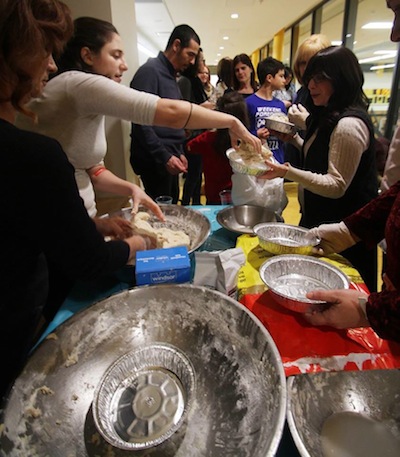
On the evening of Oct. 8, the Bayit and Chabad of Richmond hosted a Sukkot carnival called Shakes in the Shack. Scores of Richmond Jewish, and non-Jewish, community members came out and enjoyed the festivities.

Format ImagePosted on October 20, 2017October 19, 2017Author The BayitCategories Celebrating the HolidaysTags Bayit, Chabad of Richmond, Judaism, Sukkot

Climate a Jewish issue

The World Health Organization has labeled climate change “the greatest threat to global health of the 21st century.” As a physician, it is difficult to ignore such a dramatic statement.

Climate change is real. The sea levels are rising, temperatures are increasing, more violent storms are becoming the norm. As Canadians, we are seeing consequences of climate change even more than other countries. Last year, Fort McMurray in Alberta was almost destroyed by a massive forest fire. This year was the worst year in British Columbia’s history for forest fire damage. (While climate change is not the sole cause of these events, it is known to be a contributing factor.)

Our glaciers are shrinking, as anybody who has visited the Athabasca Glacier in the Rockies can confirm. Temperatures in the Yukon and Northwest Territories are rising faster than in most other parts of the world. Traditional indigenous life in the north is being made much more difficult by the shortening of winter and the melting of the permafrost.

Climate change is also a Jewish issue. When the environment is changing so dramatically that human lives and well-being are at stake, Jewish values tell us that we must take action.

Pikuach nefesh (the saving of a life) is a fundamental Jewish principle. Climate change is believed to share some responsibility for present-day wars and loss of life, including the conflict in Syria. The World Health Organization predicts that 250,000 people will die each year between 2030 and 2050 due to the effects of climate change. Is it not incumbent upon us as Jews to try to mitigate these effects in line with the pikuach nefesh principle?

Climate change is a complex issue. Many people find it too complicated and too overwhelming, such that they are paralyzed into inaction. So what we can do about it?

In line with Jewish practice, the first response should be educating ourselves about the issues. There are many articles and books about the subject. One of the most compelling authors for me is Bill McKibben. He has written a book called Eaarth (Henry Holt and Company, 2010) in which he describes how the earth is changing, such that it is becoming a new and unfamiliar place.

Fossil fuels are the main culprits. Weaning ourselves off coal, oil and natural gas is paramount. Substituting sources of renewable energy such as solar, wind, tidal and geothermal is crucial.

On a society level, we can try to prevent further construction of oil and gas pipelines, and further development of the LNG (liquified natural gas) industry in northeast British Columbia. We can elect members of the Legislative Assembly and of Parliament who share our concerns.

On a personal level, we can drive less, fly less, use hybrid or electric vehicles, and support public transportation. We can eat less meat, as the cattle industry is a major contributor to increased greenhouse gases. We can consume less, recycle more and compost more.

Everybody can do something to help mitigate the effects of climate change. Doing nothing is no longer an option.

I take inspiration from the talmudic Choni, otherwise known as the Circle-maker.

One day, Choni was walking on the road and saw a man planting a carob tree. Choni asked the man, “How long will it take for this tree to bear fruit?”

The man replied, “Seventy years.”

Choni then asked the man, “And do you think you will live another 70 years and eat the fruit of this tree?”

The man answered, “Perhaps not. However, when I was born into this world, I found many carob trees planted by my father and grandfather. Just as they planted trees for me, I am planting trees for my children and grandchildren so they will be able to eat the fruit of these trees.”

This week, as we are sitting in the sukkah, let us contemplate the fragility of our planet, and strive to make the earth a more secure place for our children and grandchildren.


Larry Barzelai is a Vancouver-based family physician, who has a special interest in geriatrics. He administers the annual Public Speaking Contest organized by the Jewish Federation of Greater Vancouver. He is a member of the board of CAPE (Canadian Association of Physicians for the Environment).

Posted on October 6, 2017October 5, 2017Author Larry BarzelaiCategories Op-EdTags climate change, environment, health, Judaism

Jewish routines help us cope

At 7 a.m., I came downstairs on a school morning and discovered that one of my 6-year-old twins was busy. He’d filled up a container with water so he could watch his expandable water toys grow – again. After the toys grow enormously in the water, we dump out the water. We let them dry and shrink and put them away for a month. This is a frequently repeated ritual in our house. Any good science experiment is one worth repeating, right?

Good teaching requires frequent repetition. Life, it seems, is also probably the best teacher. I’ve been thinking about how to cope with and learn from the repetition of the Jewish calendar as it applies to life’s ups and downs.

One of our dogs, Harry, has been very ill with lymphosarcoma. By the time you read this column, Harry, aged 13 and a half, may no longer be with us. For people who have animals, you know how hard this transition can be. Yes, there are all sorts of veterinary interventions for pets now, but this cycle of life and death can’t be avoided. Although, historically, some Jews have lived in cities, away from animals, Jews have also lived, worked and loved animals on farms, in villages, towns and cities. The Talmud teaches us that we must feed our animals before we eat. More generally, Jewish tradition teaches that we must treat animals humanely, and cannot allow an animal to suffer unnecessarily. (This applies even in kashrut, to animals we eat.)

Harry’s illness requires our kids to be careful. Our dog is very sore, and cries out sometimes at night, which wakes up the little boys. We’ve been slowly introducing the topic of dying at odd moments, when we sense our kids need to talk. Jewish tradition has supportive rituals for illness, death and burial. While these aren’t necessarily applicable to our bird dog, it’s a useful way of remembering that our tradition gives us help during times of illness, death, and in mourning.

The timing of all this has also hit my husband and me. When we pray to be inscribed in the Book of Life, both of us recall relatives who passed away around the time of the High Holidays in years past. If you keep track of the Jewish calendar (as well as the secular one), you may connect Jewish holidays with your personal history, such as associating, as I do, Kol Nidre with the death of a great-uncle, who was walking home from shul when it happened.

Tying our lives to the Jewish calendar and to these mourning rituals helps us connect to generations of Jews who came before us, who mourned people (and animals) and who made an effort to live with joy as best they could.

Recently, my husband and I became Canadian citizens. We juggled our citizenship ceremony with three trips to the vet in one day. At the ceremony, the official suggested we would always remember the date. Instead, I wondered if I could forget Harry’s medical needs while we were at the ceremony.

When we got home, we chose to celebrate becoming Canadian. Friends came over. They’d planned to meet our kids after school if we were late getting back from the ceremony, but we all gathered together instead. My husband got us a cake from Eva’s Gelato, and Marcello, one of the (Jewish Argentine) owners, insisted on a big cake – because our citizenship was a big thing! (Thank you, Eva’s!)

As Sukkot and Thanksgiving occur, we have this opportunity to reflect, with gratitude, on the amazing things we have. We can be thankful for plentiful harvests and food, for the opportunity to celebrate outside with our families and friends before winter hits, and for our good times, together.

Watching those silly toys expand in the water generated memories of other holidays and happy occasions. When we lived in Kentucky, we were fairly isolated and did not have many Jewish friends nearby. However, we mail-ordered a lulav and etrog, and we built our sukkah on a brick patio in our backyard.

Over the years, we had some big Sukkot dinner parties there. We lit candles, as it was dark in the sukkah, and we would eat a fancy meal with some (non-Jewish) friends to celebrate. Meanwhile, in the yard, just beyond the sukkah, the fancy table setting outside and the lights, I saw that our bird dogs, Harry (the setter mix) and Sally (the pointer mix), were doing every kind of rambunctious (and embarrassing) and loud dog play. Our guests were biology professors, like my husband. They laughed, making jokes about how to observe and understand dog behaviour, before returning to enjoying their meal and time outdoors. Harry the dog stopped roughhousing so he could chase crickets as they hopped about on the bricks.

We use ritual and holidays to mark time passing, and to observe our traditions in many ways. The Jewish calendar can help us embrace both the hard times and the sweet and memorable happy ones.

Harry the dog has been a laidback, playful, loving and opinionated part of our household, much like his movie namesake in When Harry Met Sally. I’m hoping to hold onto the dancing lights, those fall sukkot and the young, cricket-chasing dog. I’m remembering the frolicking while doing my utmost to ease the last days of an elderly, sick dog.

Chag Sukkot sameach.

Joanne Seiff writes regularly for CBC Manitoba and is a regular columnist for Winnipeg’s Jewish Post and News. She the author of the book, From the Outside In: Jewish Post Columns 2015-2016, a collection of essays available for digital download or as a paperback from Amazon. See more about her on joanneseiff.blogspot.com.

Posted on October 6, 2017October 5, 2017Author Joanne SeiffCategories Op-EdTags family, Judaism

Yiddishkeit – a story of love

Dear Yiddishkeit, I’m home! Did you miss me? Sorry I was away for so long. I got kind of lost in the desert. But I’m finally back, and living happily in … well, different places: at Ohel Ya’akov Community Kollel, at Chabad of Richmond and, recently, at the National Jewish Retreat in Palm Desert, Calif. (Not that other desert.)

I met your family, Chabad Lubavitch, about 13 years ago. They seemed authentic and sincere, and welcomed me warmly. I got the sense that they live what they preach: that every Jew is important and has a unique mission in life. This really resonates with me and makes me want to search for the mission that drives my life. Even though I’m not a Torah-observant Jew, your family treats me like one of their own. I don’t dress all that modestly, but I never feel judged by them. It’s funny, I grew up living a fairly secular life, yet I’ve never been more certain about where I belong, and that’s Chabad.

Oh, Yiddishkeit, I’ve admired you from afar for years. I know we haven’t always seen eye to eye on everything – you know, that Shabbos thing, the kosher thing. But there’s always been a chemistry between us. Even if it was unspoken. I have to admit, I’m enthralled; I want to know everything about you. Your likes and dislikes, your temperament, what you look for in a partner. I do know you’re a veritable buffet of fascinating facts and your family’s unabashed optimism and positivity inspires me beyond words. You and your family are smart, solid, attractive and respectful. How could I not love you?

So, how come we’ve played a game of “come here, go-away” most of my adult life? You were shy, yet inviting, all at once. And me? I was just non-committal. You never pushed me into anything though. You just waited me out until the time was right.

I remember in 1997 when one of your family – Rabbi Avraham Feigelstock – called me in the hospital when he found out I was very sick and had been there for 43 days. I’d never even met the man, and here he was calling me: “How are you feeling? Do you want a visit? Can I bring you anything? Let me give you my home and office phone numbers, in case you feel like talking.” I will always be grateful for that. I knew that there was more to this than mere friendliness.

After I recovered, I began going to weekly Friday night dinners and Saturday Shabbat services at the Kollel, where I met Rabbi Shmulik Yeshayahu. His Shabbat sermons jumpstarted something inside me that made me want to know you better. The Kollel is also where I met my bashert, Harvey. I owe you a lot, Yiddishkeit.

Until recently, I wasn’t even sure where I stood with you, Yiddishkeit. But now I know for a fact that I’m smitten. You swept me off my feet. And it only took 61 years! The turning point for me was last year at my retirement party, where another of your family members – Rabbi Yechiel Baitelman – gave a beautiful speech. He said: “Retirement doesn’t mean retiring from life. It means going on to do mitzvahs, and study and do good things.” This fanned the fire inside, and now I enjoy weekly Torah study classes at Chabad of Richmond and volunteer with the Light of Shabbat and Israel Connect programs. I have even attended the Jewish Learning Institute’s National Jewish Retreat. Twice! Rabbi Baitelman’s enthusiasm, encouragement and positivity are infectious.

But let me back up a bit. Early last year, I had a personal issue that was troubling me deeply and I needed someone to talk to. So, I asked Rabbi Baitelman if he could spare the time to speak with me. Long story short, we met at a Starbucks in Richmond and, for the next one-and-a-half hours, he looked directly at me and focused like I was the only person in the world who mattered. That, Yiddishkeit, made a huge impression on me. It reinforced everything I’d heard and read about Chabad – that they consider every Jew important and indispensable.

I once heard someone say, “We don’t choose Judaism. Judaism chooses us.” I am unspeakably honoured that you chose me, Yiddishkeit. I’m sure there are others much prettier, smarter and more devoted than I. Why me? You must have your reasons. Never mind.

All I know for certain is that you have given my life meaning and purpose. I’m more committed than ever to doing mitzvahs, studying Torah and learning about all things Jewish. What started as curiosity has blossomed into commitment. I regularly listen to Jewish scholars like rebbetzins Rivkah Slonim and Menucha Schochet and rabbis Moshe Bryski, Yitzchak Schochet, Y.Y. Jacobson, Mendel Kalmenson and others on Torah Café; and watch Rabbi Simon Jacobson’s videos from his Meaningful Life Centre. Books like The Secret of Chabad, Toward a Meaningful Life, My Rebbe, The 613 Mitzvot, The Empty Chair, The Rebbe’s Army, and books on davening, healing, Tanya, Shabbat and Jewish grieving have enriched my life unimaginably. One of the most life-changing events, though, was the National Jewish Retreat.

As I do more Jewish reading, I come across Yiddish and English adages that impress me with their profundity. It’s what I try to live by now. Check them out:

“Tracht gut, vet zein gut,” “Think good, and it will be good.” (Rebbe Menachem Mendel Schneerson of Lubavitch)

“Who is wise? One who learns from every man.” (Ben Zoma from Pirkei Avot, Ethics of the Fathers)

“Always remember: you are never given an obstacle you cannot overcome.” (Rebbe Nachman of Breslov)

“Gam zu l’tovah,” “This, too, is for good.” (Nahum Ish Gamzu)

My Jewish learning is like a prospector who shuffles the rocks around on his sieve, hoping to find gold. The more I infuse my life with Yiddishkeit, the more gold I find.

Let me declare, Yiddishkeit, in front of heaven and earth, that I commit, forever more, to being faithful, trusting and open to the love you give me. I promise not to squander or minimize it. I promise to hold you close and be there for you, like you are for me.

Fast forward. Hashem and I are now on a first name basis. We live together blissfully and share the chores. We hold each other up, and we’re true partners. I admire and adore you, Hashem. There is You and only You. Always.

Did I come to this love story overnight? Heck, no! It’s taken me decades of searching, questioning, losing and then finding myself. Yet, here I am – home. Where I’m meant to be.

My husband Harvey says there’s nothing quite as cloying as a convert. Even if it’s a Jewish-to-Jewish convert, like me. I’ve become a cheerleader for Yiddishkeit. Everything excites me, because it’s all so new. Learning to read Hebrew – let’s celebrate! Torah study class – break open the Manischewitz! Trying to keep Shabbat – woo-hoo!

I’m taking it all with baby steps. Nothing too drastic or radical, even though there are days I want nothing more than to totally immerse myself in Yiddishkeit. I’ve learned there’s no speeding up a process that has its own timetable. For now, lighting Shabbos candles, saying certain blessings, going to Torah classes and giving up certain foods is where I’m at.

At this point, I’ll slow dance with Yiddishkeit, keeping a respectful distance. And I won’t let anyone cut in. It’s just the two of us. The perfect shidduch!

Shelley Civkin recently retired as librarian and communications officer at Richmond Public Library. For 17 years, she wrote a weekly book review column for the Richmond Review, and currently writes a bi-weekly column about retirement for the Richmond News.

Posted on September 29, 2017September 28, 2017Author Shelley CivkinCategories Op-EdTags Chabad, Community Kollel, Judaism, Yiddishkeit
Mystery photo … Sept. 29/17

Mystery photo … Sept. 29/17

Beth Israel National Confab (clergy), 1975. (photo from JWB fonds, JMABC L.09862)

If you know someone in this photo, please help the JI fill the gaps of its predecessor’s (the Jewish Western Bulletin’s) collection at the Jewish Museum and Archives of B.C. by contacting [email protected] or 604-257-5199. To find out who has been identified in the photos, visit jewishmuseum.ca/blog.

Format ImagePosted on September 29, 2017September 28, 2017Author JI and JMABCCategories Mystery PhotoTags Beth Israel, history, JMABC, Judaism
Bar mitzvah is musical’s hook

Bar mitzvah is musical’s hook

Clockwise from the top: Jason Sakaki (Brett), Julia Mclean (Patrice), Graham Verchere (Evan), Julian Lokash (Archie), Emma Leblanc (ensemble) and Rachel Valentina (ensemble). (photo by Anita Alberto)

Jason Robert Brown’s 13: The Musical, a show that centres around the bar mitzvah of its young hero, Evan Goldman, will première in Vancouver on Sept. 28, presented by Bring On Tomorrow Co.

Concerned both with authenticity and sensitivity with regards to the show’s Jewish content, director Chris Adams invited Congregation Beth Israel Rabbi Adam Stein to meet with the cast and crew after a rehearsal Aug. 29. The Jewish Independent was invited to attend.

13 was the first-ever Broadway show to feature an all-teenage cast when it debuted in 2008. The cast of the local production is an accomplished team of professional young actors who have appeared on such networks as ABC, NBC, CBC, Disney and FX. They were dynamic, cheerful and attentive throughout Stein’s visit, laughing at his jokes and making a few of their own as well. The rabbi, who himself has a background in theatre, seemed right at home.

The musical follows 12-year-old Evan Goldman, a Jewish kid from New York who moves to a small town in Indiana after his parents’ divorce. A fish out of water, the story details his struggle to adapt to his new community and make friends, with a key plot point centring around him trying to get the cool kids to come to his bar mitzvah, and the rite of passage that results as Evan’s perspective matures.

Stein explained the meaning of the bar mitzvah ritual to the cast, saying that the passage into adult moral responsibility is at its core. He also described some of the details of the synagogue ceremony. In 13, Goldman is heard singing one line of his Haftarah and Stein explained its meaning and checked the trope in the script, which was correct.

The rabbi also explained the meaning of the tallit and tefillin the bar mitzvah boy would begin wearing, and advised the cast about how the tallitot in the show should be handled – for starters, don’t hold them by the tzitzit (fringes). They also discussed how to stage and choreograph the synagogue scene, and debated how to costume the actors who appear in a dancing rabbis scene. Stein helped the cast imagine the layout of a synagogue, and suggested that having all the rabbis look like Chassidim would be stereotyping.

13: The Musical was penned by young adult novelist Dan Elish with TV producer and writer Robert Horn. Starring as Evan is Graham Verchere, 15, whose recent credits include Theatre in the Raw’s The Raymur Mothers and Arts Club Theatre’s A Christmas Story. Graham is a regular on the FX series Fargo and will appear in ABC’s The Good Doctor, which premières Sept. 25.

The Bring On Tomorrow cast also includes Jewish community member Julian Lokash, who just had his own bar mitzvah 15 months ago. “I first heard about the play at my own bar mitzvah,” Julian told the Jewish Independent. “Friends of mine who were there are now in the cast for this production.”

Asked if he played an ambassadorial role as the only Jewish actor in the play, Julian said he wouldn’t quite say that, but he did feel called to a certain degree of leadership. “Everyone turned to me when they had a question,” he admitted.

Julian’s acting credits include Theatre Under the Stars’ Shrek, Oliver! and Beauty and the Beast; the lead role of James in Carousel Theatre for Young People’s James and the Giant Peach; and roles in Gateway Theatre’s Music Man and Famous Artists Ltd.’s Mrs. Claus’ Kitchen.

13 director Adams is joined by vocalist Monique Creber as musical director. The production company, Bring On Tomorrow Co., is a collective of artists founded in 2016. The group “aims to assemble the city’s brightest professional theatre talent with award-winning musical artists to mount productions monumental in scale, energy and sound.”

Asked why Bring On Tomorrow was inspired to produce this show, Adams told the JI that it was all based “around the kids.”

“We knew we had the talent out there to present this show,” he said. “We wanted to give these professionals an opportunity to be leads…. Often kids in this city play the ‘kids’ roles. Well, in 13, every role is made for kids. They have to step it up because there isn’t a cast of professional adults driving their own show. It really is a wonderful challenge and something that a lot of them don’t get to experience every day.”

13 runs Sept. 28-Oct. 1 and Oct. 4-8 at the Waterfront Theatre. For tickets and more information, visit bringontomorrowco.com.

Matthew Gindin is a freelance journalist, writer and lecturer. He writes regularly for the Forward and All That Is Interesting, and has been published in Religion Dispatches, Situate Magazine, Tikkun and elsewhere. He can be found on Medium and Twitter.

Format ImagePosted on September 22, 2017September 28, 2017Author Matthew GindinCategories Performing ArtsTags bar mitzah, Judaism, Julian Lokash, musical theatre
Long-overdue reunion

Long-overdue reunion

Left to right, Lilia Apelbaum, Olga Livshin and Tanya Kogan, during their reunion in Vancouver. (photo by Tanya Kogan)

For two weeks this August, my apartment was unusually crowded. Friends from Haifa and Los Angeles were staying with me. We talked almost nonstop the entire time they were here. While they have already left for their respective homes, the memory of their presence still lingers in my house, in the photographs and in my fond recollections.

In 1973, the three of us, three Jewish girls, high school graduates from different Moscow schools, lived in the Soviet Union. We met for the first time when we enrolled in the Moscow Institute of Economics and Statistics. For five student years, we were inseparable. We studied in the same groups and partied with the same friends but, after graduation in 1978, we parted ways. This year, 39 years later, the three of us met for the first time since then, at my place in Vancouver.

Many things have changed in our lives, of course, but, despite the grown-up children, deteriorating health and multiple wrinkles, all three of us have stayed basically the same: the same personalities, the same interpersonal dynamics, the same feeling of closeness as friends. And our relationship with our Jewishness also has stayed basically the same.

At the time of our youth, all observance of Jewish traditions in the Soviet Union was suppressed. Not banned, per se, but not encouraged. There was one synagogue in Moscow and, I have to admit, I never visited it. My parents tried to blend in with mainstream society, so they never visited it either. We didn’t celebrate Jewish holidays, and I didn’t even know about most of them. Only my grandfather went to synagogue on most Saturdays and some Jewish holidays. He tried to instil some sense of Jewish identity in our household (as he lived with us) but, unsupported by my parents, he was unsuccessful. I was never interested in anything Jewish when I was young.

The situation was a bit different with my two friends. Tanya Kogan (née Schneiderman) lived in a similar household to mine. Her parents’ one ardent desire was to blend in. Being “the same,” not sticking out, was safer in Communist Russia but, after her high school graduation, Tanya broke away from the “blend-in” mold.

“I wanted to know who I was,” she told me. She immersed herself not only in her academic studies at the institute but also in Jewish customs and traditions, to the extent they existed in Moscow of that time.

“I tried to learn Yiddish from my grandmother, even though she was ashamed to speak it. I went to synagogue for some Jewish holidays and, every year, for Simchat Torah. It’s such a fun holiday. Lots of students from our institute were there. Not many colleges and universities in Russia accepted Jewish students, but ours did, and there were many of us. We danced in the streets together,” she remembered. “I bought matzos every year and fasted on Yom Kippur.”

photo - Left to right, Tanya Kogan, Olga Livshin and Lilia Apelbaum – Class of 1978
Left to right, Tanya Kogan, Olga Livshin and Lilia Apelbaum – Class of 1978. (photo from Olga Livshin)

My other visiting friend, Lilia Apelbaum, was also part of the group of students that danced in the streets outside the Moscow synagogue on Simchat Torah. Her father came from a family where tradition was paramount.

“We bought matzos every year when I was a schoolgirl,” Lilia said. “We would travel on the Moscow Metro with the big packs of matzos wrapped in brown paper, to a seder in some relative’s home, and I would think: ‘I’m special. I’m better than all the people around me. I know something they don’t.’ I felt very proud.”

In 1996, Lilia, her parents and her young son immigrated to Israel. She still lives there, in Haifa.

“My father went to synagogue often when we lived in Moscow, but he stopped going after we immigrated,” said Lilia. “In Moscow, he needed it to prop his Jewish identity but, after we settled in Israel, he said he didn’t need it anymore. He felt Jewish and happy without the support of religion.”

Lilia herself doesn’t follow any Jewish tradition, doesn’t keep kosher and doesn’t attend synagogue, but she is still, as in her childhood, intensely proud to be a Jew and an Israeli. “I love Israel,” she said. “It’s a wonderful country, very humane.”

She told me a story about her neighbour and friend. “She is very sick. Once, we walked outside together, and she fell. Her legs wouldn’t support her and I couldn’t help her – she is a big woman, much bigger than myself. I panicked; didn’t know what to do. Suddenly, a couple cars passing along the street stopped. Totally unknown men climbed out of those cars, lifted her, helped her to a bench, and then drove away. Where else would a car stop just to help a strange woman on the sidewalk? Only in Israel.”

She talked about the urban improvements being undertaken in Haifa, about Israeli healthcare and technology, about her fellow Israelis, and her eyes shined with love for her country.

Tanya also left Russia. In 1996, she and her family immigrated to America and settled in Los Angeles. “I almost never go to a synagogue here,” she said. “But I do keep kosher. Mostly. In my own way. During Passover, we don’t eat bread. I make so many interesting dishes with matzos, my family always anticipates the holiday. They don’t want bread – they remember that torte and this pie for years after and always ask if I would make them again. It’s a game we play. It’s easy and fun to be a Jew in America.”

Like my friends, I left Russia, too, at about the same time. In 1994, I came to Vancouver. Unlike my friends, though, I didn’t get in touch with my Jewish roots right away. It took me some time to become a part of the Vancouver Jewish community. At first, I was busy with my computer programmer job, raising children as a single mother, and generally integrating into the Canadian society. But life has a wicked sense of humour. It pushed me toward my Jewishness in a roundabout way.

In 2002, I got very sick. My illness altered my worldview and induced me to change my priorities. In 2003, I started writing fiction. A few years later, I quit my computer job to dedicate myself fully to my writing career. At that time, I tried to find a writing gig. I took a course on a mentored job search, and one of the assignments was to find a mentor.

I scoured the internet for some Vancouver writing professional to approach, to ask to be my mentor, and came up with the name Katharine Hamer. At that time, she was the editor of the Jewish Independent, a newspaper I had never heard about before. I sent her an email and, to my amazement, she replied. She said she didn’t have time to mentor me, but she offered to add my name to the list of her newspaper contributors. I grabbed the opportunity.

My first article for the Jewish Independent was published 10 years ago, in July 2007. I write about Jewish artists and writers, teachers and musicians. I love my subjects, every one of them, but I have never written about myself before. This is the first time and my 301st article for the paper.

Three friends from Moscow, three Jewish women from around the world, spent a wonderful week together during their reunion in Vancouver. We are planning to meet again soon. We are not going to wait another 39 years.

Olga Livshin is a Vancouver freelance writer. She can be reached at [email protected].

Format ImagePosted on September 15, 2017September 14, 2017Author Olga LivshinCategories Op-EdTags immigration, Israel, Judaism, Russia, United States, Vancouver
Trying to foster community

Trying to foster community

Two things will immediately strike readers of From the Outside In: Jewish Post & News Columns, 2015-2016 by Joanne Seiff – Seiff’s knowledge of Judaism and her empathy. She really knows her Jewish texts, as well as a thing or two about human nature. Yet, she doesn’t criticize from on high. She’s right in there in the muck, so to speak, not just making suggestions for others to carry out, but trying to play a positive role herself in whatever transformations she thinks might engage more Jews in Judaism and in community. Her heart is in the right place, and it shows.

Readers of the Jewish Independent were introduced to Seiff’s writing earlier this year, thanks to the JPN’s Bernie Bellan, who thought her work might be a good fit for the JI as well. He was correct. Her columns mix Torah lessons, everyday life moments and community-building ideas seamlessly, in an uplifting manner that invites contemplation rather than merely prescribing answers. She is not dogmatic, but rather is struggling herself to see what works in her and her community’s life.

book cover - From the Outside InWhile Seiff writes about the Winnipeg Jewish community, pretty much every issue she brings up – from involving younger congregants in synagogue life to getting more out of the weekly Torah portion to countering antisemitism to making communal activities more inclusive – can be found in our community. No doubt other communities will also see themselves in Seiff’s writing. And each of us will see a bit of ourselves, how we define our identity and how we move in the world.

And though you might not know it from her casual writing style and humble approach, Seiff has the education to back up her commentary. She has a master’s degree in religious studies from the University of North Carolina at Chapel Hill and a master’s in education from the George Washington University; she earned her bachelor’s cum laude in Near Eastern studies and comparative literature from Cornell University. Even so, she doesn’t have all the answers, and she doesn’t pretend to. She calls on many sources, from Jewish traditions and writings, to rabbis who have visited her community with advice, to lessons she has learned from family (her parents and as a mother of twins), community members and others. She brings in her own experiences of living in places where there weren’t many Jews – Kentucky, for example – and that of being a relatively recent immigrant to Winnipeg. She and her husband moved to the city in 2009 and the title of her collection reflects this perspective. As she writes in the introduction, “As a newcomer to Canada, I often see things differently than someone who was born and raised in Winnipeg.”

There is a lightness and energy to Seiff’s writing, which makes the book easy to read, even though she’s tackling some heavy topics and, often, the lethargy of a well- and long-established communal structure. It takes a delicate touch to be constructively critical and not disrespectful to those who either helped set up or maintain the way things “always” have been done. Her solutions-oriented outlook and can-do attitude will inspire anyone who would like to see change but thinks that anything that’s well-established – from our identity, to our Jewish community, to our larger world – is immutable. We may not have a huge amount of control over most things in life, but there are ways in which we can make things better. For ideas of where to start, From the Outside In can be purchased online. To read more of her writing, visit joanneseiff.blogspot.ca.

Format ImagePosted on September 15, 2017September 14, 2017Author Cynthia RamsayCategories BooksTags community, Joanne Seiff, Judaism, Winnipeg

On making a new start

Why is it so hard for many of us to shake off the past and begin anew? My Bride often tells me she finds it amazing how easily I forgive myself for my errors. She holds her misgivings about past actions to her breast for eternity. For me, when I forgive myself, I find it much easier to strike off in another direction, one which may, or may not, lead to a better result.

Maybe it has something to do with my background. As an adherent to Judaism, I have always been much taken by the ideas associated with the Jewish New Year. Rosh Hashanah, occurring in the autumn, as determined by the lunar calendar, is one of our major holidays. It is a happy holiday, a time of feasting and family gatherings, celebrating that we managed to get safely through another year. And there are lots of wishes expressed that we might do the same again next year, even marking it in our spiritual birthplace, Jerusalem.

But there is a serious side to the holiday as well. The New Year will be followed closely by the Day of Atonement, Yom Kippur, when all Jews are assessed and judged as to what their fate will be in the year to come. So, the New Year is a time when all Jews are expected to examine their behaviours and make resolutions that, hopefully, will guide their actions more positively in the coming year.

To do so, one has to search one’s conscience, one has to admit to oneself all those things that we have done wrong, that only we know about. We have to admit to ourselves remorse for our actions that we know have not been correct in the light of our values. Then we have to decide that we will not do those things again. We have to forgive ourselves and resolve to do differently. Indeed, during this season, many individuals go out of their way to visit antagonists and others to whom they may have done wrong to beg pardon for any perceived excesses to which they may have been a party.

So, you can see that I come by my approach rightly. It was imbibed with my mother’s milk. Judaism is not unique in including this concept within its construct. It seems to be an important element within many religious and philosophical approaches as to how humans should live. The key thing to me is that we have to be able to forgive ourselves so that our contrition can motivate actions toward a new start.

I must admit I always feel refreshed when I am in the position of having cast off the constrictions imposed by ideas I have been forced to abandon. Ahead of me lie whole new worlds of possibilities. That old stuff didn’t work. What did I learn? Where can I go from here?

What about that idea that we discarded before as impractical, impossible? Could there be something in it? What about what Joe suggested, which we shouted down? Maybe we should ask him to explain it more fully. Could there be something in it that we missed? He has had good ideas before. What if we put that idea together with the one we had? Could that give us a better result? Anybody who has spent a part of his or her life confronting problems, and problem-solving, in concert with other people, will know that of which I speak.

Don’t we feel better after we have cleared the decks with an old adversary? Now maybe we can make a fresh start and work together to accomplish common goals that we share. Isn’t it great when the difference you have had with your spouse has been resolved and you have returned together to the zone of loving and sharing that you were in danger of losing? Isn’t that more important than things that may have divided you? Aren’t so many long-term relationships built by making new starts over and over again?

The Jewish New Year ethic is a part of how we can live our lives each day. Making a fresh start is what we can do every day we wake up. We all know there are things percolating on the back burner. We may not want to think about some of these things. We may push them off to the back of our minds because of their unpleasantness. But they don’t go away. They are the things we will have to tackle if we want to make a fresh start in some important area of our lives.

Max Roytenberg is a Vancouver-based poet, writer and blogger. His recently published Hero in My Own Eyes: Tripping a Life Fantastic is available from Amazon and other online booksellers.

Posted on September 15, 2017September 14, 2017Author Max RoytenbergCategories Celebrating the HolidaysTags forgiveness, Judaism, Rosh Hashanah, teshuvah
What kids can teach

What kids can teach

Rosh Hashanah is a time to take stock of the previous year and prepare yourself spiritually for the year ahead. But for those of us with busy families, it can be hard to squeeze time for reflection into the round of Yom Tov preparations. It seems that, once you have children, the holiday focus goes from attending shul to tending to your children and, as rewarding as parenting can be, it leaves little time for focusing on spiritual growth. Yet, one of our most important jobs as parents is to teach our children the concepts of teshuvah (repentance), tefilah (prayer) and tzedakah (charity/justice). How are you supposed to teach these values to your children when you may not have time to connect to them yourself?

Child education expert Moshe Beller has found that the answer lies within the very task at hand – by watching your children.

As director of Beit Metzudot School at Seeach Sod, an Israeli organization for kids and adults with special needs, Beller must often answer tough questions about how to teach children these important values. His answer – emunah (faith/belief) – in them, yourself and, ultimately, in Hashem.

“Here at Seeach Sod, we work with children of all ages and abilities. When we approach educating a child, we look at every detail, from the diagnosis, available therapies and interventions, family circumstances and more. Then we calculate it all to find a solution that best serves the individual child. Though I cannot tell you one therapy that works for every situation, I can say that, at the core of every treatment, is believing that your child can succeed – there is no greater intervention than that!”

Sounds good, but how can we tap into that elusive ideal? If you haven’t guessed it already, it’s our children who can teach us that as well.

Children have a profound ability to trust their parents to lead them. Even if they don’t always follow what you say, they trust you with their life essentials. They trust you will keep them safe, fed, clothed, etc. This level of emunah is one we should allow ourselves to tap into when it comes to grappling with G-d. Mirror what your child displays regularly – let go of the worries that hold you back and know that everything is being taken care of for your benefit.

As for teshuvah, an essential element of teshuvah is believing you can start anew, that you can learn from your mistakes without your ego holding you back. Children display this to us with their ability to live in the moment. They don’t condemn their past actions or the past actions of others like adults do. They’re excited to learn and grow without fear of admitting they don’t know it all.

With respect to tefilah, a key to heartful prayer is awe. A sense of G-d’s greatness and the miracles that surround us each day opens possibilities to so much more. Children have the ability to be wowed by things we take for granted. As adults, we become jaded and forget that the simple pleasures surrounding us are in fact miraculous. Learn from your children and find wonder in the simple creations.

Finally, tzedakah. Have you ever seen how a child lights up when you tell them you need their help? At the core of generosity is the understanding that, no matter what your financial situation is, we all have something we can offer to another. Children take much pride in being able to help, whether or not being of genuine assistance is within their capabilities. We, too, can take the same joy in giving tzedakah and doing acts of chesed (loving-kindness).

This year, instead of seeing your children as a distraction from the path to spiritual preparation for the High Holidays, look to them to guide you towards a year of growth.


Format ImagePosted on September 15, 2017September 28, 2017Author IMP Group Ltd.Categories Celebrating the HolidaysTags children, High Holidays, Israel, Judaism

Posts pagination

Previous page Page 1 … Page 54 Page 55 Page 56 … Page 67 Next page
Proudly powered by WordPress