JNF gala features comic Gold

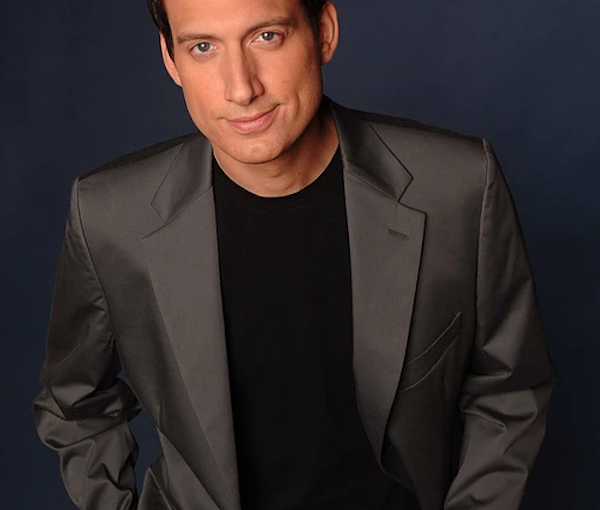
Elon Gold performs in Vancouver on April 14 at the JNF Negev Gala. (photo from elongold.com)

Comedian Elon Gold loves doing charity events, especially Jewish ones. The Independent caught him for a phone interview as he was on the road – with his family – to Las Vegas from Los Angeles to do gigs for the Adelson Education Campus and then the Israeli-American Coalition. On April 14, he will be in Vancouver to co-headline, with Ambassador Ron Prosor, the Jewish National Fund, Pacific Region, Negev Gala. The event raises funds for Sderot Animal-Assisted Therapy Centre.

“I feel like I’m doing a mitzvah by making my people laugh. And I’m also helping this cause that’s really important, and Israel is really important to me,” said Gold. “And we’re living in a highly antisemitic time, it’s dark out there, so anything I can do to bring light into our world and make my fellow Jew happy, I’m there for it.”

Gold’s resumé is impressive. He starred in the television series Stacked and In-Laws, had a recurring role on Bones and on The Dana Carvey Show. He guest starred just recently on HBO’s Crashing and, longer ago, on shows including Frasier and The Mentalist. He has appeared in films, his one-hour Netflix special, Elon Gold: Chosen and Taken, is available on Amazon and his show Elon Gold: Pro-Semite premièred at the Montreal Comedy Festival. He has made multiple appearances on The Tonight Show and his July 2018 segment on The Late Late Show With James Corden – how, like everyone else, Jews love sex, money and food, but just in a different order – has been watched and shared by countless people on the internet, as has his routine on why Jews shouldn’t have Christmas trees and so many others.

Despite all of his accomplishments and his years in the business, Gold still gets excited about his work, and he shared what he described as a “wow” moment, one of the best days of his life, almost immediately when talking with the JI.

“Yesterday,” he said, “I was filming a scene of Curb Your Enthusiasm with Larry David…. It was really, truly a dream come true.”

But Gold didn’t take his being hired by David as a sign that he had “made it.”

“The truth is, I have been a guy with lucky breaks and hard breaks for the last 20 years,” said Gold. “This is another achievement, and one that’s beyond anything I would dream of…. I’m gratified in the sense that I finally feel like I’m in a place, not where I’ve made it, but where I actually have fans, and my clips are viral and people are sharing my bits on Facebook, WhatsApp or whatever. I did the James Corden show and, again, that doesn’t mean I’ve arrived … but what’s cool to me is that I did that set and then everyone’s sharing it, especially Jews. My biggest fans are my people.”

It’s been a 25-year journey, said Gold of his career, “with all sorts of great highs, like yesterday, and huge lows, like having a sitcom that you pitched and created and started get canceled. There are so many lows, and then there is the daily rejection that is show business. And that’s why I’m so glad I’m a comedian and an actor. I get rejected all day in Hollywood at auditions, but then, at night, I’ll go to the Laugh Factory comedy club and I’ll have 300 people roaring, and that will validate [me] – I knew they were wrong! I knew I could do this. See, I’m funny. These people think so, at least.”

Gold said his resilience, his ability to keep trying, likely comes from stand-up. “Because stand-up is all about bombing and killing, and the killing is so worth it that even the terrible, dejected feeling of bombing [is manageable].”

As far as his career, he said, “I have no other choice. I don’t love doing anything else and I’m not good at anything else.”

Known for his impressions, he said, “I used to impersonate my teachers in eighth grade.” His goal wasn’t to ridicule people, he said, but to make even the teachers laugh.

He enjoyed making people laugh, and writing comedy. One of the first things he wrote, he said, was a Purim shpiel. “And I’ll never forget the feeling of having the entire high school laughing, and thinking, there has never been anything more gratifying than what I just did, I want to do this more. Everybody says it’s like a drug…. It’s so addictive. Once you get a taste of it, that’s it, you’re hooked. And very little can discourage a comedian [so much that they get] out of comedy; certainly not a bad set, because we all know that we all have them.”

A combination of things drives him.

“It’s probably disingenuous to say that I do this because I love to make others laugh,” he admitted. There is a selfish aspect to it, he said. While making people happy is a “key component” of why he does comedy, he said, “I also love everything about it… I love the process of having an observation and then writing it and tinkering with it and working on it. I love doing it and I love the fact that I have so much freedom in my days because I don’t have that nine-to-five job most people have…. I’m always working. At the same time, I’m always on vacation.”

Gold loves getting the laughs, and said that’s probably 70% of the reason he does comedy; the other 30% is making people happy.

“There is so much misery in the world,” he said, “to make people happy is a great thing, but it’s only a part of it.”

On the acting side, Gold said his favourite kind of acting is for sitcoms “with a live studio audience because you’re still getting the laugh but now you’re not looking at the audience and talking to them, you’re looking at your fellow actor … and, peripherally, you hear and see these people cracking up.”

Ultimately, he said, “I just love performing.”

The only “grueling part,” he said, is the memorizing “and the pressure of 200 people staring at you, saying, ‘You better know your lines, pal, because we’re all here and we all want to go home…. Acting is challenging, but it’s also just fun…. It’s fun to get into a character and just play.”

Gold, who is from the Bronx originally, recalled his first open-mic night at the Comic Strip Live in Manhattan; he was 16 years old. “Fortunately, I had beginner’s luck because I was doing impressions – my early act was all impressions – and impressions are like magic tricks, they just wow the audience.”

Despite being a touring comedian by university (he got a bachelor’s in economics at Boston U), it took years, he said, to develop his own voice, to figure out what he wanted to talk about and how to talk about it.

“I’m obsessed with Jewish stuff because I live such a Jewish life,” he said. “I’m an observant Jew, I keep Shabbos and all that stuff, keep kosher. So much of my life is in the Jewish world, I can’t help myself but to come up with observations about our traditions, our holidays, our rituals. A lot of what I talk about is what I live…. The other part of my life is being married, being a dad, so I talk about that.”

Gold and his wife, Sasha, have four kids, two sons and two daughters, ranging in age from 9 to 18. The couple is coming up to their 25th anniversary in June.

As he stopped to fill up his car with gas on the way to Vegas, he told the JI about why he likes performing at Jewish events, while simultaneously directing his kids to be quick about heading into the gas station, as they were running late.

“There are not a lot of comedians out there that will go that deep into the Jewish experience and, for me, there are not a lot of audiences I can share my Jewish experiences with,” he said. “I can’t do lulav and etrog jokes on James Corden…. At the same time, we’re raising money, we’re raising awareness for incredible organizations…. It’s all win-win for me – I’m raising money, I’m making money, I’m getting laughs, I’m getting to do material I don’t do anywhere else…. And I love Jewish audiences; I love connecting on more than just a human level…. We’re connecting about a shared experience that is almost indescribable to anyone else.”

For tickets to the JNF Pacific Region evening event on April 14, which will be held at Schara Tzedeck, call 604-257-5155.

JNF Canada explains position

On behalf of JNF Canada (JNF), I wish to respond to allegations made by Independent Jewish Voices Canada, longstanding opponents of JNF Canada, as well as the opinion piece you published [“Tax troubles start year,” Jewish Independent, Jan. 11].

With regard to the substantive issues that have been raised about our projects in Israel we wish to reiterate our position.

• JNF has in the past carried out projects mainly of a charitable nature, such as parks, playgrounds and recreational facilities on land owned by the Israel Defence Forces. Our charitable funds never flowed to the IDF. The charitable funds were directed toward the hiring of indigent labourers to construct these projects. These expenditures represent under one percent of our expenditures over the past decade.

In your coverage, you suggest that we took action based upon an alert from the CRA. This, in fact, is not the case. Rather, it was our legal counsel who advised us several years ago that the indirect association with the IDF may be misconstrued or criticized by the CRA, so we ended our participation at that time. We have not for several years carried out projects located on IDF land, and we continue to operate in accordance with CRA regulations governing our status as a charitable organization. We stopped these projects on the advice of counsel well before this issue was brought to the public’s attention by a group trying to sensationalize it.

• With regard to projects located in disputed territory, JNF is committed to continuing to work with CRA to ensure we are in full compliance.

• Finally, in terms of governance and reporting, JNF operates in compliance with the Canada Income Tax Act. We have Israeli staff on site to direct our projects in Israel and regularly report on our activities.

Thank you for highlighting our work and for acknowledging that “Israel is Israel, is large part, thanks to JNF.” We take pride in having supported the building of water reservoirs, collaborated with dozens of educational institutions, built numerous recreational/educational facilities, planted millions of trees and supported pioneering research in green technology. Key projects for this year include supporting a trauma centre in Sderot, a project to feed Israel’s hungry, the rehabilitation of the Be’eri and Kissufim forests, and more.

JNF’s management and lay leadership are committed to improving our operations. For the past number of years, we have been making changes to strengthen our governance and controls. What will not change, however, is our commitment to helping build the foundations of Israel’s future. We will always stand shoulder to shoulder with the people of Israel to benefit the social service and environmental fabric of the state of Israel.

Lance Davis is chief executive officer of Jewish National Fund Canada.

NDPer sponsors anti-JNF bid

Ayalon Canada Park in the Ayalon Valley is one of the projects JNF supports. (photo by Guy Asiag, KKL-JNF photo archive)

A member of Parliament has agreed to sponsor an e-petition that calls on the government to revoke the charitable status of the Jewish National Fund of Canada (JNF).

This is the first time an MP has lent support to an effort to rescind JNF’s tax-exempt charitable status in Canada and marks the latest development in a long-running battle by those opposed to the JNF’s charitable status.

Quebec NDP MP and national revenue critic Pierre-Luc Dusseault has agreed to sponsor petition E-1999, which, as of this writing [Jan. 21], had garnered more than 1,400 signatures. It went online on Jan. 9 and will close for signatures on May 9.

E-petitions are an official system whereby petitions that are sponsored by an MP and receive 500 signatures will be tabled in the House of Commons. The government must then respond within 45 days.

It was submitted by Independent Jewish Voices of Canada (IJV), which is considered an outlier within the Jewish community, due to its support for the boycott, divestment and sanctions movement against Israel.

On its website, IJV calls itself “a grassroots organization grounded in Jewish tradition that opposes all forms of racism and advocates for justice and peace for all in Israel-Palestine.”

The JNF was recently the subject of a scathing story by the CBC, which reported that the charity was under a Canada Revenue Agency audit for using charitable donations to build infrastructure for the Israel Defence Forces, “in violation of Canada’s tax rules.”

The JNF responded by saying that it stopped funding projects on Israeli military bases in 2016 and that the projects only “indirectly” involved the IDF, because they were for children and youth on land owned by the IDF.

In a subsequent interview with the CJN, JNF Canada’s chief executive officer, Lance Davis, said the charity is working with the CRA on its review and issued staunch defences of JNF’s financial transparency and donor accountability.

The e-petition, which is addressed to the minister of national revenue, says JNF Canada “engages in discriminatory practices, as its landholdings are chartered for exclusively Jewish ownership, lease and benefit, as noted by the United Nations, the U.S. State Department, a former attorney general of Israel and the JNF itself.”

It says evidence “strongly indicates” that JNF Canada violates the Income Tax Act, common law and Canada Revenue Agency policy over its IDF-related projects.

As well, it claims the charity violates Canadian and international law “by enabling physical changes within occupied territory, thereby helping Israel effectively annex land within occupied territory, and, in the case of east Jerusalem, deepen control over land already annexed illegally.”

“Notably,” it adds, “the JNF Canada-funded Canada Park was built on the lands of three Palestinian villages destroyed following the 1967 war in direct violation of the Fourth Geneva Convention.”

It also accuses JNF Canada materials of depicting “occupied territory as part of Israel, a representation that runs contrary to Canadian foreign policy and international law.”

It calls on the minister of national revenue to revoke JNF’s charitable status, if the charity is found to violate the Income Tax Act, or CRA guidelines and policies.

It was initiated by Rabbi David Mivasair, a longtime IJV activist now based in Hamilton, Ont. He called the e-petition “part of an ongoing process” to hold public officials accountable.

“It’s incontrovertibly factual that JNF Canada is in violation of Canada’s tax laws,” Mivasair claimed. “It has been for decades. It’s been reported for decades.”

This latest campaign “is not something that I take any pleasure in doing, but feel is morally necessary to be done,” he added.

According to guidelines for MPs, no debate is permitted when a member presents a petition. An MP “may make a brief factual statement (referring to the petition being duly certified, to its source, to the subject matter of the petition and its request, and to the number of signatures it carries), but members are not allowed to read petitions nor are they to indicate their agreement or disagreement with them.”

In 2017, IJV submitted an 85-page complaint about JNF Canada to the CRA and the national revenue minister. That followed many other campaigns designed to pressure federal officials.

This is the first time IJV has submitted a parliamentary petition and it’s “just one way of drawing public attention to this,” said the group’s national coordinator, Corey Balsam. “We’re assuming [officials] will look into it and not much more than that. [But] it’s definitely a big step for our campaign.”

He said Dusseault is “not someone who’s very engaged [in the issue], but he heard the concerns and saw the evidence.”

Dusseault did not reply to the CJN’s requests for comment.

In a statement posted to its website, JNF called the e-petition “as empty and scurrilous as earlier efforts to delegitimize the outstanding work of the JNF and, by extension, the existence of the state of Israel.”

JNF said its outreach suggests “that those who are applying any degree of critical thinking see the petition for what it is and are dismissing it as not worthy of engagement.”

For Jewish National Fund of Canada’s response to the Jan. 11 Jewish Independent editorial, click here.

Tax troubles start year

In a perfect world, no country would need a military. Countries and people would live in peace; the kingdom of heaven, as promised by almost every religion, at last realized.

As ideal as that wish might be for the first editorial of a new secular year, it remains true that countries need militaries. Places like Canada, which have not been forced to wage war on home turf in 205 years, nevertheless maintain a military, with our soldiers serving various roles around the globe.

In Israel, on the other hand, the military is the one thing standing between the country’s citizens and oblivion. Like the militaries of every country, the Israel Defence Forces protects the country’s borders and citizens from external and internal threats. More controversially, as a result of Israel’s complicated history, the IDF also controls parts of the West Bank under a military rule that is the cause of much international criticism.

Some of this criticism comes from Canada, including from a Palestinian-Canadian, Ismail Zayid, who has been complaining for years to the Canada Revenue Agency (CRA) over his assertions that the Jewish National Fund of Canada has been in contravention of Canadian tax law for providing material support to the IDF.

Well, it’s more than assertions, actually. In stories splashed across Canadian media last weekend, there is plenty of evidence that JNF Canada was, until 2016, openly fundraising for projects that support infrastructure projects on Israeli army, air and naval bases. These include a “new planned IDF Training Base City in the Negev,” “helping the development of the Bat Galim training base complex area” and new mess hall-type facilities at two air bases. Funds raised at Edmonton’s Negev Dinner in 2014 were explicitly and openly allocated to developing parts of the largest military training facility in Israel.

In October 2017, according to the CBC, Zayid filed another complaint to CRA “in concert with an Ottawa professor, a Vancouver rabbi and a retired nurse.” The complaint is that JNF was ignoring rules that forbid Canadian charities from issuing tax receipts for contributions that go toward foreign militaries. CRA would not confirm details of the investigation to the CBC and JNF said only that they are engaged in confidential negotiations with CRA.

There is nothing stopping any Canadian from sending a cheque to Israel’s Ministry of Defence, news reports noted, but rules forbid doing so via a charity that provides tax receipts for it. This is admirable policy. Even if some Canadians would be perfectly happy seeing our tax policy support the IDF, would we be as pleased to see tax receipts issued for funds directed to the militaries of other countries with whom we don’t have as good a relationship?

Whatever one thinks about the morality of the IDF or its presence in the West Bank, the JNF appears to have made a naive or foolish mistake – not once but apparently about a dozen times. The head of JNF Canada said they stopped funding IDF projects after CRA alerted them to the issue in 2016. But how could an organization of this calibre have done so for so long, especially when it knew there were a series of complaints being lodged regularly around this very topic?

Since 1948, countless Jewish Canadians have supported Israel, including its military, in myriad ways. For four generations, young Jewish Canadians have enlisted, even in times of war, to serve in the IDF. Canadians of all ages have volunteered in the various roles the IDF offers to overseas friends of Israel. Most Jewish Canadians recognize the life-and-death necessity of a strong Israel, supported by a strong IDF.

The Jewish National Fund is the reason Israel is the only country on the planet that ended the 20th century with more trees than when the century started. Beyond reforestation, the number of extraordinary initiatives JNF carries out all over Israel makes it an integral part of the Zionist project. Israel is Israel, in large part, thanks to JNF.

Because of JNF’s critical importance, Canadian supporters must be confident that our support is going to an organization that is transparent and scrupulously adhering to relevant regulations. To ensure that the irreplaceable work the JNF does in Israel does not waver, JNF Canada must ensure that Canadians trust the decisions and leadership of the national organization.

קרן קיימת קנדה הפסיקה לתמוך בפרוייקטים צבאיים בישראל לאור חקירה של רשות המס הקנדי

(jnf.ca)

קרן הקיימת בקנדה הפסיקה להעביר תרומות לפרוייקטים צבאיים בישראל לאור חקירה מתמשכת של רשות המיסוי הקנדית (סי.אר.איי). זאת עלי פי תחקיר של רשת השידור הטלוויזיה של קנדה (הסי.בי.סי).

רשות המיסוי הקנדית בודקת מזה מספר שנים את פעילותה של קרן קיימת קנדה, לאור מידע שהתקבל לידיה כי הארגון עבר על כללי המס הקנדי למתן תרומות מצד קרנות צדקה. קרן קיימת קנדה כך התברר תרמה כספים לפרוייקטים הקשורים לצה”ל בניגוד לכללי המס בקנדה. במקרה כזה קרן קיימת קנדה לא זכאית לפטור במס, וכן גם התורמים שלה עצמם לא זכאים לפטורים במס.

יש לציין כי קרן קייימת קנדה לא העבירה תרומות לרכישת ציוד צבאי לצה”ל, אלה תמכה בעיקר פרוייקטים ותשתיות צבאיות, לשיפור הביטחון וחיי הקהילה של החיילים במדים ובני משפחותיהם, אך לפי חוקי המיסוי בקנדה גם זה אסור. מנכ”ל קרן קיימת קנדה לאנס דיוויס לא ענה על בקשתי באמצעות אימייל, לקבל את תגובתו בנושא המדובר.

דיוויס כן הודיע לכתב חדשות של רשת השידור הקנדית כי קרן קיימת קנדה הודיעה לתורמיה, כי היא הפסיקה לתמוך בפרוייקטים צבאיים בישראל כבר לפני כשנתיים. זאת, לאחר שהתברר לארגון כי הוא נמצא תחת ביקורת של רשות המיסוי הקנדית.

לפי מסמכים ופרסומים רבים של קרן קיימת קנדה, הארגון תמך לאורך השנים בפרוייקטים רבים הקשורים בצה”ל וחייליו. ובהם: פיתוח של בסיס הדרכה בנגב. פיתוח של כיתות לימוד, אולם אירועים וחדר הקרנות בסיס של חיל הים בבת גלים. שיפוץ והרחבת אולם אירועים ומועדון לחיילים בבסיסי חיל האוויר בפלמחים ונבטים. הקמת מגרש משחקים עבור ילדים (שמתגוררים עם בני משפחותיהם) בבסיס חצרים של חיל האוויר. שידרוג מרכז מבקרים, שיפוץ הכיכר המרכזית והמרכז ארצי לאימונים בבסיס צאלים. הקמת מתקני נוחות לחיילים בשדה תל נוף של חיל האוויר. עזרה בהקמת כביש ביטחוני בקדש ברנע (ליד הגבול המצרי) לשיפור הנגישות לכוחות הביטחון של ישראל. עבודות לשיפור כבישים ביטחוניים של כוחות הביטחון באזורי הגבול בנגב המערבי. בניית נקודות מפגש ירוקות בבסיסים צבאיים לאפשר לחיילים לראות את בני משפחתם בנוחות. וכן עזרה ותמיכה בצעירים בבתי הספר התיכוניים במסגרת הכשרתם הקדם צבאית (פרוייקט גדנ”ע).

עוד מתברר שקרן קיימת קנדה תמכה אף בפרוייקטים ששנמצאים מעבר לקו הירוק. ממשלת קנדה מתנגדת לבנייה ישראלית של התנחלויות כשטחים הכבושים לדבריה, שהן הפרה של אמנת ג’נבה הרביעית. עוד קובעת ממשלת קנדה כי: “ההתנחלויות הישראליות בשטחים הן המכשלון חמור להשגת שלום כולל, צודק ובר קיימא”. בית המשפט בקנדה קבע כי ארגוני צדקה קנדיים לא יכולים לפעול בניגוד למדיניות הציבור.

בין פרוייקטים בשטחים שמעבר לקו הירוק שקרן קיימת קנדה תמכה בהם: פיתוח החפירות הארכיאולוגיות של האולם המרכזי במנהרות הכותל בירושלים, העברה של תרומות לפני כארבע שנים לרכישת כלים להכנת הקרקע לבניית מאחז בגבעת עוז, שהוגדר אפילו על ידי ממשלת ישראל כבלתי חוקי. ופיתוח הפרוייקט הגדול ביותר של הארגון הקנדי בישראל – פארק קנדה ליד לטרון. רופא קנדי (בפנסיה) שנולד באחד הכפרים הפלסטינים עליו נבנה פארק קנדה, התלוננן פני רשות המיסים הקנדית על תרומות של קרן קיימת קנדה לפרוייקט.

יצויין כי במאי לפני כשנתיים ביקרה בישראל משלחת של קרן קיימת קנדה, ברשות דיוויס. חברי המשלחת ביקרו בין היתר בבסיס צה”ל בצהלים ובבסיס משמר הגבול במכמש, שאליהם הועברו תרומות מהארגון.

Negev Dinner helps Israeli children

Left to right: Ilan Pilo, Michelle Pollock, Dr. Neil Pollock, Wendy Eidinger Spatzner and David Goldman. (photo by Robert Albanese)

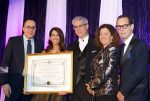
Vancouver supporters of the Jewish National Fund (JNF) gathered in their finery at the Four Seasons Hotel Vancouver on June 3 to celebrate Israel’s 70th birthday and pay tribute to philanthropists Neil and Michelle Pollock.

Michelle Pollock is a former lawyer, the immediate past president of the board of the Jewish Community Centre of Greater Vancouver, and has co-chaired the Jewish Federation of Greater Vancouver annual campaign’s women’s division for six years, as well as supporting Jewish education, among many other causes. Dr. Neil Pollock is chief surgeon and medical director of Pollock Clinics. He has undertaken teaching missions to Rwanda, Congo and Haiti, as well as being involved in philanthropy at home and abroad.

photo - Bernice Carmeli, dinner co-chair, with Ilan Pilo, David Goldman and Ilene-Jo Bellas
Bernice Carmeli, dinner co-chair, with Ilan Pilo, David Goldman and Ilene-Jo Bellas. (photo by Robert Albanese)

JNF Pacific Region president David Goldman welcomed the crowd – who had to pass a few dozen protesters on their way into the hotel – and introduced the evening’s emcee, Michael Nemirow, a friend of the Pollocks, who is also involved in various community organizations and activities. “I’ve done the math, and we have around 11 hours of speeches and entertainment for you this evening, but we’ll try to compress it into three,” Nemirow said, eliciting laughter from the crowd.

After Maurice Moses led the audience in O Canada and Hatikvah, B.C. Lt.-Gov. Janet Austin took the stage. She praised JNF for its work in the “restoration and preservation of the Jewish homeland,” which covers everything from ecological to social to security initiatives. Austin also commented about the Pollocks, highlighting Neil Pollock’s work in Rwanda to prevent the spread of HIV.

Galit Baram, consul general of Israel for Toronto and Western Canada, focused her remarks on the 70th anniversary of Israel, “the only democracy in our region, a bastion of democracy.” She described its strengths in the areas of human rights, medicine, multiculturalism and technological innovation. She said Israel is led by people “both on the right and on the left who love their country with all their hearts” in the face of multiple existential threats. “We rely on our friends who share common values, and Canada, our ally, is among them,” she said.

photo - Honourary chairs Jodi and Alex Cristall
Honourary chairs Jodi and Alex Cristall. (photo by Robert Albanese)

“The success of Israel did not happen in a vacuum,” said Baram, citing JNF as a key organization in supporting the state, one in whose name every Israeli has a tree planted. She also spoke of JNF’s contributions in a multitude of activities, including supporting soldiers with post-traumatic stress disorder and her “personal favourite,” the building of a protected playground in Sderot in an area that has suffered shelling from Hamas and other militant groups. Baram thanked Canadians for the warm welcome and open arms with which Israeli diplomats are welcomed in the country.

After Hamotzi, chanted by the Kollel’s Rabbi Avraham Feigelstock, Ilene-Jo Bellas, former president of the JNF Pacific Region (2012-2015), was presented with the JNF Bloomfield Award by local shaliach Ilan Pilo. He described Bellas as an indefatigable servant for Israel who “bled blue and white,” a portrayal she affirmed as fact after taking the podium.

The video on the work of the JNF was introduced by JNF Canada president Wendy Eidinger Spatzner, who explained that the First Zionist Congress established a fund to purchase land in Israel and that this fund became JNF. She talked about JNF’s extensive work to “build the infrastructure of Israel,” noting that it affects the daily lives of “pretty much every Israeli citizen.”

photo - Honourary chairs Jodi and Alex Cristall
Honourary chairs Jodi and Alex Cristall. (photo by Robert Albanese)

Rabbi Dan Moskovitz then led everyone in Birkat Hamazon, before Vancouver TheatreSports performed a series of improv skits centred on the Pollocks’ life as a married couple.

The keynote speaker of the dinner was Doron Almog, a former major general in the Israel Defence Forces, who received the Israel Prize for lifetime of achievement. He discussed his role as founder of ALEH, the charity for children with developmental disabilities that the Pollocks chose to support with monies raised from the evening.

Almog spoke on the theme of commitment, as experienced throughout his life and in the work he has done for children. He shared the story of the death of his brother, a tank operator who died after being injured, left behind by his fellow IDF soldiers. Almog subsequently swore to never leave behind an injured soldier.

Almog’s son Eran, who was named after his fallen uncle, was born with a combination of autism and developmental problems, and a psychiatrist told the family that he would probably never speak, remaining at the cognitive age of an infant. “This son became the greatest teacher of my life, he taught me more than anyone about life, about commitment,” said Almog.

After his son died, Almog went to see how children like Eran are treated “in the only Jewish state in the world.” What he saw horrified him: “The first thing you saw is the stink; distorted, terrified faces; shameful things. What the hell are these places, why are they being punished more?”

photo - Keynote speaker Maj. Gen. (Res.) Doron Almog, founder of ALEH, right, with local businessman and philanthropist Gary Segal
Keynote speaker Maj. Gen. (Res.) Doron Almog, founder of ALEH, right, with local businessman and philanthropist Gary Segal. (photo by Robert Albanese)

Almog discovered that such children were objects of shame in Israeli society. Golda Meir, prime minister of Israel from 1969 to 1974, had a granddaughter with Down syndrome who, as an adult, gave interviews to the press, said Almog. In these interviews, he continued, “she said, ‘Golda never visited me, Golda never loved me, Golda told my mom, “Never mention the prime minister of Israel having a retarded granddaughter.”’ Yigal Alon [deputy prime minister of Israel, 1968-1979] had a beautiful child who, at age 5, was taken away from the kibbutz she was born in and sent away to Scotland and he never spoke about her. And inside me I heard my son screaming, ‘My dear father, I will never complain to the media, you can send me away to Scotland and never speak of me, but, if you do that, you do not deserve even the title of “father” or even the title of human. I am the ultimate test of commitment,’ he said to me, the echo box of your bleeding brother.”

After Almog left the military, he established the village of ALEH, “a paradise where the children can have a full life. We broke the walls of stigma and shame and stereotypes.”

ALEH Jerusalem, a multi-service home for children with disabilities, now receives help from more than 450 volunteers from all over the world. Some of them, said Almog, are children of Nazis, who say they are coming as atonement for Hitler’s decision to kill people with disabilities. “The social chain is always measured by its weakest link,” said Almog, receiving a standing ovation.

After a video explaining more about ALEH, there was a video tribute to the Pollocks introduced by their children, Josh, Elliot and Shoshana. The Pollocks said a few words, after which Goldman and Pilo wound up the celebration.

Matthew Gindin is a freelance journalist, writer and lecturer. He is Pacific correspondent for the CJN, writes regularly for the Forward, Tricycle and the Wisdom Daily, and has been published in Sojourners, Religion Dispatches and elsewhere. He can be found on Medium and Twitter.

IDF colonel visits Vancouver

Left to right: Ilan Pilo, Jewish National Fund, Pacific Region; Col. Adam Susman, Israel Defence Forces defence attaché to Canada; and Rabbi Shmulik Yeshayahu of the Ohel Yaakov Community Kollel. (photo from Community Kollel)

While acknowledging that the situation in the Middle East is constantly changing, Col. Adam Susman told those gathered at the Ohel Yaakov Community Kollel on July 18 that the biggest threat to Israel is Iran, “as it has been for years.”

Susman, who is the Ottawa-based Israel Defence Forces (IDF) defence attaché to Canada, was in Vancouver at the invitation of the Jewish National Fund of Canada, Pacific Region.

Born in the United Kingdom, Susman moved to Moshav Sde Nitzan in southern Israel at the age of 3, according to JNF’s website. He joined the IDF’s Givati Brigade in 1987 and became a battalion commander after serving as head of the anti-ballistic and training branches. In 2005, he was appointed commander of Hanegev infantry brigade and chief of staff of the Sinai division, protecting Israel’s southern border. In 2009, he became commander of the Dan district in Home Front Command, working to ensure the safety of civilians in the metro Tel Aviv area. Prior to his appointment as the defence attaché to Canada in 2014, Susman was head of the International Military Cooperation Department of the IDF General Staff.

Rabbi Shmulik Yeshayahu of the Community Kollel was the emcee of the Vancouver event. “It is fitting to have this meeting during the weekly Torah portion of Matot-Masei,” he said in his opening comments. “In this parashah, a portion of the Jewish people stays behind on the way to the Holy Land, preferring to farm on the other side of the Jordan River rather than go in and fight for the land. They stayed there while the rest of the tribes fought and, later, they joined them. In Judaism, we have great respect for those who risk their lives to protect other people, and especially our homeland.”

Before introducing Susman to those gathered, Ilan Pilo, executive director and Jerusalem emissary of JNF Canada, Pacific Region, presented a brief video about JNF’s activities throughout Israeli history. He then invited the president of Royal Canadian Legion’s Shalom Branch, Ralph Jackson, to speak. Jackson, who introduced himself as “the only Jew in the Scots Guards during World War Two,” presented a donation of $5,000 to Susman for Beit Halochem, a nonprofit that cares for disabled Israeli veterans.

Leonard Shapiro, Shalom Branch vice-president, noted how the branch was formed during a time of great prejudice, when Jews needed their own veterans organization. “It has been a long time now since we’ve gone to war, however, thank God. We don’t get many new members. If anyone here would like to join and support our organization and activities, you don’t have to have been in the army, you just need to be over 18 and not have committed any horrible crimes. Little ones, OK,” he joked.

Susman shared a bit about himself and his experience in the Givati Brigade, which was the most highly decorated brigade in the 2014 conflict, a fact no doubt known to the many IDF veterans in the audience.

Susman is one of 16 Israeli attachés around the world – a small number that, he said, was due to Israel never having been part of a military coalition with another country. He outlined the ties between the Israeli and Canadian militaries, the chief threats to Israel today and the IDF’s response.

“There is cooperation between the IDF and the Canadian military strategically and practically,” he said. “The relations between the IDF and the Canadian military are good.”

Asked if the change of Canada’s federal government to the Liberals from the Conservatives had had any effect on that relationship, Susman said it had not.

Turning to the situation in Israel’s own region, he emphasized the lack of stability.

“The Middle East is an interesting neighbourhood, always changing – what I tell you today may not be true tomorrow,” he said.

“The biggest threat is Iran, as it has been for years,” he continued. “[Mahmoud] Ahmadinejad took every opportunity to say that Israel should disappear from the map of the world. The main threat they’ve posed has been building Hezbollah – without Iran, it would be a small organization. In recent years, Hezbollah has been fighting in Syria and they’ve lost a lot of people, but they’ve also gained a lot of operational experience. They have also steadily increased in rocket capabilities and can now reach Eilat.”

Susman said that Syria had previously been a big threat to Israel, but that’s no longer the case, due to its civil war and ISIS, as well as the reduction of the country’s chemical weapons by Western countries.

Hamas in Gaza is the next biggest threat, he said, noting that it is also supported by Iran. “They only exist to fight,” he said. “They are not building up Gazans as they claim. A good example is the tunnel found during 2014 Protective Edge, kilometres of resources that could [have been used] for clinics and schools. Gaza is a piece of cheese, there is 80 metres between the top and the water table, dotted with tunnels. That’s a major challenge.

“The Sinai is also a security problem,” he added. “Nobody controls it, and so everybody is in there. There was no Egyptian military following the peace agreement, so that’s the result. The MFO (Multinational Force and Observers) was created to survey the Sinai and, by the way, there are many Canadians in it.

“Some people say the IDF is a military that has a country,” quipped Susman. “We are strong, and we are good at finding solutions.”

Susman cited Iron Dome as an example. The IDF initially divided Israel into 157 zones with two missile interceptors for each missile. That was successful, he said, but each missile cost $70,000 so that intercepting one fired missile cost $140,000. Therefore, the IDF sought improvements. Israel was divided into 254 zones, he said, and each one had only one missile interceptor per fired missile. This system has a 90% success rate stopping missiles, which is still not good enough in Susman’s view. “We will improve yet further,” he said.

During the question-and-answer period, an audience member commented, “You said Iran is the biggest threat against Israel but you didn’t say what Israel is doing against Iran.”

“That’s right,” replied Susman without further explanation, eliciting laughter from the crowd.

The evening ended with the singing of “Am Yisrael Chai,” led by Yeshayahu.

Matthew Gindin is a freelance journalist, writer and lecturer. He writes regularly for the Forward and All That Is Interesting, and has been published in Religion Dispatches, Situate Magazine, Tikkun and elsewhere. He can be found on Medium and Twitter.

Negev a family affair

Left to right, Negev Dinner 2017 honourees Michael Averbach, Gary Averbach and Shannon Gorski (née Averbach). (photo from Jewish National Fund, Pacific Region)

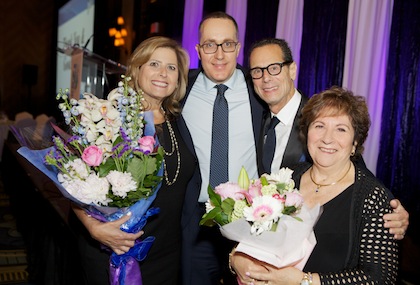
“The important thing that I want to say is that I’ve accepted this honour because I’m sharing it with my kids,” Gary Averbach told the Independent about this year’s Jewish National Fund of Canada, Pacific Region, Negev Dinner, which will pay tribute to Averbach, his son Michael Averbach and daughter Shannon Gorski.

“Ultimately, it came down to my father being recognized,” said Michael Averbach. “He was apprehensive. Initially, he didn’t want to do this. He’s a very humble man and doesn’t like to be in the spotlight; in fact, he’s quite the opposite. But, he also understands it’s for a greater good and it will help build JNF, help fundraise and go towards a need in Israel.”

Even though the dinner on June 4 is sold out, community members can still support the Averbachs’ chosen project: the Tzofei Tzamid, the Israeli Scouts.

The Israeli Scouts run programs for kids 9 to 21. Their 80,000-plus members include more than 2,500 children and youth with disabilities.

Gorski and her father visited Israel in late February. She described the Scouts as “a rite of passage for Israelis.” In the program, she said, children with severe Down syndrome, kids with visual or hearing impairments or who are on the autism spectrum, “all of these children are being able to work side-by-side with their Israel Scouts’ peers and fully participate in the programs the Israeli Scouts offer. And that is what my family, alongside the JNF Vancouver community of supporters, are funding – the ability of the Israeli Scouts program in Raanana, to ensure that they have the proper resources and equipment when they take the Israeli scouts into the wilderness, as well as their own facility, to make it accessible for all.”

She said the organization’s mission “really resonated with my own philosophy, and that is one of inclusion … providing opportunities so that kids can develop skills, and leadership opportunities and life-preparedness. I see Israel already as such a leader in a lot of innovative ideas … and, when I got to see what they were doing in the area of youth services, they also are [excelling in that]…. When my father and I were there – to be able to see firsthand how happy these children were and how they were included, and listening to the testimonies of the parents, who are so appreciative and happy themselves, because what makes a parent happy is to see their child happy.”

Gorski, Gary and Diane Averbach’s eldest child, and Michael, their youngest, live in Vancouver, while their middle son, Blake, splits his time between Israel and Quebec City. The three Negev honourees are being celebrated for their many local community contributions.

Born in Vancouver to Louis and Betty Averbach, Gary Averbach – who is chief operating officer of Belmont Properties – has been involved in various capacities with JNF, the Jewish Community Centre of Greater Vancouver (JCCGV), the Jewish Federation of Greater Vancouver, the Jewish Community Foundation of Greater Vancouver (JCF), Congregation Beth Israel and the Jewish Museum and Archives of British Columbia, among others.

Shannon Gorski, managing director of the Betty Averbach Foundation, has worked with marginalized people and at-risk youth for most of her life. In the Jewish community, she has served on the boards of JCCGV, Hillel BC and Richmond Jewish Day School (RJDS); chaired galas and events, such as JCCGV’s Israel at 60, Beth Tikvah’s 40th anniversary and RJDS’s 18th gala; and sat on committees of JCF, King David High School and the Bayit.

Michael Averbach, who owns Averbach Mortgages and also works with Belmont Properties, has chaired the JCC Sports Dinner for many years (he co-chaired it this year with James Dayson), has co-chaired a Vancouver Talmud Torah Gentleman’s Dinner, is on the executive board of the Ohel Ya’akov Community Kollel and is active with Federation.

“We had a reception last night,” Gary Averbach told the Independent the morning after a Negev Dinner-related cocktail party at his home, “and I heard it enough times, that people understand, it’s so great your kids are carrying on your tradition. That’s the message I want to go out: how lucky I am to have kids that have carried forward what I believe in.”

The first Jewish organization Averbach got involved with was JNF, he said, and it is the only Israeli organization with which he has been heavily involved. “The local community, and especially things involving Jewish youth, means the most to me,” he said.

“I think it’s great what the JNF is doing now,” he added. Funding groups such as the Israeli Scouts, he said, “is a great step and it really makes the JNF more relevant to a lot more people all over, but certainly in Vancouver.”

Gorski said she has spoken to Israelis now living here about how integral the Israeli Scouts were to them. “In fact,” she said, “one individual in the community, who’s very active with youth in the community, said to me, ‘The Israeli Scouts saved my life.’ I was so, so moved by that.”

After she and her father visited the Israeli Scouts, Gorski joined JCCGV’s Bagel Club in Israel as a chaperone on their Birthright-style mission – “for many of these Jewish persons with different abilities and challenges,” she said, it was their first trip to Israel.

While she’s never been formally connected to the Bagel Club, Gorski said she has a step-uncle who is a participant and she was on the hiring committee for the current leader of the program, Leamore Cohen.

Worried about being away from her two children for so long, she asked them if they were OK with her leaving. She said her older son said, “What are your talking about? I’m excited for you. You’re going to Israel, and you’re going to do something that’s so important.

“That’s another reason why I get connected,” she said. “My father has been such a mentor to me and has instilled in me the importance of modeling behaviours of tikkun olam and just giving generously of your time. He used to say, when I was first asked to be on different boards, which he had been on, i.e. the JCC and involved with Federation, I basically said to him, ‘My biggest concern, Dad, is that I don’t have the capacity, the deep pockets that perhaps they think I do because of yourself,’ and he said, ‘You know what, the community, when they look at people to sit on their board and to participate and to volunteer … they look for the three Ws: wealth, wisdom and work. It’s not all three, it can be one…. They don’t just want the wealthy people.’ And he used to say it’s easy for somebody to write a cheque.

“He’s so humble,” she continued. “Every time that they would ask him to speak, he would always put the credit to those who were the worker bees, the people who were behind the scenes, who were doing the work, they were the ones who deserved the accolades…. For me, that’s been a lot of why I have focused on the Jewish community, but not just the Jewish community…. The fear among the older generation, which I’m entering into, is that, will the next generation be able to carry on and give with the three Ws … is Vancouver in good hands, is the Jewish community in good hands, is Israel in good hands?”

For his part, Michael Averbach – who has four children – has focused his attention mostly on the Jewish community. He was inspired, in his early 20s, by his father’s work on the campaign for JCCGV’s redevelopment. Achieving the goal, Averbach said his father “was so elated, so excited. He screamed out, ‘Yabadabadoo!’ It was the first thing that came to his mind, he was so happy.” Witnessing this reaction, he said, “I caught the bug. I got involved.”

Calling the JNF tribute “a huge honour,” he added, “If we can encourage other young philanthropists and people in the community who are thinking about getting involved to get off the fence and push forward, find something that resonates with them, then this is all very much worthwhile.”

Gorski echoed these sentiments. She said many of her peers “thought the JNF was restricted to selling trees … and, if you go to the Negev Dinner, you see a large demographic of the older generation and not a lot of young people.” With her brother and her joining their father in being honoured, she said, they have managed to share with their peers more about what JNF does – in Israel and around the world – and many “are coming to the Negev Dinner for the first time.”

While in Israel, Gorski organized a get-together for the Bagel Club with madrichim (counselors) from the Israeli Scouts. “They made friendship bracelets, they made pita over an outdoor fire, they were all conversing. It was a really fun evening,” she said. And, as it turns out, some of the Israeli Scouts will be in Vancouver around the time of the Negev Dinner, and some of them will be joining the festivities.

She also shared that it is JCCGV head Eldad Goldfarb’s hope that, along with Cohen of the Bagel Club, which is for adults, and Shirly Goldstein, who is the centre’s youth director, they will be able “to create a program of the two different groups – youth, and adults with special needs – working together with the same sort of philosophy that the Israeli Scouts follow, doing similar types of activities.”

The June 4 Negev Dinner at Four Seasons Hotel will also see Richmond Jewish Day School head of school Abba Brodt presented with JNF’s Education Award. For more information or to donate, contact JNF Pacific Region at 604-257-5155 or van@jnf.ca.

Mystery photo … April 28/17

Jewish National Fund, 1980. (photo from JWB fonds; JMABC L.11965)

If you know someone in this photo, please help the JI fill the gaps of its predecessor’s (the Jewish Western Bulletin’s) collection at the Jewish Museum and Archives of B.C. by contacting archives@jewishmuseum.ca or 604-257-5199. To find out who has been identified in the photos, visit jewishmuseum.ca/blog.

Greens’ true colors?

Voters in the United Kingdom – well, in England and Wales, at least – have decided to quit the European Union. The referendum last week turned British politics, and world economic markets, upside down.

The potential for a Scottish withdrawal from the United Kingdom is again front and centre. More than this, politicians and commentators worldwide are extrapolating the vote’s meaning across Europe and North America to try to comprehend the potential impacts of a coalescence of disgruntled, anti-elitist, populist, nativist and xenophobic tendencies. Already, the result seems to have given licence to some people to act out on xenophobic hatred, with numerous incidents of verbal and physical assaults against visible minorities reported across Britain in just the couple of days following the referendum.

Among those who supported the losing “Remain” campaign are some who threaten to move to Canada. This is a default for Americans and now, apparently, Brits who dislike the democratic outcomes in their own countries. The Canada strategy is much talked about but rarely executed. Ironically, people from countries that move toward exclusionary practices and tightened immigration policies assume that Canada is an uncategorically welcoming place that would greet them with open arms. On Canada Day, of all times, we should take it as a compliment that our reputation is one of haven and acceptance.

And yet … while Europe may be aflame with xenophobia and demagoguery, Canada is not immune to strains of something nasty. The current example comes from none other than Canada’s Green party.

For a movement that ostensibly subscribes to the precept of thinking globally and acting locally, the policy resolutions for the party’s August convention are starkly parochial. Only two items proposed for consideration approach foreign affairs issues – and both attack Israel.

One resolution calls for the party to join the BDS movement to boycott, divest from and sanction the Jewish state. More hypocritically still, the Green party is seeking to have the Jewish National Fund of Canada’s charitable status revoked. That a Green party would target one of the world’s oldest and most successful environmental organizations is symptomatic of something irrational in the mindset of those who promulgated the resolution. Whether it advances to the convention floor – and what happens then – will tell us a great deal about the kind of people who make up the Green Party of Canada.

In a world where human-made and natural catastrophes seem unlimited, from the entire population of Green party members across Canada, only two statements of international concern bubble to the surface – and both are broadsides against the Jewish people.

Elizabeth May, the party’s leader and sole MP, said she opposes both resolutions but, since the determination of policy is made on the basis of one member one vote, there is a limited amount she can do. She met last week with Rafael Barak, Israel’s ambassador to Canada, and said the Green party’s support for Israel’s right to exist is “immovable.”

We’ll see.