Skip to content
  • Home
  • Subscribe / donate
  • Events calendar
  • News
    • Local
    • National
    • Israel
    • World
    • עניין בחדשות
      A roundup of news in Canada and further afield, in Hebrew.
  • Opinion
    • From the JI
    • Op-Ed
  • Arts & Culture
    • Performing Arts
    • Music
    • Books
    • Visual Arts
    • TV & Film
  • Life
    • Celebrating the Holidays
    • Travel
    • The Daily Snooze
      Cartoons by Jacob Samuel
    • Mystery Photo
      Help the JI and JMABC fill in the gaps in our archives.
  • Community Links
    • Organizations, Etc.
    • Other News Sources & Blogs
    • Business Directory
  • FAQ
  • JI Chai Celebration
  • JI@88! video

Recent Posts

  • המלחמות של נתניהו וטראמפ
  • Zionism wins big in Vegas
  • Different but connected
  • Survival not passive
  • Musical celebration of Israel
  • Shoppe celebrates 25 years
  • Human “book” event
  • Reclaiming Jewish stories
  • Bema presents Perseverance
  • CSS honours Bellas z”l
  • Sheba Promise here May 7
  • Reflections from Be’eri
  • New law a desecration
  • Resilient joy in tough times
  • Rescue dog brings joy
  • Art chosen for new museum
  • Reminder of hope, resilience
  • The national food of Israel?
  • Story of Israel’s north
  • Sheltering in train stations
  • Teach critical thinking
  • Learning to bridge divides
  • Supporting Iranian community
  • Art dismantles systems
  • Beth Tikvah celebrates 50th
  • What is Jewish music?
  • Celebrate joy of music
  • Women share experiences 
  • Raising funds for Survivors
  • Call for digital literacy
  • The hidden hand of hate
  • Tarot as spiritual ritual
  • Students create fancy meal
  • Encouraging young voices
  • Rose’s Angels delivers
  • Living life to its fullest

Archives

Follow @JewishIndie
image - The CJN - Visit Us Banner - 300x600 - 101625

Tag: Jerusalem

Reflecting on Jerusalem Day

Reflecting on Jerusalem Day

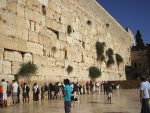
The Kotel in Jerusalem. (photo by Marek69)

Jerusalem has been reunited now for 50 years. For five decades, we have had the privilege of praying at the Kotel, the Western Wall. On Jerusalem Day, 28 Iyar, which falls this year on May 13, thousands of worshippers will flock to the city, many before sunrise.

Nothing has ever come easily to the Jewish people. For 19 years, from 1948 to 1967, Jerusalem was cut in half and, at the Mandelbaum Gate, outside the Old City, there were signs: “Danger. Frontier ahead. Snipers nearby … stay out of the middle of the street!” Neighbourhoods and streets were split down the middle. Jews were evicted from their homes and synagogues in the Old City, and the Western Wall was out of bounds. Across the dividing line, Jordanian troops stood with rifles at the ready.

Jerusalem’s story covers thousands of years, but this segment began in 1948. Before the ceasefire was signed on Nov. 30 that year, Moshe Dayan, the commander of Israel’s forces in Jerusalem, met with his Jordanian counterpart, Abdullah El-Tel. In a deserted house in Musrara, they marked out their respective positions. These rough, indistinct marks expanded from the heat and blurred over time, yet they were accepted as the borders between Jordan and Israel in Jerusalem. The map was locked up at Government House and referred to in all disputes.

On June 5, 1967, while Israel was still warning King Hussein of Jordan to stay out of the impending war, a foreign radio station announced the conquest of Mount Scopus by Jordanian troops. It was a mistake, but it confirmed Israel’s suspicions of Jordan’s intentions, and that Mount Scopus, with its Hebrew University and Hadassah Hospital, was in danger. The Jordanians believed that Israeli troops would come from east to west, but instead the Jerusalem Brigade attacked from the opposite direction, taking Armon HaNetziv, three Jordanian positions, the Arab village of Sur Baher and Mutzav HaPaamon, before several Arab troops came out of hiding and killed six Israeli soldiers.

Below, on the road to Bethlehem, stands Kibbutz Ramat Rachel. Jordanians and Egyptians fought Israelis on the southernmost part of the dividing line and the kibbutz changed hands three times. However, the Israelis eventually held it, which helped stop the Arab invasion of southern Jerusalem.

Soldiers of the Jordanian legion conquered the British High Commissioner’s residence, but were driven back by the Israeli Defence Forces, who moved towards the City of David. At dawn on Tuesday, 27 Iyar, a unit of paratroopers advanced, taking the police school, the district of Sheikh Jarrah, the American Colony and the area of the Rockefeller Museum. After a bloody battle at Ammunition Hill, the paratroopers reached Mount Scopus.

Jerusalem’s great day was 28 Iyar. With a daring thrust, Israeli soldiers scaled Mount of Olives, advancing beyond the village of Al-Azariya. Armoured vehicles burst through the Lions’ Gate towards the Temple Mount. At 10 a.m. came the announcement: “The Temple Mount is ours. It is in our hands!” Soldiers, even secular ones, ran towards the Western Wall, caressing its stones, their eyes full of tears and with a prayer on their lips, even if they didn’t know the words. A few minutes later, Rabbi Shlomo Goren, then IDF chaplain, blew the shofar at the holy site. David Rubinger, a military photographer, took the now-famous photo that has been reproduced around the world, of a soldier named Yitzhak Yifat (who is now a gynecologist living in Rishon lesion), removing his helmet and looking up at the wall in awe.

One of the first to reach the Kotel was a former Australian, Mordecai (Mark) Rechtschafner, from my hometown of Melbourne. He told me that, although he was overwhelmed by the sense of history at that moment, he was far from euphoric. Heavy losses had been sustained and he had lost many comrades. “I was exhausted, filled with sadness at the unbearable death of so many of my friends,” he said. “The Six Day War ended swiftly, but we paid a heavy price.” Every year, on Jerusalem Day, he comes to the city from Kibbutz Ein Zurim, where he lives, for the memorial service, to pay tribute to the many friends he lost in the battle.

Until the First Intifada and its ongoing aftermath, the hope of peaceful coexistence between Jews and Arabs seemed a possibility and some believe it still is. Thousands of Arabs used to pour into Western Jerusalem each morning to work. On weekends, the narrow lanes of the Old City’s Arab shuk (market) would be packed with Israeli shoppers, but, today, it is mostly tourists who fill the market. The future is a question mark, as ongoing violence brings renewed tears to families throughout the land.

But the city of Jerusalem remains unforgettable and heartbreakingly beautiful. To me, it is a poem. One night, as darkness descended, I was moved to write these lines:

Black velvet spangled with stars
Is night in Jerusalem.
Splashes of silver,
The sob of the wind,
An ancient perfume,
A taste of nectar.
Skyline of turrets and domes
Is night in Jerusalem.
Pine trees are sighing.
Through a tracery of leaves
Golden lights dot
A midnight canvas.
Landscape of enchantment
Is night in Jerusalem.

Dvora Waysman is a Jerusalem-based author. She has written 14 books, including The Pomegranate Pendant, which was made into a movie, and her latest novella, Searching for Sarah. She can be contacted at [email protected] or through her blog dvorawaysman.com.

Format ImagePosted on May 11, 2018May 9, 2018Author Dvora WaysmanCategories Op-EdTags Israel, Jerusalem, reunification
שיתוף הפעולה הטכנולוגי

שיתוף הפעולה הטכנולוגי

שיתוף הפעולה הטכנולוגי בין קנדה לישראל מתרחב משמעותית. (צילום: tec_estromberg)

מועצת המנהלים של קרן קנדה-ישראל תממן שמונה פרוייקטים חדשים בסכום כולל של כחמישה עשר מליון שקל (שהם כמישה מיליון ושלוש מאות אלף דולר קנדי). הפרוייקטים יבוצעו בשיתוף פעולה עם חברות בתחומים הבאים: חקלאות, רובטיקה, תקשורת לווינים, טכנולוגיות, מזון וטכנולוגיה נקייה (קלינטק). רשימת שמונה החברות שזכו בתקציבים של קרן קנדה-ישראל כוללת את: פלורה-פוטוניקה – בתחומי החקלאות, אינובופרו – בתחומי החקלאות, סי-נייצ’ר – בתחומי החקלאות, אף.אף.אר רובוטקס – בתחומי הרובוטים לחקלאות, גילת רשתות לווינים – בתחומי תקשורת לווינים, קנופי מדיה – בתחומי הטכנולגיות לאינפורמציה ותקשורת, אטלנטיום טכנולוגיות – בתחומי המזון והטכנולוגיה הנקייה (קלינטק) ואפקון בקרה ואוטומציה – בתחומי הטכנולוגיה הנקייה (קלינטק).

יצויין שקנדה כיום היא אחת השותפות המשמעותיות של ישראל, בתחום החדשנות. בנוסף לשיתוף הפעולה עם קרן קנדה-ישראל, מתבצעים שיתופי פעולה נוספים עם ממשלת מחוז קוויבק, ממשלת מחוז אונטריו וגורמים נוספים, בתחומי בריאות, תחבורה חכמה ועוד. התקציב הכולל של מחקר ופיתוח הכולל של פרוייקטים בין קנדה וישראל שאושרו בשנה האחרונה, עומד על לא פחות מכארבעים ושניים מיליון שקל (שהם כחמישה עשר מיליון דולר קנדי).

אומר שר הכלכלה של ממשלת ישראל, אלי כהן: “קשרי החדשנות בין ישראל לקנדה קיימים כבר יותר מארבעים שנה. מדובר במנוף כלכלי בילטרלי חשוב מאין כמוהו, המחבר בין חברות, חוקרים, ויזמים ישראלים וקנדים. שיתוף הפעולה הטכנולוגי שלנו עם קנדה, על מגוון ערוציו הוא נכס אסטרטגי חשוב למדינת ישראל ולאקוסיסטם הטכנולוגי שלנו”.

מנכ”ל רשות החדשנות ,אהרון אהרון, מוסיף: “קנדה מפעילה מערכות חדשנות מתקדמות ומפותחות מאד, הן ברמה הפדרלית והן ברמה המקומית. רשות החדשנות מפעילה מגוון תכניות ברמות שונות שמאפשרות לחברות טכנולוגיה ישראליות בתחומים שונים ליהנות ממערכות חדשנות אלה, ולשתף פעולה עם חברות וגופים קנדיים”.

הקרן הדו-לאומית קנדה-ישראל שמופעלת על ידי רשות החדשנות הוקמה לפני כעשרים וארבע שנים (ב-1994). מאז היא עוסקת בחיבור שבין חברות טכנולוגיה בין שתי המדינות. וזאת במימון של פרוייקטים של מחקר ופיתוח משותפים. בנוסף לקרן הדו-לאומית, רשות החדשנות מפעילה מספר הסכמי שיתוף פעולה עם גורמים נוספים בקנדה. כאמור בהם בין היתר ממשלת מחוז אונטריו. במסגרת זו אושרו בחודש פברואר שנה זו ארבעה פרוייקטים חדשים בתחומי: החקלאות, טכנולוגיה נקייה (קלינטק), תעופה, חלל וטכנולוגיות לאינפורמציה ותקשורת. ההיקף הכספי של פרוייקטים אלה עומד על כארבעה מיליון שקל (שהם כמיליון וחצי דולר קנדי). גם עם ממשלת קוויבק נחתמו (בשנה שעברה) הסכמים ליישום ארבעה פרוייקטים חדשים, בסכום של כעשרה מיליון שקל (שהם כשלושה וחצי מיליון דולר קנדי). הרשות לחדשנות מפעילה בנוסף תוכנית ייעודית של אימות פתרונות בריאות לקשישים בבתי חולים בכל רחבי קנדה. ובמקביל הרשות לחדשנות מפעילה תוכנית חדשה בתחומי התחבורה החכמה בקנדה.

המפלגה השמרנית תכיר בירושלים כבירת ישראל

מפלגת השמרנים הקנדית בראשות אנדרו שייר, תכיר בירושלים כבירת ישראל כפי שארה”ב עשתה. ארה”ב הבטיחה להעביר את שגרירותה מתל אביב לירושלים בקרוב. כך הכריז שייר אם מפלגתו תנצח בבחירות 2019 את מפלגת השלטון הליבראלית בראשות ג’סטין טרודו. בהודעה רשמית של השמרנים נאמר בין היתר כי: “המפלגה מכירה בעובדה כי ישראל, כמו לכל מדינה ריבונית אחרת, שמורה הזכות לקבוע היכן תמצא בירתה”.

יש לזכור שהמפלגה השמרנית בראשות סטיבן הרפר, החזיקה בשלטון במשך קרוב לעשר שנים. דווקא הרפר שהיה מקורב מאוד לישראל, לא חשב להכיר בירושלים כבירת ישראל. שייר חושב אחרת.

Format ImagePosted on April 25, 2018April 25, 2018Author Roni RachmaniCategories עניין בחדשותTags Andrew Scheer, Canada, Conservative Party, Israel, Jerusalem, technology, אנדרו שייר, טכנולוגיה, ירושלים, ישראל, מפלגה השמרנית, קנדה
A record marathon

A record marathon

Jerusalem Marathon winner Kipkogey Shadrack (No. 1) led the field from the start. (photo from Ashernet)

photo - The half-marathon gets underway
The half-marathon gets underway. (photo from Ashernet)

More than 35,000 runners, including some 4,000 from 72 countries outside Israel, participated March 8 in this year’s Jerusalem Marathon – the largest to date. The winner of the main event was 27-year-old Kenyan runner Kipkogey Shadrack, who completed the course in 2:21.26. Participants set off opposite the Israel Museum in slightly overcast, but dry, weather. Many of the city’s streets were closed from 5:30 a.m. and scheduled to reopen at 2:30 p.m. There were five other courses apart from the 42.2-kilometre main event: a half-marathon, a 10k, a 5k, a family race (1.7 km) and a community race (800 metres) for people with special needs.

Format ImagePosted on March 16, 2018March 15, 2018Author Edgar AsherCategories IsraelTags Israel, Jerusalem, marathon
A sapling grows in Jerusalem

A sapling grows in Jerusalem

A sapling seeded by Anne Frank’s horse-chestnut tree in Amsterdam is growing at Yad Vashem, near its International Institute for Holocaust Research. (photo by Gil Zohar)

treJerusalem and its environs have many historic trees, including the grove of gnarled olives in the Garden of Gethsemane, under which Jesus may have sheltered two millennia ago; the looming cypress planted by Godefroy de Bouillon, today the site of Hôpital Saint Louis, but where French knights camped in 1099 during the first Crusade; and the 700-year-old Kermes Oak that stands alone in Gush Etzion, south of the city. And now, there is another – a sapling seeded by Anne Frank’s white horse-chestnut tree in Amsterdam, which is growing at Yad Vashem, near its International Institute for Holocaust Research.

Initially, Yad Vashem was concerned that the chestnut tree would not acclimate to Jerusalem’s long, dry summers, but it is doing well.

For more than two years until her arrest on Aug. 4, 1944, Frank (1929-1945) hid in her family’s secret annex at Prinsengracht 263-265. Through a window in the attic that was not blacked out, she admired the chestnut tree, planted around 1850, that stood in the courtyard of a neighbouring residential block, at 188 Keizersgracht just north of the landmark Westerkerk. The tree was her only connection to the outside world and the changing seasons.

Frank wrote about the tree three times in her diary. On the last occasion, on May 13, 1944, she observed: “Our chestnut tree is in full bloom. It’s covered with leaves and is even more beautiful than last year.”

A month earlier, on April 18, 1944, she wrote: “April is glorious, not too hot and not too cold, with occasional light showers. Our chestnut tree is in leaf, and here and there you can already see a few small blossoms.”

The first reference was on Feb. 23, 1944, when Frank noted: “The two of us [Peter van Pels and Frank] looked out at the blue sky, the bare chestnut tree glistening with dew, the seagulls and other birds glinting with silver as they swooped through the air, and we were so moved and entranced that we couldn’t speak.”

For decades, the storied tree was cared for by Amsterdam’s Pius Floris Tree Care at the behest of the city’s Central Borough Council. In 2005, it was determined that the tree was ailing, and valiant efforts were made to save it.

In the meantime, Anne Frank House asked permission of the tree’s owner to gather and germinate chestnuts. The saplings – grown and cared for by Bonte Hoek Nurseries – were donated to schools around the world named after Anne Frank, and other organizations. In 2009, 150 saplings of the tree were donated to Amsterdamse Bos woodland park.

A sapling was recently planted in Vienna’s 2nd district – a neigbourhood that had many Jewish residents before the Anschluss in 1938. Another was planted in Ajaccio, Corsica, to honour the Righteous Among the Nations there. And 11 chestnut trees are growing in the United States, including one at Manhattan’s Liberty Park commemorating 9/11, thanks to the sapling project of the New York-based Anne Frank Centre for Mutual Respect.

As for the original tree, in 2008, the Support Anne Frank Tree Foundation placed iron struts around it to prop it up, hoping the tree would remain standing for further decades. But it was already too rotten. During a violent rainstorm on Aug. 23, 2010, the tree collapsed together with the girders supporting it, leaving a one-metre high stump.

On its website, the Dutch-based Support Anne Frank Tree Foundation responds to the question, was the battle to save the tree all for nothing?

“The answer is a resounding no!” they say. “The tree and the struggle to preserve it … has fulfilled an important task in an extraordinary manner: the reawakening of the world’s collective memory of the Holocaust and a call for tolerance and mutual respect. The seedlings planted all over the world will continue to spread the message, a grand and dignified final stage in the life of this tree. This would not have happened were it not for the battle for its preservation.”

Gil Zohar is a journalist based in Jerusalem.

Format ImagePosted on March 9, 2018March 7, 2018Author Gil ZoharCategories WorldTags Amsterdam, Anne Frank, continuity, history, Holocaust, Jerusalem, sapling

Partisan decision

Andrew Scheer was two days old when Joe Clark was elected prime minister of Canada in 1979. In that election campaign, then-Progressive Conservative leader Clark promised to move the Canadian embassy in Israel to Jerusalem from Tel Aviv.

Cabinet documents recently released help explain why that promise was never fulfilled. There were diplomatic and, yes, commercial considerations though, at the time, the government claimed potential backlash from Arab states and businesses was not a factor.

Andrew Scheer is now leader of the Conservative party, facing a different Prime Minister Trudeau, and this week he promised to, well, you guessed it.

“Canada’s Conservatives led by Andrew Scheer will recognize Jerusalem as Israel’s capital when we form government in 2019,” declares a pledge on the party’s website. It describes the party as “a strong voice for Israel and the Canadian Jewish community.”

The Conservative government under Stephen Harper was indeed a strong voice for Israel – at times the only government in the world to be so – and for the Jewish community in Canada. There is no reason to believe that a Conservative government under Scheer would be any different, but the politics around this pledge are disappointing.

The statement came in the form of a petition-type pledge on the party’s website. That is, for those unschooled in the modern art of email harvesting, a strategy – legitimate and legal, certainly – of inviting people who agree with a topic to sign their name (and share their email address). The party can then target that voter, knowing they have a particular interest in the topic.

Again, there is nothing untoward about this, in general. But if a party that wants to form government chooses to issue a significant platform plank or promise dealing with one of the most contentious diplomatic issues in the world, perhaps a speech in Parliament or other suitable venue would be a more appropriate medium than a partisan webpage unabashedly accumulating names of voters for future political solicitations.

It is also so blatantly an imitation of the U.S. president’s shameless move on the issue. As we wrote here at the time, Donald Trump’s actions were not motivated by principle, but by sheer political calculation. Or, inasmuch as that president is not given to overthinking matters, more intended as a slap in the face to his political enemies.

We will leave aside here whether the embassy move is a good idea, a fair one, timely or otherwise merited or unmerited on substance. The point here is that the Conservatives are exploiting this issue for political purposes – and that is not good for Israel or for Jewish Canadians.

When Justin Trudeau became prime minister and effectively adopted the same policy approach vis-à-vis Israel as his predecessor, it was clear that a Canadian consensus was essentially in place. The New Democratic Party, in convention a few days ago, managed to put a lid on most of whatever dissent there was on this topic. Elizabeth May, the leader of the Green Party, put her leadership on the line in the summer of 2016 to let her members know she would not lead a party with an extremist agenda toward Israel.

This consensus is not a result of stifling free expression or of Zionist power or of anything other than a fair Canadian reading of important world events. In other words, for whatever else we disagree on, Canadians, by and large, accept Israel’s right to exist free from terrorist attacks.

Scheer’s move this week is cynical. It turns the legitimate consideration of the embassy’s location into a partisan one, when it should be entertained within the broader consensus we have developed. That is not the kind of voice Israel or Jewish Canadians want from our elected representatives.

Posted on March 2, 2018March 1, 2018Author The Editorial BoardCategories From the JITags Andrew Scheer, Canada, Conservatives, embassy, Israel, Jerusalem, politics

Games with capital

Last week, U.S. President Donald Trump recognized Jerusalem as the capital of Israel. There are a number of issues to unpack in his (un)diplomatic announcement.

First, rioting by Palestinians and others around the Middle East, as well as potentially related attacks on Jewish institutions in Sweden, are acts of violence that deserve to be condemned, with no excuses or legitimation.

Second, as for the president’s decision, we can leave aside partisanship from the mix. Former presidents Bill Clinton, George W. Bush and Barack Obama have all made effectively the same statement: Jerusalem is the undivided capital of Israel.

But we need to separate the ethical from the pragmatic. For whatever else it is – home to holy sites of three religions, a multicultural, multifaith, multilingual metropolis – it is Israel’s capital. Tel Aviv may be the economic heart of the country and the first modern Jewish city, but it has always been toward Jerusalem that the national aspirations of the Jewish people have been directed. But, the fate of Jerusalem is considered one of the core issues to be addressed in any permanent peace agreement that results in a two-state solution. Whether or not recognizing Jerusalem as Israel’s capital is the morally right action, the pragmatic truth is that the president’s move was not inspired by a desire to do right.

The most charitable thing we can say about the president’s Jerusalem decision is that he kept his promise to evangelical Christian voters. He was unequivocal before the election on this issue and, unlike those who came before, he appears to be following through. The same can be said on many other fronts where conventional observers assumed a cooler head would prevail once the weight of the office descended on the showman. The provocations around immigrants, the racism, the assaults on even members of his own party – none of these has eased since he moved into the White House. While Congress has ensured the president has so far passed no legislation of consequence – though a sweeping and irresponsible tax bill is on the horizon – the president has behaved just as he did when he was a candidate, esteem for the office, personal dignity and respect for others be damned.

Again, there may be disagreement on whether moving the embassy is a good thing, a bad thing, ill-timed or overdue. But let us not pretend that the president was moved by any ethical, theological or political morality. This was just the latest in a succession of provocative actions through which the president thumbs his nose at anyone with a modicum of nuance, diplomacy or sense of the larger geopolitical reality.

Trump likes to stir things up and this time he did it using Jerusalem. This is no favour to the Jewish people or Israel. We may, in fact, suffer its consequences alongside many in the Palestinian territories who may lose their lives in riots and skirmishes precipitated by this thoughtless edict. All of us are just the tools in another of his childish, and very dangerous, games.

Posted on December 15, 2017December 14, 2017Author The Editorial BoardCategories From the JITags embassy, Israel, Jerusalem, politics, Trump
Luxury in Jerusalem

Luxury in Jerusalem

Merom Yerushalayim’s new condominiums. (photo by Gil Zohar)

Having recently acquired Toronto’s troubled 65-storey Trump International Hotel and Tower, now rebranded as the St. Regis Toronto, Joseph Waldman – one of the principals of the city’s Rothner Highgates Group – has set his sights on Jerusalem.

The Antwerp-born developer and his partner, Ricky Rothner, are looking to Merom Yerushalayim (Jerusalem Heights), a project of 218 luxury condominiums located on Malchei Israel Street at the highest point in central Jerusalem.

Notwithstanding that the Holy City is awash with unsold luxury apartments and unfinished high-end towers, Waldman and Rothner, together with their Jerusalem partner Shmuel Narkiss, have found a niche market. They’re targeting Charedim, a segment of Israeli society stereotypically characterized as having low economic status. With only 34 of the 172 units in Phase I left unsold and the unit owners occupying their homes since Passover, the Merom Yerushalayim project has succeeded beyond expectations.

Prices start at NIS 35,000 ($12,500 Cdn) per square metre. Who are the purchasers of these more than $1 million homes? They’re equally divided between North Americans and Europeans with a smattering of Israelis, said Merom Yerushalayim’s sales manager Yehuda Eagle, who fluently banters with clients in Hebrew, Yiddish and English.

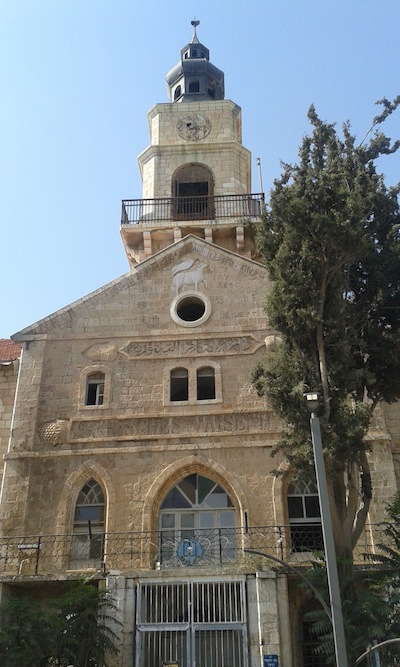
Designed by Jerusalem’s Braidman Agmon Architects, the project adds seven residential buildings to five historic buildings, which are being preserved and given new functions. The derelict Schneller Orphanage, with its distinctive Bavarian onion-dome cupola, is slated to become a museum of Jewish heritage. Another 19th-century structure will be refurbished as a synagogue and a third as a yeshivah for teenage boys.

Of the seven new residential buildings, five have been completed. Two are eight floors high. Three were built to a height of five storeys, pending a zoning-density change to permit an additional three levels. The housing blocs are clustered together and nearly four-fifths of the historic compound has been set aside as green space. Parking is underground.

Waldman hedges about the schedule of the final two buildings. While a huge hole has been excavated for them, construction will depend on sales, he said.

Acknowledging that he will keep a condominium for his family’s use, Waldman told the Jewish Independent, “Try not to write about me. I’m a simple guy. I don’t want kavod [honour].”

photo - The Schneller Orphanage is slated to become a museum of Jewish heritage
The Schneller Orphanage is slated to become a museum of Jewish heritage. (photo by Gil Zohar)

The Schneller Compound has a storied past. In 1860, Johann Ludwig Schneller (1820–1896), a Lutheran missionary from Basel, Switzerland, established the orphanage for nine survivors of the Druze massacre of 10,000 Maronite Christians in the mountains of Lebanon. By the next year, the orphanage had taken in 40 boys, and soon also began accepting girls. For eight decades, the Syrisches Waisenhaus (Syrian Orphanage) flourished, expanding to include an institution for the blind and a vocational school. It provided both academic and vocational training to orphaned boys and girls from Palestine, Syria, Egypt, Ethiopia, Armenia, Turkey, Russia, Iran and Germany. By the end of the 1800s, it had become the largest compound outside of the Old City.

During the Second World War, British Mandate officials interned and deported the orphanage’s German staff. The sprawling site was turned into the largest Allied ammunition dump in the Middle East. In March 1948, with Britain quitting Palestine, the base was seized by the Zionist military organization Haganah. Following statehood, and until 2008, it served as an Israel Defence Forces camp.

When the Israeli army redeployed to bases in the Negev, the state-owned property was put up for sale by the Israel Lands Authority and ultimately purchased by the Rothner Highgates Group. Before construction could begin, the Israel Antiquities Authority (IAA) carried out salvage digs – and archeologists discovered a winepress and bathhouse that served Rome’s 10th Legion Fretensis.

While Charedim have opposed other archeological digs, these excavations were carried out without incident.

“This is an excellent example of many years of cooperation and deep and close ties with the Charedi community,” said IAA Jerusalem district archeologist Amit Re’em. “The general public is used to hearing of the clashes between the archeologists and the Orthodox community around the issue of the graves, but is unaware of the joint work done on a daily basis and the interest expressed by the ultra-Orthodox sector. The Israel Antiquities Authority is working to instil our ancient cultural heritage in this population, as it does with other sectors.”

Respecting Merom Yerushalayim’s Charedi character, the project’s marketing wing, Sun-Chen, sends out a weekly Hebrew-language commentary on the Torah portion. Rothner Highgates’ promotional video depicts preparations for Shabbat and, towards the end of the advertisement, it says that the development is “20 minutes from the Kotel, three minutes from Geula. Close to the centre, close to the heart. Merom Yerushalayim. The best of two worlds.” It also describes it as “country living in the heart of Yerushalayim.”

Luxury competition

In 2011, Montreal billionaire Rabbi Hershey Friedman and a group of Canadian investors bought the heavily-indebted Azorim Investment Development and Construction Co. Azorim recently completed Boutique HaNevi’im on the Street of the Prophets near downtown Jerusalem. The seven-storey project includes 87 luxury apartments and a boutique hotel. The promotional video features Friedman standing on the roof terrace looking out over the golden Dome of the Rock citing, “If I forget thee, O Jerusalem, let my right hand wither.” (Psalms 137:5)

Gil Zohar is a journalist based in Jerusalem.


Format ImagePosted on August 25, 2017August 22, 2017Author Gil ZoharCategories IsraelTags development, Israel, Jerusalem, Joseph Waldman, Merom Yerushalayim, real estate, Rothner Highgates
Israel’s human capital

Israel’s human capital

Some of the attendees at the July 16 event, left to right: Daniel Wosk, Julia Goudkova, Shai Josopov, Sigal Kleynerman and Daniel Milner. (photo from CFHU Vancouver)

Israel’s best “natural resource” is its people. On July 16, at the Jewish Community Centre of Greater Vancouver, four speakers, representing diverse segments of Israeli society, gave TED Talk-style presentations before a sold-out crowd at the Jerusalem: City of Gold and Tech event. The common denominator of the speakers was their connection to Hebrew University of Jerusalem.

Presented by Canadian Friends of Hebrew University (CFHU) in conjunction with the Jerusalem Foundation and the JCCGV, the evening presented the many ways in which Israel is using its human capital to leverage its place in the world and continue to be the innovative nation for which it has become renowned.

Lior Schillat is the head of the Jerusalem Institute for Policy Research (JIPR), an organization that collects data on multiple aspects of Jerusalem. Although statistics don’t tell the whole story, the data collected by Schillat’s institute shed a great deal of light on how people in Jerusalem live, work and play. He explained that the city is constantly faced with a power struggle between three groups with very different worldviews: ultra-Orthodox Jews, Arabs and “the general public.” These groups have not only diverse needs and interests but also huge variances in almost every part of daily life. JIPR attempts to use the data they collect to influence lawmakers to try to minimize conflicts and use the city’s diversity to empower everyone, said Schillat, “instead of the zero-sum game we used to play, where we win and the others lose. We want to turn Jerusalem into a win-win for everyone.”

Schillat’s optimism was shared by the second presenter, Maya Halevy, director of the Bloomfield Museum of Science in Jerusalem. Although her goal is to promote an interest in and love of science, her ultimate objective is to ensure that Israel has a workforce equipped for the future. She explained the programs in STEM (science, technology, engineering and math) that her museum provides to all segments of Jerusalem’s population.

“We need to make connections with families and students,” she said. “Over 200,000 Arab and ultra-Orthodox visitors use our museum. We serve all communities with STEM literacy.”

Halevy said that, while it is easier to attract ultra-Orthodox families to the museum, Arab families as a whole stay away but they send their children through school programs. Her message, similar to Schillat’s, was that Israel will thrive when all segments of the population are educated and have equal chances to be successful.

Meanwhile, Yonatan Avraham is living his dream of becoming a physicist and an entrepreneur. He is an example of someone who is thriving because of the education he is receiving at Hebrew U. He is also the beneficiary of Toronto philanthropist Seymour Schulich’s scholarship program. Avraham expressed his gratitude regarding the place where he is studying.

“I am at the intersection of three unique resources that are ecosystems for innovation: the academic knowledge at Hebrew U, Jerusalem as a municipality supportive of start-up companies and a young, dynamic student atmosphere,” he said. “The combination has produced many innovators who are able to take their ideas to market and grow the Israeli economy.”

Helping smart people turn their ideas into companies that make money is how the final speaker of the night fit in. Tamir Huberman serves in several capacities at Yissum, Hebrew U’s technology transfer company. He works with researchers who are constantly asking the question, “How can I make this better?” What “this” is depends on the scientist, he said, but, with Israeli chutzpah, tachlis (getting to the point quickly), problem-solving ability and the pressure of existential threats fueling the process, Huberman explained that Israel is producing many great companies. Yissum is the exclusive owner of all intellectual property produced at Hebrew U and has created 120 spin-off companies since its creation in 1964. Profitable for the university, Yissum helps monetize the brain-power Halevy nurtures, Schillat influences and Avraham exemplifies.

Format ImagePosted on August 18, 2017August 16, 2017Author CFHU VancouverCategories LocalTags Canadian Friends of Hebrew University, CFHU, entrepreneurship, Israel, Jerusalem, technology
Marketing of technology

Marketing of technology

Yonatan Avraham, student ambassador of HUstart, left, and Tamir Huberman of Yissum are two of the four speakers who will be participating in Jerusalem of Gold: Capital of Innovation & Tech on July 16. (photos from CFHU Vancouver)

“I have always loved the thrill you feel while creating your own project, seeing it grow and being responsible for the outcomes – and the satisfaction you feel while convincing a stranger to give his or her resources (time or money) for your product,” said Yonatan Avraham, student ambassador of HUstart, Hebrew University of Jerusalem’s entrepreneurship centre, about what excites him about being an innovator and entrepreneur.

Avraham is one of four speakers who will participate in Jerusalem of Gold: Capital of Innovation & Tech, which will take place on July 16 at the Jewish Community Centre of Greater Vancouver. The event is being hosted by Canadian Friends of the Hebrew University, the Jerusalem Foundation and JCCGV. Avraham will be joined by Lior Schillat of Jerusalem Institute for Policy Research; Maya Halevy of Bloomfield Science Museum Jerusalem; and Tamir Huberman of Yissum, HU’s technology transfer company. The Jewish Independent’s interviews with Schillat and Halevy appeared in last week’s issue (see jewishindependent.ca/jerusalem-a-high-tech-hub).

“All of the speakers are coming from Israel especially for this tour in Western Canada. We will be in Vancouver on July 16, Calgary on July 17 and Edmonton on July 18,” said Dina Wachtel, Western region executive director of CFHU, of the tour, which celebrates the 50th anniversary of the reunification of Jerusalem.

“Tamir is going to give a talk on Friday, July 14, at Simon Fraser University titled The Power of Social Networks: Boosting the Marketing of Innovations, organized by Fred Popowich, executive director of Big Data Initiative at Simon Fraser University,” she said. “Part of our mandate is to create these living bridges between Hebrew U and our local universities; hence, this is part of this initiative.”

Huberman is Yissum’s vice-president of business development and director of information technology. At the JCCGV, he will talk on Marketing Innovation: Changing Israel and the World.

In the press material, Huberman notes, “As the only university in Israel with a school of agriculture, research in non-GMO hybrid seeds at Hebrew U is changing the way millions of people eat now and into the future.” He also notes that Mobileye, which recently sold to Intel for $15.3 billion US, was founded by HU Prof. Amnon Shashua.

Yissum “operates on a royalty-based model which channels proceeds from successful products back to the researchers, their labs and the university itself,” he explains. It also generates funds “by attracting corporations to collaborate with Hebrew University labs to find the answers the businesses are seeking.”

About what B.C. (and other) universities could learn from HU, Huberman told the Independent, “I believe that the top lessons are how to be more effective and how to remove barriers for doing business. In most cases, tech transfer companies around the world are [viewed] as a bureaucratic entity that complicates things. The greatest lesson is making adaptations that would make things simpler for the companies that want to do business with us…. The second lesson is the realization that, for each new technology, there either has to be someone in the world that would be interested in acquiring a licence, or someone in the world that knows the technology does not have a chance. It is the ‘job’ of the tech transfer to find that ‘someone’ and, from my experience, the best way to do that is by using social networks. The revolution of social media allows getting fast replies from people all around the world, even if you’ve never met them.”

Huberman has always loved innovation and, he said, “it was a big dream of mine to be an inventor and work with new inventions.”

While working for the company Medis from 1996 to 2002, he was exposed to the world of patents and the process of writing patents as an inventor. “After my own experience as an inventor,” he said, “I knew I had to find a place that works with new patents at a massive scale.”

It was his “strong passion for new patents and ideas that was the top reason for joining Yissum,” he said. “Second was the opportunity to work with some of the most brilliant researchers in their fields. Third was my realization that there was something missing at the time before I joined Yissum, which had to do with the very low use of the internet in order to expose the technologies from the universities to the world.

“Before I arrived at Yissum, I made a simple search using freely available patent databases and saw that only a small fraction of the patents I found [were] on the tech transfer websites. When I realized this, I had a vision of changing how tech transfer companies worked…. My dream materialized when I created the first portal for all the technologies at Yissum and later created the ITTN website (Israel Technology Transfer Organization). ITTN was the first website in Israel that allowed all of the inventions from academic institutions in Israel to be found in one central portal.”

He added, “I believe that there is a lot that can be done to make a better and faster connection between companies seeking talent or innovation to the offerings of universities…. [B]uilding a portal that connects more universities in Israel and the world could help make that matching much more efficient.

“Another realization is that tech transfer companies traditionally showcase technologies and I believe that this is not the best approach…. [T]he portals should focus on the researchers and their capabilities, rather than just the patents that a small portion of them invented. We have multiple examples of companies that were interested in researchers that we did not even know [because] they never had any patents.”

One of the jobs of HUstart – of which Yissum is part, along with HU’s science faculty and business school – is to provide “practical education, support, mentorships and connections needed” for students and others “to become effective entrepreneurs.”

Avraham is a third-year physics student at Hebrew U and is in the first cohort of the new Physics and Entrepreneurship program, which connected him – during his second year of study – with his business partners. Avraham and fellow students Michael Levinson and Tom Zelanzy co-founded the start-up Gamitee, which “links social media and shopping websites, making it possible for friends to easily invite others to join them in a shopping experience.”

Avraham has other ideas, such as one for an “infant sleeper that monitors a baby’s vital signs, a technology that could potentially prevent SIDS.” And he and his wife – who is an archeologist – also run a tutoring business. In Vancouver, he will speak on The Making of a Serial Entrepreneur.

“I think they have a lot of similarities,” he said about physics and building a tech start-up. “In both, you need to solve complex questions and problems that are comprised of several independent factors. Both of them are professions that people rarely choose. And they are both very, very hard to understand. I think my physics background [increased] my range of abilities needed [to be] an entrepreneur.”

Jerusalem of Gold: Capital of Innovation & Tech is open to the public. Tickets are $45, though students who register at the CFHU office can receive a free ticket. For tickets and the speakers’ bios, visit cfhu.org, email [email protected] or call 604-257-5133.

Format ImagePosted on July 7, 2017July 17, 2017Author Cynthia RamsayCategories LocalTags CFHU, entrepreneurship, Hebrew University, Israel, Jerusalem, technology
Jerusalem a high-tech hub

Jerusalem a high-tech hub

Lior Schillat of Jerusalem Institute for Policy Research and Maya Halevy of Bloomfield Science Museum Jerusalem will speak at Jerusalem of Gold: Capital of Innovation & Tech on July 16. (photos from CFHU Vancouver)

“Hebrew University is probably the only university that ‘founded’ a state rather than vice versa, as the cornerstone for the university was laid on July 24, 1918, and, on April 1, 1925, the Mount Scopus campus was opened,” Dina Wachtel, Western region executive director, Canadian Friends of the Hebrew University, told the Independent. “The contemporary history of the city of Jerusalem and the story of the Six Day War is intertwined with the story of the university – what better way to celebrate that than by bringing in four of Jerusalem’s change-makers?”

The July 16 TED Talk-style event at the Jewish Community Centre of Greater Vancouver – hosted by CFHU, the Jerusalem Foundation and JCCGV – “is a celebration of the start-up nation and the role the city is playing in becoming a centre for innovation and technology,” said Wachtel. “Thus, it is also the story of how innovation improves the lives of humanity in this world regardless of boundaries of any kind: geographical, political, ethnic, religious.”

At the event called Jerusalem of Gold: Capital of Innovation & Tech, the speakers will be Lior Schillat, director general of Jerusalem Institute for Policy Research; Maya Halevy, executive director of Bloomfield Science Museum Jerusalem; Yonatan Avraham, student ambassador of HUstart, the university’s entrepreneurship centre; and Tamir Huberman, vice-president of business development and information-technology director of Yissum, the technology transfer company of Hebrew U. The Jewish Independent interviewed each of the presenters in anticipation of their Vancouver visit, and will feature Schillat and Halevy this week, and Avraham and Huberman on July 7.

Schillat will talk about Jerusalem’s Population: What Does the Future Hold? But first, what about the Jerusalem of the past – what would have inspired a Canadian Jew to make aliyah 50 years ago?

Actually, said Schillat, in the 20th century, the biggest wave of immigrants from countries such as Canada came right after the Six Day War.

“If you’re Canadian and you’re making aliyah in ’67 and you’re choosing Jerusalem for your home, I guess the main reason you would do that would be because of the spiritual effect the glorious victory of 1967 would have on you,” said Schillat.

“If you are a bit more practical, you also understand that, with this victory, Jerusalem, for the first time since 1948, became again the centre of the country … centre in the geographical meaning and also the centre of attention as to what was going on in the country.”

Fifty years later, he said, while “we still haven’t reached some kind of stability in the situation in Jerusalem,” the city “is one of the most interesting … cities in Israel, and why is that? First of all, it’s Jerusalem, meaning it’s beautiful, it has stories that are in the heart of billions of people all over the world…. I would say the Jerusalem brand is stronger than any other brand in Israel, including the Israeli brand itself…. So, if you would come to Jerusalem, it would be because you want to spend your life in a way that is a bit more meaningful than … in any other city in Israel, in any other Western country.”

In Jerusalem, he said, “from the moment you wake up until the moment you go to sleep, you live for something, for an idea. It’s true for everyone – of course it’s true for religious people, but it’s also … true for secular people. Life here just has much more meaning. You know, it’s not for nothing that Jerusalem is 10% of the Israeli population but 25% of civic society organizations are based here. And if you look at Israel’s biggest struggles or debates, many of them were generated from the Jerusalem society.”

Jerusalem is a completely different city than it was 50 years ago, said Schillat. “Jerusalem is one of the most advanced high-tech ecosystems in the world today…. When you look at the numbers, you see that, today, Jerusalem is considered among the 30 biggest ecosystems in the world. And some of the researchers even say that they would consider it for next year among the 20.”

It’s not the tech hub that Tel Aviv is, he acknowledged, but, in proportion to its population, Jerusalem rates high on the tech scene. And this shouldn’t be surprising, he said.

“People here are using their minds all the time, and high-tech is exactly that – it’s how you use your mind in order to create gain, in order to create technology that could help better the world…. The number of technological companies in this city has more than doubled in the last four years. The number of employees in high-tech is growing 15% every year for the last three years.”

Schillat gave as the best example of Jerusalem’s growing prominence in this area the recent acquisition by Intel of Jerusalem-based company Mobileye for $15.3 billion. Not only that, he said, but Intel also has decided to base in Jerusalem its international research and development centre for autonomous cars.

“I don’t see the Jerusalem of the future as being another New York or another Frankfurt or another Tel Aviv; it won’t be a financial centre. I see it as a city of knowledge; of creating fruits from thinking, from knowledge, from discussion. And I also think that Jerusalem is facing now the amazing challenge, and very hard challenge, of integrating into this group of thinkers and builders the more weak populations…. The real test for Jerusalem for the next 50 years would be, ‘Did you integrate the Charedi groups, did you integrate the Arab groups into this economic development model of a city of thinkers, or did you just go with this idea by yourself, meaning just a small elite group of thinkers went with it by themselves and left the majority of the city behind?”

One facility that is trying to integrate various population groups is Bloomfield Science Museum. Founded and operated by the Jerusalem Foundation and HU, the museum is supported by the national and municipal governments. Its website describes science “as a common language that disregards physical borders, cultural and religious differences and enables dialogue among participants with a common interest and diverse backgrounds.” Halevy will talk on the topic Raising a Start-up Nation.

“There is much research that shows that young kids love science and science classes,” she said, “but they don’t see themselves in a STEM [science, technology, engineering and mathematics] career, mainly because they believe that having a STEM career is being a scientist, which they think it is to work alone in a lab, and can be relevant only to the best scholars. Our role is to show the variety of opportunities that STEM learning can open for them in a future career.”

Bloomfield serves as a lab and hub for education programs, she said. “As a lab, we develop new approaches, new pedagogy, new tools, and we test those with a variety of people, as we are also a hub for all the communities in Jerusalem.”

The museum collaborates with institutions around the world, as well. A current exhibit that will travel to Ottawa, among other places, is the Bicycle Exhibition 2 x 200. The new Canada Science and Technology Museum is set to open in November after extensive renovations and the exhibit is scheduled to arrive there after a few other stops.

The idea for the exhibit came when Halevy was on a visit to Ottawa in October 2015, at the request of then-Israeli ambassador to Canada Raphael Barak, “who wished to develop cooperation among cultural institutions from Canada and Israel.”

Visiting the museum while it was under renovation, Halevy saw the collection of bicycles it had in storage and learned that 2017 would mark 200 years since this invention.

“So we decided to focus our cooperation on a bicycle exhibition,” she said, “to use their collection and to add interactive exhibits – we are very experienced in this field – and the idea was that we will develop and build the whole exhibition in Jerusalem and later on it will travel to Ottawa.

“We were lucky to find two more partners, from Germany and Italy, that loved the concept of the exhibition and that wished to join us, so the tour will start in Jerusalem, will move to Bremen (July 2018) and then to Naples (July 2019) and will end in Ottawa (2020). We were also approached by other museums that wish to present the exhibition after the partners’ tour ends.”

Bloomfield signed a letter of intent with Ontario Science Centre last year. “The main idea is to develop our cooperation around the culture of innovation and to start developing this culture from an early age, as the future of both our economies is based today on innovation and entrepreneurship,” explained Halevy. “We plan to develop together an interactive exhibition and special programs for young children and youth and to connect them to each other. We wish to open the exhibition and launch the programs in 2018 – 70 years to the establishment of Israel. During my time in Toronto, I will have a meeting with the CEO and president of the Ontario Science Centre, Dr. Maurice Bitran, to discuss it more in-depth.”

As for other collaborations with Canadian institutions, Halevy said, “We might develop new collaborations on my tour, as I plan to visit my colleagues from Calgary and Vancouver.”

Jerusalem of Gold: Capital of Innovation & Tech is open to the public. Tickets are $45, though Wachtel said, “Students who are interested in coming to the event are welcome to register at our office and receive a free ticket.” For tickets, the speakers’ bios and other information, visit cfhu.org, email [email protected] or call 604-257-5133.

Format ImagePosted on June 30, 2017June 29, 2017Author Cynthia RamsayCategories Israel, LocalTags Bloomfield, CFHU, Dina Wachtel, Hebrew University, high-tech, Israel, Jerusalem, Maya Halevy, museums, science, Tamir Huberman, Yissum

Posts pagination

Previous page Page 1 Page 2 Page 3 Page 4 Page 5 Next page
Proudly powered by WordPress